← Open CollectionsPublic-domain source library
Floating World: Ukiyo-e Paintings
Ukiyo-e means pictures of the floating world, and that world was the pleasure districts of Edo and Kyoto, where courtesans, actors, teahouses and fashion set the terms of a new urban culture. The form ran on two tracks: cheap printed sheets sold by the thousand, and painted scrolls and screens made for the people who commissioned the prints. A courtesan’s robe, a pot of pinks, the poem-strip on a windbell, the farming year across a six-panel screen: these are the subjects, chosen because the market wanted them and treated with the care of high art.
Original means the unmodified digital file supplied by the linked archive, not an upscaled or reconstructed image. Sign in for free downloads. Studio uses a working preview up to 2048 px.
CC0 · Public domain · early 1700s
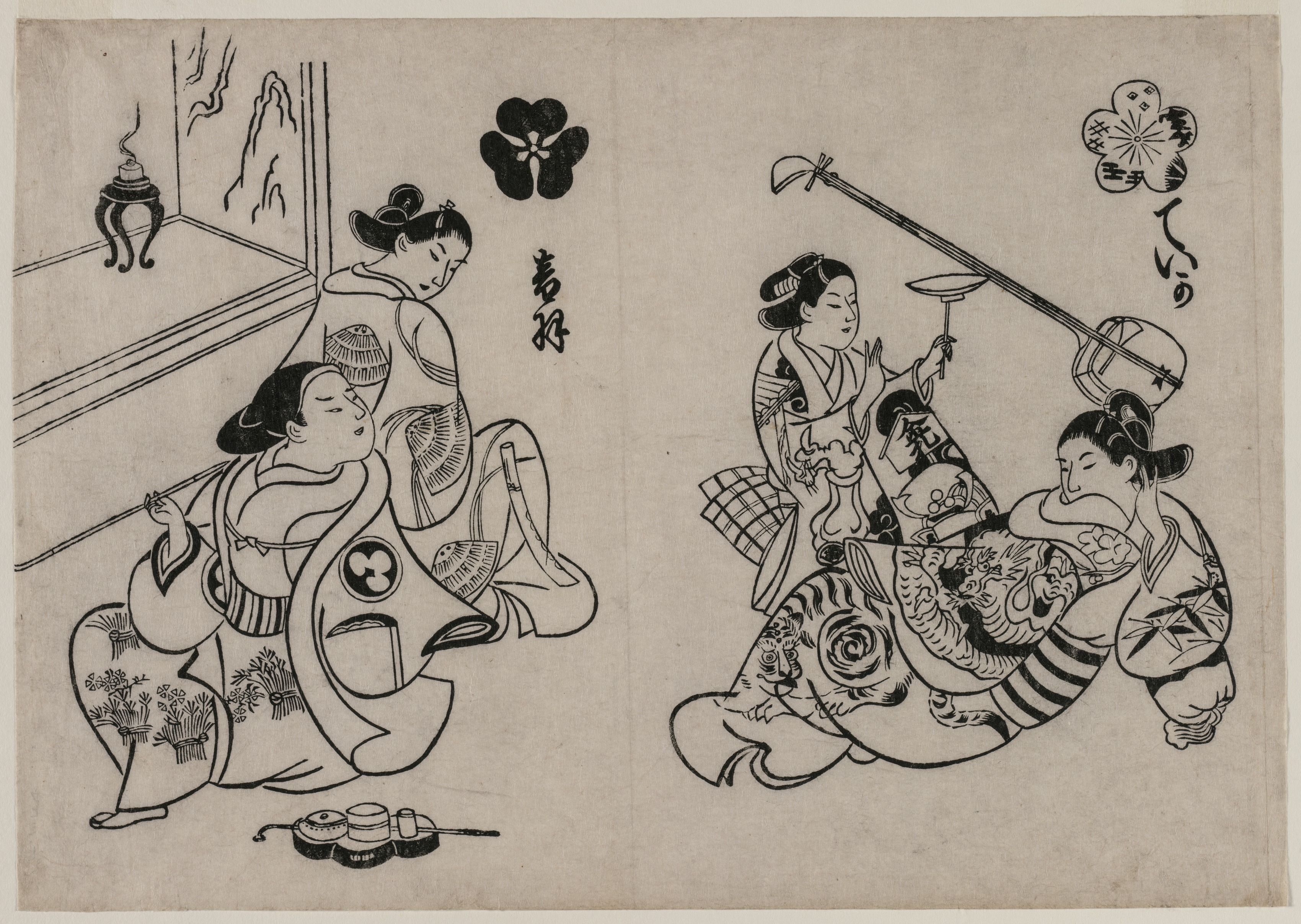
Three Courtesans with a Client
A double-page book illustration printed in sumi ink alone, adapted from a picture book. Before colour printing arrived, the ukiyo-e market was fed by monochrome book pages like this one.
3400 × 2415 px · Unmodified source file
Open in StudioSource & licensing
- Creator / date
- Okumura Masanobu (Japanese, 1686–1764) · early 1700s
- Source credit
- The Cleveland Museum of Art, 1985.337. Open Access.
- Usage notes
- Released by the Cleveland Museum of Art under CC0 1.0. Credit to the museum is encouraged; CC0 does not imply endorsement.
- Original file
- 3400 × 2415 px · JPG · 0.0 MB
- Source checked
- 2026-11-04 · editorial approval separate
CC0 · Public domain · 1716–35
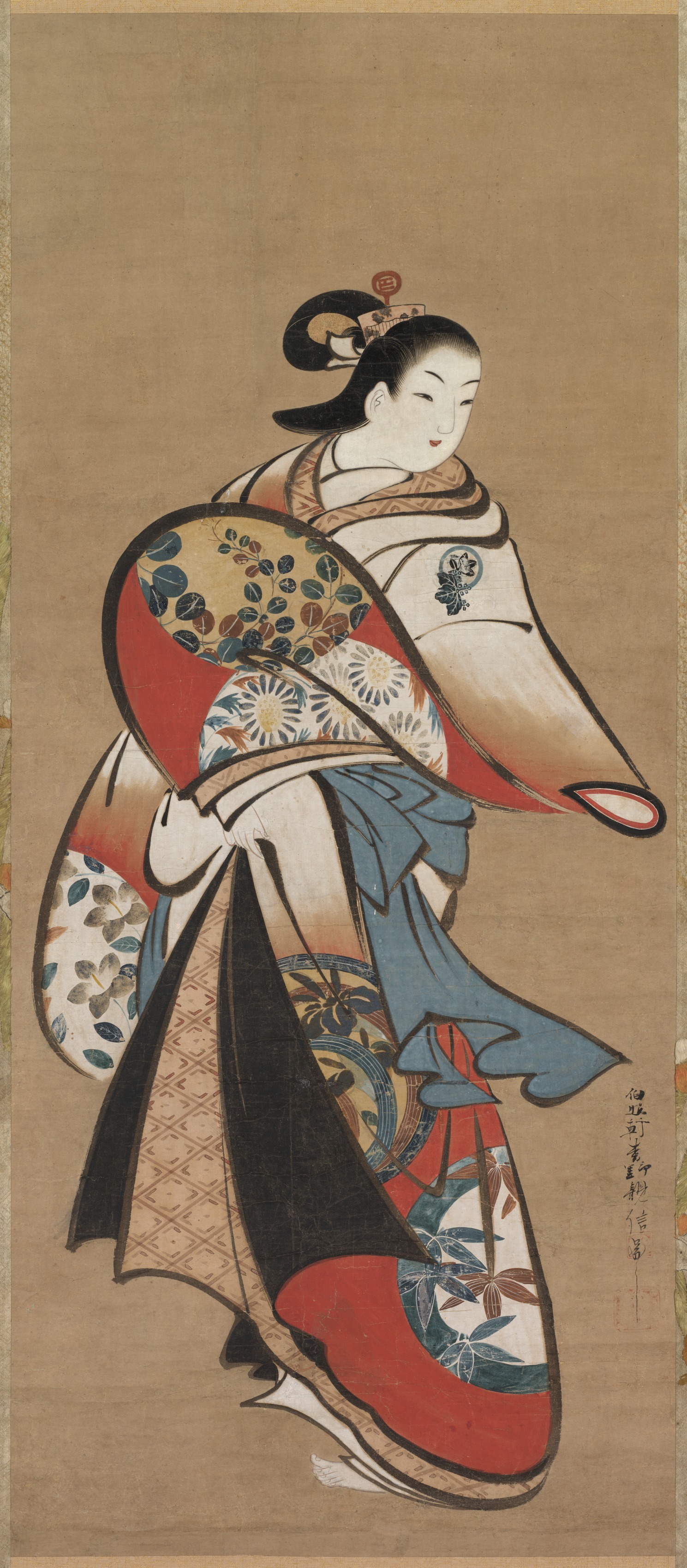
Courtesan
A courtesan in a robe patterned with large roundels of iris and bush clover. Little is known of the painter, and the scroll records the textile more precisely than the woman.
1489 × 3400 px · Unmodified source file
Open in StudioSource & licensing
- Creator / date
- Matsuno Chikanobu (Japanese, active 1716–35) · 1716–35
- Source credit
- The Cleveland Museum of Art, 1985.249. Open Access.
- Usage notes
- Released by the Cleveland Museum of Art under CC0 1.0. Credit to the museum is encouraged; CC0 does not imply endorsement.
- Original file
- 1489 × 3400 px · JPG · 0.0 MB
- Source checked
- 2026-11-04 · editorial approval separate
CC0 · Public domain · c. 1748–51
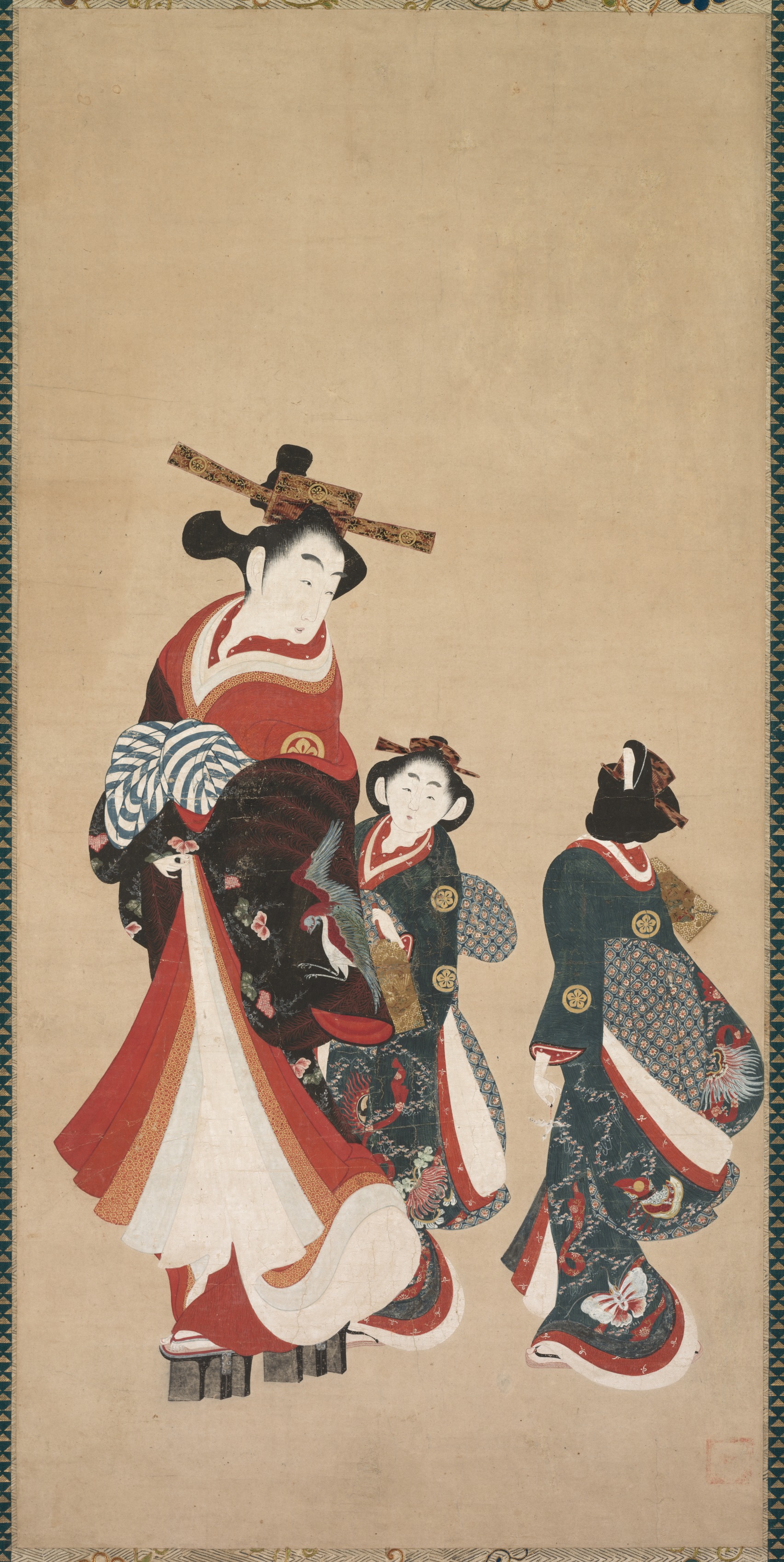
Courtesan and Attendants
The courtesan wears tall lacquered clogs and heavy robes, so it is winter. The span of her tortoiseshell hairpins, and the attendants keeping pace, describe rank rather than personality.
1707 × 3400 px · Unmodified source file
Open in StudioSource & licensing
- Creator / date
- Engetsudō (Japanese) · c. 1748–51
- Source credit
- The Cleveland Museum of Art, 1985.255. Open Access.
- Usage notes
- Released by the Cleveland Museum of Art under CC0 1.0. Credit to the museum is encouraged; CC0 does not imply endorsement.
- Original file
- 1707 × 3400 px · JPG · 0.0 MB
- Source checked
- 2026-11-04 · editorial approval separate
CC0 · Public domain · after 1778
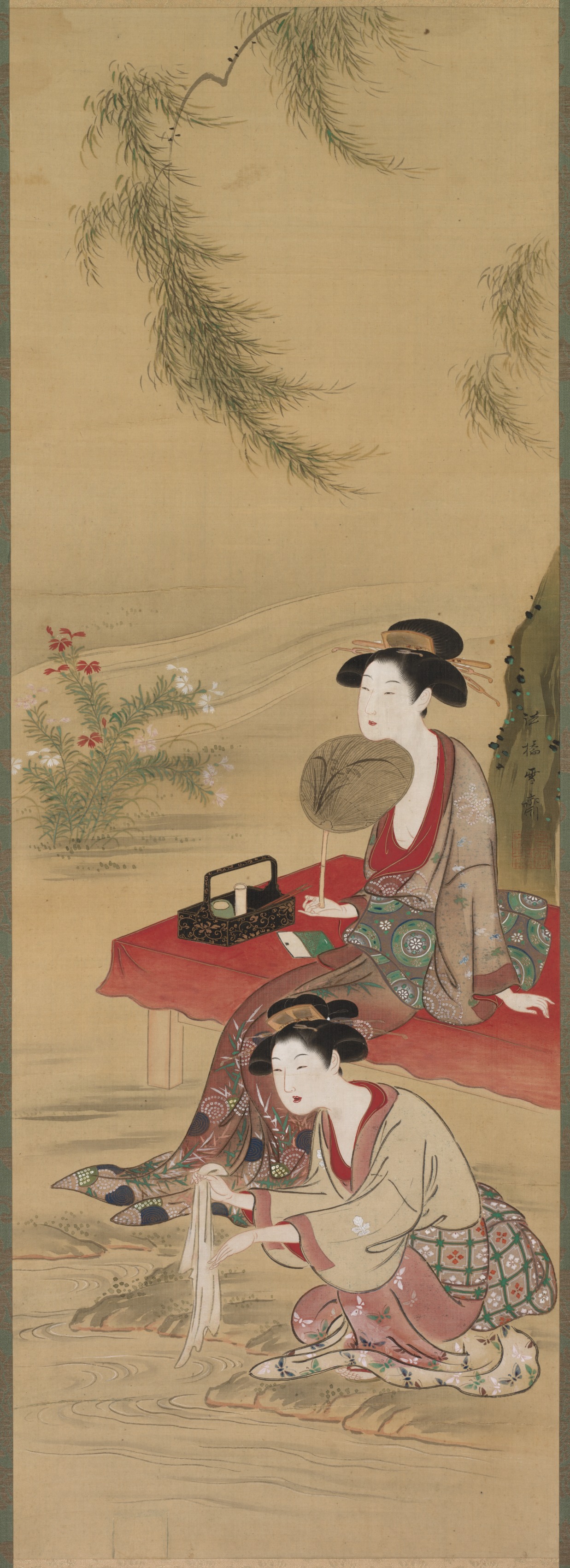
Beneath the Willow
Two young women cool themselves by a river as a willow blows. One crouches to rinse a hand towel while the other sits with her feet in the water: a subject with no story, only weather.
1237 × 3400 px · Unmodified source file
Open in StudioSource & licensing
- Creator / date
- Tsukioka Sessai (Japanese, d. 1839) · after 1778
- Source credit
- The Cleveland Museum of Art, 1985.273. Open Access.
- Usage notes
- Released by the Cleveland Museum of Art under CC0 1.0. Credit to the museum is encouraged; CC0 does not imply endorsement.
- Original file
- 1237 × 3400 px · JPG · 0.0 MB
- Source checked
- 2026-11-04 · editorial approval separate
CC0 · Public domain · c. 1767
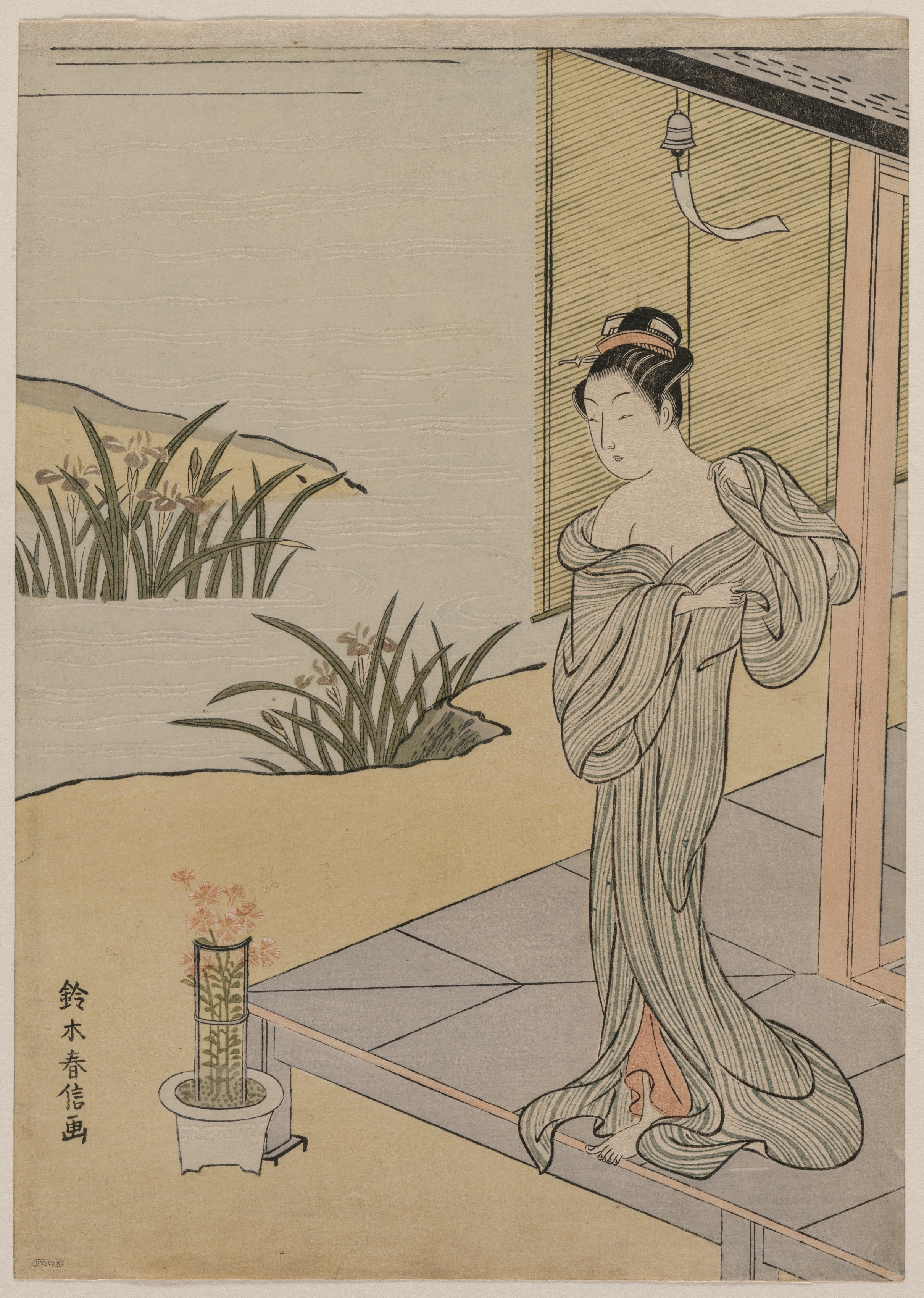
Young Woman Looking at a Pot of Pinks
A girl steps onto a veranda after a bath to look at a pot of pinks, and the poem-strip on the windbell moves in the breeze. Harunobu made the first full-colour prints, and this sheet is built from that new palette.
2421 × 3400 px · Unmodified source file
Open in StudioSource & licensing
- Creator / date
- Suzuki Harunobu (Japanese, 1724–1770) · c. 1767
- Source credit
- The Cleveland Museum of Art, 1985.304. Open Access.
- Usage notes
- Released by the Cleveland Museum of Art under CC0 1.0. Credit to the museum is encouraged; CC0 does not imply endorsement.
- Original file
- 2421 × 3400 px · JPG · 0.0 MB
- Source checked
- 2026-11-04 · editorial approval separate
CC0 · Public domain · early 1800s
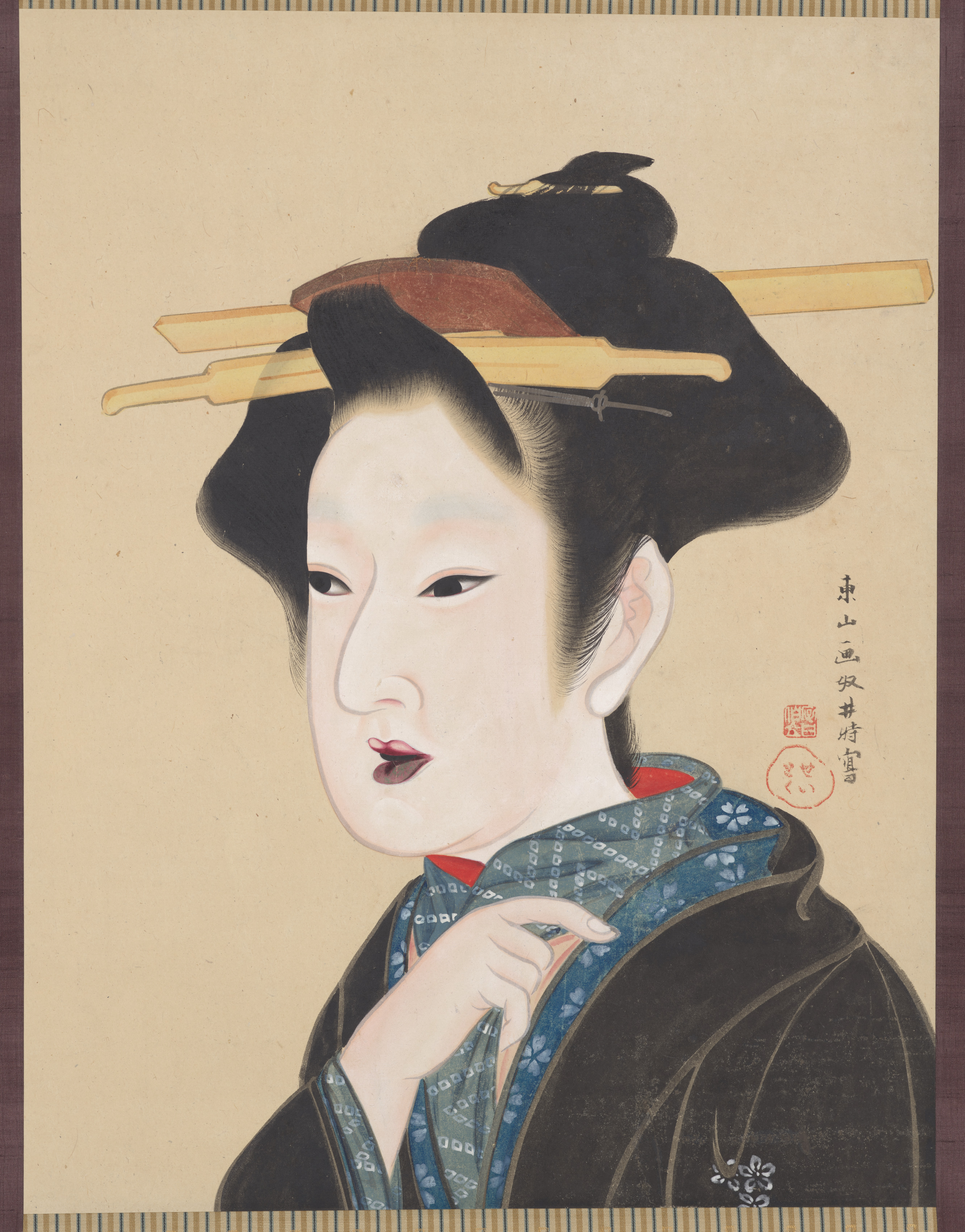
A Beauty
Gion Seitoku worked in Kyoto and specialised in women of the Gion and Shimabara licensed districts, painted rather than printed, at a scale the print trade could not match.
2664 × 3400 px · Unmodified source file
Open in StudioSource & licensing
- Creator / date
- Gion Seitoku (Japanese, active late 1700s–early 1800s) · early 1800s
- Source credit
- The Cleveland Museum of Art, 1985.271. Open Access.
- Usage notes
- Released by the Cleveland Museum of Art under CC0 1.0. Credit to the museum is encouraged; CC0 does not imply endorsement.
- Original file
- 2664 × 3400 px · JPG · 0.0 MB
- Source checked
- 2026-11-04 · editorial approval separate
CC0 · Public domain · c. 1810
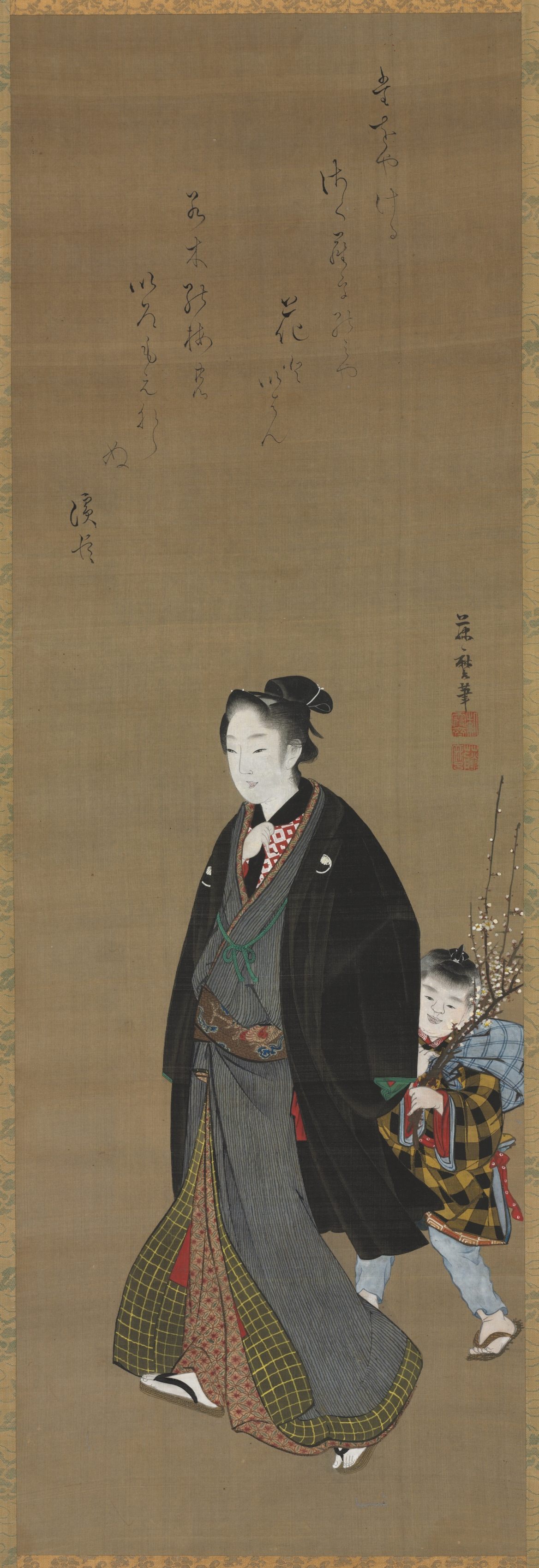
A Beauty
Many ukiyo-e paintings and prints focus on bijin, beautiful people, and courtesans and entertainers were the main draw for buyers in the pleasure districts.
1168 × 3400 px · Unmodified source file
Open in StudioSource & licensing
- Creator / date
- Fujimaro (Japanese, d. 1830) · c. 1810
- Source credit
- The Cleveland Museum of Art, 1985.256. Open Access.
- Usage notes
- Released by the Cleveland Museum of Art under CC0 1.0. Credit to the museum is encouraged; CC0 does not imply endorsement.
- Original file
- 1168 × 3400 px · JPG · 0.0 MB
- Source checked
- 2026-11-04 · editorial approval separate
CC0 · Public domain · late 1700s–early 1800s
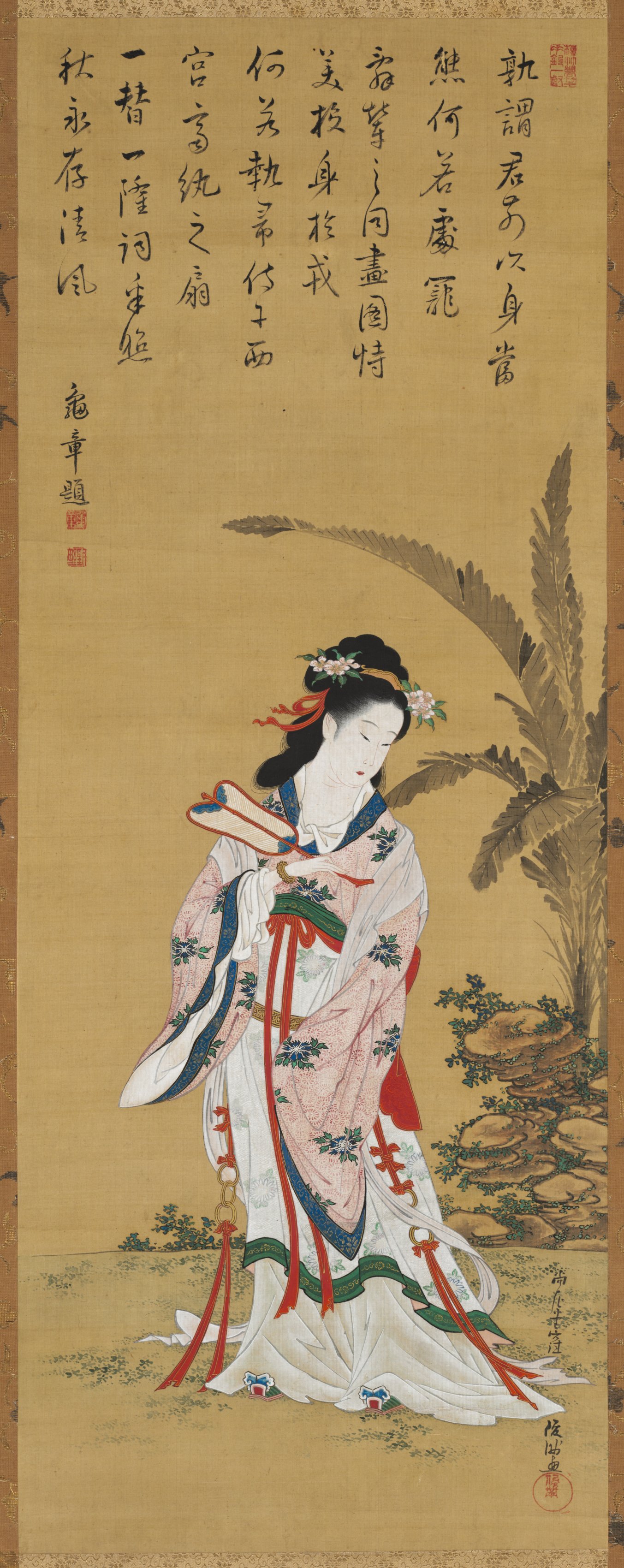
Chinese Beauty
The ukiyo-e interest in beautiful people extended to figures from other lands: a Chinese palace lady with a fan, dressed from the imagination rather than from life.
1353 × 3400 px · Unmodified source file
Open in StudioSource & licensing
- Creator / date
- Kubo Shunman (Japanese, 1757–1820) · late 1700s–early 1800s
- Source credit
- The Cleveland Museum of Art, 1988.1. Open Access.
- Usage notes
- Released by the Cleveland Museum of Art under CC0 1.0. Credit to the museum is encouraged; CC0 does not imply endorsement.
- Original file
- 1353 × 3400 px · JPG · 0.0 MB
- Source checked
- 2026-11-04 · editorial approval separate
CC0 · Public domain · early 1800s
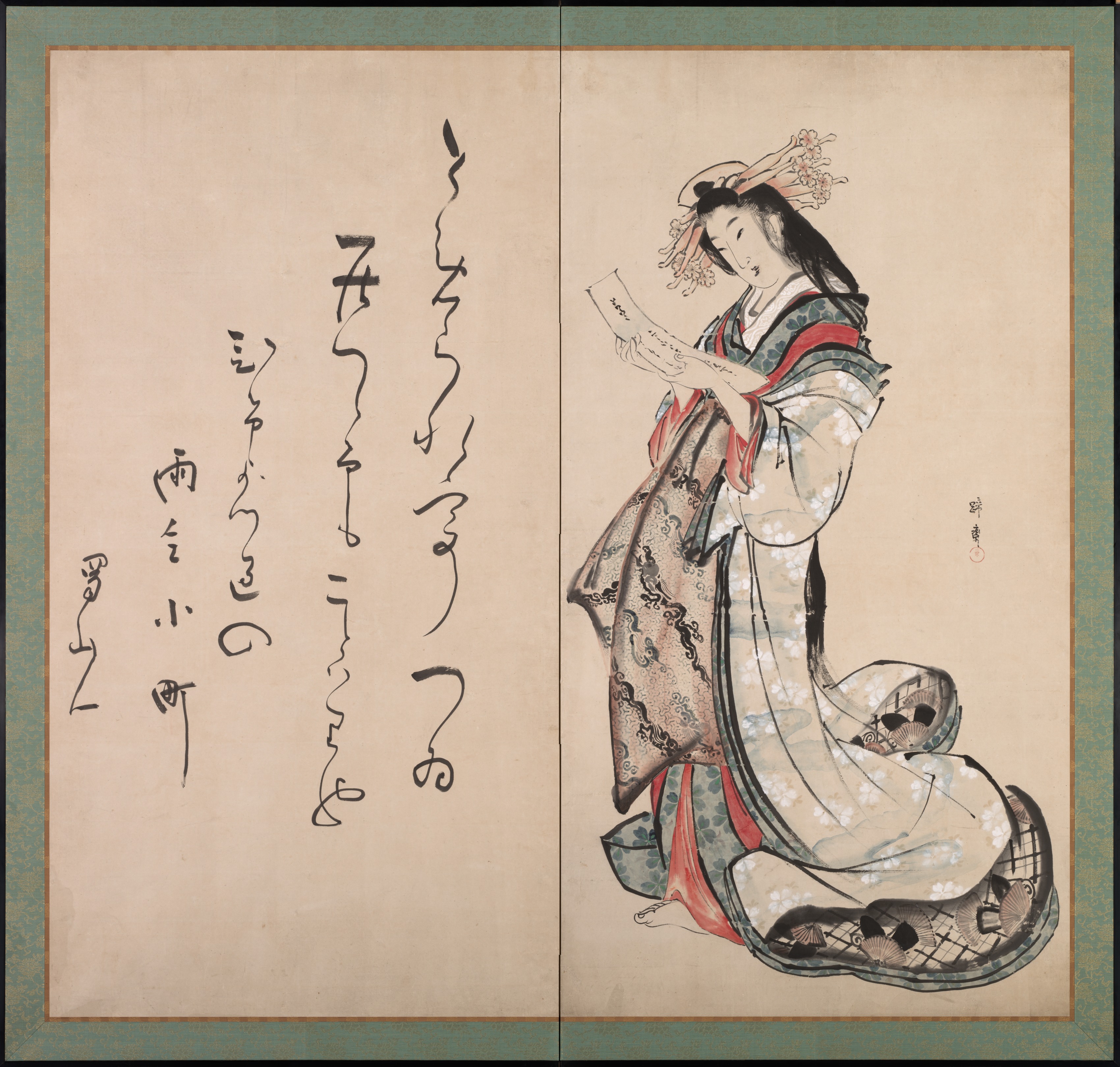
Courtesan Reading a Letter
Painters and collaborating poets brought imagery from classical literature into the pleasure quarters, so the letter this courtesan reads is a poem first and a message second.
3400 × 3239 px · Unmodified source file
Open in StudioSource & licensing
- Creator / date
- Teisai Hokuba (Japanese, 1771–1844); Ōta Nanpo (Japanese, 1749–1823) · early 1800s
- Source credit
- The Cleveland Museum of Art, 1985.261. Open Access.
- Usage notes
- Released by the Cleveland Museum of Art under CC0 1.0. Credit to the museum is encouraged; CC0 does not imply endorsement.
- Original file
- 3400 × 3239 px · JPG · 0.0 MB
- Source checked
- 2026-11-04 · editorial approval separate
CC0 · Public domain · 1840s
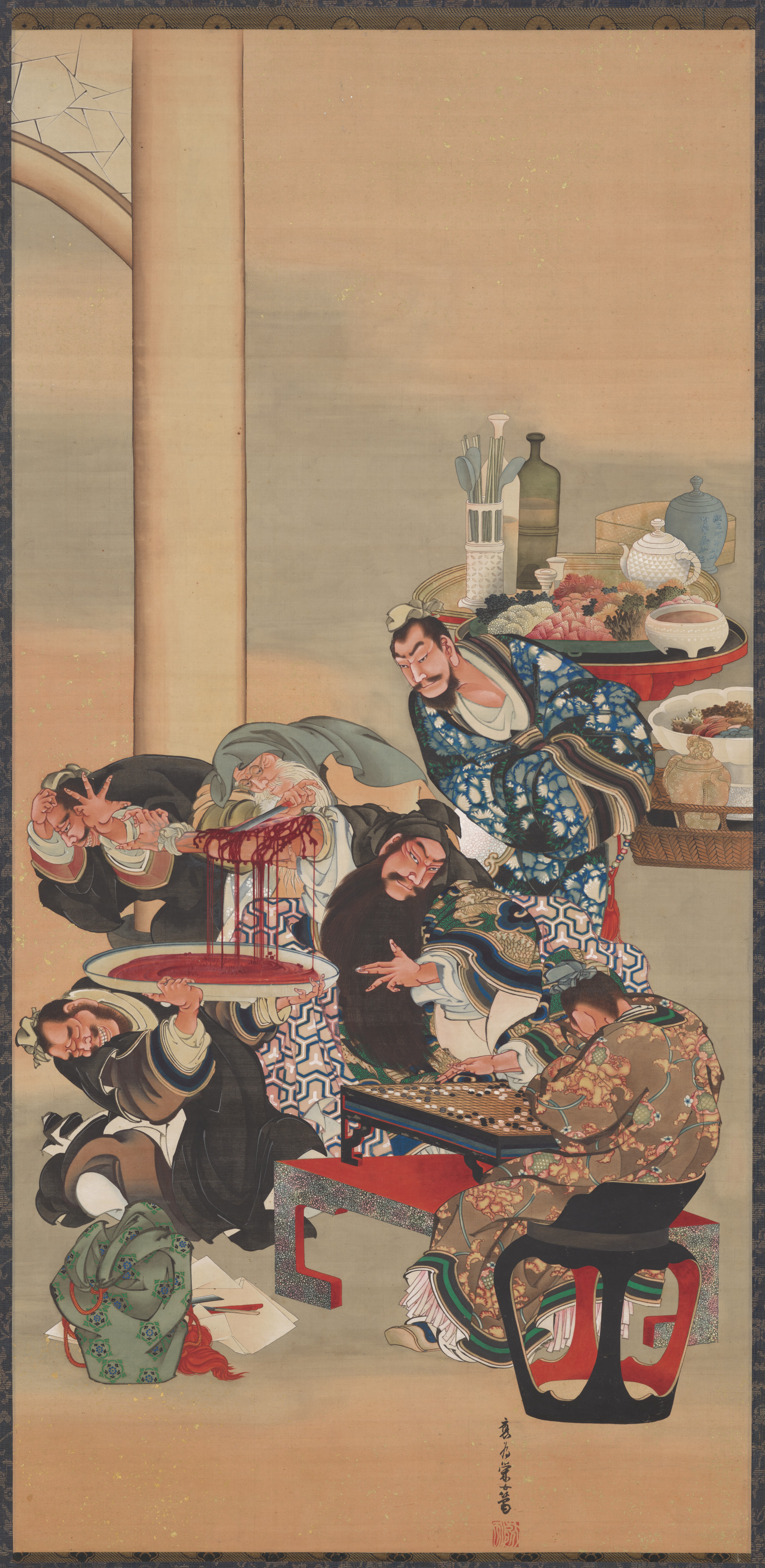
Operating on Guan Yu's Arm
Katsushika Ōi, Hokusai’s daughter and a painter in her own right, takes a grisly episode from popular literature, the surgeon Hua Tuo scraping poison from Guan Yu’s arm while the general plays chess, and uses colour to make it worse.
1659 × 3400 px · Unmodified source file
Open in StudioSource & licensing
- Creator / date
- Katsushika Ōi (Japanese, c. 1800-after 1857) · 1840s
- Source credit
- The Cleveland Museum of Art, 1998.178. Open Access.
- Usage notes
- Released by the Cleveland Museum of Art under CC0 1.0. Credit to the museum is encouraged; CC0 does not imply endorsement.
- Original file
- 1659 × 3400 px · JPG · 0.0 MB
- Source checked
- 2026-11-04 · editorial approval separate
CC0 · Public domain · 1853
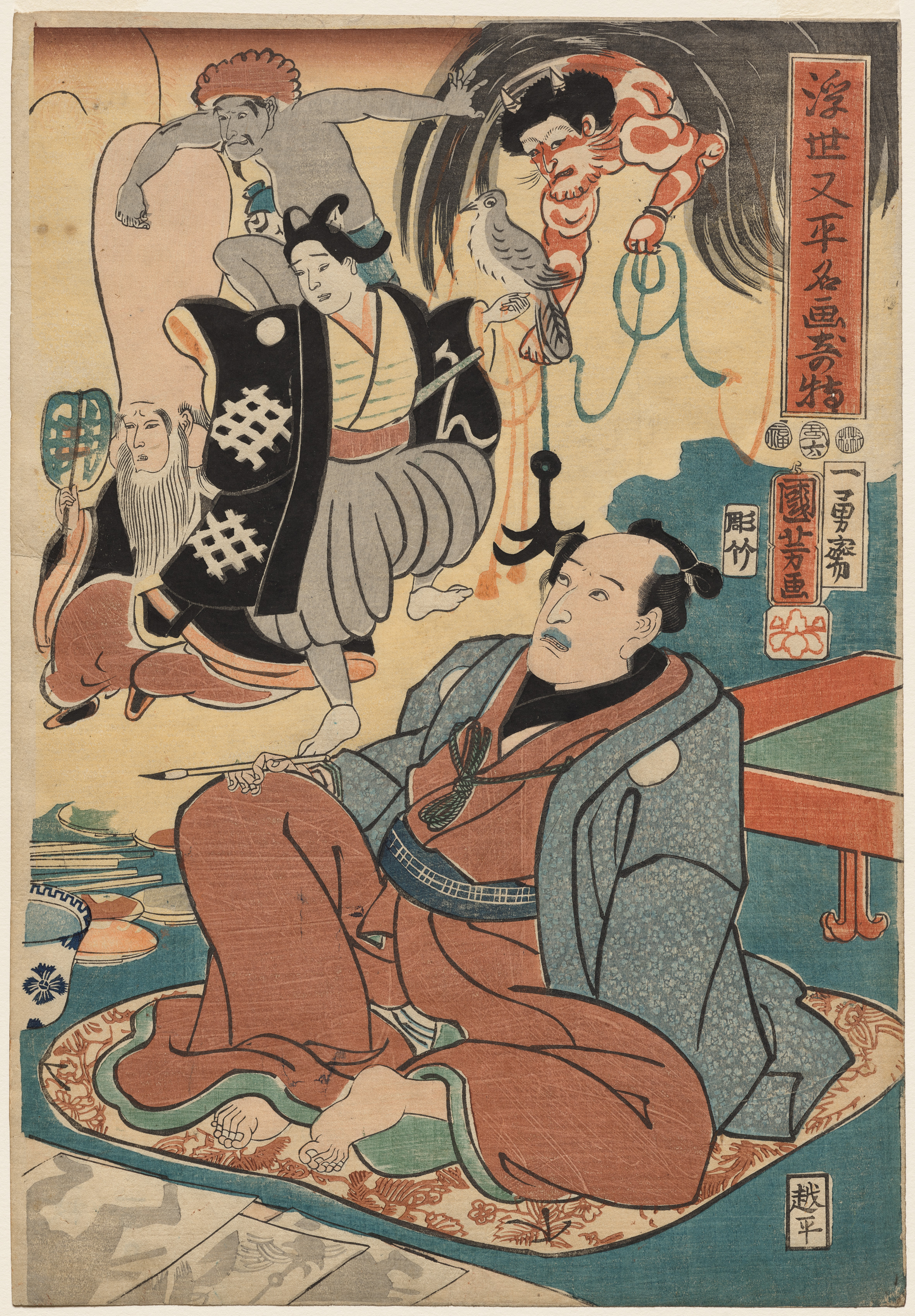
The Strange Occurrence of Ukiyo Matahei and his Famous Paintings
Otsu-e folk heroes come to life and step out of the paintings in front of the artist, leaving their shadowy figures behind: a comic diptych about the business of making pictures.
2364 × 3400 px · Unmodified source file
Open in StudioSource & licensing
- Creator / date
- Utagawa Kuniyoshi (Japanese, 1797–1861) · 1853
- Source credit
- The Cleveland Museum of Art, 1916.1160.b. Open Access.
- Usage notes
- Released by the Cleveland Museum of Art under CC0 1.0. Credit to the museum is encouraged; CC0 does not imply endorsement.
- Original file
- 2364 × 3400 px · JPG · 0.0 MB
- Source checked
- 2026-11-04 · editorial approval separate
CC0 · Public domain · 1700s
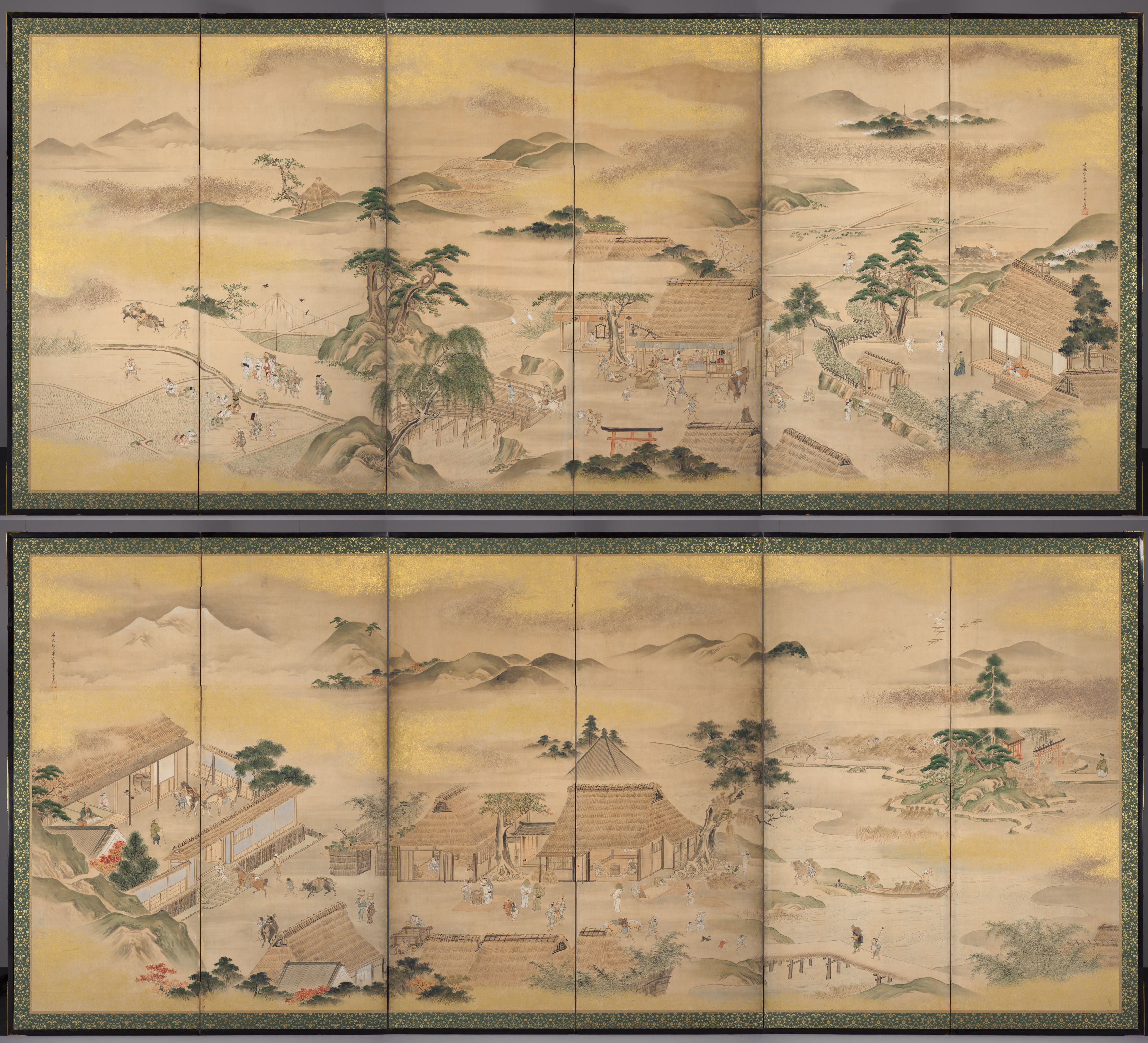
Spring and Autumn Farming
A pair of six-panel screens following the farming year from spring at right to autumn at left. The labour is specific, rice planting, threshing and the tools that go with each.
3400 × 3090 px · Unmodified source file
Open in StudioSource & licensing
- Creator / date
- Kō Sūkoku (Japanese, 1730–1804) · 1700s
- Source credit
- The Cleveland Museum of Art, 2012.72. Open Access.
- Usage notes
- Released by the Cleveland Museum of Art under CC0 1.0. Credit to the museum is encouraged; CC0 does not imply endorsement.
- Original file
- 3400 × 3090 px · JPG · 0.0 MB
- Source checked
- 2026-11-04 · editorial approval separate
Public-domain status is reported by the linked source and may vary by jurisdiction. Check the source record for your intended use. No exclusive rights or Visual Bounty marketplace license are offered for these images.