← Open CollectionsPublic-domain source library
Glaze Alone: Song Dynasty Ceramics
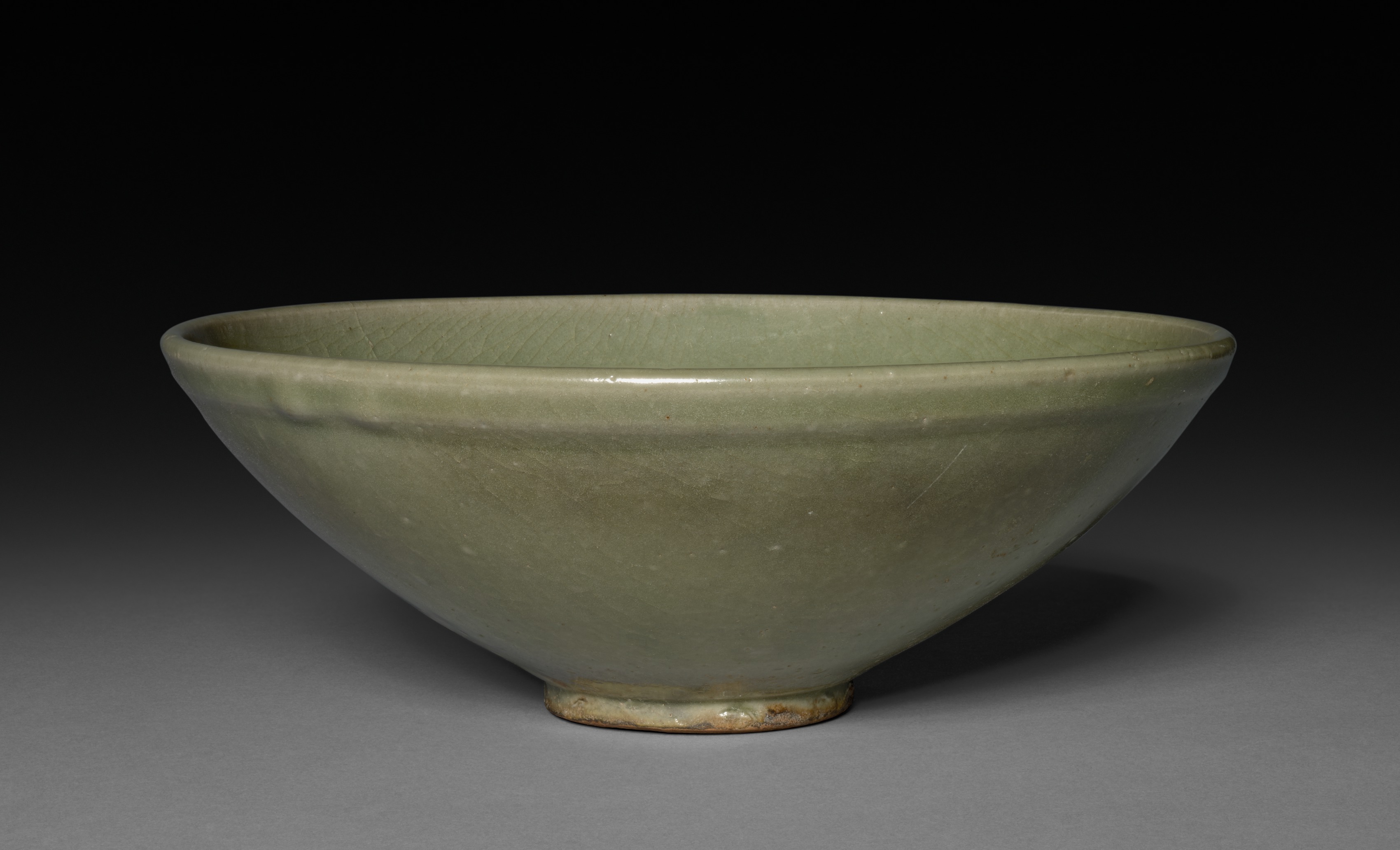
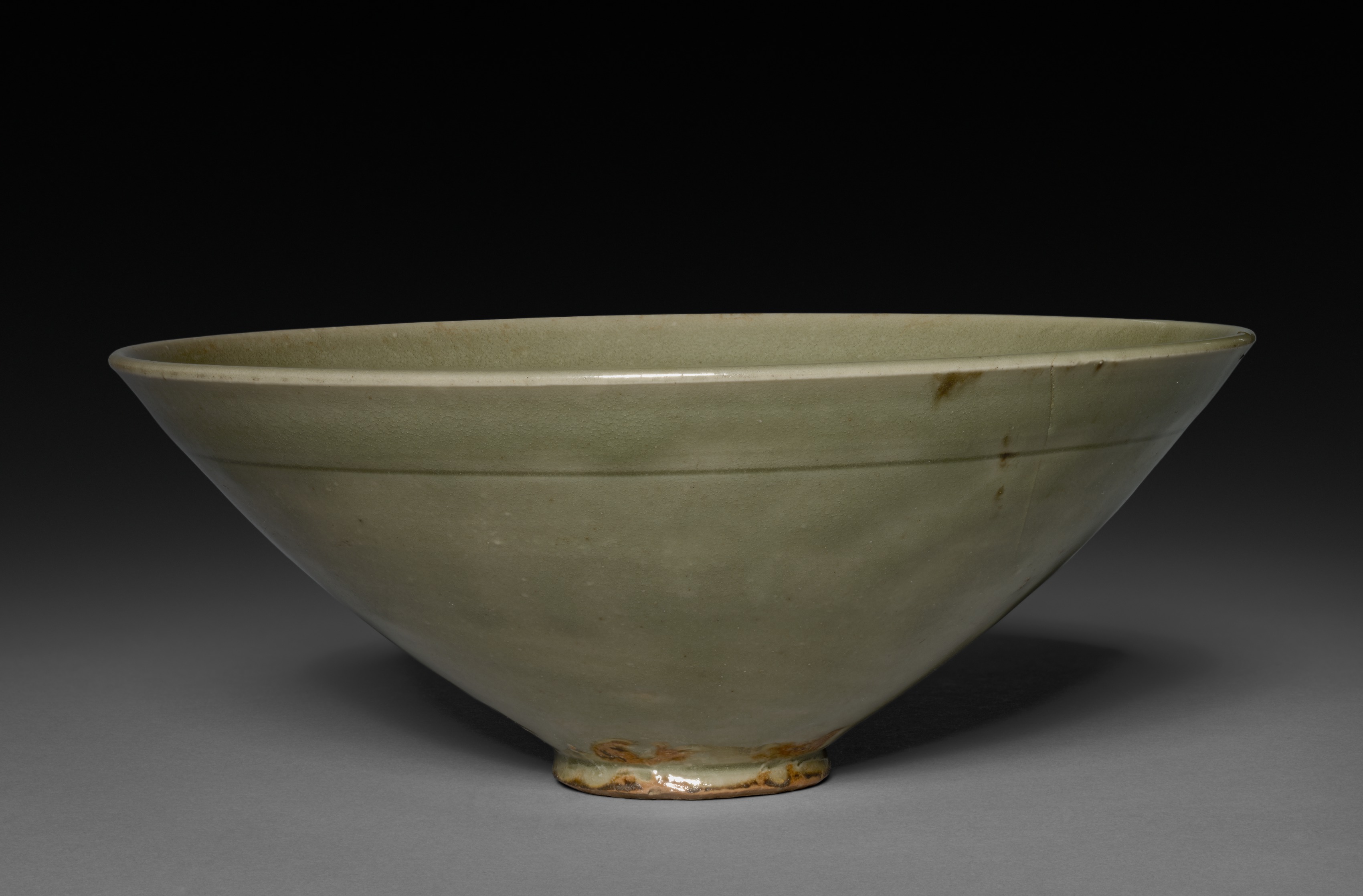
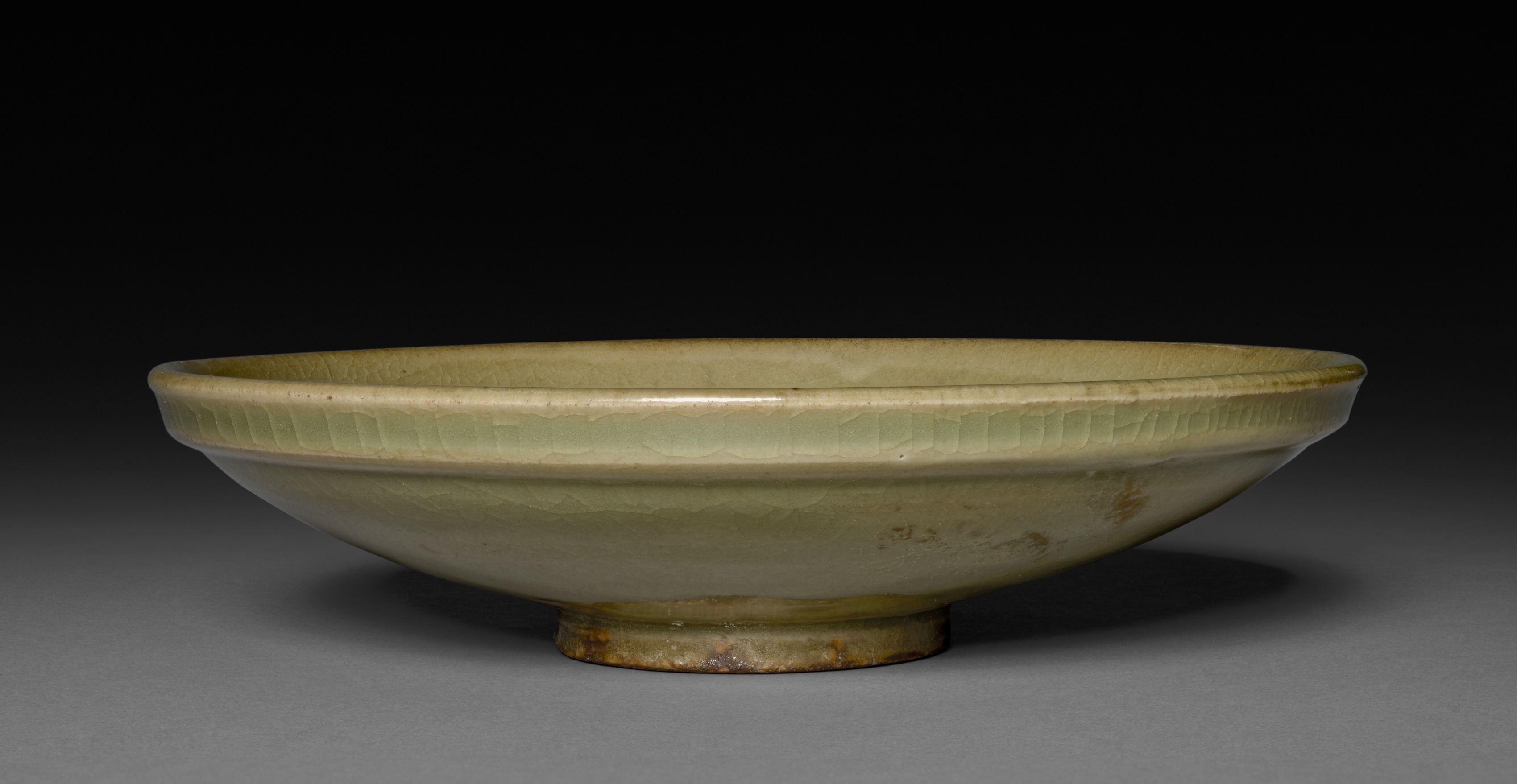
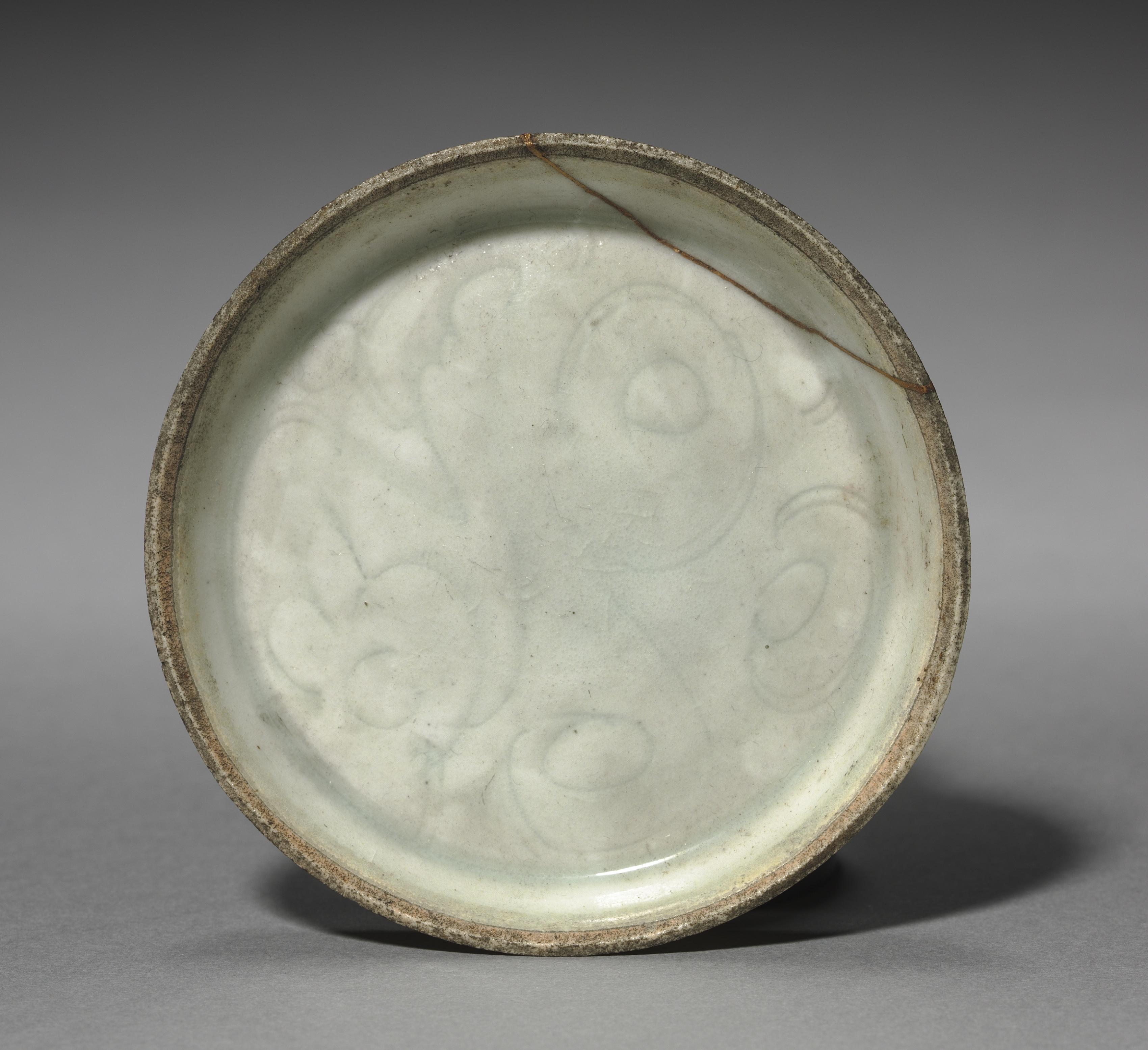
Song potters argued about glaze the way painters argue about surface. Ru and Guan were court wares, made in small quantities with glazes thick enough to pool and crackle; Yaozhou carved the body and let green gather in the cuts; Jian fired an iron glaze until it crystallised into hare’s fur for tea bowls; qingbai went the other way, so thin and pale that carving shows as relief rather than colour. One tradition mixed two clays and let the body itself be the pattern. None of these wares rely on painted decoration — that work belongs to later porcelain, where cobalt and enamel do the talking. Here the whole object is a decision about thickness, temperature and the behaviour of a single colour.
Original means the unmodified digital file supplied by the linked archive, not an upscaled or reconstructed image. Sign in for free downloads. Studio uses a working preview up to 2048 px.
CC0 · Public domain · late 1000s–1127
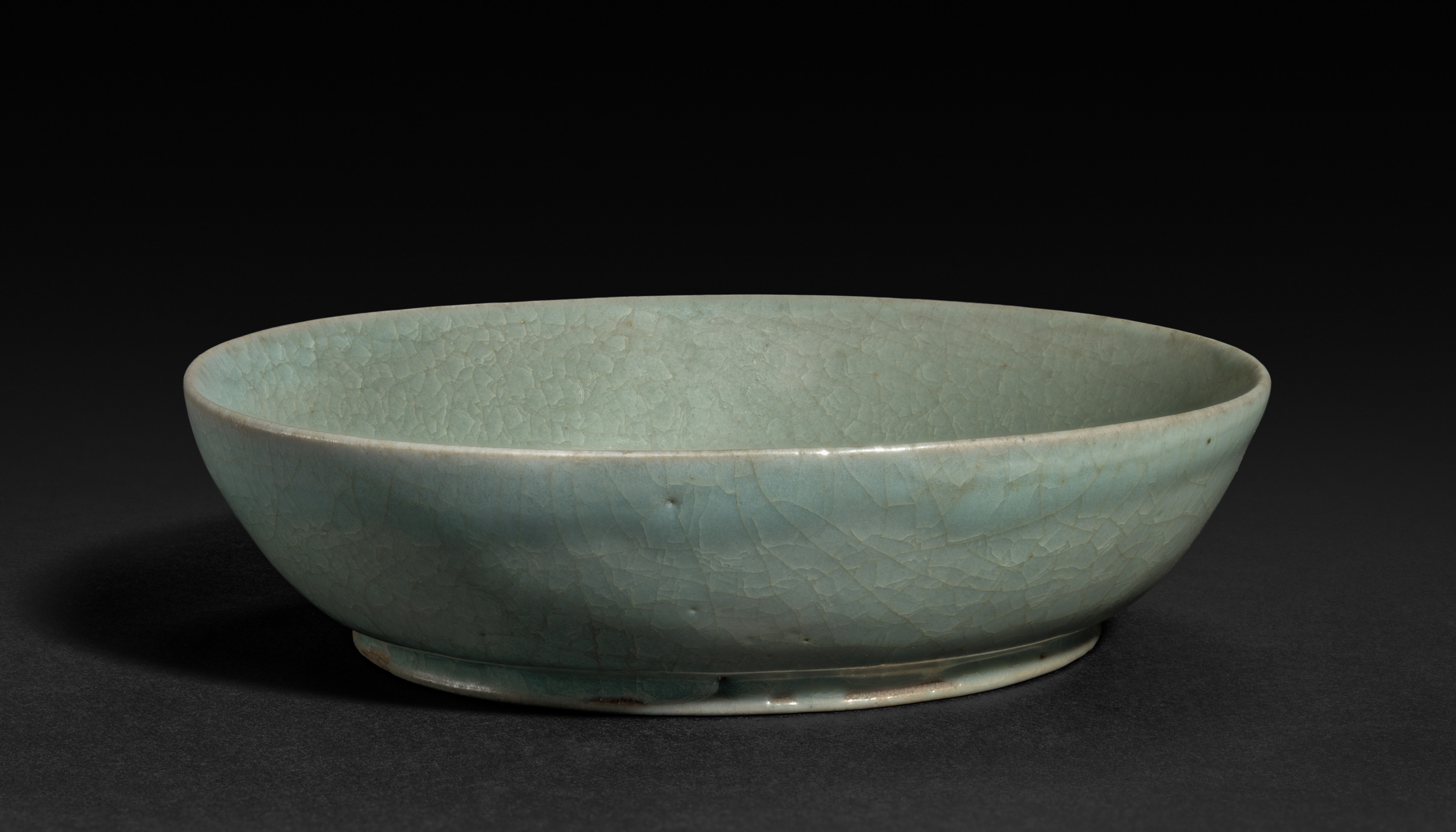
Brush Washer
Ru ware served the Northern Song court for only a few decades before the kilns were lost, and around ninety pieces are thought to survive. The glaze is dense and matte, a pale blue-green that Chinese writers compared to the sky after rain, and the crackle net through it is part of the intended surface rather than a fault.
3400 × 1817 px · Unmodified source file
Open in StudioSource & licensing
- Creator / date
- China, Henan province, Baofeng, Qingliangsi, Northern Song dynasty, maker unknown · late 1000s–1127
- Source credit
- The Cleveland Museum of Art, 1957.40. Open Access.
- Usage notes
- Released by the Cleveland Museum of Art under CC0 1.0. Credit to the museum is encouraged; CC0 does not imply endorsement.
- Original file
- 3400 × 1817 px · JPG · 0.0 MB
- Source checked
- 2026-11-05 · editorial approval separate
CC0 · Public domain · 1127–1279
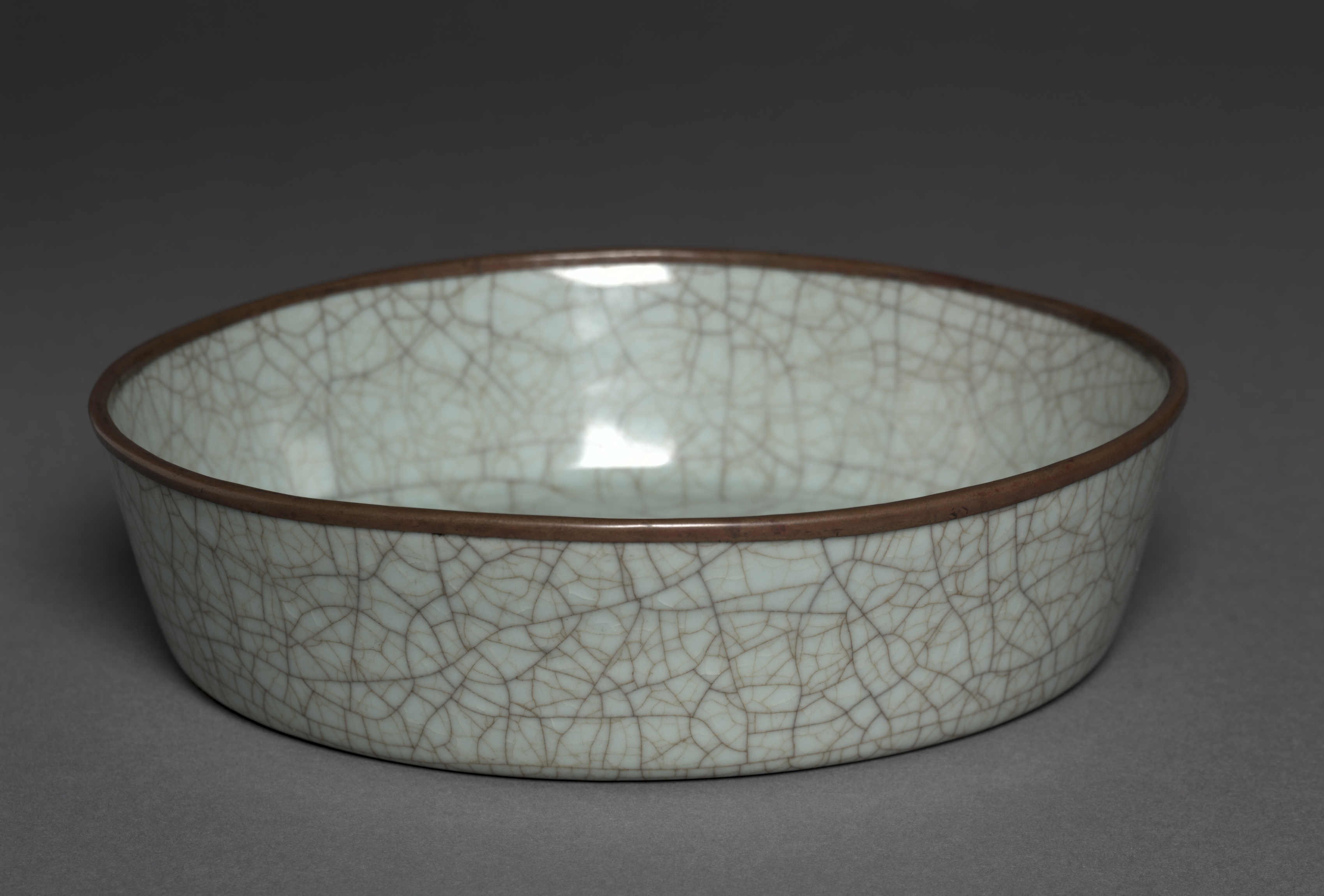
Basin
Guan means official: these were the Southern Song court’s own kilns at Hangzhou. A dark body carries a thick grey-green glaze, and the crackle was often stained so the lines read as a drawing laid over the form.
3383 × 3400 px · Unmodified source file
Open in StudioSource & licensing
- Creator / date
- China, Zhejiang province, Hangzhou, Southern Song dynasty, maker unknown · 1127–1279
- Source credit
- The Cleveland Museum of Art, 1957.48. Open Access.
- Usage notes
- Released by the Cleveland Museum of Art under CC0 1.0. Credit to the museum is encouraged; CC0 does not imply endorsement.
- Original file
- 3383 × 3400 px · JPG · 0.0 MB
- Source checked
- 2026-11-05 · editorial approval separate
CC0 · Public domain · 1127–1279
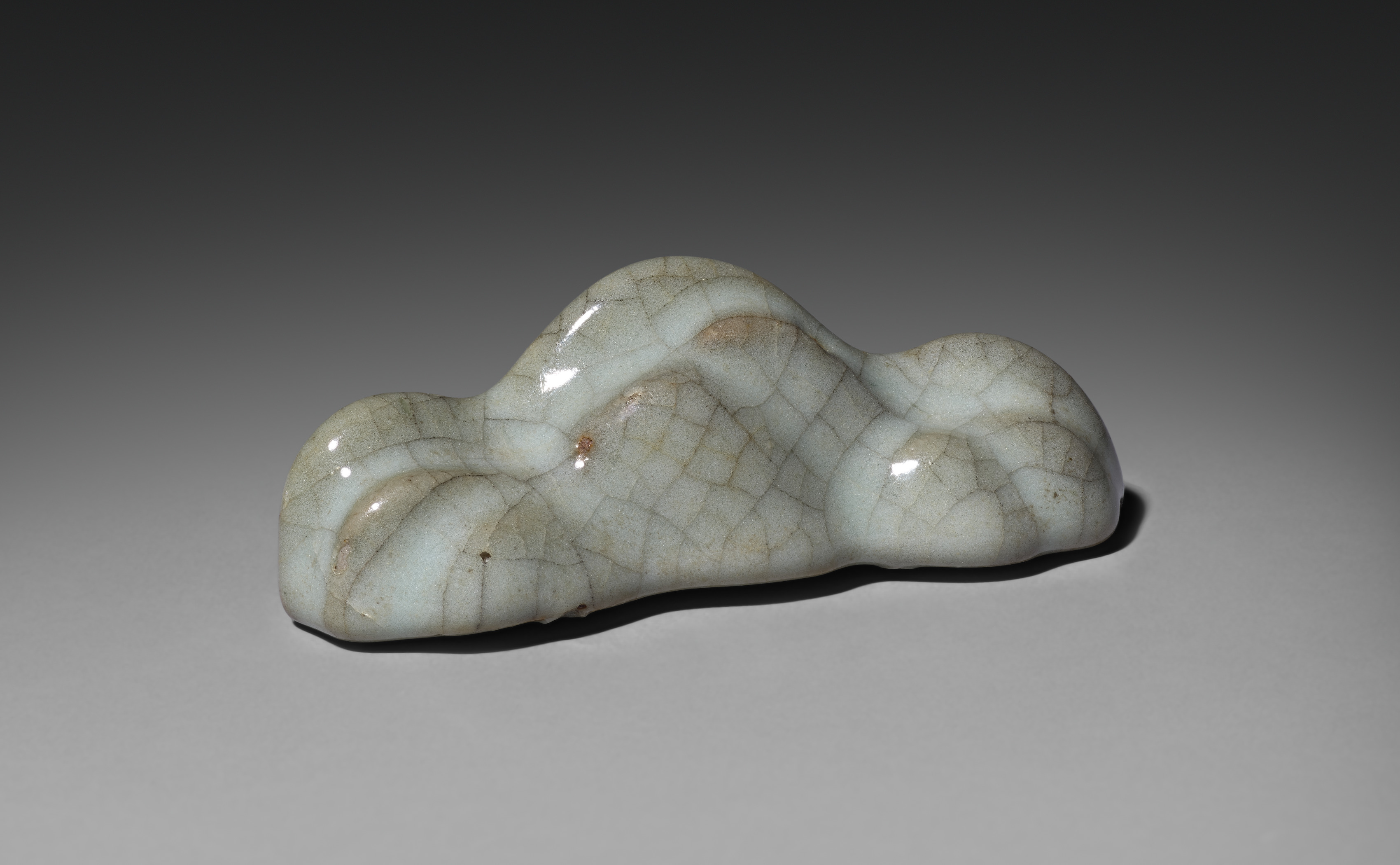
Brush Rest
A rest made so a wet brush could lie across it without touching the desk. The glaze pools where the form rises and thins where it falls away, so the shape is read through the thickness of the glaze rather than through carving.
3400 × 2100 px · Unmodified source file
Open in StudioSource & licensing
- Creator / date
- Southeast China, Zhejiang province, Southern Song dynasty, maker unknown · 1127–1279
- Source credit
- The Cleveland Museum of Art, 1957.42. Open Access.
- Usage notes
- Released by the Cleveland Museum of Art under CC0 1.0. Credit to the museum is encouraged; CC0 does not imply endorsement.
- Original file
- 3400 × 2100 px · JPG · 0.0 MB
- Source checked
- 2026-11-05 · editorial approval separate
CC0 · Public domain · 1100s–1200s
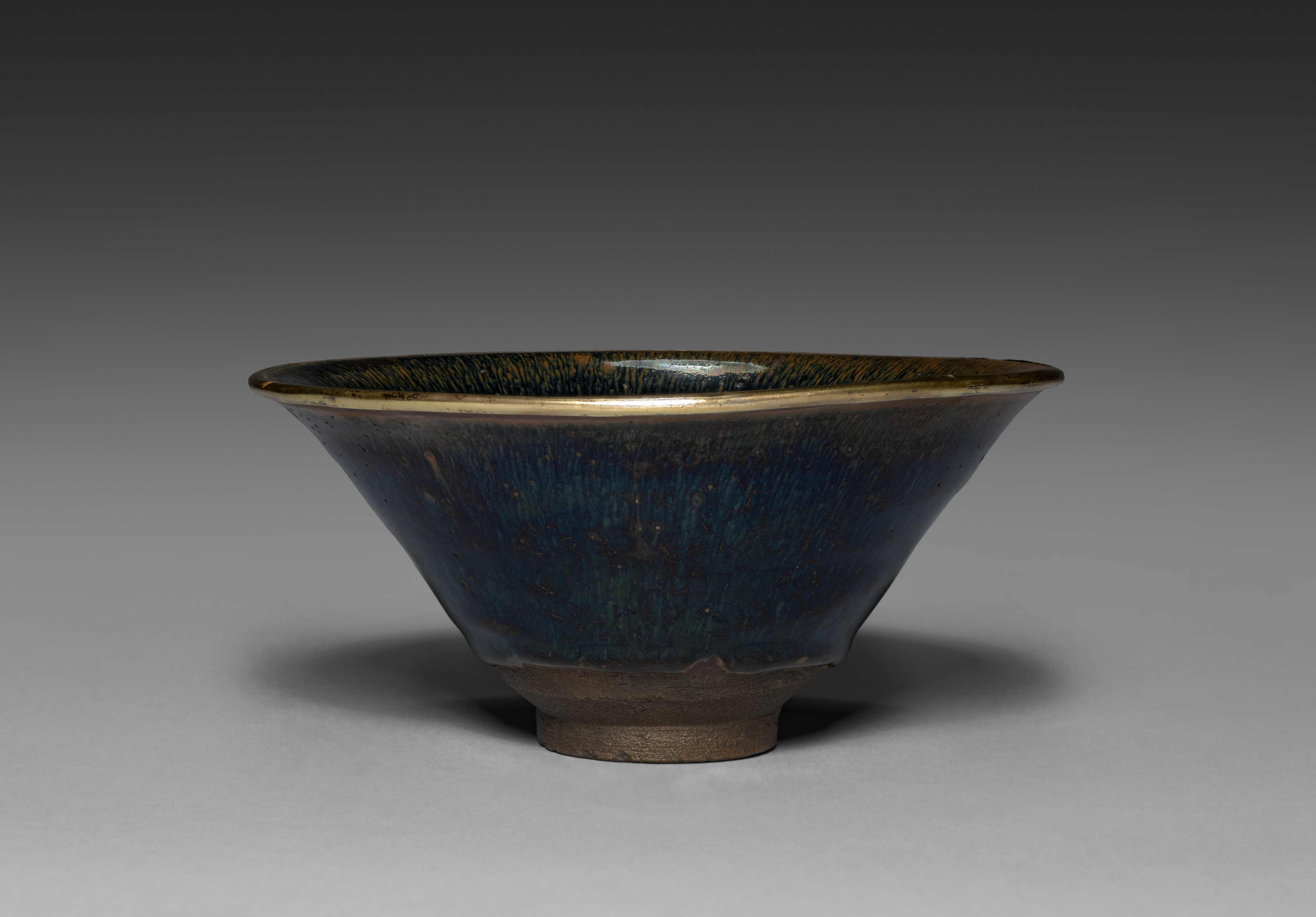
Tea Bowl
Tea was whisked to a foam, and Jian bowls were prized because a dark glaze makes the pale froth legible. The streaks called hare’s fur form as iron crystallises in the glaze while it cools in the kiln; the metal band on the rim replaced a chipped edge.
3400 × 2369 px · Unmodified source file
Open in StudioSource & licensing
- Creator / date
- China, Fujian province, Southern Song dynasty, maker unknown · 1100s–1200s
- Source credit
- The Cleveland Museum of Art, 1948.206. Open Access.
- Usage notes
- Released by the Cleveland Museum of Art under CC0 1.0. Credit to the museum is encouraged; CC0 does not imply endorsement.
- Original file
- 3400 × 2369 px · JPG · 0.0 MB
- Source checked
- 2026-11-05 · editorial approval separate
CC0 · Public domain · 1100s
Bowl with Carved Floral Decoration
Yaozhou potters carved the pattern into the dried body and let the olive glaze gather in the cuts, so the decoration is drawn by depth of glaze rather than by a second colour. It is a potter’s drawing made with a knife.
3400 × 2064 px · Unmodified source file
Open in StudioSource & licensing
- Creator / date
- China, Yaozhou kilns, Shaanxi province, Northern Song dynasty, maker unknown · 1100s
- Source credit
- The Cleveland Museum of Art, 1969.226. Open Access.
- Usage notes
- Released by the Cleveland Museum of Art under CC0 1.0. Credit to the museum is encouraged; CC0 does not imply endorsement.
- Original file
- 3400 × 2064 px · JPG · 0.0 MB
- Source checked
- 2026-11-05 · editorial approval separate
CC0 · Public domain · 12th century
Bowl: Northern Celadon Ware
Grey-green glaze over a grey body, incised so lightly that the pattern only appears when the bowl is turned against the light. Northern celadons depend on that reserve: nothing is added, and the decoration is barely a change in depth.
3400 × 2235 px · Unmodified source file
Open in StudioSource & licensing
- Creator / date
- China, Shaanxi or Henan province, Northern Song dynasty, maker unknown · 12th century
- Source credit
- The Cleveland Museum of Art, 1956.697. Open Access.
- Usage notes
- Released by the Cleveland Museum of Art under CC0 1.0. Credit to the museum is encouraged; CC0 does not imply endorsement.
- Original file
- 3400 × 2235 px · JPG · 0.0 MB
- Source checked
- 2026-11-05 · editorial approval separate
CC0 · Public domain · 1100s
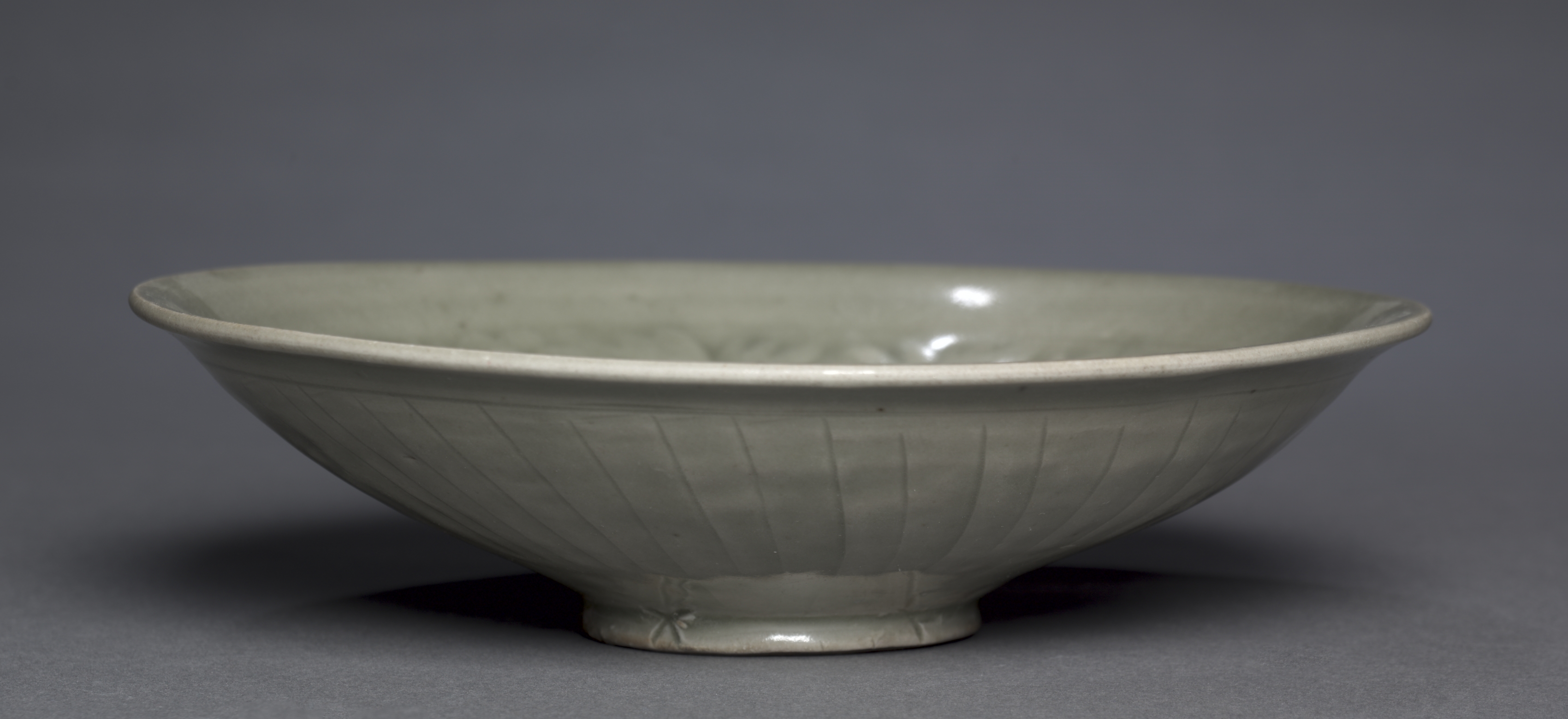
Saucer: Northern Celadon Ware, Yaozhou type
Yaozhou’s green comes from the same iron in reduction as the court celadons, but the tone is warmer and the surface glassier. A saucer is the honest test of a glaze: there is no form to hide behind, only the pool of colour inside the rim.
3400 × 1758 px · Unmodified source file
Open in StudioSource & licensing
- Creator / date
- China, late Northern Song to Jin dynasty, maker unknown · 1100s
- Source credit
- The Cleveland Museum of Art, 1930.311. Open Access.
- Usage notes
- Released by the Cleveland Museum of Art under CC0 1.0. Credit to the museum is encouraged; CC0 does not imply endorsement.
- Original file
- 3400 × 1758 px · JPG · 0.0 MB
- Source checked
- 2026-11-05 · editorial approval separate
CC0 · Public domain · 900s–1100s
Dish with Incised Scroll Design
Qingbai, blue-white, is porcelain with a glaze so thin and pale that it reads cool rather than green. The combed scroll underneath shows as a faint relief instead of a colour, so the pattern changes as the light moves across the dish.
3400 × 3110 px · Unmodified source file
Open in StudioSource & licensing
- Creator / date
- China, Song dynasty, maker unknown · 900s–1100s
- Source credit
- The Cleveland Museum of Art, 1921.644. Open Access.
- Usage notes
- Released by the Cleveland Museum of Art under CC0 1.0. Credit to the museum is encouraged; CC0 does not imply endorsement.
- Original file
- 3400 × 3110 px · JPG · 0.0 MB
- Source checked
- 2026-11-05 · editorial approval separate
CC0 · Public domain · 960–1279
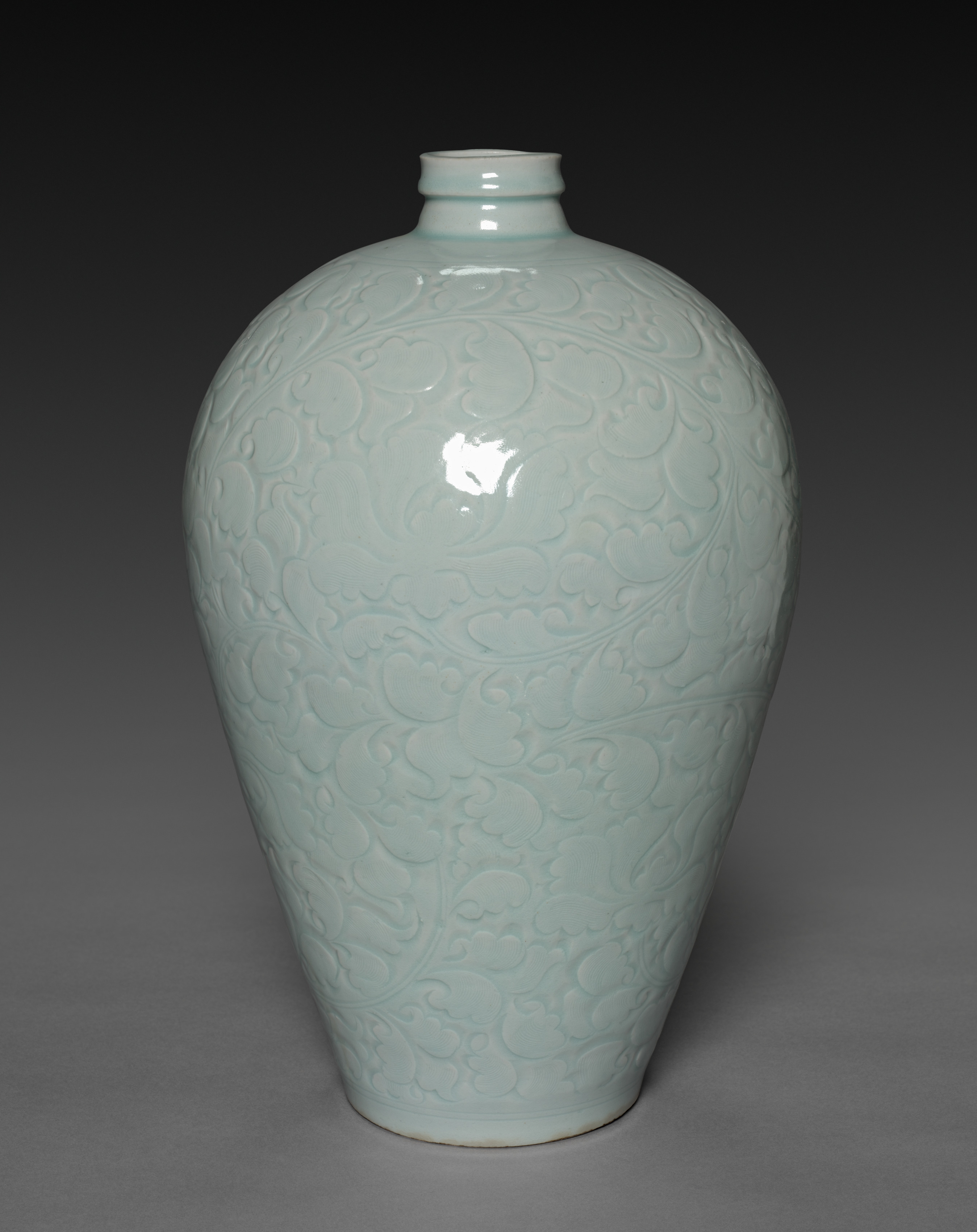
Meiping Vase with Carved Floral Sprays
A meiping, the plum vase, made to hold a single branch and shaped so the shoulder carries the eye down to a narrow foot. Under a qingbai glaze, carving works by pooling: the incisions fill with glaze and the spray appears without any added pigment.
2697 × 3400 px · Unmodified source file
Open in StudioSource & licensing
- Creator / date
- China, Song dynasty, maker unknown · 960–1279
- Source credit
- The Cleveland Museum of Art, 2017.20. Open Access.
- Usage notes
- Released by the Cleveland Museum of Art under CC0 1.0. Credit to the museum is encouraged; CC0 does not imply endorsement.
- Original file
- 2697 × 3400 px · JPG · 0.0 MB
- Source checked
- 2026-11-05 · editorial approval separate
CC0 · Public domain · 960–1234
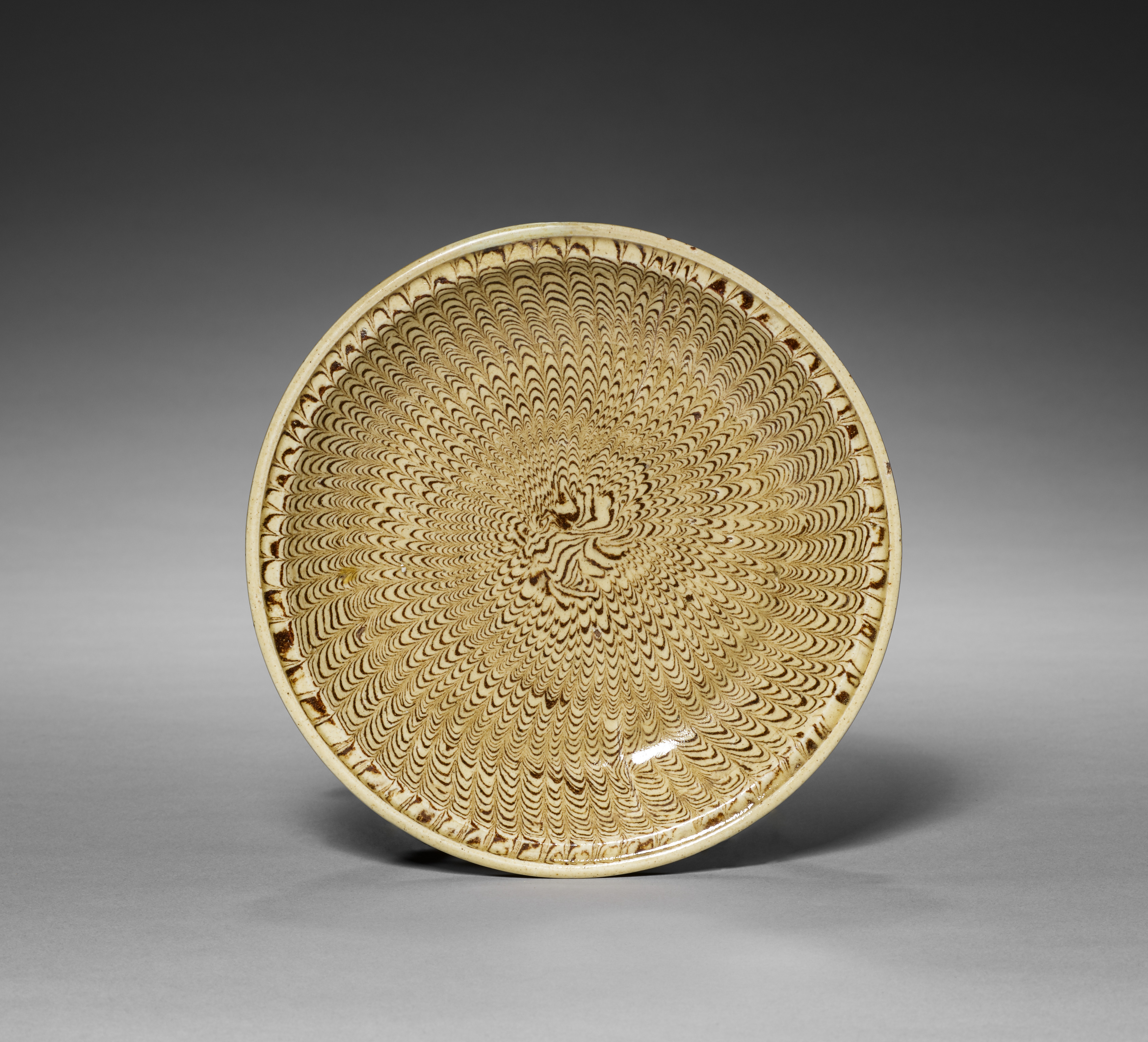
Flat Dish Made of Marbled Clay
Two clays, light and dark, kneaded together and cut so the pattern runs through the body rather than sitting on it. The glaze is clear and thin and does nothing except keep the marbling looking wet — one of the few Chinese wares where the decoration is the clay itself.
3400 × 3087 px · Unmodified source file
Open in StudioSource & licensing
- Creator / date
- North or Central China, Northern Song or Jin dynasty, maker unknown · 960–1234
- Source credit
- The Cleveland Museum of Art, 2020.187. Open Access.
- Usage notes
- Released by the Cleveland Museum of Art under CC0 1.0. Credit to the museum is encouraged; CC0 does not imply endorsement.
- Original file
- 3400 × 3087 px · JPG · 0.0 MB
- Source checked
- 2026-11-05 · editorial approval separate
CC0 · Public domain · c. 1100s
Bowl with Peonies
By the Jin period Yaozhou workshops were moulding decoration rather than carving it, so the peonies repeat exactly across the bowl. That is a different kind of object: faster to make, easier to standardise, and evidence of a workshop thinking about output rather than about one pot.
3400 × 1560 px · Unmodified source file
Open in StudioSource & licensing
- Creator / date
- China, Shaanxi province, Tongchuan, Huangbaozhen, Jin dynasty, maker unknown · c. 1100s
- Source credit
- The Cleveland Museum of Art, 2001.107. Open Access.
- Usage notes
- Released by the Cleveland Museum of Art under CC0 1.0. Credit to the museum is encouraged; CC0 does not imply endorsement.
- Original file
- 3400 × 1560 px · JPG · 0.0 MB
- Source checked
- 2026-11-05 · editorial approval separate
CC0 · Public domain · 1100s–1300s
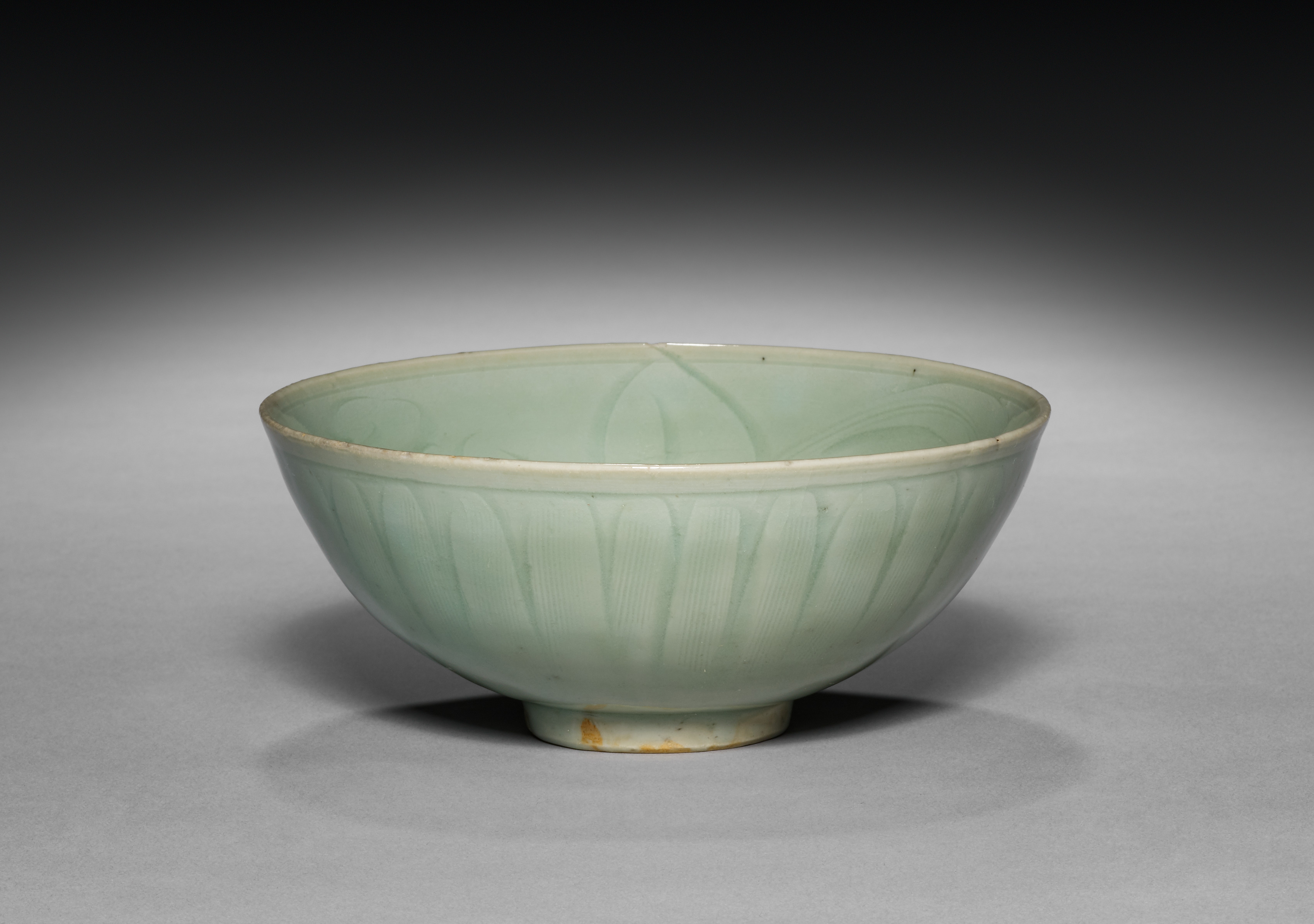
Bowl with Carved Lotus Design
Longquan celadon travelled further than any other Chinese ware — to Japan, Southeast Asia and the Middle East. The lotus petals are carved so the thick glaze collects at their edges, and the green deepens wherever the surface turns away from the light.
3400 × 2392 px · Unmodified source file
Open in StudioSource & licensing
- Creator / date
- China, Longquan kilns, Southern Song to Yuan dynasty, maker unknown · 1100s–1300s
- Source credit
- The Cleveland Museum of Art, 2020.181. Open Access.
- Usage notes
- Released by the Cleveland Museum of Art under CC0 1.0. Credit to the museum is encouraged; CC0 does not imply endorsement.
- Original file
- 3400 × 2392 px · JPG · 0.0 MB
- Source checked
- 2026-11-05 · editorial approval separate
Public-domain status is reported by the linked source and may vary by jurisdiction. Check the source record for your intended use. No exclusive rights or Visual Bounty marketplace license are offered for these images.