← Open CollectionsPublic-domain source library
Silk Road Kesi and Brocade
Kesi is silk tapestry woven to be reversible, so it could carry a picture and still be cut and reused. On the Silk Road, Jin and Yuan brocades put phoenixes, hares and lions into gold thread, much of it gilded paper, while Central Asian weavers worked palmettes and animals into yardage. Chinese rank badges, worn on court dress to declare an official’s grade, took the same technique into administration. Fragments here are mostly what remains of something much larger.
Original means the unmodified digital file supplied by the linked archive, not an upscaled or reconstructed image. Sign in for free downloads. Studio uses a working preview up to 2048 px.
CC0 · Public domain · 1100s–1200s
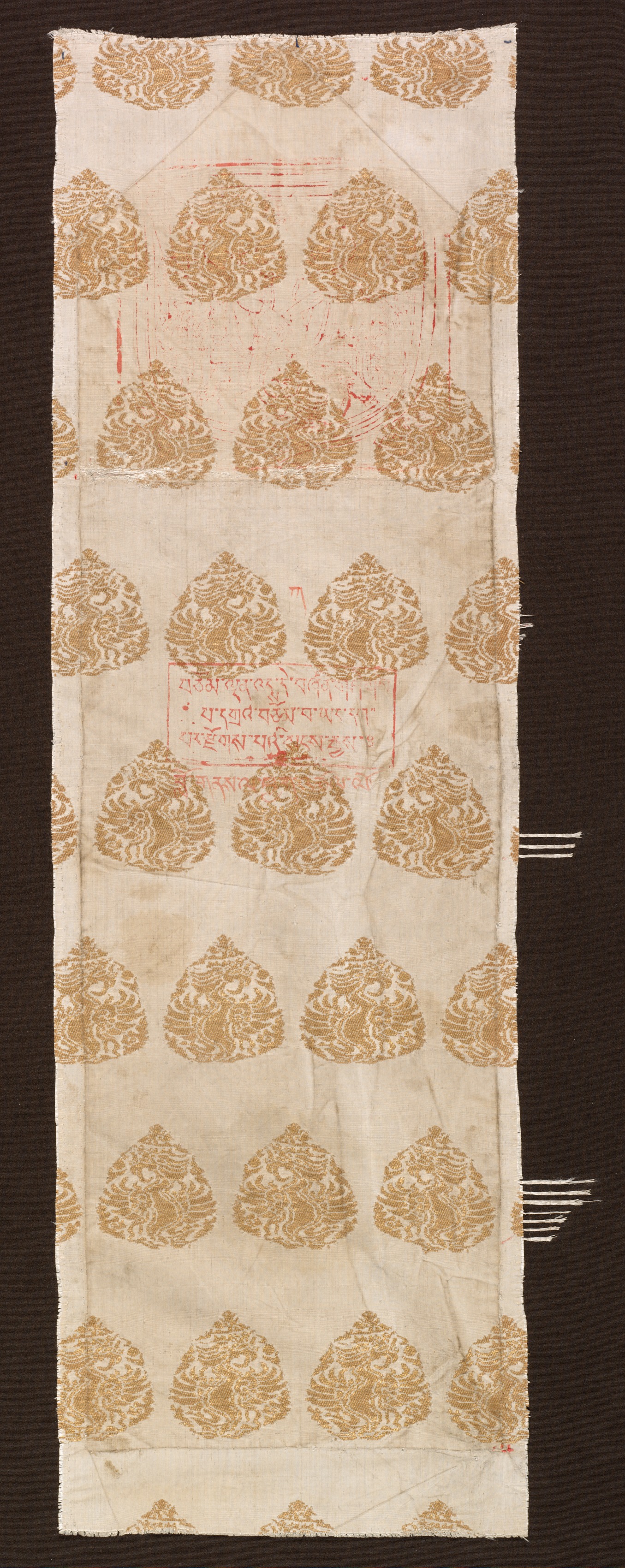
Brocade with Soaring Phoenixes among Clouds
Gold-brocaded phoenixes rising into clouds, woven in Jin dynasty China. Jin designs are typically asymmetrical, so the cloth reads as a flight rather than a repeat.
× px · Unmodified source file
Small archival scan: best for reference and screen use, not large prints.
Open in StudioSource & licensing
- Creator / date
- China, Jin dynasty, maker unknown · 1100s–1200s
- Source credit
- The Cleveland Museum of Art, 1994.292. Open Access.
- Usage notes
- Released by the Cleveland Museum of Art under CC0 1.0. Credit to the museum is encouraged; CC0 does not imply endorsement.
- Original file
- × px · JPG · 0.0 MB
- Source checked
- 2026-11-04 · editorial approval separate
CC0 · Public domain · 1115–1234
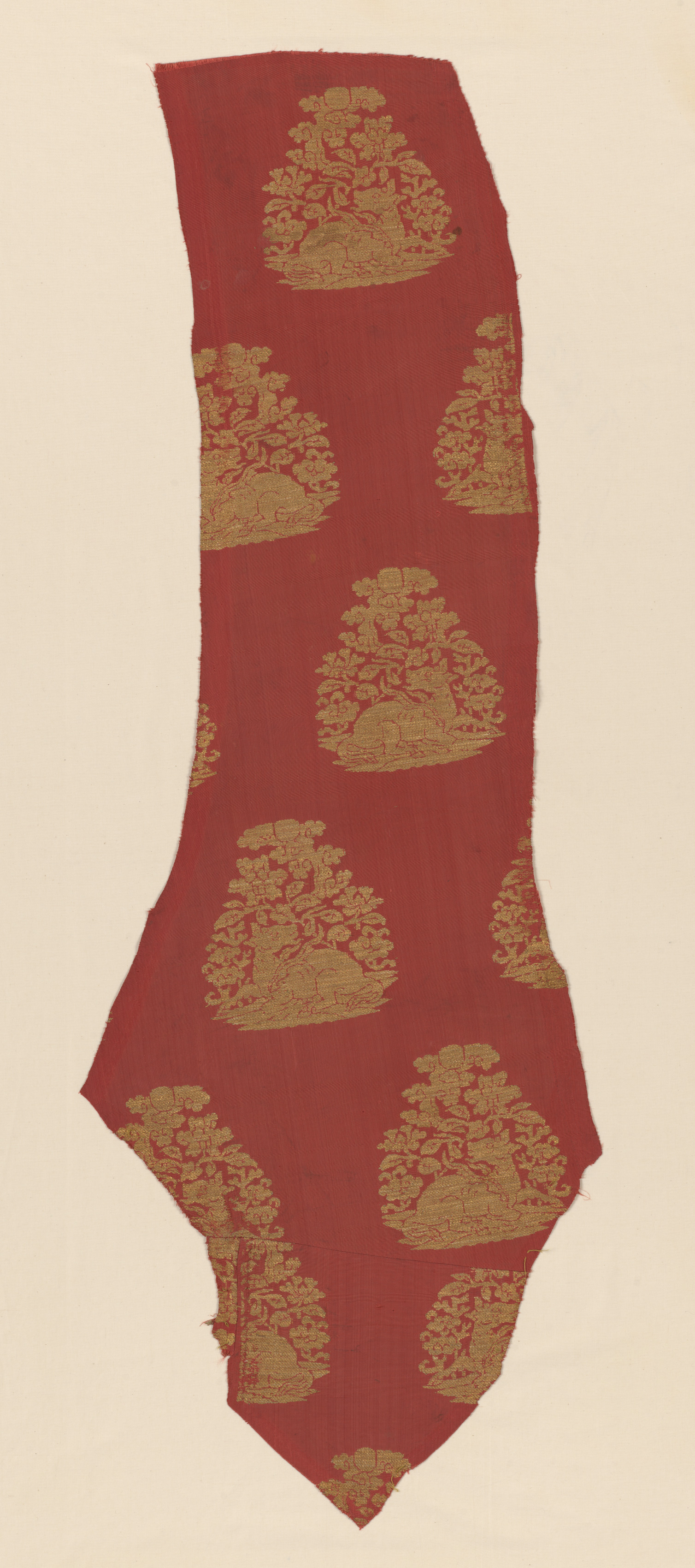
Brocade with Djeiran Gazing at the Moon
A deerlike animal lying down and gazing up at the moon among clouds, a motif interpreted in many ways over the centuries. Gold thread carries the whole design.
× px · Unmodified source file
Small archival scan: best for reference and screen use, not large prints.
Open in StudioSource & licensing
- Creator / date
- China, Jin dynasty, maker unknown · 1115–1234
- Source credit
- The Cleveland Museum of Art, 1991.4. Open Access.
- Usage notes
- Released by the Cleveland Museum of Art under CC0 1.0. Credit to the museum is encouraged; CC0 does not imply endorsement.
- Original file
- × px · JPG · 0.0 MB
- Source checked
- 2026-11-04 · editorial approval separate
CC0 · Public domain · 1200s–mid-1300s
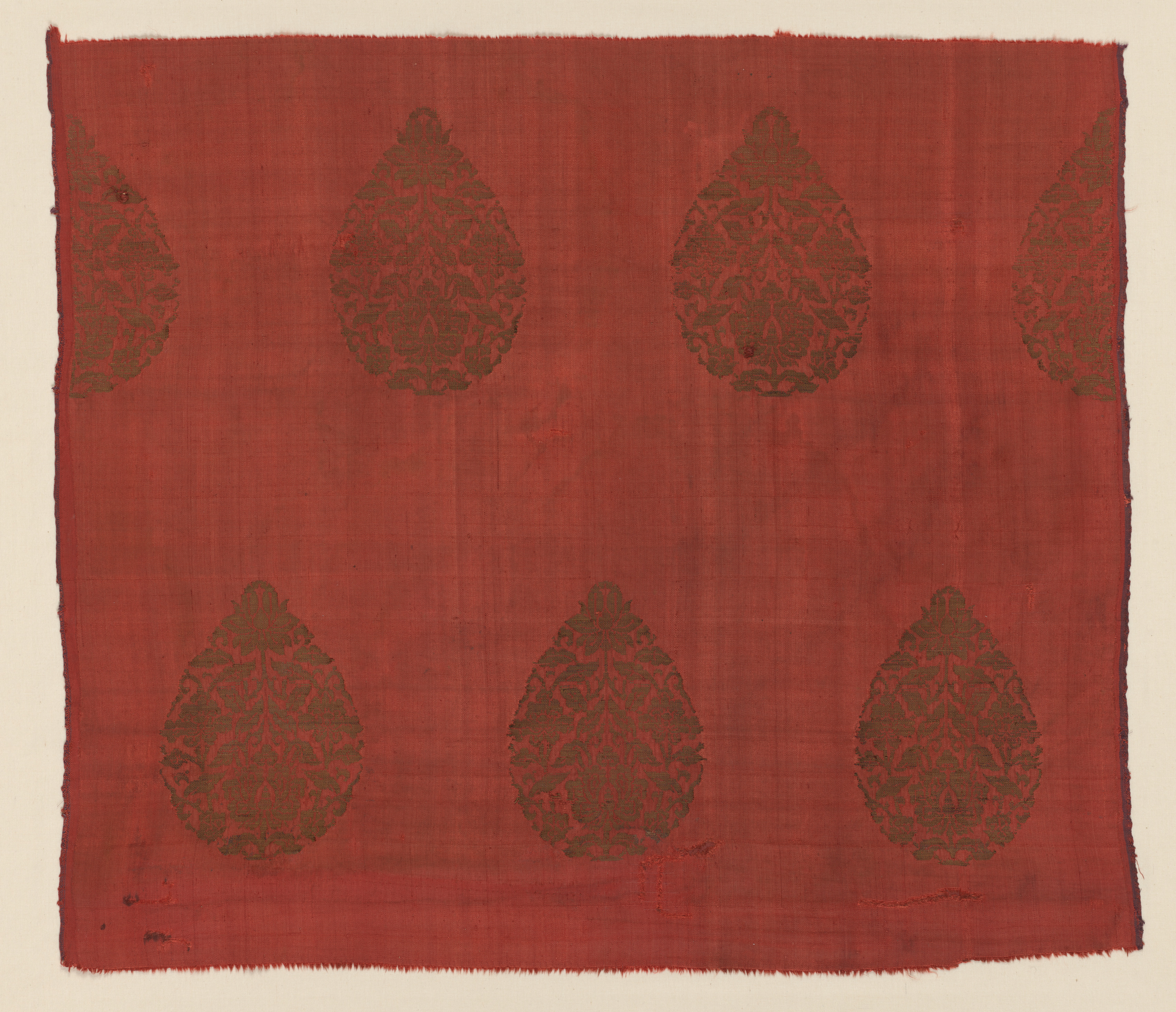
Brocade with Lotus Flowers
Northern Chinese brocade made after the Mongol conquest, with eastern Iranian craftsmen arriving and changing both technique and motif. The lotus still reads Chinese; the drawing is not.
× px · Unmodified source file
Small archival scan: best for reference and screen use, not large prints.
Open in StudioSource & licensing
- Creator / date
- Northern China, Yuan dynasty, maker unknown · 1200s–mid-1300s
- Source credit
- The Cleveland Museum of Art, 1994.293. Open Access.
- Usage notes
- Released by the Cleveland Museum of Art under CC0 1.0. Credit to the museum is encouraged; CC0 does not imply endorsement.
- Original file
- × px · JPG · 0.0 MB
- Source checked
- 2026-11-04 · editorial approval separate
CC0 · Public domain · 1100s–1200s
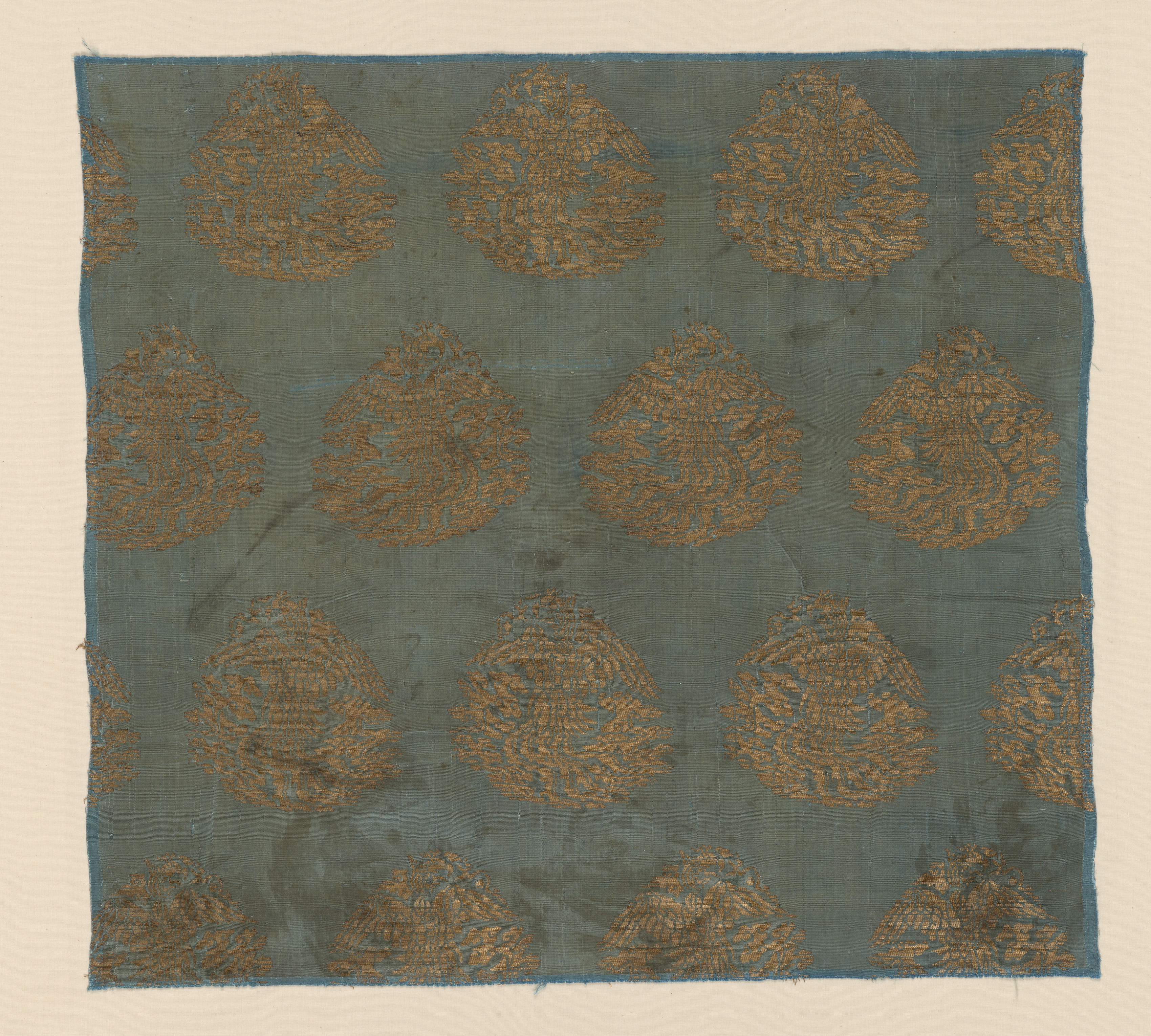
Brocade with Phoenixes
Front-facing phoenixes in gold thread made from flat strips of gilded paper rather than the usual membrane. A cheaper substitute that performs almost identically under light.
× px · Unmodified source file
Small archival scan: best for reference and screen use, not large prints.
Open in StudioSource & licensing
- Creator / date
- Central Asia, Jin dynasty, maker unknown · 1100s–1200s
- Source credit
- The Cleveland Museum of Art, 1994.27. Open Access.
- Usage notes
- Released by the Cleveland Museum of Art under CC0 1.0. Credit to the museum is encouraged; CC0 does not imply endorsement.
- Original file
- × px · JPG · 0.0 MB
- Source checked
- 2026-11-04 · editorial approval separate
CC0 · Public domain · 1200s–mid-1300s
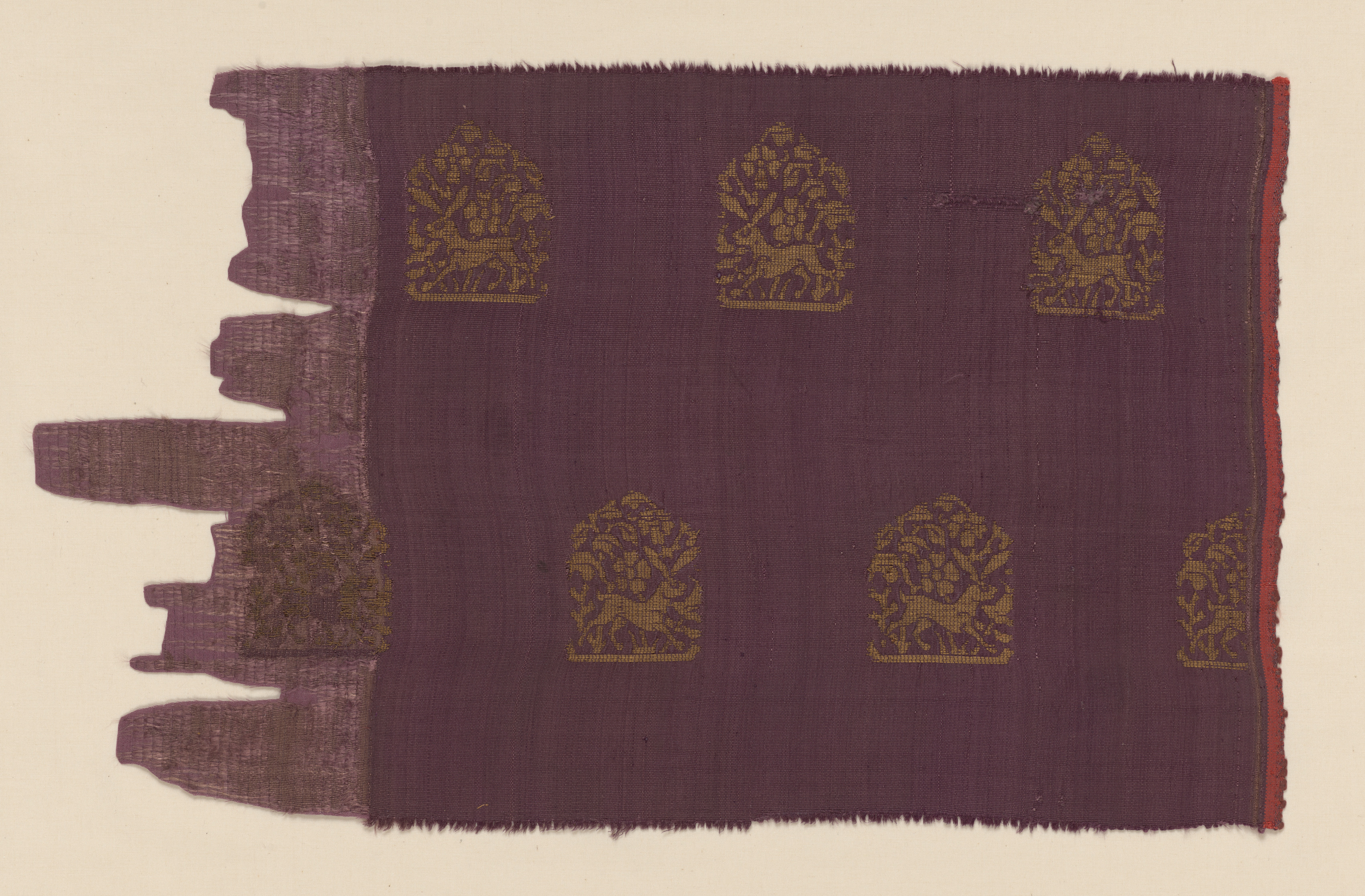
Brocade with Hares
Hares among bushes, a motif tied to the hunting culture of the Khitan, Jurchen and Mongols. The animals are woven into the ground rather than applied.
× px · Unmodified source file
Small archival scan: best for reference and screen use, not large prints.
Open in StudioSource & licensing
- Creator / date
- Northern China, Yuan dynasty, maker unknown · 1200s–mid-1300s
- Source credit
- The Cleveland Museum of Art, 1991.113. Open Access.
- Usage notes
- Released by the Cleveland Museum of Art under CC0 1.0. Credit to the museum is encouraged; CC0 does not imply endorsement.
- Original file
- × px · JPG · 0.0 MB
- Source checked
- 2026-11-04 · editorial approval separate
CC0 · Public domain · 1200s or earlier
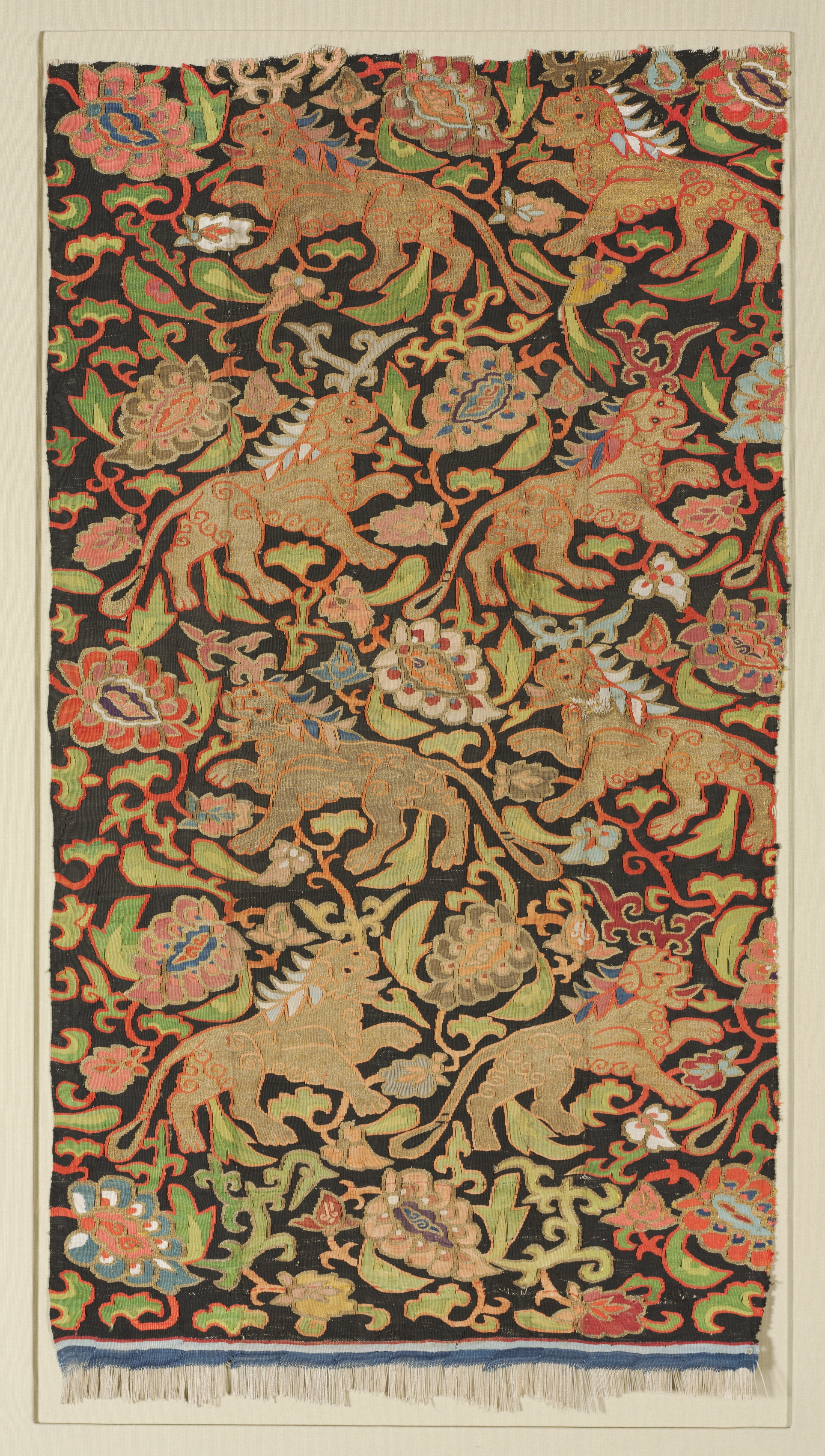
Tapestry with golden lions and palmettes
A reversible silk and metal-thread tapestry, a fragment of yardage intended for a garment. Kesi is woven to be seen from either side, which is why so much of it was cut and reused.
× px · Unmodified source file
Small archival scan: best for reference and screen use, not large prints.
Open in StudioSource & licensing
- Creator / date
- Central Asia, maker unknown · 1200s or earlier
- Source credit
- The Cleveland Museum of Art, 1991.3. Open Access.
- Usage notes
- Released by the Cleveland Museum of Art under CC0 1.0. Credit to the museum is encouraged; CC0 does not imply endorsement.
- Original file
- × px · JPG · 0.0 MB
- Source checked
- 2026-11-04 · editorial approval separate
CC0 · Public domain · 1000s–1200
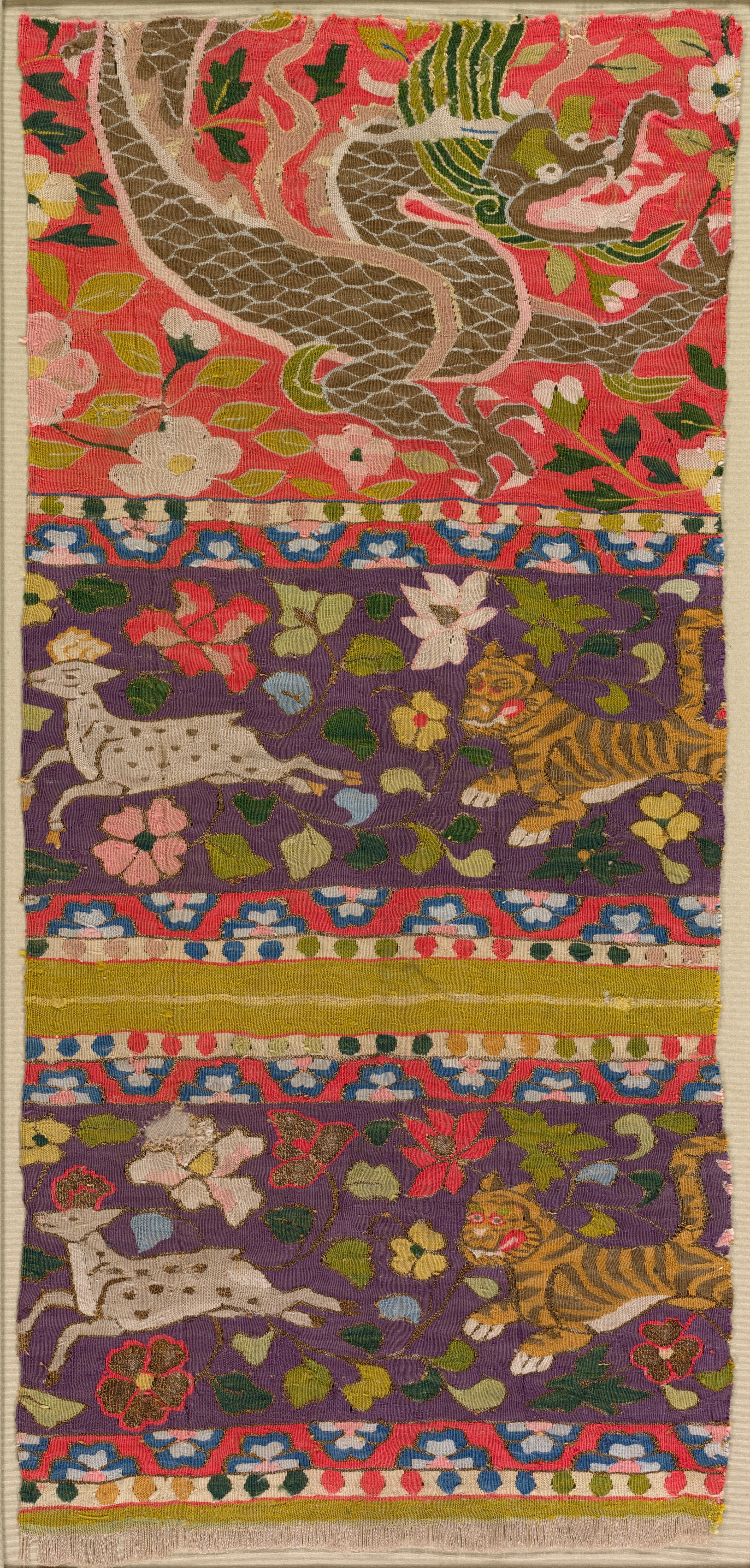
Tigers Chasing Deer, with Dragon
Tigers, deer and a dragon in reversible tapestry, the animals arranged as a pursuit across the cloth. Kesi allowed pictorial detail that ordinary weaving could not reach.
× px · Unmodified source file
Small archival scan: best for reference and screen use, not large prints.
Open in StudioSource & licensing
- Creator / date
- China, Eastern, 11th–12th century, maker unknown · 1000s–1200
- Source credit
- The Cleveland Museum of Art, 1988.100. Open Access.
- Usage notes
- Released by the Cleveland Museum of Art under CC0 1.0. Credit to the museum is encouraged; CC0 does not imply endorsement.
- Original file
- × px · JPG · 0.0 MB
- Source checked
- 2026-11-04 · editorial approval separate
CC0 · Public domain · 1200s or earlier
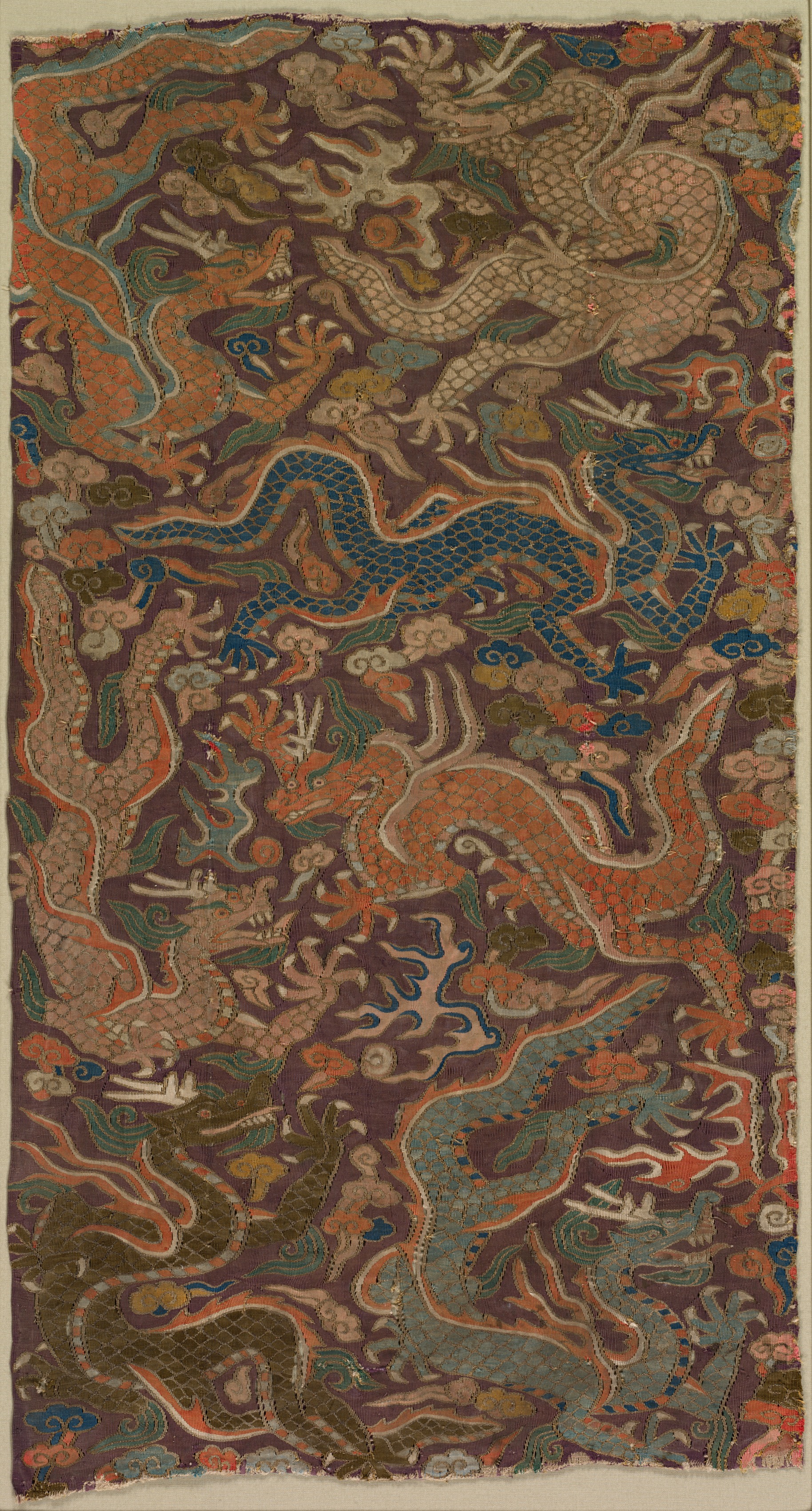
Dragons Chasing Flaming Pearls
Dragons in pursuit of flaming pearls on a deep purple ground, in silk and gold tapestry. The purple ground is what makes the gold read as light rather than metal.
× px · Unmodified source file
Small archival scan: best for reference and screen use, not large prints.
Open in StudioSource & licensing
- Creator / date
- Central China, maker unknown · 1200s or earlier
- Source credit
- The Cleveland Museum of Art, 1988.33. Open Access.
- Usage notes
- Released by the Cleveland Museum of Art under CC0 1.0. Credit to the museum is encouraged; CC0 does not imply endorsement.
- Original file
- × px · JPG · 0.0 MB
- Source checked
- 2026-11-04 · editorial approval separate
CC0 · Public domain · 1100s/1400s
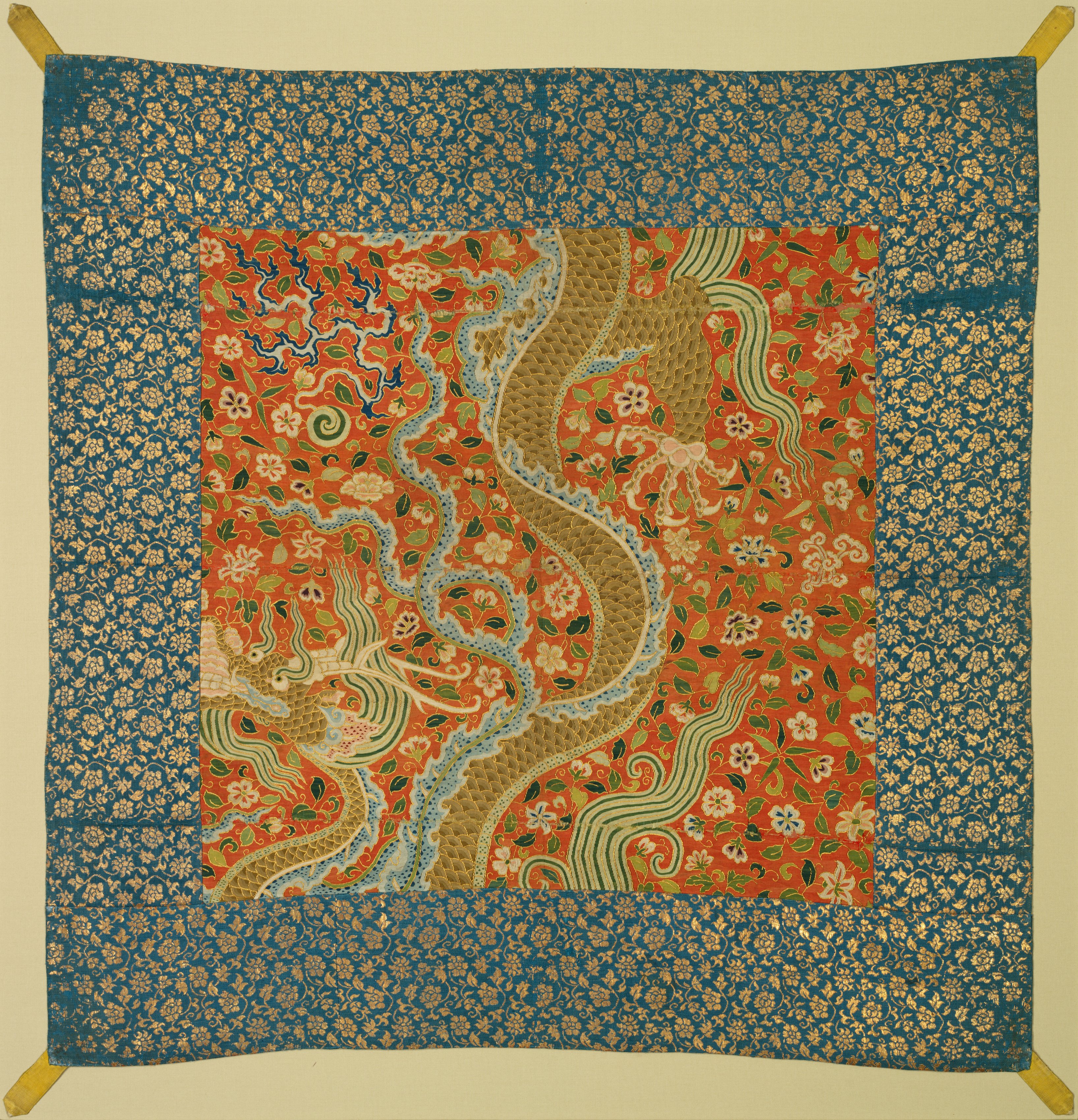
Canopy with Dragon among Flowers
A kesi dragon among flowers sewn into the centre of a canopy, with a border added centuries later. The two dates are visible in the weave and record how textiles were repaired and kept.
× px · Unmodified source file
Small archival scan: best for reference and screen use, not large prints.
Open in StudioSource & licensing
- Creator / date
- China, Southern Song center with a later border, maker unknown · 1100s/1400s
- Source credit
- The Cleveland Museum of Art, 1995.1. Open Access.
- Usage notes
- Released by the Cleveland Museum of Art under CC0 1.0. Credit to the museum is encouraged; CC0 does not imply endorsement.
- Original file
- × px · JPG · 0.0 MB
- Source checked
- 2026-11-04 · editorial approval separate
CC0 · Public domain · c. 1500–1550
Rank Badge (buzi)
A Ming rank badge in slit tapestry, worn on court dress to mark official grade. Each bird or animal belonged to a rank, so the pattern was a form of identification.
× px · Unmodified source file
Small archival scan: best for reference and screen use, not large prints.
Open in StudioSource & licensing
- Creator / date
- China, Ming dynasty, maker unknown · c. 1500–1550
- Source credit
- The Cleveland Museum of Art, 1985.32. Open Access.
- Usage notes
- Released by the Cleveland Museum of Art under CC0 1.0. Credit to the museum is encouraged; CC0 does not imply endorsement.
- Original file
- × px · JPG · 0.0 MB
- Source checked
- 2026-11-04 · editorial approval separate
CC0 · Public domain · 1850–99
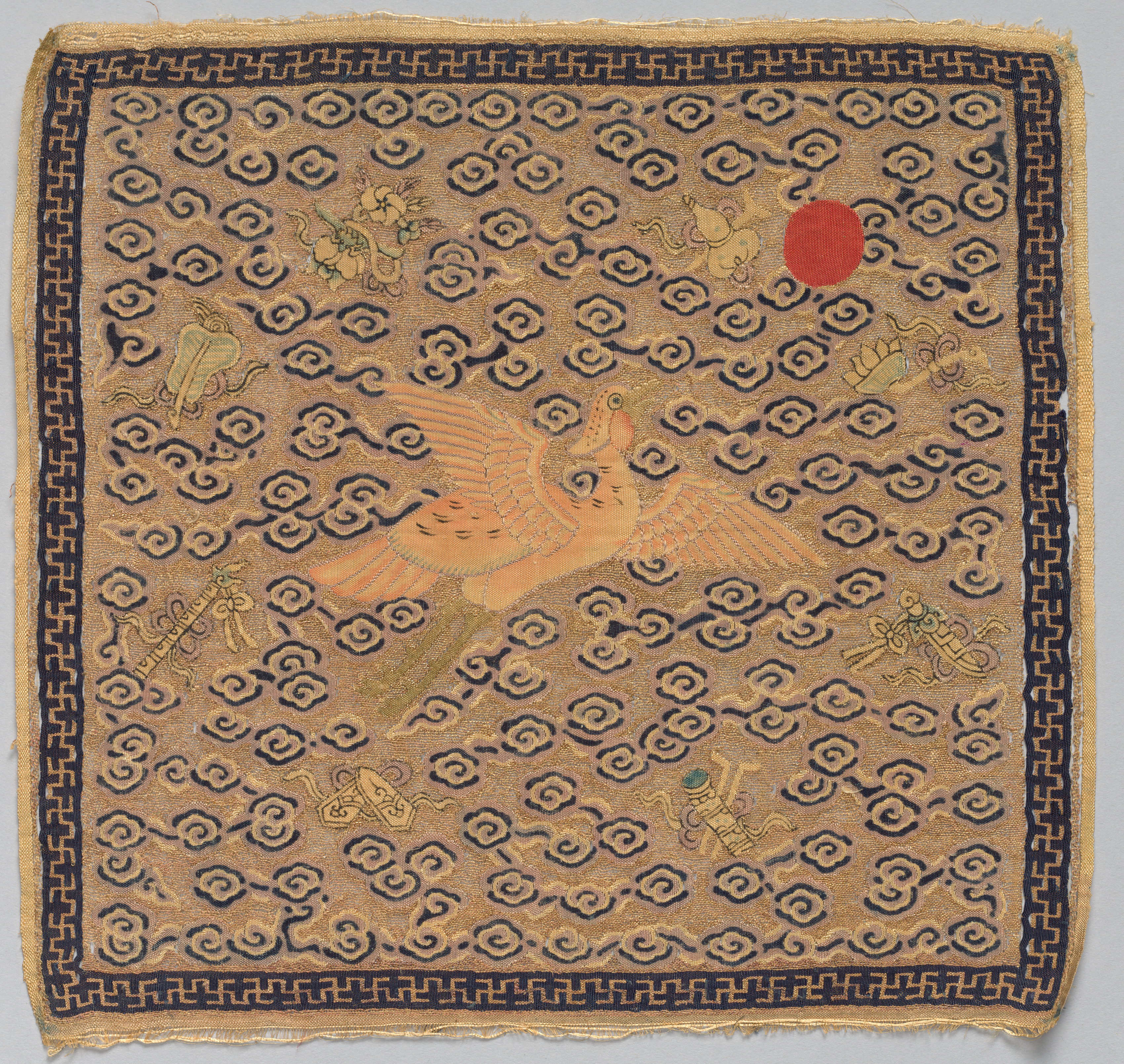
Rank Badge (buzi)
A Qing badge in silk and metal thread, four centuries of the same system carried to its most elaborate. By this date the embroidery shares the field with the weaving.
× px · Unmodified source file
Small archival scan: best for reference and screen use, not large prints.
Open in StudioSource & licensing
- Creator / date
- China, Qing dynasty, maker unknown · 1850–99
- Source credit
- The Cleveland Museum of Art, 1916.1329. Open Access.
- Usage notes
- Released by the Cleveland Museum of Art under CC0 1.0. Credit to the museum is encouraged; CC0 does not imply endorsement.
- Original file
- × px · JPG · 0.0 MB
- Source checked
- 2026-11-04 · editorial approval separate
CC0 · Public domain · 1700s–1800s
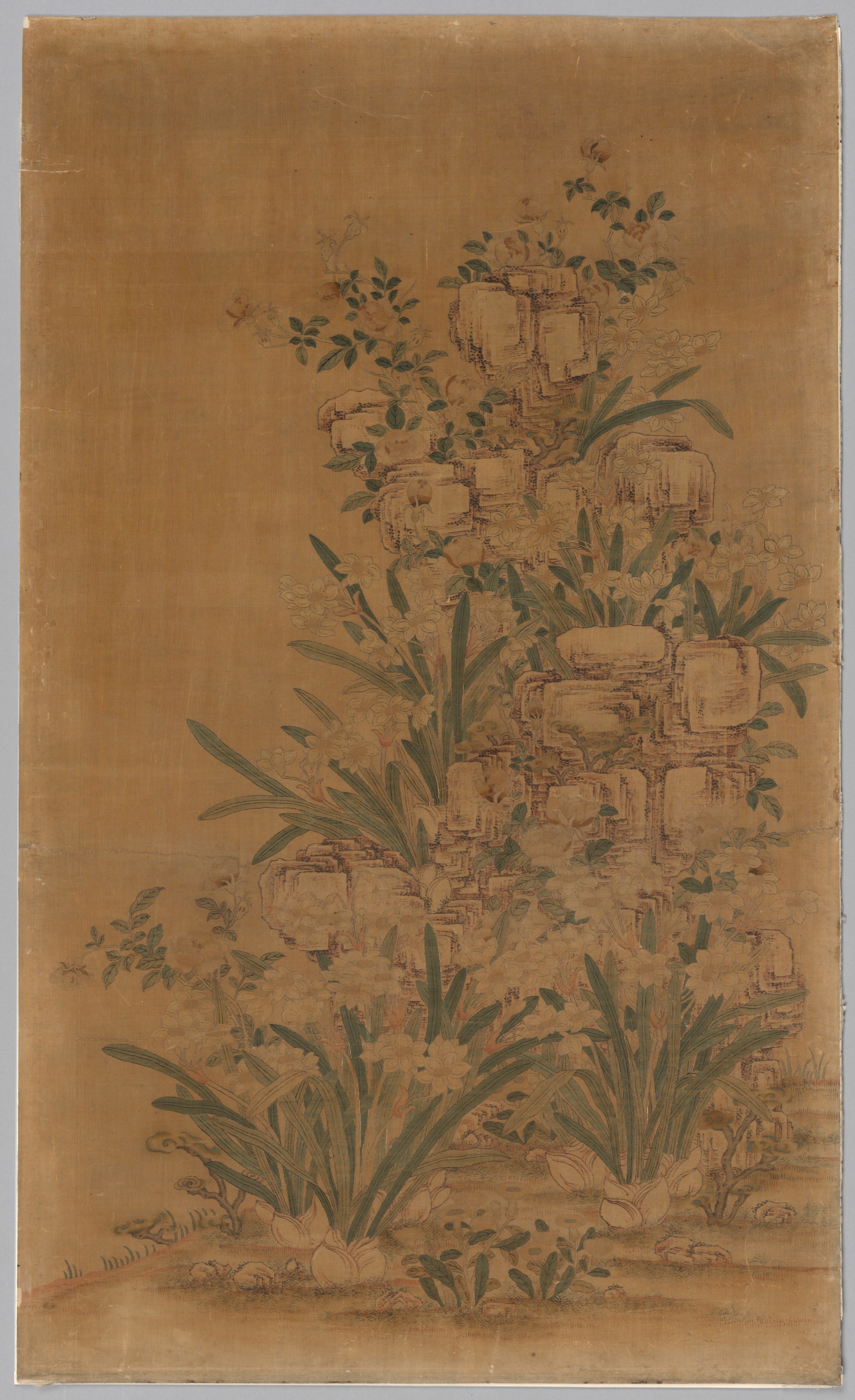
Kesi Panel: Rocks and Narcissus
A panel of rocks and narcissus, the flower of the new year, woven as a painting. Kesi panels were mounted and hung like scrolls.
× px · Unmodified source file
Small archival scan: best for reference and screen use, not large prints.
Open in StudioSource & licensing
- Creator / date
- China, Qing dynasty, maker unknown · 1700s–1800s
- Source credit
- The Cleveland Museum of Art, 1915.654. Open Access.
- Usage notes
- Released by the Cleveland Museum of Art under CC0 1.0. Credit to the museum is encouraged; CC0 does not imply endorsement.
- Original file
- × px · JPG · 0.0 MB
- Source checked
- 2026-11-04 · editorial approval separate
CC0 · Public domain · 1700s–1800s
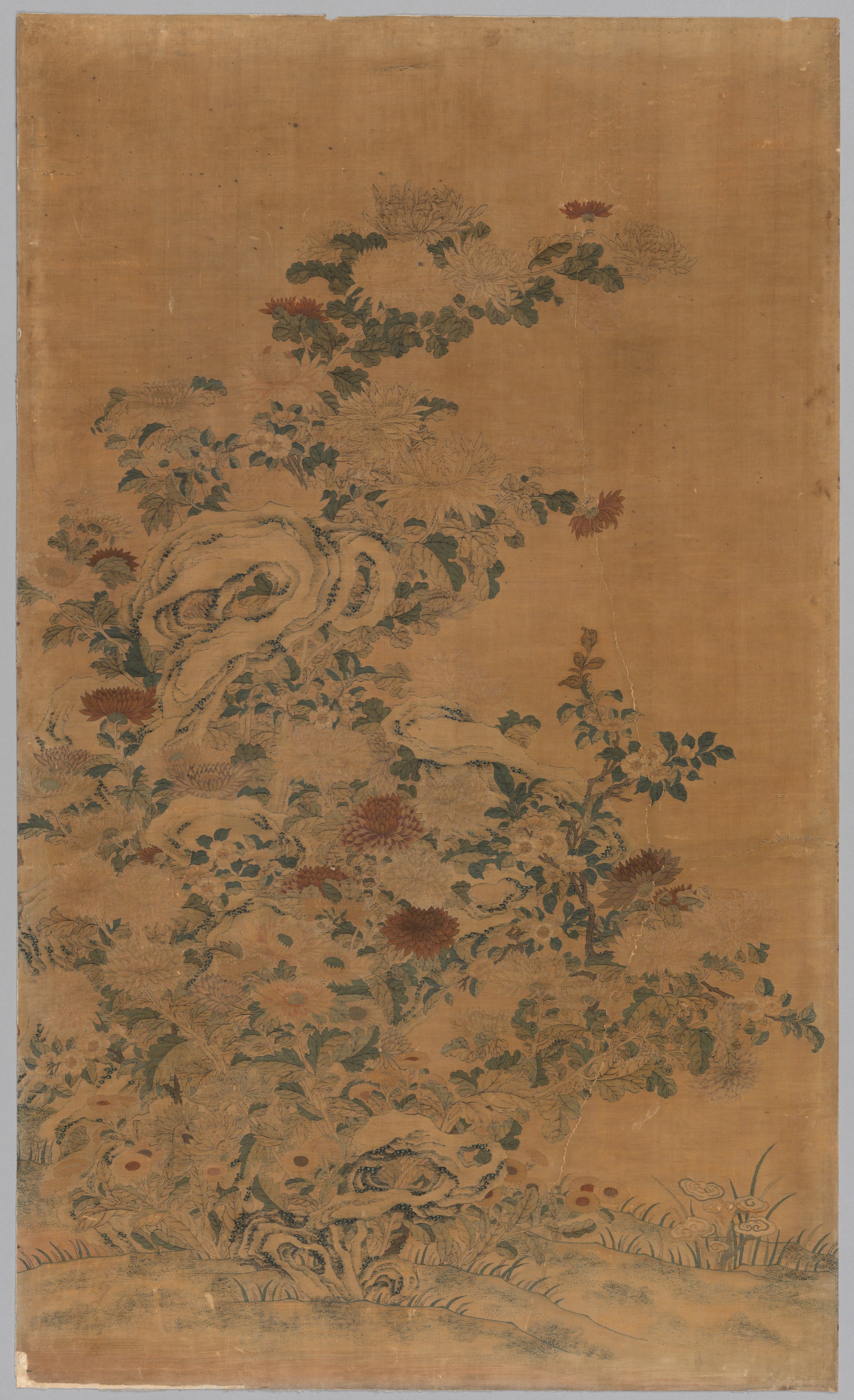
Kesi Panel: Rocks and Chrysanthemums
Its companion in the chrysanthemum, the autumn flower. Together the two panels follow the seasons, a standard pairing in Chinese decorative art.
× px · Unmodified source file
Small archival scan: best for reference and screen use, not large prints.
Open in StudioSource & licensing
- Creator / date
- China, Qing dynasty, maker unknown · 1700s–1800s
- Source credit
- The Cleveland Museum of Art, 1915.653. Open Access.
- Usage notes
- Released by the Cleveland Museum of Art under CC0 1.0. Credit to the museum is encouraged; CC0 does not imply endorsement.
- Original file
- × px · JPG · 0.0 MB
- Source checked
- 2026-11-04 · editorial approval separate
CC0 · Public domain · 1700s–1800s
Strip of Silk Tapestry (Kesi)
A strip of kesi with gold, probably cut from a larger furnishing. Fragments like this are how most kesi reaches us: the surviving piece of something much larger.
× px · Unmodified source file
Small archival scan: best for reference and screen use, not large prints.
Open in StudioSource & licensing
- Creator / date
- China, Qing dynasty, maker unknown · 1700s–1800s
- Source credit
- The Cleveland Museum of Art, 1916.1332. Open Access.
- Usage notes
- Released by the Cleveland Museum of Art under CC0 1.0. Credit to the museum is encouraged; CC0 does not imply endorsement.
- Original file
- × px · JPG · 0.0 MB
- Source checked
- 2026-11-04 · editorial approval separate
Public-domain status is reported by the linked source and may vary by jurisdiction. Check the source record for your intended use. No exclusive rights or Visual Bounty marketplace license are offered for these images.