← Open CollectionsPublic-domain source library
Samplers: Stitch, Alphabet, Border
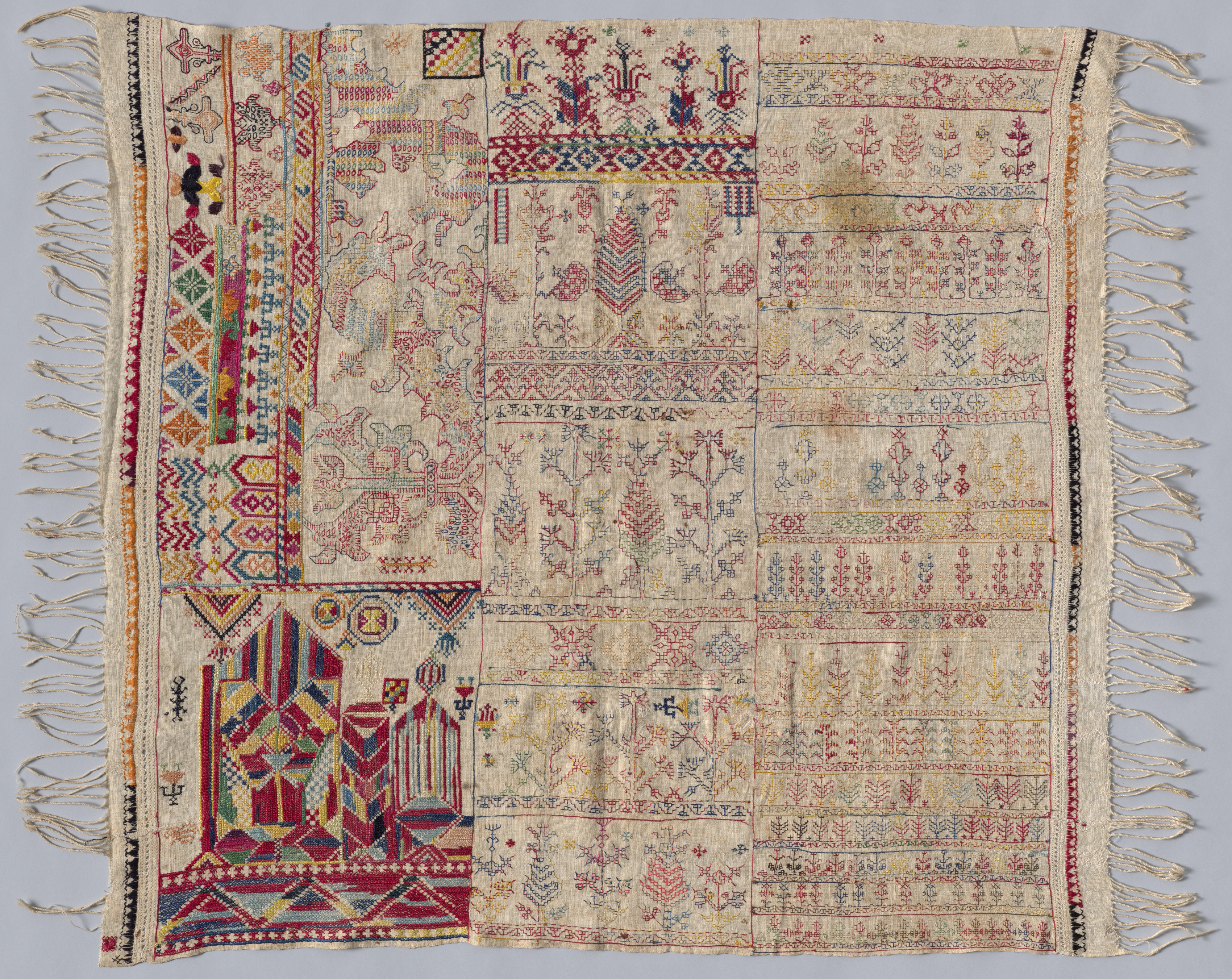
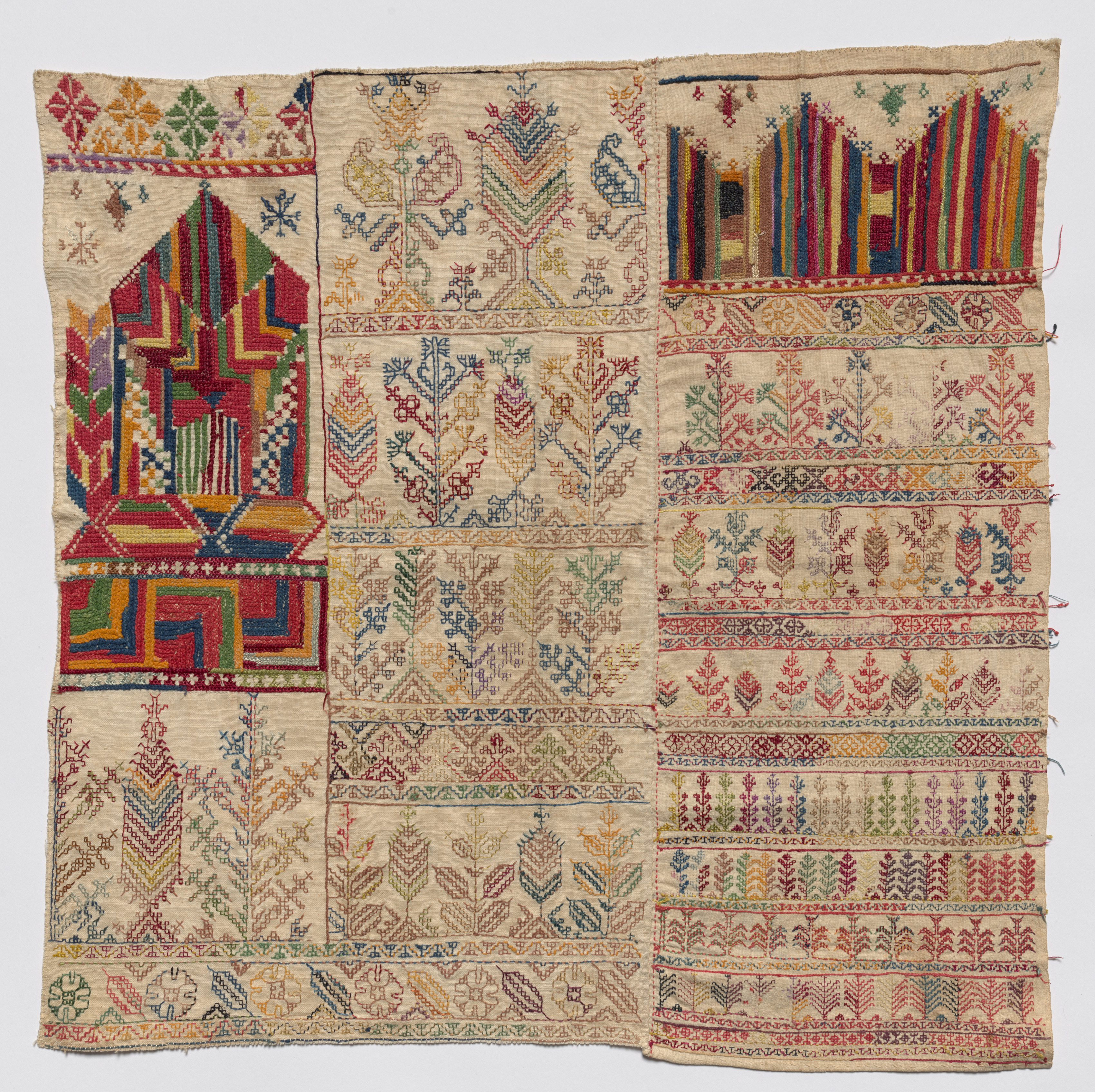
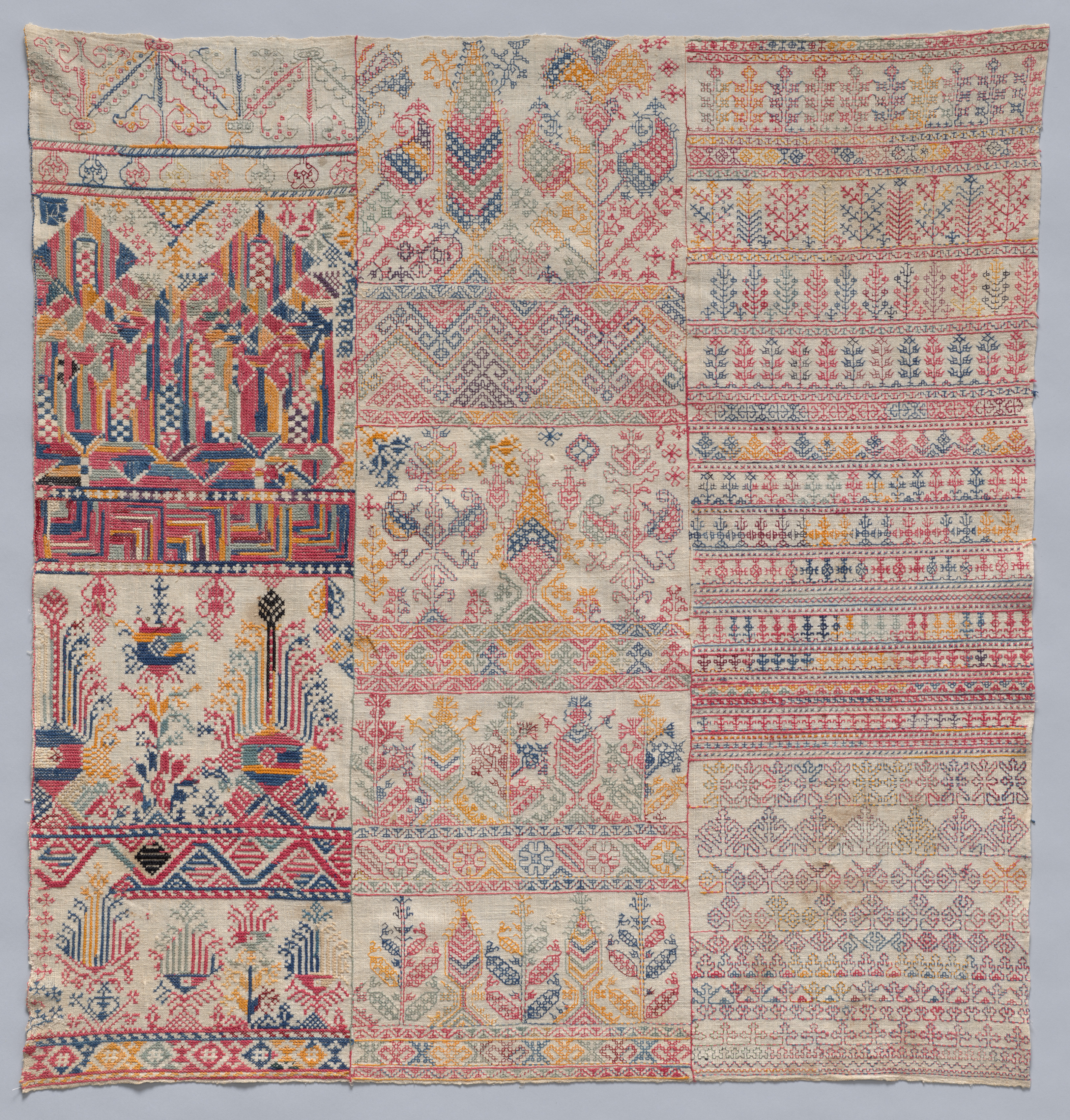
A sampler is a record of practice: alphabets, borders and motifs worked to be learned rather than to be used. In England and the Netherlands they were schoolroom exercises, and many carry the name and date of the girl who stitched them, which is why samplers survive as documents of individual lives. In Morocco the chelliga works differently, as a working reference sheet of floral designs and protective khamsa hands kept for copying onto other cloth.
Original means the unmodified digital file supplied by the linked archive, not an upscaled or reconstructed image. Sign in for free downloads. Studio uses a working preview up to 2048 px.
CC0 · Public domain · c. 1650–70
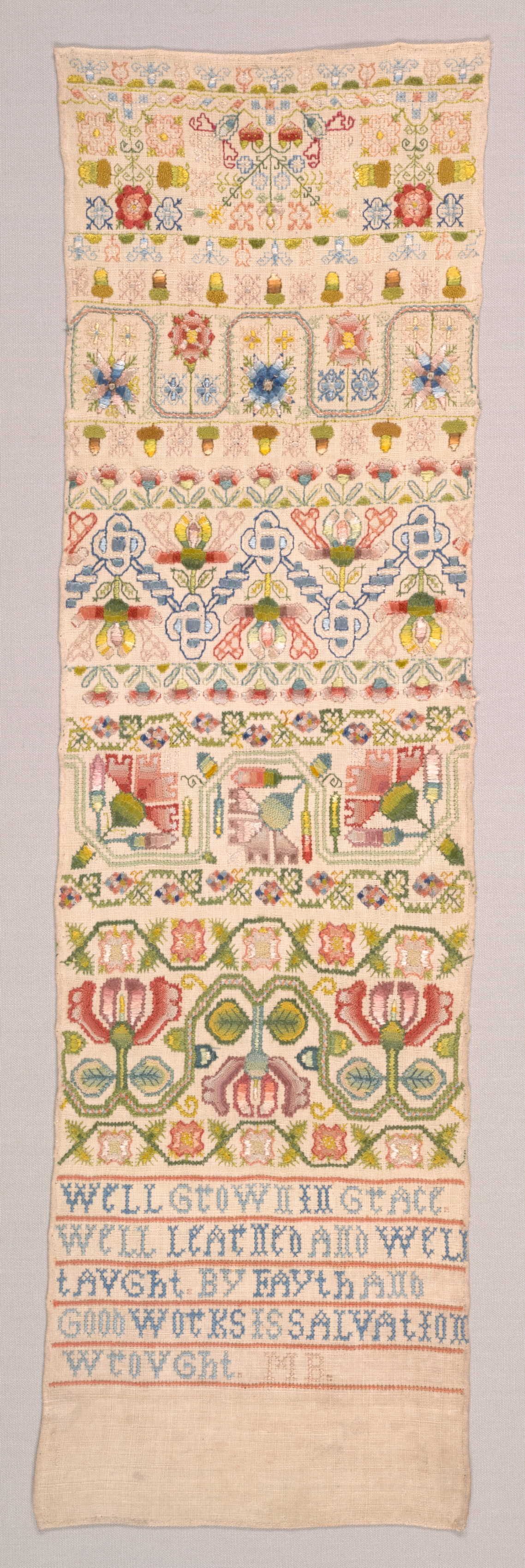
Long Sampler
A band sampler of the kind English girls worked in the seventeenth century: rows of cutwork, eyelet and counted stitches, each band a test of a different technique. Nothing is designed; the sampler is the record of what the hand can do.
× px · Unmodified source file
Small archival scan: best for reference and screen use, not large prints.
Open in StudioSource & licensing
- Creator / date
- England, 17th century, maker unknown · c. 1650–70
- Source credit
- The Cleveland Museum of Art, 1942.506. Open Access.
- Usage notes
- Released by the Cleveland Museum of Art under CC0 1.0. Credit to the museum is encouraged; CC0 does not imply endorsement.
- Original file
- × px · JPG · 0.0 MB
- Source checked
- 2026-11-04 · editorial approval separate
CC0 · Public domain · 1882
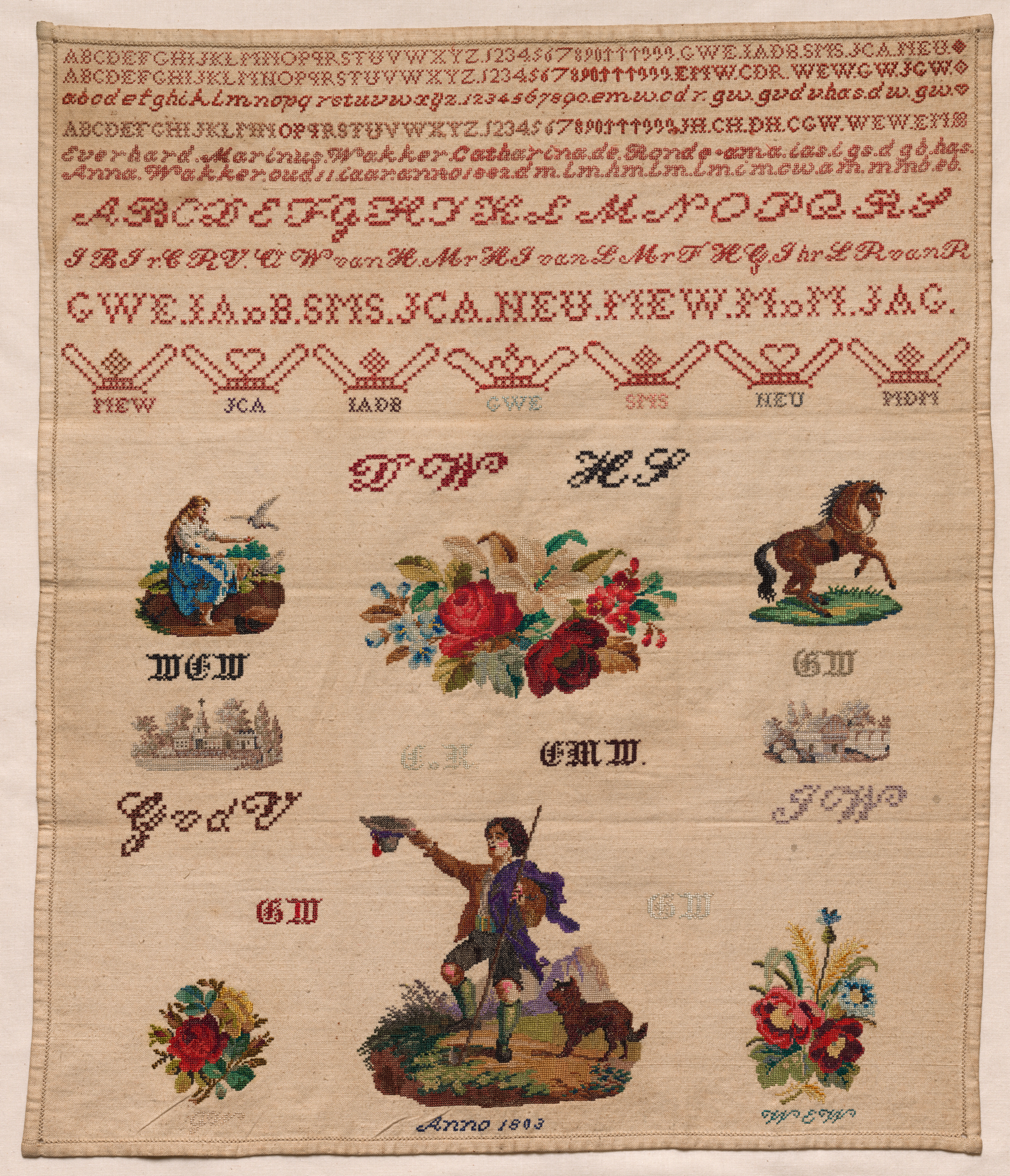
Sampler
Worked by Anna at the Burgerweeshuis, the citizen’s orphanage in Amsterdam, where needlework was part of the education. She embroidered her own name into the cloth, which is how the sampler survives as a document of a person.
× px · Unmodified source file
Small archival scan: best for reference and screen use, not large prints.
Open in StudioSource & licensing
- Creator / date
- Netherlands, late 19th century, maker unknown · 1882
- Source credit
- The Cleveland Museum of Art, 1943.98. Open Access.
- Usage notes
- Released by the Cleveland Museum of Art under CC0 1.0. Credit to the museum is encouraged; CC0 does not imply endorsement.
- Original file
- × px · JPG · 0.0 MB
- Source checked
- 2026-11-04 · editorial approval separate
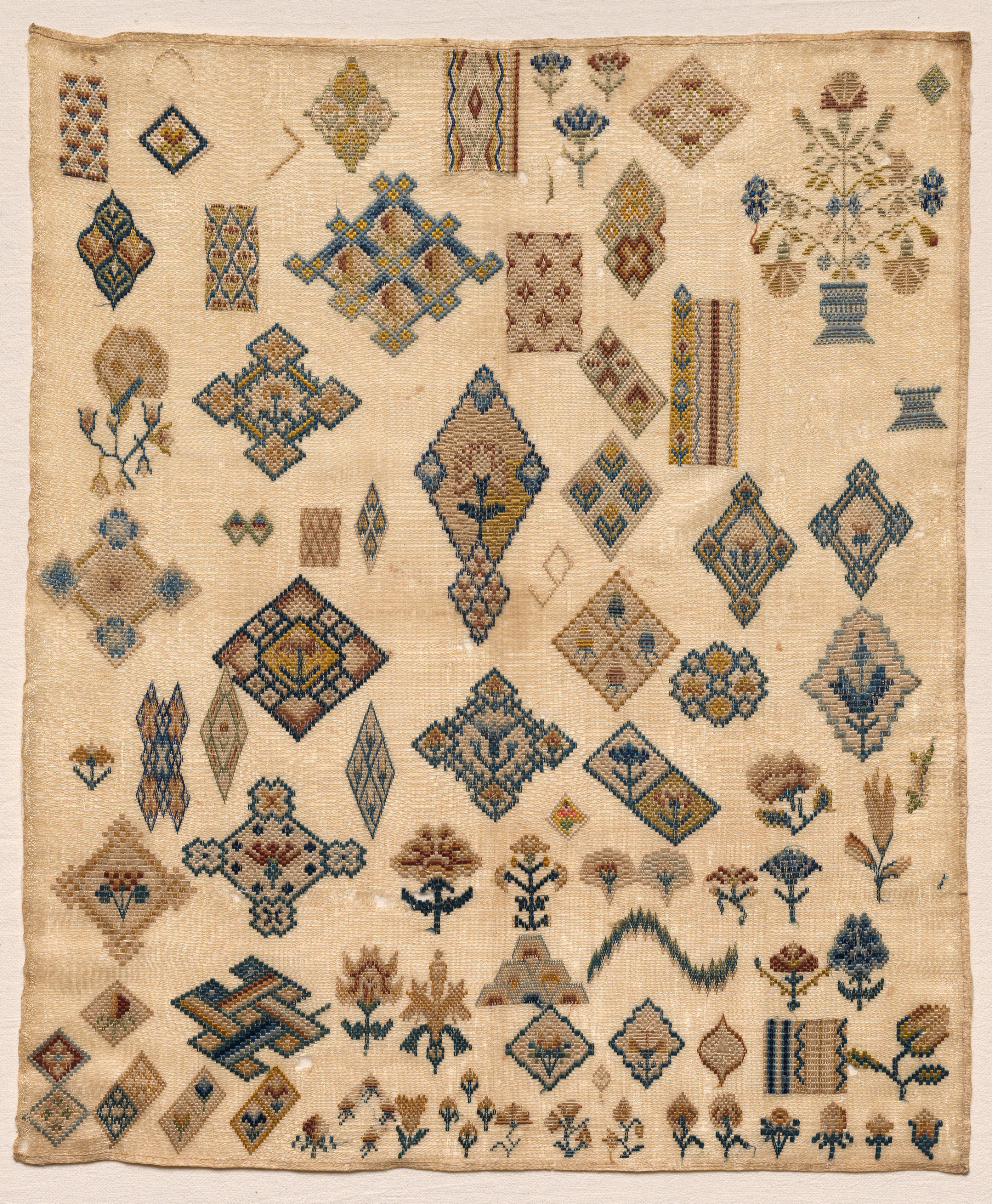
CC0 · Public domain · c. 1880
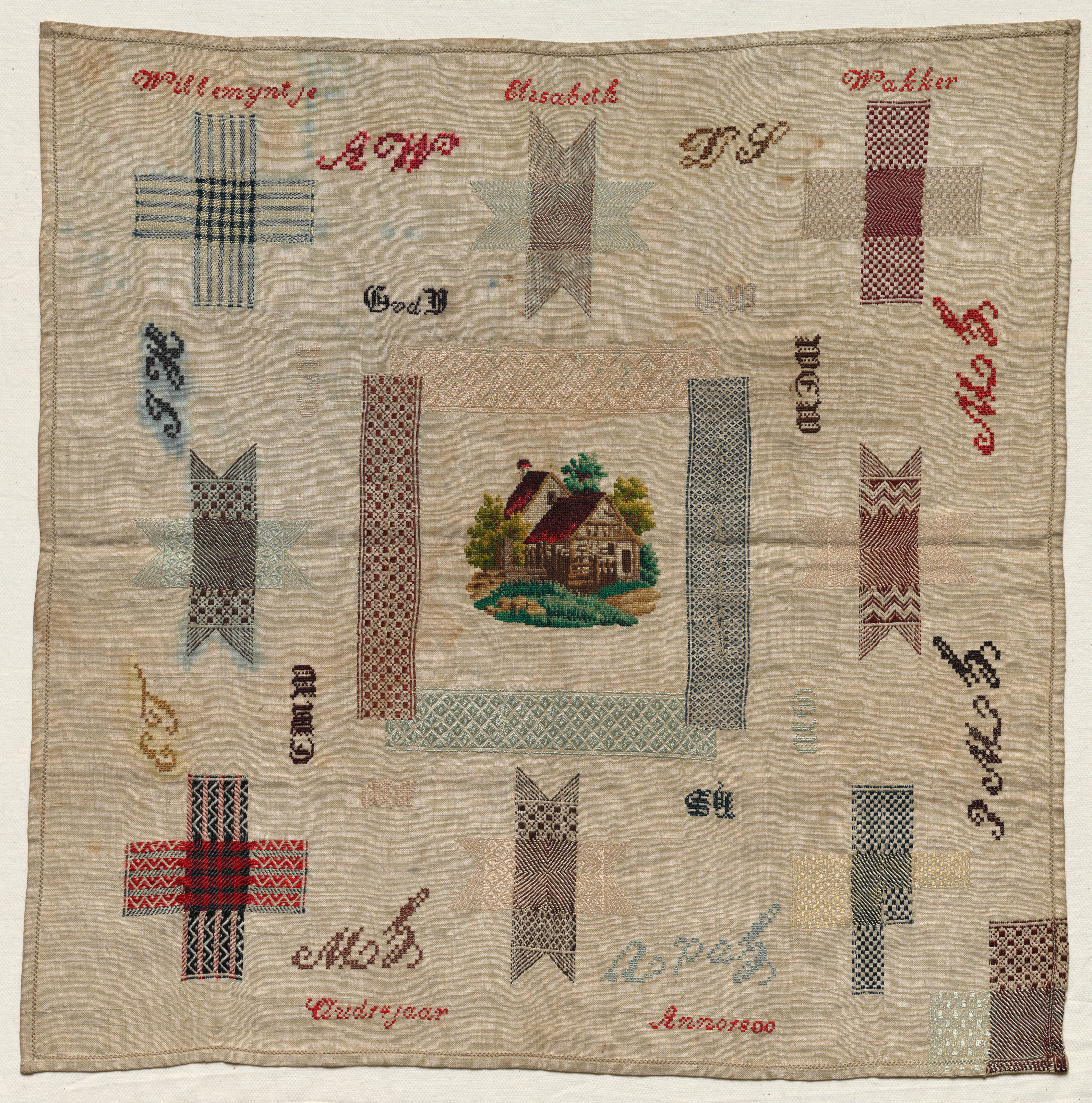
Darning Sampler
A darning sampler by Willemijntje, who entered the Amsterdam Burgerweeshuis with her three sisters. The squares are repairs practised on purpose, a useful skill recorded as ornament.
× px · Unmodified source file
Small archival scan: best for reference and screen use, not large prints.
Open in StudioSource & licensing
- Creator / date
- Netherlands, early 19th century, maker unknown · c. 1880
- Source credit
- The Cleveland Museum of Art, 1943.110. Open Access.
- Usage notes
- Released by the Cleveland Museum of Art under CC0 1.0. Credit to the museum is encouraged; CC0 does not imply endorsement.
- Original file
- × px · JPG · 0.0 MB
- Source checked
- 2026-11-04 · editorial approval separate
CC0 · Public domain · 1600s
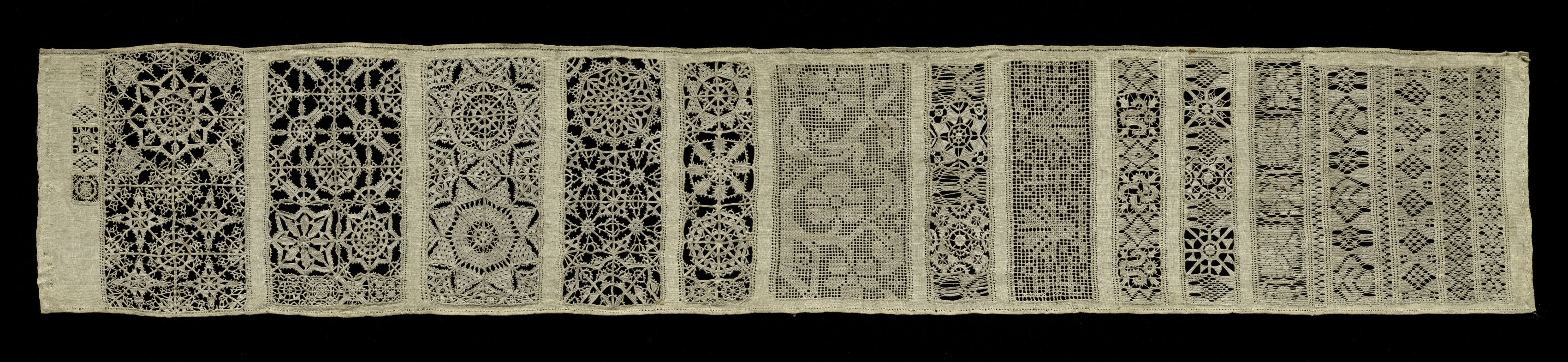
Lace Sampler
Needle lace, reticella, drawnwork and cutwork on one linen ground, initialled M. P. in eyelet stitch at the bottom, the second letter left incomplete.
× px · Unmodified source file
Small archival scan: best for reference and screen use, not large prints.
Open in StudioSource & licensing
- Creator / date
- England, maker unknown · 1600s
- Source credit
- The Cleveland Museum of Art, 1942.501. Open Access.
- Usage notes
- Released by the Cleveland Museum of Art under CC0 1.0. Credit to the museum is encouraged; CC0 does not imply endorsement.
- Original file
- × px · JPG · 0.0 MB
- Source checked
- 2026-11-04 · editorial approval separate
CC0 · Public domain · 1809
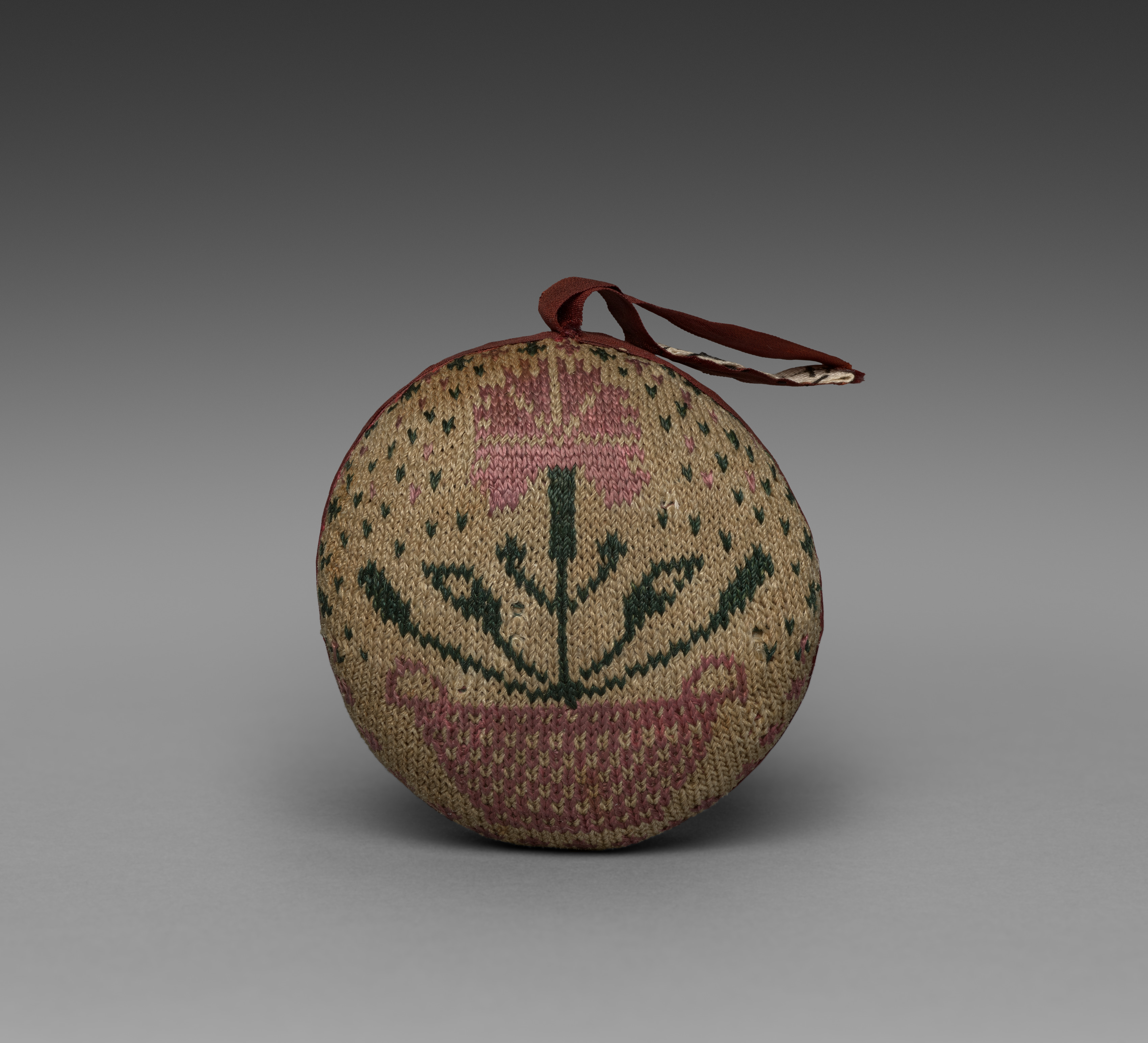
Pin Cushion Sampler
A knitted silk pin cushion with the name Mary Williamson and the date 1809 worked into it. A sampler that is also an object, made to be used rather than hung.
× px · Unmodified source file
Small archival scan: best for reference and screen use, not large prints.
Open in StudioSource & licensing
- Creator / date
- England, maker unknown · 1809
- Source credit
- The Cleveland Museum of Art, 1943.121. Open Access.
- Usage notes
- Released by the Cleveland Museum of Art under CC0 1.0. Credit to the museum is encouraged; CC0 does not imply endorsement.
- Original file
- × px · JPG · 0.0 MB
- Source checked
- 2026-11-04 · editorial approval separate
CC0 · Public domain · 1800s
Embroidery Sampler (Chelliga)
A Moroccan chelliga from Salé, showing floral designs, the protective open-palm khamsa and several border patterns in one cloth. In North Africa the sampler doubles as a reference sheet of motifs to be copied onto other work.
× px · Unmodified source file
Small archival scan: best for reference and screen use, not large prints.
Open in StudioSource & licensing
- Creator / date
- Morocco, Salé, maker unknown · 1800s
- Source credit
- The Cleveland Museum of Art, 1929.842. Open Access.
- Usage notes
- Released by the Cleveland Museum of Art under CC0 1.0. Credit to the museum is encouraged; CC0 does not imply endorsement.
- Original file
- × px · JPG · 0.0 MB
- Source checked
- 2026-11-04 · editorial approval separate
CC0 · Public domain · c. 1700s
Embroidery Sampler (Chelliga)
An earlier chelliga, and a demonstration of technical range as much as of design. The khamsa recurs as a protective sign, always placed to face the viewer.
× px · Unmodified source file
Small archival scan: best for reference and screen use, not large prints.
Open in StudioSource & licensing
- Creator / date
- Morocco, maker unknown · c. 1700s
- Source credit
- The Cleveland Museum of Art, 1929.831. Open Access.
- Usage notes
- Released by the Cleveland Museum of Art under CC0 1.0. Credit to the museum is encouraged; CC0 does not imply endorsement.
- Original file
- × px · JPG · 0.0 MB
- Source checked
- 2026-11-04 · editorial approval separate
CC0 · Public domain · 1800s
Embroidery Sampler (Chelliga)
A third chelliga from Salé, in cotton and silk with natural dyes. The palette is restrained because Moroccan embroidery pattern is carried by the stitch, not the colour.
× px · Unmodified source file
Small archival scan: best for reference and screen use, not large prints.
Open in StudioSource & licensing
- Creator / date
- Morocco, Salé, maker unknown · 1800s
- Source credit
- The Cleveland Museum of Art, 1929.841. Open Access.
- Usage notes
- Released by the Cleveland Museum of Art under CC0 1.0. Credit to the museum is encouraged; CC0 does not imply endorsement.
- Original file
- × px · JPG · 0.0 MB
- Source checked
- 2026-11-04 · editorial approval separate
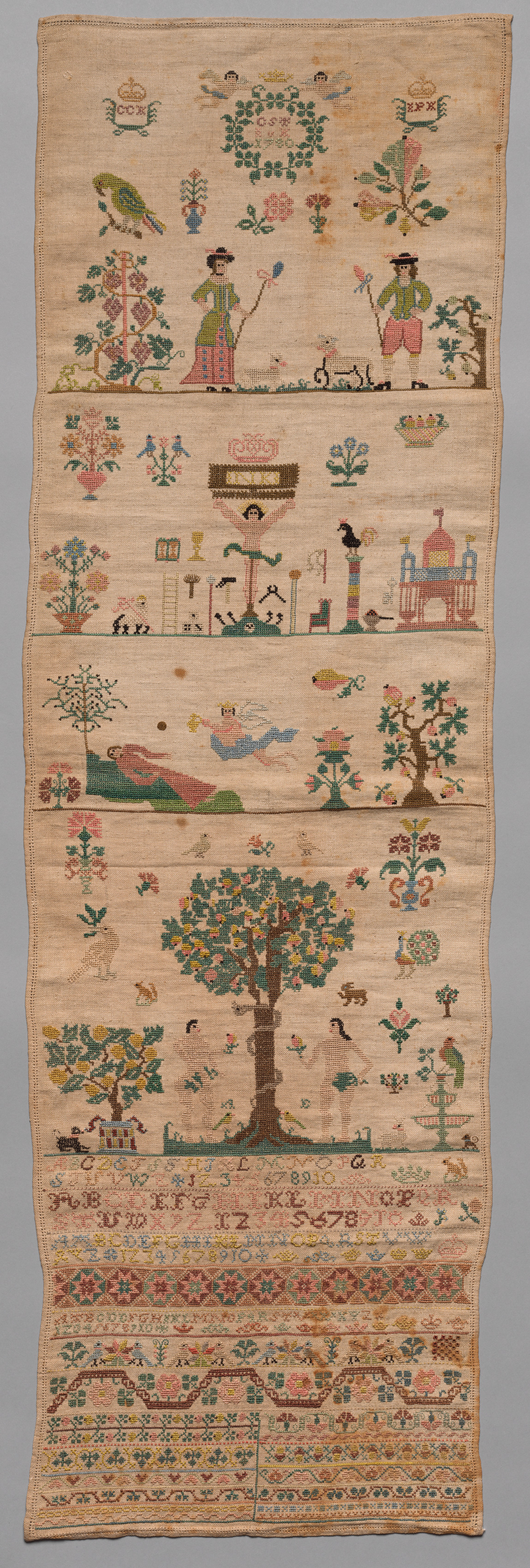
CC0 · Public domain · 1780
Long Sampler
A German long sampler in silk on linen, the format that replaced the earlier band sampler: alphabets, motifs and a verse, graded by difficulty. Samplers were a mark of achievement as a girl progressed through her education.
× px · Unmodified source file
Small archival scan: best for reference and screen use, not large prints.
Open in StudioSource & licensing
- Creator / date
- Germany, late 18th century, maker unknown · 1780
- Source credit
- The Cleveland Museum of Art, 1942.500. Open Access.
- Usage notes
- Released by the Cleveland Museum of Art under CC0 1.0. Credit to the museum is encouraged; CC0 does not imply endorsement.
- Original file
- × px · JPG · 0.0 MB
- Source checked
- 2026-11-04 · editorial approval separate
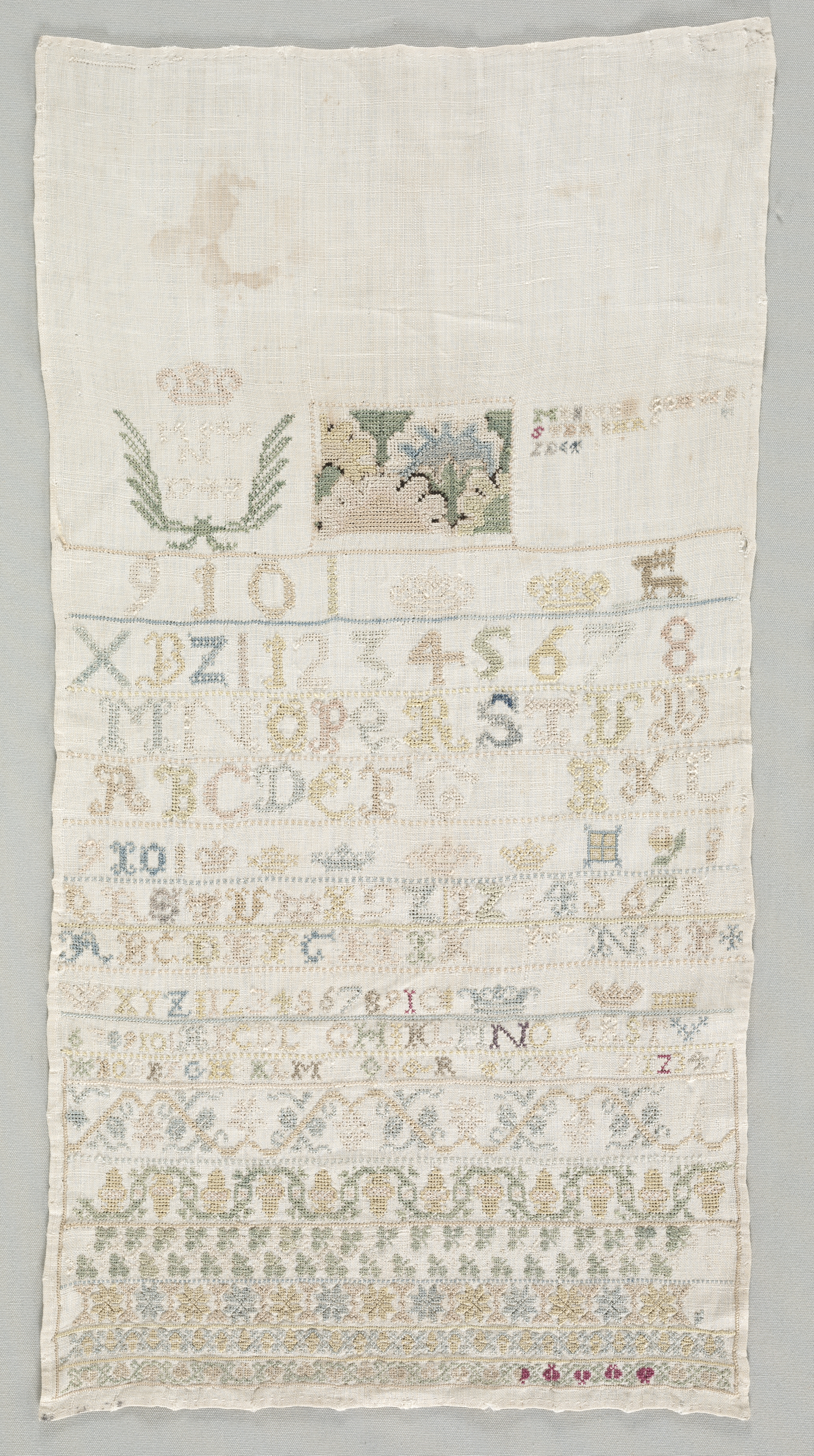
CC0 · Public domain · 1742
Sampler
Silk on linen, dated 1742. German samplers of this period are dense with alphabets and small figural motifs, worked in a single fine thread.
× px · Unmodified source file
Small archival scan: best for reference and screen use, not large prints.
Open in StudioSource & licensing
- Creator / date
- Germany, mid 18th century, maker unknown · 1742
- Source credit
- The Cleveland Museum of Art, 1923.897. Open Access.
- Usage notes
- Released by the Cleveland Museum of Art under CC0 1.0. Credit to the museum is encouraged; CC0 does not imply endorsement.
- Original file
- × px · JPG · 0.0 MB
- Source checked
- 2026-11-04 · editorial approval separate
CC0 · Public domain · 1800s
Sampler
Wool on woollen canvas, the cheaper materials of a later village sampler. By the nineteenth century the sampler had become a school exercise rather than a court accomplishment.
× px · Unmodified source file
Small archival scan: best for reference and screen use, not large prints.
Open in StudioSource & licensing
- Creator / date
- England, 19th century, maker unknown · 1800s
- Source credit
- The Cleveland Museum of Art, 1943.102. Open Access.
- Usage notes
- Released by the Cleveland Museum of Art under CC0 1.0. Credit to the museum is encouraged; CC0 does not imply endorsement.
- Original file
- × px · JPG · 0.0 MB
- Source checked
- 2026-11-04 · editorial approval separate
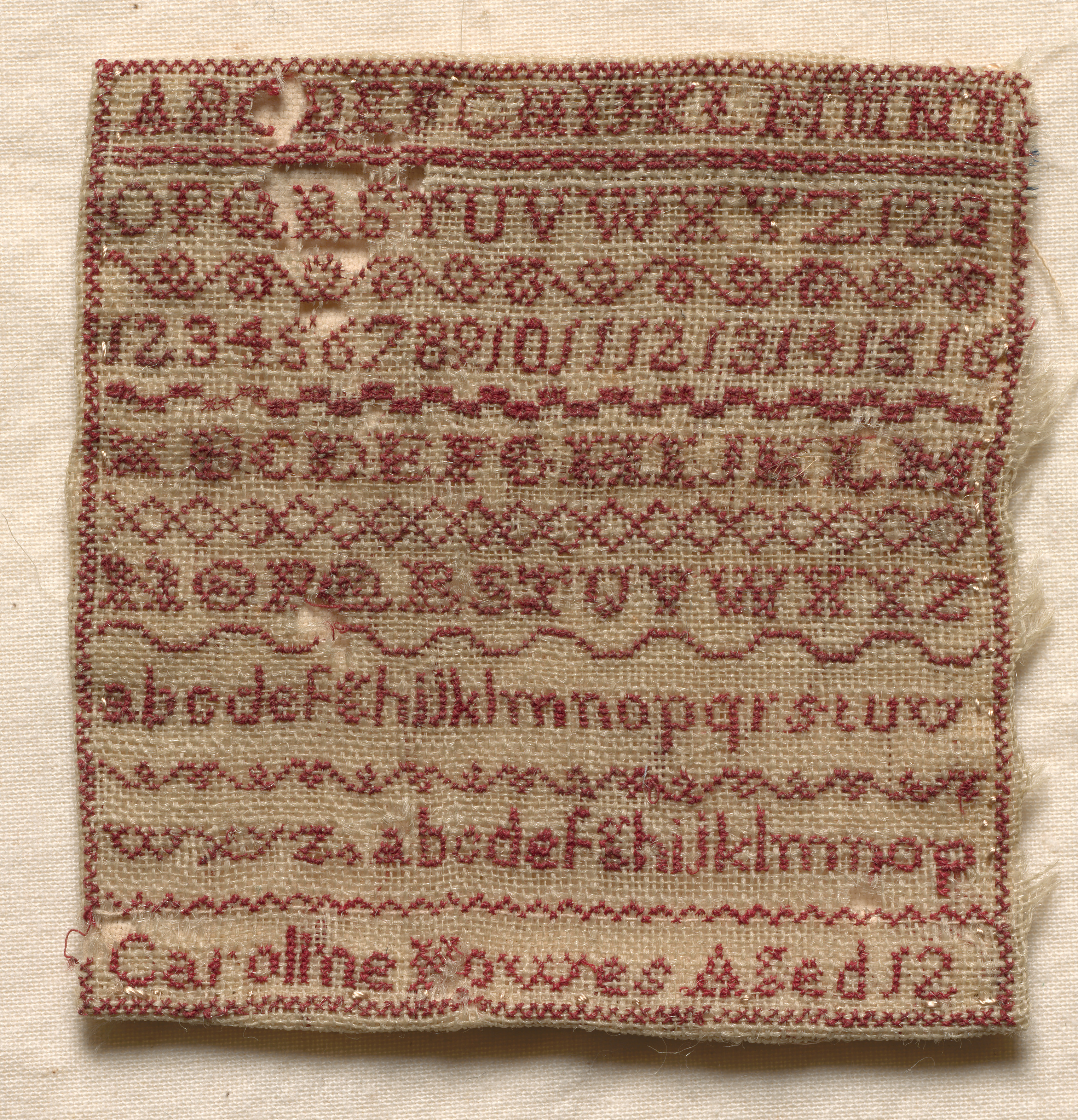
CC0 · Public domain · 1800s
Sampler
Cotton on cotton, and a lesson in how letterforms were taught: rows of alphabets first, then numbers, then a line of verse.
× px · Unmodified source file
Small archival scan: best for reference and screen use, not large prints.
Open in StudioSource & licensing
- Creator / date
- England, 19th century, maker unknown · 1800s
- Source credit
- The Cleveland Museum of Art, 1943.113. Open Access.
- Usage notes
- Released by the Cleveland Museum of Art under CC0 1.0. Credit to the museum is encouraged; CC0 does not imply endorsement.
- Original file
- × px · JPG · 0.0 MB
- Source checked
- 2026-11-04 · editorial approval separate
CC0 · Public domain · 1779
Sampler
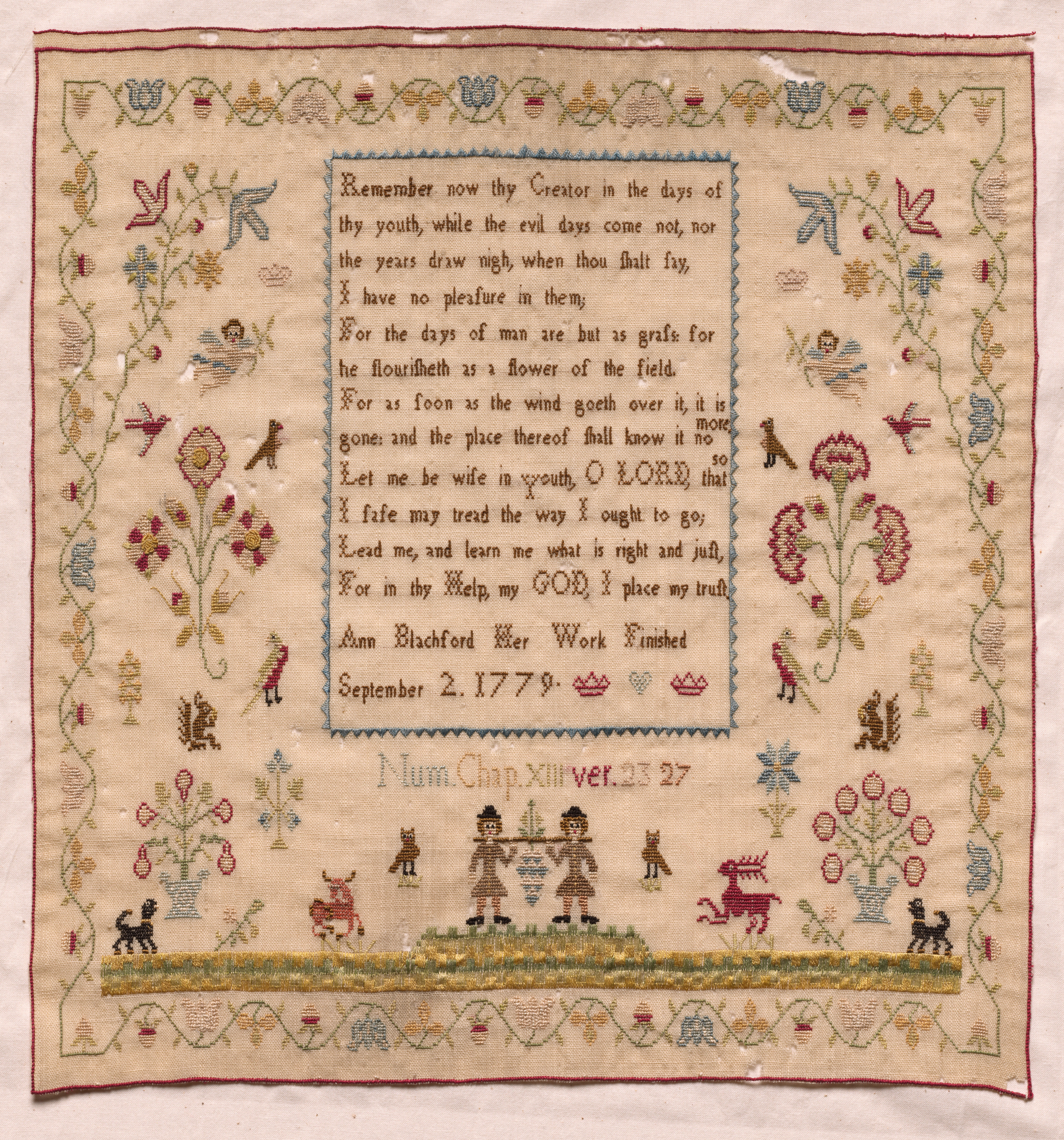
Silk on woollen canvas, dated 1779. The letters are worked over counted threads, so the alphabet is built stitch by stitch rather than drawn.
× px · Unmodified source file
Small archival scan: best for reference and screen use, not large prints.
Open in StudioSource & licensing
- Creator / date
- England, late 18th century, maker unknown · 1779
- Source credit
- The Cleveland Museum of Art, 1943.112. Open Access.
- Usage notes
- Released by the Cleveland Museum of Art under CC0 1.0. Credit to the museum is encouraged; CC0 does not imply endorsement.
- Original file
- × px · JPG · 0.0 MB
- Source checked
- 2026-11-04 · editorial approval separate
CC0 · Public domain · 1828
Sampler
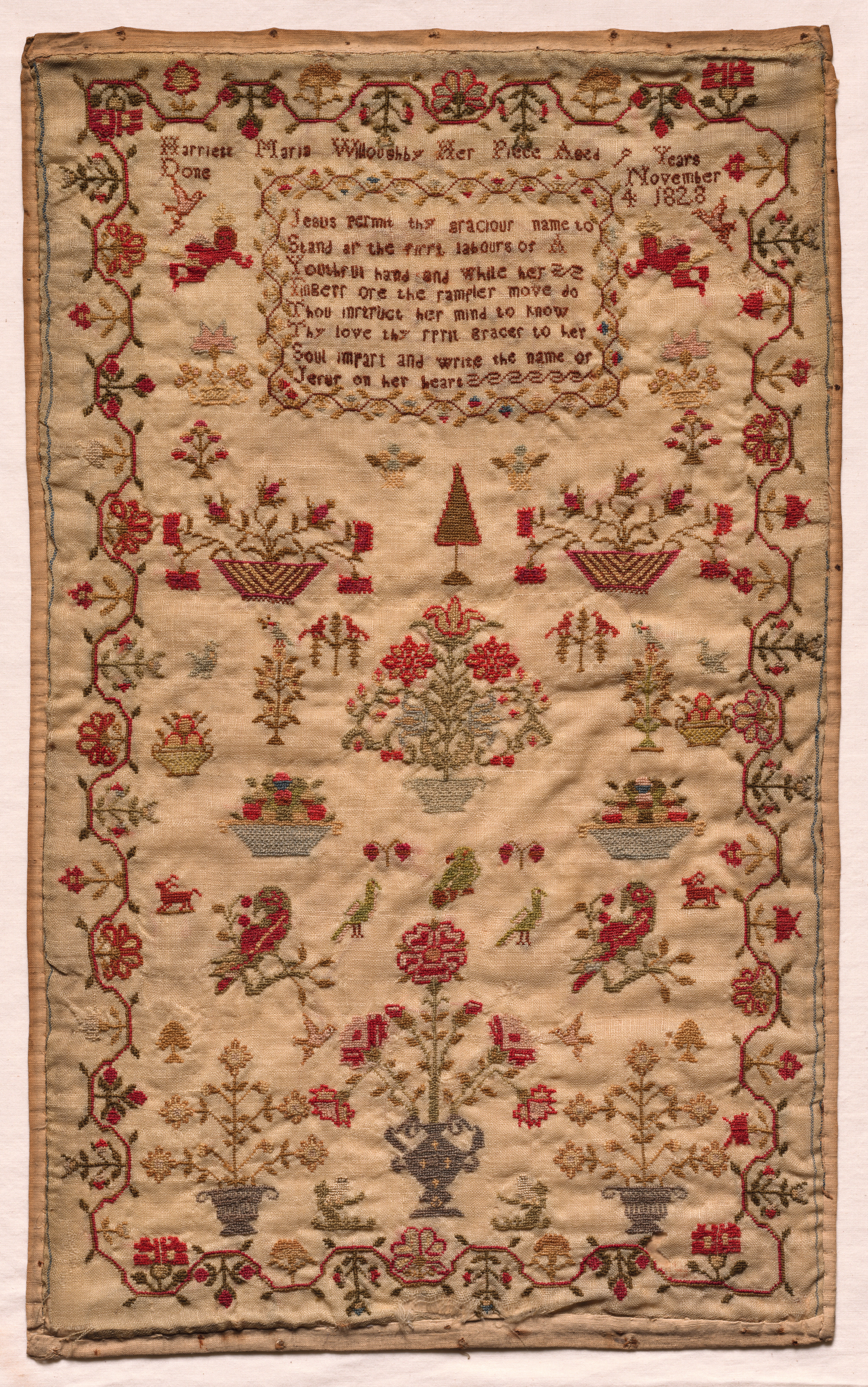
Embroidery on a wool ground, dated 1828, with the alphabets and moral verse standard to the period. Nearly every surviving sampler carries a date, which is why they can be arranged in sequence.
× px · Unmodified source file
Small archival scan: best for reference and screen use, not large prints.
Open in StudioSource & licensing
- Creator / date
- England, early 19th century, maker unknown · 1828
- Source credit
- The Cleveland Museum of Art, 1942.507. Open Access.
- Usage notes
- Released by the Cleveland Museum of Art under CC0 1.0. Credit to the museum is encouraged; CC0 does not imply endorsement.
- Original file
- × px · JPG · 0.0 MB
- Source checked
- 2026-11-04 · editorial approval separate
CC0 · Public domain · 1808
Sampler
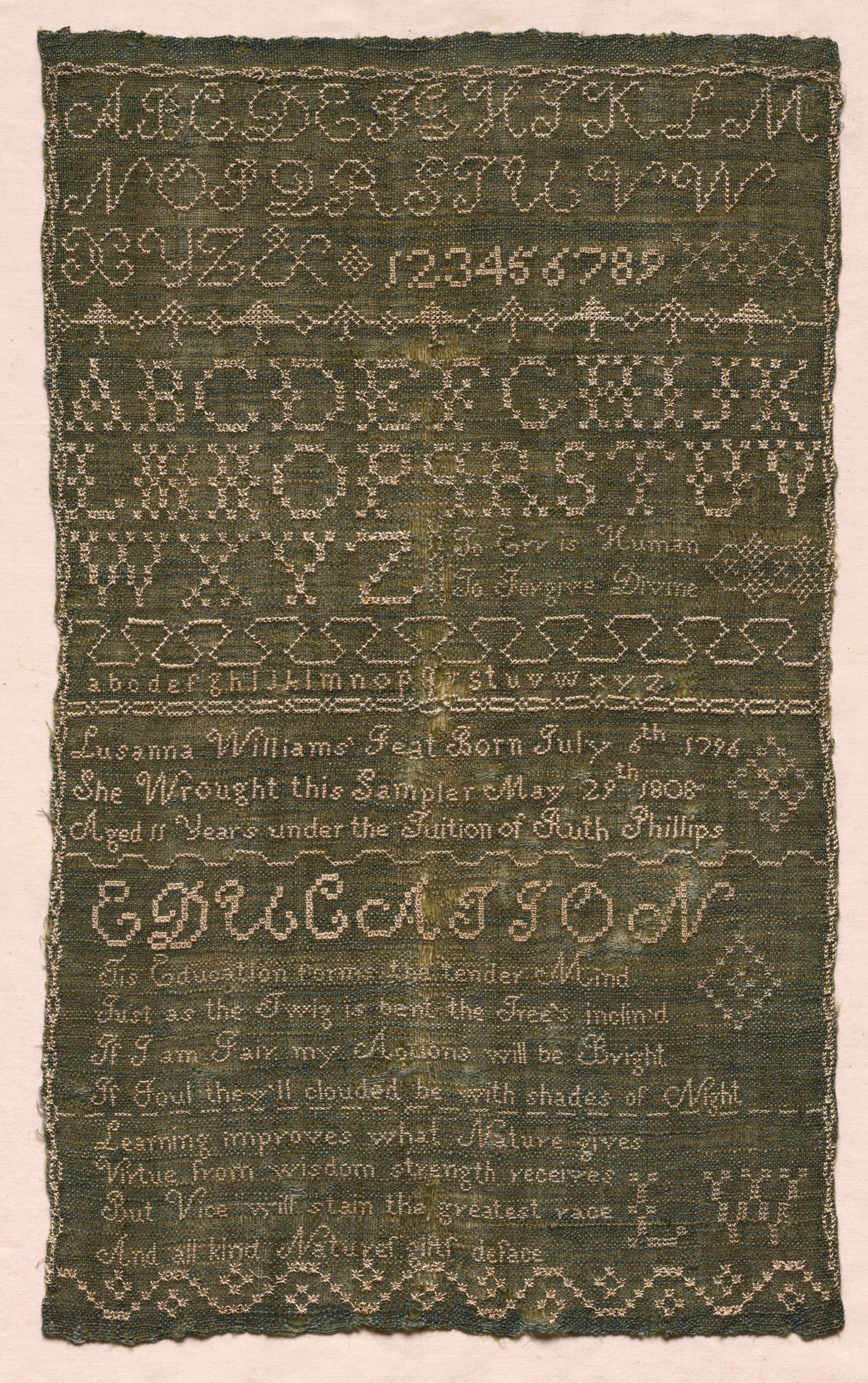
Silk on homespun, an American sampler dated 1808. The ground cloth was made at home; the silk thread was the expense.
× px · Unmodified source file
Small archival scan: best for reference and screen use, not large prints.
Open in StudioSource & licensing
- Creator / date
- America, maker unknown · 1808
- Source credit
- The Cleveland Museum of Art, 1943.118. Open Access.
- Usage notes
- Released by the Cleveland Museum of Art under CC0 1.0. Credit to the museum is encouraged; CC0 does not imply endorsement.
- Original file
- × px · JPG · 0.0 MB
- Source checked
- 2026-11-04 · editorial approval separate
CC0 · Public domain · 1751
Sampler
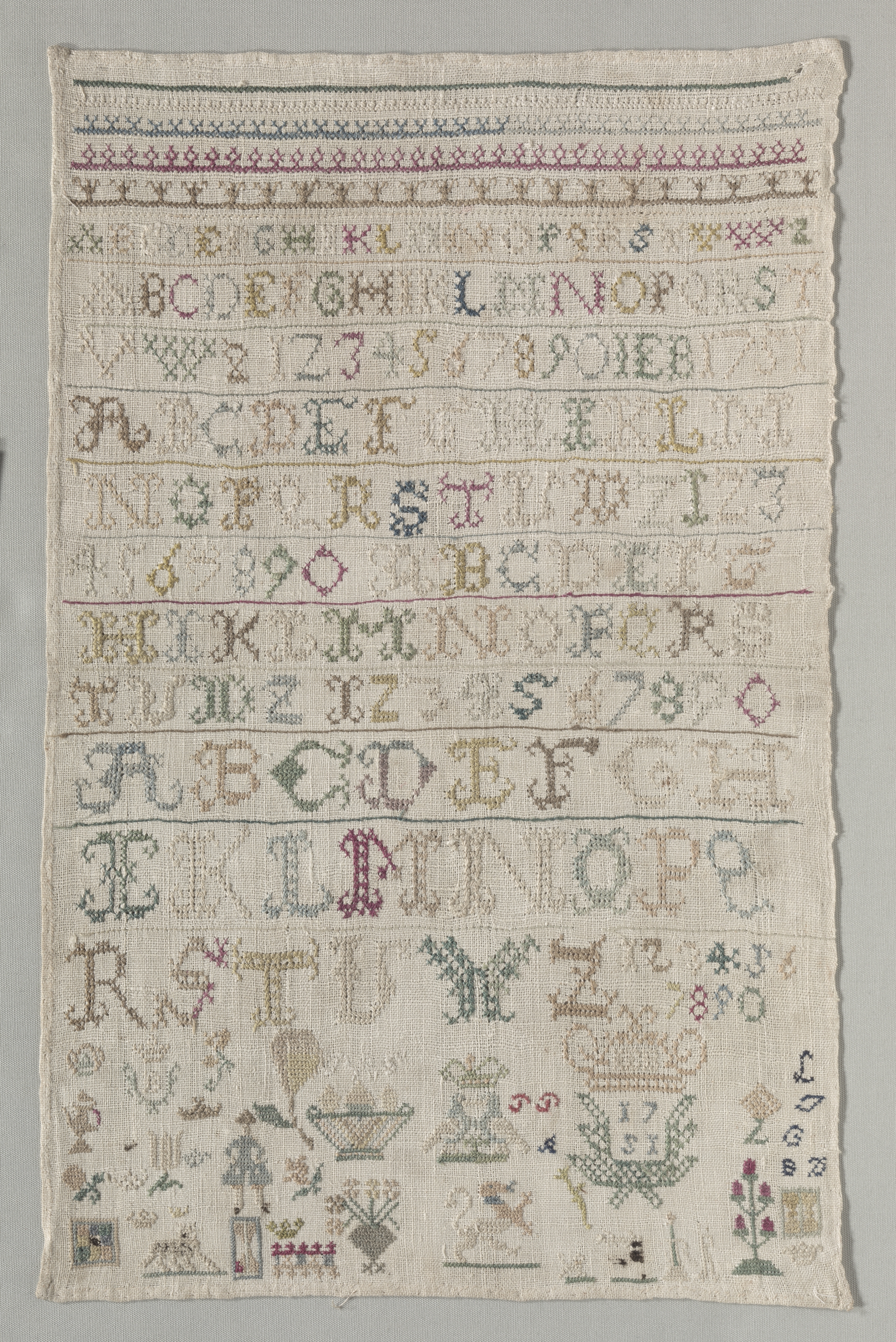
An American sampler of 1751, early for the tradition in the colonies. The letterforms follow English teaching models carried across the Atlantic.
× px · Unmodified source file
Small archival scan: best for reference and screen use, not large prints.
Open in StudioSource & licensing
- Creator / date
- America, maker unknown · 1751
- Source credit
- The Cleveland Museum of Art, 1956.318. Open Access.
- Usage notes
- Released by the Cleveland Museum of Art under CC0 1.0. Credit to the museum is encouraged; CC0 does not imply endorsement.
- Original file
- × px · JPG · 0.0 MB
- Source checked
- 2026-11-04 · editorial approval separate
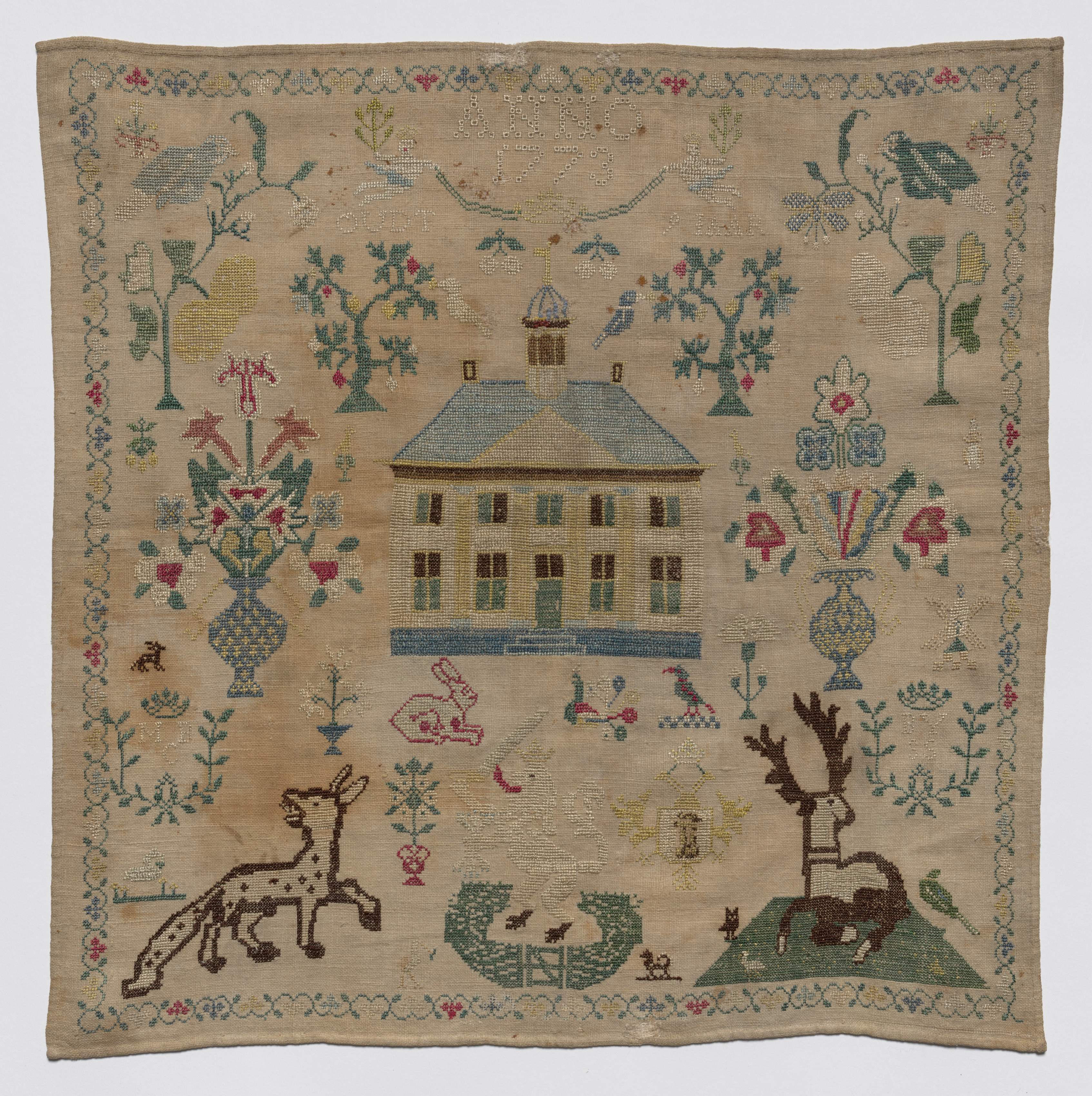
CC0 · Public domain · 1773
Sampler
Silk on cotton, dated 1773, from the Dutch tradition that also produced the orphanage samplers in this collection. Dutch samplers favour small scattered motifs over long alphabets.
× px · Unmodified source file
Small archival scan: best for reference and screen use, not large prints.
Open in StudioSource & licensing
- Creator / date
- Netherlands, late 18th century, maker unknown · 1773
- Source credit
- The Cleveland Museum of Art, 1942.526. Open Access.
- Usage notes
- Released by the Cleveland Museum of Art under CC0 1.0. Credit to the museum is encouraged; CC0 does not imply endorsement.
- Original file
- × px · JPG · 0.0 MB
- Source checked
- 2026-11-04 · editorial approval separate
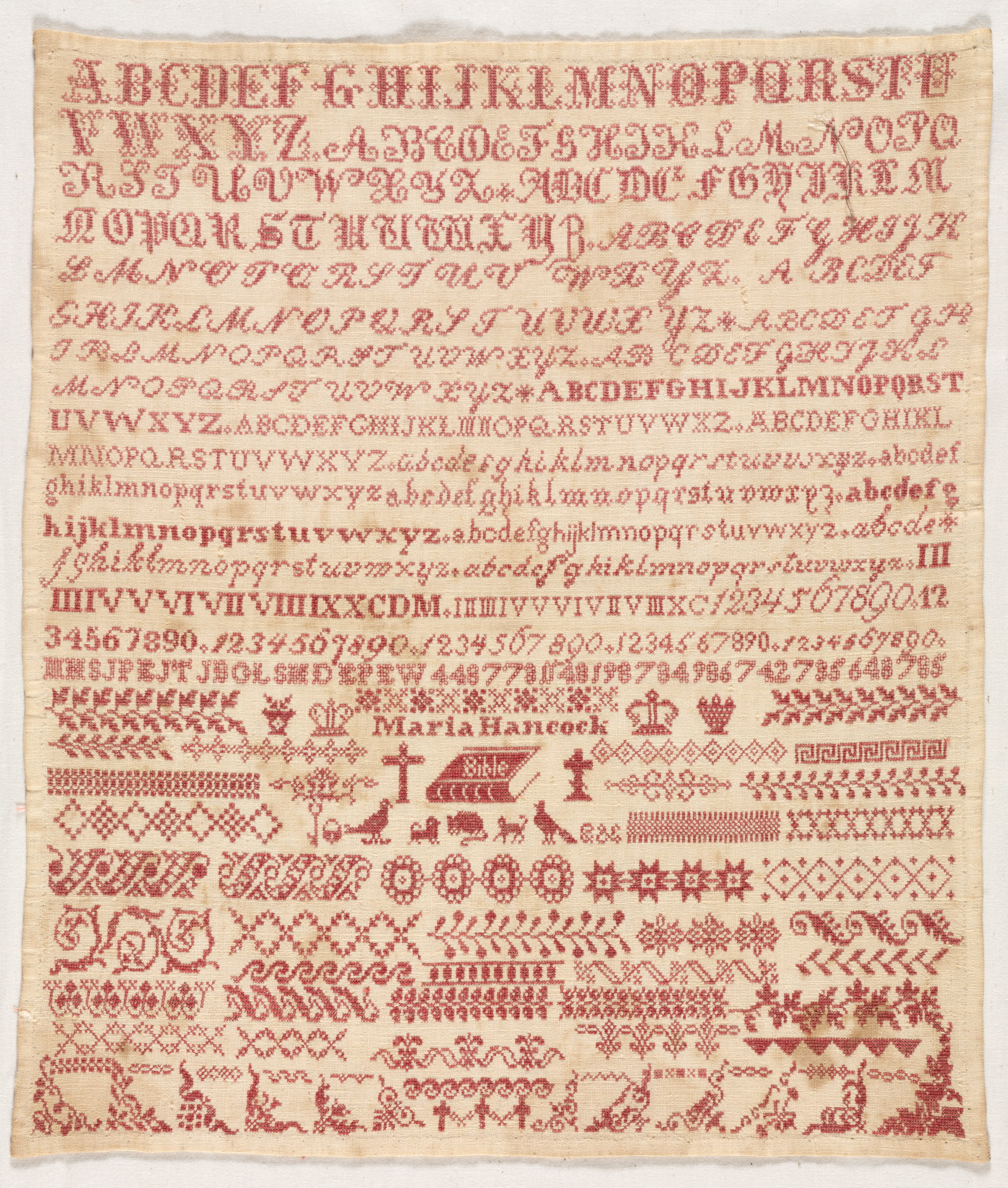
CC0 · Public domain · 1870
Sampler
Silk and cotton on cotton, dated 1870, made as a school exercise. By this date printed charts and mass-produced patterns were replacing the sampler as a learning tool.
× px · Unmodified source file
Small archival scan: best for reference and screen use, not large prints.
Open in StudioSource & licensing
- Creator / date
- Germany, late 19th century, maker unknown · 1870
- Source credit
- The Cleveland Museum of Art, 1943.116. Open Access.
- Usage notes
- Released by the Cleveland Museum of Art under CC0 1.0. Credit to the museum is encouraged; CC0 does not imply endorsement.
- Original file
- × px · JPG · 0.0 MB
- Source checked
- 2026-11-04 · editorial approval separate
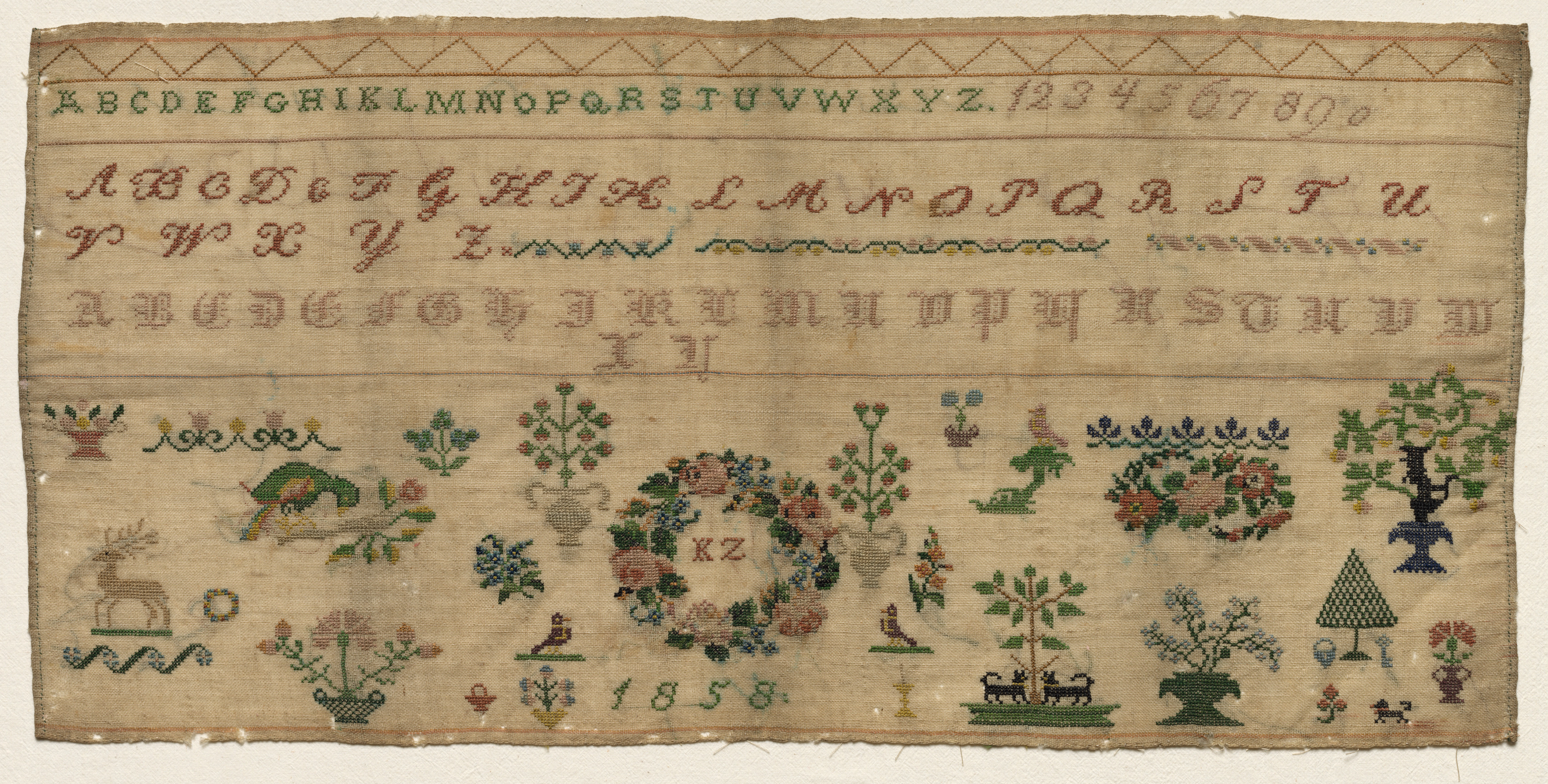
CC0 · Public domain · 1858
Sampler
Linen with embroidery, dated 1858. Austrian samplers of the period combine alphabet bands with drawn-thread work, where threads are removed and the gaps bound.
× px · Unmodified source file
Small archival scan: best for reference and screen use, not large prints.
Open in StudioSource & licensing
- Creator / date
- Austria, maker unknown · 1858
- Source credit
- The Cleveland Museum of Art, 1918.333. Open Access.
- Usage notes
- Released by the Cleveland Museum of Art under CC0 1.0. Credit to the museum is encouraged; CC0 does not imply endorsement.
- Original file
- × px · JPG · 0.0 MB
- Source checked
- 2026-11-04 · editorial approval separate
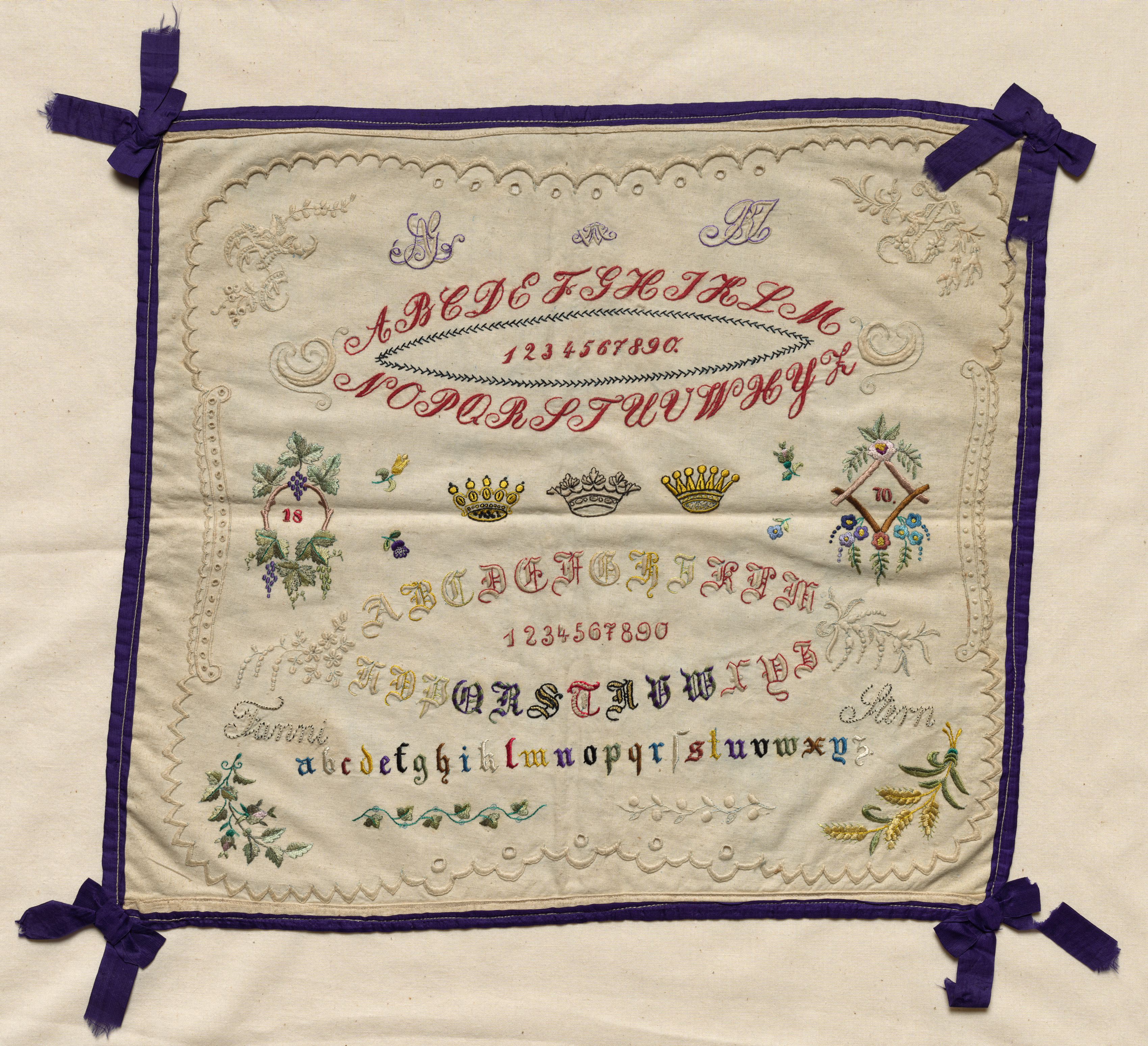
CC0 · Public domain · late 1800s
Sampler
A late nineteenth-century silk sampler, probably Italian, when the form had become a domestic accomplishment rather than a trade skill.
× px · Unmodified source file
Small archival scan: best for reference and screen use, not large prints.
Open in StudioSource & licensing
- Creator / date
- Italy (?), maker unknown · late 1800s
- Source credit
- The Cleveland Museum of Art, 1942.531. Open Access.
- Usage notes
- Released by the Cleveland Museum of Art under CC0 1.0. Credit to the museum is encouraged; CC0 does not imply endorsement.
- Original file
- × px · JPG · 0.0 MB
- Source checked
- 2026-11-04 · editorial approval separate
Public-domain status is reported by the linked source and may vary by jurisdiction. Check the source record for your intended use. No exclusive rights or Visual Bounty marketplace license are offered for these images.