← Open CollectionsPublic-domain source library
Glass: Roman Vessels and Cameos
Roman glass is a record of process: a gather sagged into a mould, ribs tooled while the material was still soft, coloured rods bundled so that their cross-section became a pattern and then sliced. Glass could imitate stone so convincingly that cameos passed as sardonyx, and it could be made cheaply enough to reach ordinary tables. These twelve pieces, from an Etruscan core-formed perfume bottle of the fourth century BCE to a millefiori bowl and a Janiform head flask, show the whole range.
Original means the unmodified digital file supplied by the linked archive, not an upscaled or reconstructed image. Sign in for free downloads. Studio uses a working preview up to 2048 px.
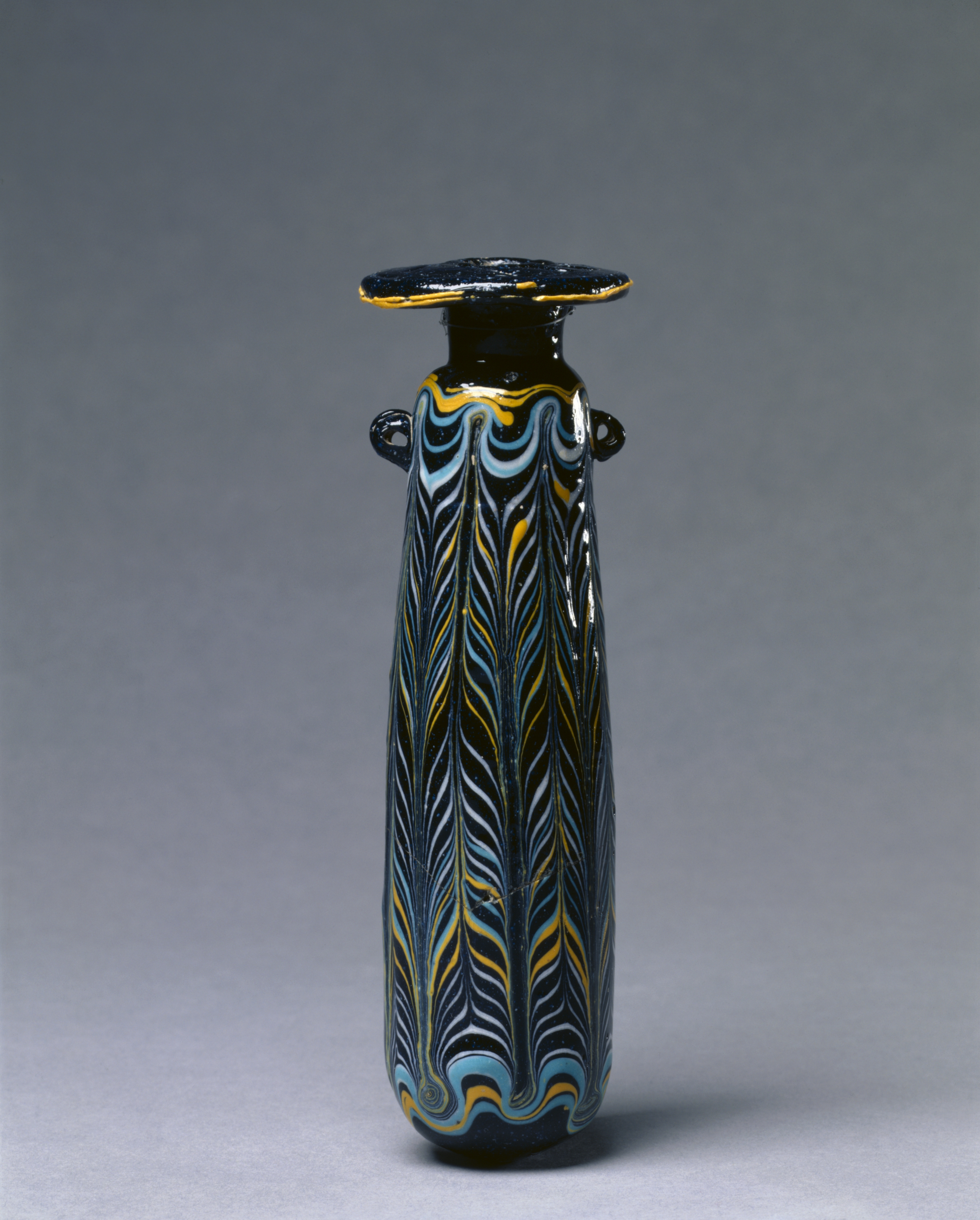
CC0 · Public domain · c. 325–275 BCE
Perfume Bottle (Alabastron)
Before glassblowing was invented around 50 BCE, bottles were formed by winding molten glass around a mud core, much the way cotton candy is wrapped around a stick.
2732 × 3400 px · Unmodified source file
Open in StudioSource & licensing
- Creator / date
- Italy or Eastern Mediterranean, Etruscan, maker unknown · c. 325–275 BCE
- Source credit
- The Cleveland Museum of Art, 1994.9. Open Access.
- Usage notes
- Released by the Cleveland Museum of Art under CC0 1.0. Credit to the museum is encouraged; CC0 does not imply endorsement.
- Original file
- 2732 × 3400 px · JPG · 0.0 MB
- Source checked
- 2026-11-04 · editorial approval separate
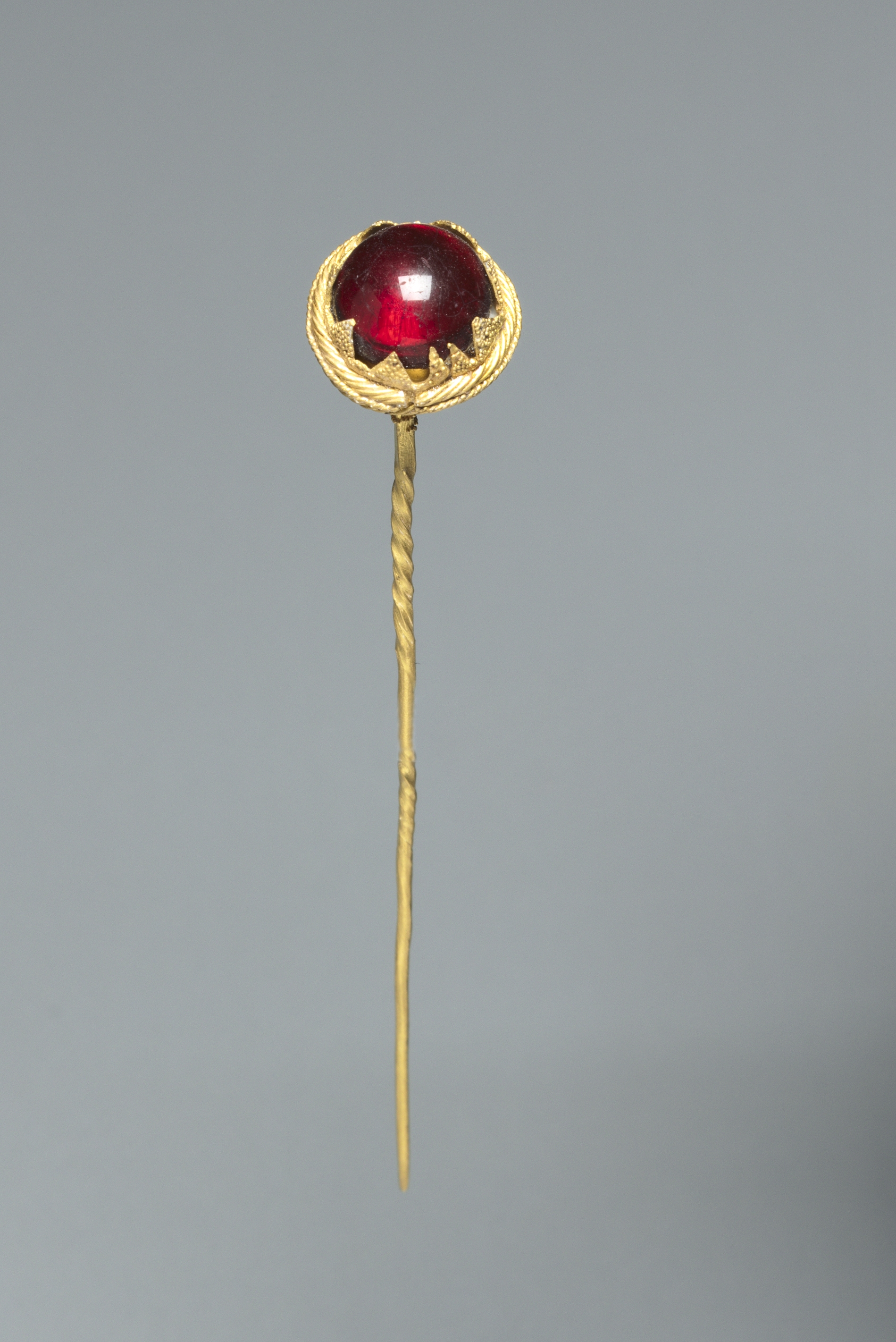
CC0 · Public domain · c. 500 BCE
Straight Pin
A gold pin topped with a red glass bead set in a finial, with braided wire and granulated triangles around it. Gold and glass are worked together so that neither reads as the cheaper material.
1899 × 2843 px · Unmodified source file
Open in StudioSource & licensing
- Creator / date
- Etruscan, maker unknown · c. 500 BCE
- Source credit
- The Cleveland Museum of Art, 1978.25. Open Access.
- Usage notes
- Released by the Cleveland Museum of Art under CC0 1.0. Credit to the museum is encouraged; CC0 does not imply endorsement.
- Original file
- 1899 × 2843 px · JPG · 0.0 MB
- Source checked
- 2026-11-04 · editorial approval separate
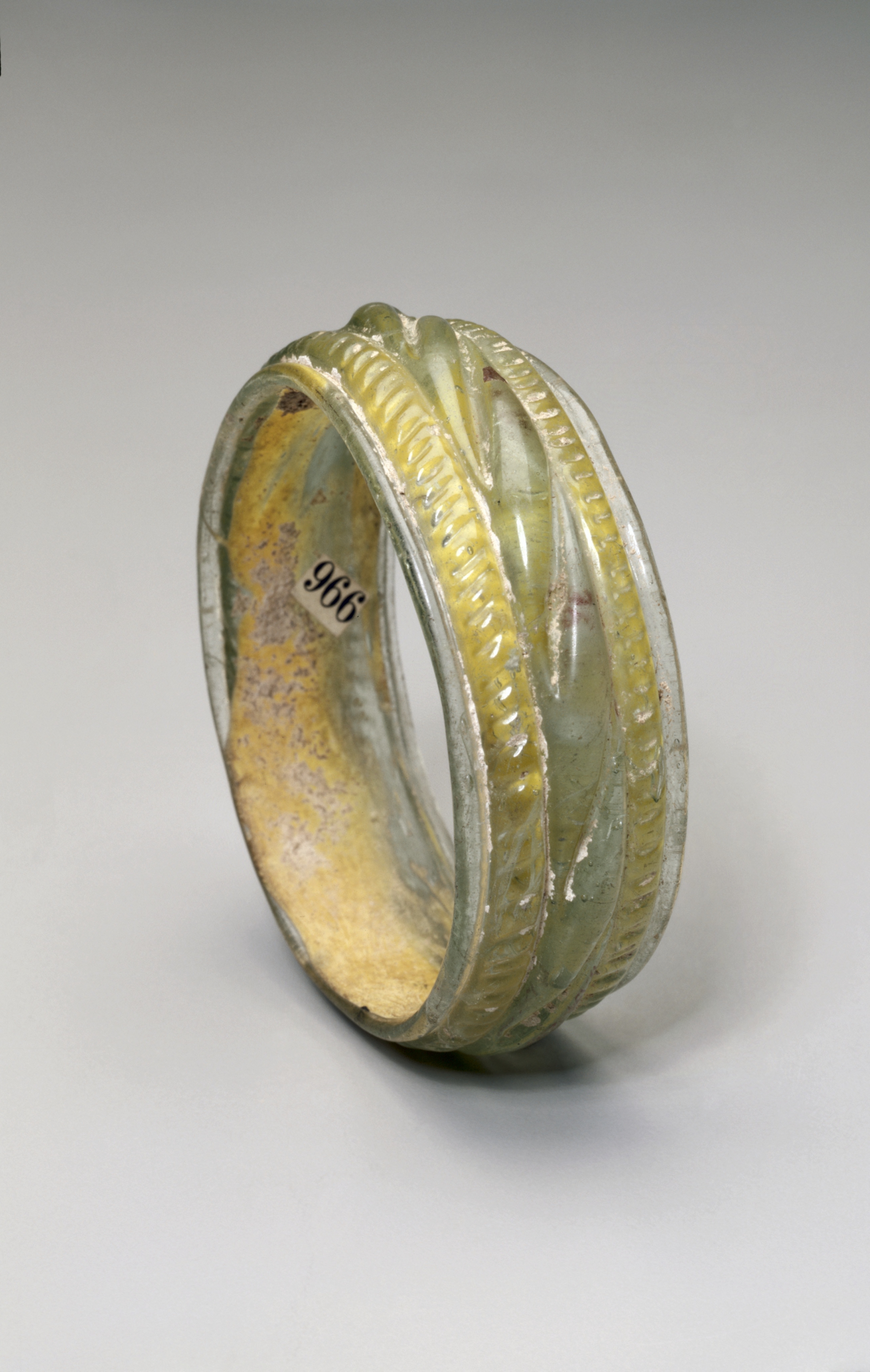
CC0 · Public domain · c. 230–110 BCE
Arm Ring
A glass arm ring from the La Tène culture, the Iron Age groups scholars call ancestral to the Celts, made when glass stood in for imported luxury goods.
2155 × 3400 px · Unmodified source file
Open in StudioSource & licensing
- Creator / date
- Maker unknown · c. 230–110 BCE
- Source credit
- The Cleveland Museum of Art, 1930.700. Open Access.
- Usage notes
- Released by the Cleveland Museum of Art under CC0 1.0. Credit to the museum is encouraged; CC0 does not imply endorsement.
- Original file
- 2155 × 3400 px · JPG · 0.0 MB
- Source checked
- 2026-11-04 · editorial approval separate
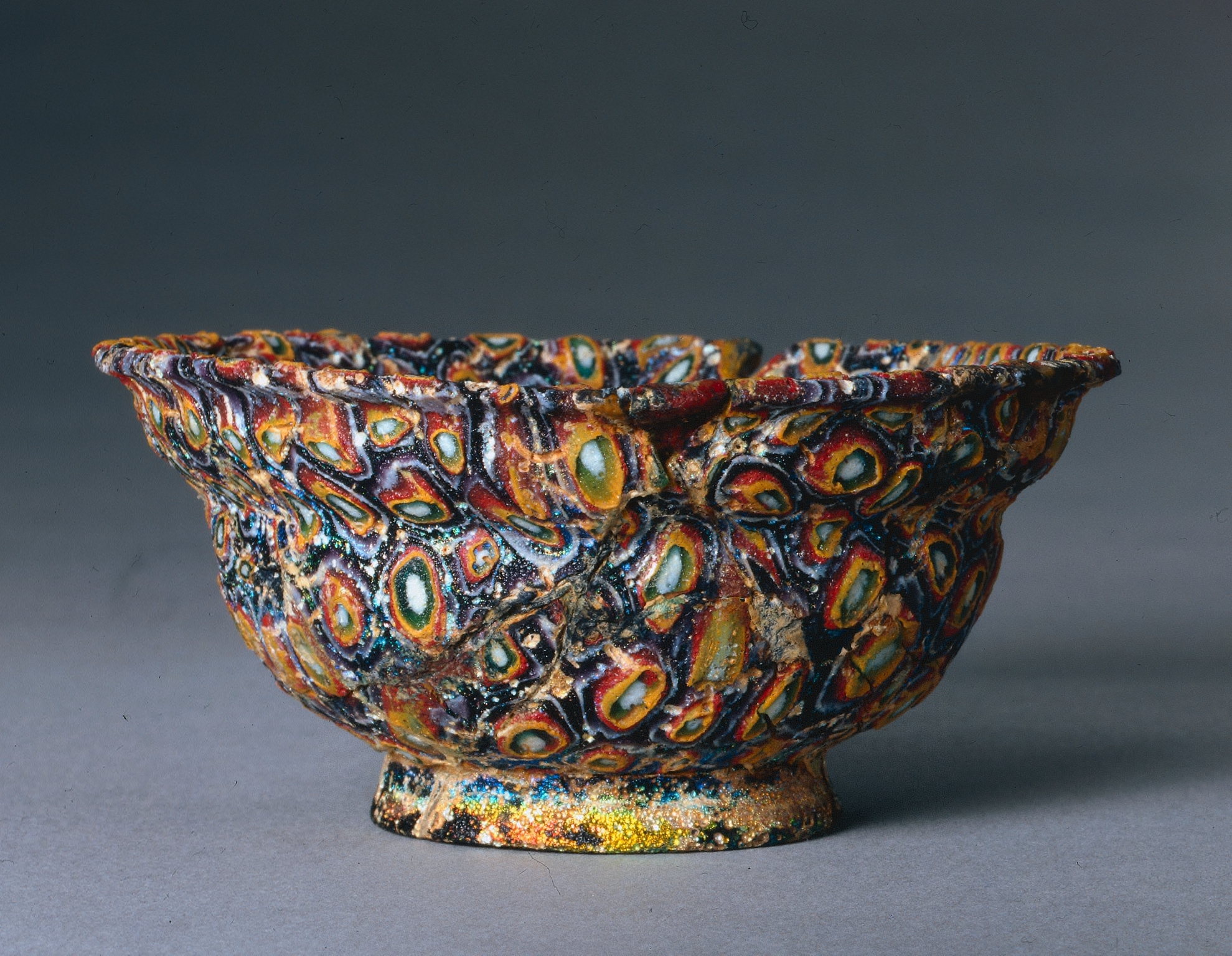
CC0 · Public domain · 1–100 CE
Millefiori Bowl
Mosaic glass: rods of different colours were bundled so that their cross-section formed a pattern, then sliced into discs and fused in a mould. Thousands of flowers in a single bowl, hence the name.
3400 × 2428 px · Unmodified source file
Open in StudioSource & licensing
- Creator / date
- Italy, Roman, maker unknown · 1–100 CE
- Source credit
- The Cleveland Museum of Art, 1919.10. Open Access.
- Usage notes
- Released by the Cleveland Museum of Art under CC0 1.0. Credit to the museum is encouraged; CC0 does not imply endorsement.
- Original file
- 3400 × 2428 px · JPG · 0.0 MB
- Source checked
- 2026-11-04 · editorial approval separate
CC0 · Public domain · 25 BCE - 100 CE
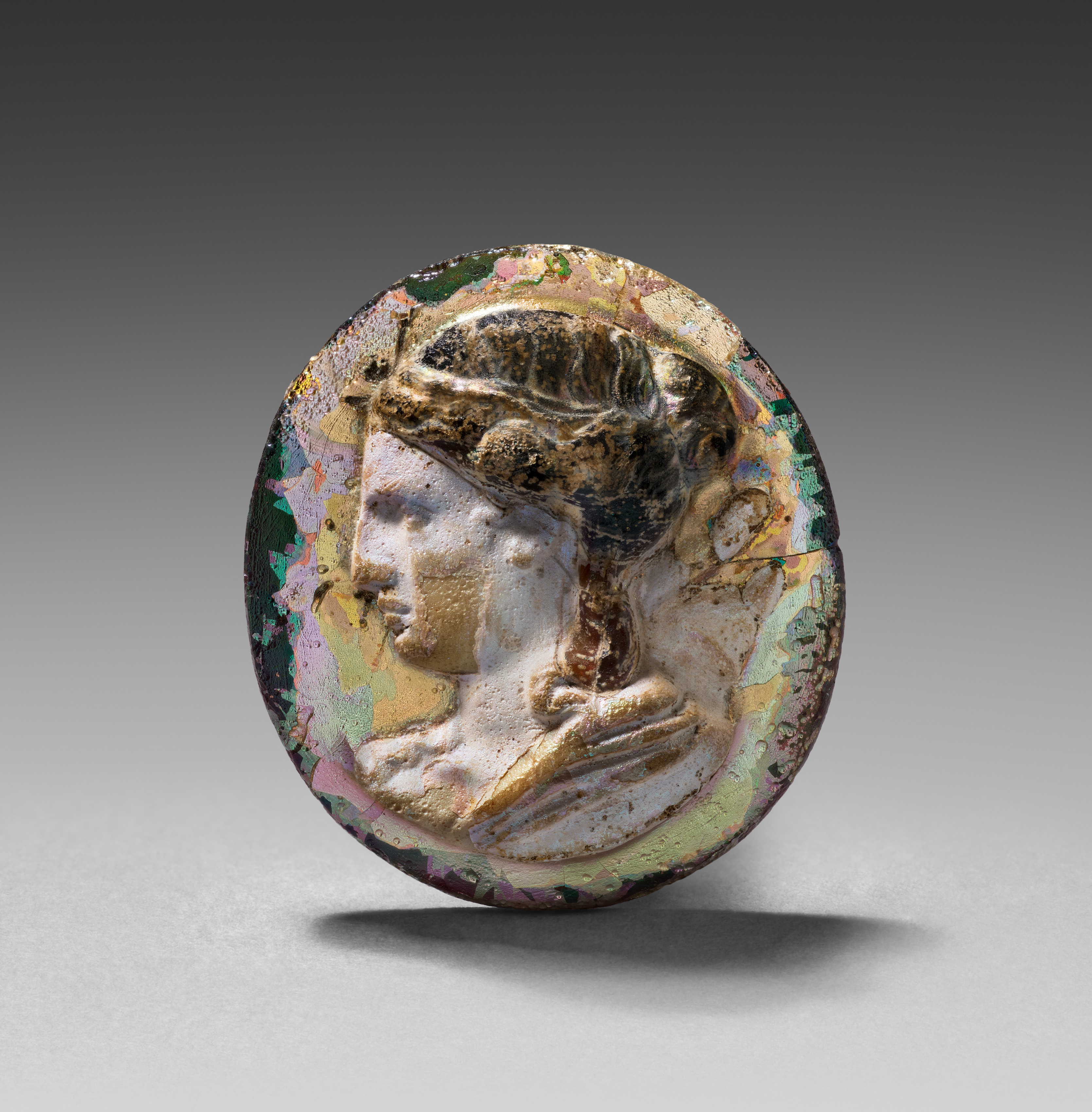
Cameo: Head of Diana
A cameo cut in layered glass, Diana in profile with her hair bound and her quiver behind. The technique imitates carved stone so closely that glass cameos passed as sardonyx.
3338 × 3400 px · Unmodified source file
Open in StudioSource & licensing
- Creator / date
- Italy, Roman, maker unknown · 25 BCE - 100 CE
- Source credit
- The Cleveland Museum of Art, 1965.465. Open Access.
- Usage notes
- Released by the Cleveland Museum of Art under CC0 1.0. Credit to the museum is encouraged; CC0 does not imply endorsement.
- Original file
- 3338 × 3400 px · JPG · 0.0 MB
- Source checked
- 2026-11-04 · editorial approval separate
CC0 · Public domain · 1–100 CE
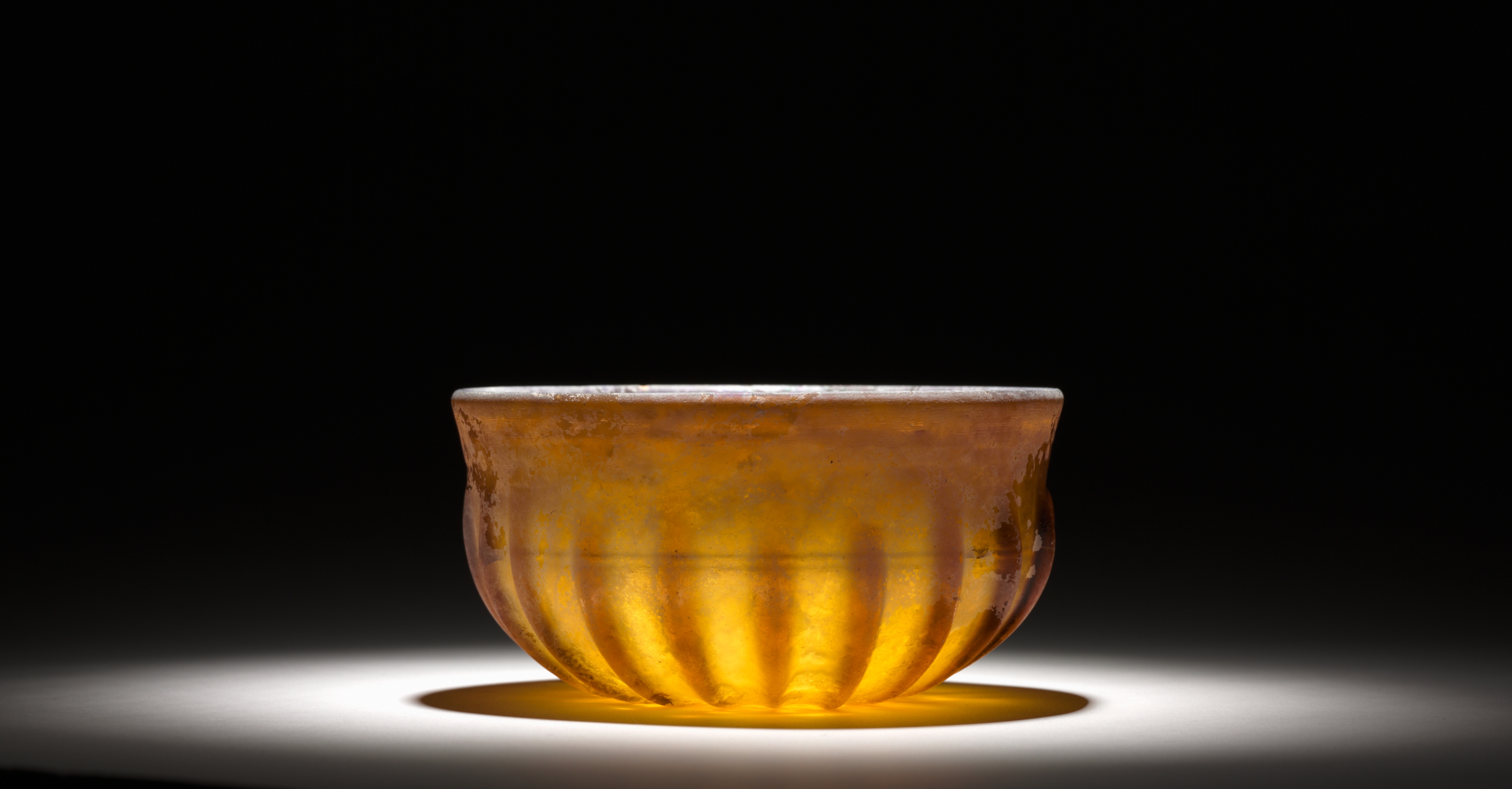
Ribbed Glass Bowl
Slump moulding was the Roman breakthrough that made good glassware widely affordable: a gather was sagged into a mould and the ribs tooled while the glass was still soft.
3400 × 1775 px · Unmodified source file
Open in StudioSource & licensing
- Creator / date
- Roman, maker unknown · 1–100 CE
- Source credit
- The Cleveland Museum of Art, 2009.474. Open Access.
- Usage notes
- Released by the Cleveland Museum of Art under CC0 1.0. Credit to the museum is encouraged; CC0 does not imply endorsement.
- Original file
- 3400 × 1775 px · JPG · 0.0 MB
- Source checked
- 2026-11-04 · editorial approval separate
CC0 · Public domain · 50 BCE–100 CE
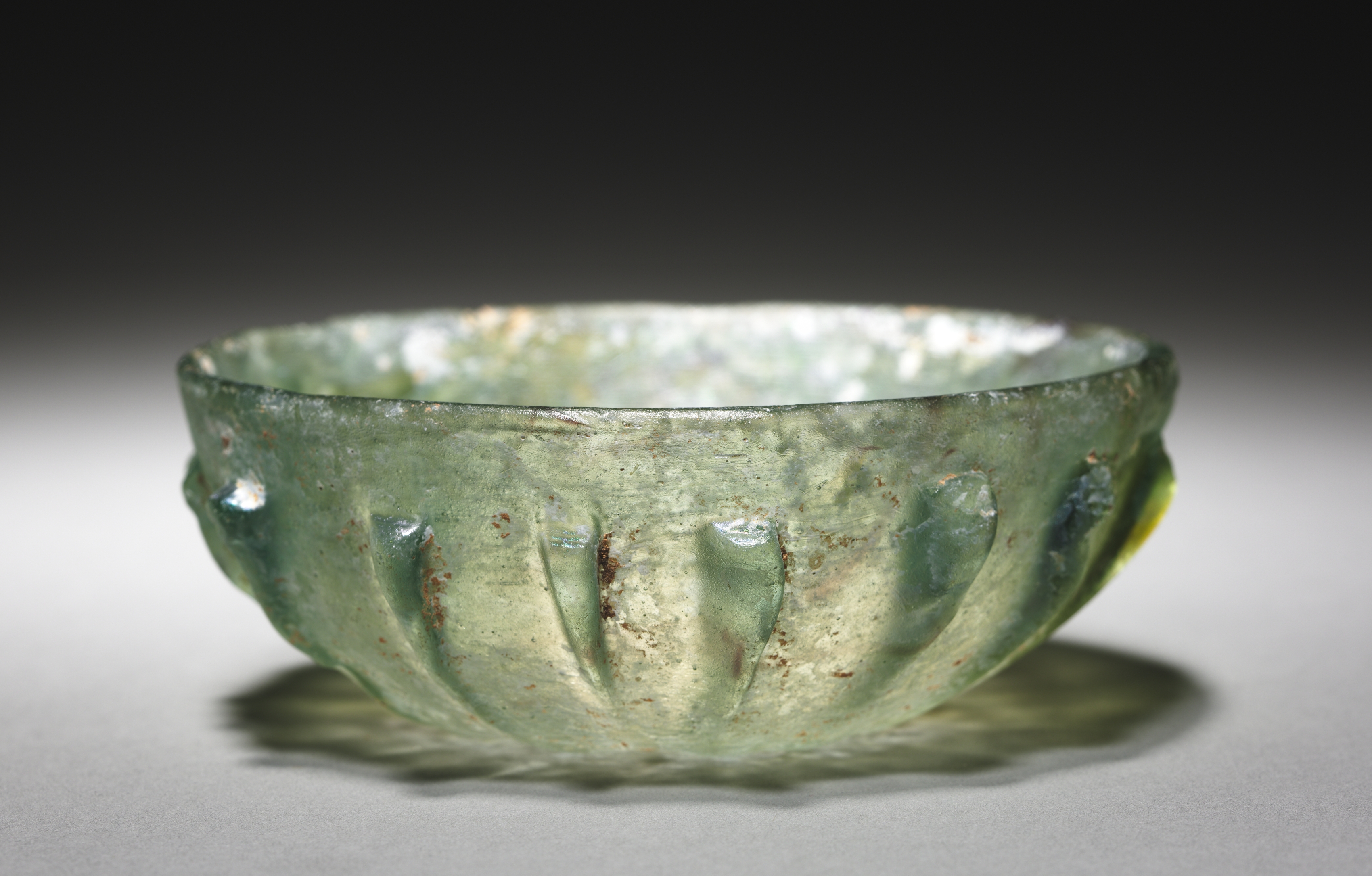
Shallow Ribbed Bowl
A common ancient type, pressed or blown into a mould and then rotated so that the ribs spiral as they rise. The pale blue and green come from impurities in the metal.
3400 × 2171 px · Unmodified source file
Open in StudioSource & licensing
- Creator / date
- Roman, Eastern Mediterranean, maker unknown · 50 BCE–100 CE
- Source credit
- The Cleveland Museum of Art, 1915.537. Open Access.
- Usage notes
- Released by the Cleveland Museum of Art under CC0 1.0. Credit to the museum is encouraged; CC0 does not imply endorsement.
- Original file
- 3400 × 2171 px · JPG · 0.0 MB
- Source checked
- 2026-11-04 · editorial approval separate
CC0 · Public domain · 50 BCE–100 CE
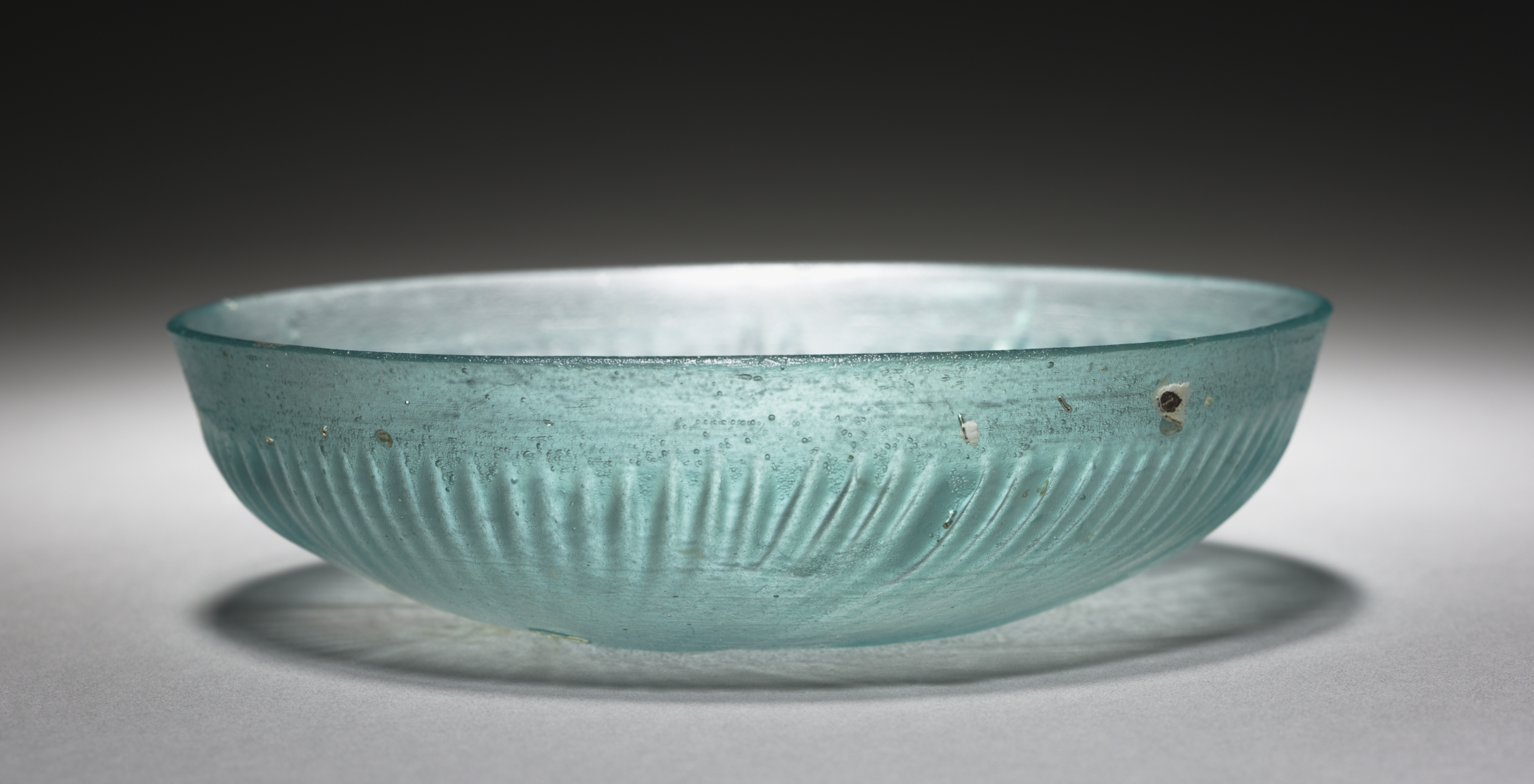
Shallow Ribbed Bowl
Another of the shallow ribbed bowls, its turquoise body showing how consistent the eastern Mediterranean workshops could be.
3400 × 1738 px · Unmodified source file
Open in StudioSource & licensing
- Creator / date
- Roman, Eastern Mediterranean, maker unknown · 50 BCE–100 CE
- Source credit
- The Cleveland Museum of Art, 1959.250. Open Access.
- Usage notes
- Released by the Cleveland Museum of Art under CC0 1.0. Credit to the museum is encouraged; CC0 does not imply endorsement.
- Original file
- 3400 × 1738 px · JPG · 0.0 MB
- Source checked
- 2026-11-04 · editorial approval separate
CC0 · Public domain · 50–100 CE
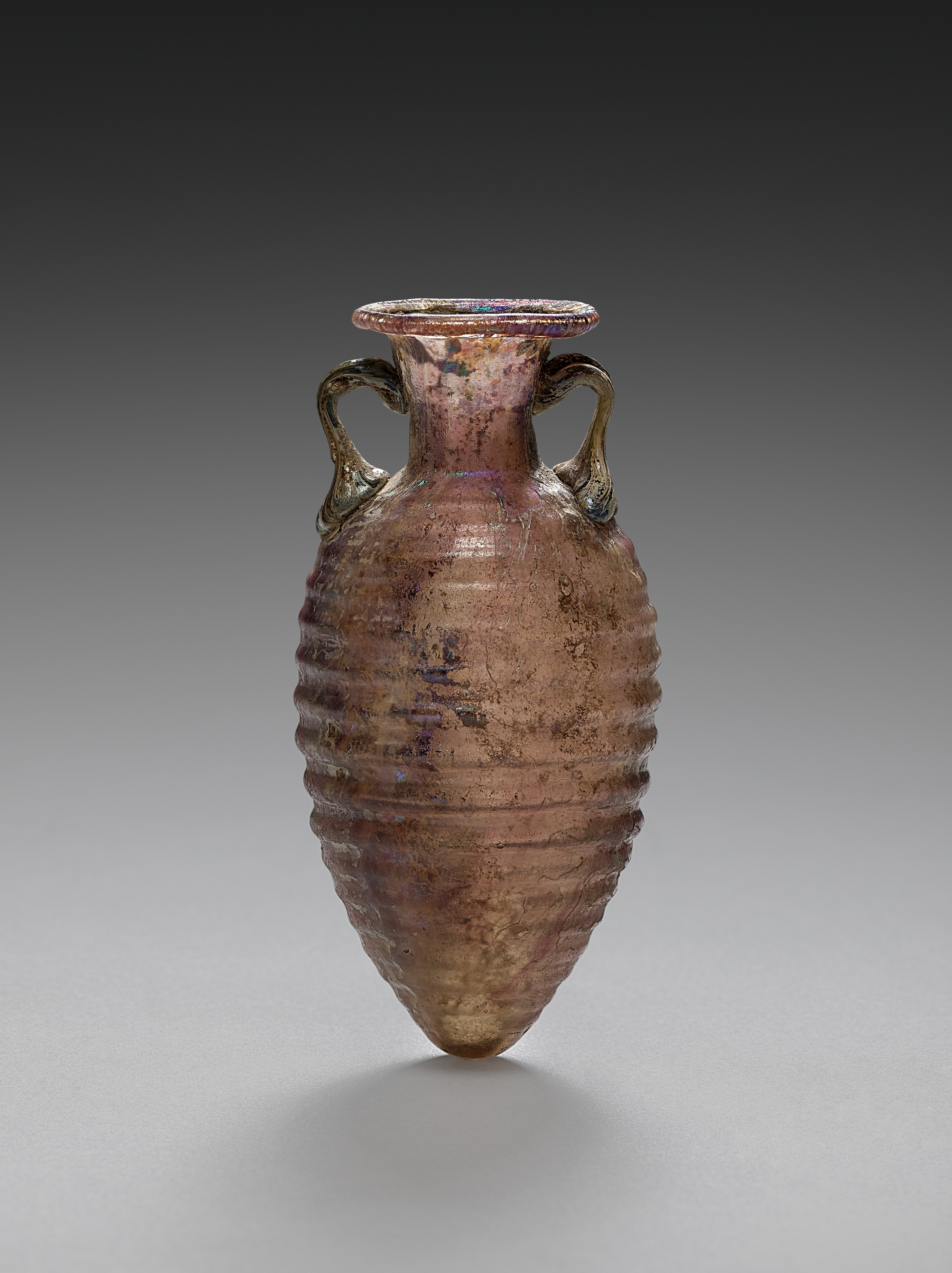
Amphoriskos (Small Amphora)
Blown in a mould and given separately made handles, this small vessel probably held perfumed oil. Originally violet, its surface has weathered to iridescence.
2542 × 3400 px · Unmodified source file
Open in StudioSource & licensing
- Creator / date
- Roman, maker unknown · 50–100 CE
- Source credit
- The Cleveland Museum of Art, 1919.12. Open Access.
- Usage notes
- Released by the Cleveland Museum of Art under CC0 1.0. Credit to the museum is encouraged; CC0 does not imply endorsement.
- Original file
- 2542 × 3400 px · JPG · 0.0 MB
- Source checked
- 2026-11-04 · editorial approval separate
CC0 · Public domain · 100–400 CE
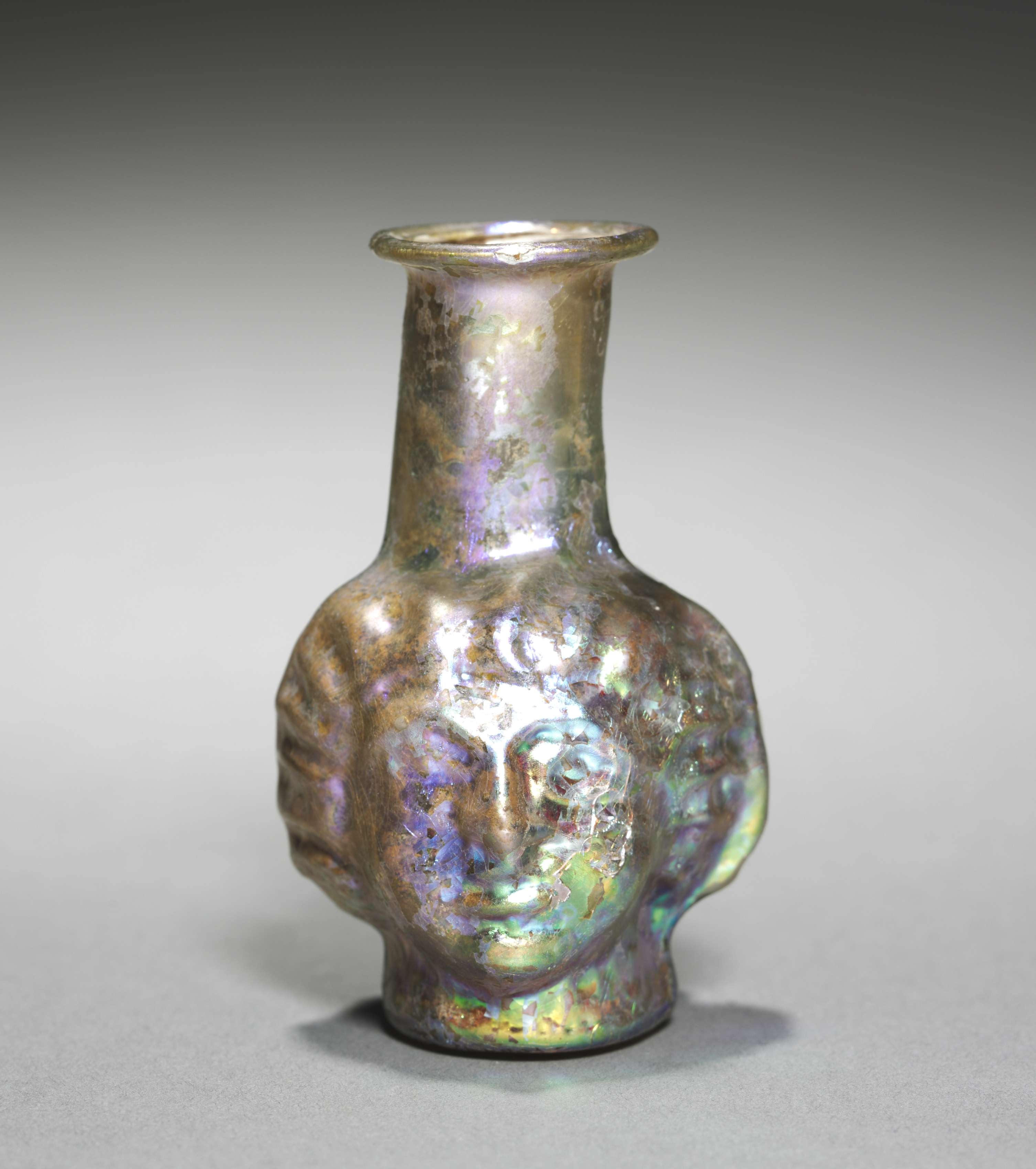
Janiform Head Flask
Two faces back to back, after Janus, the god of doorways and beginnings. Head flasks were popular across the empire, made in moulds that could be reused thousands of times.
3013 × 3400 px · Unmodified source file
Open in StudioSource & licensing
- Creator / date
- Roman, probably Eastern Mediterranean, maker unknown · 100–400 CE
- Source credit
- The Cleveland Museum of Art, 1923.945. Open Access.
- Usage notes
- Released by the Cleveland Museum of Art under CC0 1.0. Credit to the museum is encouraged; CC0 does not imply endorsement.
- Original file
- 3013 × 3400 px · JPG · 0.0 MB
- Source checked
- 2026-11-04 · editorial approval separate
CC0 · Public domain · 300s CE or later
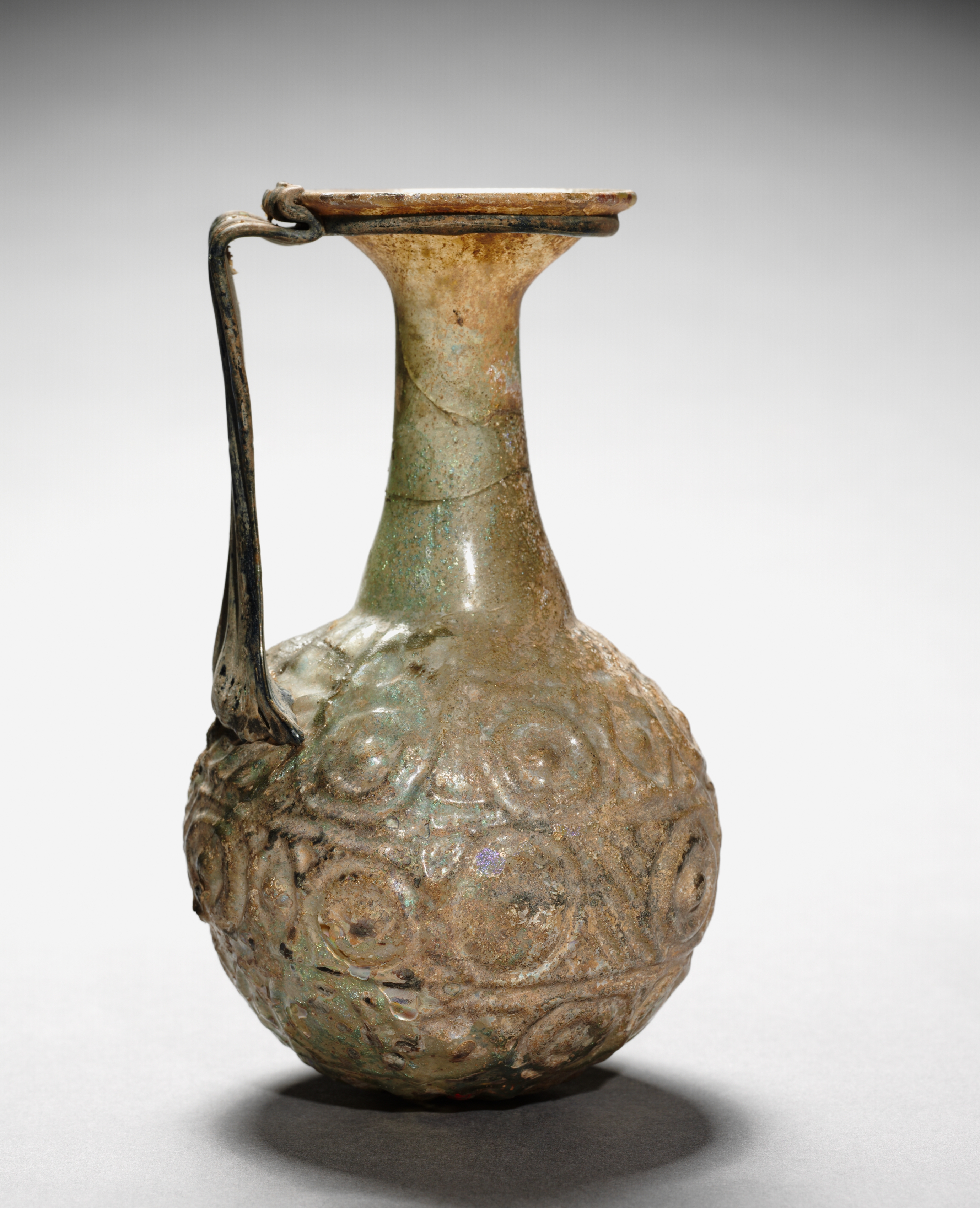
Pitcher with Handle
A globular mould-blown body with three bands of geometric ornament in low relief, made in Syria or Palestine for pouring water or wine.
2758 × 3400 px · Unmodified source file
Open in StudioSource & licensing
- Creator / date
- Roman, Syro-Palestinian, maker unknown · 300s CE or later
- Source credit
- The Cleveland Museum of Art, 1915.553. Open Access.
- Usage notes
- Released by the Cleveland Museum of Art under CC0 1.0. Credit to the museum is encouraged; CC0 does not imply endorsement.
- Original file
- 2758 × 3400 px · JPG · 0.0 MB
- Source checked
- 2026-11-04 · editorial approval separate
CC0 · Public domain · 350–500 CE
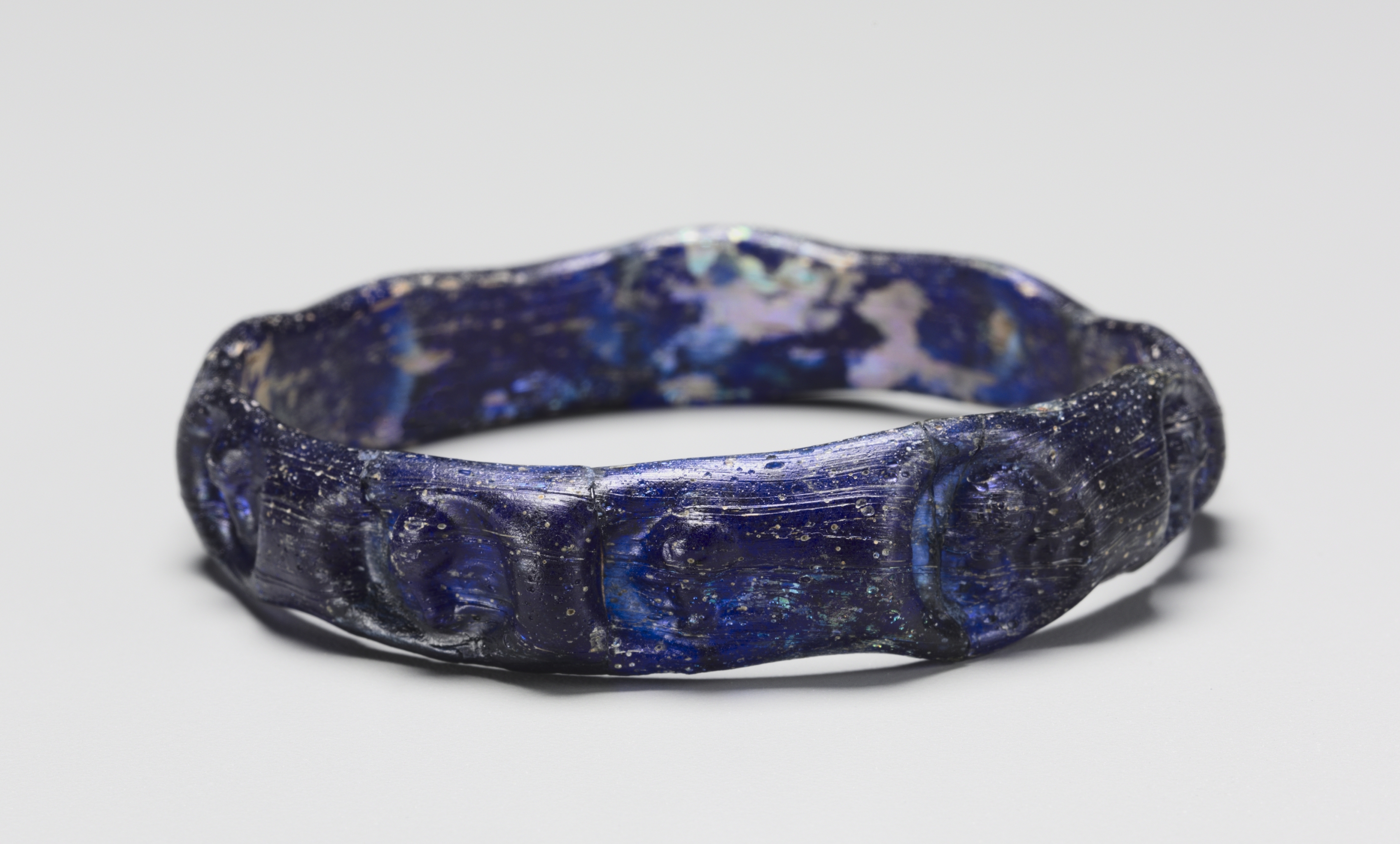
Bracelet
Jewellery made entirely of glass held wide appeal because it could imitate precious materials; a bangle could pass for rock crystal or amber.
3400 × 2049 px · Unmodified source file
Open in StudioSource & licensing
- Creator / date
- Syria, Roman, maker unknown · 350–500 CE
- Source credit
- The Cleveland Museum of Art, 1930.701. Open Access.
- Usage notes
- Released by the Cleveland Museum of Art under CC0 1.0. Credit to the museum is encouraged; CC0 does not imply endorsement.
- Original file
- 3400 × 2049 px · JPG · 0.0 MB
- Source checked
- 2026-11-04 · editorial approval separate
Public-domain status is reported by the linked source and may vary by jurisdiction. Check the source record for your intended use. No exclusive rights or Visual Bounty marketplace license are offered for these images.