← Open CollectionsPublic-domain source library
Roller-Printed Cottons
Between the hand block and the digital printer came the engraved copper roller: a cylinder that could lay a pattern down a length of cloth at speed. These cottons run from a French block print of 1785 to American roller work of the 1890s, through Indian-inspired glazed chintz, chinoiserie, Egyptian scenes and English dress prints. Read together they show a new machine learning the vocabulary of hand-printed cloth, and occasionally inventing its own.
Original means the unmodified digital file supplied by the linked archive, not an upscaled or reconstructed image. Sign in for free downloads. Studio uses a working preview up to 2048 px.
CC0 · Public domain · c. 1785
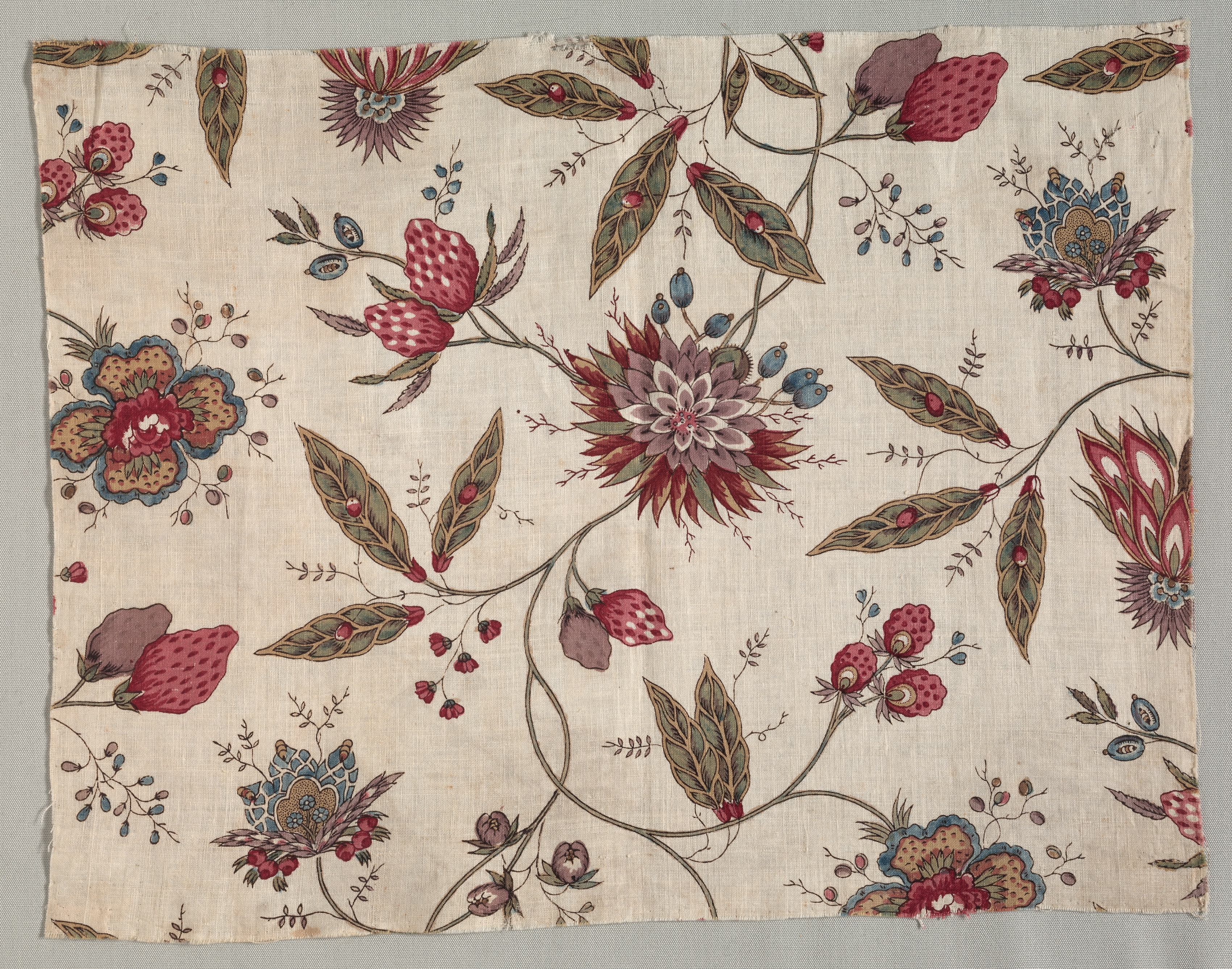
Fragment of Block Printed Cotton
French woodblock printing from just before the roller took over. The repeat is small and the colour count low, the way a block printer working by hand had to work.
× px · Unmodified source file
Small archival scan: best for reference and screen use, not large prints.
Open in StudioSource & licensing
- Creator / date
- France, maker unknown · c. 1785
- Source credit
- Gift of Lucy C. Barkwill. The Cleveland Museum of Art, Open Access.
- Usage notes
- Released by the Cleveland Museum of Art under CC0 1.0. Credit to the museum is encouraged; CC0 does not imply endorsement.
- Original file
- × px · JPG · 0.0 MB
- Source checked
- 2026-11-04 · editorial approval separate
CC0 · Public domain · 1790
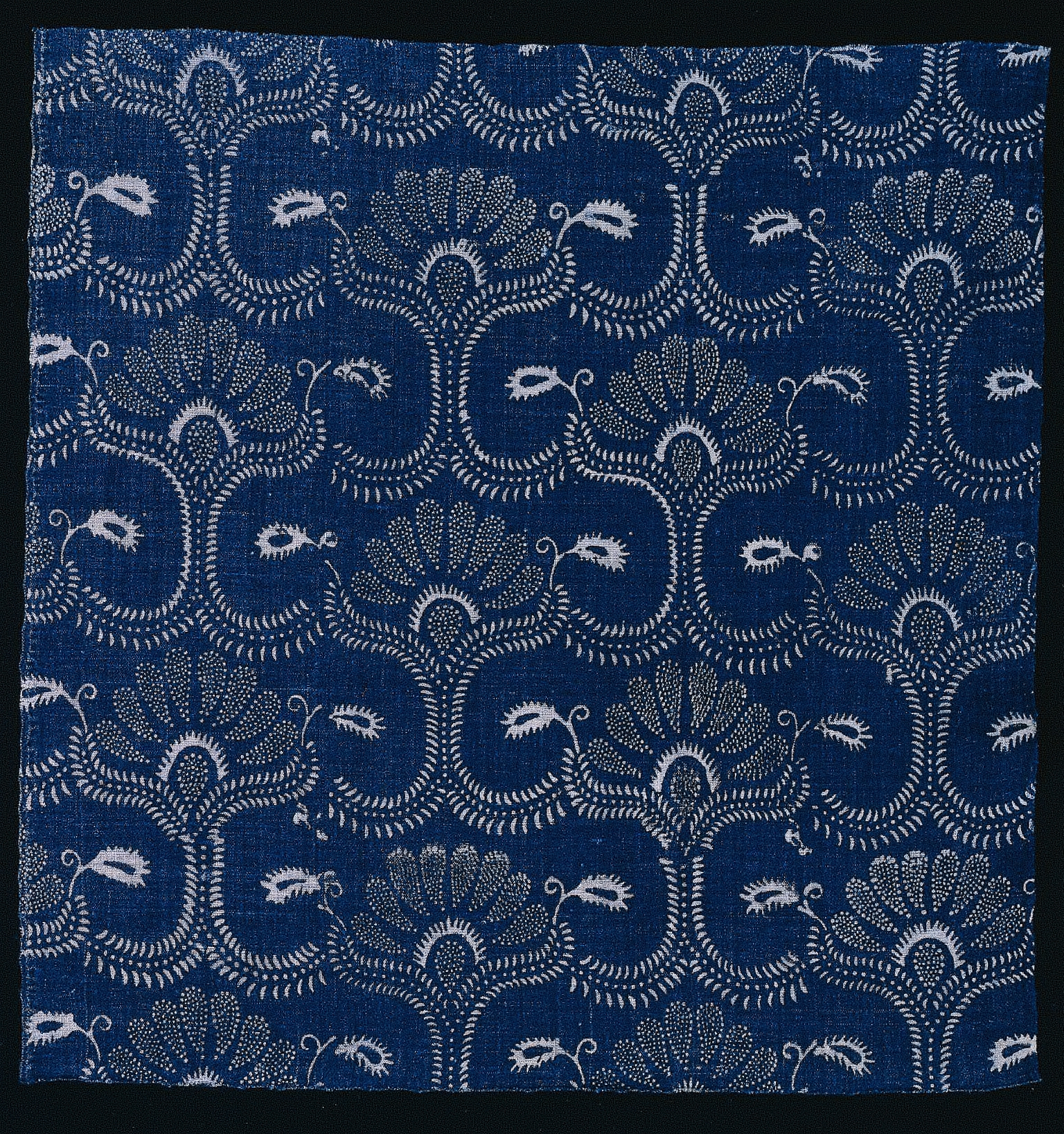
Loom width with Stylized Leaf Design
A full loom width from Alsace, indigo dyed after a wax resist. Alsace was among the first regions in France to industrialise textile printing, and widths this size are how that shift shows.
× px · Unmodified source file
Small archival scan: best for reference and screen use, not large prints.
Open in StudioSource & licensing
- Creator / date
- Alsace, France, maker unknown · 1790
- Source credit
- Gift of Gertrude Underhill. The Cleveland Museum of Art, Open Access.
- Usage notes
- Released by the Cleveland Museum of Art under CC0 1.0. Credit to the museum is encouraged; CC0 does not imply endorsement.
- Original file
- × px · JPG · 0.0 MB
- Source checked
- 2026-11-04 · editorial approval separate
CC0 · Public domain · 1800s
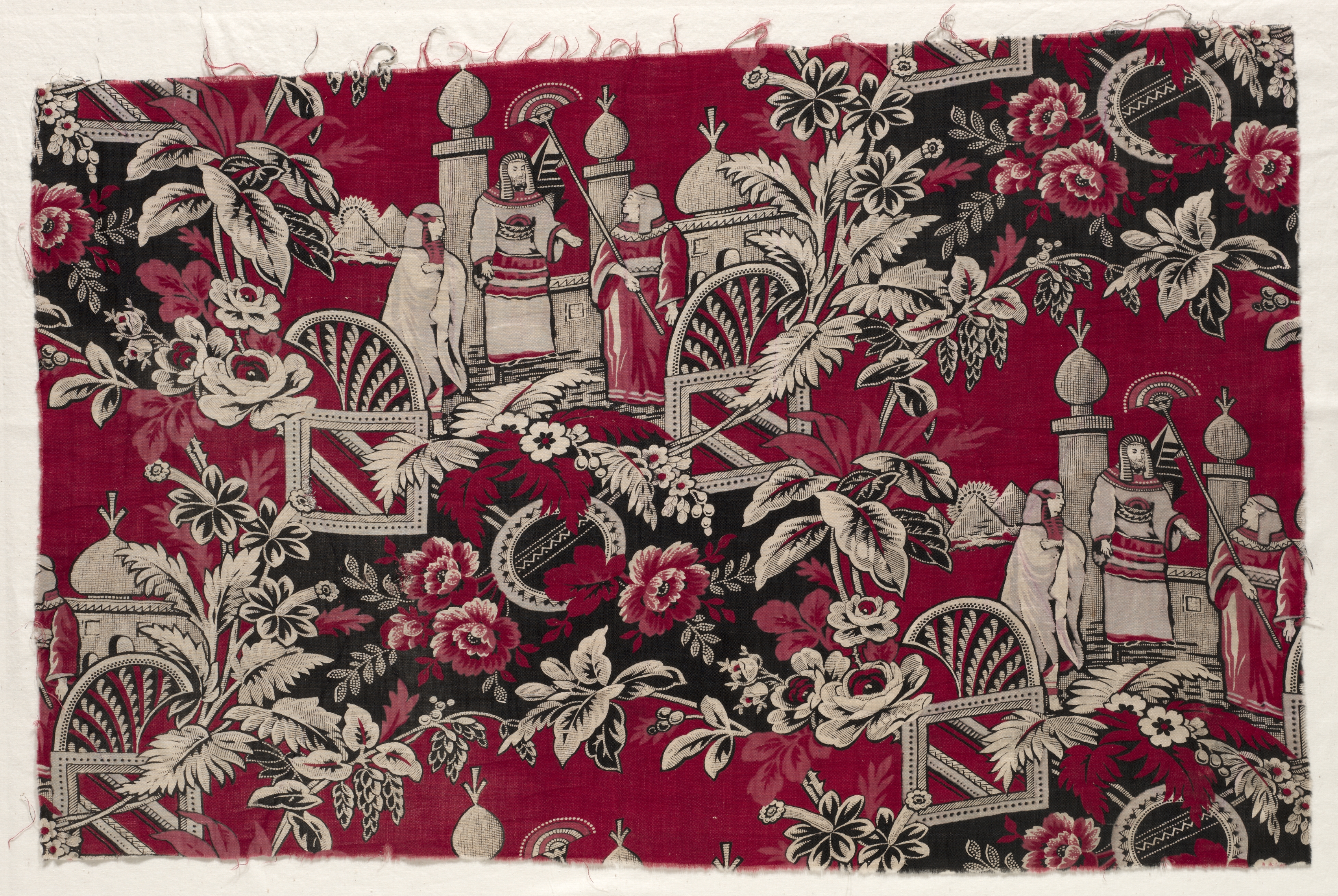
Printed Cotton with Egyptian Scene
Egyptian motifs, block printed in England after Napoleon’s campaign made the country fashionable. Prints like this one show how fast a news event could become a repeat.
× px · Unmodified source file
Small archival scan: best for reference and screen use, not large prints.
Open in StudioSource & licensing
- Creator / date
- England, maker unknown · 1800s
- Source credit
- Gift of George W. Bierce. The Cleveland Museum of Art, Open Access.
- Usage notes
- Released by the Cleveland Museum of Art under CC0 1.0. Credit to the museum is encouraged; CC0 does not imply endorsement.
- Original file
- × px · JPG · 0.0 MB
- Source checked
- 2026-11-04 · editorial approval separate
CC0 · Public domain · early 1800s
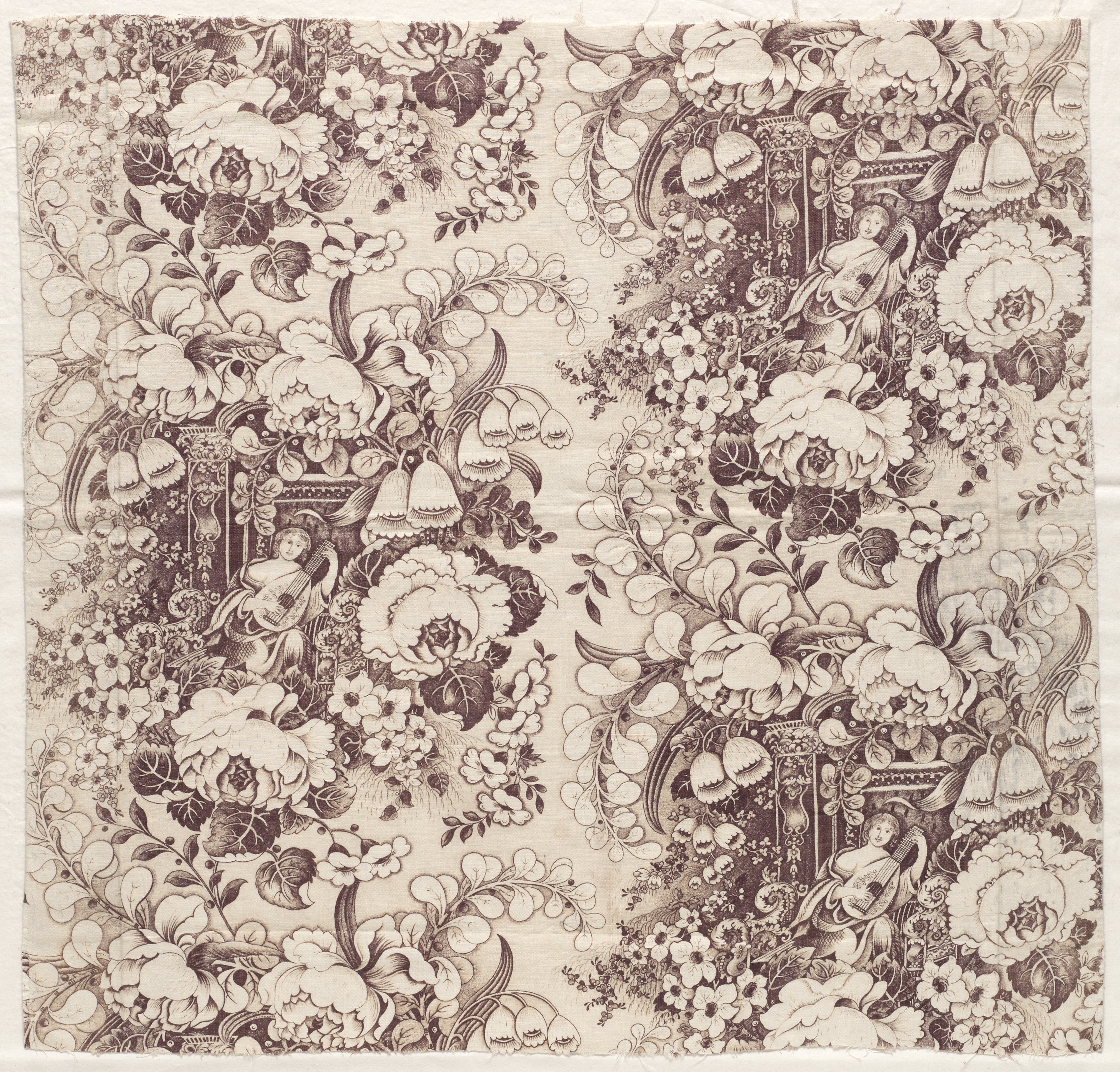
Roller-Printed Cotton with Design of Woman Playing a Lute
A figured scene cut into the roller, so the same woman with her lute could be printed by the mile. Copperplate and roller printing made pictorial repeats cheap for the first time.
× px · Unmodified source file
Small archival scan: best for reference and screen use, not large prints.
Open in StudioSource & licensing
- Creator / date
- England, maker unknown · early 1800s
- Source credit
- Gift of George W. Bierce. The Cleveland Museum of Art, Open Access.
- Usage notes
- Released by the Cleveland Museum of Art under CC0 1.0. Credit to the museum is encouraged; CC0 does not imply endorsement.
- Original file
- × px · JPG · 0.0 MB
- Source checked
- 2026-11-04 · editorial approval separate
CC0 · Public domain · 1800s
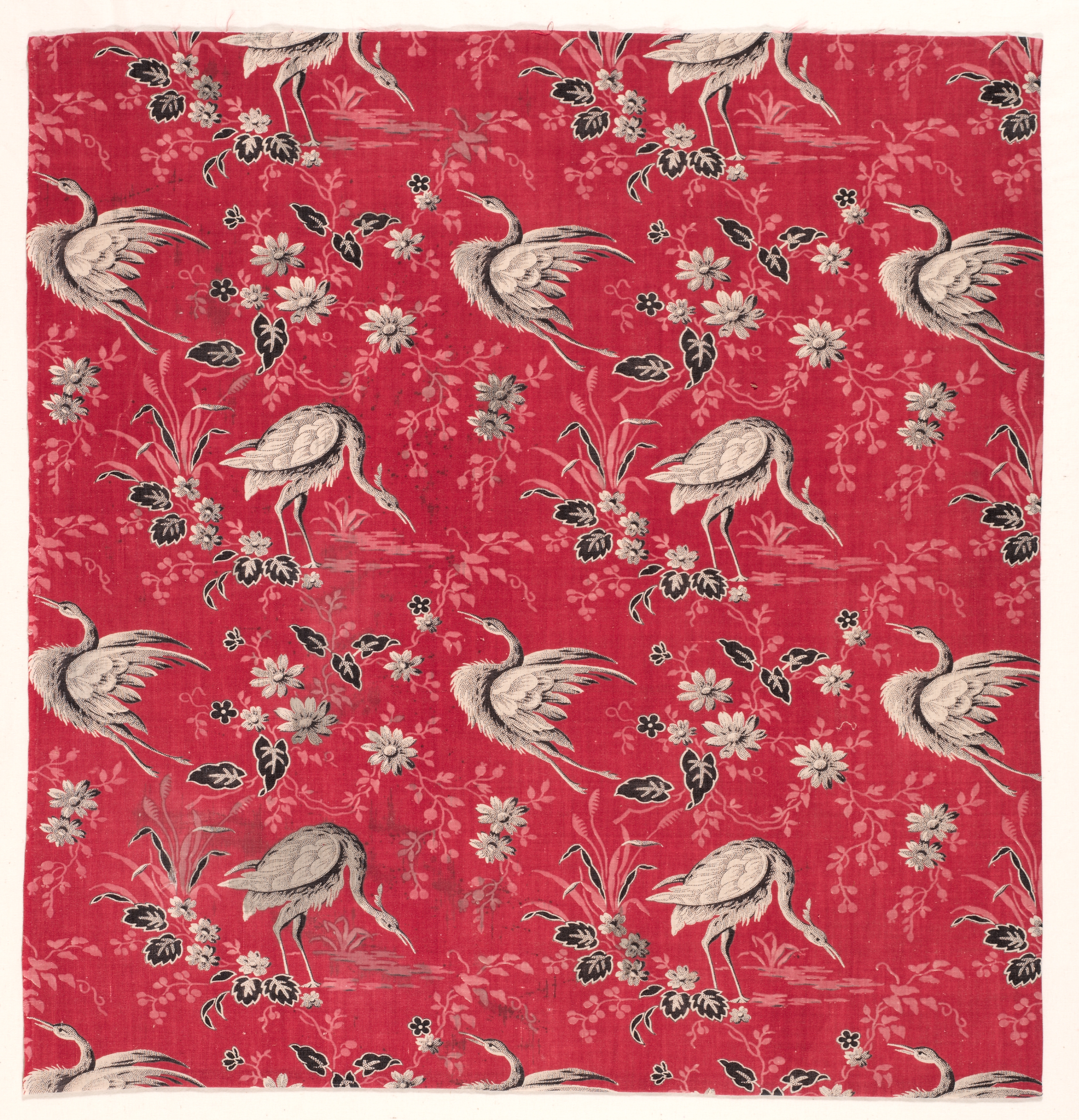
Roller-Printed Cotton with Heron and Flower Design
A heron among flowers, one of the ornithological repeats that dominated English dress cotton in the 1820s and 30s. The drawing is fine enough to read as engraving rather than print.
× px · Unmodified source file
Small archival scan: best for reference and screen use, not large prints.
Open in StudioSource & licensing
- Creator / date
- England, maker unknown · 1800s
- Source credit
- Gift of George W. Bierce. The Cleveland Museum of Art, Open Access.
- Usage notes
- Released by the Cleveland Museum of Art under CC0 1.0. Credit to the museum is encouraged; CC0 does not imply endorsement.
- Original file
- × px · JPG · 0.0 MB
- Source checked
- 2026-11-04 · editorial approval separate
CC0 · Public domain · c. 1816
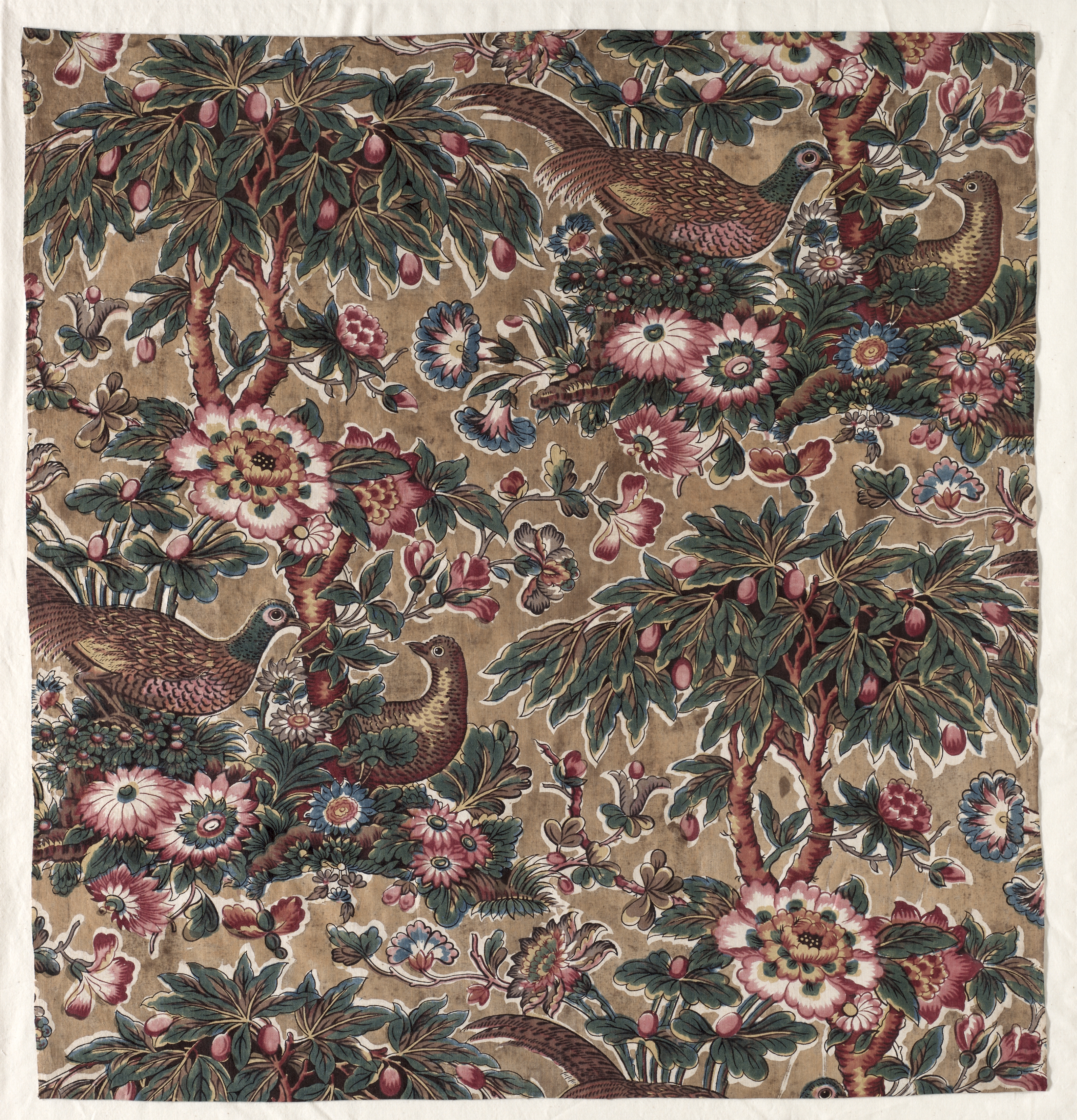
Glazed Chintz with Pheasant and Flower Design
Glazing gave printed cotton a polished surface that imitated the sheen of the Indian chintz it was competing with, while the pheasant supplied the exoticism the market wanted.
× px · Unmodified source file
Small archival scan: best for reference and screen use, not large prints.
Open in StudioSource & licensing
- Creator / date
- England, maker unknown · c. 1816
- Source credit
- Gift of George W. Bierce. The Cleveland Museum of Art, Open Access.
- Usage notes
- Released by the Cleveland Museum of Art under CC0 1.0. Credit to the museum is encouraged; CC0 does not imply endorsement.
- Original file
- × px · JPG · 0.0 MB
- Source checked
- 2026-11-04 · editorial approval separate
CC0 · Public domain · c. 1825
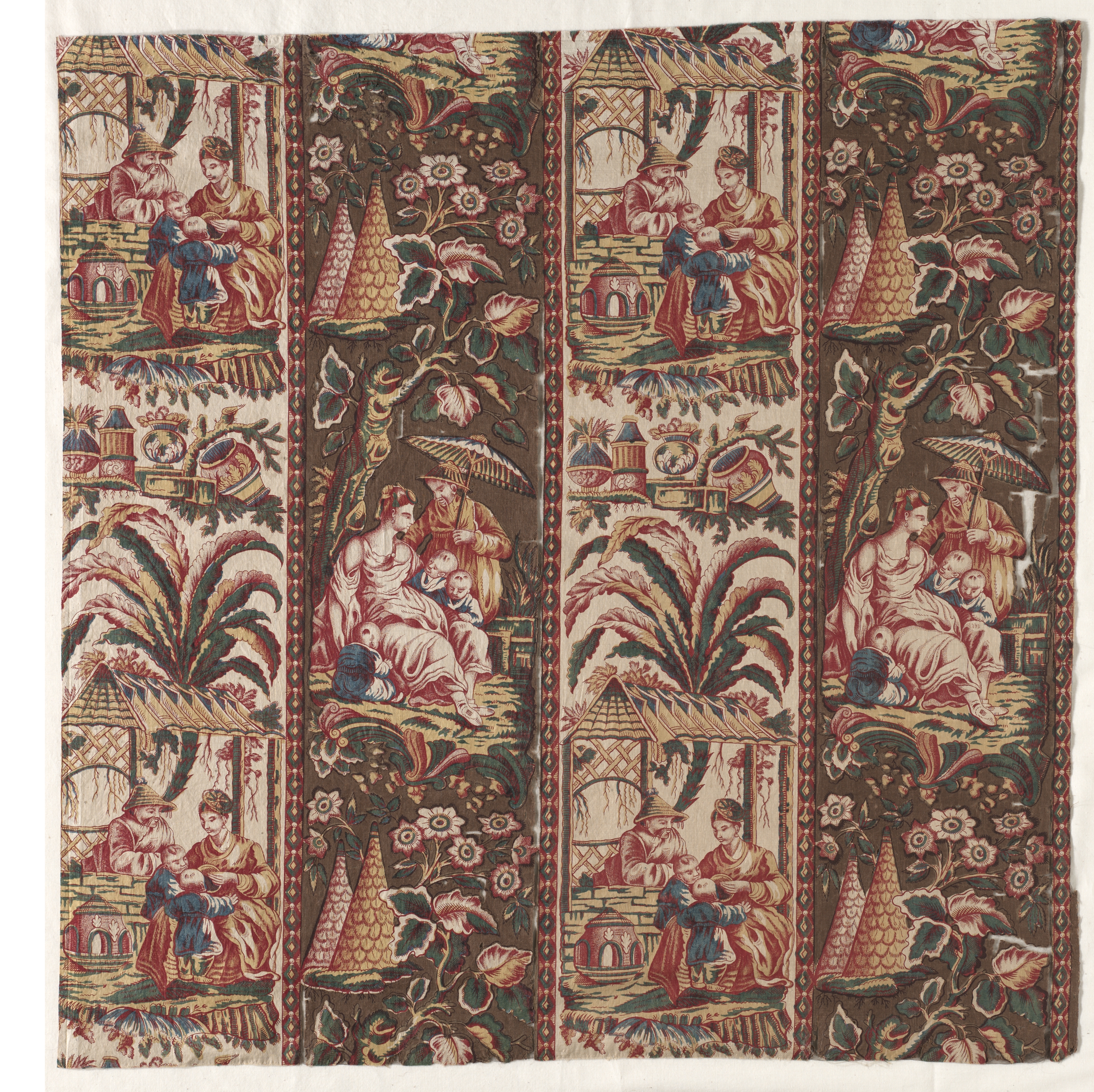
Length of Chinoiserie Chintz
A full length of English chinoiserie, four decades after the style reached its peak in France. By 1825 the pagodas and tea houses had become a standard part of the English pattern book.
× px · Unmodified source file
Small archival scan: best for reference and screen use, not large prints.
Open in StudioSource & licensing
- Creator / date
- England, maker unknown · c. 1825
- Source credit
- Gift of George W. Bierce. The Cleveland Museum of Art, Open Access.
- Usage notes
- Released by the Cleveland Museum of Art under CC0 1.0. Credit to the museum is encouraged; CC0 does not imply endorsement.
- Original file
- × px · JPG · 0.0 MB
- Source checked
- 2026-11-04 · editorial approval separate
CC0 · Public domain · 1800s
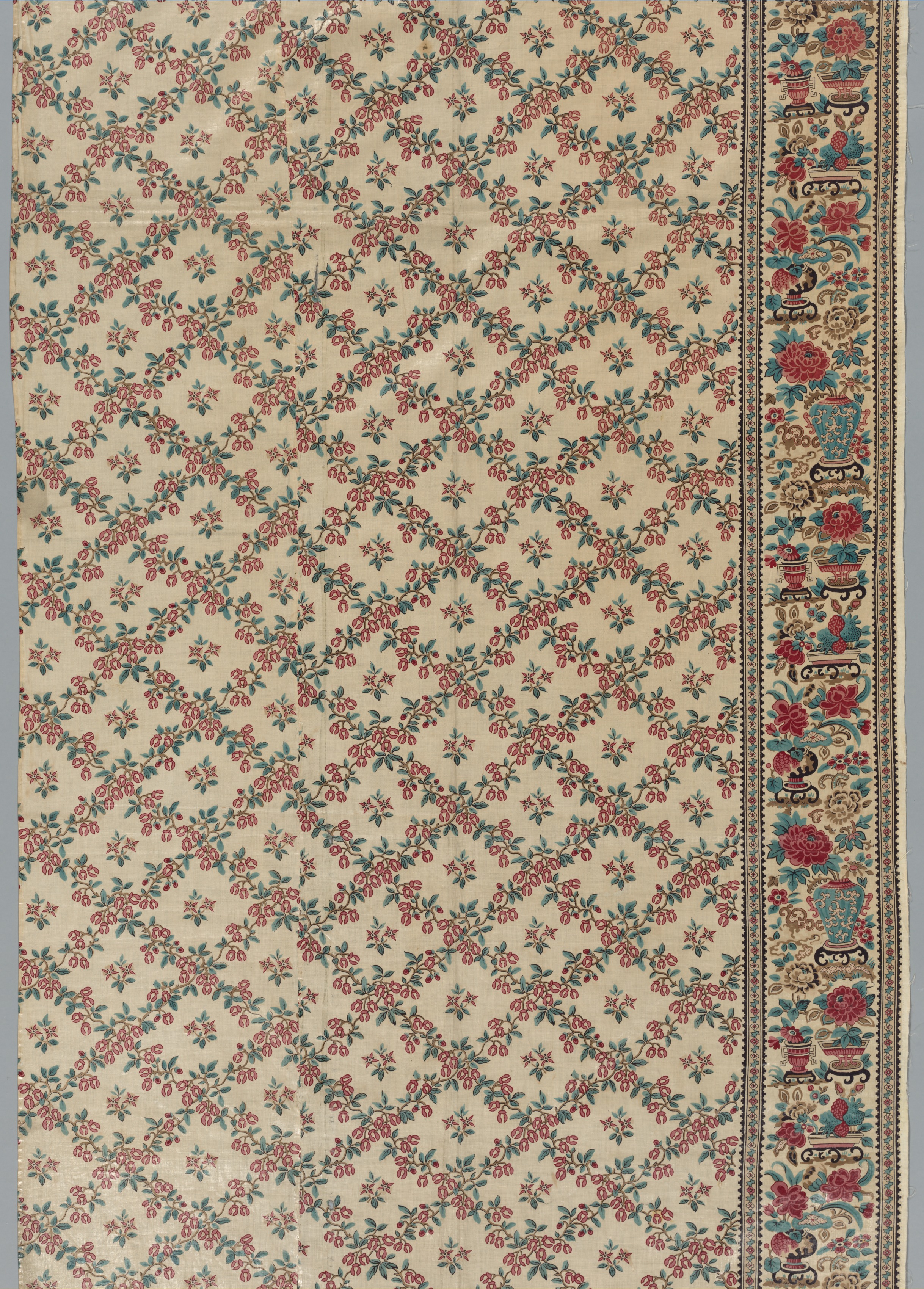
Roller-Printed Glazed Chintz with Flower and Vase Design
A vase of flowers set on a glazed ground, printed in the coloured-than-dyed sequence the industry was still refining. The pattern is a direct descendant of the painted Indian hanging.
× px · Unmodified source file
Small archival scan: best for reference and screen use, not large prints.
Open in StudioSource & licensing
- Creator / date
- England, maker unknown · 1800s
- Source credit
- Dudley P. Allen Fund. The Cleveland Museum of Art, Open Access.
- Usage notes
- Released by the Cleveland Museum of Art under CC0 1.0. Credit to the museum is encouraged; CC0 does not imply endorsement.
- Original file
- × px · JPG · 0.0 MB
- Source checked
- 2026-11-04 · editorial approval separate
CC0 · Public domain · 1833
Woodblock Printed Chintz Fragment
Dated 1833, and still printed from woodblocks even though the roller existed. Hand blocks held on where a design needed colour density the machines of the period could not deliver.
× px · Unmodified source file
Small archival scan: best for reference and screen use, not large prints.
Open in StudioSource & licensing
- Creator / date
- England, maker unknown · 1833
- Source credit
- Purchase from the J. H. Wade Fund. The Cleveland Museum of Art, Open Access.
- Usage notes
- Released by the Cleveland Museum of Art under CC0 1.0. Credit to the museum is encouraged; CC0 does not imply endorsement.
- Original file
- × px · JPG · 0.0 MB
- Source checked
- 2026-11-04 · editorial approval separate
CC0 · Public domain · c. 1830
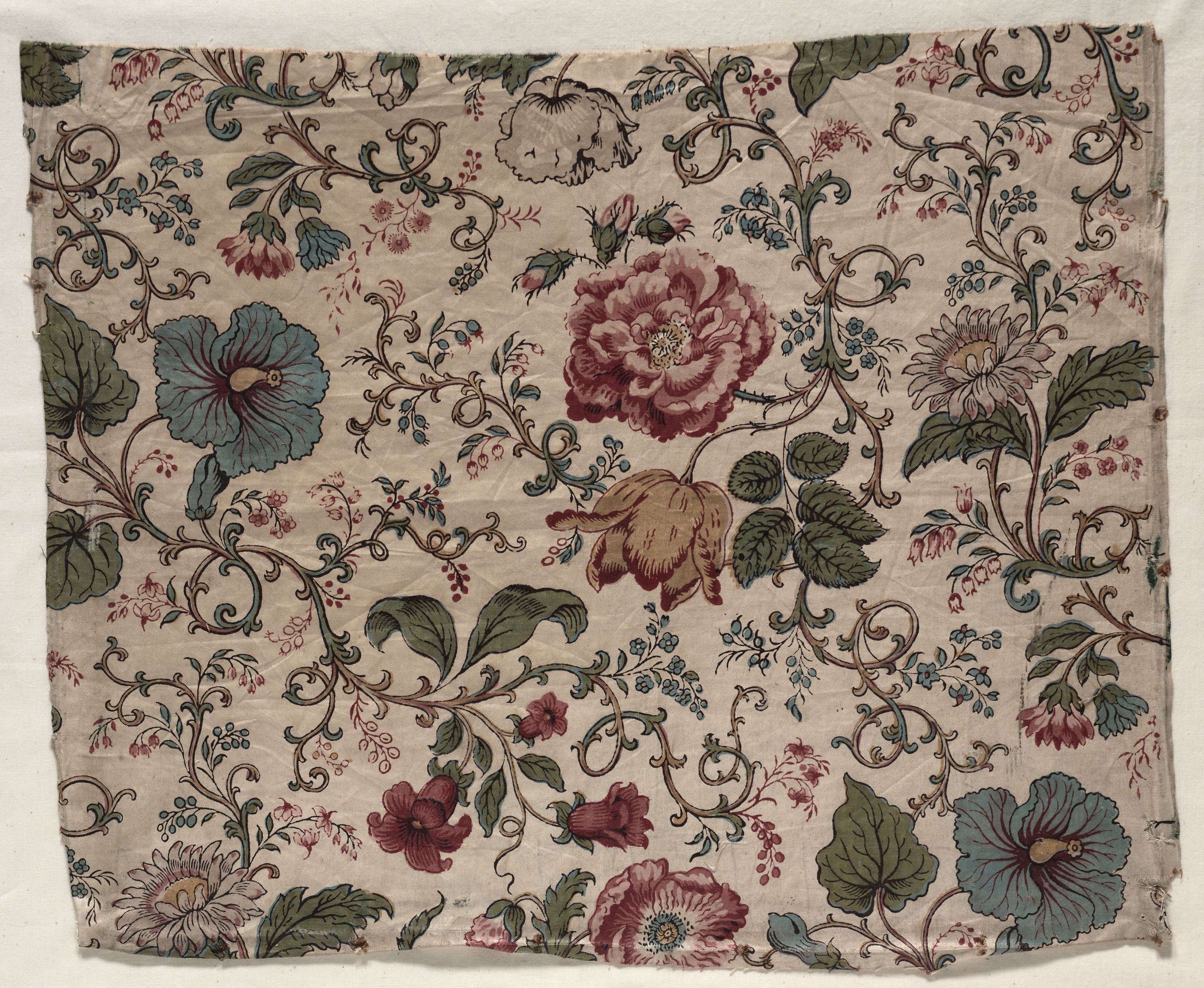
Glazed Chintz Fragment
Machine and block printing on one cloth, with the blockwork filling detail the roller could not carry. Hybrid pieces like this are the clearest record of the two technologies overlapping.
× px · Unmodified source file
Small archival scan: best for reference and screen use, not large prints.
Open in StudioSource & licensing
- Creator / date
- England, maker unknown · c. 1830
- Source credit
- Purchase from the J. H. Wade Fund. The Cleveland Museum of Art, Open Access.
- Usage notes
- Released by the Cleveland Museum of Art under CC0 1.0. Credit to the museum is encouraged; CC0 does not imply endorsement.
- Original file
- × px · JPG · 0.0 MB
- Source checked
- 2026-11-04 · editorial approval separate
CC0 · Public domain · c. 1840
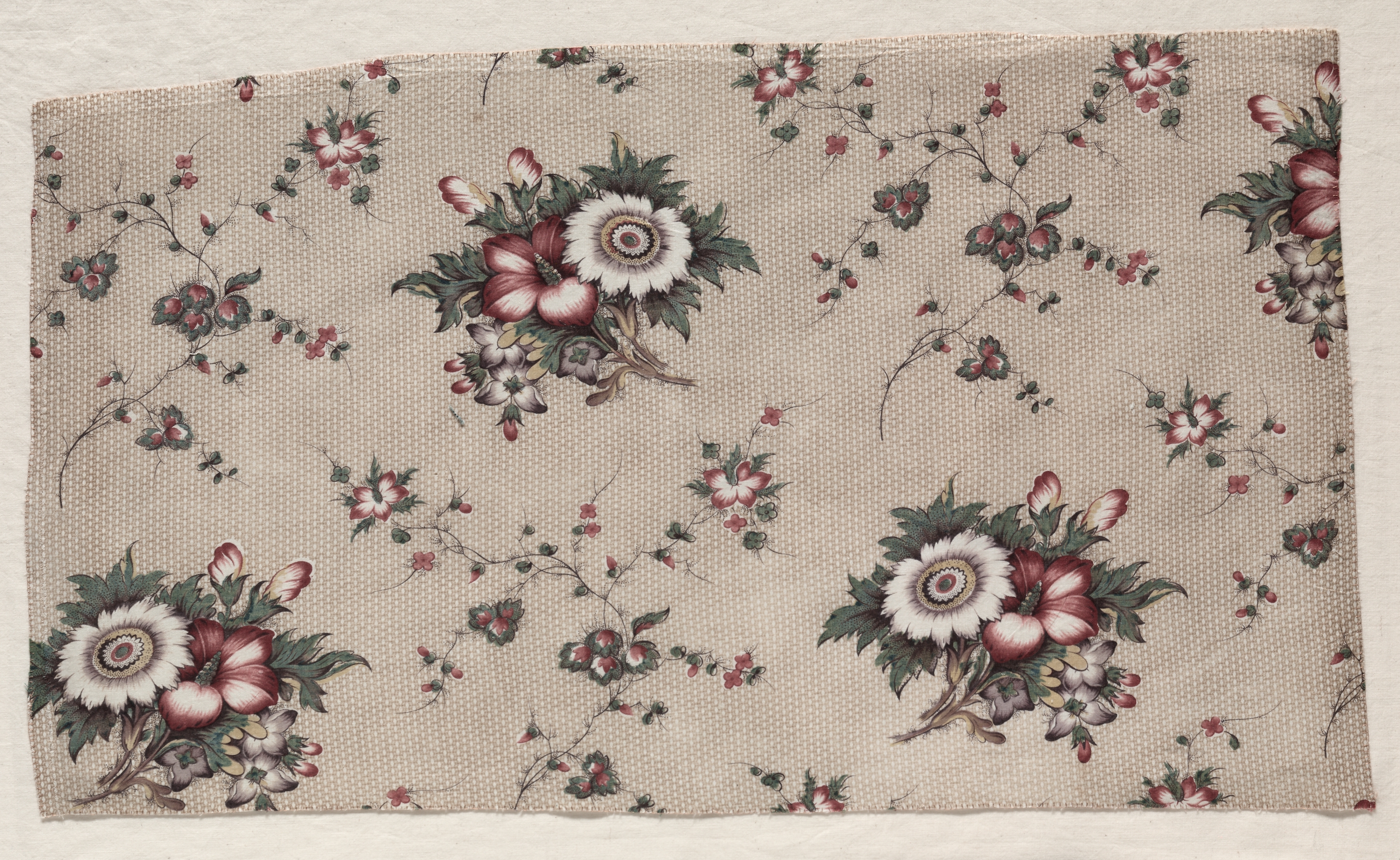
Glazed Chintz Fragment
Lancashire printed cotton of the 1840s, by then the largest export industry in the world. Small fragments like this one are what survive of cloth that was used until it wore out.
× px · Unmodified source file
Small archival scan: best for reference and screen use, not large prints.
Open in StudioSource & licensing
- Creator / date
- England, possibly Lancashire, maker unknown · c. 1840
- Source credit
- Purchase from the J. H. Wade Fund. The Cleveland Museum of Art, Open Access.
- Usage notes
- Released by the Cleveland Museum of Art under CC0 1.0. Credit to the museum is encouraged; CC0 does not imply endorsement.
- Original file
- × px · JPG · 0.0 MB
- Source checked
- 2026-11-04 · editorial approval separate
CC0 · Public domain · 19th century
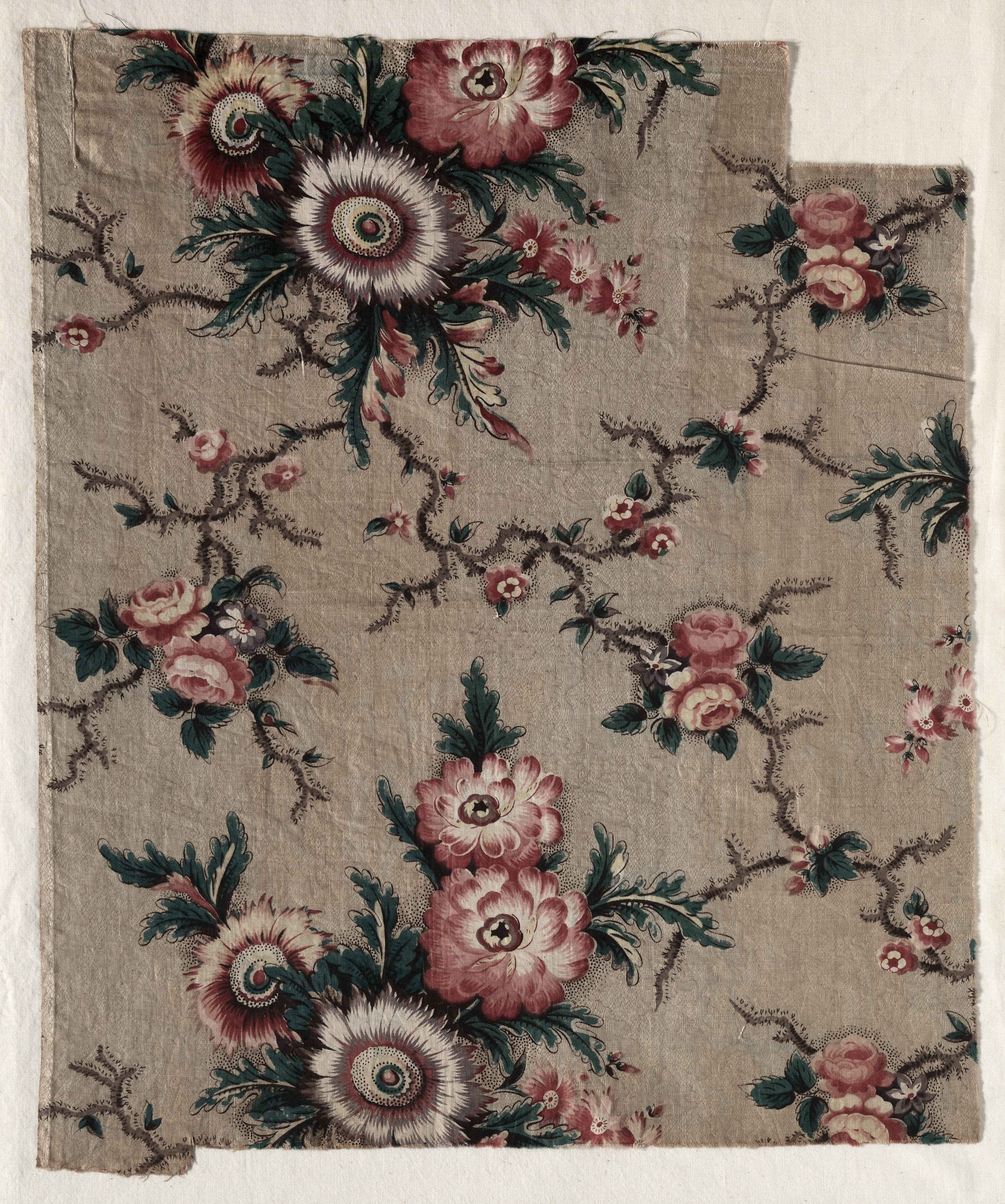
Roller Printed Cotton Textile
American roller printing on plain cloth, made when the country’s mills were building their own pattern vocabulary rather than copying the English one.
× px · Unmodified source file
Small archival scan: best for reference and screen use, not large prints.
Open in StudioSource & licensing
- Creator / date
- United States, maker unknown · 19th century
- Source credit
- Gift of Mrs. Jackson M. Prentiss. The Cleveland Museum of Art, Open Access.
- Usage notes
- Released by the Cleveland Museum of Art under CC0 1.0. Credit to the museum is encouraged; CC0 does not imply endorsement.
- Original file
- × px · JPG · 0.0 MB
- Source checked
- 2026-11-04 · editorial approval separate
CC0 · Public domain · 19th century
Roller Printed Cotton Textile
A second American roller print from the same gift, close enough in structure to compare registration and colour with its pair.
× px · Unmodified source file
Small archival scan: best for reference and screen use, not large prints.
Open in StudioSource & licensing
- Creator / date
- United States, maker unknown · 19th century
- Source credit
- Gift of Mrs. Jackson M. Prentiss. The Cleveland Museum of Art, Open Access.
- Usage notes
- Released by the Cleveland Museum of Art under CC0 1.0. Credit to the museum is encouraged; CC0 does not imply endorsement.
- Original file
- × px · JPG · 0.0 MB
- Source checked
- 2026-11-04 · editorial approval separate
CC0 · Public domain · c. 1890
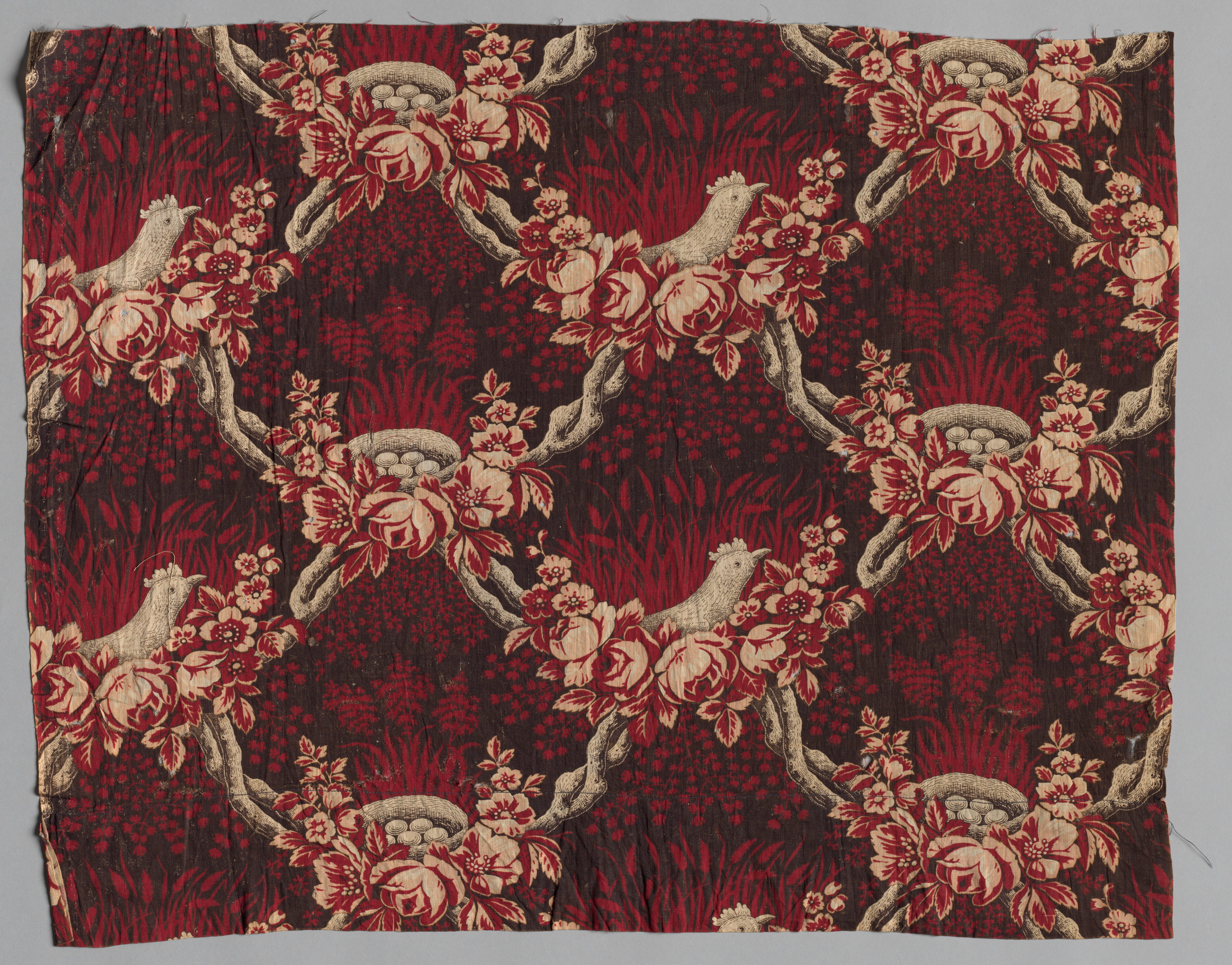
Cloth with Rooster and Hen Design
Late nineteenth-century roller printing turns livestock into ornament. A rooster and hen, repeated across a whole cloth, in the cheerful naturalism that sold cheap dress goods.
× px · Unmodified source file
Small archival scan: best for reference and screen use, not large prints.
Open in StudioSource & licensing
- Creator / date
- Maker unknown · c. 1890
- Source credit
- Gift of Henry Hunt Clark. The Cleveland Museum of Art, Open Access.
- Usage notes
- Released by the Cleveland Museum of Art under CC0 1.0. Credit to the museum is encouraged; CC0 does not imply endorsement.
- Original file
- × px · JPG · 0.0 MB
- Source checked
- 2026-11-04 · editorial approval separate
Public-domain status is reported by the linked source and may vary by jurisdiction. Check the source record for your intended use. No exclusive rights or Visual Bounty marketplace license are offered for these images.