← Open CollectionsPublic-domain source library
Quilt: Pieced, Quilted, Embroidered
Quilting is a structural act that becomes a visual one: layers of cloth held together by stitched lines, and those lines then read as pattern. The works here come from four traditions, American pieced and crazy patchwork, Ottoman and Mamluk embroidered and quilted silk, Bengali kantha, and a Goan bedspread made for the Portuguese trade. Each uses stitching to a different end, from thrift to display, and each depends on the same fact: a needle making a mark that also holds the object together.
Original means the unmodified digital file supplied by the linked archive, not an upscaled or reconstructed image. Sign in for free downloads. Studio uses a working preview up to 2048 px.
CC0 · Public domain · c. 1887–1900
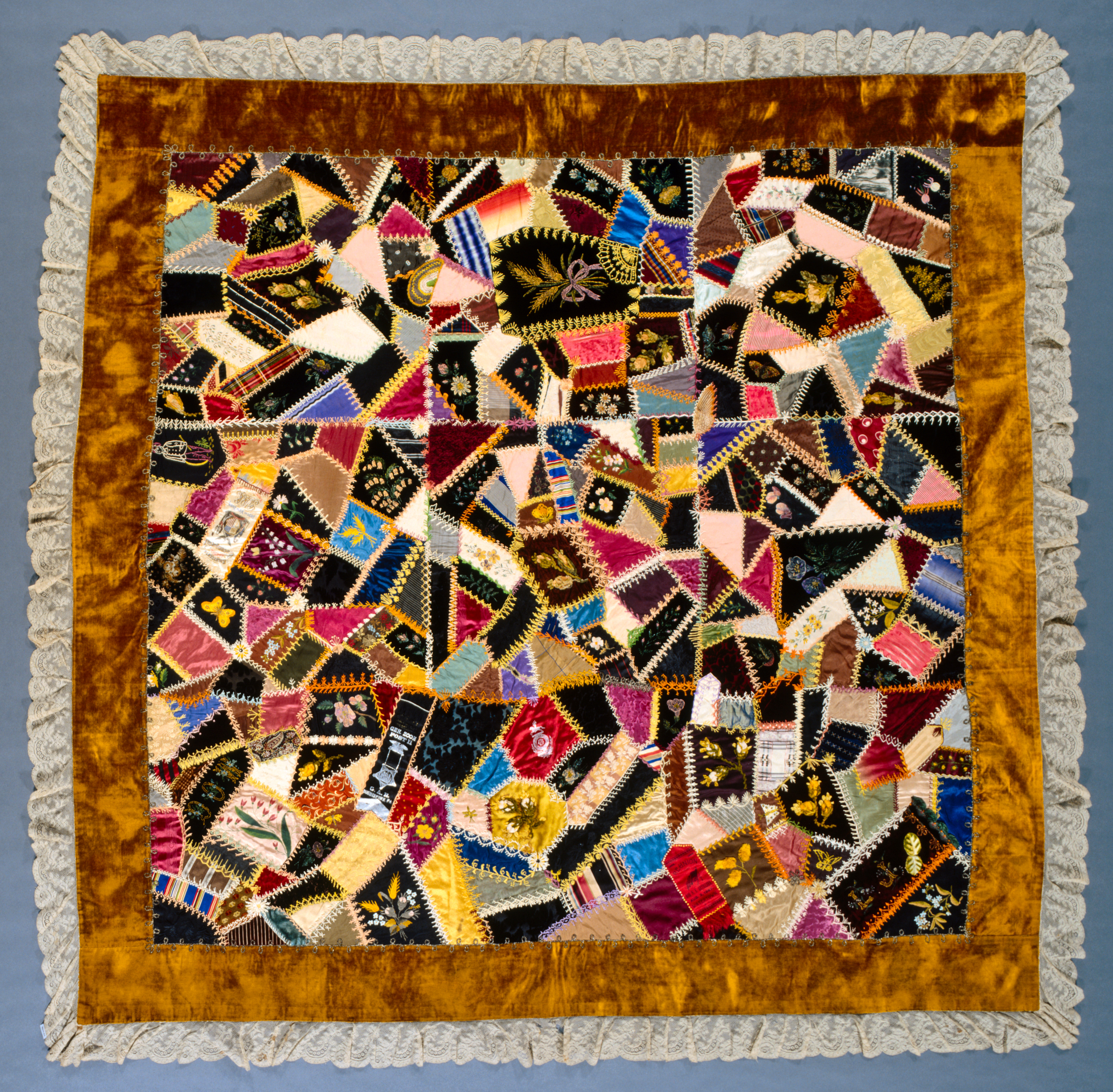
Crazy Quilt
Louisa Joiner pieced this quilt from silks, ribbons, lace and velvet, some of the scraps thought to be cut from clothing worn on lake cruises; her initials appear on a panel at lower right. Crazy patchwork abandons the grid entirely, filling every seam with embroidery.
3400 × 3335 px · Unmodified source file
Open in StudioSource & licensing
- Creator / date
- Louisa Joiner (American, 1844–1911) · c. 1887–1900
- Source credit
- The Cleveland Museum of Art, 2000.63. Open Access.
- Usage notes
- Released by the Cleveland Museum of Art under CC0 1.0. Credit to the museum is encouraged; CC0 does not imply endorsement.
- Original file
- 3400 × 3335 px · JPG · 0.0 MB
- Source checked
- 2026-11-04 · editorial approval separate
CC0 · Public domain · 1600s-1700s
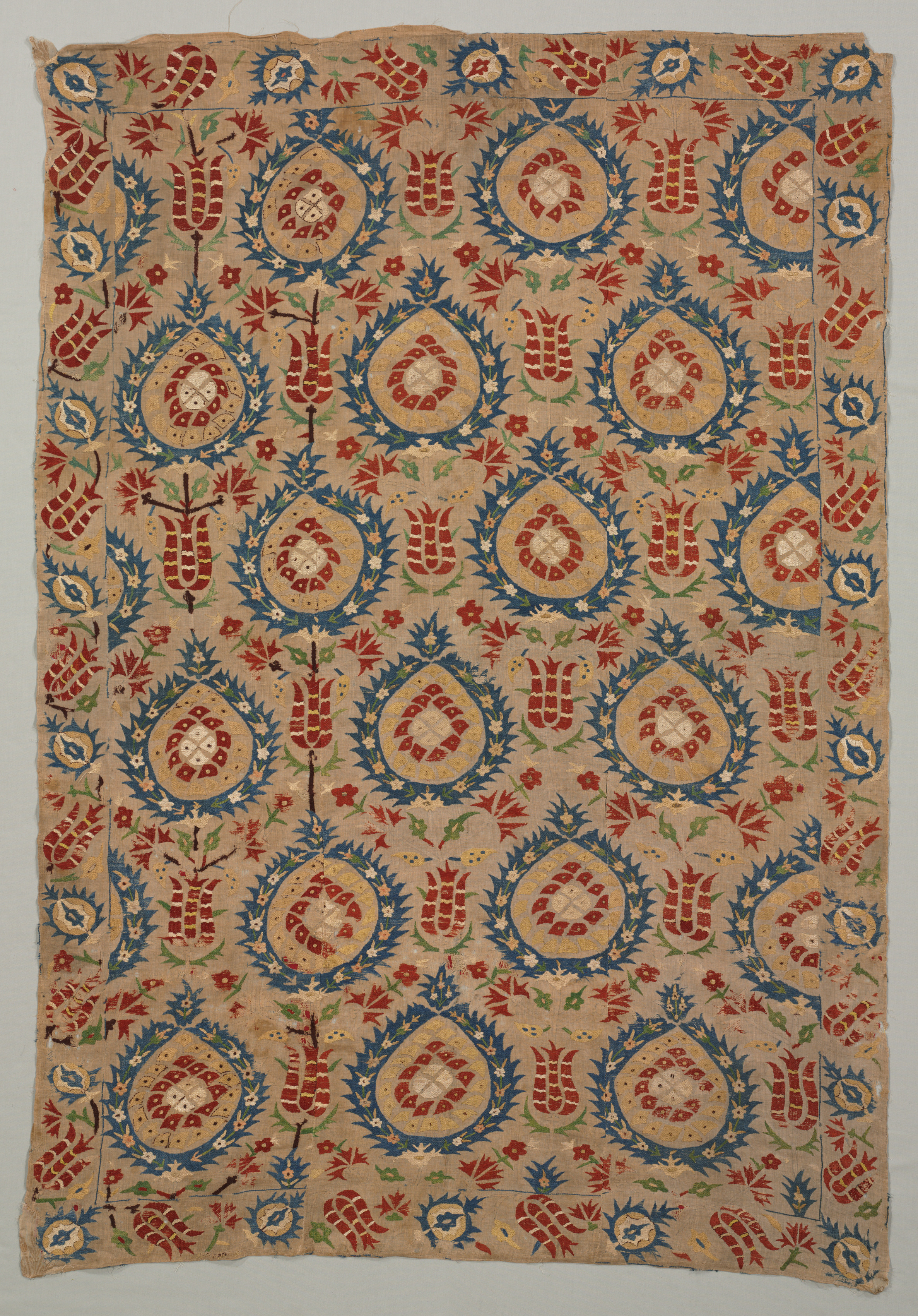
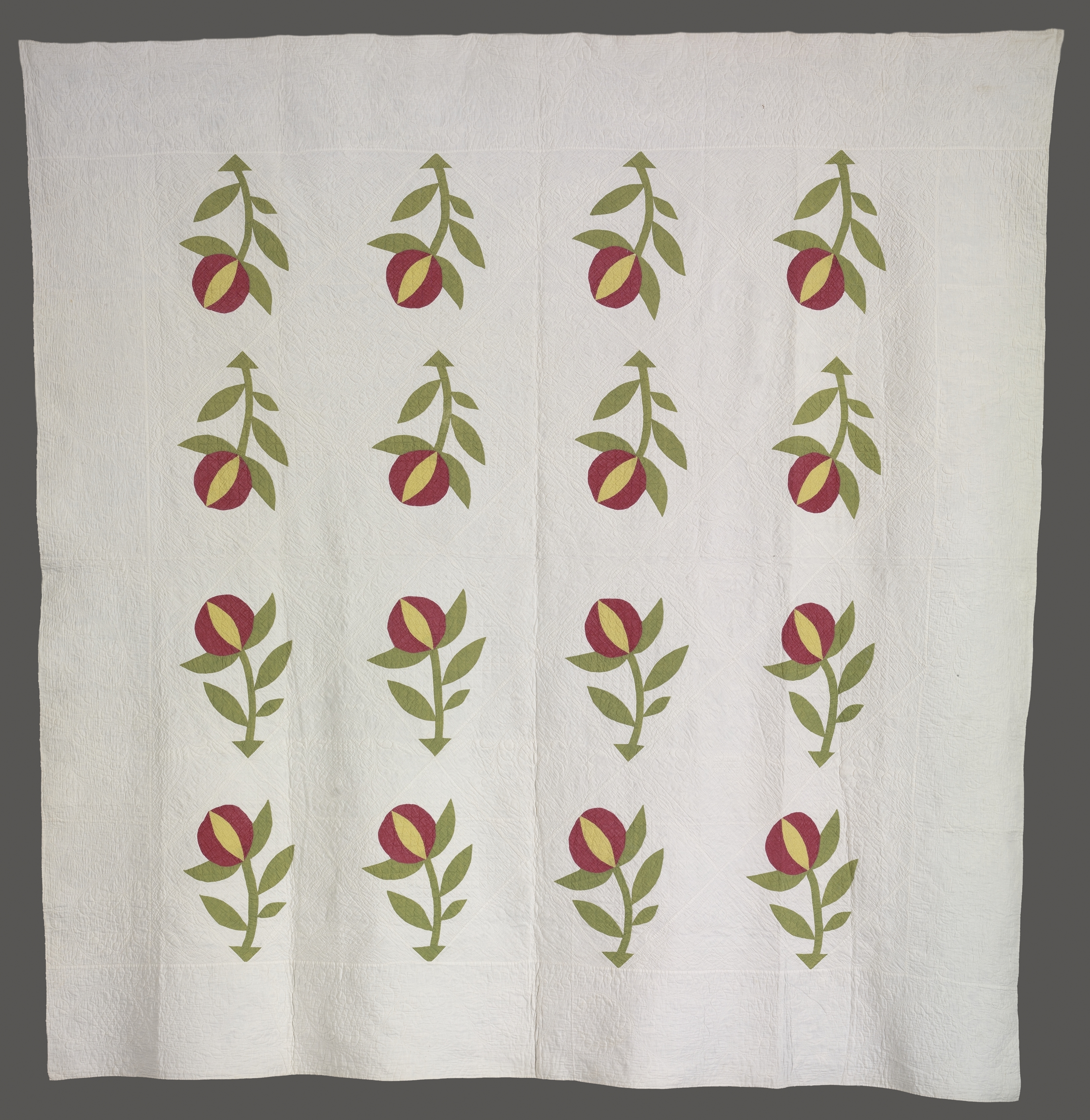
Embroidered quilt with pomegranates and tulips
Turkish embroiderers adapted motifs from Ottoman court silks and worked them in the same six silk colours: crimson, blue, green and brown-black, with yellow and white replacing costly metal thread. Pomegranates and tulips spread across the linen in running stitch.
2373 × 3400 px · Unmodified source file
Open in StudioSource & licensing
- Creator / date
- Turkey, maker unknown · 1600s-1700s
- Source credit
- The Cleveland Museum of Art, 1916.1300. Open Access.
- Usage notes
- Released by the Cleveland Museum of Art under CC0 1.0. Credit to the museum is encouraged; CC0 does not imply endorsement.
- Original file
- 2373 × 3400 px · JPG · 0.0 MB
- Source checked
- 2026-11-04 · editorial approval separate
CC0 · Public domain · 1800s
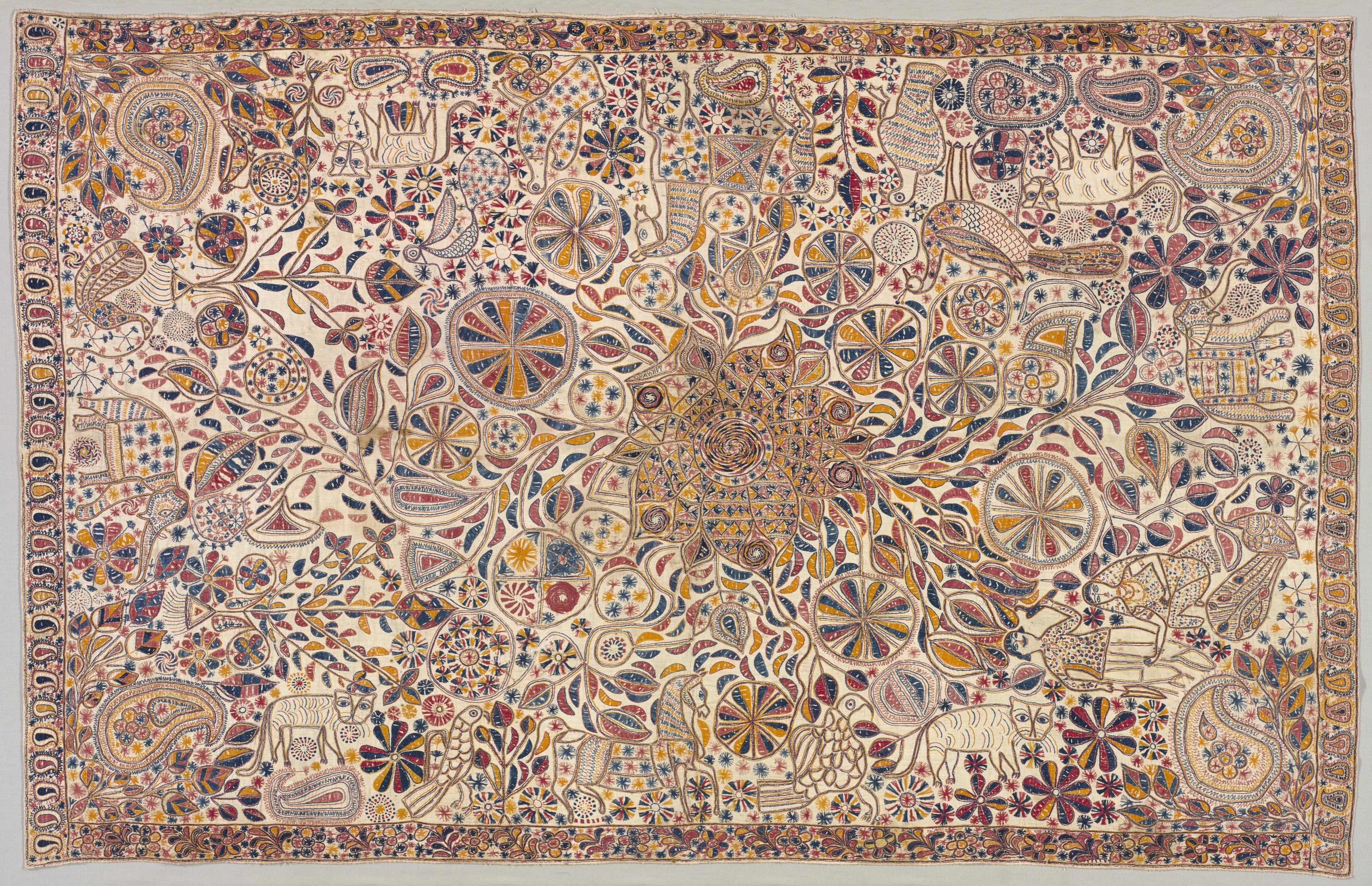
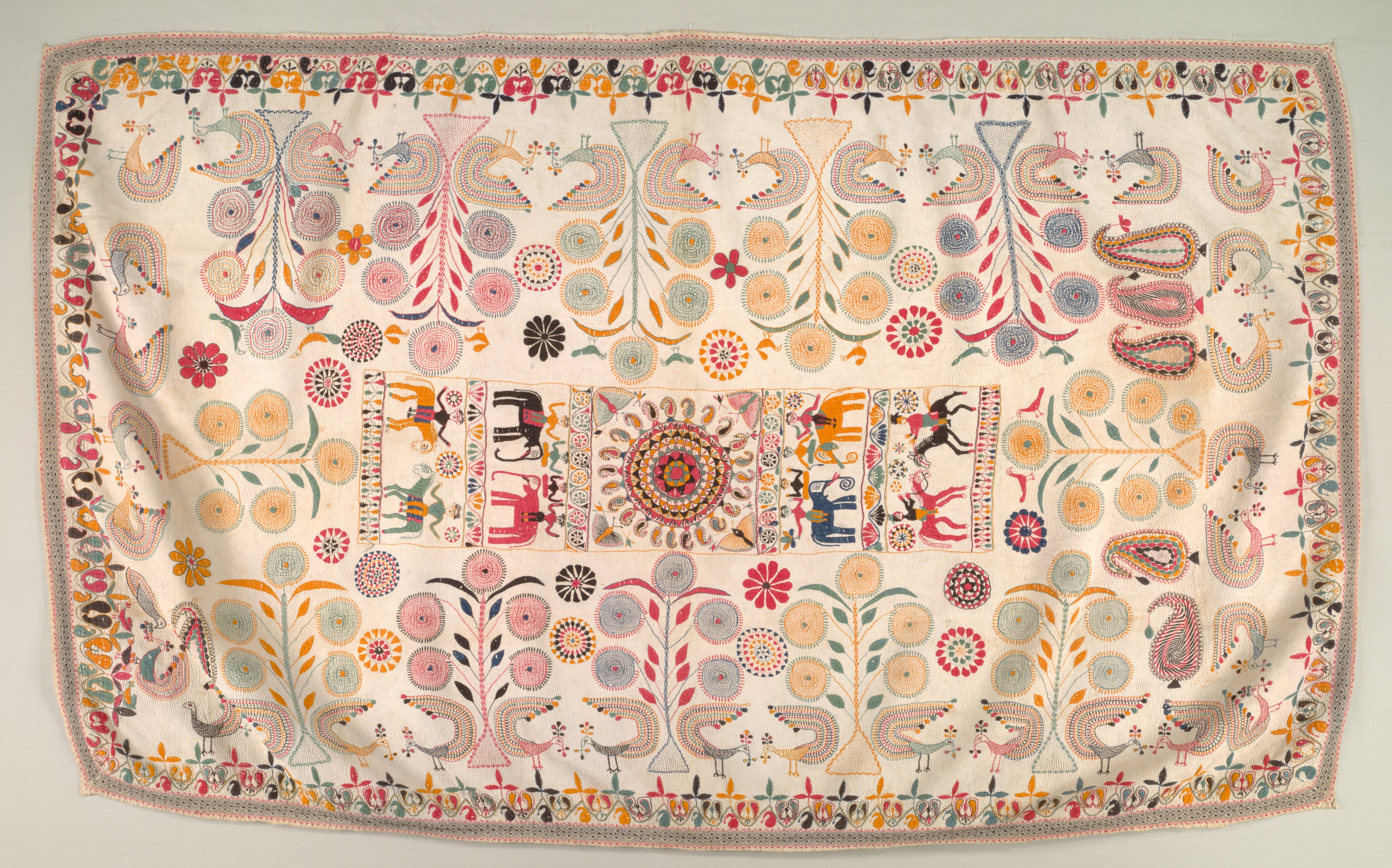
Kantha (Ceremonial Quilt)
A kantha is made from layers of worn cotton stitched together with running stitch, thousands of small marks giving the surface its quilted texture. Quilts of this kind were kept for ceremonial use and embroidered with figures and animals drawn from everyday life.
3400 × 2196 px · Unmodified source file
Open in StudioSource & licensing
- Creator / date
- India, East Bengal, 19th century, maker unknown · 1800s
- Source credit
- The Cleveland Museum of Art, 1960.274. Open Access.
- Usage notes
- Released by the Cleveland Museum of Art under CC0 1.0. Credit to the museum is encouraged; CC0 does not imply endorsement.
- Original file
- 3400 × 2196 px · JPG · 0.0 MB
- Source checked
- 2026-11-04 · editorial approval separate
CC0 · Public domain · 1300s
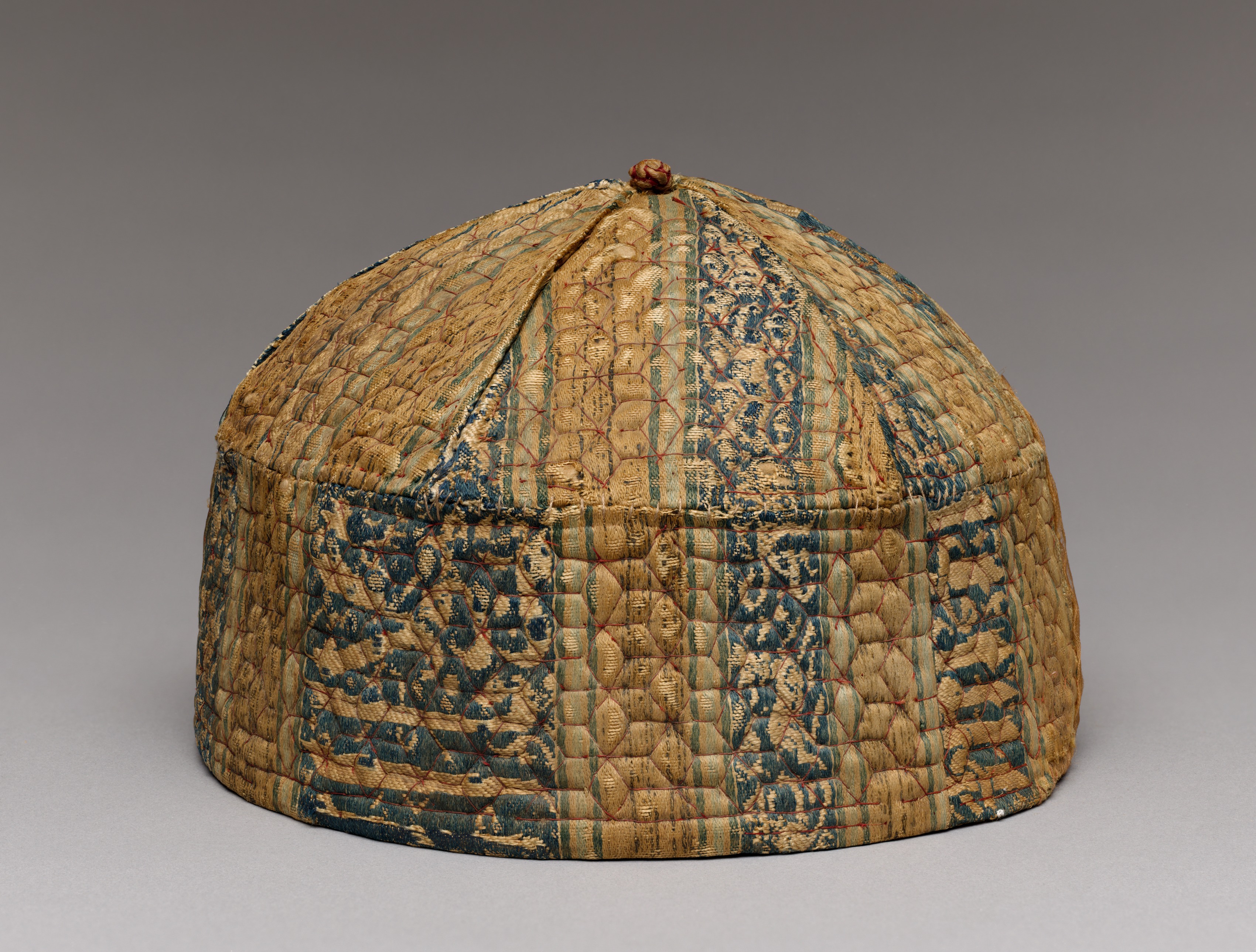
Cap
A quilted cap in lampas silk from Mamluk Syria or Egypt. Caps of this kind came out of Egyptian graves and preserve silk patterns that would otherwise survive only as fragments.
3400 × 2577 px · Unmodified source file
Open in StudioSource & licensing
- Creator / date
- Syria or Egypt, Mamluk Dynasty (1250–1517), maker unknown · 1300s
- Source credit
- The Cleveland Museum of Art, 1950.510. Open Access.
- Usage notes
- Released by the Cleveland Museum of Art under CC0 1.0. Credit to the museum is encouraged; CC0 does not imply endorsement.
- Original file
- 3400 × 2577 px · JPG · 0.0 MB
- Source checked
- 2026-11-04 · editorial approval separate
CC0 · Public domain · 1000s
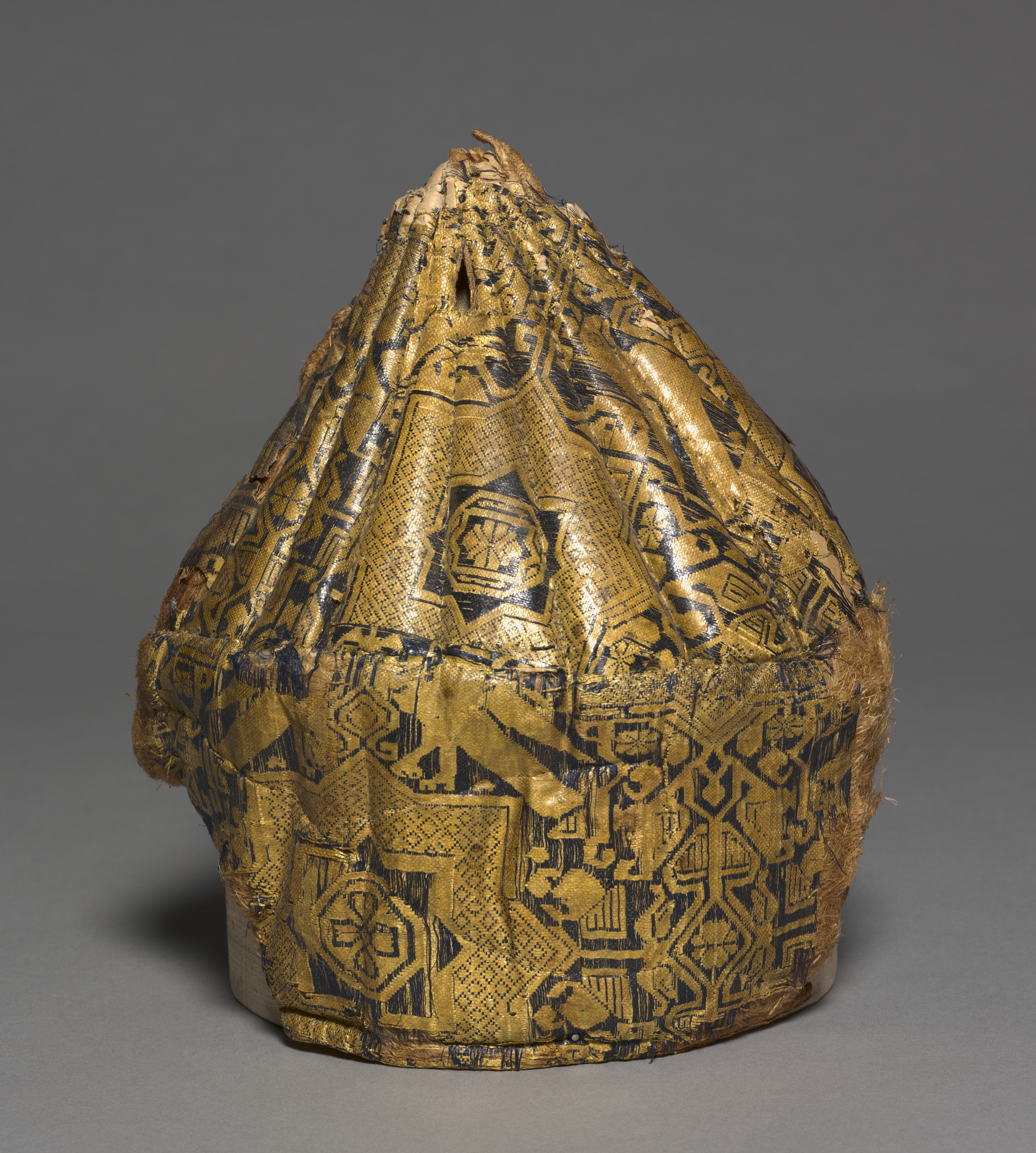
Quilted cap with star-patterned silk
Silk sewn onto a heavily quilted form with a ribbed crown, the cloth patterned with an eight-pointed star, paired birds and stylised palmettes. The hat belongs to a group recovered from Egyptian graves.
3055 × 3400 px · Unmodified source file
Open in StudioSource & licensing
- Creator / date
- Iran or Iraq, Buyid or Seljuq period, maker unknown · 1000s
- Source credit
- The Cleveland Museum of Art, 1950.525. Open Access.
- Usage notes
- Released by the Cleveland Museum of Art under CC0 1.0. Credit to the museum is encouraged; CC0 does not imply endorsement.
- Original file
- 3055 × 3400 px · JPG · 0.0 MB
- Source checked
- 2026-11-04 · editorial approval separate
CC0 · Public domain · c. 1880 (?)
Quilt
A cotton piecework quilt from Cowan, Pennsylvania. The blocks are cut and joined so that the printed cloth makes a second pattern across the surface, set against a plain ground.
2736 × 2812 px · Unmodified source file
Open in StudioSource & licensing
- Creator / date
- America, Pennsylvania, Cowan, Late 19th century, maker unknown · c. 1880 (?)
- Source credit
- The Cleveland Museum of Art, 1975.1016. Open Access.
- Usage notes
- Released by the Cleveland Museum of Art under CC0 1.0. Credit to the museum is encouraged; CC0 does not imply endorsement.
- Original file
- 2736 × 2812 px · JPG · 0.0 MB
- Source checked
- 2026-11-04 · editorial approval separate
CC0 · Public domain · 1600s–1700s
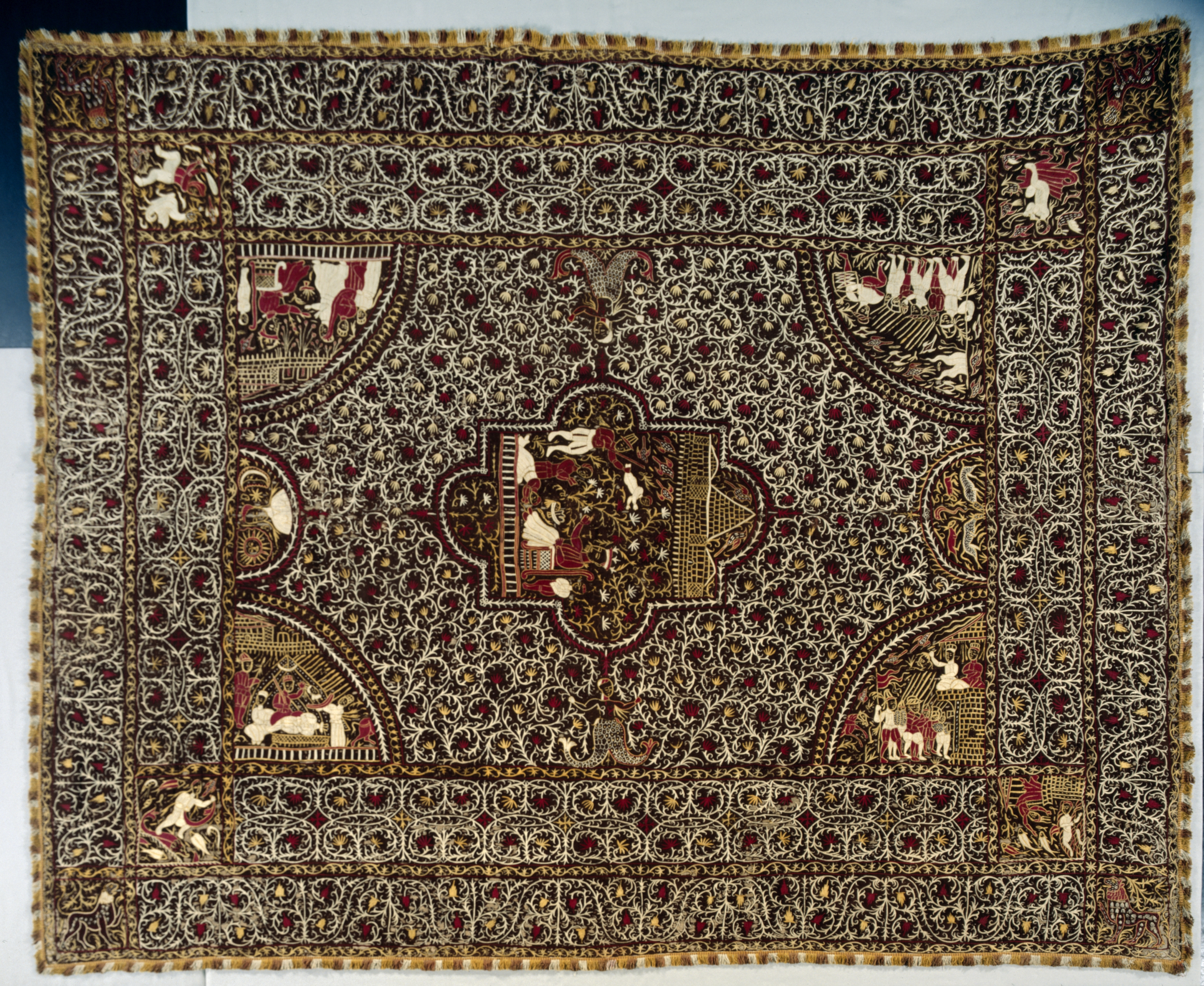
Bedspread
Silk embroidery on cotton in chain stitch, made in Portuguese Goa, where biblical scenes are worked alongside figures from Indian mythology and characters in Portuguese dress.
3400 × 2785 px · Unmodified source file
Open in StudioSource & licensing
- Creator / date
- India, Goa, maker unknown · 1600s–1700s
- Source credit
- The Cleveland Museum of Art, 1969.295. Open Access.
- Usage notes
- Released by the Cleveland Museum of Art under CC0 1.0. Credit to the museum is encouraged; CC0 does not imply endorsement.
- Original file
- 3400 × 2785 px · JPG · 0.0 MB
- Source checked
- 2026-11-04 · editorial approval separate
CC0 · Public domain · c. 1857
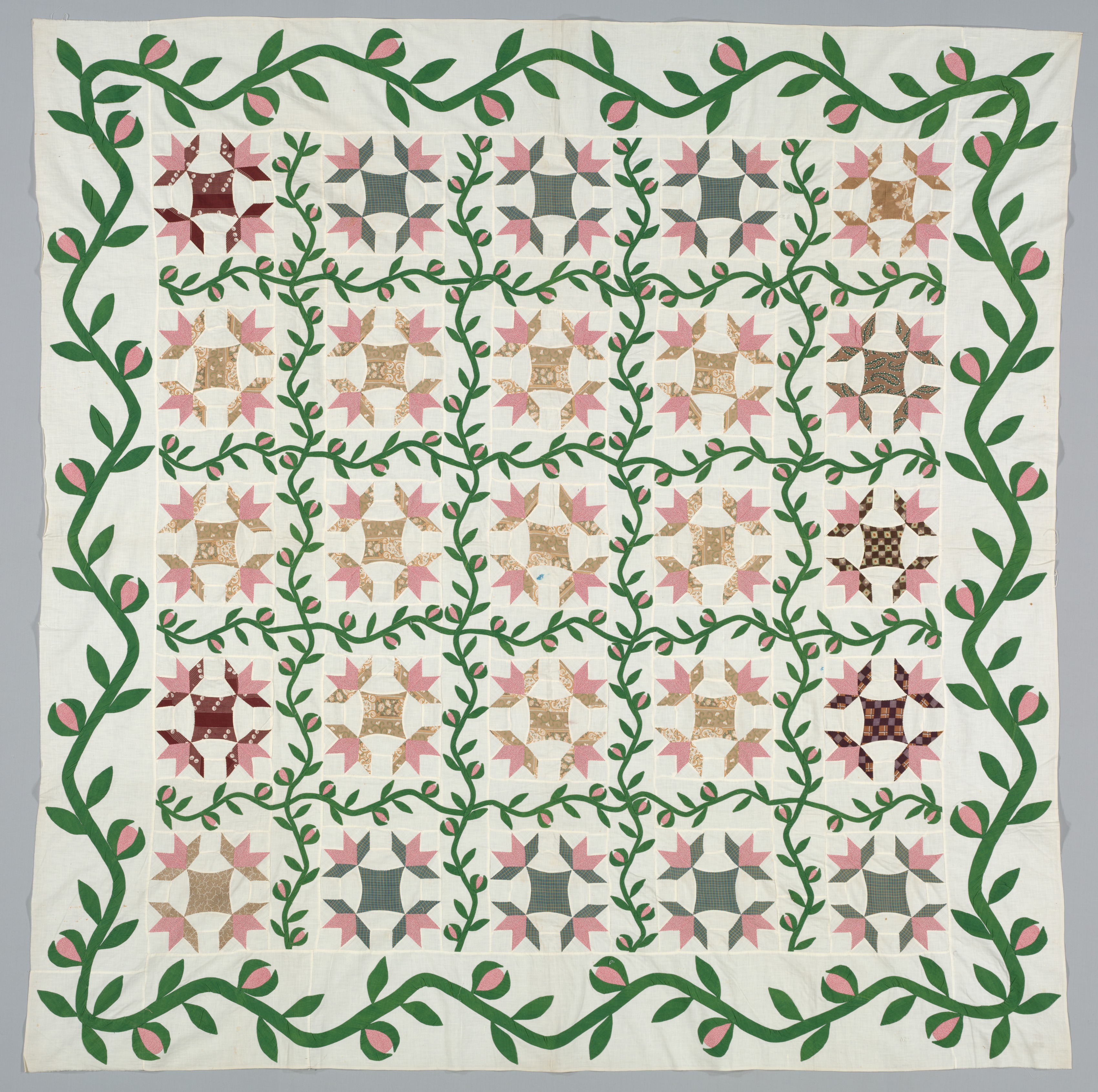
Quilt Cover
A pieced cotton quilt cover of the mid nineteenth century: repeated geometric blocks joined from printed scraps, a way of using dressmaking offcuts that turned thrift into design.
3400 × 3381 px · Unmodified source file
Open in StudioSource & licensing
- Creator / date
- America, maker unknown · c. 1857
- Source credit
- The Cleveland Museum of Art, 1938.398. Open Access.
- Usage notes
- Released by the Cleveland Museum of Art under CC0 1.0. Credit to the museum is encouraged; CC0 does not imply endorsement.
- Original file
- 3400 × 3381 px · JPG · 0.0 MB
- Source checked
- 2026-11-04 · editorial approval separate
CC0 · Public domain · 1800s
Kantha
A Bengal kantha: layers of cotton sari cloth laid together and run-stitched over their whole surface, the embroidery outlining animals and flowers while it holds the cloth together.
3400 × 2121 px · Unmodified source file
Open in StudioSource & licensing
- Creator / date
- India, Bengal, 19th century, maker unknown · 1800s
- Source credit
- The Cleveland Museum of Art, 1996.350. Open Access.
- Usage notes
- Released by the Cleveland Museum of Art under CC0 1.0. Credit to the museum is encouraged; CC0 does not imply endorsement.
- Original file
- 3400 × 2121 px · JPG · 0.0 MB
- Source checked
- 2026-11-04 · editorial approval separate
CC0 · Public domain · c. 1785
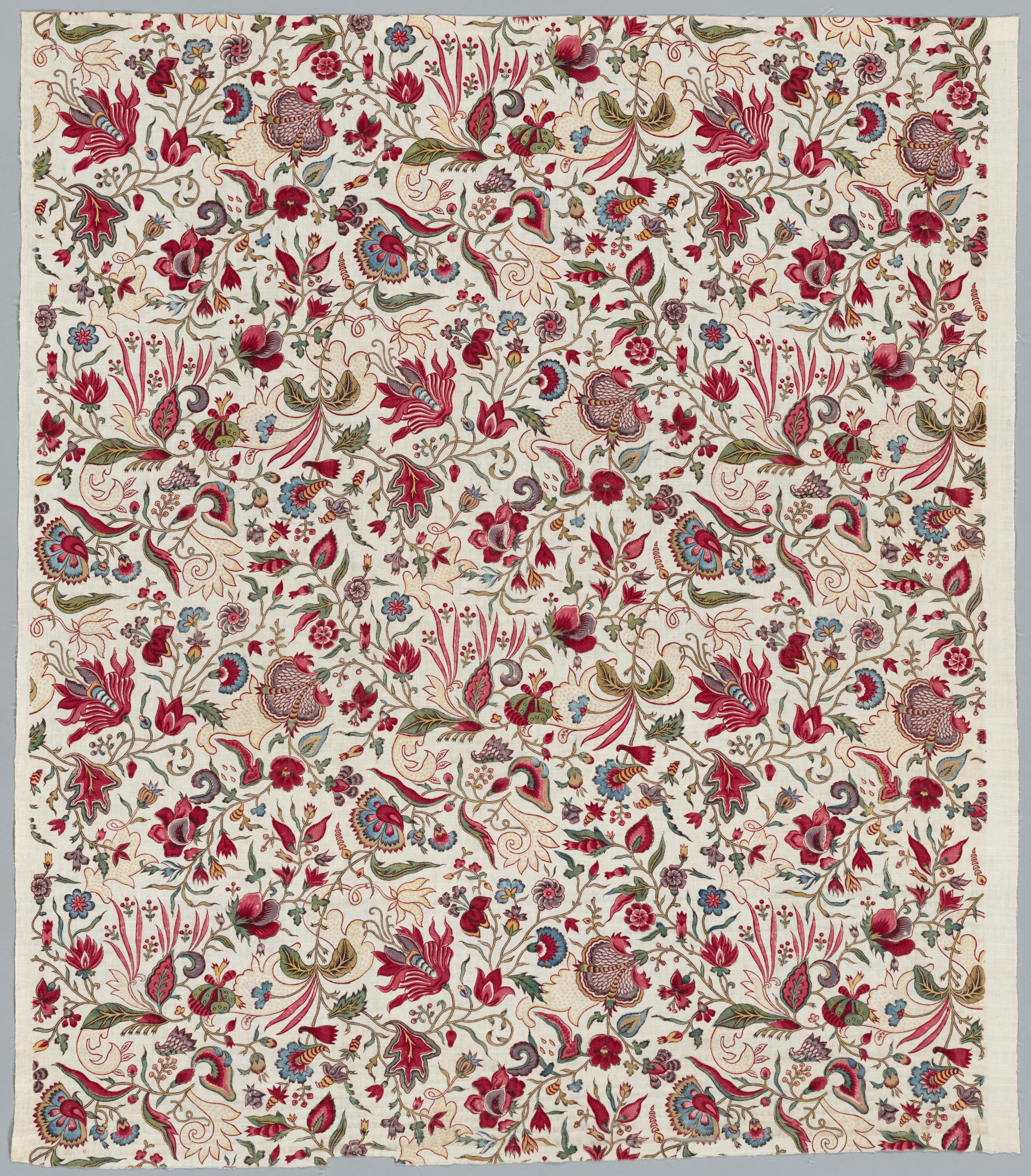
Fragment of a Quilted Skirt
A fragment of a quilted skirt printed by woodblock in England around 1785, its quilting lines set to follow the pattern so that stitching and print reinforce each other.
2981 × 3400 px · Unmodified source file
Open in StudioSource & licensing
- Creator / date
- England, late 18th century, maker unknown · c. 1785
- Source credit
- The Cleveland Museum of Art, 1928.4.2. Open Access.
- Usage notes
- Released by the Cleveland Museum of Art under CC0 1.0. Credit to the museum is encouraged; CC0 does not imply endorsement.
- Original file
- 2981 × 3400 px · JPG · 0.0 MB
- Source checked
- 2026-11-04 · editorial approval separate
Public-domain status is reported by the linked source and may vary by jurisdiction. Check the source record for your intended use. No exclusive rights or Visual Bounty marketplace license are offered for these images.