← Open CollectionsPublic-domain source library
Light and Silver: Photographs, 1843–1910
Photography arrived as a set of competing chemistries, and each one left a different kind of object. A daguerreotype is a single silvered plate; a salt print holds silver in the paper and stays matte; albumen coats the paper in egg white so the image sits on a glossy skin; carbon buries pigment in gelatin and does not fade; a photogravure is ink pressed from a plate; a photochrom is a black-and-white negative coloured by lithographic stones. This selection runs from a French daguerreotype portrait of 1843 to Stieglitz and the pictorialists, taking in the landscapes of the American surveys, the official photography of British India, and the studio trades — views, still lifes and costume studies — that made the medium a business before it was an art.
Original means the unmodified digital file supplied by the linked archive, not an upscaled or reconstructed image. Sign in for free downloads. Studio uses a working preview up to 2048 px.
CC0 · Public domain · c. 1843
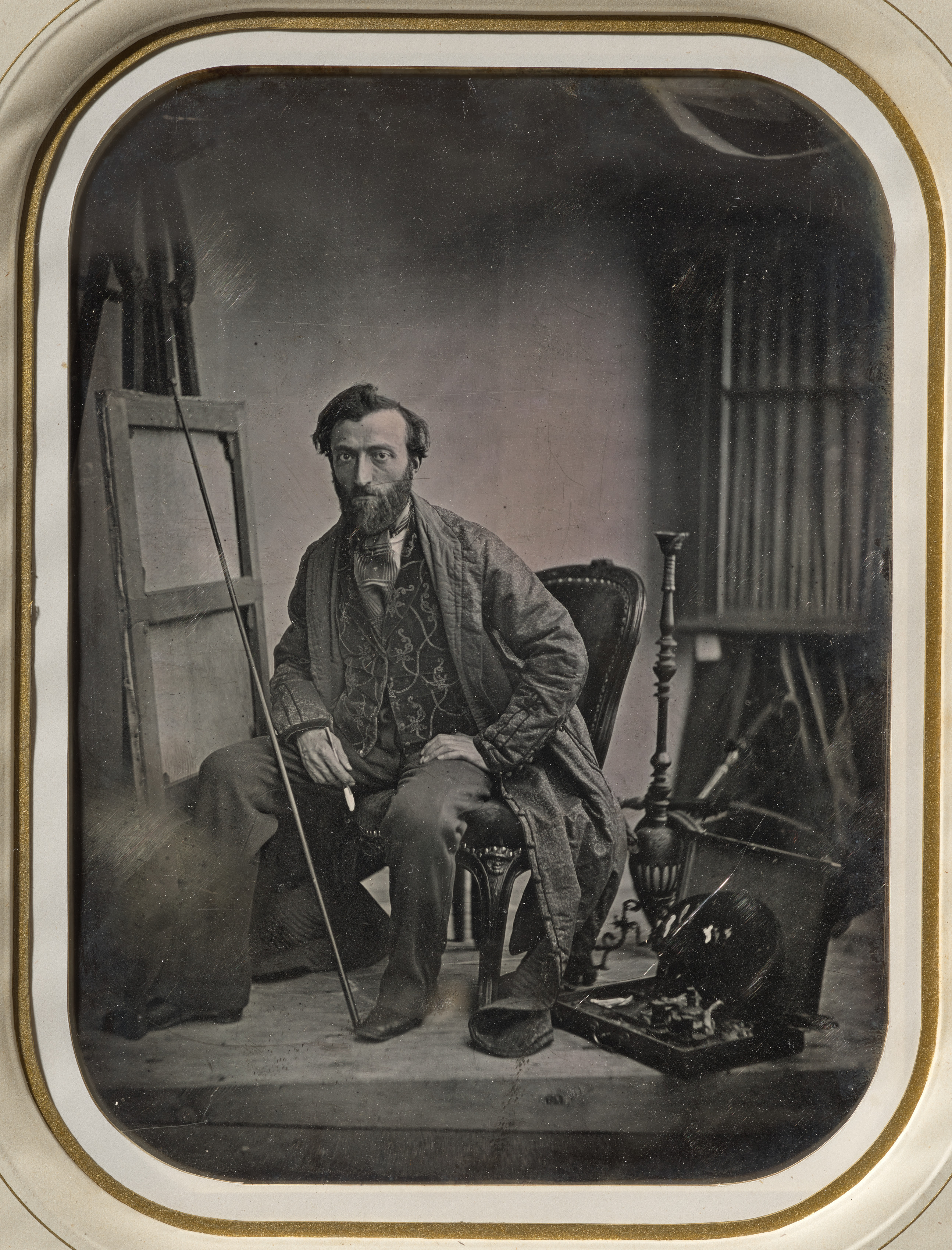
Self-Portrait in Painting Studio
A unique image on a silvered copper plate, made in the camera and developed in mercury vapour. Dolard photographed himself in his painting studio, palette in hand — early photographers often argued that the new medium belonged beside painting rather than beneath it.
2589 × 3400 px · Unmodified source file
Open in StudioSource & licensing
- Creator / date
- Camille Dolard (French, 1810–1884) · c. 1843
- Source credit
- The Cleveland Museum of Art, 1997.56. Open Access.
- Usage notes
- Released by the Cleveland Museum of Art under CC0 1.0. Credit to the museum is encouraged; CC0 does not imply endorsement.
- Original file
- 2589 × 3400 px · JPG · 0.0 MB
- Source checked
- 2026-11-05 · editorial approval separate
CC0 · Public domain · 1855
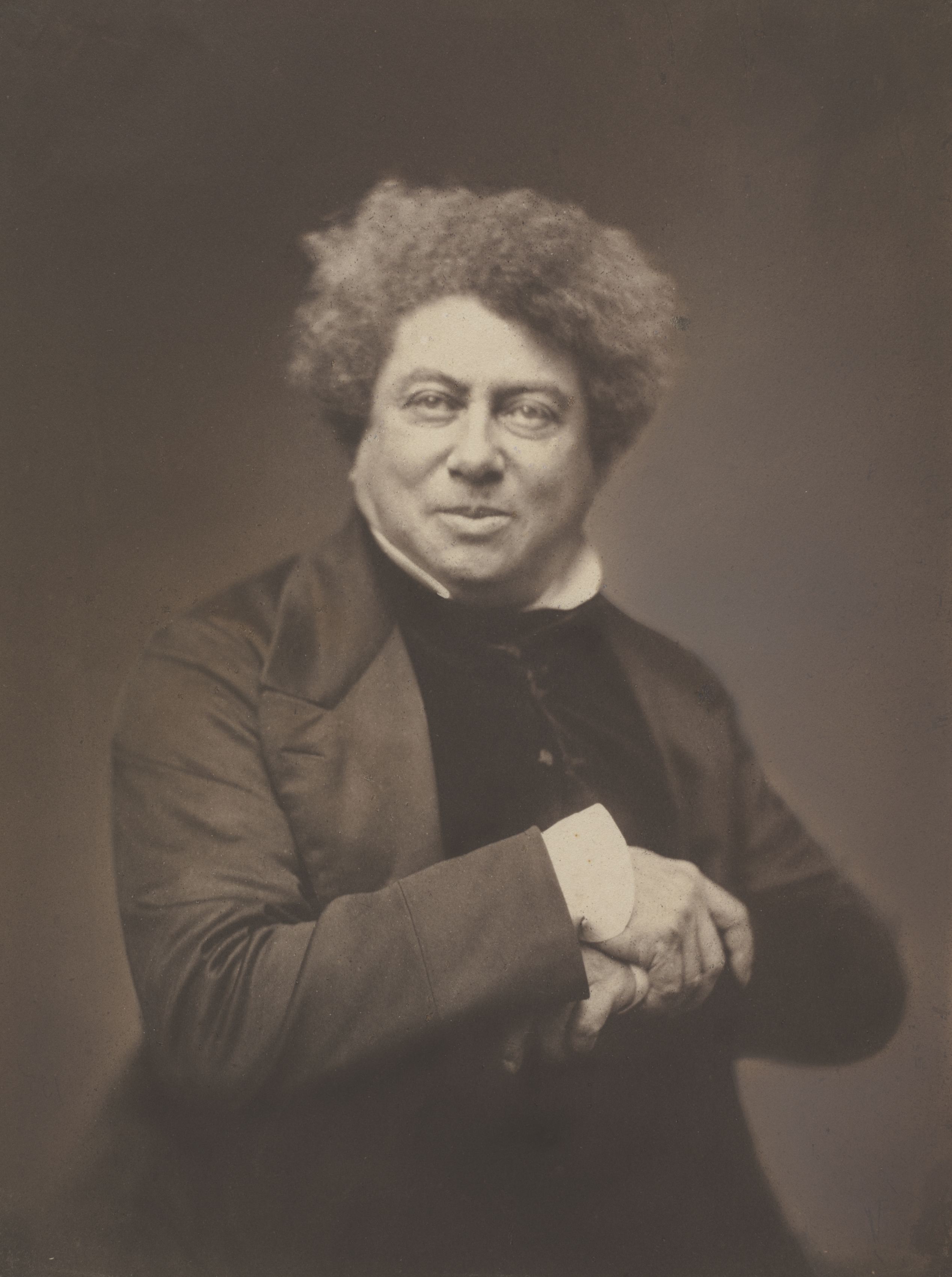
Alexandre Dumas père (1802–1870)
Nadar worked on wet collodion, a plate that had to be coated, exposed and developed before it dried — which is why his sitters had to hold still and why the prints have that even, closed-in clarity. Dumas at fifty-three is lit from one side so the mass of his hair does as much work as his face.
2535 × 3400 px · Unmodified source file
Open in StudioSource & licensing
- Creator / date
- Nadar (French, 1820–1910) · 1855
- Source credit
- The Cleveland Museum of Art, 1983.198. Open Access.
- Usage notes
- Released by the Cleveland Museum of Art under CC0 1.0. Credit to the museum is encouraged; CC0 does not imply endorsement.
- Original file
- 2535 × 3400 px · JPG · 0.0 MB
- Source checked
- 2026-11-05 · editorial approval separate
CC0 · Public domain · 1852–53
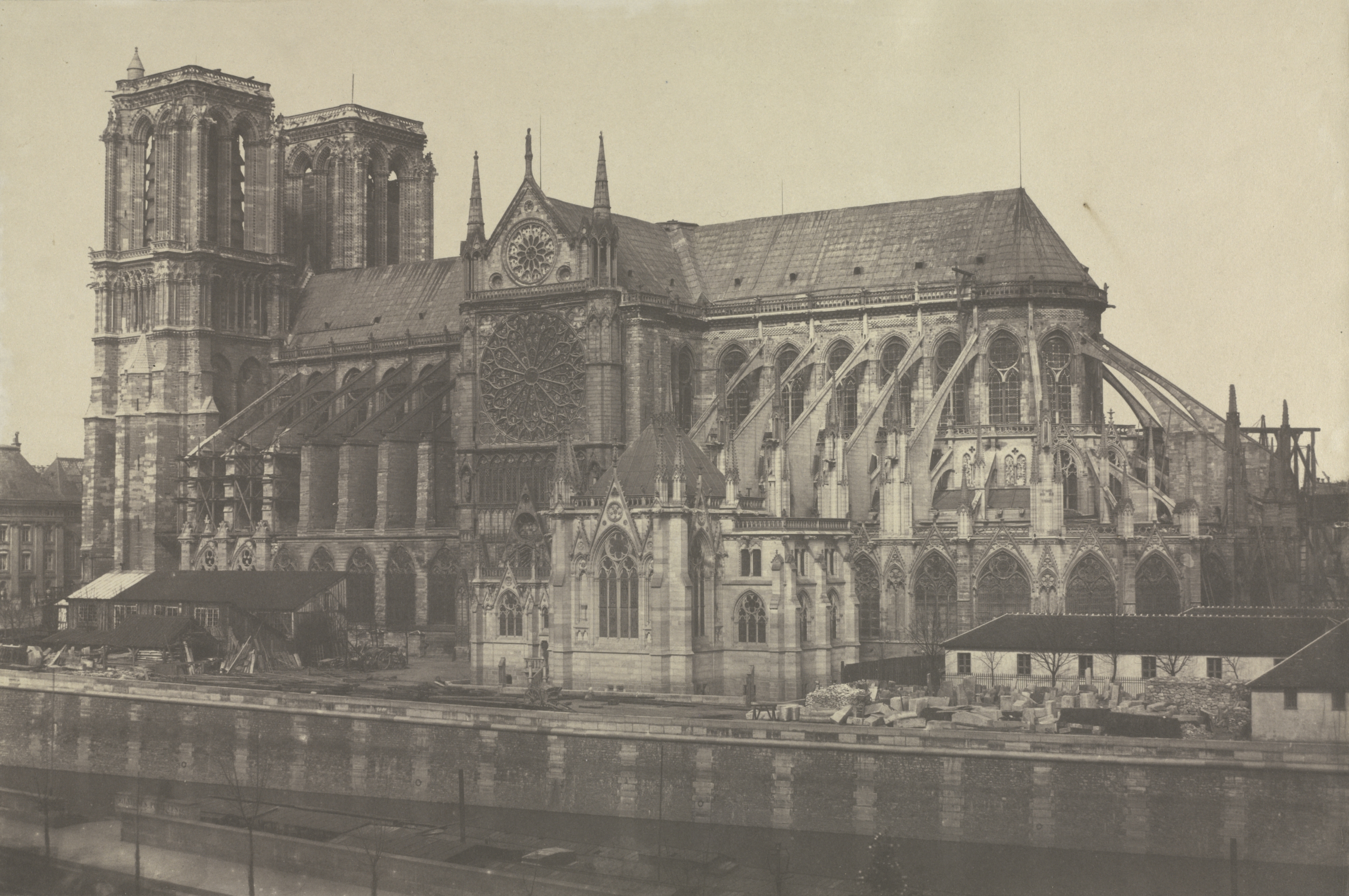
Notre-Dame, Paris
Baldus photographed the great building campaigns of Second Empire Paris. This is a salt print, silver held in the paper itself, matte and slightly warm — a process that let him show a cathedral’s geometry without the sky competing for attention.
3400 × 2258 px · Unmodified source file
Open in StudioSource & licensing
- Creator / date
- Édouard Baldus (French, 1813–1889) · 1852–53
- Source credit
- The Cleveland Museum of Art, 1991.35. Open Access.
- Usage notes
- Released by the Cleveland Museum of Art under CC0 1.0. Credit to the museum is encouraged; CC0 does not imply endorsement.
- Original file
- 3400 × 2258 px · JPG · 0.0 MB
- Source checked
- 2026-11-05 · editorial approval separate
CC0 · Public domain · 1851–52
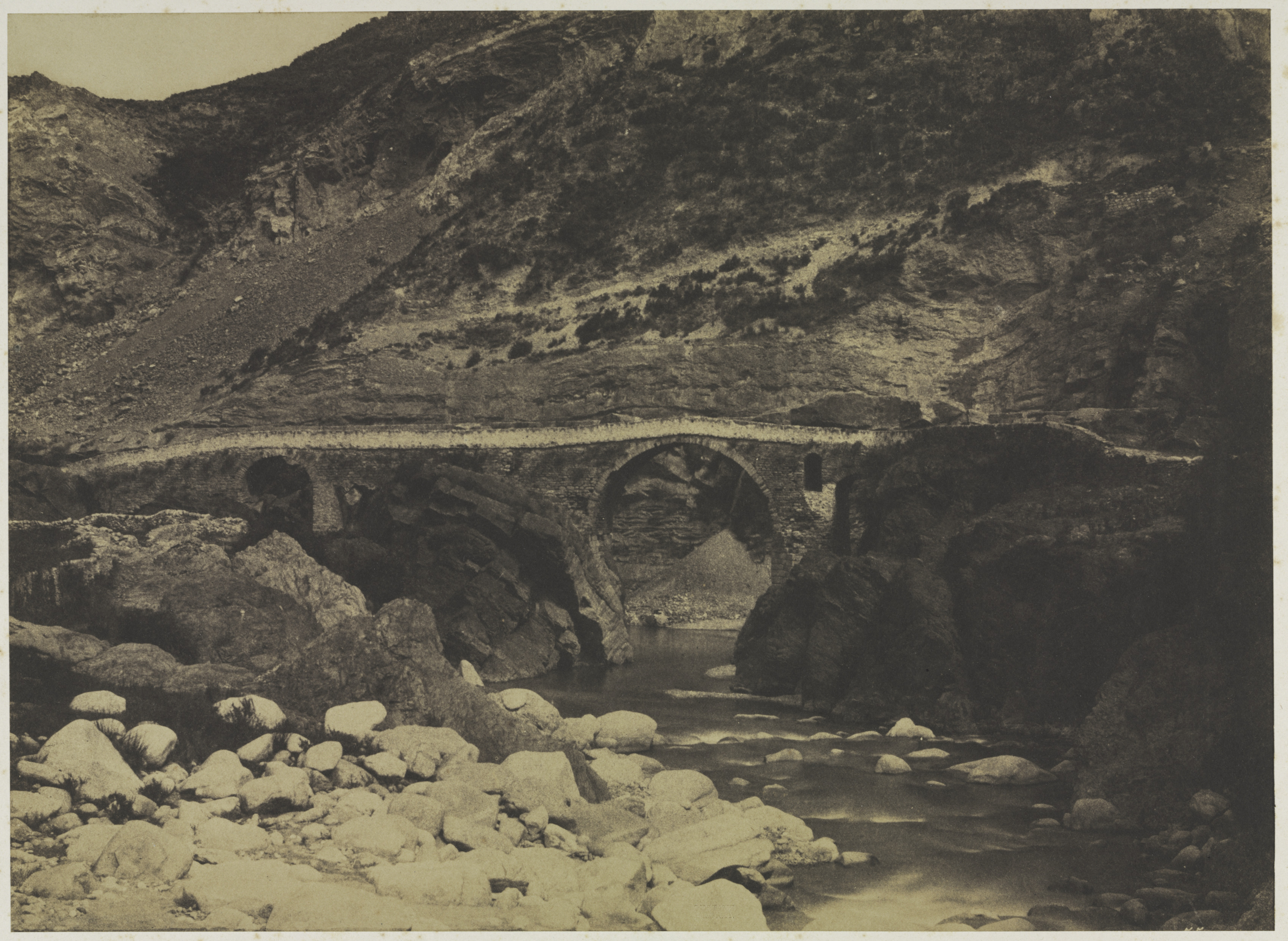
The Bridge of Palalda (near Amélie-les-Bains)
Le Gray’s waxed-paper negatives could be prepared days before use, which freed the photographer from a darkroom tent and made landscape work practical. The texture of the paper stays visible in the print, so rock and water share a grain.
3400 × 2484 px · Unmodified source file
Open in StudioSource & licensing
- Creator / date
- Gustave Le Gray (French, 1820–1884) · 1851–52
- Source credit
- The Cleveland Museum of Art, 1987.130. Open Access.
- Usage notes
- Released by the Cleveland Museum of Art under CC0 1.0. Credit to the museum is encouraged; CC0 does not imply endorsement.
- Original file
- 3400 × 2484 px · JPG · 0.0 MB
- Source checked
- 2026-11-05 · editorial approval separate
CC0 · Public domain · 1865–66
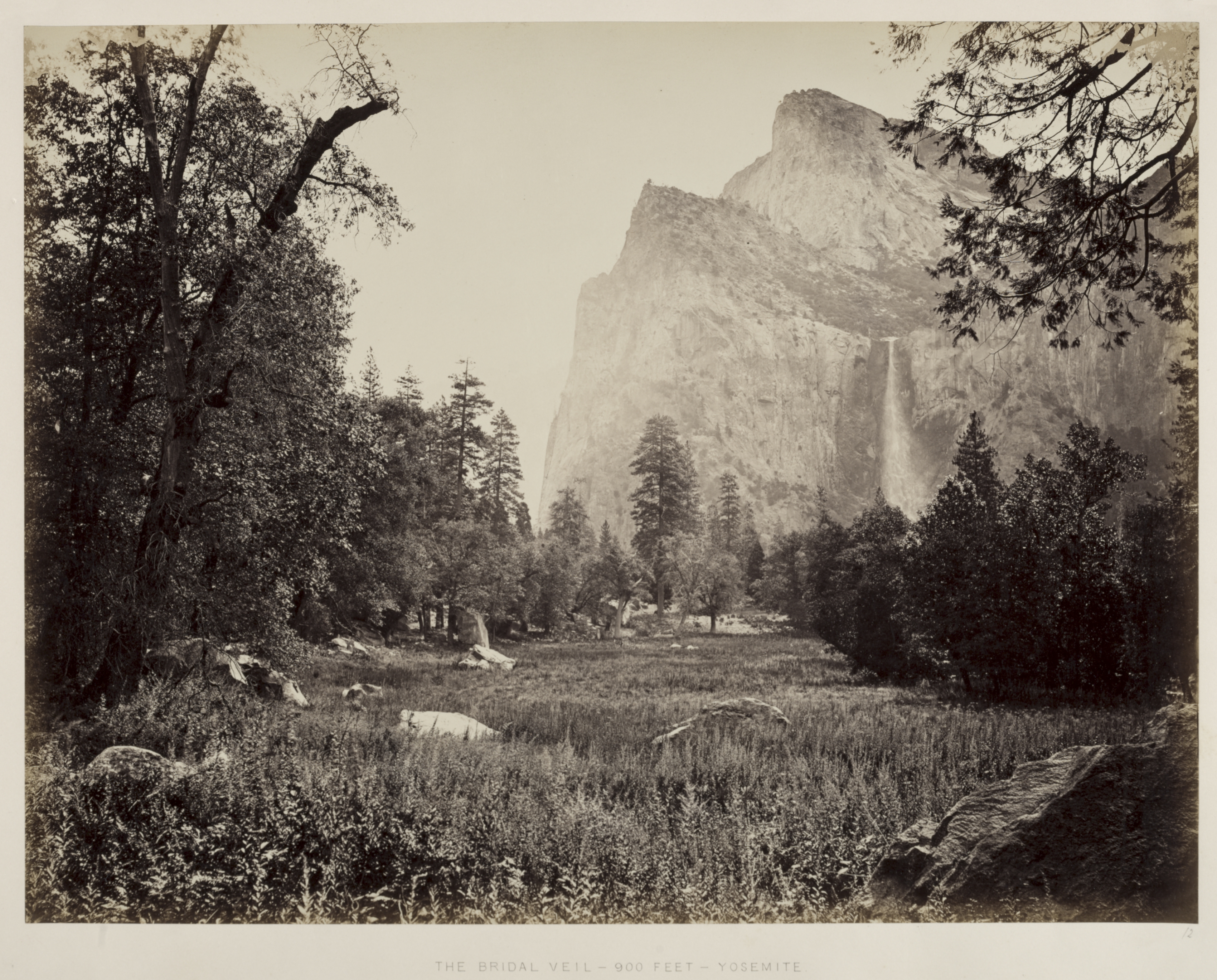
Bridal Veil, Yosemite
Watkins used a mammoth-plate camera, glass negatives roughly eighteen by twenty-two inches, carried by mule into the valley. The print lets the water go to pure white and the rock to near black; the point was scale, and pictures like this helped make the case for protecting Yosemite.
3400 × 2738 px · Unmodified source file
Open in StudioSource & licensing
- Creator / date
- Carleton E. Watkins (American, 1829–1916) · 1865–66
- Source credit
- The Cleveland Museum of Art, 1992.12. Open Access.
- Usage notes
- Released by the Cleveland Museum of Art under CC0 1.0. Credit to the museum is encouraged; CC0 does not imply endorsement.
- Original file
- 3400 × 2738 px · JPG · 0.0 MB
- Source checked
- 2026-11-05 · editorial approval separate
CC0 · Public domain · 1867
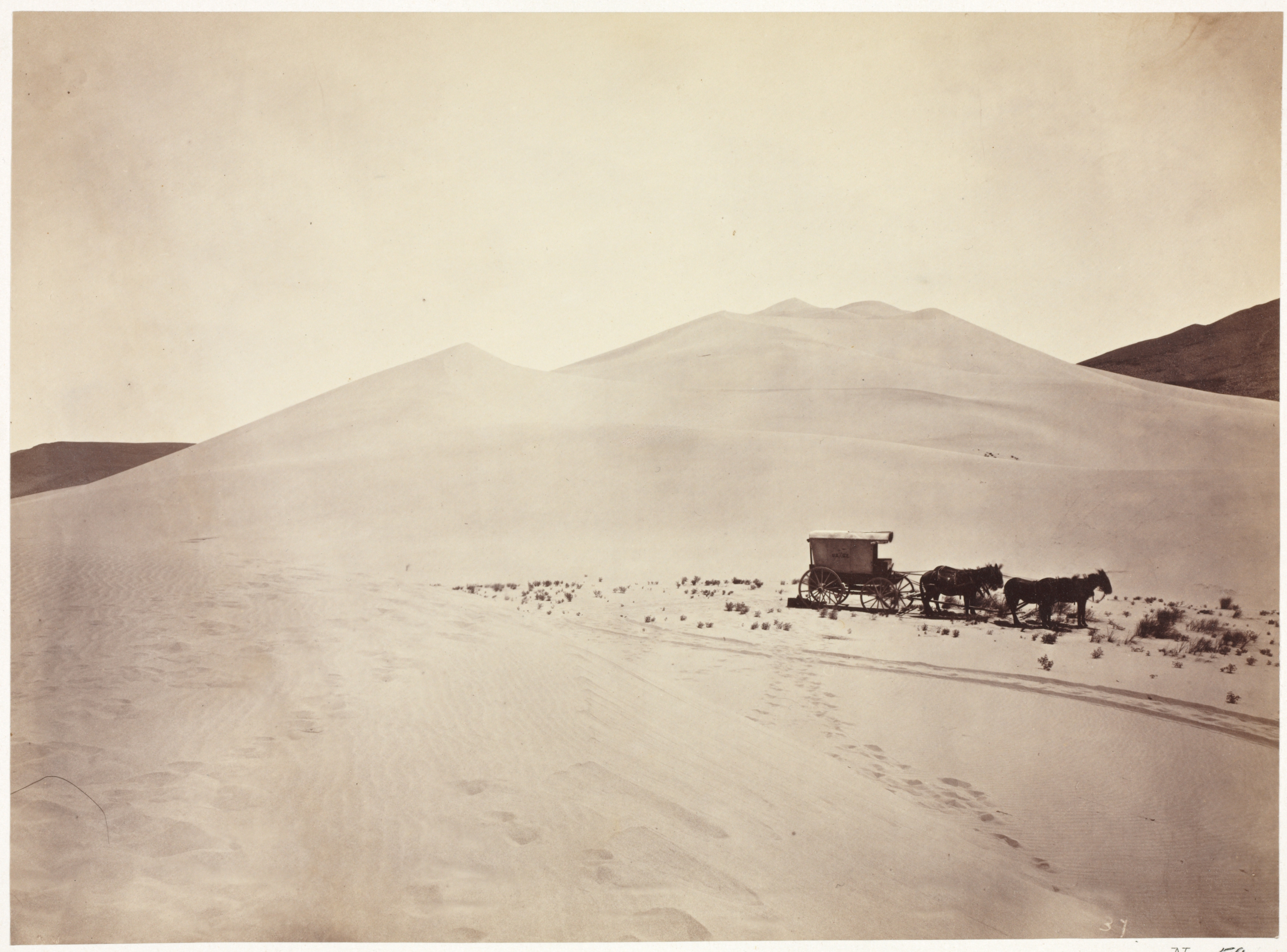
Sand Dunes, Carson Desert, Nevada
O’Sullivan photographed the American West for the government surveys. Carson Desert is almost empty: sand, a horizon, nothing to measure against. The print makes the emptiness the subject rather than the absence of one.
3400 × 2516 px · Unmodified source file
Open in StudioSource & licensing
- Creator / date
- Timothy H. O’Sullivan (American, 1840–1882) · 1867
- Source credit
- The Cleveland Museum of Art, 2002.45. Open Access.
- Usage notes
- Released by the Cleveland Museum of Art under CC0 1.0. Credit to the museum is encouraged; CC0 does not imply endorsement.
- Original file
- 3400 × 2516 px · JPG · 0.0 MB
- Source checked
- 2026-11-05 · editorial approval separate
CC0 · Public domain · 1857
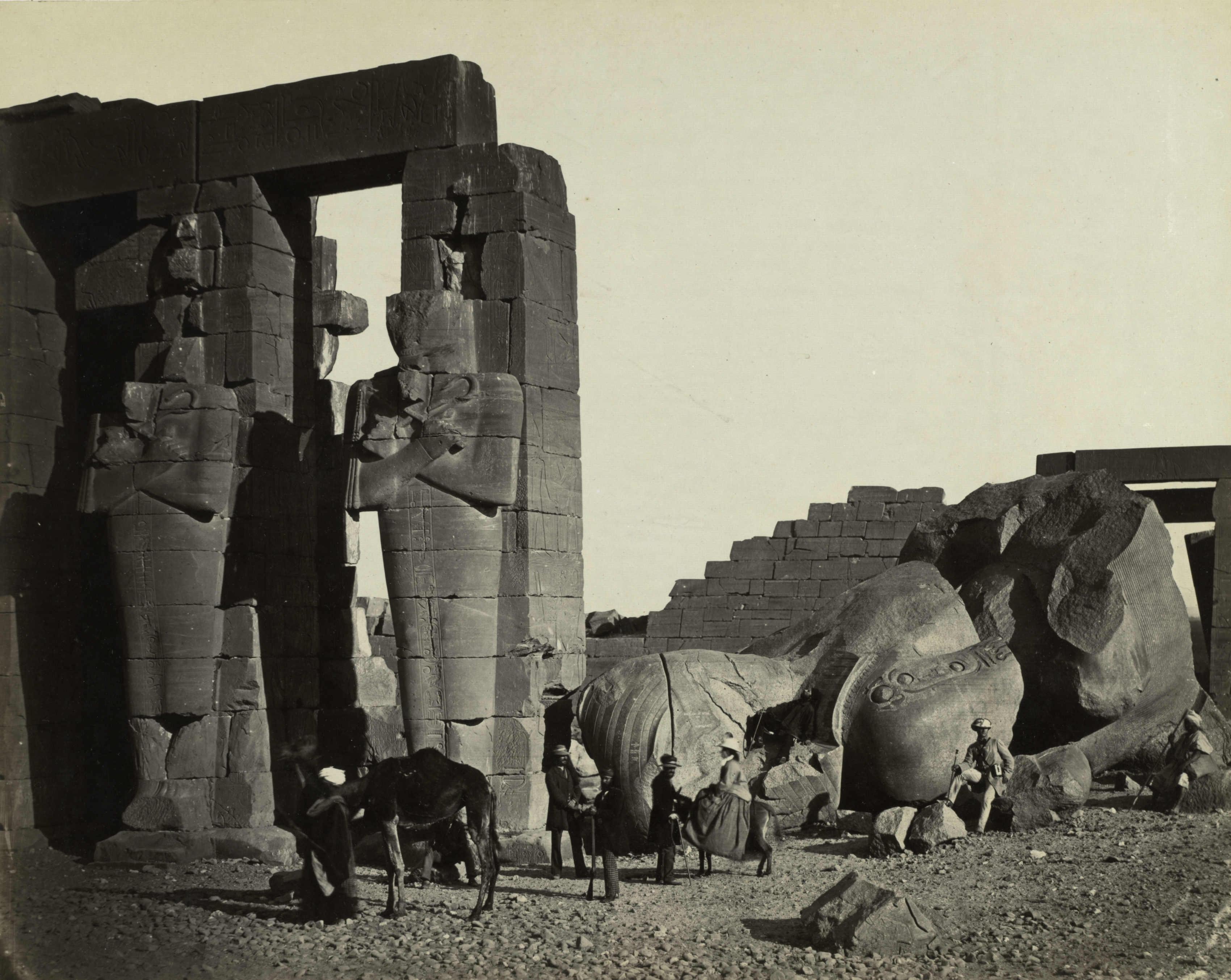
Fallen Statue at the Ramesseum, Thebes
Frith travelled through Egypt with the wet-plate process and sold the results as albums to people who would never make the trip. The broken colossus fills the frame and the landscape is reduced to a line, so the stone reads as size before it reads as sculpture.
3400 × 2707 px · Unmodified source file
Open in StudioSource & licensing
- Creator / date
- Francis Frith (British, 1822–1898) · 1857
- Source credit
- The Cleveland Museum of Art, 1992.236. Open Access.
- Usage notes
- Released by the Cleveland Museum of Art under CC0 1.0. Credit to the museum is encouraged; CC0 does not imply endorsement.
- Original file
- 3400 × 2707 px · JPG · 0.0 MB
- Source checked
- 2026-11-05 · editorial approval separate
CC0 · Public domain · 1857
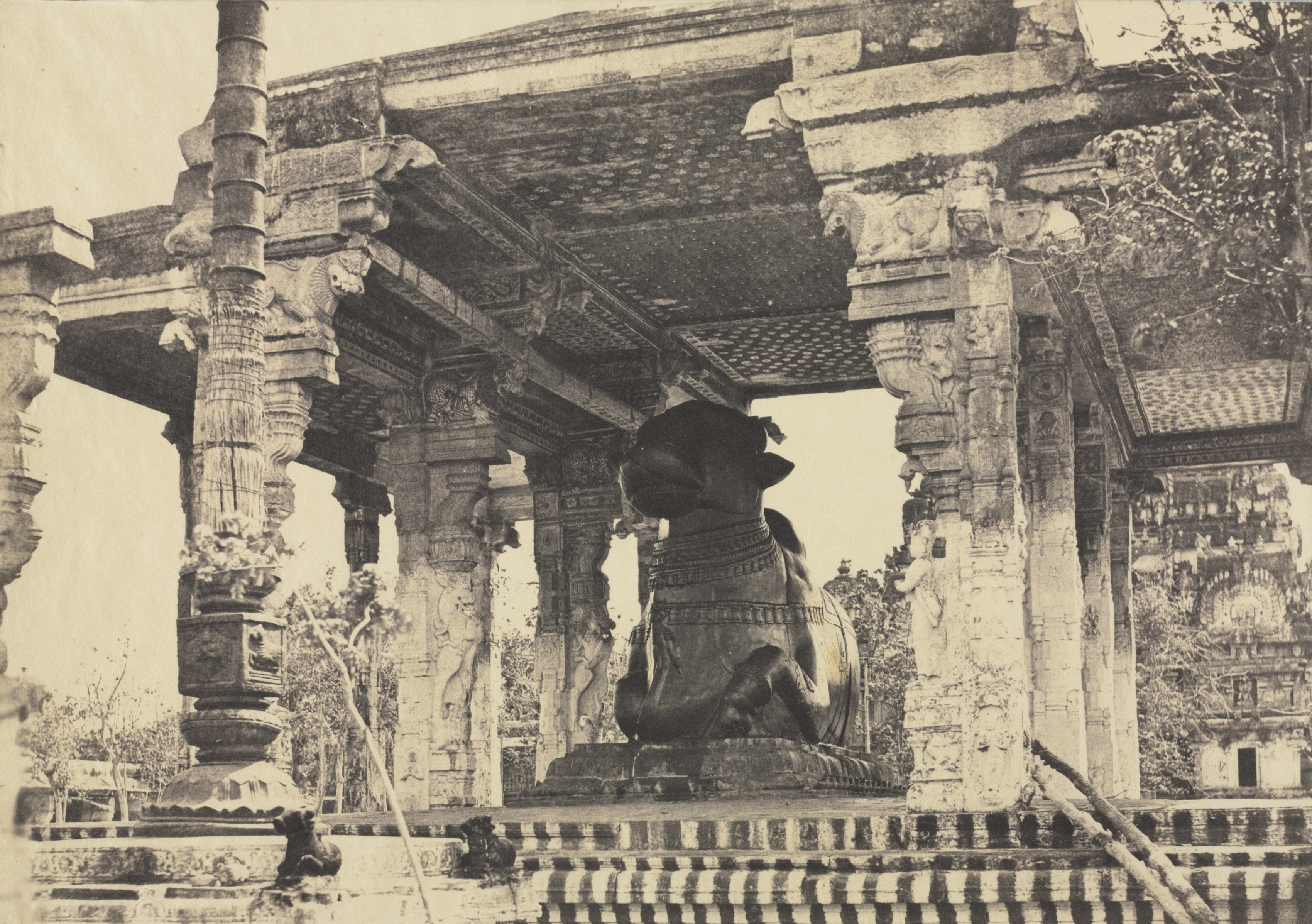
Great Pagoda, Great Bull, Tanjore (Rajarajeshvara Temple)
Tripe worked for the Madras Presidency, photographing architecture and inscriptions as an official record. He used calotype paper negatives, softer than collodion and visibly papery, so the documentation is also unmistakably a print.
3400 × 2394 px · Unmodified source file
Open in StudioSource & licensing
- Creator / date
- Captain Linnaeus Tripe (British, 1822–1902) · 1857
- Source credit
- The Cleveland Museum of Art, 1987.218. Open Access.
- Usage notes
- Released by the Cleveland Museum of Art under CC0 1.0. Credit to the museum is encouraged; CC0 does not imply endorsement.
- Original file
- 3400 × 2394 px · JPG · 0.0 MB
- Source checked
- 2026-11-05 · editorial approval separate
CC0 · Public domain · 1870s
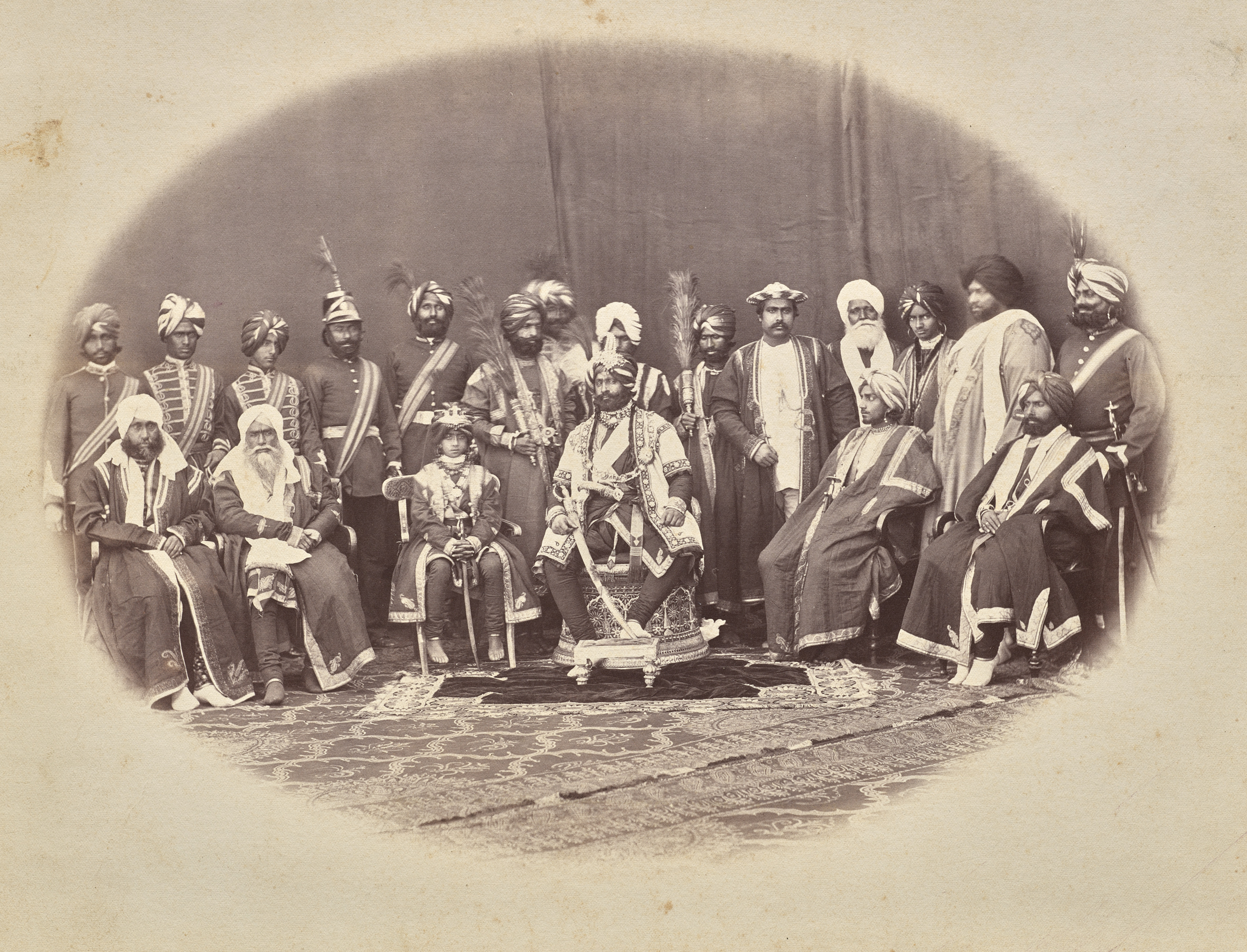
Maharaja Ranbir Singh of Jammu and Kashmir with Sons and Courtiers
Bourne & Shepherd ran studios in Simla, Calcutta and Bombay and supplied photographs of India to a European market. Here a Maharaja and his sons sit among courtiers in a composition built on hierarchy: the camera was asked to confirm an order rather than examine it.
3400 × 2597 px · Unmodified source file
Open in StudioSource & licensing
- Creator / date
- Bourne & Shepherd (British, active India, 1868–2016) · 1870s
- Source credit
- The Cleveland Museum of Art, 2024.80. Open Access.
- Usage notes
- Released by the Cleveland Museum of Art under CC0 1.0. Credit to the museum is encouraged; CC0 does not imply endorsement.
- Original file
- 3400 × 2597 px · JPG · 0.0 MB
- Source checked
- 2026-11-05 · editorial approval separate
CC0 · Public domain · c. 1867
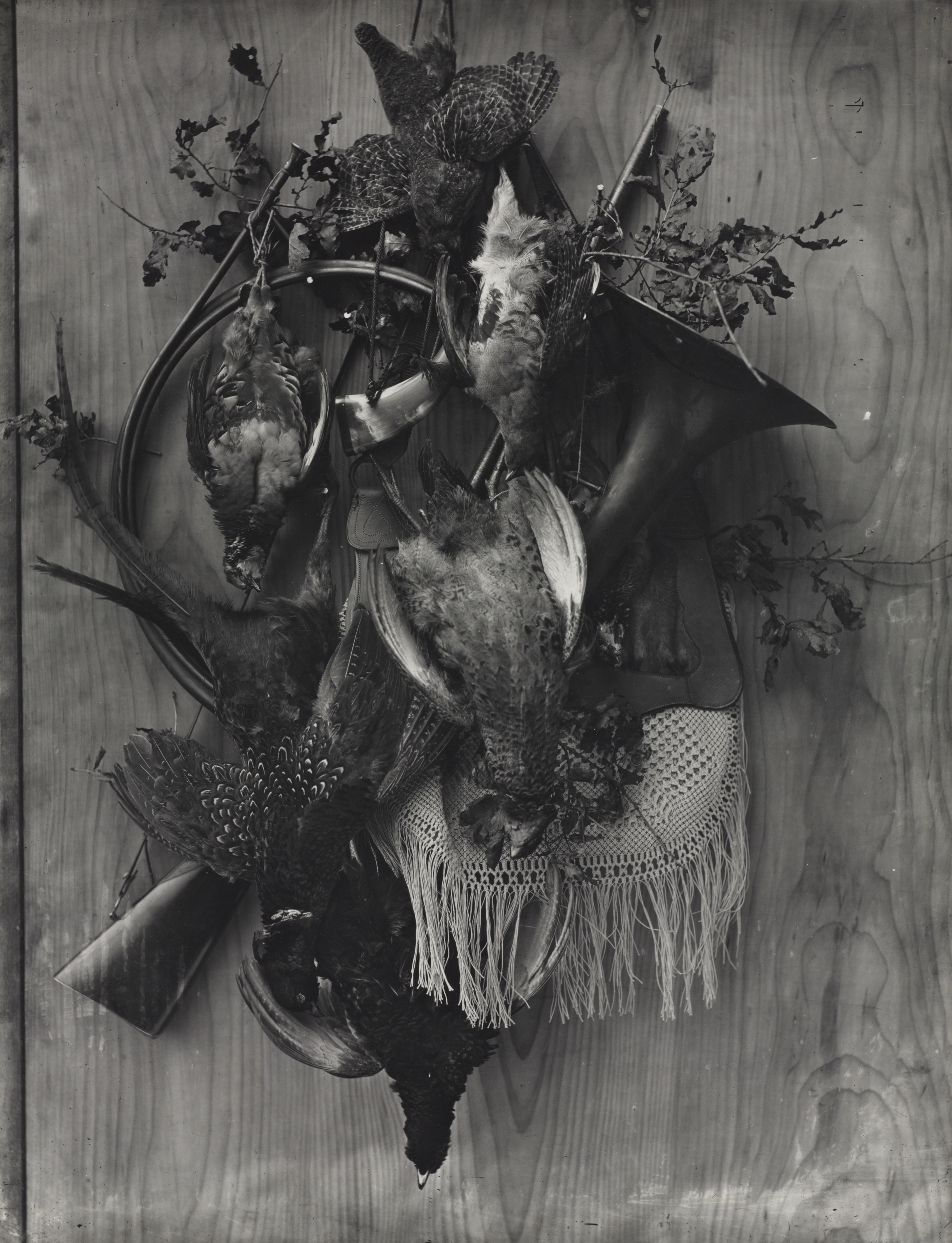
Trophy of the Hunt
Braun’s studio made still lifes for artists to copy and for the decorative trade, printed in carbon — pigment held in gelatin, which does not fade the way silver does. Game is hung, stacked and arranged until a hunting trophy becomes a pattern.
2604 × 3400 px · Unmodified source file
Open in StudioSource & licensing
- Creator / date
- Adolphe Braun (French, 1812–1877) · c. 1867
- Source credit
- The Cleveland Museum of Art, 1985.144. Open Access.
- Usage notes
- Released by the Cleveland Museum of Art under CC0 1.0. Credit to the museum is encouraged; CC0 does not imply endorsement.
- Original file
- 2604 × 3400 px · JPG · 0.0 MB
- Source checked
- 2026-11-05 · editorial approval separate
CC0 · Public domain · 1898
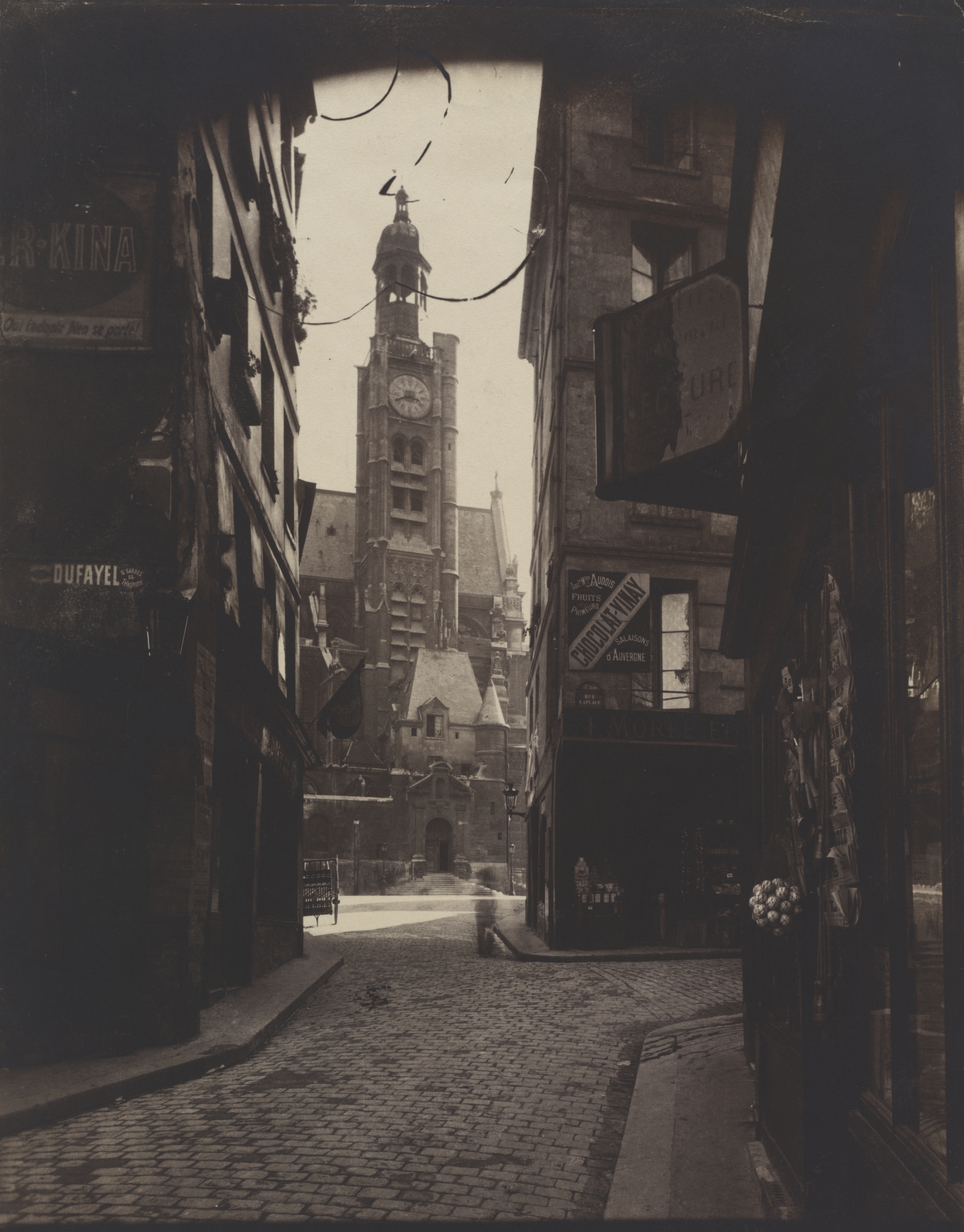
Rue de la Montagne-Sainte-Geneviève
Atget made his living selling photographs of old Paris to architects, painters and archives. He worked with a large view camera and long exposures, so the streets come out empty of traffic and the buildings are seen without the people who used them — which is why later photographers read the work as elegy.
2660 × 3400 px · Unmodified source file
Open in StudioSource & licensing
- Creator / date
- Eugène Atget (French, 1857–1927) · 1898
- Source credit
- The Cleveland Museum of Art, 1985.115. Open Access.
- Usage notes
- Released by the Cleveland Museum of Art under CC0 1.0. Credit to the museum is encouraged; CC0 does not imply endorsement.
- Original file
- 2660 × 3400 px · JPG · 0.0 MB
- Source checked
- 2026-11-05 · editorial approval separate
CC0 · Public domain · 1887
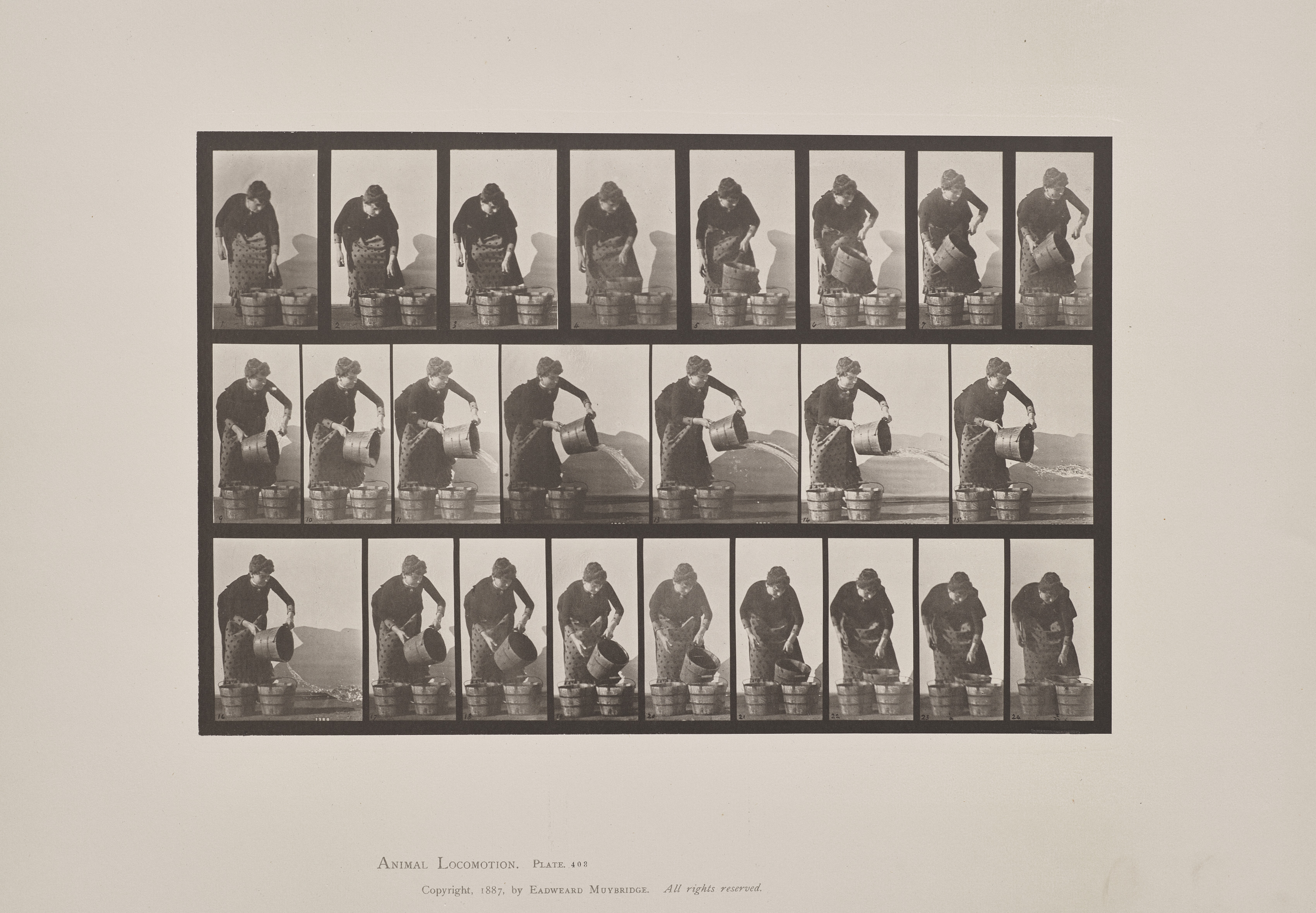
Emptying a Bucket of Water
One plate from Animal Locomotion, the project in which Muybridge used banks of cameras and a clockwork shutter to break movement into instants. It was issued as a collotype, gelatin on glass with continuous tone, so the library of poses could be reproduced cheaply for anatomists, painters and later animators.
3400 × 2359 px · Unmodified source file
Open in StudioSource & licensing
- Creator / date
- Eadweard J. Muybridge (American, 1830–1904) · 1887
- Source credit
- The Cleveland Museum of Art, 1992.220. Open Access.
- Usage notes
- Released by the Cleveland Museum of Art under CC0 1.0. Credit to the museum is encouraged; CC0 does not imply endorsement.
- Original file
- 3400 × 2359 px · JPG · 0.0 MB
- Source checked
- 2026-11-05 · editorial approval separate
CC0 · Public domain · 1907
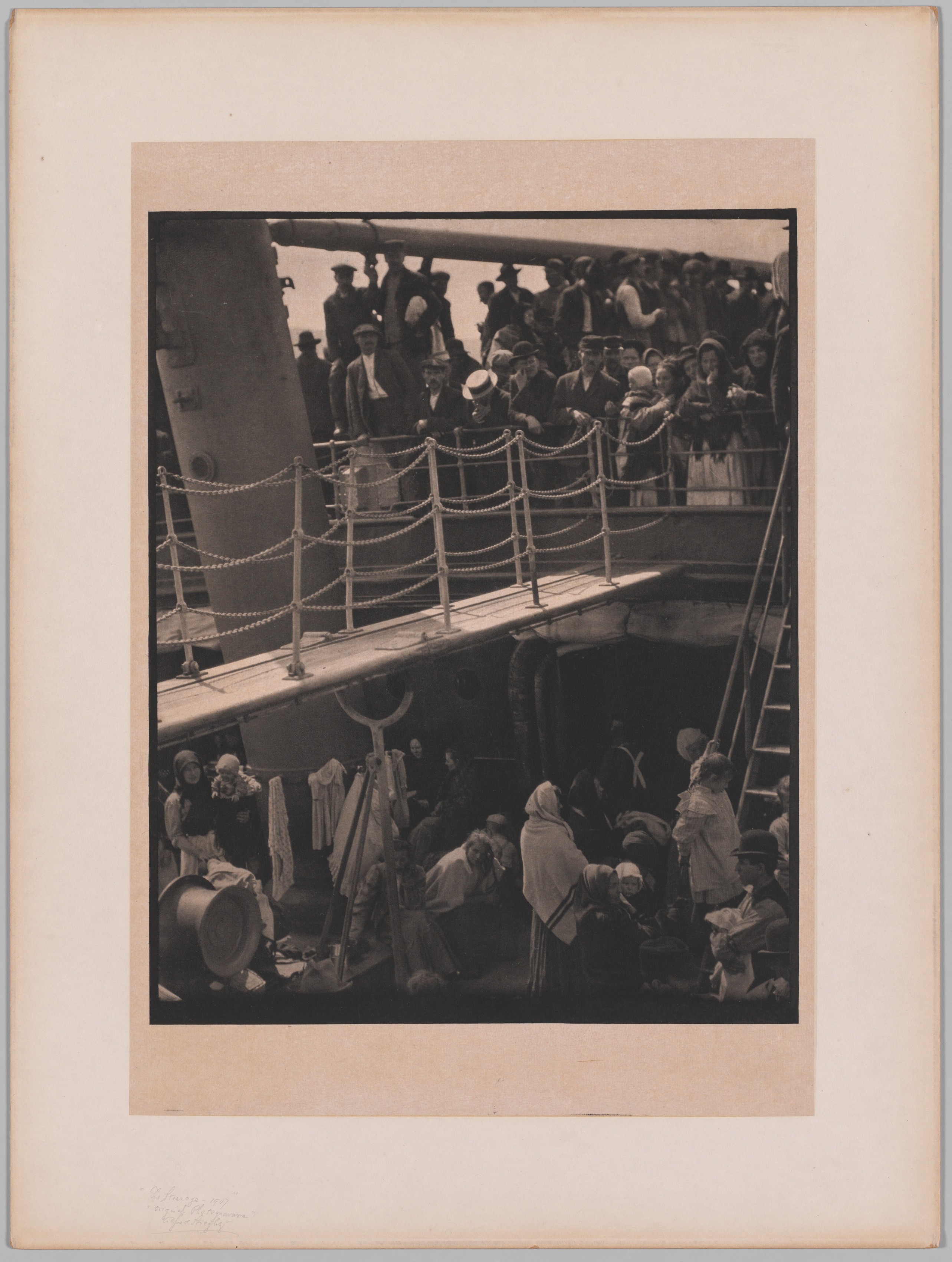
The Steerage
Stieglitz treated this as the picture that proved his argument: the steerage deck of a liner, passengers stacked across the frame in bands, a mast cutting a shape through them. He printed it as a photogravure, ink on paper, so it could travel in Camera Work and be seen as a print rather than a reproduction.
2566 × 3400 px · Unmodified source file
Open in StudioSource & licensing
- Creator / date
- Alfred Stieglitz (American, 1864–1946) · 1907
- Source credit
- The Cleveland Museum of Art, 2019.22. Open Access.
- Usage notes
- Released by the Cleveland Museum of Art under CC0 1.0. Credit to the museum is encouraged; CC0 does not imply endorsement.
- Original file
- 2566 × 3400 px · JPG · 0.0 MB
- Source checked
- 2026-11-05 · editorial approval separate
CC0 · Public domain · c. 1900–1906
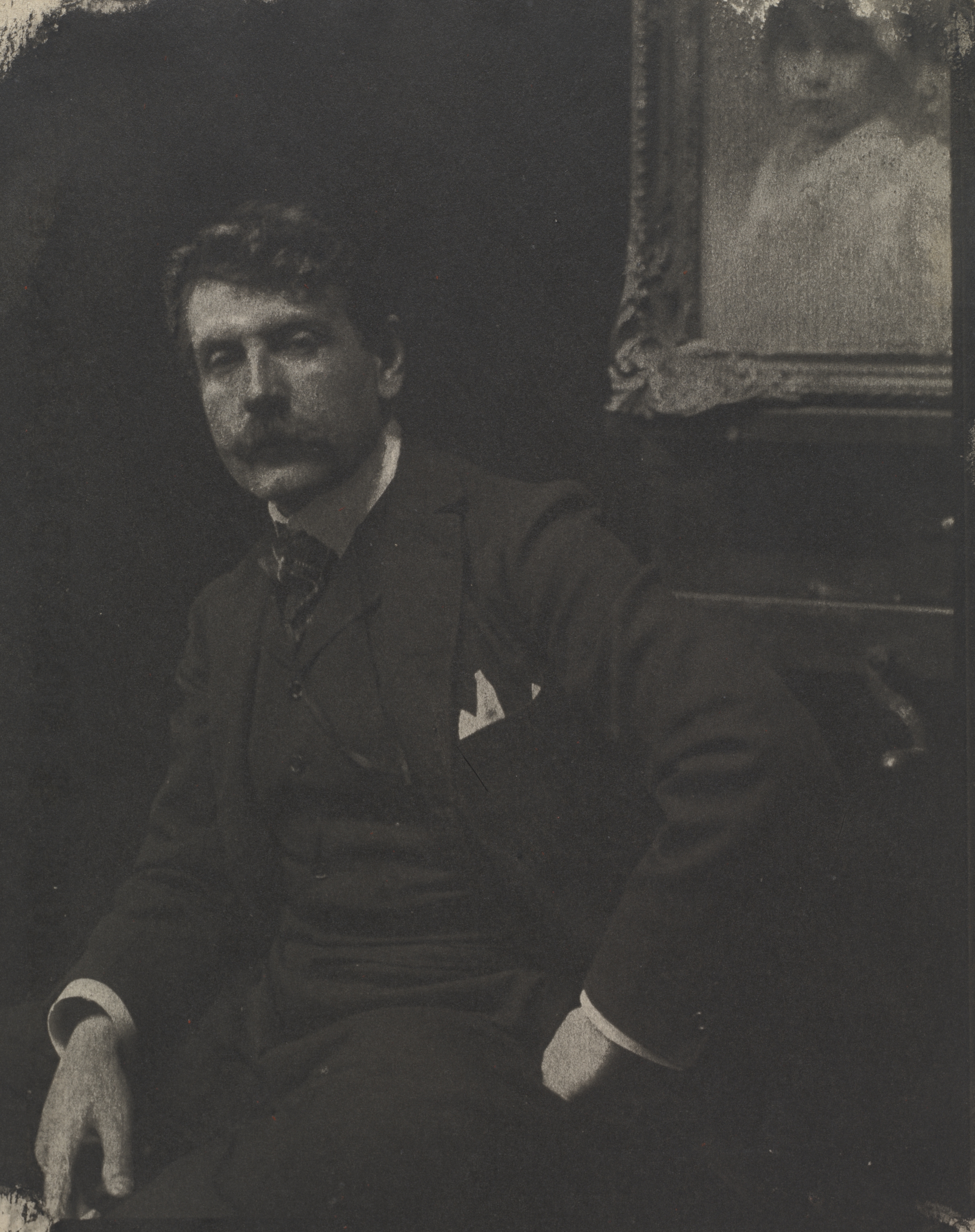
Untitled
Gum bichromate is brushed on by hand — pigment in gum arabic, exposed, developed in water, with layers added and detail pulled back with a brush. Demachy used that control to make photographs that behave like drawings: the pictorialist case against mechanical sharpness.
2692 × 3400 px · Unmodified source file
Open in StudioSource & licensing
- Creator / date
- Robert Demachy (French, 1859–1936) · c. 1900–1906
- Source credit
- The Cleveland Museum of Art, 1985.203. Open Access.
- Usage notes
- Released by the Cleveland Museum of Art under CC0 1.0. Credit to the museum is encouraged; CC0 does not imply endorsement.
- Original file
- 2692 × 3400 px · JPG · 0.0 MB
- Source checked
- 2026-11-05 · editorial approval separate
CC0 · Public domain · c. 1890–1910
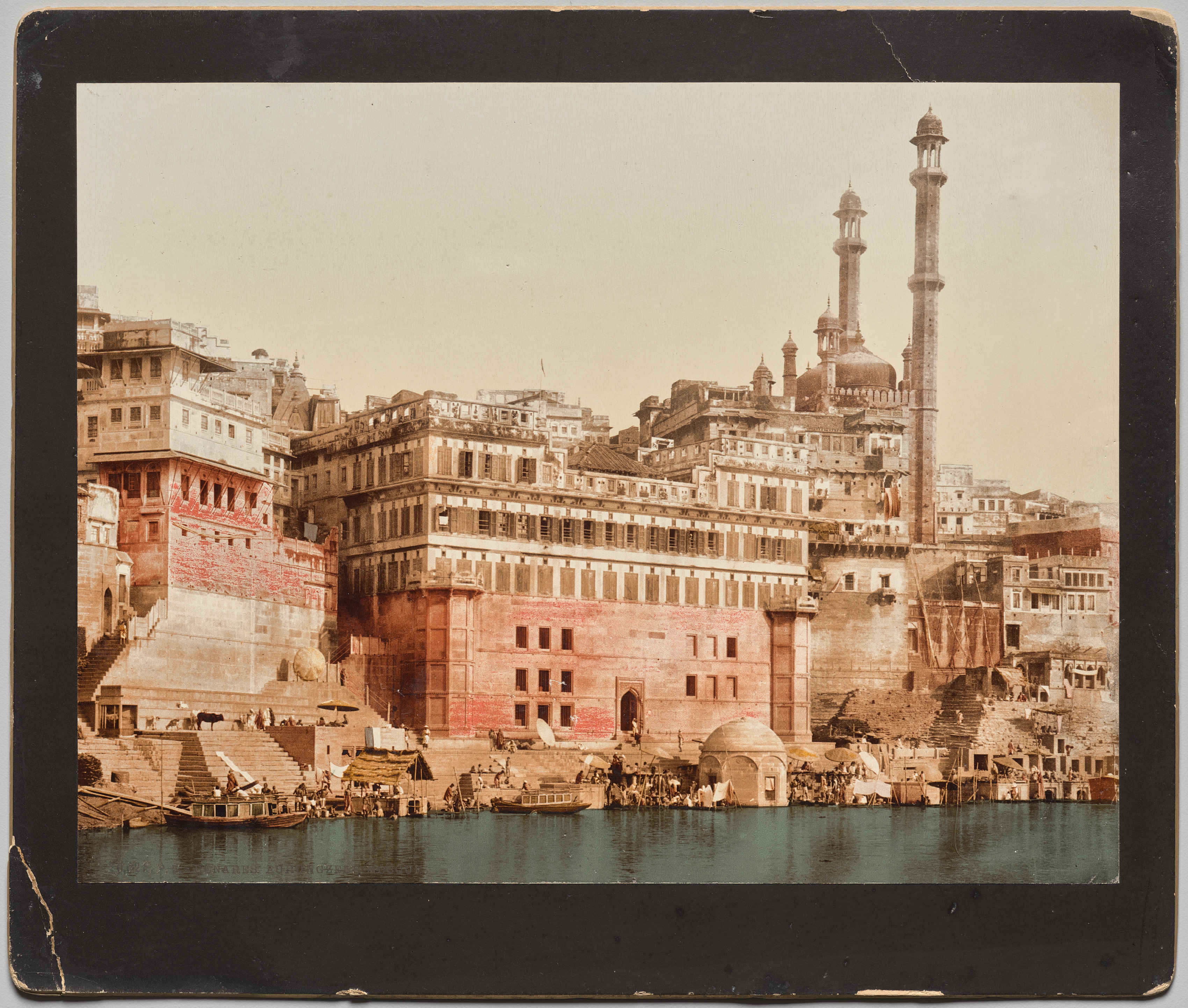
Benares: Aurangzeb’s Mosque
A photochrom is not a colour photograph: a black-and-white negative guided as many as a dozen lithographic colour stones. The Swiss firm Photoglob sold these views in boxed sets, and the saturated palette, closer to poster than to film, is why they look documentary and advertising at once.
3400 × 2886 px · Unmodified source file
Open in StudioSource & licensing
- Creator / date
- Photoglob Co. (Zurich, active c. 1890–1910) · c. 1890–1910
- Source credit
- The Cleveland Museum of Art, 2019.185. Open Access.
- Usage notes
- Released by the Cleveland Museum of Art under CC0 1.0. Credit to the museum is encouraged; CC0 does not imply endorsement.
- Original file
- 3400 × 2886 px · JPG · 0.0 MB
- Source checked
- 2026-11-05 · editorial approval separate
Public-domain status is reported by the linked source and may vary by jurisdiction. Check the source record for your intended use. No exclusive rights or Visual Bounty marketplace license are offered for these images.