← Open Collections

Public-domain source library

Pattern Archives

Woven and embroidered patterns tell stories of materials, craftsmanship and exchange. These textiles range from an eighth-century silk samite to nineteenth-century Central Asian embroidery, passing through lampas, voided velvet and suzani work. Repeating diamonds, framed florals and figural roundels show how geometry and ornament work together in cloth; luxury silks also travelled west, carrying their designs into new settings. Resist dyeing, Andean tapestry and Indian painted cottons extend that range, each showing a pattern worked out in the fibre before it reached the market.

Explore the works and their histories through the original collections and institutions that preserve them. Source images are available to download, with creative exploration in Studio.

Works
37
Sources
5
Makers
27
Dates
1200s–1300s · 1000s · 8th–9th century
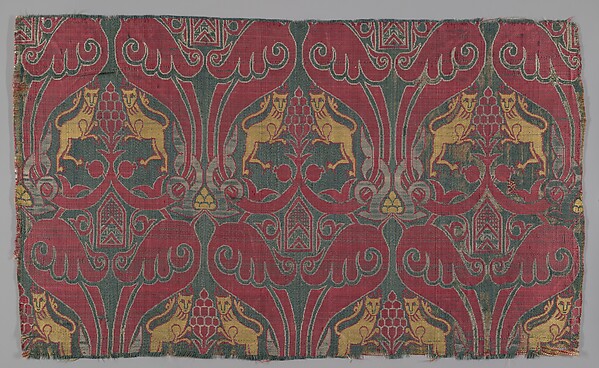
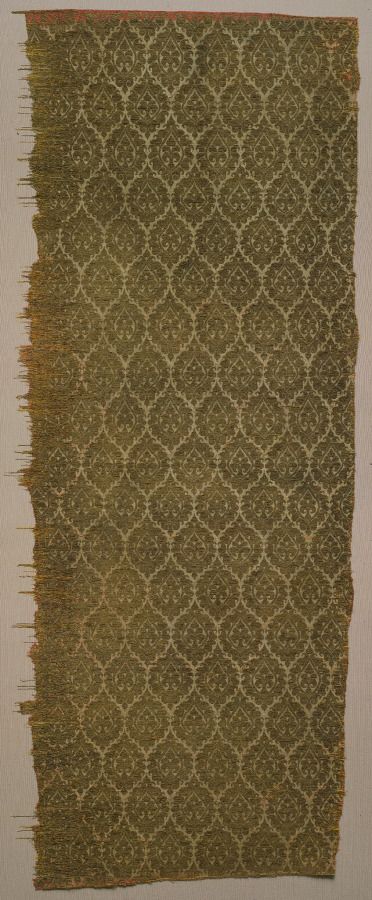
Floral palmettes sit inside repeated pointed-oval frames, a pattern popular in medieval Central Asia. Woven in silk and gold thread during the Il-khanid period, this textile belongs to a tradition whose exported fabrics influenced designs in Western Asia and Europe. Traces of the original coral-red ground survive along its edges.

1200s–1300s

Textile with Palmettes

Floral palmettes sit inside repeated pointed-oval frames, a pattern popular in medieval Central Asia. Woven in silk and gold thread during the Il-khanid period, this textile belongs to a tradition whose exported fabrics influenced designs in Western Asia and Europe. Traces of the original coral-red ground survive along its edges.

847 × 2048 px

Open in Studio
Source & credits
Creator / date
Maker unknown; Central Asia, Il-khanid (Mongol) period · 1200s–1300s
Source credit
Textile with Palmettes, 1200s–1300s. Central Asia, Il-khanid (Mongol) period. Silk and gold thread; tabby with supplementary weft; overall: 85.5 x 35 cm (33 11/16 x 13 3/4 in.); mounted: 106.7 x 50.8 cm (42 x 20 in.). The Cleveland Museum of Art, John L. Severance Fund, 1993.253
Original file
847 × 2048 px · JPG · 0.9 MB
Additional museum file
Full-resolution TIFF master ↗ (large file)
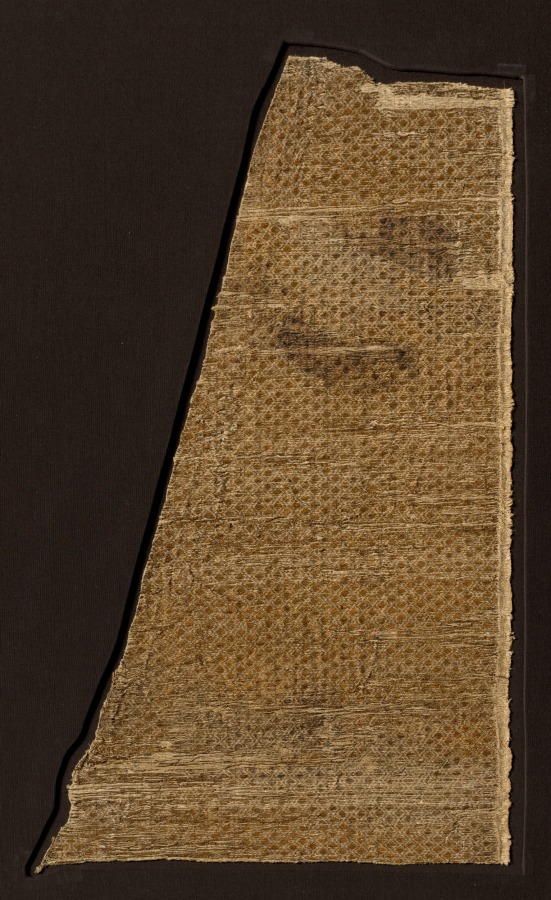
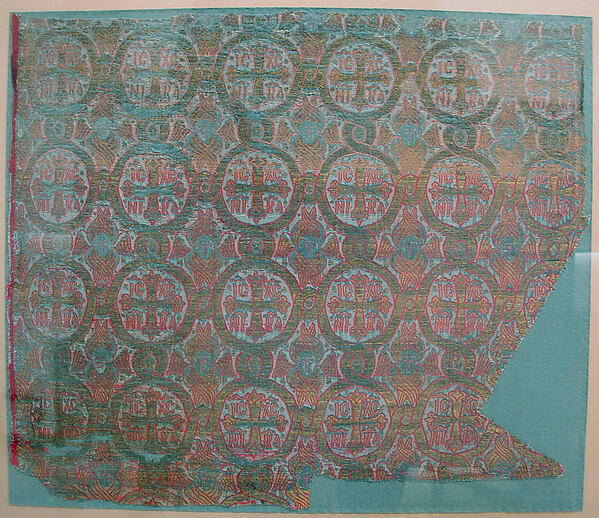
Tiny silver-thread diamonds repeat across a silk-and-cotton ground. One of the relatively few surviving Central Asian luxury silks of its period, this eleventh-century fragment later reached Europe and was preserved in a church treasury. Its materials connect delicate geometric design with the value placed on precious cloth.

1000s

Textile with Diamonds

Tiny silver-thread diamonds repeat across a silk-and-cotton ground. One of the relatively few surviving Central Asian luxury silks of its period, this eleventh-century fragment later reached Europe and was preserved in a church treasury. Its materials connect delicate geometric design with the value placed on precious cloth.

2083 × 3400 px

Open in Studio
Source & credits
Creator / date
Maker unknown; Central Asia · 1000s
Source credit
Textile with Diamonds, 1000s. Central Asia. Silk, cotton, and silver thread: tabby with supplementary weft; overall: 51.5 x 30.3 cm (20 1/4 x 11 15/16 in.). The Cleveland Museum of Art, John L. Severance Fund, 1993.139
Original file
2083 × 3400 px · JPG · 2.8 MB
Additional museum file
Full-resolution TIFF master ↗ (large file)
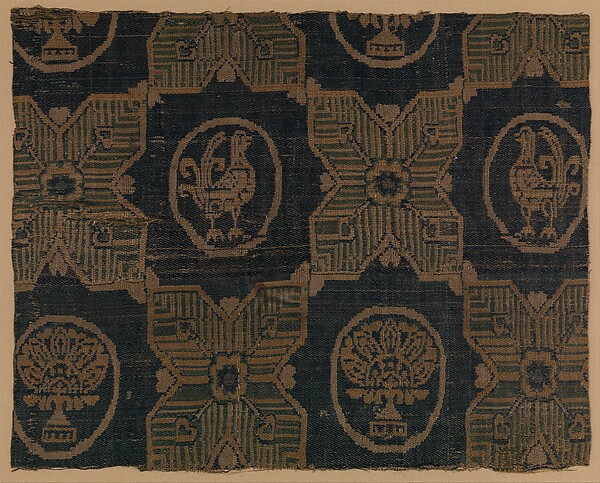
The earliest cloth in this archive, a samite woven in the eighth or ninth century, sets a small repeat of roundels against a monochrome ground. Silk of this kind travelled with trade and tribute, and the weave structure survives better than any record of where it was made.

8th–9th century

Textile Fragment

The earliest cloth in this archive, a samite woven in the eighth or ninth century, sets a small repeat of roundels against a monochrome ground. Silk of this kind travelled with trade and tribute, and the weave structure survives better than any record of where it was made.

3903 × 3143 px

Open in Studio
Source & credits
Creator / date
Egypt or Central Asia, maker unknown · 8th–9th century
Source credit
Fletcher Fund, 1946. Open Access image, The Metropolitan Museum of Art.
Original file
3903 × 3143 px · JPG
A fifteenth-century silk lampas places a dense field of ornament over a contrasting ground, the pattern bound into the cloth by a second warp system. The technique let designers draw freely, and the fragment reads as a drawing made in thread.

15th century

Textile Fragment

A fifteenth-century silk lampas places a dense field of ornament over a contrasting ground, the pattern bound into the cloth by a second warp system. The technique let designers draw freely, and the fragment reads as a drawing made in thread.

3994 × 2452 px

Open in Studio
Source & credits
Creator / date
Maker unknown · 15th century
Source credit
Gift of Herman Van Slochem, 1911. Open Access image, The Metropolitan Museum of Art.
Original file
3994 × 2452 px · JPG
Seraphim stand in rows between crosses on a lampas of the sixteenth or seventeenth century, the figures woven in twill against a satin ground. Sacred imagery enters the structure of the cloth itself, repeated until it reads as pure pattern.

16th–17th century

Silk Textile with Seraphim and Crosses

Seraphim stand in rows between crosses on a lampas of the sixteenth or seventeenth century, the figures woven in twill against a satin ground. Sacred imagery enters the structure of the cloth itself, repeated until it reads as pure pattern.

1736 × 1500 px

Open in Studio
Source & credits
Creator / date
Maker unknown · 16th–17th century
Source credit
Rogers Fund, 1917. Open Access image, The Metropolitan Museum of Art.
Original file
1736 × 1500 px · JPG
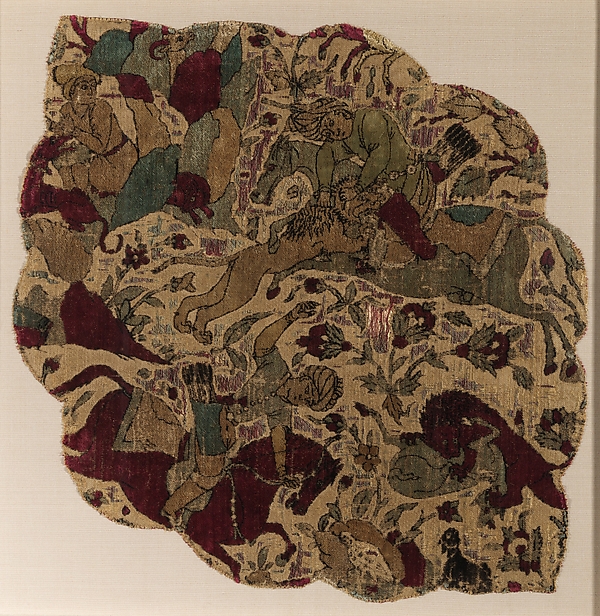
A hunting scene is cut into voided velvet, the pile raised around the figures so the picture appears in relief. Velvet of this complexity required a drawloom and a designer working in two registers at once: figure and ground.

ca. 1540

Velvet Panel with Hunting Scene

A hunting scene is cut into voided velvet, the pile raised around the figures so the picture appears in relief. Velvet of this complexity required a drawloom and a designer working in two registers at once: figure and ground.

1647 × 1692 px

Open in Studio
Source & credits
Creator / date
Maker unknown · ca. 1540
Source credit
Fletcher Fund, 1972. Open Access image, The Metropolitan Museum of Art.
Original file
1647 × 1692 px · JPG
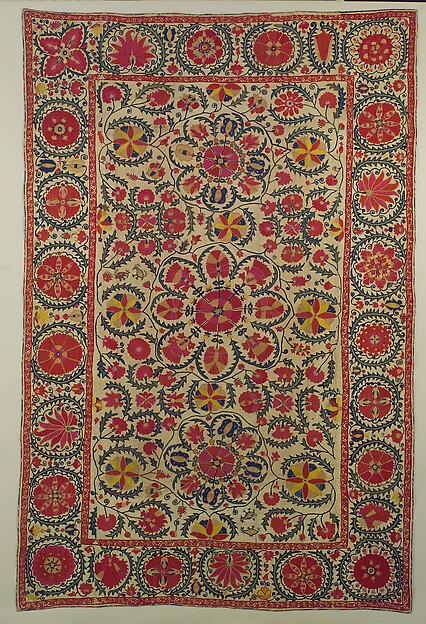
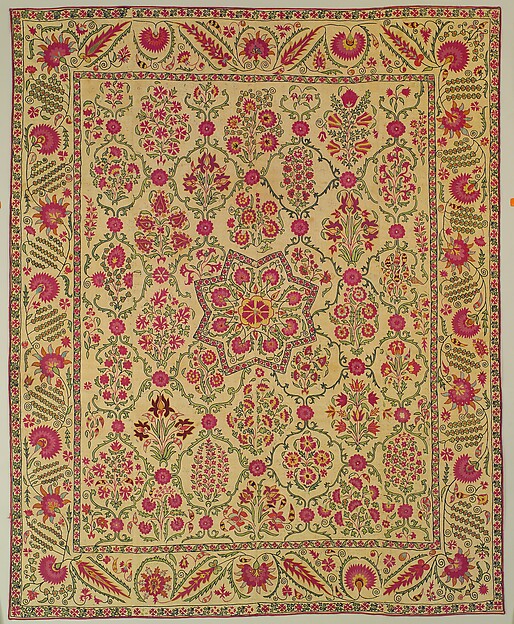
Silk thread on linen, worked in long couching stitches, builds a field of medallions and vines across a Central Asian cover. The stitching is generous and slightly irregular, evidence of many hands working a large cloth.

early 19th century

Cover

Silk thread on linen, worked in long couching stitches, builds a field of medallions and vines across a Central Asian cover. The stitching is generous and slightly irregular, evidence of many hands working a large cloth.

2392 × 3504 px

Open in Studio
Source & credits
Creator / date
Central Asia, embroiderer unknown · early 19th century
Source credit
Gift of Lily S. Place, 1921. Open Access image, The Metropolitan Museum of Art.
Original file
2392 × 3504 px · JPG
A hanging embroidered in silk on cotton joins chain, satin and buttonhole stitches in one surface, each chosen for a different part of the design. The result is a pattern that changes character as light moves across the thread.

early 19th century

Hanging

A hanging embroidered in silk on cotton joins chain, satin and buttonhole stitches in one surface, each chosen for a different part of the design. The result is a pattern that changes character as light moves across the thread.

2830 × 3438 px

Open in Studio
Source & credits
Creator / date
Central Asia, embroiderer unknown · early 19th century
Source credit
Rogers Fund, 1907. Open Access image, The Metropolitan Museum of Art.
Original file
2830 × 3438 px · JPG
A sheet of ornamental panels drawn for an allegorical pattern book, in pen and gray ink with red chalk. Drawings like this were the raw material of European ornament: made in a studio, then engraved and circulated to craftsmen who would never meet the designer.

late 18th–early 19th century

Illustrations for an Allegorical Pattern Book

A sheet of ornamental panels drawn for an allegorical pattern book, in pen and gray ink with red chalk. Drawings like this were the raw material of European ornament: made in a studio, then engraved and circulated to craftsmen who would never meet the designer.

2675 × 3950 px

Open in Studio
Source & credits
Creator / date
Antoine Borel (French) · late 18th–early 19th century
Source credit
Gift of the Estate of James Hazen Hyde, 1959. The Metropolitan Museum of Art.
Original file
2675 × 3950 px · JPG
The companion sheet to its pair, from the same hand and the same project. Pattern books were the transmission system of European decoration — a motif drawn here could surface years later on a chair in another country.

late 18th–early 19th century

Illustrations for an Allegorical Pattern Book

The companion sheet to its pair, from the same hand and the same project. Pattern books were the transmission system of European decoration — a motif drawn here could surface years later on a chair in another country.

2658 × 3964 px

Open in Studio
Source & credits
Creator / date
Antoine Borel (French) · late 18th–early 19th century
Source credit
Gift of the Estate of James Hazen Hyde, 1959. The Metropolitan Museum of Art.
Original file
2658 × 3964 px · JPG
Flötner published these woodcuts in 1549 as a pattern book for craftsmen: scrollwork and grotesques to be lifted into furniture, plasterwork, metalwork and print. A printed design sheet made a motif reproducible in a way a drawing never could.

1549

Grotesken und Mauresken

Flötner published these woodcuts in 1549 as a pattern book for craftsmen: scrollwork and grotesques to be lifted into furniture, plasterwork, metalwork and print. A printed design sheet made a motif reproducible in a way a drawing never could.

4000 × 2923 px

Open in Studio
Source & credits
Creator / date
Peter Flötner (Swiss, active Nuremberg) · 1549
Source credit
Harris Brisbane Dick Fund, 1925. The Metropolitan Museum of Art.
Original file
4000 × 2923 px · JPG
A Venetian lace pattern book of 1557, page after page of geometric repeats published so needleworkers could copy them. Lace was the first textile whose patterns travelled as print rather than as cloth.

1557

Le Pompe: Opera Nova

A Venetian lace pattern book of 1557, page after page of geometric repeats published so needleworkers could copy them. Lace was the first textile whose patterns travelled as print rather than as cloth.

3867 × 2643 px

Open in Studio
Source & credits
Creator / date
Giovanni Battista and Marchio Sessa (Venice) · 1557
Source credit
Harris Brisbane Dick Fund, 1937. The Metropolitan Museum of Art.
Original file
3867 × 2643 px · JPG
A manuscript needlework pattern book of 1654, compiled and inscribed by Phelita Millward. Books like hers were personal libraries of stitches and motifs, passed between households and often the only surviving record of a pattern as it was actually worked.

1654

Sampler-Book: or Needlework Pattern-Book of Mrs. Phelita Millward

A manuscript needlework pattern book of 1654, compiled and inscribed by Phelita Millward. Books like hers were personal libraries of stitches and motifs, passed between households and often the only surviving record of a pattern as it was actually worked.

2837 × 3722 px

Open in Studio
Source & credits
Creator / date
Phelita Millward · 1654
Source credit
Harris Brisbane Dick Fund, 1933. The Metropolitan Museum of Art.
Original file
2837 × 3722 px · JPG
An eighteenth-century book cover, its floral repeat pressed from a wood or metal block. A cover wrapped a text and was also a pattern in its own right, printed in quantity and discarded once the binding failed — which is why so few survive at this size.

18th century

Book cover with floral pattern

An eighteenth-century book cover, its floral repeat pressed from a wood or metal block. A cover wrapped a text and was also a pattern in its own right, printed in quantity and discarded once the binding failed — which is why so few survive at this size.

3584 × 1691 px

Open in Studio
Source & credits
Creator / date
Anonymous, European · 18th century
Source credit
Harris Brisbane Dick Fund, 1926. The Metropolitan Museum of Art.
Original file
3584 × 1691 px · JPG
A nineteenth-century cover built on a single repeating geometry, printed by relief block. Covers such as this sit exactly where packaging became surface design.

19th century

Book cover with overall geometric pattern

A nineteenth-century cover built on a single repeating geometry, printed by relief block. Covers such as this sit exactly where packaging became surface design.

2923 × 2063 px

Open in Studio
Source & credits
Creator / date
Anonymous, European · 19th century
Source credit
Harris Brisbane Dick Fund, 1926. The Metropolitan Museum of Art.
Original file
2923 × 2063 px · JPG
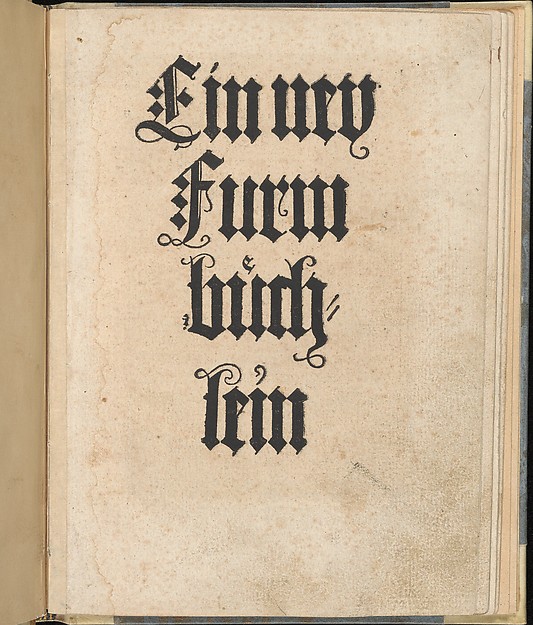
A model book of ornament printed in Augsburg in the 1520s, when the woodcut was turning pattern into a product. Its leaves offered goldsmiths, cabinetmakers and embroiderers a stock of scrollwork and foliage to copy, cut up and recombine.

ca. 1525–29

Ein ney Furmbüchlein (A New Model Book)

A model book of ornament printed in Augsburg in the 1520s, when the woodcut was turning pattern into a product. Its leaves offered goldsmiths, cabinetmakers and embroiderers a stock of scrollwork and foliage to copy, cut up and recombine.

2240 × 2626 px

Open in Studio
Source & credits
Creator / date
Johann Schönsperger the Younger (German, Augsburg) · ca. 1525–29
Source credit
Rogers Fund, 1918. The Metropolitan Museum of Art.
Original file
2240 × 2626 px · JPG
A page from one of the earliest printed needlework pattern books, issued in Venice around 1530. Vavassore sold embroidery and reticella designs as woodcuts, so a single pattern could be printed many times over instead of drawn once for one workshop.

1530

Opera Nova Universali intitulata Corona di racammi, page 31 (verso)

A page from one of the earliest printed needlework pattern books, issued in Venice around 1530. Vavassore sold embroidery and reticella designs as woodcuts, so a single pattern could be printed many times over instead of drawn once for one workshop.

2887 × 3566 px

Open in Studio
Source & credits
Creator / date
Giovanni Andrea Vavassore (Italian, active Venice) · 1530
Source credit
Harris Brisbane Dick Fund, 1932. The Metropolitan Museum of Art.
Original file
2887 × 3566 px · JPG
A needlework pattern from a Paris manual of 1605. The plates were made to be pricked and pounced, transferring the design onto cloth, which is why the lines stay open and unshaded: the outline is the whole instruction.

1605

La Pratique de l'Aiguille, page 60 (recto)

A needlework pattern from a Paris manual of 1605. The plates were made to be pricked and pounced, transferring the design onto cloth, which is why the lines stay open and unshaded: the outline is the whole instruction.

2354 × 2958 px

Open in Studio
Source & credits
Creator / date
Matthias Mignerak (French, active Paris) · 1605
Source credit
Rogers Fund, 1920. The Metropolitan Museum of Art.
Original file
2354 × 2958 px · JPG
A shell sheet printed for the decorative trades, its foliage reversed out of a dark ground. Designs of this kind were sold as ready-made ornament for paper hangings, textiles and japanned furniture, and were expected to tile without a seam showing.

18th century

Sheet with floral pattern with dark background

A shell sheet printed for the decorative trades, its foliage reversed out of a dark ground. Designs of this kind were sold as ready-made ornament for paper hangings, textiles and japanned furniture, and were expected to tile without a seam showing.

3562 × 2239 px

Open in Studio
Source & credits
Creator / date
Anonymous, European · 18th century
Source credit
The Elisha Whittelsey Collection, The Elisha Whittelsey Fund, 1948. The Metropolitan Museum of Art.
Original file
3562 × 2239 px · JPG
A French designer's scrapbook of textile patterns, worked in pastel on prepared coloured papers. Sample books like this one were working stock: motifs were tried, pasted down and kept for reference long before anything reached the loom.

19th century

Scrapbook with Textile Designs on Colored Papers

A French designer's scrapbook of textile patterns, worked in pastel on prepared coloured papers. Sample books like this one were working stock: motifs were tried, pasted down and kept for reference long before anything reached the loom.

2732 × 4000 px

Open in Studio
Source & credits
Creator / date
Anonymous, French, 19th century · 19th century
Source credit
Gift of the Estate of Benjamin E. Marks, 1967. The Metropolitan Museum of Art.
Original file
2732 × 4000 px · JPG
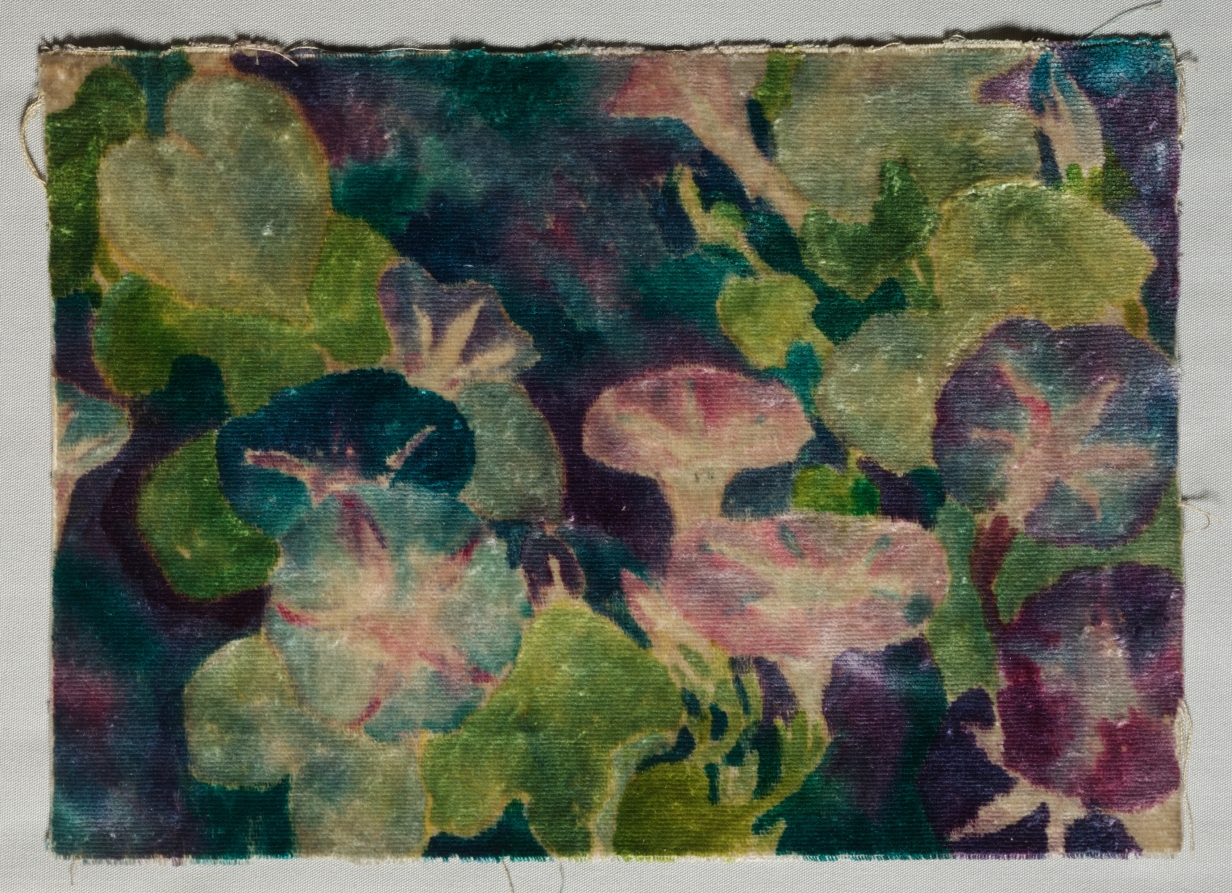
Silk velvet stencilled with vegetable dyes at Tiffany Studios, where Hornblower ran the textile workshop. The pattern was brushed through a pierced stencil onto a pile surface, so the dye sinks into the nap and the motif reads softer than a printed repeat.

c. 1902–10

Stenciled Velvet

Silk velvet stencilled with vegetable dyes at Tiffany Studios, where Hornblower ran the textile workshop. The pattern was brushed through a pierced stencil onto a pile surface, so the dye sinks into the nap and the motif reads softer than a printed repeat.

2481 × 3400 px

Open in Studio
Source & credits
Creator / date
Dorothy Marshall Hornblower for Tiffany Studios · c. 1902–10
Source credit
Gift of Joseph F. Sindelar. Cleveland Museum of Art.
Original file
2481 × 3400 px · JPG
A wider panel from the same workshop run: trailing stems and rounded leaves stencilled across silk velvet in vegetable dyes. Such panels were sold as furnishing fabric, at a moment when American design was looking hard at dyed and resist-printed cloth from Japan and India.

c. 1902–10

Stenciled Velvet (panel)

A wider panel from the same workshop run: trailing stems and rounded leaves stencilled across silk velvet in vegetable dyes. Such panels were sold as furnishing fabric, at a moment when American design was looking hard at dyed and resist-printed cloth from Japan and India.

3400 × 2464 px

Open in Studio
Source & credits
Creator / date
Dorothy Marshall Hornblower for Tiffany Studios · c. 1902–10
Source credit
Gift of Joseph F. Sindelar. Cleveland Museum of Art.
Original file
3400 × 2464 px · JPG
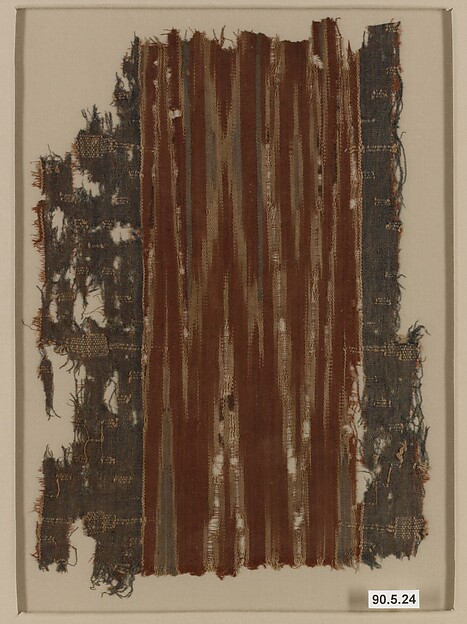
Silk threads were bound and dyed before a single weft crossed the loom, so the blur at each motif edge is the record of a decision made in advance. Resist dyeing of this kind travelled the trade routes between Central Asia and the Mediterranean, and the soft feathered contours it produced remained a mark of the technique long after the routes changed hands.

mid-11th century

Ikat Fragment

Silk threads were bound and dyed before a single weft crossed the loom, so the blur at each motif edge is the record of a decision made in advance. Resist dyeing of this kind travelled the trade routes between Central Asia and the Mediterranean, and the soft feathered contours it produced remained a mark of the technique long after the routes changed hands.

× px

Small archival scan: best for reference and screen use, not large prints.

Open in Studio
Source & credits
Creator / date
Unknown Central Asian weaver · mid-11th century
Source credit
Rogers Fund, 1927. The Metropolitan Museum of Art.
Original file
Dimensions unavailable · JPG
An Inca tunic woven as a single uncut rectangle, with the neck opening worked into the cloth rather than cut afterwards. The geometric bands were not decoration for its own sake: pattern, weave and fibre carried rank in Andean dress, and a garment’s structure could be read as clearly as its colour.

1460–1540

Tunic

An Inca tunic woven as a single uncut rectangle, with the neck opening worked into the cloth rather than cut afterwards. The geometric bands were not decoration for its own sake: pattern, weave and fibre carried rank in Andean dress, and a garment’s structure could be read as clearly as its colour.

× px

Small archival scan: best for reference and screen use, not large prints.

Open in Studio
Source & credits
Creator / date
Unknown Inca weaver · 1460–1540
Source credit
Gift of George D. Pratt, 1933. The Metropolitan Museum of Art.
Original file
Dimensions unavailable · JPG
A court silk from the Ottoman capital, woven in the lampas technique so that two pattern systems could sit over one another in the same cloth. The ogival lattice is drawn with metal-wrapped thread, and the design repeats with the precision of a workshop that cut its pattern cards once and used them for a generation.

ca. 1570–80

Fragmentary Loom Width with Ogival Pattern

A court silk from the Ottoman capital, woven in the lampas technique so that two pattern systems could sit over one another in the same cloth. The ogival lattice is drawn with metal-wrapped thread, and the design repeats with the precision of a workshop that cut its pattern cards once and used them for a generation.

× px

Small archival scan: best for reference and screen use, not large prints.

Open in Studio
Source & credits
Creator / date
Unknown Ottoman workshop, Istanbul · ca. 1570–80
Source credit
Anonymous Gift, 1949. The Metropolitan Museum of Art.
Original file
Dimensions unavailable · JPG
A bed hanging painted and dyed on the Coromandel Coast for a Sri Lankan buyer, its flowering tree drawn freehand with a resist pen before the dye bath. Cloths like this moved between workshops, merchants and households across the Indian Ocean, and the pattern was adjusted at each stage of the journey to suit the customer at the other end.

first quarter of the 18th century

Palampore

A bed hanging painted and dyed on the Coromandel Coast for a Sri Lankan buyer, its flowering tree drawn freehand with a resist pen before the dye bath. Cloths like this moved between workshops, merchants and households across the Indian Ocean, and the pattern was adjusted at each stage of the journey to suit the customer at the other end.

× px

Small archival scan: best for reference and screen use, not large prints.

Open in Studio
Source & credits
Creator / date
Unknown Indian painter and dyer, Coromandel Coast · first quarter of the 18th century
Source credit
Purchase, Fernando Family Trust Gift, in honor of Dr. Quintus and Mrs. Wimala Fernando, 2010. The Metropolitan Museum of Art.
Original file
Dimensions unavailable · JPG
A cotton fragment from the early Islamic world, resist-dyed before weaving, then brocaded. At this size the pattern reads as a rhythm of blurred diamonds, the soft edge of ikat showing exactly where the binding stopped the dye.

9th–10th century

Ikat Textile Fragment

A cotton fragment from the early Islamic world, resist-dyed before weaving, then brocaded. At this size the pattern reads as a rhythm of blurred diamonds, the soft edge of ikat showing exactly where the binding stopped the dye.

× px

Small archival scan: best for reference and screen use, not large prints.

Open in Studio
Source & credits
Creator / date
Unrecorded textile workshop · 9th–10th century
Source credit
Gift of George F. Baker, 1890. The Metropolitan Museum of Art.
Original file
Dimensions unavailable · JPG
Tiraz cloth carried inscriptions woven into the fabric, and this shawl fragment pairs that written band with ikat patterning and added gold. Two systems of marking sit on the same ground: text and resist.

late 9th–early 10th century

Tiraz Fragment from an Ikat Shawl

Tiraz cloth carried inscriptions woven into the fabric, and this shawl fragment pairs that written band with ikat patterning and added gold. Two systems of marking sit on the same ground: text and resist.

× px

Small archival scan: best for reference and screen use, not large prints.

Open in Studio
Source & credits
Creator / date
Unrecorded textile workshop · late 9th–early 10th century
Source credit
Gift of George D. Pratt, 1929. The Metropolitan Museum of Art.
Original file
Dimensions unavailable · JPG
Plain-woven cotton with resist-dyed patterning, painted with ink and gold. Made as a garment panel or a honorific band, it survives as a study in how much structure a small area of cloth can carry.

late 9th–early 10th century

Tiraz Textile Fragment

Plain-woven cotton with resist-dyed patterning, painted with ink and gold. Made as a garment panel or a honorific band, it survives as a study in how much structure a small area of cloth can carry.

× px

Small archival scan: best for reference and screen use, not large prints.

Open in Studio
Source & credits
Creator / date
Unrecorded textile workshop · late 9th–early 10th century
Source credit
Gift of George D. Pratt, 1929. The Metropolitan Museum of Art.
Original file
Dimensions unavailable · JPG
A Javanese headcloth patterned by ikat rather than batik: the design is dyed into the yarn before the cloth exists, so the motifs keep a slight halo where the ties were. Worn square-folded, the cloth sets its geometry to the body.

mid to late 19th century

Headcloth (Ikat Tengahan)

A Javanese headcloth patterned by ikat rather than batik: the design is dyed into the yarn before the cloth exists, so the motifs keep a slight halo where the ties were. Worn square-folded, the cloth sets its geometry to the body.

× px

Small archival scan: best for reference and screen use, not large prints.

Open in Studio
Source & credits
Creator / date
Unrecorded Javanese weaver · mid to late 19th century
Source credit
Bequest of Helen W. D. Mileham, 1954. The Metropolitan Museum of Art.
Original file
Dimensions unavailable · JPG
A Yemeni tiraz with a flame pattern dyed into the warp before weaving, then joined by an inscription in gold leaf. The flame form is a resist-dye classic: the same soft-edged zigzag appears across ikat traditions a continent apart.

960–80

Ikat tiraz

A Yemeni tiraz with a flame pattern dyed into the warp before weaving, then joined by an inscription in gold leaf. The flame form is a resist-dye classic: the same soft-edged zigzag appears across ikat traditions a continent apart.

× px

Small archival scan: best for reference and screen use, not large prints.

Open in Studio
Source & credits
Creator / date
Unrecorded Yemeni weaver · 960–80
Source credit
Purchase from the J. H. Wade Fund. Cleveland Museum of Art.
Original file
Dimensions unavailable · JPG
Velvet ikat from Bukhara, the most expensive cloth in Central Asia. The pile gives the resist-dyed pattern a depth that flat silk ikat loses, and the robe’s V neckline sets the cloth’s repeats against the body.

1850–75

Woman’s Robe (munisak)

Velvet ikat from Bukhara, the most expensive cloth in Central Asia. The pile gives the resist-dyed pattern a depth that flat silk ikat loses, and the robe’s V neckline sets the cloth’s repeats against the body.

× px

Small archival scan: best for reference and screen use, not large prints.

Open in Studio
Source & credits
Creator / date
Unrecorded Bukharan workshop · 1850–75
Source credit
Gift of Arlene C. Cooper. Cleveland Museum of Art.
Original file
Dimensions unavailable · JPG
A panel of silk velvet ikat, kept as a length rather than cut for a garment. On its own it shows the design most clearly: broad dyed bands pulled slightly out of alignment by the weave, the signature of the technique.

1875–1900

Length of silk velvet ikat

A panel of silk velvet ikat, kept as a length rather than cut for a garment. On its own it shows the design most clearly: broad dyed bands pulled slightly out of alignment by the weave, the signature of the technique.

× px

Small archival scan: best for reference and screen use, not large prints.

Open in Studio
Source & credits
Creator / date
Unrecorded Bukharan workshop · 1875–1900
Source credit
Gift of Guido Goldman. Cleveland Museum of Art.
Original file
Dimensions unavailable · JPG
A tapis from Lampung in Sumatra, where warp ikat is combined with silk embroidery. The angular geometry belongs to a very old Southeast Asian vocabulary, and the embroidered bands sit over the woven pattern as a second layer of drawing.

1800s

Tapis (Garment)

A tapis from Lampung in Sumatra, where warp ikat is combined with silk embroidery. The angular geometry belongs to a very old Southeast Asian vocabulary, and the embroidered bands sit over the woven pattern as a second layer of drawing.

× px

Small archival scan: best for reference and screen use, not large prints.

Open in Studio
Source & credits
Creator / date
Unrecorded Lampung weaver · 1800s
Source credit
Dudley P. Allen Fund. Cleveland Museum of Art.
Original file
Dimensions unavailable · JPG
An Iban pua from Kalimantan, woven as a ceremonial blanket and hung as a marker of status. Ikat figures of this kind are named and inherited, so the cloth carries genealogy as well as pattern.

1900–1970

Pua (Ceremonial Blanket or Hanging)

An Iban pua from Kalimantan, woven as a ceremonial blanket and hung as a marker of status. Ikat figures of this kind are named and inherited, so the cloth carries genealogy as well as pattern.

× px

Small archival scan: best for reference and screen use, not large prints.

Open in Studio
Source & credits
Creator / date
Unrecorded Iban weaver · 1900–1970
Source credit
The Mary Frances Fenton Bequest by exchange. Cleveland Museum of Art.
Original file
Dimensions unavailable · JPG
A Gujarati patolu in double ikat, where both warp and weft are dyed to register at the crossing points. Patola were traded across Southeast Asia as heirlooms, and their geometry seeded resist patterns far from India.

1800s

Silk Patolu Sari

A Gujarati patolu in double ikat, where both warp and weft are dyed to register at the crossing points. Patola were traded across Southeast Asia as heirlooms, and their geometry seeded resist patterns far from India.

× px

Small archival scan: best for reference and screen use, not large prints.

Open in Studio
Source & credits
Creator / date
Unrecorded Gujarati weaver · 1800s
Source credit
Bequest of James Parmelee. Cleveland Museum of Art.
Original file
Dimensions unavailable · JPG
A dagmay from Mindanao, woven from hand-stripped abaca and resist-dyed at the warp. The small human and crocodile figures read as a dense, dark banding at first glance and resolve into story figures up close.

c. early 1900s

Mandaya ikat textile (dagmay)

A dagmay from Mindanao, woven from hand-stripped abaca and resist-dyed at the warp. The small human and crocodile figures read as a dense, dark banding at first glance and resolve into story figures up close.

× px

Small archival scan: best for reference and screen use, not large prints.

Open in Studio
Source & credits
Creator / date
Unrecorded Mandaya weaver · c. early 1900s
Source credit
Gift of Mrs. G. Field Adams. Cleveland Museum of Art.
Original file
Dimensions unavailable · JPG