← Open CollectionsPublic-domain source library
Paracas and Nasca: Embroidered Cloth of Ancient Peru
On the south coast of Peru, the dead were wrapped in layers of embroidered cloth and laid in shaft tombs, and the dry desert preserved what would have vanished elsewhere. Paracas weavers worked felines, warriors and double-headed birds in wool on cotton, repeating a figure until narrative became pattern; Nasca hands painted cloth and wove double cloth with two faces. Gold ornaments worn against the textiles are included here because they were worn together.
Original means the unmodified digital file supplied by the linked archive, not an upscaled or reconstructed image. Sign in for free downloads. Studio uses a working preview up to 2048 px.
CC0 · Public domain · c. 300 BCE–200 CE
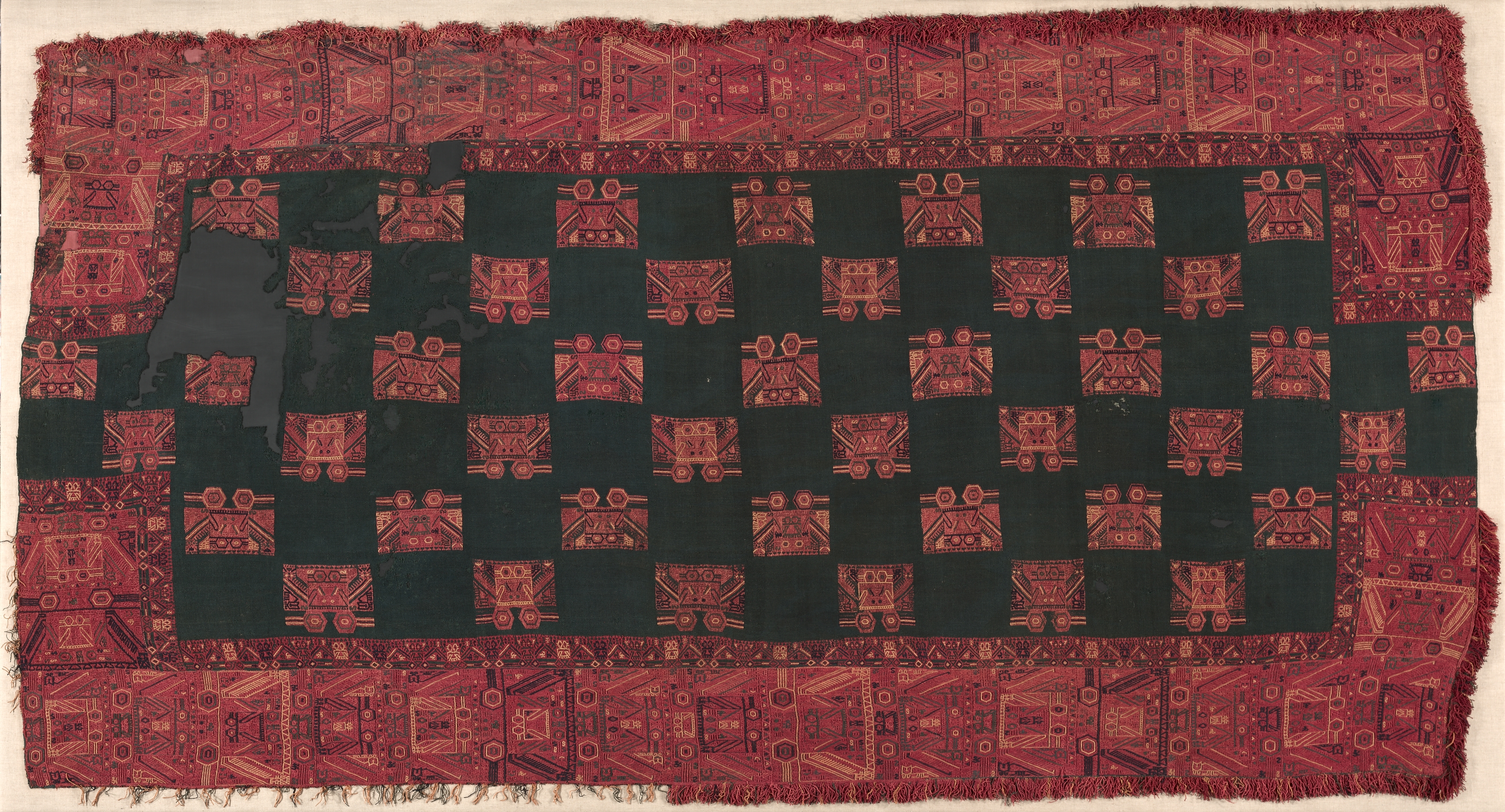
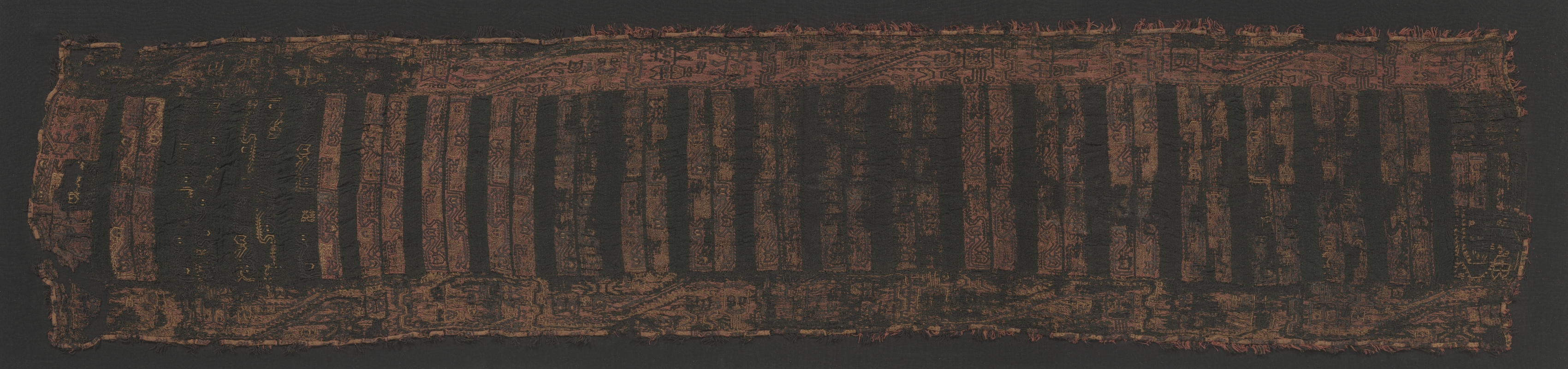
Mantle
A Paracas mantle, buried in a shaft tomb as one layer of a wrapped bundle. The dry coastal desert preserved cloth that would have rotted anywhere else, which is why these textiles survive at all.
× px · Unmodified source file
Small archival scan: best for reference and screen use, not large prints.
Open in StudioSource & licensing
- Creator / date
- Peru, South Coast, Paracas (Cavernas) style, maker unknown · c. 300 BCE–200 CE
- Source credit
- The Cleveland Museum of Art, 1946.226. Open Access.
- Usage notes
- Released by the Cleveland Museum of Art under CC0 1.0. Credit to the museum is encouraged; CC0 does not imply endorsement.
- Original file
- × px · JPG · 0.0 MB
- Source checked
- 2026-11-04 · editorial approval separate
CC0 · Public domain · c. 300 BCE–200 CE
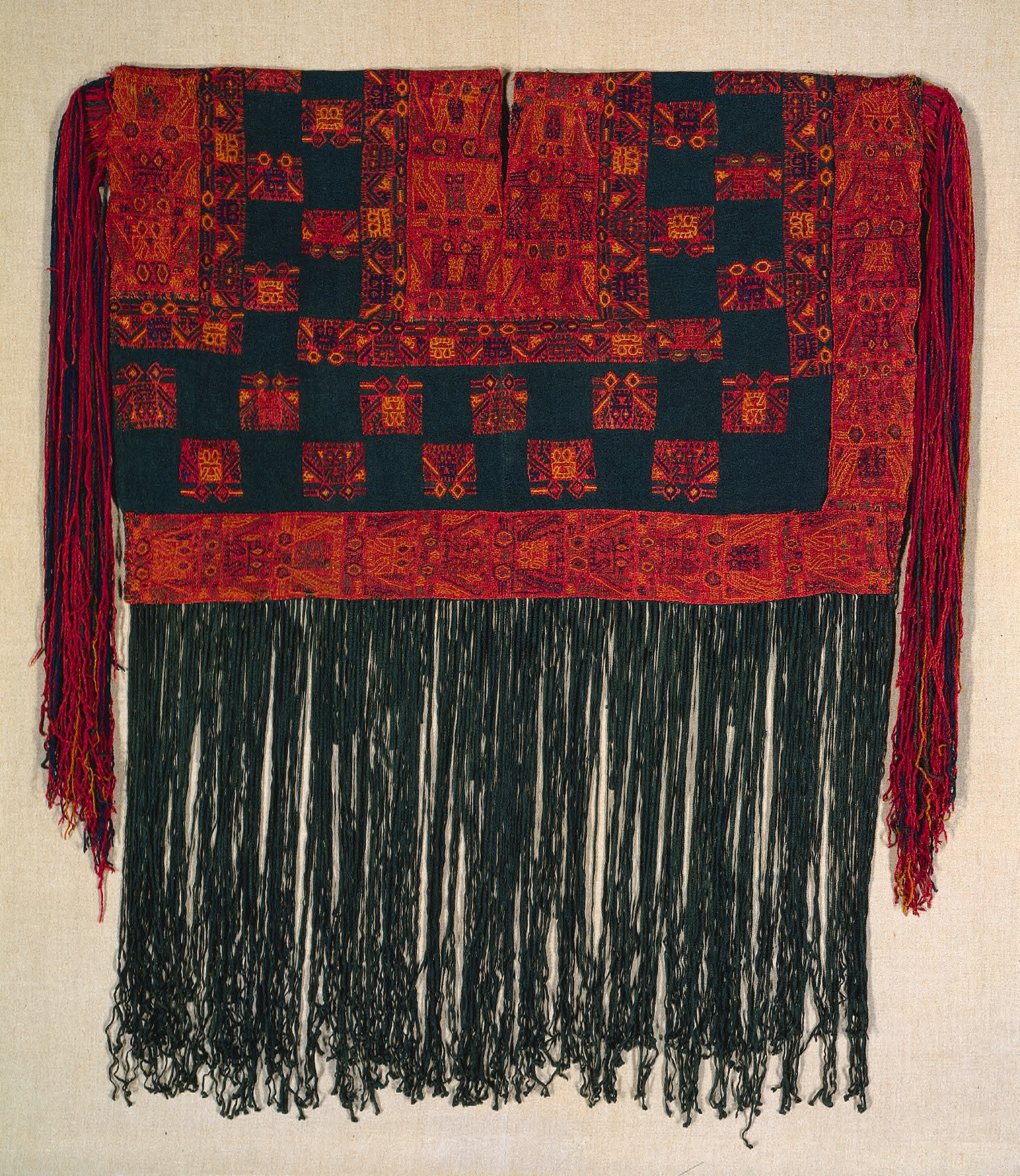
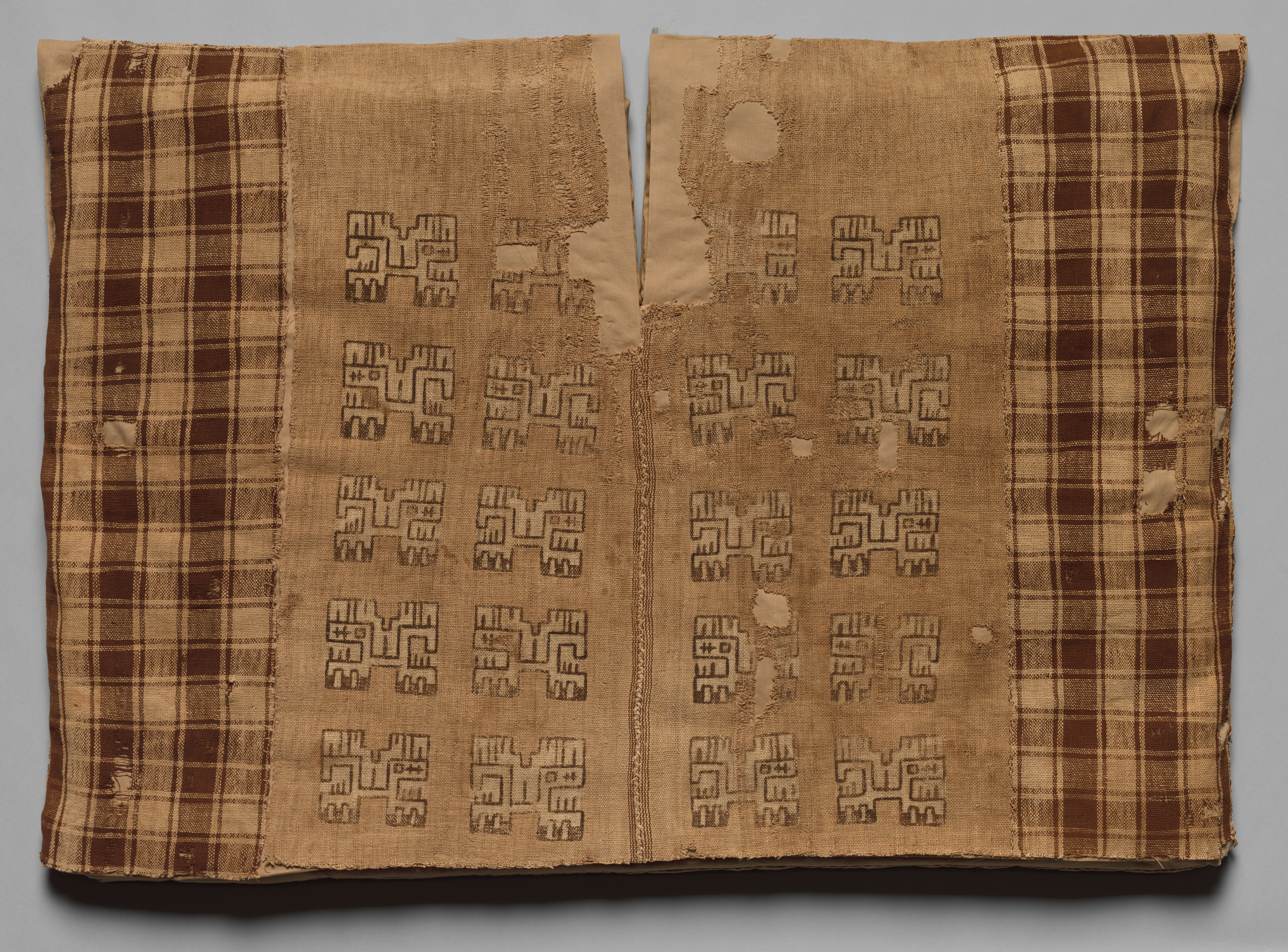
Tunic
A tunic in alpaca wool, embroidered and worked with warp substitution. The bright dyed yarns came from alpacas bred over generations for long, soft, lustrous fibre.
× px · Unmodified source file
Small archival scan: best for reference and screen use, not large prints.
Open in StudioSource & licensing
- Creator / date
- Peru, South Coast, Paracas (Cavernas) style, maker unknown · c. 300 BCE–200 CE
- Source credit
- The Cleveland Museum of Art, 1946.227. Open Access.
- Usage notes
- Released by the Cleveland Museum of Art under CC0 1.0. Credit to the museum is encouraged; CC0 does not imply endorsement.
- Original file
- × px · JPG · 0.0 MB
- Source checked
- 2026-11-04 · editorial approval separate
CC0 · Public domain · c. 300–100 BCE
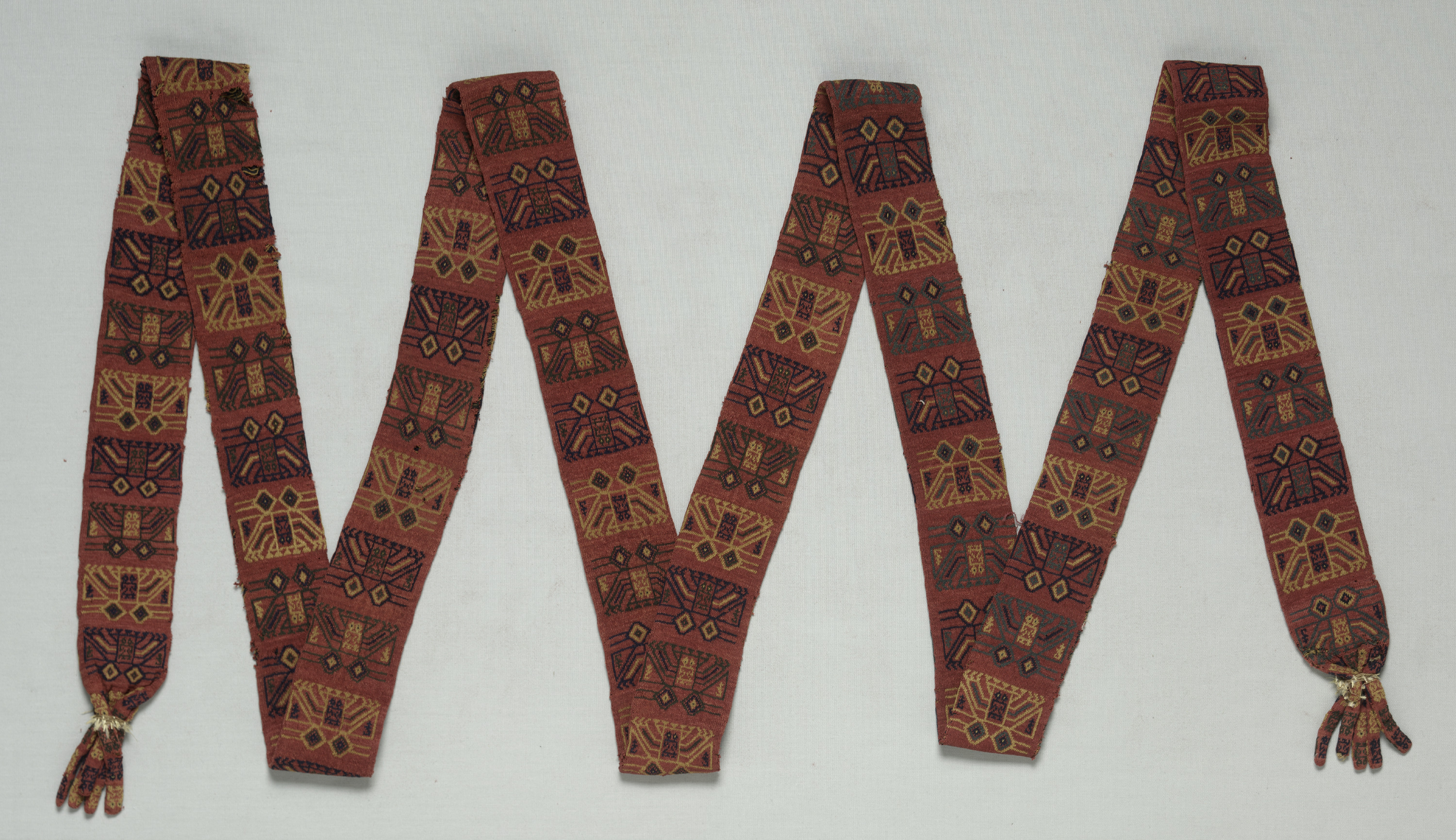
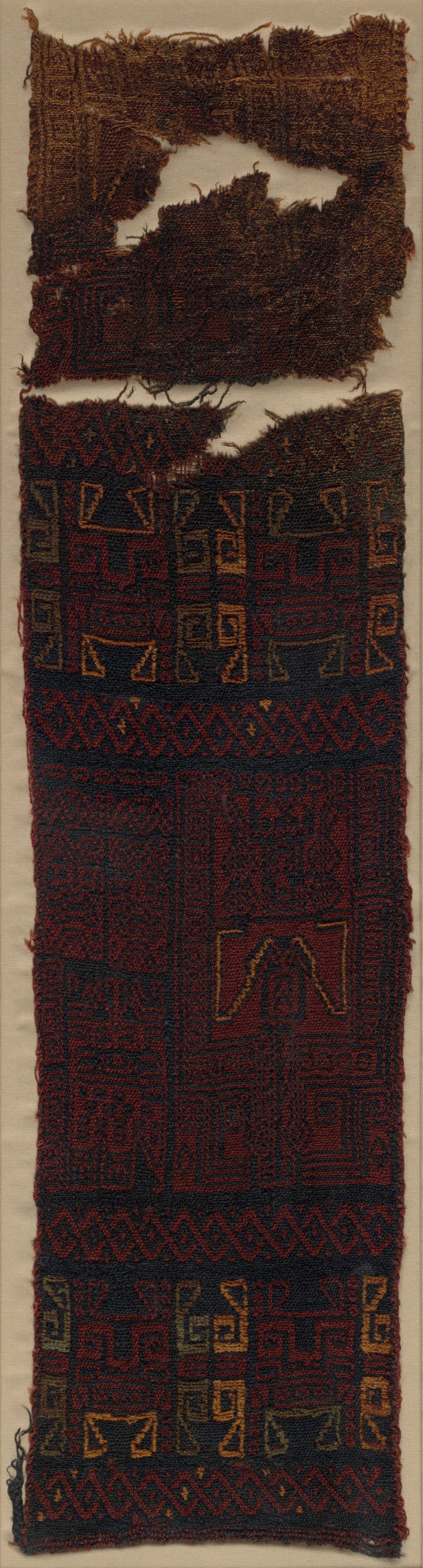
Turban Band (Llauto)
A headband of needle-made netting with a double-headed bird running its length, both heads in profile joined to a frontal body with spread wings. Wrapped and re-wrapped, the band was worn as a turban.
× px · Unmodified source file
Small archival scan: best for reference and screen use, not large prints.
Open in StudioSource & licensing
- Creator / date
- Peru, South Coast, Paracas, Late Period, maker unknown · c. 300–100 BCE
- Source credit
- The Cleveland Museum of Art, 1946.228. Open Access.
- Usage notes
- Released by the Cleveland Museum of Art under CC0 1.0. Credit to the museum is encouraged; CC0 does not imply endorsement.
- Original file
- × px · JPG · 0.0 MB
- Source checked
- 2026-11-04 · editorial approval separate
CC0 · Public domain · c. 300–100 BCE
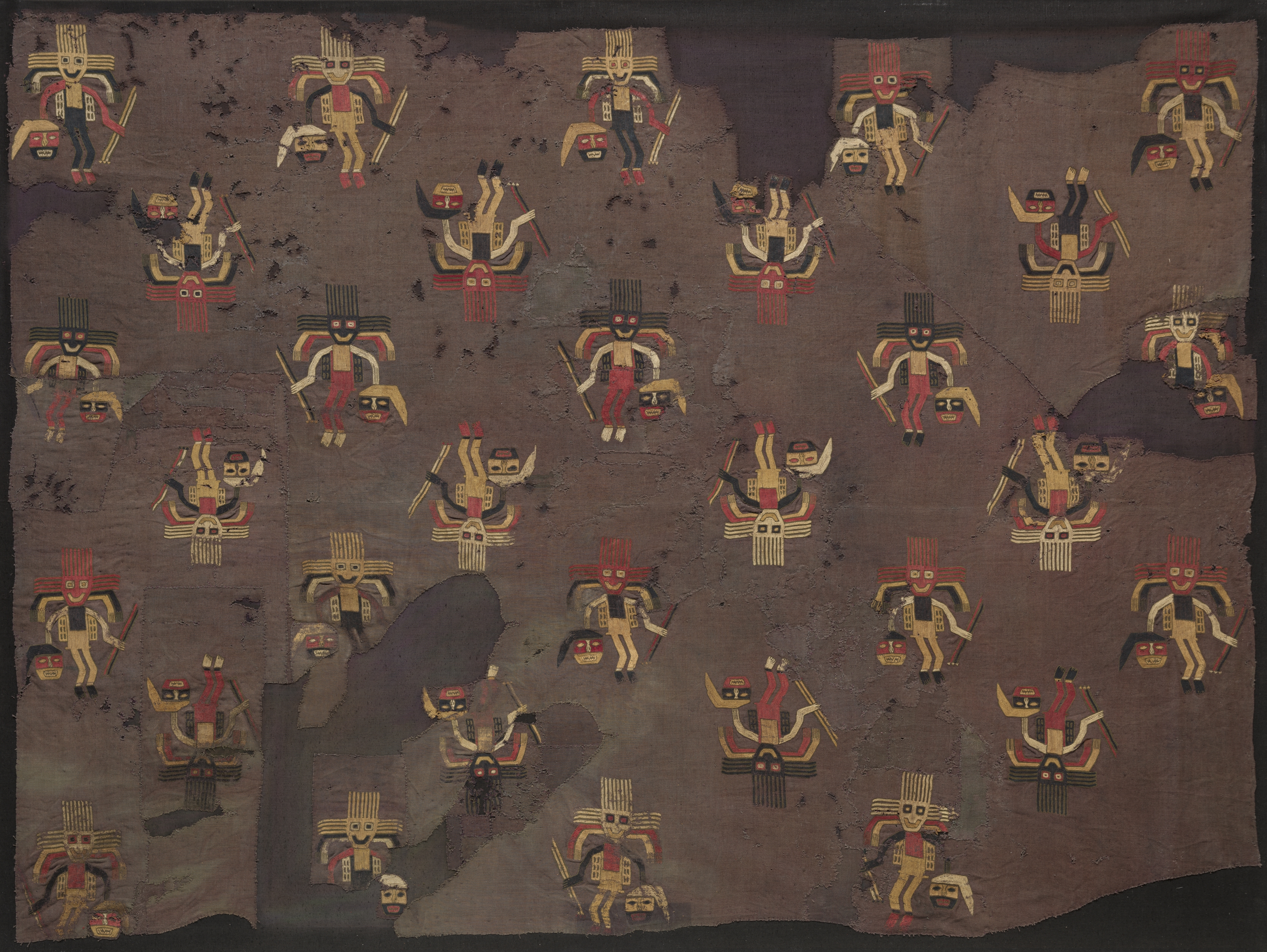
Fragment of Embroidered Cloth
A repeated warrior carrying spears and a trophy head. Repeating a non-mythical figure across a whole cloth was one of the great Paracas innovations, turning a narrative into pattern.
× px · Unmodified source file
Small archival scan: best for reference and screen use, not large prints.
Open in StudioSource & licensing
- Creator / date
- Peru, South Coast, Paracas, Late Period, maker unknown · c. 300–100 BCE
- Source credit
- The Cleveland Museum of Art, 1940.528. Open Access.
- Usage notes
- Released by the Cleveland Museum of Art under CC0 1.0. Credit to the museum is encouraged; CC0 does not imply endorsement.
- Original file
- × px · JPG · 0.0 MB
- Source checked
- 2026-11-04 · editorial approval separate
CC0 · Public domain · c. 600–400 BCE
Headcloth
A headcloth embroidered entirely with felines, some of them holding trophy heads. The drawing is linear and highly stylised, the animal reduced to a contour that repeats without variation.
× px · Unmodified source file
Small archival scan: best for reference and screen use, not large prints.
Open in StudioSource & licensing
- Creator / date
- Peru, South Coast, Paracas, Middle Period, maker unknown · c. 600–400 BCE
- Source credit
- The Cleveland Museum of Art, 1940.529. Open Access.
- Usage notes
- Released by the Cleveland Museum of Art under CC0 1.0. Credit to the museum is encouraged; CC0 does not imply endorsement.
- Original file
- × px · JPG · 0.0 MB
- Source checked
- 2026-11-04 · editorial approval separate
CC0 · Public domain · 410–540 CE
Tunic with Profile Animals and Checkerboards
A tunic whose long-tailed, three-toed animals seem to have been painted onto the cloth as a slurry rather than woven in. Below them, a checkerboard runs in the plain weave.
× px · Unmodified source file
Small archival scan: best for reference and screen use, not large prints.
Open in StudioSource & licensing
- Creator / date
- Peru, South Coast, Paracas or Nasca, maker unknown · 410–540 CE
- Source credit
- The Cleveland Museum of Art, 2005.16. Open Access.
- Usage notes
- Released by the Cleveland Museum of Art under CC0 1.0. Credit to the museum is encouraged; CC0 does not imply endorsement.
- Original file
- × px · JPG · 0.0 MB
- Source checked
- 2026-11-04 · editorial approval separate
CC0 · Public domain · 700–400 BCE
Textile Fragment with Frontal Deity Heads, Felines, and Interlace
An early double cloth, a technique that lets two faces of a textile carry different colours and patterns at once. Frontal deity heads, felines and interlace fill the field.
× px · Unmodified source file
Small archival scan: best for reference and screen use, not large prints.
Open in StudioSource & licensing
- Creator / date
- Peru, South Coast, Paracas, Yauca Valley (?), maker unknown · 700–400 BCE
- Source credit
- The Cleveland Museum of Art, 2005.14. Open Access.
- Usage notes
- Released by the Cleveland Museum of Art under CC0 1.0. Credit to the museum is encouraged; CC0 does not imply endorsement.
- Original file
- × px · JPG · 0.0 MB
- Source checked
- 2026-11-04 · editorial approval separate
CC0 · Public domain · c. 1100–1400
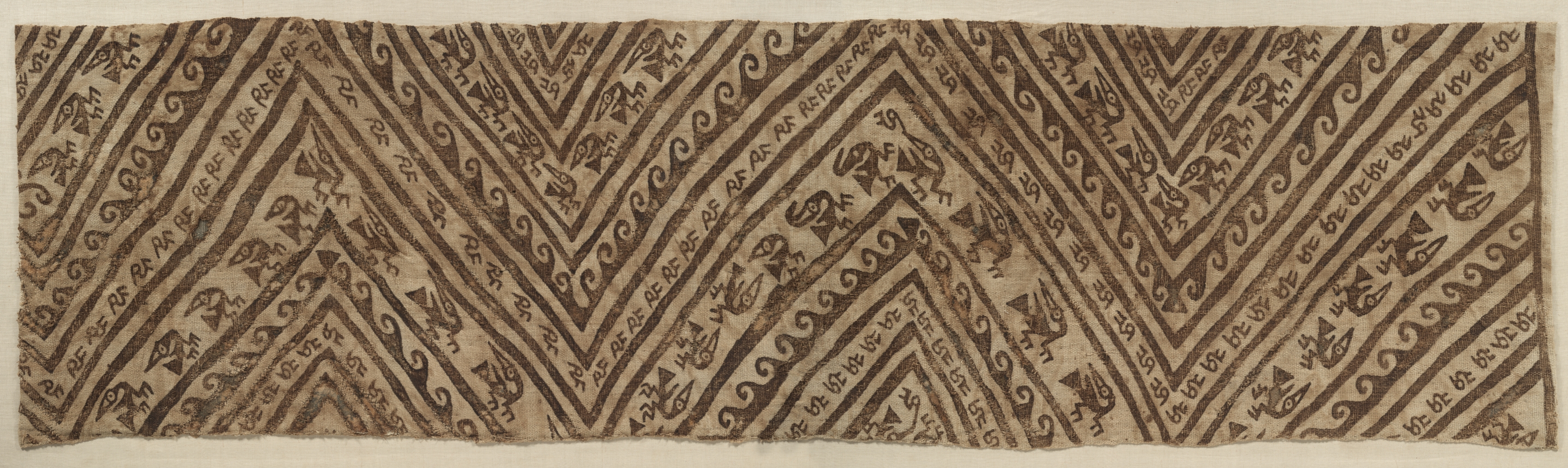
Painted Wrapping for Mummy
A painted cotton wrapping from the Chancay, made centuries after the Paracas embroideries. Painting on cloth is quicker than embroidery, and the design is correspondingly free and repetitive.
× px · Unmodified source file
Small archival scan: best for reference and screen use, not large prints.
Open in StudioSource & licensing
- Creator / date
- Peru, Central Coast, Chancay, maker unknown · c. 1100–1400
- Source credit
- The Cleveland Museum of Art, 1940.494. Open Access.
- Usage notes
- Released by the Cleveland Museum of Art under CC0 1.0. Credit to the museum is encouraged; CC0 does not imply endorsement.
- Original file
- × px · JPG · 0.0 MB
- Source checked
- 2026-11-04 · editorial approval separate
CC0 · Public domain · c. 300 BCE–200 CE
Headdress Ornament
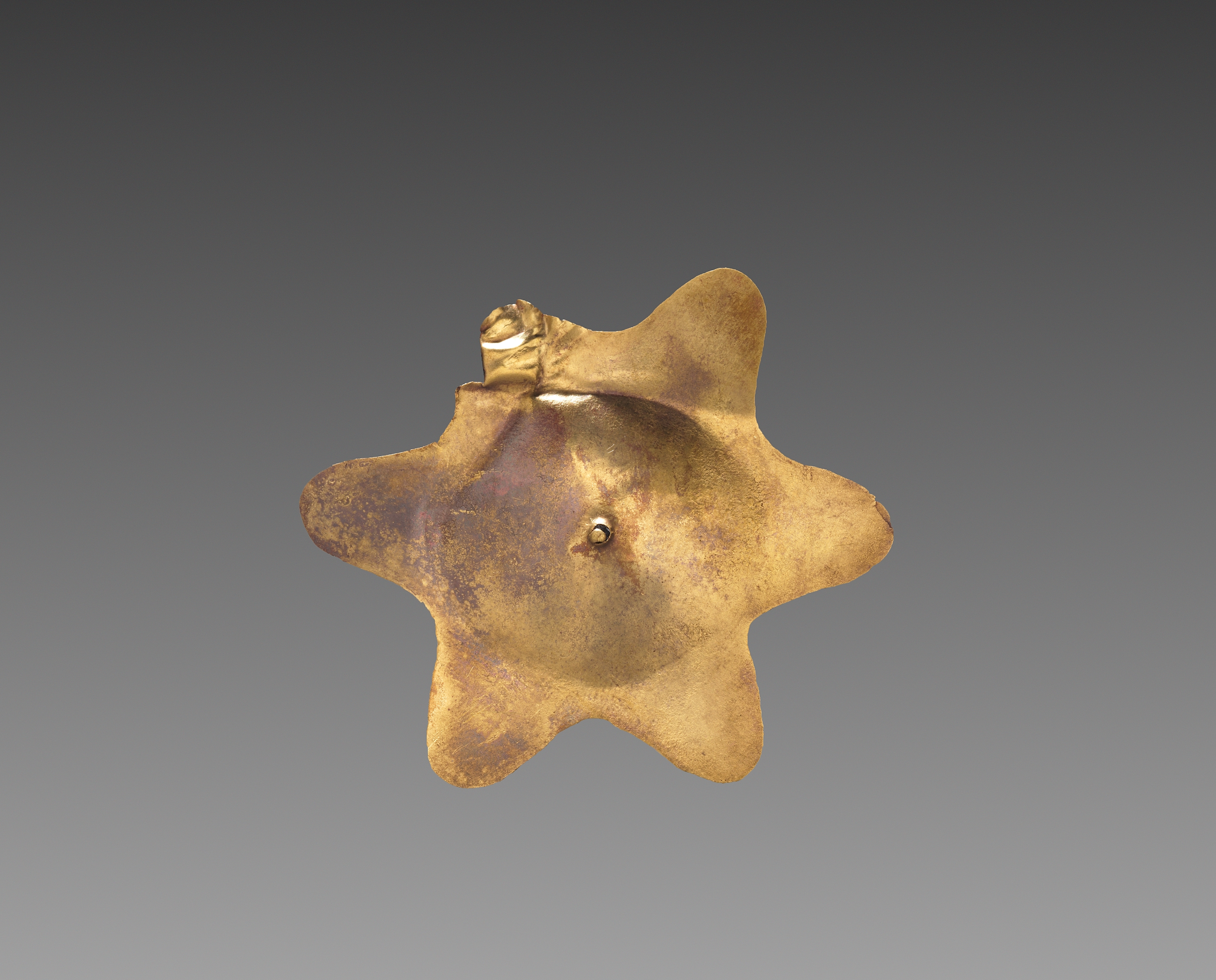
A star-shaped ornament in hammered gold-copper alloy, of a type found fixed to the human-hair wigs of Paracas mummy bundles. Metal and textile were worn together.
× px · Unmodified source file
Small archival scan: best for reference and screen use, not large prints.
Open in StudioSource & licensing
- Creator / date
- Peru, South Coast, Paracas, maker unknown · c. 300 BCE–200 CE
- Source credit
- The Cleveland Museum of Art, 1940.511. Open Access.
- Usage notes
- Released by the Cleveland Museum of Art under CC0 1.0. Credit to the museum is encouraged; CC0 does not imply endorsement.
- Original file
- × px · JPG · 0.0 MB
- Source checked
- 2026-11-04 · editorial approval separate
CC0 · Public domain · c. 300 BCE–200 CE
Headdress Ornament
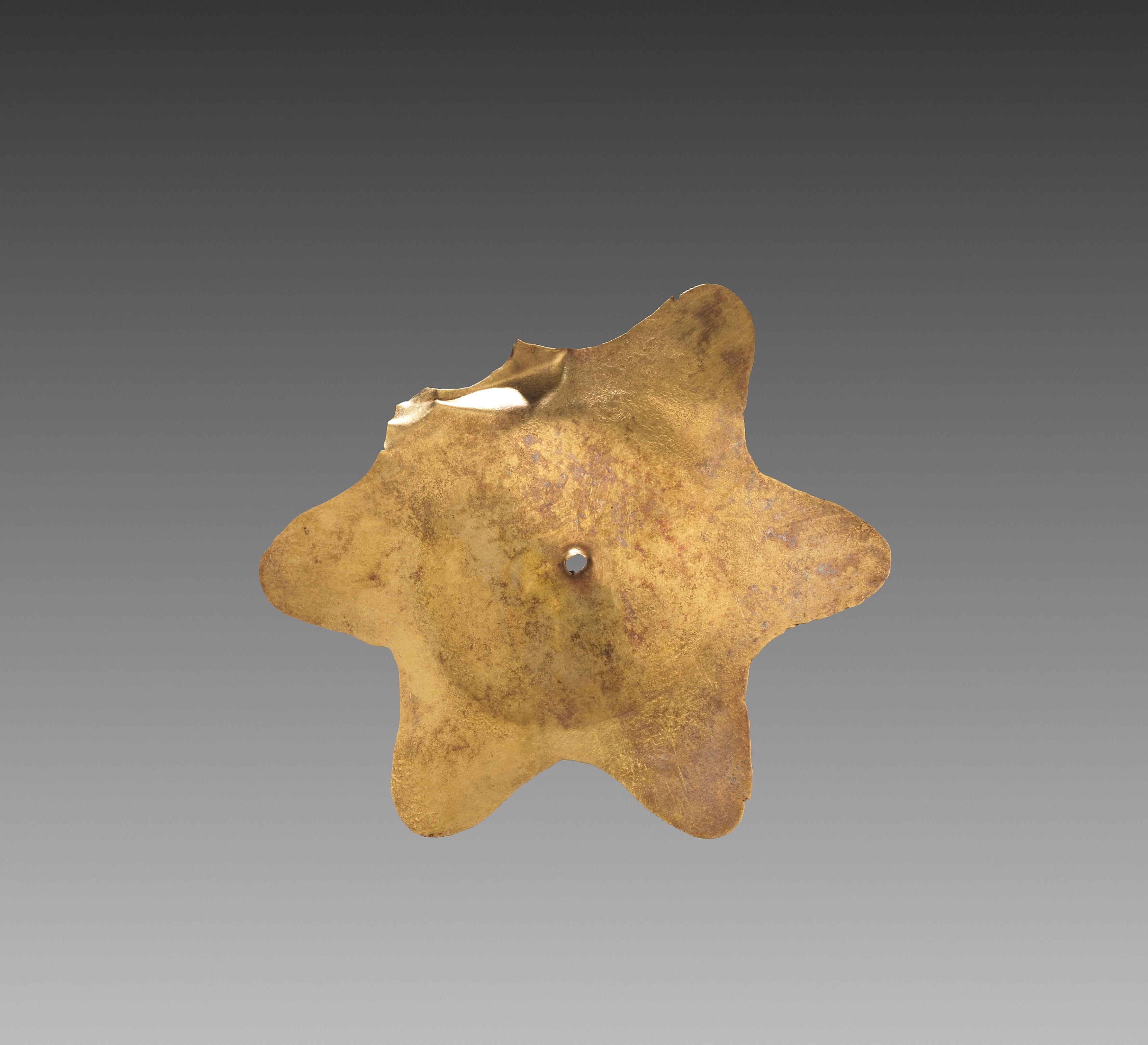
The companion ornament to its pair, embossed from a single sheet. Paracas metalwork is thin, light and cut to catch light against dark cloth.
× px · Unmodified source file
Small archival scan: best for reference and screen use, not large prints.
Open in StudioSource & licensing
- Creator / date
- Peru, South Coast, Paracas, maker unknown · c. 300 BCE–200 CE
- Source credit
- The Cleveland Museum of Art, 1940.510. Open Access.
- Usage notes
- Released by the Cleveland Museum of Art under CC0 1.0. Credit to the museum is encouraged; CC0 does not imply endorsement.
- Original file
- × px · JPG · 0.0 MB
- Source checked
- 2026-11-04 · editorial approval separate
CC0 · Public domain · c. 300 BCE–200 CE
Headdress Ornament
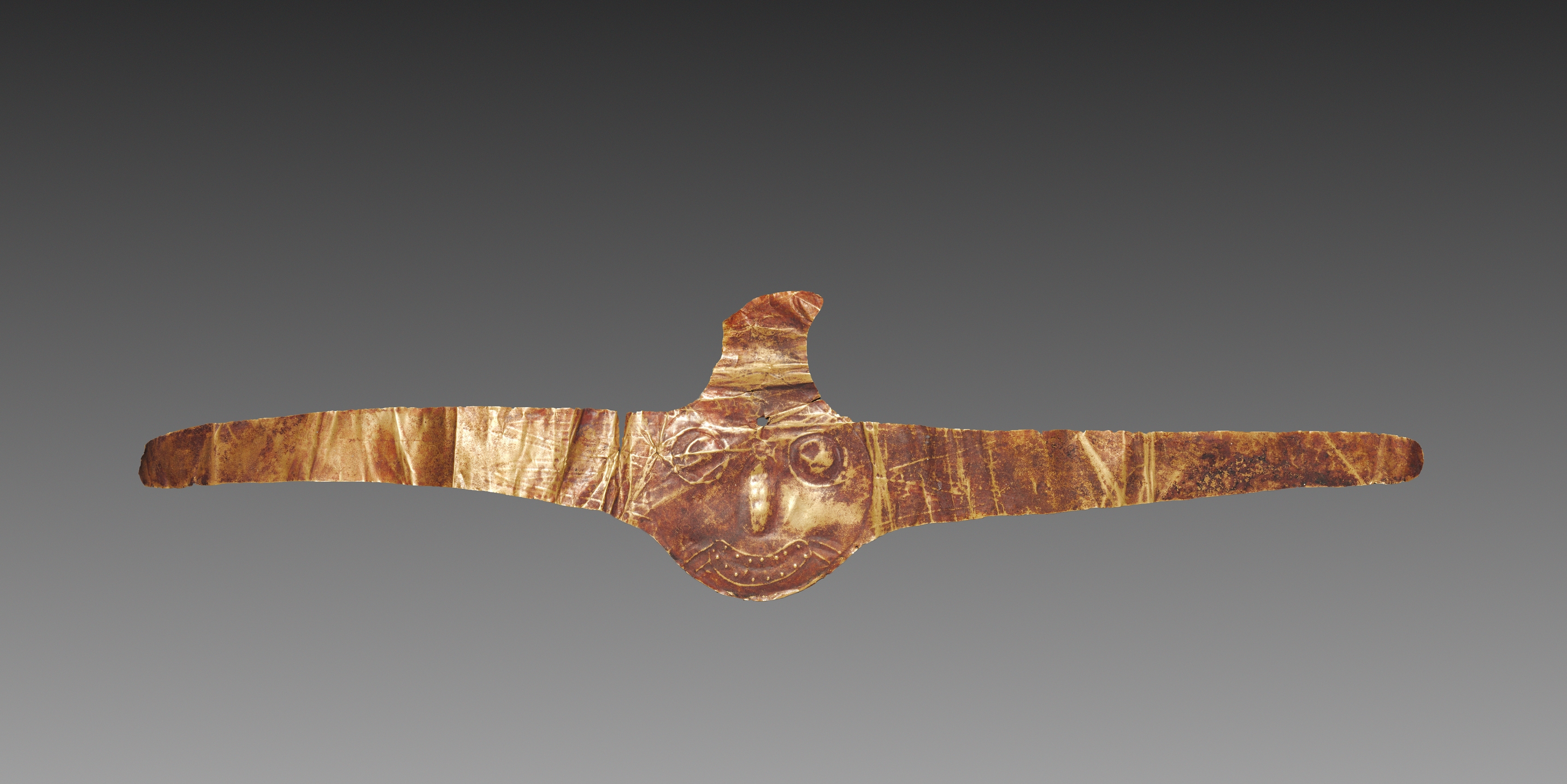
Gold ornaments of this kind were found inside the innermost wrappings of Paracas bundles, probably personal possessions buried with the dead.
× px · Unmodified source file
Small archival scan: best for reference and screen use, not large prints.
Open in StudioSource & licensing
- Creator / date
- Peru, South Coast, Paracas, maker unknown · c. 300 BCE–200 CE
- Source credit
- The Cleveland Museum of Art, 1938.432. Open Access.
- Usage notes
- Released by the Cleveland Museum of Art under CC0 1.0. Credit to the museum is encouraged; CC0 does not imply endorsement.
- Original file
- × px · JPG · 0.0 MB
- Source checked
- 2026-11-04 · editorial approval separate
CC0 · Public domain · c. 300 BCE–200 CE
Figurine Plaque
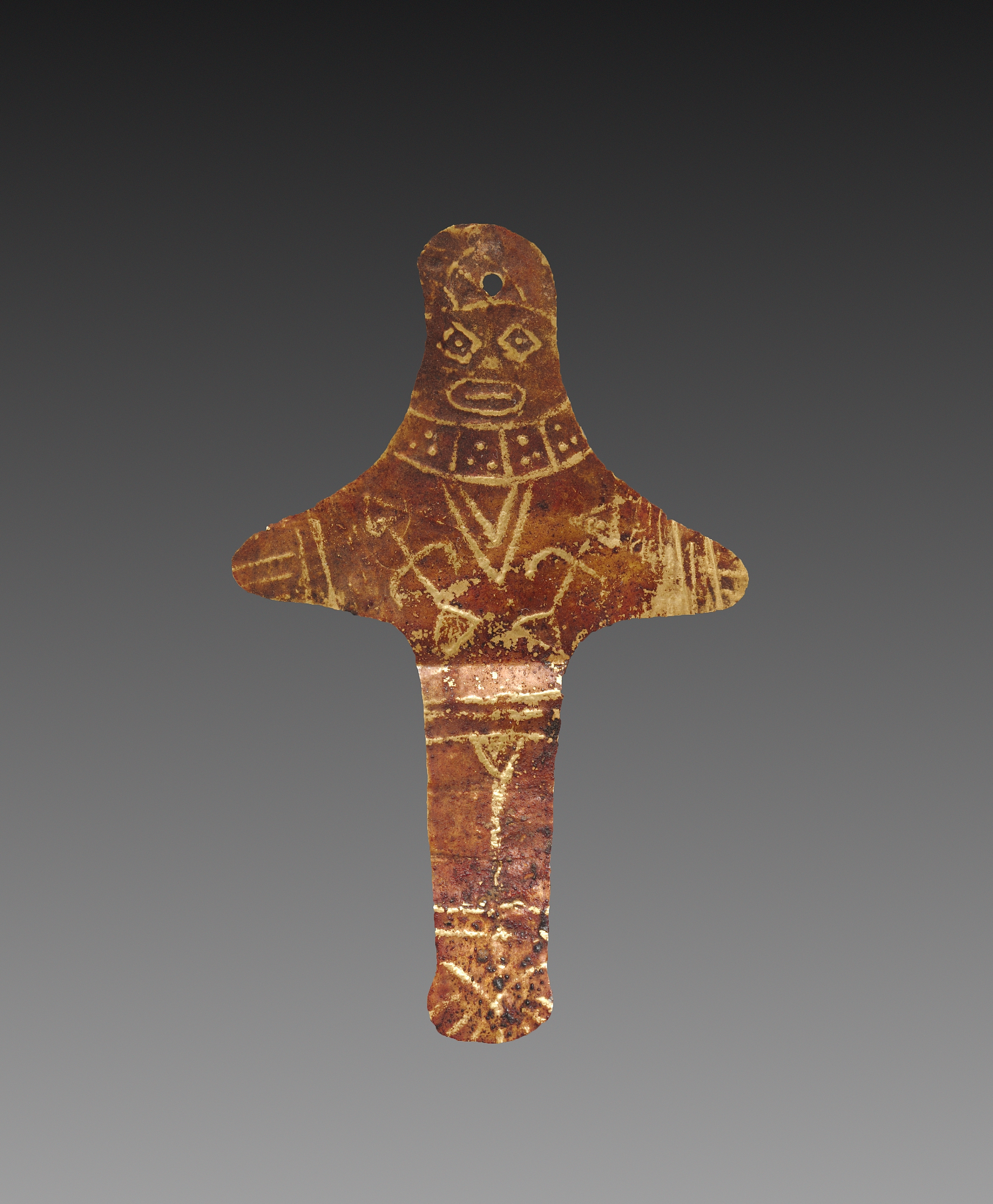
A small embossed figure wearing a cap, a tunic patterned with birds and a necklace of spondylus shell. A whole costume compressed into a sheet of metal.
× px · Unmodified source file
Small archival scan: best for reference and screen use, not large prints.
Open in StudioSource & licensing
- Creator / date
- Peru, South Coast, Paracas, maker unknown · c. 300 BCE–200 CE
- Source credit
- The Cleveland Museum of Art, 1940.512. Open Access.
- Usage notes
- Released by the Cleveland Museum of Art under CC0 1.0. Credit to the museum is encouraged; CC0 does not imply endorsement.
- Original file
- × px · JPG · 0.0 MB
- Source checked
- 2026-11-04 · editorial approval separate
Public-domain status is reported by the linked source and may vary by jurisdiction. Check the source record for your intended use. No exclusive rights or Visual Bounty marketplace license are offered for these images.