← Open Collections

Public-domain source library

Netsuke and Inro: Carved and Lacquered

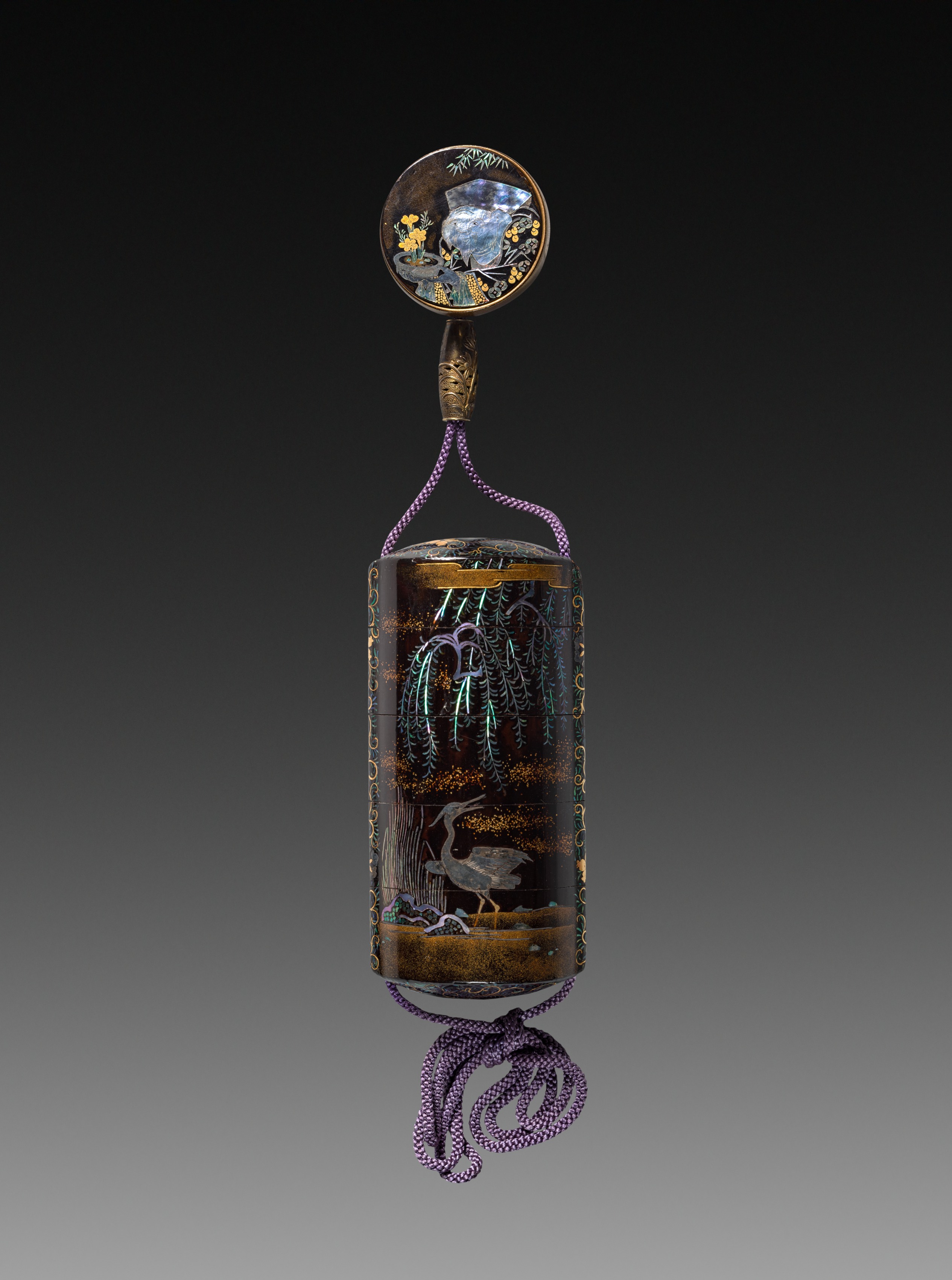
The netsuke is a toggle the size of a thumb, and everything about it follows from that: no cord, no case, no wearer. Carvers worked ivory and boxwood into animals, demons and gods whose surfaces had to stay smooth enough to slip through a sash, which is why the compositions coil and close. These eleven inro, netsuke and fittings, mostly Edo period, also show the lacquerer’s half of the same dress: sprinkled gold built up in layers until a willow shimmers.

Explore the works and their histories through the original collections and institutions that preserve them. Source images are available to download, with creative exploration in Studio.

Works
11
Sources
1
Makers
3
Dates
1700–1868 · 1700s · late 1800s
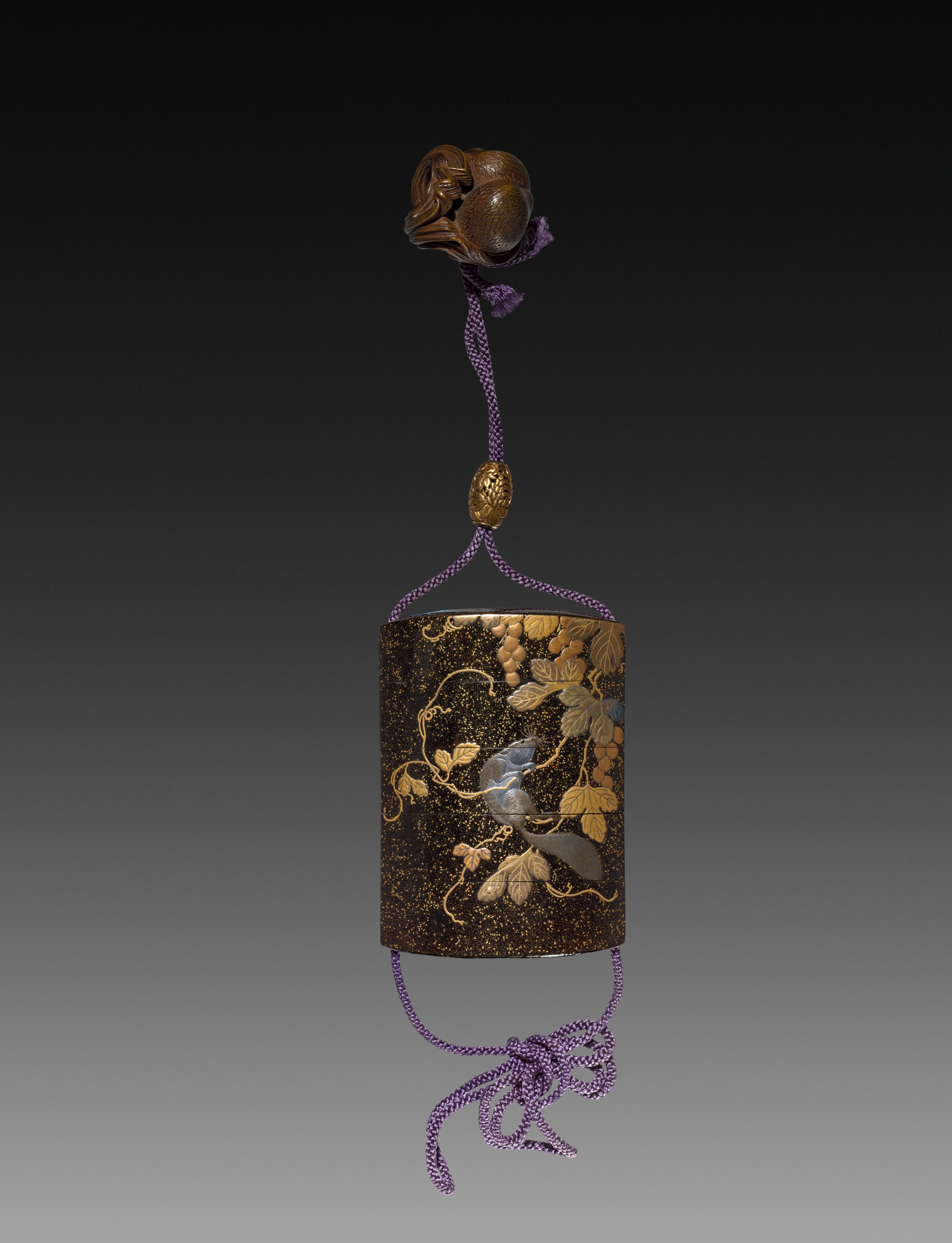
Small compartments joined by a woven silk cord, made to hang from the obi of a kimono. Squirrels move through grapevines in sprinkled gold on a lacquer ground.

1700–1868

Inro (Case) with Squirrels in Grapevines

Small compartments joined by a woven silk cord, made to hang from the obi of a kimono. Squirrels move through grapevines in sprinkled gold on a lacquer ground.

2605 × 3400 px

Open in Studio
Source & credits
Creator / date
Japan, Edo period (1615–1868), maker unknown · 1700–1868
Source credit
The Cleveland Museum of Art, 1916.860. Open Access.
Original file
2605 × 3400 px · JPG
The iridescence comes from shell inlay used to form an egret among reeds beneath a weeping willow, set into sprinkled gold. The material produces the shimmer, not paint.

1700s

Inro (Case) with Egrets and Willows

The iridescence comes from shell inlay used to form an egret among reeds beneath a weeping willow, set into sprinkled gold. The material produces the shimmer, not paint.

2530 × 3400 px

Open in Studio
Source & credits
Creator / date
Japan, Edo period (1615–1868), maker unknown · 1700s
Source credit
The Cleveland Museum of Art, 1916.866. Open Access.
Original file
2530 × 3400 px · JPG
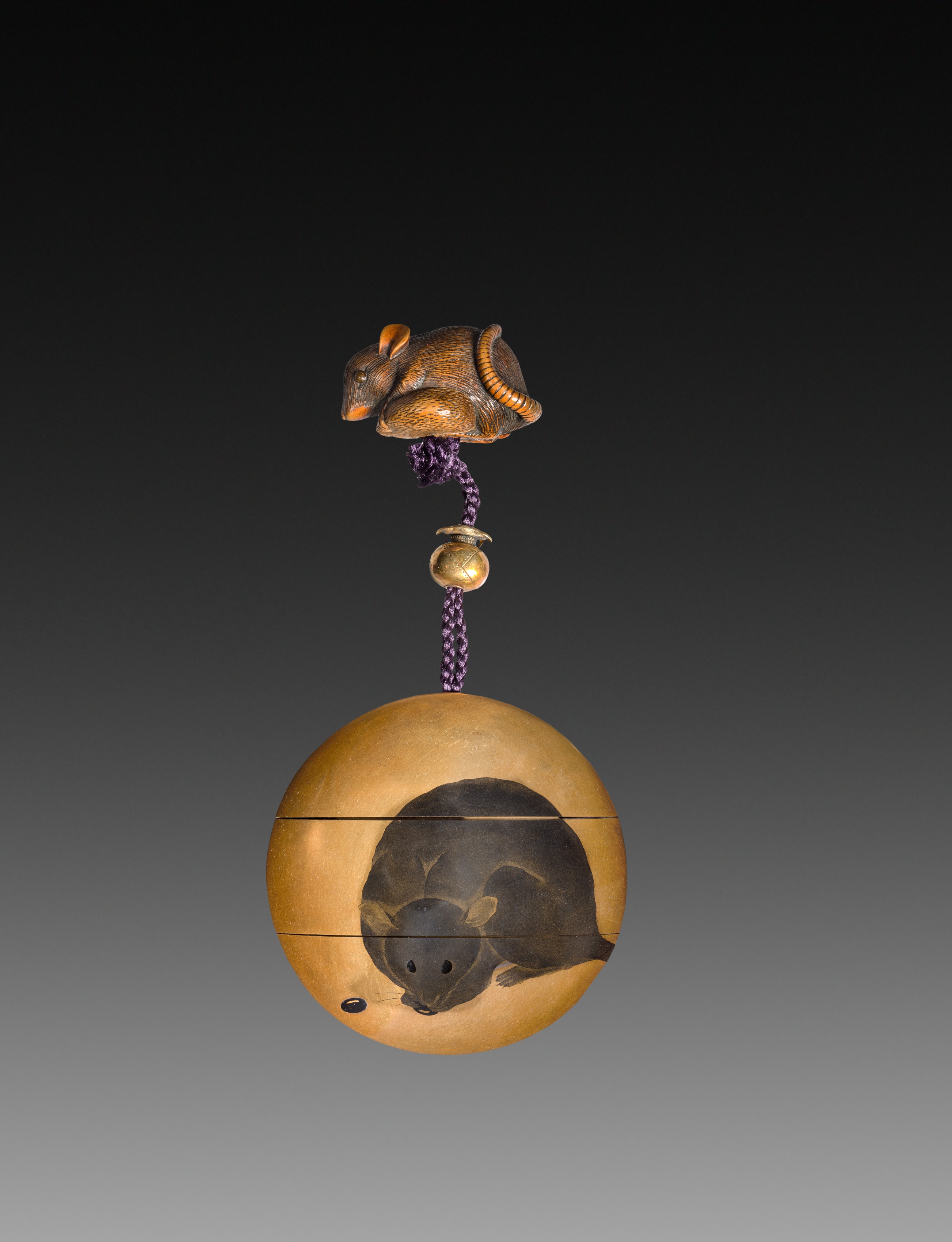
A round inro showing a single mouse feasting on beans, the theme elaborated by a metal ojime cast as a clapper. Meiji-period lacquerers prized this kind of small joke.

late 1800s

Inro (Case) with Mice and Beans

A round inro showing a single mouse feasting on beans, the theme elaborated by a metal ojime cast as a clapper. Meiji-period lacquerers prized this kind of small joke.

2606 × 3400 px

Open in Studio
Source & credits
Creator / date
Japan, Meiji period (1868–1912), maker unknown · late 1800s
Source credit
The Cleveland Museum of Art, 1916.885. Open Access.
Original file
2606 × 3400 px · JPG
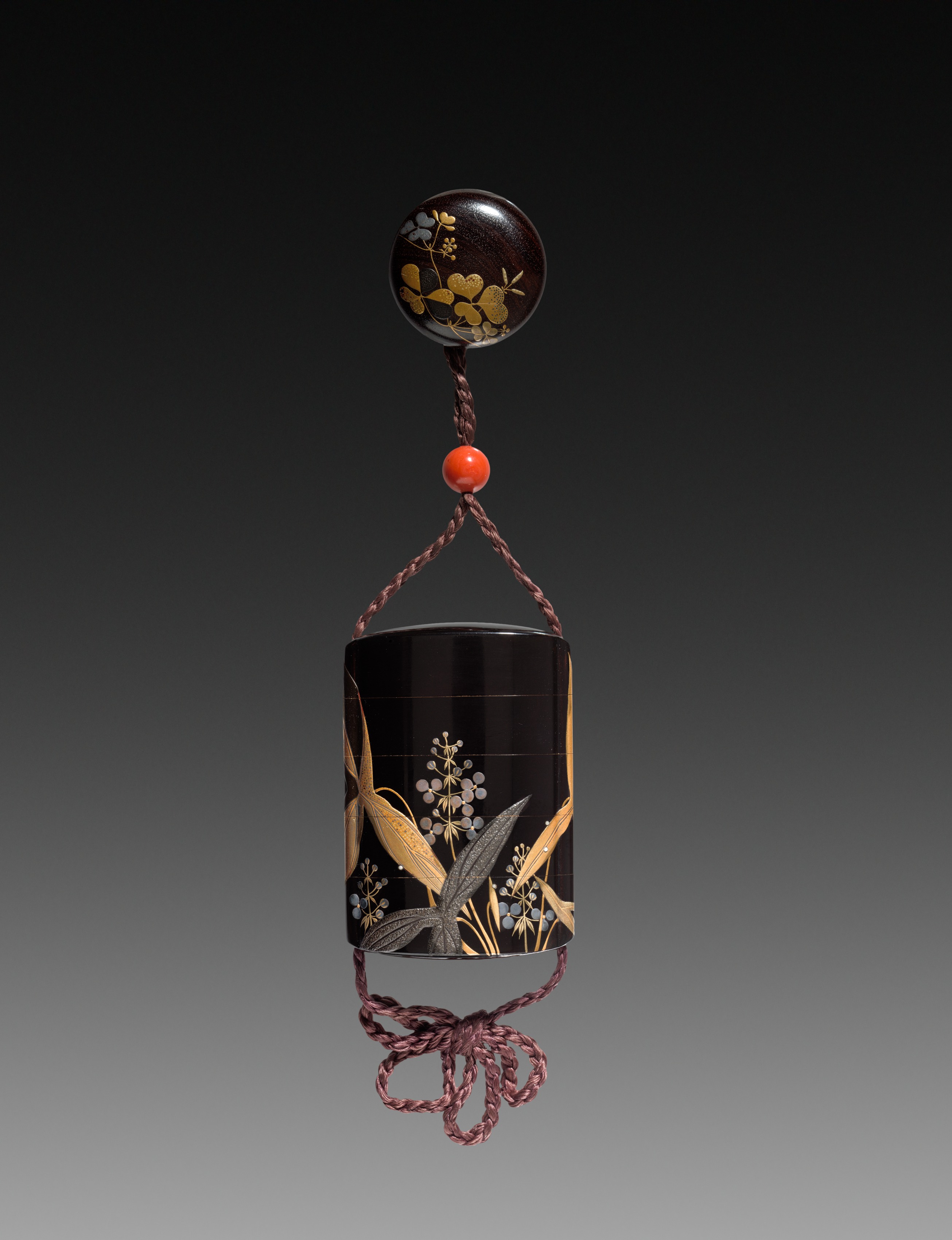
A complete set for wearing: the inro case with its compartments, the ojime cinch and the netsuke toggle that anchored the cord to the sash. Gold and silver powders are sprinkled into wet lacquer to build the design in layers.

later 1800s

Inro, Ojime, Netsuke

A complete set for wearing: the inro case with its compartments, the ojime cinch and the netsuke toggle that anchored the cord to the sash. Gold and silver powders are sprinkled into wet lacquer to build the design in layers.

2611 × 3400 px

Open in Studio
Source & credits
Creator / date
Shibata Zeshin (Japanese, 1807–1891) · later 1800s
Source credit
The Cleveland Museum of Art, 1916.848. Open Access.
Original file
2611 × 3400 px · JPG
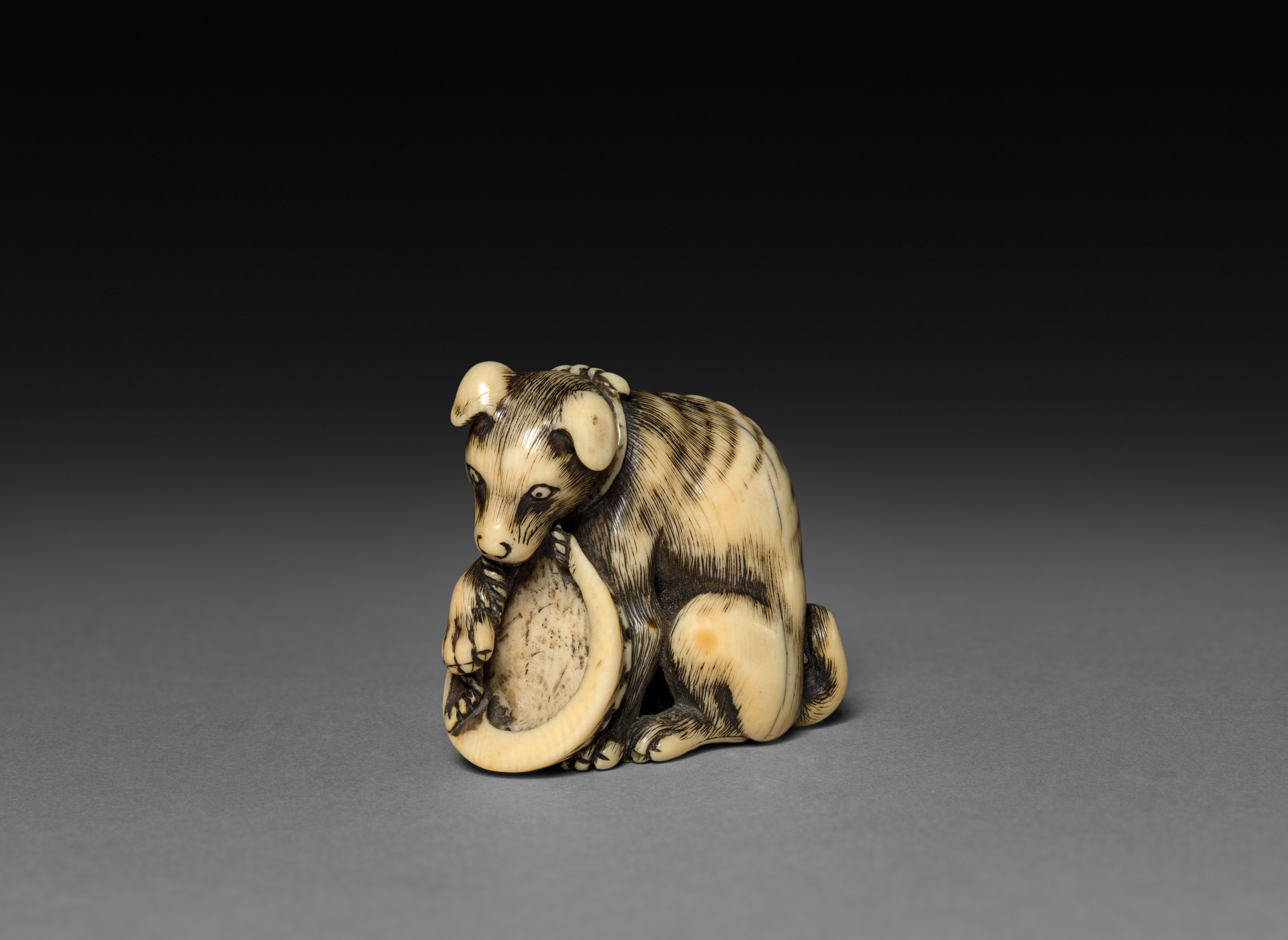
An ivory dog with a shell, carved so that the animal’s back forms the smooth surface that rides against the kimono. Netsuke subjects were often ordinary animals rather than gods.

1700s

Dog with Shell

An ivory dog with a shell, carved so that the animal’s back forms the smooth surface that rides against the kimono. Netsuke subjects were often ordinary animals rather than gods.

3400 × 2481 px

Open in Studio
Source & credits
Creator / date
Japan, Edo period (1615–1868), maker unknown · 1700s
Source credit
The Cleveland Museum of Art, 1947.652. Open Access.
Original file
3400 × 2481 px · JPG
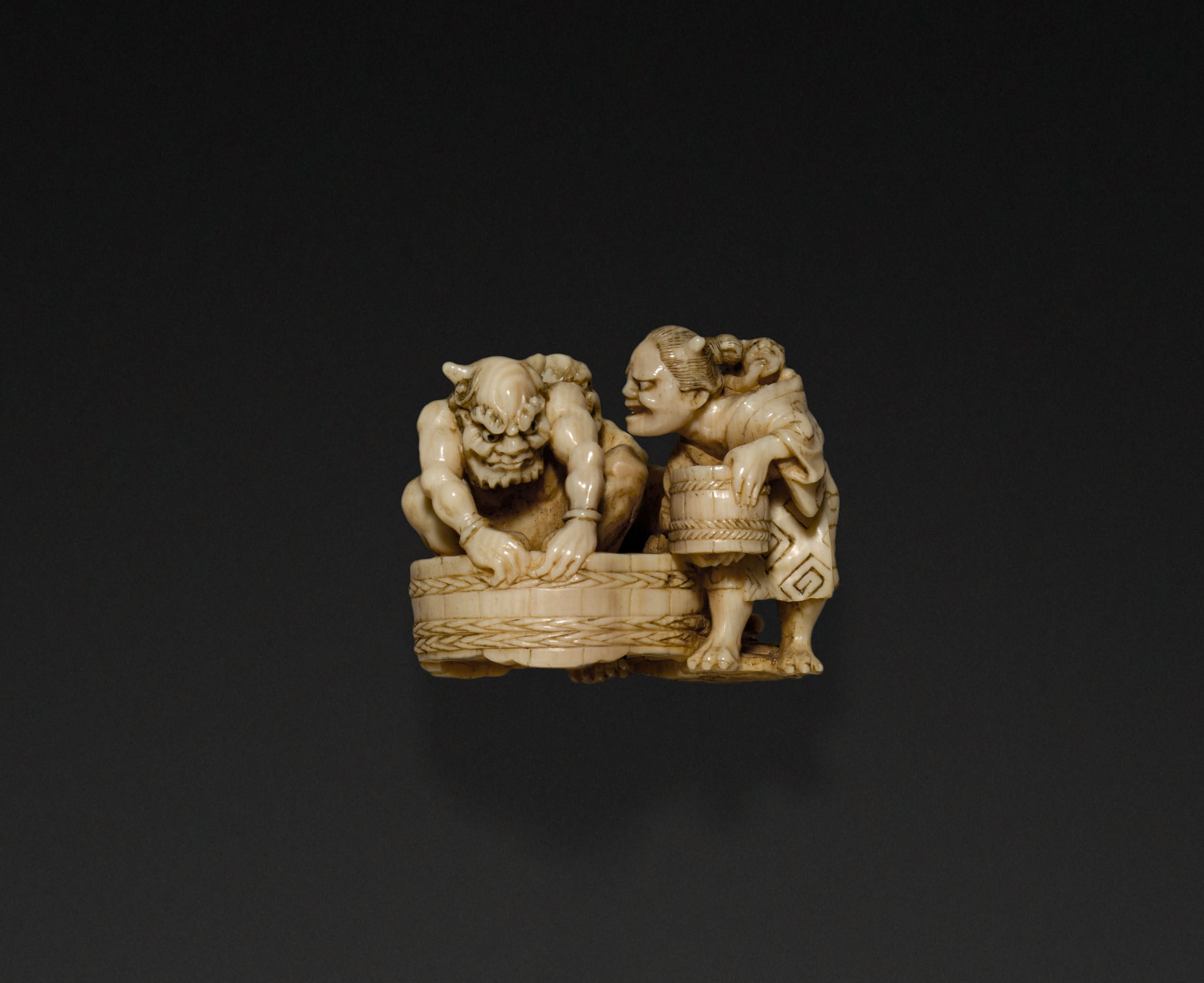
An ivory netsuke carved with a demon at its bath. The toggle had to be small, smooth and rounded enough to pass a sash cord without snagging, which set the terms of every composition.

c. 1890

Netsuke with Demon Bathing

An ivory netsuke carved with a demon at its bath. The toggle had to be small, smooth and rounded enough to pass a sash cord without snagging, which set the terms of every composition.

2497 × 2039 px

Open in Studio
Source & credits
Creator / date
Japan, Meiji period (1868–1912), maker unknown · c. 1890
Source credit
The Cleveland Museum of Art, 1920.490. Open Access.
Original file
2497 × 2039 px · JPG
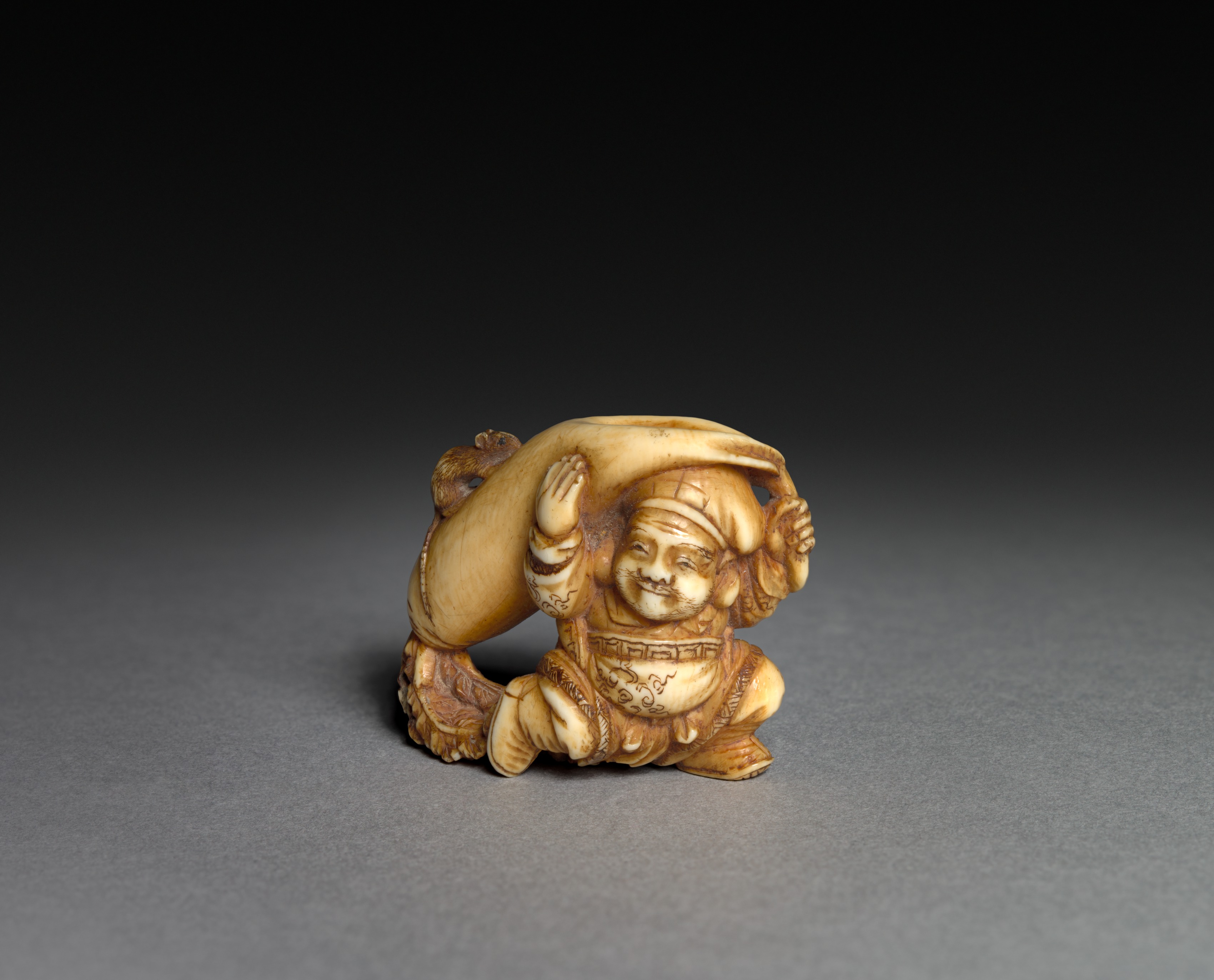
Daiitoku, one of the fierce kings who guard the Buddhist law, carved at a scale of a few centimetres. The figure’s rage is compressed into a form meant to be held.

early to mid-1800s

Daiitoku

Daiitoku, one of the fierce kings who guard the Buddhist law, carved at a scale of a few centimetres. The figure’s rage is compressed into a form meant to be held.

3400 × 2745 px

Open in Studio
Source & credits
Creator / date
Japan, Edo period (1615–1868), maker unknown · early to mid-1800s
Source credit
The Cleveland Museum of Art, 1920.487. Open Access.
Original file
3400 × 2745 px · JPG
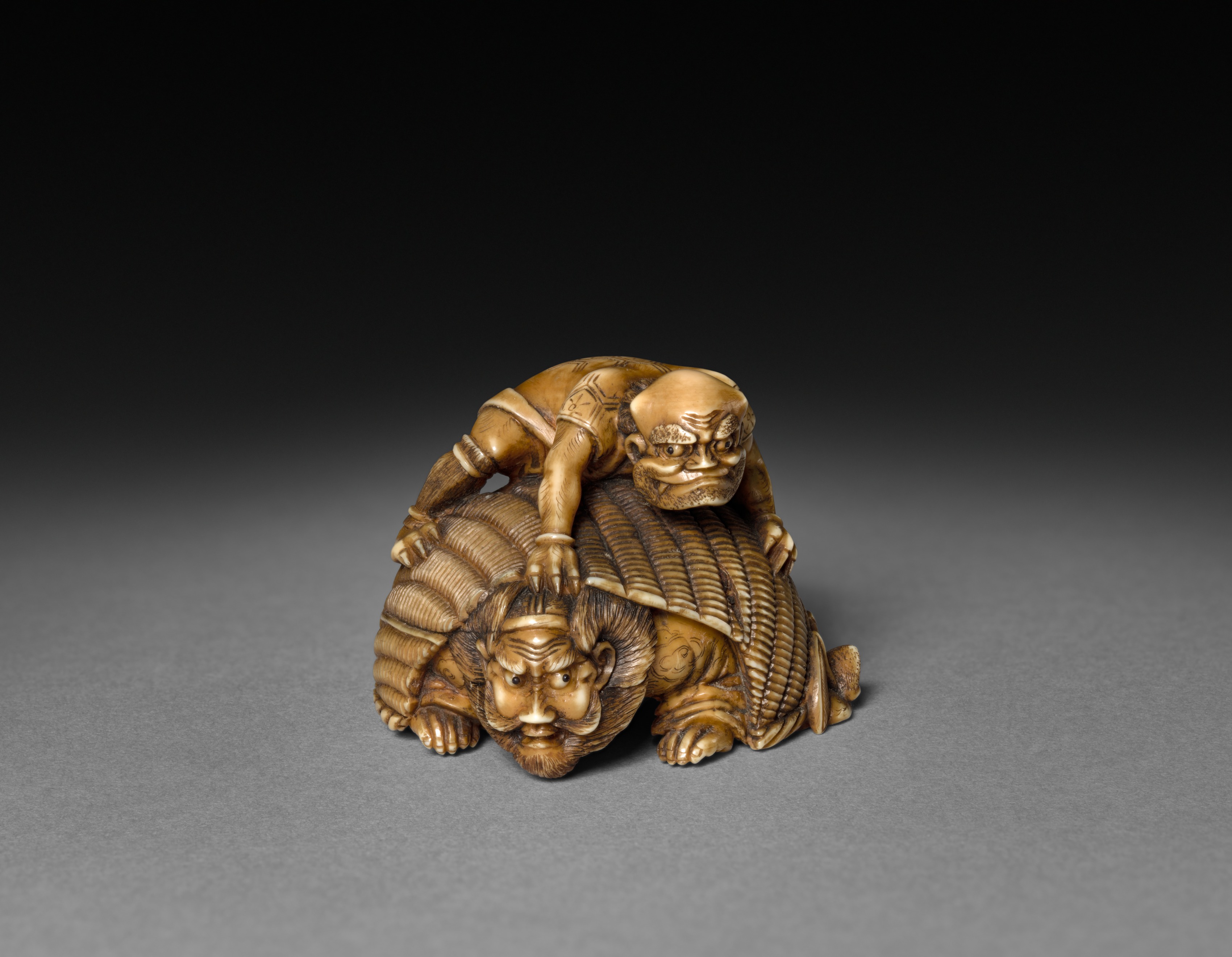
A demon hides from Shoki, the demon queller, who is not shown. The joke depends on a body that is not there.

early to mid-1800s

Demon Covering Shoki

A demon hides from Shoki, the demon queller, who is not shown. The joke depends on a body that is not there.

3400 × 2641 px

Open in Studio
Source & credits
Creator / date
Japan, Edo period (1615–1868), maker unknown · early to mid-1800s
Source credit
The Cleveland Museum of Art, 1920.486. Open Access.
Original file
3400 × 2641 px · JPG
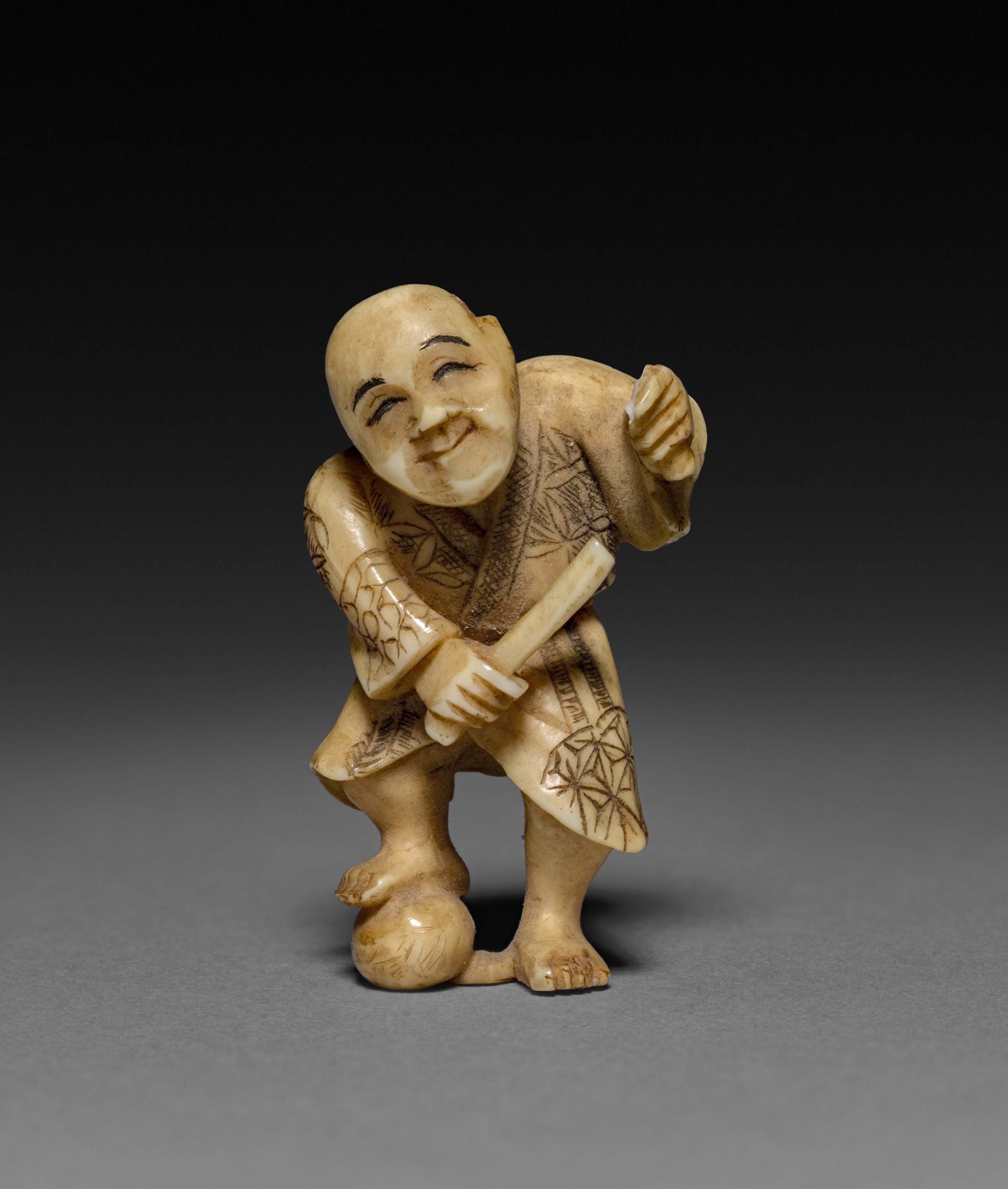
One of a pair of late netsuke, a man carved in the Meiji period when the toggle was already losing its function but not its craft.

1900s

Netsuke of Man

One of a pair of late netsuke, a man carved in the Meiji period when the toggle was already losing its function but not its craft.

2883 × 3400 px

Open in Studio
Source & credits
Creator / date
Japan, Meiji period (1868–1912), maker unknown · 1900s
Source credit
The Cleveland Museum of Art, 2000.1004. Open Access.
Original file
2883 × 3400 px · JPG
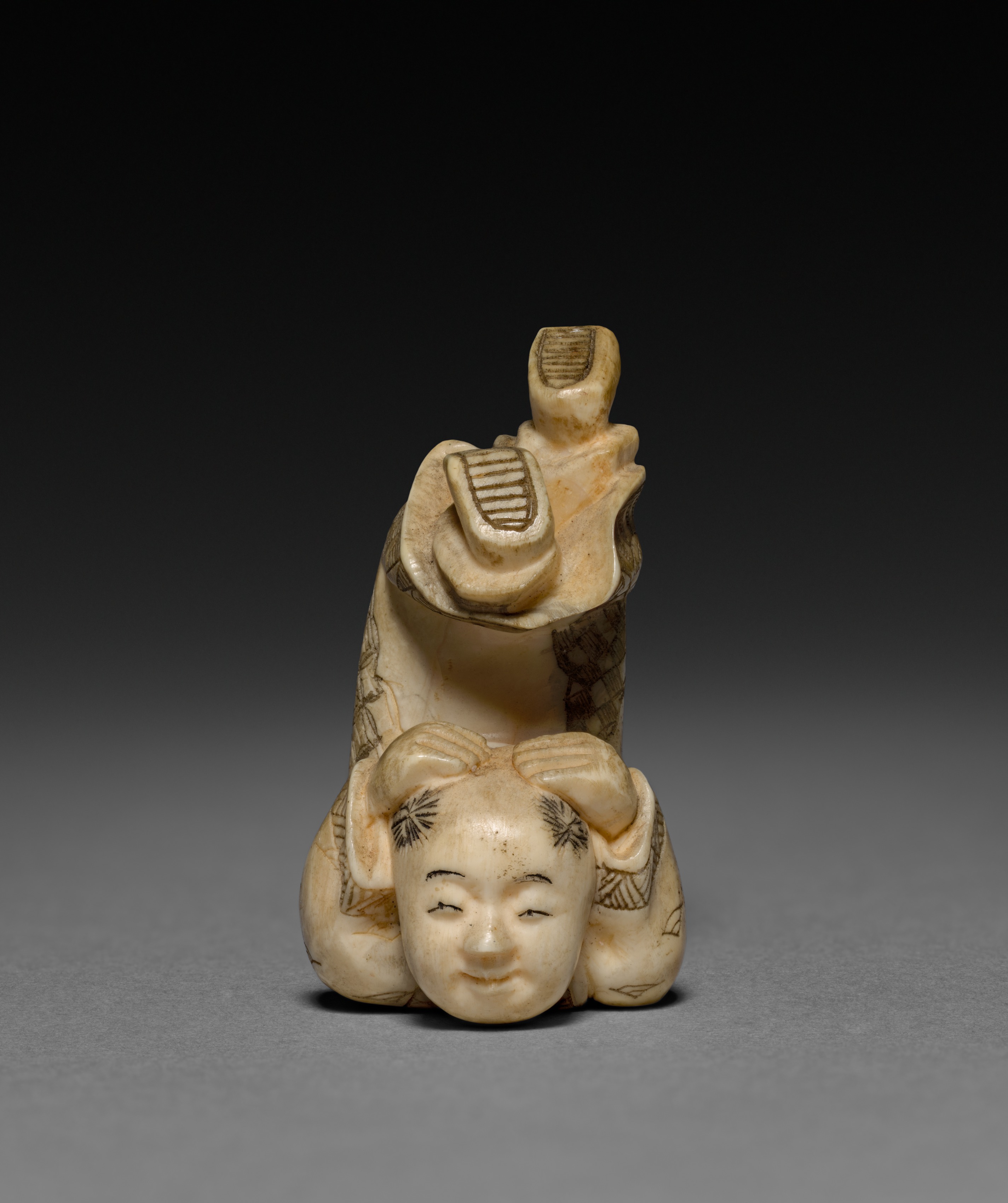
The child of the same pair, carved in ivory with pigment. Late netsuke were increasingly made for collectors rather than for wear.

early 1900s

Netsuke of Child

The child of the same pair, carved in ivory with pigment. Late netsuke were increasingly made for collectors rather than for wear.

2849 × 3400 px

Open in Studio
Source & credits
Creator / date
Japan, Meiji period (1868–1912), maker unknown · early 1900s
Source credit
The Cleveland Museum of Art, 2000.1005. Open Access.
Original file
2849 × 3400 px · JPG
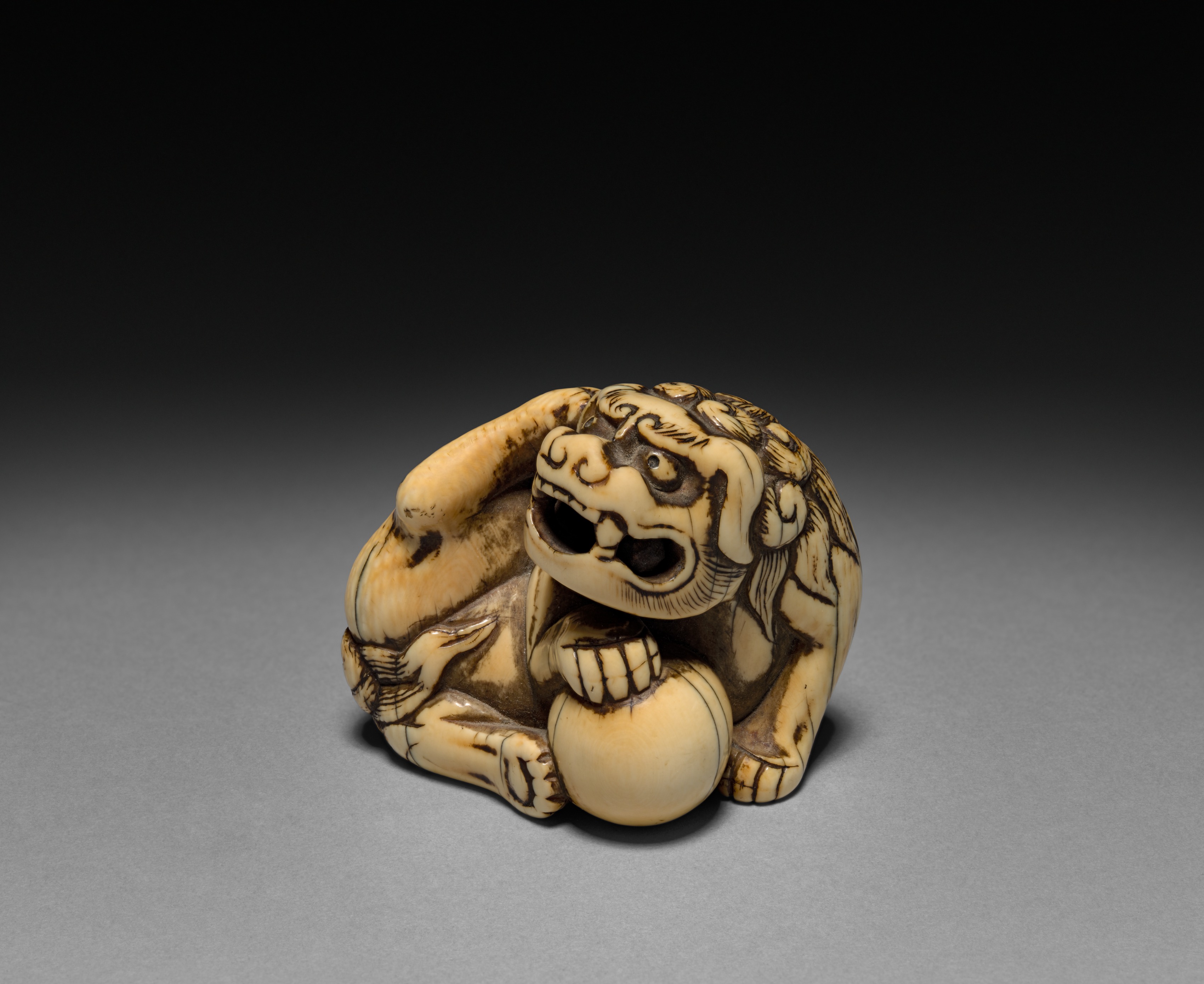
A shishi, the lion-like guardian, with a ball under its paw, carved in the Meiji period for a market that collected netsuke as objects rather than as fittings.

early 1900s

Chinese Lion with Ball

A shishi, the lion-like guardian, with a ball under its paw, carved in the Meiji period for a market that collected netsuke as objects rather than as fittings.

3400 × 2778 px

Open in Studio
Source & credits
Creator / date
Japan, Meiji period (1868–1912), maker unknown · early 1900s
Source credit
The Cleveland Museum of Art, 1939.393. Open Access.
Original file
3400 × 2778 px · JPG