← Open CollectionsPublic-domain source library
Illuminated: Leaf and Initial
Before print, the decorated page was the technology of the book: an initial large enough to hold a scene, a border of curling foliage, gold laid on gesso and burnished so that it caught candlelight. The sixteen leaves here come from lectionaries, psalters, choir books, bibles and books of hours made in Constantinople, Regensburg, Oxford, Siena, Florence, Verona and Paris between the eleventh and fifteenth centuries. Most survive as single sheets, cut from their bindings; what remains is the page as design.
Original means the unmodified digital file supplied by the linked archive, not an upscaled or reconstructed image. Sign in for free downloads. Studio uses a working preview up to 2048 px.
CC0 · Public domain · 1057–1063
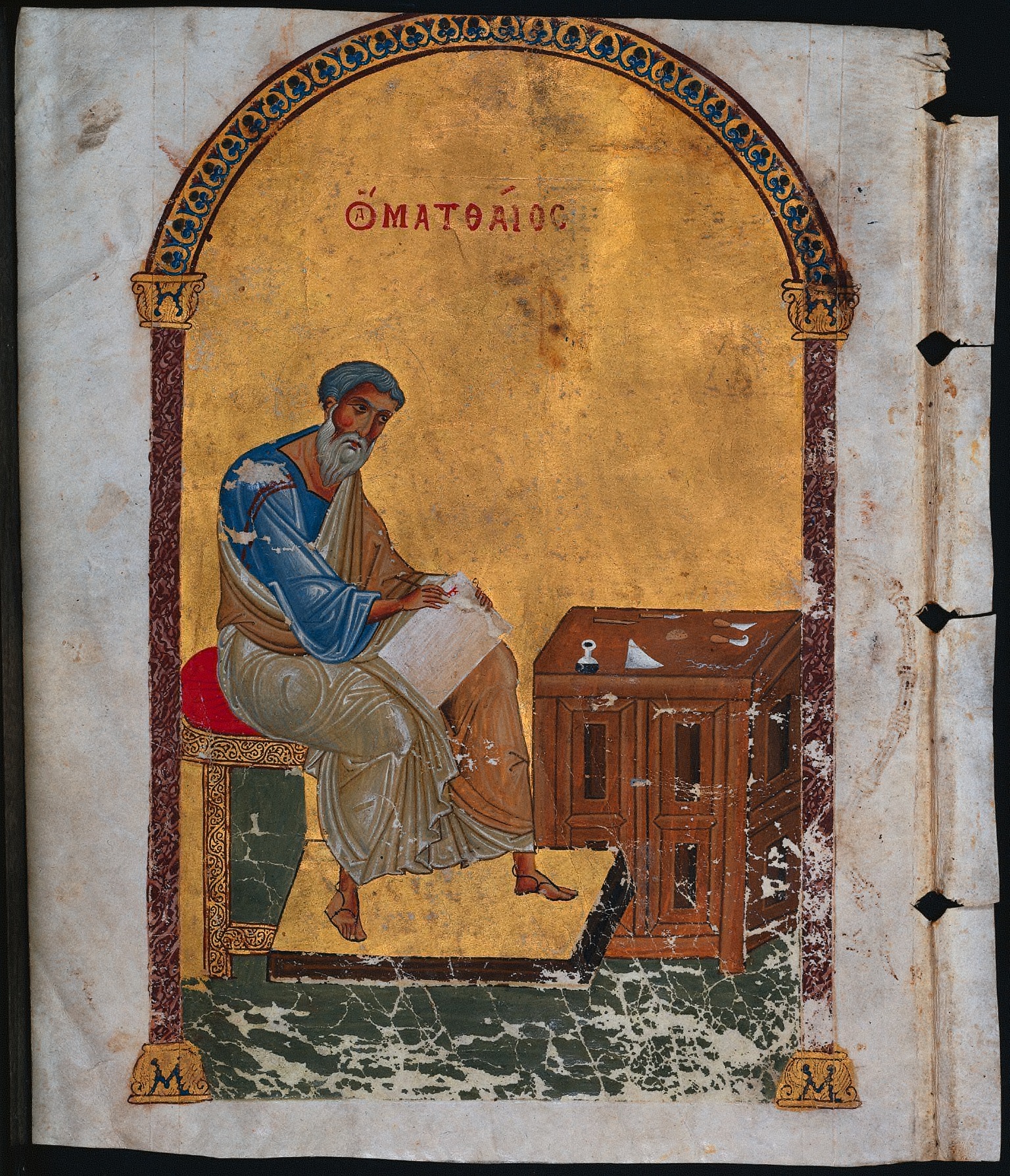
Leaf from a Lectionary with St. Matthew
A gospel leaf from a lectionary, made in Constantinople between 1057 and 1063 and later associated with the Holy Trinity Monastery at Chalke. Matthew appears as an evangelist portrait, a full page set before his text.
1536 × 1789 px · Unmodified source file
Open in StudioSource & licensing
- Creator / date
- Byzantium, Constantinople, maker unknown · 1057–1063
- Source credit
- The Cleveland Museum of Art, 1942.1512. Open Access.
- Usage notes
- Released by the Cleveland Museum of Art under CC0 1.0. Credit to the museum is encouraged; CC0 does not imply endorsement.
- Original file
- 1536 × 1789 px · JPG · 0.0 MB
- Source checked
- 2026-11-04 · editorial approval separate
CC0 · Public domain · 1057–1063
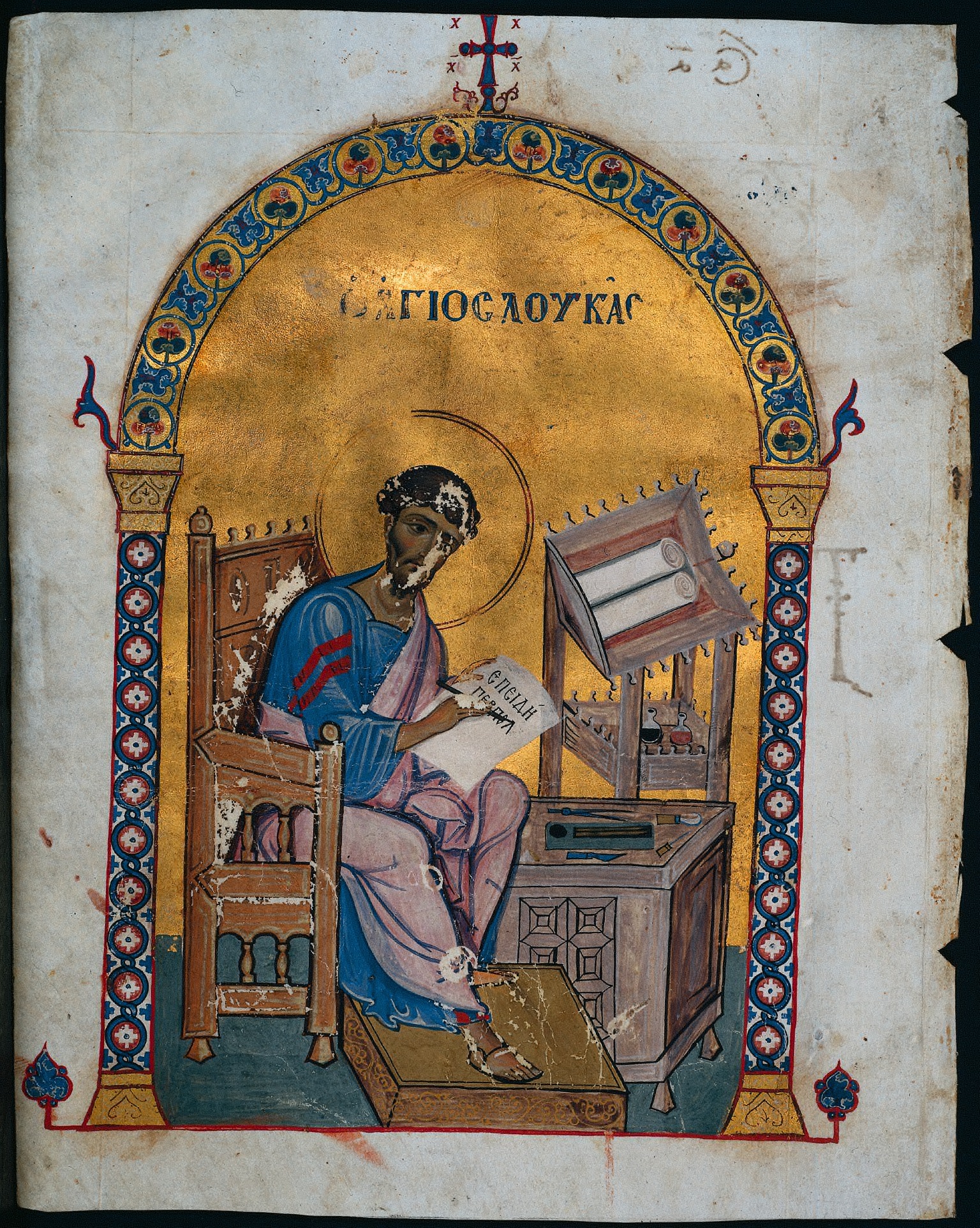
Leaf from a Lectionary with St. Luke
The companion leaf, with Luke in the same pose and palette. Both came from a lectionary, the service book in which the gospel readings are arranged by the calendar rather than by the sequence of the Gospels.
1536 × 1924 px · Unmodified source file
Open in StudioSource & licensing
- Creator / date
- Byzantium, Constantinople, maker unknown · 1057–1063
- Source credit
- The Cleveland Museum of Art, 1942.1511. Open Access.
- Usage notes
- Released by the Cleveland Museum of Art under CC0 1.0. Credit to the museum is encouraged; CC0 does not imply endorsement.
- Original file
- 1536 × 1924 px · JPG · 0.0 MB
- Source checked
- 2026-11-04 · editorial approval separate
CC0 · Public domain · c. 1330
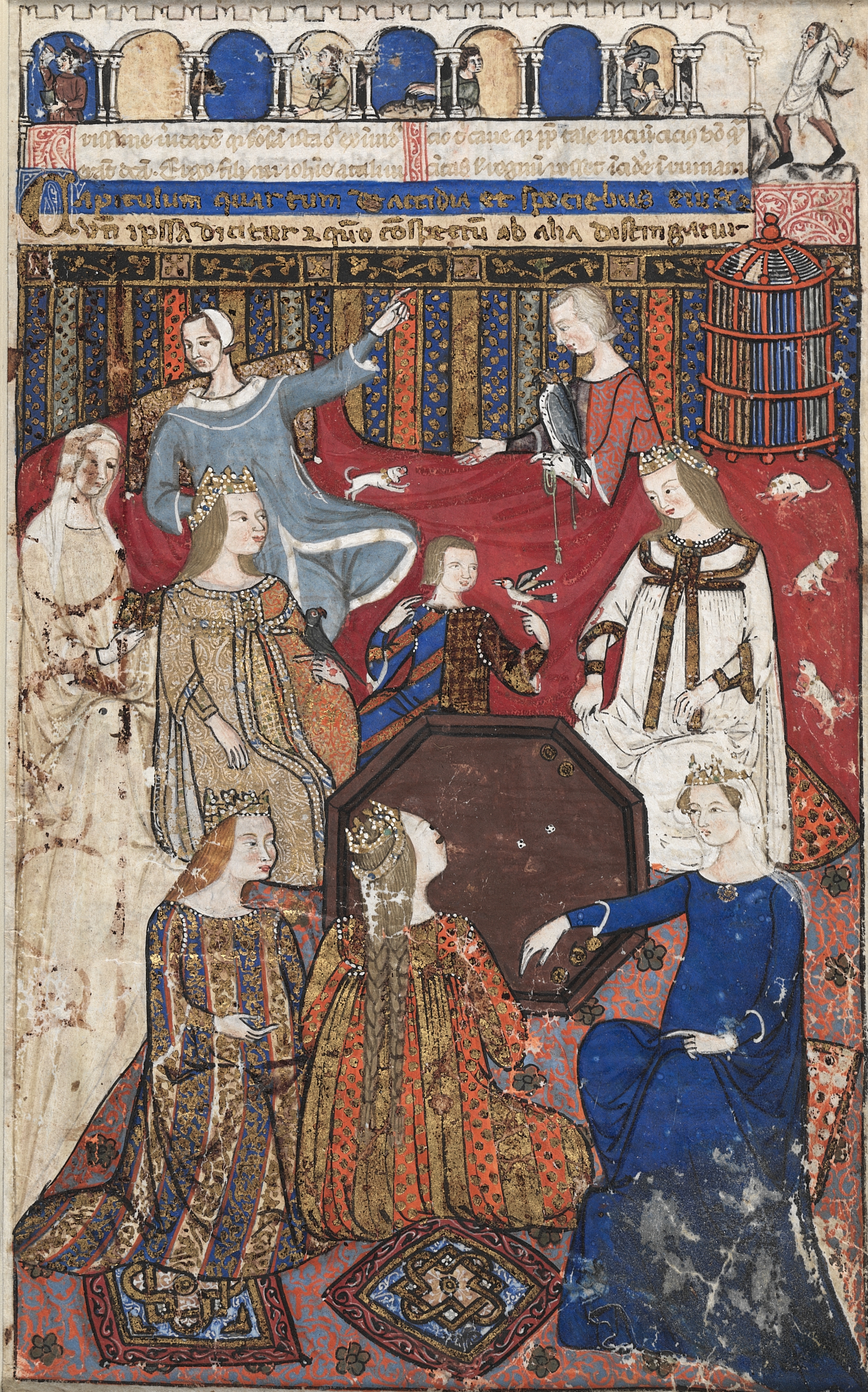
Leaf from a Cocharelli Treatise on the Vices: Acedia and Her Court
A leaf from the Cocharelli treatise on the vices, written before 1324 by a Genoese family as a moral lesson for the next generation. Acedia, sloth, appears with her court, and the margins carry as much of the instruction as the text.
2120 × 3400 px · Unmodified source file
Open in StudioSource & licensing
- Creator / date
- Italy, Genoa, maker unknown · c. 1330
- Source credit
- The Cleveland Museum of Art, 1953.152. Open Access.
- Usage notes
- Released by the Cleveland Museum of Art under CC0 1.0. Credit to the museum is encouraged; CC0 does not imply endorsement.
- Original file
- 2120 × 3400 px · JPG · 0.0 MB
- Source checked
- 2026-11-04 · editorial approval separate
CC0 · Public domain · c. 1470
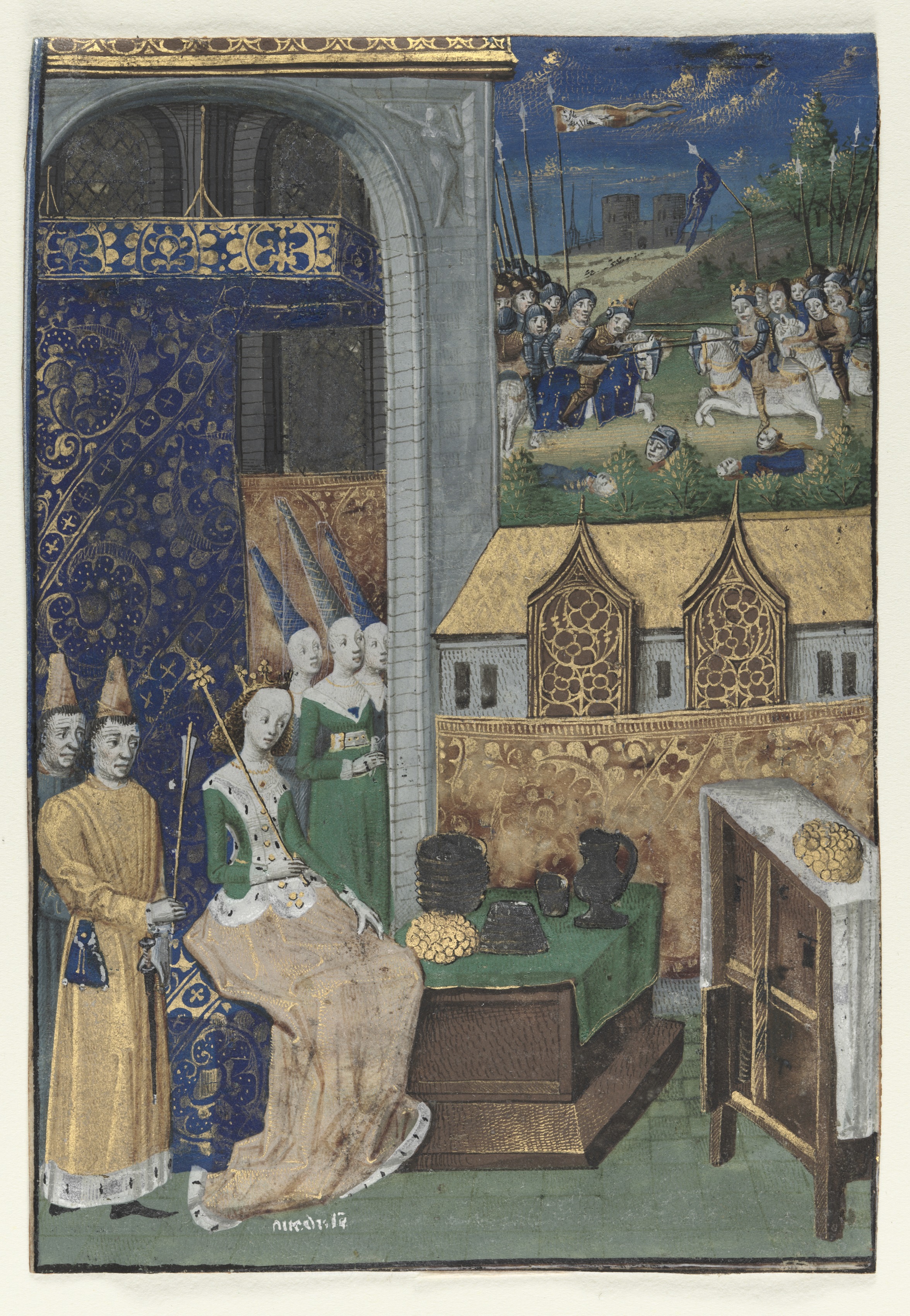
Single Miniature Excised from Boccaccio's Des Cleres et nobles femmes: Queen Medusa and Her Court
A miniature cut from a French translation of Boccaccio’s lives of famous women. Queen Medusa and her court are shown in the dress of the 1470s, so that antiquity is imagined as a contemporary court.
2352 × 3400 px · Unmodified source file
Open in StudioSource & licensing
- Creator / date
- Maître François (French) · c. 1470
- Source credit
- The Cleveland Museum of Art, 1924.1015. Open Access.
- Usage notes
- Released by the Cleveland Museum of Art under CC0 1.0. Credit to the museum is encouraged; CC0 does not imply endorsement.
- Original file
- 2352 × 3400 px · JPG · 0.0 MB
- Source checked
- 2026-11-04 · editorial approval separate
CC0 · Public domain · 1084
Leaf from a Greek Psalter and New Testament
Half the page is a miniature of the Apostle Peter; below it, thirteen lines of Greek are introduced by a pi formed from figures of Christ and David. The initial works as picture rather than ornament.
2274 × 3400 px · Unmodified source file
Open in StudioSource & licensing
- Creator / date
- Byzantium, Constantinople, maker unknown · 1084
- Source credit
- The Cleveland Museum of Art, 1950.154. Open Access.
- Usage notes
- Released by the Cleveland Museum of Art under CC0 1.0. Credit to the museum is encouraged; CC0 does not imply endorsement.
- Original file
- 2274 × 3400 px · JPG · 0.0 MB
- Source checked
- 2026-11-04 · editorial approval separate
CC0 · Public domain · c. 1332
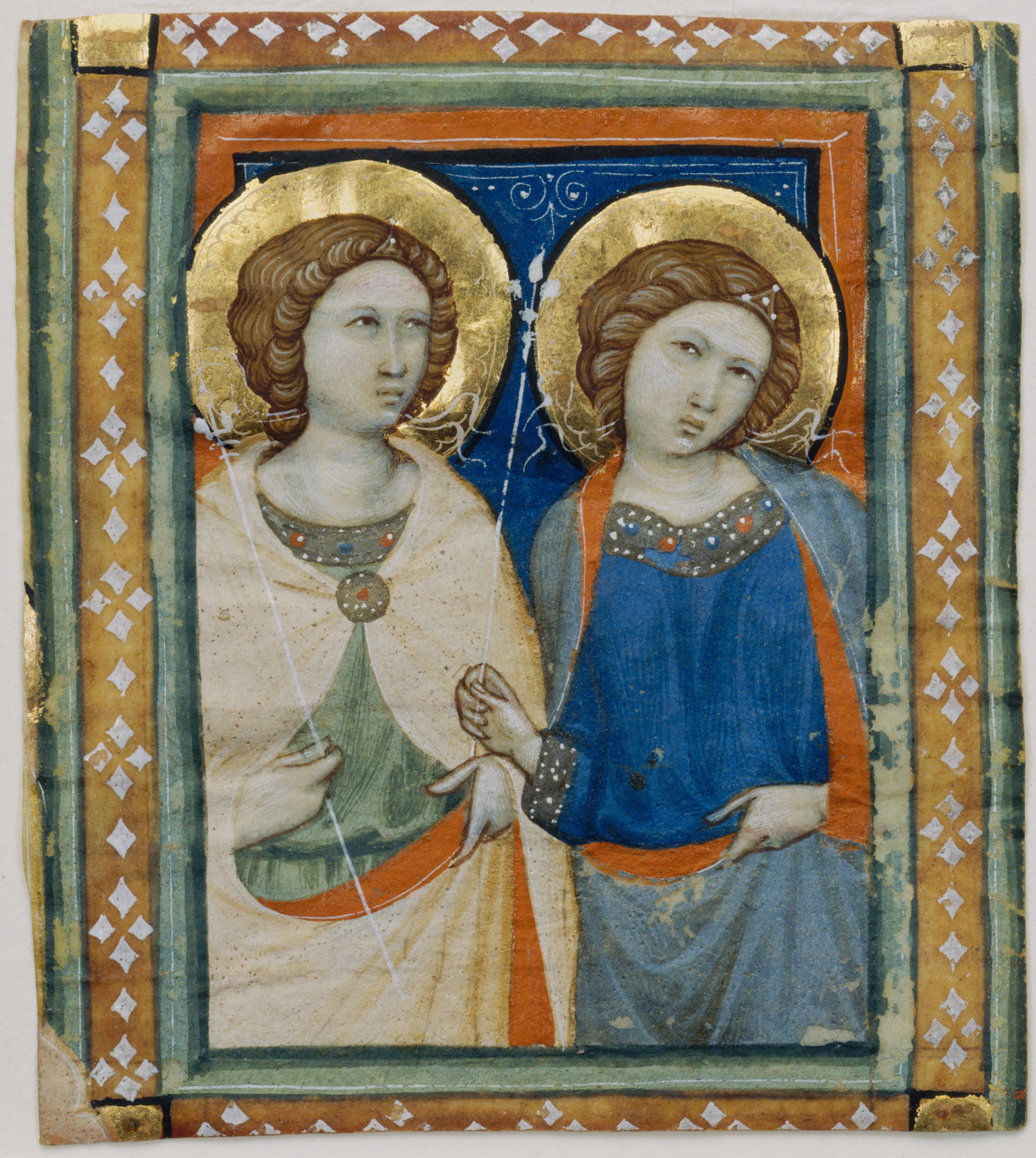
Illumination Excised from a Choir Book: Two Female Angels
Cut from a choir book, the miniature shows two figures whose golden halos mark them as saints and whose lily sceptres mark them as virgins. It is attributed to the Sienese painter Niccolò di ser Sozzo Tegliacci.
3041 × 3400 px · Unmodified source file
Open in StudioSource & licensing
- Creator / date
- Niccolo di ser Sozzo Tegliacci (Italian, Siena, active 1334–63) · c. 1332
- Source credit
- The Cleveland Museum of Art, 1924.430. Open Access.
- Usage notes
- Released by the Cleveland Museum of Art under CC0 1.0. Credit to the museum is encouraged; CC0 does not imply endorsement.
- Original file
- 3041 × 3400 px · JPG · 0.0 MB
- Source checked
- 2026-11-04 · editorial approval separate
CC0 · Public domain · c. 1330
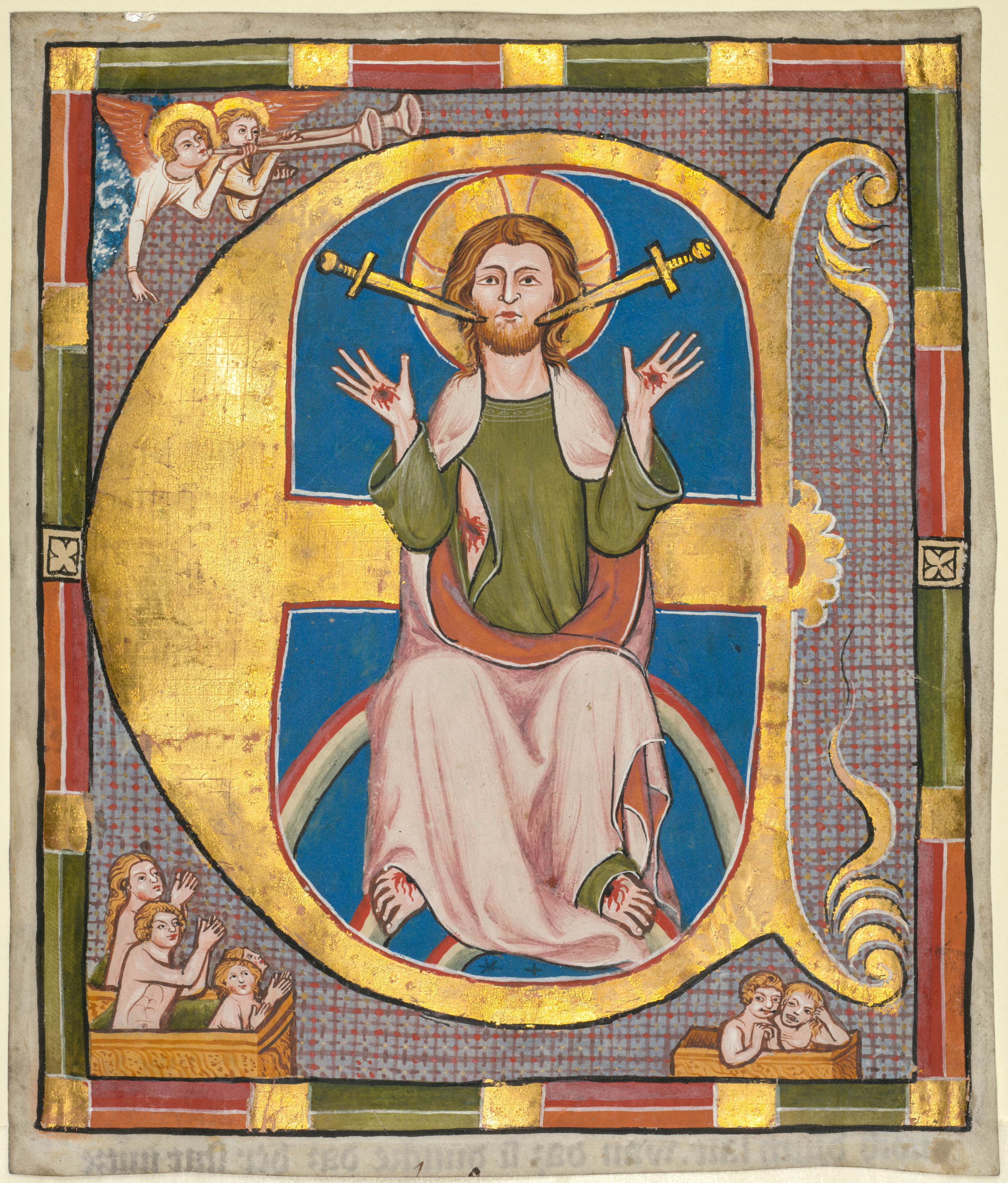
Initial E from a Municipal Law Book: The Last Judgment
The letter E serves as a frame for Christ as judge of the world, swords of justice issuing from his mouth. Romanesque initials of this kind turn a letter into architecture, the scene fitted to the shape of the stroke.
2898 × 3400 px · Unmodified source file
Open in StudioSource & licensing
- Creator / date
- Germany, Regensburg, maker unknown · c. 1330
- Source credit
- The Cleveland Museum of Art, 1953.637. Open Access.
- Usage notes
- Released by the Cleveland Museum of Art under CC0 1.0. Credit to the museum is encouraged; CC0 does not imply endorsement.
- Original file
- 2898 × 3400 px · JPG · 0.0 MB
- Source checked
- 2026-11-04 · editorial approval separate
CC0 · Public domain · c. 1230–40
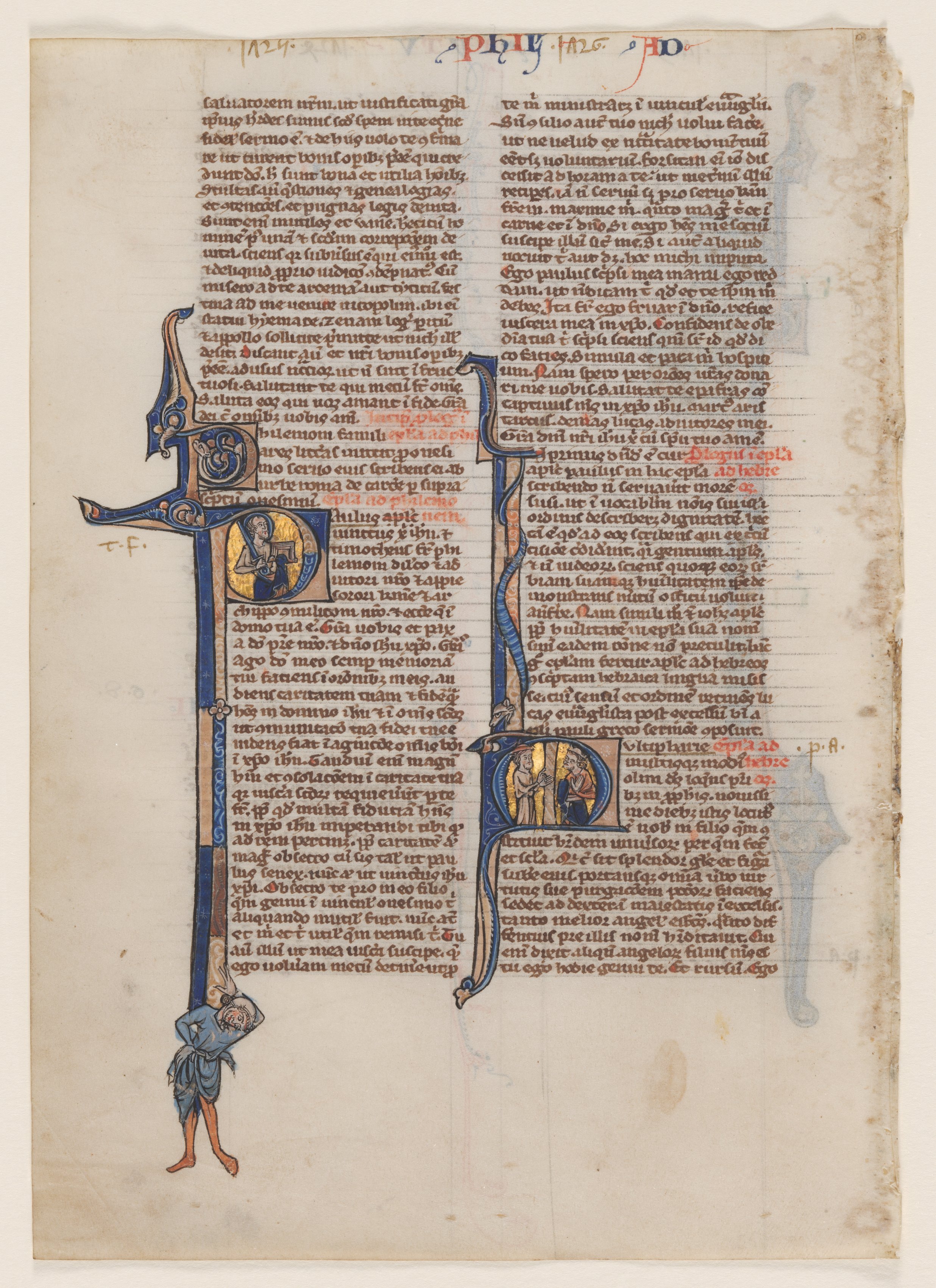
Leaf from a Latin Bible: Initial P: St. Paul with a Sword and a Book
A leaf from a Latin Bible opening the Pauline epistles: Paul holds sword and book inside the initial P, with a second initial below showing a Jew discoursing with a king. William de Brailes ran one of the first commercial book workshops in Oxford.
2472 × 3400 px · Unmodified source file
Open in StudioSource & licensing
- Creator / date
- William de Brailes (English, active c. 1230) · c. 1230–40
- Source credit
- The Cleveland Museum of Art, 2011.53. Open Access.
- Usage notes
- Released by the Cleveland Museum of Art under CC0 1.0. Credit to the museum is encouraged; CC0 does not imply endorsement.
- Original file
- 2472 × 3400 px · JPG · 0.0 MB
- Source checked
- 2026-11-04 · editorial approval separate
CC0 · Public domain · c. 1475–85
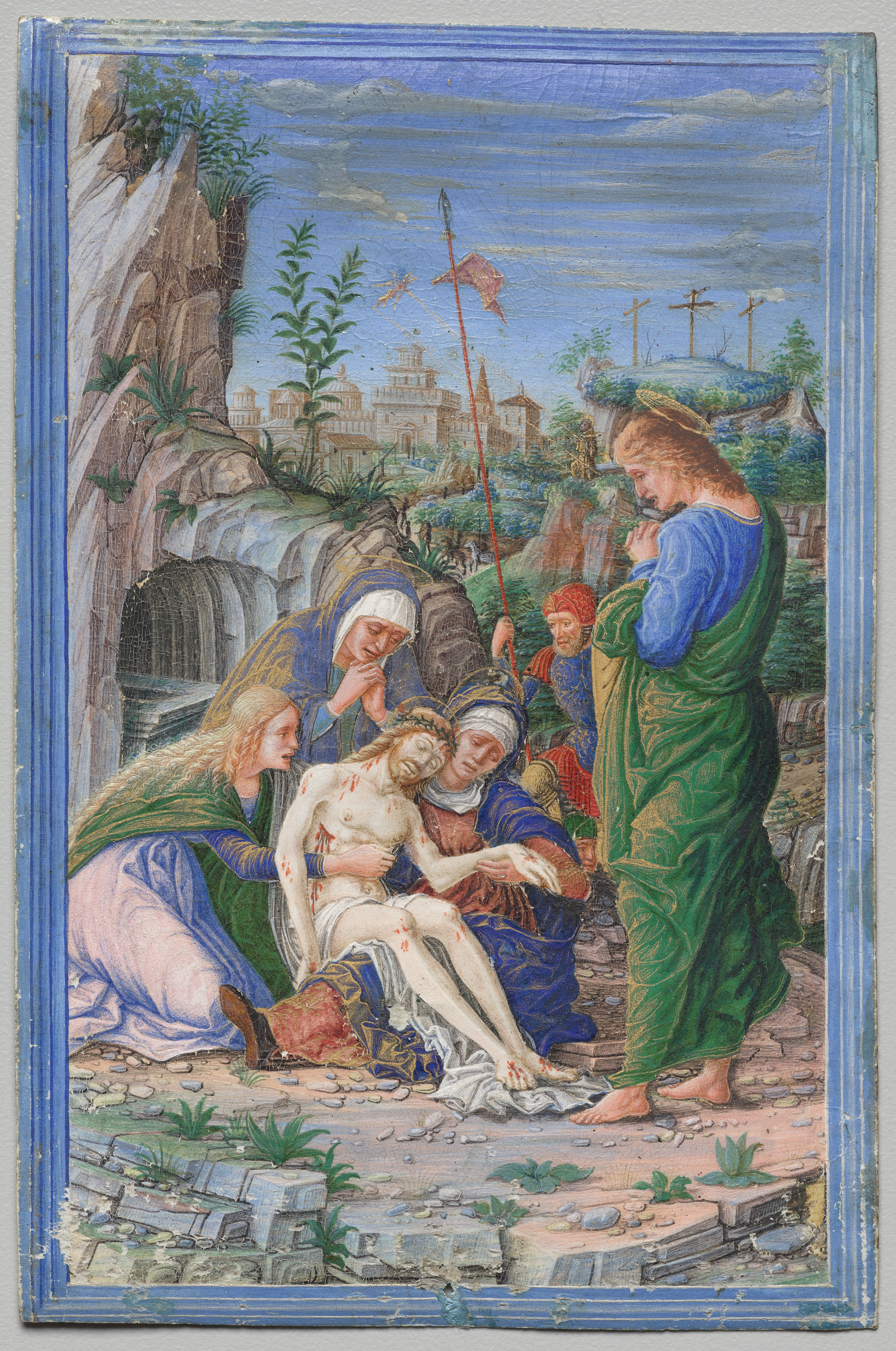
Single Leaf from a Book of Hours: Pieta
A leaf from the Prayers to the Virgin in a book of hours, where the text is written in the first person so that the reader prays in their own voice. The Pietà follows a composition by Mantegna.
2256 × 3400 px · Unmodified source file
Open in StudioSource & licensing
- Creator / date
- Francesco dai Libri (Italian, 1452–1506); Andrea Mantegna (Italian, about 1431–1506) · c. 1475–85
- Source credit
- The Cleveland Museum of Art, 1951.394. Open Access.
- Usage notes
- Released by the Cleveland Museum of Art under CC0 1.0. Credit to the museum is encouraged; CC0 does not imply endorsement.
- Original file
- 2256 × 3400 px · JPG · 0.0 MB
- Source checked
- 2026-11-04 · editorial approval separate
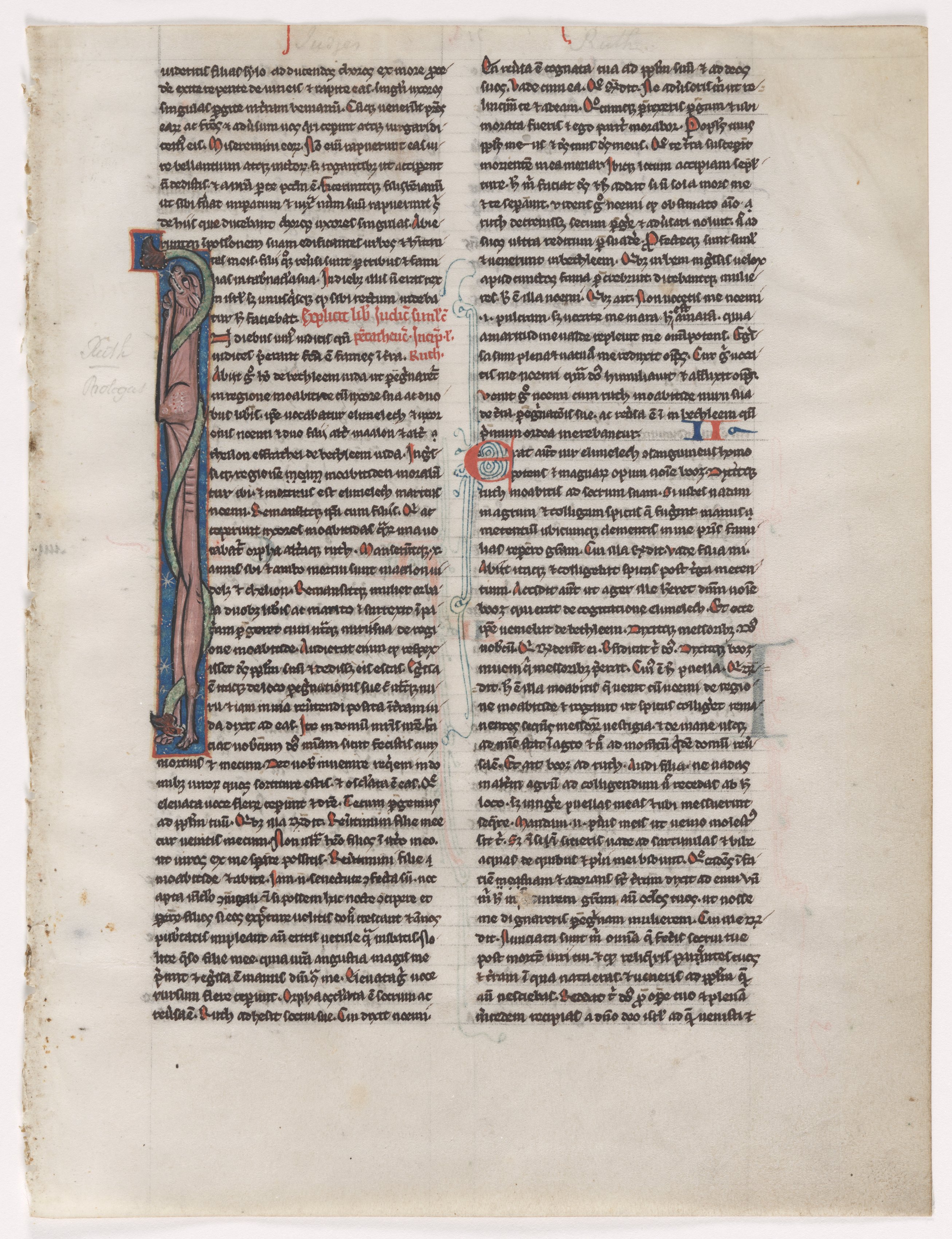
CC0 · Public domain · c. 1225–50
Initial I: Entwined Beast and Serpent: Leaf from a Bible (2 of 2 Excised Leaves)
The opening of the Book of Ruth is marked by an I filled with a beast and a serpent wound together, the letter built out of animal bodies in the English Romanesque manner.
2613 × 3400 px · Unmodified source file
Open in StudioSource & licensing
- Creator / date
- England, Glastonbury(?), 13th century, maker unknown · c. 1225–50
- Source credit
- The Cleveland Museum of Art, 2011.52. Open Access.
- Usage notes
- Released by the Cleveland Museum of Art under CC0 1.0. Credit to the museum is encouraged; CC0 does not imply endorsement.
- Original file
- 2613 × 3400 px · JPG · 0.0 MB
- Source checked
- 2026-11-04 · editorial approval separate
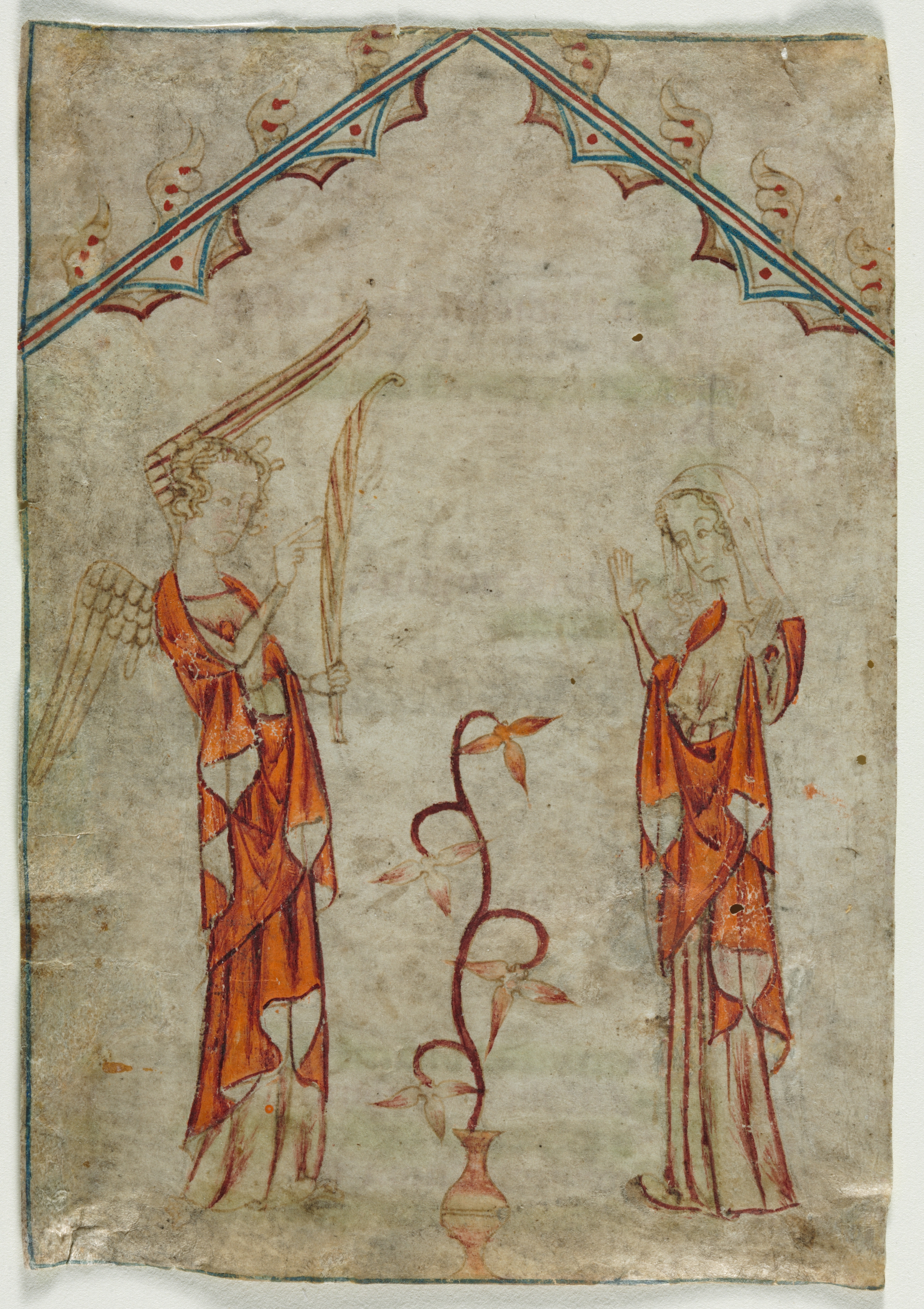
CC0 · Public domain · c. 1325–50
Leaf Excised from a Psalter: The Annunciation
A miniature excised from a psalter, showing the Annunciation. Psalters were the most common illuminated book in England, made for lay owners as well as religious houses.
2401 × 3400 px · Unmodified source file
Open in StudioSource & licensing
- Creator / date
- England, maker unknown · c. 1325–50
- Source credit
- The Cleveland Museum of Art, 1952.230. Open Access.
- Usage notes
- Released by the Cleveland Museum of Art under CC0 1.0. Credit to the museum is encouraged; CC0 does not imply endorsement.
- Original file
- 2401 × 3400 px · JPG · 0.0 MB
- Source checked
- 2026-11-04 · editorial approval separate
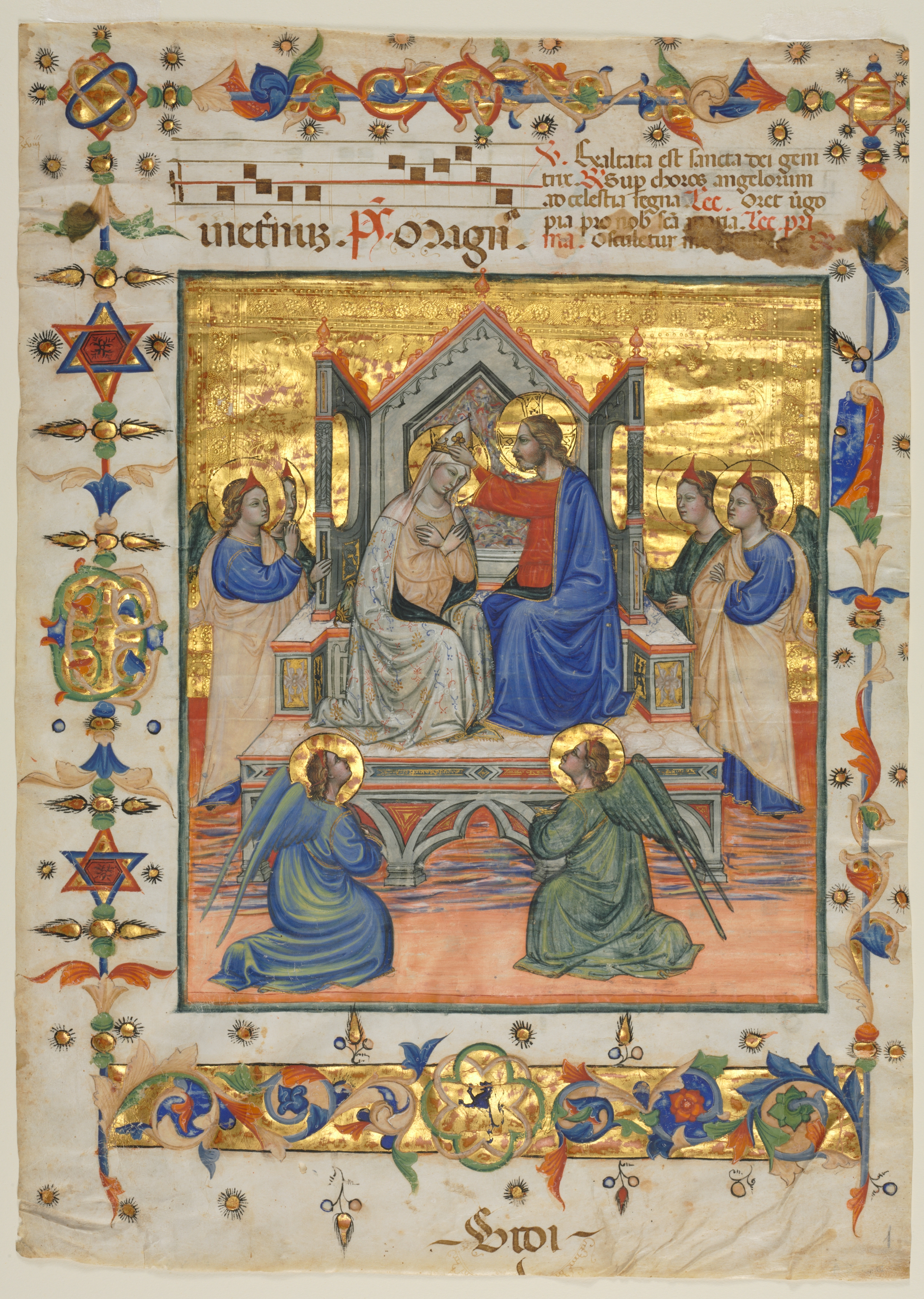
CC0 · Public domain · 1400s
Leaf from an Antiphonary: Coronation of the Virgin
A leaf from an antiphonary, the choir book that held the sung office. The illuminator is named for a triptych once behind the altar at Santa Maria del Ponte in Beffi, and his figures keep the weight of panel painting.
2418 × 3400 px · Unmodified source file
Open in StudioSource & licensing
- Creator / date
- Master of the Beffi Triptych (Italian, active 1390–1425) · 1400s
- Source credit
- The Cleveland Museum of Art, 1953.24. Open Access.
- Usage notes
- Released by the Cleveland Museum of Art under CC0 1.0. Credit to the museum is encouraged; CC0 does not imply endorsement.
- Original file
- 2418 × 3400 px · JPG · 0.0 MB
- Source checked
- 2026-11-04 · editorial approval separate
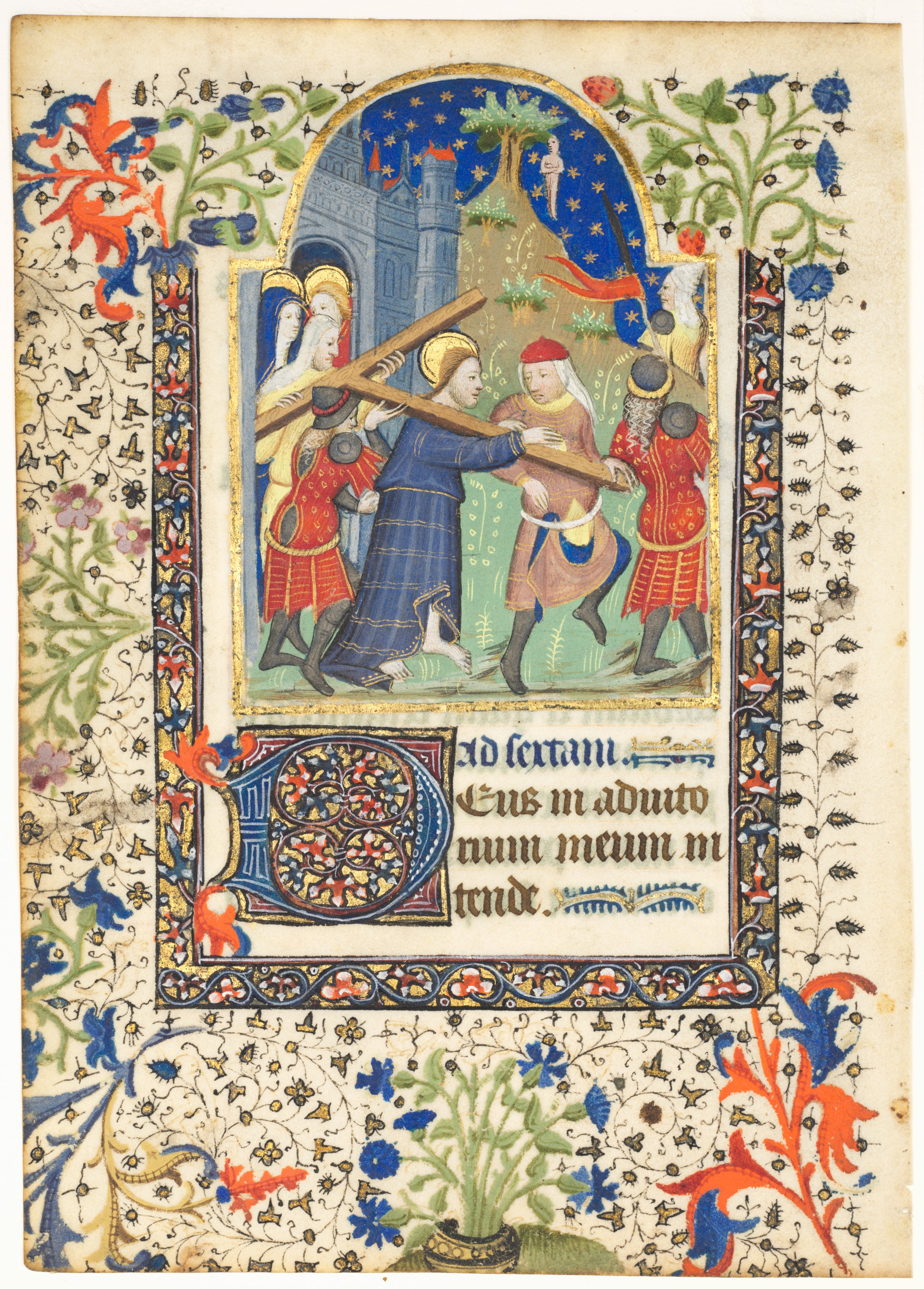
CC0 · Public domain · c. 1410–1420
Leaf from a Book of Hours: Christ Carrying the Cross (Sext, Hours of the Cross)
Books of hours usually introduced the Hours of the Cross with a single Crucifixion; this leaf belongs to a book that expanded the cycle into a Passion sequence carried across several pages.
2437 × 3400 px · Unmodified source file
Open in StudioSource & licensing
- Creator / date
- France, Brittany(?), 15th century, maker unknown · c. 1410–1420
- Source credit
- The Cleveland Museum of Art, 1999.127. Open Access.
- Usage notes
- Released by the Cleveland Museum of Art under CC0 1.0. Credit to the museum is encouraged; CC0 does not imply endorsement.
- Original file
- 2437 × 3400 px · JPG · 0.0 MB
- Source checked
- 2026-11-04 · editorial approval separate
CC0 · Public domain · 1371–77
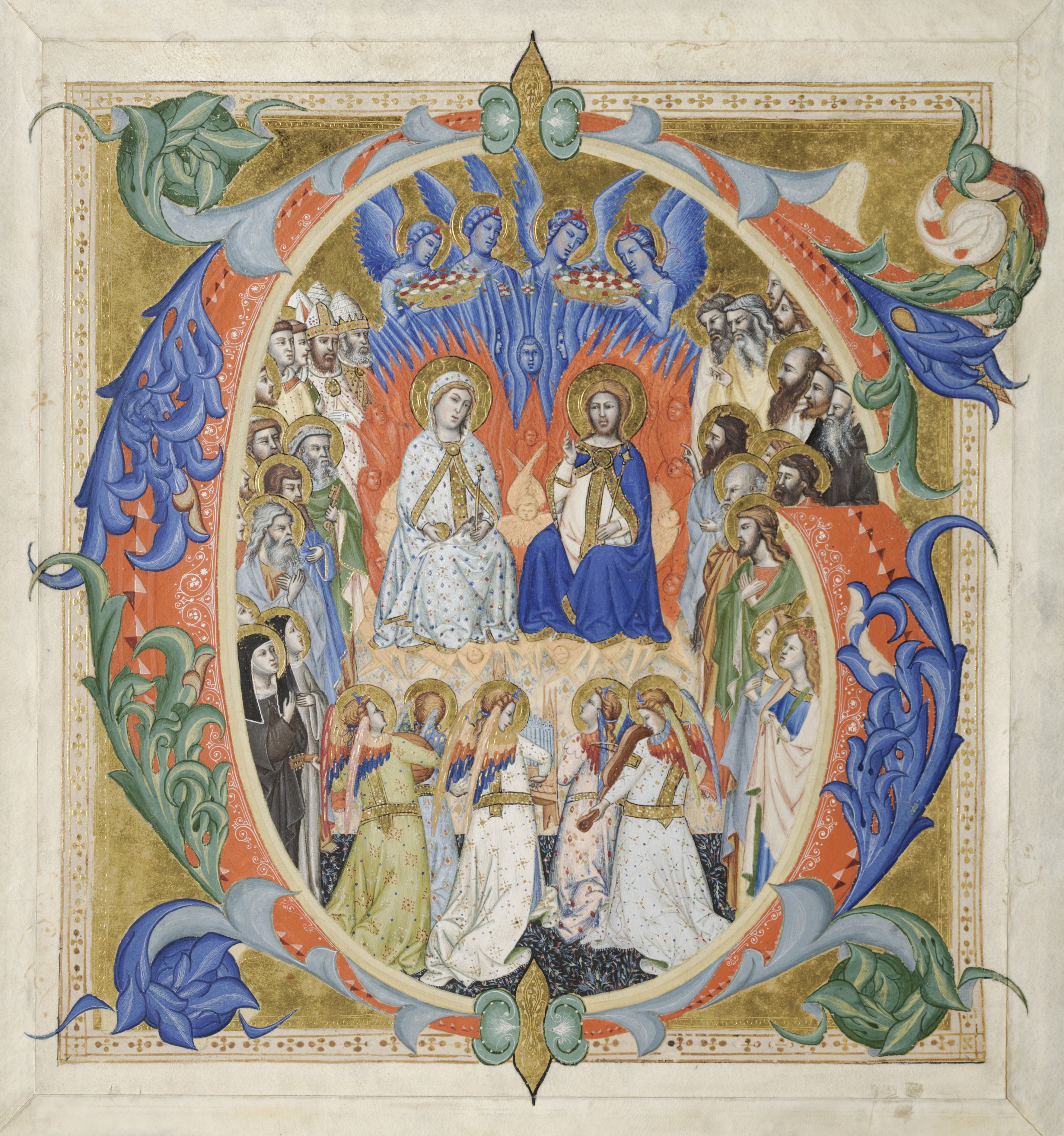
Initial G[audeamus omnes] from a Gradual: The Court of Heaven
A large G from a gradual, one of the choral books illuminated by Don Silvestro, a Camaldolese monk, for Santa Maria degli Angeli in Florence. The letter opens Gaudeamus omnes and holds the court of heaven.
3186 × 3400 px · Unmodified source file
Open in StudioSource & licensing
- Creator / date
- Don Silvestro dei Gherarducci (Italian, 1339–1399) · 1371–77
- Source credit
- The Cleveland Museum of Art, 1930.105. Open Access.
- Usage notes
- Released by the Cleveland Museum of Art under CC0 1.0. Credit to the museum is encouraged; CC0 does not imply endorsement.
- Original file
- 3186 × 3400 px · JPG · 0.0 MB
- Source checked
- 2026-11-04 · editorial approval separate
CC0 · Public domain · c. 1420–30
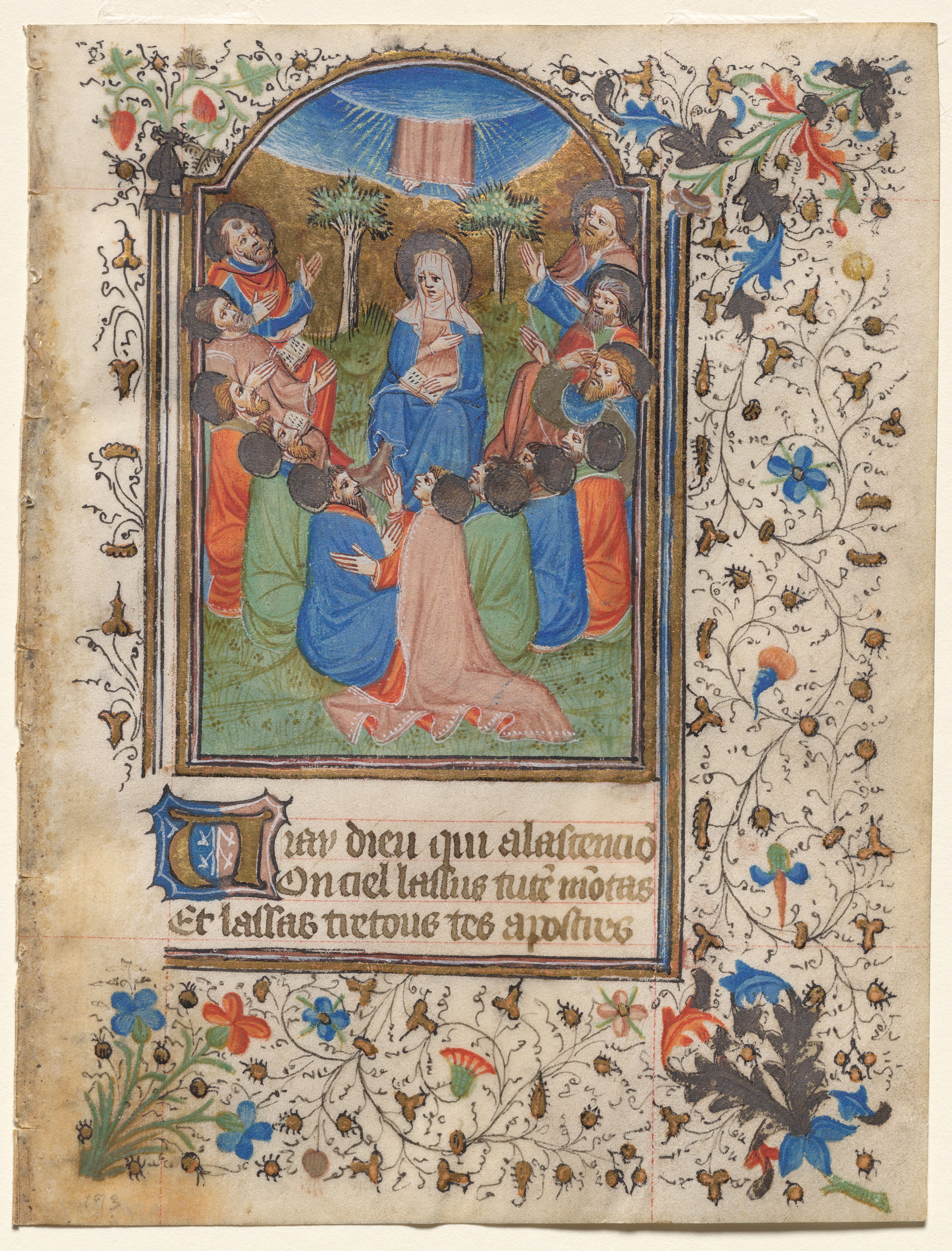
The Ascension: Leaf from a Book of Hours (4 of 6 Excised Leaves)
A leaf from an unusually rich book of hours, its Passion cycle and prayers pointing to an important patron. The Ascension is painted with gold and silver, media that reflected candlelight in a way no photograph fully records.
2588 × 3400 px · Unmodified source file
Open in StudioSource & licensing
- Creator / date
- Henri d'Orquevaulx (French); Workshop · c. 1420–30
- Source credit
- The Cleveland Museum of Art, 2001.76. Open Access.
- Usage notes
- Released by the Cleveland Museum of Art under CC0 1.0. Credit to the museum is encouraged; CC0 does not imply endorsement.
- Original file
- 2588 × 3400 px · JPG · 0.0 MB
- Source checked
- 2026-11-04 · editorial approval separate
CC0 · Public domain · c. 1190
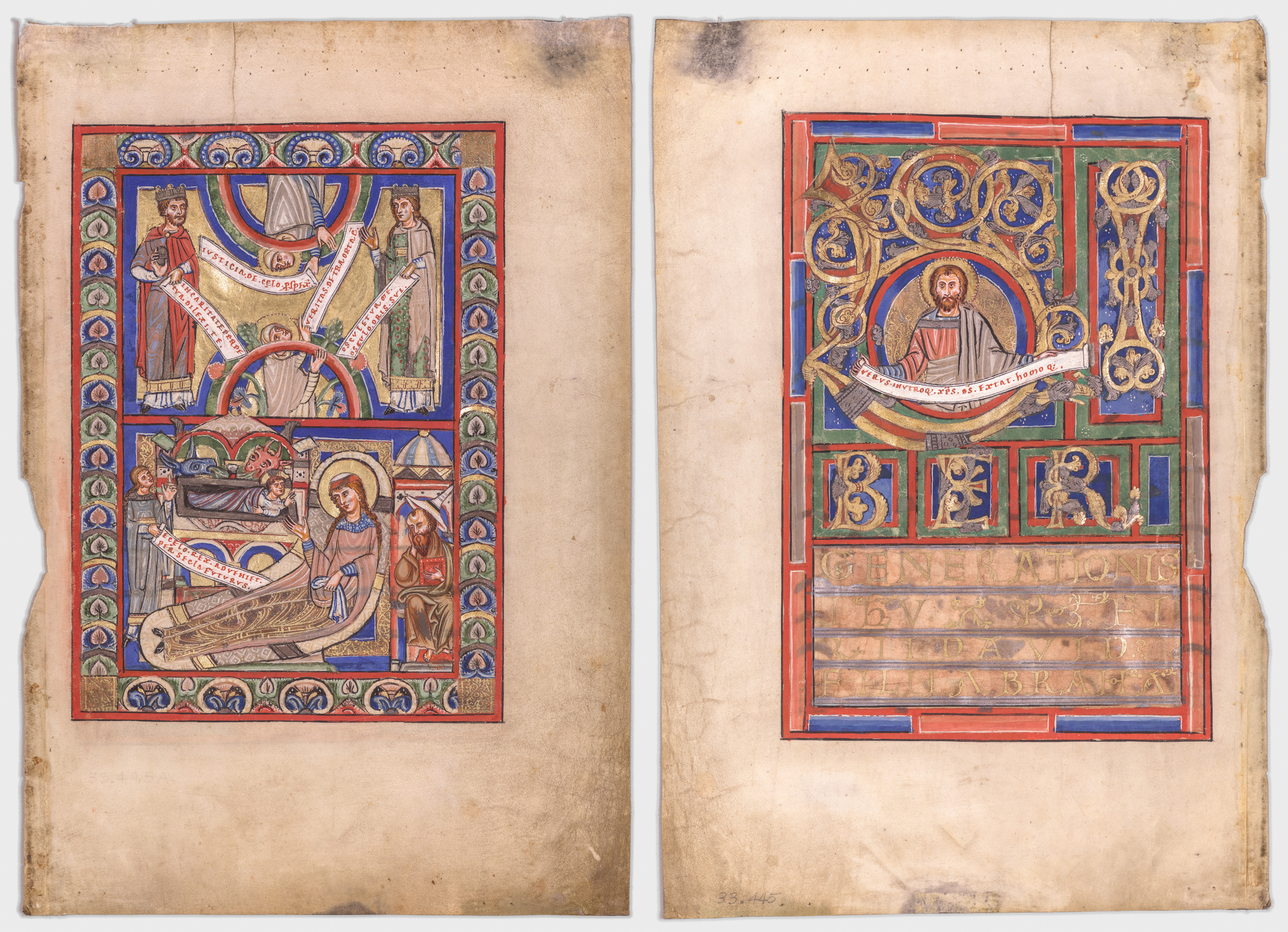
Single Leaf Excised from a Gospel Book: The Nativity (recto) and St. Matthew (verso)
A leaf from a Gospel book now in the Trier Cathedral Library, with the Nativity on one face and the evangelist Matthew on the other, showing how a single sheet carried image and author portrait.
3400 × 2460 px · Unmodified source file
Open in StudioSource & licensing
- Creator / date
- Germany, Helmarshausen Abbey, 12th century, maker unknown · c. 1190
- Source credit
- The Cleveland Museum of Art, 1933.445. Open Access.
- Usage notes
- Released by the Cleveland Museum of Art under CC0 1.0. Credit to the museum is encouraged; CC0 does not imply endorsement.
- Original file
- 3400 × 2460 px · JPG · 0.0 MB
- Source checked
- 2026-11-04 · editorial approval separate
Public-domain status is reported by the linked source and may vary by jurisdiction. Check the source record for your intended use. No exclusive rights or Visual Bounty marketplace license are offered for these images.