← Open Collections

Public-domain source library

Maiolica: Istoriato and Lustre

Maiolica is earthenware covered in a tin glaze that turns opaque white, giving the painter a surface as receptive as paper. Italian workshops used it to carry whole pictures: a chariot race across a charger, the Passion around a rim, a family’s arms at the centre. These fourteen pieces, made in Urbino, Gubbio, Faenza, Castel Durante, Cafaggiolo and Venice between 1510 and 1590, include lustred wares whose metallic sheen changes with the room.

Explore the works and their histories through the original collections and institutions that preserve them. Source images are available to download, with creative exploration in Studio.

Works
14
Sources
1
Makers
10
Dates
c. 1510 · c. 1545–63 · c. 1525
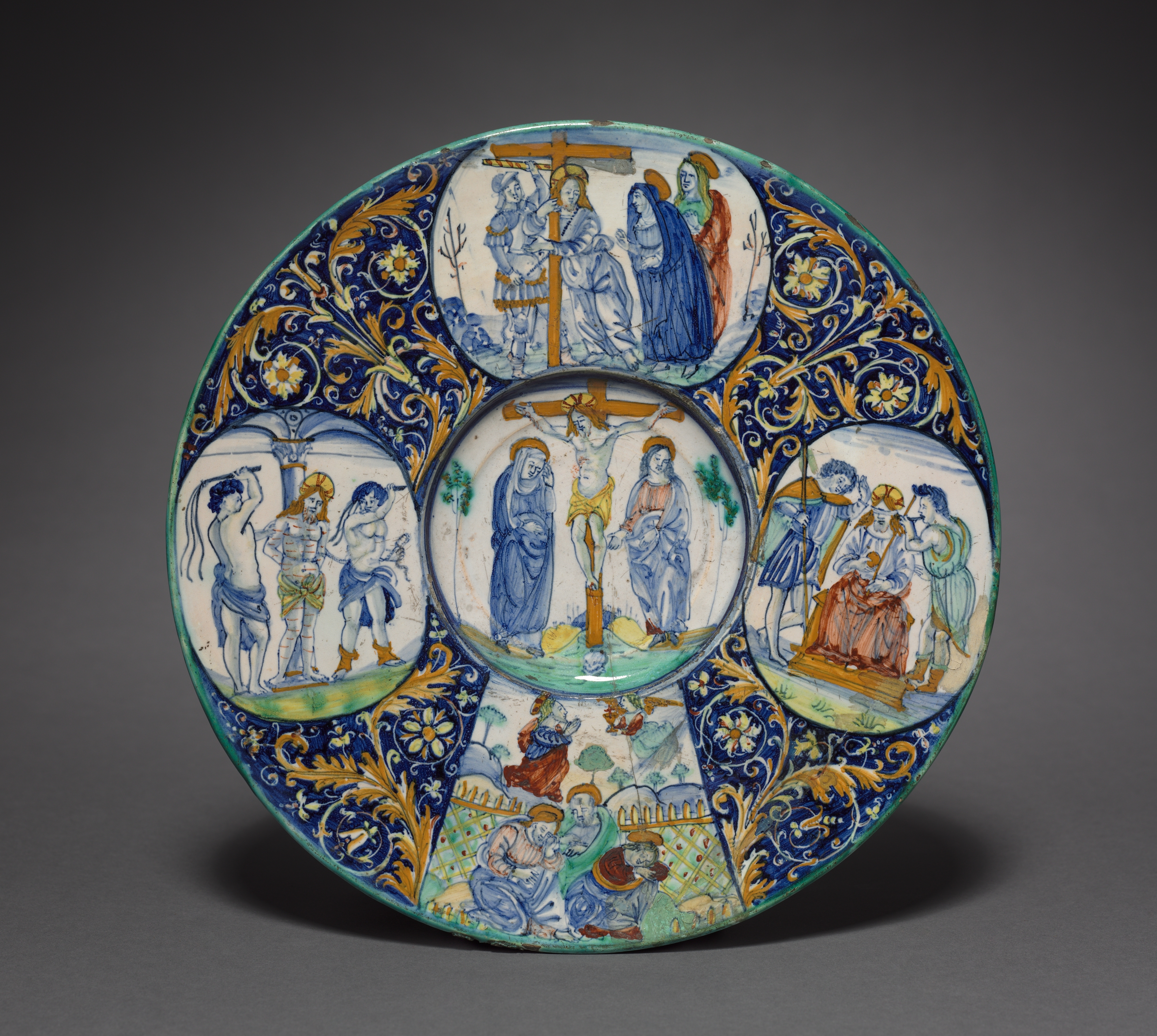
A plate made in the Medici workshop at Cafaggiolo, with scenes of the Passion ranged around the rim: the betrayal, the arrest, the bearing of the cross. The narrative is distributed so that it is read by turning the plate.

c. 1510

Plate Depicting Christ’s Passion

A plate made in the Medici workshop at Cafaggiolo, with scenes of the Passion ranged around the rim: the betrayal, the arrest, the bearing of the cross. The narrative is distributed so that it is read by turning the plate.

3400 × 3045 px

Open in Studio
Source & credits
Creator / date
Painter of the Royal Procession (Italian) · c. 1510
Source credit
The Cleveland Museum of Art, 1943.55. Open Access.
Original file
3400 × 3045 px · JPG
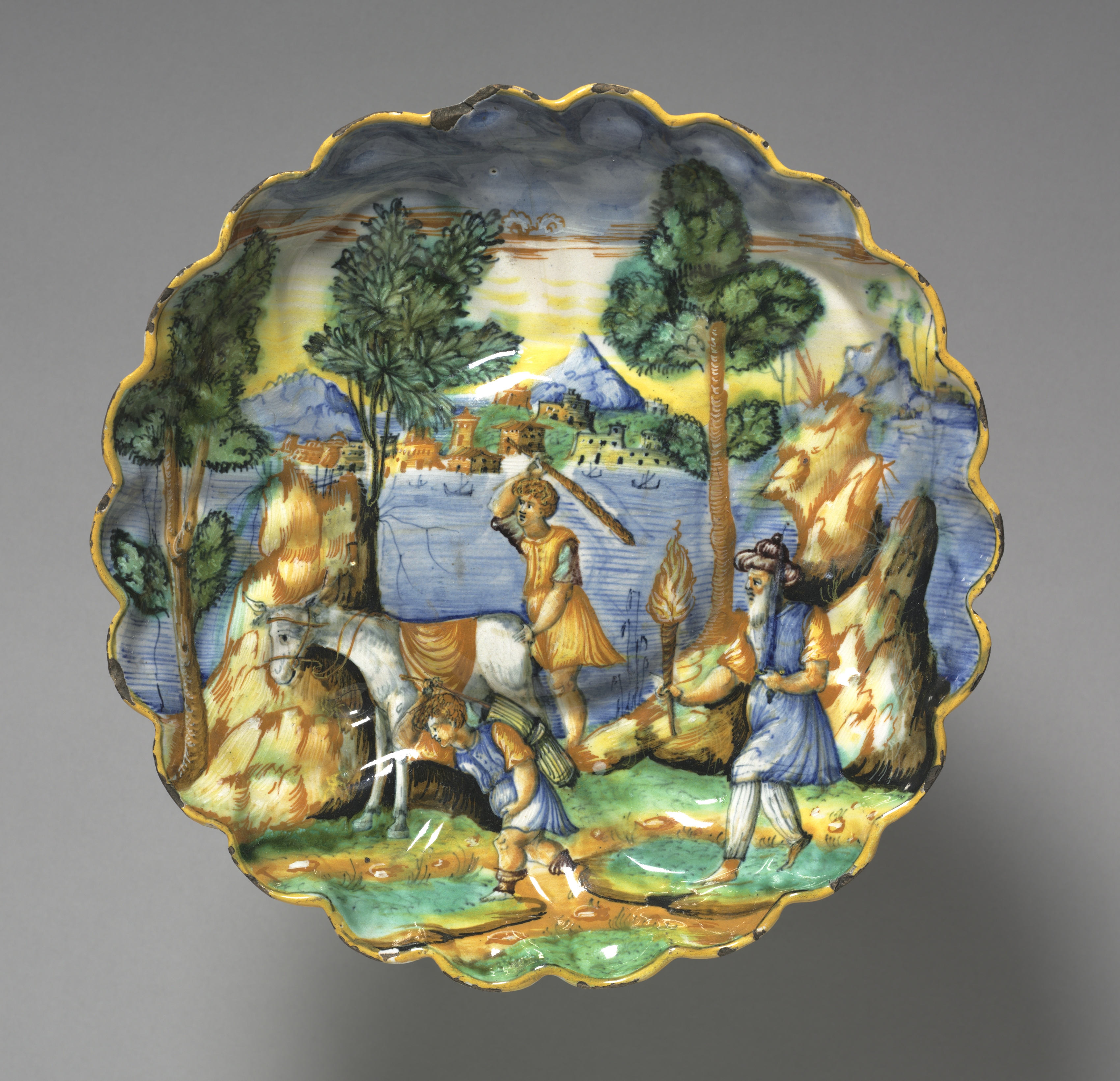
A footed dish painted with the sacrifice of Isaac, the biblical story handled in the same istoriato style used for mythology, with landscape and figures covering the entire surface.

c. 1545–63

Footed Dish Depicting Abraham and Isaac

A footed dish painted with the sacrifice of Isaac, the biblical story handled in the same istoriato style used for mythology, with landscape and figures covering the entire surface.

3400 × 3283 px

Open in Studio
Source & credits
Creator / date
Ludovico and Angelo Picchi · c. 1545–63
Source credit
The Cleveland Museum of Art, 1945.125. Open Access.
Original file
3400 × 3283 px · JPG
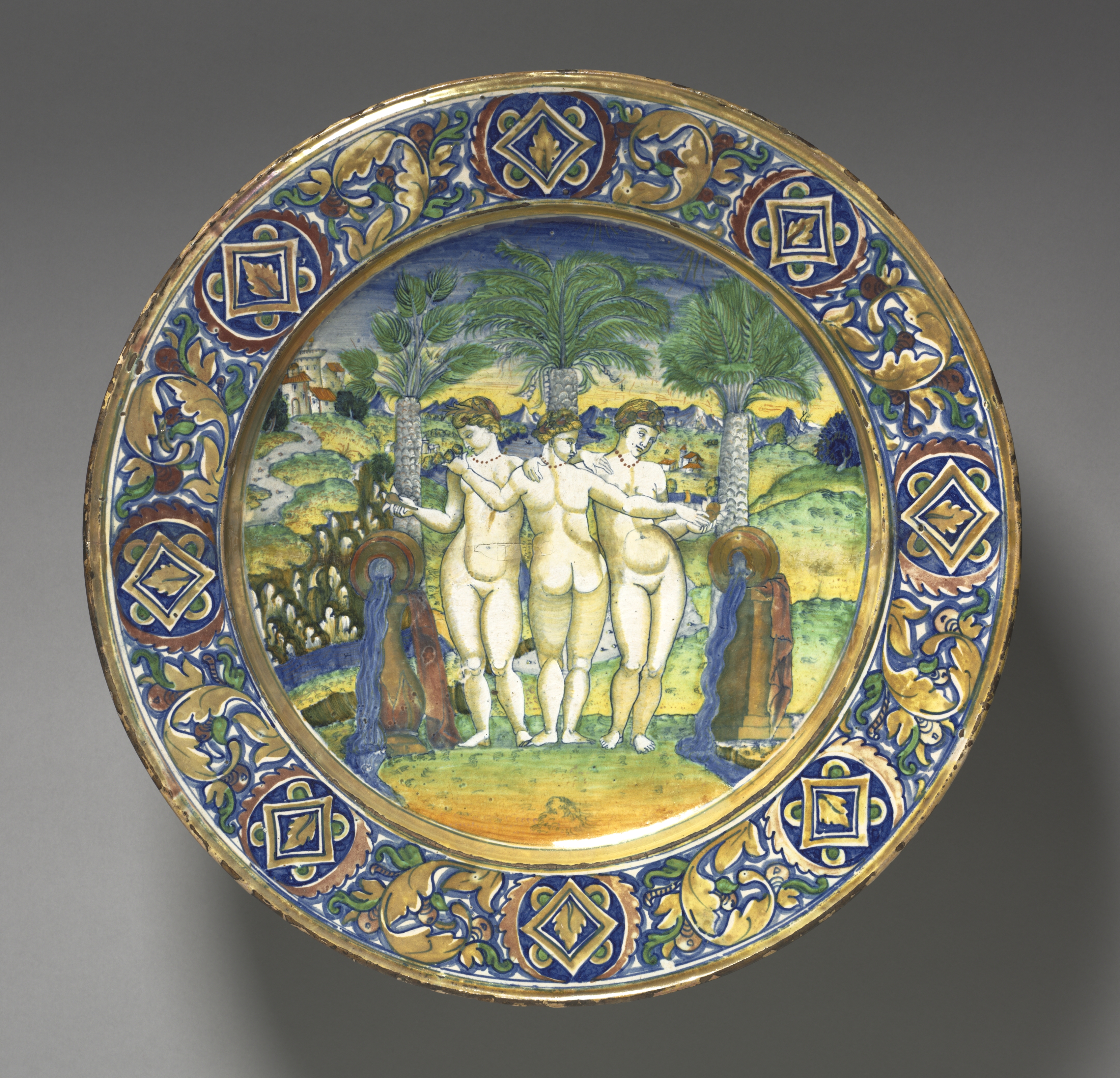
Tin-glazed earthenware finished with gold lustre, a technique Gubbio potters specialised in. The Three Graces are copied from an engraving, one of the ways printed images reached ceramics.

c. 1525

Charger Depicting the Three Graces

Tin-glazed earthenware finished with gold lustre, a technique Gubbio potters specialised in. The Three Graces are copied from an engraving, one of the ways printed images reached ceramics.

3400 × 3271 px

Open in Studio
Source & credits
Creator / date
Maestro Giorgio Andreoli (Italian, 1465?–1553) · c. 1525
Source credit
The Cleveland Museum of Art, 1945.2. Open Access.
Original file
3400 × 3271 px · JPG
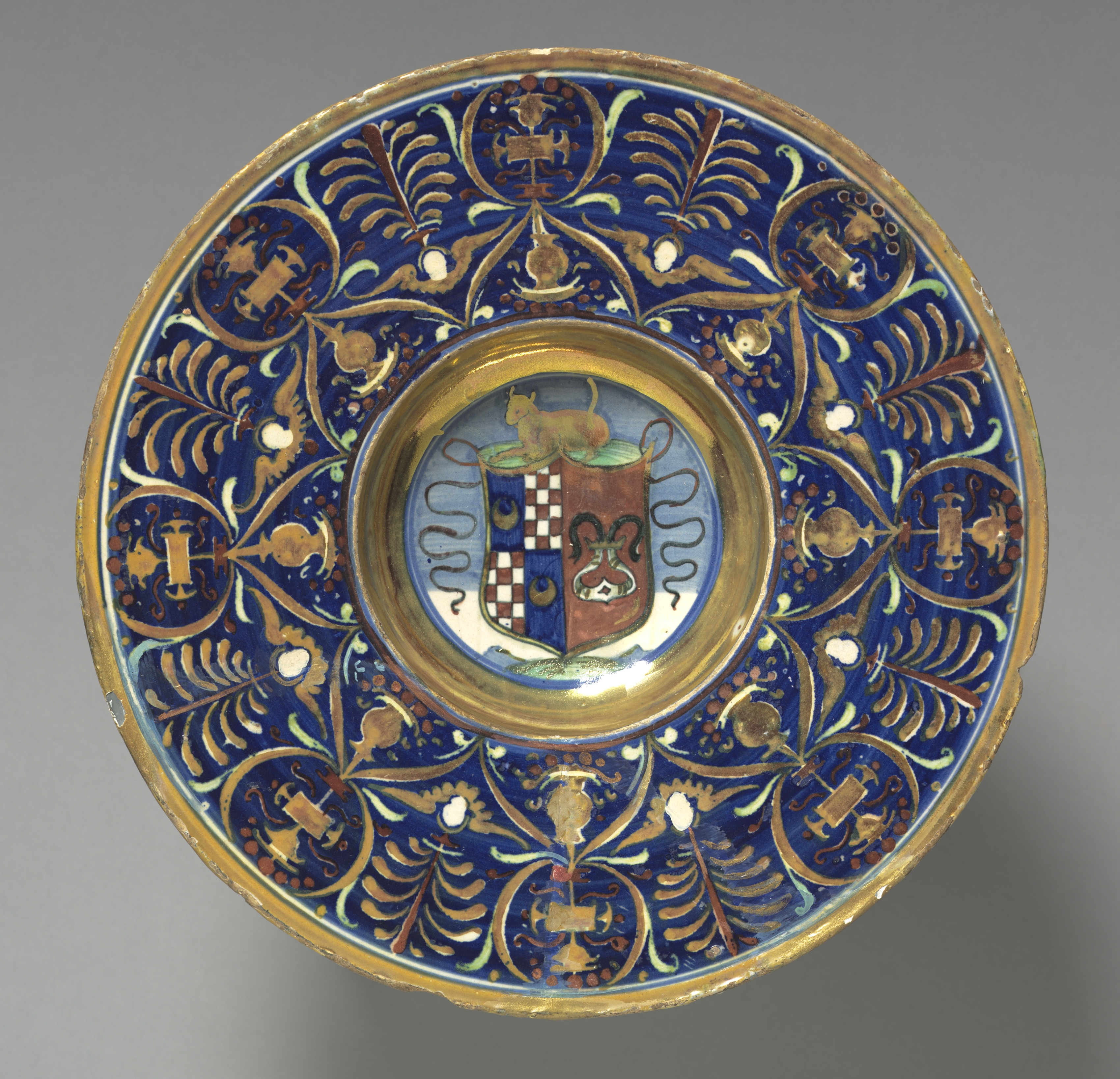
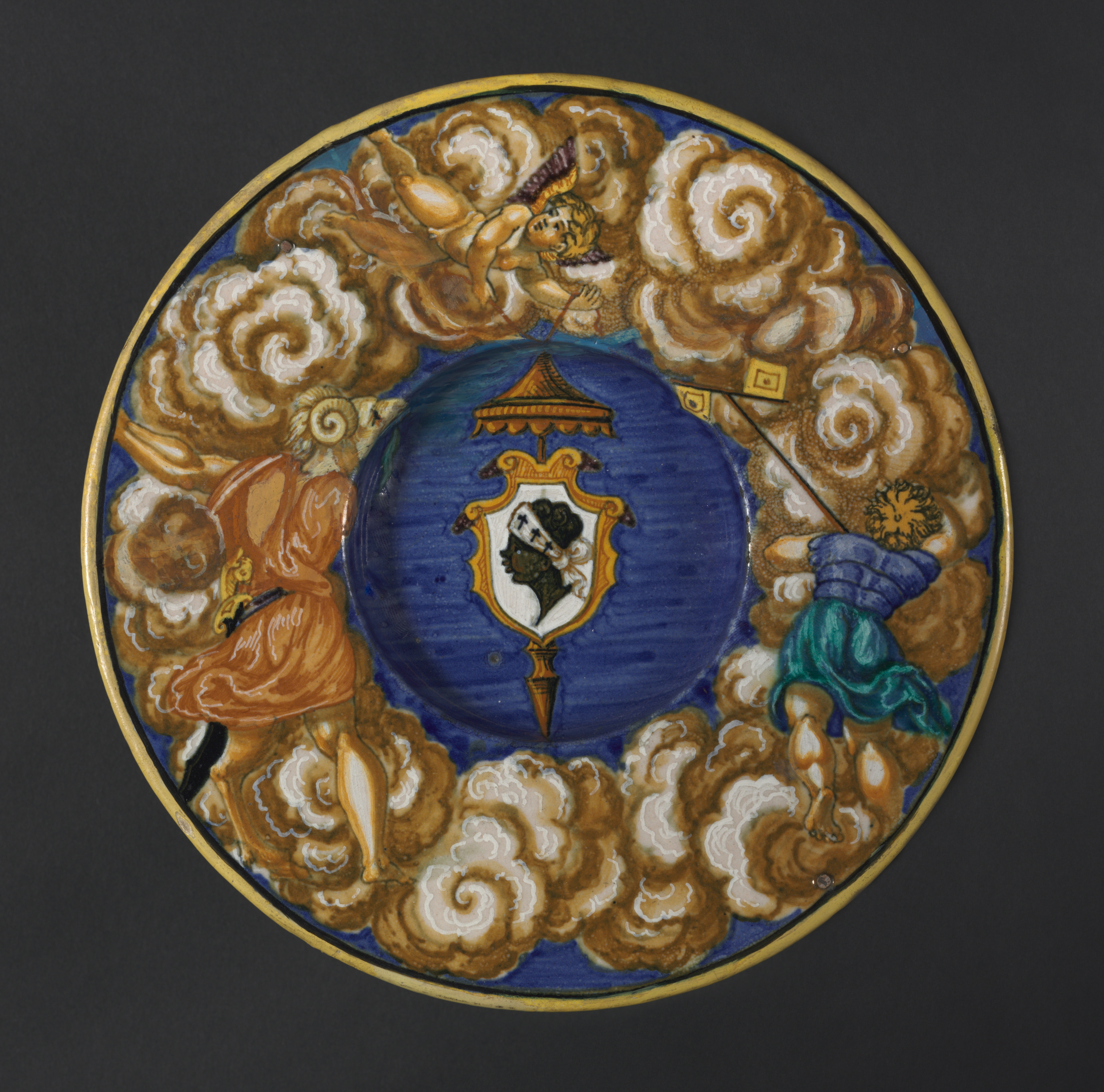
Painted in 1524 with the Vigeri arms in gold and red lustre, the charger belongs to the first generation of heavily lustred armorial pieces made at Gubbio.

1524

Charger with Arms of the Vigeri Family

Painted in 1524 with the Vigeri arms in gold and red lustre, the charger belongs to the first generation of heavily lustred armorial pieces made at Gubbio.

3400 × 3313 px

Open in Studio
Source & credits
Creator / date
Maestro Giorgio Andreoli (Italian, 1465?–1553) · 1524
Source credit
The Cleveland Museum of Art, 1943.56. Open Access.
Original file
3400 × 3313 px · JPG
An armorial plate with gold lustre, from Gubbio, where the lustre kiln gave the surface a metallic sheen that varied with the light in the room.

1527

Plate with Arms of the Vitelleschi Family

An armorial plate with gold lustre, from Gubbio, where the lustre kiln gave the surface a metallic sheen that varied with the light in the room.

3400 × 3277 px

Open in Studio
Source & credits
Creator / date
Maestro Giorgio Andreoli (Italian, 1465?–1553) · 1527
Source credit
The Cleveland Museum of Art, 1950.155. Open Access.
Original file
3400 × 3277 px · JPG
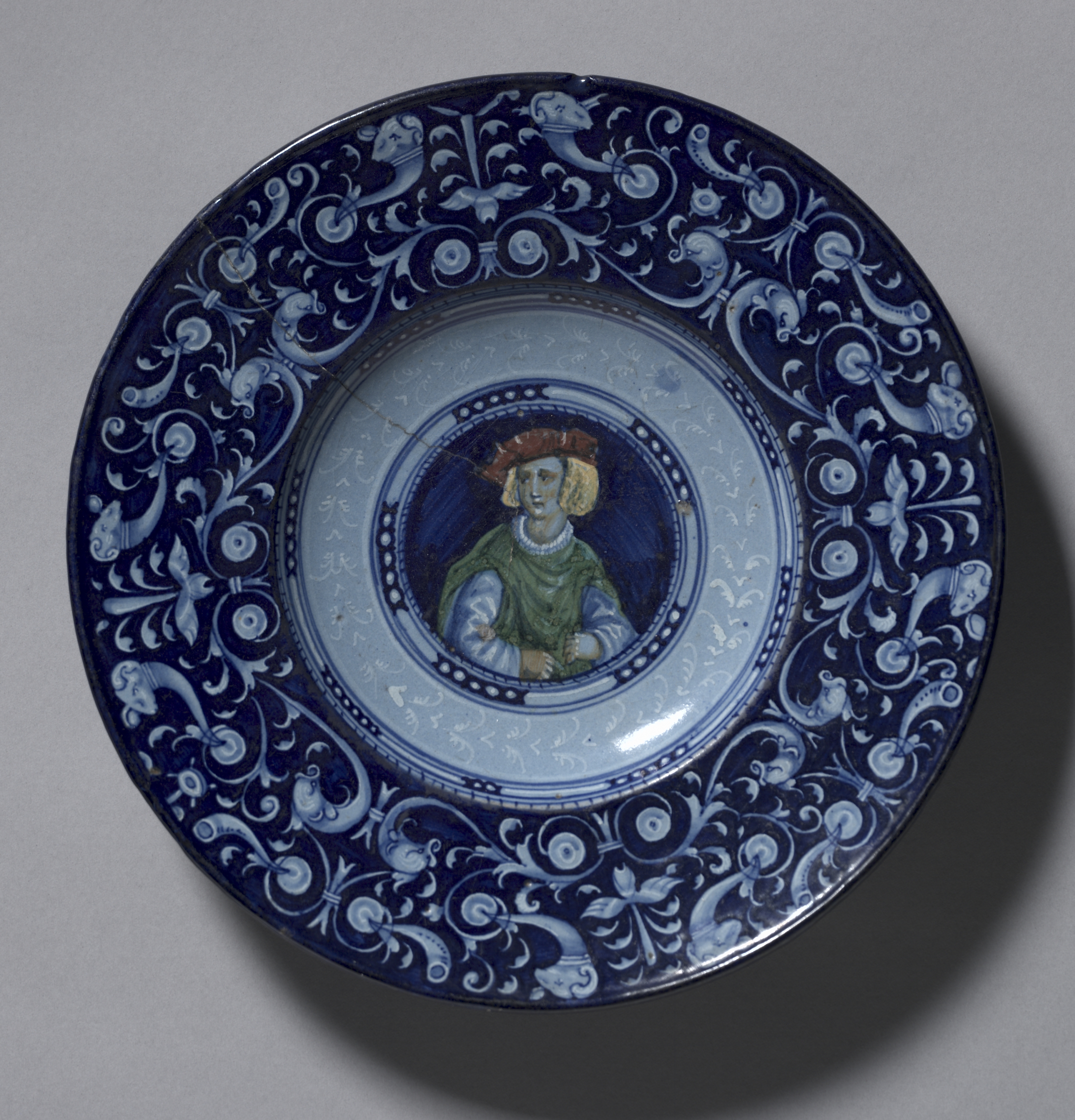
A portrait plate from Faenza: a sitter shown in profile within a border of ornament. Pieces like this were made to be displayed rather than eaten from.

c. 1525–30

Plate with a Portrait of a Gentleman

A portrait plate from Faenza: a sitter shown in profile within a border of ornament. Pieces like this were made to be displayed rather than eaten from.

3262 × 3400 px

Open in Studio
Source & credits
Creator / date
Italy, Faenza, 16th century, maker unknown · c. 1525–30
Source credit
The Cleveland Museum of Art, 1923.1087. Open Access.
Original file
3262 × 3400 px · JPG
A plate from a service carrying the Pucci arms, ordered by a Florentine banking family. Nobles and merchants commissioned maiolica in sets, so that a table declared its owner before a word was spoken.

1532

Plate with the Arms of the Pucci Family

A plate from a service carrying the Pucci arms, ordered by a Florentine banking family. Nobles and merchants commissioned maiolica in sets, so that a table declared its owner before a word was spoken.

3400 × 3364 px

Open in Studio
Source & credits
Creator / date
Francesco Xanto Avelli (Italian, 1487?–1544?) · 1532
Source credit
The Cleveland Museum of Art, 1942.626. Open Access.
Original file
3400 × 3364 px · JPG
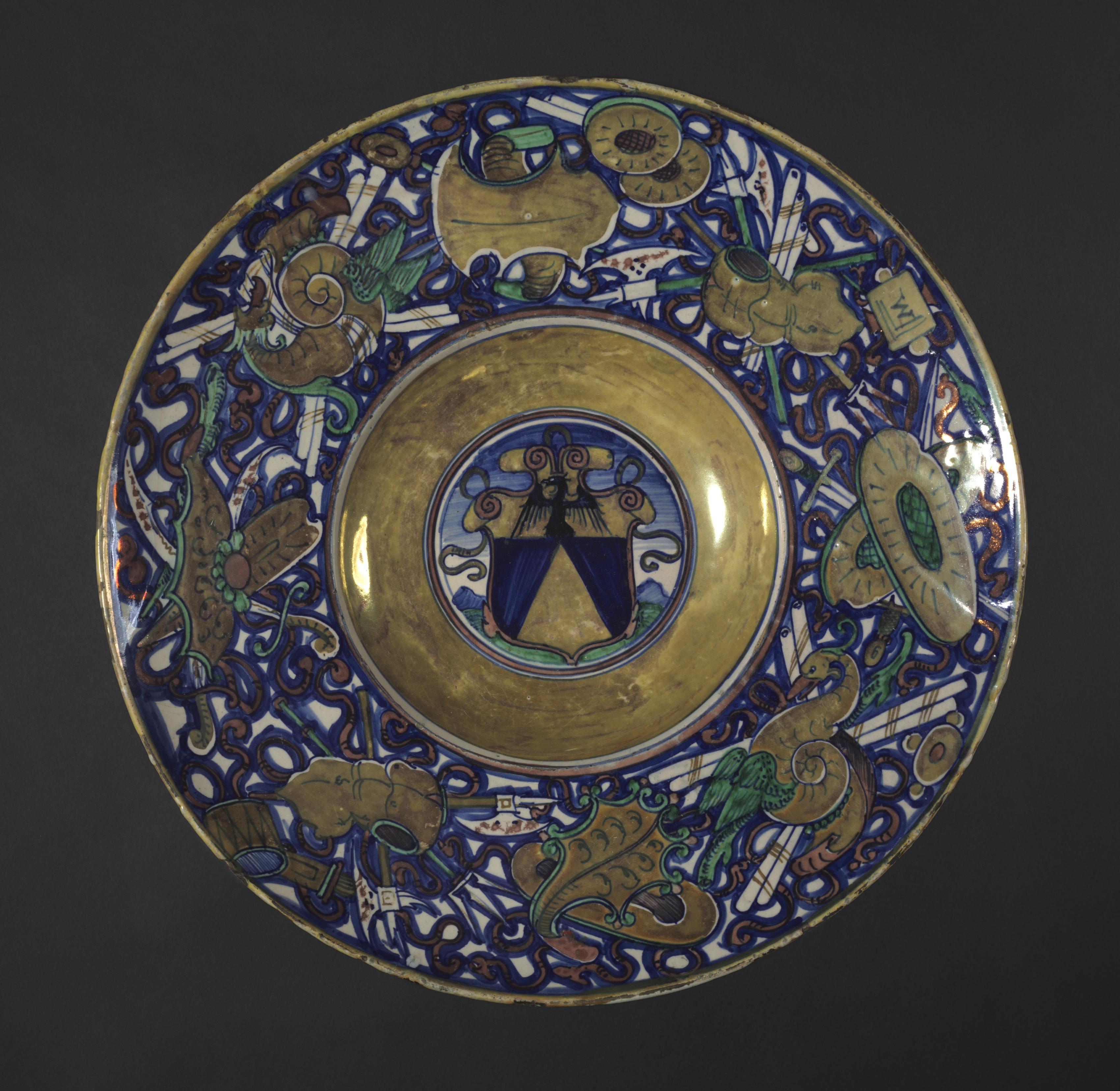
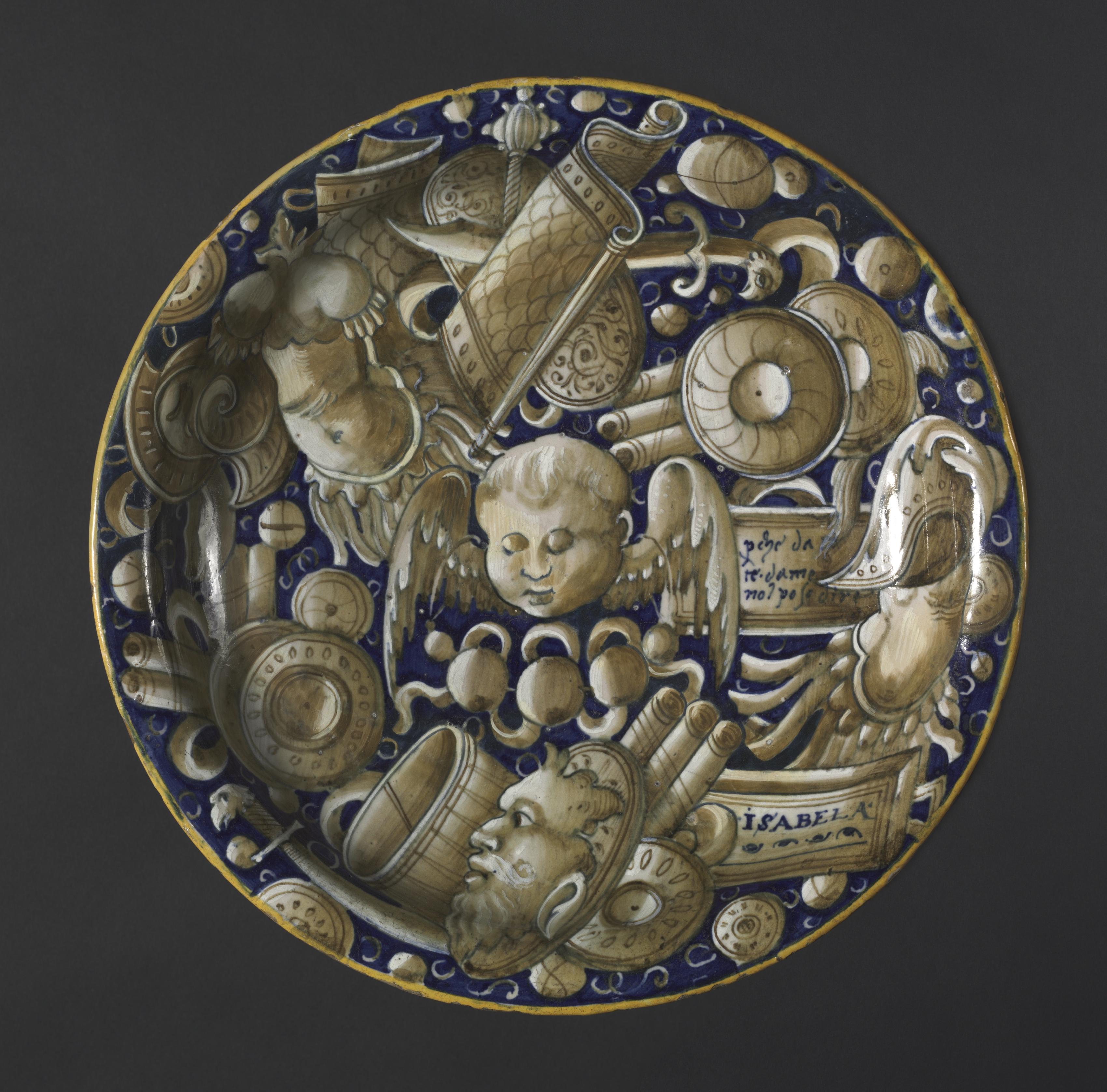
A plate in the grotesque manner: putti, masks and trophies arranged around the rim in a vocabulary rediscovered in Roman wall painting and circulated through prints.

c. 1530–50

Plate with Putto, Masques, and Trophies

A plate in the grotesque manner: putti, masks and trophies arranged around the rim in a vocabulary rediscovered in Roman wall painting and circulated through prints.

3400 × 3353 px

Open in Studio
Source & credits
Creator / date
Italy, Urbino, maker unknown · c. 1530–50
Source credit
The Cleveland Museum of Art, 1923.1088. Open Access.
Original file
3400 × 3353 px · JPG
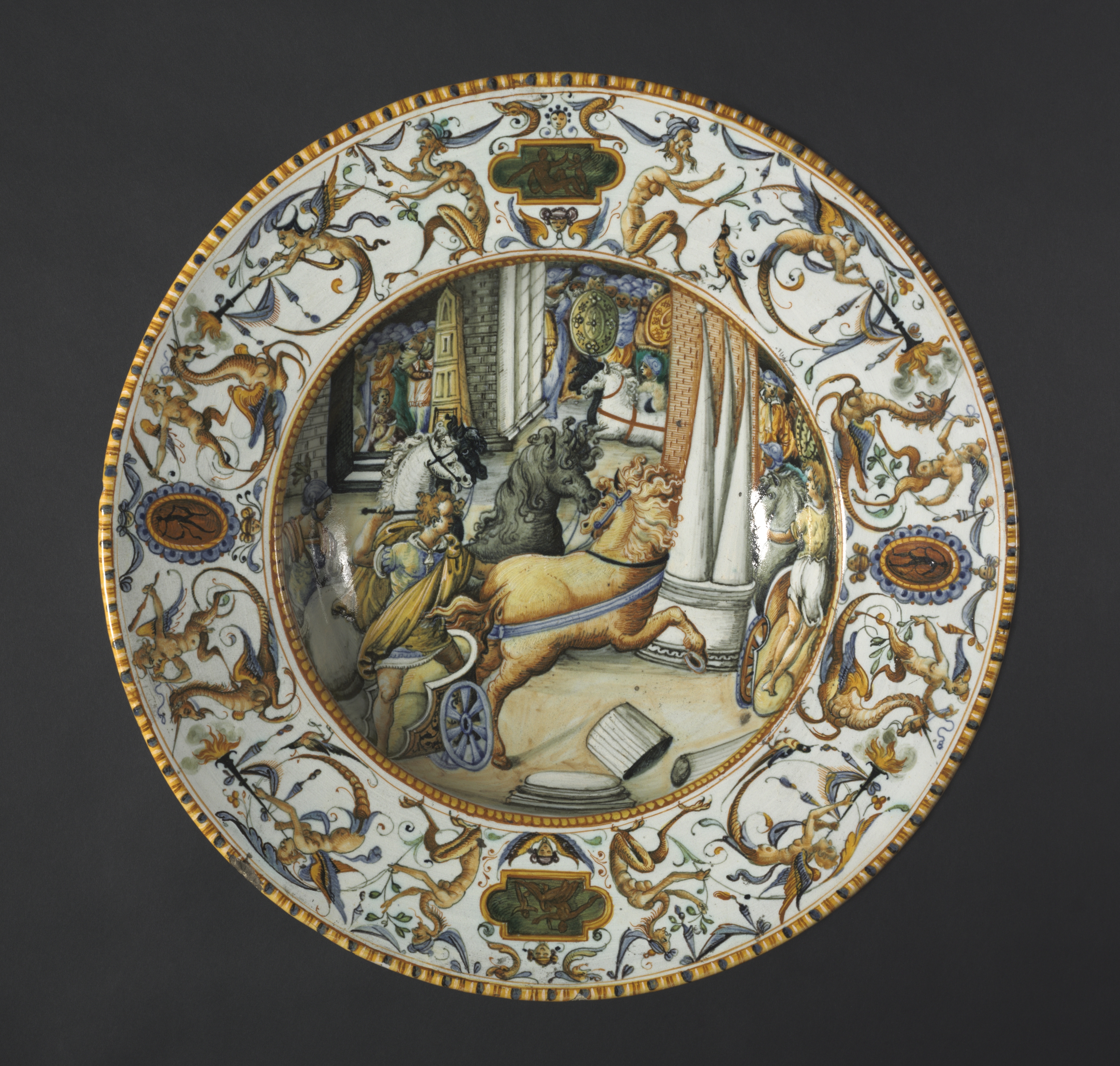
A charger painted in the istoriato manner, in which the whole surface becomes a picture. A chariot race from antiquity covers the dish, its figures taken from prints and its border cut into grotesques.

c. 1575

Charger Depicting a Chariot Race

A charger painted in the istoriato manner, in which the whole surface becomes a picture. A chariot race from antiquity covers the dish, its figures taken from prints and its border cut into grotesques.

3400 × 3236 px

Open in Studio
Source & credits
Creator / date
Fontana Family (Italian) · c. 1575
Source credit
The Cleveland Museum of Art, 1942.622. Open Access.
Original file
3400 × 3236 px · JPG
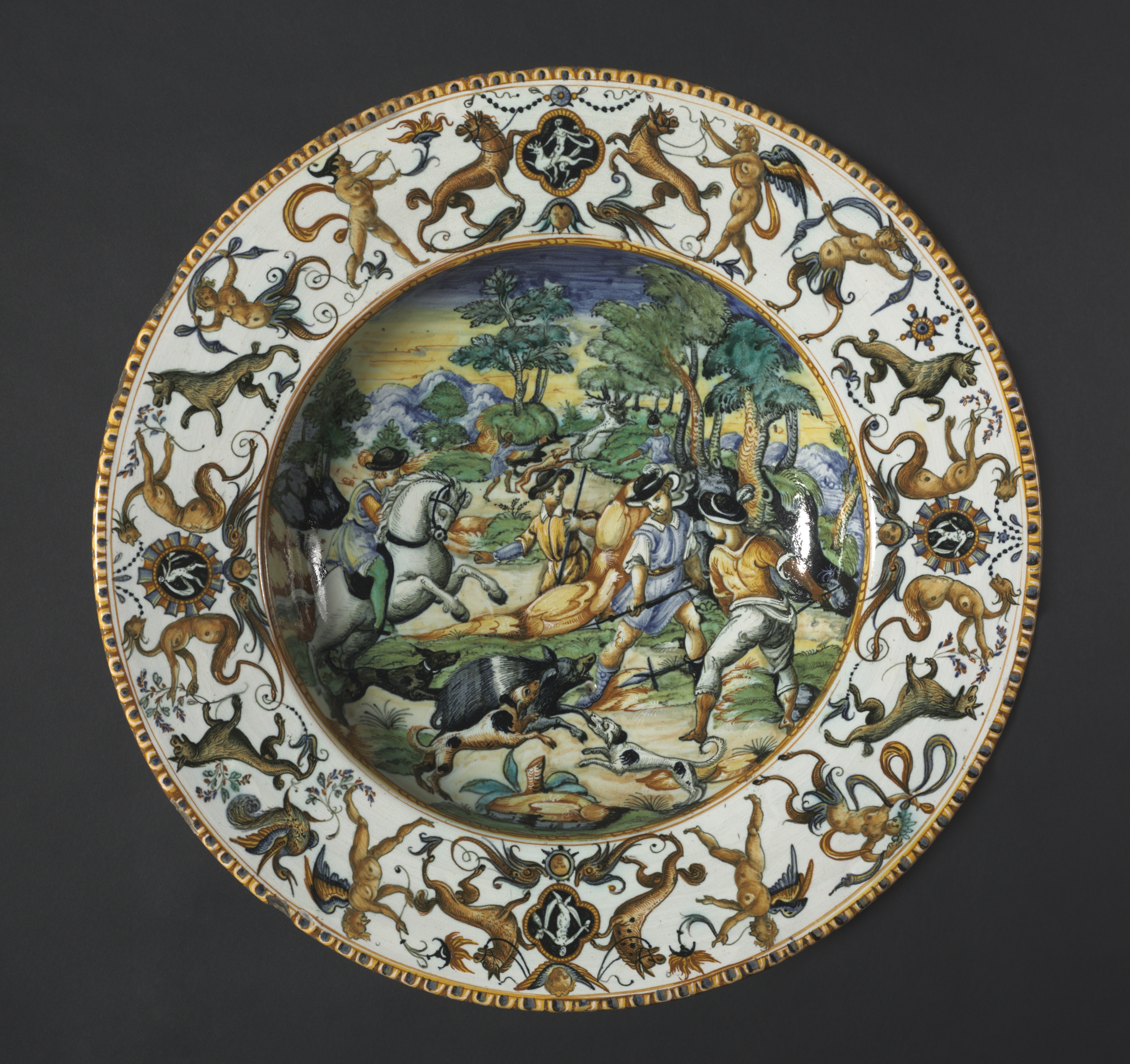
The companion charger, a boar hunt laid out across the dish. Urbino workshops painted classical subjects because knowledge of antiquity marked social and intellectual standing.

c. 1575

Charger Depicting a Boar Hunt

The companion charger, a boar hunt laid out across the dish. Urbino workshops painted classical subjects because knowledge of antiquity marked social and intellectual standing.

3400 × 3201 px

Open in Studio
Source & credits
Creator / date
Fontana Family (Italian) · c. 1575
Source credit
The Cleveland Museum of Art, 1942.623. Open Access.
Original file
3400 × 3201 px · JPG
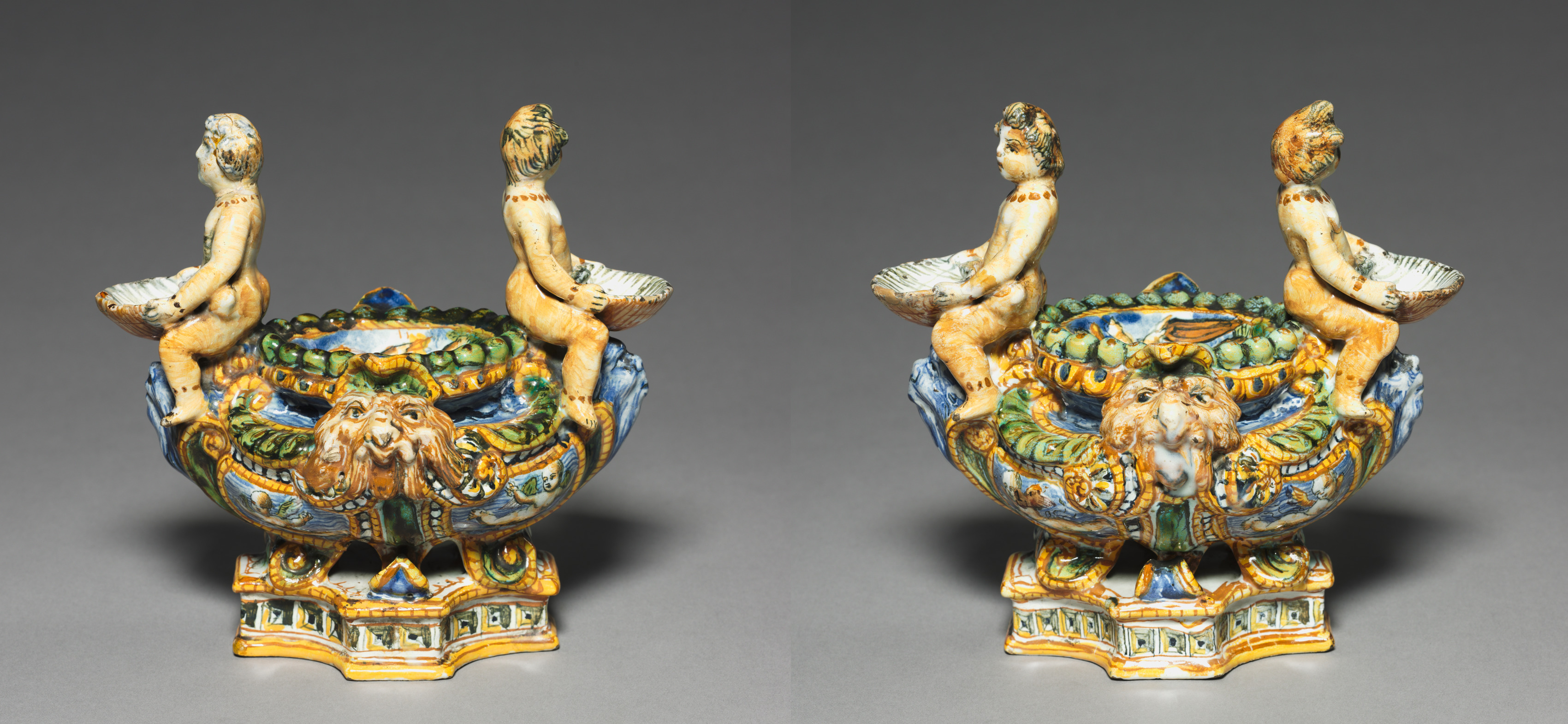
Saltcellars for a Renaissance table, where maiolica stood alongside silver and glass. Their small scale shows the same pictorial vocabulary applied to objects handled at close range.

c. 1570–90

Pair of Saltcellars

Saltcellars for a Renaissance table, where maiolica stood alongside silver and glass. Their small scale shows the same pictorial vocabulary applied to objects handled at close range.

3400 × 1569 px

Open in Studio
Source & credits
Creator / date
the Patanazzi Family (Italian) · c. 1570–90
Source credit
The Cleveland Museum of Art, 1945.126. Open Access.
Original file
3400 × 1569 px · JPG
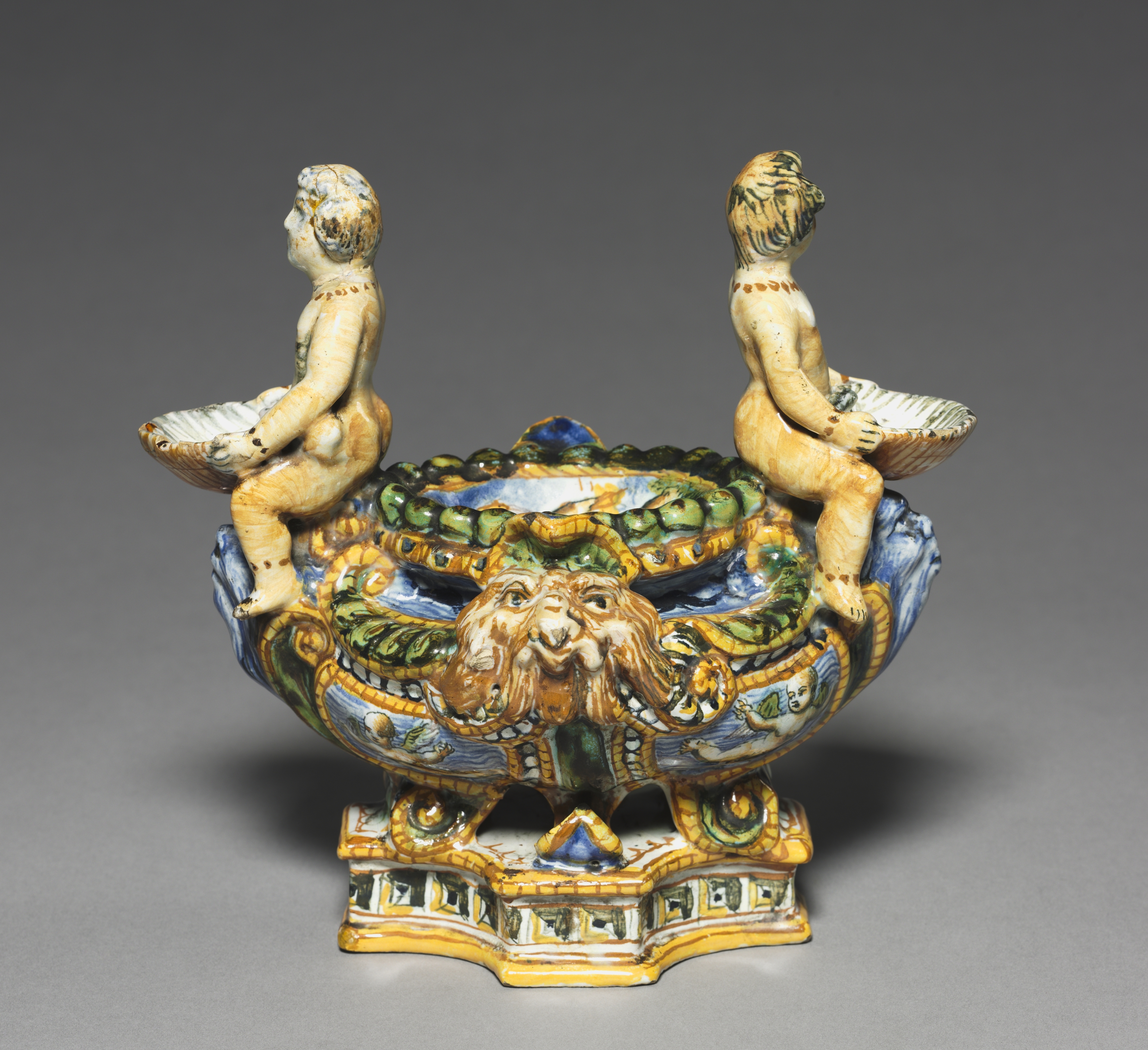
The second of a pair of saltcellars: small dishes whose decoration shows the istoriato style descending from the charger to the objects of the table.

c. 1570–90

Saltcellar

The second of a pair of saltcellars: small dishes whose decoration shows the istoriato style descending from the charger to the objects of the table.

3400 × 3110 px

Open in Studio
Source & credits
Creator / date
the Patanazzi Family (Italian) · c. 1570–90
Source credit
The Cleveland Museum of Art, 1945.126.1. Open Access.
Original file
3400 × 3110 px · JPG
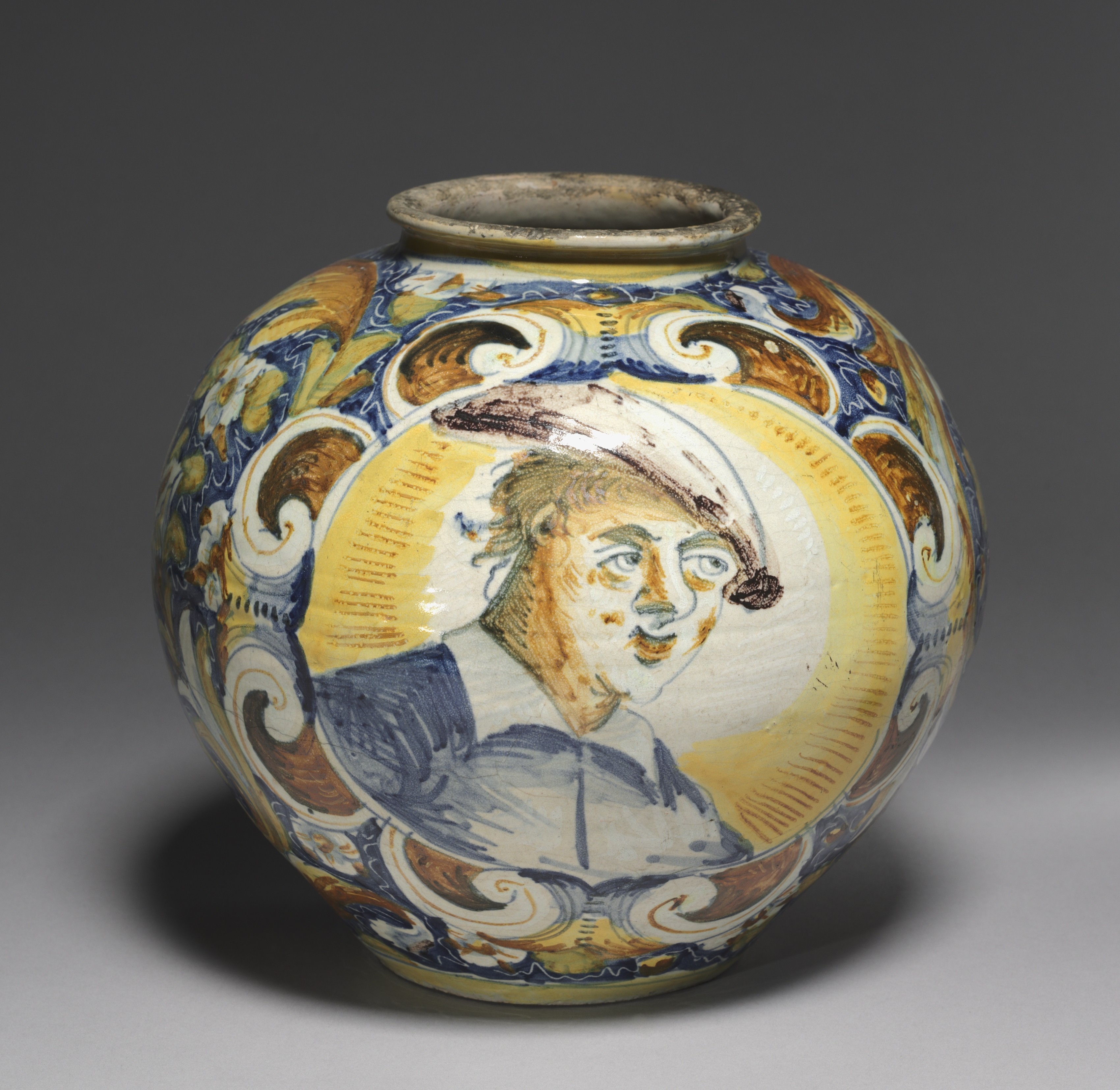
A storage jar made in Venice rather than in the Marche or Umbria, its shape borrowed from pharmacy jars. Venice took up the technique and produced wares of its own for the Levant trade.

c. 1560–80

Storage Jar (Vaso a Palla)

A storage jar made in Venice rather than in the Marche or Umbria, its shape borrowed from pharmacy jars. Venice took up the technique and produced wares of its own for the Levant trade.

3400 × 3308 px

Open in Studio
Source & credits
Creator / date
Domenego da Venezia (Italian) · c. 1560–80
Source credit
The Cleveland Museum of Art, 1939.178. Open Access.
Original file
3400 × 3308 px · JPG
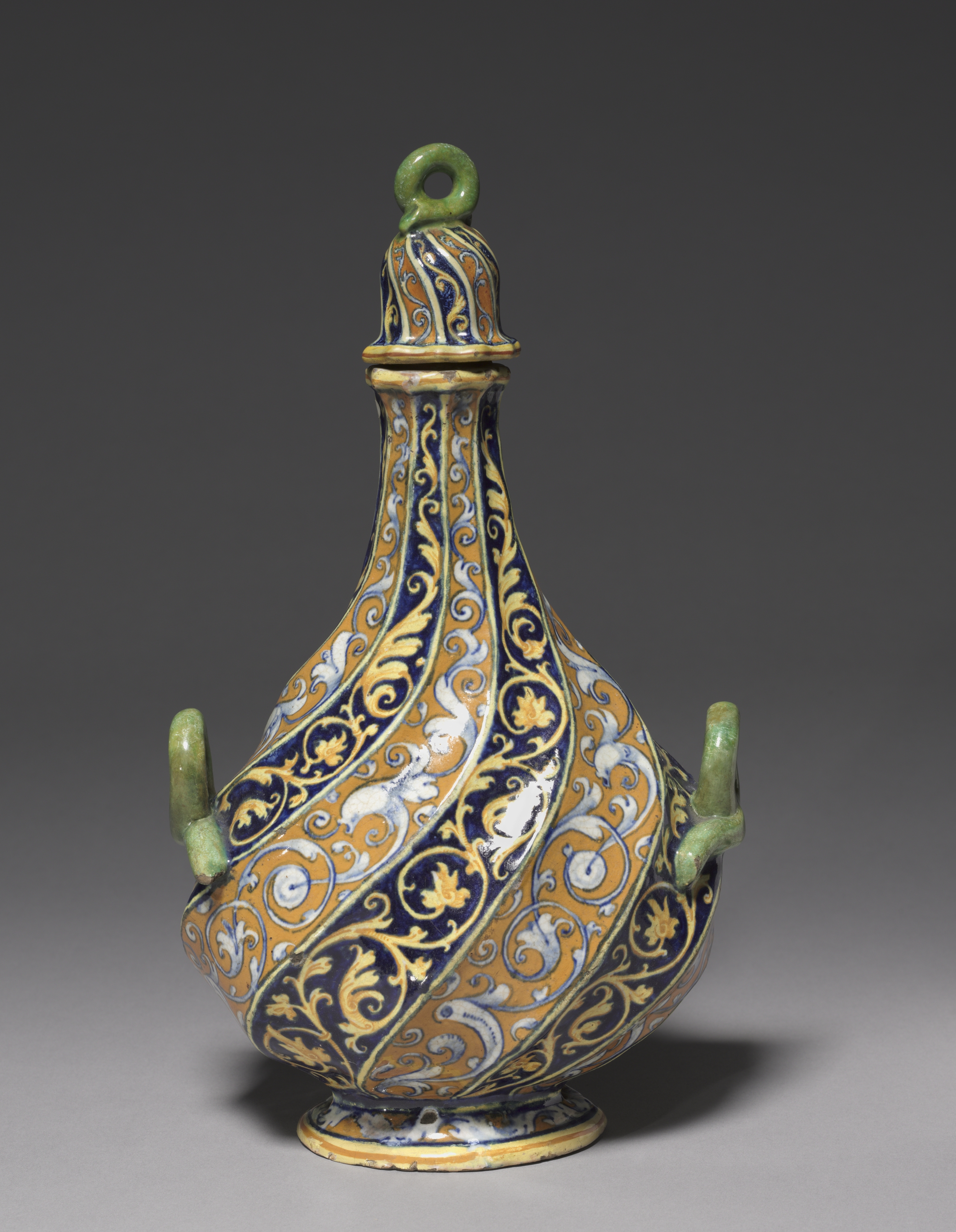
A pilgrim bottle in tin-glazed earthenware, a shape made for carrying on the road and painted with the same ornamental vocabulary as pieces made for the credenza.

c. 1540

Pilgrim Bottle

A pilgrim bottle in tin-glazed earthenware, a shape made for carrying on the road and painted with the same ornamental vocabulary as pieces made for the credenza.

2639 × 3400 px

Open in Studio
Source & credits
Creator / date
Italy, Papal States, Faenza, maker unknown · c. 1540
Source credit
The Cleveland Museum of Art, 1923.914. Open Access.
Original file
2639 × 3400 px · JPG