← Open CollectionsPublic-domain source library
Lace: Needle, Bobbin and Border
Lace is made of nothing but holes and thread, and the histories of its two techniques run in parallel: needle lace, worked stitch by stitch into the air, and bobbin lace, plaited on a pillow with pins. This collection follows the trade across Italy, Flanders, France, Spain and Russia, from sixteenth-century bands with vines and birds to deep eighteenth-century flounces and the provincial towel ends that Russian makers turned into a folk form. A lace pillow is included because the tool survives more rarely than the lace.
Original means the unmodified digital file supplied by the linked archive, not an upscaled or reconstructed image. Sign in for free downloads. Studio uses a working preview up to 2048 px.
CC0 · Public domain · 1600s
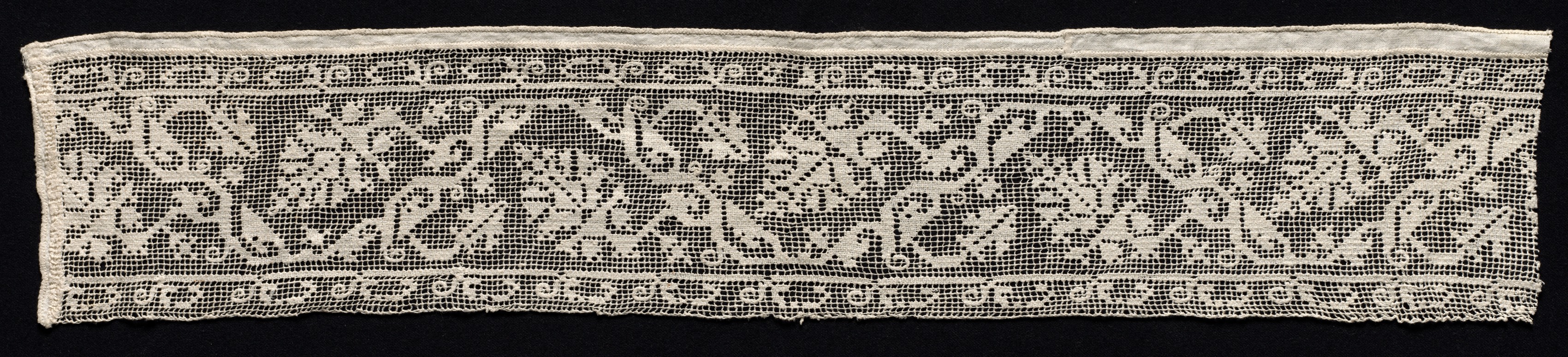
Fragment of a Band with Vines and Leaves
A scrolling vine with budding tendrils in needle lace on a filet ground. The scrolling vine is one of the most persistent motifs in lace, endlessly adapted because it repeats and turns without a seam.
× px · Unmodified source file
Small archival scan: best for reference and screen use, not large prints.
Open in StudioSource & licensing
- Creator / date
- Italy, maker unknown · 1600s
- Source credit
- The Cleveland Museum of Art, 1936.223. Open Access.
- Usage notes
- Released by the Cleveland Museum of Art under CC0 1.0. Credit to the museum is encouraged; CC0 does not imply endorsement.
- Original file
- × px · JPG · 0.0 MB
- Source checked
- 2026-11-04 · editorial approval separate
CC0 · Public domain · 1600s
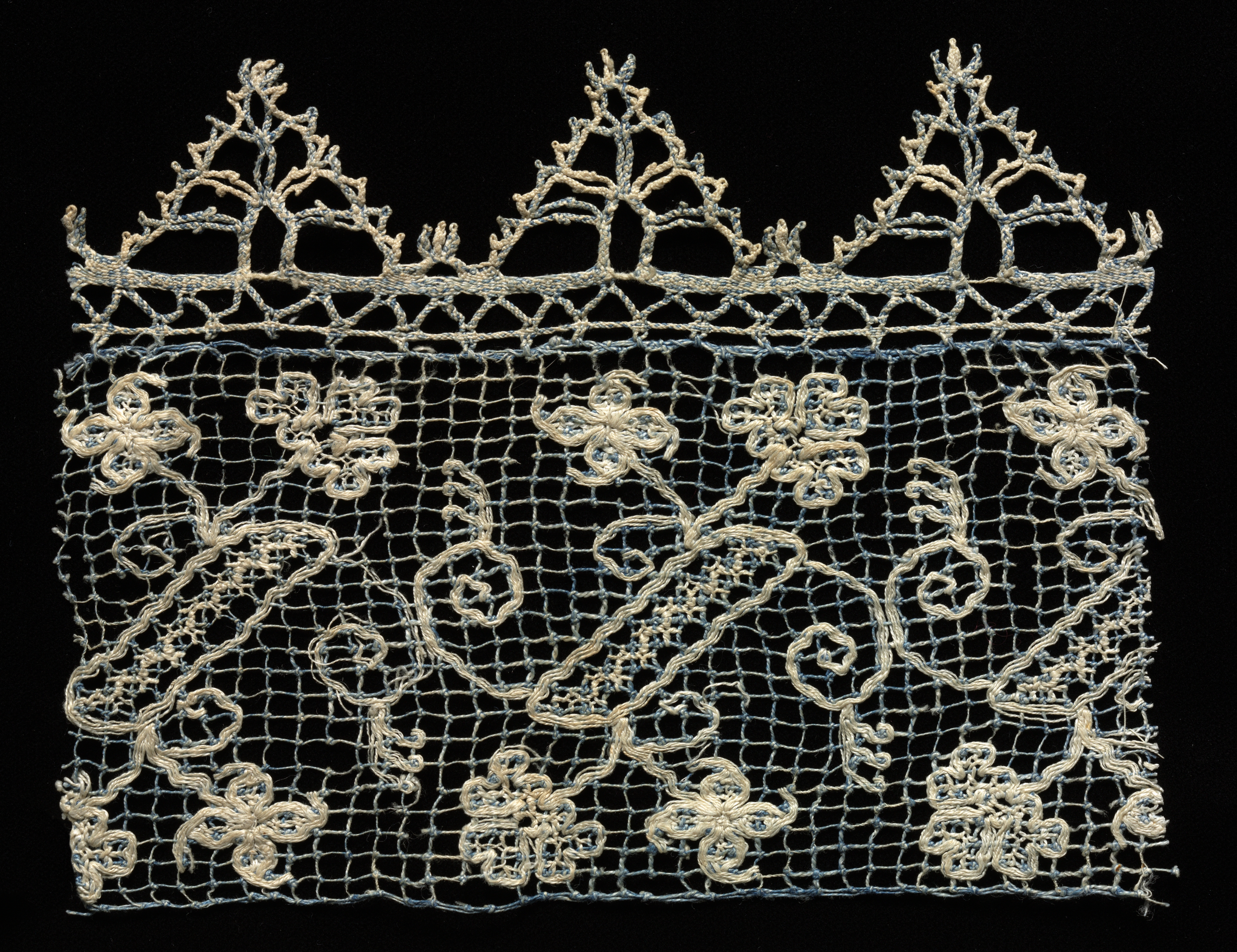
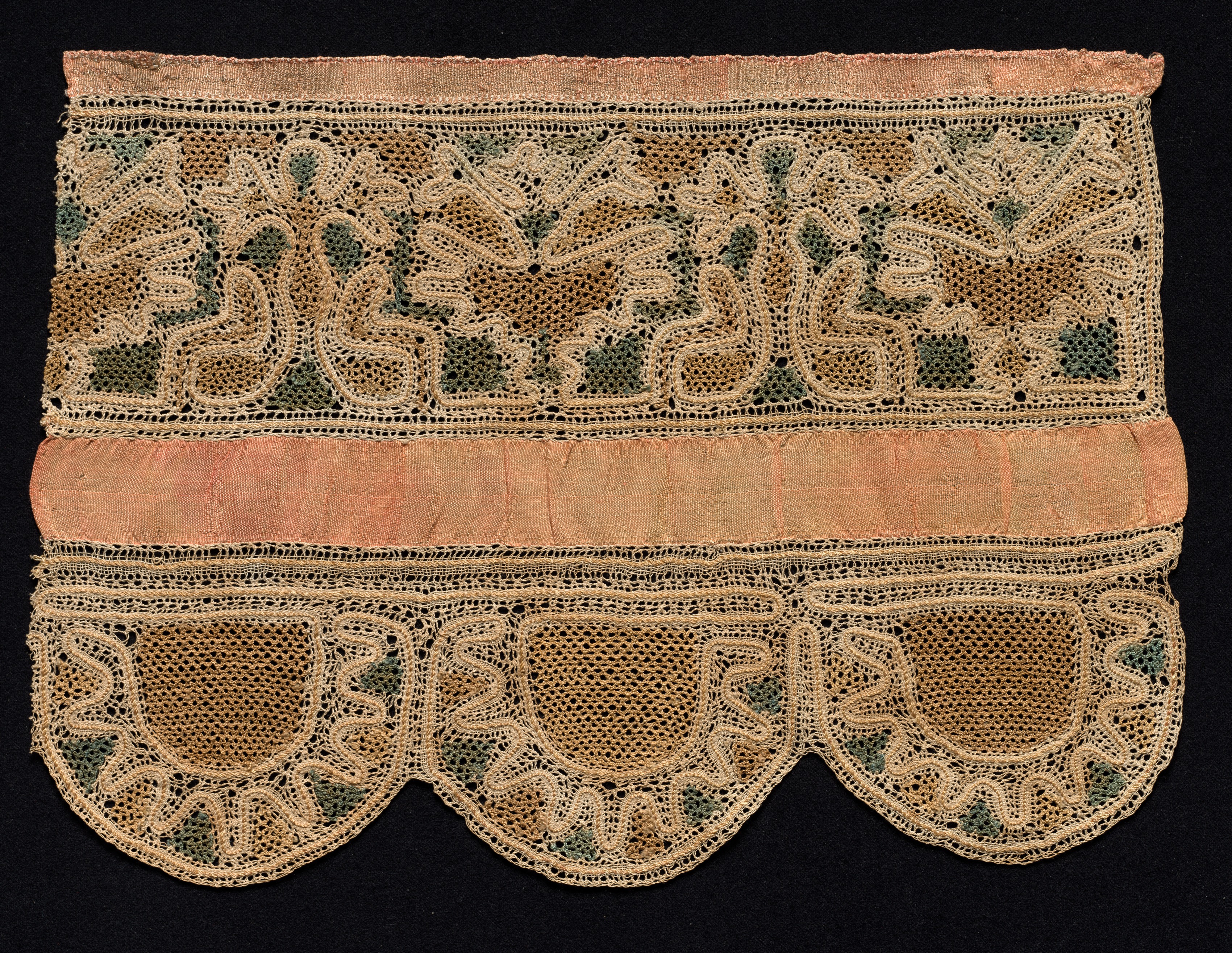
Fragment of a Border with Vines and Floral Motifs
Bleached and blue-dyed linen, the light blue ground showing through the needle lace in patterns of its own. Where the thread changes thickness, the ground becomes part of the design.
× px · Unmodified source file
Small archival scan: best for reference and screen use, not large prints.
Open in StudioSource & licensing
- Creator / date
- Italy, maker unknown · 1600s
- Source credit
- The Cleveland Museum of Art, 1920.1129. Open Access.
- Usage notes
- Released by the Cleveland Museum of Art under CC0 1.0. Credit to the museum is encouraged; CC0 does not imply endorsement.
- Original file
- × px · JPG · 0.0 MB
- Source checked
- 2026-11-04 · editorial approval separate
CC0 · Public domain · 1500s
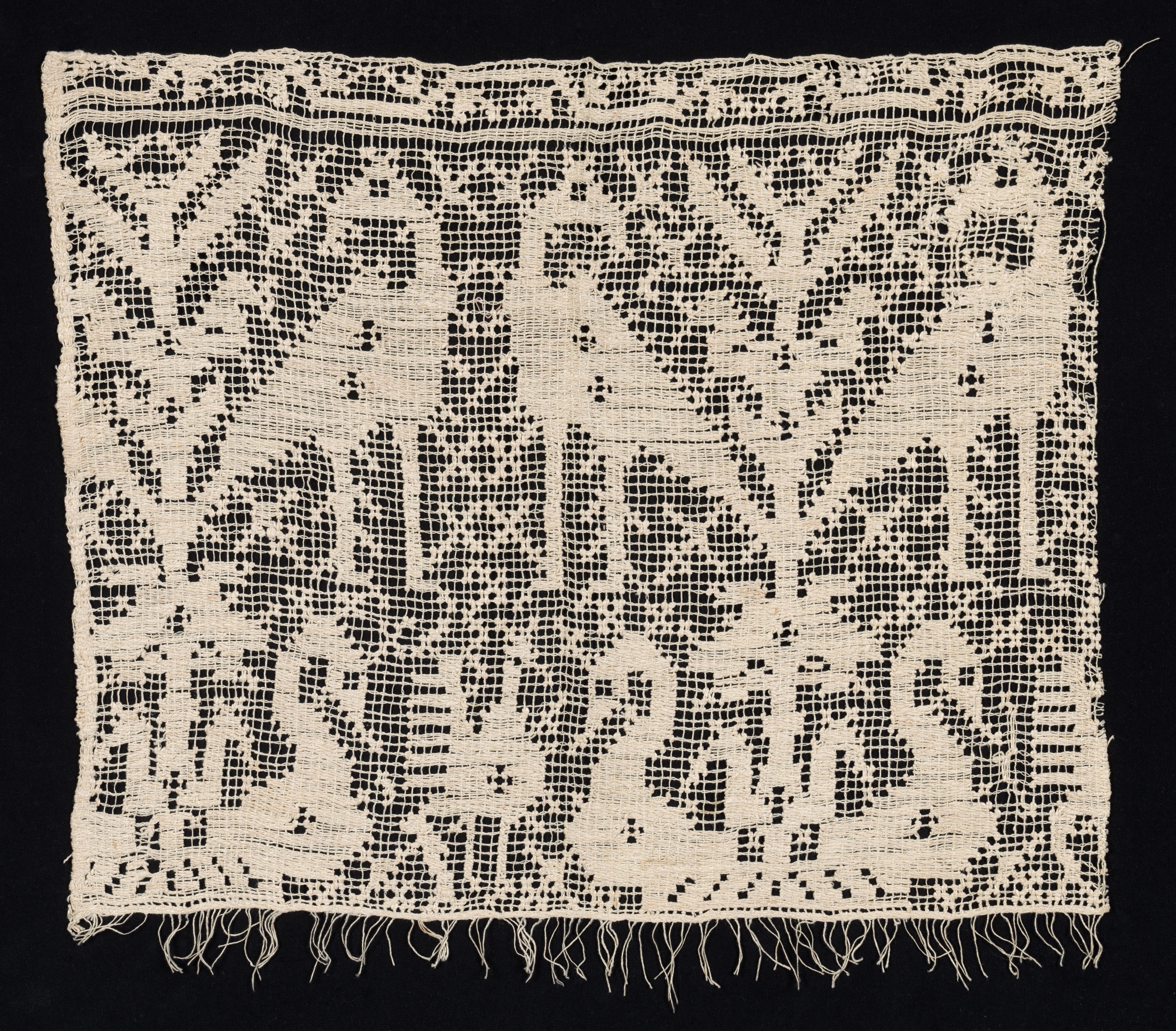
Fragment of a Border with Birds Amidst Vegetation
Three distinct bird species, told apart by body, neck and feather shapes, standing and seated among vegetation. Sixteenth-century lacemakers worked from pattern books shared across Europe.
× px · Unmodified source file
Small archival scan: best for reference and screen use, not large prints.
Open in StudioSource & licensing
- Creator / date
- Italy, maker unknown · 1500s
- Source credit
- The Cleveland Museum of Art, 1920.1141. Open Access.
- Usage notes
- Released by the Cleveland Museum of Art under CC0 1.0. Credit to the museum is encouraged; CC0 does not imply endorsement.
- Original file
- × px · JPG · 0.0 MB
- Source checked
- 2026-11-04 · editorial approval separate
CC0 · Public domain · 1500s–1600s
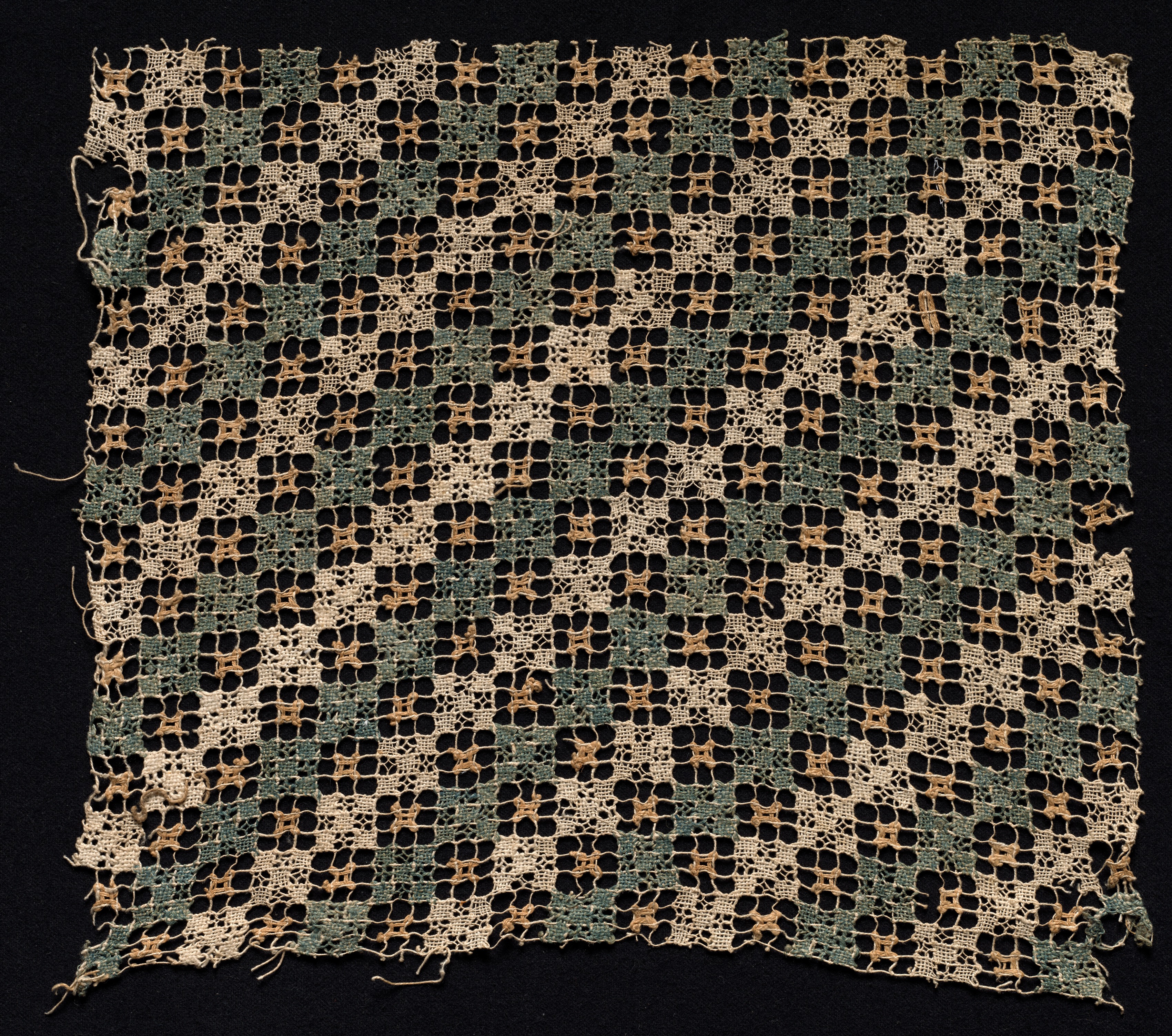
Fragment with Repeated Square Pattern
Bleached, dyed and unbleached linen in a diagonal square repeat. The unbleached yellow and the dyed thread make the grid without any change of stitch.
× px · Unmodified source file
Small archival scan: best for reference and screen use, not large prints.
Open in StudioSource & licensing
- Creator / date
- Italy, maker unknown · 1500s–1600s
- Source credit
- The Cleveland Museum of Art, 1920.1157. Open Access.
- Usage notes
- Released by the Cleveland Museum of Art under CC0 1.0. Credit to the museum is encouraged; CC0 does not imply endorsement.
- Original file
- × px · JPG · 0.0 MB
- Source checked
- 2026-11-04 · editorial approval separate
CC0 · Public domain · 1800s
Fragment of a Band with Geometric Pattern and Floral Motif
Burato work, a twined ground that produces a mesh, with a floral motif set into it. Geometrically regular grounds with a single organic figure is the simplest and most durable lace formula.
× px · Unmodified source file
Small archival scan: best for reference and screen use, not large prints.
Open in StudioSource & licensing
- Creator / date
- Italy, maker unknown · 1800s
- Source credit
- The Cleveland Museum of Art, 1936.221. Open Access.
- Usage notes
- Released by the Cleveland Museum of Art under CC0 1.0. Credit to the museum is encouraged; CC0 does not imply endorsement.
- Original file
- × px · JPG · 0.0 MB
- Source checked
- 2026-11-04 · editorial approval separate
CC0 · Public domain · early 1700s
Pair of Lace Lappets
Bobbin lace in the Point d’Angleterre style, two lappets that hung from a lace head. Very few complete eighteenth-century lace headdresses survive; the parts outlasted the whole.
× px · Unmodified source file
Small archival scan: best for reference and screen use, not large prints.
Open in StudioSource & licensing
- Creator / date
- Belgium, Brussels, maker unknown · early 1700s
- Source credit
- The Cleveland Museum of Art, 1923.1002. Open Access.
- Usage notes
- Released by the Cleveland Museum of Art under CC0 1.0. Credit to the museum is encouraged; CC0 does not imply endorsement.
- Original file
- × px · JPG · 0.0 MB
- Source checked
- 2026-11-04 · editorial approval separate
CC0 · Public domain · mid-1700s
Lace Cap Crown
The crown of a Brussels lace cap, the piece that sat over the head while the lappets fell at the sides. Punto in aria, worked in the air without a woven ground, is what allows the flowers to stand free.
× px · Unmodified source file
Small archival scan: best for reference and screen use, not large prints.
Open in StudioSource & licensing
- Creator / date
- Belgium, Brussels, maker unknown · mid-1700s
- Source credit
- The Cleveland Museum of Art, 1923.1021. Open Access.
- Usage notes
- Released by the Cleveland Museum of Art under CC0 1.0. Credit to the museum is encouraged; CC0 does not imply endorsement.
- Original file
- × px · JPG · 0.0 MB
- Source checked
- 2026-11-04 · editorial approval separate
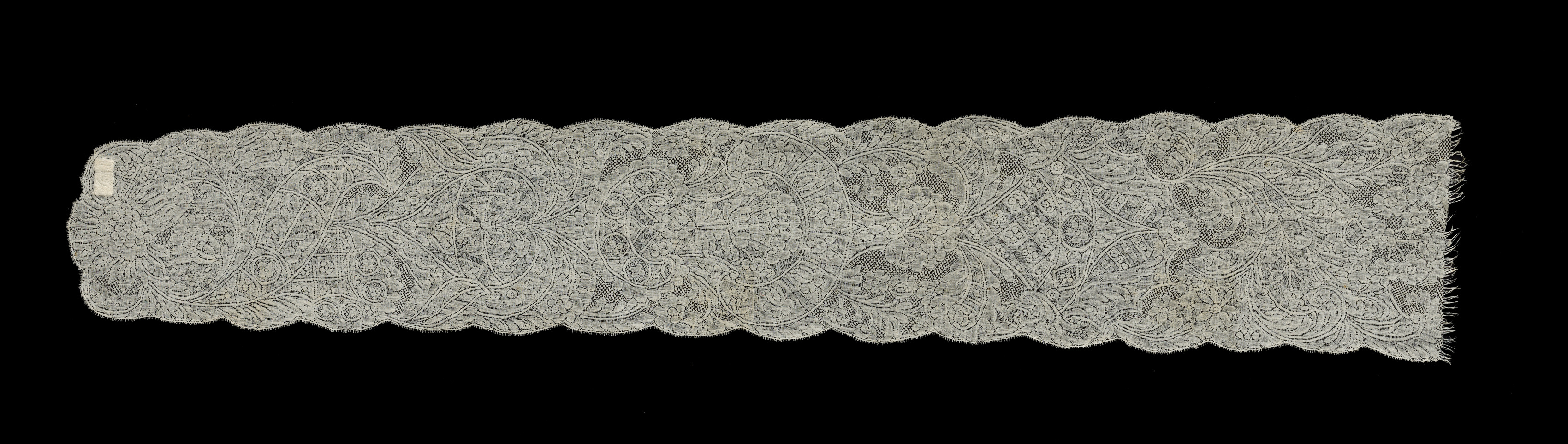
CC0 · Public domain · 1740–60
Lace Lappet (one of a pair)
A single Binche lappet in linen bobbin lace, separated from its pair. Binche lace is worked in one continuous piece, so a break in the pattern is also a break in the work.
× px · Unmodified source file
Small archival scan: best for reference and screen use, not large prints.
Open in StudioSource & licensing
- Creator / date
- Belgium, Binche, maker unknown · 1740–60
- Source credit
- The Cleveland Museum of Art, 1936.259. Open Access.
- Usage notes
- Released by the Cleveland Museum of Art under CC0 1.0. Credit to the museum is encouraged; CC0 does not imply endorsement.
- Original file
- × px · JPG · 0.0 MB
- Source checked
- 2026-11-04 · editorial approval separate
CC0 · Public domain · 1700–1715
Lace Flounce
A Point de France flounce, a deep band made for the hem of a gown. Matching pieces are held at the Rijksmuseum, the Isabella Stewart Gardner Museum and the Musée des Arts Décoratifs, which suggests a set divided among collections.
× px · Unmodified source file
Small archival scan: best for reference and screen use, not large prints.
Open in StudioSource & licensing
- Creator / date
- France, maker unknown · 1700–1715
- Source credit
- The Cleveland Museum of Art, 1930.654. Open Access.
- Usage notes
- Released by the Cleveland Museum of Art under CC0 1.0. Credit to the museum is encouraged; CC0 does not imply endorsement.
- Original file
- × px · JPG · 0.0 MB
- Source checked
- 2026-11-04 · editorial approval separate
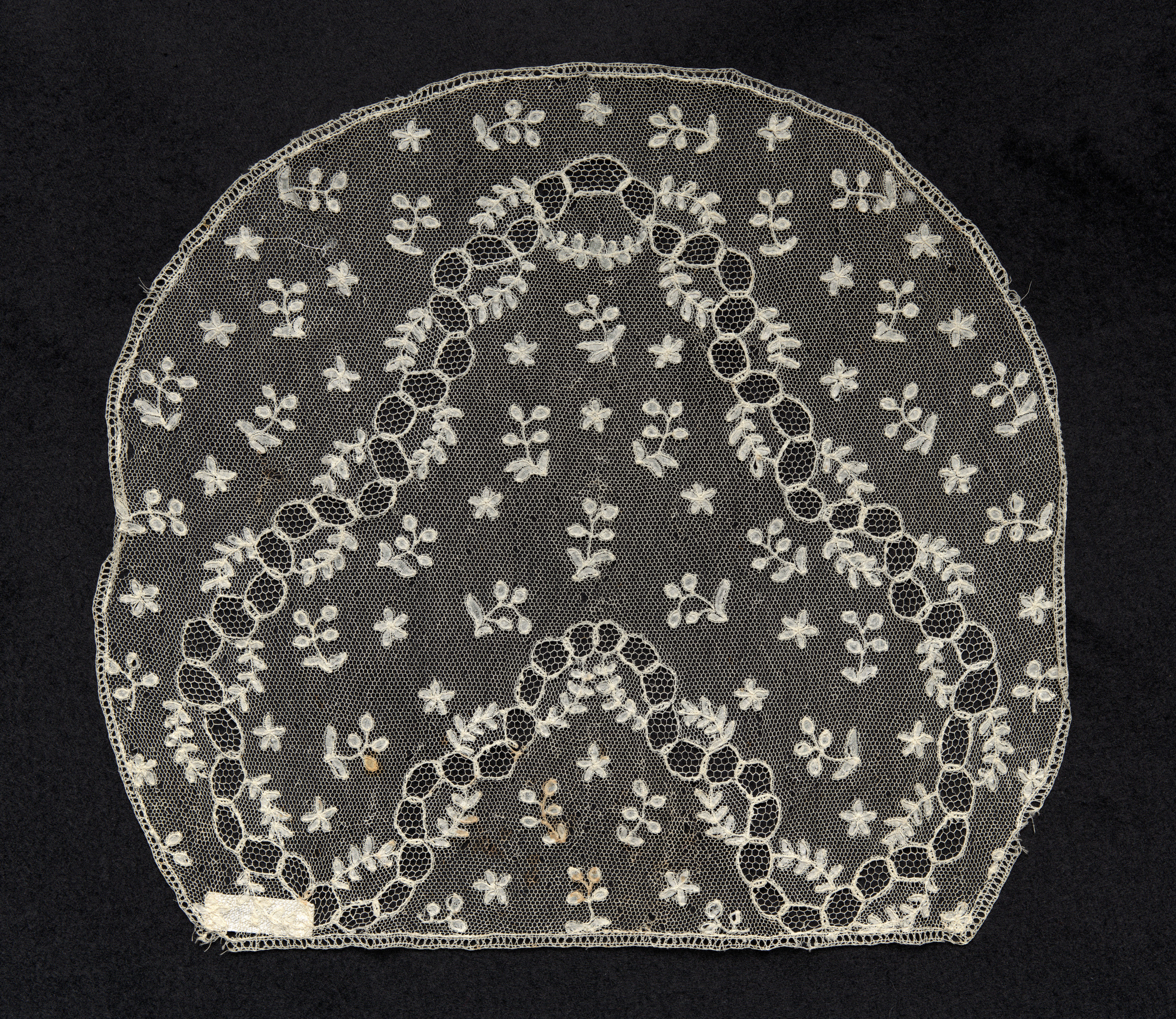
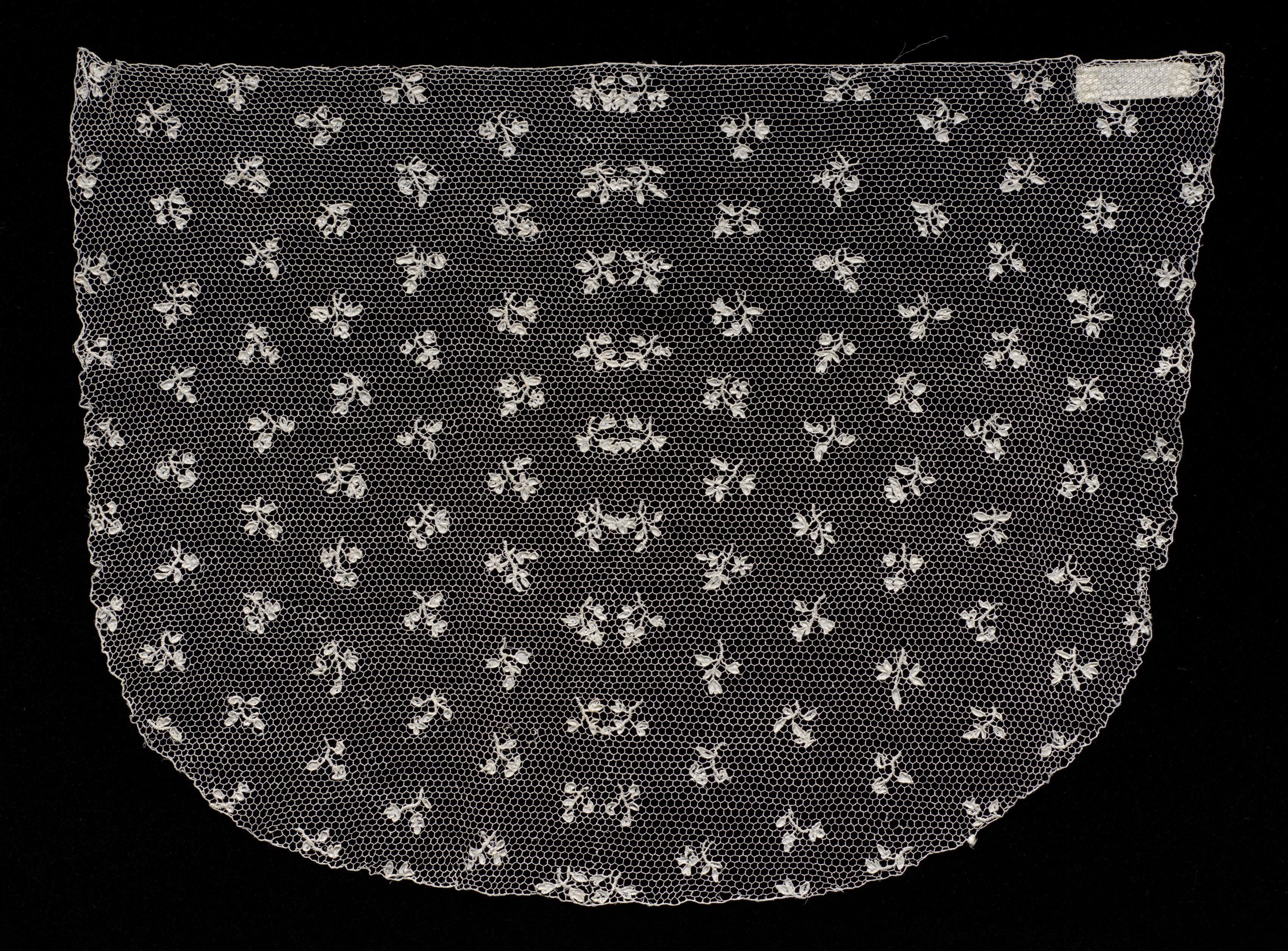
CC0 · Public domain · 1760–99
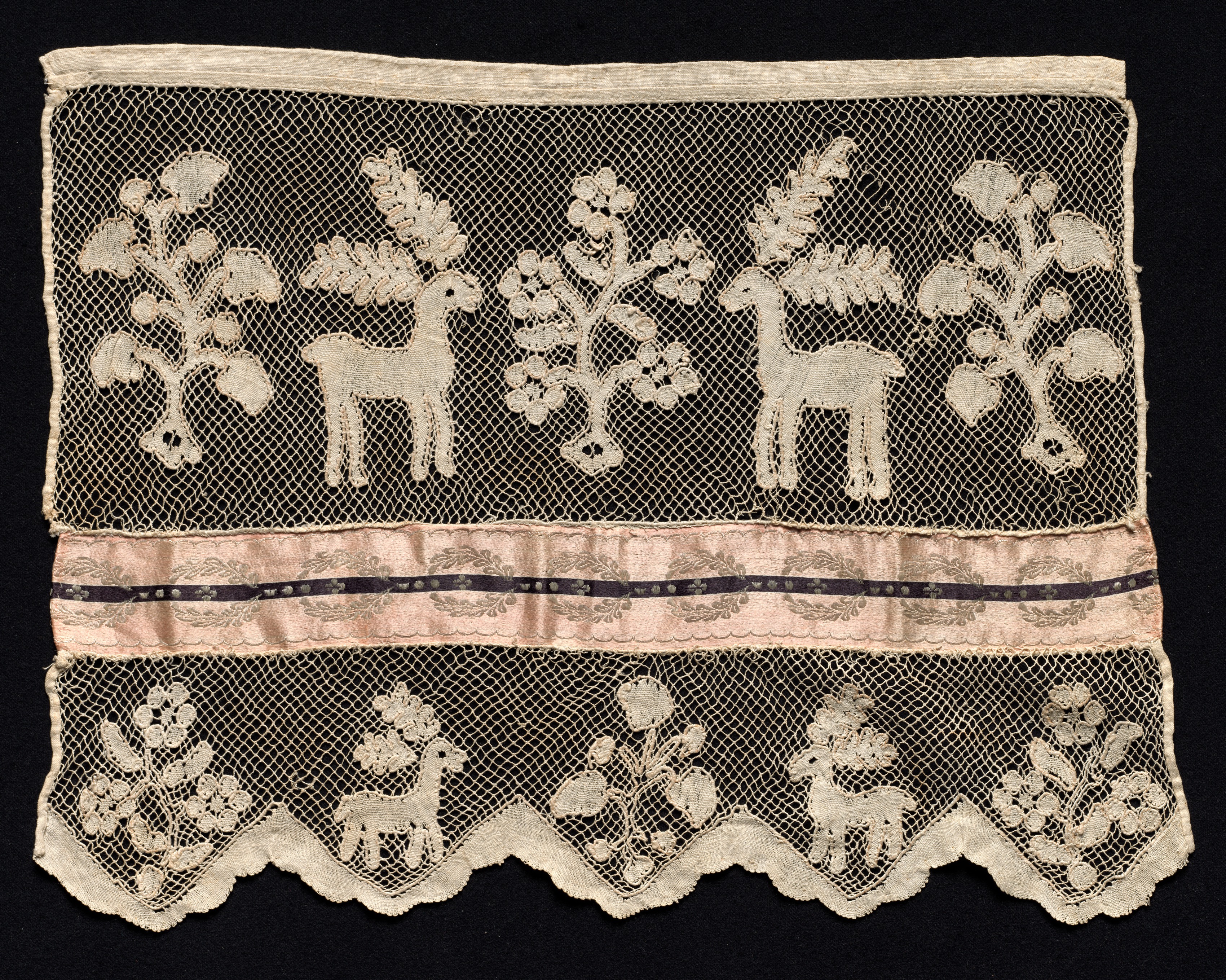
Lace Cap
Needle lace in the Louis XVI style, small sprigs of flowers scattered over a net ground rather than packed into a dense field. The change is a change of taste as much as of technique.
× px · Unmodified source file
Small archival scan: best for reference and screen use, not large prints.
Open in StudioSource & licensing
- Creator / date
- France, Argentan, maker unknown · 1760–99
- Source credit
- The Cleveland Museum of Art, 1923.1001. Open Access.
- Usage notes
- Released by the Cleveland Museum of Art under CC0 1.0. Credit to the museum is encouraged; CC0 does not imply endorsement.
- Original file
- × px · JPG · 0.0 MB
- Source checked
- 2026-11-04 · editorial approval separate
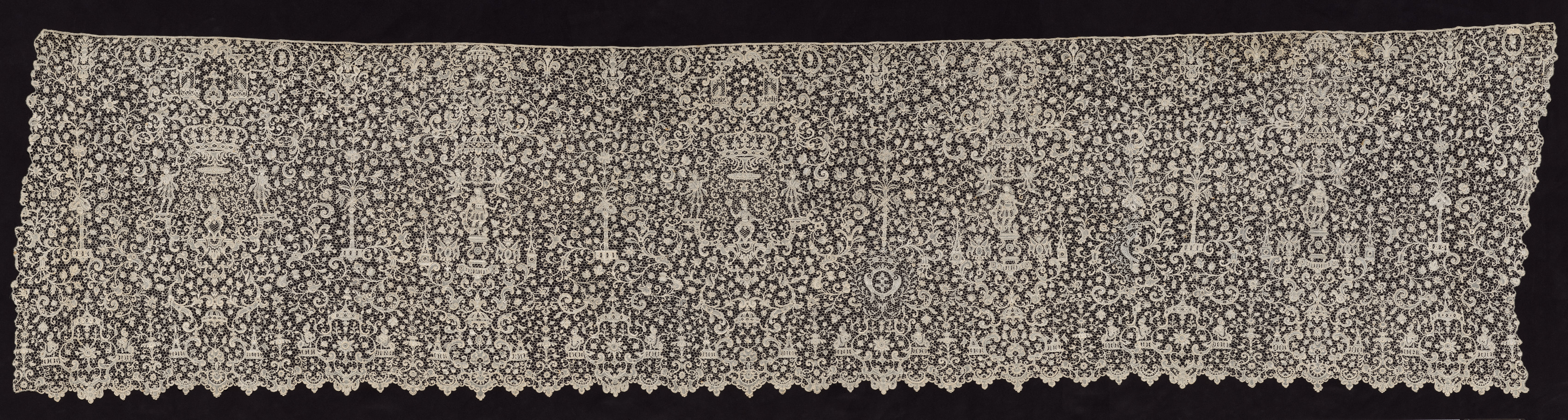
CC0 · Public domain · 1700s
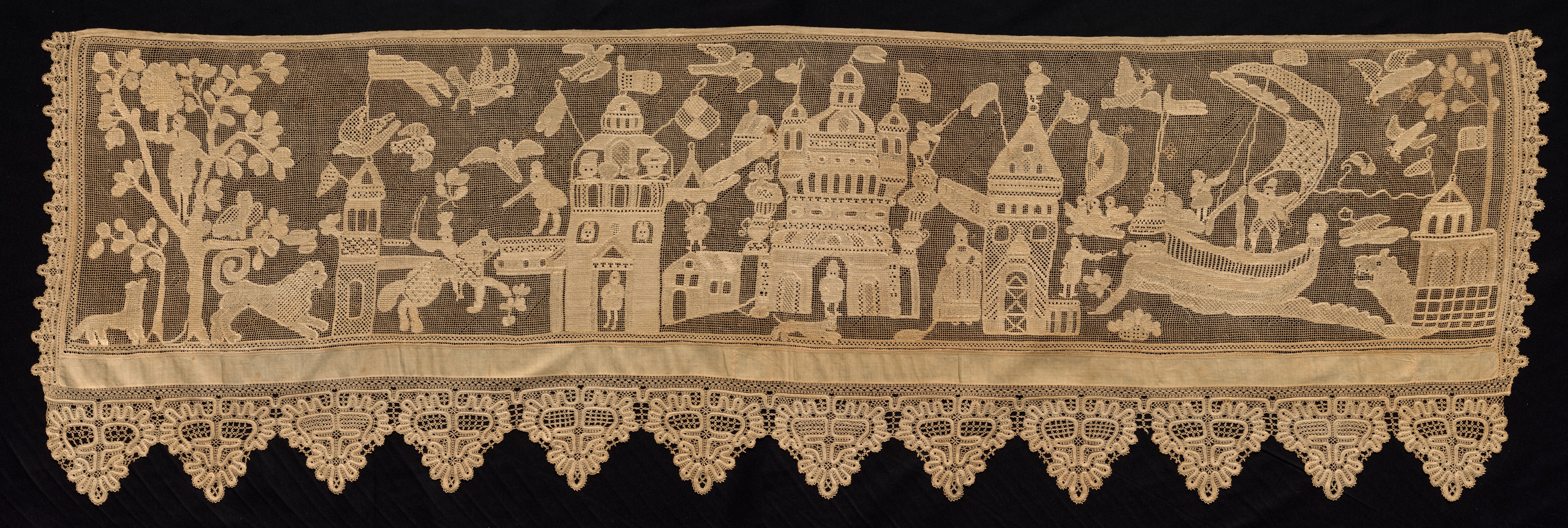
Lace Border with Battle Scene
A valance for a bed frame, with needle lace cutwork and drawnwork across its length and a battle in the middle. Such a valance was a standard piece of an eighteenth-century bride’s dowry.
× px · Unmodified source file
Small archival scan: best for reference and screen use, not large prints.
Open in StudioSource & licensing
- Creator / date
- Russia, maker unknown · 1700s
- Source credit
- The Cleveland Museum of Art, 1921.596. Open Access.
- Usage notes
- Released by the Cleveland Museum of Art under CC0 1.0. Credit to the museum is encouraged; CC0 does not imply endorsement.
- Original file
- × px · JPG · 0.0 MB
- Source checked
- 2026-11-04 · editorial approval separate
CC0 · Public domain · 1700s–1800s
Lace Towel End
A towel end in continuous bobbin lace, made to be shown on a hanging towel rather than used for drying. Russian lace carries folk motifs and ritual signs that predate the lace technique itself.
× px · Unmodified source file
Small archival scan: best for reference and screen use, not large prints.
Open in StudioSource & licensing
- Creator / date
- Russia, Nizhny-Novgorod province, maker unknown · 1700s–1800s
- Source credit
- The Cleveland Museum of Art, 1931.107. Open Access.
- Usage notes
- Released by the Cleveland Museum of Art under CC0 1.0. Credit to the museum is encouraged; CC0 does not imply endorsement.
- Original file
- × px · JPG · 0.0 MB
- Source checked
- 2026-11-04 · editorial approval separate
CC0 · Public domain · 1700s–1800s
Lace Towel End
A second provincial towel end, from Orel. Comparing it with the Nizhny-Novgorod example shows how far a shared repertoire travelled between Russian lace centres.
× px · Unmodified source file
Small archival scan: best for reference and screen use, not large prints.
Open in StudioSource & licensing
- Creator / date
- Russia, Orel province, maker unknown · 1700s–1800s
- Source credit
- The Cleveland Museum of Art, 1931.106. Open Access.
- Usage notes
- Released by the Cleveland Museum of Art under CC0 1.0. Credit to the museum is encouraged; CC0 does not imply endorsement.
- Original file
- × px · JPG · 0.0 MB
- Source checked
- 2026-11-04 · editorial approval separate
CC0 · Public domain · 1700s–1800s
Lace Towel End
A third towel end, from Kostroma, worked in fine bobbin lace. The differences between provinces are in the drawing of the motifs rather than in the technique.
× px · Unmodified source file
Small archival scan: best for reference and screen use, not large prints.
Open in StudioSource & licensing
- Creator / date
- Russia, Kostroma province, maker unknown · 1700s–1800s
- Source credit
- The Cleveland Museum of Art, 1931.108. Open Access.
- Usage notes
- Released by the Cleveland Museum of Art under CC0 1.0. Credit to the museum is encouraged; CC0 does not imply endorsement.
- Original file
- × px · JPG · 0.0 MB
- Source checked
- 2026-11-04 · editorial approval separate
CC0 · Public domain · 1800s
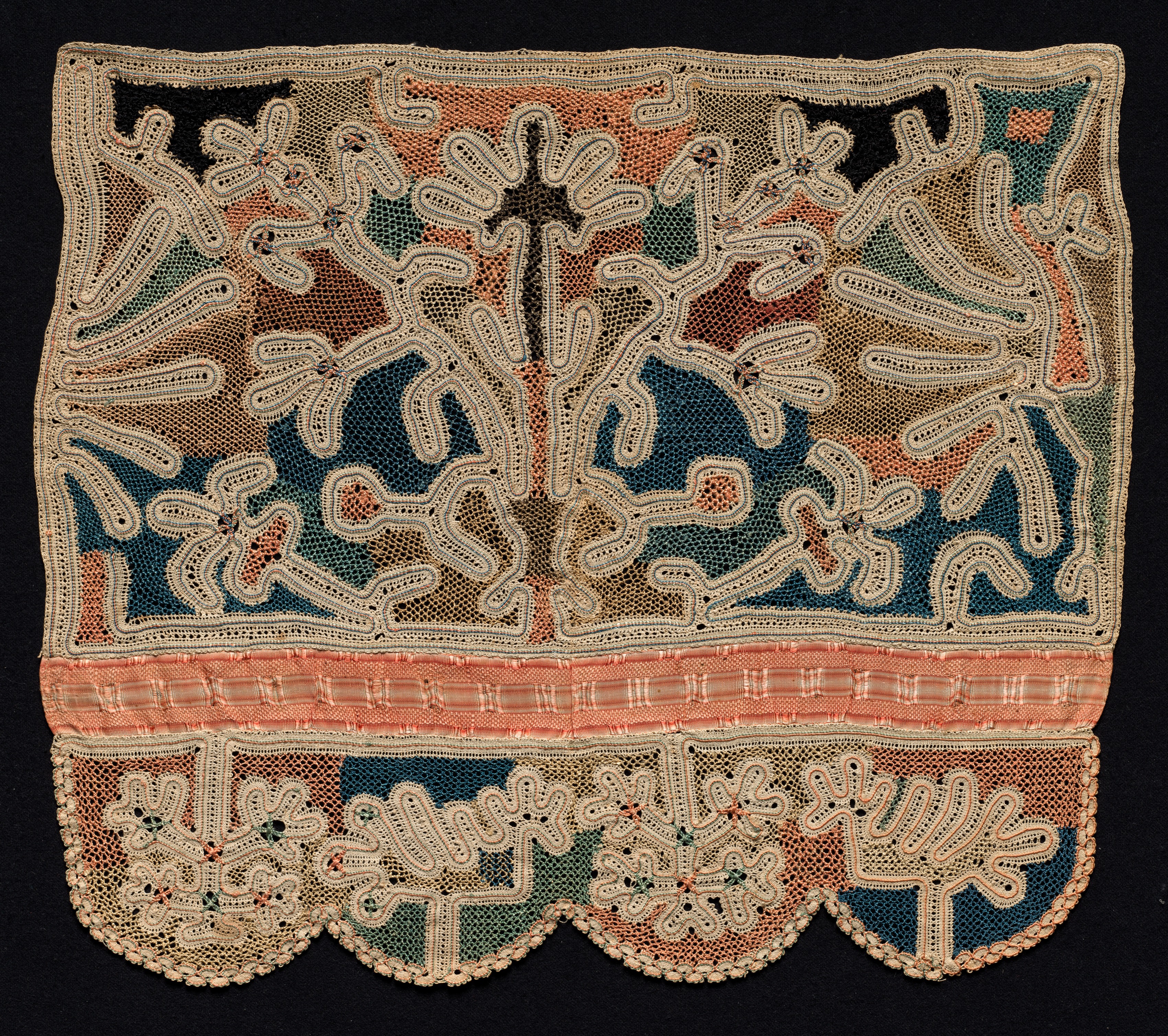
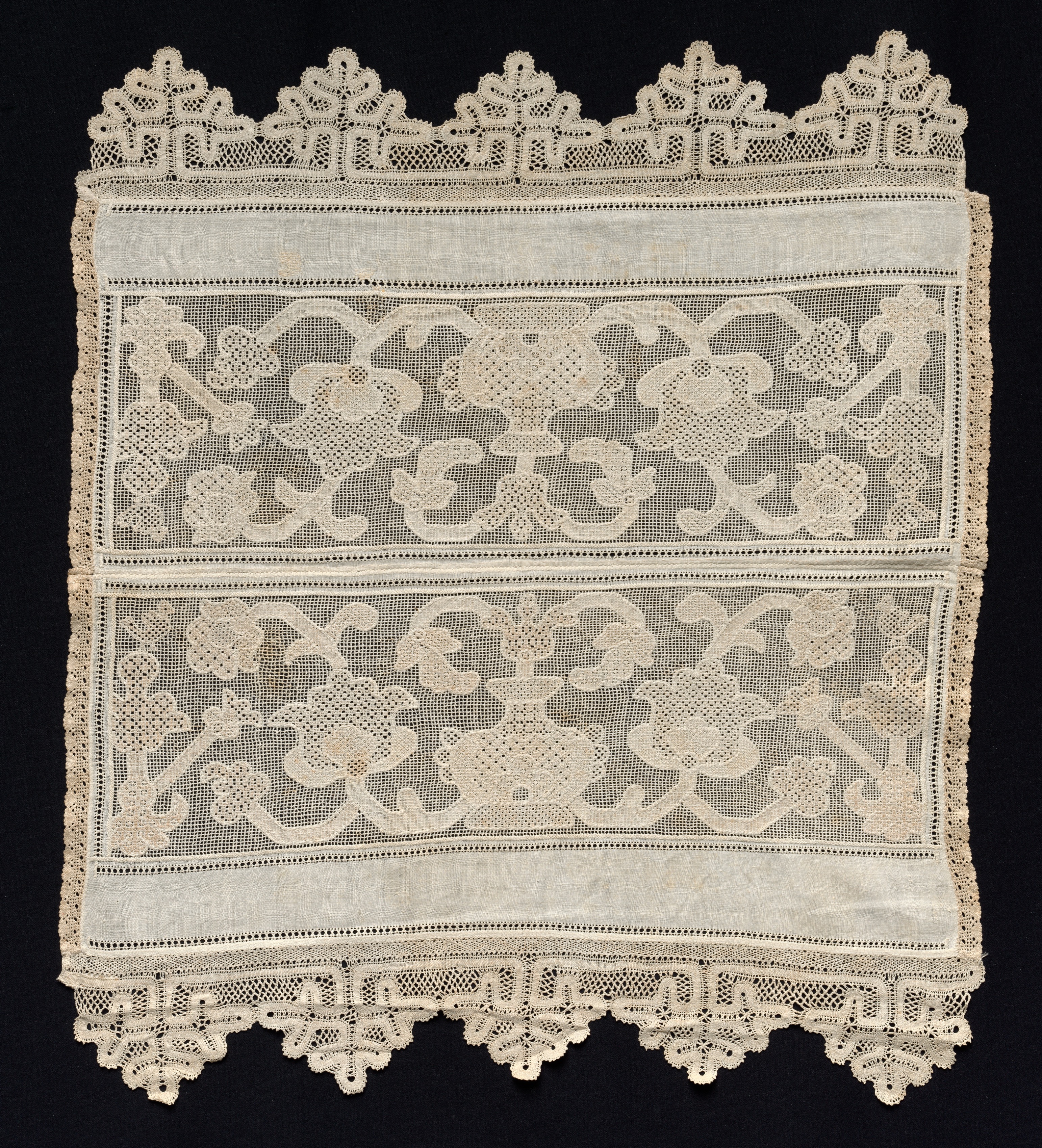
Joined Towel Ends with Floral Motifs
Two towel ends joined into one cloth, both in stylised floral needle lace. Russian lacemakers took their floral drawing from Flemish models and made it flatter and more symmetrical.
× px · Unmodified source file
Small archival scan: best for reference and screen use, not large prints.
Open in StudioSource & licensing
- Creator / date
- Russia, maker unknown · 1800s
- Source credit
- The Cleveland Museum of Art, 1921.1135. Open Access.
- Usage notes
- Released by the Cleveland Museum of Art under CC0 1.0. Credit to the museum is encouraged; CC0 does not imply endorsement.
- Original file
- × px · JPG · 0.0 MB
- Source checked
- 2026-11-04 · editorial approval separate
CC0 · Public domain · 1800s
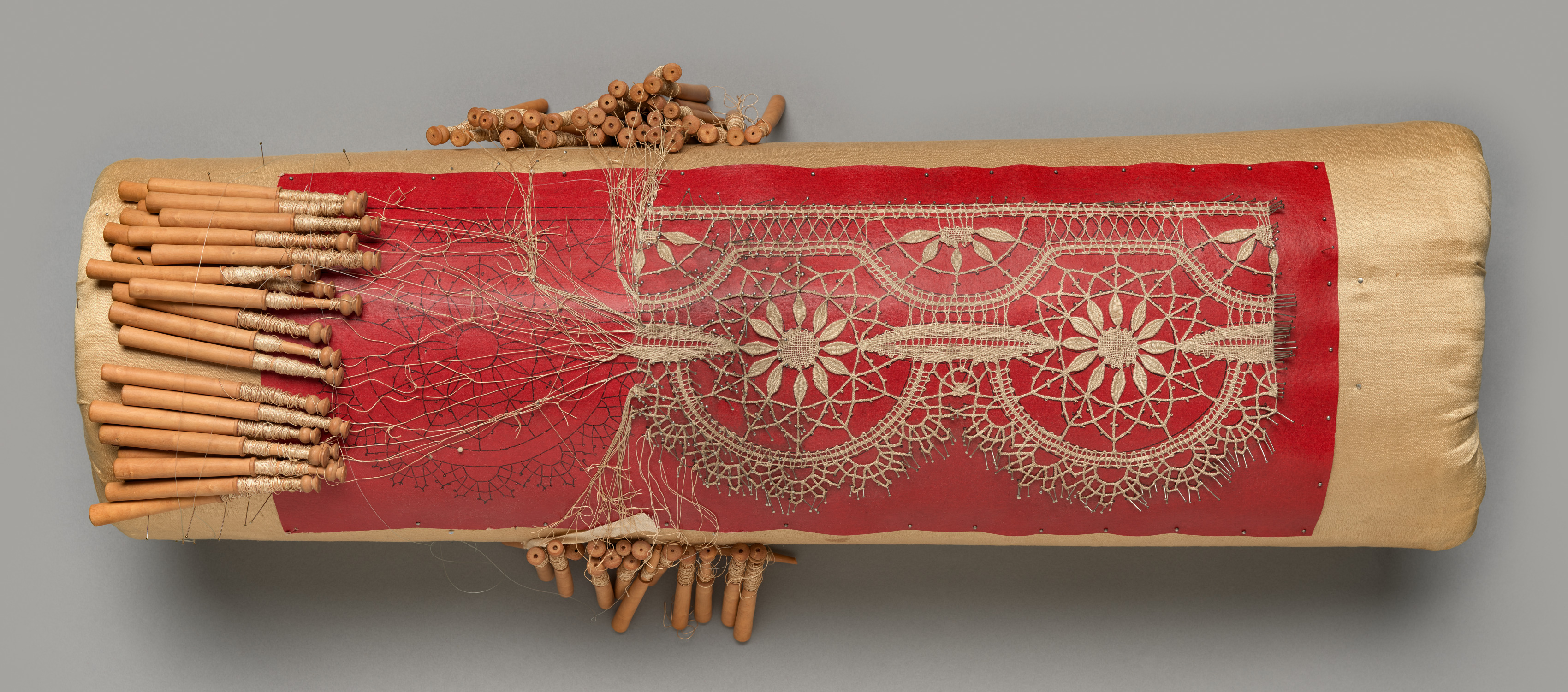
Lace Pillow
A cylindrical straw-stuffed bolster with its pins and bobbins, the tool on which Spanish torchon lace is worked. The pillow is the workshop, and it survives more rarely than the lace.
× px · Unmodified source file
Small archival scan: best for reference and screen use, not large prints.
Open in StudioSource & licensing
- Creator / date
- Spain, maker unknown · 1800s
- Source credit
- The Cleveland Museum of Art, 1914.533. Open Access.
- Usage notes
- Released by the Cleveland Museum of Art under CC0 1.0. Credit to the museum is encouraged; CC0 does not imply endorsement.
- Original file
- × px · JPG · 0.0 MB
- Source checked
- 2026-11-04 · editorial approval separate
Public-domain status is reported by the linked source and may vary by jurisdiction. Check the source record for your intended use. No exclusive rights or Visual Bounty marketplace license are offered for these images.