← Open CollectionsPublic-domain source library
Blue Skin: Krishna in Indian Painting
Krishna is painted as a child stealing butter, a boy calling the cattle home, a lover waiting on a bed, a god dancing on a serpent’s hoods. Indian painters returned to him because his life supplied every register at once: comedy, erotic delay, violence and cosmology, in one blue figure. These paintings come from three different workshops, the Pahari and Rajput courts of the north and the pilgrim market of Kalighat in Kolkata, and the difference shows in everything from the gold to the paper. All are gum tempera, colour bound with plant gum and laid in flat areas, then polished.
Original means the unmodified digital file supplied by the linked archive, not an upscaled or reconstructed image. Sign in for free downloads. Studio uses a working preview up to 2048 px.
CC0 · Public domain · c. 1680
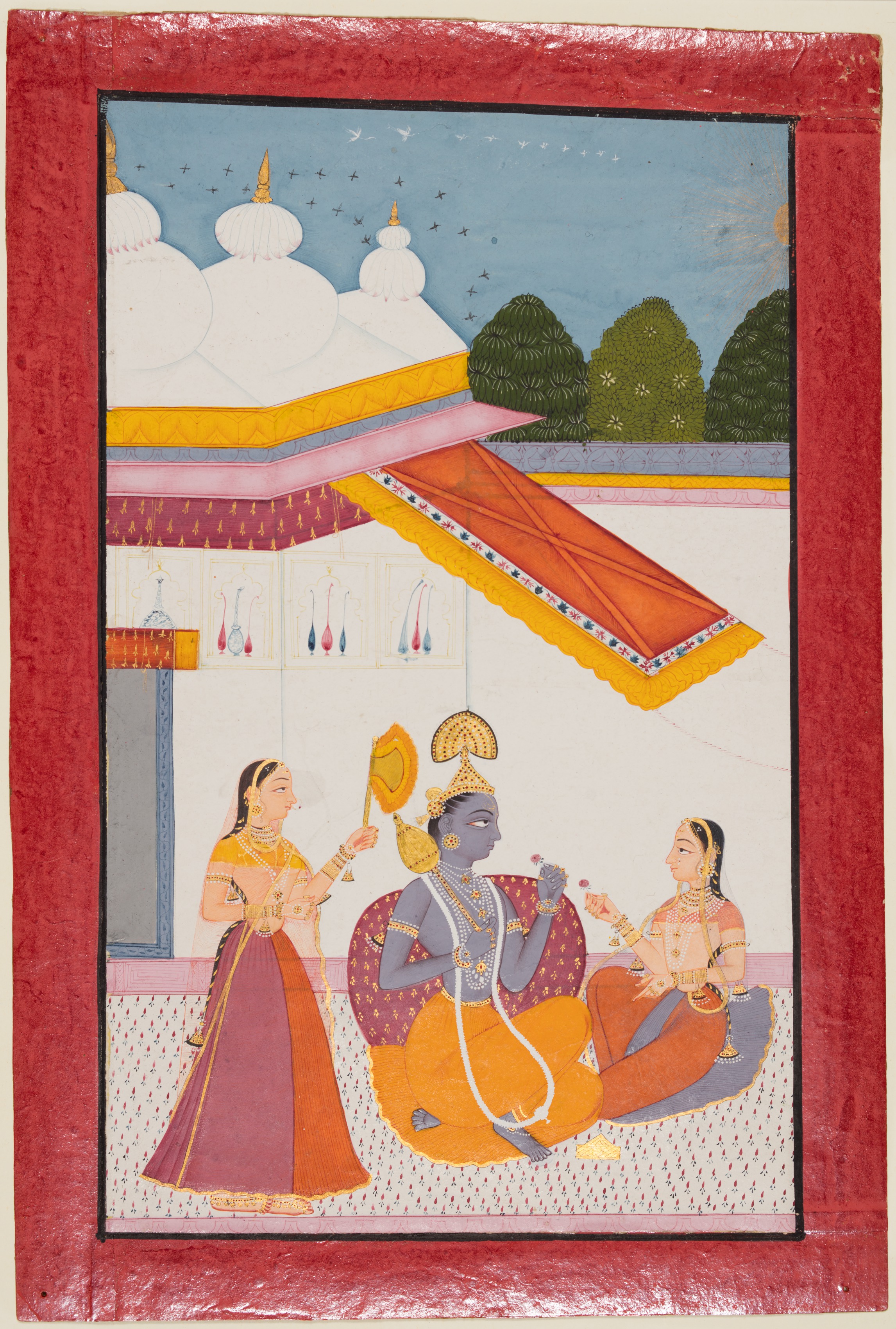
Krishna Under a Canopy
A tranquil, languid scene on a white marble terrace with a carpet, where Krishna takes the place of an earthly prince while an attendant stands by. Rajput Raghogarh, about 1680.
2293 × 3400 px · Unmodified source file
Open in StudioSource & licensing
- Creator / date
- Northwestern India, Rajasthan, Rajput Kingdom of Raghogarh, maker unknown · c. 1680
- Source credit
- The Cleveland Museum of Art, 2018.184. Open Access.
- Usage notes
- Released by the Cleveland Museum of Art under CC0 1.0. Credit to the museum is encouraged; CC0 does not imply endorsement.
- Original file
- 2293 × 3400 px · JPG · 0.0 MB
- Source checked
- 2026-11-04 · editorial approval separate
CC0 · Public domain · c. 1710
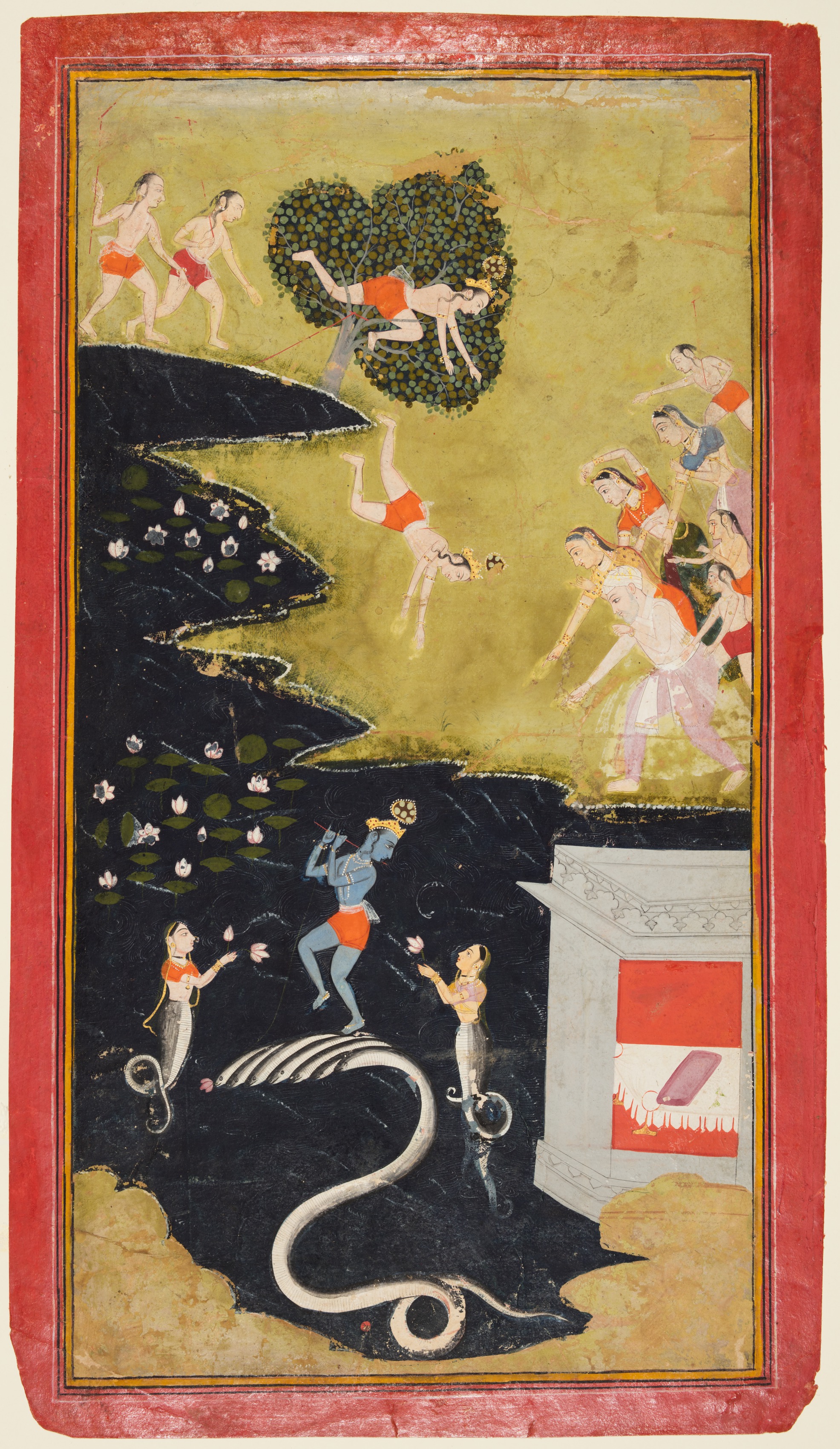
Krishna Quells the Serpent Kaliya, from a Bhagavata Purana
In the forest where Krishna lived among the cowherds there was a pool of the Yamuna poisoned by the serpent Kaliya, and he subdues the snake by dancing on its hoods. Mewar, about 1710.
1972 × 3400 px · Unmodified source file
Open in StudioSource & licensing
- Creator / date
- Northwestern India, Rajasthan, Rajput Kingdom of Mewar, maker unknown · c. 1710
- Source credit
- The Cleveland Museum of Art, 2018.141. Open Access.
- Usage notes
- Released by the Cleveland Museum of Art under CC0 1.0. Credit to the museum is encouraged; CC0 does not imply endorsement.
- Original file
- 1972 × 3400 px · JPG · 0.0 MB
- Source checked
- 2026-11-04 · editorial approval separate
CC0 · Public domain · c. 1720–25
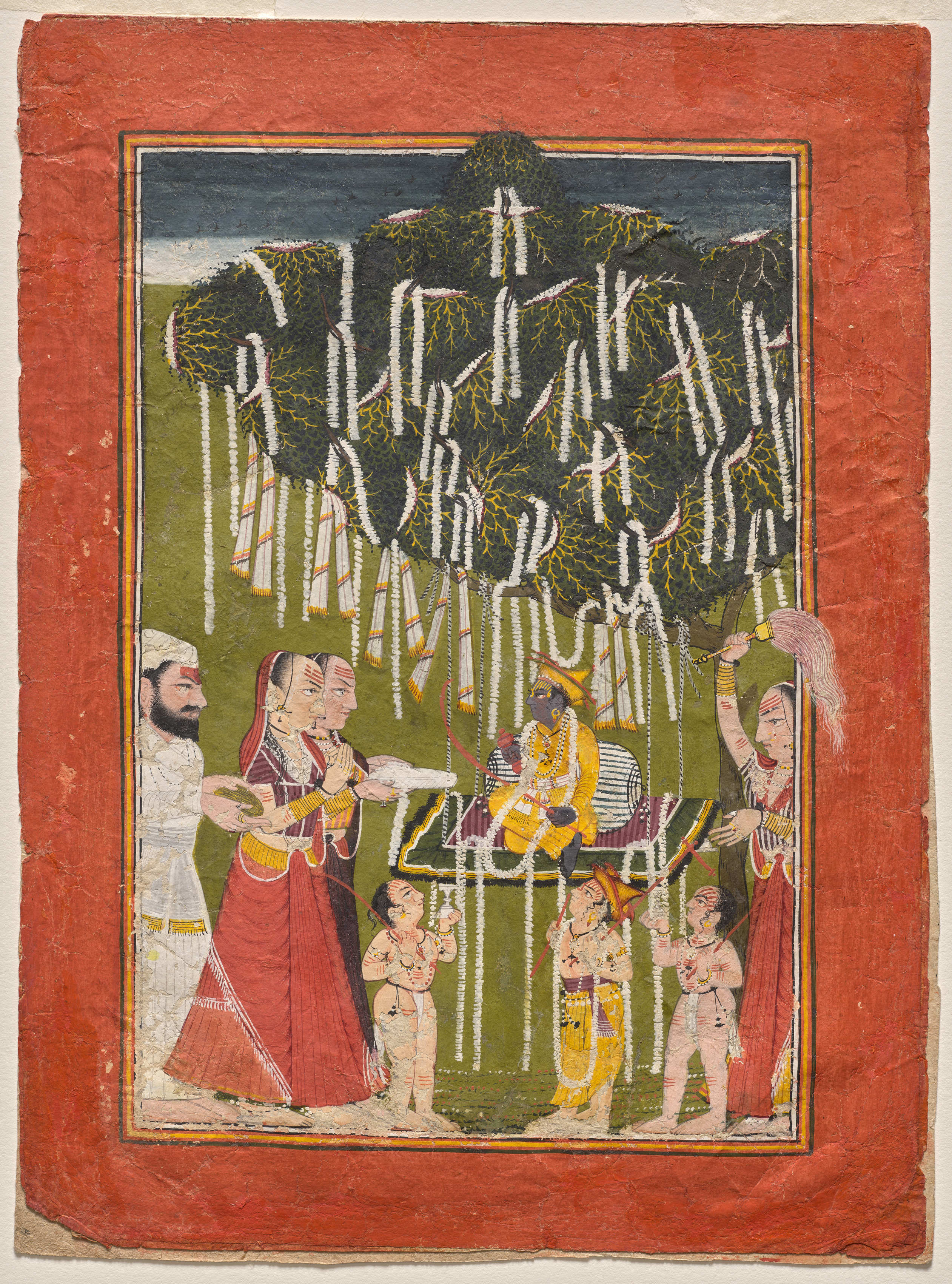
Adoration of young Krishna
Krishna worshipped under a pipal tree by a group of Shaivite devotees, identifiable by the horizontal marks on their foreheads: a sectarian image made for a shared devotional culture.
2522 × 3400 px · Unmodified source file
Open in StudioSource & licensing
- Creator / date
- Northern India, Pahari kingdoms, maker unknown · c. 1720–25
- Source credit
- The Cleveland Museum of Art, 2018.97. Open Access.
- Usage notes
- Released by the Cleveland Museum of Art under CC0 1.0. Credit to the museum is encouraged; CC0 does not imply endorsement.
- Original file
- 2522 × 3400 px · JPG · 0.0 MB
- Source checked
- 2026-11-04 · editorial approval separate
CC0 · Public domain · c. 1750–60
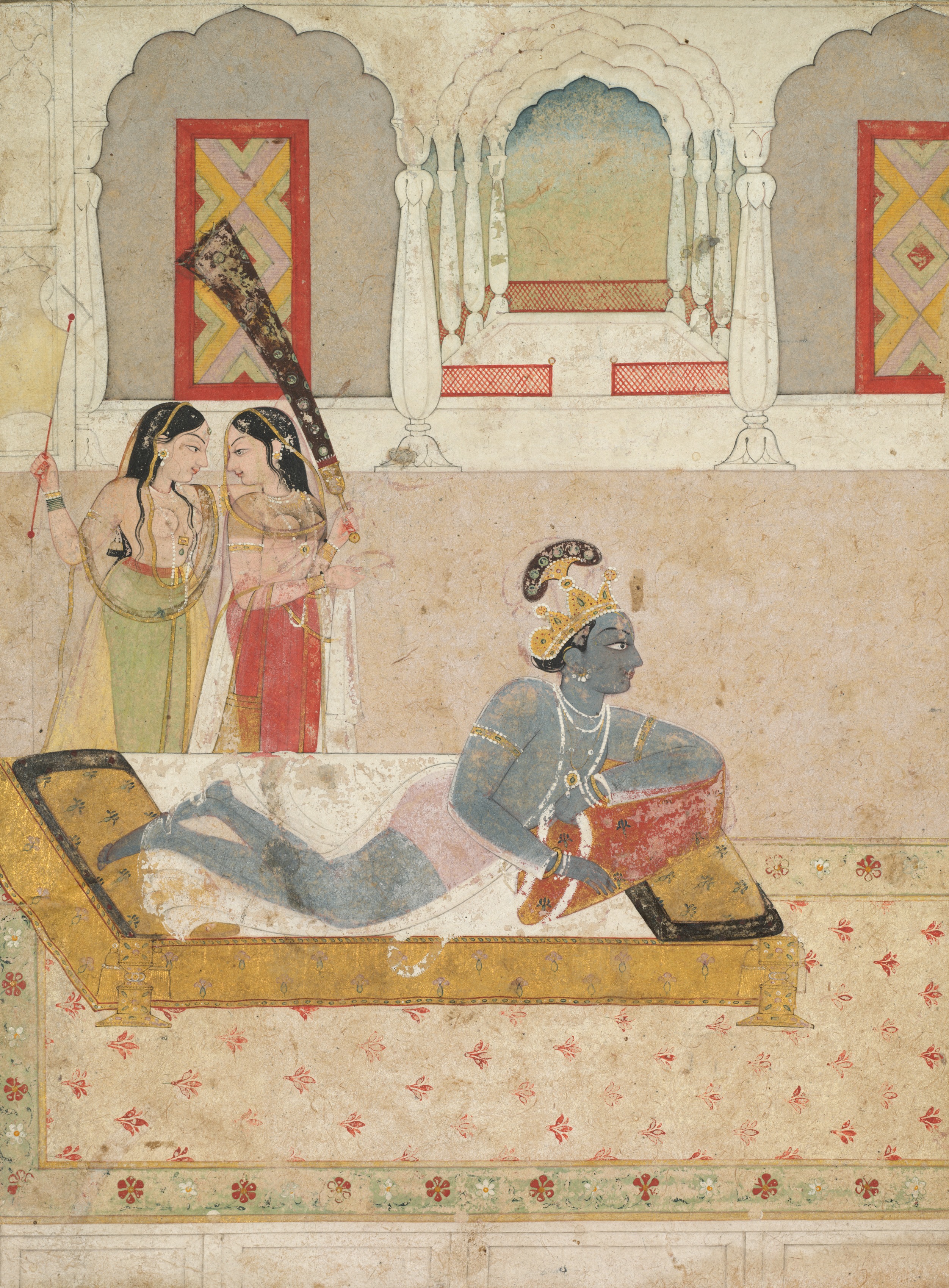
Krishna Awaiting Radha
Krishna reclines on a bed, alert, waiting for Radha, and ignores the two attendants holding fly-whisks. The wait is the subject, and the painting is about anticipation rather than arrival.
2504 × 3400 px · Unmodified source file
Open in StudioSource & licensing
- Creator / date
- Northern India, Pahari kingdoms, maker unknown · c. 1750–60
- Source credit
- The Cleveland Museum of Art, 1936.685. Open Access.
- Usage notes
- Released by the Cleveland Museum of Art under CC0 1.0. Credit to the museum is encouraged; CC0 does not imply endorsement.
- Original file
- 2504 × 3400 px · JPG · 0.0 MB
- Source checked
- 2026-11-04 · editorial approval separate
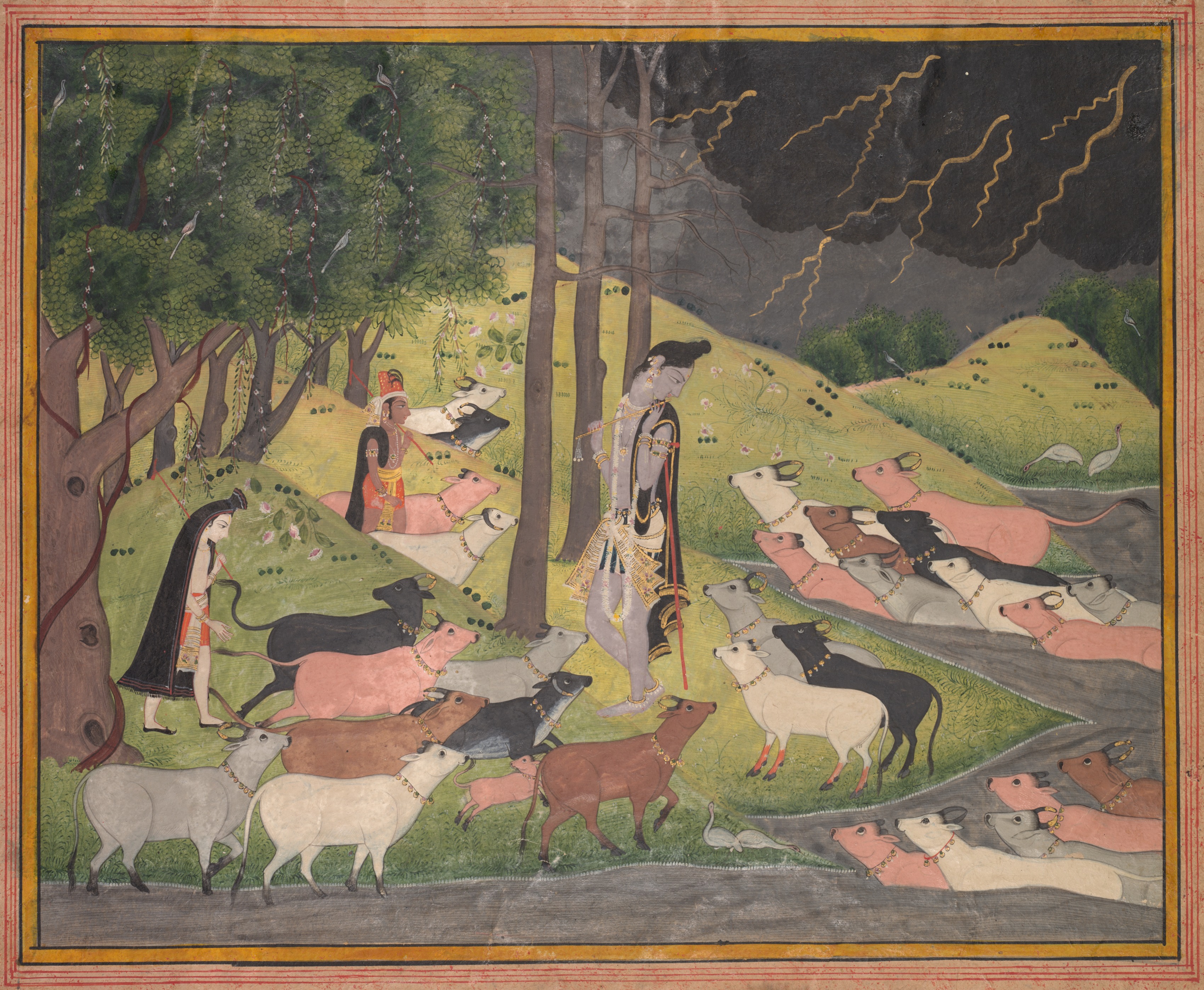
CC0 · Public domain · c. 1780–90
Krishna summoning the cows
As a child Krishna grew up among cowherds, marked as divine by his blue skin and his power over the herd. Here he calls the cows home, in a landscape of overlapping hills built like stage flats.
3400 × 2795 px · Unmodified source file
Open in StudioSource & licensing
- Creator / date
- Northern India, Pahari kingdoms, maker unknown · c. 1780–90
- Source credit
- The Cleveland Museum of Art, 1989.339. Open Access.
- Usage notes
- Released by the Cleveland Museum of Art under CC0 1.0. Credit to the museum is encouraged; CC0 does not imply endorsement.
- Original file
- 3400 × 2795 px · JPG · 0.0 MB
- Source checked
- 2026-11-04 · editorial approval separate
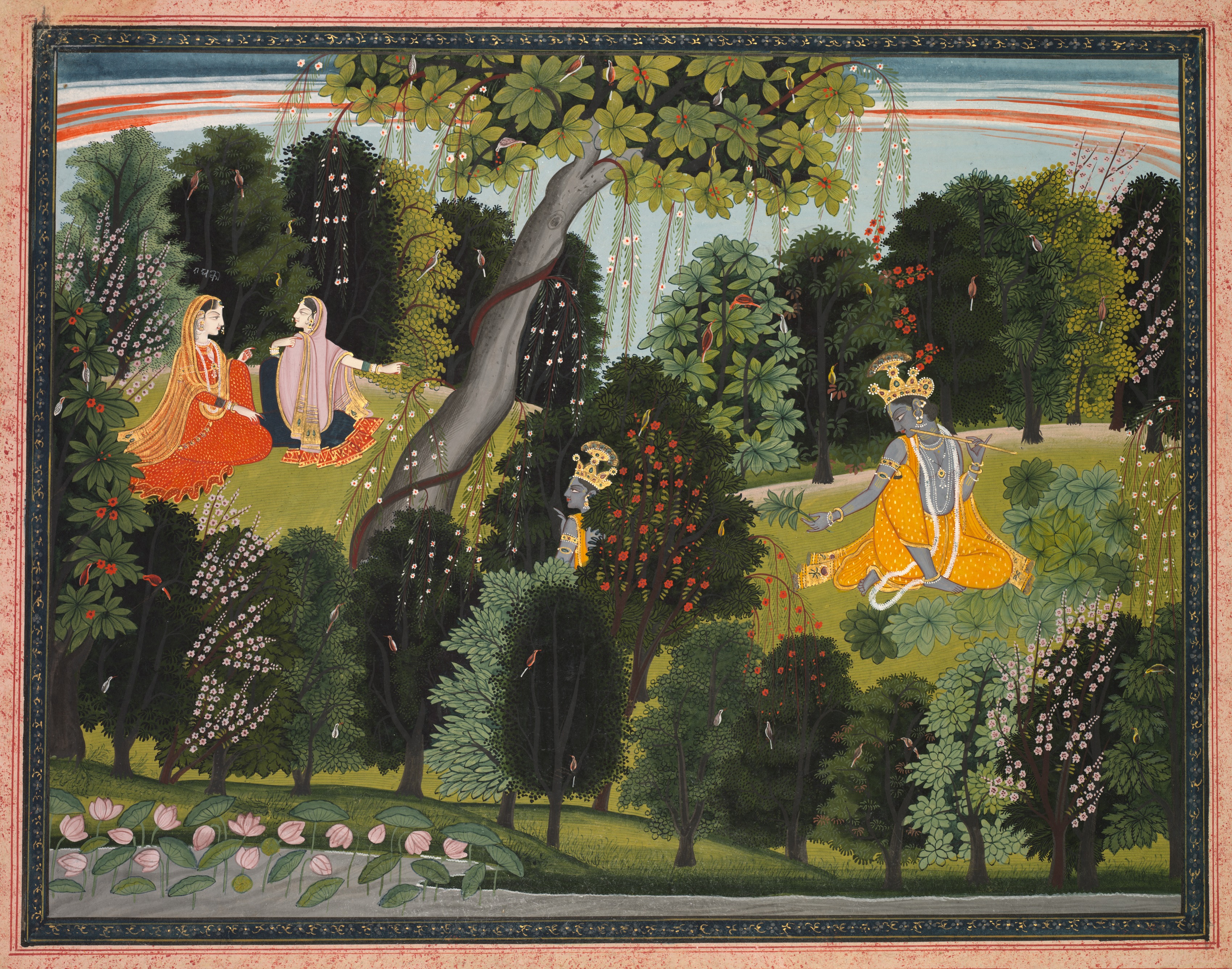
CC0 · Public domain · c. 1820–25
Sakhi persuades Radha to meet Krishna, from a Gita Govinda (Song of the Cowherd) of Jayadeva
All the cowherd girls loved Krishna, and from the thirteenth century on Radha was his favourite. Here a companion persuades her to go to him, at the moment before the meeting.
3400 × 2675 px · Unmodified source file
Open in StudioSource & licensing
- Creator / date
- Purkhu (Indian, 1750–1860) · c. 1820–25
- Source credit
- The Cleveland Museum of Art, 1989.334. Open Access.
- Usage notes
- Released by the Cleveland Museum of Art under CC0 1.0. Credit to the museum is encouraged; CC0 does not imply endorsement.
- Original file
- 3400 × 2675 px · JPG · 0.0 MB
- Source checked
- 2026-11-04 · editorial approval separate
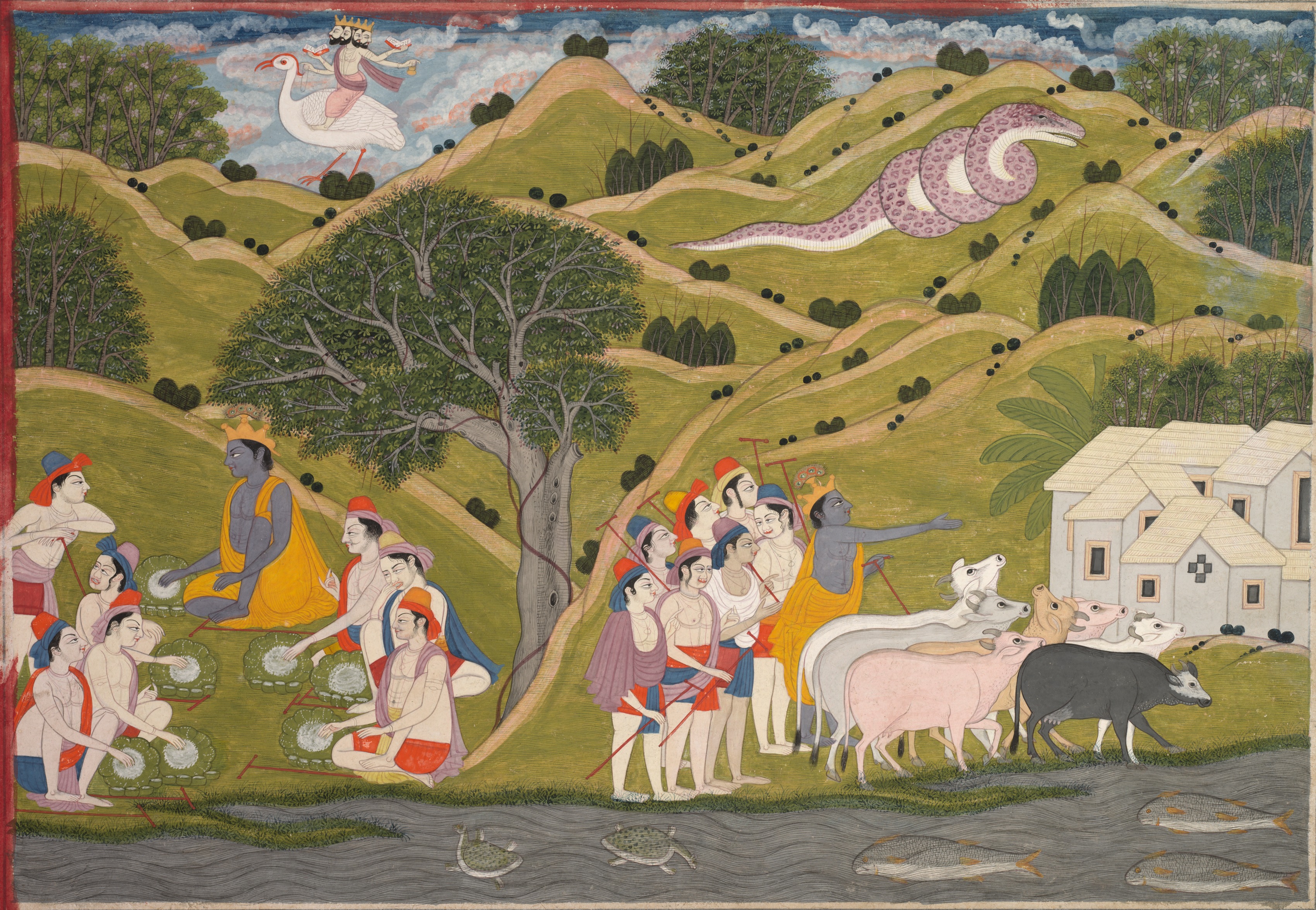
CC0 · Public domain · c. 1830
Krishna returns with the cowherds to Braj, from a Bhagavata Purana
From chapter 14 of book 10 of the Bhagavata Purana, in which Brahma hides the cowherds and calves of Krishna and returns them a year later. A narrative painting that carries its moral in the scale of the figures.
3400 × 2351 px · Unmodified source file
Open in StudioSource & licensing
- Creator / date
- Northern India, Pahari kingdoms, maker unknown · c. 1830
- Source credit
- The Cleveland Museum of Art, 1971.301. Open Access.
- Usage notes
- Released by the Cleveland Museum of Art under CC0 1.0. Credit to the museum is encouraged; CC0 does not imply endorsement.
- Original file
- 3400 × 2351 px · JPG · 0.0 MB
- Source checked
- 2026-11-04 · editorial approval separate
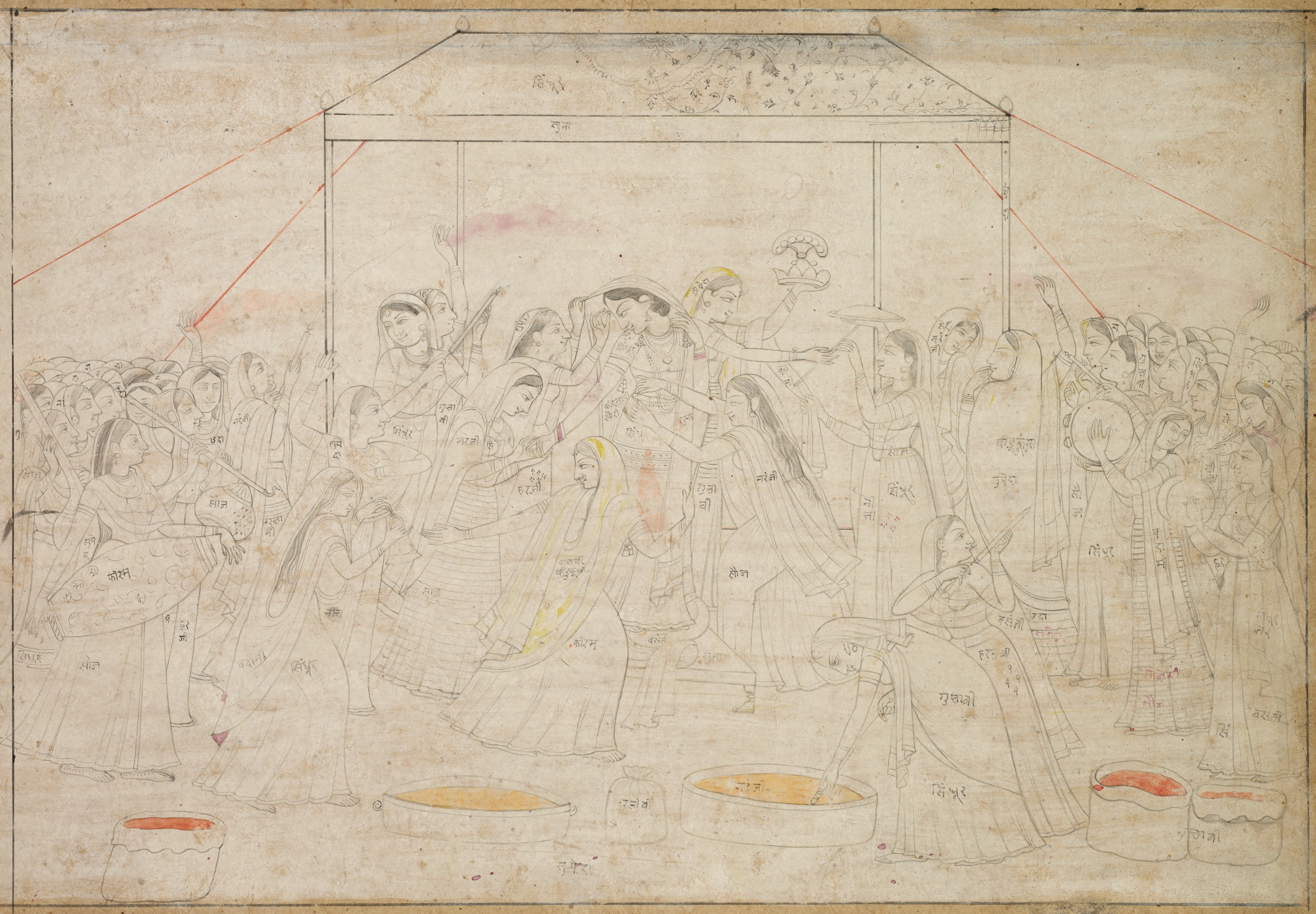
CC0 · Public domain · c. 1790
Krishna being dressed in women’s clothes for the spring festival Holi
At Holi the women dress Krishna in their own clothes and he joins the play. The festival licensed reckless joy and abandon, and the painting takes the licence seriously.
3400 × 2361 px · Unmodified source file
Open in StudioSource & licensing
- Creator / date
- Northern India, Pahari kingdoms, maker unknown · c. 1790
- Source credit
- The Cleveland Museum of Art, 1933.453. Open Access.
- Usage notes
- Released by the Cleveland Museum of Art under CC0 1.0. Credit to the museum is encouraged; CC0 does not imply endorsement.
- Original file
- 3400 × 2361 px · JPG · 0.0 MB
- Source checked
- 2026-11-04 · editorial approval separate
CC0 · Public domain · c. 1790
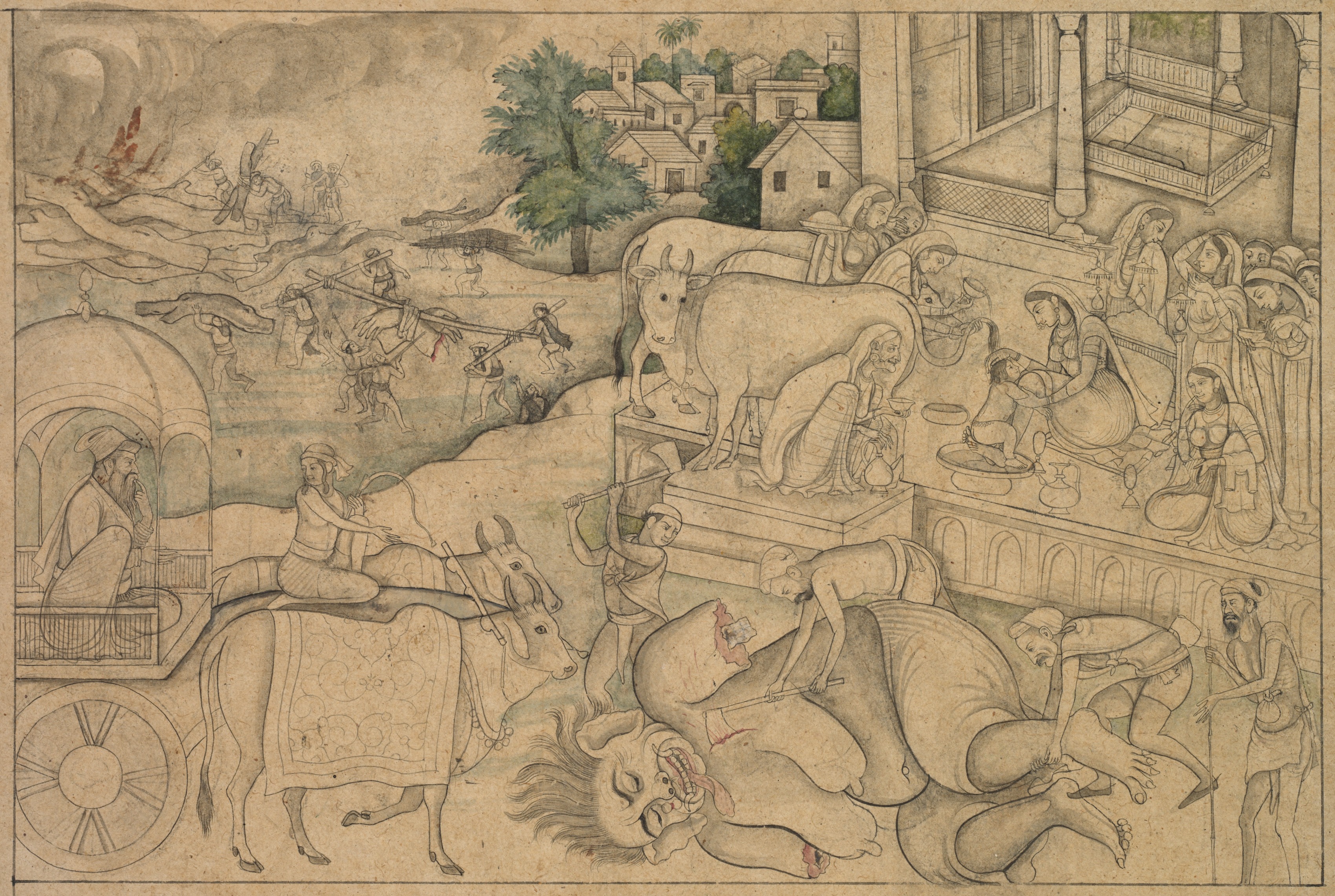
Cremation of the demon Putana, from a Krishna-Lila
The men of Vraj cut up the oversized corpse of the demoness Putana, who tried to kill the infant Krishna and was killed by him. A devotional subject with real violence in the foreground.
3400 × 2282 px · Unmodified source file
Open in StudioSource & licensing
- Creator / date
- Northern India, Pahari kingdoms, maker unknown · c. 1790
- Source credit
- The Cleveland Museum of Art, 1984.4. Open Access.
- Usage notes
- Released by the Cleveland Museum of Art under CC0 1.0. Credit to the museum is encouraged; CC0 does not imply endorsement.
- Original file
- 3400 × 2282 px · JPG · 0.0 MB
- Source checked
- 2026-11-04 · editorial approval separate
CC0 · Public domain · c. 1770
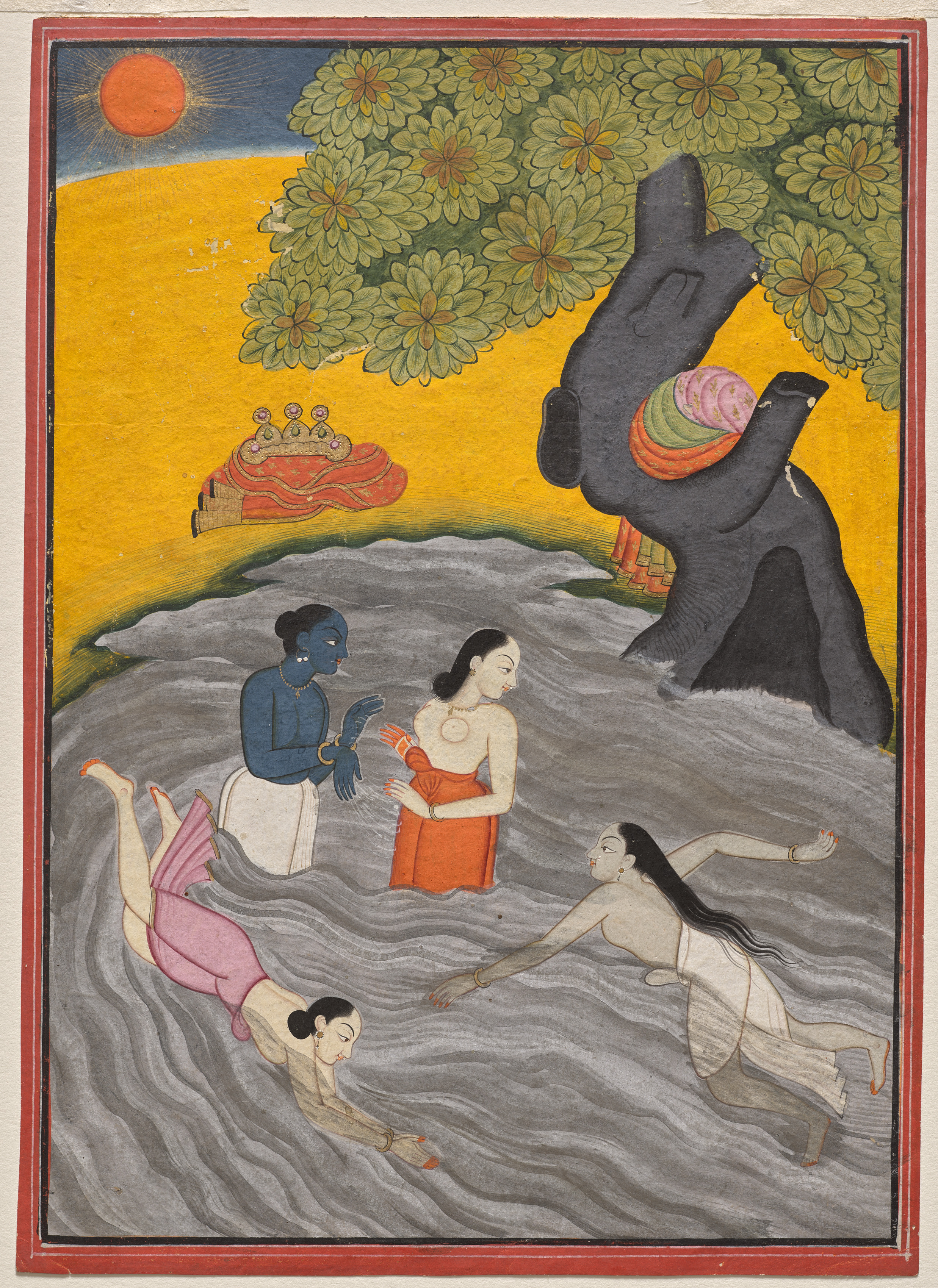
Krishna Playing with the Gopis in the Yamuna
After Krishna raised Mount Govardhan to shelter the village from Indra’s storm, he began to play with the gopis in the Yamuna. Under a scorching sun, he and three women stand in the water.
2475 × 3400 px · Unmodified source file
Open in StudioSource & licensing
- Creator / date
- Northern India, Pahari kingdoms, maker unknown · c. 1770
- Source credit
- The Cleveland Museum of Art, 2018.118. Open Access.
- Usage notes
- Released by the Cleveland Museum of Art under CC0 1.0. Credit to the museum is encouraged; CC0 does not imply endorsement.
- Original file
- 2475 × 3400 px · JPG · 0.0 MB
- Source checked
- 2026-11-04 · editorial approval separate
CC0 · Public domain · late 1700s
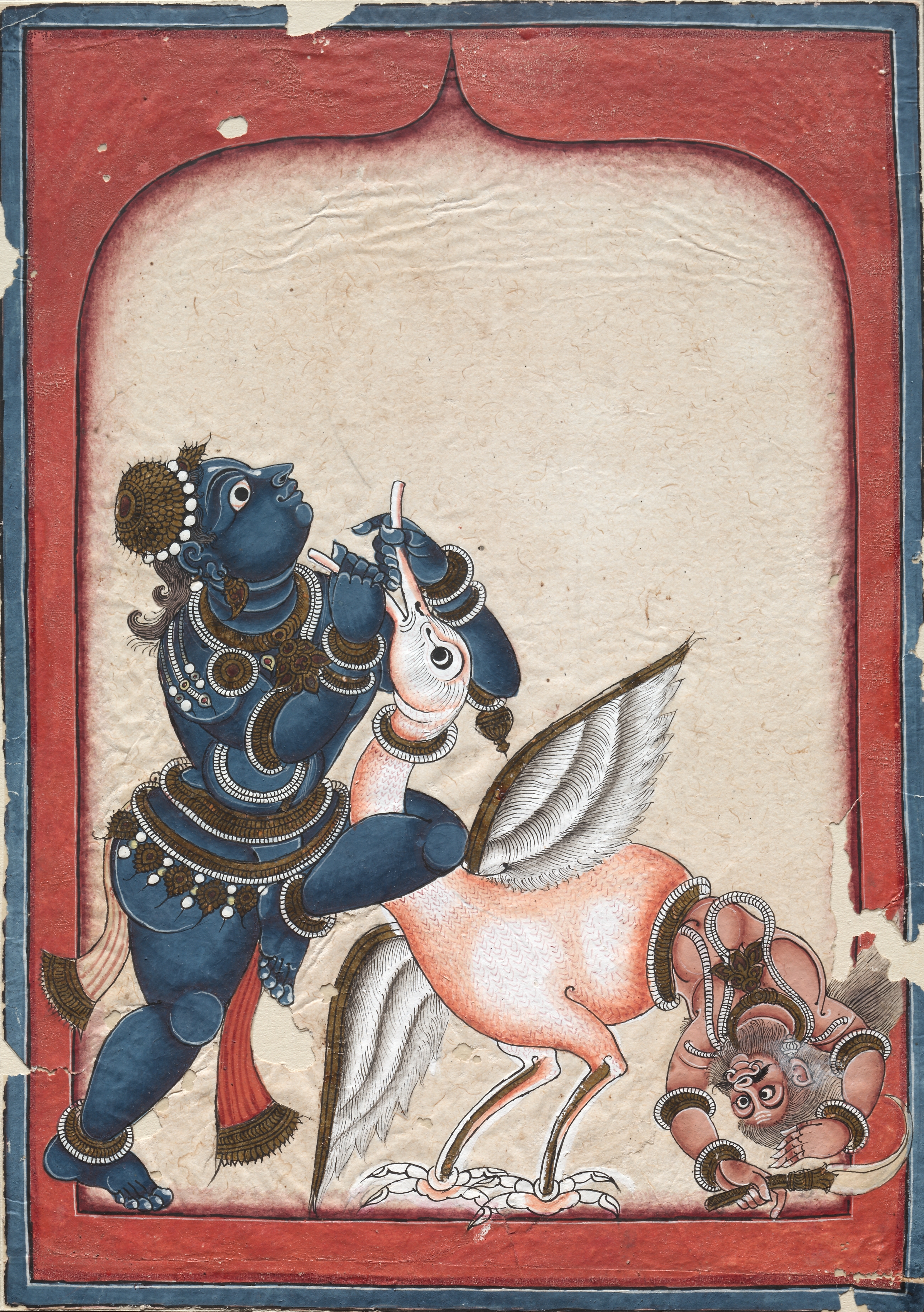
Krishna Vanquishing the Crane-Demon Bakasura
Vishnu took the form of Krishna to rid the earth of a wicked king who sent demons after the child. The crane-demon Bakasura is killed with a blow to the beak. Tirupati, late 1700s.
2395 × 3400 px · Unmodified source file
Open in StudioSource & licensing
- Creator / date
- Southern India, Andhra Pradesh, Tirupati, maker unknown · late 1700s
- Source credit
- The Cleveland Museum of Art, 1966.29. Open Access.
- Usage notes
- Released by the Cleveland Museum of Art under CC0 1.0. Credit to the museum is encouraged; CC0 does not imply endorsement.
- Original file
- 2395 × 3400 px · JPG · 0.0 MB
- Source checked
- 2026-11-04 · editorial approval separate
CC0 · Public domain · late 1700s
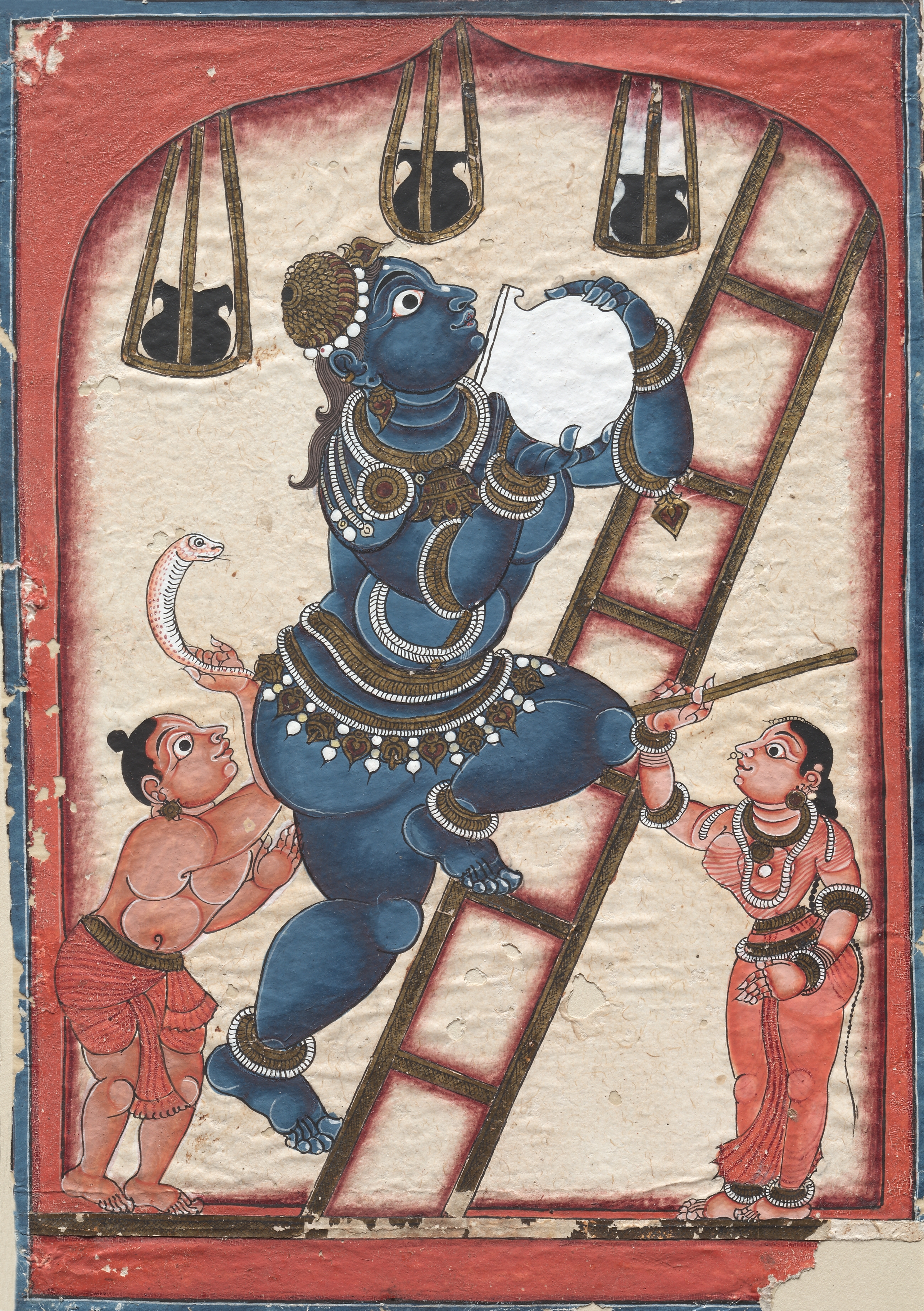
Krishna Stealing Curds
As a toddler in the cowherd village Krishna loved the dairy his parents tried to keep from him. The theft is theologically playful: god as a child with a sweet tooth.
2396 × 3400 px · Unmodified source file
Open in StudioSource & licensing
- Creator / date
- Southern India, Andhra Pradesh, Tirupati, maker unknown · late 1700s
- Source credit
- The Cleveland Museum of Art, 1966.28. Open Access.
- Usage notes
- Released by the Cleveland Museum of Art under CC0 1.0. Credit to the museum is encouraged; CC0 does not imply endorsement.
- Original file
- 2396 × 3400 px · JPG · 0.0 MB
- Source checked
- 2026-11-04 · editorial approval separate
CC0 · Public domain · c. 1890
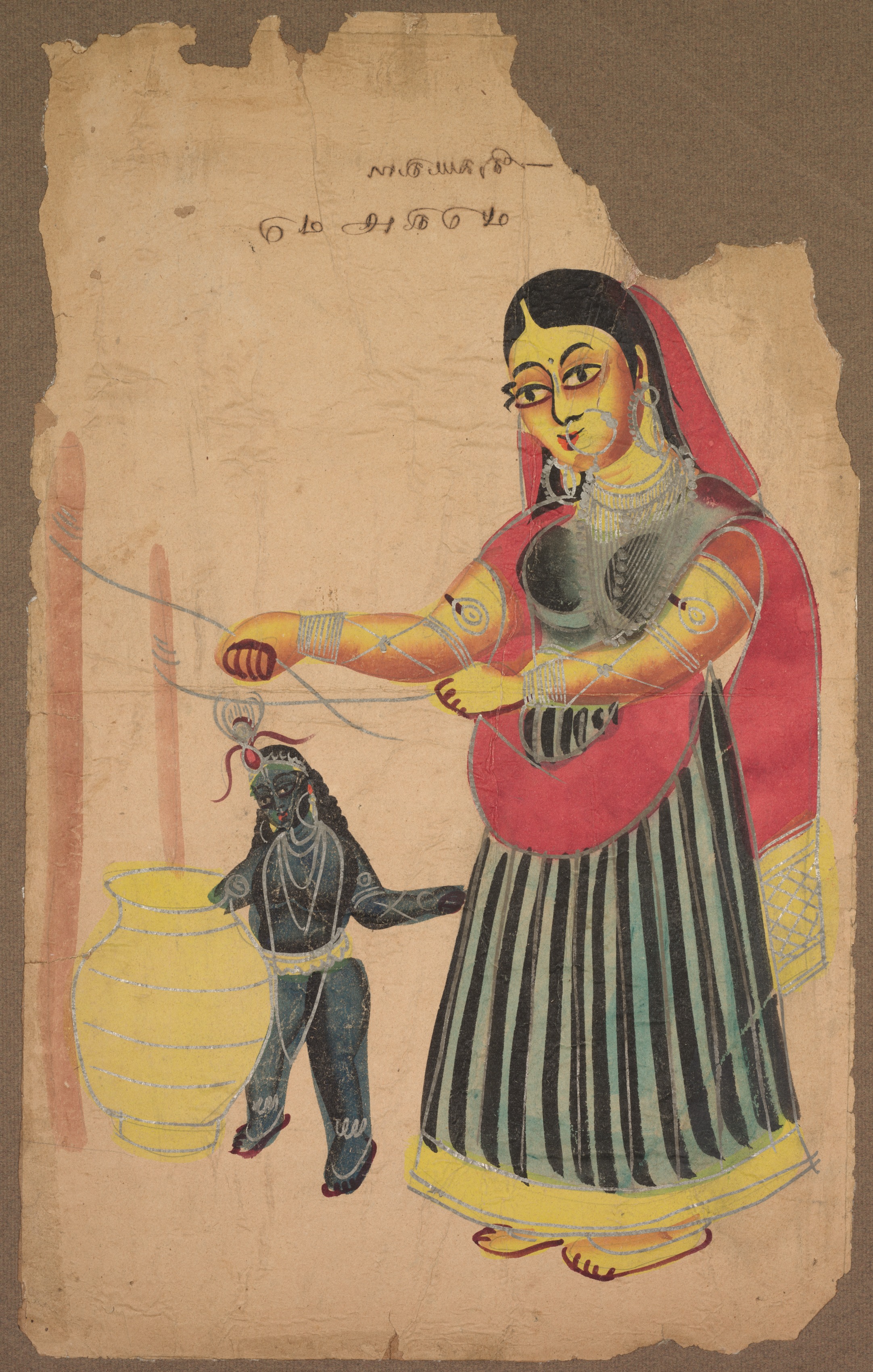
Yasoda with Krishna Churning Butter
Yashoda, who raised Krishna, churns milk into butter while he steals it. A Kalighat sheet from Kolkata, where painters worked for pilgrims and tourists rather than for courts.
2164 × 3400 px · Unmodified source file
Open in StudioSource & licensing
- Creator / date
- Eastern India, Kolkata, Kalighat, maker unknown · c. 1890
- Source credit
- The Cleveland Museum of Art, 2003.160. Open Access.
- Usage notes
- Released by the Cleveland Museum of Art under CC0 1.0. Credit to the museum is encouraged; CC0 does not imply endorsement.
- Original file
- 2164 × 3400 px · JPG · 0.0 MB
- Source checked
- 2026-11-04 · editorial approval separate
CC0 · Public domain · c. 1890
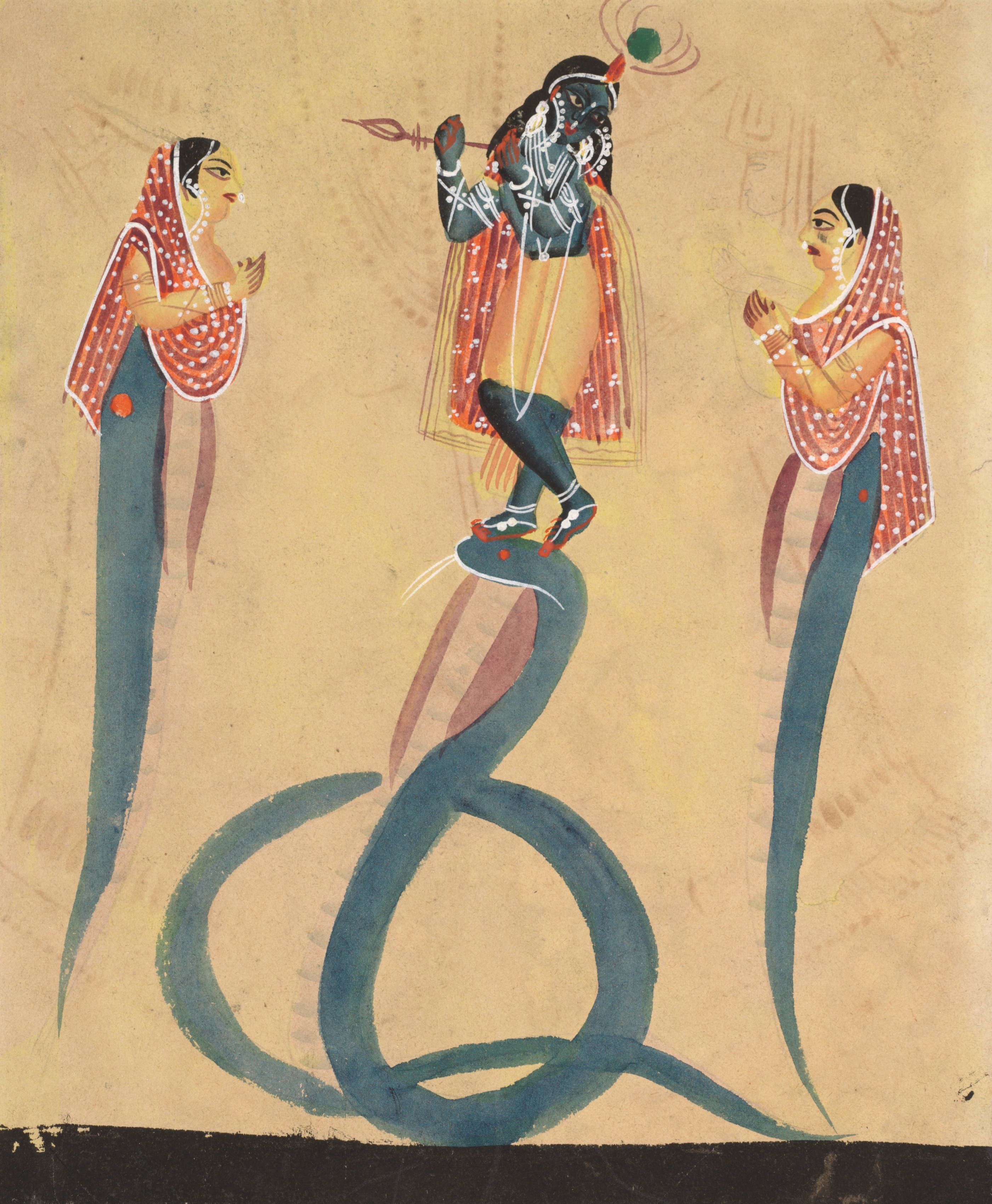
Krishna quells the serpent Kaliya (verso), from a Kalighat album
The serpent Kaliya poisoned the Yamuna where Krishna spent his youth, and he quells it by dancing on its heads. Kalighat, from a pilgrim album.
2802 × 3400 px · Unmodified source file
Open in StudioSource & licensing
- Creator / date
- Eastern India, Bengal, Kolkata, Kalighat, maker unknown · c. 1890
- Source credit
- The Cleveland Museum of Art, 2003.113.b. Open Access.
- Usage notes
- Released by the Cleveland Museum of Art under CC0 1.0. Credit to the museum is encouraged; CC0 does not imply endorsement.
- Original file
- 2802 × 3400 px · JPG · 0.0 MB
- Source checked
- 2026-11-04 · editorial approval separate
Public-domain status is reported by the linked source and may vary by jurisdiction. Check the source record for your intended use. No exclusive rights or Visual Bounty marketplace license are offered for these images.