← Open CollectionsPublic-domain source library
Korean Pattern: Celadon Inlay and Court Silk
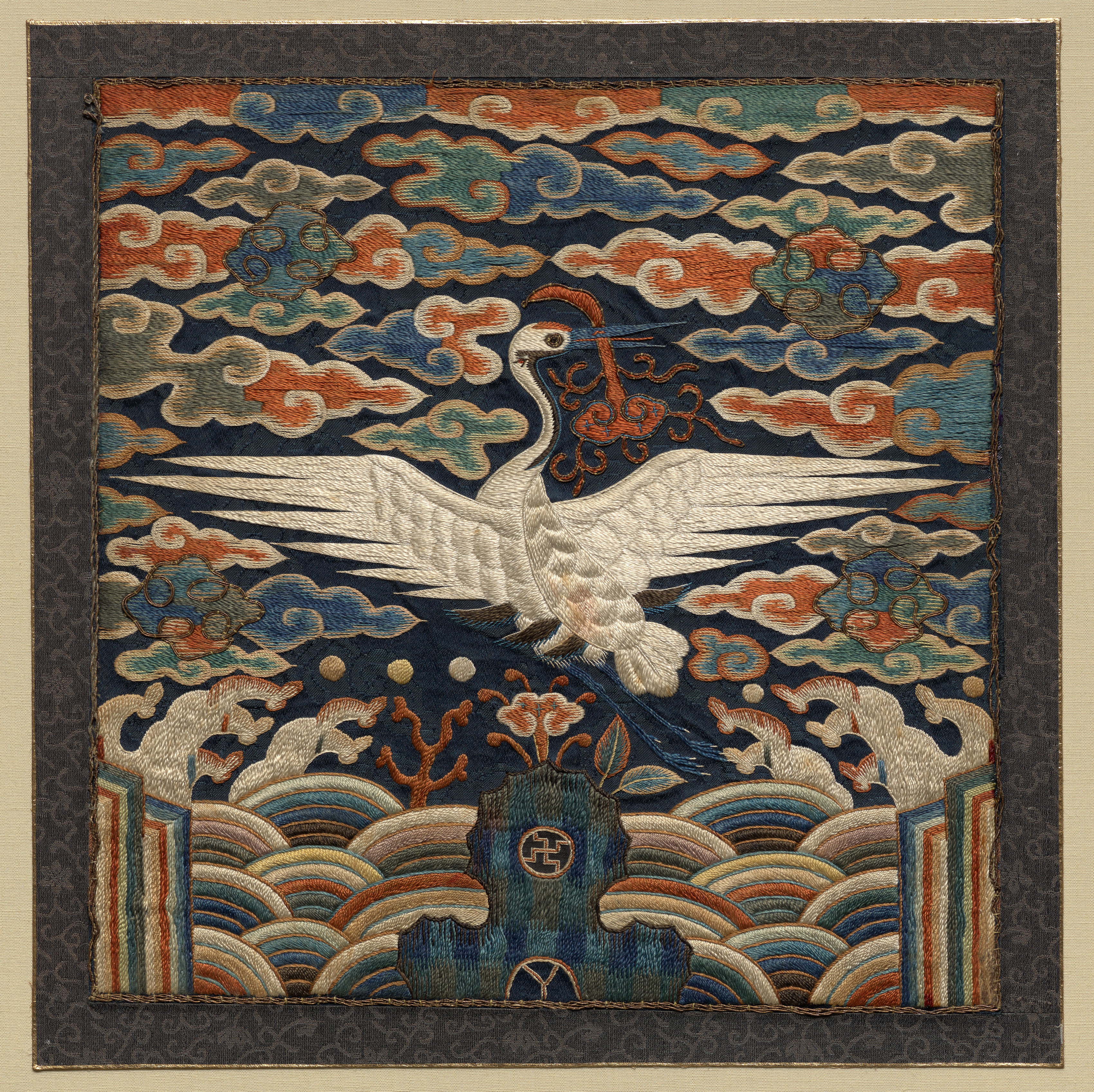
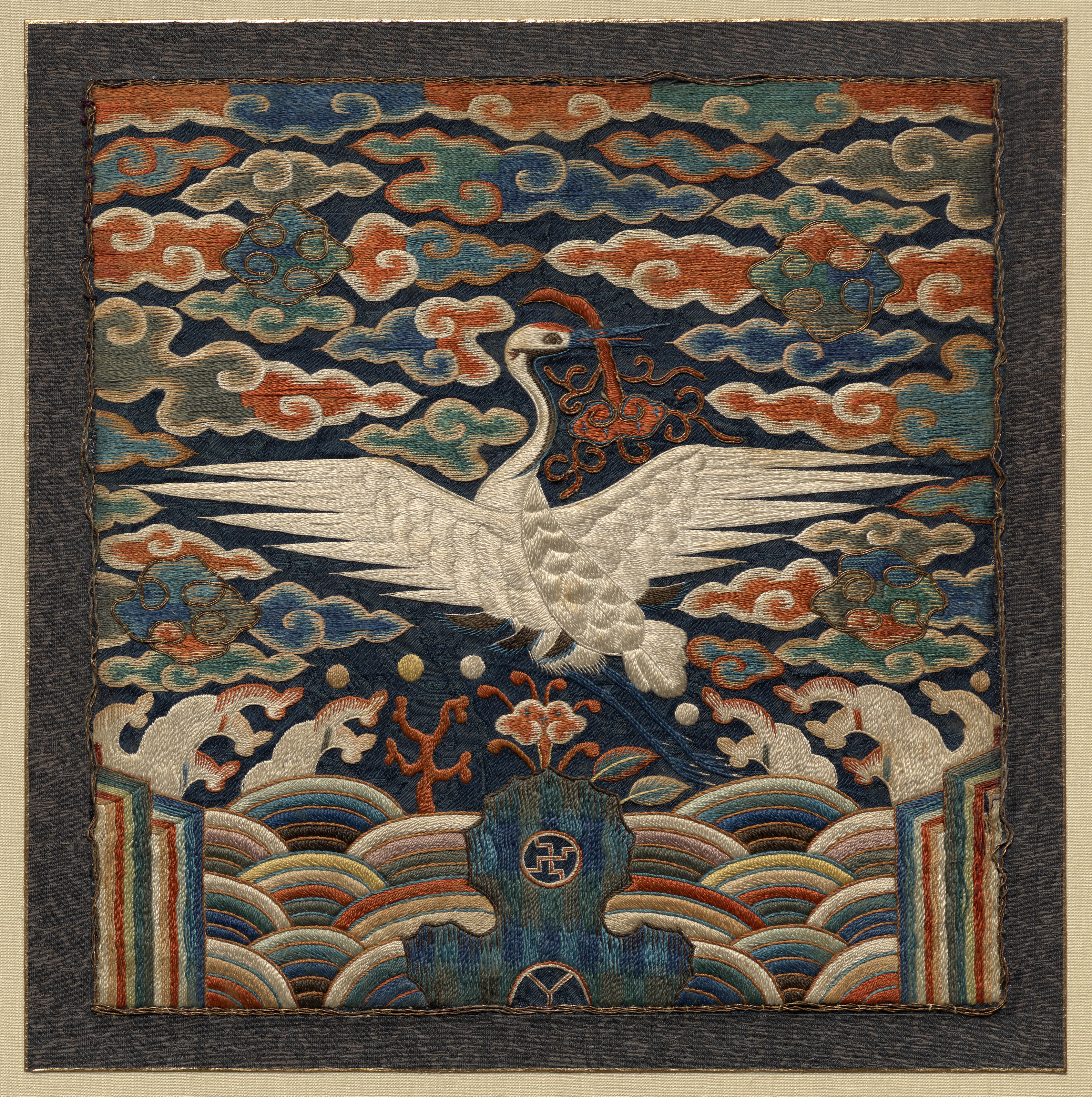
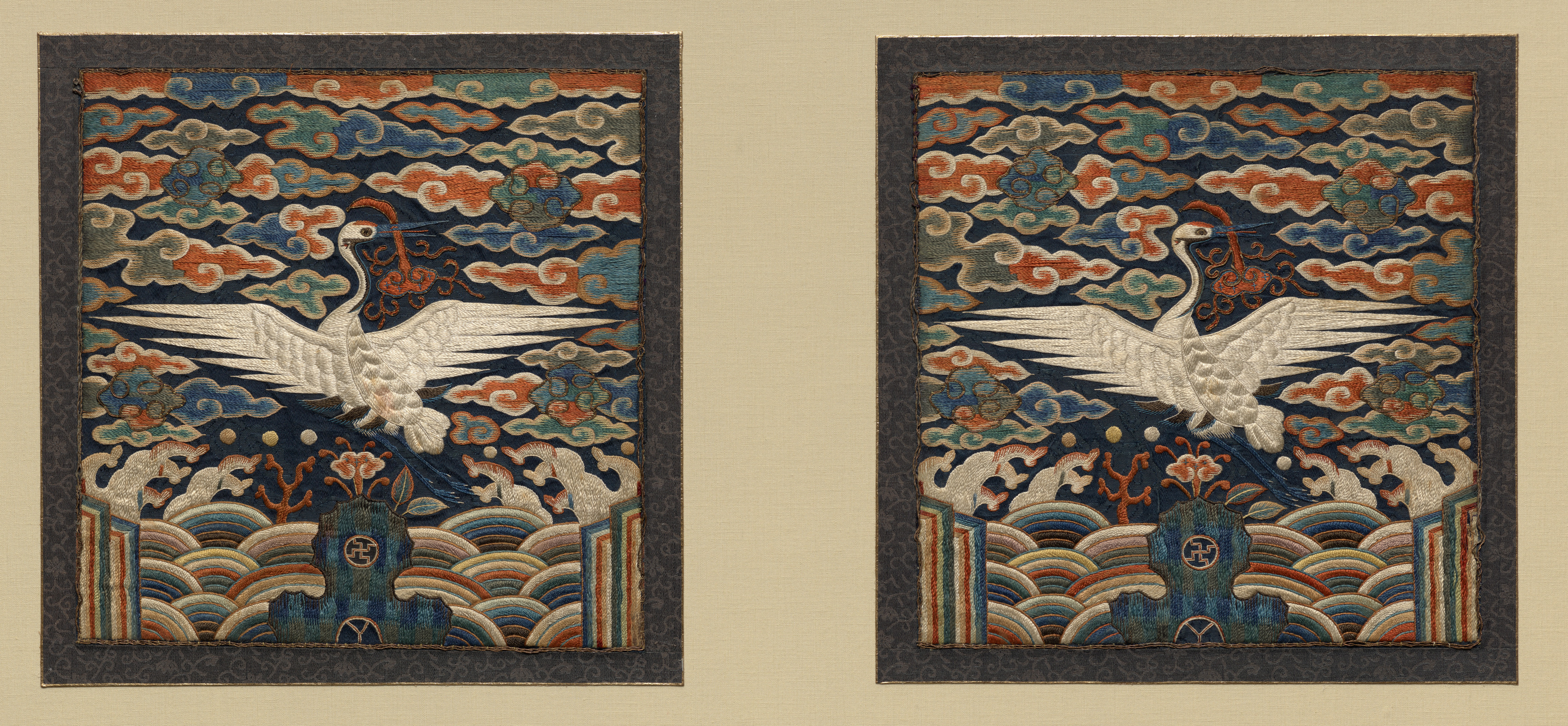
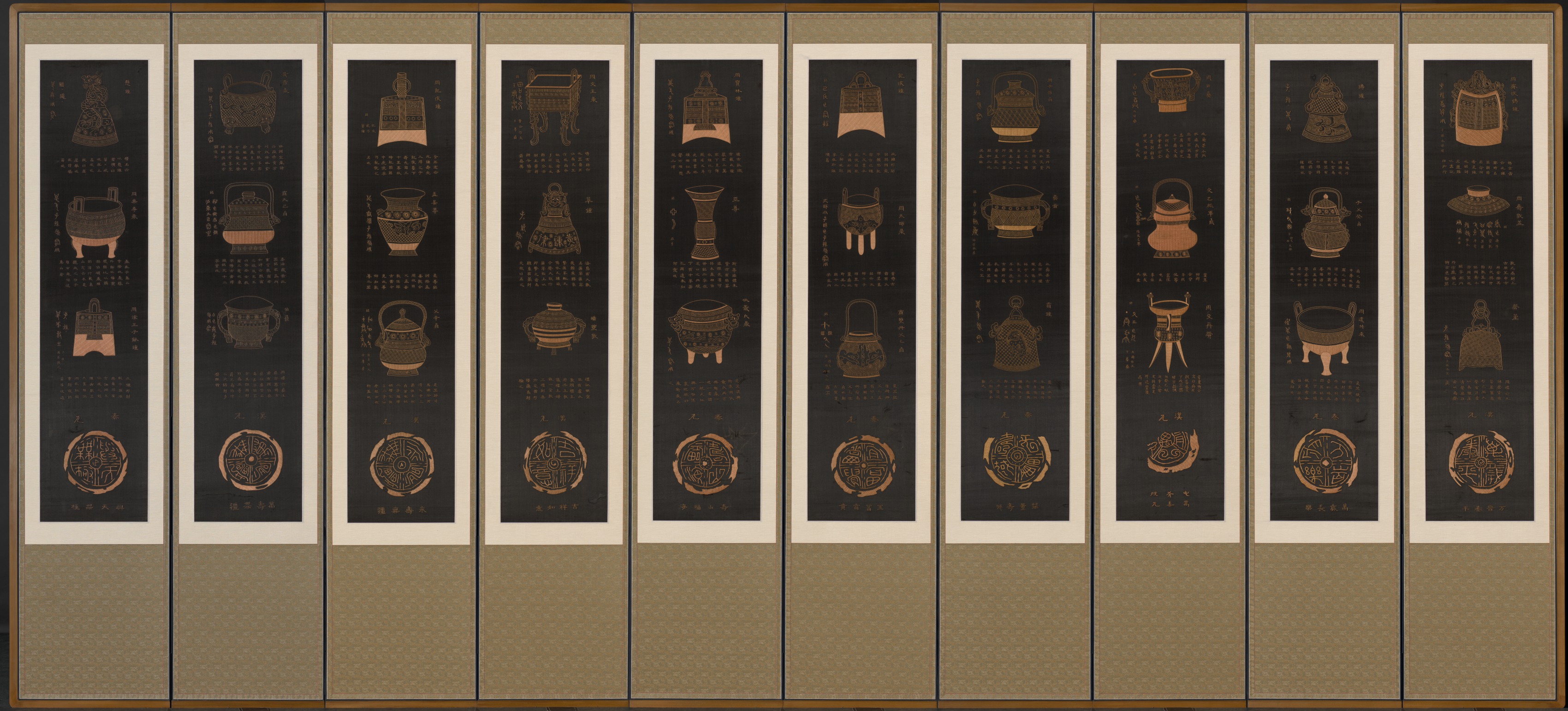
Korean pattern is drawn in the material as often as on it. Goryeo potters incised a design and pressed white and black slip into the lines, a technique called sanggam, then buried it under a grey-green glaze; Joseon potters stamped and brushed cobalt instead. Alongside the ceramics are the embroidered rank badges of the Joseon court, where a single crane carried a man’s official grade, and a black silk screen worked in gold with bronze vessels studied as models of ornament.
Original means the unmodified digital file supplied by the linked archive, not an upscaled or reconstructed image. Sign in for free downloads. Studio uses a working preview up to 2048 px.
CC0 · Public domain · 1100s
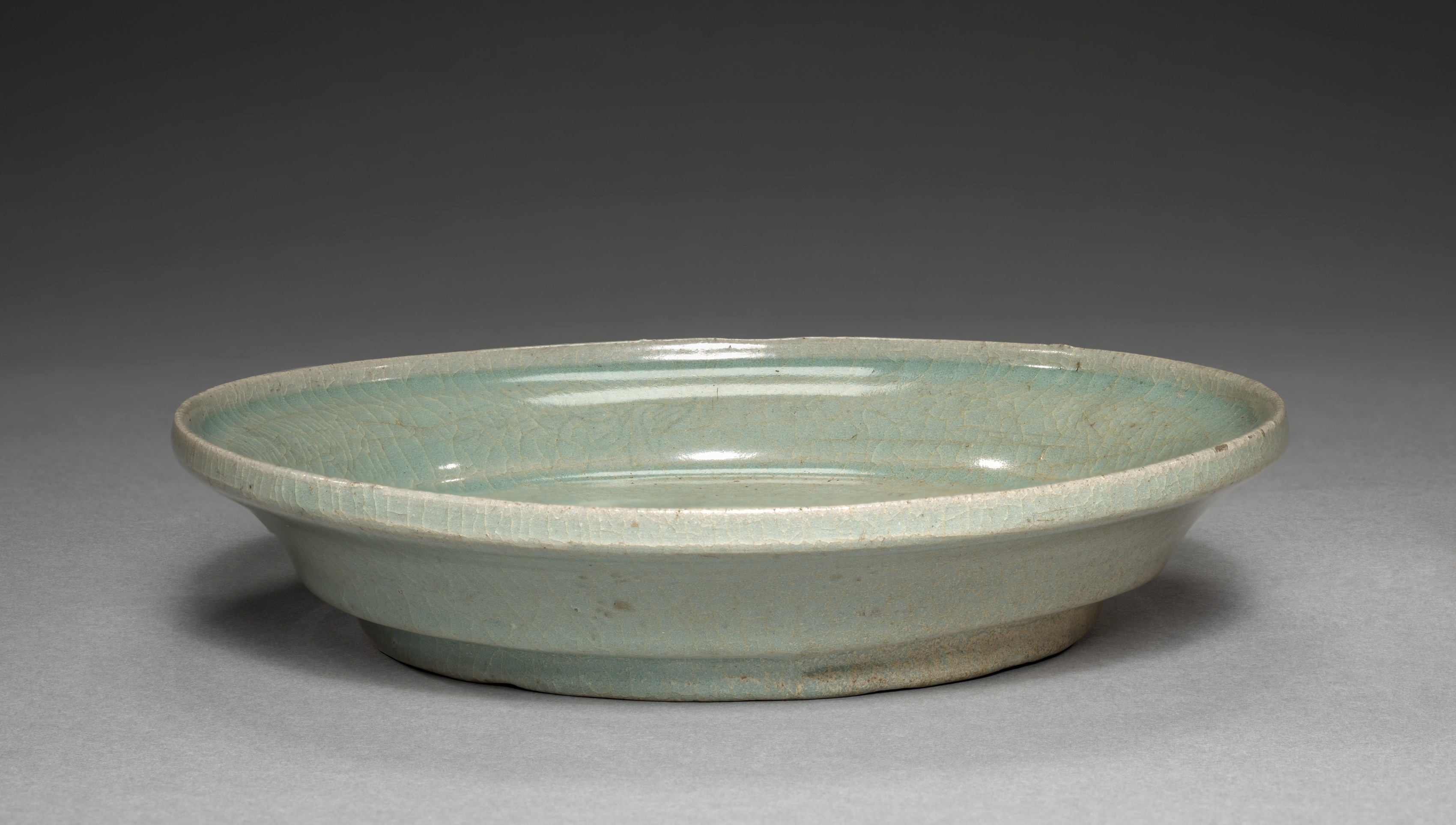
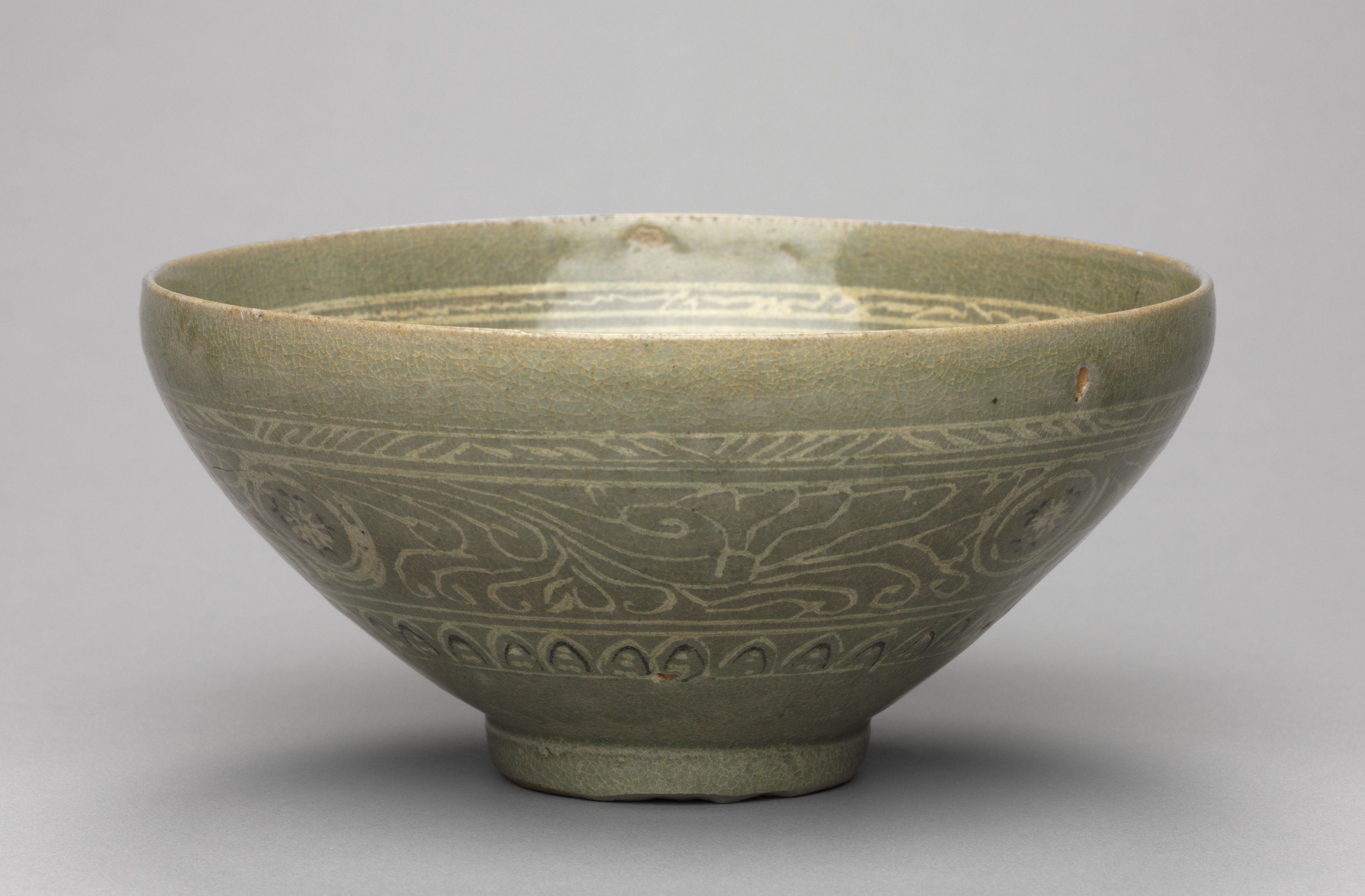
Bowl and Saucer with Incised Lotus and Peony Design
A Goryeo tea bowl and saucer incised with lotus and peony before the glaze went on. Goryeo potters drew pattern in the clay itself, so the ornament survives as a shallow relief under the green glaze.
× px · Unmodified source file
Small archival scan: best for reference and screen use, not large prints.
Open in StudioSource & licensing
- Creator / date
- Korea, Goryeo dynasty, maker unknown · 1100s
- Source credit
- Gift of John L. Severance. The Cleveland Museum of Art, Open Access.
- Usage notes
- Released by the Cleveland Museum of Art under CC0 1.0. Credit to the museum is encouraged; CC0 does not imply endorsement.
- Original file
- × px · JPG · 0.0 MB
- Source checked
- 2026-11-04 · editorial approval separate
CC0 · Public domain · 1100s–1200s
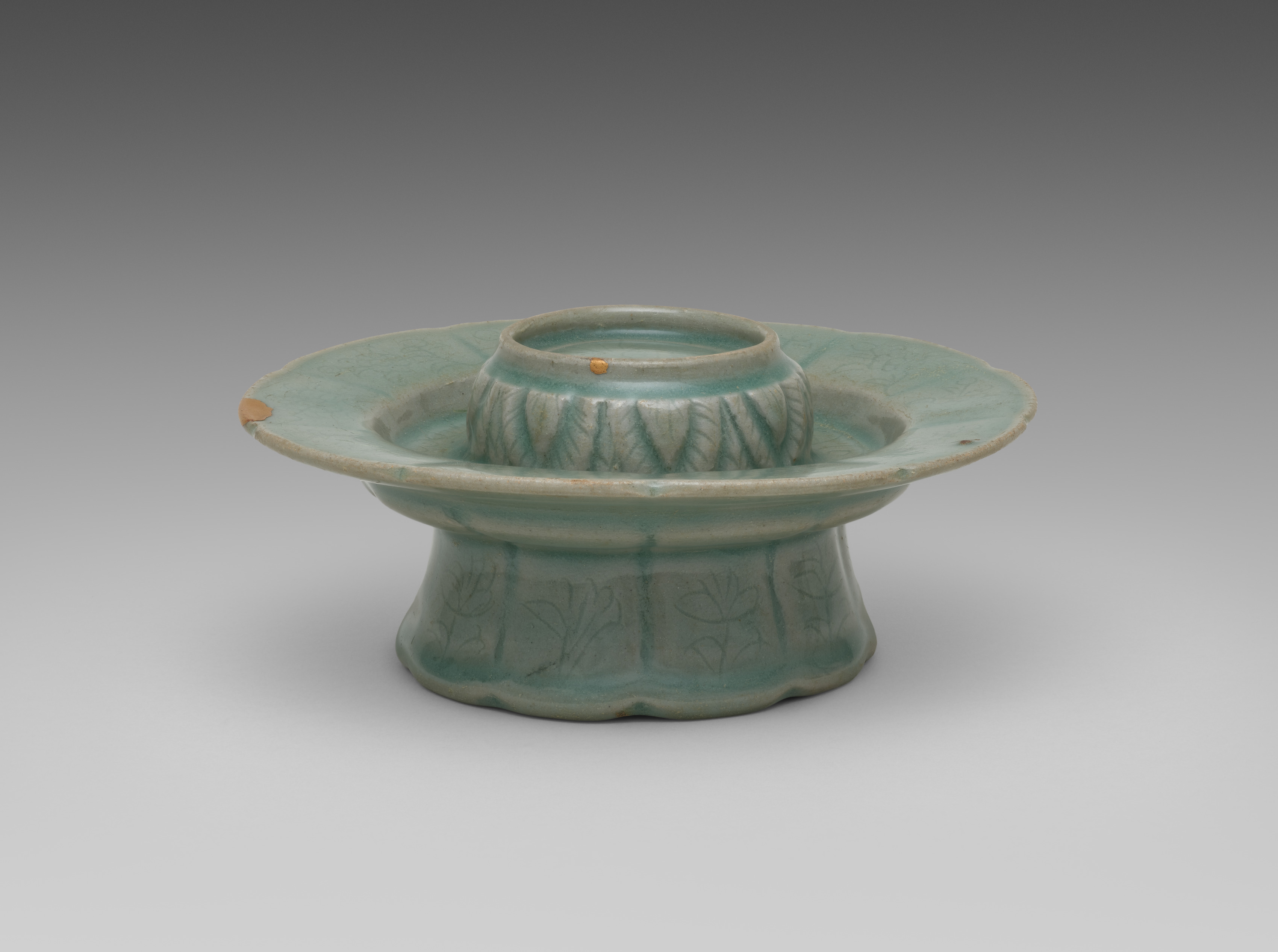
Floral-shaped Cup Stand
A lobed cup stand, the rim cut into petals so that the vessel is already pattern before any design is applied. Goryeo tea culture produced whole sets of these small, precisely modelled forms.
× px · Unmodified source file
Small archival scan: best for reference and screen use, not large prints.
Open in StudioSource & licensing
- Creator / date
- Korea, Goryeo dynasty, maker unknown · 1100s–1200s
- Source credit
- Gift of John L. Severance. The Cleveland Museum of Art, Open Access.
- Usage notes
- Released by the Cleveland Museum of Art under CC0 1.0. Credit to the museum is encouraged; CC0 does not imply endorsement.
- Original file
- × px · JPG · 0.0 MB
- Source checked
- 2026-11-04 · editorial approval separate
CC0 · Public domain · 1100s
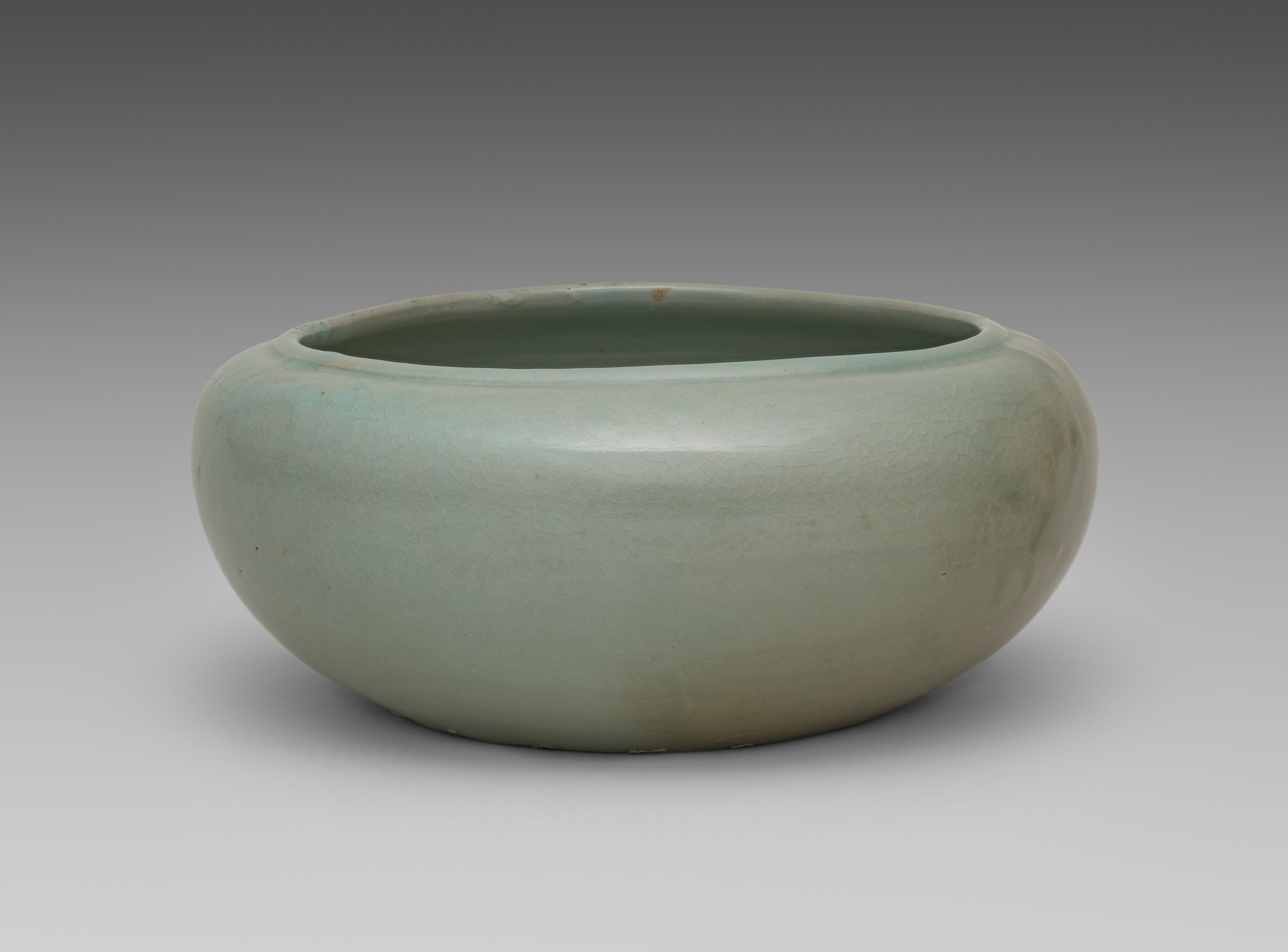
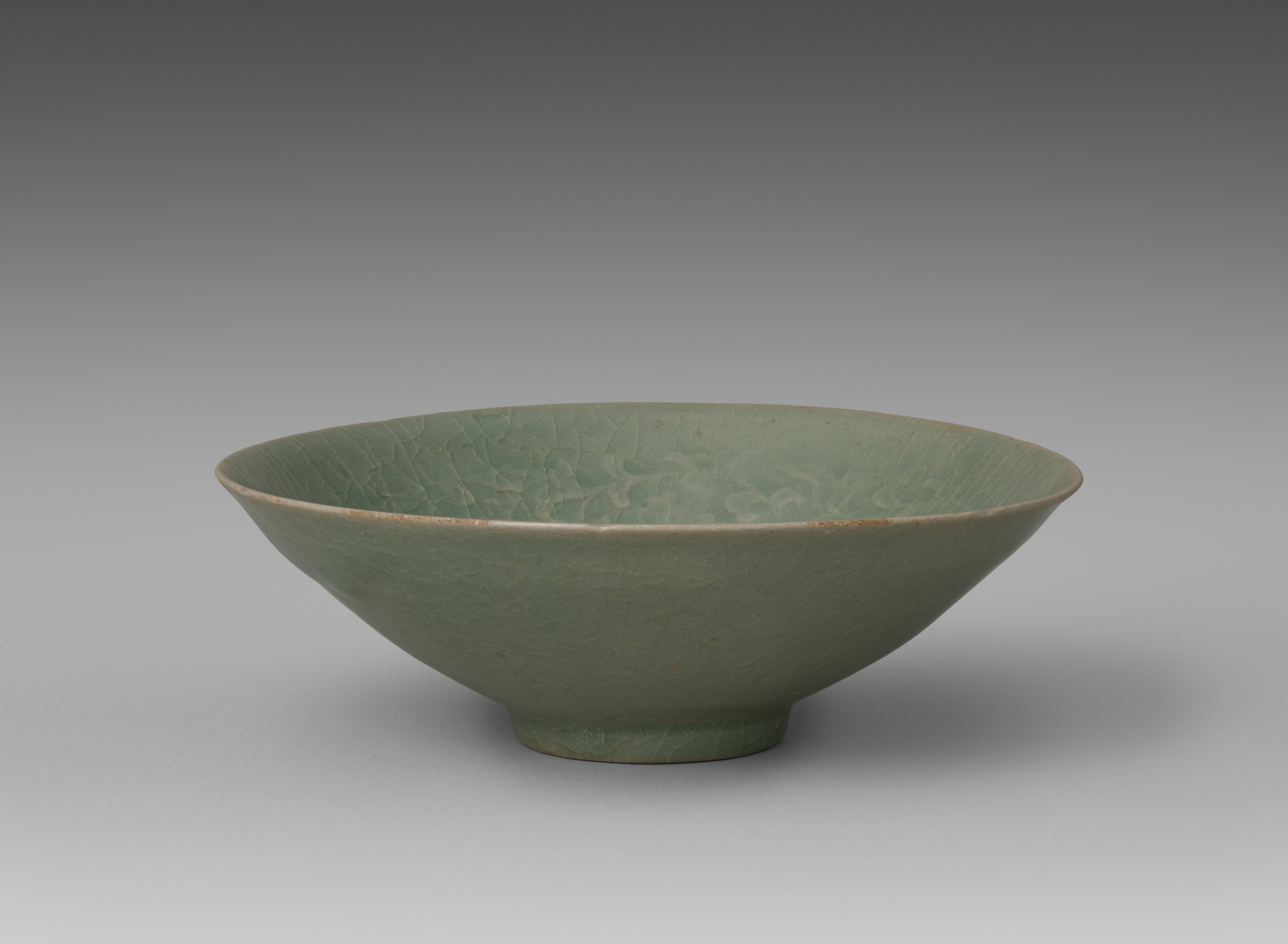
Bowl
An undecorated celadon bowl, included here for its glaze: the pale grey-green that Korean kilns achieved and that Chinese connoisseurs ranked above their own. Nothing on it is ornament except the proportion.
× px · Unmodified source file
Small archival scan: best for reference and screen use, not large prints.
Open in StudioSource & licensing
- Creator / date
- Korea, Goryeo dynasty, maker unknown · 1100s
- Source credit
- Director’s Contingent Fund. The Cleveland Museum of Art, Open Access.
- Usage notes
- Released by the Cleveland Museum of Art under CC0 1.0. Credit to the museum is encouraged; CC0 does not imply endorsement.
- Original file
- × px · JPG · 0.0 MB
- Source checked
- 2026-11-04 · editorial approval separate
CC0 · Public domain · 1100s
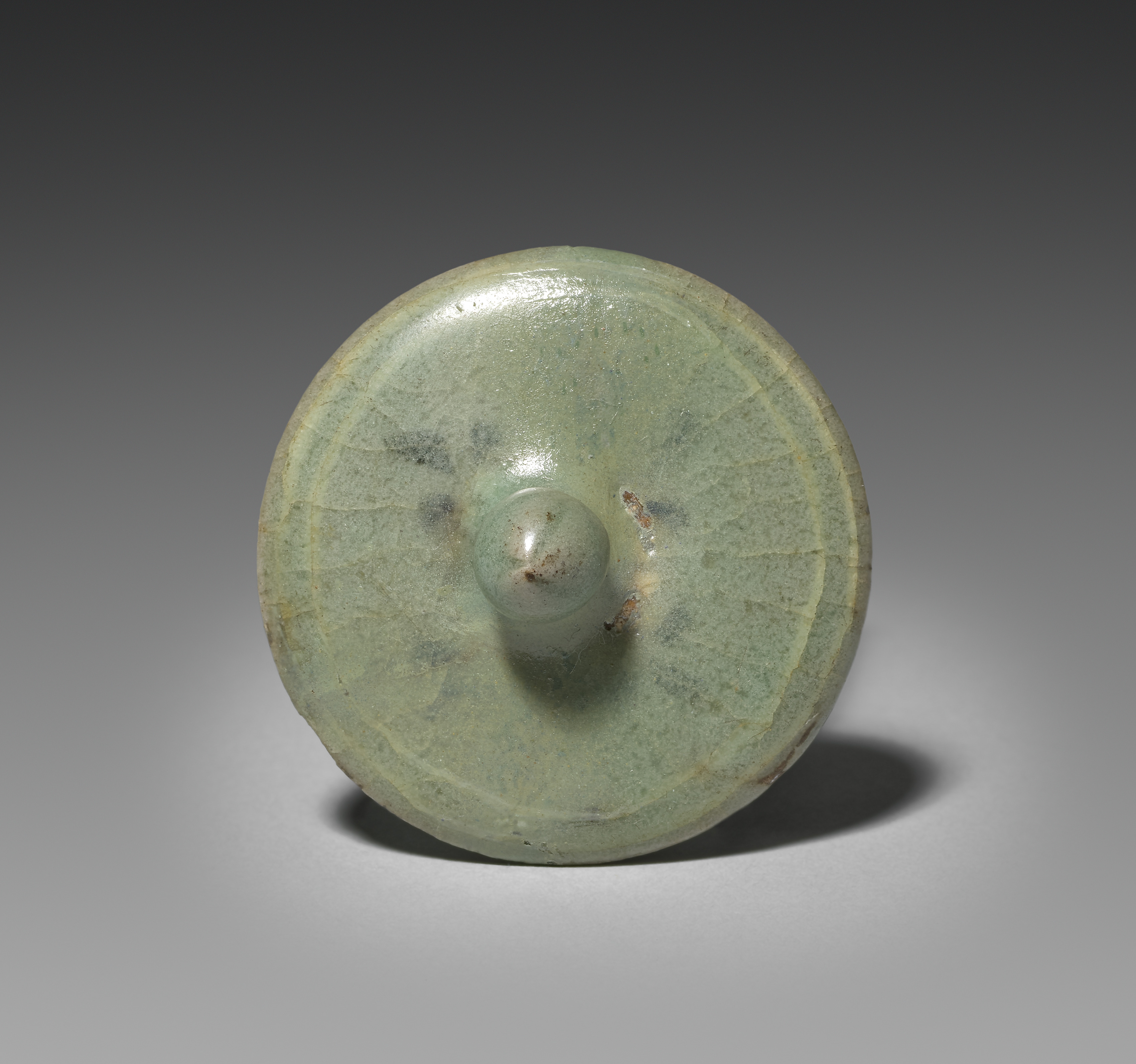
Cover for a Pitcher
A small lid inlaid with white and black slip, the technique Koreans called sanggam. Slip was pressed into incised lines before firing, so the design sits flush in the glaze instead of on top of it.
× px · Unmodified source file
Small archival scan: best for reference and screen use, not large prints.
Open in StudioSource & licensing
- Creator / date
- Korea, Goryeo dynasty, maker unknown · 1100s
- Source credit
- Gift of John L. Severance. The Cleveland Museum of Art, Open Access.
- Usage notes
- Released by the Cleveland Museum of Art under CC0 1.0. Credit to the museum is encouraged; CC0 does not imply endorsement.
- Original file
- × px · JPG · 0.0 MB
- Source checked
- 2026-11-04 · editorial approval separate
CC0 · Public domain · 1100s
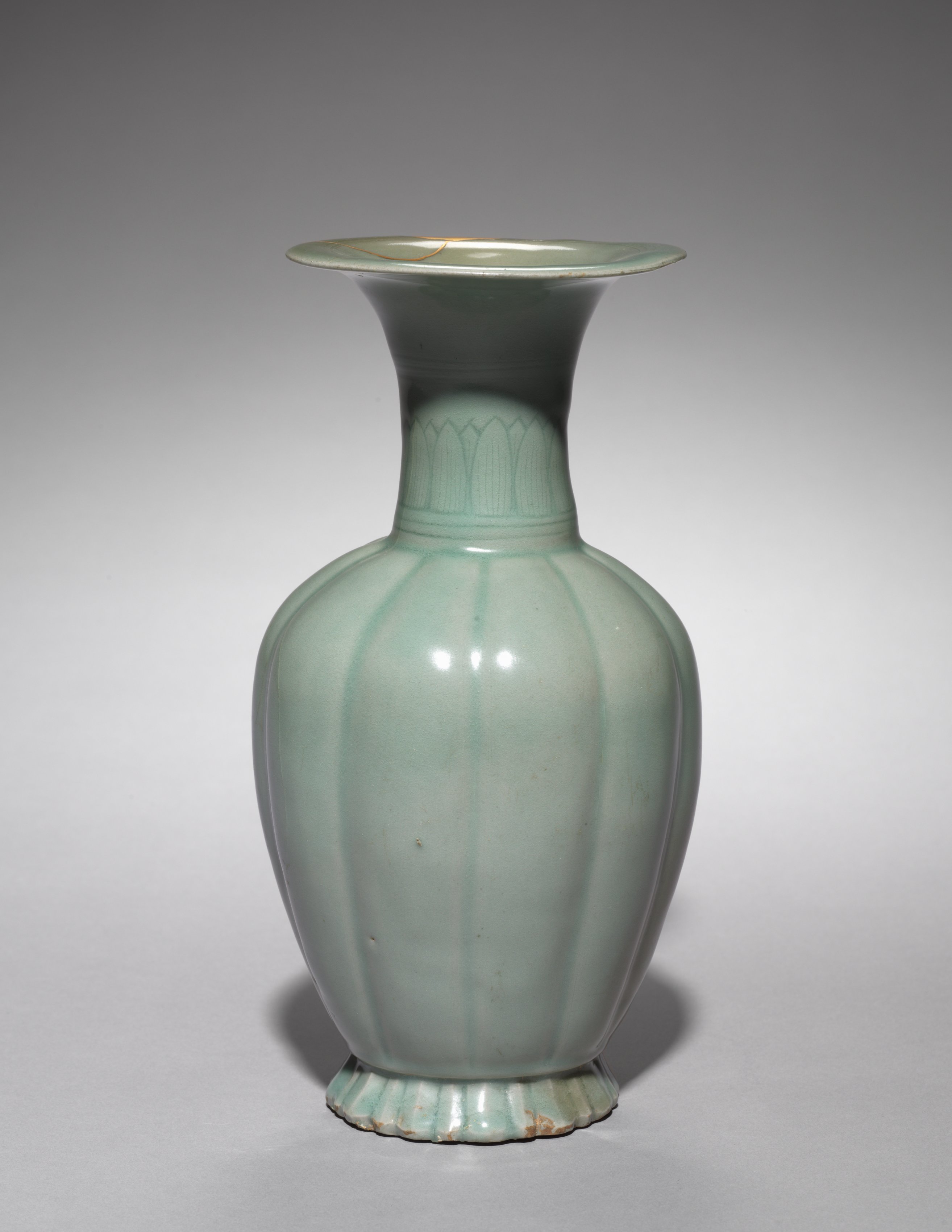
Vase in the Form of a Melon
A melon-shaped vase with lobes running from shoulder to foot. The pattern here is structure: the ribs are modelled, not drawn, and the glaze pools in the grooves to draw them again.
× px · Unmodified source file
Small archival scan: best for reference and screen use, not large prints.
Open in StudioSource & licensing
- Creator / date
- Korea, Goryeo dynasty, maker unknown · 1100s
- Source credit
- The Elisabeth Severance Prentiss Collection. The Cleveland Museum of Art, Open Access.
- Usage notes
- Released by the Cleveland Museum of Art under CC0 1.0. Credit to the museum is encouraged; CC0 does not imply endorsement.
- Original file
- × px · JPG · 0.0 MB
- Source checked
- 2026-11-04 · editorial approval separate
CC0 · Public domain · 1100s–1200s
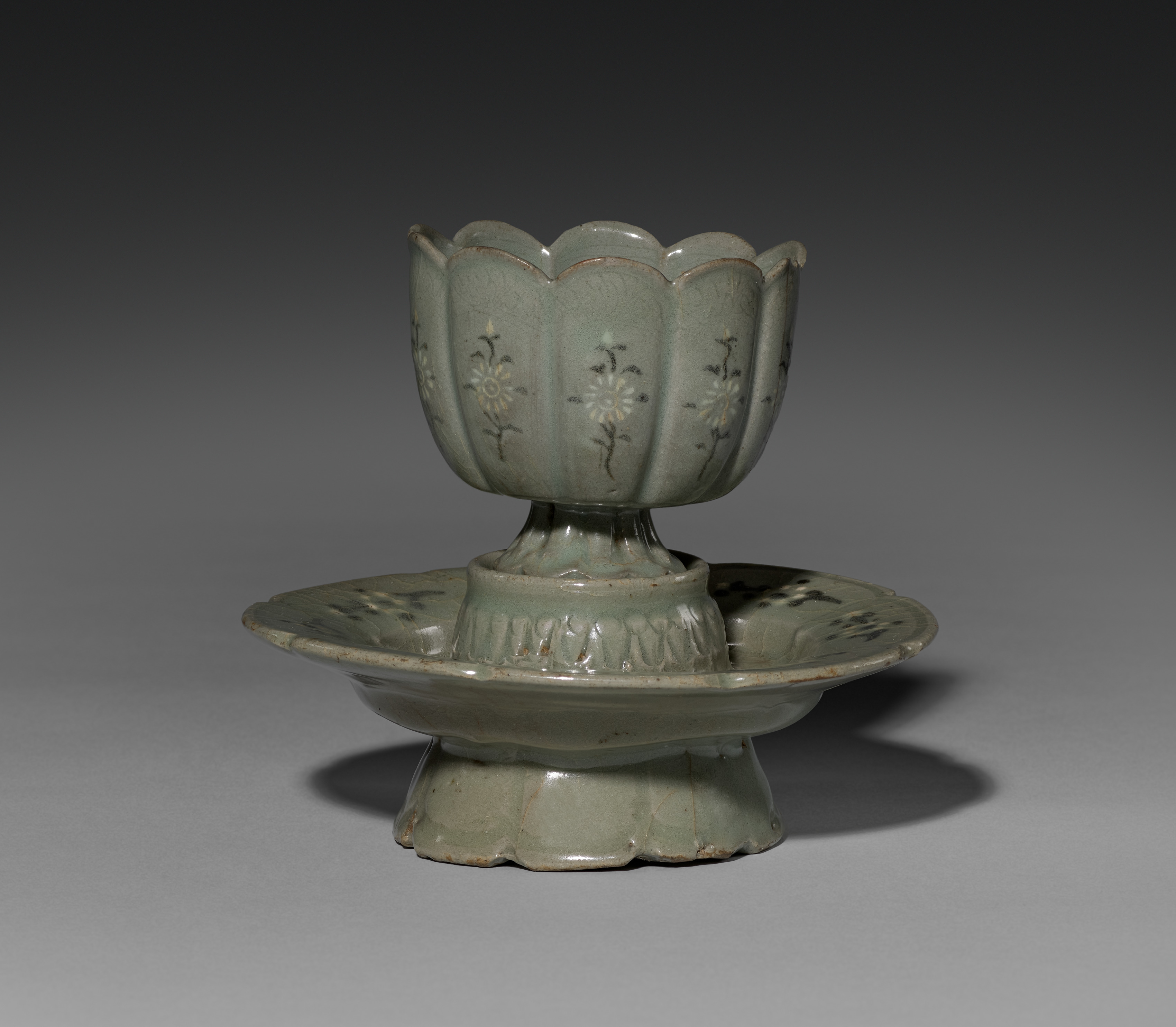
Floral-shaped Cup and Saucer with Inlaid Chrysanthemum Design
Chrysanthemum, the flower of the Double Nine Festival, inlaid in white and black slip around a floral-shaped cup. The motif was seasonal and specific: this set was made for a particular day of the year.
× px · Unmodified source file
Small archival scan: best for reference and screen use, not large prints.
Open in StudioSource & licensing
- Creator / date
- Korea, Goryeo dynasty, maker unknown · 1100s–1200s
- Source credit
- Gift of John L. Severance. The Cleveland Museum of Art, Open Access.
- Usage notes
- Released by the Cleveland Museum of Art under CC0 1.0. Credit to the museum is encouraged; CC0 does not imply endorsement.
- Original file
- × px · JPG · 0.0 MB
- Source checked
- 2026-11-04 · editorial approval separate
CC0 · Public domain · 1200s
Bowl with Lotus and Child Design in Relief
A lotus and child pressed into the bowl in relief, a motif borrowed from Chinese ceramics and made Korean in the handling. The children among lotus is a wish for sons, a pattern that stayed in use for centuries.
× px · Unmodified source file
Small archival scan: best for reference and screen use, not large prints.
Open in StudioSource & licensing
- Creator / date
- Korea, Goryeo dynasty, maker unknown · 1200s
- Source credit
- Gift of John L. Severance. The Cleveland Museum of Art, Open Access.
- Usage notes
- Released by the Cleveland Museum of Art under CC0 1.0. Credit to the museum is encouraged; CC0 does not imply endorsement.
- Original file
- × px · JPG · 0.0 MB
- Source checked
- 2026-11-04 · editorial approval separate
CC0 · Public domain · 1300s
Bowl with Inlaid Waterfowl, Willow, and Reed Design
Waterfowl among willow and reed, inlaid in slip inside a wide bowl. This is the classic late Goryeo design: a wetland scene drawn in a few lines, legible whether the bowl is empty or full.
× px · Unmodified source file
Small archival scan: best for reference and screen use, not large prints.
Open in StudioSource & licensing
- Creator / date
- Korea, Goryeo dynasty, maker unknown · 1300s
- Source credit
- Gift of John L. Severance. The Cleveland Museum of Art, Open Access.
- Usage notes
- Released by the Cleveland Museum of Art under CC0 1.0. Credit to the museum is encouraged; CC0 does not imply endorsement.
- Original file
- × px · JPG · 0.0 MB
- Source checked
- 2026-11-04 · editorial approval separate
CC0 · Public domain · 1300s
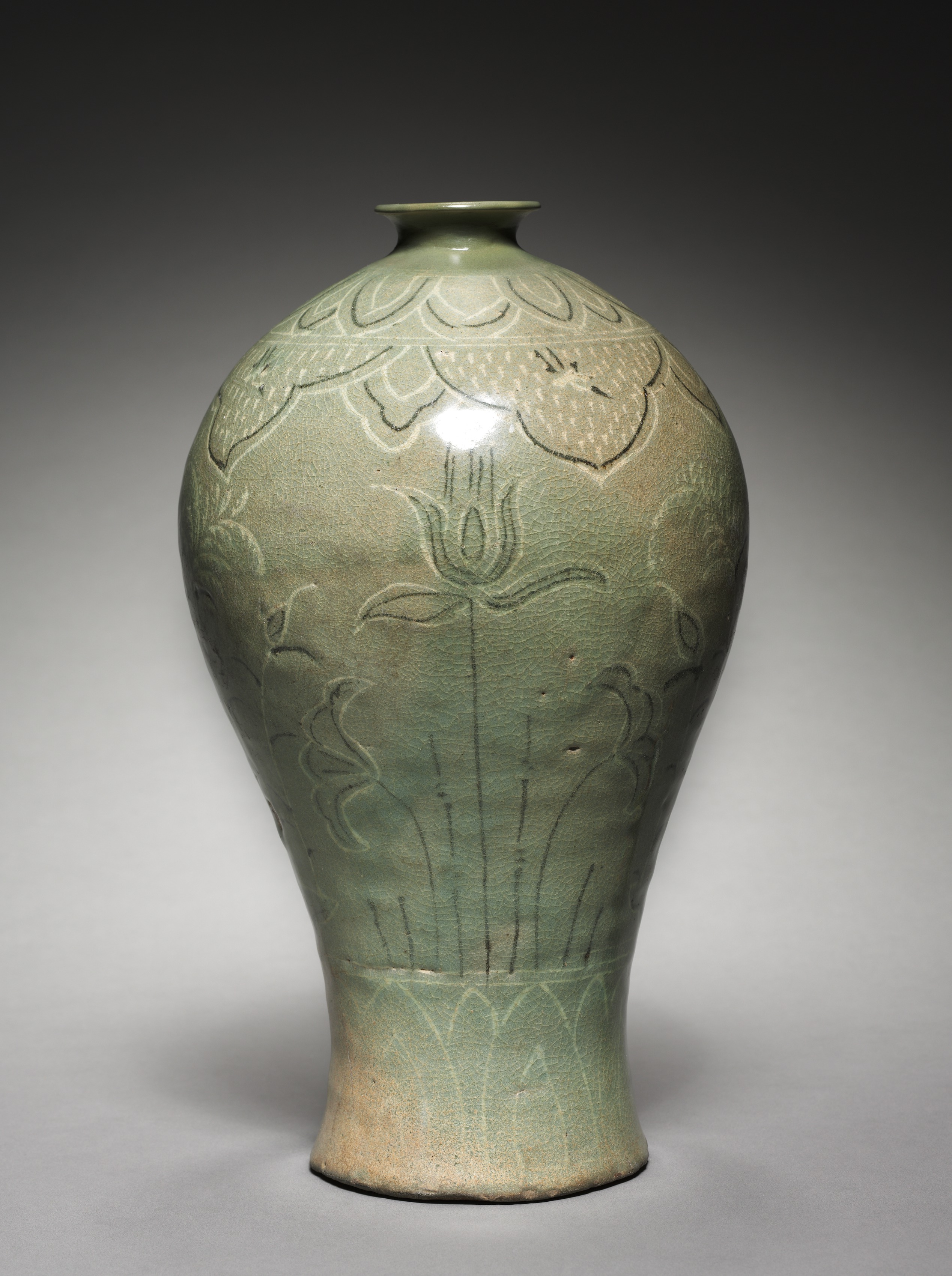
Prunus Vase with Inlaid Lotus and Reed Design
A prunus vase, the form named for the plum branch it was said to hold, inlaid with lotus and reed. The shape is a Goryeo signature and the decoration runs in horizontal bands, as if the vase were a scroll.
× px · Unmodified source file
Small archival scan: best for reference and screen use, not large prints.
Open in StudioSource & licensing
- Creator / date
- Korea, Goryeo dynasty, maker unknown · 1300s
- Source credit
- Gift of John L. Severance. The Cleveland Museum of Art, Open Access.
- Usage notes
- Released by the Cleveland Museum of Art under CC0 1.0. Credit to the museum is encouraged; CC0 does not imply endorsement.
- Original file
- × px · JPG · 0.0 MB
- Source checked
- 2026-11-04 · editorial approval separate
CC0 · Public domain · 1400s
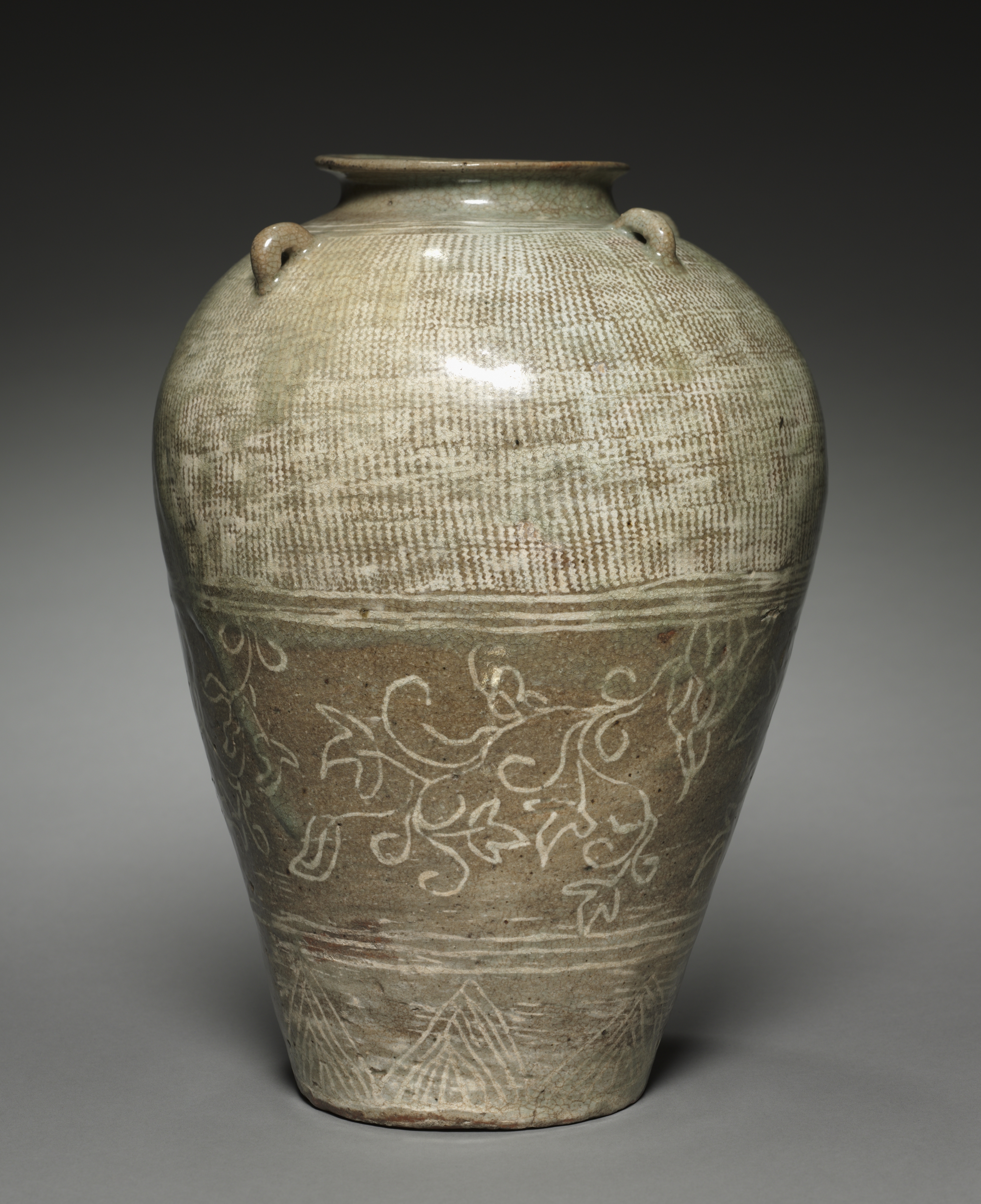
Jar with Scroll Design
Buncheong ware with incised, stamped and slip-inlaid scrollwork, the everyday pottery of early Joseon. Stamping a repeat around a jar is fast, loose and unmistakably hand-made, the opposite of court porcelain.
× px · Unmodified source file
Small archival scan: best for reference and screen use, not large prints.
Open in StudioSource & licensing
- Creator / date
- Korea, Joseon dynasty, maker unknown · 1400s
- Source credit
- John L. Severance Fund. The Cleveland Museum of Art, Open Access.
- Usage notes
- Released by the Cleveland Museum of Art under CC0 1.0. Credit to the museum is encouraged; CC0 does not imply endorsement.
- Original file
- × px · JPG · 0.0 MB
- Source checked
- 2026-11-04 · editorial approval separate
CC0 · Public domain · 1700s
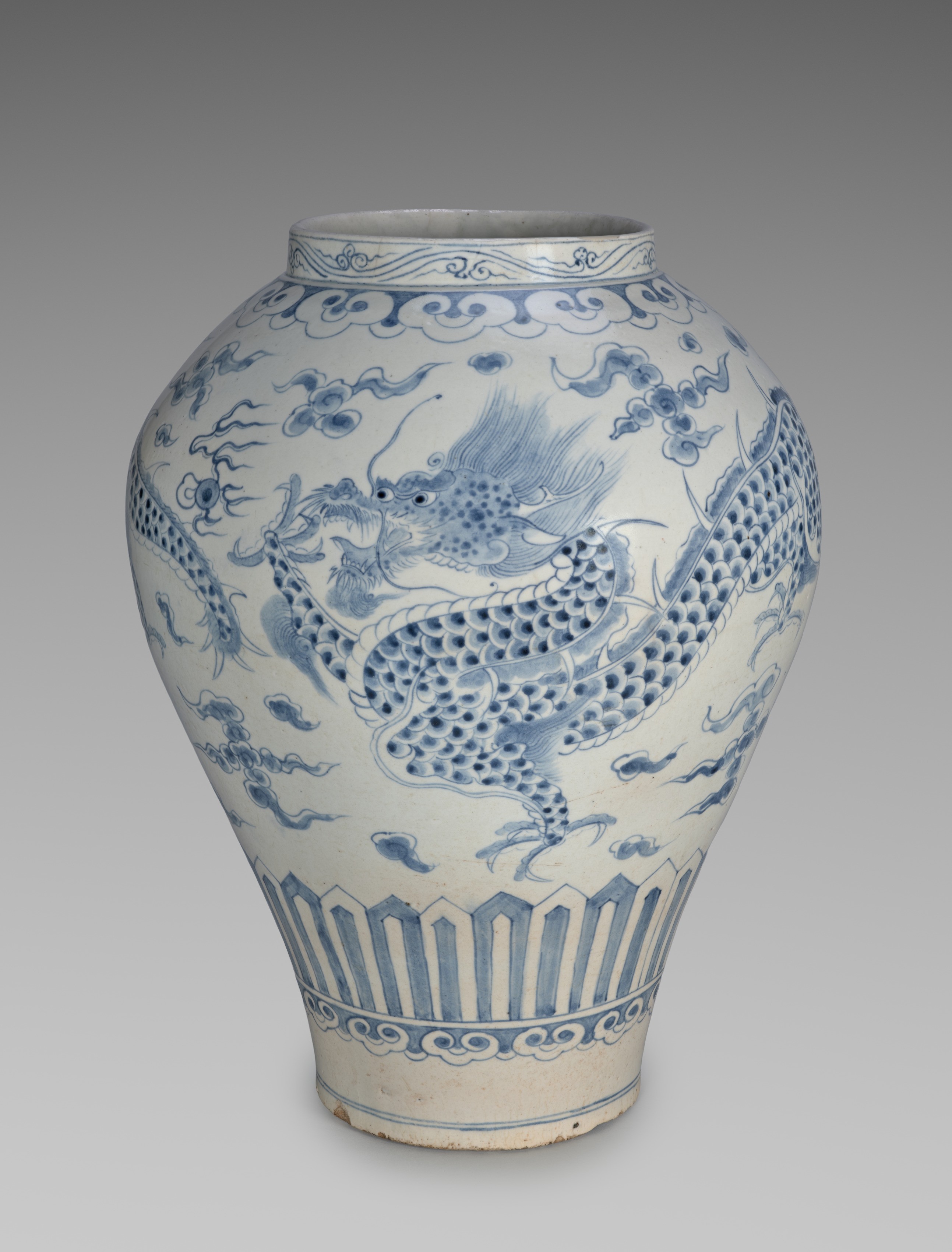
Jar with Dragon Design
A cobalt dragon flying through clouds after a flaming pearl, painted under the glaze on white porcelain. Joseon blue-and-white was painted with a brush, so the pattern carries the speed of the painter’s wrist.
× px · Unmodified source file
Small archival scan: best for reference and screen use, not large prints.
Open in StudioSource & licensing
- Creator / date
- Korea, Joseon dynasty, maker unknown · 1700s
- Source credit
- Leonard C. Hanna Jr. Fund. The Cleveland Museum of Art, Open Access.
- Usage notes
- Released by the Cleveland Museum of Art under CC0 1.0. Credit to the museum is encouraged; CC0 does not imply endorsement.
- Original file
- × px · JPG · 0.0 MB
- Source checked
- 2026-11-04 · editorial approval separate
CC0 · Public domain · 1800s
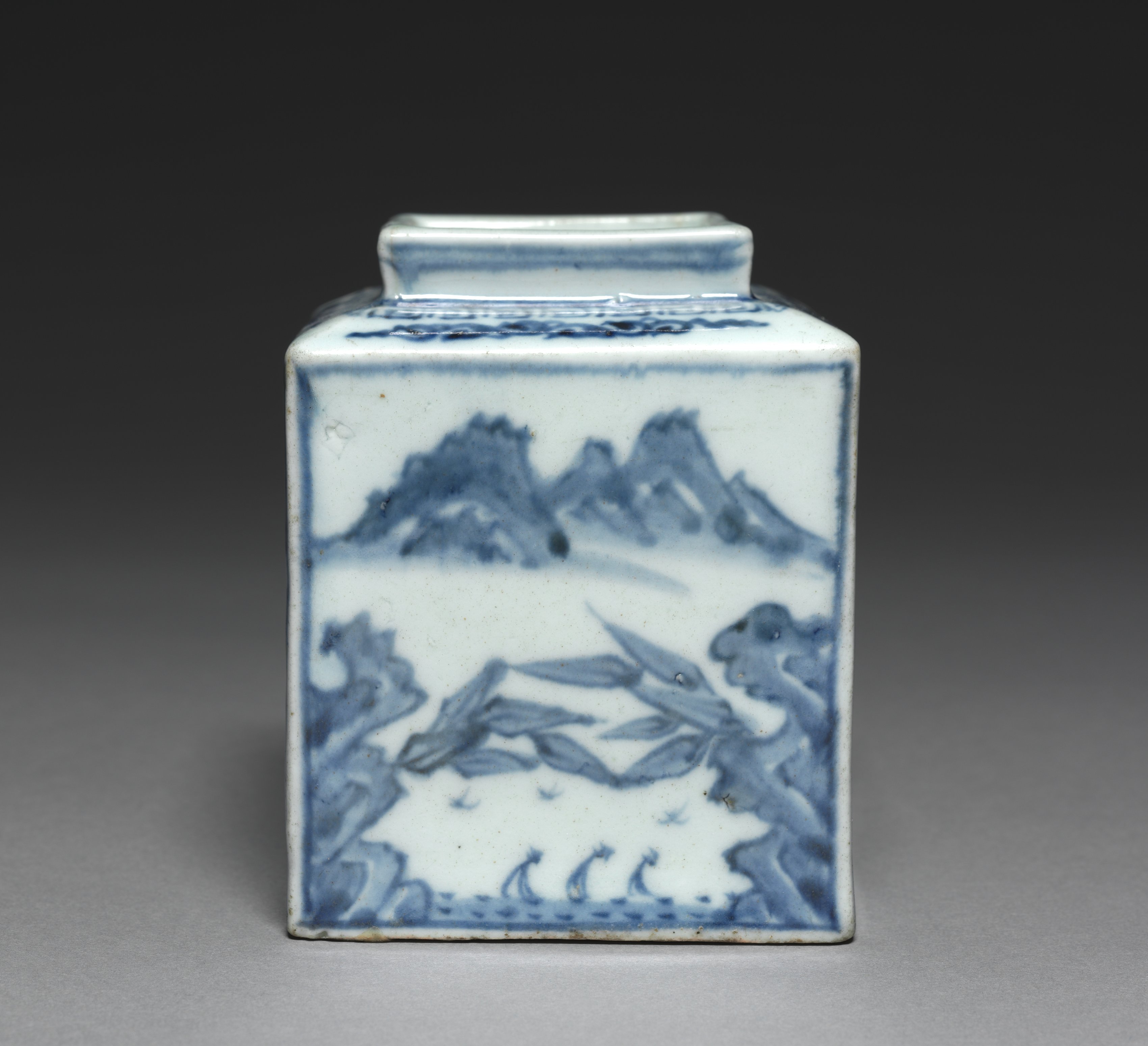
Square-shaped Bottle with the Scenery of the Han River
A squared bottle painted with the Han River through Seoul, an actual view rather than an imagined one. From the 1700s Korean painters and potters turned to real landscape, and true-view scenes entered the ceramic repertoire.
× px · Unmodified source file
Small archival scan: best for reference and screen use, not large prints.
Open in StudioSource & licensing
- Creator / date
- Korea, Joseon dynasty, maker unknown · 1800s
- Source credit
- Leonard C. Hanna Jr. Fund. The Cleveland Museum of Art, Open Access.
- Usage notes
- Released by the Cleveland Museum of Art under CC0 1.0. Credit to the museum is encouraged; CC0 does not imply endorsement.
- Original file
- × px · JPG · 0.0 MB
- Source checked
- 2026-11-04 · editorial approval separate
CC0 · Public domain · 1800s
Rank Badge with Single Crane Motif
A square silk badge embroidered with a single crane, worn on the front and back of an official’s robe. The crane announced civil rank to anyone in the room, which is why the embroidery is dense enough to read at a distance.
× px · Unmodified source file
Small archival scan: best for reference and screen use, not large prints.
Open in StudioSource & licensing
- Creator / date
- Korea, Joseon dynasty, maker unknown · 1800s
- Source credit
- Alma Kroeger Fund. The Cleveland Museum of Art, Open Access.
- Usage notes
- Released by the Cleveland Museum of Art under CC0 1.0. Credit to the museum is encouraged; CC0 does not imply endorsement.
- Original file
- × px · JPG · 0.0 MB
- Source checked
- 2026-11-04 · editorial approval separate
CC0 · Public domain · 1800s
Rank Badge with Single Crane Motif
The second badge of the pair, embroidered on satin damask with silk thread. Paired badges were a matched set, cut, stitched and graded by the same workshop.
× px · Unmodified source file
Small archival scan: best for reference and screen use, not large prints.
Open in StudioSource & licensing
- Creator / date
- Korea, Joseon dynasty, maker unknown · 1800s
- Source credit
- Alma Kroeger Fund. The Cleveland Museum of Art, Open Access.
- Usage notes
- Released by the Cleveland Museum of Art under CC0 1.0. Credit to the museum is encouraged; CC0 does not imply endorsement.
- Original file
- × px · JPG · 0.0 MB
- Source checked
- 2026-11-04 · editorial approval separate
CC0 · Public domain · 1800s
A Pair of Rank Badges with Single Crane Motif
A complete pair, still together. Seeing both badges at once shows how the embroiderer repeated a motif without copying it: the clouds and waves shift, the crane stays.
× px · Unmodified source file
Small archival scan: best for reference and screen use, not large prints.
Open in StudioSource & licensing
- Creator / date
- Korea, Joseon dynasty, maker unknown · 1800s
- Source credit
- Alma Kroeger Fund. The Cleveland Museum of Art, Open Access.
- Usage notes
- Released by the Cleveland Museum of Art under CC0 1.0. Credit to the museum is encouraged; CC0 does not imply endorsement.
- Original file
- × px · JPG · 0.0 MB
- Source checked
- 2026-11-04 · editorial approval separate
CC0 · Public domain · late 1800s
Ancient Chinese Bronzes
A ten-panel folding screen embroidered in gold silk on black silk, depicting bronze ritual vessels with their inscriptions. Antique bronzes were studied as patterns for ornament, so this screen is both a picture and a pattern book.
× px · Unmodified source file
Small archival scan: best for reference and screen use, not large prints.
Open in StudioSource & licensing
- Creator / date
- Korea, Joseon dynasty, embroiderer unknown · late 1800s
- Source credit
- Gift of the Honorable Joseph P. Carroll, KM, and Roberta Carroll, M.D., in recognition of the contribution of Marjorie Williams to the development of The Cleveland Museum of Art. The Cleveland Museum of Art, Open Access.
- Usage notes
- Released by the Cleveland Museum of Art under CC0 1.0. Credit to the museum is encouraged; CC0 does not imply endorsement.
- Original file
- × px · JPG · 0.0 MB
- Source checked
- 2026-11-04 · editorial approval separate
Public-domain status is reported by the linked source and may vary by jurisdiction. Check the source record for your intended use. No exclusive rights or Visual Bounty marketplace license are offered for these images.