← Open CollectionsPublic-domain source library
Guard: Japanese Sword Fittings (Tsuba)
A tsuba is the disc between a sword’s grip and its blade: it keeps the hand from sliding forward, it shifts the balance of the weapon, and it is the one part of the mounting seen at rest. Edo-period smiths worked them in iron, cutting openwork silhouettes (sukashi), carving in low relief and inlaying brass and soft metal. The subjects come from poetry and the seasons — plum, bamboo, waves, plovers — or from Zen parable and folk humour. Almost all are unsigned, made in workshops for a market rather than signed as individual works, and the ambition shows in proportion: a whole landscape reduced to a shape that has to be readable at a glance and then reward a closer look.
Original means the unmodified digital file supplied by the linked archive, not an upscaled or reconstructed image. Sign in for free downloads. Studio uses a working preview up to 2048 px.
CC0 · Public domain · c. 1615–1868
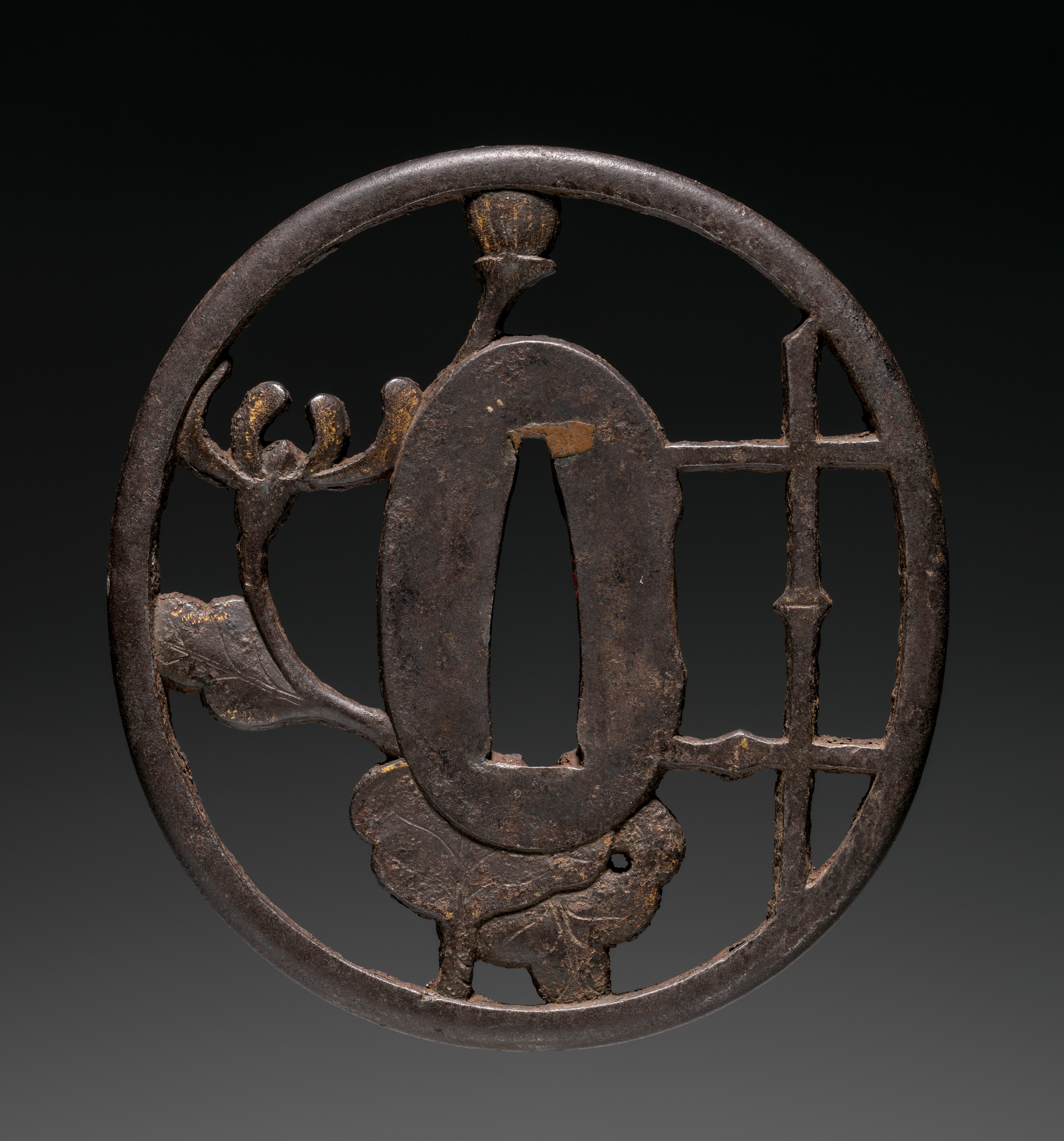
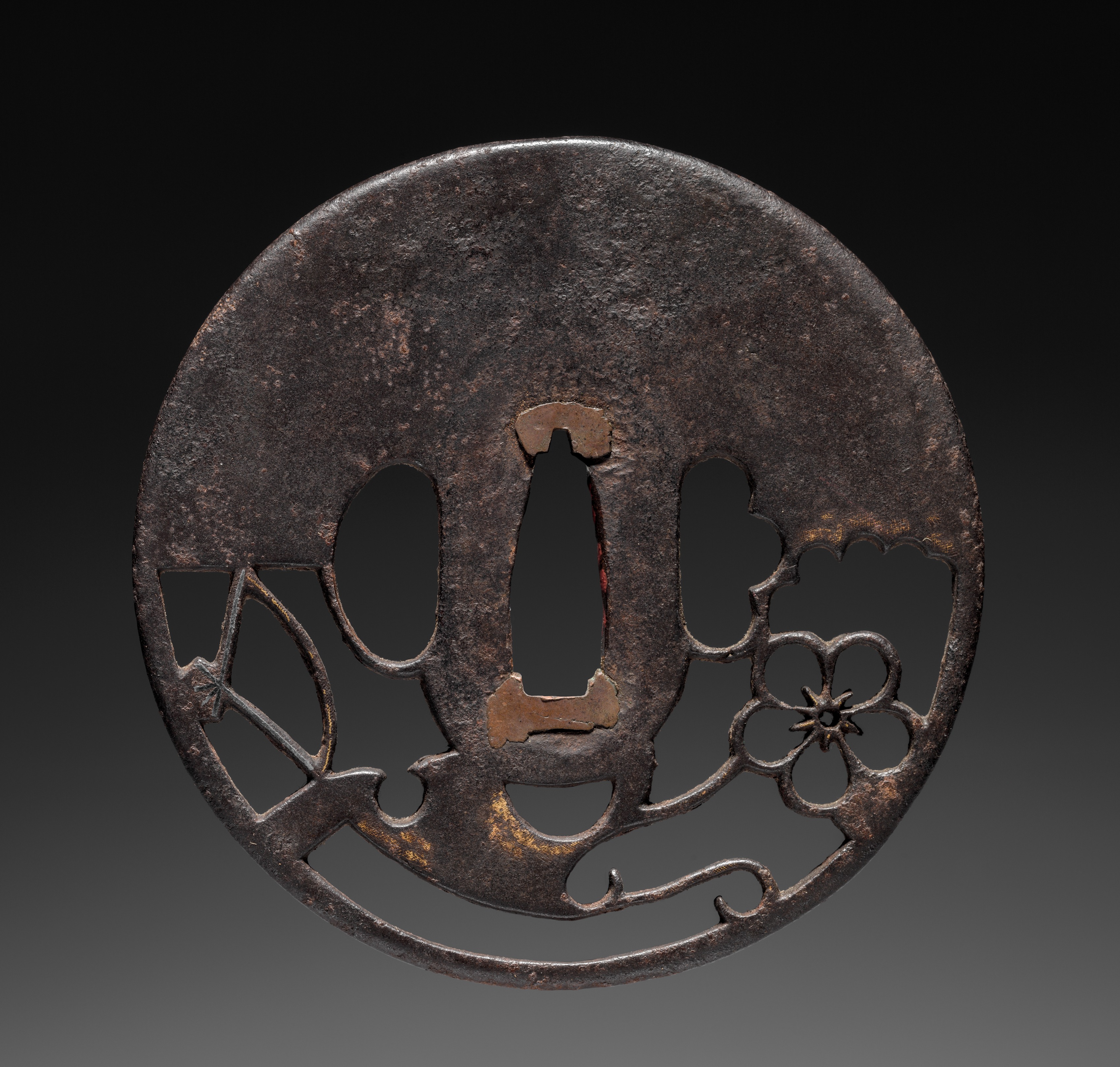
Sword Guard (Tsuba) with Fence and Flower
A fence and a single flowering stem, cut through the iron rather than drawn on it. Openwork (sukashi) means the design has to work as a silhouette against whatever is behind it, which is why tsuba motifs are so few and so blunt.
3170 × 3400 px · Unmodified source file
Open in StudioSource & licensing
- Creator / date
- Japan, Edo period (1615–1868), maker unknown · c. 1615–1868
- Source credit
- The Cleveland Museum of Art, 1915.91. Open Access.
- Usage notes
- Released by the Cleveland Museum of Art under CC0 1.0. Credit to the museum is encouraged; CC0 does not imply endorsement.
- Original file
- 3170 × 3400 px · JPG · 0.0 MB
- Source checked
- 2026-11-05 · editorial approval separate
CC0 · Public domain · c. 1615–1868
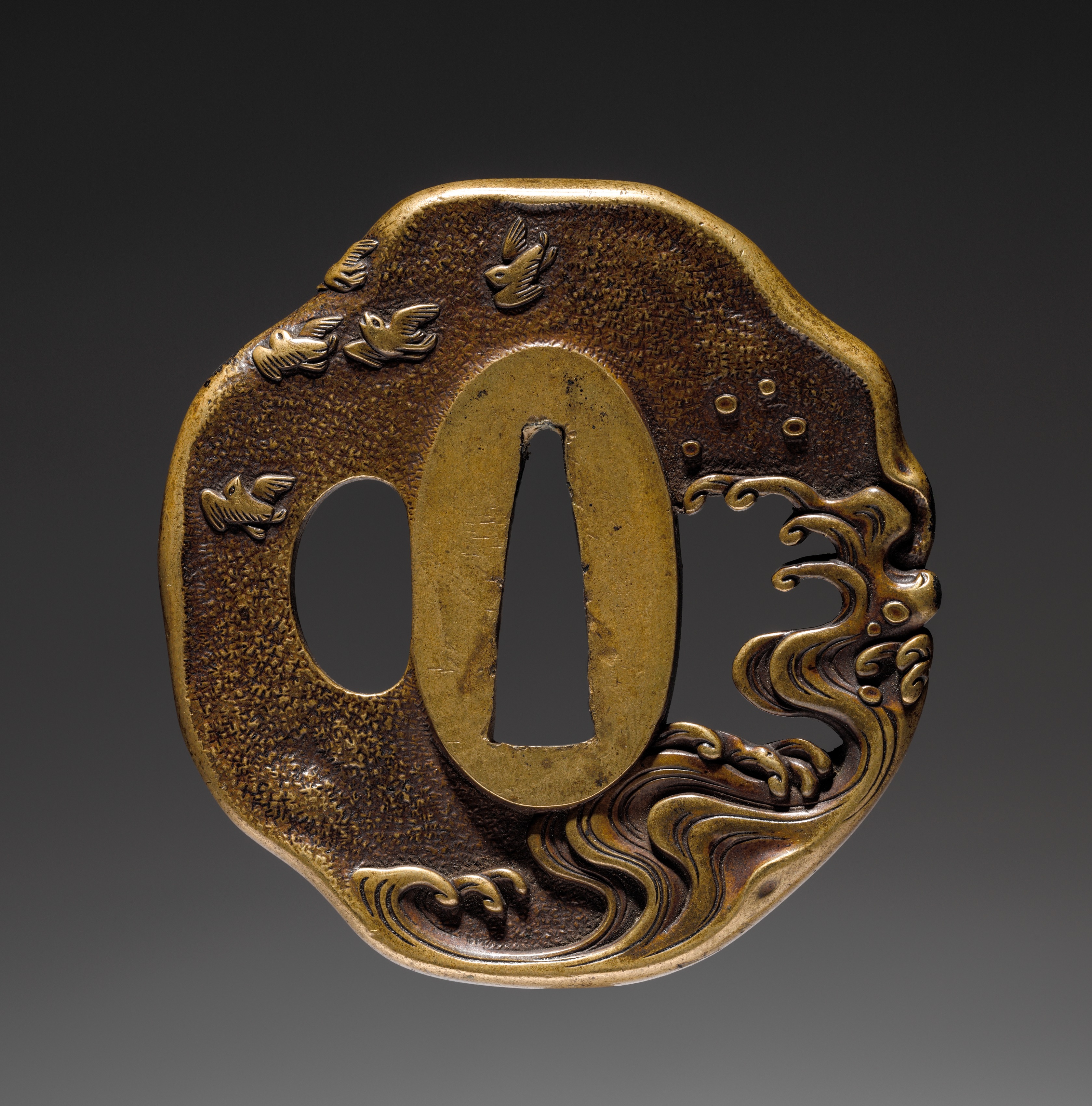
Sword Guard (Tsuba) with Plovers in Waves
Plovers over waves is one of the oldest patterns in Japanese decoration, borrowed from textiles and lacquer. Here the birds are punched and the water cut away in brass, so the guard reads as a bright disc rather than a dark one.
3358 × 3400 px · Unmodified source file
Open in StudioSource & licensing
- Creator / date
- Japan, Edo period (1615–1868), maker unknown · c. 1615–1868
- Source credit
- The Cleveland Museum of Art, 1919.413. Open Access.
- Usage notes
- Released by the Cleveland Museum of Art under CC0 1.0. Credit to the museum is encouraged; CC0 does not imply endorsement.
- Original file
- 3358 × 3400 px · JPG · 0.0 MB
- Source checked
- 2026-11-05 · editorial approval separate
CC0 · Public domain · c. 1800
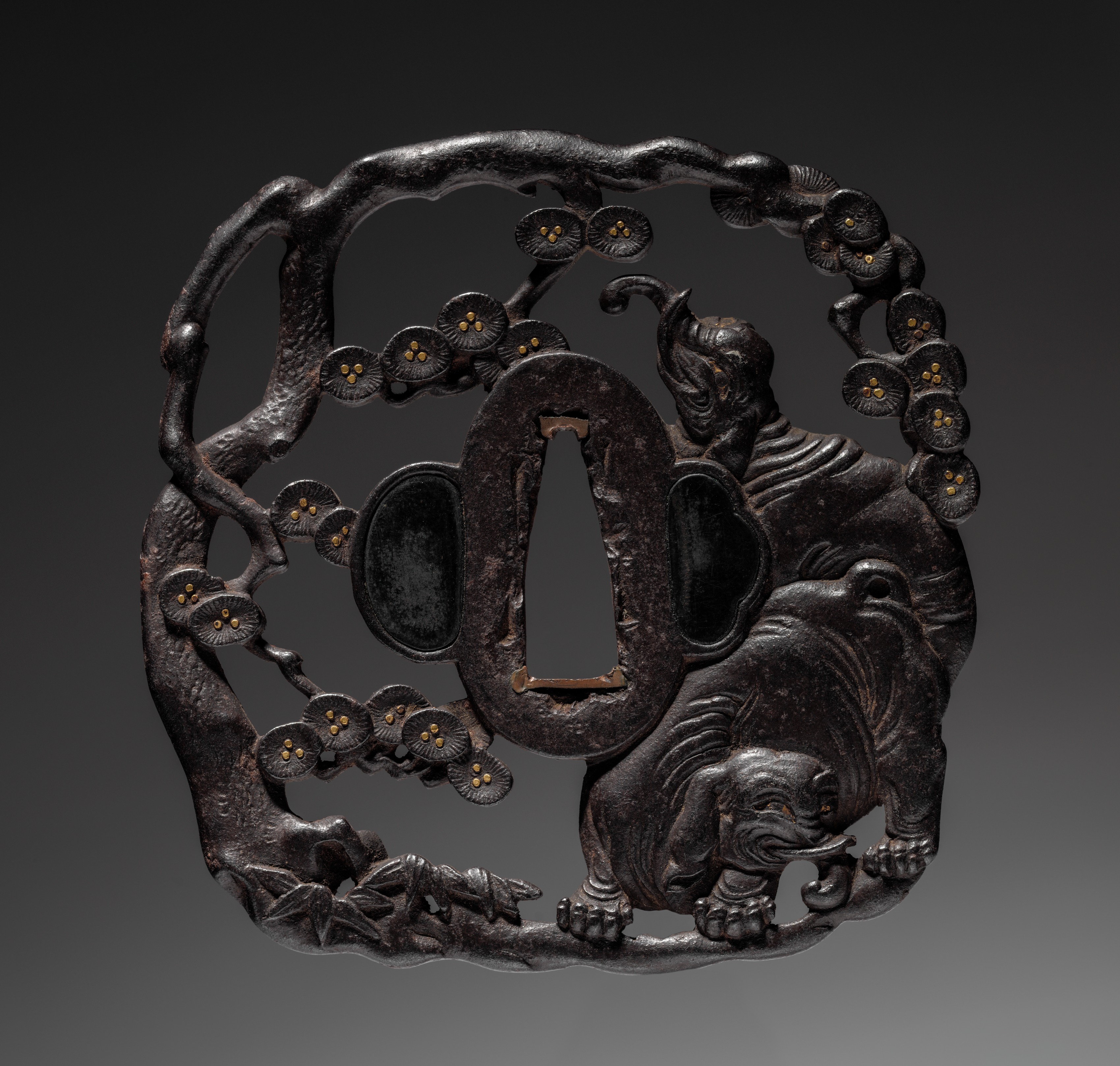
Sword Guard (Tsuba) with Elephant in Pine
An elephant beneath a pine. Edo designers knew the animal from imported prints and travellers’ accounts rather than from life, and the uncertain proportions are part of the pleasure: an exotic creature treated as a pattern.
3400 × 3236 px · Unmodified source file
Open in StudioSource & licensing
- Creator / date
- Japan, Edo period (1615–1868), maker unknown · c. 1800
- Source credit
- The Cleveland Museum of Art, 1919.432. Open Access.
- Usage notes
- Released by the Cleveland Museum of Art under CC0 1.0. Credit to the museum is encouraged; CC0 does not imply endorsement.
- Original file
- 3400 × 3236 px · JPG · 0.0 MB
- Source checked
- 2026-11-05 · editorial approval separate
CC0 · Public domain · 1615–1868
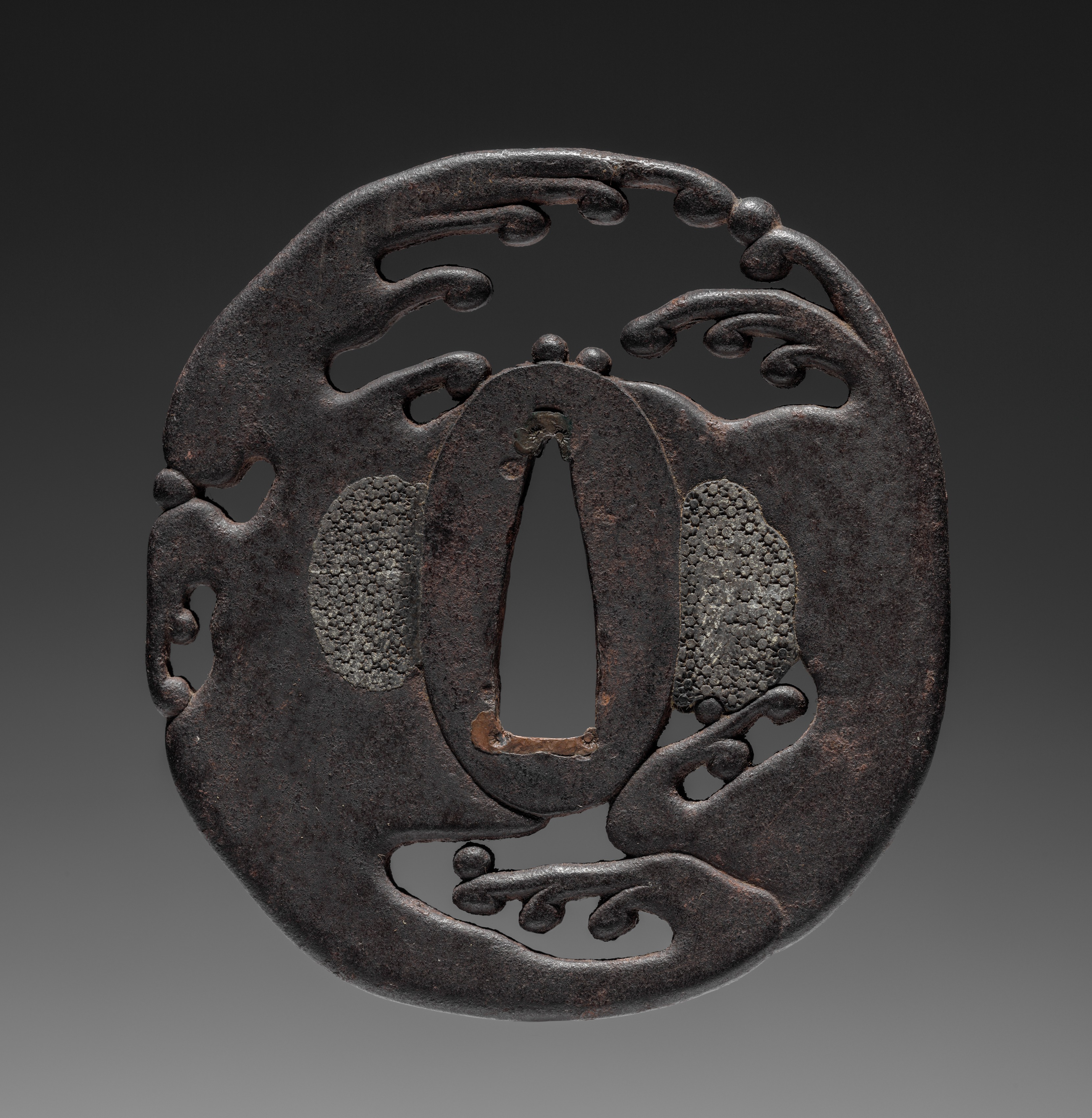
Sword Guard (Tsuba) with Rough Waves
Waves cut as steep hooked ridges. The carving is shallow, but the edges are undercut so the iron throws a shadow into each curl — at arm’s length the surface looks agitated, which is the whole intent.
3321 × 3400 px · Unmodified source file
Open in StudioSource & licensing
- Creator / date
- Japan, Edo period (1615–1868), maker unknown · 1615–1868
- Source credit
- The Cleveland Museum of Art, 1919.472. Open Access.
- Usage notes
- Released by the Cleveland Museum of Art under CC0 1.0. Credit to the museum is encouraged; CC0 does not imply endorsement.
- Original file
- 3321 × 3400 px · JPG · 0.0 MB
- Source checked
- 2026-11-05 · editorial approval separate
CC0 · Public domain · c. 1615–1868
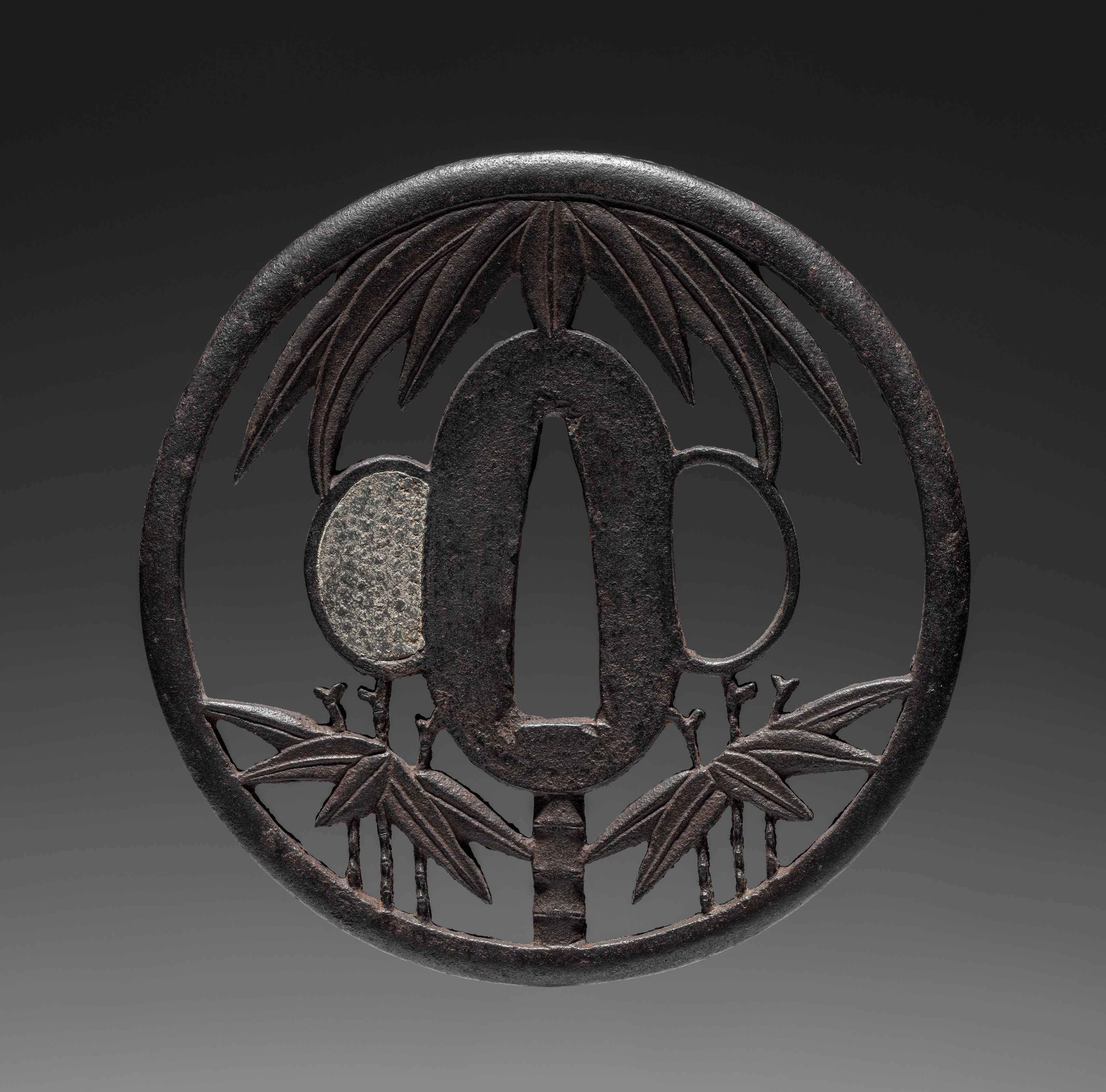
Sword Guard (Tsuba) with Bamboo
Bamboo used as a frame rather than a subject: nodes and leaves run to the rim and the blade slot sits inside the growth. Bamboo stands for resilience because it bends and returns, which is an argument a sword guard can make.
3400 × 3358 px · Unmodified source file
Open in StudioSource & licensing
- Creator / date
- Japan, Edo period (1615–1868), maker unknown · c. 1615–1868
- Source credit
- The Cleveland Museum of Art, 1919.476. Open Access.
- Usage notes
- Released by the Cleveland Museum of Art under CC0 1.0. Credit to the museum is encouraged; CC0 does not imply endorsement.
- Original file
- 3400 × 3358 px · JPG · 0.0 MB
- Source checked
- 2026-11-05 · editorial approval separate
CC0 · Public domain · c. 1615–1868
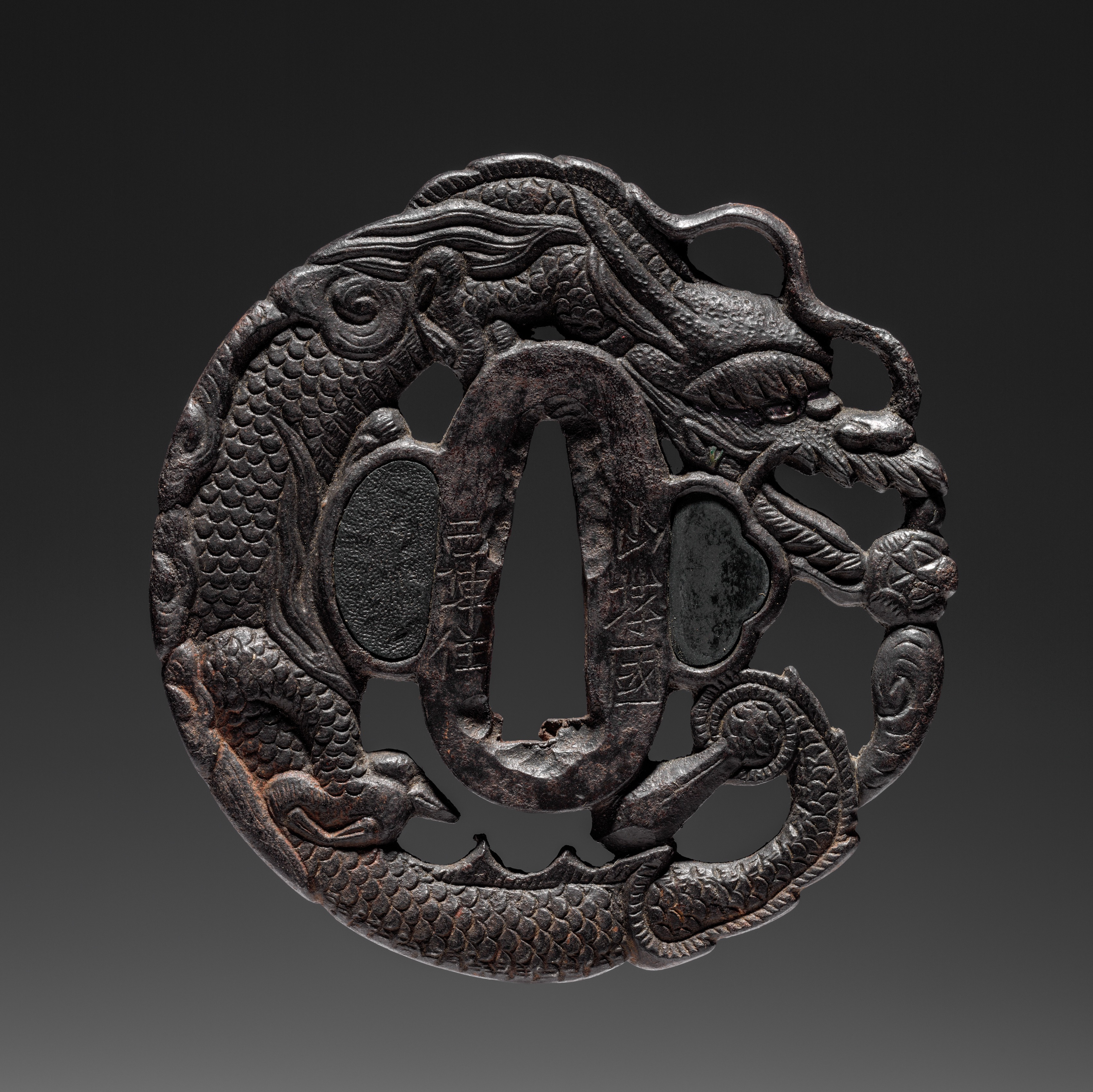
Sword Guard (Tsuba) with Dragon
A dragon wound around the slot for the blade tang. The functional hole becomes part of the composition instead of something hidden — the discipline of tsuba design is that the mechanism is always visible.
3400 × 3397 px · Unmodified source file
Open in StudioSource & licensing
- Creator / date
- Japan, Edo period (1615–1868), maker unknown · c. 1615–1868
- Source credit
- The Cleveland Museum of Art, 1919.510. Open Access.
- Usage notes
- Released by the Cleveland Museum of Art under CC0 1.0. Credit to the museum is encouraged; CC0 does not imply endorsement.
- Original file
- 3400 × 3397 px · JPG · 0.0 MB
- Source checked
- 2026-11-05 · editorial approval separate
CC0 · Public domain · c. 1615–1868
Sword Guard (Tsuba) with Plum
Plum blossoms in earliest spring are the first flower of the year and a standard emblem of endurance. The petals are cut as simple rounds and the branch worked in low relief, so the guard is legible from a few paces away.
3400 × 3240 px · Unmodified source file
Open in StudioSource & licensing
- Creator / date
- Japan, Edo period (1615–1868), maker unknown · c. 1615–1868
- Source credit
- The Cleveland Museum of Art, 1919.274. Open Access.
- Usage notes
- Released by the Cleveland Museum of Art under CC0 1.0. Credit to the museum is encouraged; CC0 does not imply endorsement.
- Original file
- 3400 × 3240 px · JPG · 0.0 MB
- Source checked
- 2026-11-05 · editorial approval separate
CC0 · Public domain · c. 1615–1868
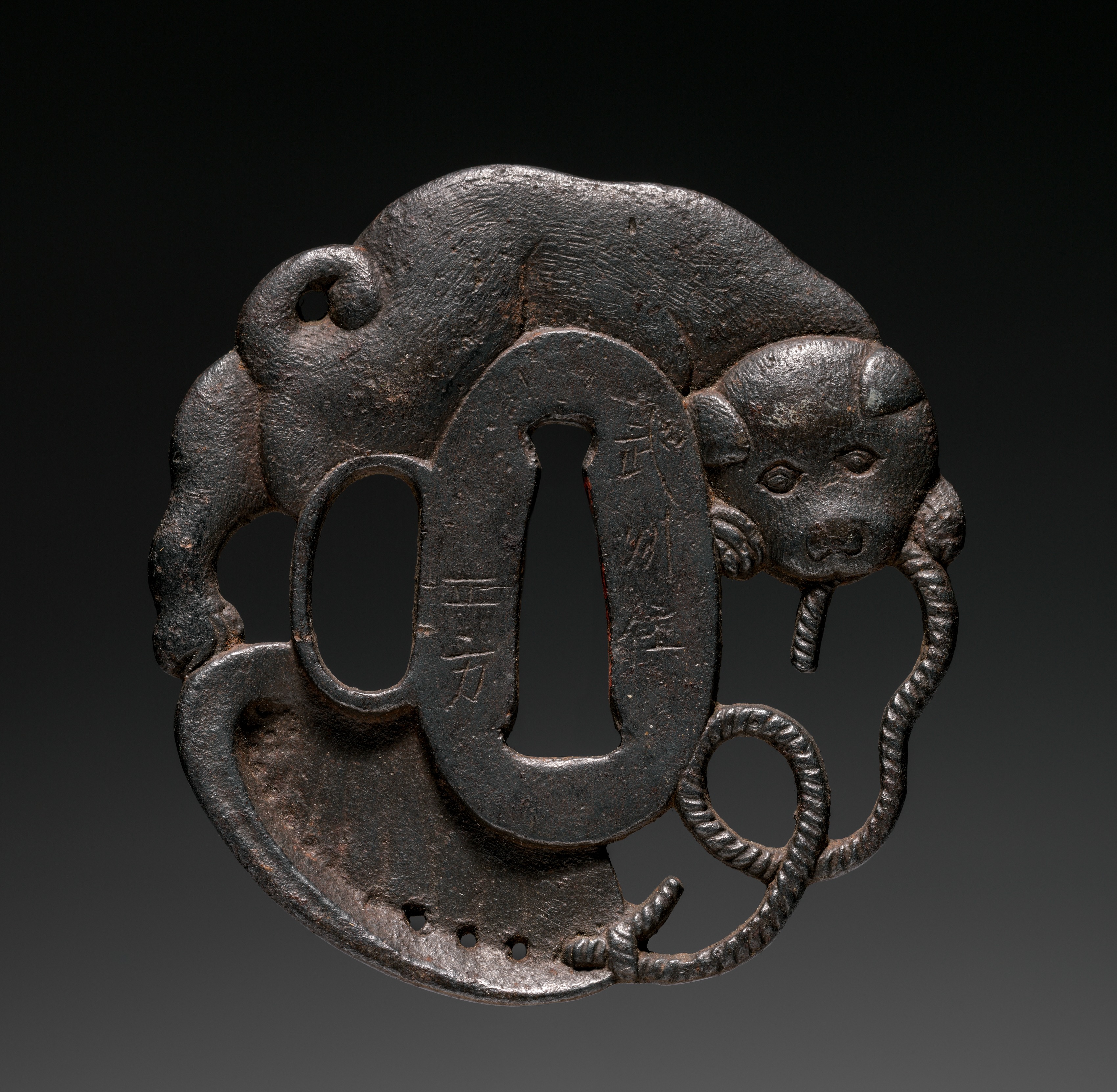
Sword Guard (Tsuba) with Puppy Playing with Shell on Cord
A puppy worrying a shell tied on a cord: an Edo taste for small, comic, everyday subjects on a piece of military equipment. By the nineteenth century fittings were worn as display as much as for use, and the humour is deliberate.
3400 × 3324 px · Unmodified source file
Open in StudioSource & licensing
- Creator / date
- Japan, Edo period (1615–1868), maker unknown · c. 1615–1868
- Source credit
- The Cleveland Museum of Art, 1919.248. Open Access.
- Usage notes
- Released by the Cleveland Museum of Art under CC0 1.0. Credit to the museum is encouraged; CC0 does not imply endorsement.
- Original file
- 3400 × 3324 px · JPG · 0.0 MB
- Source checked
- 2026-11-05 · editorial approval separate
CC0 · Public domain · c. 1615–1868
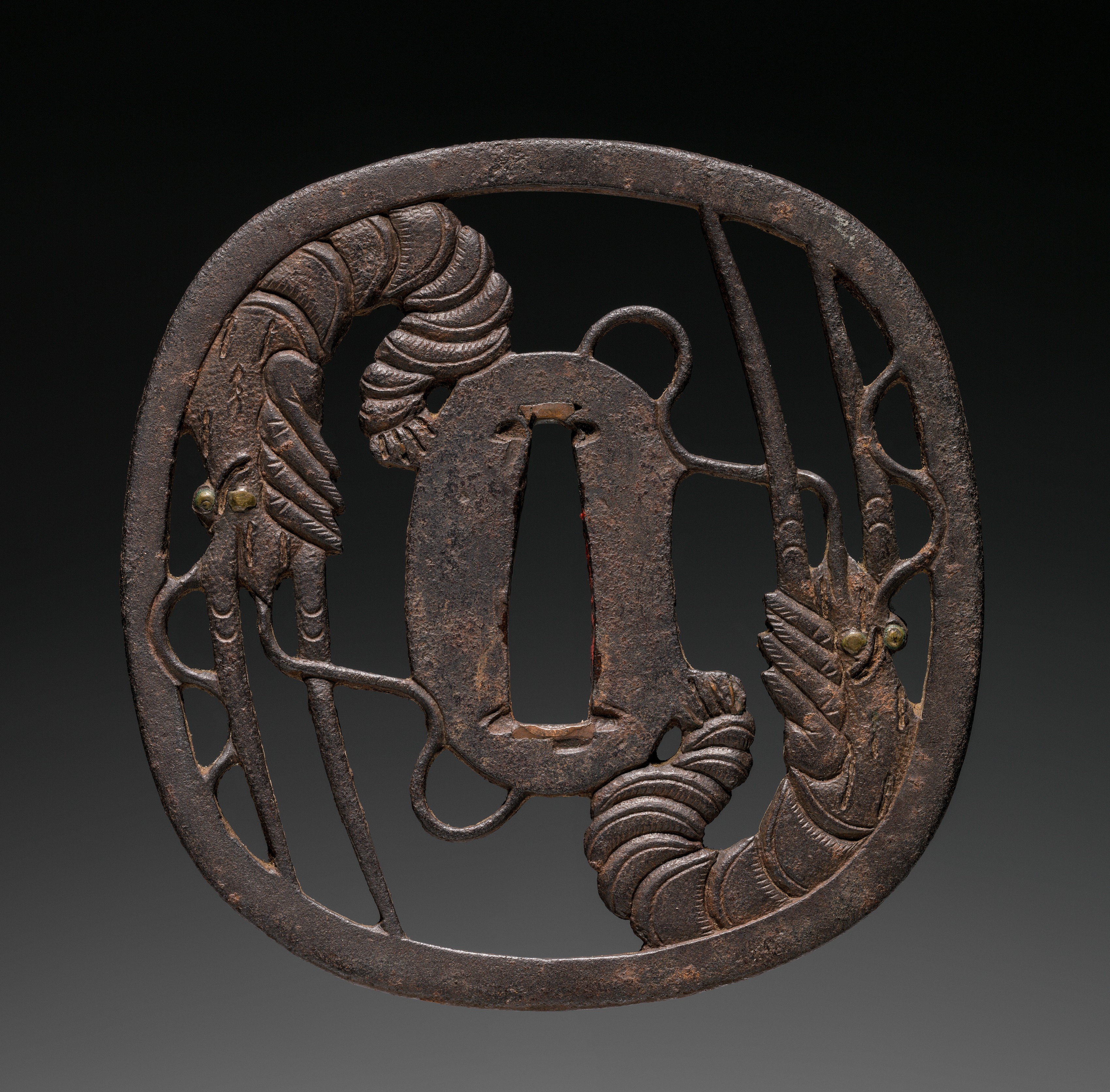
Sword Guard (Tsuba) with Prawns
Prawns, curved to fill the disc. The carver uses the tail segments as pure pattern — the ridges repeat around the guard, and the composition rests on that repetition rather than on a scene.
3400 × 3346 px · Unmodified source file
Open in StudioSource & licensing
- Creator / date
- Japan, Edo period (1615–1868), maker unknown · c. 1615–1868
- Source credit
- The Cleveland Museum of Art, 1919.251. Open Access.
- Usage notes
- Released by the Cleveland Museum of Art under CC0 1.0. Credit to the museum is encouraged; CC0 does not imply endorsement.
- Original file
- 3400 × 3346 px · JPG · 0.0 MB
- Source checked
- 2026-11-05 · editorial approval separate
CC0 · Public domain · c. 1615–1868
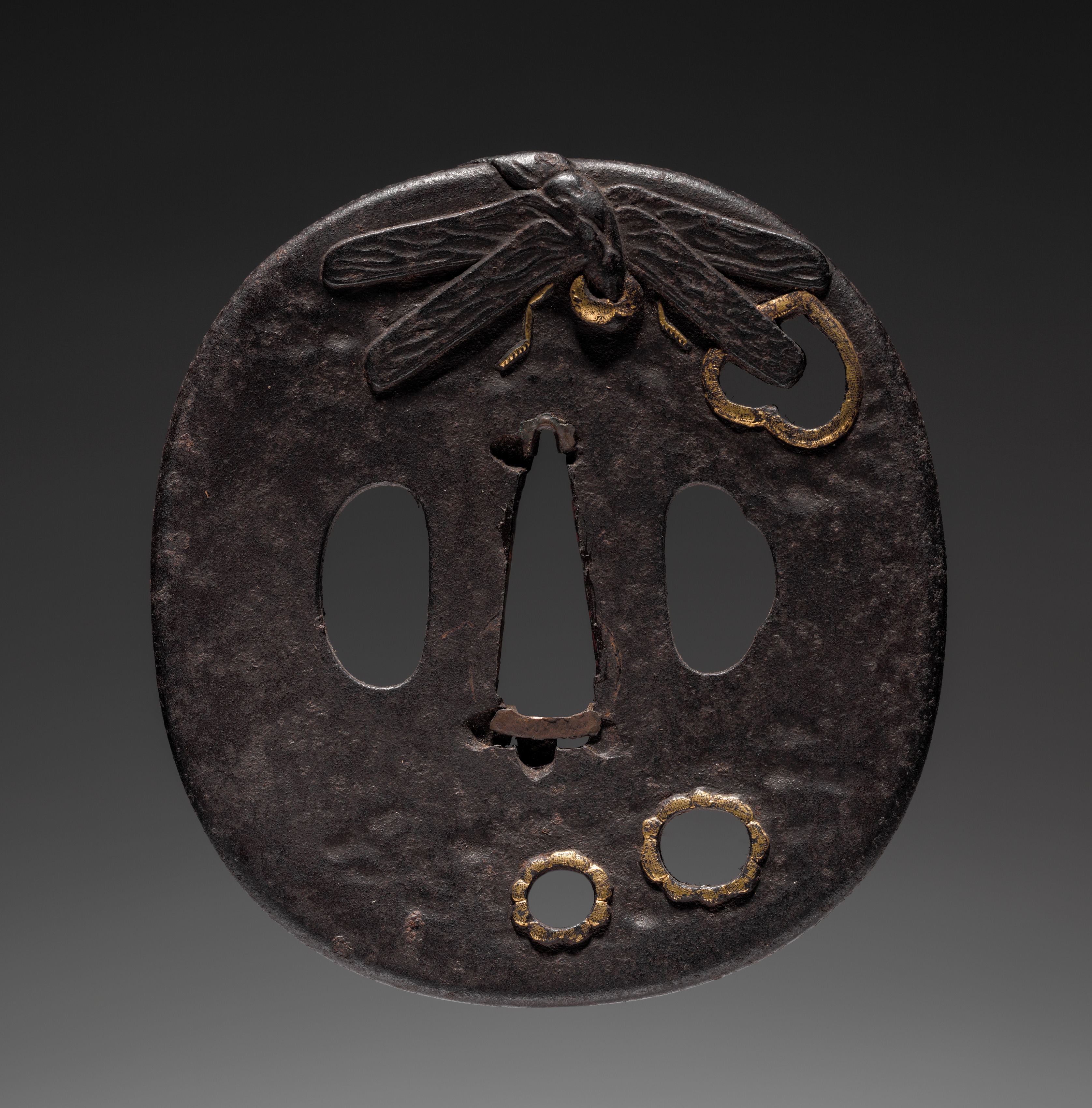
Sword Guard (Tsuba) with Dragonfly
The dragonfly was called the victory insect, which made it a lucky subject for a warrior’s fittings. Cut in openwork, the wings carry the eye around the disc and hold the guard’s balance.
3351 × 3400 px · Unmodified source file
Open in StudioSource & licensing
- Creator / date
- Japan, Edo period (1615–1868), maker unknown · c. 1615–1868
- Source credit
- The Cleveland Museum of Art, 1919.422. Open Access.
- Usage notes
- Released by the Cleveland Museum of Art under CC0 1.0. Credit to the museum is encouraged; CC0 does not imply endorsement.
- Original file
- 3351 × 3400 px · JPG · 0.0 MB
- Source checked
- 2026-11-05 · editorial approval separate
CC0 · Public domain · c. 1615–1868
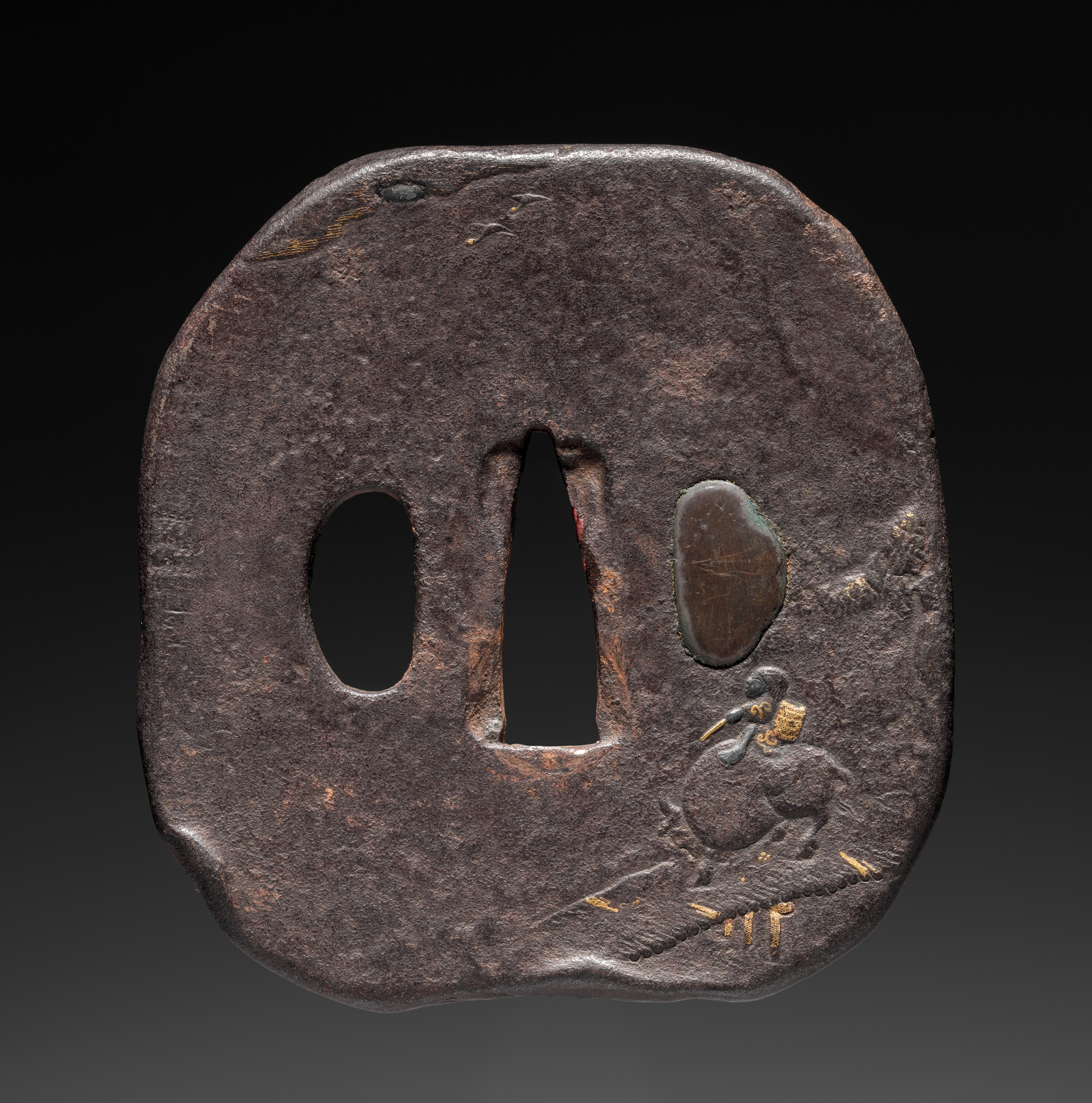
Sword Guard (Tsuba) with Oxherd
An oxherd with his animal, from the Zen parable of taming the ox — a sequence of pictures in which a herder masters a wild ox and then lets it go. Whether the owner read it that way or simply liked the subject, it was everywhere in Edo art.
3365 × 3400 px · Unmodified source file
Open in StudioSource & licensing
- Creator / date
- Japan, Edo period (1615–1868), maker unknown · c. 1615–1868
- Source credit
- The Cleveland Museum of Art, 1919.292. Open Access.
- Usage notes
- Released by the Cleveland Museum of Art under CC0 1.0. Credit to the museum is encouraged; CC0 does not imply endorsement.
- Original file
- 3365 × 3400 px · JPG · 0.0 MB
- Source checked
- 2026-11-05 · editorial approval separate
CC0 · Public domain · c. 1615–1868
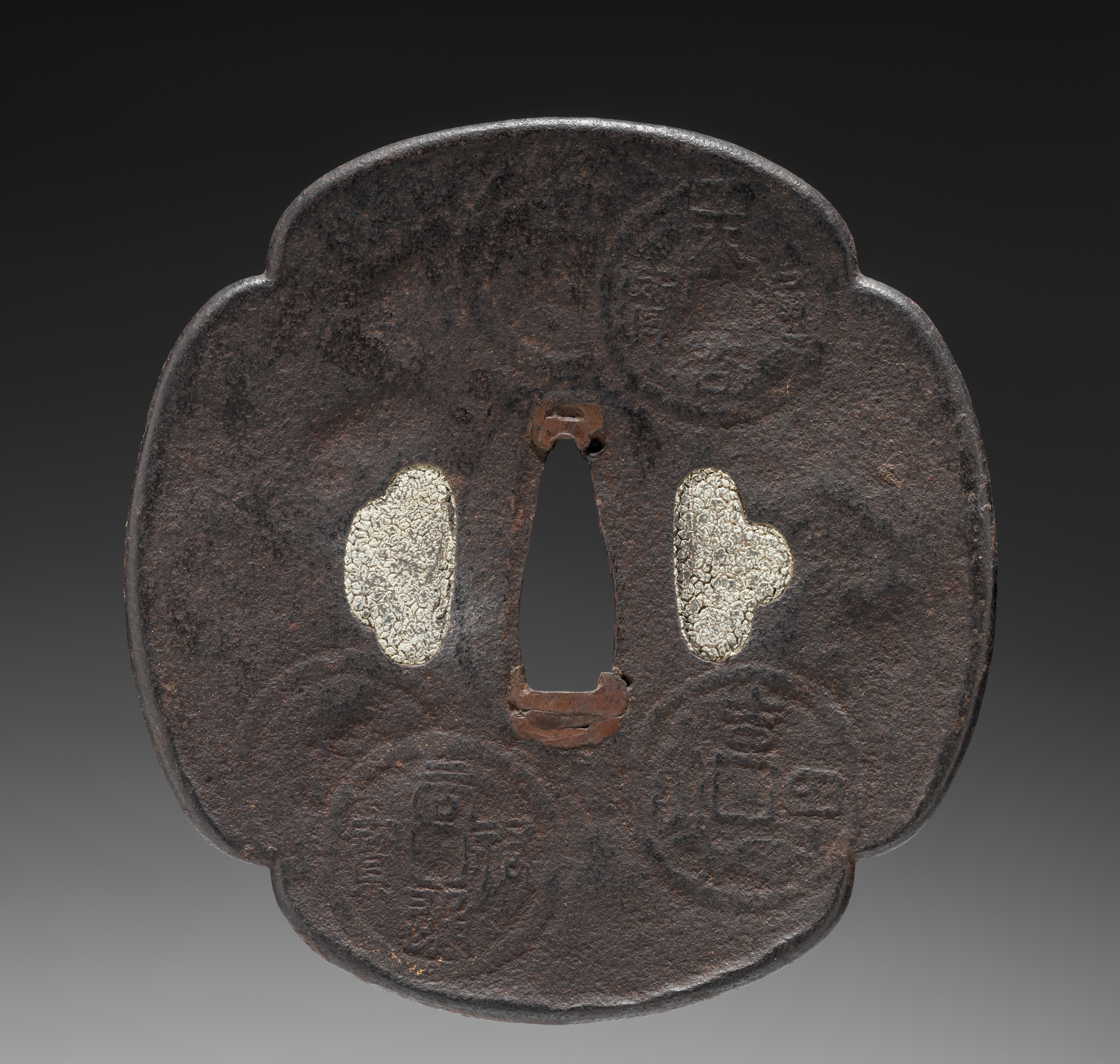
Sword Guard (Tsuba) with Coins
Coins, the oval mon, used as a repeating field. Wealth motifs persisted on sword fittings despite sumptuary rules about who could wear what, and the discs are cut at differing depths so the surface works as texture.
3400 × 3229 px · Unmodified source file
Open in StudioSource & licensing
- Creator / date
- Japan, Edo period (1615–1868), maker unknown · c. 1615–1868
- Source credit
- The Cleveland Museum of Art, 1919.489. Open Access.
- Usage notes
- Released by the Cleveland Museum of Art under CC0 1.0. Credit to the museum is encouraged; CC0 does not imply endorsement.
- Original file
- 3400 × 3229 px · JPG · 0.0 MB
- Source checked
- 2026-11-05 · editorial approval separate
Public-domain status is reported by the linked source and may vary by jurisdiction. Check the source record for your intended use. No exclusive rights or Visual Bounty marketplace license are offered for these images.