← Open CollectionsPublic-domain source library
Sprinkled Gold: Japanese Lacquer
Maki-e is drawing with metal powder. While the lacquer is still tacky, gold or silver dust is sifted onto it, and the layer is then sealed and polished, so that the pattern sits in the surface rather than on top of it. The technique suited small, handled objects, and the writing box was the ideal host: a lacquered case holding an inkstone, a water dropper, an ink cake and brushes. These objects, from a Kamakura cosmetics box to a Meiji poem-card case, show a craft that was both a domestic industry and a form of painting, with designs taken from seasons, poetry and the strangers arriving in Japanese ports.
Original means the unmodified digital file supplied by the linked archive, not an upscaled or reconstructed image. Sign in for free downloads. Studio uses a working preview up to 2048 px.
CC0 · Public domain · early 1300s
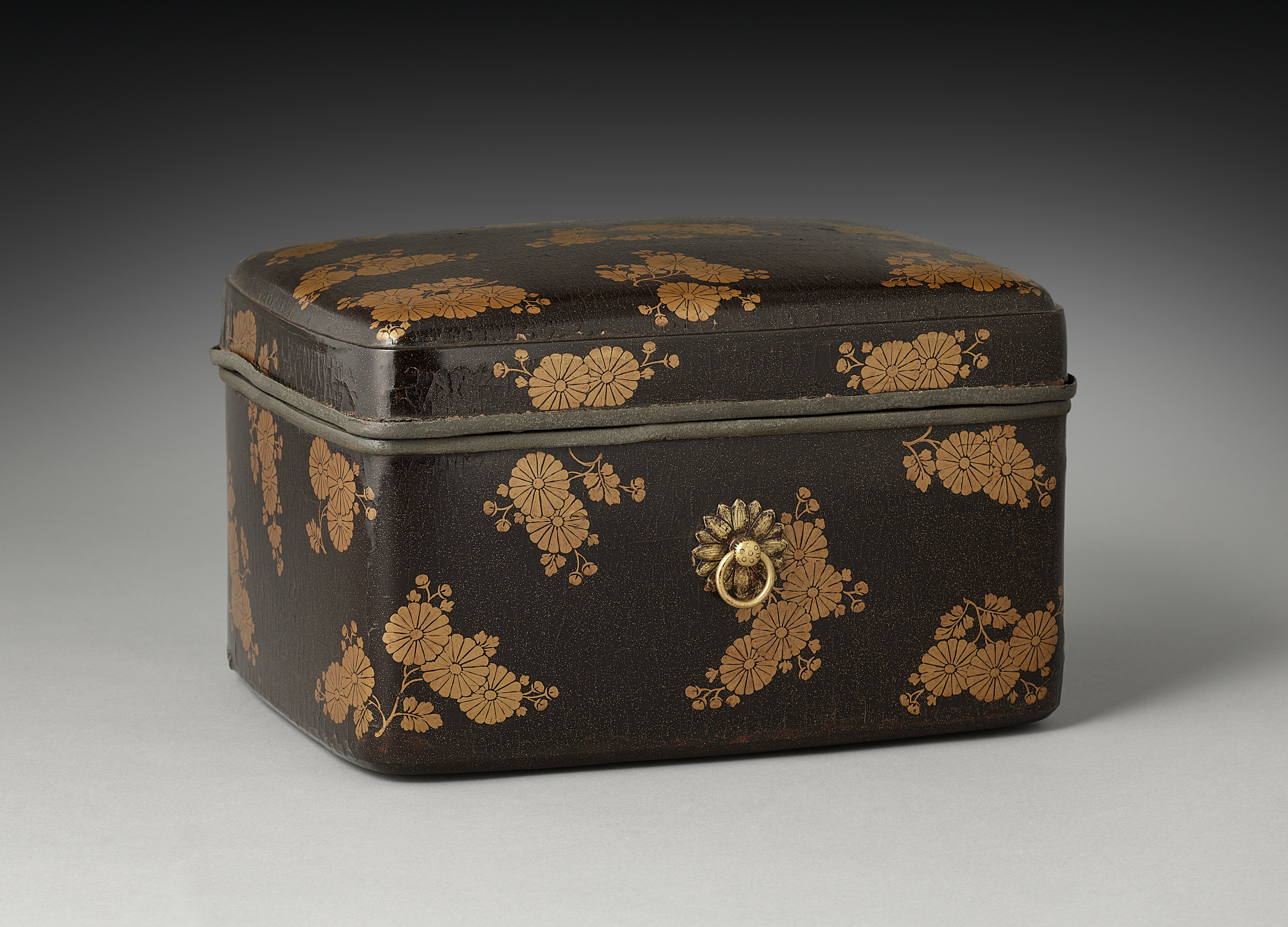
Cosmetics Box with Chrysanthemums
In China the chrysanthemum was valued for its association with the Double Nine Festival and with the reclusive life of the poet Tao Yuanming. On a small Kamakura-period cosmetics box the flower is carried in sprinkled gold over dark lacquer.
3400 × 2448 px · Unmodified source file
Open in StudioSource & licensing
- Creator / date
- Japan, Kamakura period (1185–1333), maker unknown · early 1300s
- Source credit
- The Cleveland Museum of Art, 1963.513. Open Access.
- Usage notes
- Released by the Cleveland Museum of Art under CC0 1.0. Credit to the museum is encouraged; CC0 does not imply endorsement.
- Original file
- 3400 × 2448 px · JPG · 0.0 MB
- Source checked
- 2026-11-04 · editorial approval separate
CC0 · Public domain · late 1300s
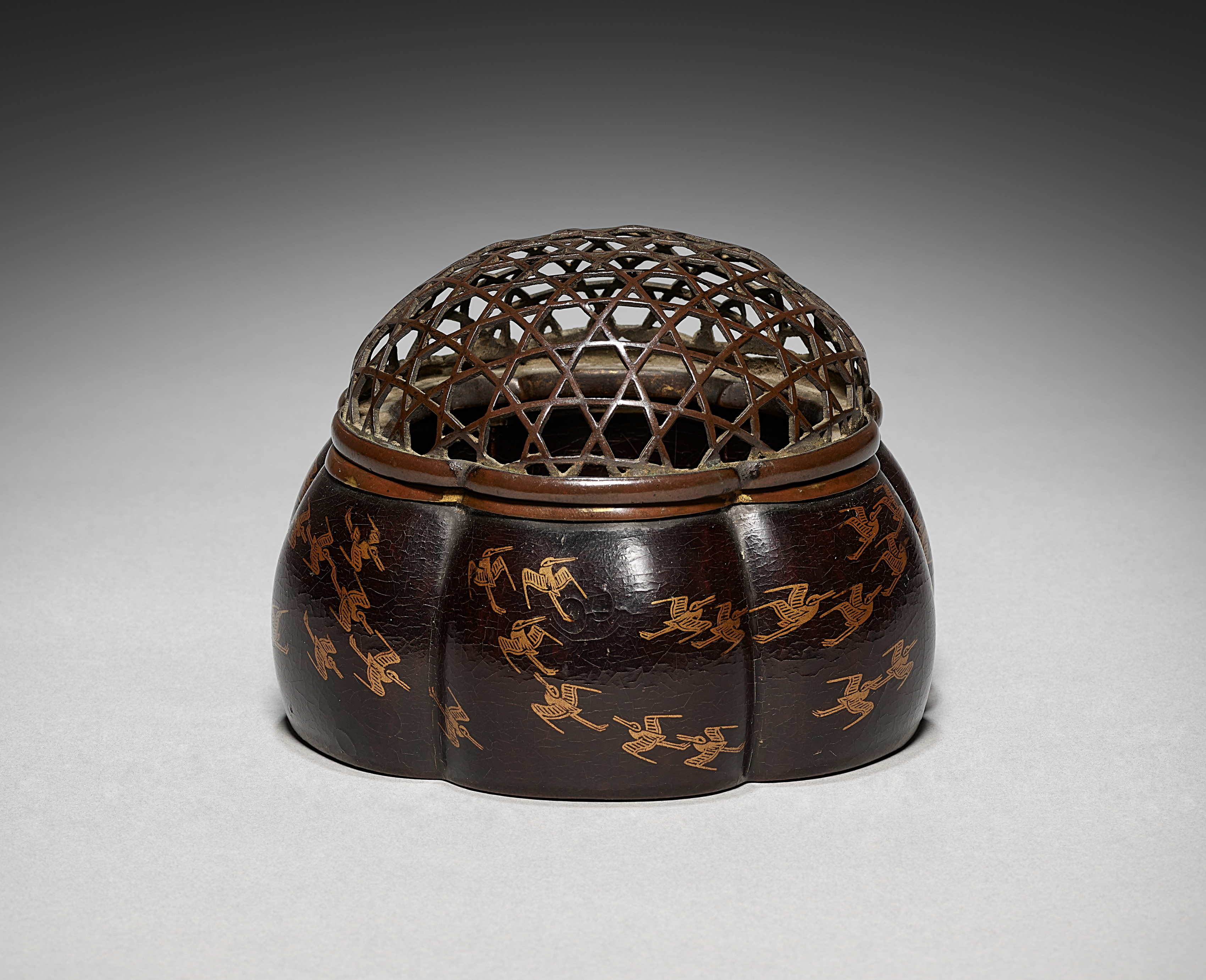
Incense Burner with Lid
The repeated, undulating, rounded sides evoke waves over which plovers sweep. The bronze cover is probably a later addition that mimics the lacquer beneath it.
3400 × 2762 px · Unmodified source file
Open in StudioSource & licensing
- Creator / date
- Japan, Nanbokuchō period (1336–92), maker unknown · late 1300s
- Source credit
- The Cleveland Museum of Art, 1960.195. Open Access.
- Usage notes
- Released by the Cleveland Museum of Art under CC0 1.0. Credit to the museum is encouraged; CC0 does not imply endorsement.
- Original file
- 3400 × 2762 px · JPG · 0.0 MB
- Source checked
- 2026-11-04 · editorial approval separate
CC0 · Public domain · 1400s
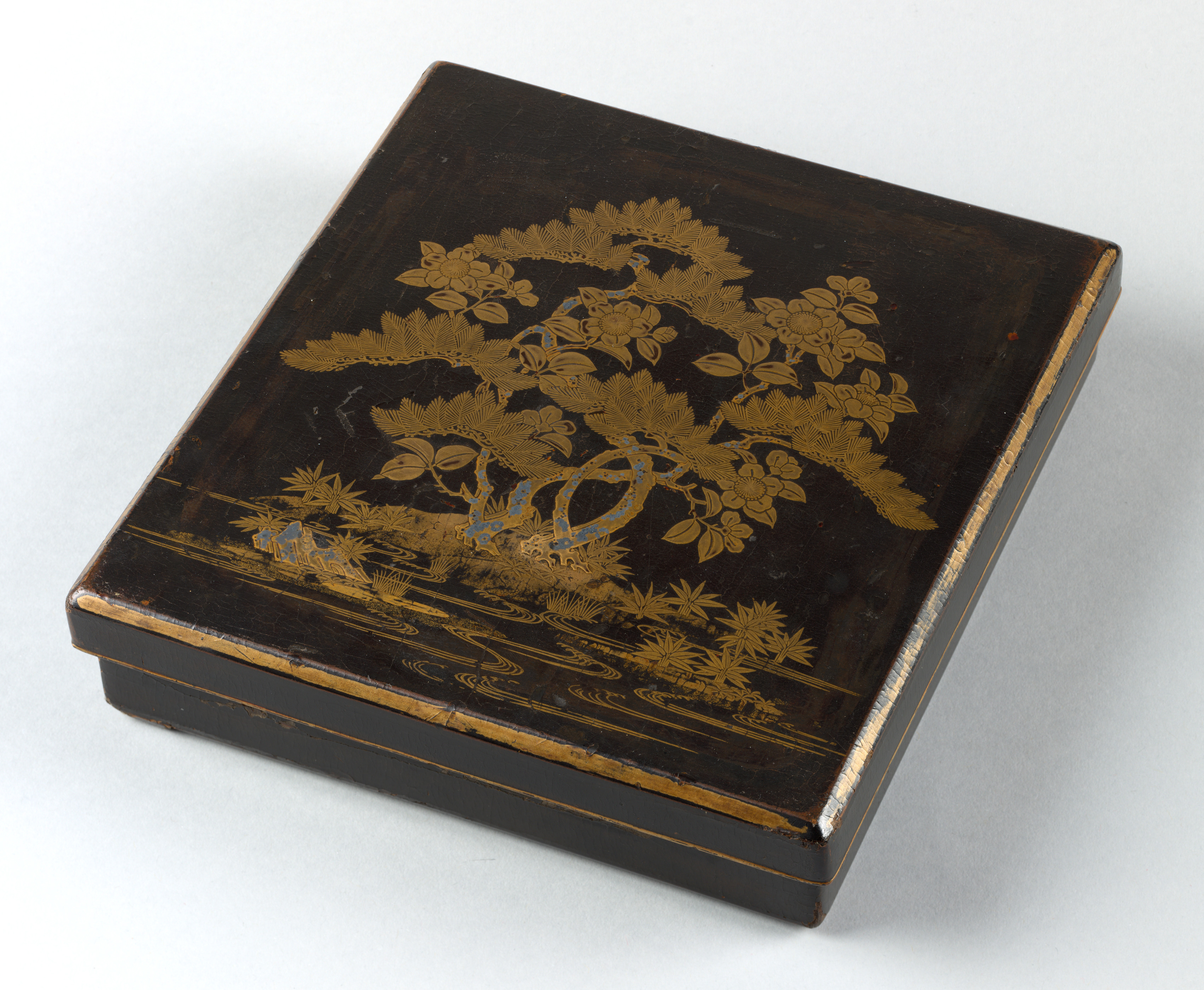
Writing Box (Suzuribako) with Pine, Camellia, and Bamboo
A writing box holding an inkstone, water dropper, ink cake and brushes. The design of pine, camellia and bamboo is worked in sprinkled gold and silver, and the box retains its original fittings.
3400 × 2797 px · Unmodified source file
Open in StudioSource & licensing
- Creator / date
- Japan, Muromachi period (1392–1573), maker unknown · 1400s
- Source credit
- The Cleveland Museum of Art, 1969.124. Open Access.
- Usage notes
- Released by the Cleveland Museum of Art under CC0 1.0. Credit to the museum is encouraged; CC0 does not imply endorsement.
- Original file
- 3400 × 2797 px · JPG · 0.0 MB
- Source checked
- 2026-11-04 · editorial approval separate
CC0 · Public domain · 1400s
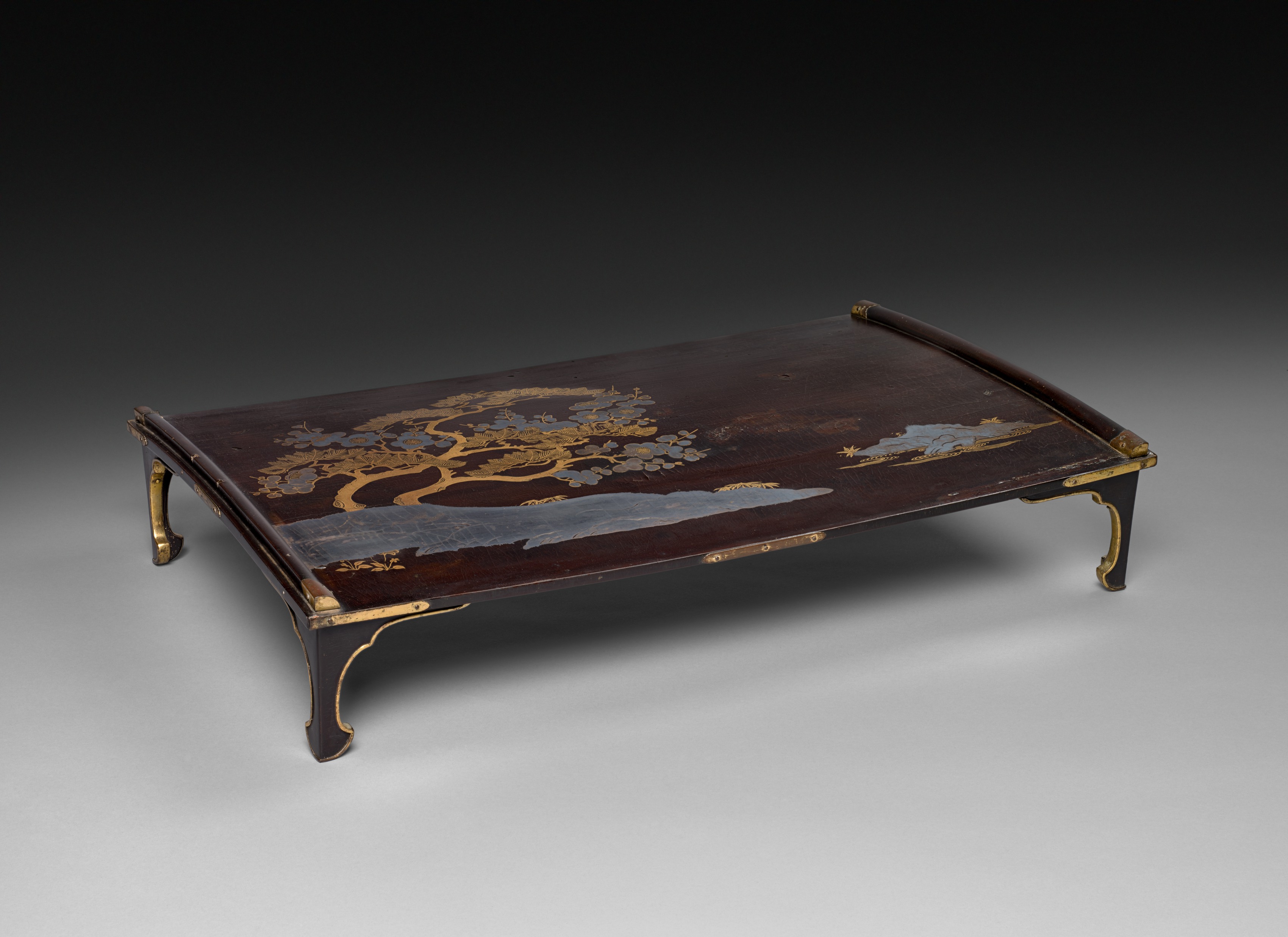
Writing Table with Pine, Bamboo, and Plum
Low writing tables were developed for use seated on the floor and often had matching writing boxes. This one carries the classic triad of pine, bamboo and plum.
3400 × 2474 px · Unmodified source file
Open in StudioSource & licensing
- Creator / date
- Japan, Muromachi period (1392–1573), maker unknown · 1400s
- Source credit
- The Cleveland Museum of Art, 1958.429. Open Access.
- Usage notes
- Released by the Cleveland Museum of Art under CC0 1.0. Credit to the museum is encouraged; CC0 does not imply endorsement.
- Original file
- 3400 × 2474 px · JPG · 0.0 MB
- Source checked
- 2026-11-04 · editorial approval separate
CC0 · Public domain · late 1500s
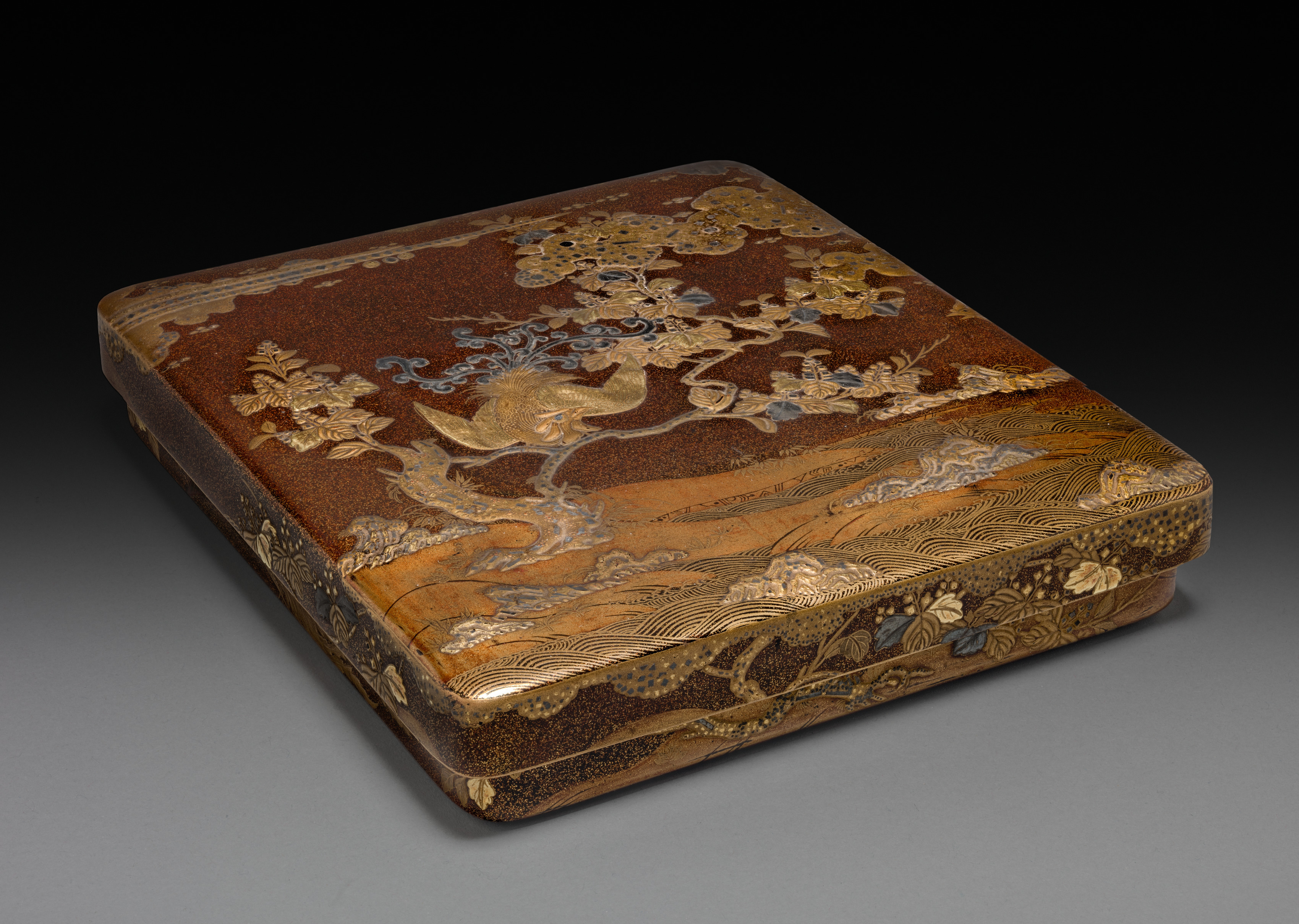
Writing Box (Suzuribako) with Phoenix in Paulownia
The phoenix perches only in the paulownia, and with the dragon it signals imperial power in East Asia. Here the motif is scattered across a Momoyama box as flat, glittering pattern.
3400 × 2418 px · Unmodified source file
Open in StudioSource & licensing
- Creator / date
- Japan, Momoyama period (1573–1615), maker unknown · late 1500s
- Source credit
- The Cleveland Museum of Art, 2016.34. Open Access.
- Usage notes
- Released by the Cleveland Museum of Art under CC0 1.0. Credit to the museum is encouraged; CC0 does not imply endorsement.
- Original file
- 3400 × 2418 px · JPG · 0.0 MB
- Source checked
- 2026-11-04 · editorial approval separate
CC0 · Public domain · early 1600s
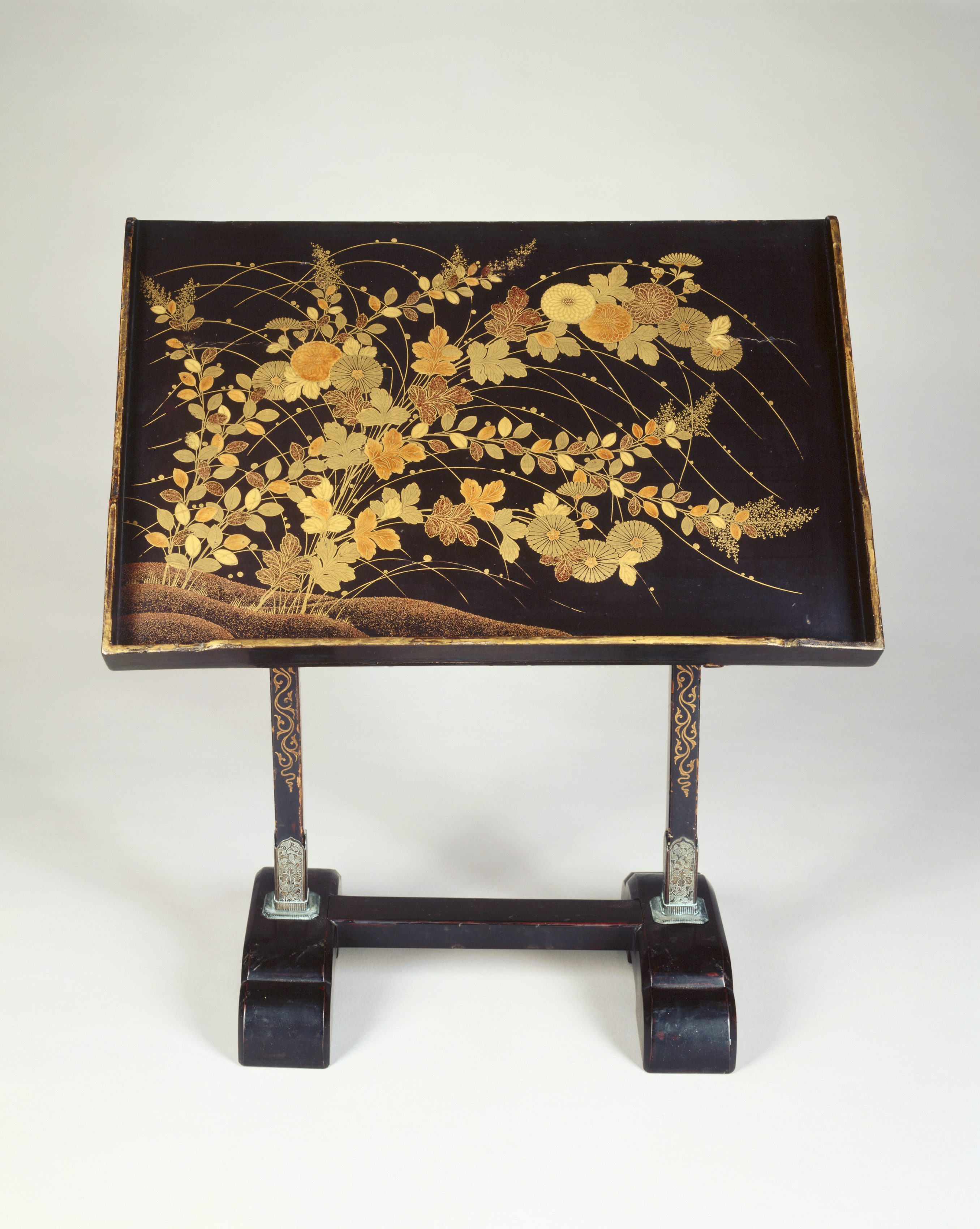
Reading Stand with Chrysanthemums and Autumn Grasses
A low reading stand for someone seated on the floor, decorated with chrysanthemums and autumn grasses. Furniture of this kind carried motifs whose purpose was to place the owner in a season.
2712 × 3400 px · Unmodified source file
Open in StudioSource & licensing
- Creator / date
- Japan, Momoyama period (1573–1615), maker unknown · early 1600s
- Source credit
- The Cleveland Museum of Art, 1976.15. Open Access.
- Usage notes
- Released by the Cleveland Museum of Art under CC0 1.0. Credit to the museum is encouraged; CC0 does not imply endorsement.
- Original file
- 2712 × 3400 px · JPG · 0.0 MB
- Source checked
- 2026-11-04 · editorial approval separate
CC0 · Public domain · 1800s
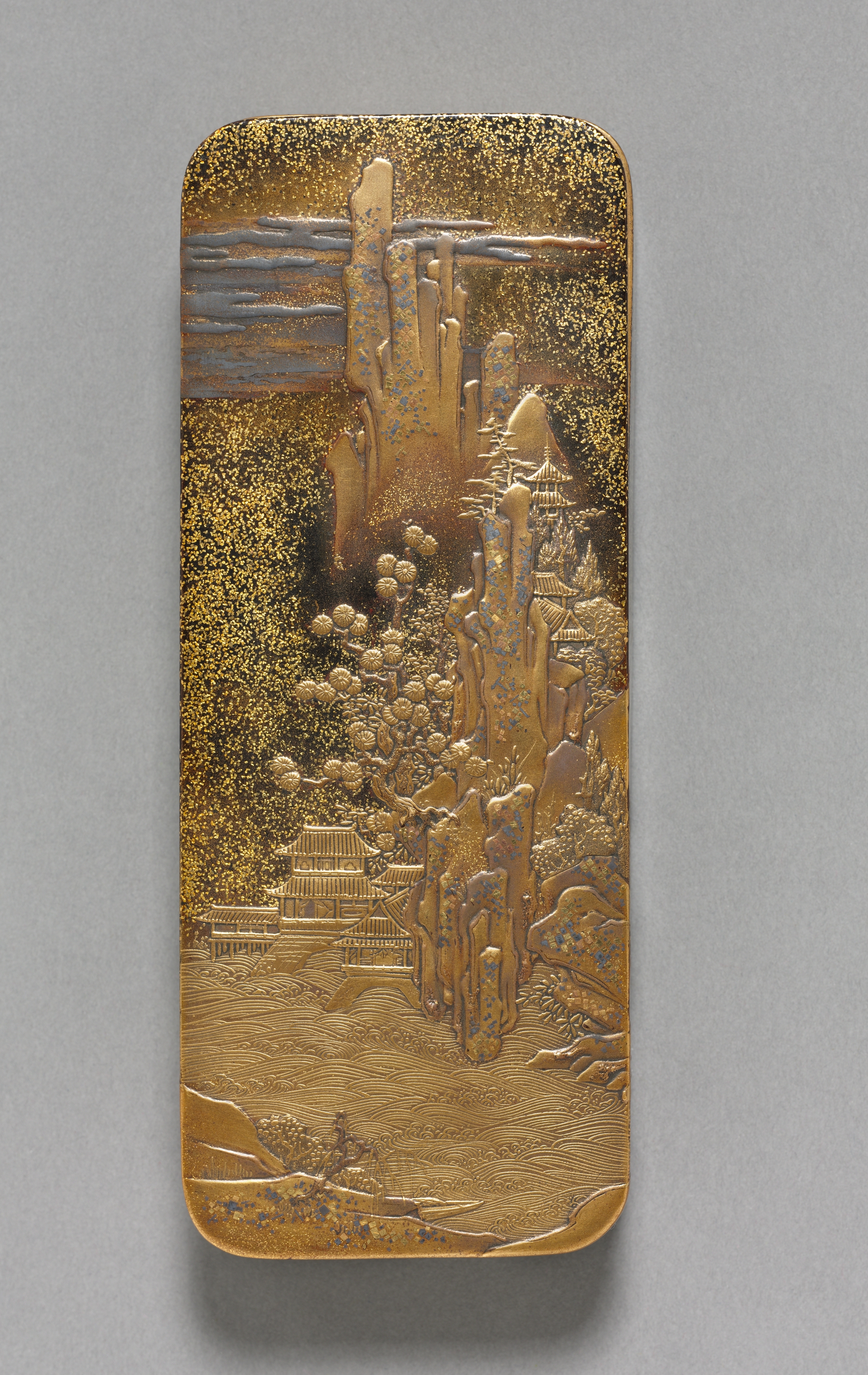
Box
Chinese motifs such as Mount Penglai, the island of immortality, remained popular for box covers in Edo Japan. A landscape in gold floats on a dark lacquer ground.
2147 × 3400 px · Unmodified source file
Open in StudioSource & licensing
- Creator / date
- Japan, Edo period (1615–1868), maker unknown · 1800s
- Source credit
- The Cleveland Museum of Art, 1974.271. Open Access.
- Usage notes
- Released by the Cleveland Museum of Art under CC0 1.0. Credit to the museum is encouraged; CC0 does not imply endorsement.
- Original file
- 2147 × 3400 px · JPG · 0.0 MB
- Source checked
- 2026-11-04 · editorial approval separate
CC0 · Public domain · 1800s
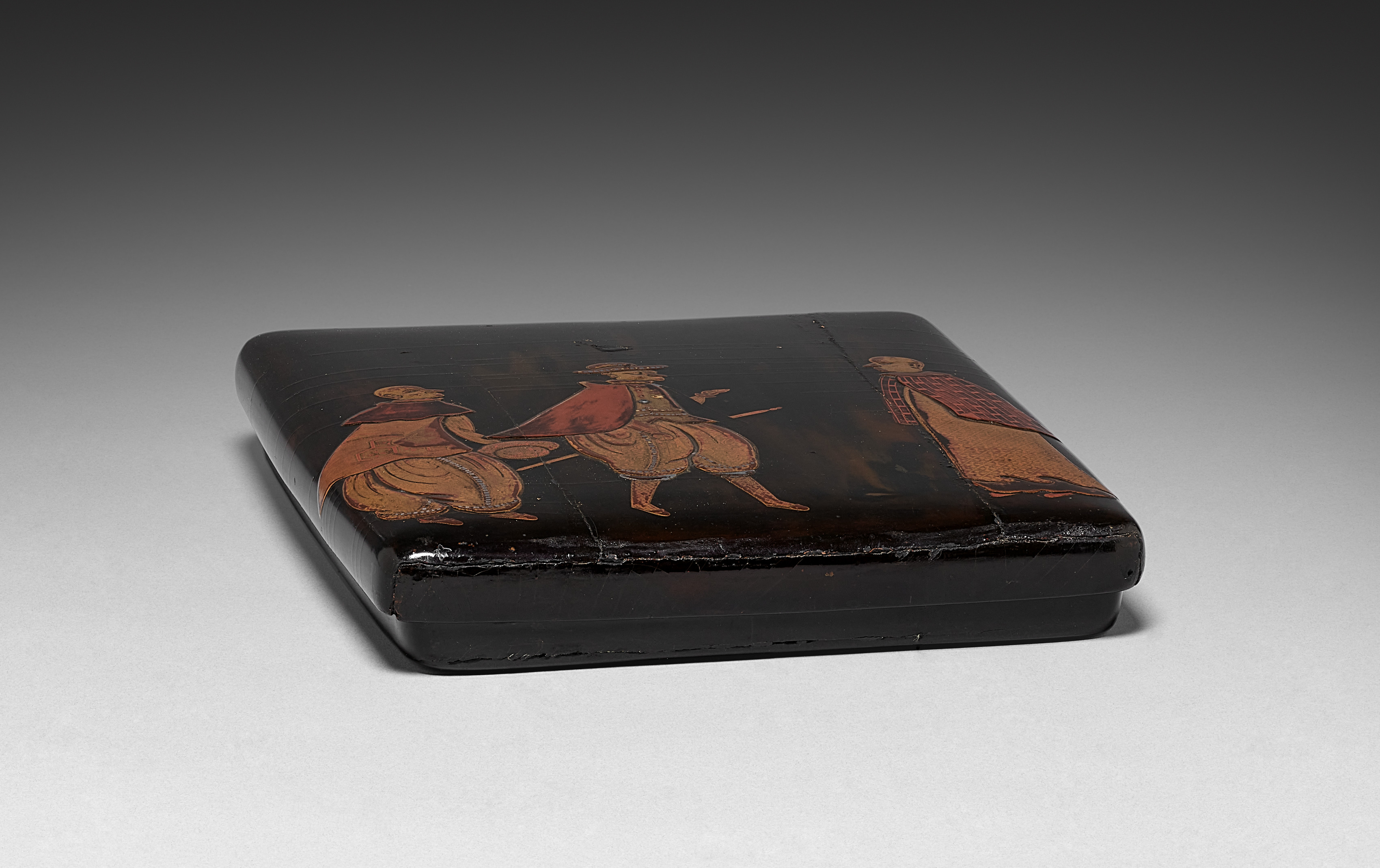
Writing Box (Suzuribako) with Europeans
Two Portuguese traders in balloon-shaped trousers face a Jesuit priest in a long robe, in gold and silver maki-e. Nanban subjects were made for a market fascinated by the strangers in its ports.
3400 × 2139 px · Unmodified source file
Open in StudioSource & licensing
- Creator / date
- Japan, Edo period (1615–1868), maker unknown · 1800s
- Source credit
- The Cleveland Museum of Art, 1969.59. Open Access.
- Usage notes
- Released by the Cleveland Museum of Art under CC0 1.0. Credit to the museum is encouraged; CC0 does not imply endorsement.
- Original file
- 3400 × 2139 px · JPG · 0.0 MB
- Source checked
- 2026-11-04 · editorial approval separate
CC0 · Public domain · late 1800s-early 1900s
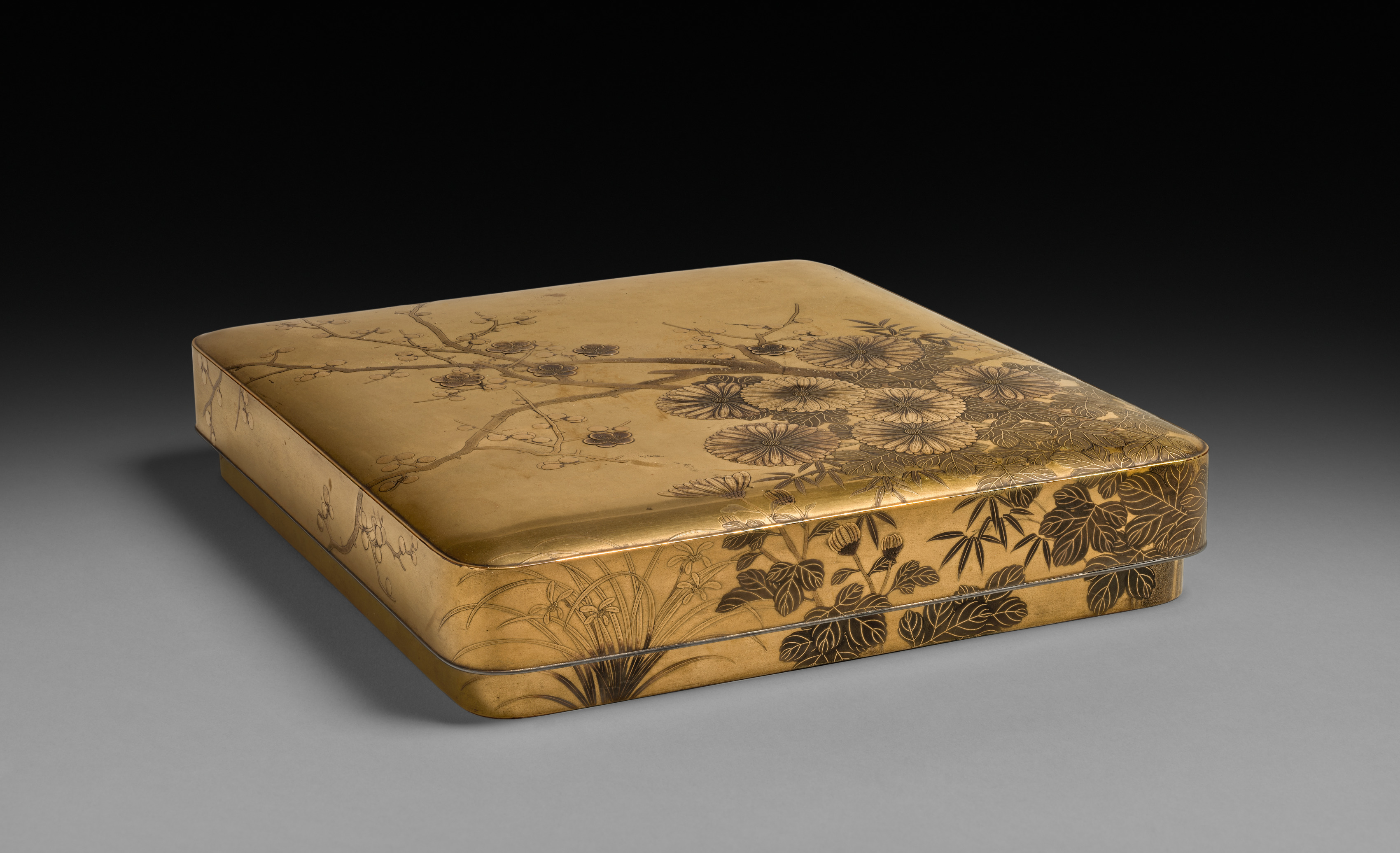
Writing Box (Suzuribako) with Chrysanthemum and Plum
Against a sleek gold ground, chrysanthemum and plum are worked in gold and silver. The box held inkstone, brushes and ink as part of a set that also included a case for paper.
3400 × 2072 px · Unmodified source file
Open in StudioSource & licensing
- Creator / date
- Sasaki Takayasu (Japanese, 1845–1929) · late 1800s-early 1900s
- Source credit
- The Cleveland Museum of Art, 1992.389. Open Access.
- Usage notes
- Released by the Cleveland Museum of Art under CC0 1.0. Credit to the museum is encouraged; CC0 does not imply endorsement.
- Original file
- 3400 × 2072 px · JPG · 0.0 MB
- Source checked
- 2026-11-04 · editorial approval separate
CC0 · Public domain · early 1900s
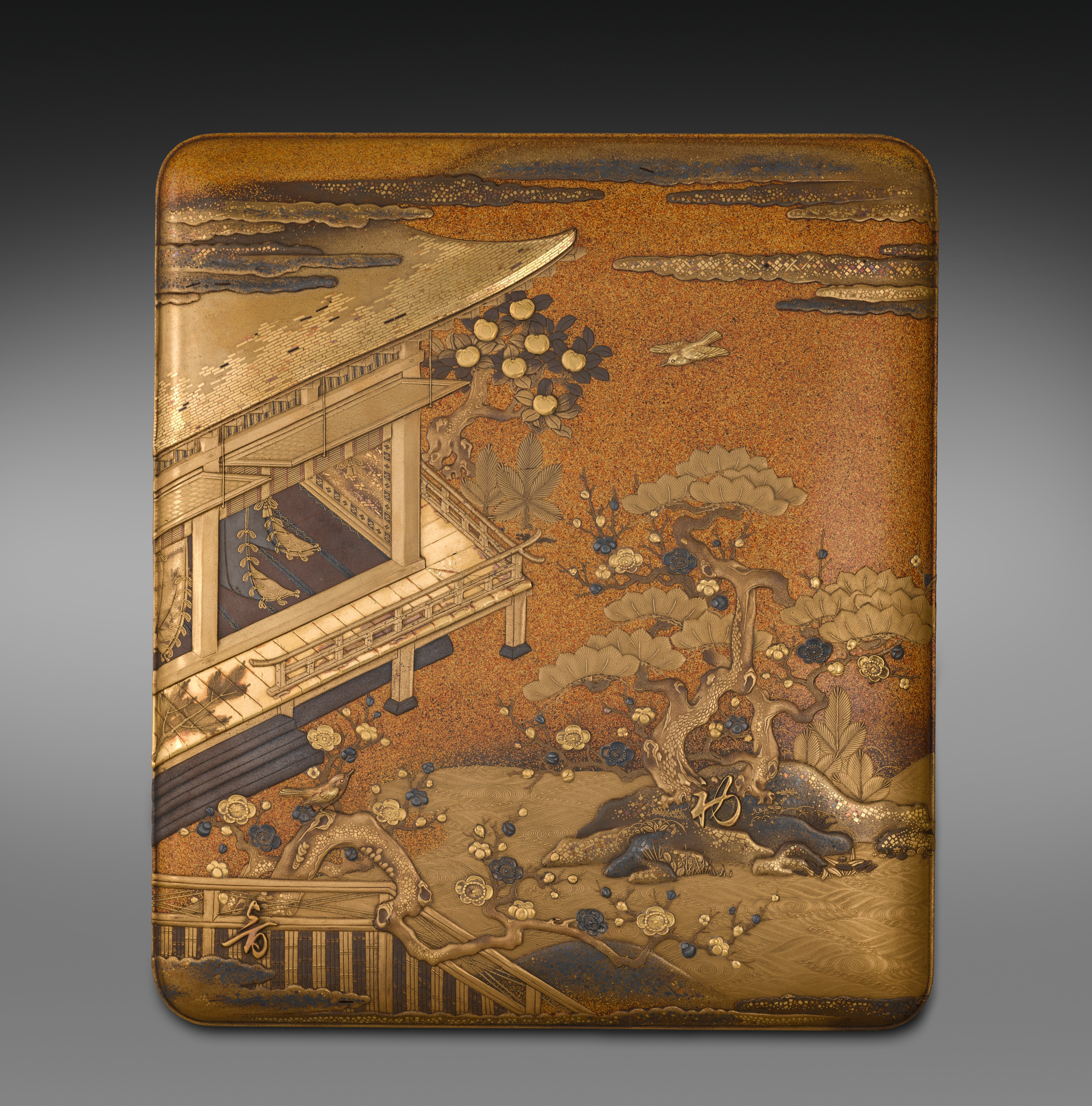
Writing Box (Suzuribako) with the “First Song” (Hatsune) Chapter from the Tale of Genji (lid)
The design follows an object in the 1639 lacquer wedding set of Chiyohime, daughter of the shogun, and the Hatsune chapter of the Tale of Genji: a Meiji revival working from a documented original.
3356 × 3400 px · Unmodified source file
Open in StudioSource & licensing
- Creator / date
- Japan, Meiji period (1868–1912), maker unknown · early 1900s
- Source credit
- The Cleveland Museum of Art, 1970.28.b. Open Access.
- Usage notes
- Released by the Cleveland Museum of Art under CC0 1.0. Credit to the museum is encouraged; CC0 does not imply endorsement.
- Original file
- 3356 × 3400 px · JPG · 0.0 MB
- Source checked
- 2026-11-04 · editorial approval separate
CC0 · Public domain · 1868–1912
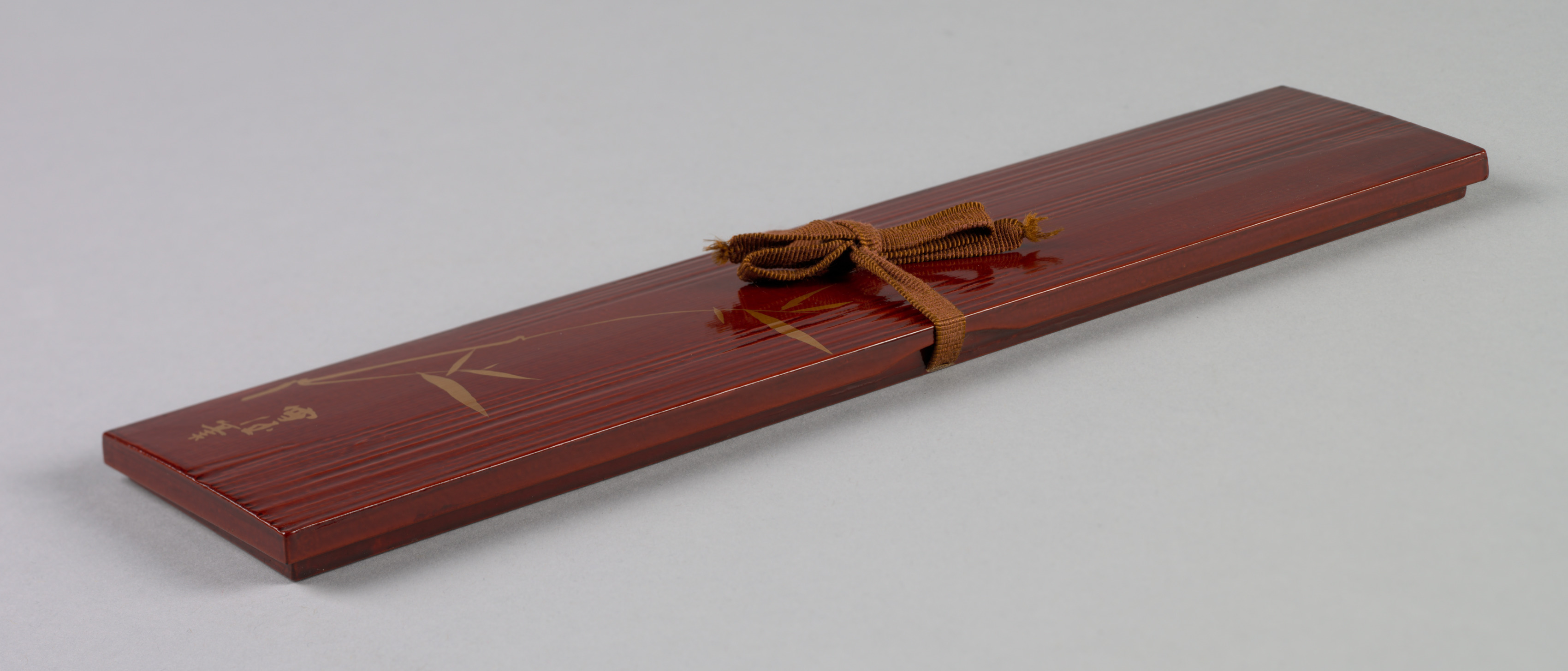
Poem Card Box with Lid
Long decorated cards for presenting poems in calligraphy are called tanzaku. This box is a collaboration between the designer Kamisaka Sekka and a lacquer workshop, a Meiji attempt to make modern design from traditional craft.
3400 × 1454 px · Unmodified source file
Open in StudioSource & licensing
- Creator / date
- Kamisaka Sekka (Japanese, 1866–1942) · 1868–1912
- Source credit
- The Cleveland Museum of Art, 1991.120. Open Access.
- Usage notes
- Released by the Cleveland Museum of Art under CC0 1.0. Credit to the museum is encouraged; CC0 does not imply endorsement.
- Original file
- 3400 × 1454 px · JPG · 0.0 MB
- Source checked
- 2026-11-04 · editorial approval separate
Public-domain status is reported by the linked source and may vary by jurisdiction. Check the source record for your intended use. No exclusive rights or Visual Bounty marketplace license are offered for these images.