← Open CollectionsPublic-domain source library
Jade: Stone Ground to Pattern
Jade is harder than steel and cannot be carved, only ground, so every ridge on these objects was abraded away with quartz sand. The result is a material that holds light just under its surface and keeps the memory of a very slow process. These eleven pieces run from Neolithic Hongshan amulets and Shang ritual blades to a Qing vase whose free-hanging rings were cut from the same block, with an Olmec head and a Korean comma-shaped jade among them.
Original means the unmodified digital file supplied by the linked archive, not an upscaled or reconstructed image. Sign in for free downloads. Studio uses a working preview up to 2048 px.
CC0 · Public domain · c. 4700–2920 BCE
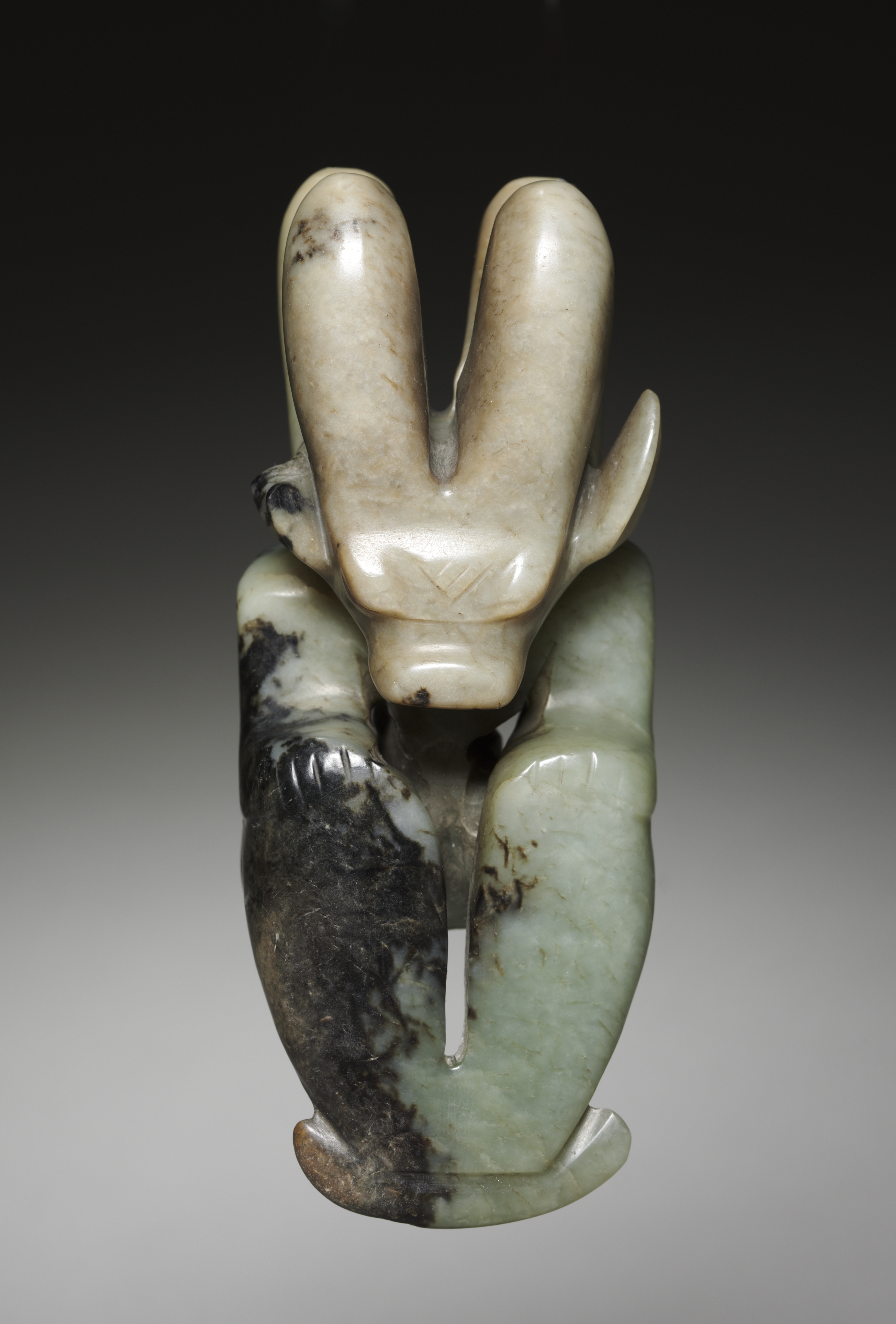
Amulet in the Form of a Seated Figure with Bovine Head
A seated figure with a bovine head and four horns, drilled at the shoulders so it could be suspended. Hongshan jades of this kind are among the earliest sculptural objects in China.
2302 × 3400 px · Unmodified source file
Open in StudioSource & licensing
- Creator / date
- Northeast China, Neolithic period, probably Hongshan culture (4700–2920 BCE), maker unknown · c. 4700–2920 BCE
- Source credit
- The Cleveland Museum of Art, 1953.628. Open Access.
- Usage notes
- Released by the Cleveland Museum of Art under CC0 1.0. Credit to the museum is encouraged; CC0 does not imply endorsement.
- Original file
- 2302 × 3400 px · JPG · 0.0 MB
- Source checked
- 2026-11-04 · editorial approval separate
CC0 · Public domain · 2000–1700 BCE
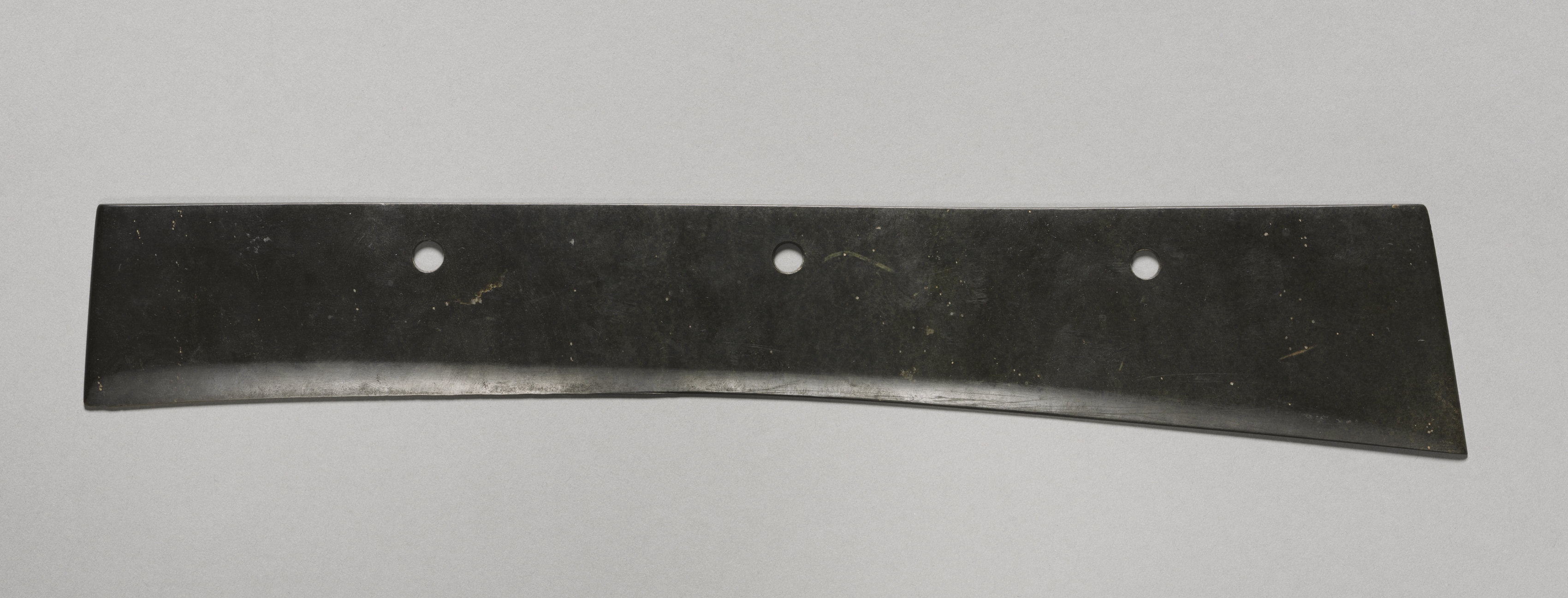
Ceremonial Blade with Three Perforations (Dao)
A blade with three perforations, its polish and thinness showing how much abrasion the stone would take. Jade is worked with quartz sand rather than carved.
3400 × 1297 px · Unmodified source file
Open in StudioSource & licensing
- Creator / date
- Northwest China, Neolithic period to Bronze Age, Qijia culture (2000–1700 BCE), maker unknown · 2000–1700 BCE
- Source credit
- The Cleveland Museum of Art, 2009.83. Open Access.
- Usage notes
- Released by the Cleveland Museum of Art under CC0 1.0. Credit to the museum is encouraged; CC0 does not imply endorsement.
- Original file
- 3400 × 1297 px · JPG · 0.0 MB
- Source checked
- 2026-11-04 · editorial approval separate
CC0 · Public domain · c. 1600–1050 BCE
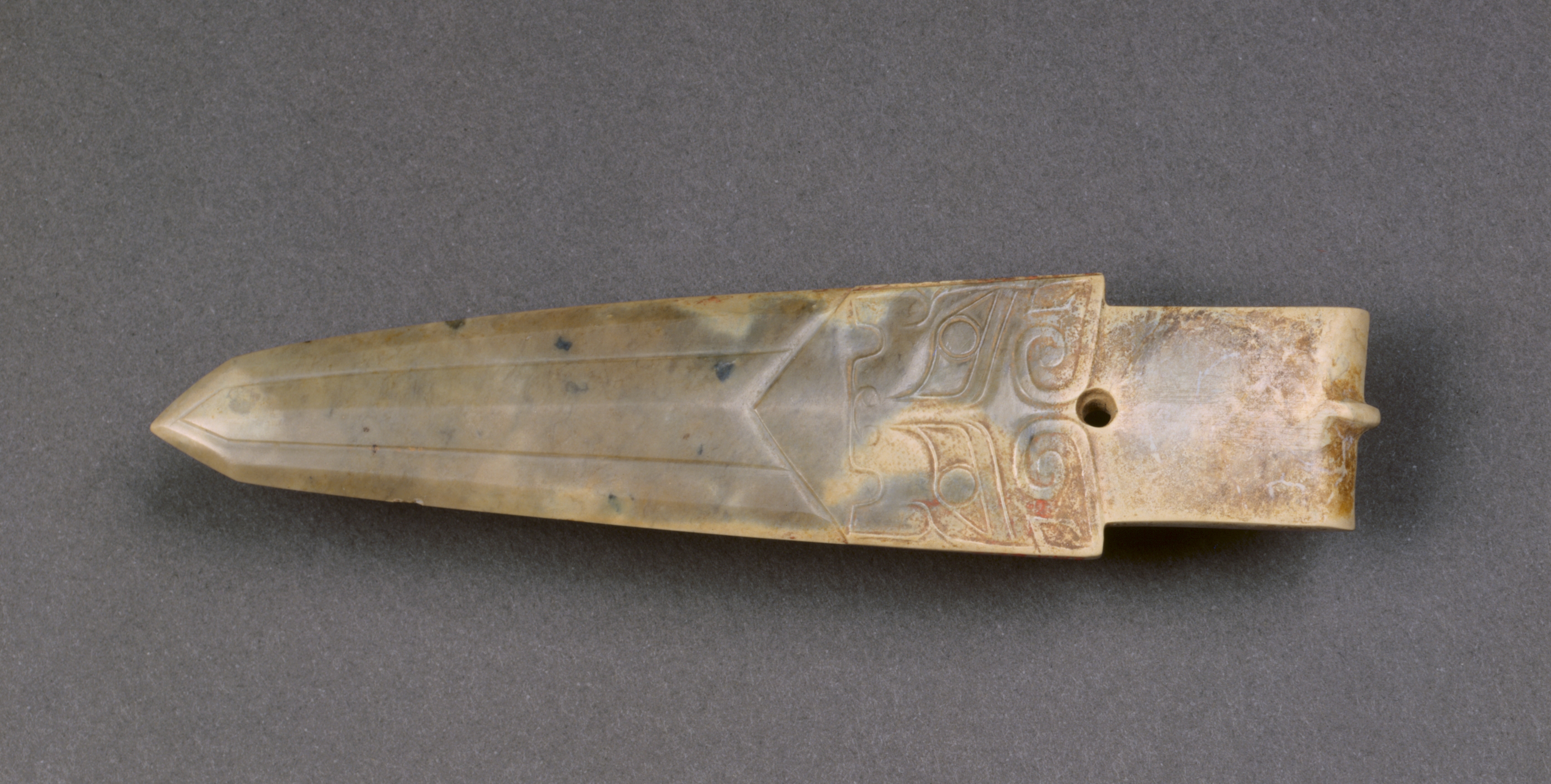
Ceremonial Dagger-Axe with Animal Masks (Ge)
An axe with animal masks at the haft, made for ritual rather than use. Its form copies a bronze weapon in a material that could never have been swung.
3400 × 1719 px · Unmodified source file
Open in StudioSource & licensing
- Creator / date
- China, Shang dynasty (c. 1600–c. 1046 BCE), maker unknown · c. 1600–1050 BCE
- Source credit
- The Cleveland Museum of Art, 1983.2. Open Access.
- Usage notes
- Released by the Cleveland Museum of Art under CC0 1.0. Credit to the museum is encouraged; CC0 does not imply endorsement.
- Original file
- 3400 × 1719 px · JPG · 0.0 MB
- Source checked
- 2026-11-04 · editorial approval separate
CC0 · Public domain · c. 1600–1056 BCE
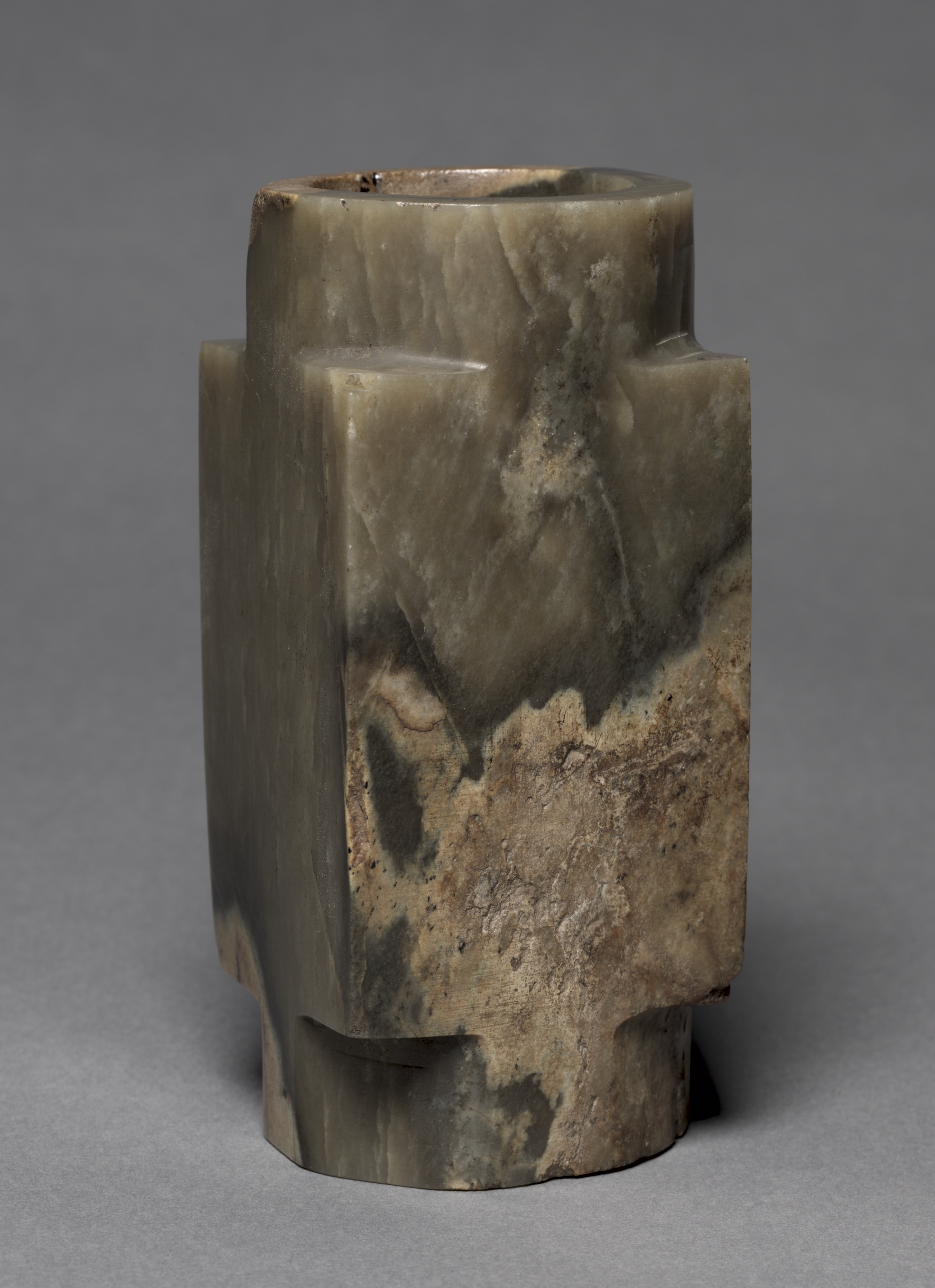
Ceremonial Tube (Cong)
A cylindrical tube inside a square outer section, one of the most imposing jade forms used in ancient rites. The Rites of Zhou describes the cong as the implement of earth.
2468 × 3400 px · Unmodified source file
Open in StudioSource & licensing
- Creator / date
- China, Shang dynasty (c. 1600–c. 1046 BCE), maker unknown · c. 1600–1056 BCE
- Source credit
- The Cleveland Museum of Art, 1915.630. Open Access.
- Usage notes
- Released by the Cleveland Museum of Art under CC0 1.0. Credit to the museum is encouraged; CC0 does not imply endorsement.
- Original file
- 2468 × 3400 px · JPG · 0.0 MB
- Source checked
- 2026-11-04 · editorial approval separate
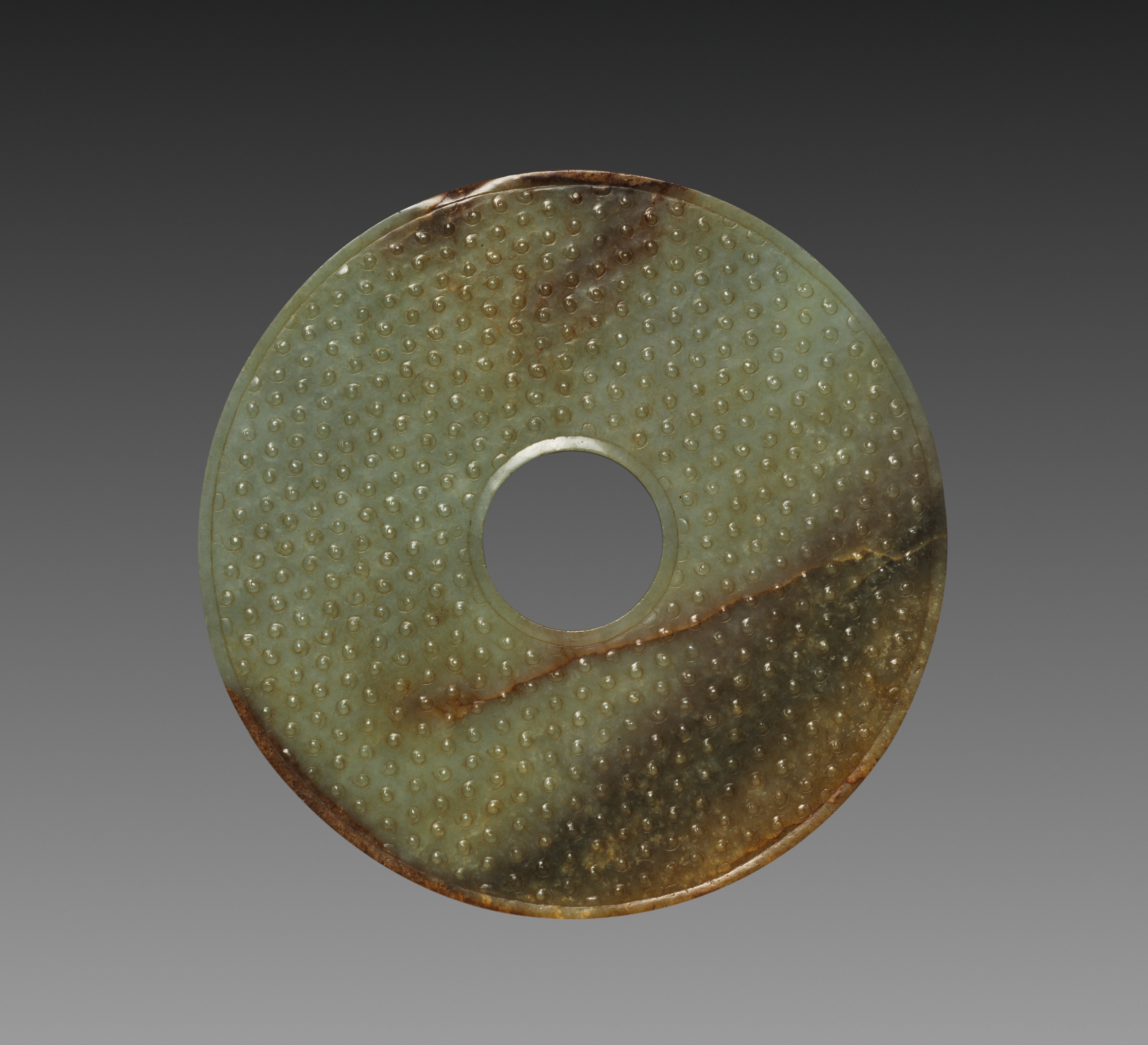
CC0 · Public domain · 475–221 BCE
Ceremonial Disk with Grain Pattern (Bi)
Jade disks begin as plain Neolithic forms and acquire dense surface decoration over centuries. This one carries a raised grain pattern, its swelling lines cut to catch light.
3400 × 3094 px · Unmodified source file
Open in StudioSource & licensing
- Creator / date
- China, Warring States period (475–221 BCE), maker unknown · 475–221 BCE
- Source credit
- The Cleveland Museum of Art, 1952.567. Open Access.
- Usage notes
- Released by the Cleveland Museum of Art under CC0 1.0. Credit to the museum is encouraged; CC0 does not imply endorsement.
- Original file
- 3400 × 3094 px · JPG · 0.0 MB
- Source checked
- 2026-11-04 · editorial approval separate
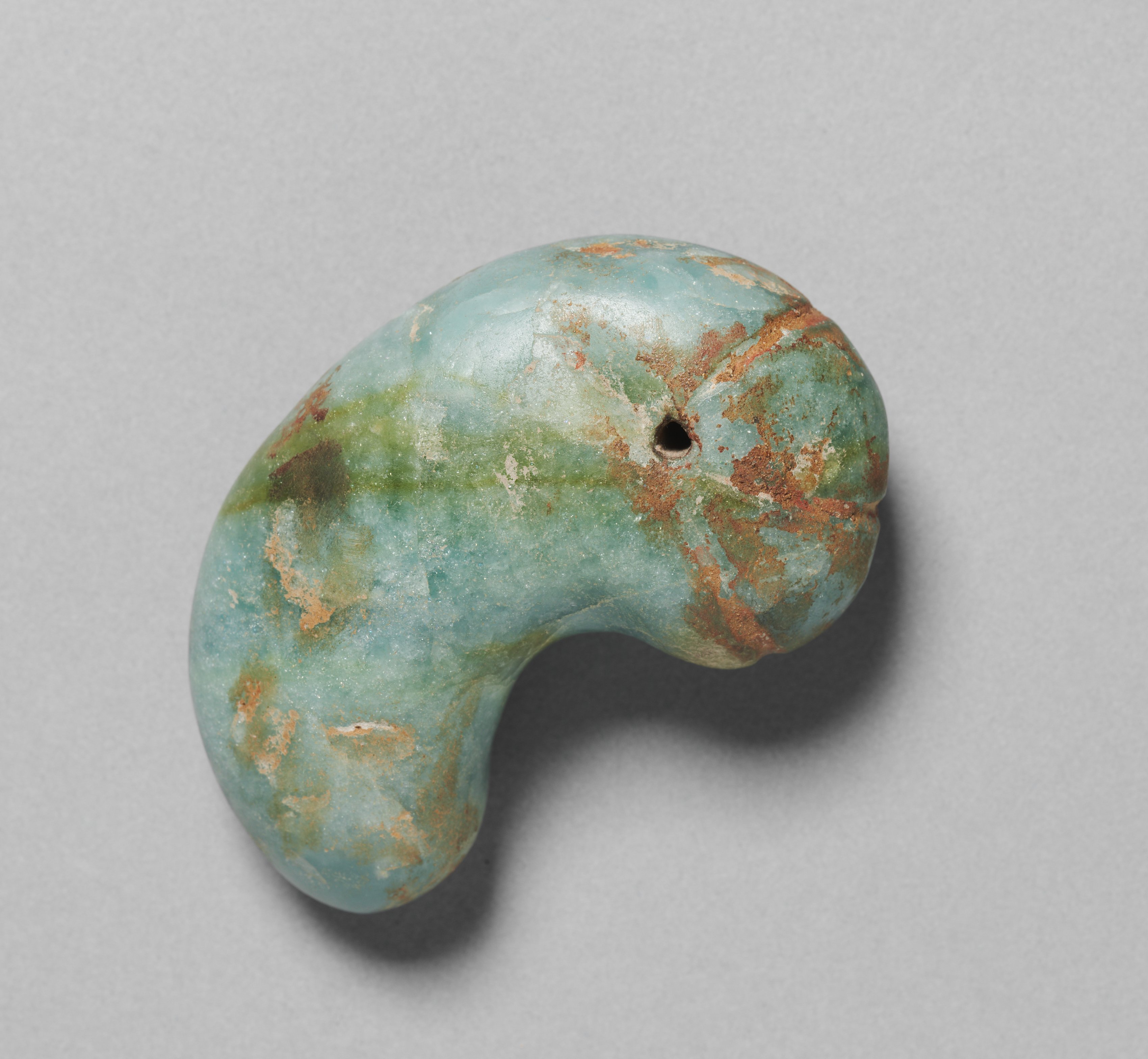
CC0 · Public domain · 400s CE
Comma-shaped Jade
A comma-shaped jade from the Three Kingdoms period, a form worn in Korea that likely descended from curved talismans. Jade is one of the hardest stones and required cutting, grinding and polishing.
3400 × 3137 px · Unmodified source file
Open in StudioSource & licensing
- Creator / date
- Korea, Three Kingdoms period (57 BCE–668 CE), maker unknown · 400s CE
- Source credit
- The Cleveland Museum of Art, 1917.1057. Open Access.
- Usage notes
- Released by the Cleveland Museum of Art under CC0 1.0. Credit to the museum is encouraged; CC0 does not imply endorsement.
- Original file
- 3400 × 3137 px · JPG · 0.0 MB
- Source checked
- 2026-11-04 · editorial approval separate
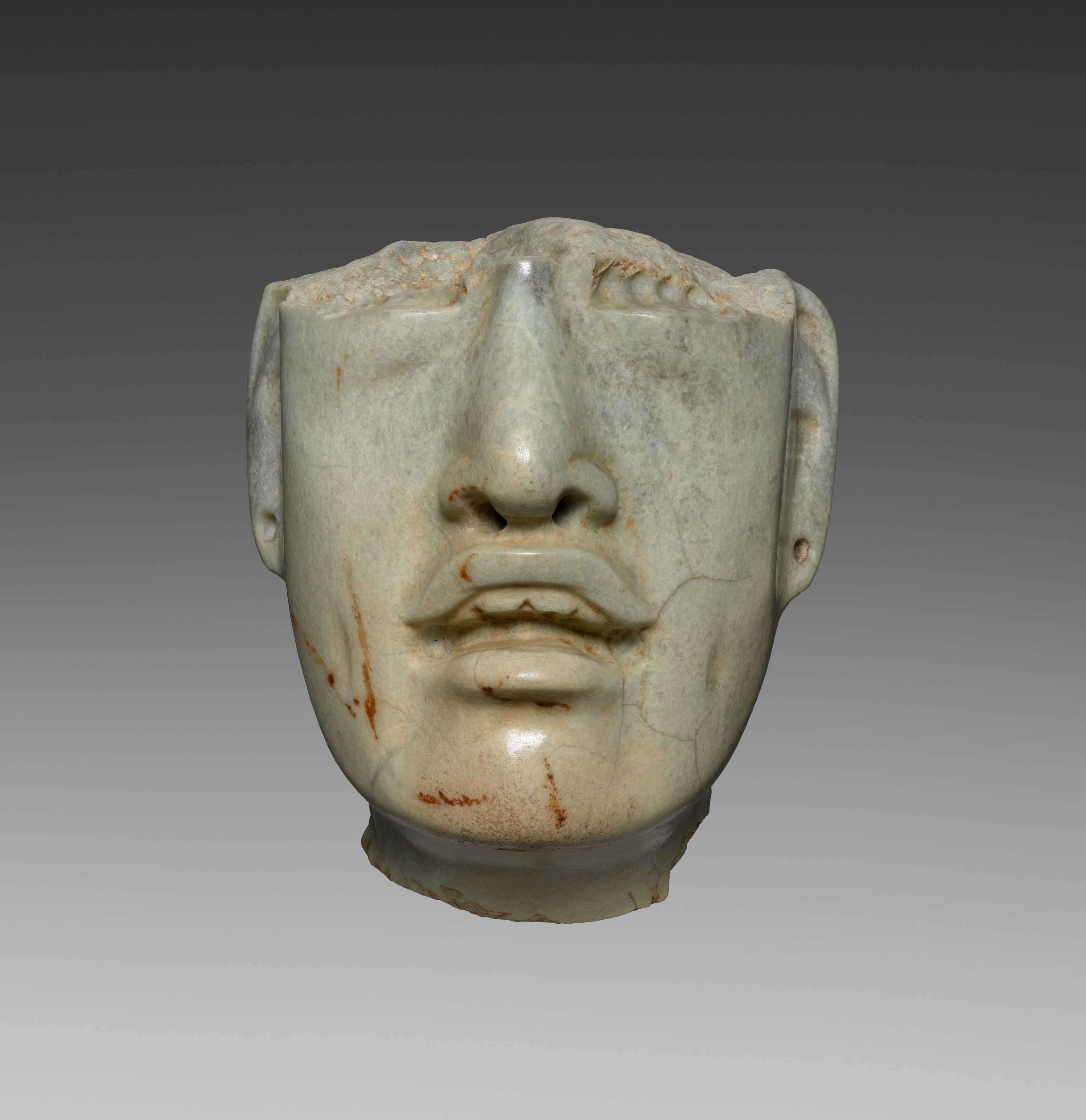
CC0 · Public domain · c. 900–300 BCE
Head Fragment
A jadeite head, perhaps from a seated or standing figure, carved with exceptional fineness. Olmec carving treats jade as a material with its own presence, keeping surfaces close to the body.
3400 × 3242 px · Unmodified source file
Open in StudioSource & licensing
- Creator / date
- Mesoamerica, Mexico, Olmec, maker unknown · c. 900–300 BCE
- Source credit
- The Cleveland Museum of Art, 1961.31. Open Access.
- Usage notes
- Released by the Cleveland Museum of Art under CC0 1.0. Credit to the museum is encouraged; CC0 does not imply endorsement.
- Original file
- 3400 × 3242 px · JPG · 0.0 MB
- Source checked
- 2026-11-04 · editorial approval separate
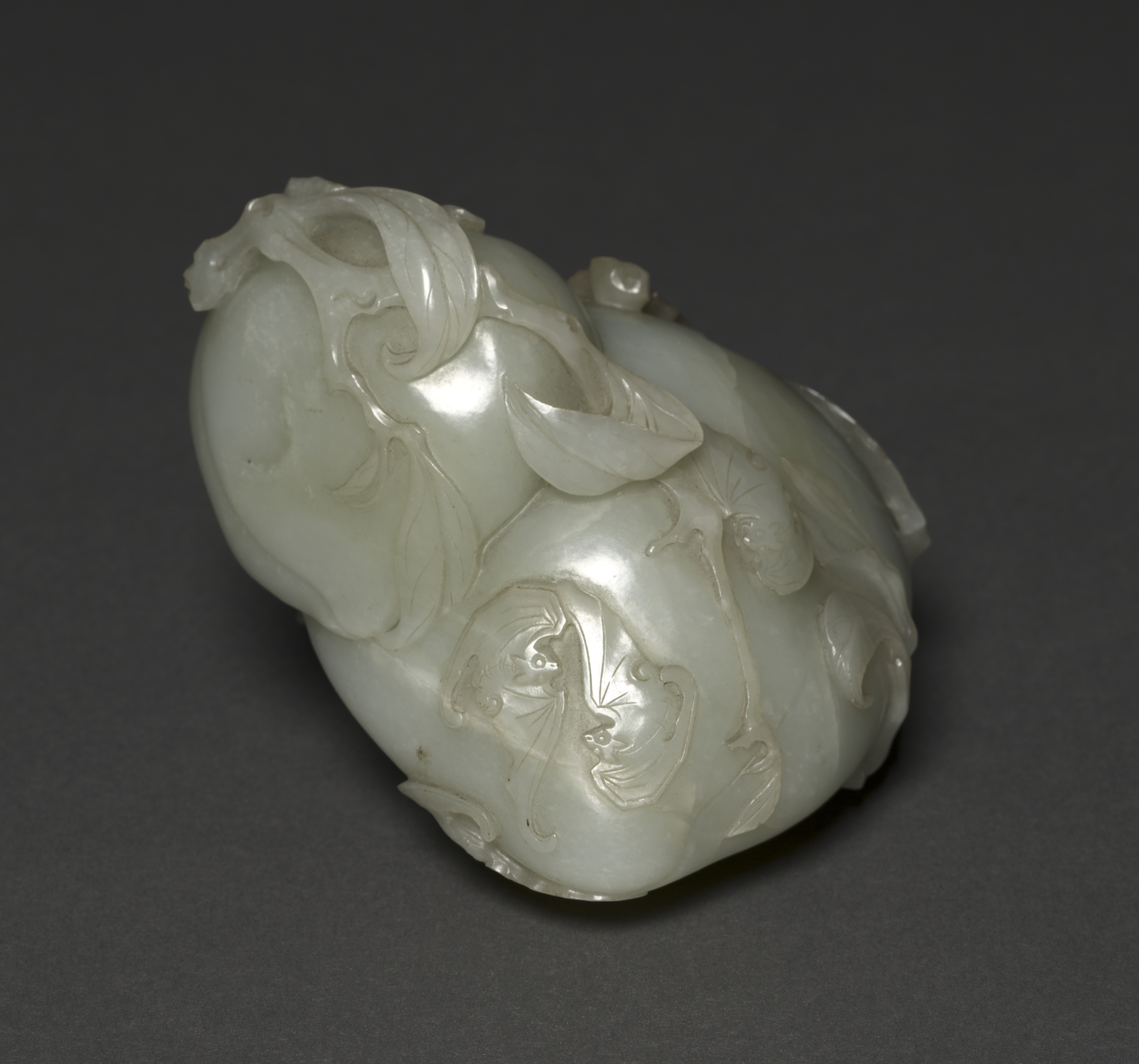
CC0 · Public domain · late 1600s–1700s
Peaches and Bats
A double peach with leaves and branch following the curve of the stone, a bat clinging to the edge. Peach and bat together make a rebus for long life and good fortune.
3400 × 3177 px · Unmodified source file
Open in StudioSource & licensing
- Creator / date
- China, Qing dynasty (1644–1911), maker unknown · late 1600s–1700s
- Source credit
- The Cleveland Museum of Art, 2006.141. Open Access.
- Usage notes
- Released by the Cleveland Museum of Art under CC0 1.0. Credit to the museum is encouraged; CC0 does not imply endorsement.
- Original file
- 3400 × 3177 px · JPG · 0.0 MB
- Source checked
- 2026-11-04 · editorial approval separate
CC0 · Public domain · 1700s
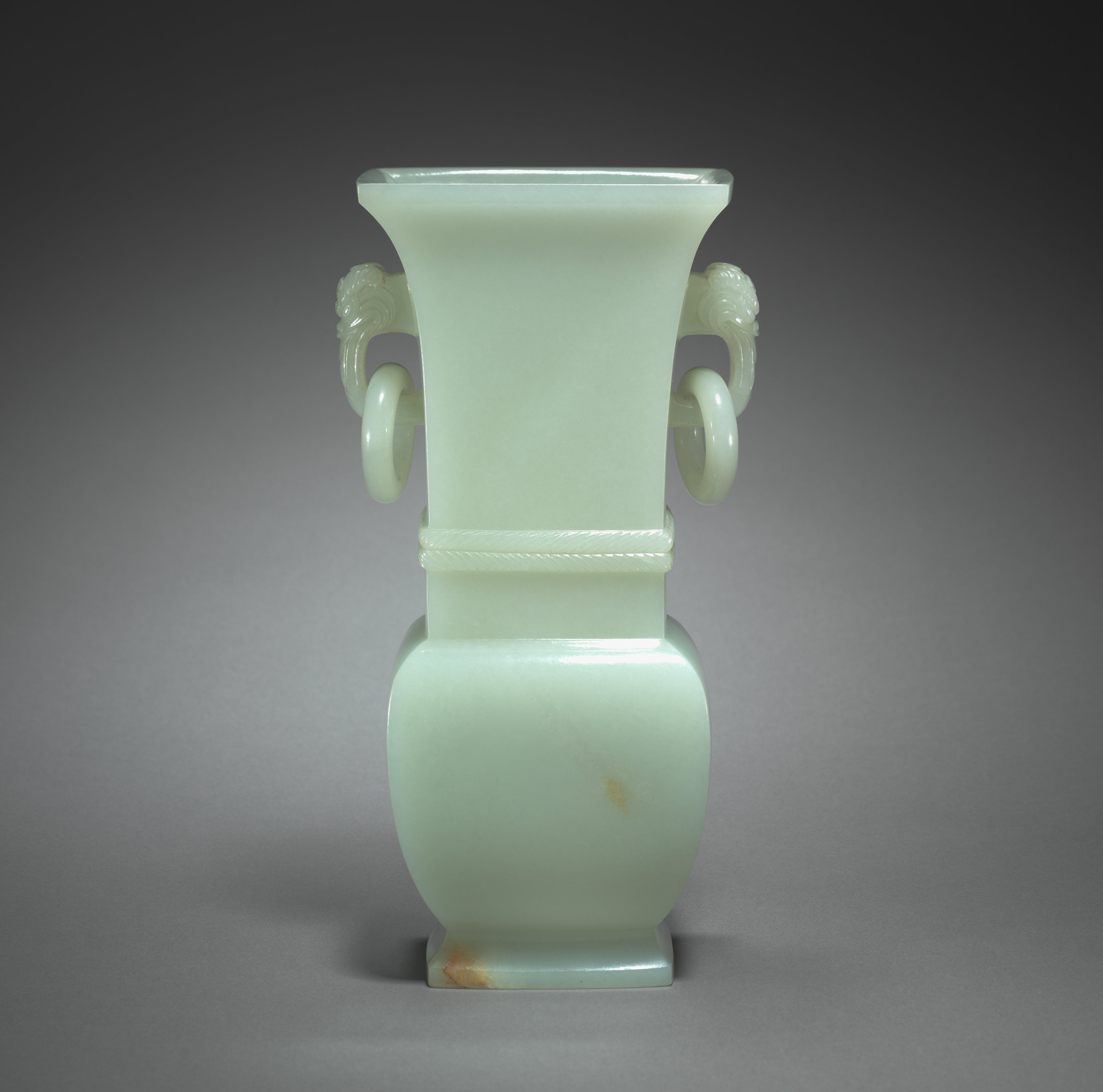
Vase in the Form of Archaic Hu
A square vase cut entirely from jade, imitating a ceramic or metal shape with a corded string at the shoulder. The rings hanging free of the body were carved from the same block.
3400 × 3365 px · Unmodified source file
Open in StudioSource & licensing
- Creator / date
- China, Qing dynasty (1644–1911), maker unknown · 1700s
- Source credit
- The Cleveland Museum of Art, 1964.237. Open Access.
- Usage notes
- Released by the Cleveland Museum of Art under CC0 1.0. Credit to the museum is encouraged; CC0 does not imply endorsement.
- Original file
- 3400 × 3365 px · JPG · 0.0 MB
- Source checked
- 2026-11-04 · editorial approval separate
CC0 · Public domain · 1736–95
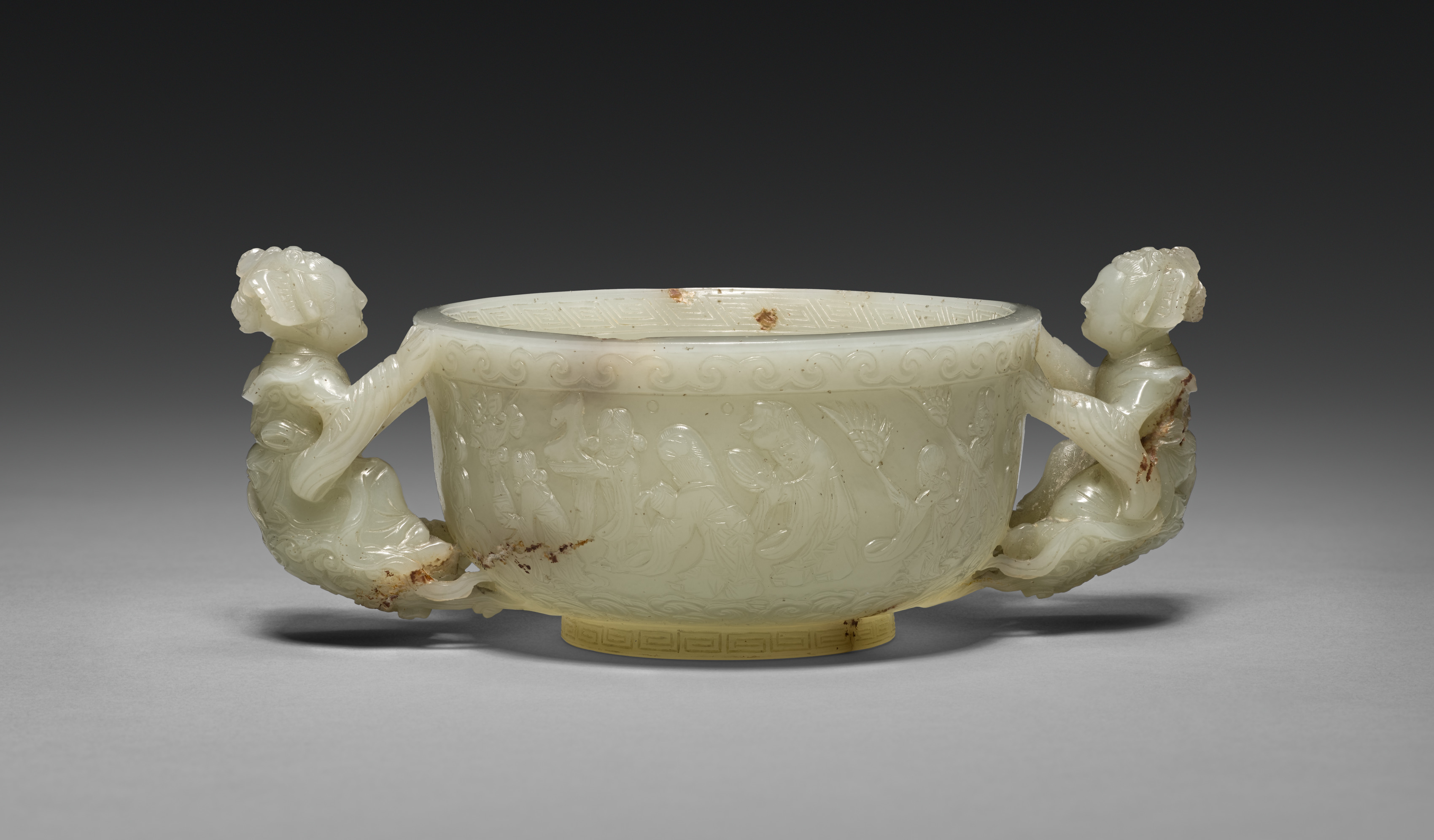
Cup with Daoist Figures
Pale greenish-white jade carved with Daoist figures, made in Suzhou and sent north to the capital, where the best pieces sometimes received an imperial inscription.
3400 × 1897 px · Unmodified source file
Open in StudioSource & licensing
- Creator / date
- China, Qing dynasty (1644–1911), Qianlong period (1736–95), maker unknown · 1736–95
- Source credit
- The Cleveland Museum of Art, 1952.510. Open Access.
- Usage notes
- Released by the Cleveland Museum of Art under CC0 1.0. Credit to the museum is encouraged; CC0 does not imply endorsement.
- Original file
- 3400 × 1897 px · JPG · 0.0 MB
- Source checked
- 2026-11-04 · editorial approval separate
CC0 · Public domain · 1736–95
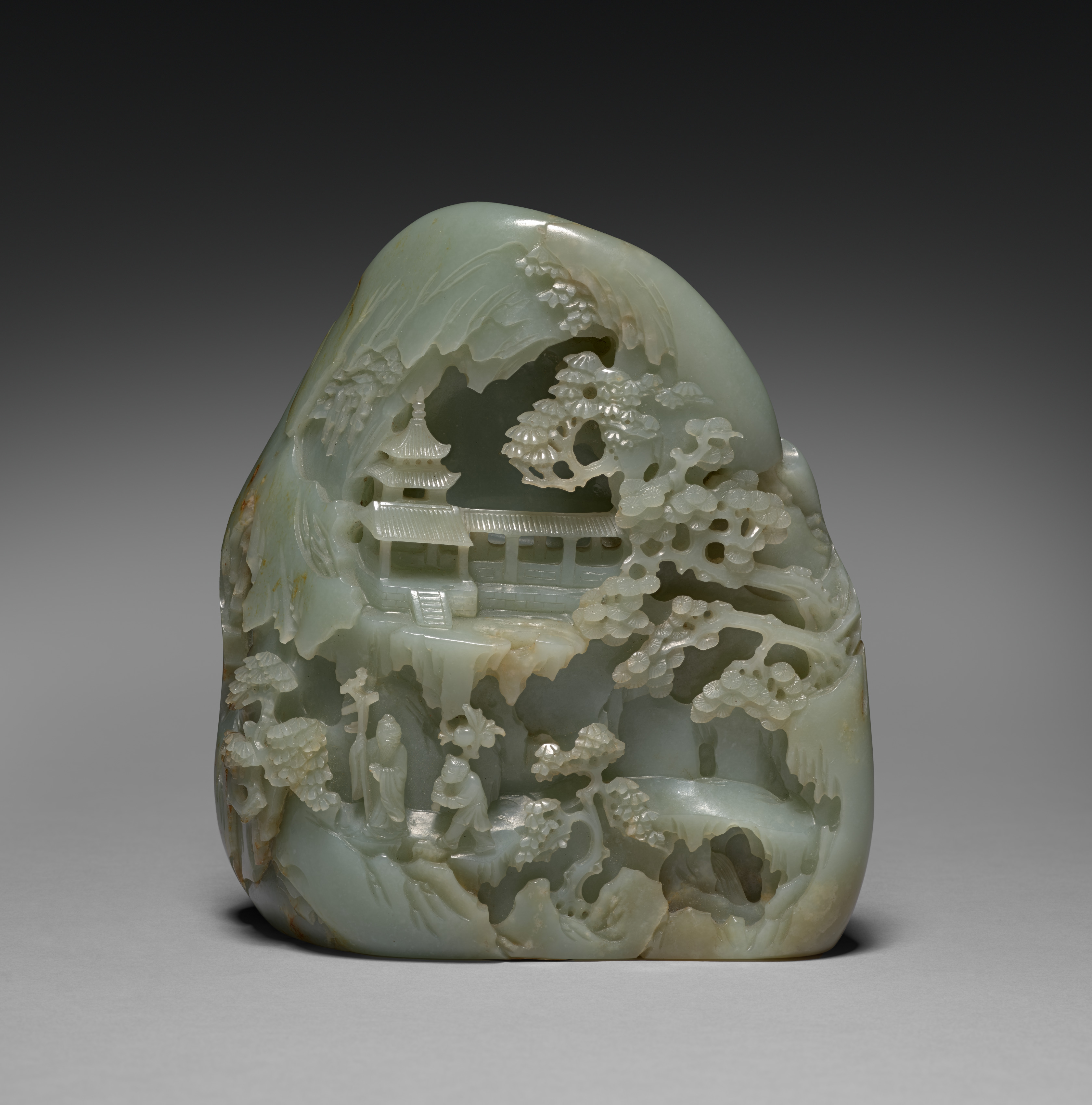
Miniature Mountain with Daoist Paradise
A jade boulder carved as a mountain landscape, made to represent the search for paradise in the peaks. The brown markings of the stone are used as part of the scenery.
3361 × 3400 px · Unmodified source file
Open in StudioSource & licensing
- Creator / date
- China, Qing dynasty (1644–1911), Qianlong reign (1736–95), maker unknown · 1736–95
- Source credit
- The Cleveland Museum of Art, 1941.594. Open Access.
- Usage notes
- Released by the Cleveland Museum of Art under CC0 1.0. Credit to the museum is encouraged; CC0 does not imply endorsement.
- Original file
- 3361 × 3400 px · JPG · 0.0 MB
- Source checked
- 2026-11-04 · editorial approval separate
Public-domain status is reported by the linked source and may vary by jurisdiction. Check the source record for your intended use. No exclusive rights or Visual Bounty marketplace license are offered for these images.