← Open CollectionsPublic-domain source library
Iznik: Ottoman Tile and Vessel
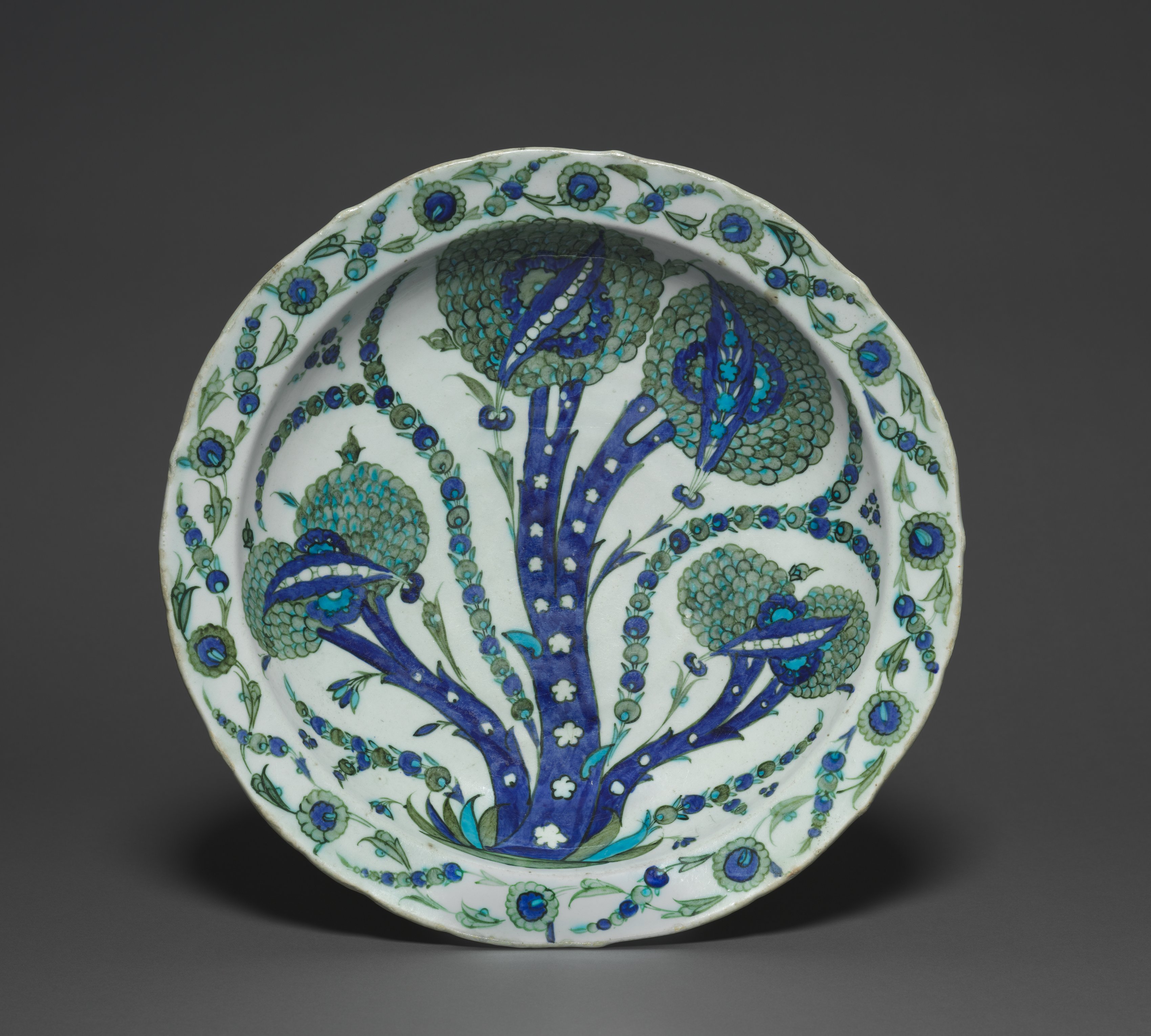
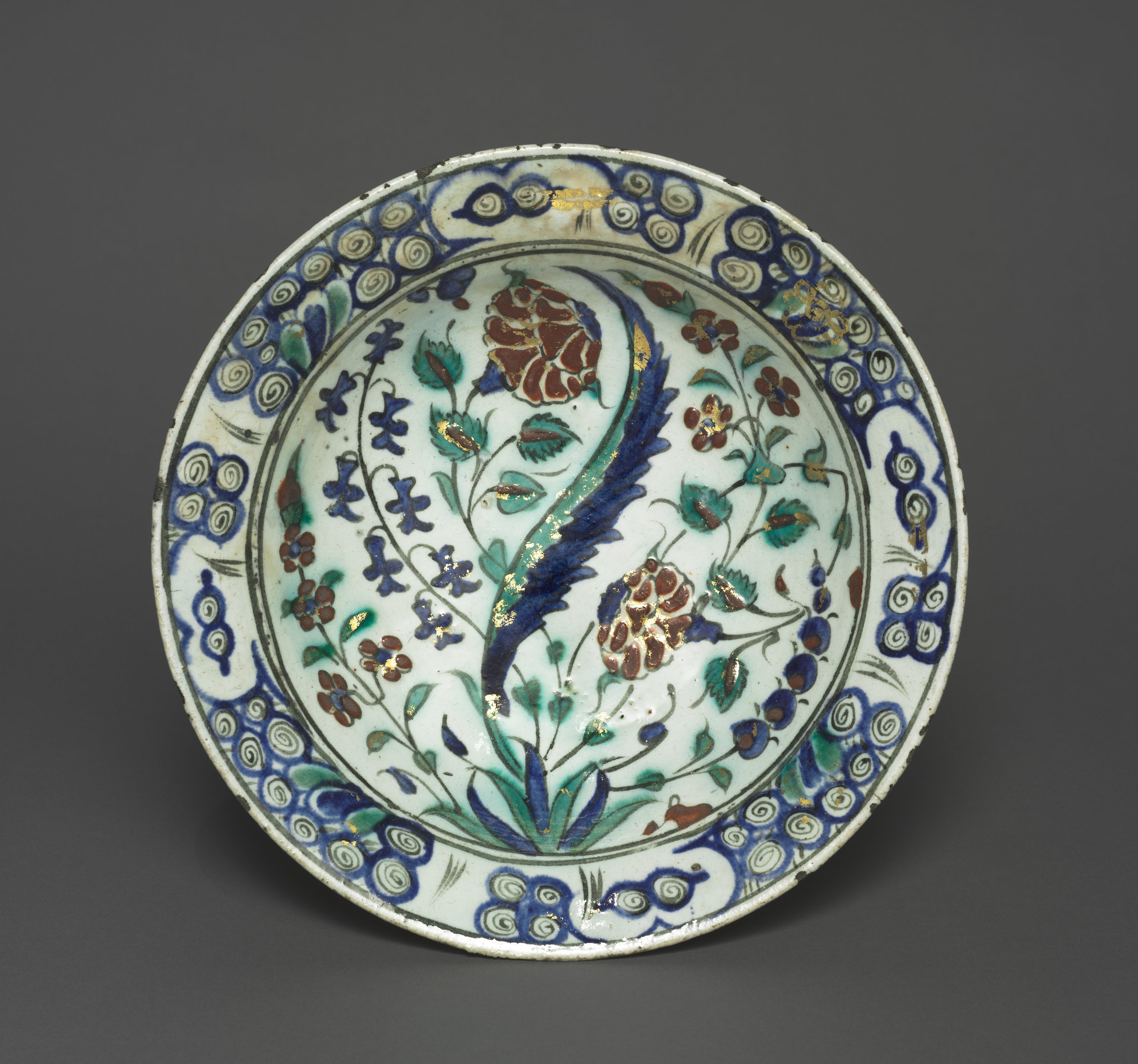
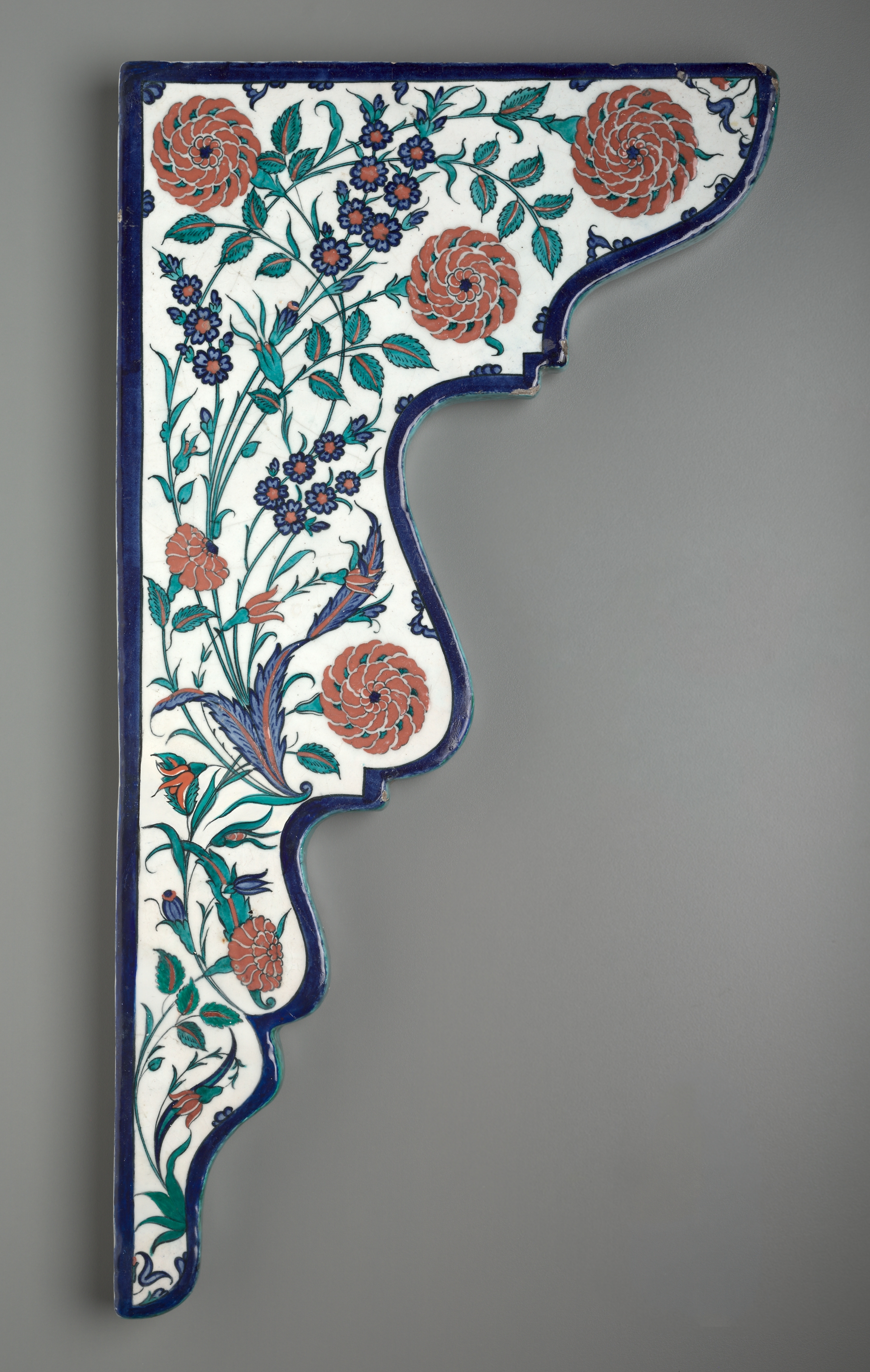
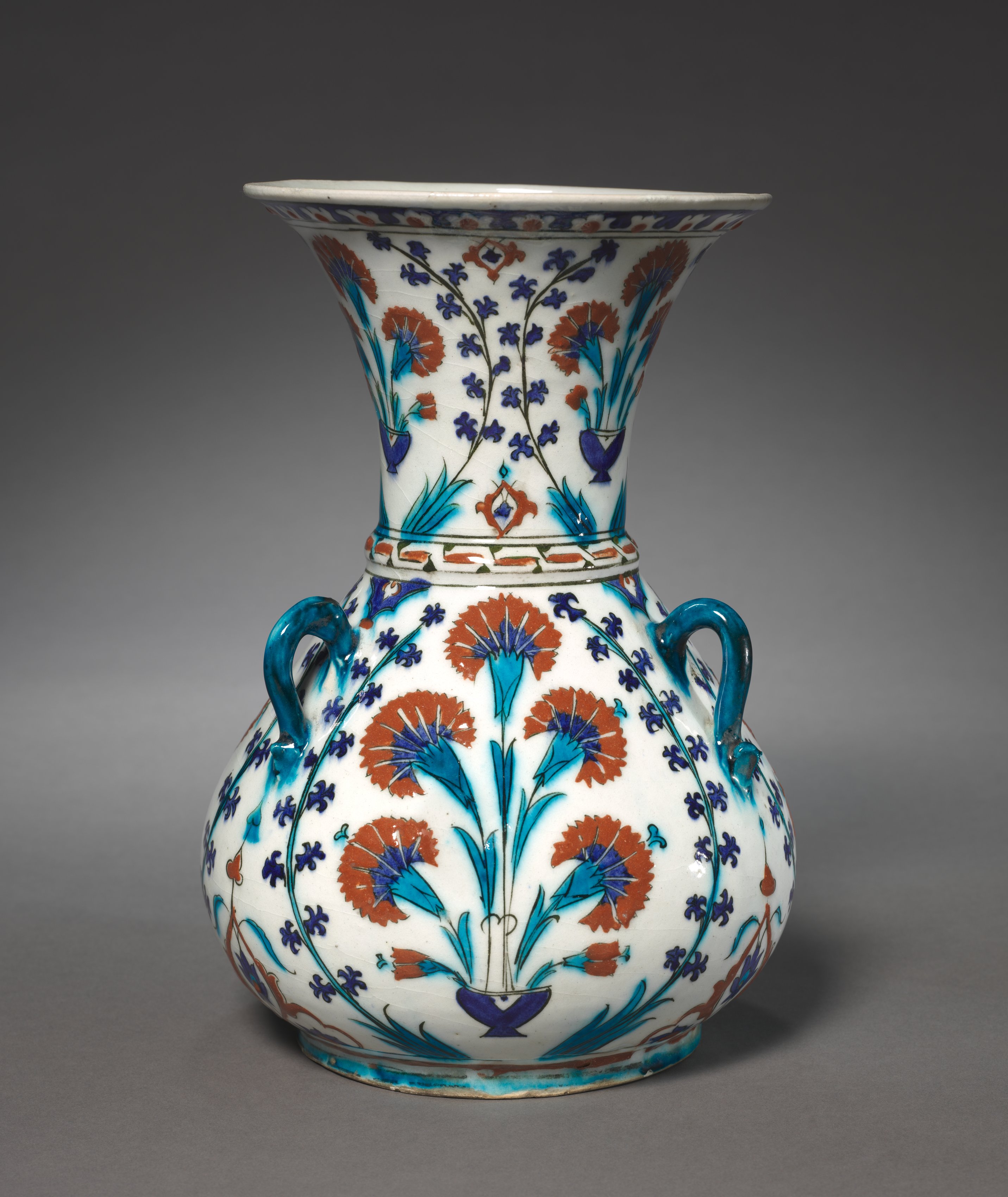
The kilns at Iznik supplied the Ottoman court with its ceramics, and their vocabulary is narrow and absolute: tulip, carnation, rose, hyacinth, and a hybrid palmette that can be turned in any direction. What makes the work distinctive is the red, a slip of iron-rich clay under the glaze that no other Islamic pottery centre managed, alongside a white ground and a blue that behaves like ink. Here are dishes, mosque lamps and architectural tiles, including one set catalogued both as a group and tile by tile, because a repeat is best read in both directions.
Original means the unmodified digital file supplied by the linked archive, not an upscaled or reconstructed image. Sign in for free downloads. Studio uses a working preview up to 2048 px.
CC0 · Public domain · c. 1535–40
Large Dish with Artichokes
A large Iznik dish with artichokes, from the period when the Ottoman court in Istanbul was buying the finest Islamic ceramics from its own kilns. The plant is drawn as a spiral, so the leaf tips curl into the field.
× px · Unmodified source file
Small archival scan: best for reference and screen use, not large prints.
Open in StudioSource & licensing
- Creator / date
- Turkey, Iznik, Ottoman period, maker unknown · c. 1535–40
- Source credit
- The Cleveland Museum of Art, 1995.17. Open Access.
- Usage notes
- Released by the Cleveland Museum of Art under CC0 1.0. Credit to the museum is encouraged; CC0 does not imply endorsement.
- Original file
- × px · JPG · 0.0 MB
- Source checked
- 2026-11-04 · editorial approval separate
CC0 · Public domain · c. 1590
Gilded Dish with Flowers and Leaves
A dish built around the rich red that Iznik potters were the first to achieve in ceramics, made from a slip of iron-rich clay under the glaze. The design is floral, but the red is the point.
× px · Unmodified source file
Small archival scan: best for reference and screen use, not large prints.
Open in StudioSource & licensing
- Creator / date
- Turkey, Iznik, Ottoman period, maker unknown · c. 1590
- Source credit
- The Cleveland Museum of Art, 1915.663. Open Access.
- Usage notes
- Released by the Cleveland Museum of Art under CC0 1.0. Credit to the museum is encouraged; CC0 does not imply endorsement.
- Original file
- × px · JPG · 0.0 MB
- Source checked
- 2026-11-04 · editorial approval separate
CC0 · Public domain · c. 1570–75
Tile Spandrel with Floral Sprays
One half of a spandrel that arched over a niche, window or door. Architectural tilework is designed as a shape, so the floral sprays are arranged to fit the curve.
× px · Unmodified source file
Small archival scan: best for reference and screen use, not large prints.
Open in StudioSource & licensing
- Creator / date
- Turkey, Iznik, Ottoman period, maker unknown · c. 1570–75
- Source credit
- The Cleveland Museum of Art, 2004.70. Open Access.
- Usage notes
- Released by the Cleveland Museum of Art under CC0 1.0. Credit to the museum is encouraged; CC0 does not imply endorsement.
- Original file
- × px · JPG · 0.0 MB
- Source checked
- 2026-11-04 · editorial approval separate
CC0 · Public domain · 1585–95
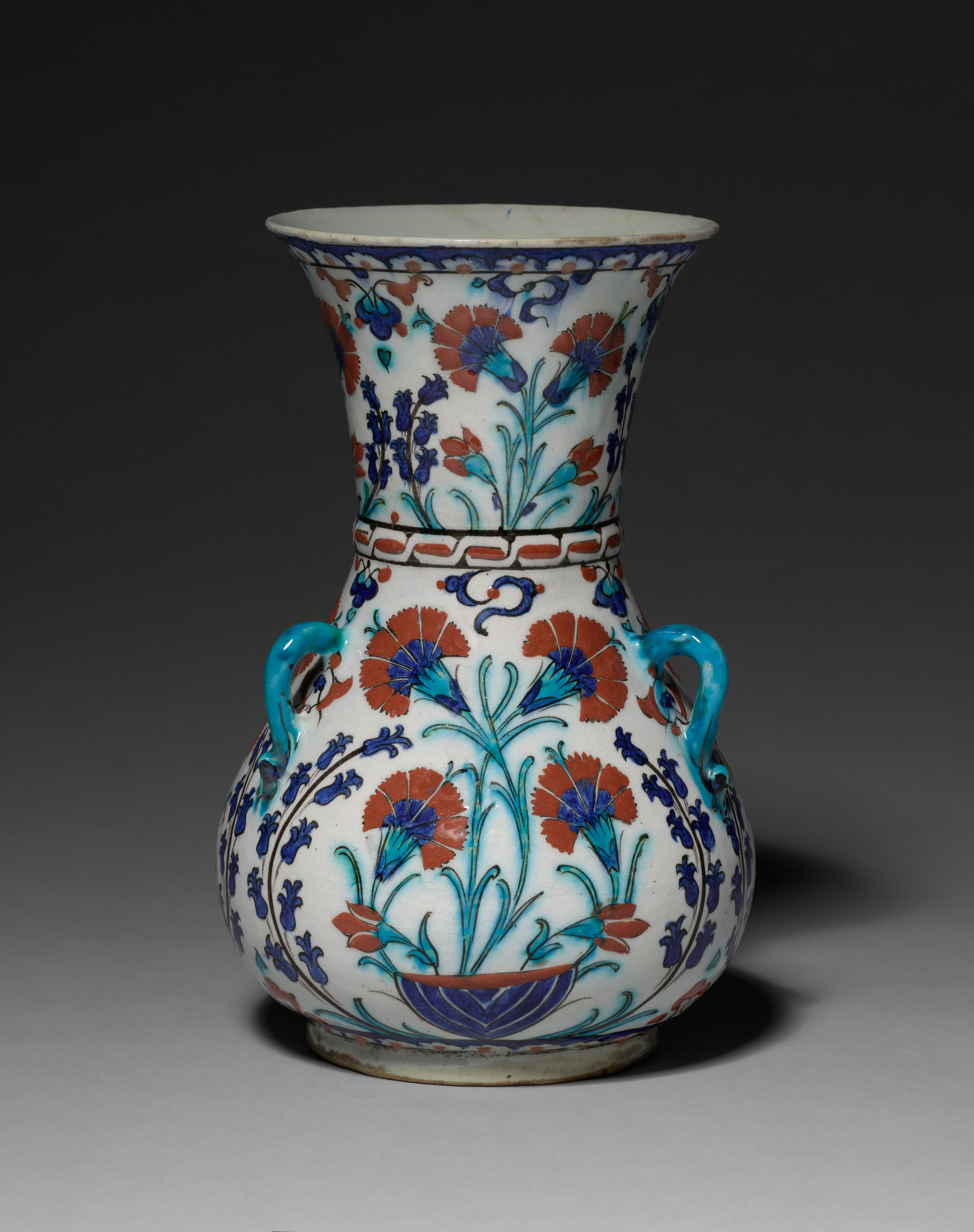
Mosque Lamp
A mosque lamp, made as a shade around an oil lamp but too opaque to pass much light. Its purpose was the inscription and pattern read by reflected flame.
× px · Unmodified source file
Small archival scan: best for reference and screen use, not large prints.
Open in StudioSource & licensing
- Creator / date
- Turkey, Iznik, Ottoman period, maker unknown · 1585–95
- Source credit
- The Cleveland Museum of Art, 1944.236. Open Access.
- Usage notes
- Released by the Cleveland Museum of Art under CC0 1.0. Credit to the museum is encouraged; CC0 does not imply endorsement.
- Original file
- × px · JPG · 0.0 MB
- Source checked
- 2026-11-04 · editorial approval separate
CC0 · Public domain · 1585–95
Mosque Lamp
The companion lamp to its pair, from the same decade. Mosque lamps were donated in sets, hung in rows beneath a dome.
× px · Unmodified source file
Small archival scan: best for reference and screen use, not large prints.
Open in StudioSource & licensing
- Creator / date
- Turkey, Iznik, Ottoman period, maker unknown · 1585–95
- Source credit
- The Cleveland Museum of Art, 1944.287. Open Access.
- Usage notes
- Released by the Cleveland Museum of Art under CC0 1.0. Credit to the museum is encouraged; CC0 does not imply endorsement.
- Original file
- × px · JPG · 0.0 MB
- Source checked
- 2026-11-04 · editorial approval separate
CC0 · Public domain · 1600s
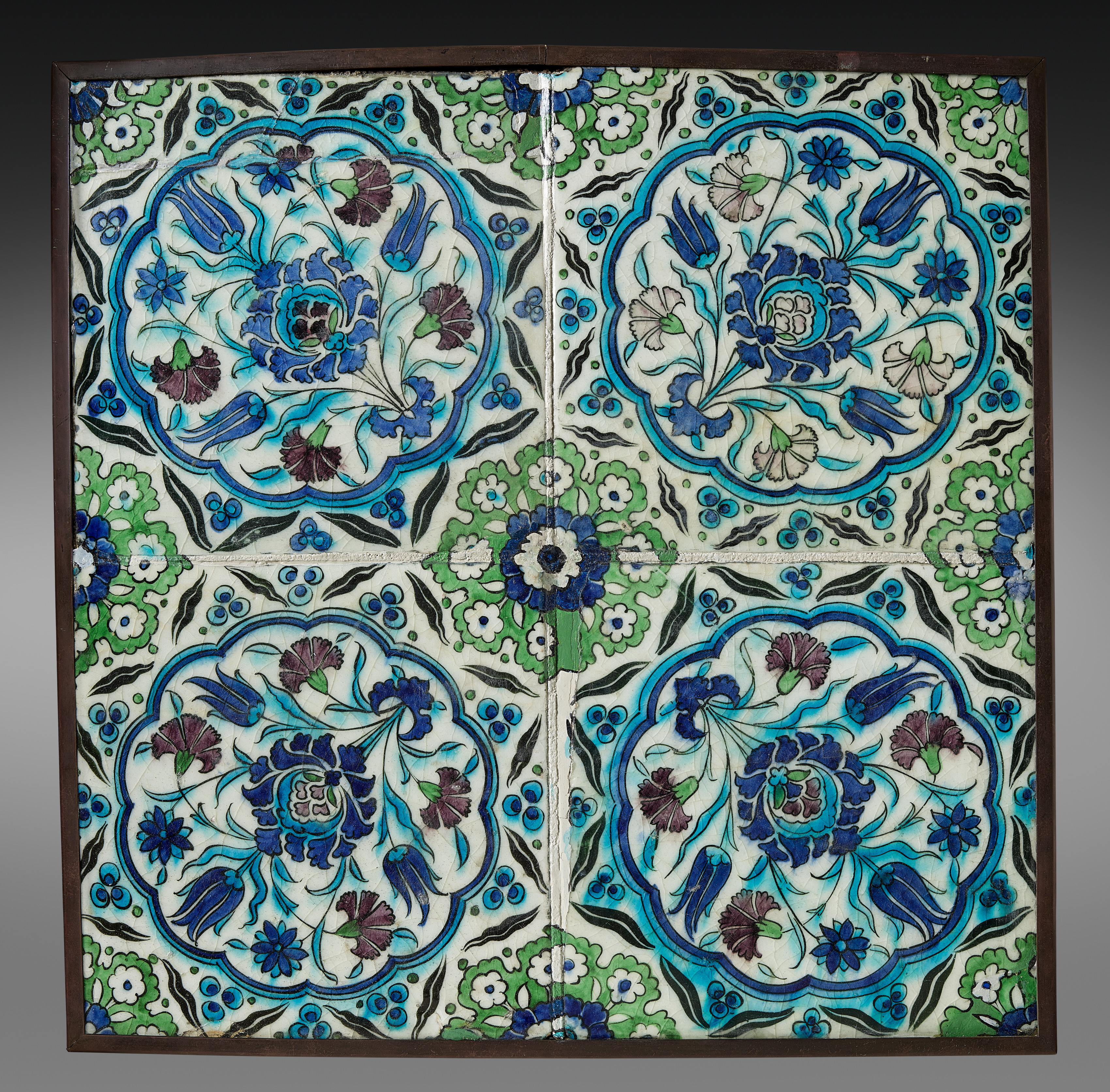
Wall Tiles
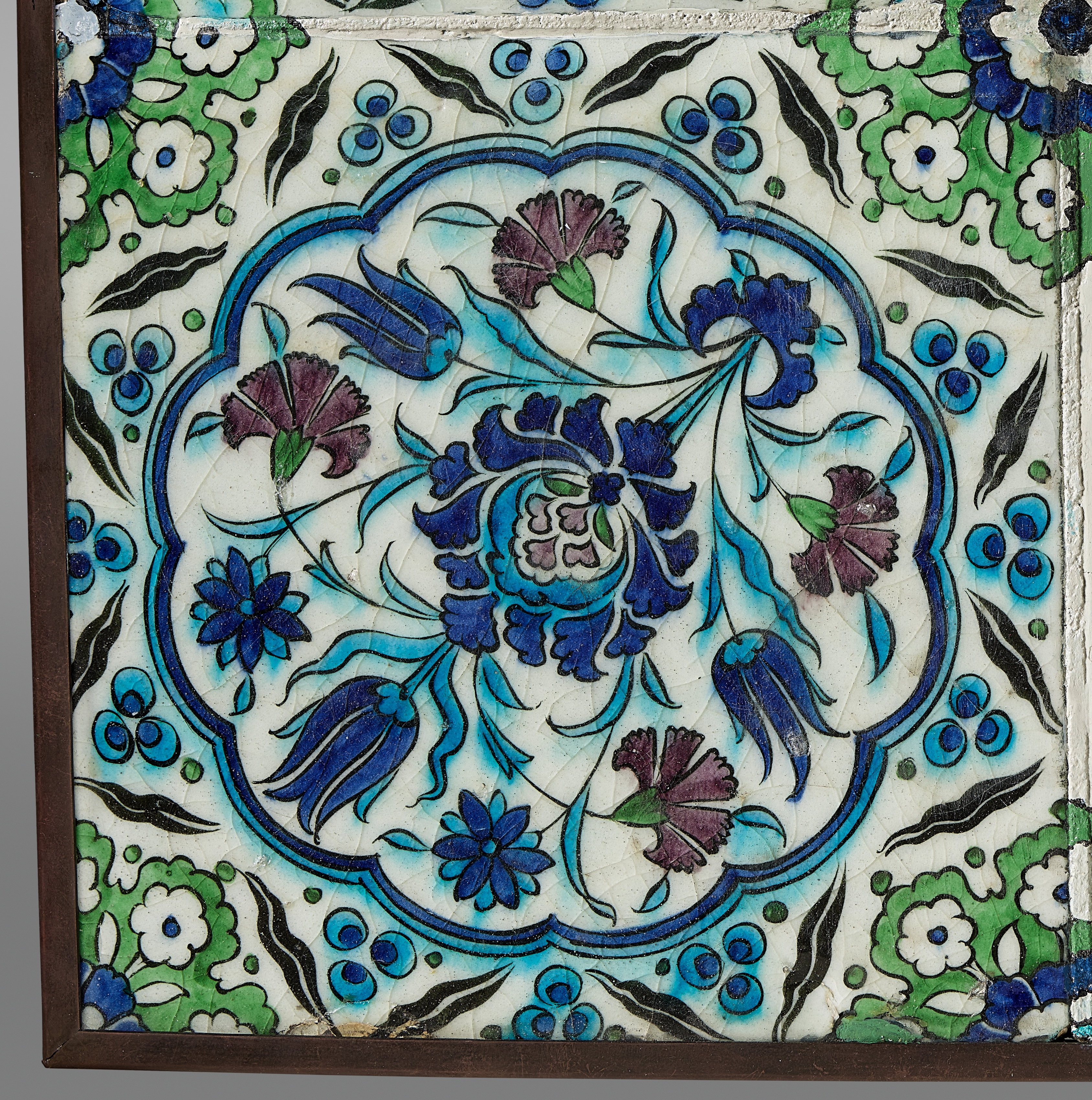
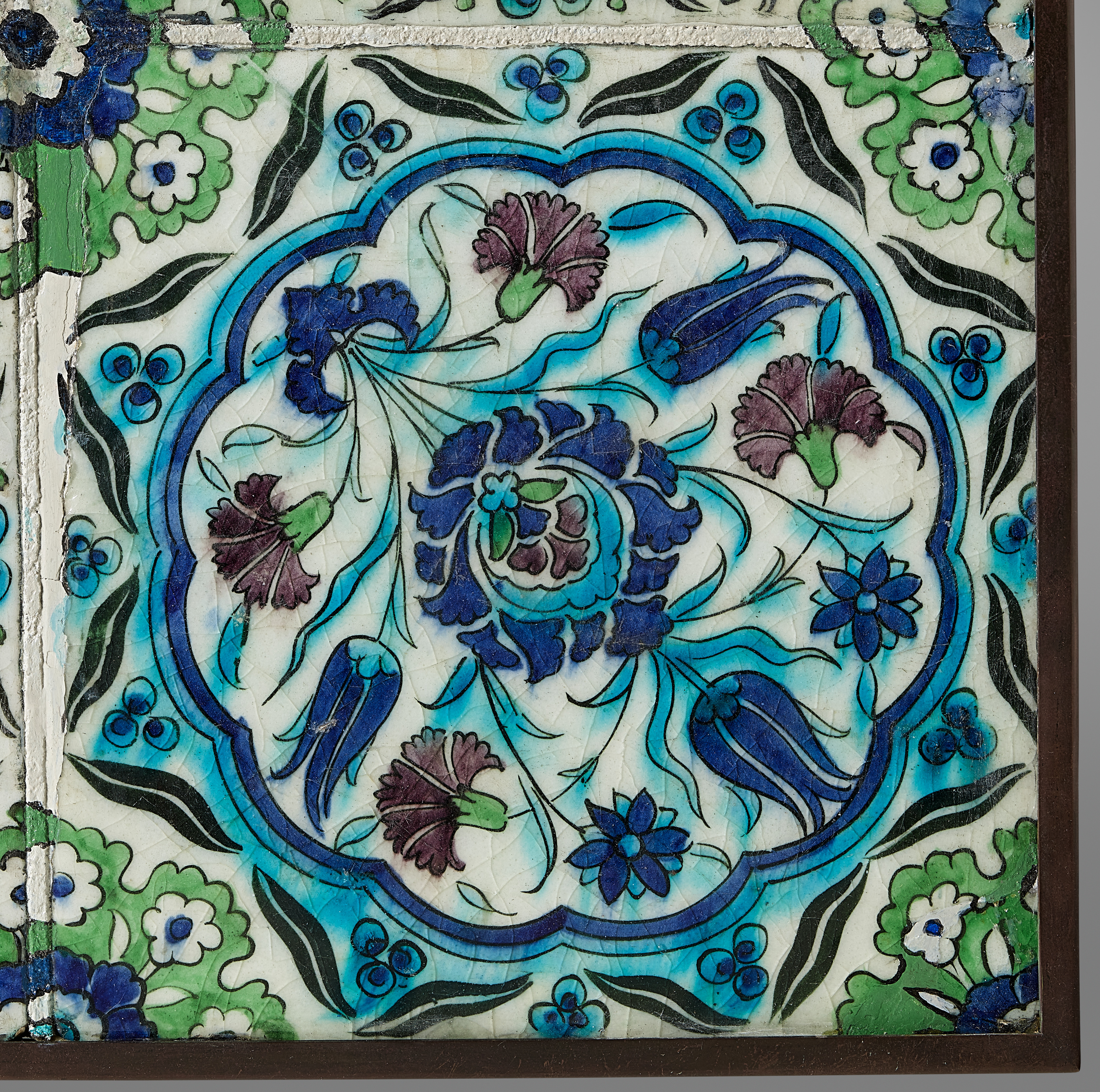
Four square tiles, each with a spray of tulips, carnations and a large hybrid palmette inside a twelve-lobed cartouche. Setting four together makes the repeats turn into a field.
× px · Unmodified source file
Small archival scan: best for reference and screen use, not large prints.
Open in StudioSource & licensing
- Creator / date
- Turkey, Iznik, Ottoman period, maker unknown · 1600s
- Source credit
- The Cleveland Museum of Art, 1915.651. Open Access.
- Usage notes
- Released by the Cleveland Museum of Art under CC0 1.0. Credit to the museum is encouraged; CC0 does not imply endorsement.
- Original file
- × px · JPG · 0.0 MB
- Source checked
- 2026-11-04 · editorial approval separate
CC0 · Public domain · 1600s
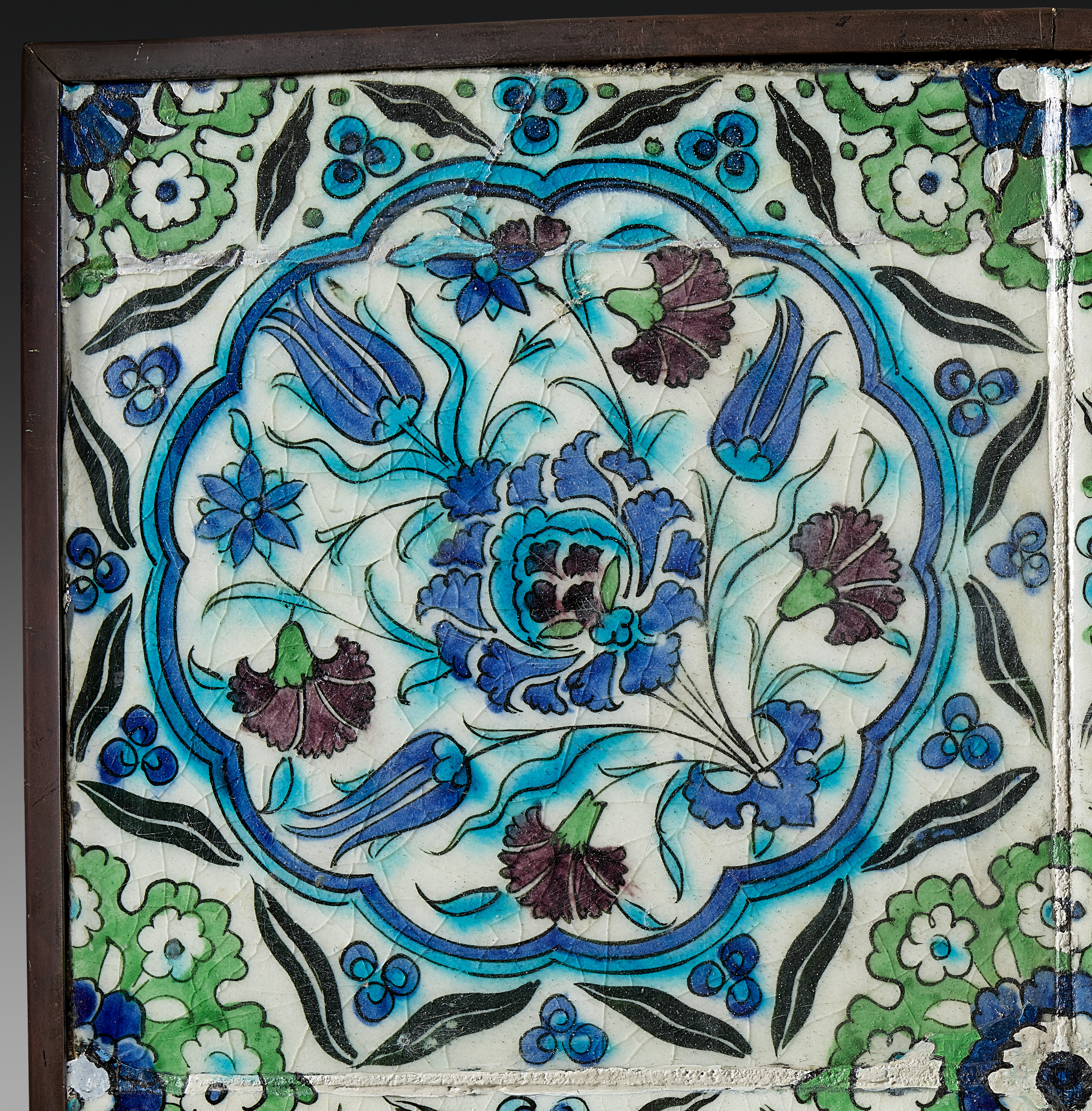
Wall Tile
The first of the four tiles, catalogued separately. A single tile shows the drawing clearly; the set shows the repeat.
× px · Unmodified source file
Small archival scan: best for reference and screen use, not large prints.
Open in StudioSource & licensing
- Creator / date
- Turkey, Iznik, Ottoman period, maker unknown · 1600s
- Source credit
- The Cleveland Museum of Art, 1915.651.a. Open Access.
- Usage notes
- Released by the Cleveland Museum of Art under CC0 1.0. Credit to the museum is encouraged; CC0 does not imply endorsement.
- Original file
- × px · JPG · 0.0 MB
- Source checked
- 2026-11-04 · editorial approval separate
CC0 · Public domain · 1600s
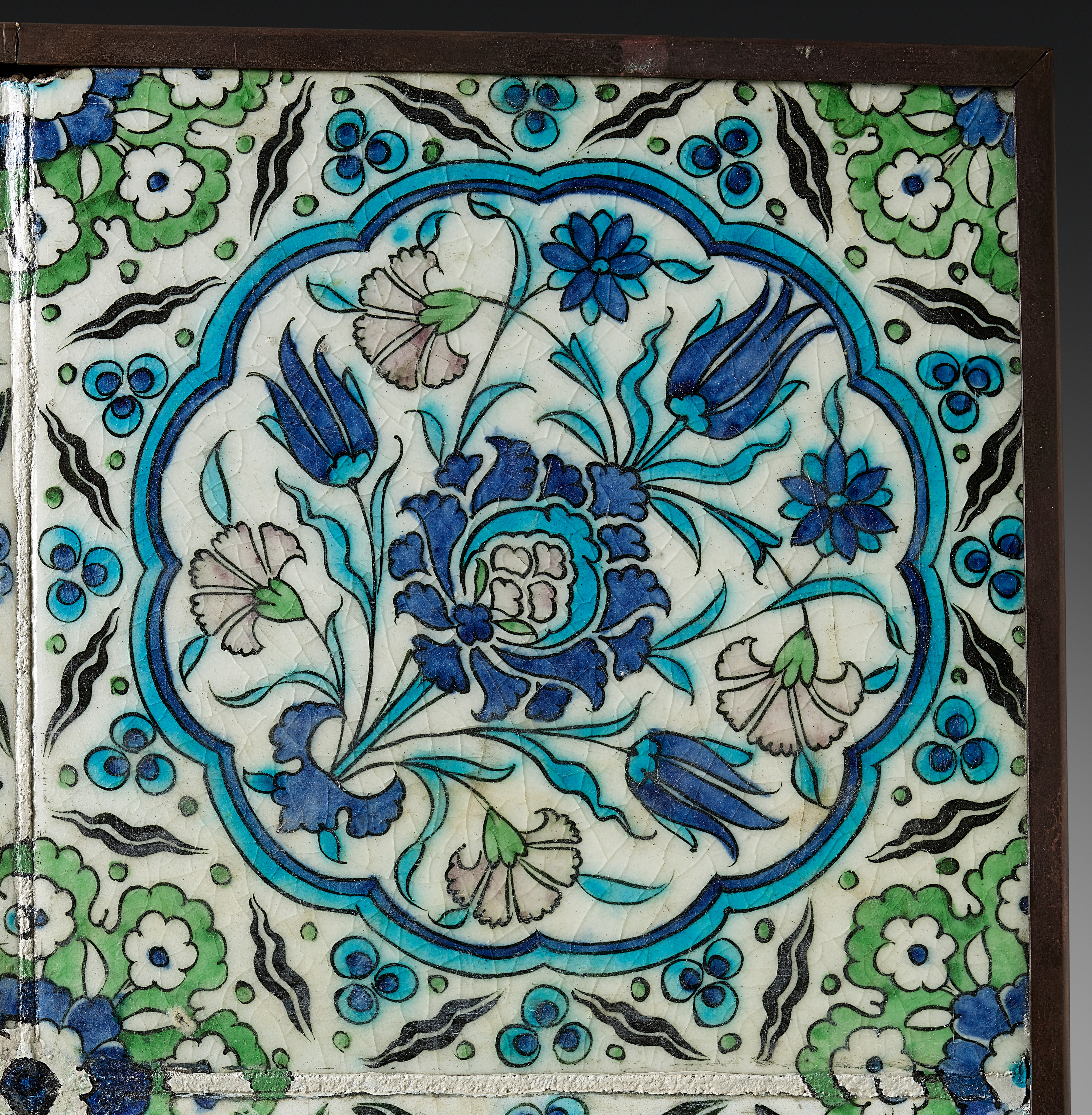
Wall Tile
The second of the four, with its own slight shifts in the palmette. Hand-painted tilework never repeats exactly, which is what keeps a tiled wall from looking printed.
× px · Unmodified source file
Small archival scan: best for reference and screen use, not large prints.
Open in StudioSource & licensing
- Creator / date
- Turkey, Iznik, Ottoman period, maker unknown · 1600s
- Source credit
- The Cleveland Museum of Art, 1915.651.b. Open Access.
- Usage notes
- Released by the Cleveland Museum of Art under CC0 1.0. Credit to the museum is encouraged; CC0 does not imply endorsement.
- Original file
- × px · JPG · 0.0 MB
- Source checked
- 2026-11-04 · editorial approval separate
CC0 · Public domain · 1600s
Wall Tile
The third of the four. Iznik tile production was a court monopoly for much of the sixteenth century, and the standard of drawing was enforced by the workshop.
× px · Unmodified source file
Small archival scan: best for reference and screen use, not large prints.
Open in StudioSource & licensing
- Creator / date
- Turkey, Iznik, Ottoman period, maker unknown · 1600s
- Source credit
- The Cleveland Museum of Art, 1915.651.c. Open Access.
- Usage notes
- Released by the Cleveland Museum of Art under CC0 1.0. Credit to the museum is encouraged; CC0 does not imply endorsement.
- Original file
- × px · JPG · 0.0 MB
- Source checked
- 2026-11-04 · editorial approval separate
CC0 · Public domain · 1600s
Wall Tile
The fourth tile, completing the set. Tulip, carnation and palmette were the three motifs a court designer could vary endlessly.
× px · Unmodified source file
Small archival scan: best for reference and screen use, not large prints.
Open in StudioSource & licensing
- Creator / date
- Turkey, Iznik, Ottoman period, maker unknown · 1600s
- Source credit
- The Cleveland Museum of Art, 1915.651.d. Open Access.
- Usage notes
- Released by the Cleveland Museum of Art under CC0 1.0. Credit to the museum is encouraged; CC0 does not imply endorsement.
- Original file
- × px · JPG · 0.0 MB
- Source checked
- 2026-11-04 · editorial approval separate
Public-domain status is reported by the linked source and may vary by jurisdiction. Check the source record for your intended use. No exclusive rights or Visual Bounty marketplace license are offered for these images.