← Open CollectionsPublic-domain source library
Inlaid: Islamic Metalwork in Silver
Brass carries silver the way paper carries ink: a channel is cut, wire or sheet is hammered in, and the surface levelled so the two metals read as one image in two colours. Workshops in Mosul, Damascus, Khurasan and eastern Anatolia used the technique for objects made to be handled at a feast or seen by lamplight, and peopled them with courtiers, hunters, lions, fish and inscriptions whose letters turn into figures. These ten pieces were made between the twelfth and fifteenth centuries.
Original means the unmodified digital file supplied by the linked archive, not an upscaled or reconstructed image. Sign in for free downloads. Studio uses a working preview up to 2048 px.
CC0 · Public domain · 1200–1221
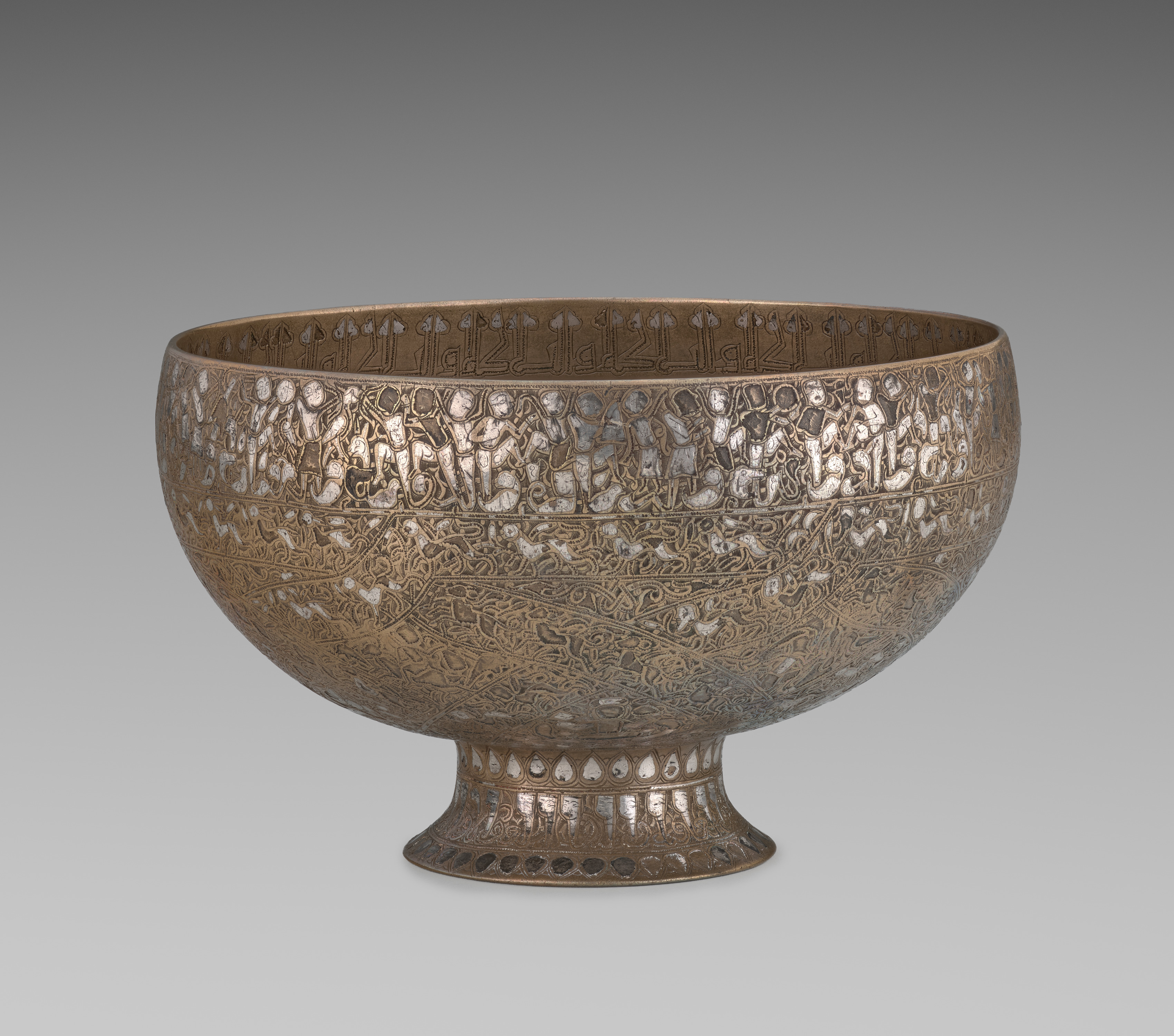
The Wade Cup with Animated Script
The cup’s rim carries an inscription whose letters are composed of human figures, so that the script becomes a procession as it is read. Made in Iran between 1200 and 1221, it is among the most studied objects of medieval Islamic metalwork.
3400 × 3000 px · Unmodified source file
Open in StudioSource & licensing
- Creator / date
- Iran, Seljuq period of Iran (1037–1194), maker unknown · 1200–1221
- Source credit
- The Cleveland Museum of Art, 1944.485. Open Access.
- Usage notes
- Released by the Cleveland Museum of Art under CC0 1.0. Credit to the museum is encouraged; CC0 does not imply endorsement.
- Original file
- 3400 × 3000 px · JPG · 0.0 MB
- Source checked
- 2026-11-04 · editorial approval separate
CC0 · Public domain · 1100s
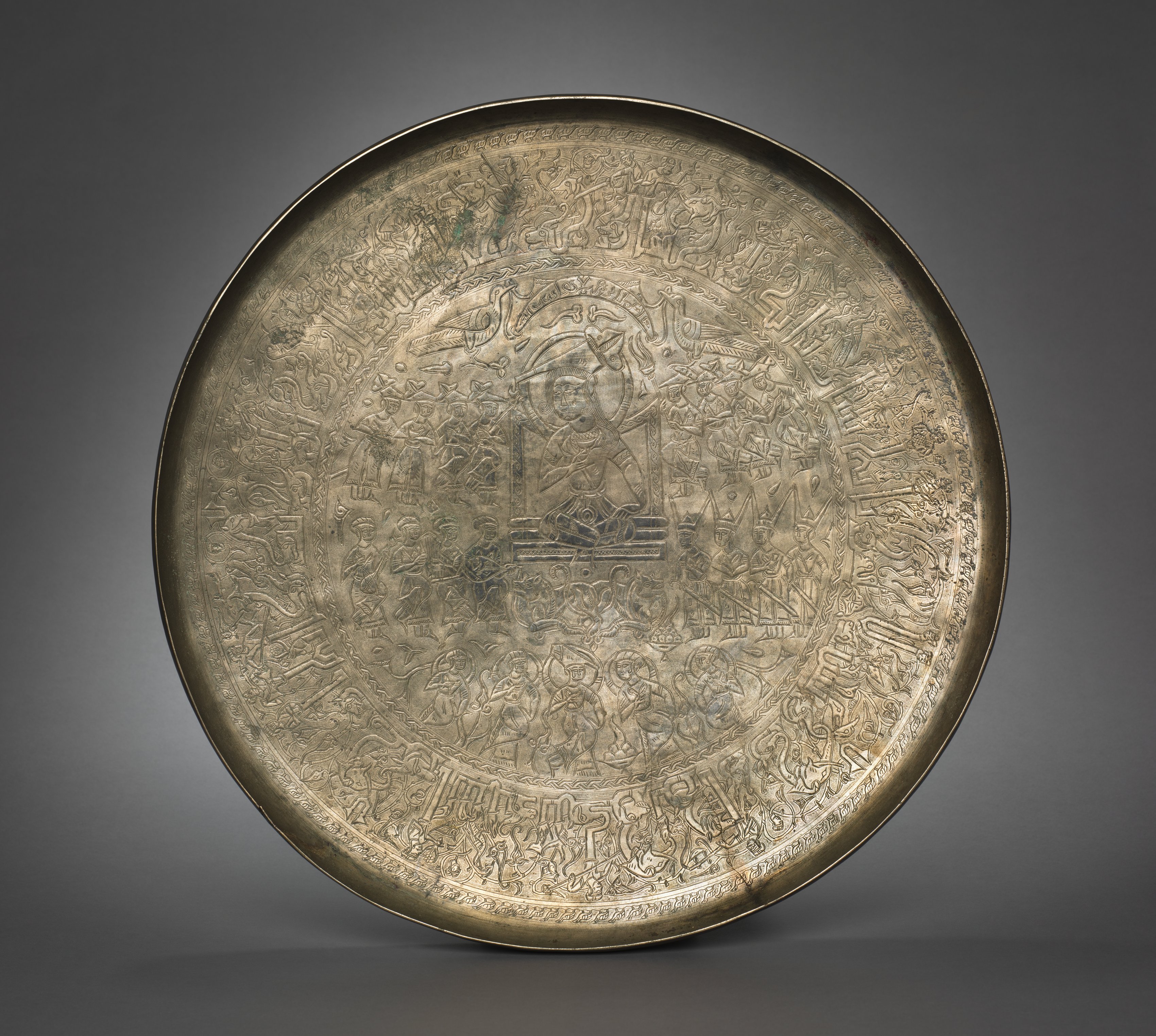
Salver
An enthroned ruler surrounded by courtiers and musicians at the centre, with a wide border of animated Kufic. The script is drawn so that its letters bend and interlace, ornament that is also language.
3400 × 3046 px · Unmodified source file
Open in StudioSource & licensing
- Creator / date
- Afghanistan, Ghaznavid Period, 12th Century, maker unknown · 1100s
- Source credit
- The Cleveland Museum of Art, 1980.179. Open Access.
- Usage notes
- Released by the Cleveland Museum of Art under CC0 1.0. Credit to the museum is encouraged; CC0 does not imply endorsement.
- Original file
- 3400 × 3046 px · JPG · 0.0 MB
- Source checked
- 2026-11-04 · editorial approval separate
CC0 · Public domain · 1150–1220
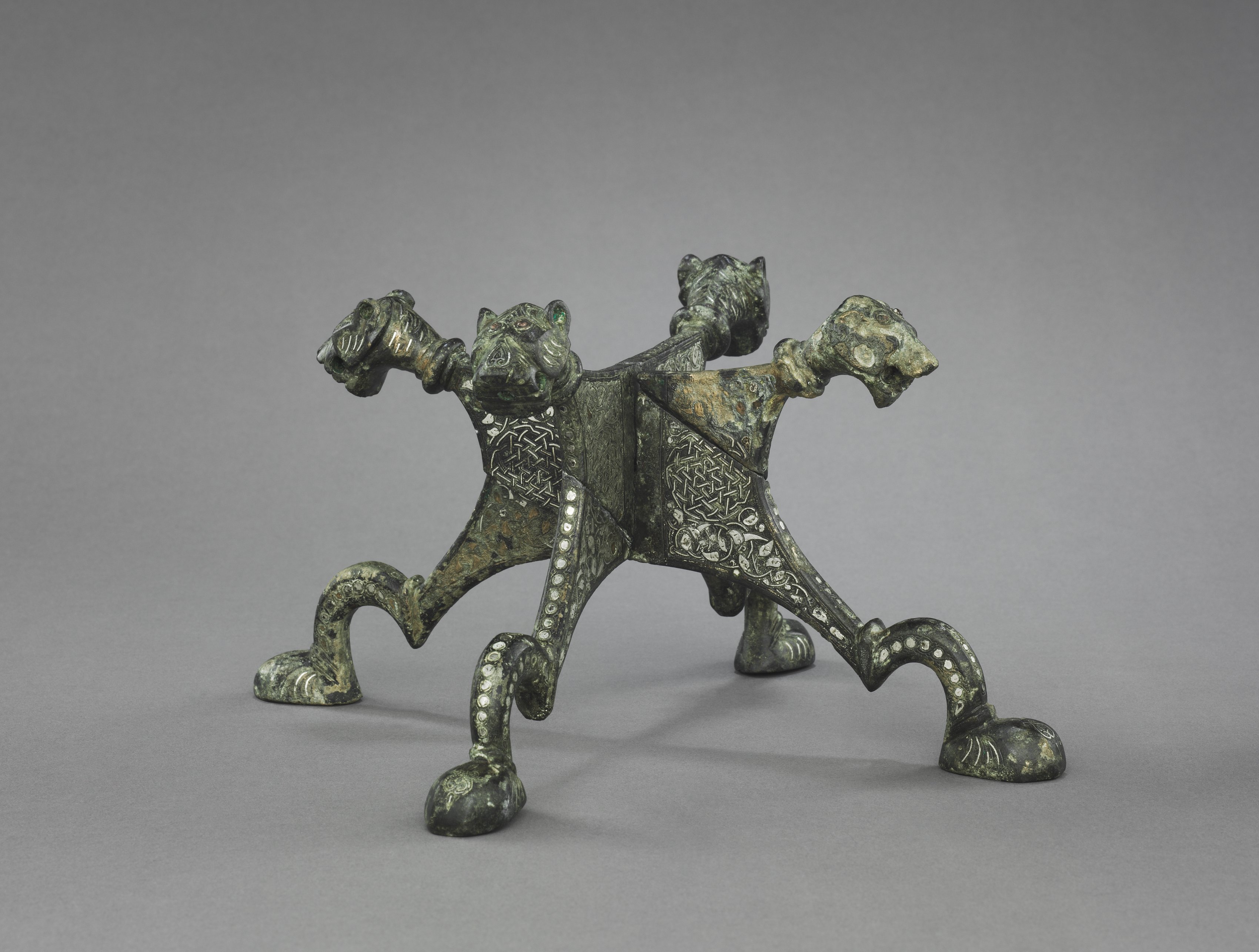
Lion-headed Stand
A stand whose four sections each end in a lion’s head, the legs finishing in paws. The angular modelling of the heads is characteristic of metalwork from northern Iraq and Syria.
3400 × 2571 px · Unmodified source file
Open in StudioSource & licensing
- Creator / date
- Northern Iraq or Syria, Zengid or Ayyubid period, maker unknown · 1150–1220
- Source credit
- The Cleveland Museum of Art, 1931.453. Open Access.
- Usage notes
- Released by the Cleveland Museum of Art under CC0 1.0. Credit to the museum is encouraged; CC0 does not imply endorsement.
- Original file
- 3400 × 2571 px · JPG · 0.0 MB
- Source checked
- 2026-11-04 · editorial approval separate
CC0 · Public domain · 1223
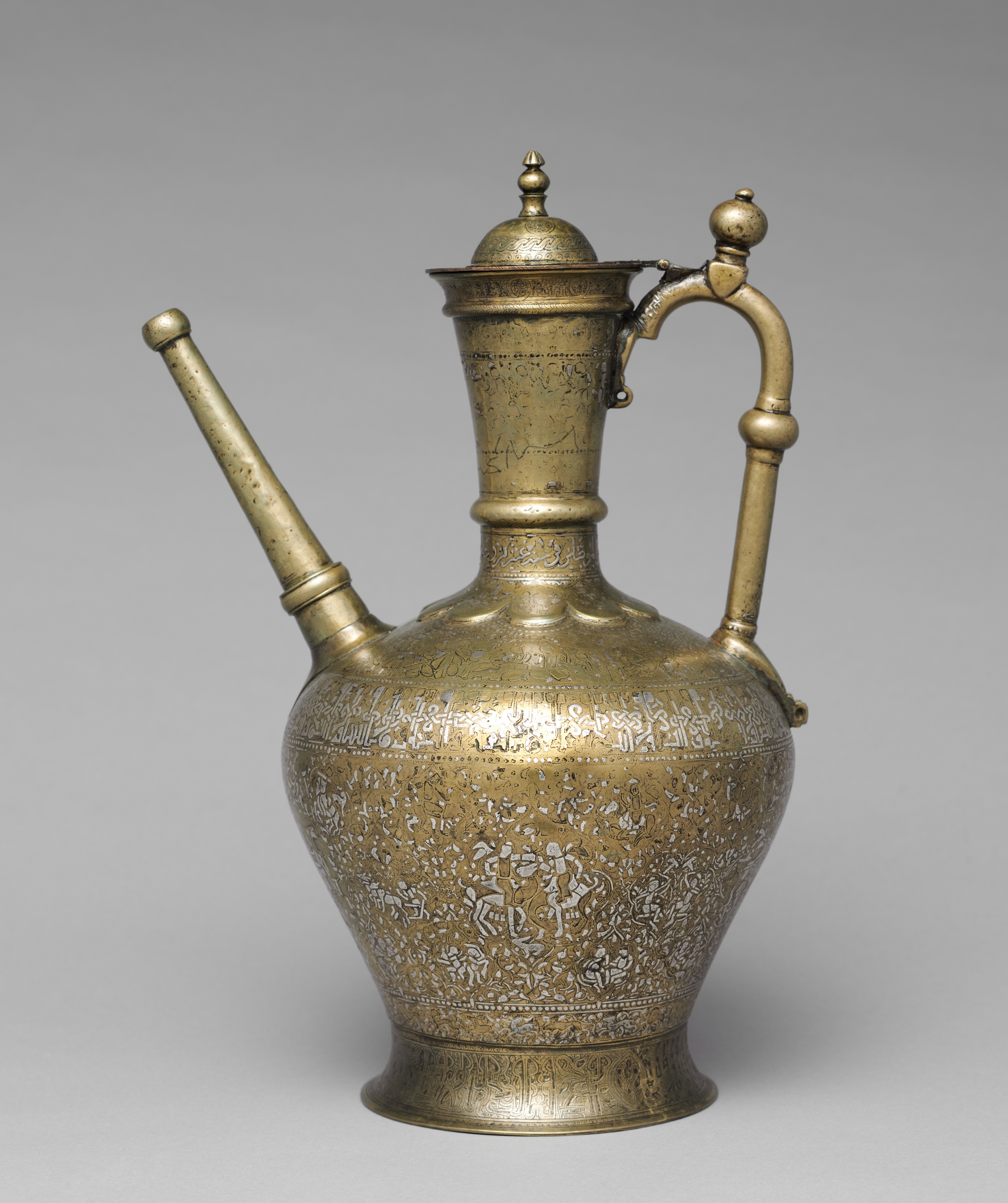
Luxury Ewer Extending Good Fortune to the Owner
Made in 1223, with a band of vignettes showing daily and courtly life around the body. Even the vessel’s name is a wish: the ewer extending good fortune to its owner.
2848 × 3400 px · Unmodified source file
Open in StudioSource & licensing
- Creator / date
- Ahmad al-Dhaki al-Mawsili (Iraqi, Mosul, active early 1200s?) · 1223
- Source credit
- The Cleveland Museum of Art, 1956.11. Open Access.
- Usage notes
- Released by the Cleveland Museum of Art under CC0 1.0. Credit to the museum is encouraged; CC0 does not imply endorsement.
- Original file
- 2848 × 3400 px · JPG · 0.0 MB
- Source checked
- 2026-11-04 · editorial approval separate
CC0 · Public domain · 1200s
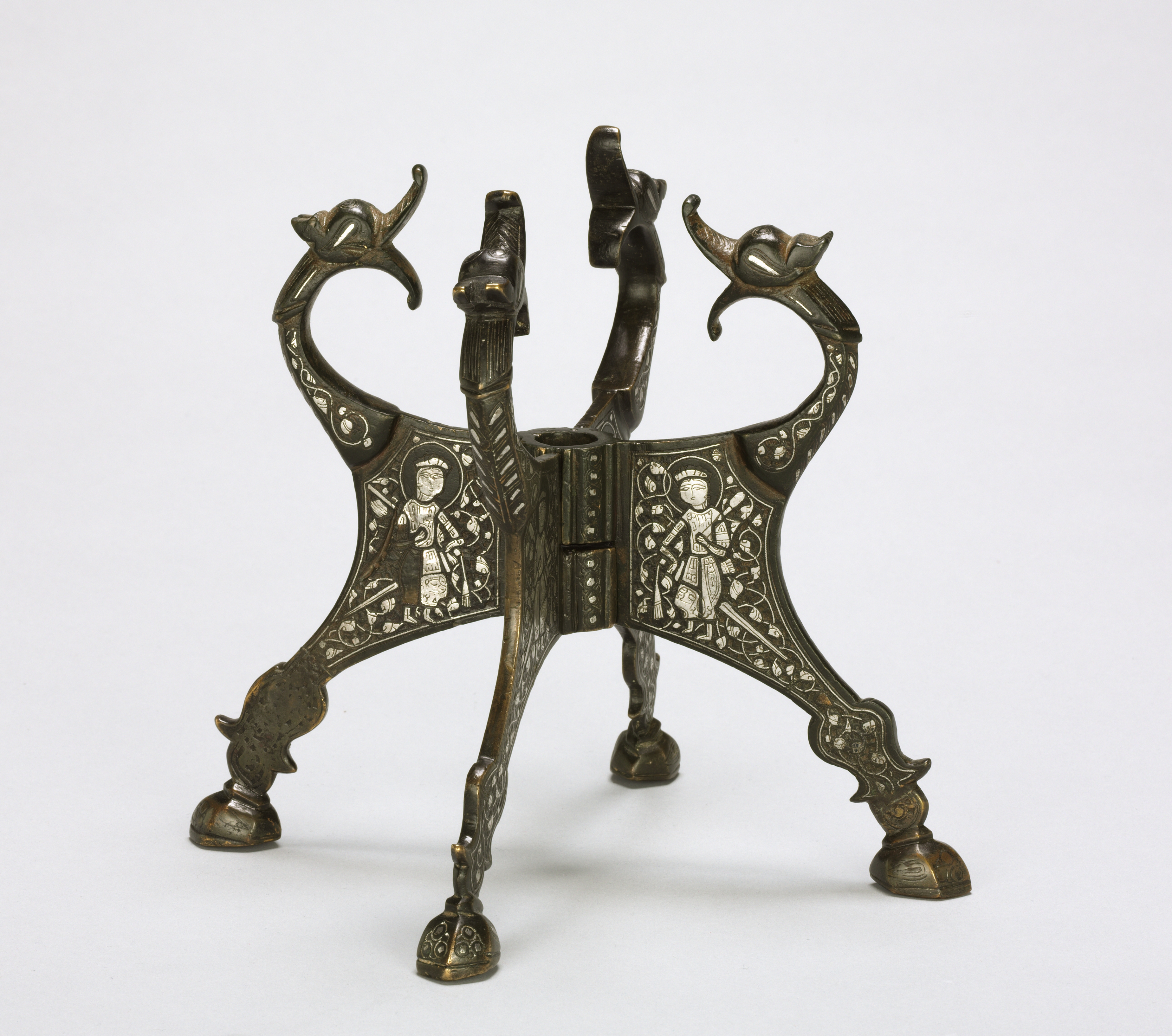
Dragon-headed Stand
A stand with gaping dragon heads, its figures armed with swords and spears, so that hunting and combat become structural supports.
3400 × 3272 px · Unmodified source file
Open in StudioSource & licensing
- Creator / date
- Northern Iraq or Syria, Zangid (1127–1251) or Ayyubid period (1171–1260), maker unknown · 1200s
- Source credit
- The Cleveland Museum of Art, 1952.8. Open Access.
- Usage notes
- Released by the Cleveland Museum of Art under CC0 1.0. Credit to the museum is encouraged; CC0 does not imply endorsement.
- Original file
- 3400 × 3272 px · JPG · 0.0 MB
- Source checked
- 2026-11-04 · editorial approval separate
CC0 · Public domain · 1240s
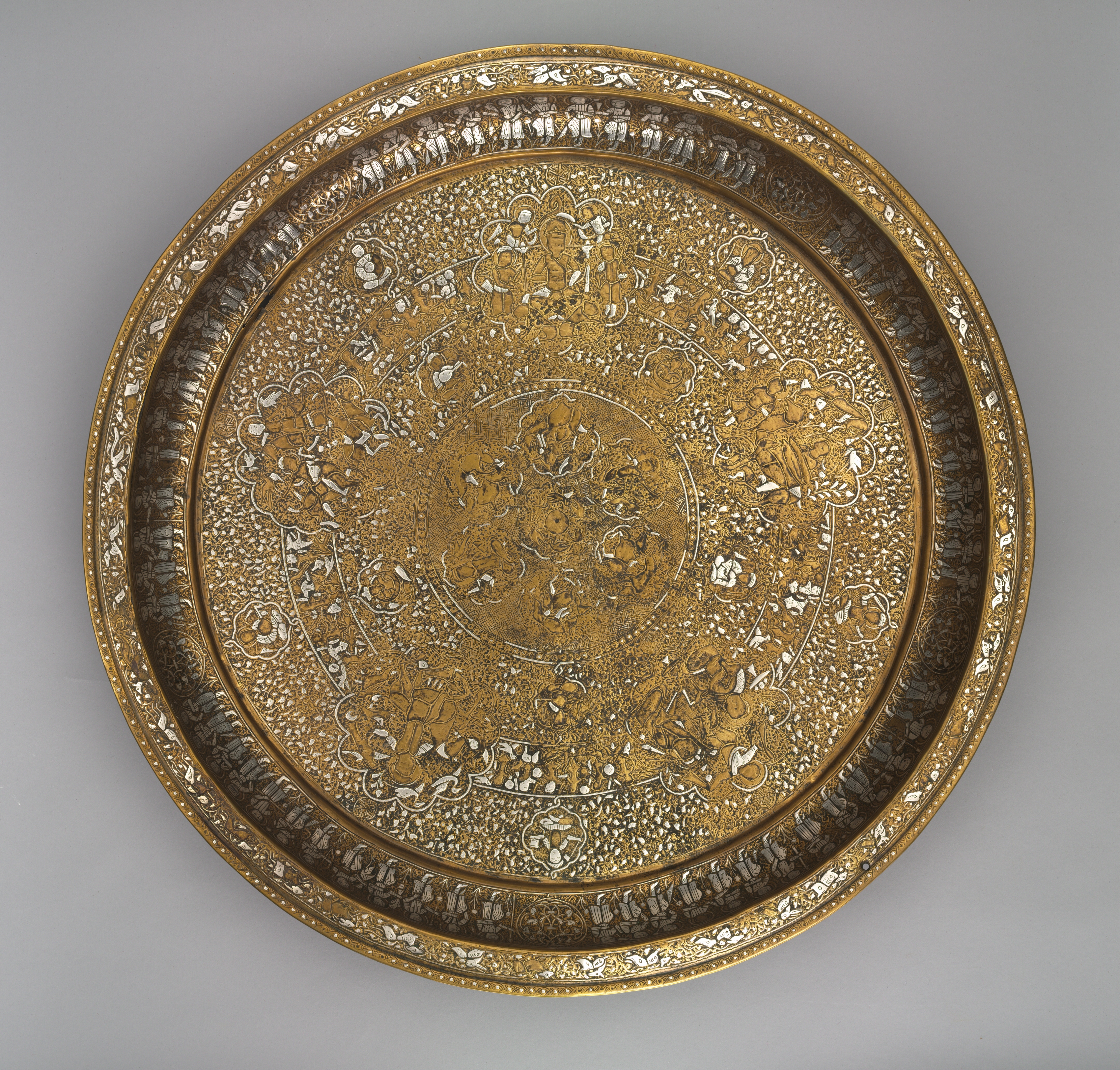
Tray Portraying Courtly Pleasures
A tray showing courtly pleasures inside large multilobed medallions, interspersed with astronomical symbols. Silver hammered into brass gives the decoration its contrast, and the surface was meant to catch lamplight.
3400 × 3248 px · Unmodified source file
Open in StudioSource & licensing
- Creator / date
- Syria, Ayyubid period (1171–1260), maker unknown · 1240s
- Source credit
- The Cleveland Museum of Art, 1945.386. Open Access.
- Usage notes
- Released by the Cleveland Museum of Art under CC0 1.0. Credit to the museum is encouraged; CC0 does not imply endorsement.
- Original file
- 3400 × 3248 px · JPG · 0.0 MB
- Source checked
- 2026-11-04 · editorial approval separate
CC0 · Public domain · 1250–1350
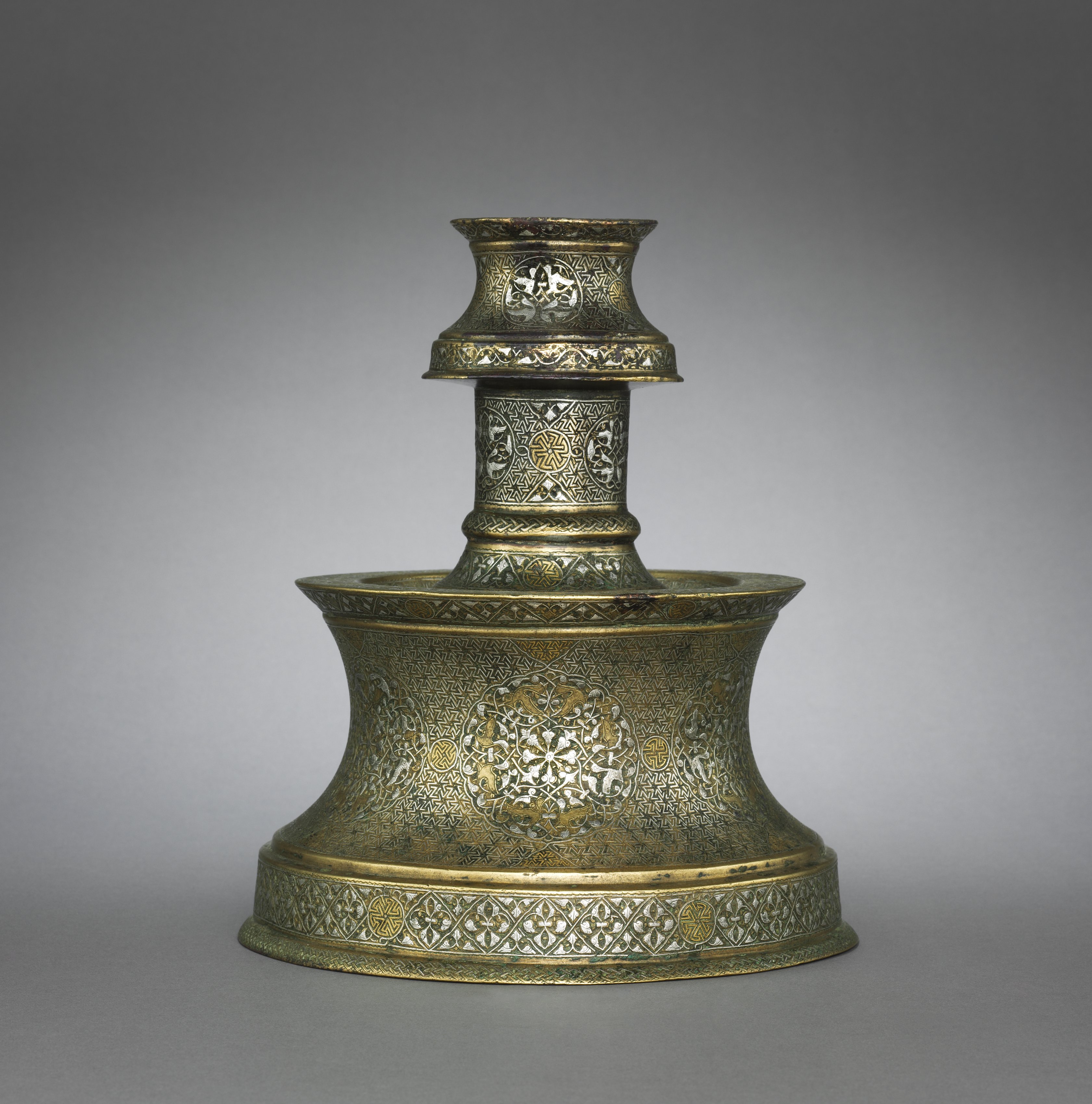
Candlestick
A luxury good of the medieval Islamic world, its decoration arranged in bands so that a room lit by it would show the pattern turning as the object was carried.
3362 × 3400 px · Unmodified source file
Open in StudioSource & licensing
- Creator / date
- Eastern Anatolia, maker unknown · 1250–1350
- Source credit
- The Cleveland Museum of Art, 1951.539. Open Access.
- Usage notes
- Released by the Cleveland Museum of Art under CC0 1.0. Credit to the museum is encouraged; CC0 does not imply endorsement.
- Original file
- 3362 × 3400 px · JPG · 0.0 MB
- Source checked
- 2026-11-04 · editorial approval separate
CC0 · Public domain · c. 1250–1350
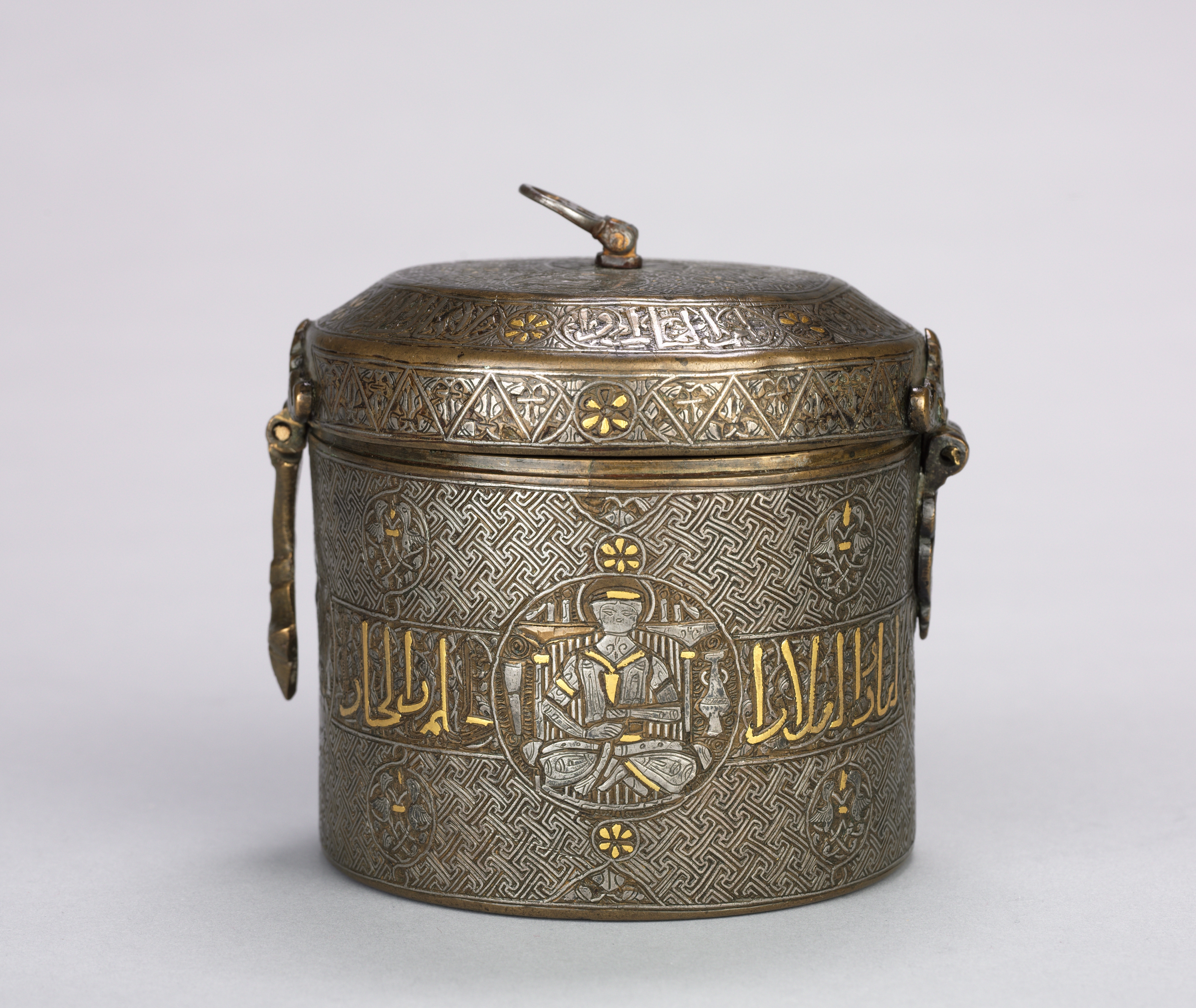
Luxury Inlaid Container
One of a group made in northern Iraq when Mosul, Damascus and eastern Anatolia were all producing inlaid brass. Silver and gold wire are hammered into channels cut into the brass.
3400 × 2866 px · Unmodified source file
Open in StudioSource & licensing
- Creator / date
- Northern Iraq, Ayyubid period, maker unknown · c. 1250–1350
- Source credit
- The Cleveland Museum of Art, 1944.482. Open Access.
- Usage notes
- Released by the Cleveland Museum of Art under CC0 1.0. Credit to the museum is encouraged; CC0 does not imply endorsement.
- Original file
- 3400 × 2866 px · JPG · 0.0 MB
- Source checked
- 2026-11-04 · editorial approval separate
CC0 · Public domain · 1300–1350
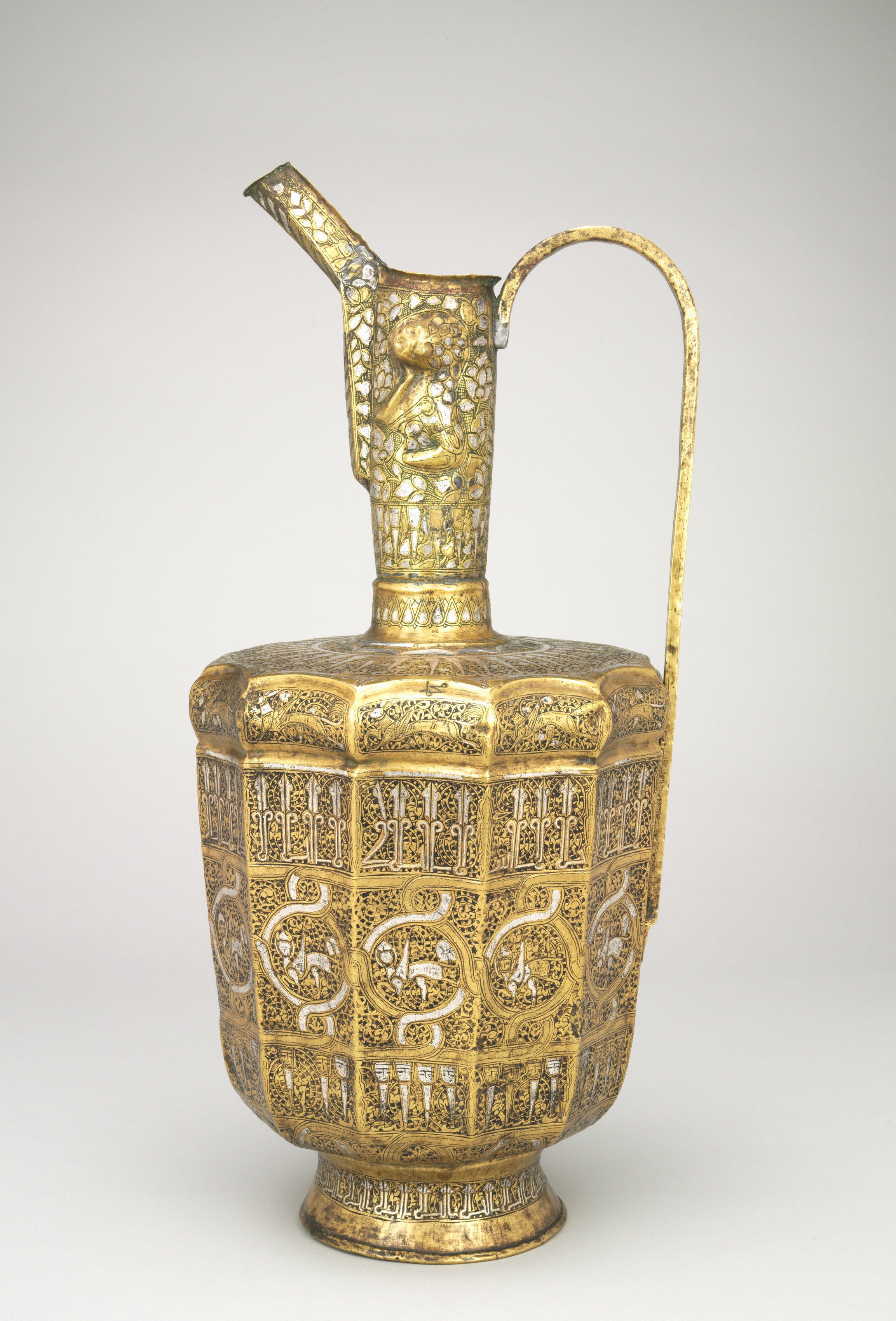
Twelve-sided Ewer with Sphinxes and Human-Headed Inscriptions
A twelve-sided ewer with a lion in raised relief at the spout and neck, and winged hare-like animals marching around the body. Faceting the walls gives each inscription its own panel.
2306 × 3400 px · Unmodified source file
Open in StudioSource & licensing
- Creator / date
- Iran, Khurasan, Ilkhanid period (1256–1353), maker unknown · 1300–1350
- Source credit
- The Cleveland Museum of Art, 1945.27. Open Access.
- Usage notes
- Released by the Cleveland Museum of Art under CC0 1.0. Credit to the museum is encouraged; CC0 does not imply endorsement.
- Original file
- 2306 × 3400 px · JPG · 0.0 MB
- Source checked
- 2026-11-04 · editorial approval separate
CC0 · Public domain · 1450–1500
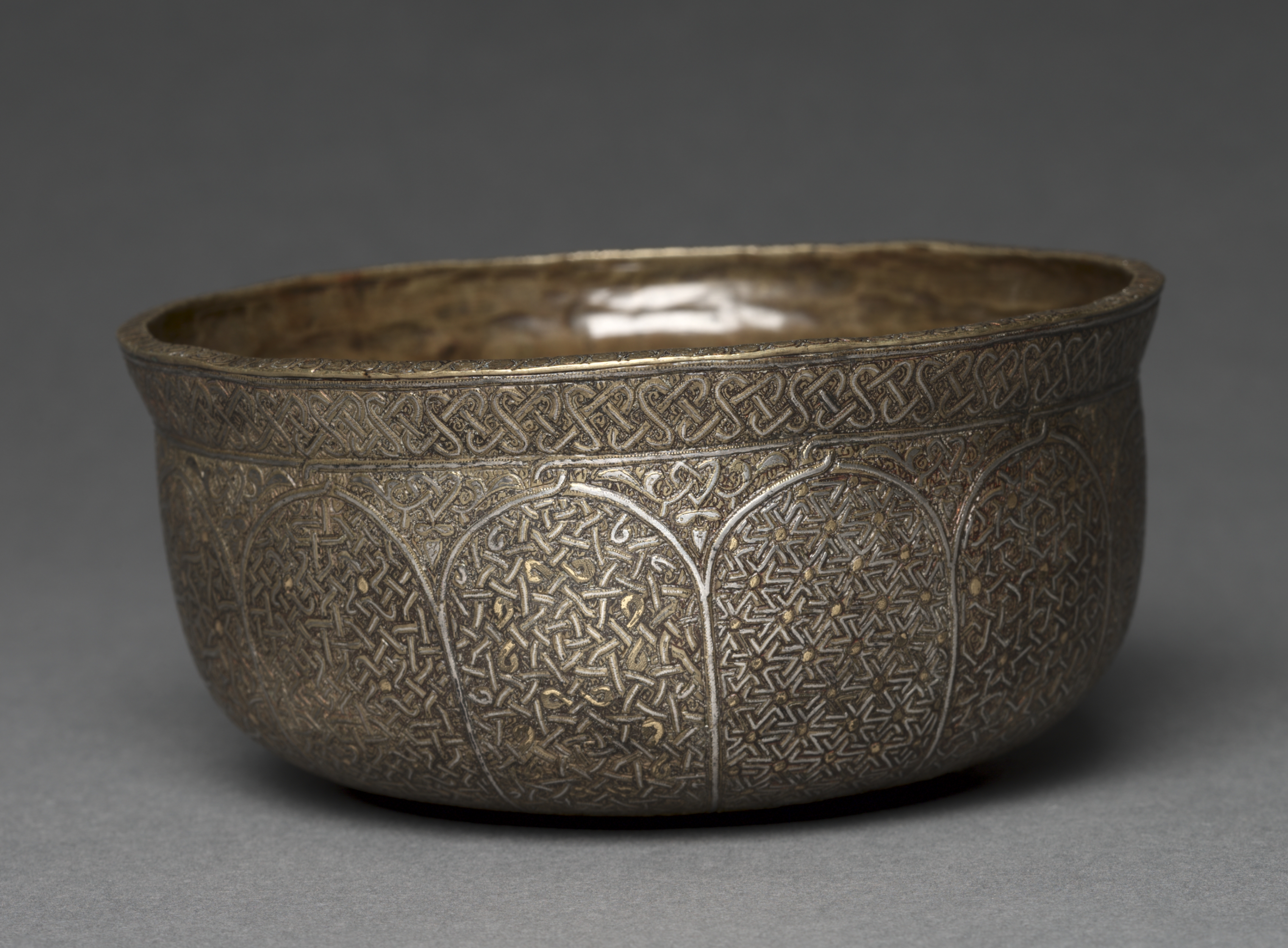
Bowl with Geometric Designs
Interlacing geometric designs fill twelve arched panels radiating from a star at the base, with a pinwheel of six fish engraved at the centre. Mamluk Damascus specialised in this kind of all-over geometry.
3400 × 2502 px · Unmodified source file
Open in StudioSource & licensing
- Creator / date
- Syria, Damascus, Burji Mamluk period, 15th Century, maker unknown · 1450–1500
- Source credit
- The Cleveland Museum of Art, 1945.133. Open Access.
- Usage notes
- Released by the Cleveland Museum of Art under CC0 1.0. Credit to the museum is encouraged; CC0 does not imply endorsement.
- Original file
- 3400 × 2502 px · JPG · 0.0 MB
- Source checked
- 2026-11-04 · editorial approval separate
Public-domain status is reported by the linked source and may vary by jurisdiction. Check the source record for your intended use. No exclusive rights or Visual Bounty marketplace license are offered for these images.