← Open CollectionsPublic-domain source library
Hand and Machine
The argument that shaped nineteenth-century pattern: should cloth be printed by hand or by machine? William Morris answered with discharge-printed cotton and block-cut repeats; his successors answered with roller-printed silks. The pieces here carry the argument to 1959, ending with American artist-designed silks and Frank Lloyd Wright’s silkscreened wallpapers, which took the machine’s side without apology.
Original means the unmodified digital file supplied by the linked archive, not an upscaled or reconstructed image. Sign in for free downloads. Studio uses a working preview up to 2048 px.
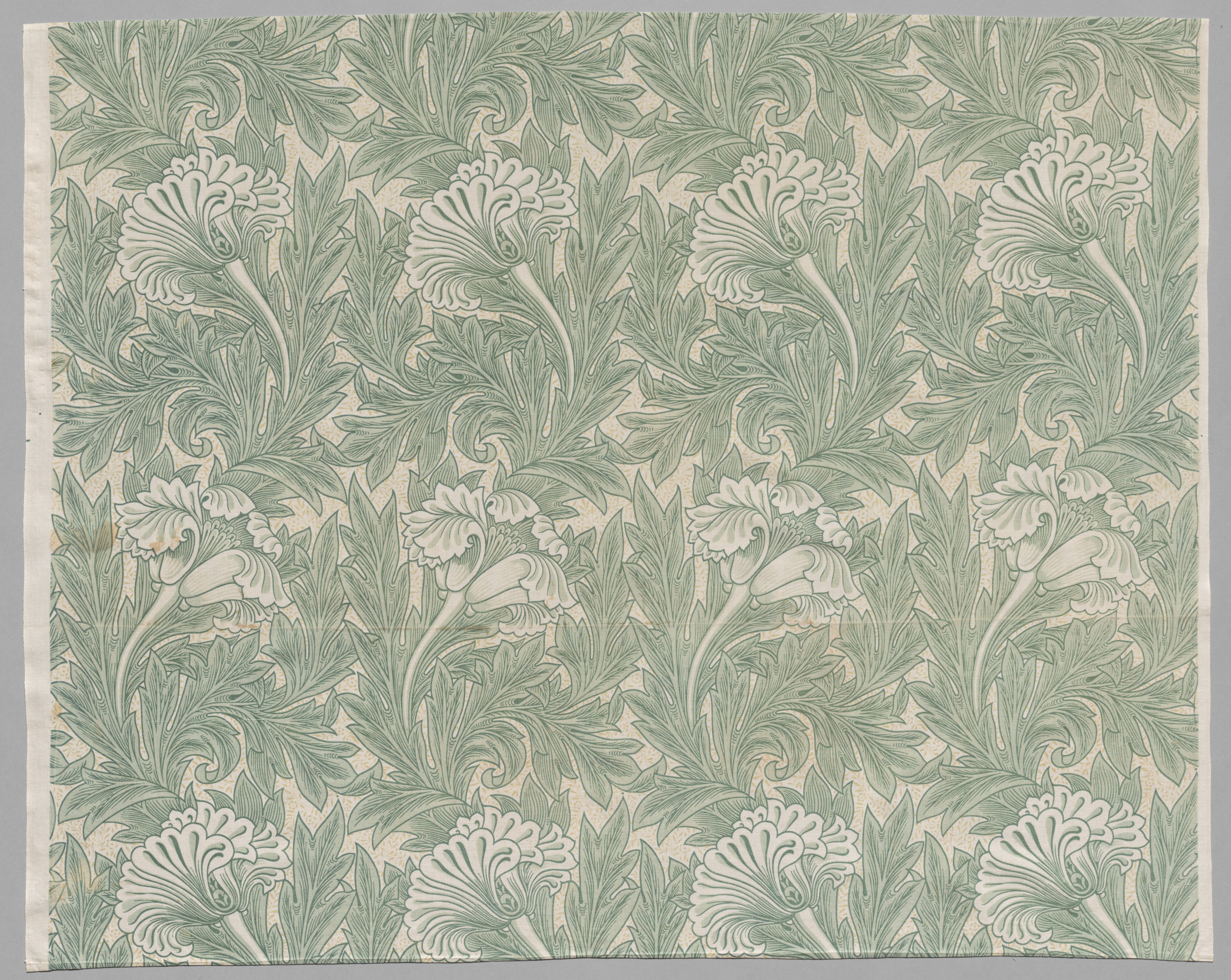
CC0 · Public domain · 1875
Tulip
One of Morris’s earliest printed designs, from 1875: a flat, symmetrical tulip repeat drawn for block printing. Its geometry is deliberately of the hand, an argument against the machine’s illusion of shading.
× px · Unmodified source file
Small archival scan: best for reference and screen use, not large prints.
Open in StudioSource & licensing
- Creator / date
- William Morris (British, 1834–1896) · 1875
- Source credit
- Gift of Mrs. Philip White. The Cleveland Museum of Art, Open Access.
- Usage notes
- Released by the Cleveland Museum of Art under CC0 1.0. Credit to the museum is encouraged; CC0 does not imply endorsement.
- Original file
- × px · JPG · 0.0 MB
- Source checked
- 2026-11-04 · editorial approval separate
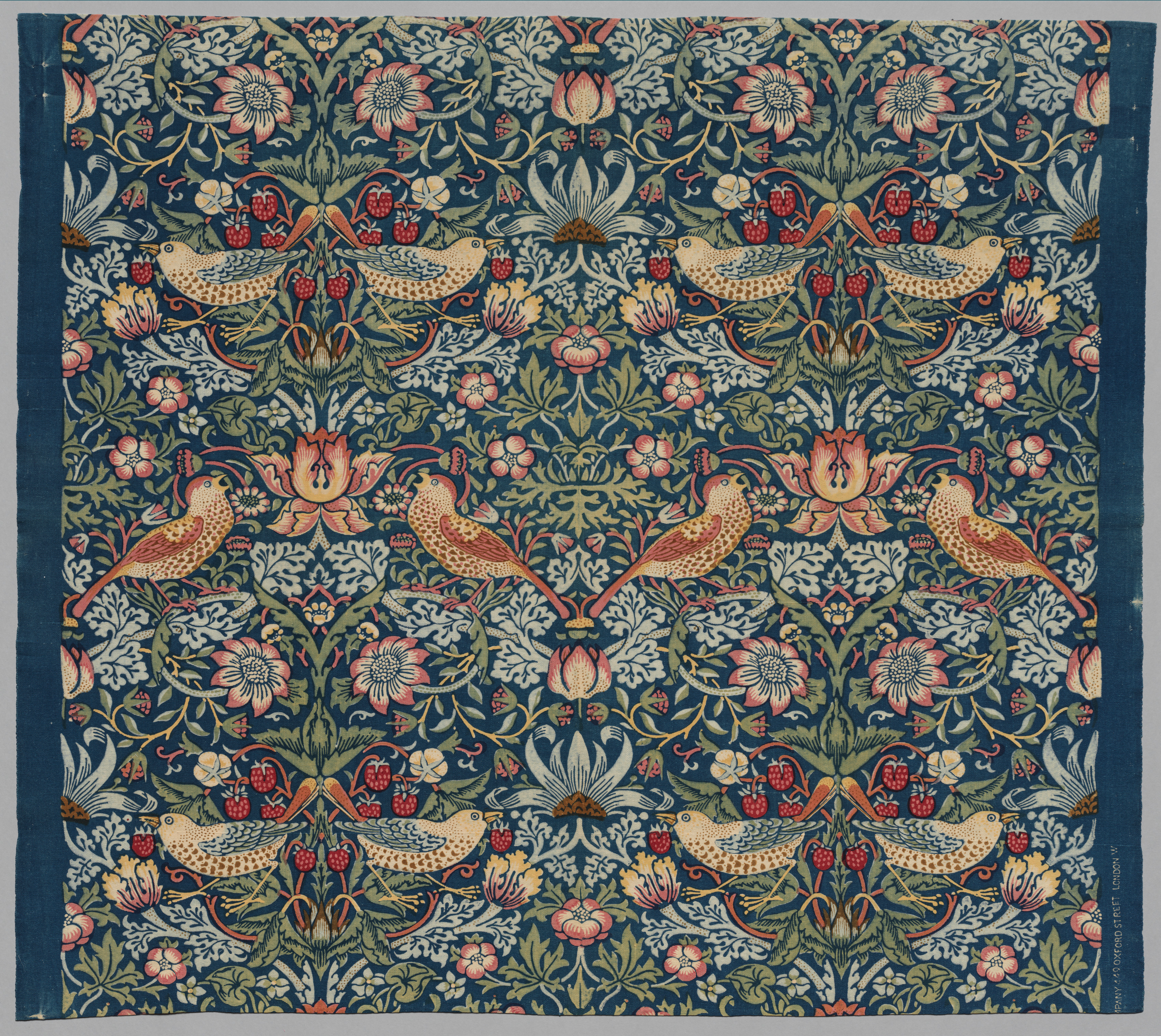
CC0 · Public domain · c. 1936 (design 1883)
Strawberry Thief
The thrushes from the garden at Kelmscott, printed by the discharge method at Merton Abbey. Morris is said to have worked out the process himself after watching the indigo dyed cloth give up its colour, and the birds make the whole argument for him.
× px · Unmodified source file
Small archival scan: best for reference and screen use, not large prints.
Open in StudioSource & licensing
- Creator / date
- William Morris (British, 1834–1896) · c. 1936 (design 1883)
- Source credit
- Gift of Mrs. Henry Chisholm. The Cleveland Museum of Art, Open Access.
- Usage notes
- Released by the Cleveland Museum of Art under CC0 1.0. Credit to the museum is encouraged; CC0 does not imply endorsement.
- Original file
- × px · JPG · 0.0 MB
- Source checked
- 2026-11-04 · editorial approval separate
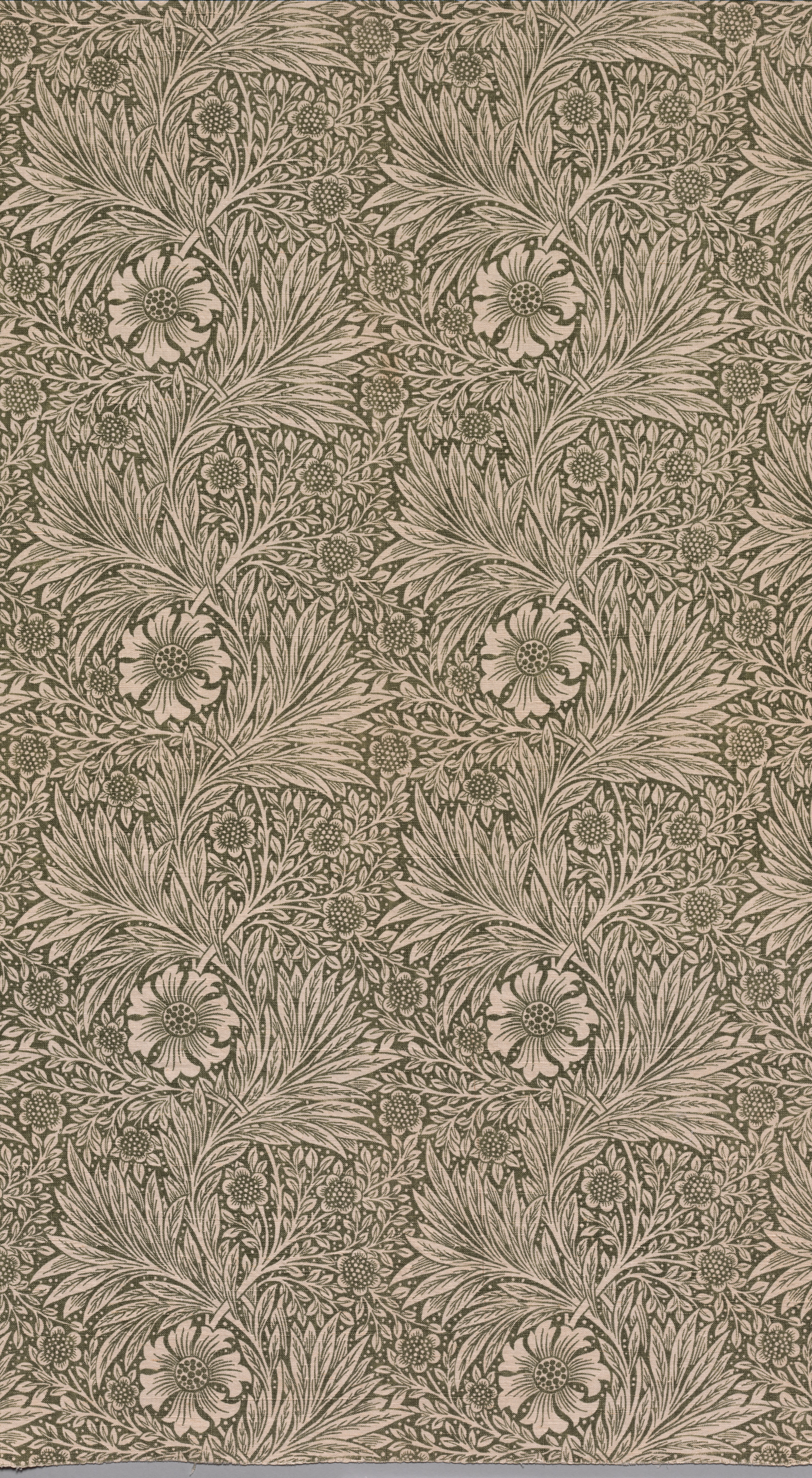
CC0 · Public domain · 20th century
Marigold
Marigold began as a wallpaper, one of Morris’s first designs for printing on fabric. It is the same repeat in two materials, and a reminder that Morris & Co. sold whole rooms rather than single cloths.
× px · Unmodified source file
Small archival scan: best for reference and screen use, not large prints.
Open in StudioSource & licensing
- Creator / date
- William Morris (British, 1834–1896) · 20th century
- Source credit
- Gift of Mrs. Henry Chisholm. The Cleveland Museum of Art, Open Access.
- Usage notes
- Released by the Cleveland Museum of Art under CC0 1.0. Credit to the museum is encouraged; CC0 does not imply endorsement.
- Original file
- × px · JPG · 0.0 MB
- Source checked
- 2026-11-04 · editorial approval separate
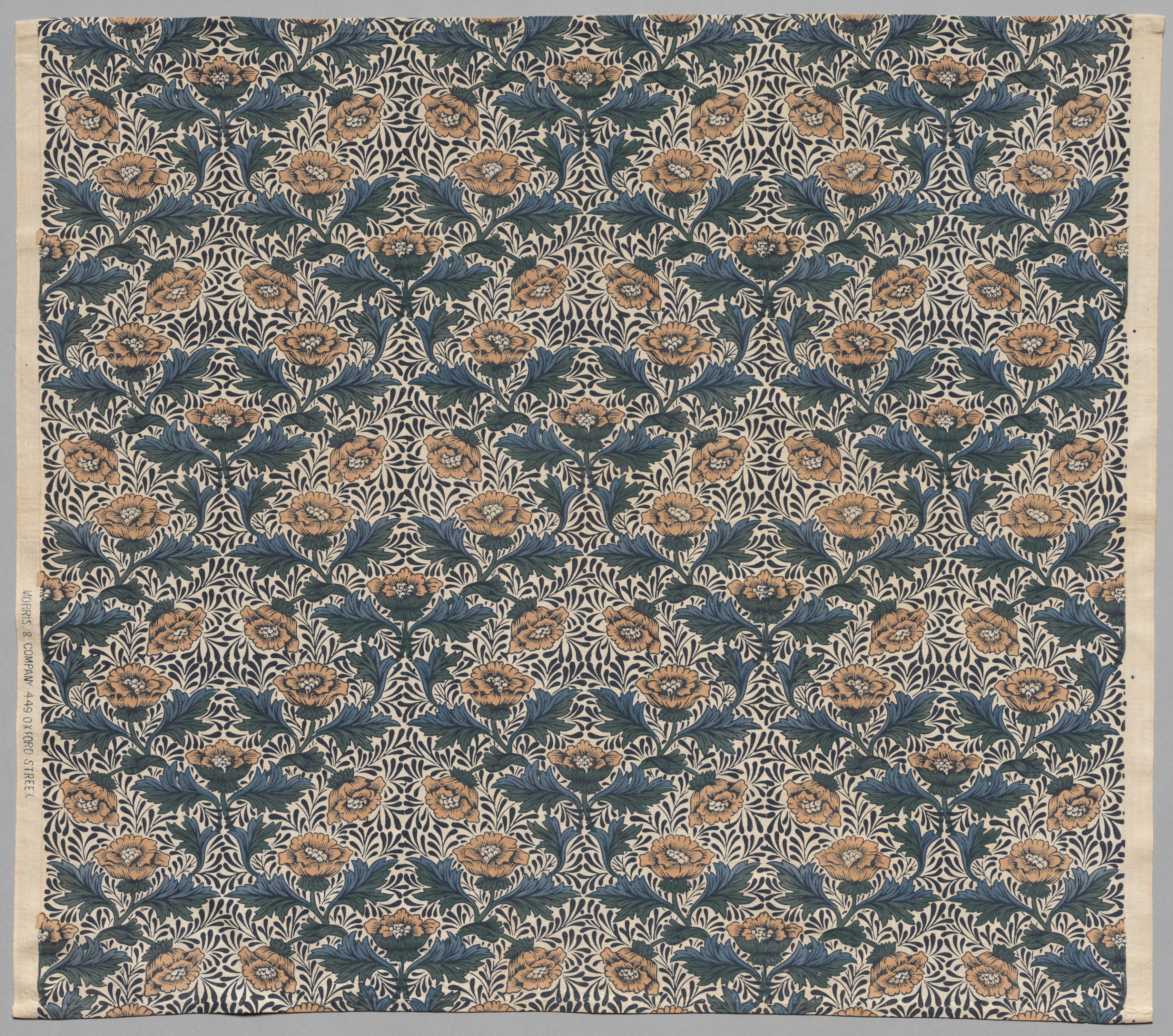
CC0 · Public domain · 1920
Peony
Probably designed for Morris & Co. by Kate Faulkner, sister of Morris’s early partner Charles. The near-square repeat is small and dense, and it is one of the firm’s steadiest sellers for decades.
× px · Unmodified source file
Small archival scan: best for reference and screen use, not large prints.
Open in StudioSource & licensing
- Creator / date
- Kate Faulkner for Morris & Co. (British, 1841–1898) · 1920
- Source credit
- Gift of Mrs. Henry Chisholm. The Cleveland Museum of Art, Open Access.
- Usage notes
- Released by the Cleveland Museum of Art under CC0 1.0. Credit to the museum is encouraged; CC0 does not imply endorsement.
- Original file
- × px · JPG · 0.0 MB
- Source checked
- 2026-11-04 · editorial approval separate
CC0 · Public domain · 1894
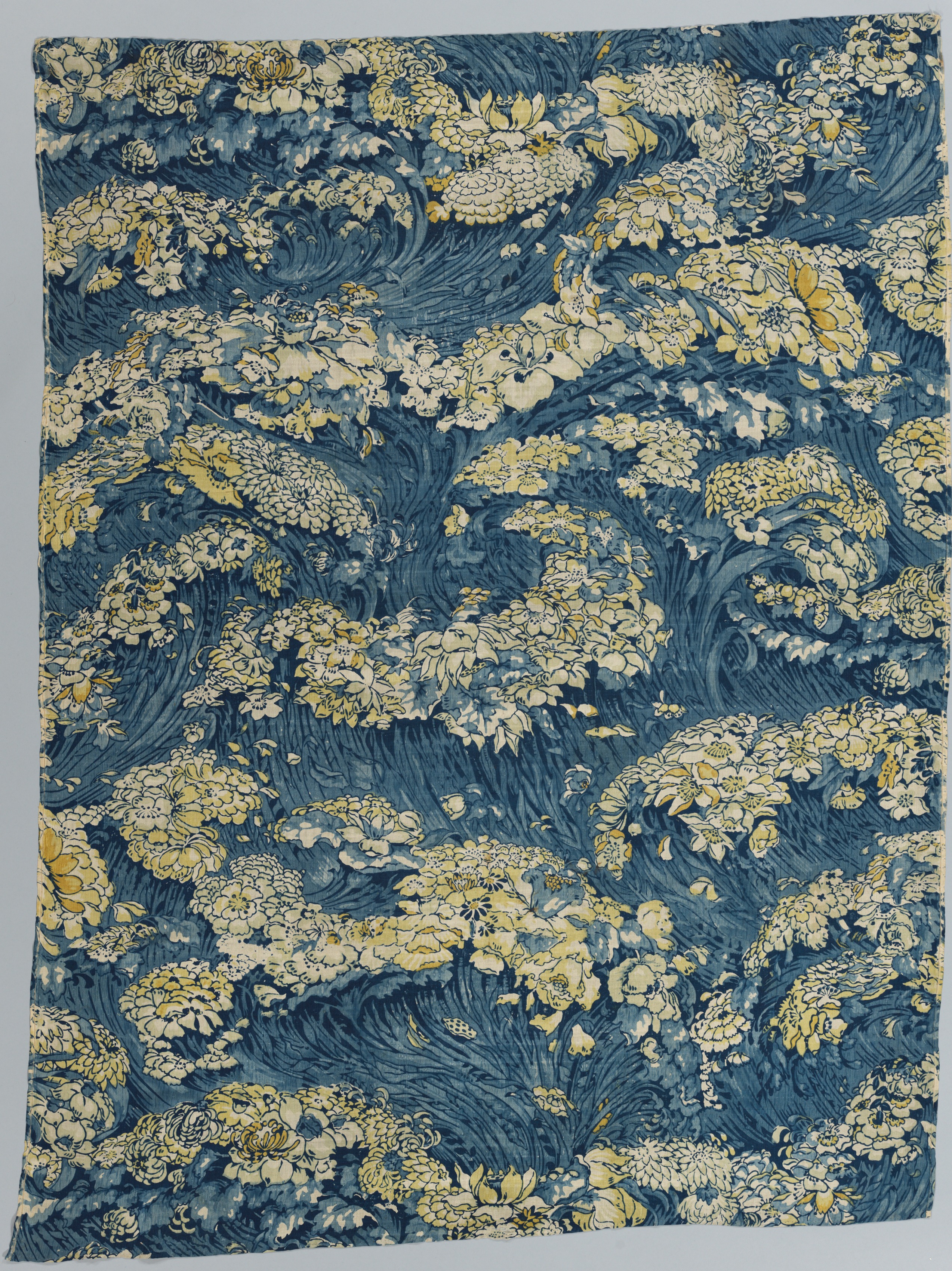
Cloth with Floral Sea Design
A roller-printed silk of 1894, where the machinery is used without apology for flowing, watery movement. The Arts and Crafts objection to the machine did not survive contact with the silk market.
× px · Unmodified source file
Small archival scan: best for reference and screen use, not large prints.
Open in StudioSource & licensing
- Creator / date
- England, maker unknown · 1894
- Source credit
- Gift of Henry Hunt Clark. The Cleveland Museum of Art, Open Access.
- Usage notes
- Released by the Cleveland Museum of Art under CC0 1.0. Credit to the museum is encouraged; CC0 does not imply endorsement.
- Original file
- × px · JPG · 0.0 MB
- Source checked
- 2026-11-04 · editorial approval separate
CC0 · Public domain · 1890
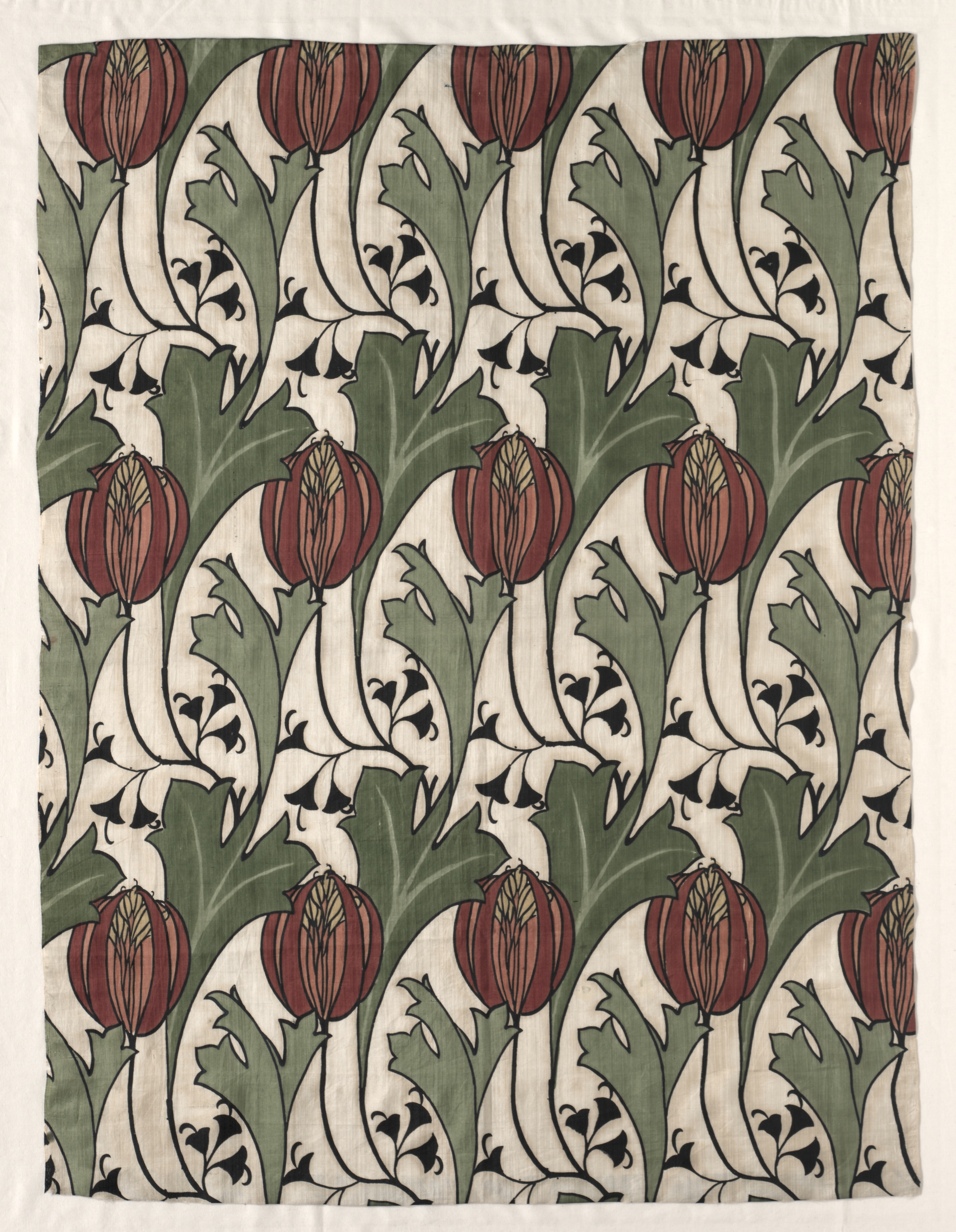
Fragment with Tulip and Flower Design
Roller-printed silk from 1890 with a tulip derived from Morris but flattened further, the ornament simplified for a cheaper cloth.
× px · Unmodified source file
Small archival scan: best for reference and screen use, not large prints.
Open in StudioSource & licensing
- Creator / date
- England, maker unknown · 1890
- Source credit
- Gift of Henry Hunt Clark. The Cleveland Museum of Art, Open Access.
- Usage notes
- Released by the Cleveland Museum of Art under CC0 1.0. Credit to the museum is encouraged; CC0 does not imply endorsement.
- Original file
- × px · JPG · 0.0 MB
- Source checked
- 2026-11-04 · editorial approval separate
CC0 · Public domain · 1890
Fragment with “Petworth” Design
Named for the Petworth design, an intricate repeat printed on silk at the end of the century. The density suggests a design drawn for hand printing and then cut for the roller.
× px · Unmodified source file
Small archival scan: best for reference and screen use, not large prints.
Open in StudioSource & licensing
- Creator / date
- England, maker unknown · 1890
- Source credit
- Gift of Henry Hunt Clark. The Cleveland Museum of Art, Open Access.
- Usage notes
- Released by the Cleveland Museum of Art under CC0 1.0. Credit to the museum is encouraged; CC0 does not imply endorsement.
- Original file
- × px · JPG · 0.0 MB
- Source checked
- 2026-11-04 · editorial approval separate
CC0 · Public domain · late 1800s
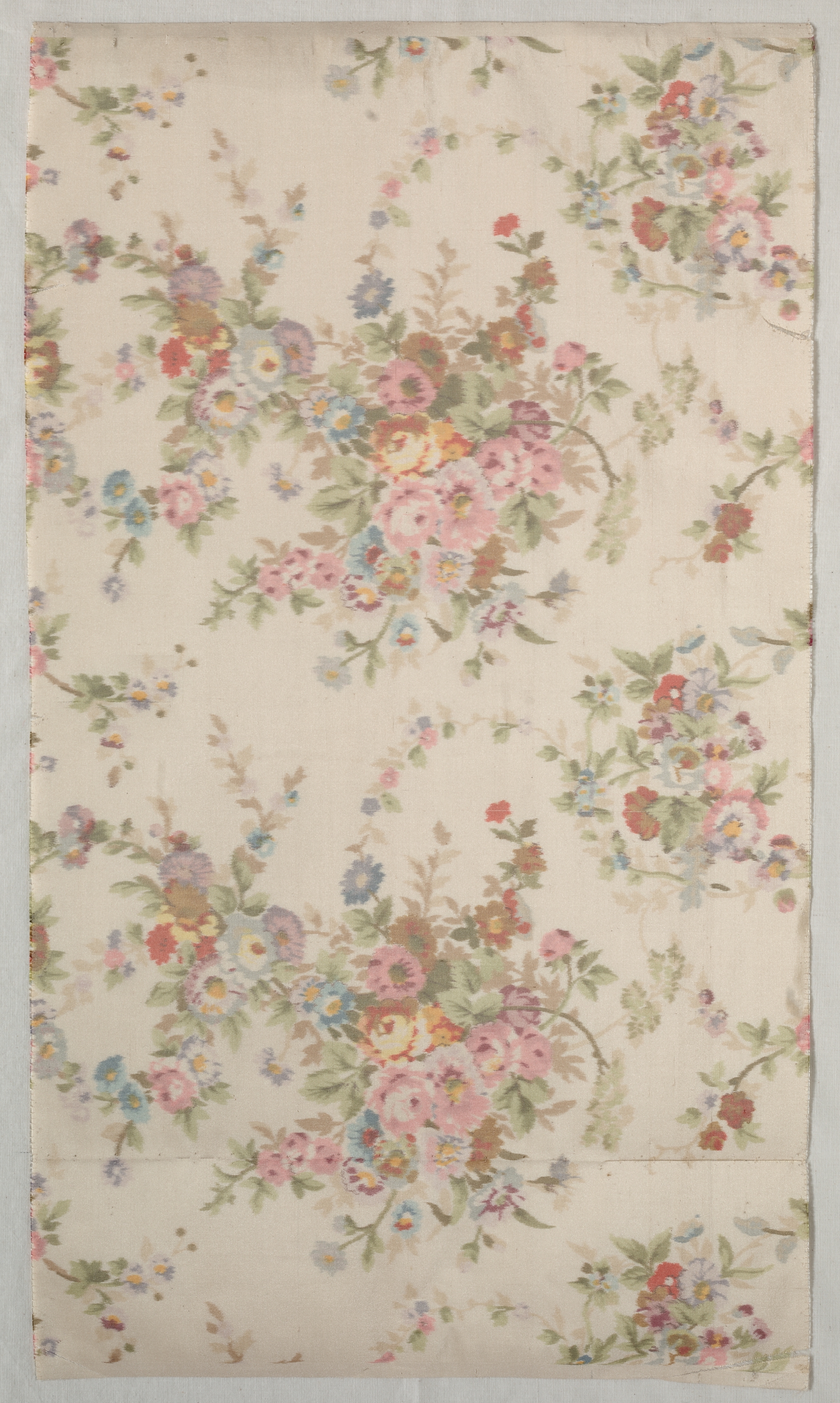
Printed Silk with Flower Design
French roller-printed silk from the last decades of the century, where the drawing is looser and the colour freer than the English work. France kept the painter’s hand in its mechanised prints.
× px · Unmodified source file
Small archival scan: best for reference and screen use, not large prints.
Open in StudioSource & licensing
- Creator / date
- France, maker unknown · late 1800s
- Source credit
- Gift of George W. Bierce. The Cleveland Museum of Art, Open Access.
- Usage notes
- Released by the Cleveland Museum of Art under CC0 1.0. Credit to the museum is encouraged; CC0 does not imply endorsement.
- Original file
- × px · JPG · 0.0 MB
- Source checked
- 2026-11-04 · editorial approval separate
CC0 · Public domain · 1927
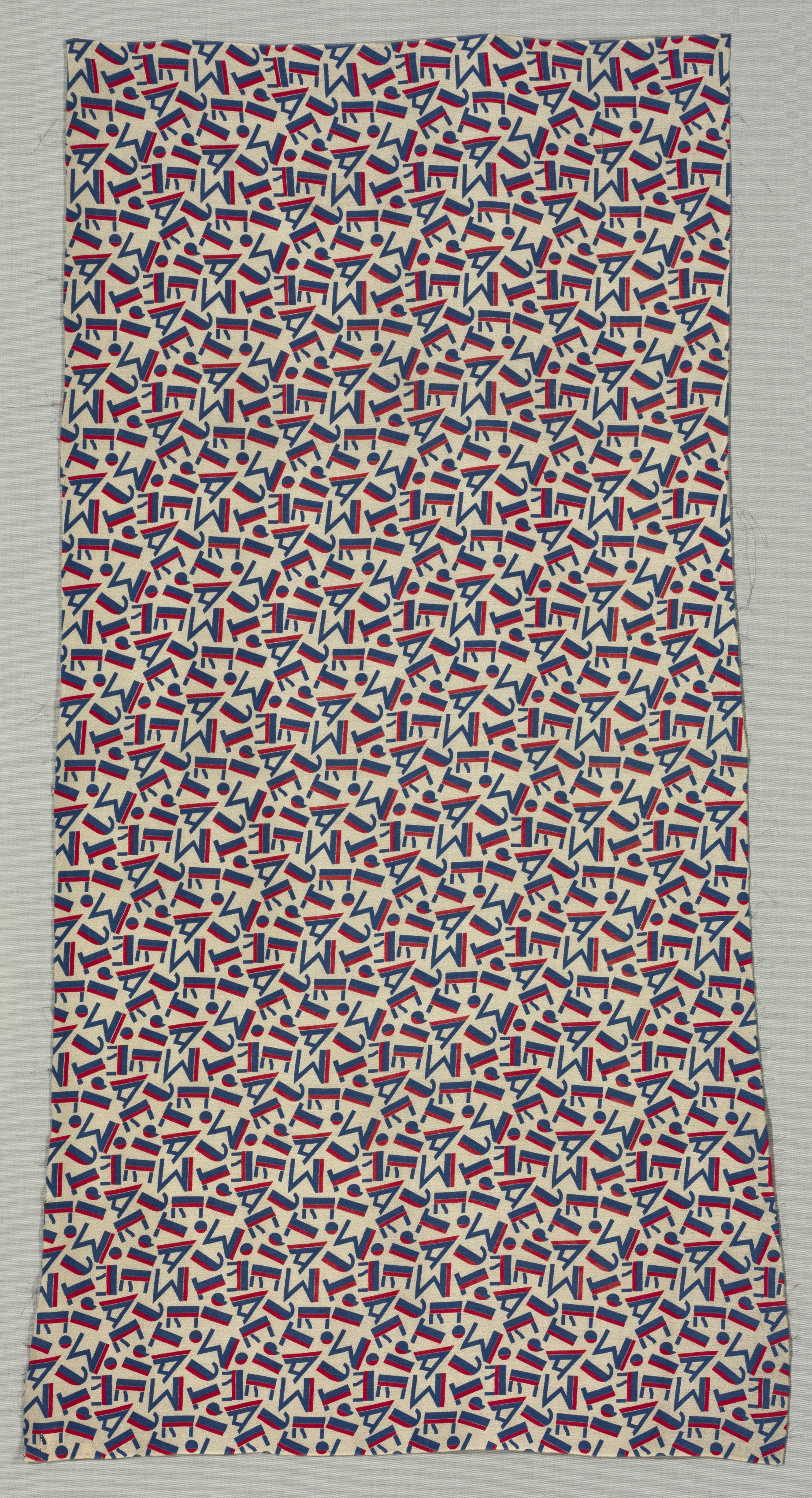
Je T’aime (No. 632)
The words Je T’aime in red and blue on white, drawn as abstract letterforms rather than as a message. Part of Stehli’s series of artist-designed silks, it treats type as pattern, twenty years before mid-century graphic design claimed the idea.
× px · Unmodified source file
Small archival scan: best for reference and screen use, not large prints.
Open in StudioSource & licensing
- Creator / date
- Kneeland (Ruzzie) Green for Stehli Silks Corporation (American) · 1927
- Source credit
- Gift of the Stehli Silks Corporation. The Cleveland Museum of Art, Open Access.
- Usage notes
- Released by the Cleveland Museum of Art under CC0 1.0. Credit to the museum is encouraged; CC0 does not imply endorsement.
- Original file
- × px · JPG · 0.0 MB
- Source checked
- 2026-11-04 · editorial approval separate
CC0 · Public domain · 1927
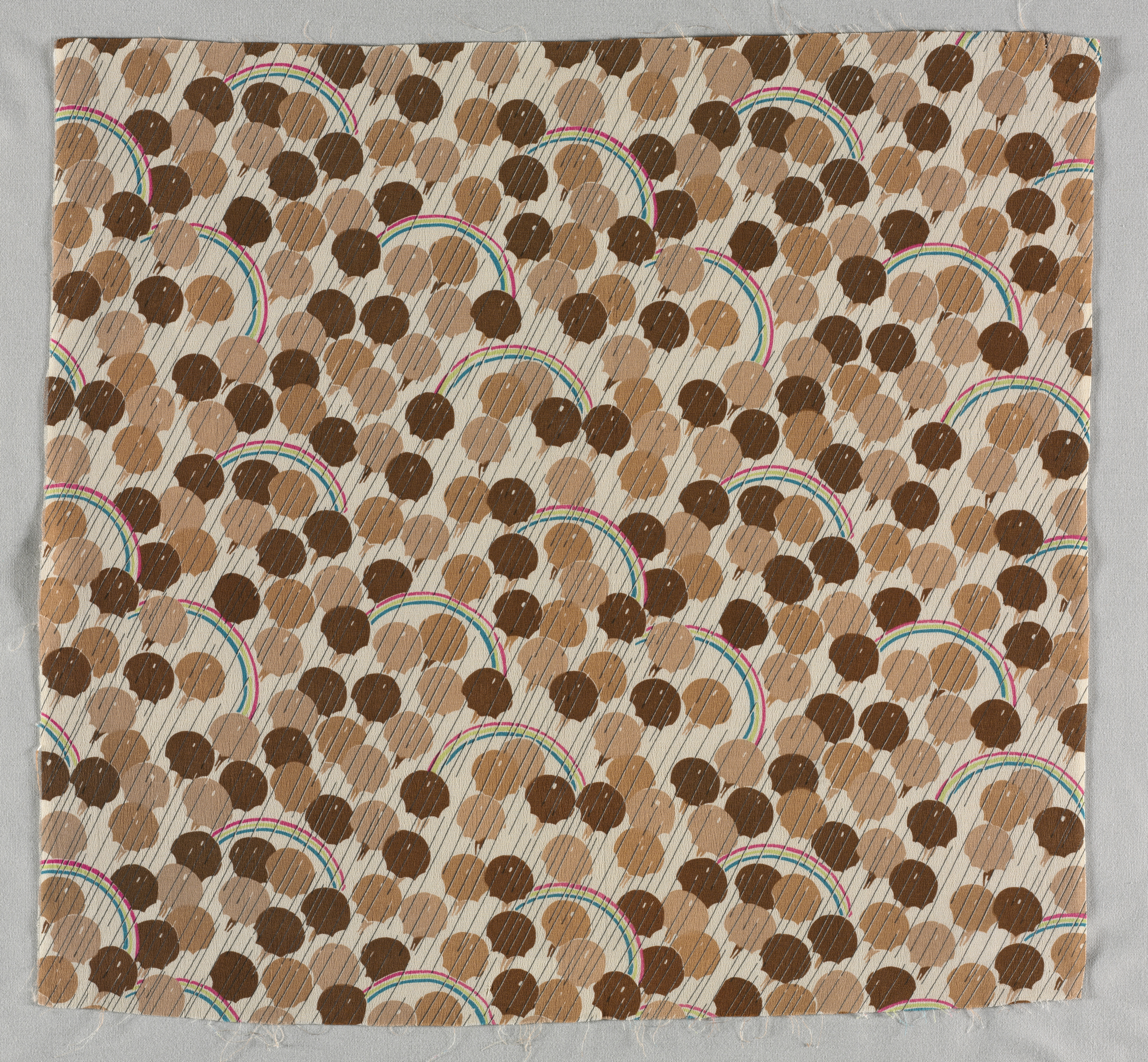
April (No. 706)
Clayton Knight’s April, printed by roller on silk in 1927. A narrative illustration taken straight onto cloth, made possible by the same process that once printed herons and pheasants.
× px · Unmodified source file
Small archival scan: best for reference and screen use, not large prints.
Open in StudioSource & licensing
- Creator / date
- Clayton Knight for Stehli Silks Corporation (American) · 1927
- Source credit
- Gift of the Stehli Silks Corporation. The Cleveland Museum of Art, Open Access.
- Usage notes
- Released by the Cleveland Museum of Art under CC0 1.0. Credit to the museum is encouraged; CC0 does not imply endorsement.
- Original file
- × px · JPG · 0.0 MB
- Source checked
- 2026-11-04 · editorial approval separate
CC0 · Public domain · before 1959
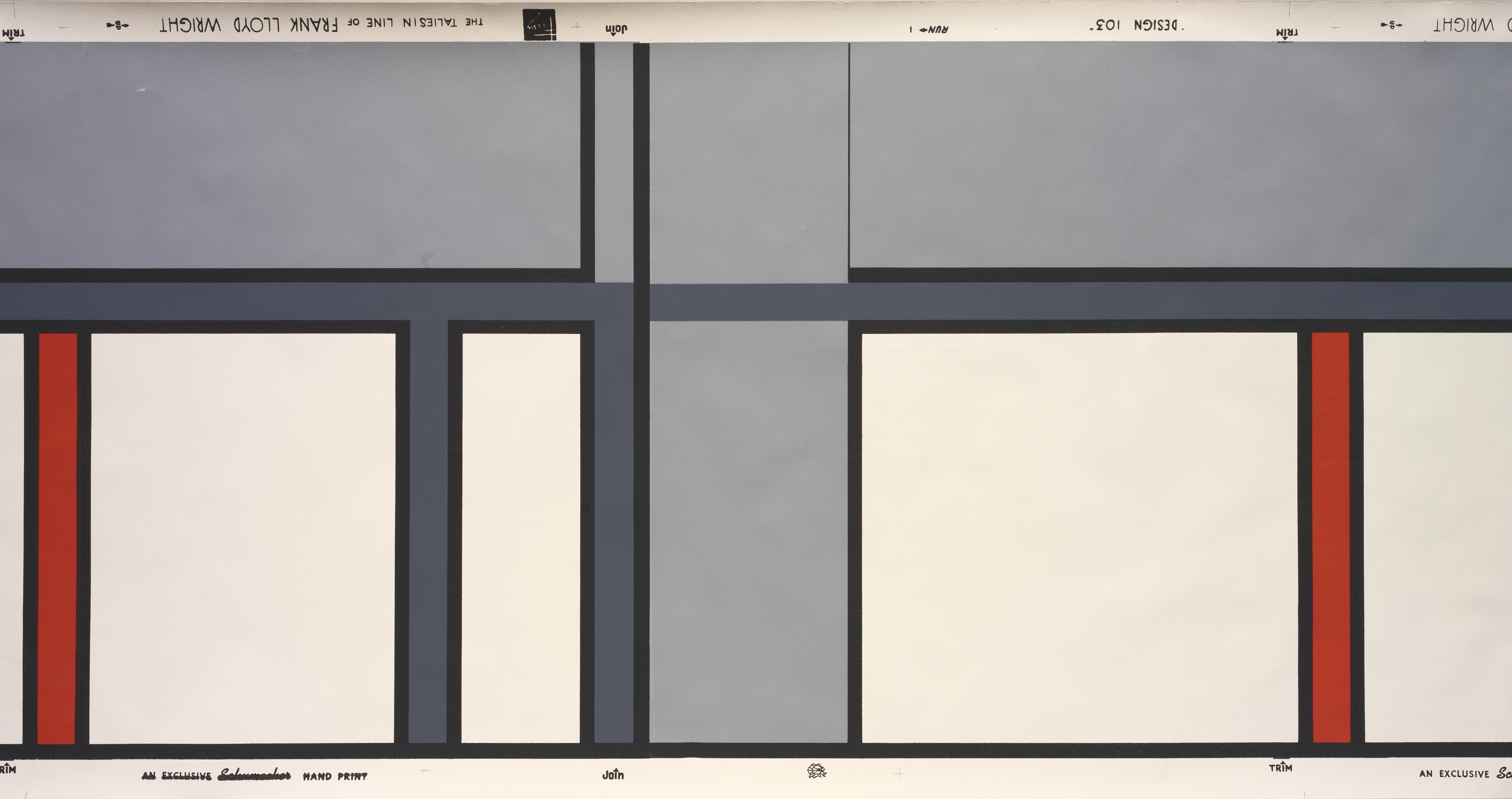
Design 103
Frank Lloyd Wright’s geometric wallpaper for Schumacher, silkscreened on paper in the 1950s. Straight lines and flat colour, the opposite of the chintz tradition, from a designer who refused ornament as illustration.
× px · Unmodified source file
Small archival scan: best for reference and screen use, not large prints.
Open in StudioSource & licensing
- Creator / date
- Frank Lloyd Wright for F. Schumacher and Co. (American) · before 1959
- Source credit
- Gift of F. Schumacher and Co.. The Cleveland Museum of Art, Open Access.
- Usage notes
- Released by the Cleveland Museum of Art under CC0 1.0. Credit to the museum is encouraged; CC0 does not imply endorsement.
- Original file
- × px · JPG · 0.0 MB
- Source checked
- 2026-11-04 · editorial approval separate
CC0 · Public domain · before 1959
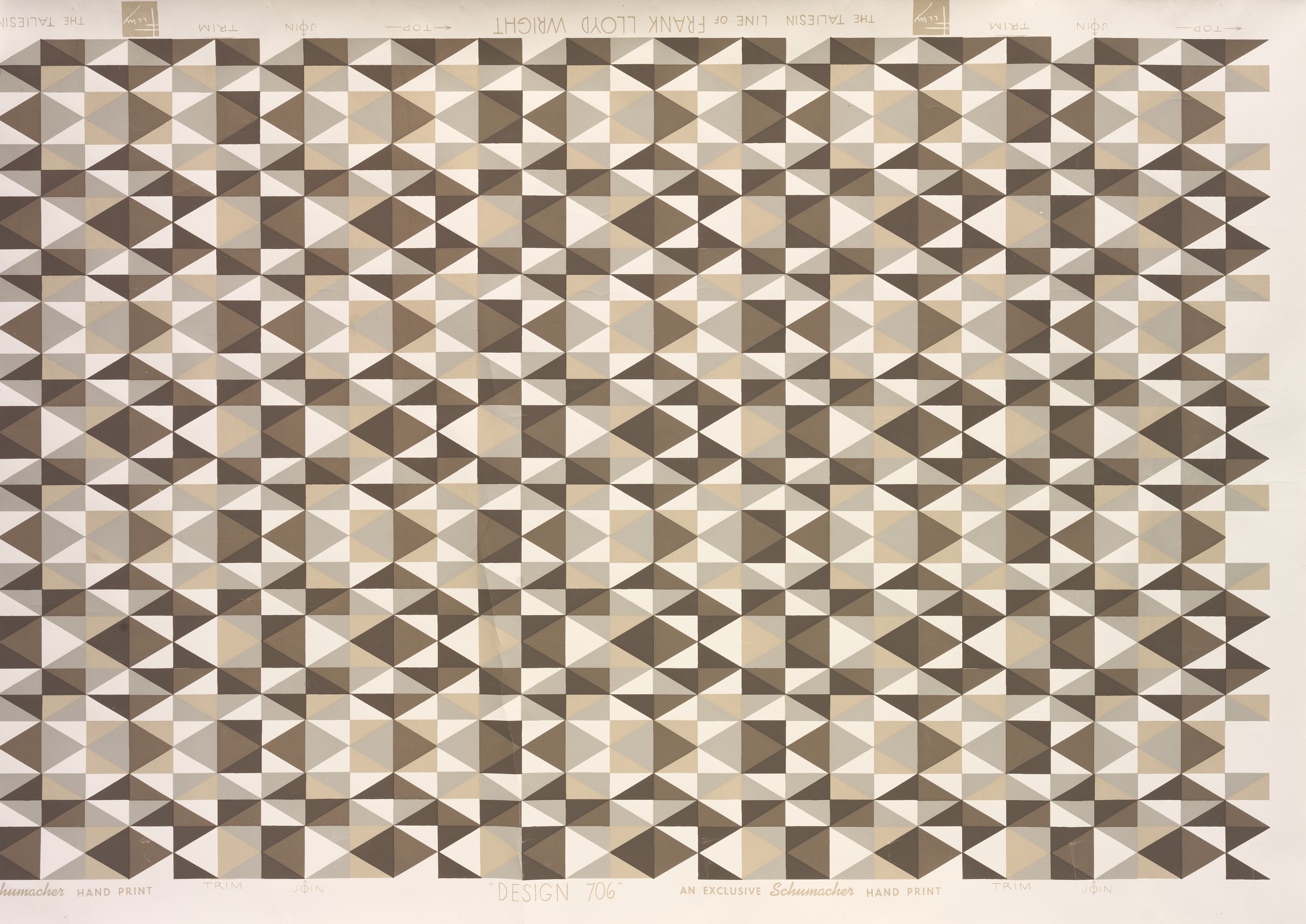
Design 706
The same Wright collection as Design 705, with its units rotated into a different rhythm. Silkscreen on wallpaper lets the repeat be printed with the precision of a drawing.
× px · Unmodified source file
Small archival scan: best for reference and screen use, not large prints.
Open in StudioSource & licensing
- Creator / date
- Frank Lloyd Wright for F. Schumacher and Co. (American) · before 1959
- Source credit
- Gift of F. Schumacher and Co.. The Cleveland Museum of Art, Open Access.
- Usage notes
- Released by the Cleveland Museum of Art under CC0 1.0. Credit to the museum is encouraged; CC0 does not imply endorsement.
- Original file
- × px · JPG · 0.0 MB
- Source checked
- 2026-11-04 · editorial approval separate
CC0 · Public domain · before 1959
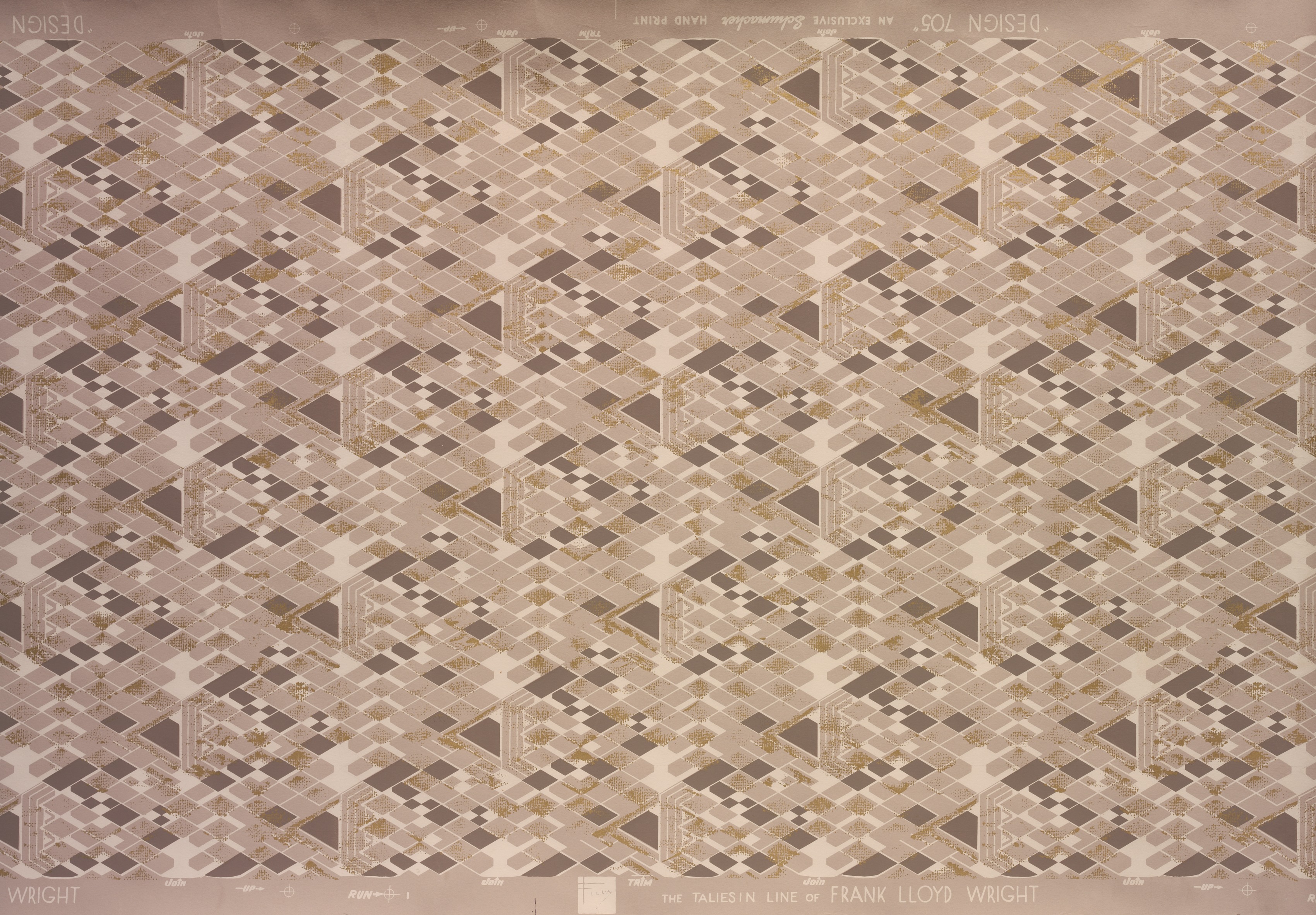
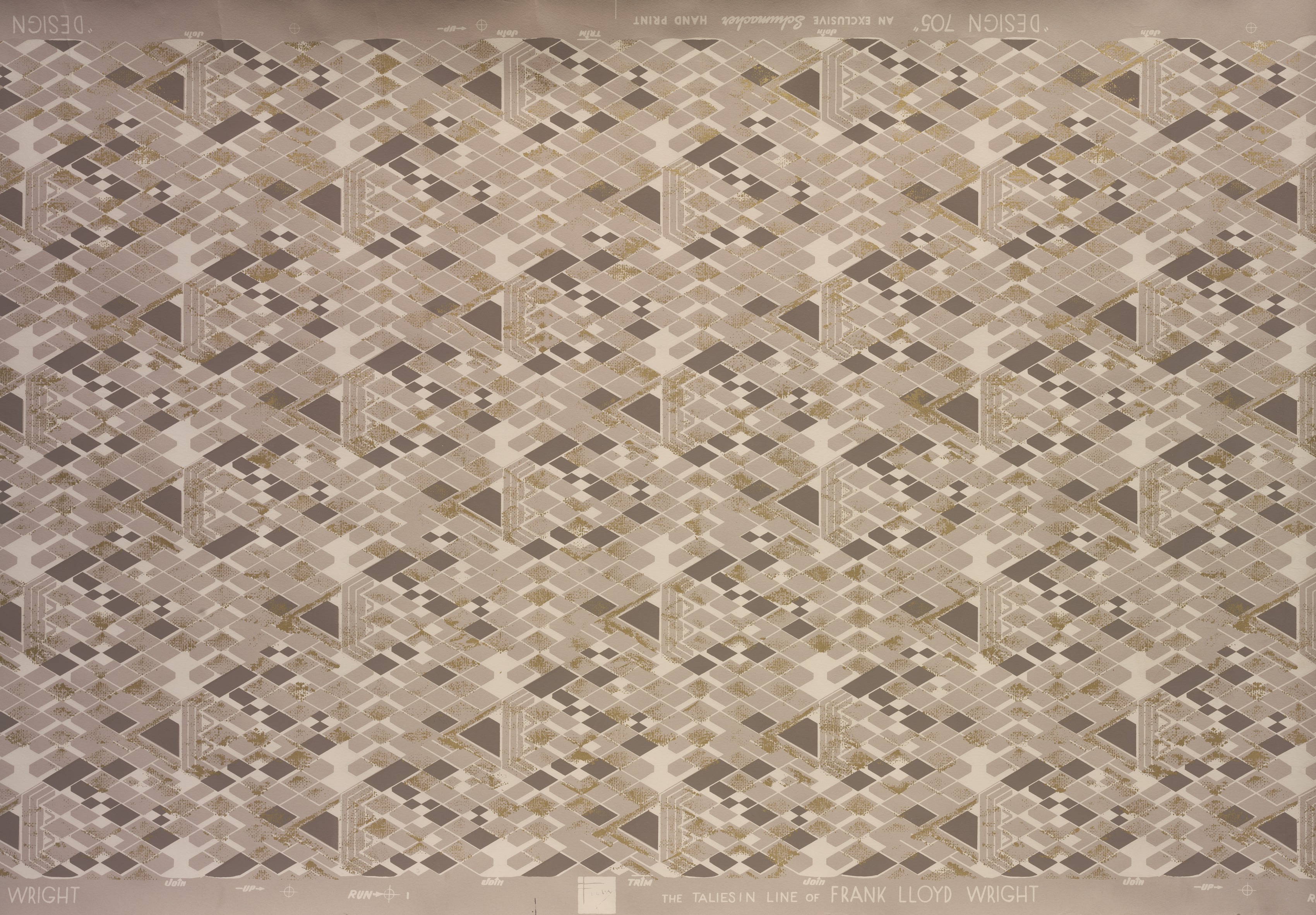
Design 705
Wright’s interlocking geometry, scaled for a wall rather than a window. The wallpaper was part of his attempt to control an interior down to its surface pattern.
× px · Unmodified source file
Small archival scan: best for reference and screen use, not large prints.
Open in StudioSource & licensing
- Creator / date
- Frank Lloyd Wright for F. Schumacher and Co. (American) · before 1959
- Source credit
- The Harold T. Clark Educational Extension Fund. The Cleveland Museum of Art, Open Access.
- Usage notes
- Released by the Cleveland Museum of Art under CC0 1.0. Credit to the museum is encouraged; CC0 does not imply endorsement.
- Original file
- × px · JPG · 0.0 MB
- Source checked
- 2026-11-04 · editorial approval separate
CC0 · Public domain · before 1959
Design 705
A second impression of Design 705, catalogued separately by the museum. Colour and registration differ slightly, which is how a screen-printed run behaves across a length.
× px · Unmodified source file
Small archival scan: best for reference and screen use, not large prints.
Open in StudioSource & licensing
- Creator / date
- Frank Lloyd Wright for F. Schumacher and Co. (American) · before 1959
- Source credit
- Gift of F. Schumacher and Co.. The Cleveland Museum of Art, Open Access.
- Usage notes
- Released by the Cleveland Museum of Art under CC0 1.0. Credit to the museum is encouraged; CC0 does not imply endorsement.
- Original file
- × px · JPG · 0.0 MB
- Source checked
- 2026-11-04 · editorial approval separate
Public-domain status is reported by the linked source and may vary by jurisdiction. Check the source record for your intended use. No exclusive rights or Visual Bounty marketplace license are offered for these images.