← Open CollectionsPublic-domain source library
Coptic Egypt: Late Antique Textile Fragments
Between the third and the ninth century, Egyptian workshops wove medallions, bands and hangings that carried the whole visual world of late antiquity: Dionysus and his followers, sea nymphs, hunters, parrots, biblical scenes, and the protective knot. Most of what survives are fragments cut from tunics and curtains, which is why this collection is arranged as pieces: a sleeve, a hem, a shoulder band, a single square.
Original means the unmodified digital file supplied by the linked archive, not an upscaled or reconstructed image. Sign in for free downloads. Studio uses a working preview up to 2048 px.
CC0 · Public domain · 500s
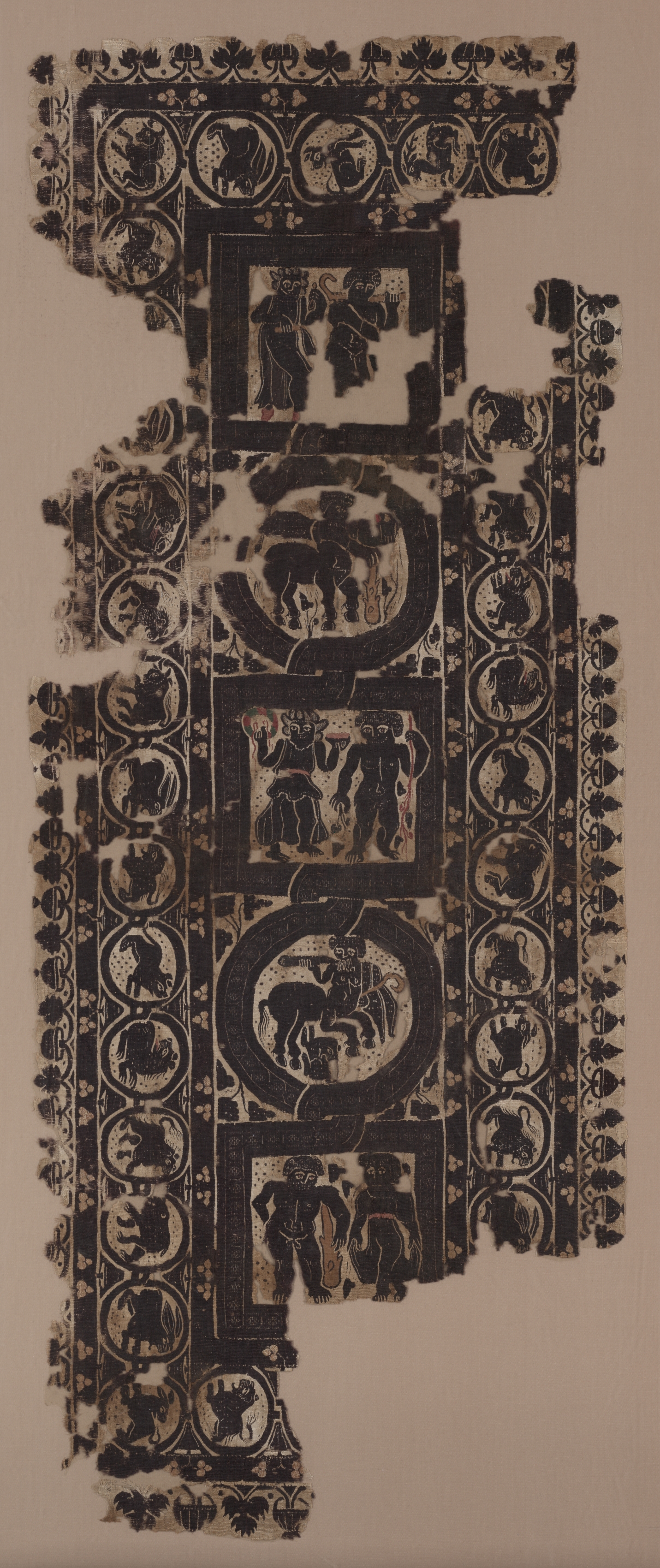
Curtain Panel with Scenes of Merrymaking
A purple-dyed curtain panel of drinking, music and feasting, meant to signal wealth in a room. It belonged to a wide curtain of matching panels, of which very few survive.
× px · Unmodified source file
Small archival scan: best for reference and screen use, not large prints.
Open in StudioSource & licensing
- Creator / date
- Egypt, Byzantine period, maker unknown · 500s
- Source credit
- The Cleveland Museum of Art, 2000.5. Open Access.
- Usage notes
- Released by the Cleveland Museum of Art under CC0 1.0. Credit to the museum is encouraged; CC0 does not imply endorsement.
- Original file
- × px · JPG · 0.0 MB
- Source checked
- 2026-11-04 · editorial approval separate
CC0 · Public domain · c. 500
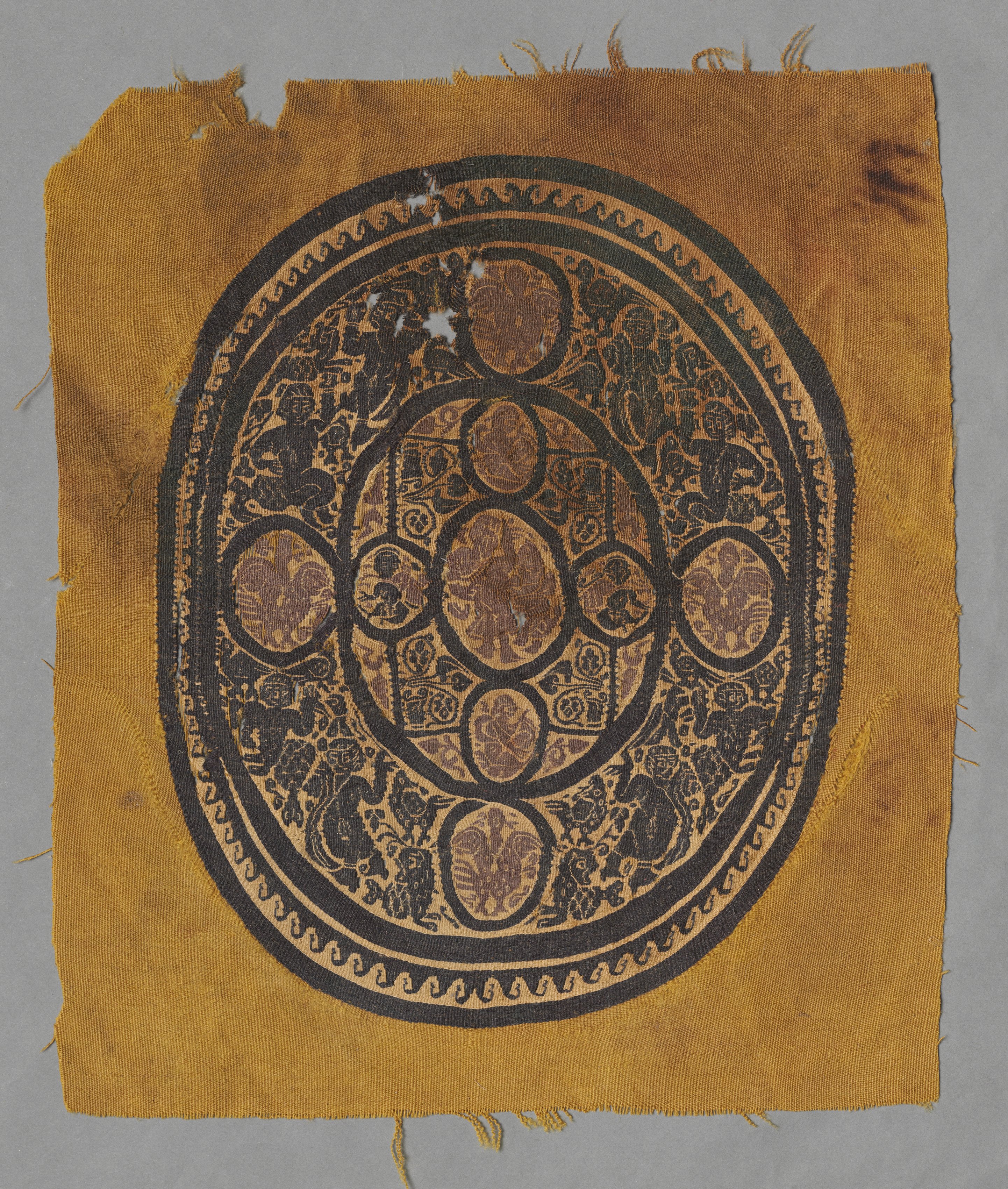
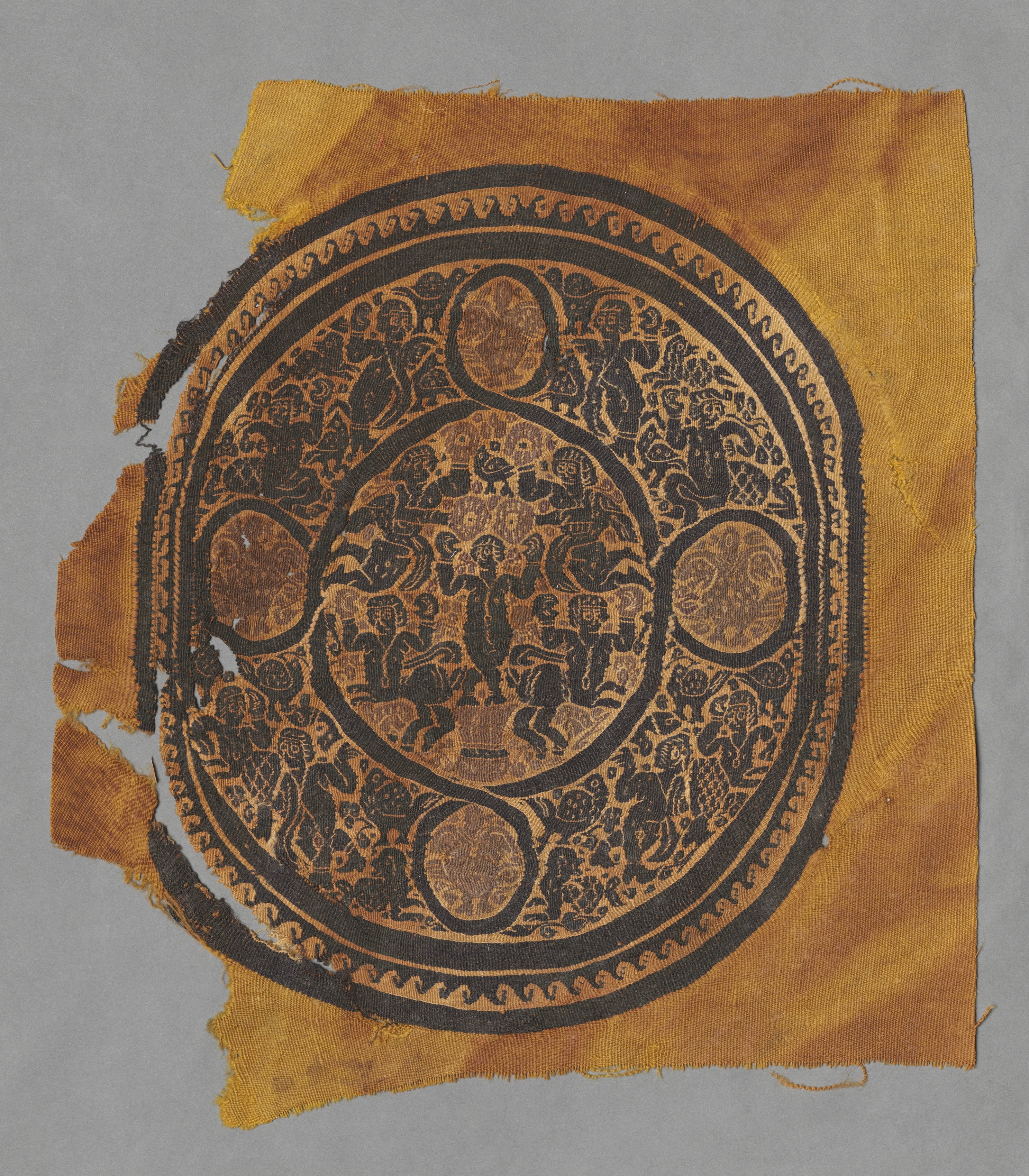
Tunic Fragment with Segmentum
A woven medallion of the kind sewn into the shoulders or lower half of a Coptic tunic. The ornament is tapestry-woven into the ground, not applied on top of it.
× px · Unmodified source file
Small archival scan: best for reference and screen use, not large prints.
Open in StudioSource & licensing
- Creator / date
- Egypt, Coptic-style weavers, maker unknown · c. 500
- Source credit
- The Cleveland Museum of Art, 1982.270. Open Access.
- Usage notes
- Released by the Cleveland Museum of Art under CC0 1.0. Credit to the museum is encouraged; CC0 does not imply endorsement.
- Original file
- × px · JPG · 0.0 MB
- Source checked
- 2026-11-04 · editorial approval separate
CC0 · Public domain · 300s CE
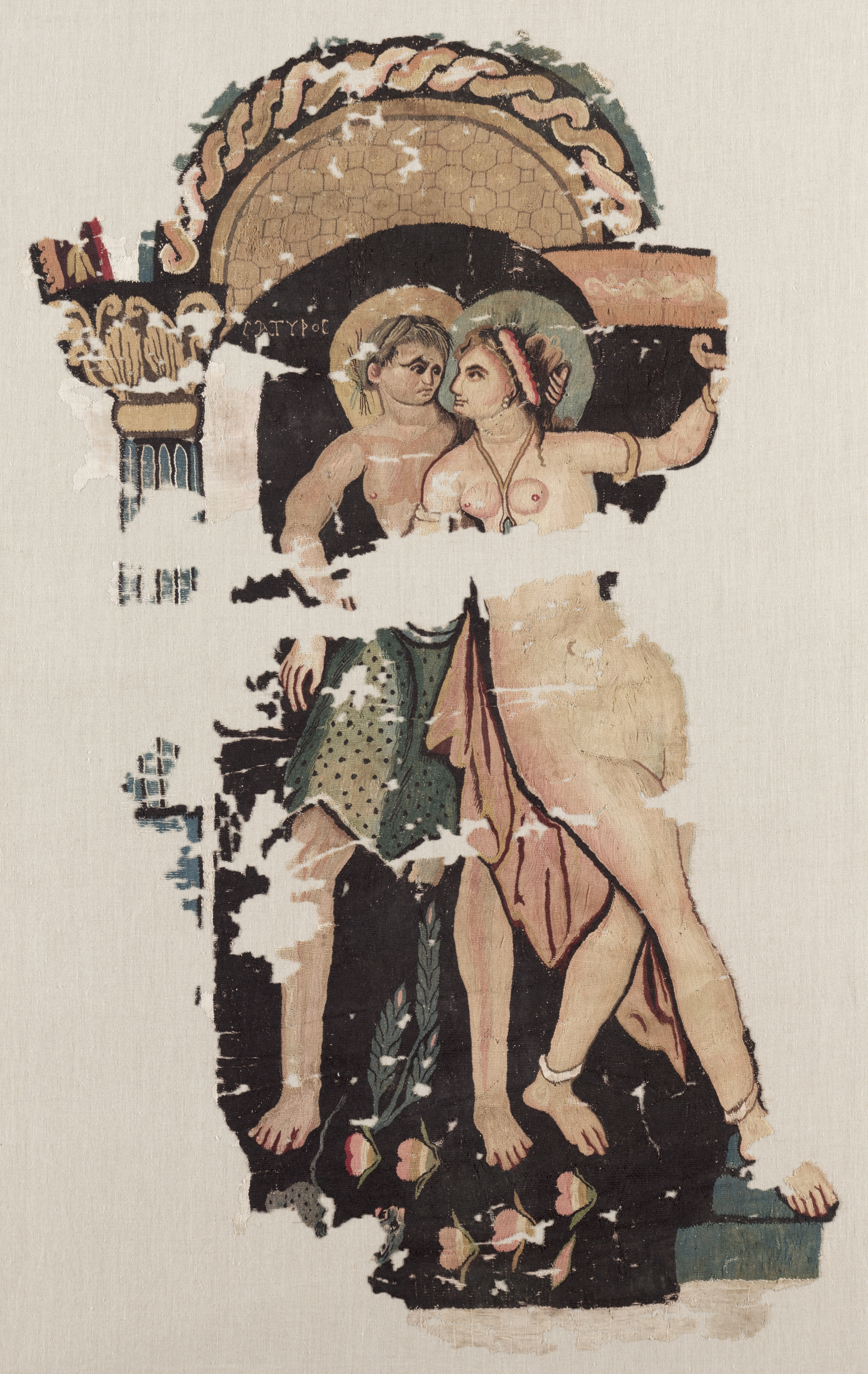
Fragment with Satyr and Maenad
Followers of Dionysus, a maenad dancing in front of columns and arches. Classical mythology survived on Egyptian cloth long after it had left official art.
× px · Unmodified source file
Small archival scan: best for reference and screen use, not large prints.
Open in StudioSource & licensing
- Creator / date
- Byzantine Empire (Egypt), maker unknown · 300s CE
- Source credit
- The Cleveland Museum of Art, 1975.6. Open Access.
- Usage notes
- Released by the Cleveland Museum of Art under CC0 1.0. Credit to the museum is encouraged; CC0 does not imply endorsement.
- Original file
- × px · JPG · 0.0 MB
- Source checked
- 2026-11-04 · editorial approval separate
CC0 · Public domain · late 300s–400s CE
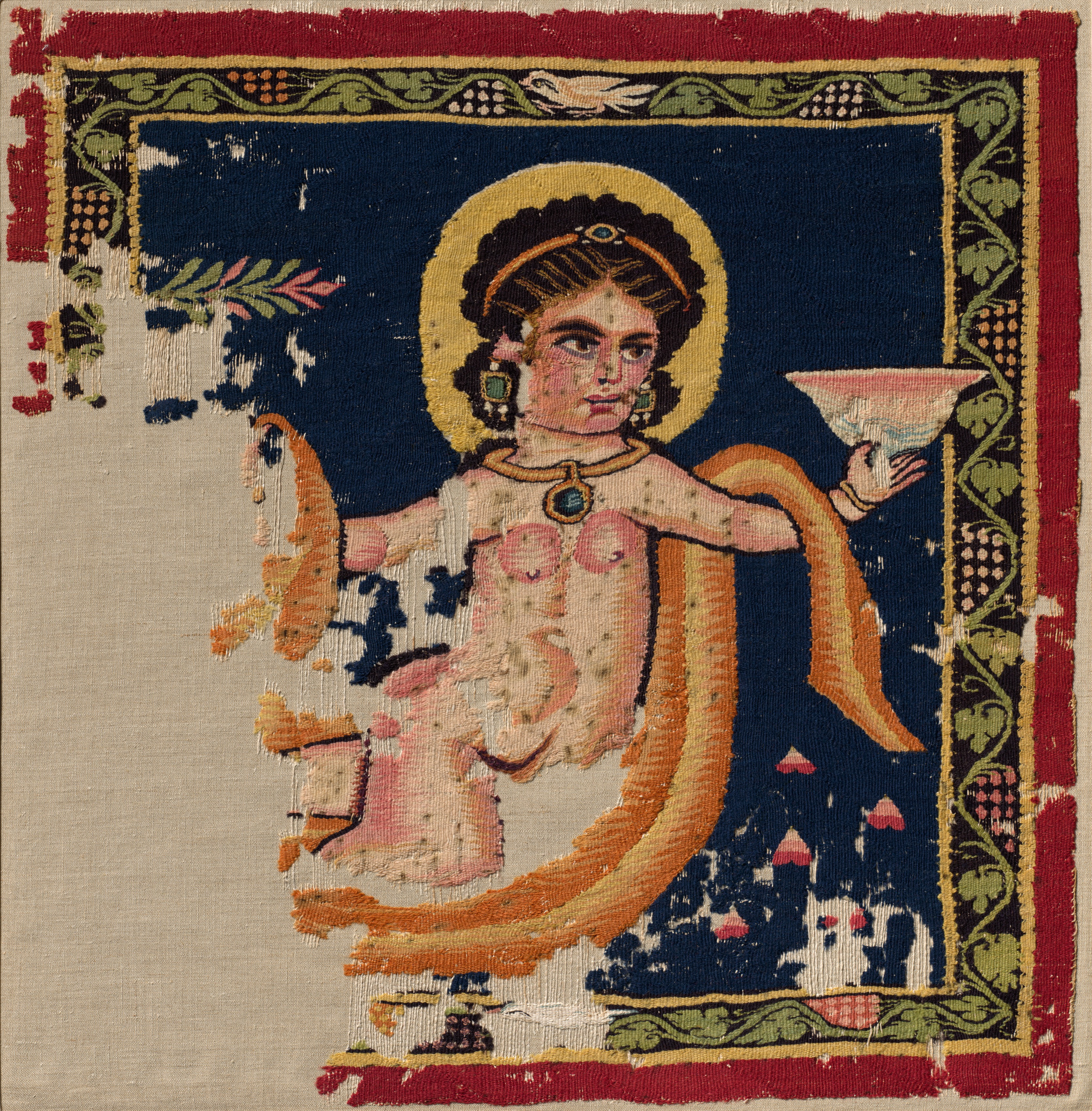
Nereid (Sea-Nymph) from a Hanging
A sea-nymph framed by vines and birds, one panel of what was probably a large tapestry hanging. The colour range and the fineness of the weaving are unusually ambitious for the period.
× px · Unmodified source file
Small archival scan: best for reference and screen use, not large prints.
Open in StudioSource & licensing
- Creator / date
- Byzantine Empire (Egypt), maker unknown · late 300s–400s CE
- Source credit
- The Cleveland Museum of Art, 1953.18. Open Access.
- Usage notes
- Released by the Cleveland Museum of Art under CC0 1.0. Credit to the museum is encouraged; CC0 does not imply endorsement.
- Original file
- × px · JPG · 0.0 MB
- Source checked
- 2026-11-04 · editorial approval separate
CC0 · Public domain · 500s–600s
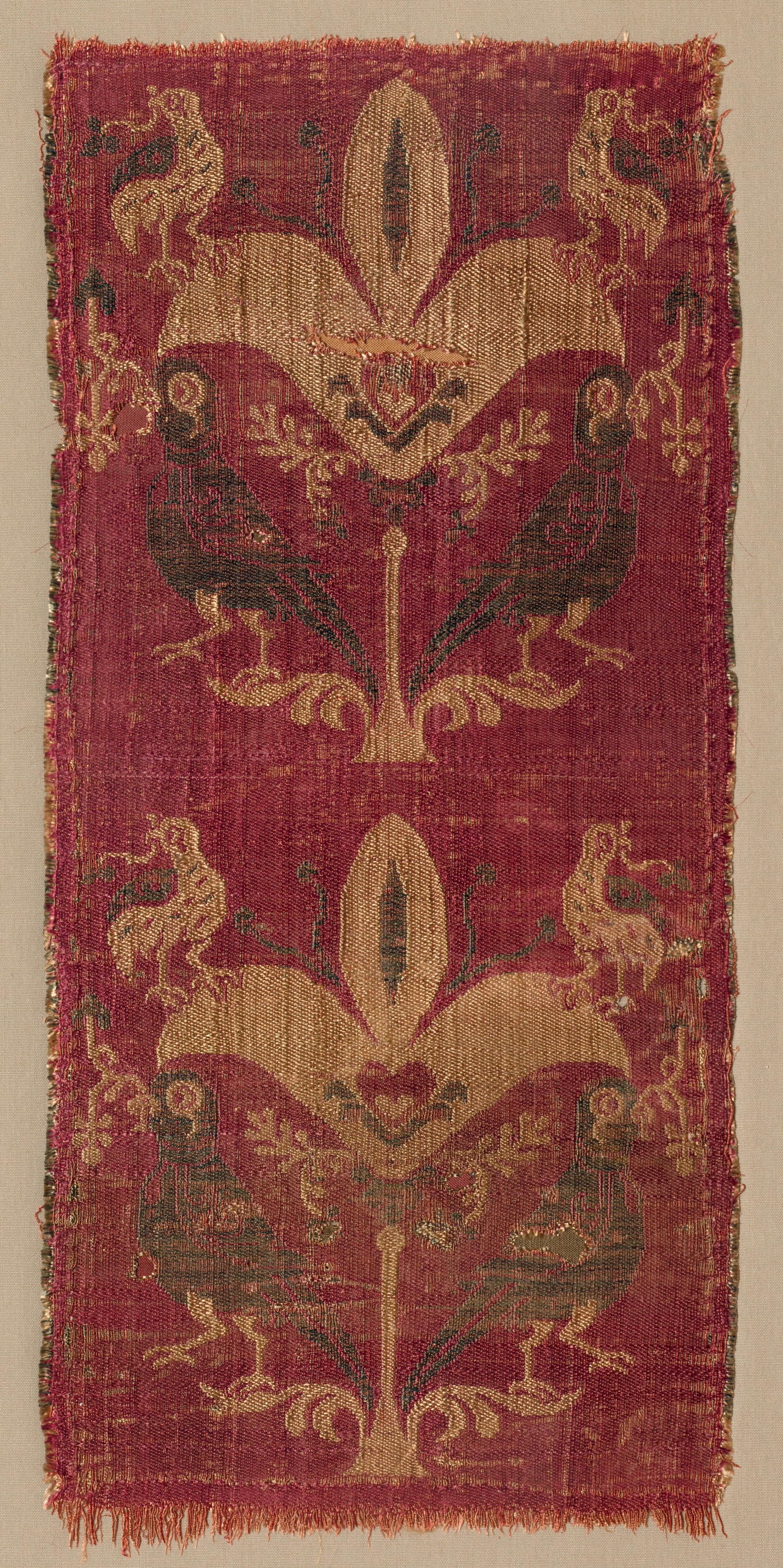
Palmettes and Birds from a Tunic or Curtain
Back-to-back green parrots with branches in their beaks, and speckled birds perched on a long-stemmed palmette. Symmetrical, repeatable, and built to be cut apart and reset into garments.
× px · Unmodified source file
Small archival scan: best for reference and screen use, not large prints.
Open in StudioSource & licensing
- Creator / date
- Egypt or Syria, Byzantine or Islamic period, maker unknown · 500s–600s
- Source credit
- The Cleveland Museum of Art, 1951.535. Open Access.
- Usage notes
- Released by the Cleveland Museum of Art under CC0 1.0. Credit to the museum is encouraged; CC0 does not imply endorsement.
- Original file
- × px · JPG · 0.0 MB
- Source checked
- 2026-11-04 · editorial approval separate
CC0 · Public domain · 400s–600s CE
Fragment of Round Segmentum
A second medallion, showing the same design scheme as its companion piece but with a different internal rhythm. Coptic workshops produced these in quantity, to a formula with room for variation.
× px · Unmodified source file
Small archival scan: best for reference and screen use, not large prints.
Open in StudioSource & licensing
- Creator / date
- Egypt, Coptic-style weavers, maker unknown · 400s–600s CE
- Source credit
- The Cleveland Museum of Art, 1982.271. Open Access.
- Usage notes
- Released by the Cleveland Museum of Art under CC0 1.0. Credit to the museum is encouraged; CC0 does not imply endorsement.
- Original file
- × px · JPG · 0.0 MB
- Source checked
- 2026-11-04 · editorial approval separate
CC0 · Public domain · 500s
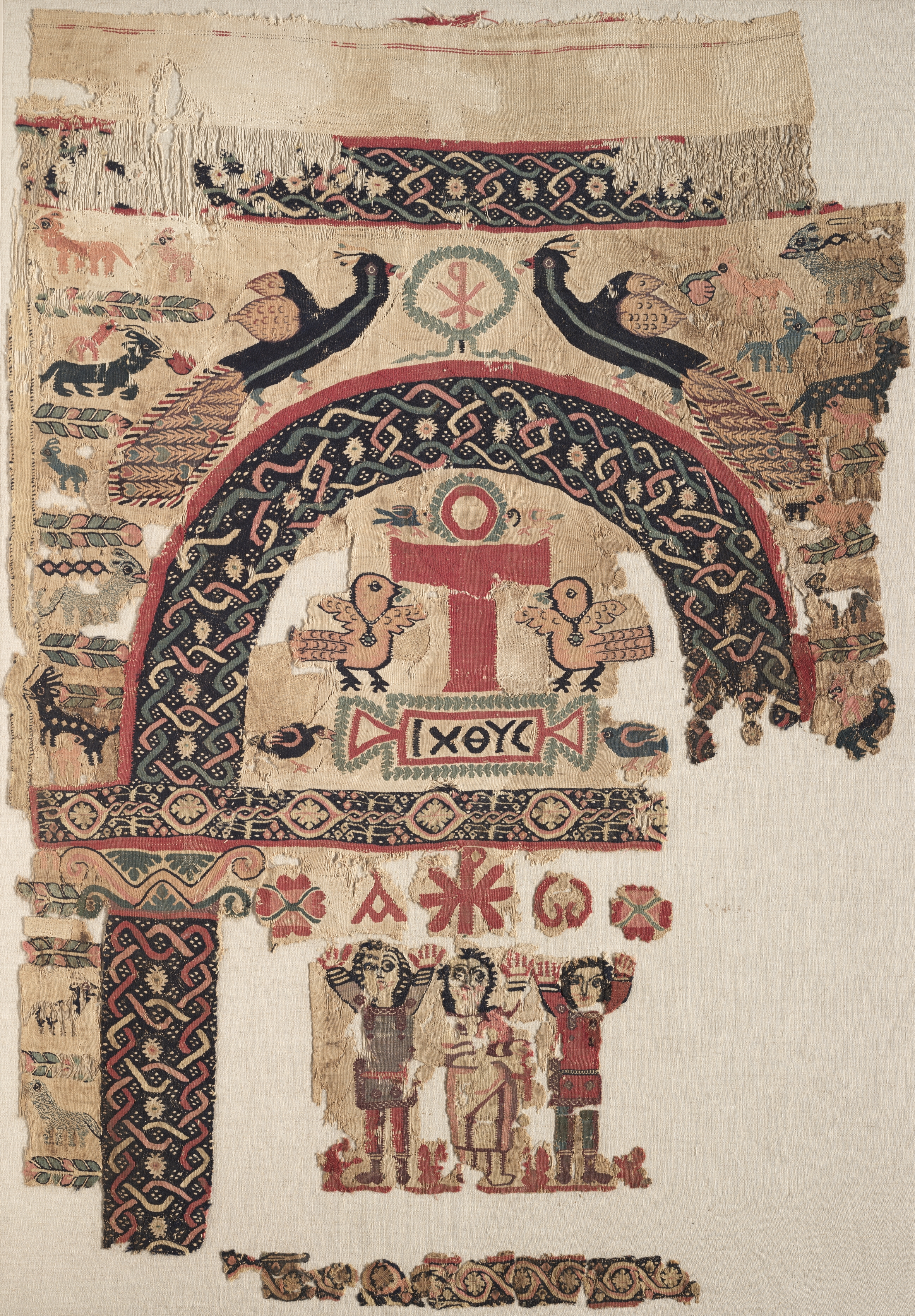
Hanging with Christian Images
Three standing men beneath an arch, possibly the three youths of the furnace, on a hanging for a church or a Christian home. Figural hangings of this size are rare survivals.
× px · Unmodified source file
Small archival scan: best for reference and screen use, not large prints.
Open in StudioSource & licensing
- Creator / date
- Egypt, Byzantine period, maker unknown · 500s
- Source credit
- The Cleveland Museum of Art, 1982.73. Open Access.
- Usage notes
- Released by the Cleveland Museum of Art under CC0 1.0. Credit to the museum is encouraged; CC0 does not imply endorsement.
- Original file
- × px · JPG · 0.0 MB
- Source checked
- 2026-11-04 · editorial approval separate
CC0 · Public domain · 500–550
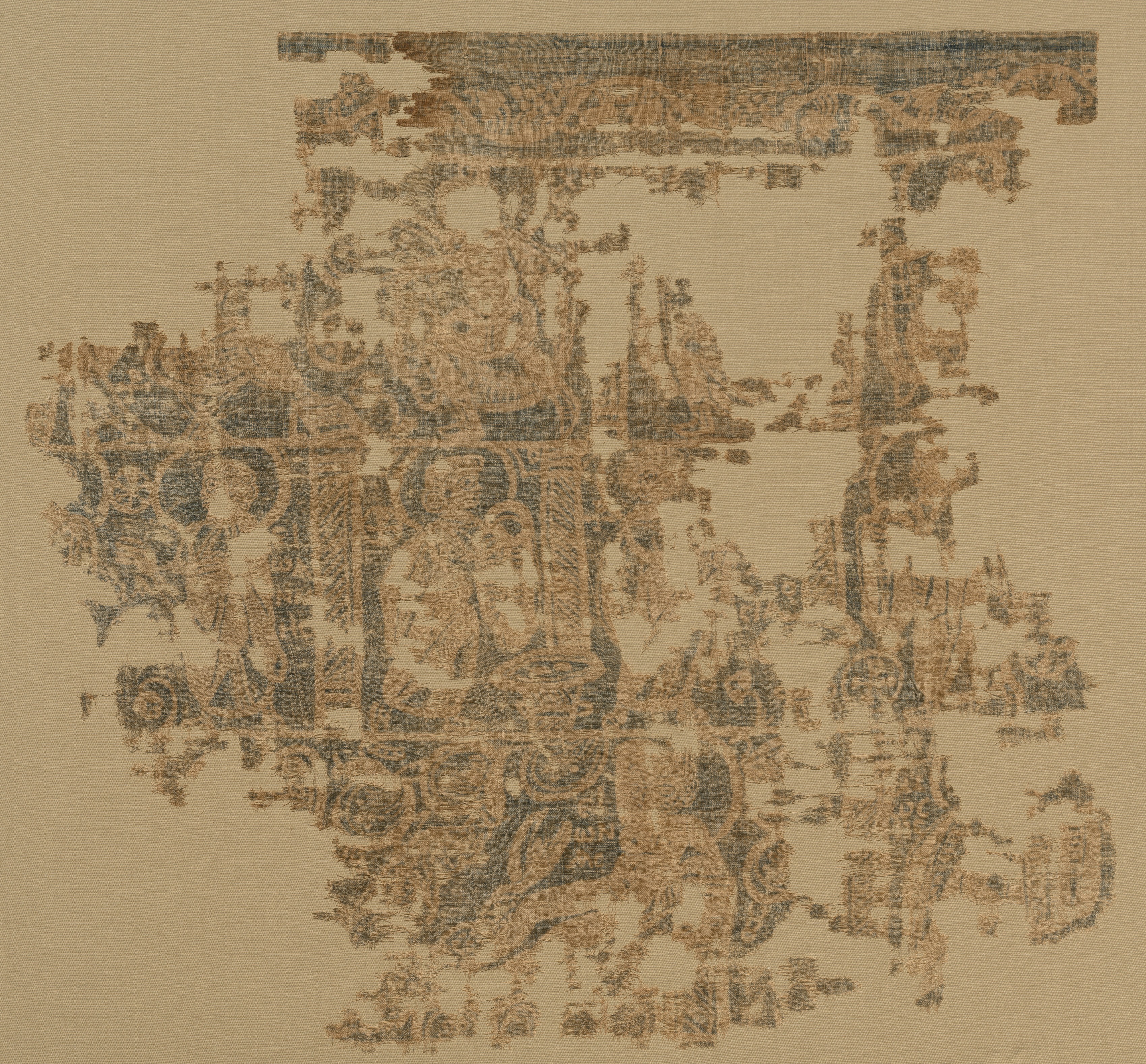
Resist-Dyed Hanging with Biblical Scenes
A linen hanging resist-dyed with biblical scenes, the Virgin and Child among them. Resist dyeing allows a picture to be printed into cloth by blocking the dye, rather than weaving it in.
× px · Unmodified source file
Small archival scan: best for reference and screen use, not large prints.
Open in StudioSource & licensing
- Creator / date
- Egypt, Byzantine period, maker unknown · 500–550
- Source credit
- The Cleveland Museum of Art, 1951.400. Open Access.
- Usage notes
- Released by the Cleveland Museum of Art under CC0 1.0. Credit to the museum is encouraged; CC0 does not imply endorsement.
- Original file
- × px · JPG · 0.0 MB
- Source checked
- 2026-11-04 · editorial approval separate
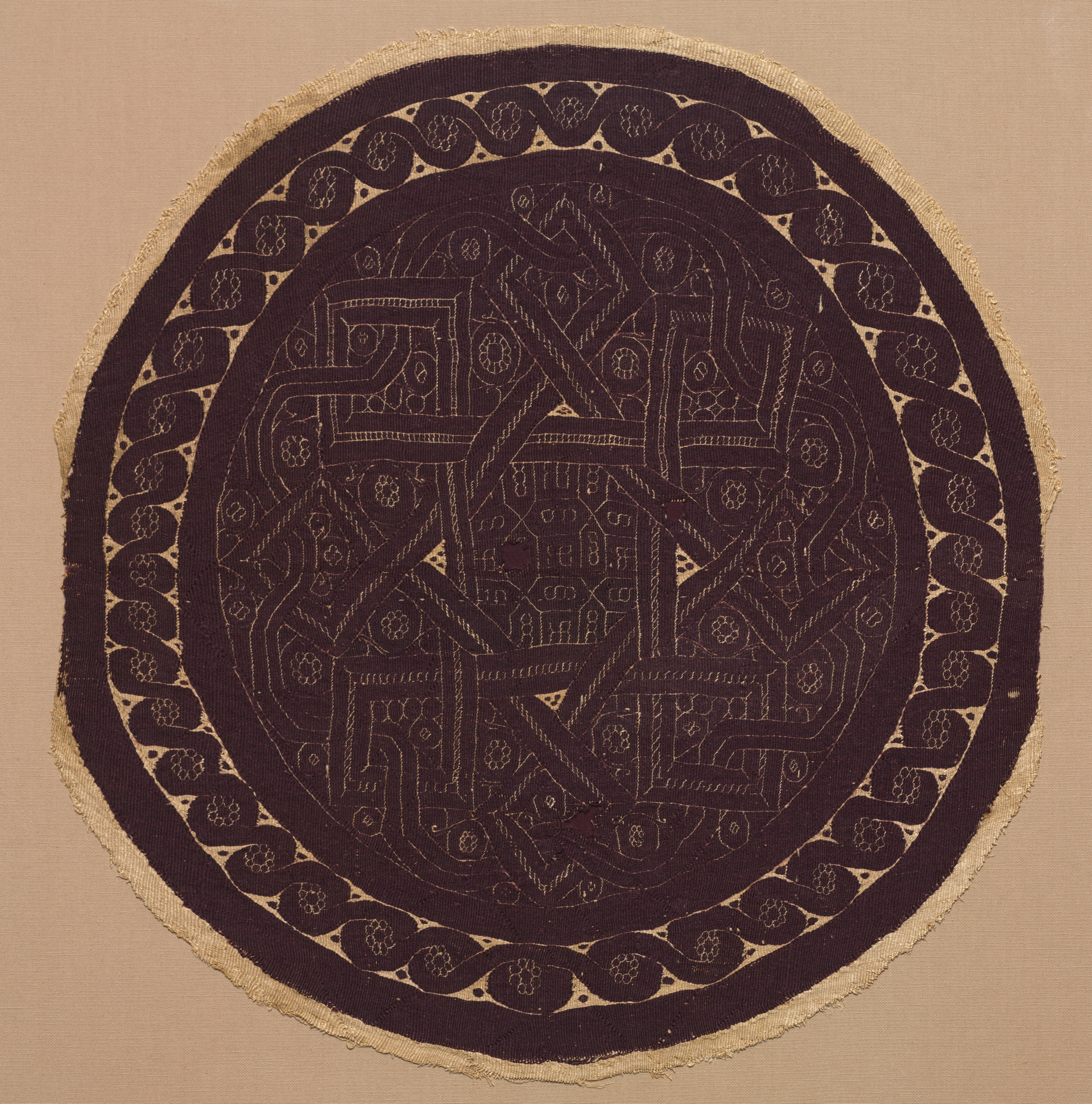
CC0 · Public domain · 300s CE
Roundel from a Curtain
A perfectly interlaced knot in a roundel, a device understood to protect against harm. Curtains carried these apotropaic patterns at the edges and over the seams.
× px · Unmodified source file
Small archival scan: best for reference and screen use, not large prints.
Open in StudioSource & licensing
- Creator / date
- Egypt, Byzantine period, maker unknown · 300s CE
- Source credit
- The Cleveland Museum of Art, 1946.412. Open Access.
- Usage notes
- Released by the Cleveland Museum of Art under CC0 1.0. Credit to the museum is encouraged; CC0 does not imply endorsement.
- Original file
- × px · JPG · 0.0 MB
- Source checked
- 2026-11-04 · editorial approval separate
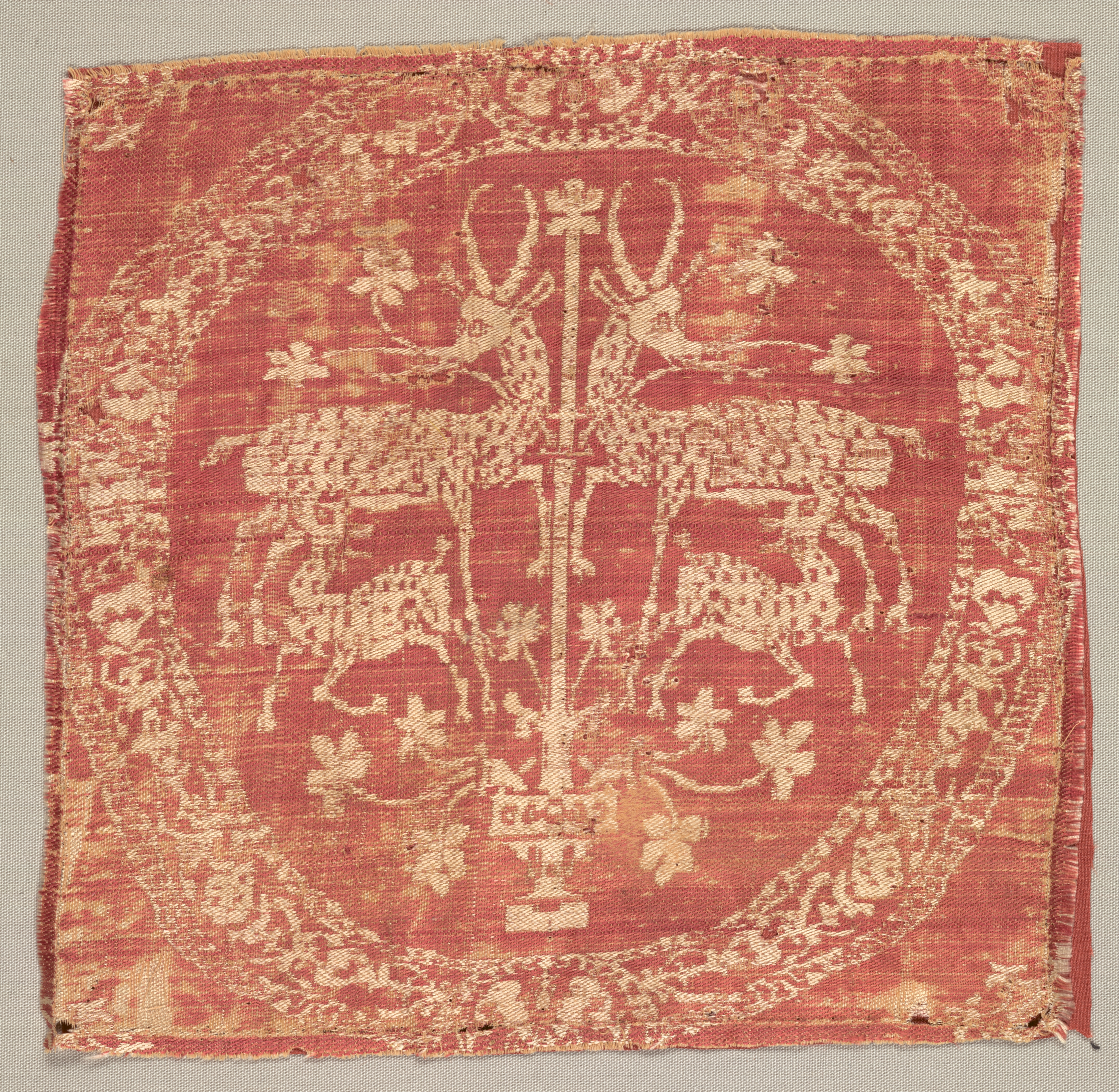
CC0 · Public domain · 700s
Square Ornament from a Tunic
A luxury silk square, folded on all four sides, that once decorated a linen tunic worn by either sex. A doe suckling her fawn flanks a stylised tree.
× px · Unmodified source file
Small archival scan: best for reference and screen use, not large prints.
Open in StudioSource & licensing
- Creator / date
- Egypt or Syria, Umayyad or Abbasid period, maker unknown · 700s
- Source credit
- The Cleveland Museum of Art, 1947.192. Open Access.
- Usage notes
- Released by the Cleveland Museum of Art under CC0 1.0. Credit to the museum is encouraged; CC0 does not imply endorsement.
- Original file
- × px · JPG · 0.0 MB
- Source checked
- 2026-11-04 · editorial approval separate
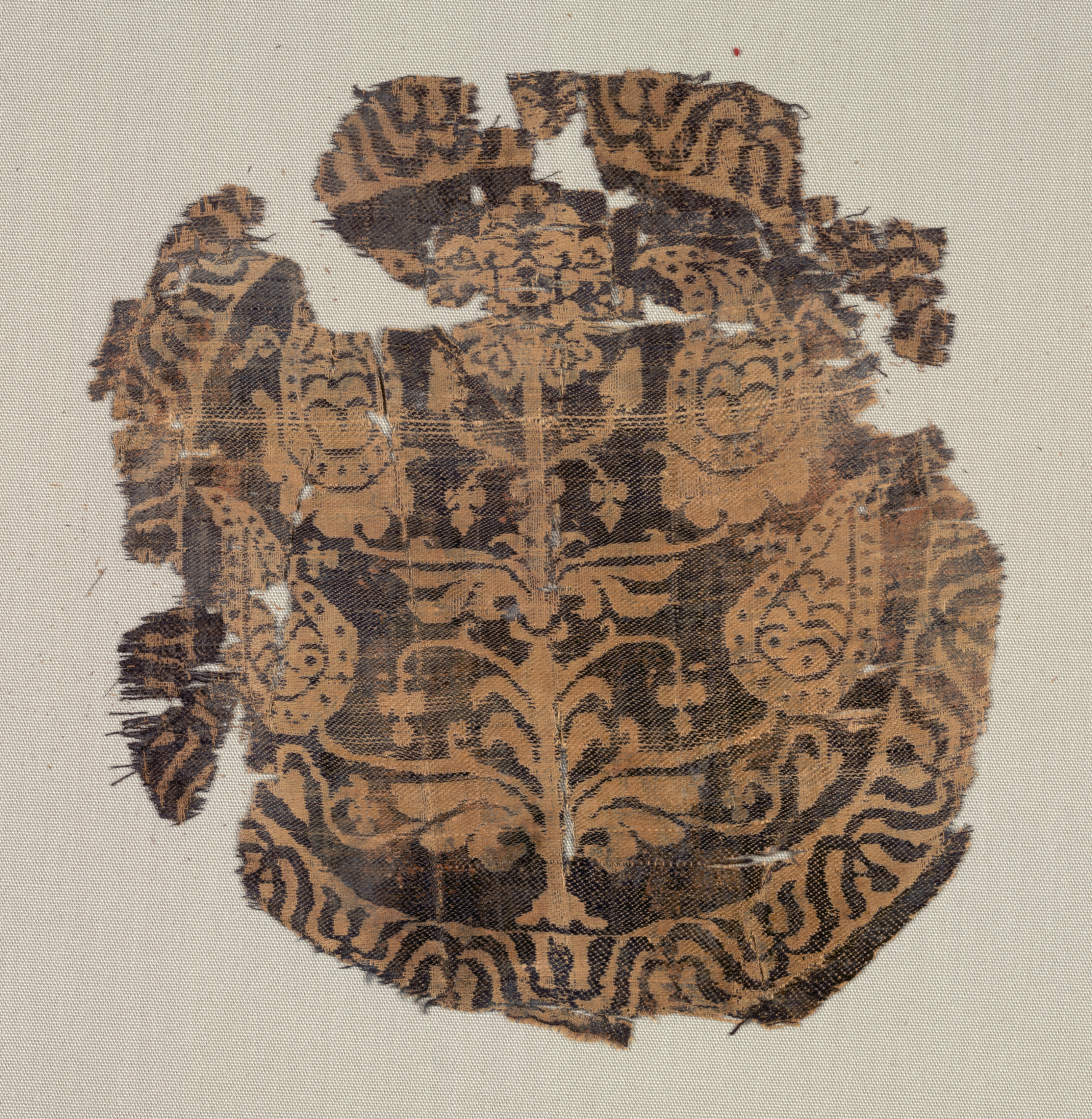
CC0 · Public domain · 600–850
Roundel with Curvilinear Palmette Tree, from a tunic
A silk roundel cut and sewn onto a tunic, one of a large group of comparable decorations traded across the early Islamic world. The palmette tree curls back on itself in a single continuous line.
× px · Unmodified source file
Small archival scan: best for reference and screen use, not large prints.
Open in StudioSource & licensing
- Creator / date
- Egypt or Syria (?), maker unknown · 600–850
- Source credit
- The Cleveland Museum of Art, 1952.102. Open Access.
- Usage notes
- Released by the Cleveland Museum of Art under CC0 1.0. Credit to the museum is encouraged; CC0 does not imply endorsement.
- Original file
- × px · JPG · 0.0 MB
- Source checked
- 2026-11-04 · editorial approval separate
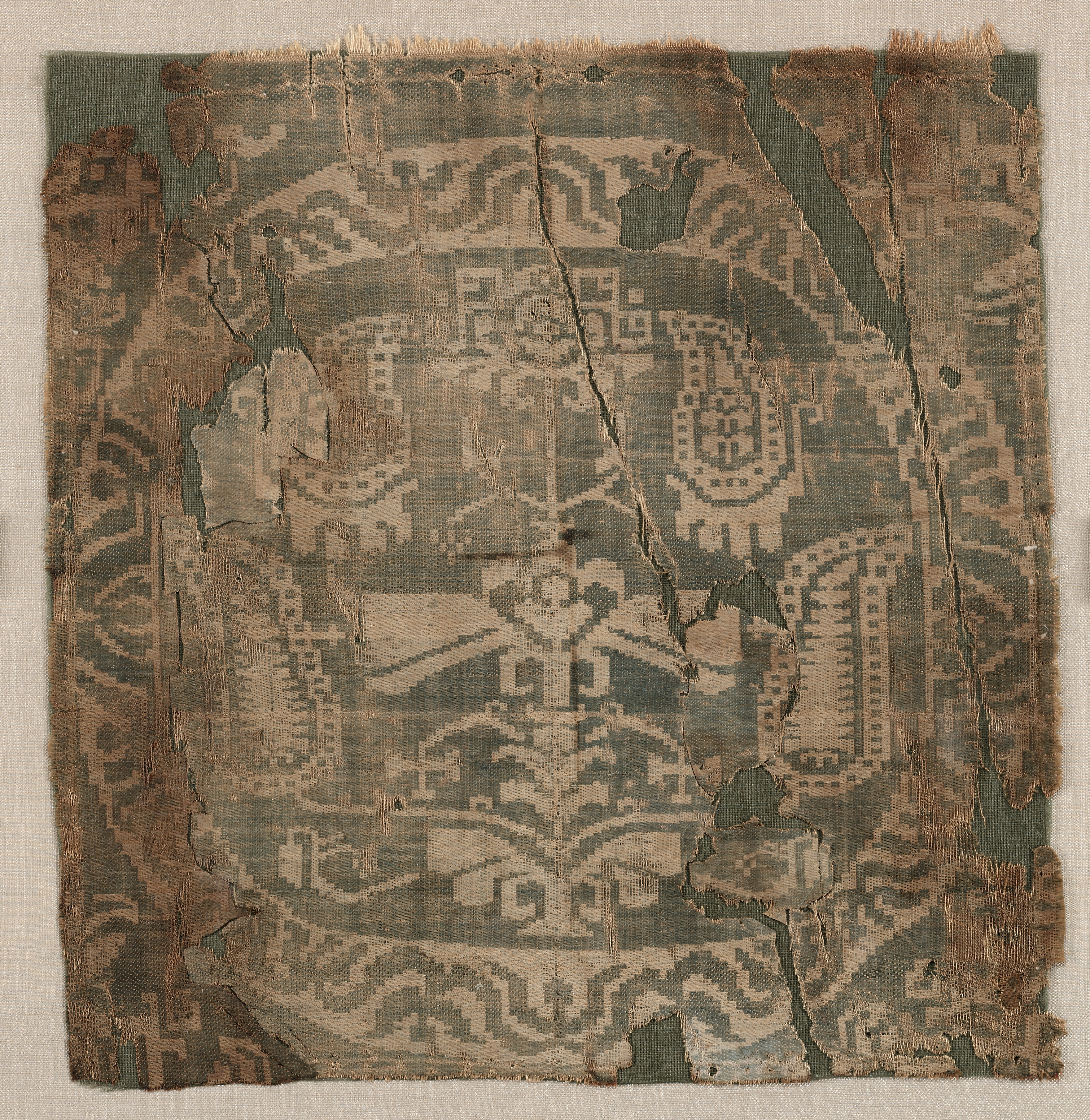
CC0 · Public domain · 650–850
Roundel from a Tunic with Palmette Tree
Four or six squares of this two-colour silk would have been set around a linen tunic, two above the hem at the front and two at the back. Pattern was placed, not repeated over the whole garment.
× px · Unmodified source file
Small archival scan: best for reference and screen use, not large prints.
Open in StudioSource & licensing
- Creator / date
- Egypt or Syria (?), maker unknown · 650–850
- Source credit
- The Cleveland Museum of Art, 1952.101. Open Access.
- Usage notes
- Released by the Cleveland Museum of Art under CC0 1.0. Credit to the museum is encouraged; CC0 does not imply endorsement.
- Original file
- × px · JPG · 0.0 MB
- Source checked
- 2026-11-04 · editorial approval separate
CC0 · Public domain · 400s–600s CE
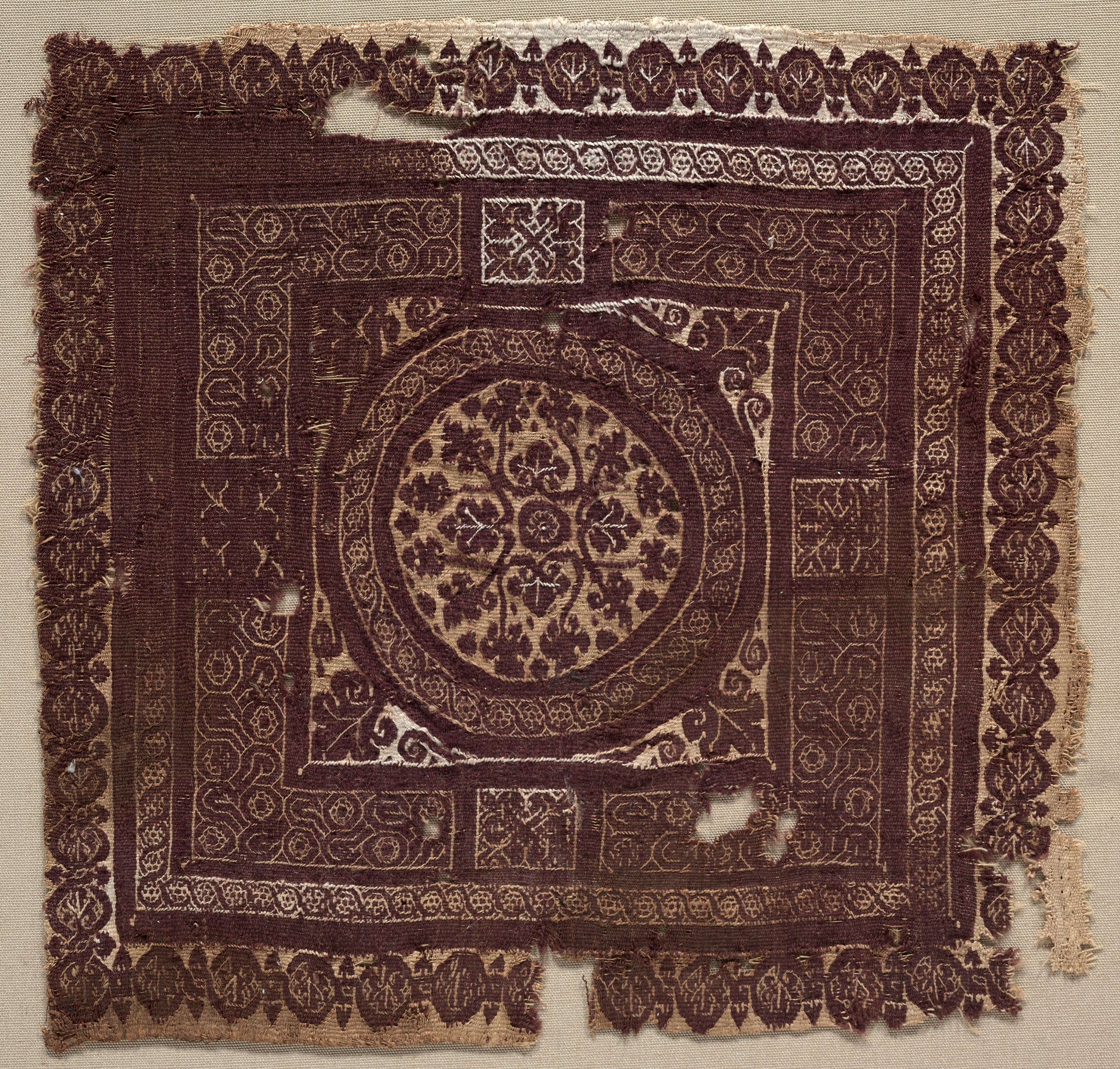
Ornament from a Garment
Six different leaf and interlace designs organised inside circles, triangles and squares. A single fragment that is essentially a page of patterns.
× px · Unmodified source file
Small archival scan: best for reference and screen use, not large prints.
Open in StudioSource & licensing
- Creator / date
- Egypt, Byzantine period, maker unknown · 400s–600s CE
- Source credit
- The Cleveland Museum of Art, 1919.21. Open Access.
- Usage notes
- Released by the Cleveland Museum of Art under CC0 1.0. Credit to the museum is encouraged; CC0 does not imply endorsement.
- Original file
- × px · JPG · 0.0 MB
- Source checked
- 2026-11-04 · editorial approval separate
CC0 · Public domain · 500s CE
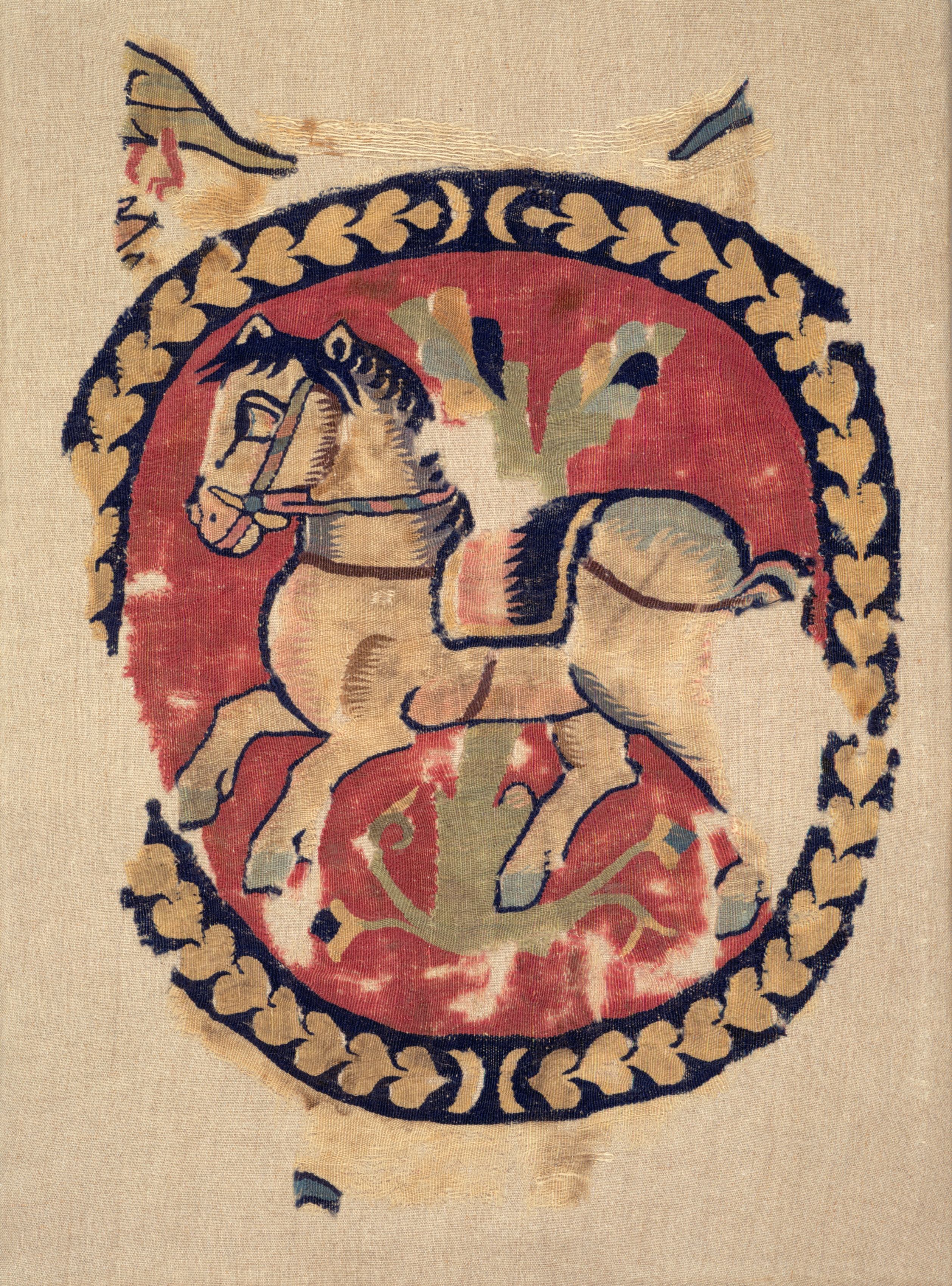
Curtain Fragment with Galloping Horse
A saddled horse galloping through a stylised landscape, framed by hearts. Woven at Antinoë, a centre of late antique textile production on the Nile.
× px · Unmodified source file
Small archival scan: best for reference and screen use, not large prints.
Open in StudioSource & licensing
- Creator / date
- Egypt, Antinoë, Byzantine period, maker unknown · 500s CE
- Source credit
- The Cleveland Museum of Art, 1948.27. Open Access.
- Usage notes
- Released by the Cleveland Museum of Art under CC0 1.0. Credit to the museum is encouraged; CC0 does not imply endorsement.
- Original file
- × px · JPG · 0.0 MB
- Source checked
- 2026-11-04 · editorial approval separate
CC0 · Public domain · 400s–600s CE
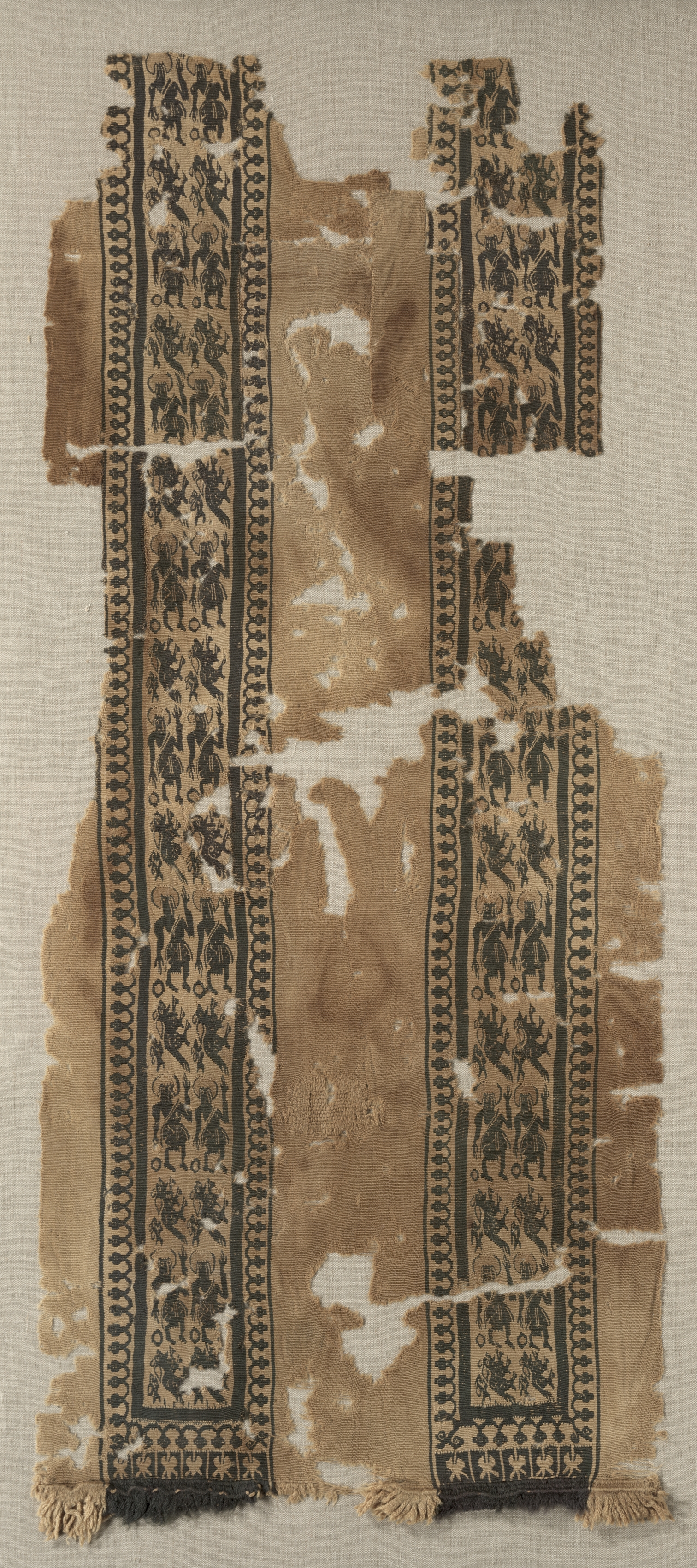
Fragment of a Tunic
Woven bands called clavi running down a tunic, with pairs of haloed figures gesturing to each other. Men and women wore the same decorated tunics.
× px · Unmodified source file
Small archival scan: best for reference and screen use, not large prints.
Open in StudioSource & licensing
- Creator / date
- Egypt, Byzantine period, maker unknown · 400s–600s CE
- Source credit
- The Cleveland Museum of Art, 1926.143. Open Access.
- Usage notes
- Released by the Cleveland Museum of Art under CC0 1.0. Credit to the museum is encouraged; CC0 does not imply endorsement.
- Original file
- × px · JPG · 0.0 MB
- Source checked
- 2026-11-04 · editorial approval separate
CC0 · Public domain · 400s CE
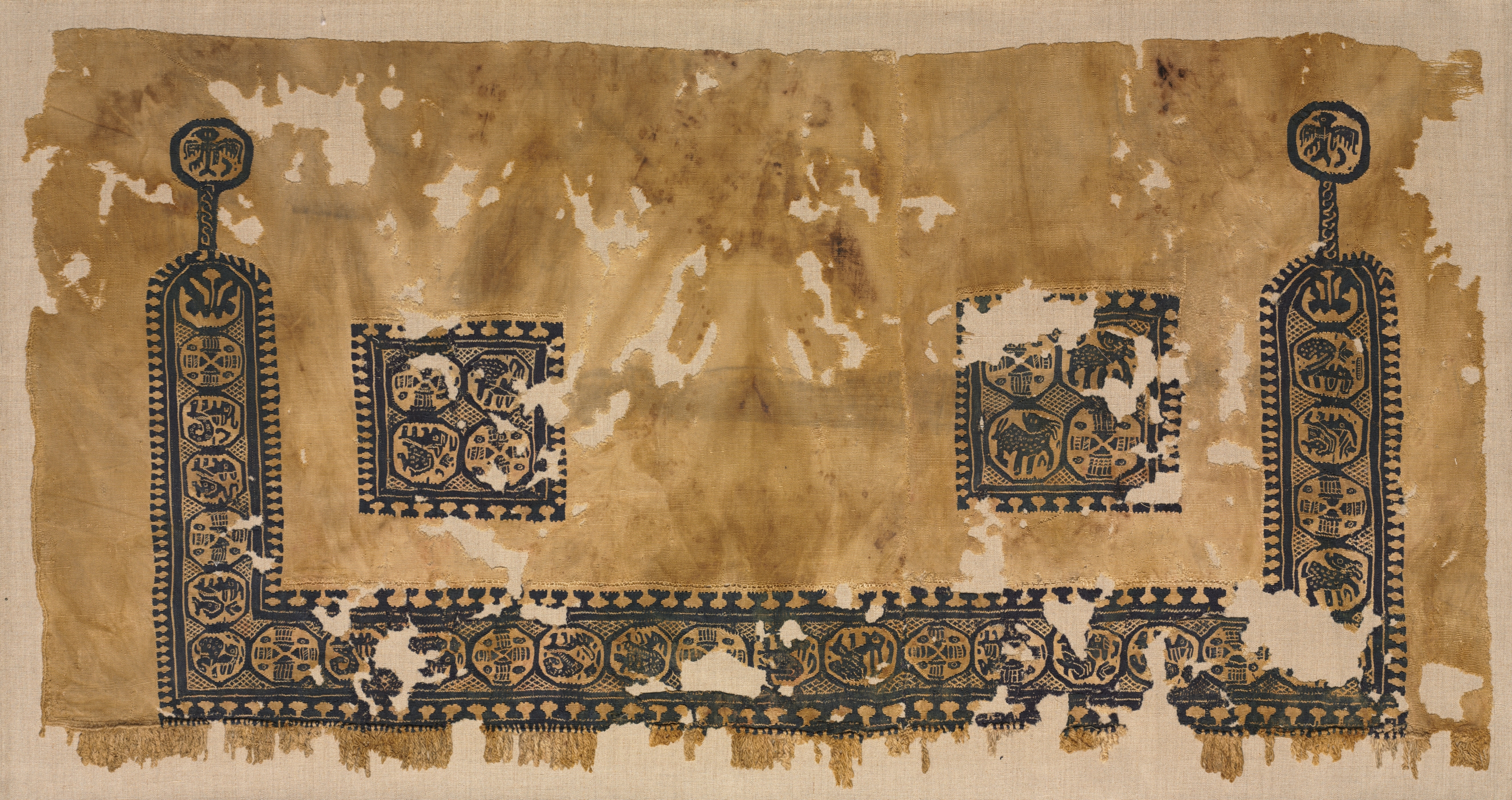
Lower Section of a Tunic
The hem of a wool tunic, its roundels of animals and baskets extending into finials with birds. The decoration is concentrated exactly where a walking figure would show it.
× px · Unmodified source file
Small archival scan: best for reference and screen use, not large prints.
Open in StudioSource & licensing
- Creator / date
- Egypt, Byzantine period, maker unknown · 400s CE
- Source credit
- The Cleveland Museum of Art, 1993.177. Open Access.
- Usage notes
- Released by the Cleveland Museum of Art under CC0 1.0. Credit to the museum is encouraged; CC0 does not imply endorsement.
- Original file
- × px · JPG · 0.0 MB
- Source checked
- 2026-11-04 · editorial approval separate
CC0 · Public domain · 600s
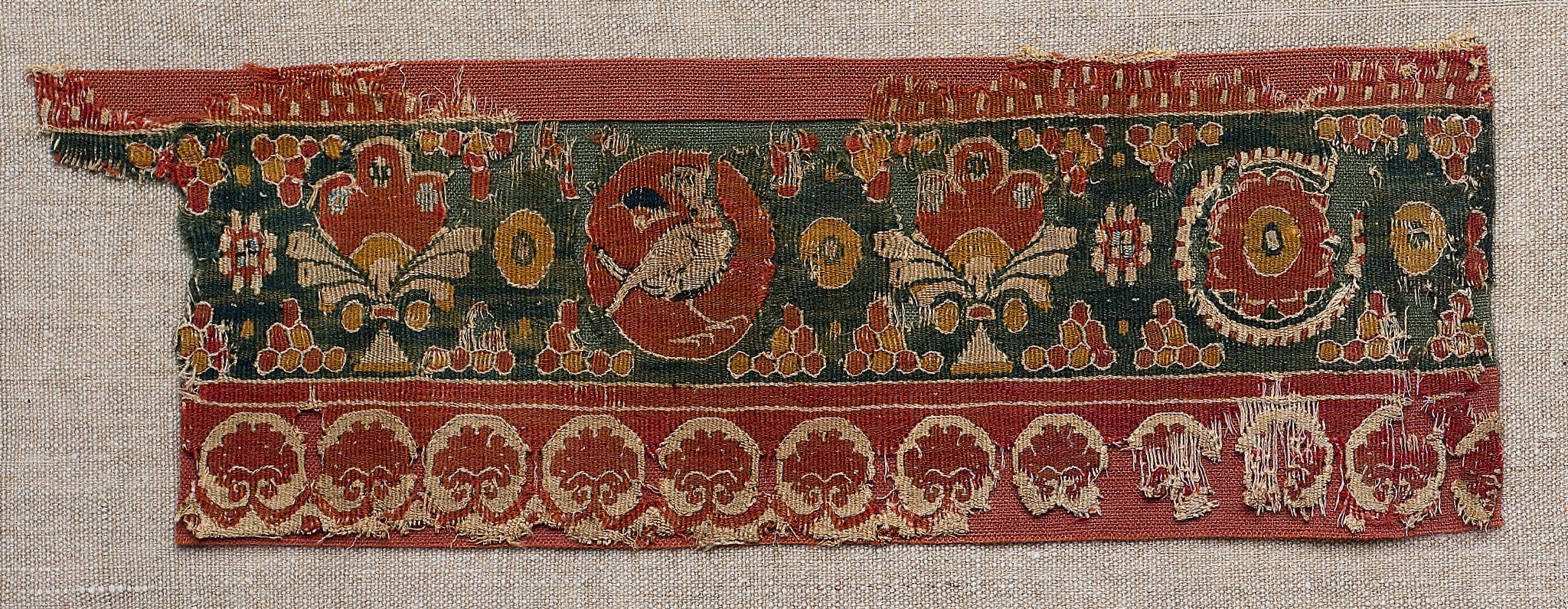
Decorated Band from a Tunic or Curtain
A band combining Byzantine motifs, birds and flanking palmettes, with fashions arriving from the new Islamic court. Textiles are where the two vocabularies meet first.
× px · Unmodified source file
Small archival scan: best for reference and screen use, not large prints.
Open in StudioSource & licensing
- Creator / date
- Egypt, late Byzantine or early Islamic period, maker unknown · 600s
- Source credit
- The Cleveland Museum of Art, 1960.275. Open Access.
- Usage notes
- Released by the Cleveland Museum of Art under CC0 1.0. Credit to the museum is encouraged; CC0 does not imply endorsement.
- Original file
- × px · JPG · 0.0 MB
- Source checked
- 2026-11-04 · editorial approval separate
CC0 · Public domain · 400s CE
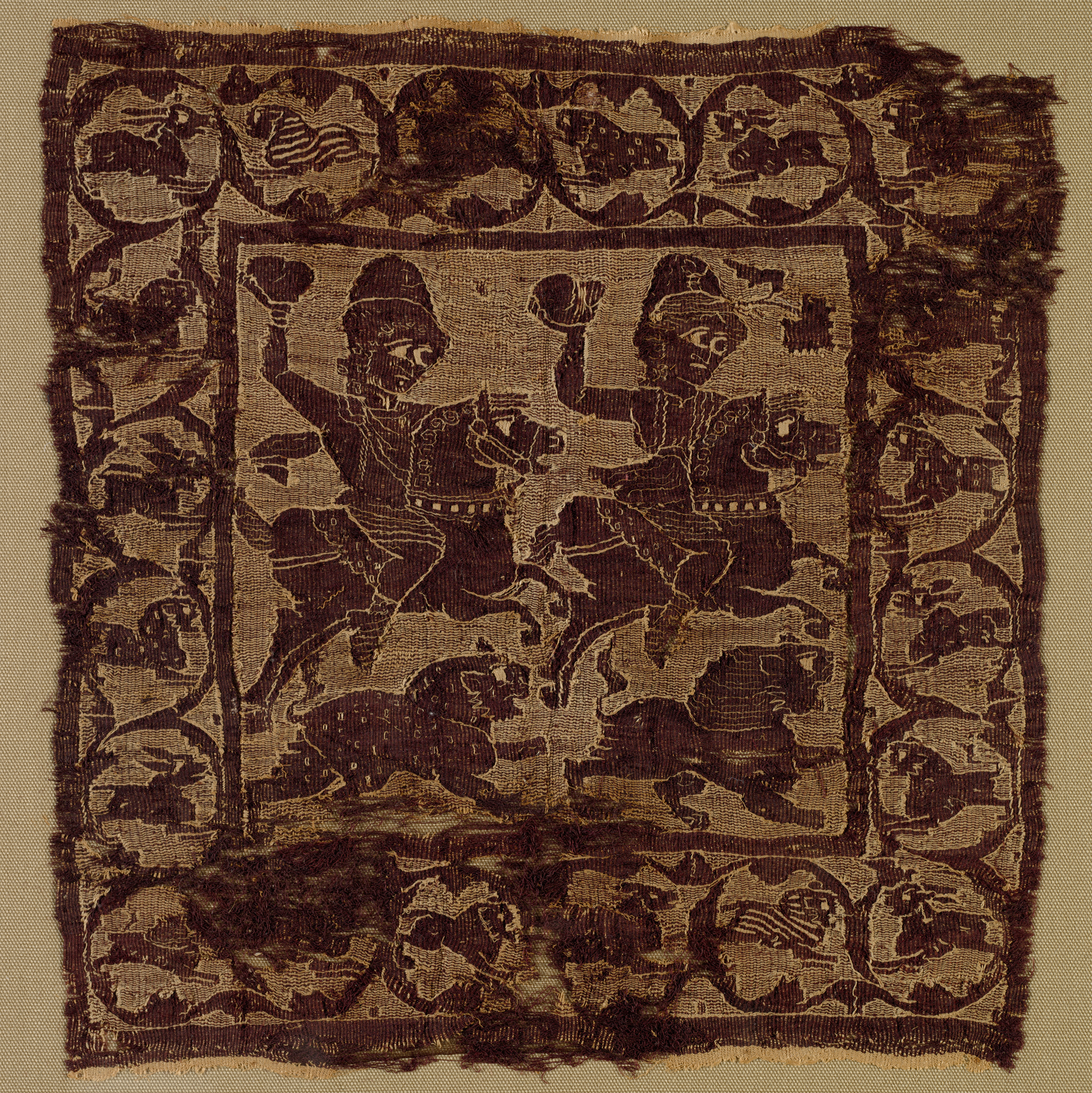
Ornamental Square from a Tunic
Riders in hunting dress hurling stones at fleeing lions, framed by a border of curves. A complete scene contained in a square the size of a hand.
× px · Unmodified source file
Small archival scan: best for reference and screen use, not large prints.
Open in StudioSource & licensing
- Creator / date
- Egypt, Byzantine period, maker unknown · 400s CE
- Source credit
- The Cleveland Museum of Art, 1916.1980. Open Access.
- Usage notes
- Released by the Cleveland Museum of Art under CC0 1.0. Credit to the museum is encouraged; CC0 does not imply endorsement.
- Original file
- × px · JPG · 0.0 MB
- Source checked
- 2026-11-04 · editorial approval separate
CC0 · Public domain · 500s
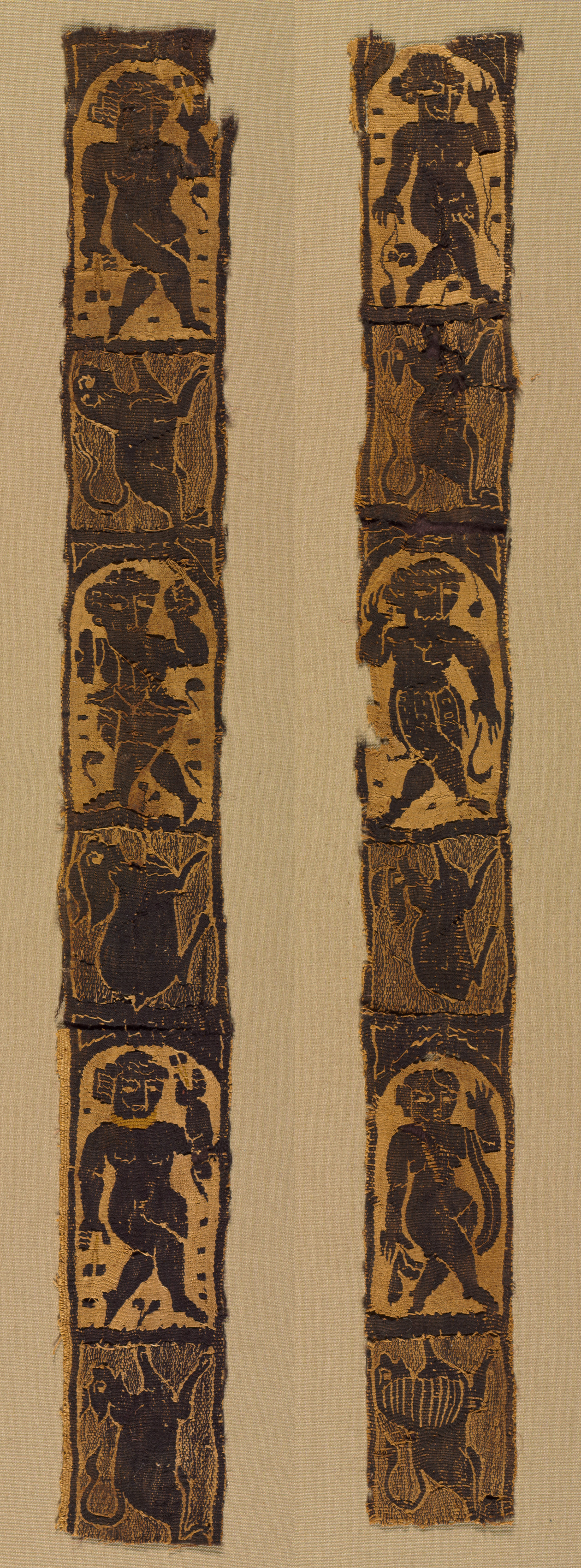
Ornamental Shoulder Bands from a Tunic
Dancers, a hunter and a shepherd under arches, alternating with dogs, rabbits and a lion. The orientation of the figures follows the band, so each pair faces along the shoulder.
× px · Unmodified source file
Small archival scan: best for reference and screen use, not large prints.
Open in StudioSource & licensing
- Creator / date
- Egypt, Byzantine period, maker unknown · 500s
- Source credit
- The Cleveland Museum of Art, 1926.145. Open Access.
- Usage notes
- Released by the Cleveland Museum of Art under CC0 1.0. Credit to the museum is encouraged; CC0 does not imply endorsement.
- Original file
- × px · JPG · 0.0 MB
- Source checked
- 2026-11-04 · editorial approval separate
CC0 · Public domain · 700s
Silk Sleeve Decoration with Hunters
A silk sleeve with hunters at the centre and a lotus design along the edges. The combination of Sasanian and early Islamic elements is typical of the first century of Islamic silk weaving.
× px · Unmodified source file
Small archival scan: best for reference and screen use, not large prints.
Open in StudioSource & licensing
- Creator / date
- Egypt or Syria, Umayyad or Abbasid period, maker unknown · 700s
- Source credit
- The Cleveland Museum of Art, 1947.193. Open Access.
- Usage notes
- Released by the Cleveland Museum of Art under CC0 1.0. Credit to the museum is encouraged; CC0 does not imply endorsement.
- Original file
- × px · JPG · 0.0 MB
- Source checked
- 2026-11-04 · editorial approval separate
CC0 · Public domain · late 600s–800s
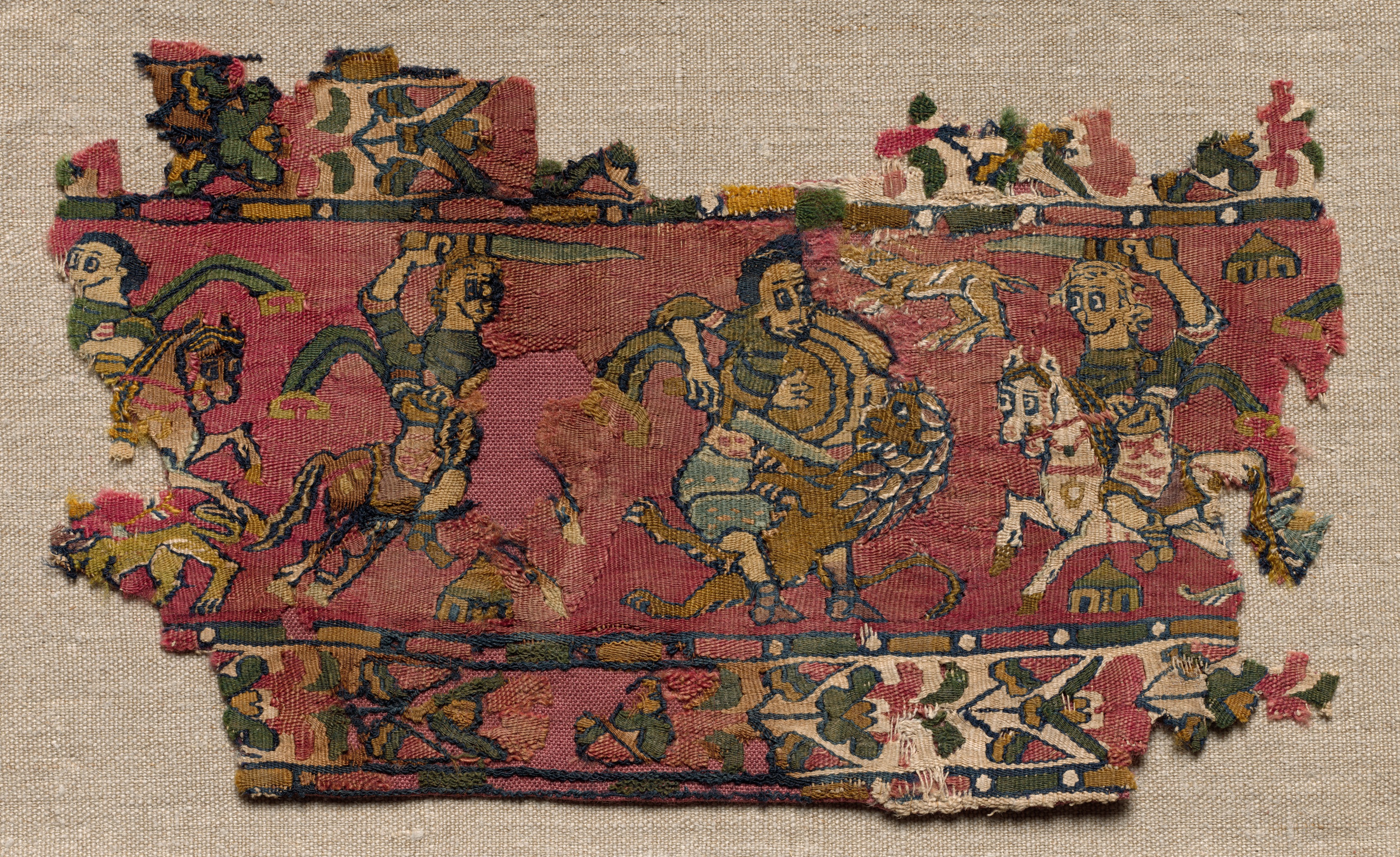
Fragment of a Band or Border
A hunt in a narrow band: one man grapples a lion while riders brandish swords on either side. Wool and linen, tapestry-woven, with the swirling drapery that marks the period.
× px · Unmodified source file
Small archival scan: best for reference and screen use, not large prints.
Open in StudioSource & licensing
- Creator / date
- Egypt, Umayyad or Abbasid period, maker unknown · late 600s–800s
- Source credit
- The Cleveland Museum of Art, 1982.110. Open Access.
- Usage notes
- Released by the Cleveland Museum of Art under CC0 1.0. Credit to the museum is encouraged; CC0 does not imply endorsement.
- Original file
- × px · JPG · 0.0 MB
- Source checked
- 2026-11-04 · editorial approval separate
Public-domain status is reported by the linked source and may vary by jurisdiction. Check the source record for your intended use. No exclusive rights or Visual Bounty marketplace license are offered for these images.