← Open Collections

Public-domain source library

Ink: Chinese Landscape and Figure Painting

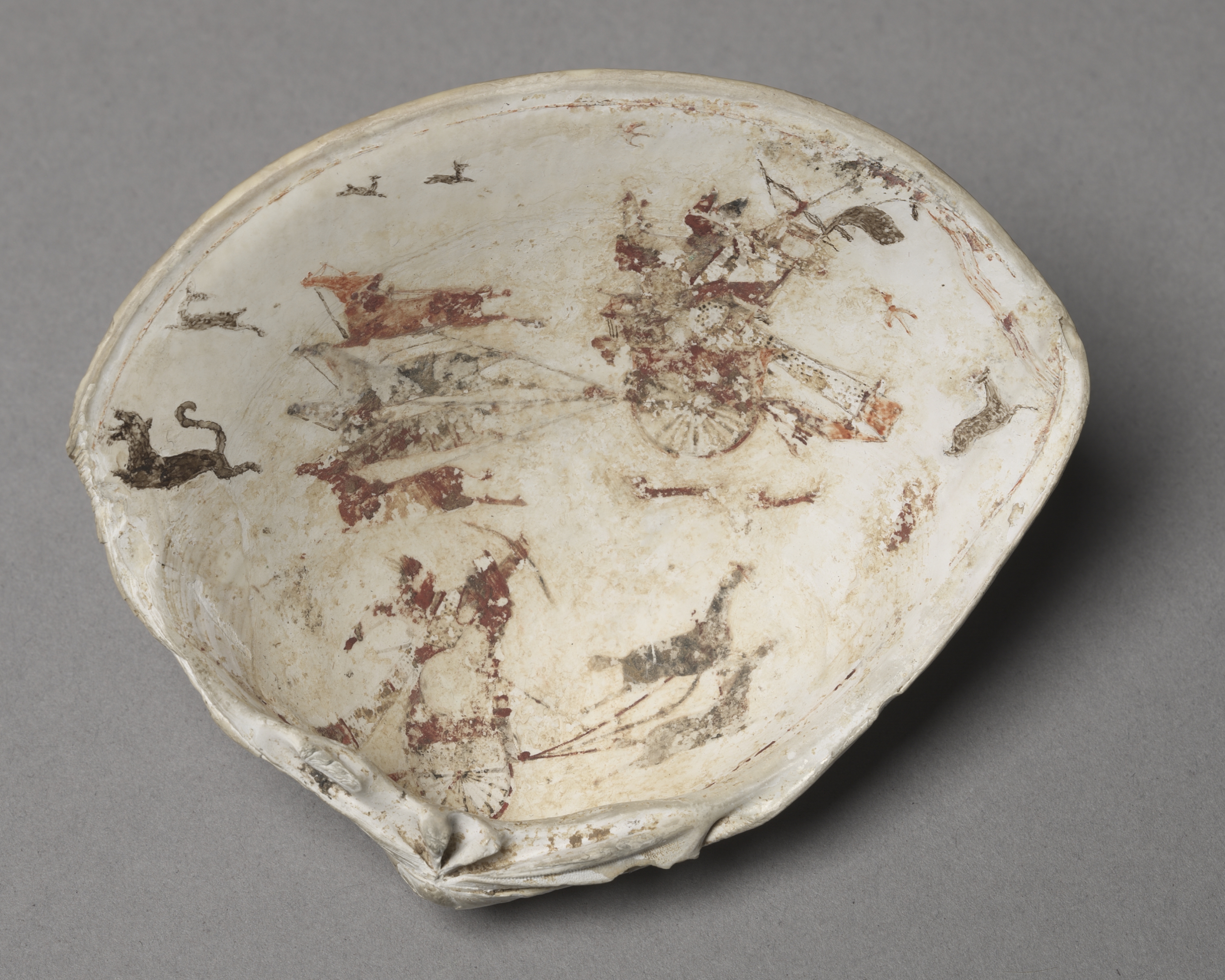
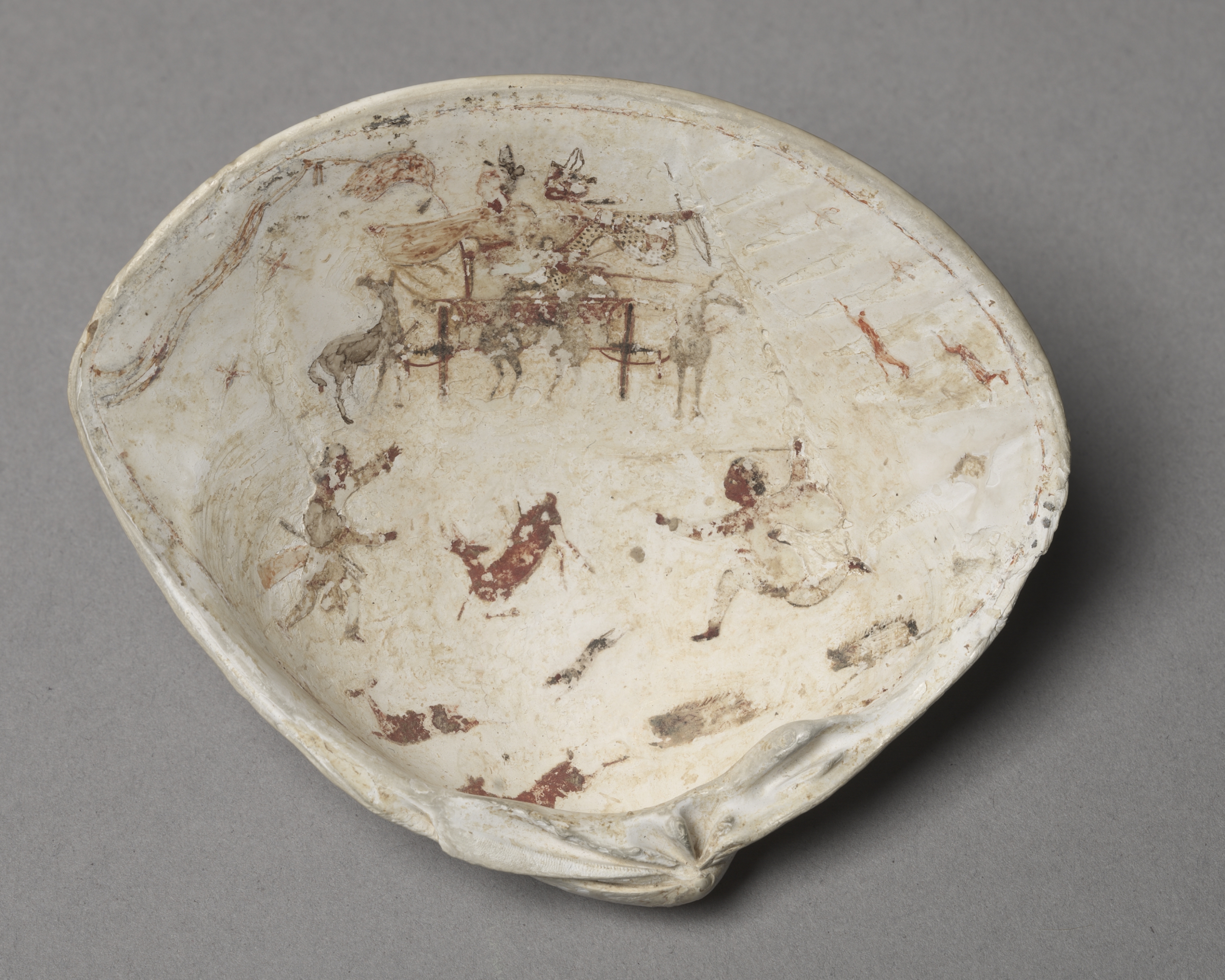
Chinese painting was built on brushwork before it was built on subject. Ink on paper or silk, loaded or dry, allowed a mountain to be made in a few strokes and a face in fewer, and the same hand that wrote a poem could turn to a cliff. These fourteen scrolls, leaves and painted shells span nearly two thousand years, from lacquer lines inside a clamshell to Dong Qichang abstracting a mountain in 1617 and Bada Shanren leaving most of the paper empty.

Explore the works and their histories through the original collections and institutions that preserve them. Source images are available to download, with creative exploration in Studio.

Works
14
Sources
1
Makers
11
Dates
1130 · 1100–1150 · 1361
Mi Youren painted this riverscape in 1130, soon after the fall of the Northern Song court drove his family south. The mountains are built from wet ink dots and soft washes, a method his father Mi Fu used to make landscape feel like weather rather than terrain.

1130

Cloudy Mountains

Mi Youren painted this riverscape in 1130, soon after the fall of the Northern Song court drove his family south. The mountains are built from wet ink dots and soft washes, a method his father Mi Fu used to make landscape feel like weather rather than terrain.

3400 × 605 px

Open in Studio
Source & credits
Creator / date
Mi Youren (Chinese, 1072–1151) · 1130
Source credit
The Cleveland Museum of Art, 1933.220. Open Access.
Original file
3400 × 605 px · JPG
A landmark acquisition of 1953, made a year after Sherman Lee returned to Cleveland as curator of Oriental art. The handscroll unrolls a continuous landscape of rivers and peaks with no single viewpoint, so the viewer travels through it rather than looking at it.

1100–1150

Streams and Mountains without End

A landmark acquisition of 1953, made a year after Sherman Lee returned to Cleveland as curator of Oriental art. The handscroll unrolls a continuous landscape of rivers and peaks with no single viewpoint, so the viewer travels through it rather than looking at it.

3400 × 525 px

Open in Studio
Source & credits
Creator / date
China, late Northern Song dynasty (960-1127) - Jin dynasty (1115-1234), maker unknown · 1100–1150
Source credit
The Cleveland Museum of Art, 1953.126. Open Access.
Original file
3400 × 525 px · JPG
Painted in 1361 in the baimiao, or fine-line, style, illustrating the songs of the ancient state of Chu. The literati used calligraphic line here to carry feeling without colour, and the figures seem drawn by the same hand as the text.

1361

Nine Songs

Painted in 1361 in the baimiao, or fine-line, style, illustrating the songs of the ancient state of Chu. The literati used calligraphic line here to carry feeling without colour, and the figures seem drawn by the same hand as the text.

3400 × 136 px

Open in Studio
Source & credits
Creator / date
Zhang Wo (Chinese, active c.1336–after 1364); Chu Huan (Chinese, active 1361) · 1361
Source credit
The Cleveland Museum of Art, 1959.138. Open Access.
Original file
3400 × 136 px · JPG
Thirteen ladies of the imperial household, three servants and six children, drawn in plain line with colour added. The women make music and play games, a scene that reads as a record of court leisure.

before 1140

In the Palace

Thirteen ladies of the imperial household, three servants and six children, drawn in plain line with colour added. The women make music and play games, a scene that reads as a record of court leisure.

3400 × 329 px

Open in Studio
Source & credits
Creator / date
Zhou Wenju (Chinese, active 942–961) · before 1140
Source credit
The Cleveland Museum of Art, 1976.1. Open Access.
Original file
3400 × 329 px · JPG
The demon queller Zhong Kui leads a night procession of entertainers with bare muscular bodies and demonic faces, performing stunts to astonish the crowd. The scroll records a street festival as much as a myth.

late 1200s–early 1300s

The Lantern Night Excursion of Zhong Kui

The demon queller Zhong Kui leads a night procession of entertainers with bare muscular bodies and demonic faces, performing stunts to astonish the crowd. The scroll records a street festival as much as a myth.

3400 × 231 px

Open in Studio
Source & credits
Creator / date
Yan Hui (Chinese, active 1270–1310) · late 1200s–early 1300s
Source credit
The Cleveland Museum of Art, 1961.206. Open Access.
Original file
3400 × 231 px · JPG
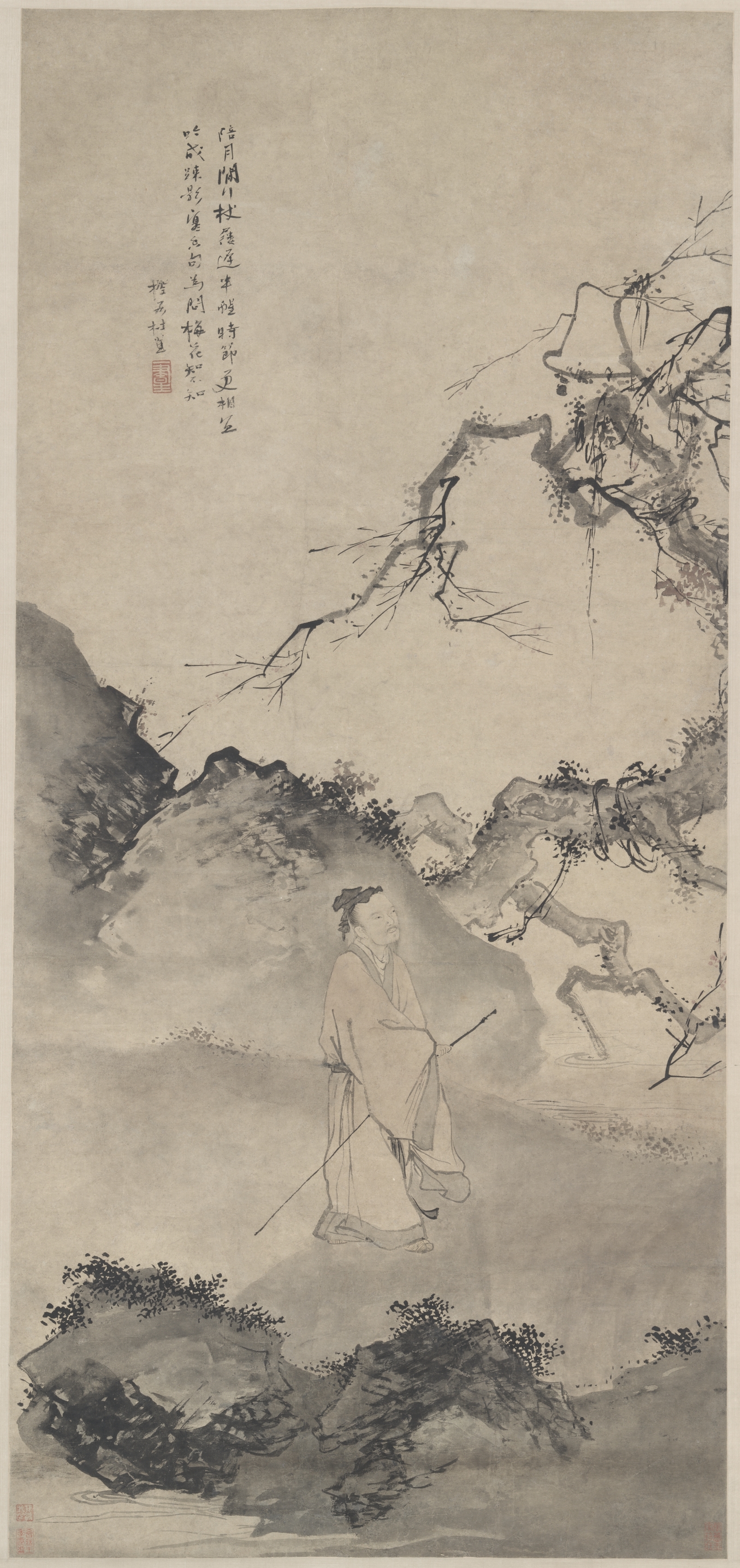
The Northern Song poet Lin Bu lived as a hermit at West Lake in Hangzhou and was said to have plum trees for companions and cranes for children. The hanging scroll places him in that invented household, under blossom and moonlight.

late 1400s

The Poet Lin Bu Wandering in the Moonlight

The Northern Song poet Lin Bu lived as a hermit at West Lake in Hangzhou and was said to have plum trees for companions and cranes for children. The hanging scroll places him in that invented household, under blossom and moonlight.

1605 × 3400 px

Open in Studio
Source & credits
Creator / date
Du Jin (Chinese, 1446–c. 1519) · late 1400s
Source credit
The Cleveland Museum of Art, 1954.582. Open Access.
Original file
1605 × 3400 px · JPG
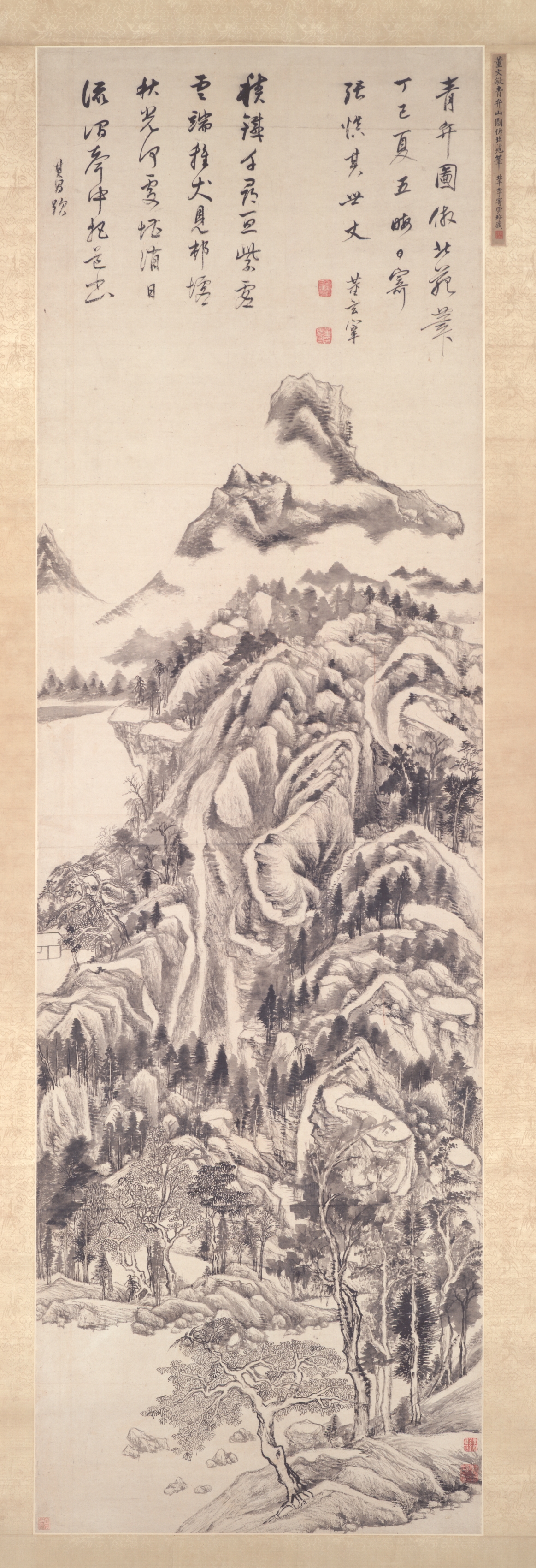
Painted in 1617, the hanging scroll turns a mountain into a design of stacked forms, its structure read the way calligraphy is read. Dong Qichang organizes the composition to activate the flow of qi rather than to describe a place.

1617

Mt. Qingbian

Painted in 1617, the hanging scroll turns a mountain into a design of stacked forms, its structure read the way calligraphy is read. Dong Qichang organizes the composition to activate the flow of qi rather than to describe a place.

1163 × 3400 px

Open in Studio
Source & credits
Creator / date
Dong Qichang (Chinese, 1555–1636) · 1617
Source credit
The Cleveland Museum of Art, 1980.10. Open Access.
Original file
1163 × 3400 px · JPG
Dong Qichang, the painter and theorist who shaped literati aesthetics for centuries, builds the landscape from abstracted mountain forms rather than observed detail, so that structure matters more than likeness.

c. 1624–27

River and Mountains on a Clear Autumn Day

Dong Qichang, the painter and theorist who shaped literati aesthetics for centuries, builds the landscape from abstracted mountain forms rather than observed detail, so that structure matters more than likeness.

3400 × 473 px

Open in Studio
Source & credits
Creator / date
Dong Qichang (Chinese, 1555–1636) · c. 1624–27
Source credit
The Cleveland Museum of Art, 1959.46. Open Access.
Original file
3400 × 473 px · JPG
Bada Shanren, a Ming prince who became a monk after the dynasty fell, painted fish and rocks with a brush used at speed and in contempt of convention. The composition leaves most of the paper empty.

mid- to late 1600s

Fish and Rocks

Bada Shanren, a Ming prince who became a monk after the dynasty fell, painted fish and rocks with a brush used at speed and in contempt of convention. The composition leaves most of the paper empty.

3400 × 447 px

Open in Studio
Source & credits
Creator / date
Bada Shanren (Chinese, 1626–1705) · mid- to late 1600s
Source credit
The Cleveland Museum of Art, 1953.247. Open Access.
Original file
3400 × 447 px · JPG
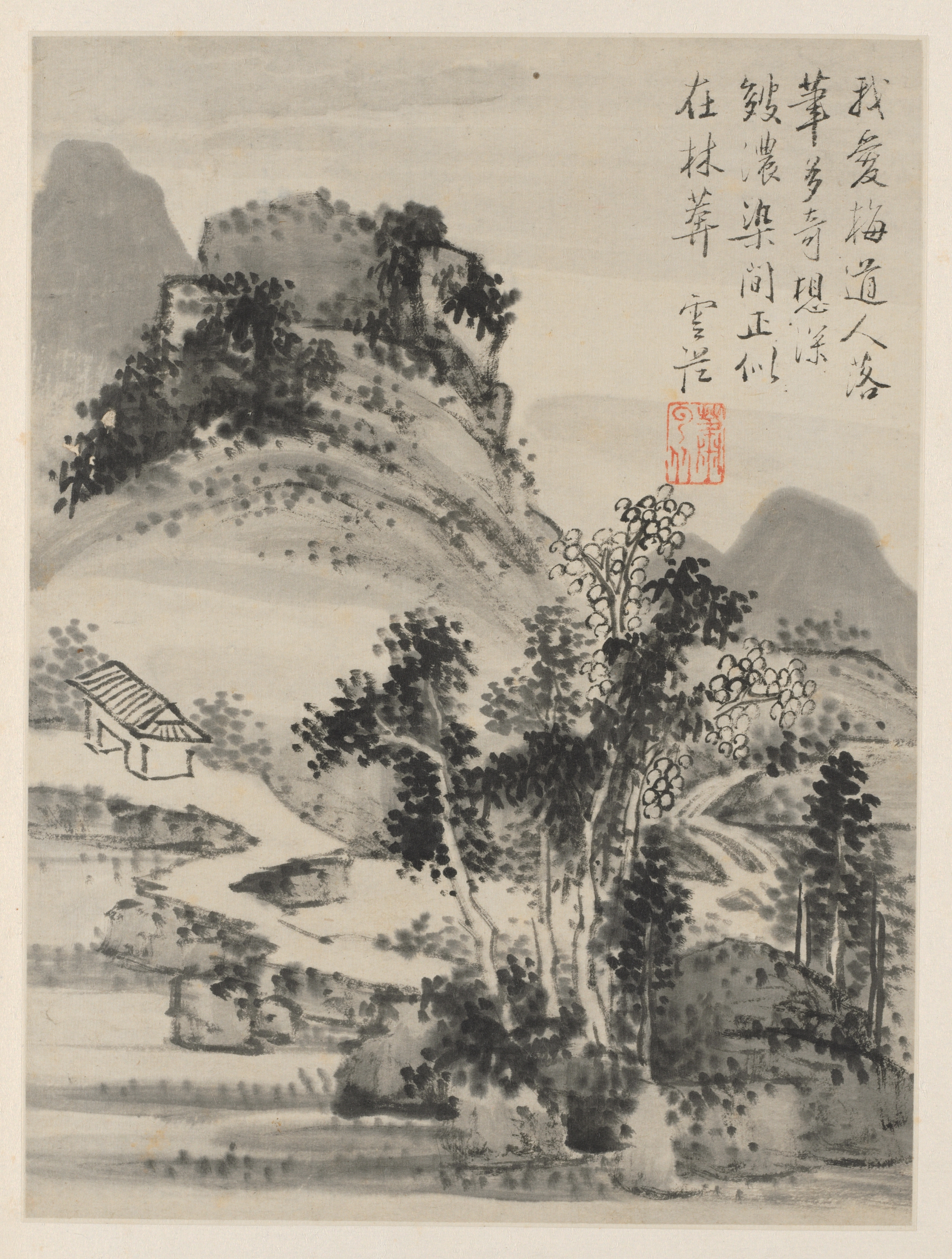
One leaf from an album of seasonal landscapes painted in 1668, when Xiao Yuncong was working between Nanjing and Yangzhou in the water-rich Jiangnan region. He painted from nature, and the leaves read as observations rather than compositions.

1668

Album of Seasonal Landscapes, Leaf D (previous leaf 2)

One leaf from an album of seasonal landscapes painted in 1668, when Xiao Yuncong was working between Nanjing and Yangzhou in the water-rich Jiangnan region. He painted from nature, and the leaves read as observations rather than compositions.

2571 × 3400 px

Open in Studio
Source & credits
Creator / date
Xiao Yuncong (Chinese, 1596–1673) · 1668
Source credit
The Cleveland Museum of Art, 1955.302.2. Open Access.
Original file
2571 × 3400 px · JPG
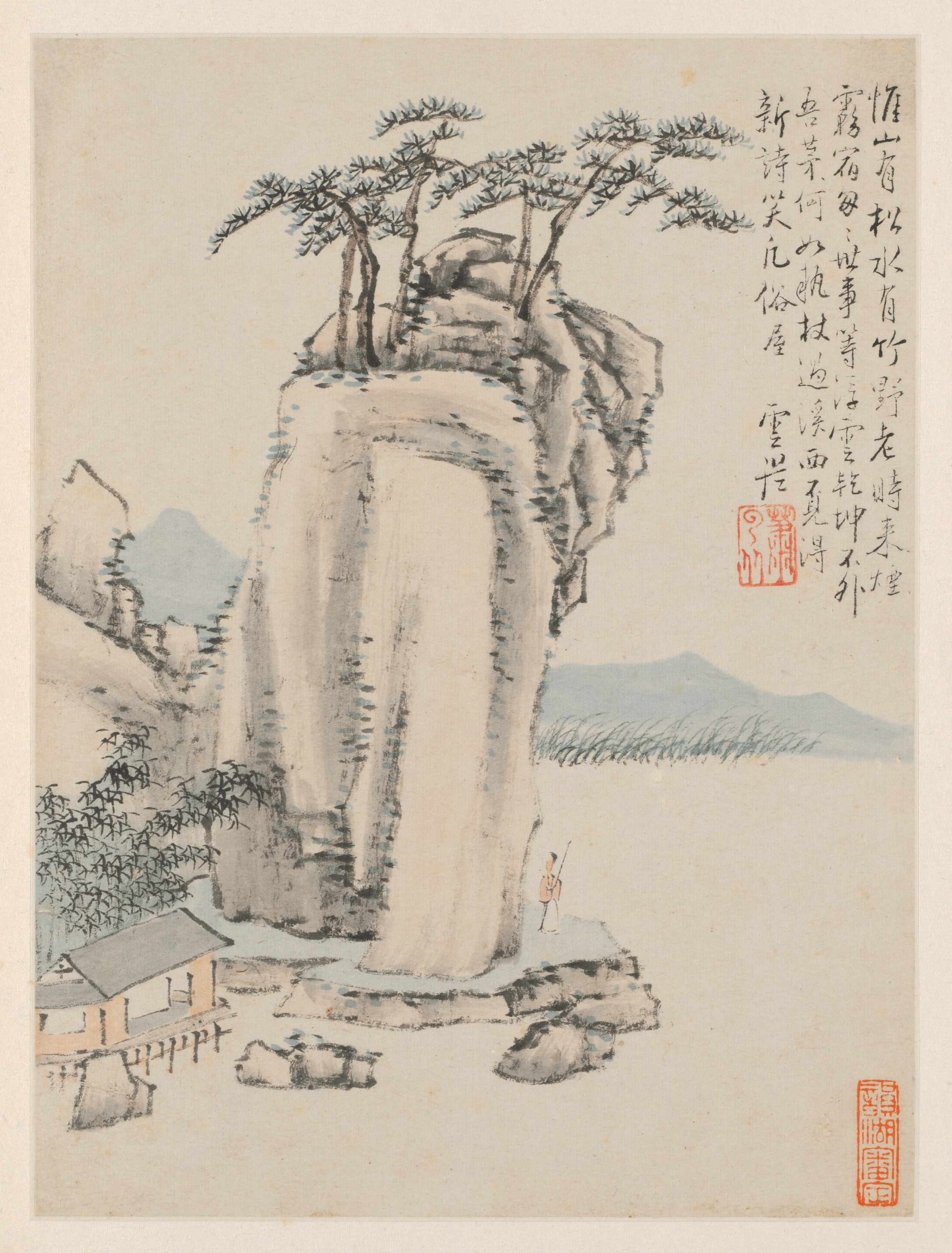
Another leaf from the same 1668 album, its ink and light colour recording the Jiangnan landscape Xiao Yuncong knew from travel between Nanjing and Yangzhou.

1668

Album of Seasonal Landscapes, Leaf G (previous leaf 7)

Another leaf from the same 1668 album, its ink and light colour recording the Jiangnan landscape Xiao Yuncong knew from travel between Nanjing and Yangzhou.

2583 × 3400 px

Open in Studio
Source & credits
Creator / date
Xiao Yuncong (Chinese, 1596–1673) · 1668
Source credit
The Cleveland Museum of Art, 1955.302.7. Open Access.
Original file
2583 × 3400 px · JPG
The emperor at twenty-six, in the first year of his reign, followed by portraits of the empress and eleven consorts. The scroll documents appearance as a court record and as a demonstration of dynastic order.

1736–70s

Portraits of the Qianlong Emperor and His Twelve Consorts

The emperor at twenty-six, in the first year of his reign, followed by portraits of the empress and eleven consorts. The scroll documents appearance as a court record and as a demonstration of dynastic order.

3400 × 2300 px

Open in Studio
Source & credits
Creator / date
Giuseppe Castiglione (Italian, 1688–1766); others (Chinese) · 1736–70s
Source credit
The Cleveland Museum of Art, 1969.31. Open Access.
Original file
3400 × 2300 px · JPG
The inside of a clamshell preserves the earliest surviving figure paintings in Chinese history, made between the fourth and first centuries BCE. Hunters and animals are drawn in lacquer-thin lines around the curve of the shell.

300–100 BCE

The Hunt

The inside of a clamshell preserves the earliest surviving figure paintings in Chinese history, made between the fourth and first centuries BCE. Hunters and animals are drawn in lacquer-thin lines around the curve of the shell.

3400 × 2720 px

Open in Studio
Source & credits
Creator / date
China, Warring States period (475–221 BCE) to Western Han dynasty (206 BCE–8 CE), maker unknown · 300–100 BCE
Source credit
The Cleveland Museum of Art, 1957.141. Open Access.
Original file
3400 × 2720 px · JPG
The companion shell, showing the kill in the same lacquer line. Together the pair record a hunt in a medium that otherwise survives only as fragments.

300–100 BCE

The Kill

The companion shell, showing the kill in the same lacquer line. Together the pair record a hunt in a medium that otherwise survives only as fragments.

3400 × 2720 px

Open in Studio
Source & credits
Creator / date
China, Warring States period (475–221 BCE) to Western Han dynasty (206 BCE–8 CE), maker unknown · 300–100 BCE
Source credit
The Cleveland Museum of Art, 1957.139. Open Access.
Original file
3400 × 2720 px · JPG