← Open CollectionsPublic-domain source library
Bronze: Chinese Ritual Vessels
Chinese bronzes were cast to be used at an altar and buried with the dead, not admired as sculpture. Piece-mould casting allowed ornament to be taken directly from a carved model, so that the taotie mask, the coiled dragon and the whorl could be repeated and varied across a vessel’s whole surface. These vessels, made between about 1700 BCE and the third century BCE, carry the shapes that name themselves: ding, gui, hu, jia, jue, zun. By the Warring States period the ritual had faded and the bronze had become an object of display, inlaid with gold and covered with hunting scenes.
Original means the unmodified digital file supplied by the linked archive, not an upscaled or reconstructed image. Sign in for free downloads. Studio uses a working preview up to 2048 px.
CC0 · Public domain · c. 1700–1500 BCE
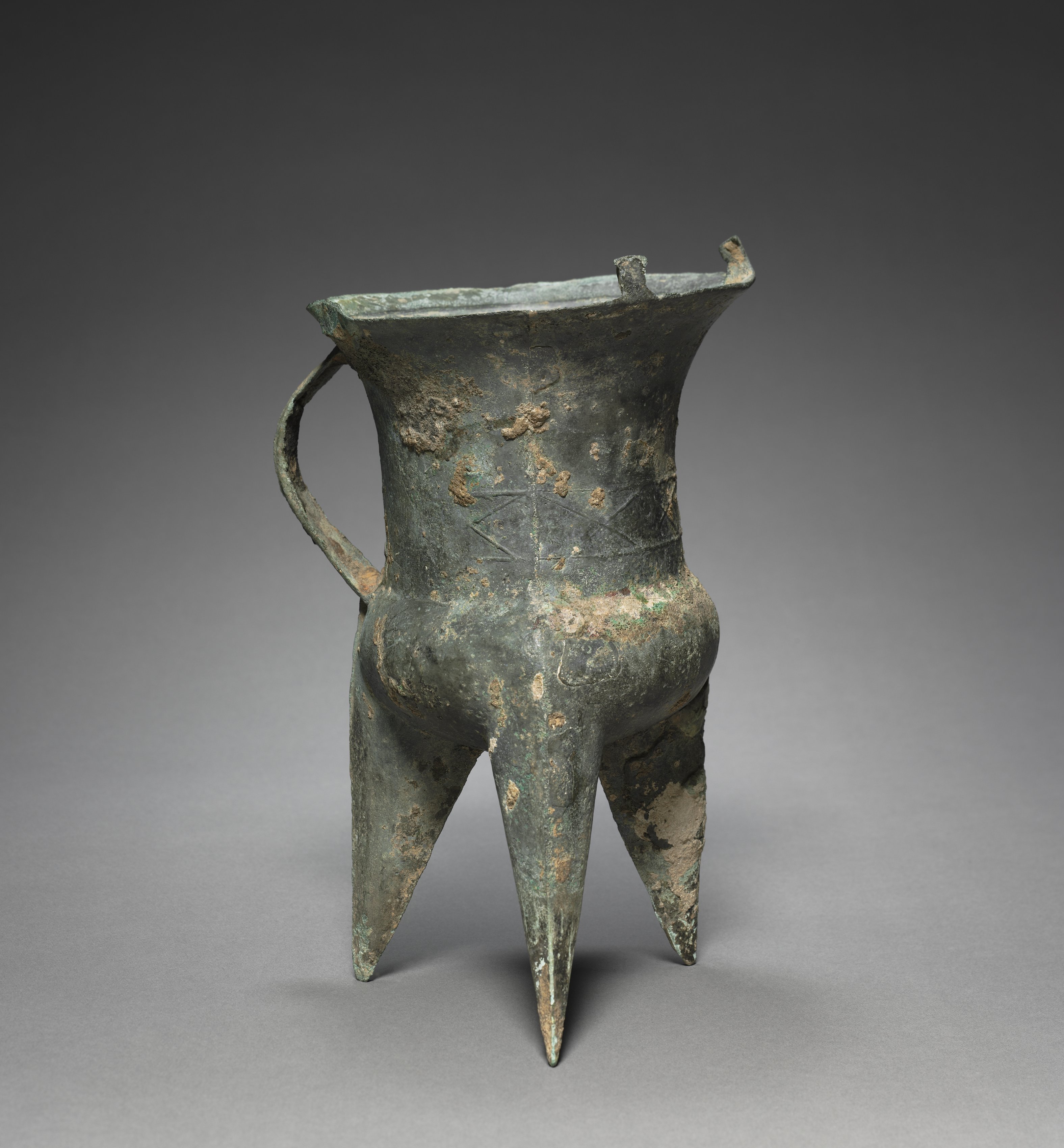
Wine Vessel (Jia)
The earliest Chinese bronze vessel in the museum collection, made around 1700–1500 BCE in the Erlitou culture and already showing sophisticated piece-mould casting.
3151 × 3400 px · Unmodified source file
Open in StudioSource & licensing
- Creator / date
- China, probably Henan province, Erlitou culture (c. 1900–1500 BCE), maker unknown · c. 1700–1500 BCE
- Source credit
- The Cleveland Museum of Art, 1989.150. Open Access.
- Usage notes
- Released by the Cleveland Museum of Art under CC0 1.0. Credit to the museum is encouraged; CC0 does not imply endorsement.
- Original file
- 3151 × 3400 px · JPG · 0.0 MB
- Source checked
- 2026-11-04 · editorial approval separate
CC0 · Public domain · c. 1200 BCE
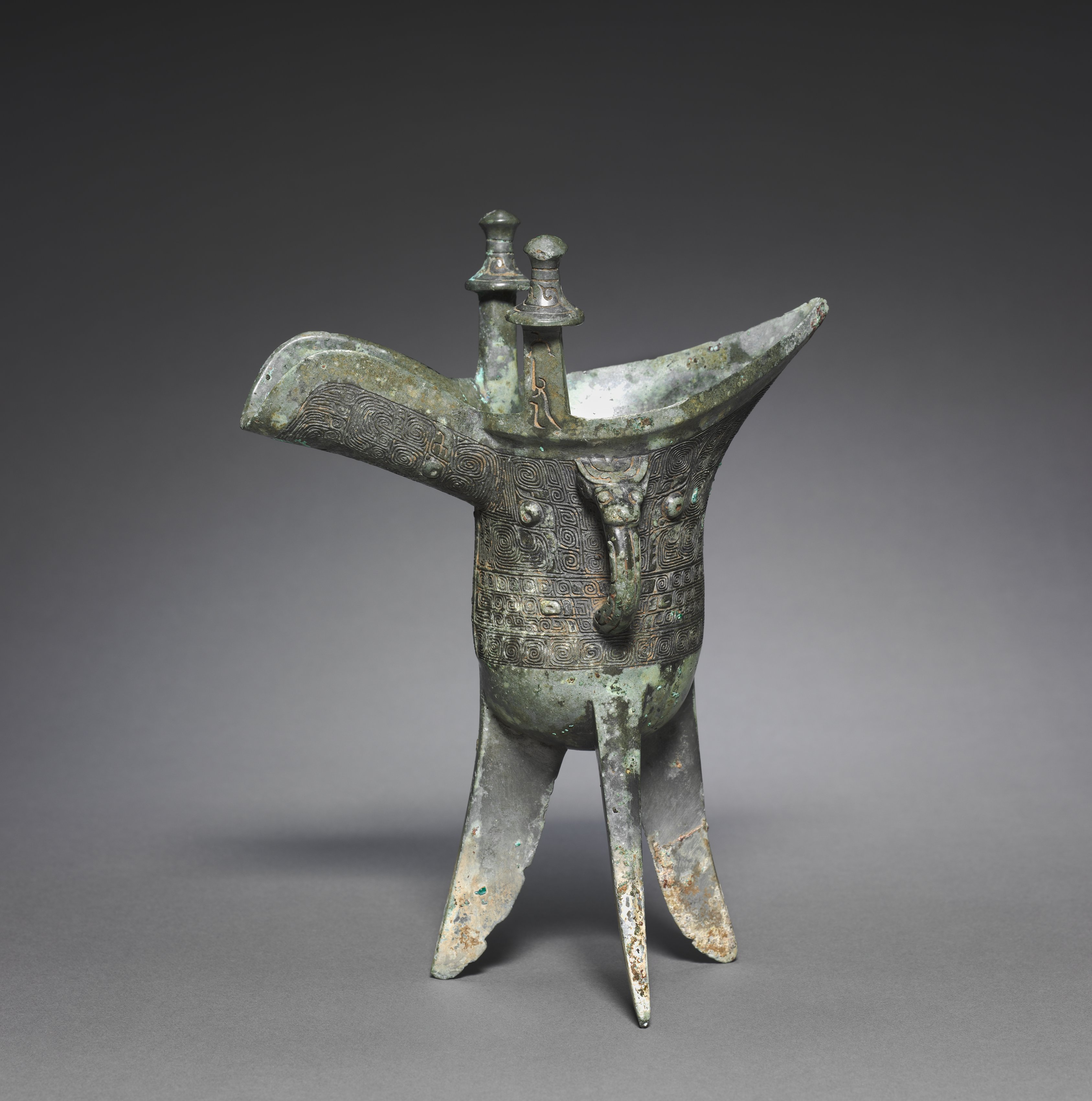
Wine vessel (Jue)
Wine and food were central to the Shang state cult of ancestor worship. A jue was used in the offering of wine, its spout and pointed legs designed for pouring at the altar.
3373 × 3400 px · Unmodified source file
Open in StudioSource & licensing
- Creator / date
- China, Shang dynasty (c. 1600–c. 1046 BCE), maker unknown · c. 1200 BCE
- Source credit
- The Cleveland Museum of Art, 1960.42. Open Access.
- Usage notes
- Released by the Cleveland Museum of Art under CC0 1.0. Credit to the museum is encouraged; CC0 does not imply endorsement.
- Original file
- 3373 × 3400 px · JPG · 0.0 MB
- Source checked
- 2026-11-04 · editorial approval separate
CC0 · Public domain · c. 1250–1046 BCE
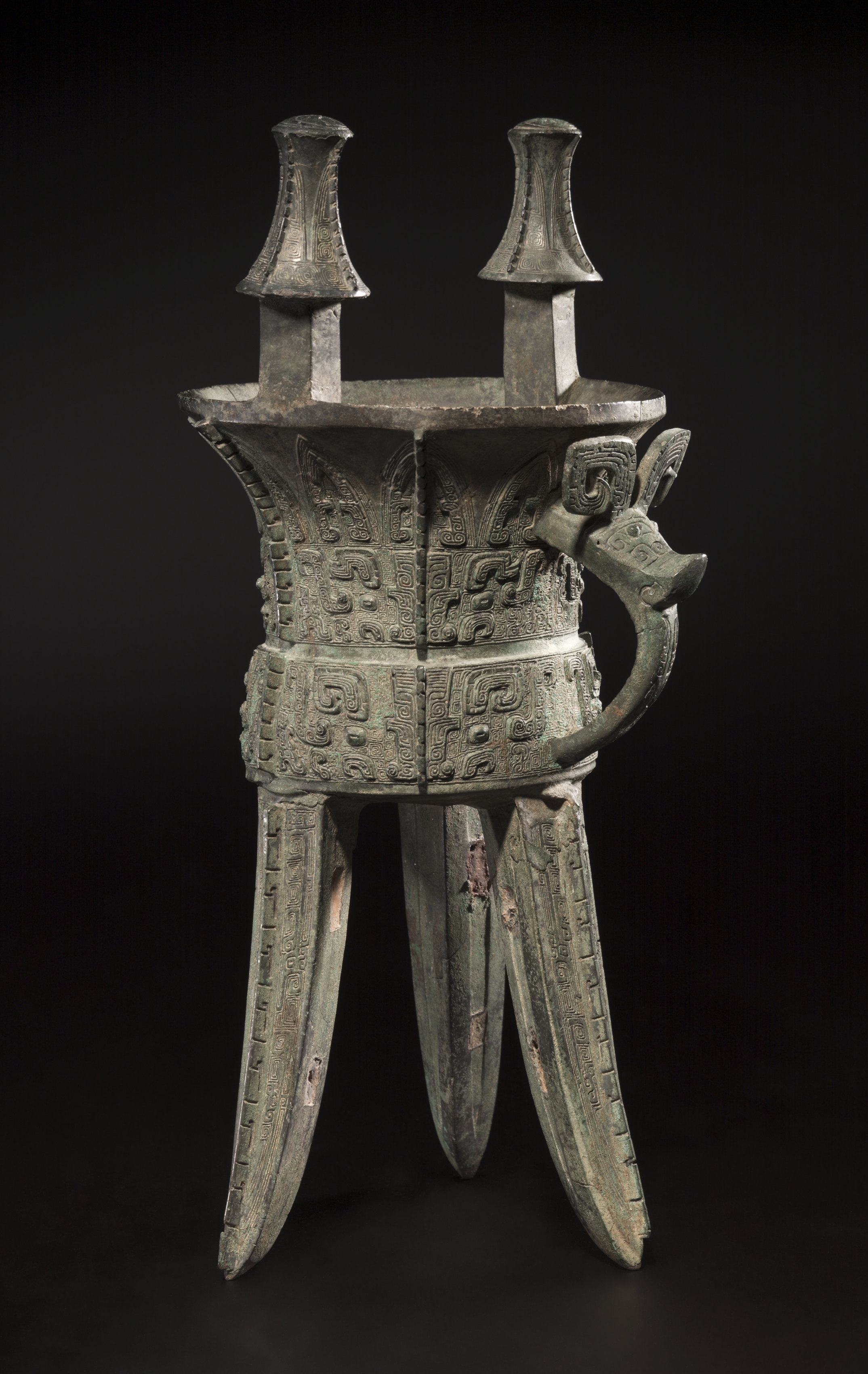
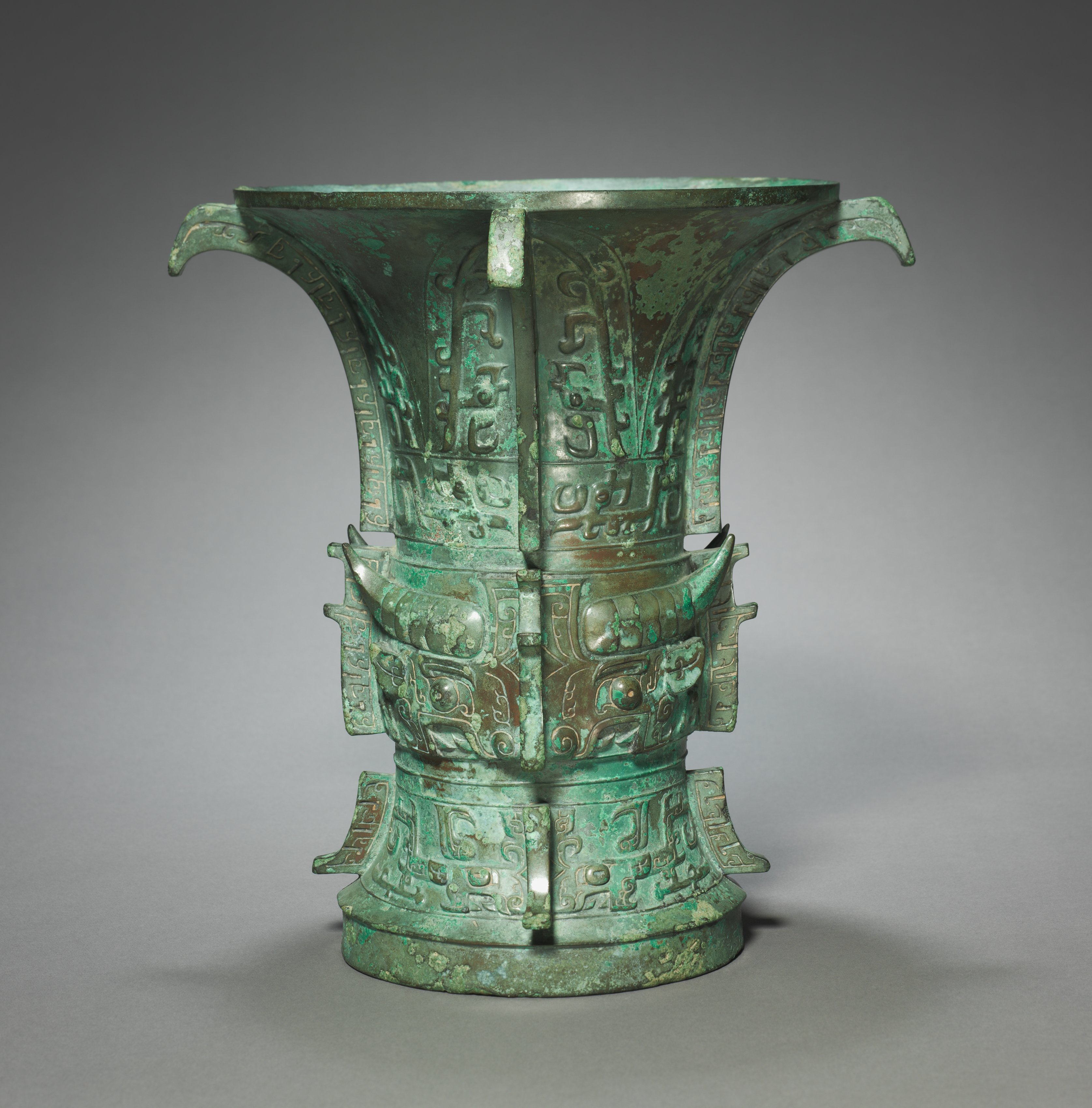
Wine Vessel (Jia)
Among the rare monumental pieces uncovered at Anyang, the last royal Shang capital. A jia warmed wine, and this one was cast large enough to dominate a ritual set.
2149 × 3400 px · Unmodified source file
Open in StudioSource & licensing
- Creator / date
- China, Shang dynasty (c. 1600–c. 1046 BCE), Anyang phase (c. 1250–1046 BCE), maker unknown · c. 1250–1046 BCE
- Source credit
- The Cleveland Museum of Art, 2005.54. Open Access.
- Usage notes
- Released by the Cleveland Museum of Art under CC0 1.0. Credit to the museum is encouraged; CC0 does not imply endorsement.
- Original file
- 2149 × 3400 px · JPG · 0.0 MB
- Source checked
- 2026-11-04 · editorial approval separate
CC0 · Public domain · c. 1250–1046 BCE
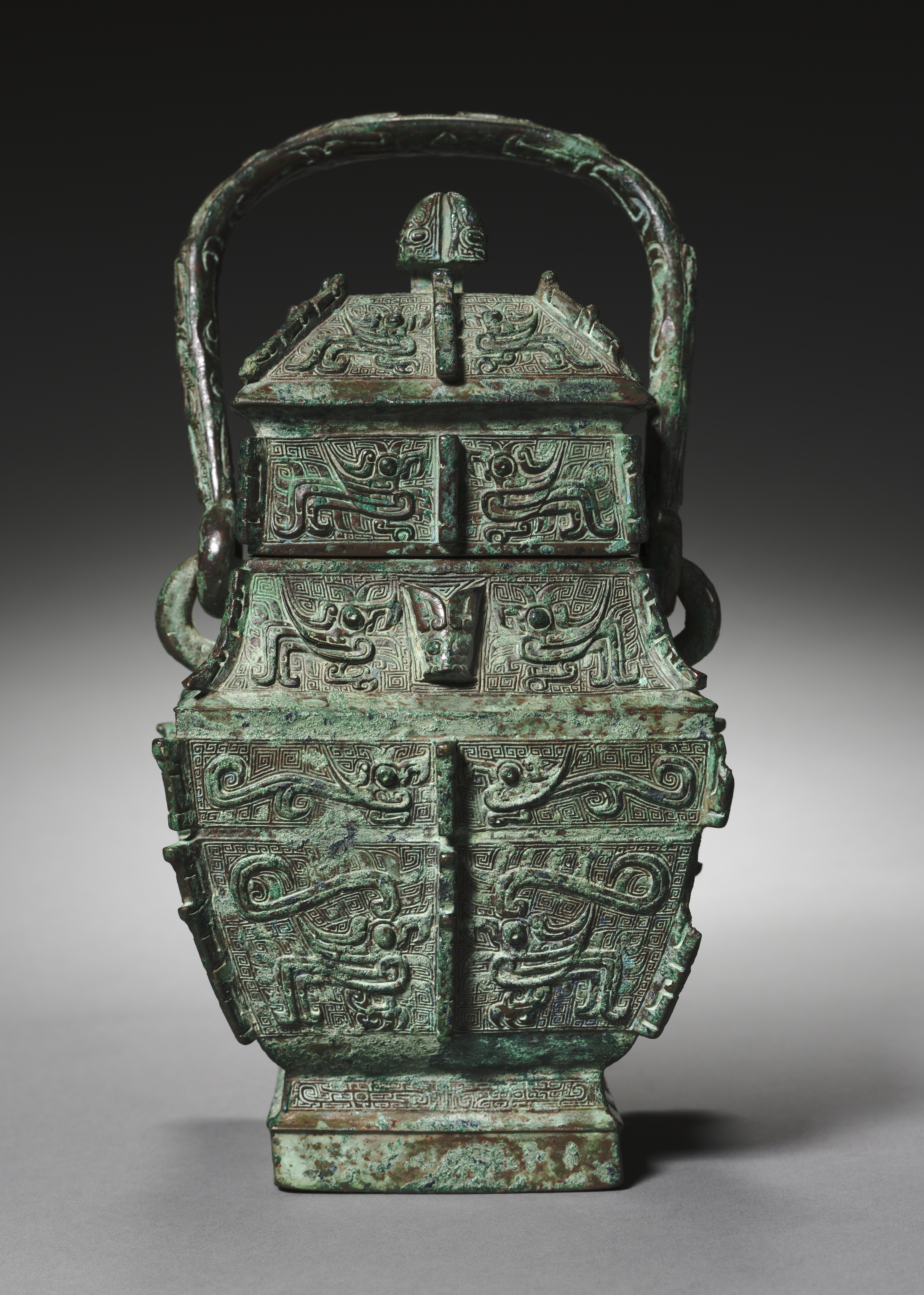
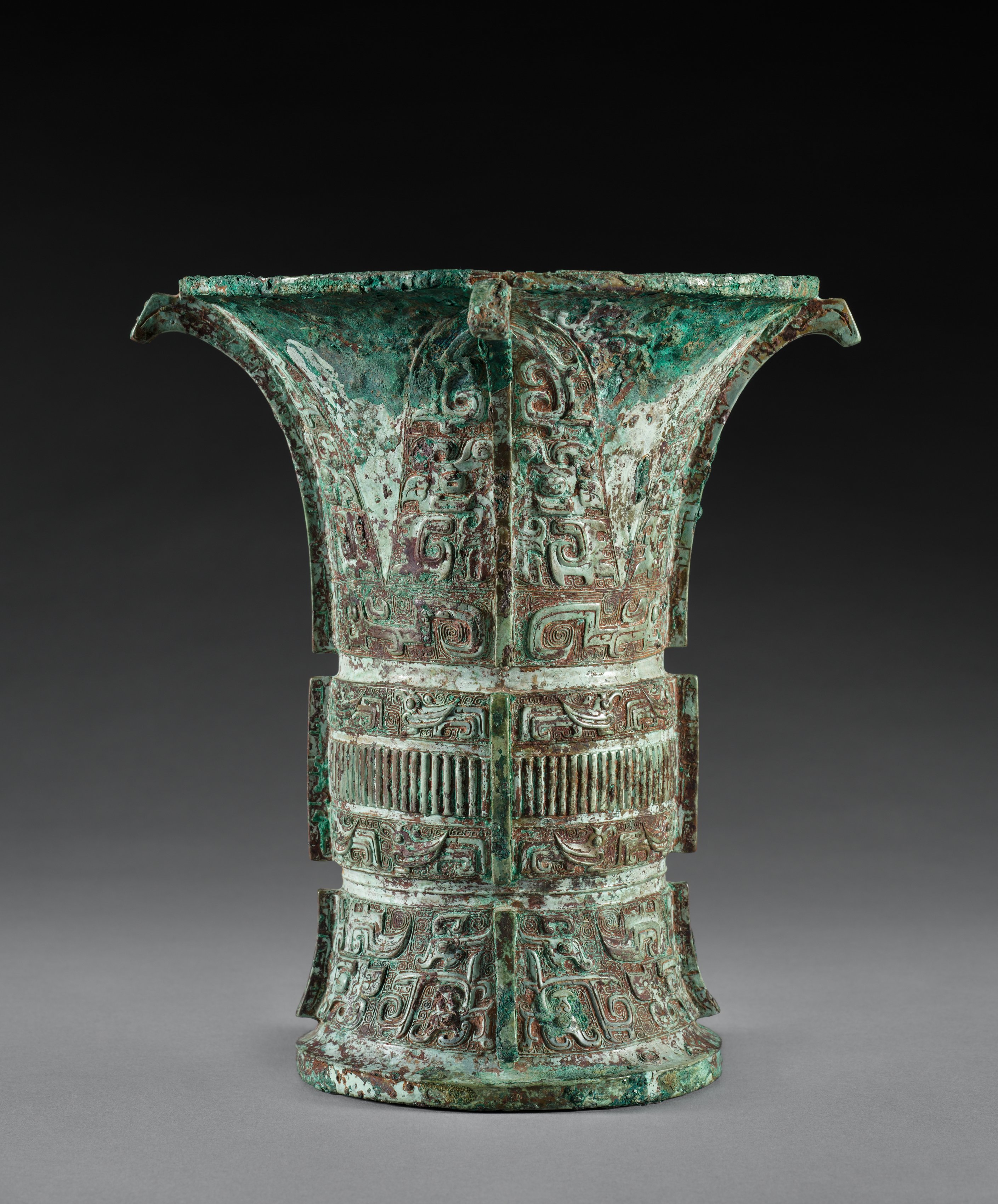
Square Wine Container (Fangyou)
A square wine container from Anyang, its proportions and the precision of its cast ornament marking the technical peak of Shang foundry work.
2427 × 3400 px · Unmodified source file
Open in StudioSource & licensing
- Creator / date
- China, Henan province, probably Anyang, Shang dynasty (c. 1600–c. 1046 BCE), Anyang phase (c. 1250–1046 BCE), maker unknown · c. 1250–1046 BCE
- Source credit
- The Cleveland Museum of Art, 1963.103. Open Access.
- Usage notes
- Released by the Cleveland Museum of Art under CC0 1.0. Credit to the museum is encouraged; CC0 does not imply endorsement.
- Original file
- 2427 × 3400 px · JPG · 0.0 MB
- Source checked
- 2026-11-04 · editorial approval separate
CC0 · Public domain · 1200–1100 BCE
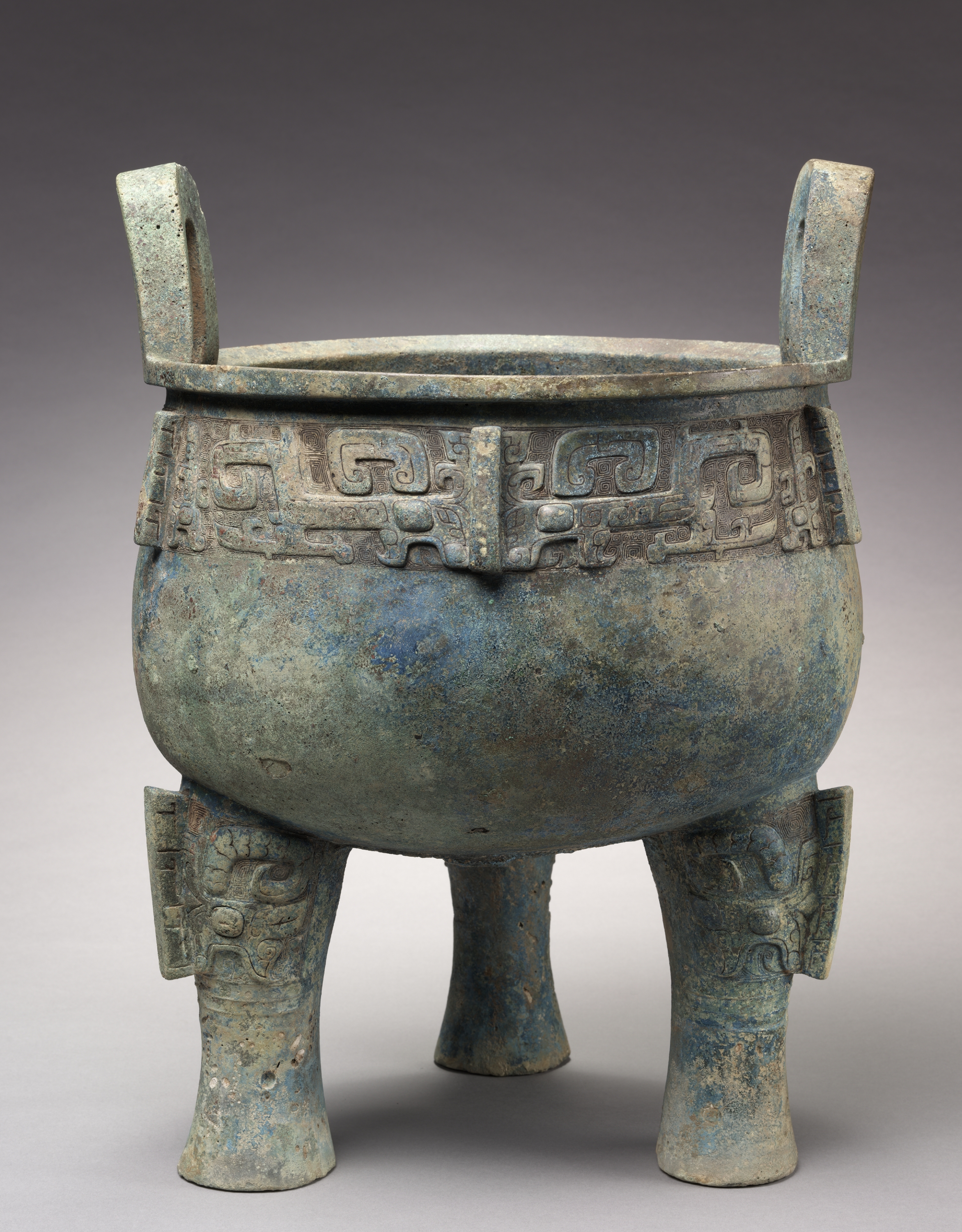
Tripod Cauldron (Ding)
Ding tripods were made in sets of graded sizes, used to offer grain and meat to ancestral spirits. The size of the set announced the rank of the person making the offering.
3400 × 3204 px · Unmodified source file
Open in StudioSource & licensing
- Creator / date
- China, Shang dynasty (c. 1600–c. 1046 BCE), maker unknown · 1200–1100 BCE
- Source credit
- The Cleveland Museum of Art, 1960.288. Open Access.
- Usage notes
- Released by the Cleveland Museum of Art under CC0 1.0. Credit to the museum is encouraged; CC0 does not imply endorsement.
- Original file
- 3400 × 3204 px · JPG · 0.0 MB
- Source checked
- 2026-11-04 · editorial approval separate
CC0 · Public domain · c. 1000–900 BCE
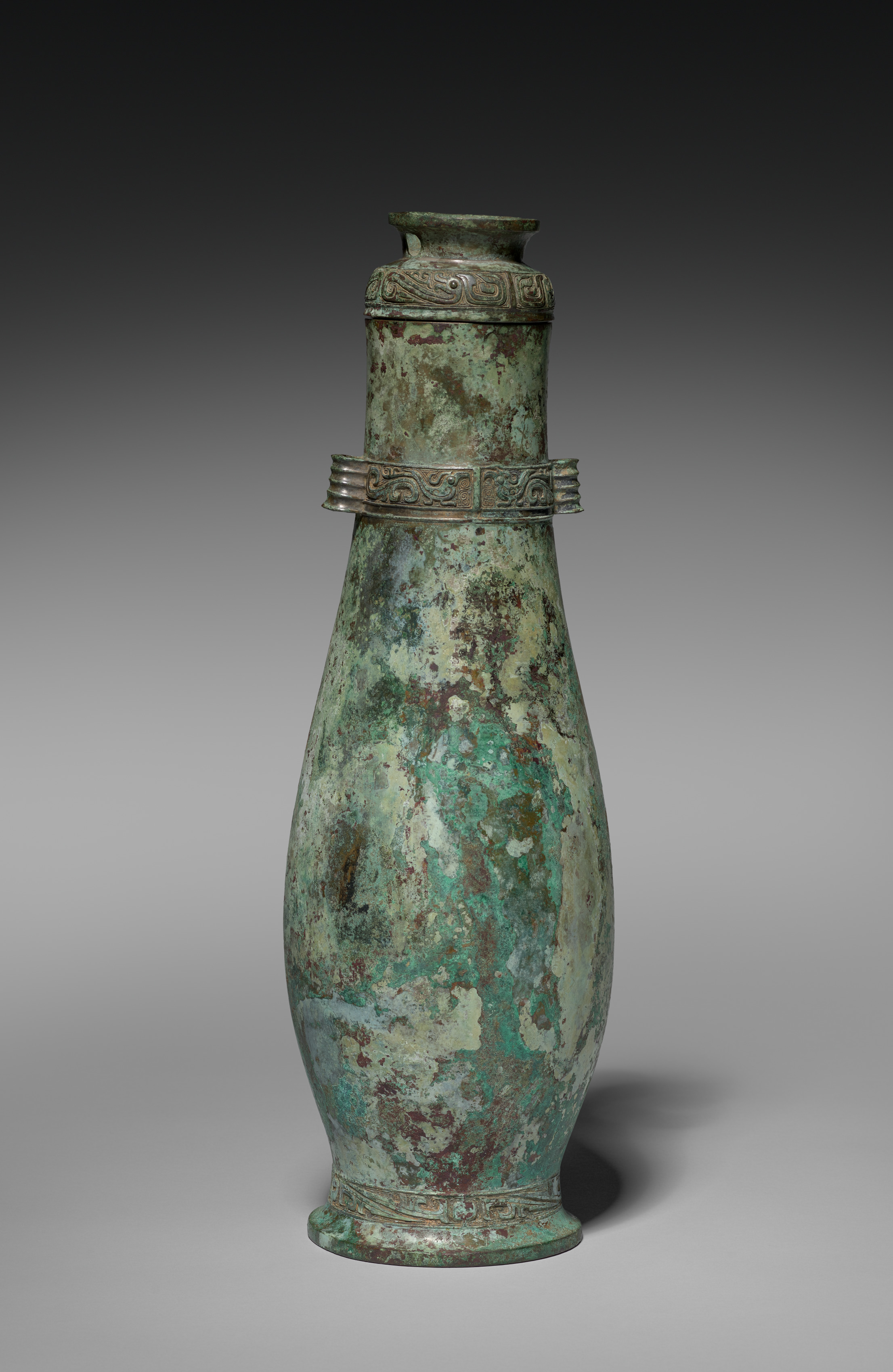
Wine Vessel (Hu)
A tall, slender wine vessel of the Western Zhou with decoration in three bands: above the foot, around the neck and on the cover, stylised birds or phoenixes in each.
2212 × 3400 px · Unmodified source file
Open in StudioSource & licensing
- Creator / date
- China, Western Zhou dynasty (c. 1046–771 BCE), maker unknown · c. 1000–900 BCE
- Source credit
- The Cleveland Museum of Art, 1944.61. Open Access.
- Usage notes
- Released by the Cleveland Museum of Art under CC0 1.0. Credit to the museum is encouraged; CC0 does not imply endorsement.
- Original file
- 2212 × 3400 px · JPG · 0.0 MB
- Source checked
- 2026-11-04 · editorial approval separate
CC0 · Public domain · c. 1000–900 BCE
Wine Vessel (Fu Wu Zun)
A fu wu zun of the Western Zhou, a shape named in its inscription rather than legible from the form alone. Vessels of this type held wine for the ancestral rites.
2818 × 3400 px · Unmodified source file
Open in StudioSource & licensing
- Creator / date
- China, Western Zhou dynasty (c. 1046–771 BCE), maker unknown · c. 1000–900 BCE
- Source credit
- The Cleveland Museum of Art, 1938.13. Open Access.
- Usage notes
- Released by the Cleveland Museum of Art under CC0 1.0. Credit to the museum is encouraged; CC0 does not imply endorsement.
- Original file
- 2818 × 3400 px · JPG · 0.0 MB
- Source checked
- 2026-11-04 · editorial approval separate
CC0 · Public domain · c. 1000 BCE
Wine Vessel (Zun)
Although the Zhou defeated the Shang, the rites and the casting of ceremonial bronzes continued. Zhou work shows a different taste: calmer, the ornament resolved into flatter bands.
3351 × 3400 px · Unmodified source file
Open in StudioSource & licensing
- Creator / date
- China, Western Zhou dynasty (c. 1046–771 BCE), maker unknown · c. 1000 BCE
- Source credit
- The Cleveland Museum of Art, 1951.151. Open Access.
- Usage notes
- Released by the Cleveland Museum of Art under CC0 1.0. Credit to the museum is encouraged; CC0 does not imply endorsement.
- Original file
- 3351 × 3400 px · JPG · 0.0 MB
- Source checked
- 2026-11-04 · editorial approval separate
CC0 · Public domain · 1000s BCE
Tripod (Ding)
A large tripod giving an effect of overpowering force, three taotie masks with coiled creatures aligned in the decorative frieze.
2343 × 3000 px · Unmodified source file
Open in StudioSource & licensing
- Creator / date
- China, Western Zhou dynasty (c. 1046–771 BCE), maker unknown · 1000s BCE
- Source credit
- The Cleveland Museum of Art, 2003.2. Open Access.
- Usage notes
- Released by the Cleveland Museum of Art under CC0 1.0. Credit to the museum is encouraged; CC0 does not imply endorsement.
- Original file
- 2343 × 3000 px · JPG · 0.0 MB
- Source checked
- 2026-11-04 · editorial approval separate
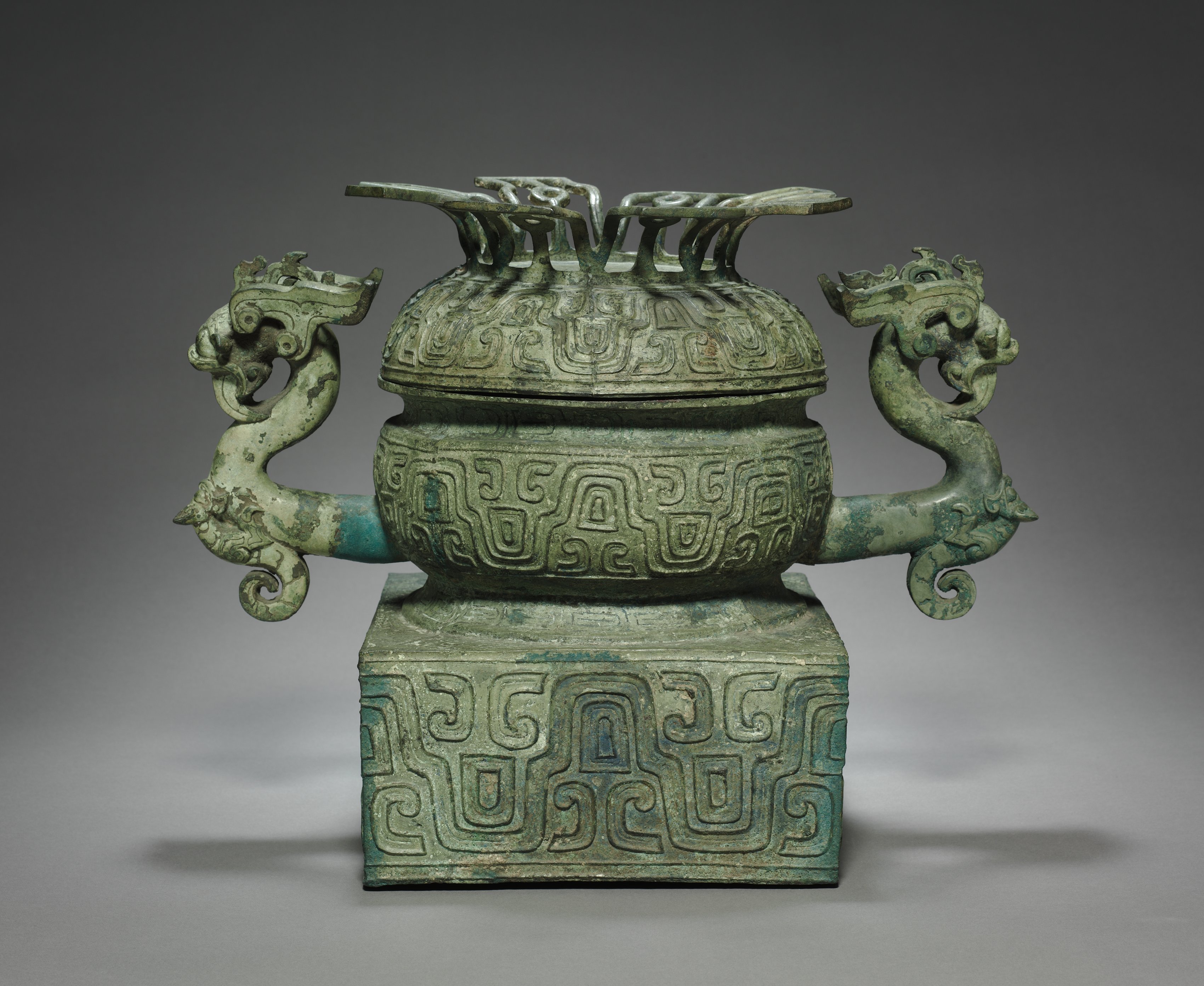
CC0 · Public domain · 600–500 BCE
Food Container (Gui)
A ritual food vessel on a square pedestal, its openwork and sculpture transforming the silhouette. The design has a baroque energy that belongs to the sixth century BCE.
3400 × 2784 px · Unmodified source file
Open in StudioSource & licensing
- Creator / date
- China, Eastern Zhou dynasty (770–256 BCE), Spring and Autumn period (770–476 BCE), maker unknown · 600–500 BCE
- Source credit
- The Cleveland Museum of Art, 1974.73. Open Access.
- Usage notes
- Released by the Cleveland Museum of Art under CC0 1.0. Credit to the museum is encouraged; CC0 does not imply endorsement.
- Original file
- 3400 × 2784 px · JPG · 0.0 MB
- Source checked
- 2026-11-04 · editorial approval separate
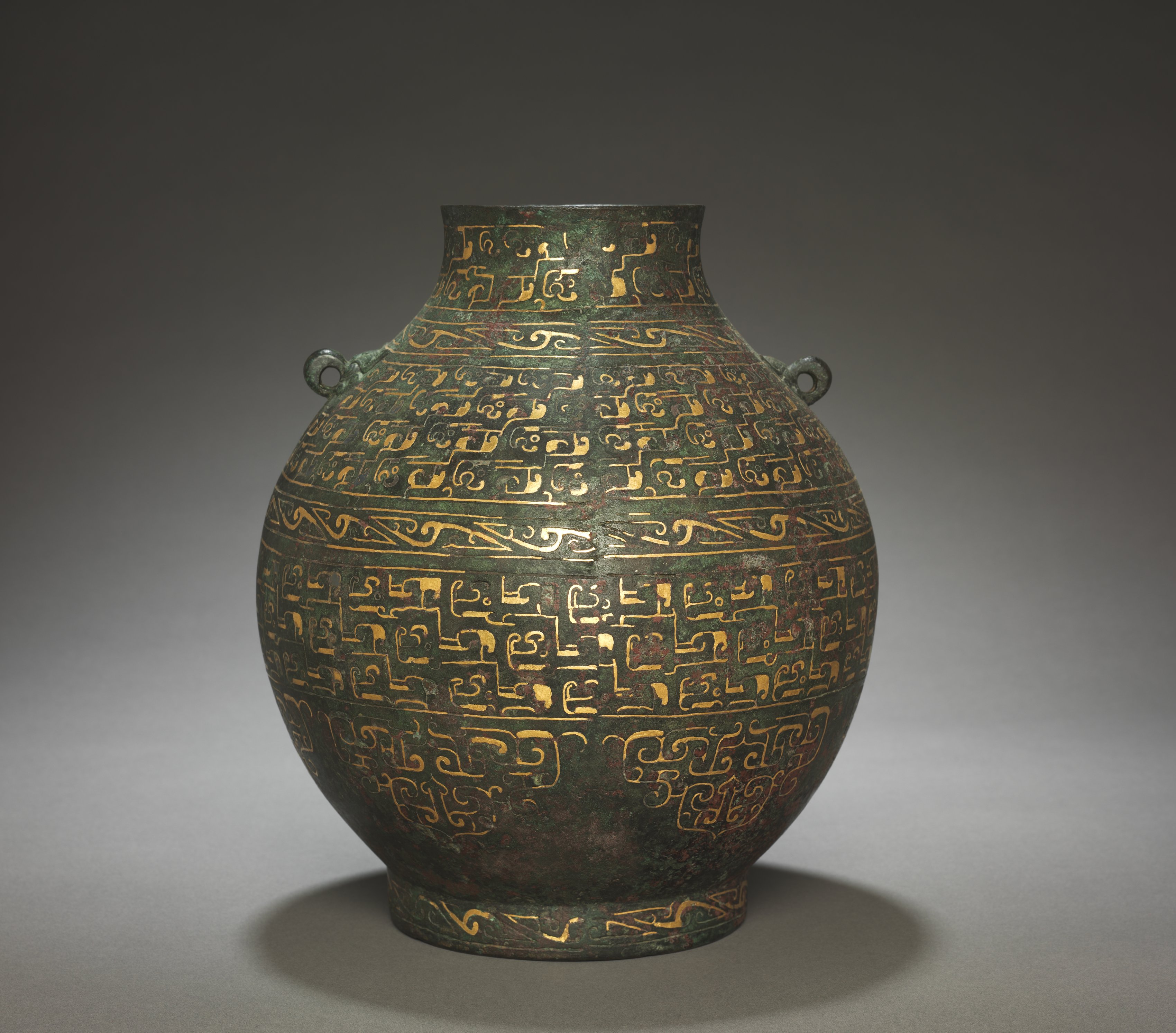
CC0 · Public domain · early 400s BCE
Wine Vessel (Hu)
By the fourth century BCE bronzes were losing ritual significance and becoming marks of prestige. This hu is inlaid with gold, ornament as conspicuous consumption.
3400 × 2986 px · Unmodified source file
Open in StudioSource & licensing
- Creator / date
- China, Warring States period (475–221 BCE), maker unknown · early 400s BCE
- Source credit
- The Cleveland Museum of Art, 1929.984. Open Access.
- Usage notes
- Released by the Cleveland Museum of Art under CC0 1.0. Credit to the museum is encouraged; CC0 does not imply endorsement.
- Original file
- 3400 × 2986 px · JPG · 0.0 MB
- Source checked
- 2026-11-04 · editorial approval separate
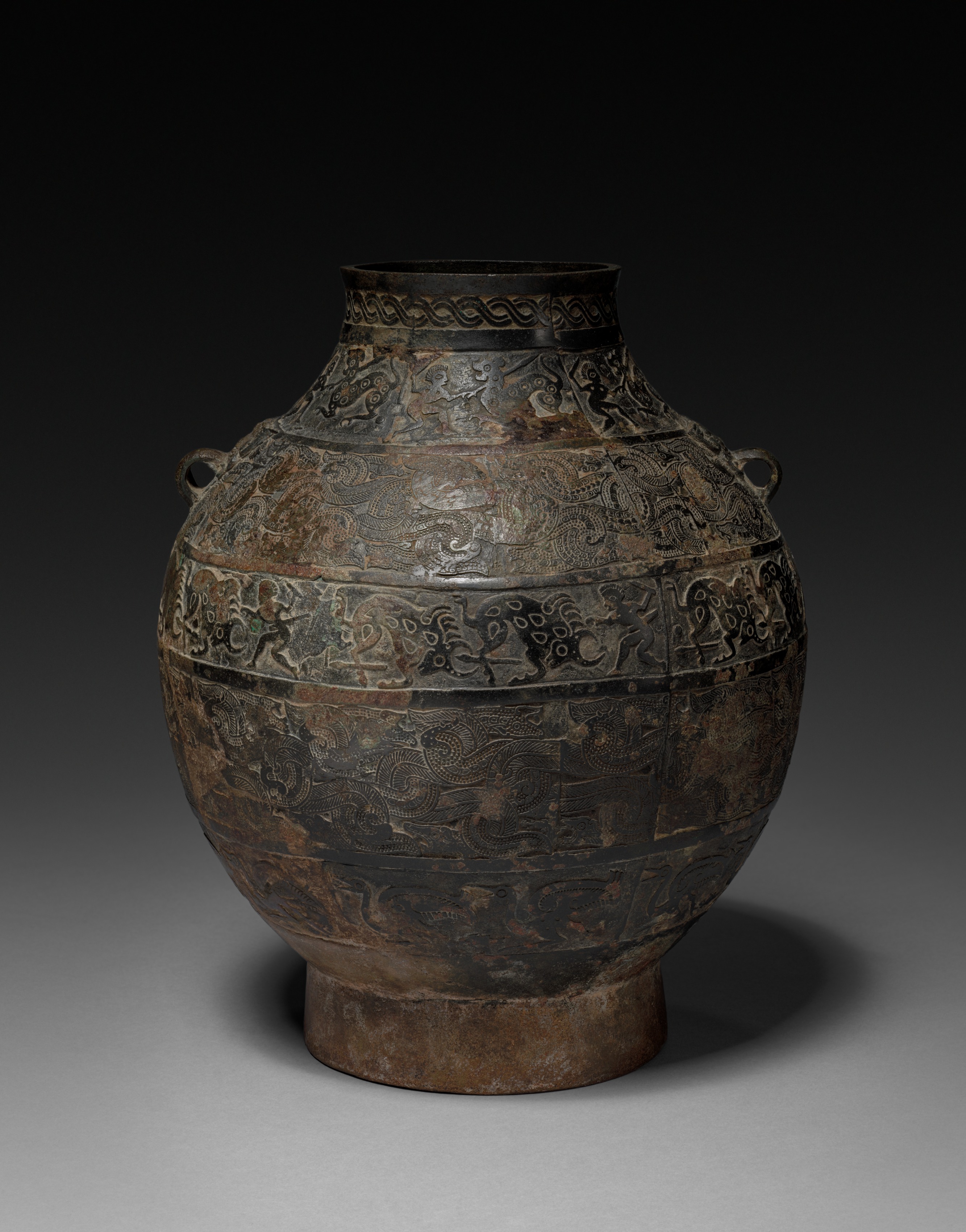
CC0 · Public domain · 481–221 BCE
Hu (Jar)
The hunting scenes in flat low relief are among the earliest pictorial scenes in Chinese art, running around the body of the vessel as a continuous narrative.
2666 × 3400 px · Unmodified source file
Open in StudioSource & licensing
- Creator / date
- China, Eastern Zhou dynasty (770–256 BCE), Warring States period (475–221 BCE), maker unknown · 481–221 BCE
- Source credit
- The Cleveland Museum of Art, 1975.62. Open Access.
- Usage notes
- Released by the Cleveland Museum of Art under CC0 1.0. Credit to the museum is encouraged; CC0 does not imply endorsement.
- Original file
- 2666 × 3400 px · JPG · 0.0 MB
- Source checked
- 2026-11-04 · editorial approval separate
Public-domain status is reported by the linked source and may vary by jurisdiction. Check the source record for your intended use. No exclusive rights or Visual Bounty marketplace license are offered for these images.