← Open CollectionsPublic-domain source library
Knot and Field: Carpets from Spain to Central Asia
A knotted carpet is a pattern built one knot at a time, and the knot itself is diagnostic: symmetrical in Turkey and the Caucasus, asymmetrical in Iran and India, jufti spanning four warps when speed mattered more than drawing. This collection moves from an eleventh-century fragment on the Iranian plateau through Mudejar Spain, Safavid Isfahan, Mughal Kashmir and the Turkmen tribes, ending with a Savonnerie carpet made for a French royal dining room. Fields, medallions and borders are all reproduced here in the same material.
Original means the unmodified digital file supplied by the linked archive, not an upscaled or reconstructed image. Sign in for free downloads. Studio uses a working preview up to 2048 px.
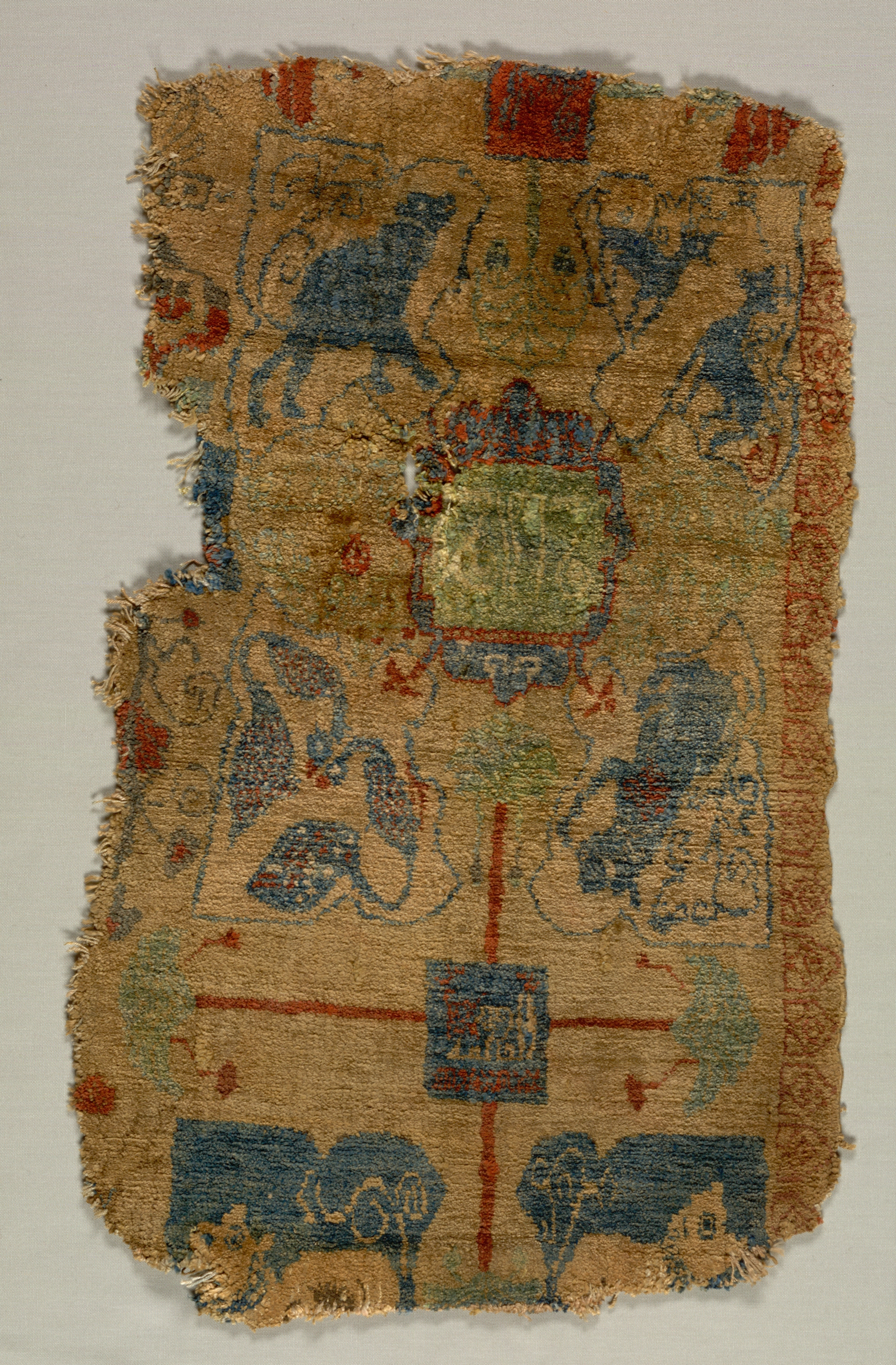
CC0 · Public domain · 1100s
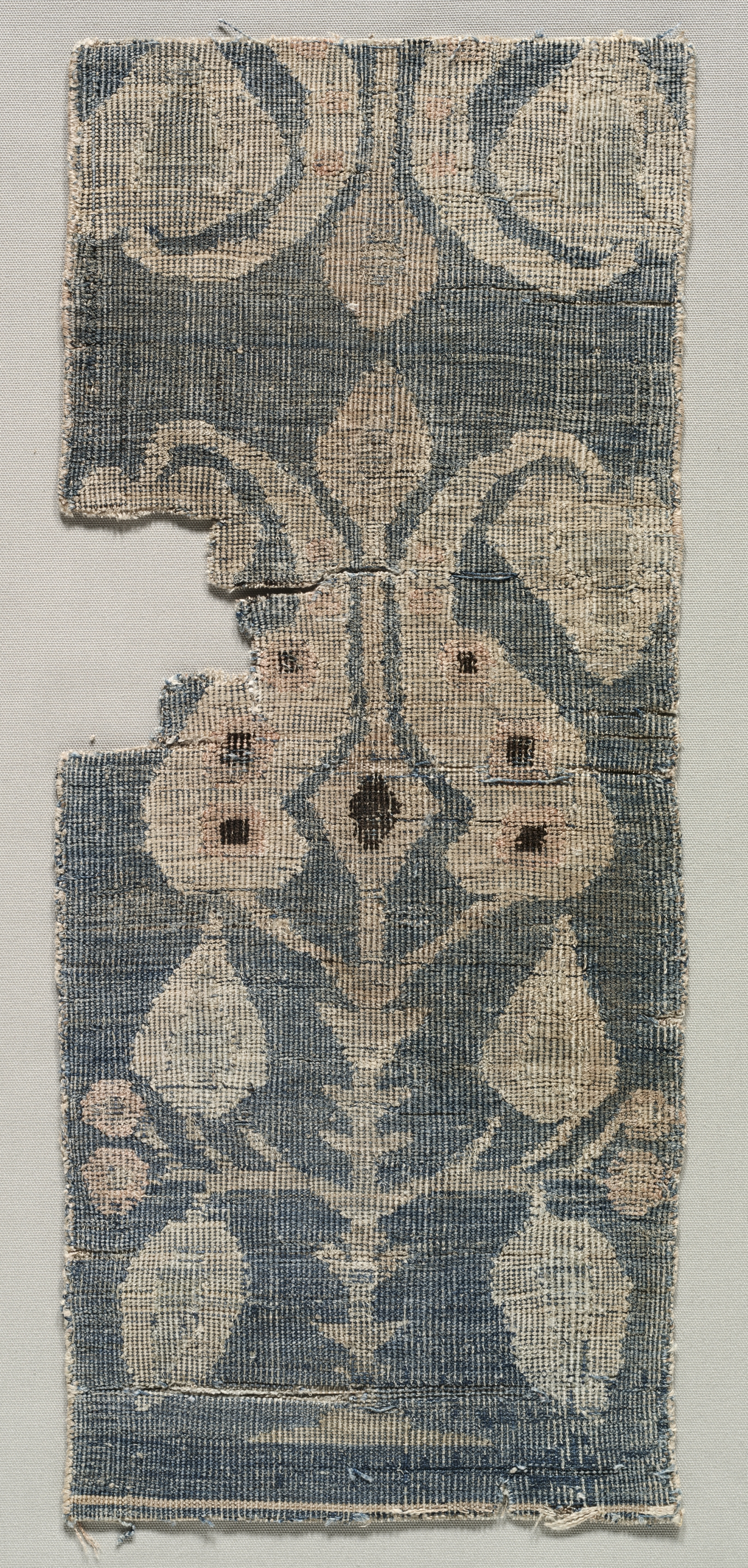
Two-faced Carpet Fragment
A fragment that preserves parts of the design on both faces of the carpet. One face shows a stylised tulip with part of its mirror image, evidence of how early knotting was planned in repeats.
× px · Unmodified source file
Small archival scan: best for reference and screen use, not large prints.
Open in StudioSource & licensing
- Creator / date
- Iran (?), Seljuq period, maker unknown · 1100s
- Source credit
- The Cleveland Museum of Art, 1966.132. Open Access.
- Usage notes
- Released by the Cleveland Museum of Art under CC0 1.0. Credit to the museum is encouraged; CC0 does not imply endorsement.
- Original file
- × px · JPG · 0.0 MB
- Source checked
- 2026-11-04 · editorial approval separate
CC0 · Public domain · c. 1450–1500
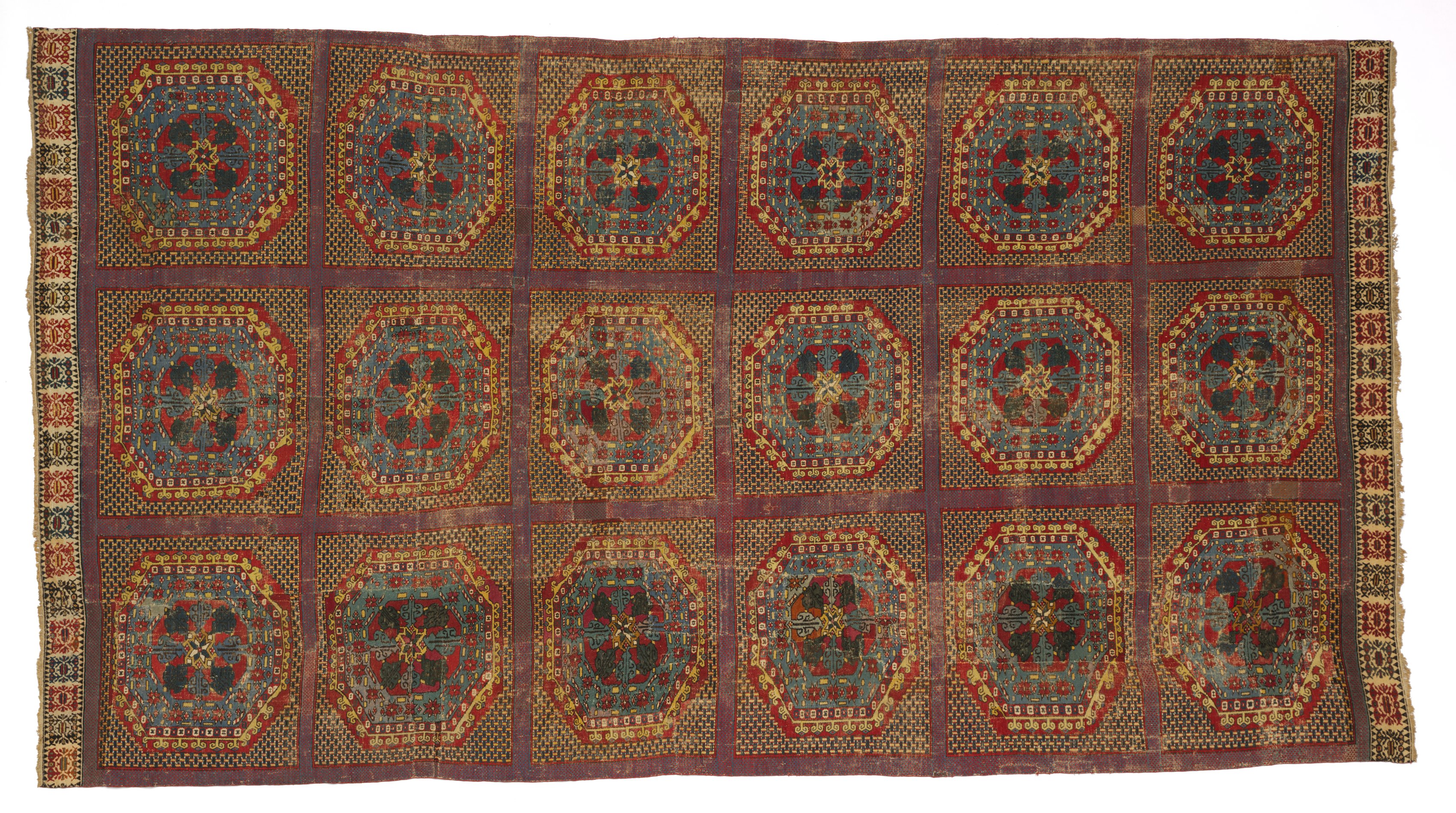
Spanish Carpet with a Turkish Pattern
A knotted wool carpet made by Muslim weavers in Spain, its pattern drawn from Iberian design, luxury silk and imported Turkish carpets at once. Three traditions meeting in one field.
× px · Unmodified source file
Small archival scan: best for reference and screen use, not large prints.
Open in StudioSource & licensing
- Creator / date
- Spain, Alcaraz (?), Mudejar, maker unknown · c. 1450–1500
- Source credit
- The Cleveland Museum of Art, 1952.511. Open Access.
- Usage notes
- Released by the Cleveland Museum of Art under CC0 1.0. Credit to the museum is encouraged; CC0 does not imply endorsement.
- Original file
- × px · JPG · 0.0 MB
- Source checked
- 2026-11-04 · editorial approval separate
CC0 · Public domain · 1500s
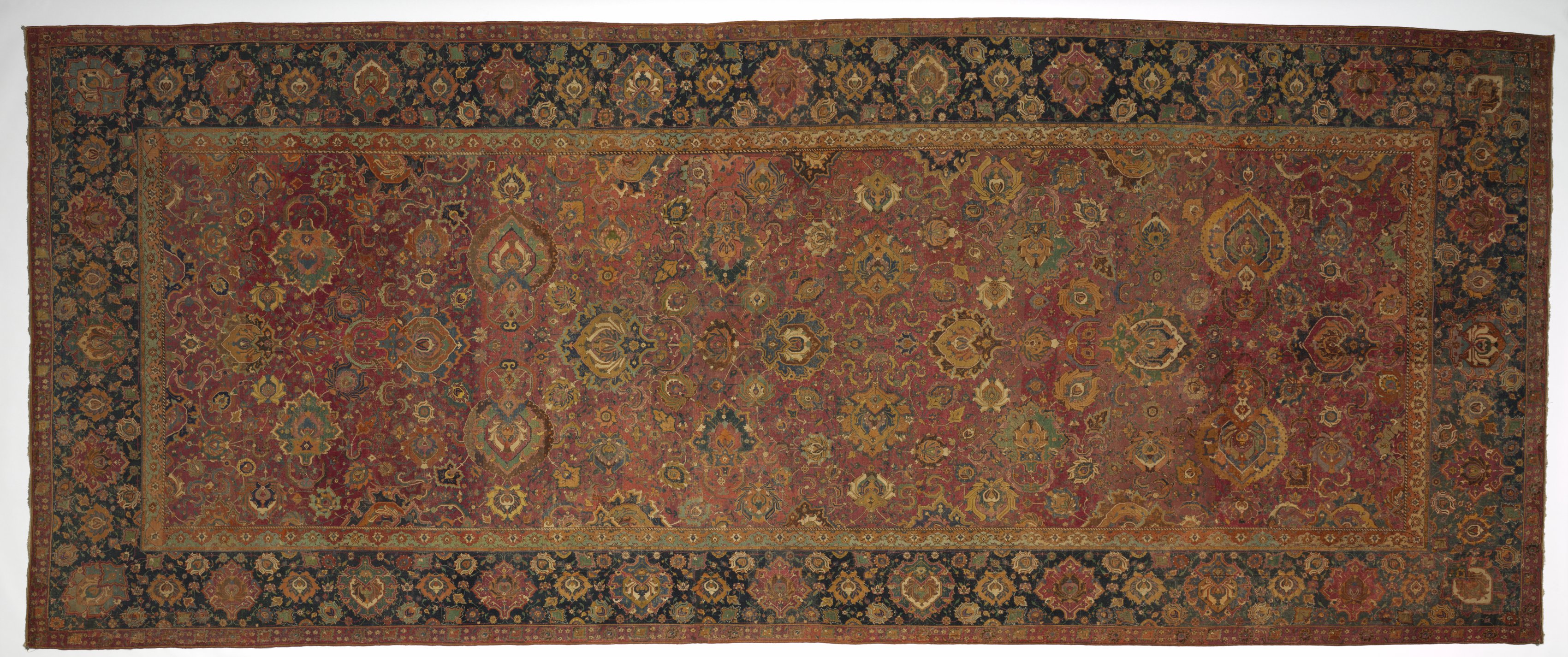
Carpet
A sixteenth-century Herat carpet in wool and cotton. The Mughals, with nomadic Central Asian roots, moved their furnishings constantly, and portable luxury like this was built for that life.
× px · Unmodified source file
Small archival scan: best for reference and screen use, not large prints.
Open in StudioSource & licensing
- Creator / date
- Iran, Herat, maker unknown · 1500s
- Source credit
- The Cleveland Museum of Art, 1962.263. Open Access.
- Usage notes
- Released by the Cleveland Museum of Art under CC0 1.0. Credit to the museum is encouraged; CC0 does not imply endorsement.
- Original file
- × px · JPG · 0.0 MB
- Source checked
- 2026-11-04 · editorial approval separate
CC0 · Public domain · 1600–1625
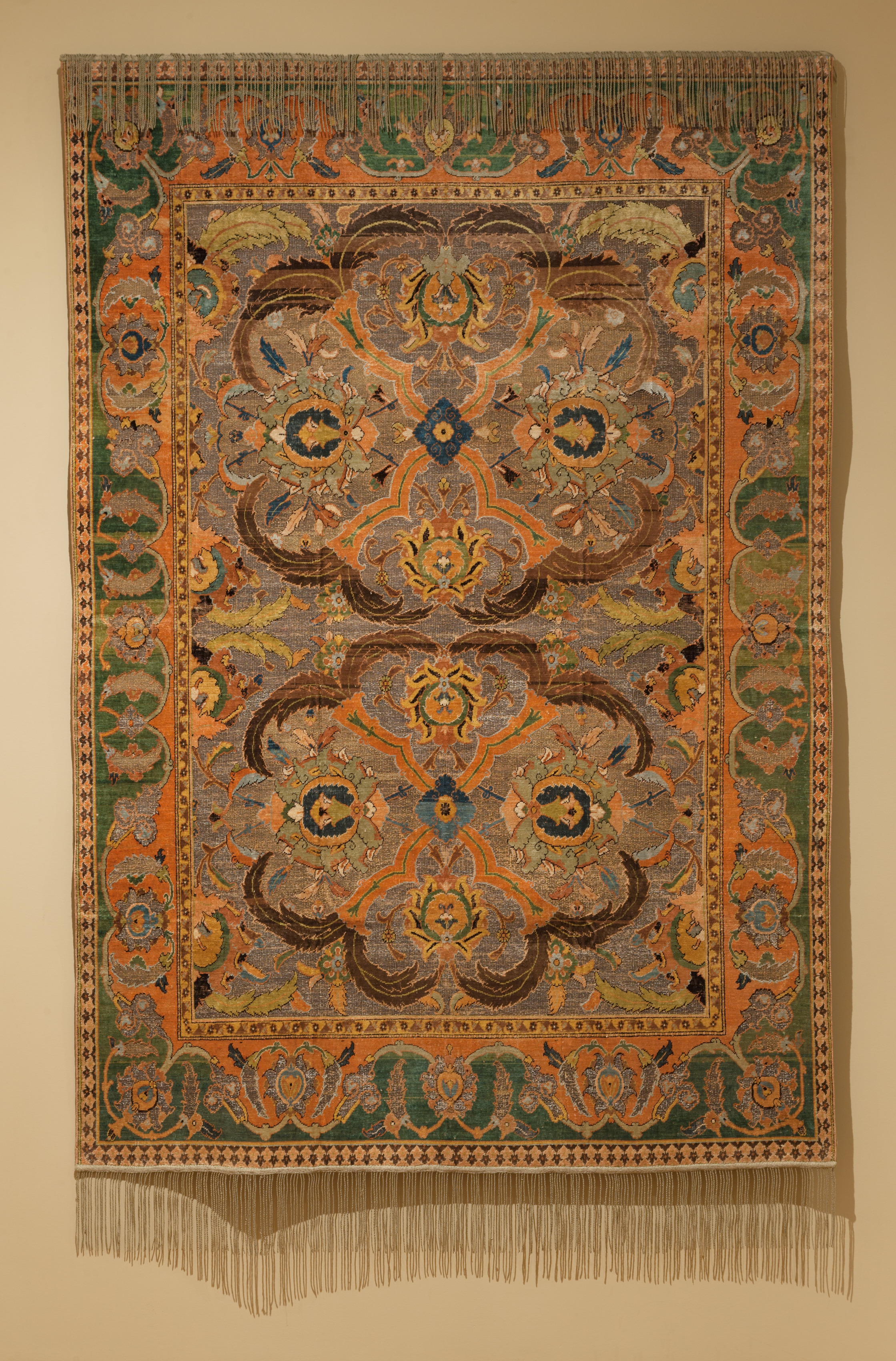
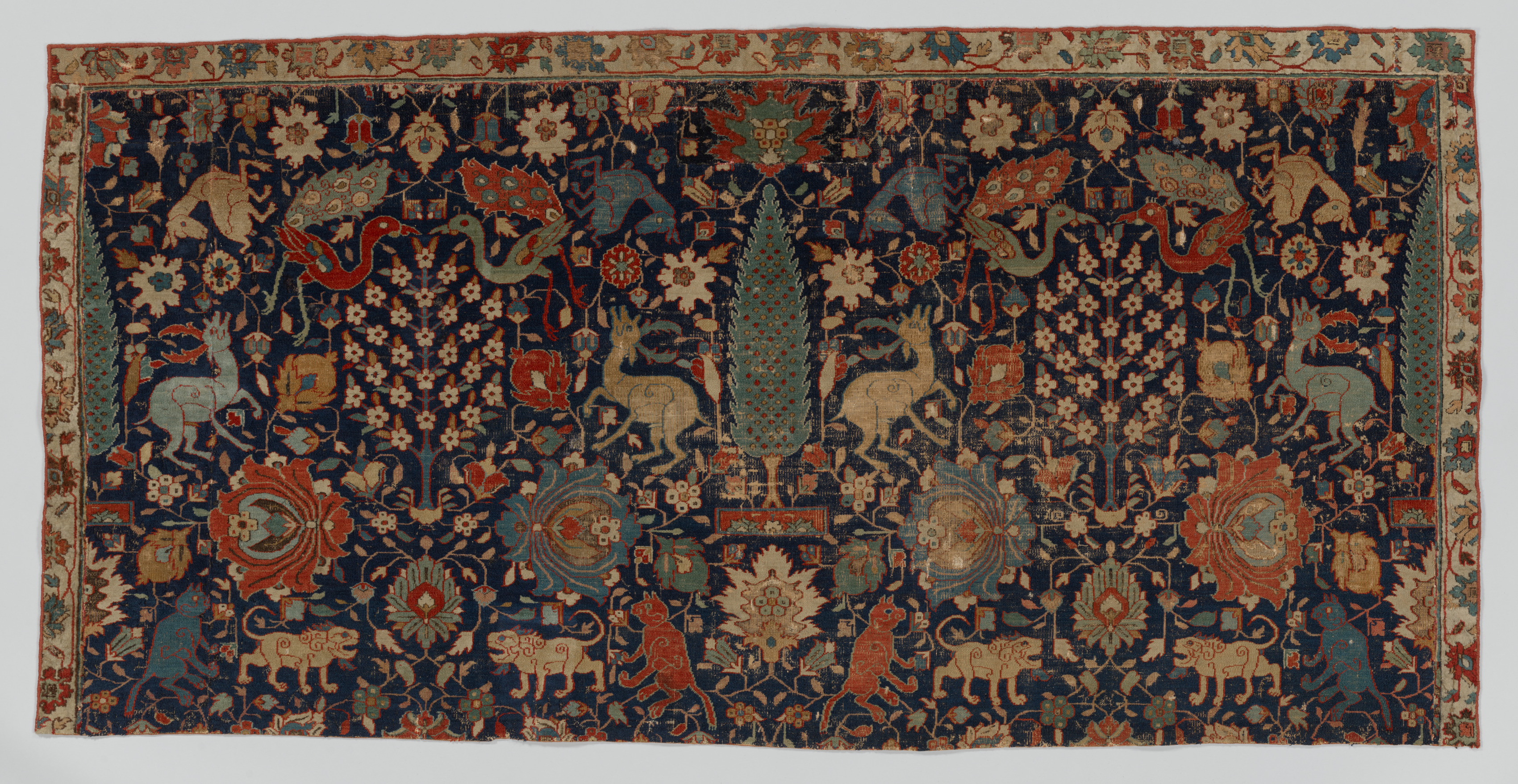
Royal Carpet with Silk and Metal Thread
A Safavid royal carpet in silk and metal thread, from the dynasty that produced the most celebrated carpets in Iranian history. Silk pile catches light where wool absorbs it, so the field changes as you walk past.
× px · Unmodified source file
Small archival scan: best for reference and screen use, not large prints.
Open in StudioSource & licensing
- Creator / date
- Iran, Isfahan, Safavid period, maker unknown · 1600–1625
- Source credit
- The Cleveland Museum of Art, 1926.533. Open Access.
- Usage notes
- Released by the Cleveland Museum of Art under CC0 1.0. Credit to the museum is encouraged; CC0 does not imply endorsement.
- Original file
- × px · JPG · 0.0 MB
- Source checked
- 2026-11-04 · editorial approval separate
CC0 · Public domain · 17th century
Carpet
A seventeenth-century Kerman carpet, from a city whose workshops supplied the court and the export trade. Kerman design favours a medallion in a field of vines rather than an all-over repeat.
× px · Unmodified source file
Small archival scan: best for reference and screen use, not large prints.
Open in StudioSource & licensing
- Creator / date
- Iran, Kerman (probably), maker unknown · 17th century
- Source credit
- The Cleveland Museum of Art, 1922.349. Open Access.
- Usage notes
- Released by the Cleveland Museum of Art under CC0 1.0. Credit to the museum is encouraged; CC0 does not imply endorsement.
- Original file
- × px · JPG · 0.0 MB
- Source checked
- 2026-11-04 · editorial approval separate
CC0 · Public domain · 1600s
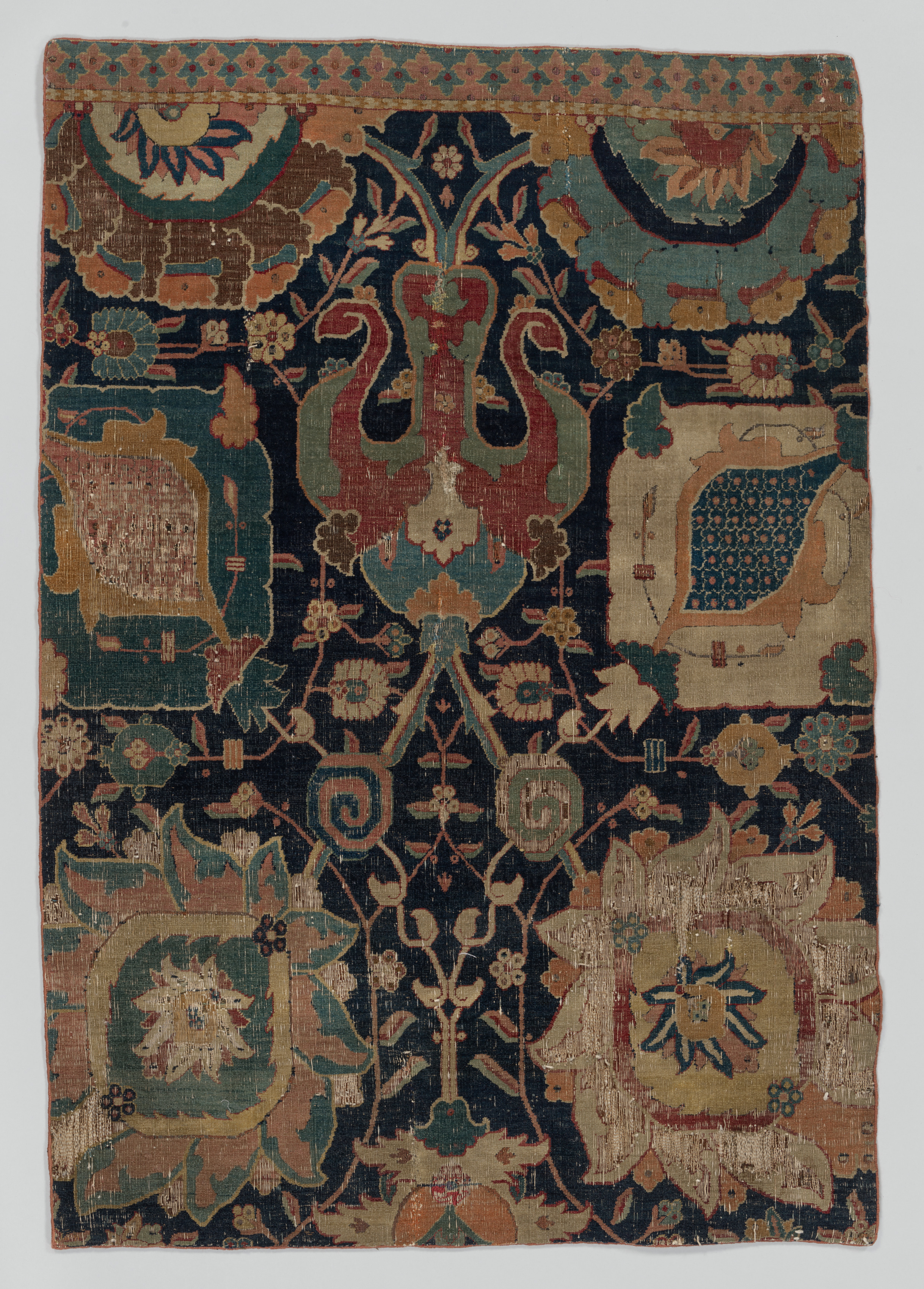
Portion of a Carpet
A portion of a seventeenth-century carpet worked in the jufti knot, where the knot spans four warps instead of two. The shortcut is faster and produces a coarser drawing, visible in the pattern.
× px · Unmodified source file
Small archival scan: best for reference and screen use, not large prints.
Open in StudioSource & licensing
- Creator / date
- Iran, Northwestern, maker unknown · 1600s
- Source credit
- The Cleveland Museum of Art, 1953.128. Open Access.
- Usage notes
- Released by the Cleveland Museum of Art under CC0 1.0. Credit to the museum is encouraged; CC0 does not imply endorsement.
- Original file
- × px · JPG · 0.0 MB
- Source checked
- 2026-11-04 · editorial approval separate
CC0 · Public domain · 1600–1650
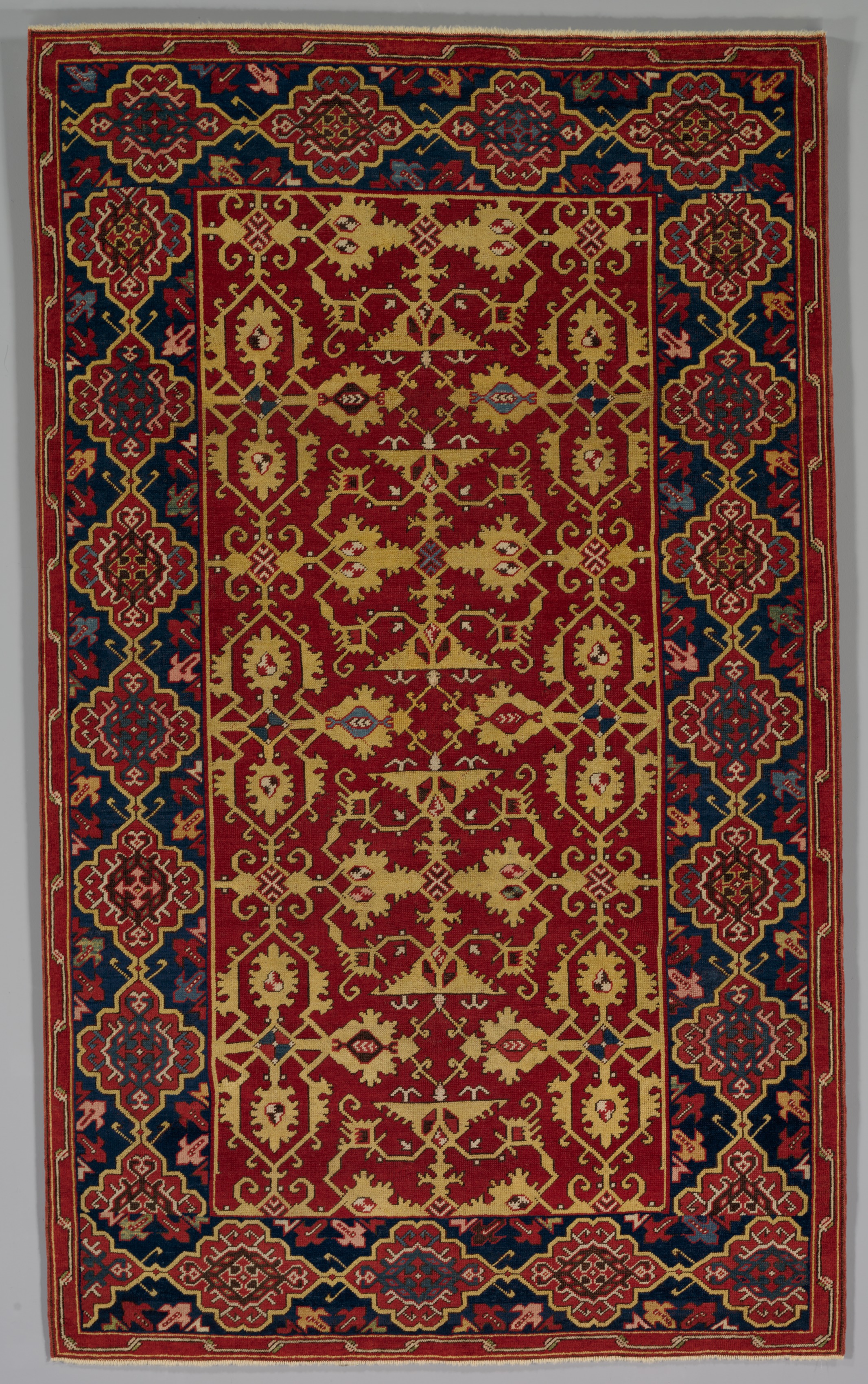
Classical Turkish Carpet with the Lotto Pattern
A Lotto carpet, named after the Venetian painter who put them into his pictures. The yellow lattice and blue ground were consistent enough that the type can be traced back to Central Asian sources.
× px · Unmodified source file
Small archival scan: best for reference and screen use, not large prints.
Open in StudioSource & licensing
- Creator / date
- Turkey, Ushak, Ottoman period, maker unknown · 1600–1650
- Source credit
- The Cleveland Museum of Art, 2015.61. Open Access.
- Usage notes
- Released by the Cleveland Museum of Art under CC0 1.0. Credit to the museum is encouraged; CC0 does not imply endorsement.
- Original file
- × px · JPG · 0.0 MB
- Source checked
- 2026-11-04 · editorial approval separate
CC0 · Public domain · early 1600s
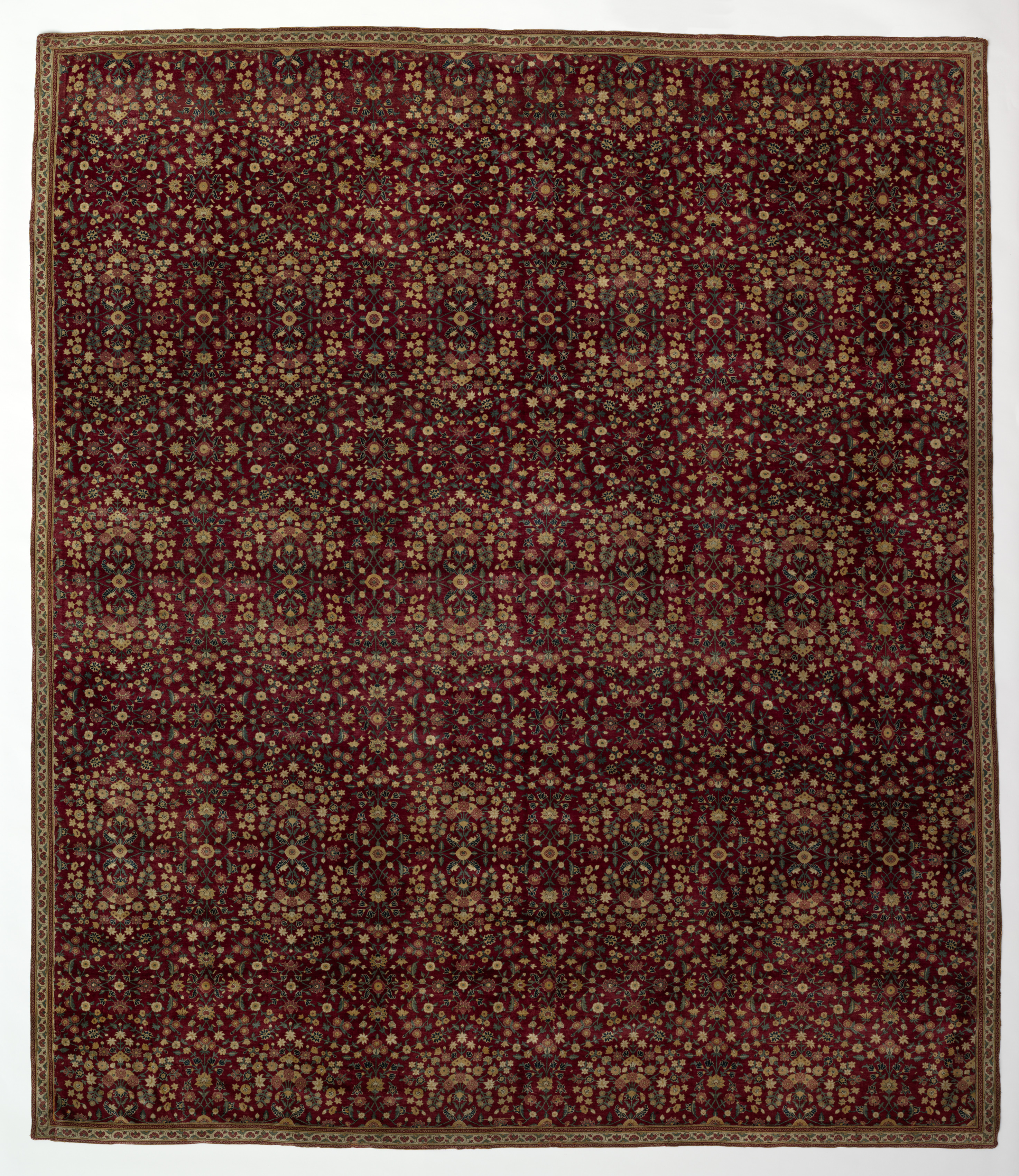
Woollen carpet with millefleurs decoration
A millefleurs carpet in pashmina, the fine Himalayan goat fleece prized at the Mughal court. A thousand flowers scattered without a medallion, so the field has no centre.
× px · Unmodified source file
Small archival scan: best for reference and screen use, not large prints.
Open in StudioSource & licensing
- Creator / date
- India, Kashmir, maker unknown · early 1600s
- Source credit
- The Cleveland Museum of Art, 1936.17. Open Access.
- Usage notes
- Released by the Cleveland Museum of Art under CC0 1.0. Credit to the museum is encouraged; CC0 does not imply endorsement.
- Original file
- × px · JPG · 0.0 MB
- Source checked
- 2026-11-04 · editorial approval separate
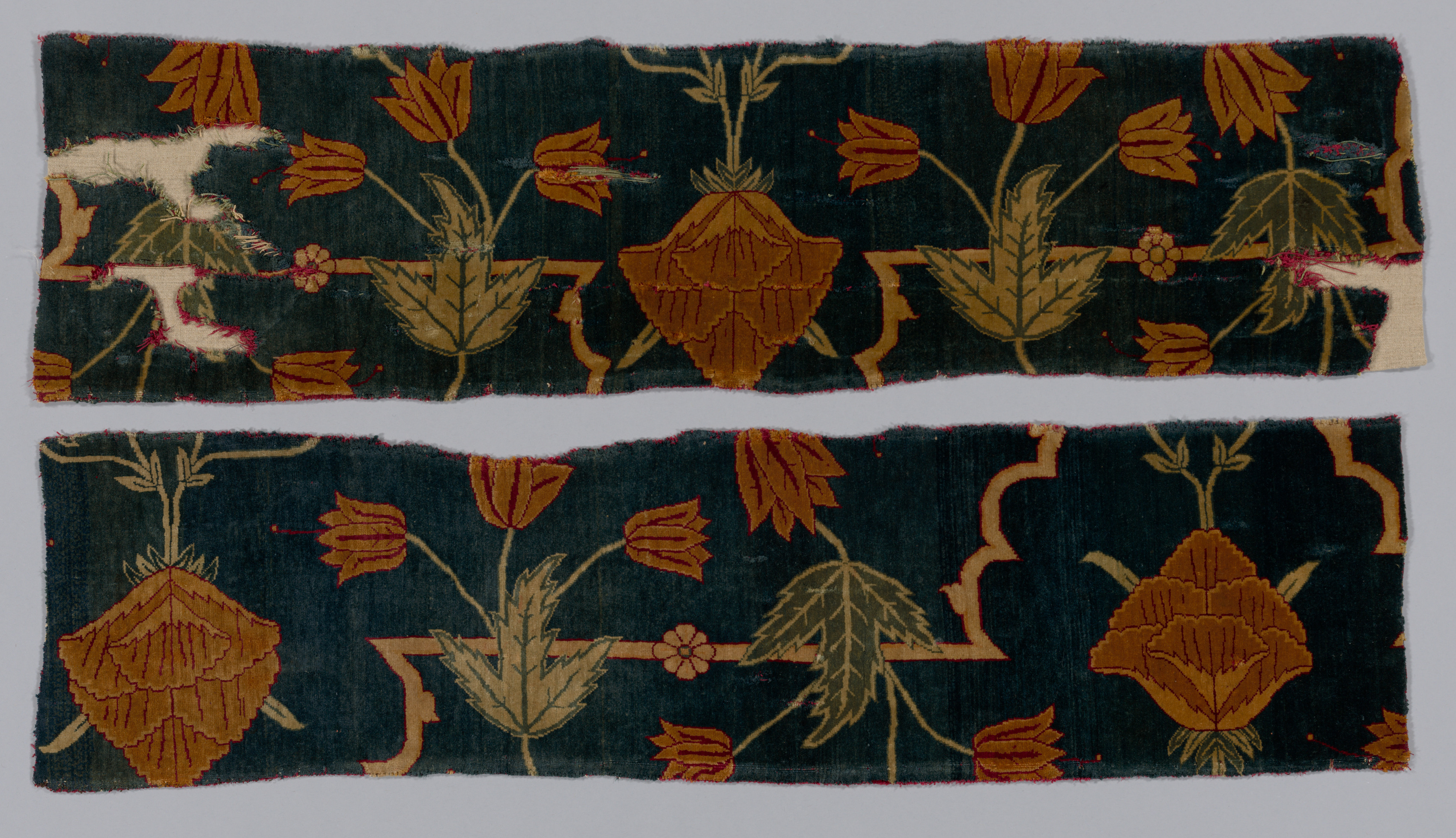
CC0 · Public domain · 1600–1650
Fragments of a carpet
Silk and wool fragments of a seventeenth-century Indian carpet. Silk in the pile raises the pattern above the wool ground, so the design is modelled rather than flat.
× px · Unmodified source file
Small archival scan: best for reference and screen use, not large prints.
Open in StudioSource & licensing
- Creator / date
- India, maker unknown · 1600–1650
- Source credit
- The Cleveland Museum of Art, 1928.205. Open Access.
- Usage notes
- Released by the Cleveland Museum of Art under CC0 1.0. Credit to the museum is encouraged; CC0 does not imply endorsement.
- Original file
- × px · JPG · 0.0 MB
- Source checked
- 2026-11-04 · editorial approval separate
CC0 · Public domain · late 1800s–early 1900s
Carpet Fragment
A silk carpet fragment with large spade-shaped palmettes filling each corner, animals and birds woven into them. Silk pile at this scale is unusually fine, closer to painting than to furnishing.
× px · Unmodified source file
Small archival scan: best for reference and screen use, not large prints.
Open in StudioSource & licensing
- Creator / date
- Iran, Rayy, maker unknown · late 1800s–early 1900s
- Source credit
- The Cleveland Museum of Art, 1988.243. Open Access.
- Usage notes
- Released by the Cleveland Museum of Art under CC0 1.0. Credit to the museum is encouraged; CC0 does not imply endorsement.
- Original file
- × px · JPG · 0.0 MB
- Source checked
- 2026-11-04 · editorial approval separate
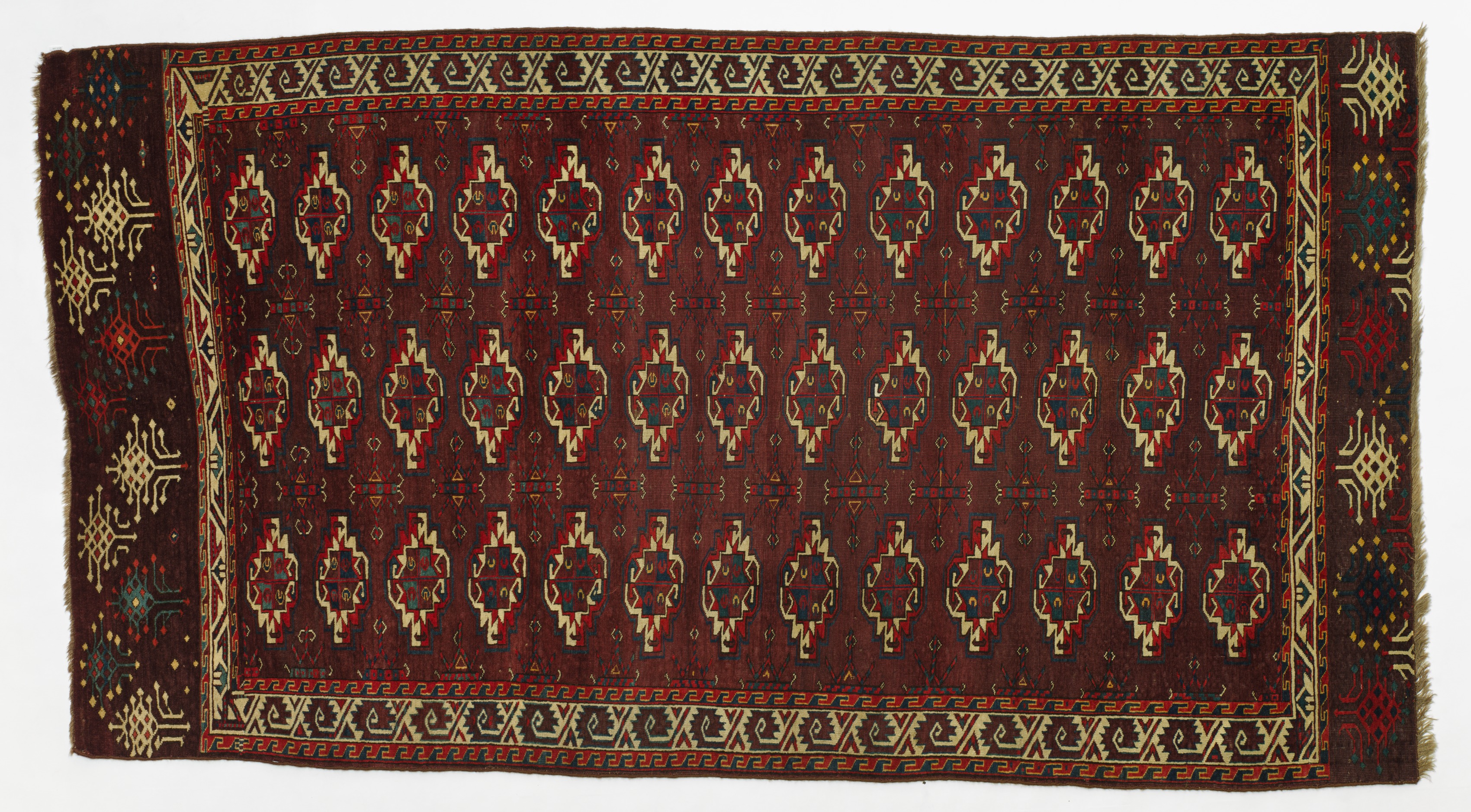
CC0 · Public domain · mid-1850s
Turkmen Main Carpet
A Yomud main carpet at 128 to 136 symmetrical knots per square inch. In the Islamic world a carpet signalled standing, and a tribe, a region and a family could all be read from its design and palette.
× px · Unmodified source file
Small archival scan: best for reference and screen use, not large prints.
Open in StudioSource & licensing
- Creator / date
- Turkmenistan, Yomud tribe, maker unknown · mid-1850s
- Source credit
- The Cleveland Museum of Art, 2010.190. Open Access.
- Usage notes
- Released by the Cleveland Museum of Art under CC0 1.0. Credit to the museum is encouraged; CC0 does not imply endorsement.
- Original file
- × px · JPG · 0.0 MB
- Source checked
- 2026-11-04 · editorial approval separate
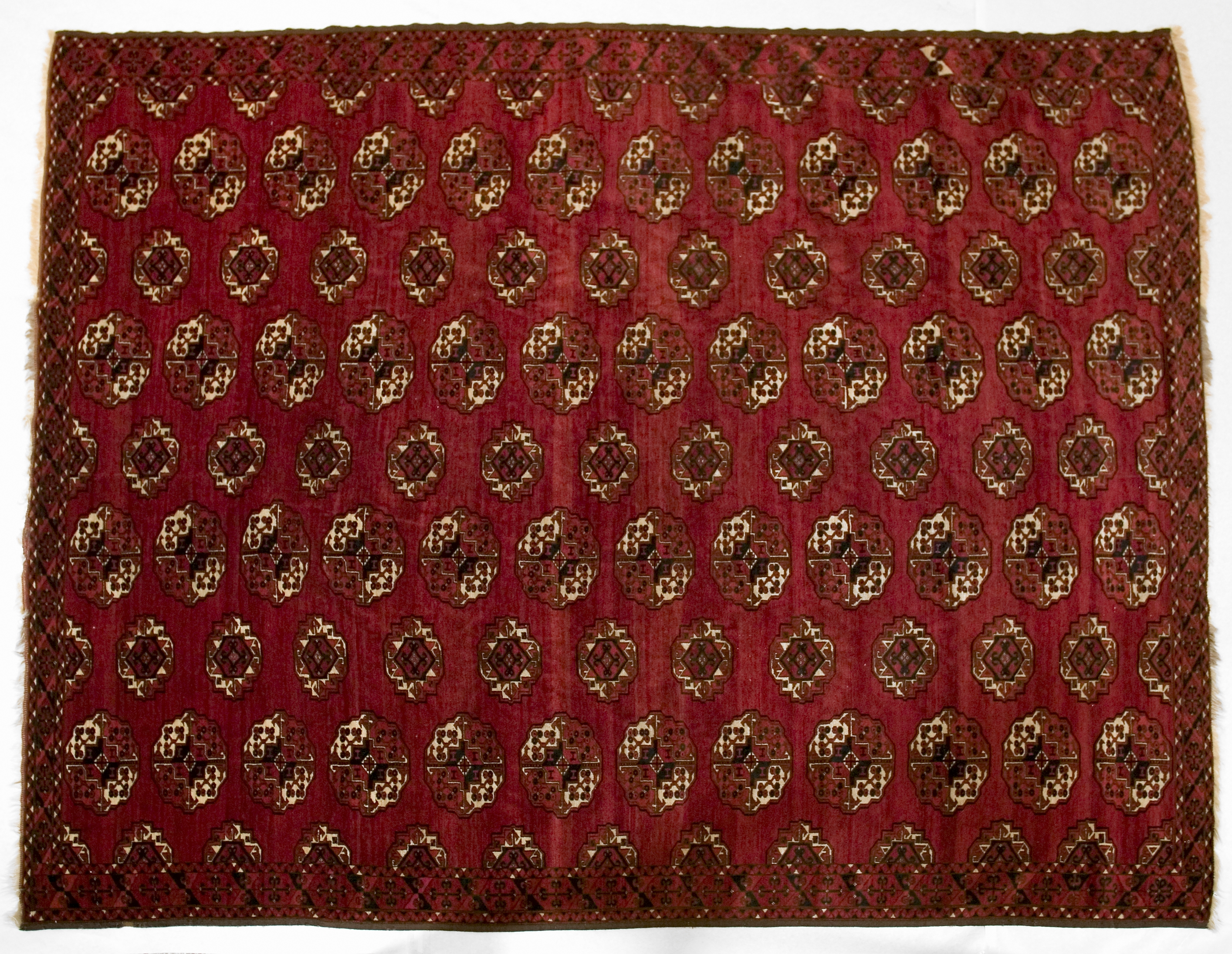
CC0 · Public domain · 1870s
Turkmen Main Carpet
A Saryk carpet, traditionally woven by women and girls, identified by fibre, colour, weave and knot type. The knot is the signature: it records the hand that made it.
× px · Unmodified source file
Small archival scan: best for reference and screen use, not large prints.
Open in StudioSource & licensing
- Creator / date
- Turkmenistan or Afghanistan, Saryk tribe, maker unknown · 1870s
- Source credit
- The Cleveland Museum of Art, 2006.201. Open Access.
- Usage notes
- Released by the Cleveland Museum of Art under CC0 1.0. Credit to the museum is encouraged; CC0 does not imply endorsement.
- Original file
- × px · JPG · 0.0 MB
- Source checked
- 2026-11-04 · editorial approval separate
CC0 · Public domain · 1890
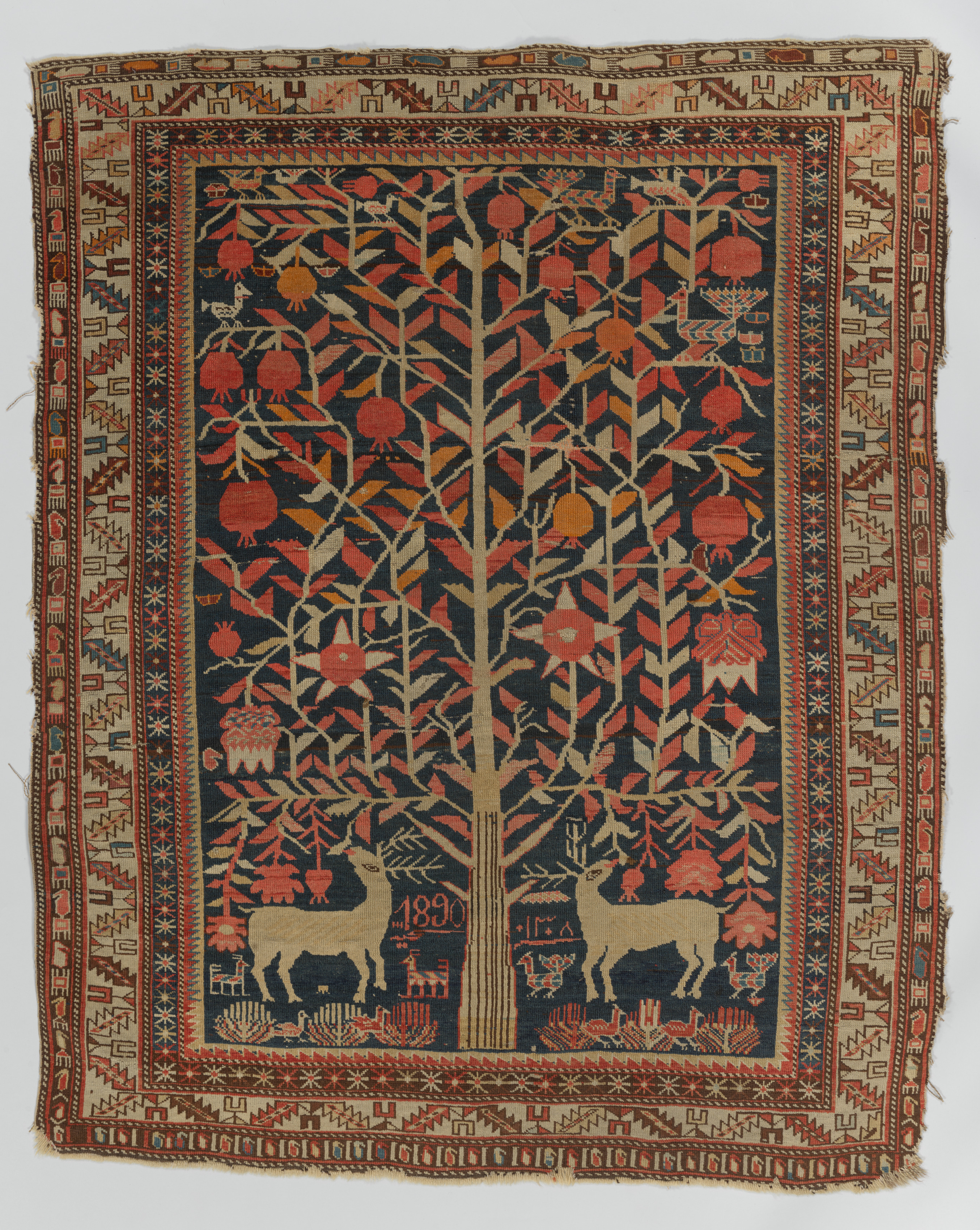
Carpet
An Azerbaijani carpet of 1890 in the Ghiordez knot, a symmetrical knot associated with the Caucasus and Anatolia. Dated village rugs are the documents of a tradition that rarely signed itself.
× px · Unmodified source file
Small archival scan: best for reference and screen use, not large prints.
Open in StudioSource & licensing
- Creator / date
- Azerbaijan, maker unknown · 1890
- Source credit
- The Cleveland Museum of Art, 1961.383. Open Access.
- Usage notes
- Released by the Cleveland Museum of Art under CC0 1.0. Credit to the museum is encouraged; CC0 does not imply endorsement.
- Original file
- × px · JPG · 0.0 MB
- Source checked
- 2026-11-04 · editorial approval separate
CC0 · Public domain · 1800s–1960
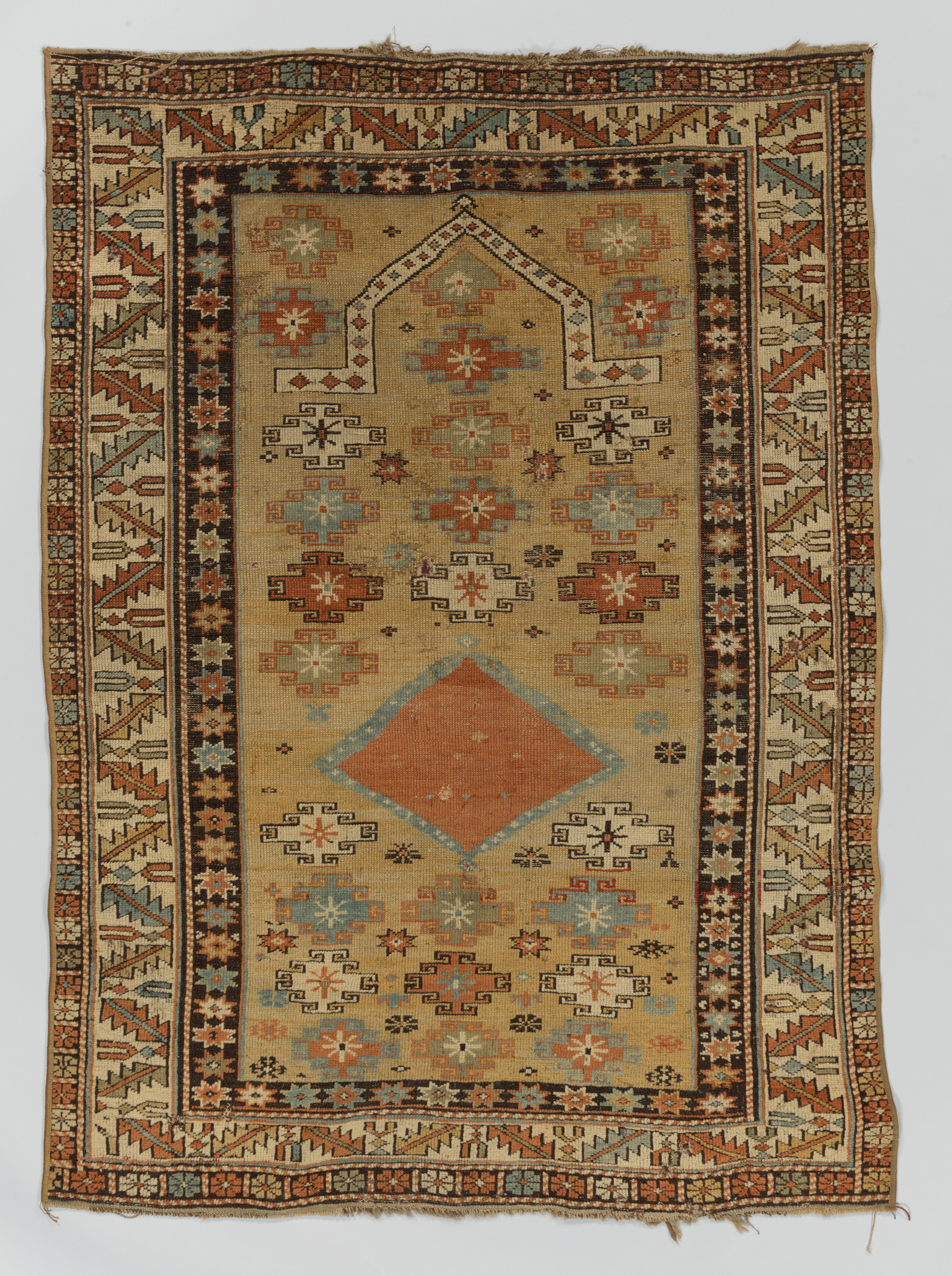
Carpet
A Shirvan carpet in the same knot and a denser geometric vocabulary. Caucasian design works in hard-edged medallions, the opposite of the Persian curved vine.
× px · Unmodified source file
Small archival scan: best for reference and screen use, not large prints.
Open in StudioSource & licensing
- Creator / date
- Iran, Shirvan, maker unknown · 1800s–1960
- Source credit
- The Cleveland Museum of Art, 1961.390. Open Access.
- Usage notes
- Released by the Cleveland Museum of Art under CC0 1.0. Credit to the museum is encouraged; CC0 does not imply endorsement.
- Original file
- × px · JPG · 0.0 MB
- Source checked
- 2026-11-04 · editorial approval separate
CC0 · Public domain · c. 1740–50
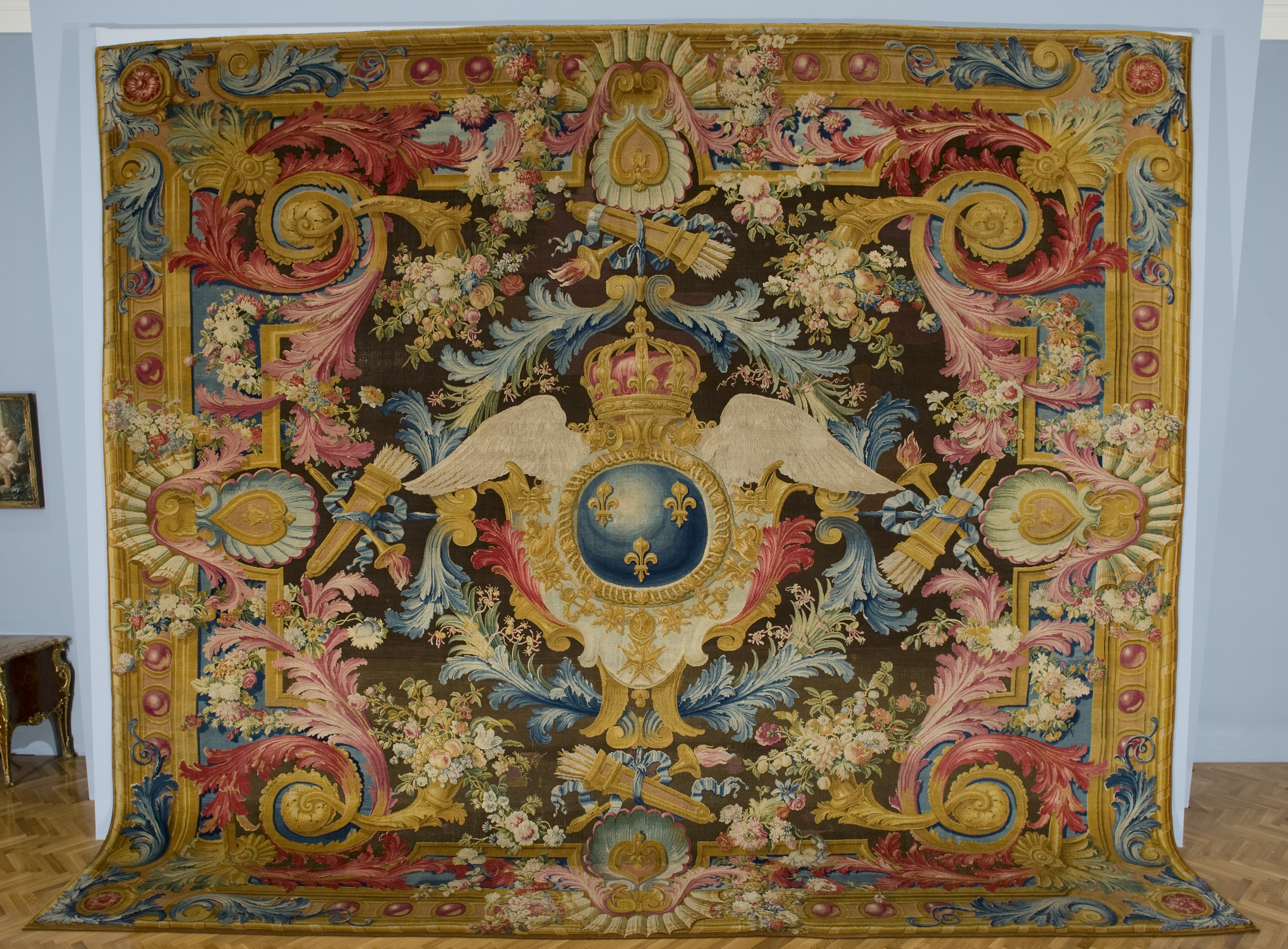
Louis XV Savonnerie Carpet with Royal Arms
One of three carpets made to the same royal pattern for Louis XV’s dining room at the château de La Muette. Savonnerie knotting turns a carpet into a painted ceiling laid on the floor.
× px · Unmodified source file
Small archival scan: best for reference and screen use, not large prints.
Open in StudioSource & licensing
- Creator / date
- France, maker unknown · c. 1740–50
- Source credit
- The Cleveland Museum of Art, 1950.8. Open Access.
- Usage notes
- Released by the Cleveland Museum of Art under CC0 1.0. Credit to the museum is encouraged; CC0 does not imply endorsement.
- Original file
- × px · JPG · 0.0 MB
- Source checked
- 2026-11-04 · editorial approval separate
Public-domain status is reported by the linked source and may vary by jurisdiction. Check the source record for your intended use. No exclusive rights or Visual Bounty marketplace license are offered for these images.