← Open CollectionsPublic-domain source library
Blue and White: Cobalt on Porcelain
Cobalt painted under a clear glaze is the most travelled decoration in ceramic history. It was perfected at Jingdezhen in Jiangxi, where Yuan potters fired the first great blue-and-white wares in the 1330s, and was then adapted everywhere it went: to Korean and Japanese kilns, and to the French soft-paste factories at Saint-Cloud, Chantilly and Arras, which chased the Chinese body for a century before they could make it. These sixteen pieces follow one colour across five hundred years.
Original means the unmodified digital file supplied by the linked archive, not an upscaled or reconstructed image. Sign in for free downloads. Studio uses a working preview up to 2048 px.
CC0 · Public domain · 1661–1722
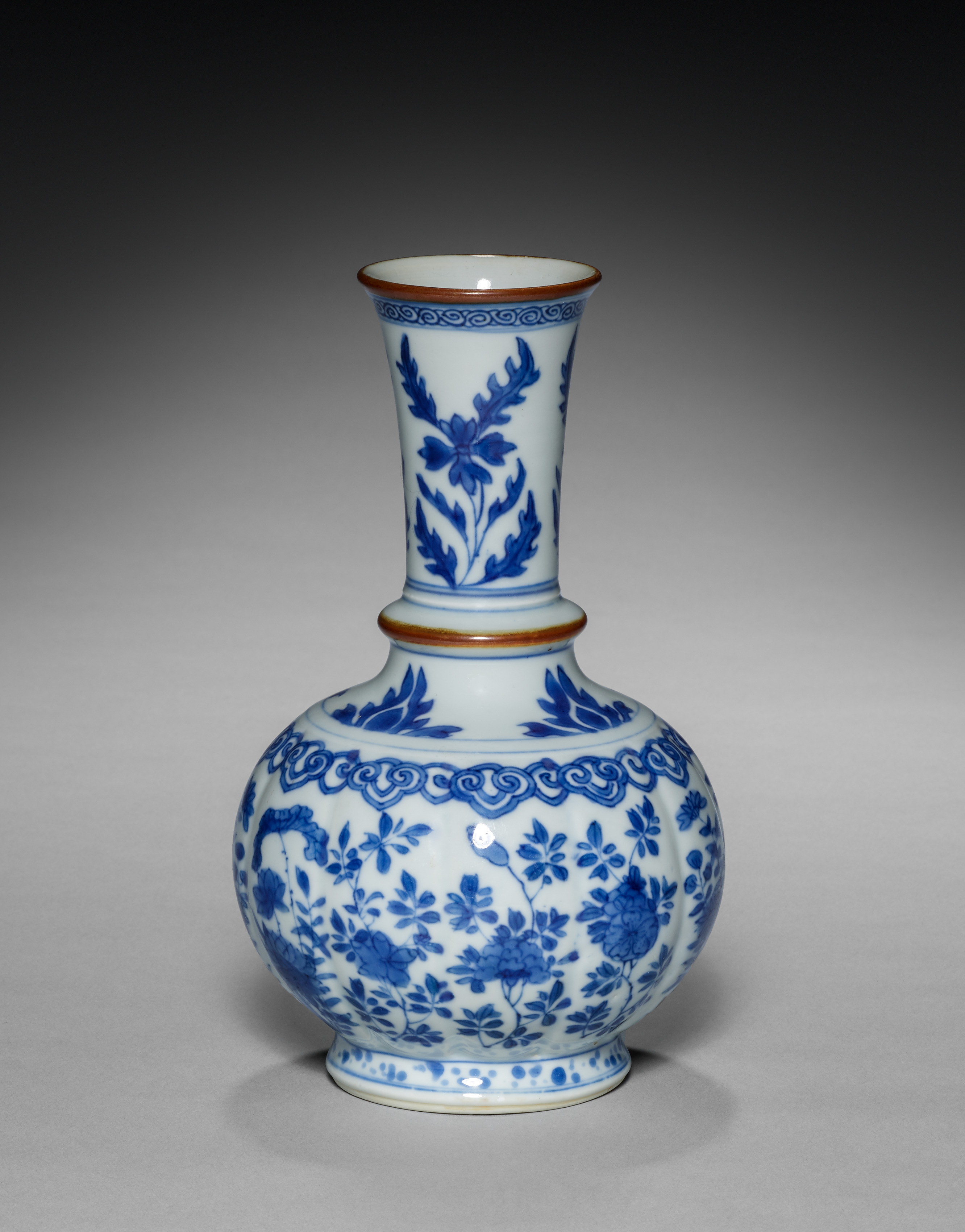
Lobed vase with underglaze cobalt blue decoration
Underglaze blue reached its most painterly in the Kangxi reign, when decorators at Jingdezhen worked with the fluency of professional painters. The lobed body of this vase sets up a panel-by-panel composition that the brush follows.
2663 × 3400 px · Unmodified source file
Open in StudioSource & licensing
- Creator / date
- China, Jiangxi province, Jingdezhen kilns, Qing dynasty (1644-1911), Kangxi reign (1661-1722), maker unknown · 1661–1722
- Source credit
- The Cleveland Museum of Art, 2020.174. Open Access.
- Usage notes
- Released by the Cleveland Museum of Art under CC0 1.0. Credit to the museum is encouraged; CC0 does not imply endorsement.
- Original file
- 2663 × 3400 px · JPG · 0.0 MB
- Source checked
- 2026-11-04 · editorial approval separate
CC0 · Public domain · 1522–66
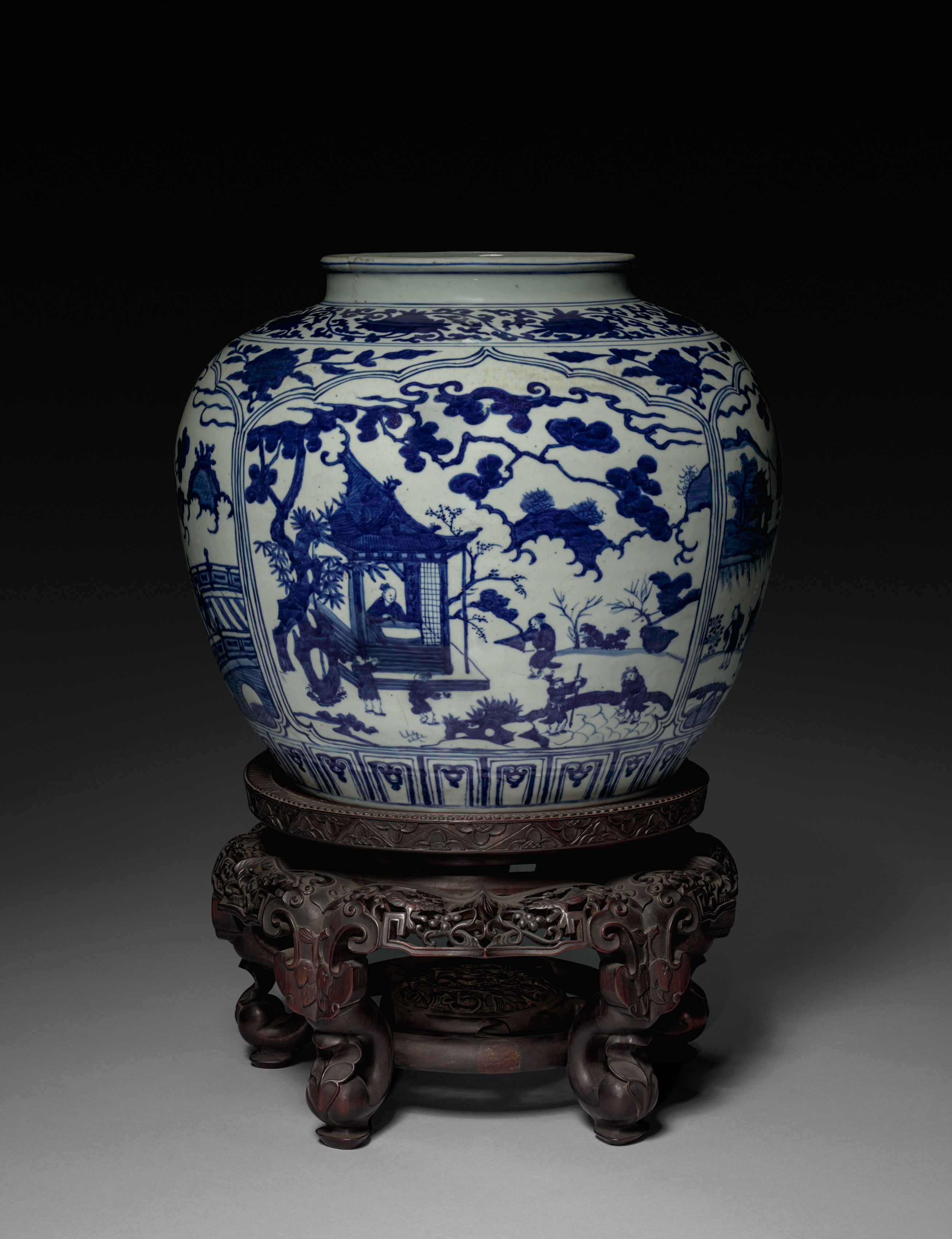
Jar
Painted with the four seasons and the stages of a scholar-official’s life: he leaves home in spring hoping to pass the civil service examinations, and returns on horseback in autumn.
2613 × 3400 px · Unmodified source file
Open in StudioSource & licensing
- Creator / date
- China, Jiangxi Province, Jingdezhen kilns, Ming dynasty (1368–1644), Jiajing mark and reign (1522–66), maker unknown · 1522–66
- Source credit
- The Cleveland Museum of Art, 1917.13. Open Access.
- Usage notes
- Released by the Cleveland Museum of Art under CC0 1.0. Credit to the museum is encouraged; CC0 does not imply endorsement.
- Original file
- 2613 × 3400 px · JPG · 0.0 MB
- Source checked
- 2026-11-04 · editorial approval separate
CC0 · Public domain · 1300s
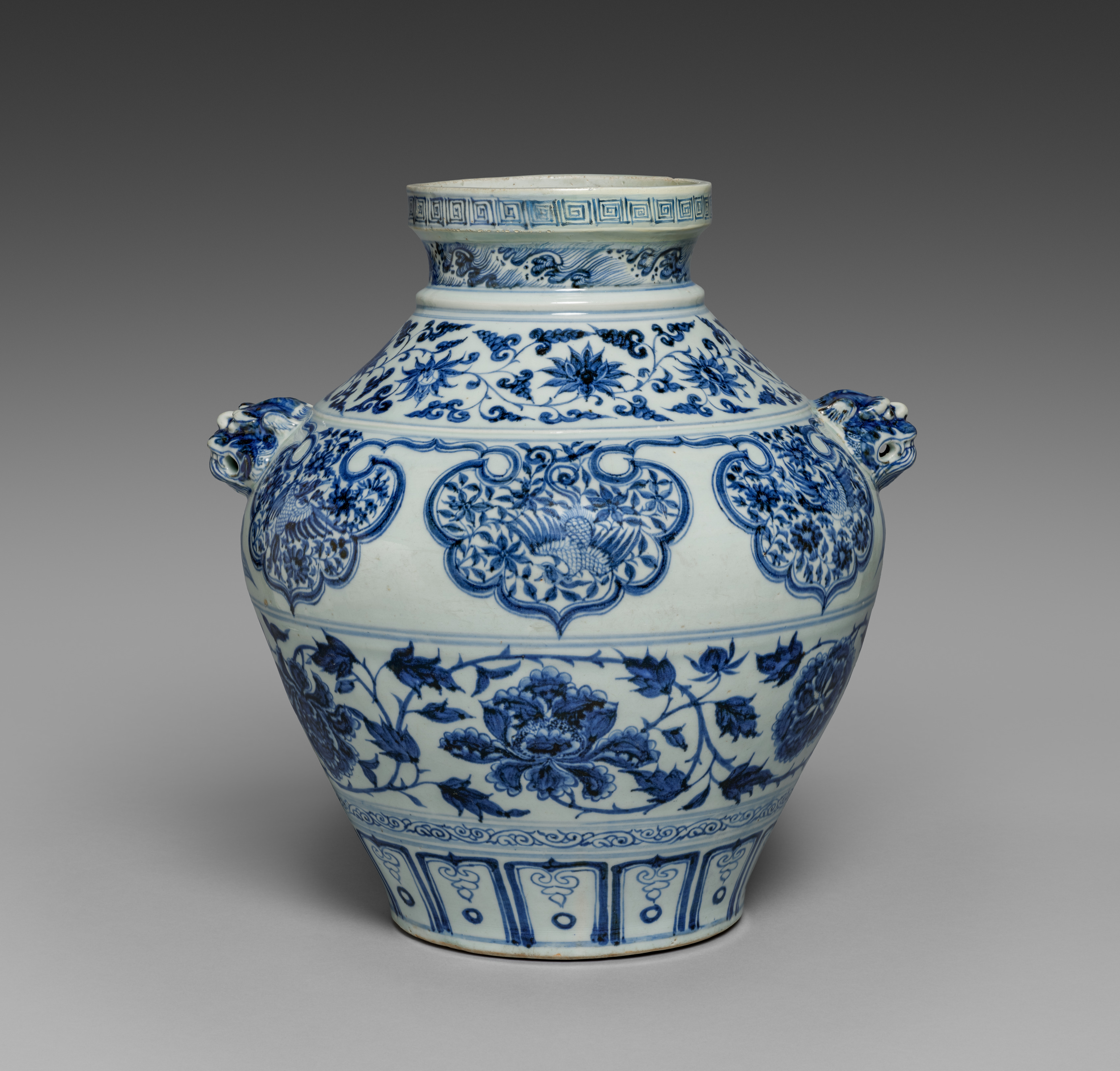
Jar with Lion-Head Handles
A classic Yuan blue-and-white jar, strong in profile, with firm delineation of its painted bands. Wares of this type were made from the 1330s for the court, for ordinary buyers and for export.
3400 × 3203 px · Unmodified source file
Open in StudioSource & licensing
- Creator / date
- China, Jiangxi Province, Jingdezhen, Yuan dynasty (1271–1368), maker unknown · 1300s
- Source credit
- The Cleveland Museum of Art, 1962.154. Open Access.
- Usage notes
- Released by the Cleveland Museum of Art under CC0 1.0. Credit to the museum is encouraged; CC0 does not imply endorsement.
- Original file
- 3400 × 3203 px · JPG · 0.0 MB
- Source checked
- 2026-11-04 · editorial approval separate
CC0 · Public domain · 1628–1722
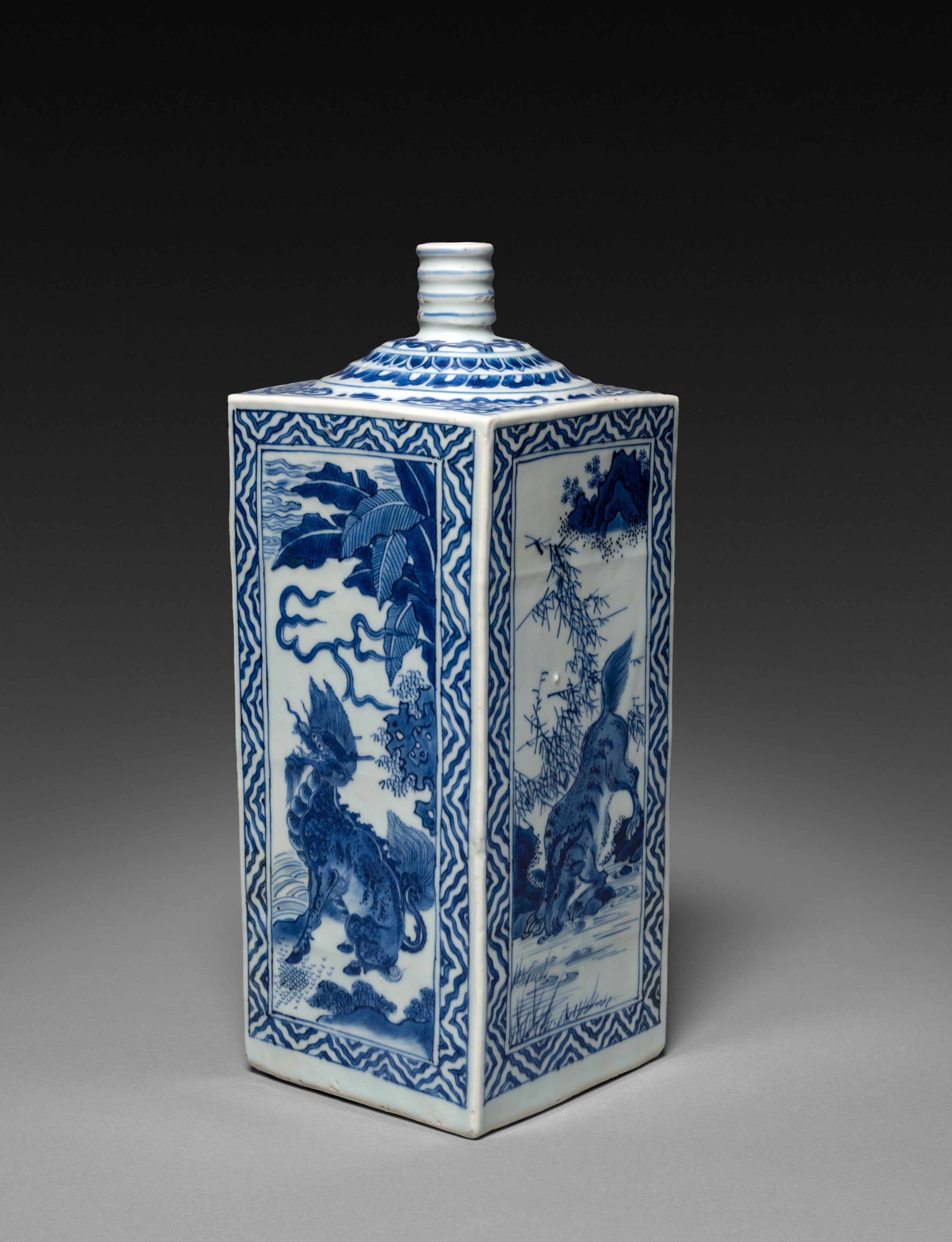
Transitional Blue-and-White Square Bottle
The flask’s shape comes from European gin bottles, a reminder that Chinese potters were already designing for export. Leopards, a qilin, a horse and an imaginary beast circle the body in brilliant cobalt.
2606 × 3400 px · Unmodified source file
Open in StudioSource & licensing
- Creator / date
- China, Jiangxi province, Jingdezhen kilns, Ming dynasty (1368-1644), Chongzhen reign (1628-44) or Qing dynasty (1644-1911), Kangxi reign (1662-1722), maker unknown · 1628–1722
- Source credit
- The Cleveland Museum of Art, 2018.293. Open Access.
- Usage notes
- Released by the Cleveland Museum of Art under CC0 1.0. Credit to the museum is encouraged; CC0 does not imply endorsement.
- Original file
- 2606 × 3400 px · JPG · 0.0 MB
- Source checked
- 2026-11-04 · editorial approval separate
CC0 · Public domain · 1723–35
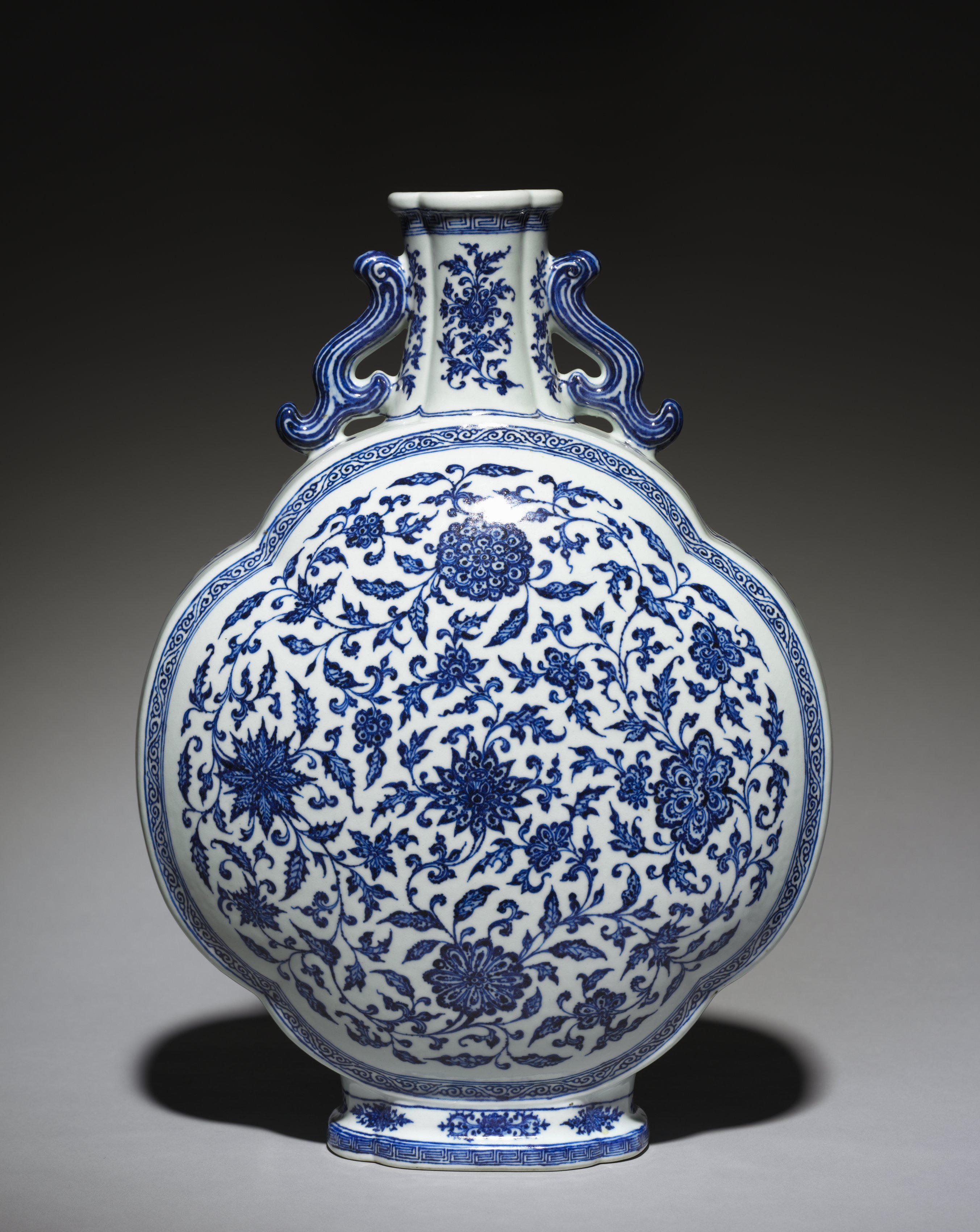
Gourd Flask with Floral Scrolls
A large pilgrim flask made at the imperial kilns at Jingdezhen, its floral scrolls carried in underglaze cobalt around the double gourd.
2705 × 3400 px · Unmodified source file
Open in StudioSource & licensing
- Creator / date
- China, Jiangxi Province, Jingdezhen, Qing dynasty (1644–1911), Yongzheng mark and period (1723–35), maker unknown · 1723–35
- Source credit
- The Cleveland Museum of Art, 1964.226. Open Access.
- Usage notes
- Released by the Cleveland Museum of Art under CC0 1.0. Credit to the museum is encouraged; CC0 does not imply endorsement.
- Original file
- 2705 × 3400 px · JPG · 0.0 MB
- Source checked
- 2026-11-04 · editorial approval separate
CC0 · Public domain · 1465–87
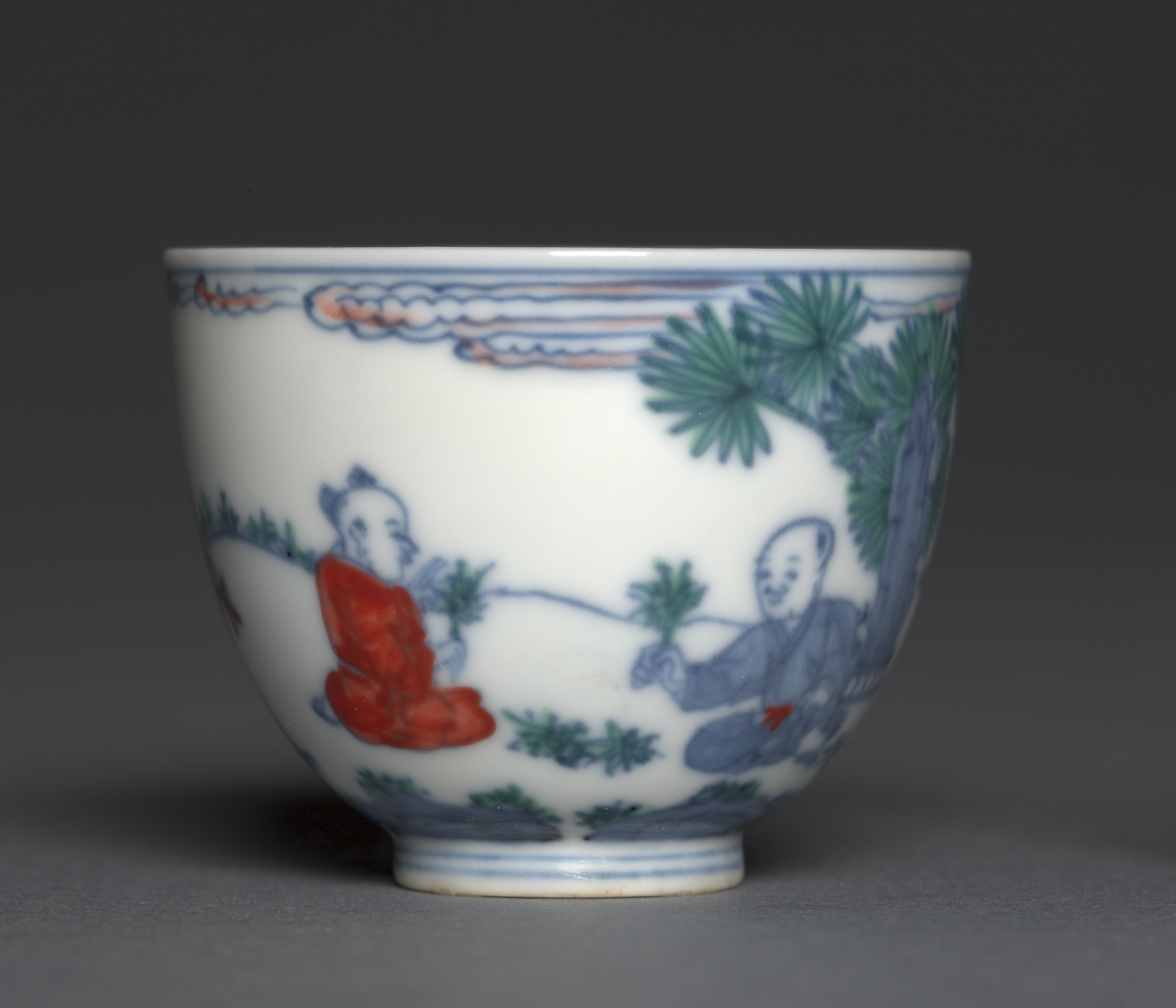
Wine Cup with Children at Play
Two inches high, with figures outlined in cobalt and coloured in overglaze enamels, a technique called doucai. The painting is free and the composition balanced on a surface barely wider than a thumb.
2742 × 2350 px · Unmodified source file
Open in StudioSource & licensing
- Creator / date
- China, Jiangxi province, Jingdezhen, Ming dynasty (1368-1644), Chenghua mark and period (1465-1487), maker unknown · 1465–87
- Source credit
- The Cleveland Museum of Art, 1957.61. Open Access.
- Usage notes
- Released by the Cleveland Museum of Art under CC0 1.0. Credit to the museum is encouraged; CC0 does not imply endorsement.
- Original file
- 2742 × 2350 px · JPG · 0.0 MB
- Source checked
- 2026-11-04 · editorial approval separate
CC0 · Public domain · late 1800s–early 1900s
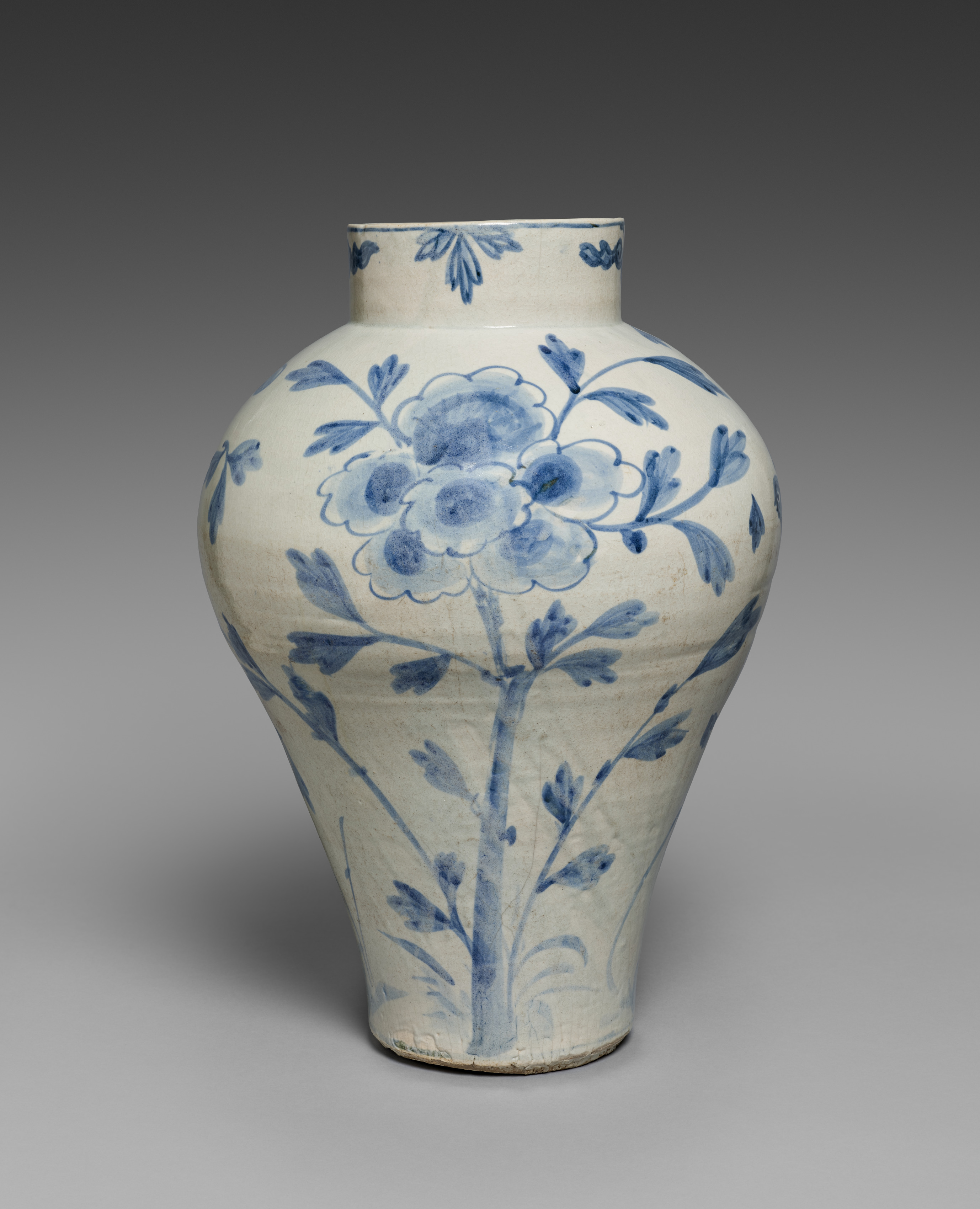
Vase with Bird and Flower Design
A broad-shouldered Joseon vase in the nineteenth-century manner. Earlier blue-and-white carried literati motifs, plum for purity and orchid for grace, while this one turns to birds and flowers.
2756 × 3400 px · Unmodified source file
Open in StudioSource & licensing
- Creator / date
- Korea, Joseon dynasty (1392–1910), maker unknown · late 1800s–early 1900s
- Source credit
- The Cleveland Museum of Art, 1989.117. Open Access.
- Usage notes
- Released by the Cleveland Museum of Art under CC0 1.0. Credit to the museum is encouraged; CC0 does not imply endorsement.
- Original file
- 2756 × 3400 px · JPG · 0.0 MB
- Source checked
- 2026-11-04 · editorial approval separate
CC0 · Public domain · c. 1887
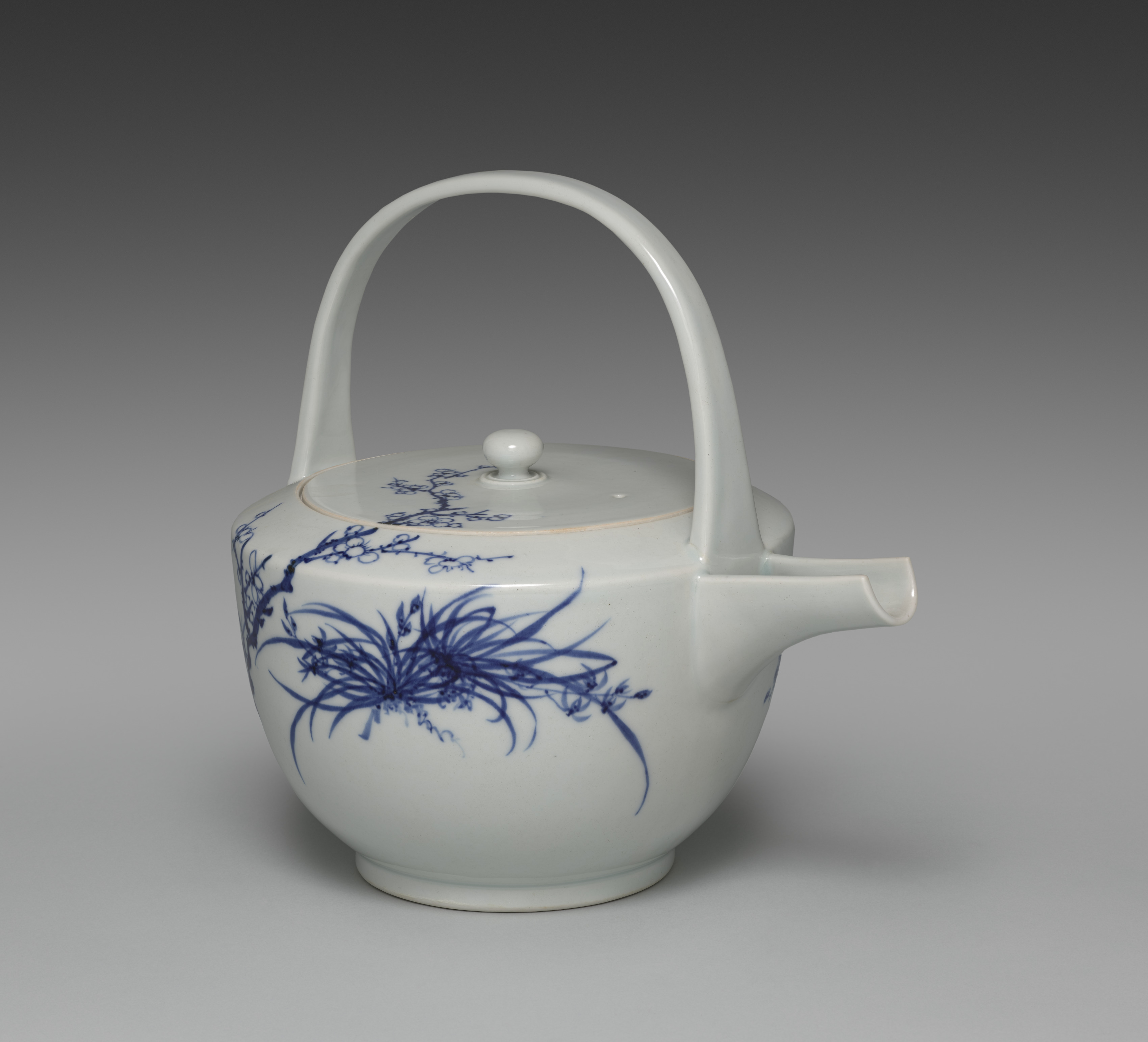
Sake Pourer with Chrysanthemum, Orchid, and Plum
The Four Gentlemen, orchid, bamboo, chrysanthemum and plum, painted in underglaze blue by a potter trained in ink painting, which shows in the brushwork.
3400 × 3085 px · Unmodified source file
Open in StudioSource & licensing
- Creator / date
- Seifū Yohei III (Japanese, 1851–1914) · c. 1887
- Source credit
- The Cleveland Museum of Art, 2022.158. Open Access.
- Usage notes
- Released by the Cleveland Museum of Art under CC0 1.0. Credit to the museum is encouraged; CC0 does not imply endorsement.
- Original file
- 3400 × 3085 px · JPG · 0.0 MB
- Source checked
- 2026-11-04 · editorial approval separate
CC0 · Public domain · 1897–1914
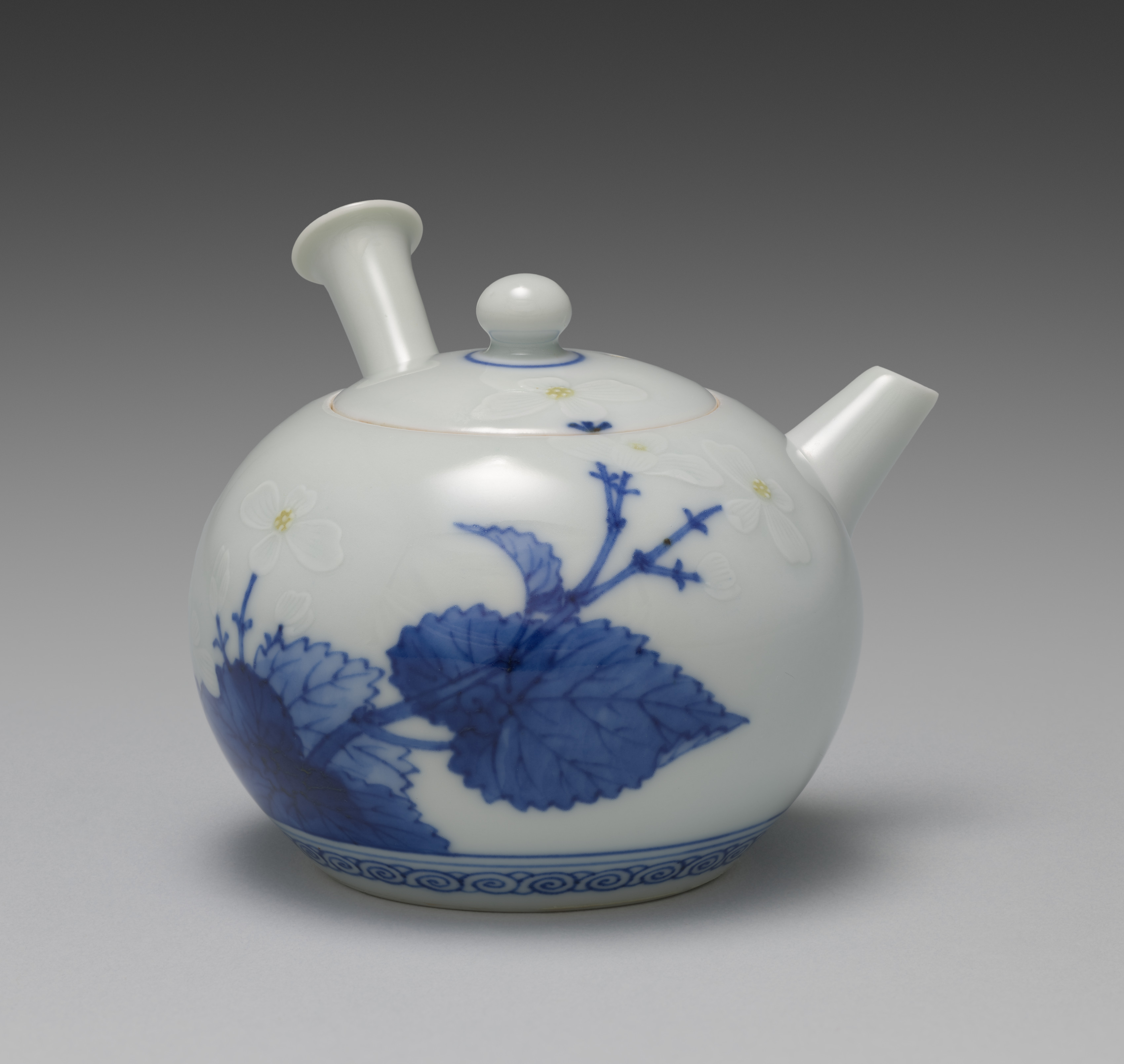
Teapot with Begonias
Begonia leaves and stems in modulated underglaze blue, petals built up in thick overglaze white with incised lines, and small pools of underglaze yellow at their centres.
3400 × 3219 px · Unmodified source file
Open in StudioSource & licensing
- Creator / date
- Seifū Yohei III (Japanese, 1851–1914) · 1897–1914
- Source credit
- The Cleveland Museum of Art, 2022.168. Open Access.
- Usage notes
- Released by the Cleveland Museum of Art under CC0 1.0. Credit to the museum is encouraged; CC0 does not imply endorsement.
- Original file
- 3400 × 3219 px · JPG · 0.0 MB
- Source checked
- 2026-11-04 · editorial approval separate
CC0 · Public domain · 1897–1914
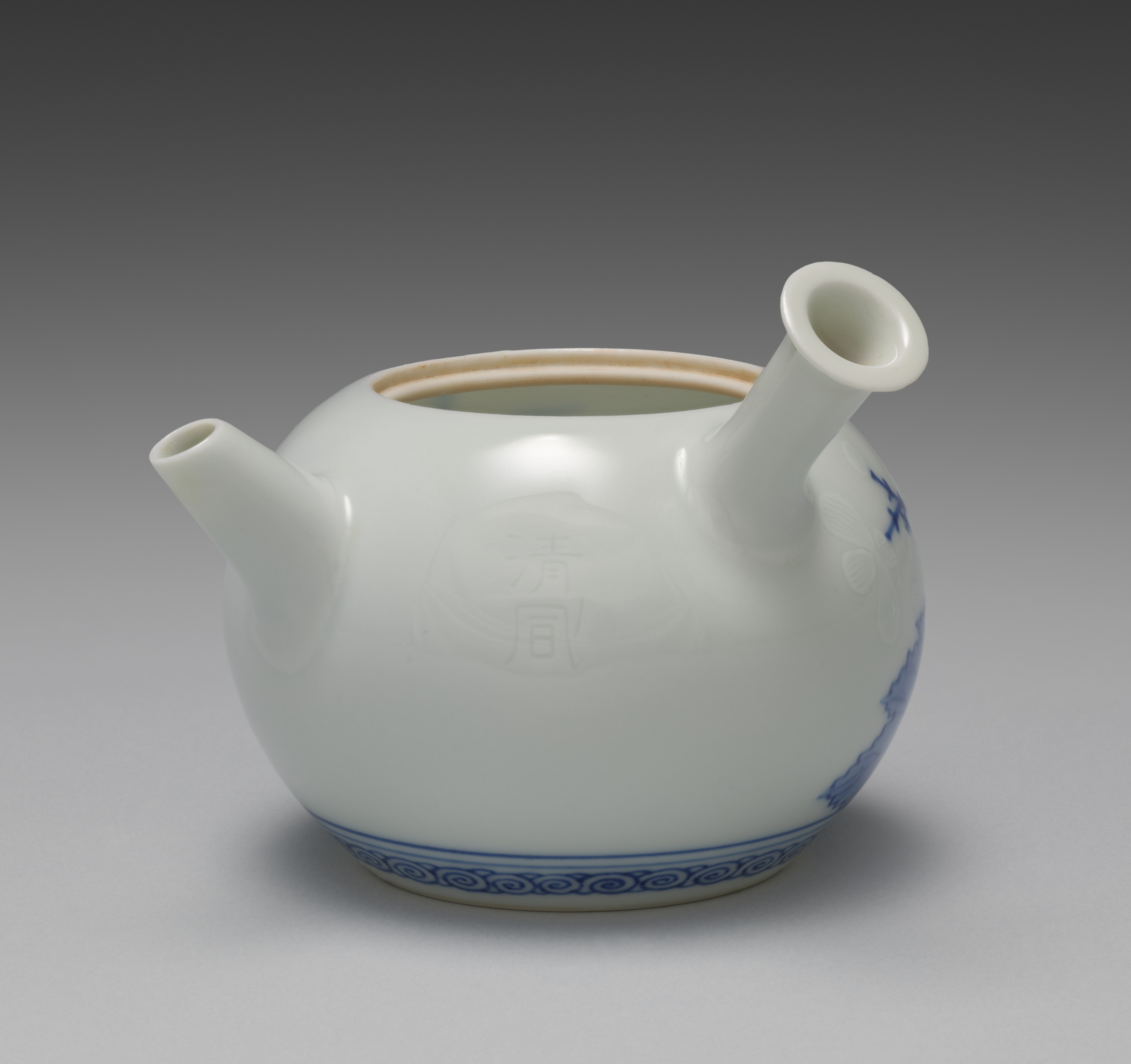
Teapot with Begonias
A sturdy, thick-walled box carrying a single butterfly in underglaze blue. Almost no decoration at all, which is the point.
3400 × 3198 px · Unmodified source file
Open in StudioSource & licensing
- Creator / date
- Seifū Yohei III (Japanese, 1851–1914) · 1897–1914
- Source credit
- The Cleveland Museum of Art, 2022.168.a. Open Access.
- Usage notes
- Released by the Cleveland Museum of Art under CC0 1.0. Credit to the museum is encouraged; CC0 does not imply endorsement.
- Original file
- 3400 × 3198 px · JPG · 0.0 MB
- Source checked
- 2026-11-04 · editorial approval separate
CC0 · Public domain · c. 1695–1700
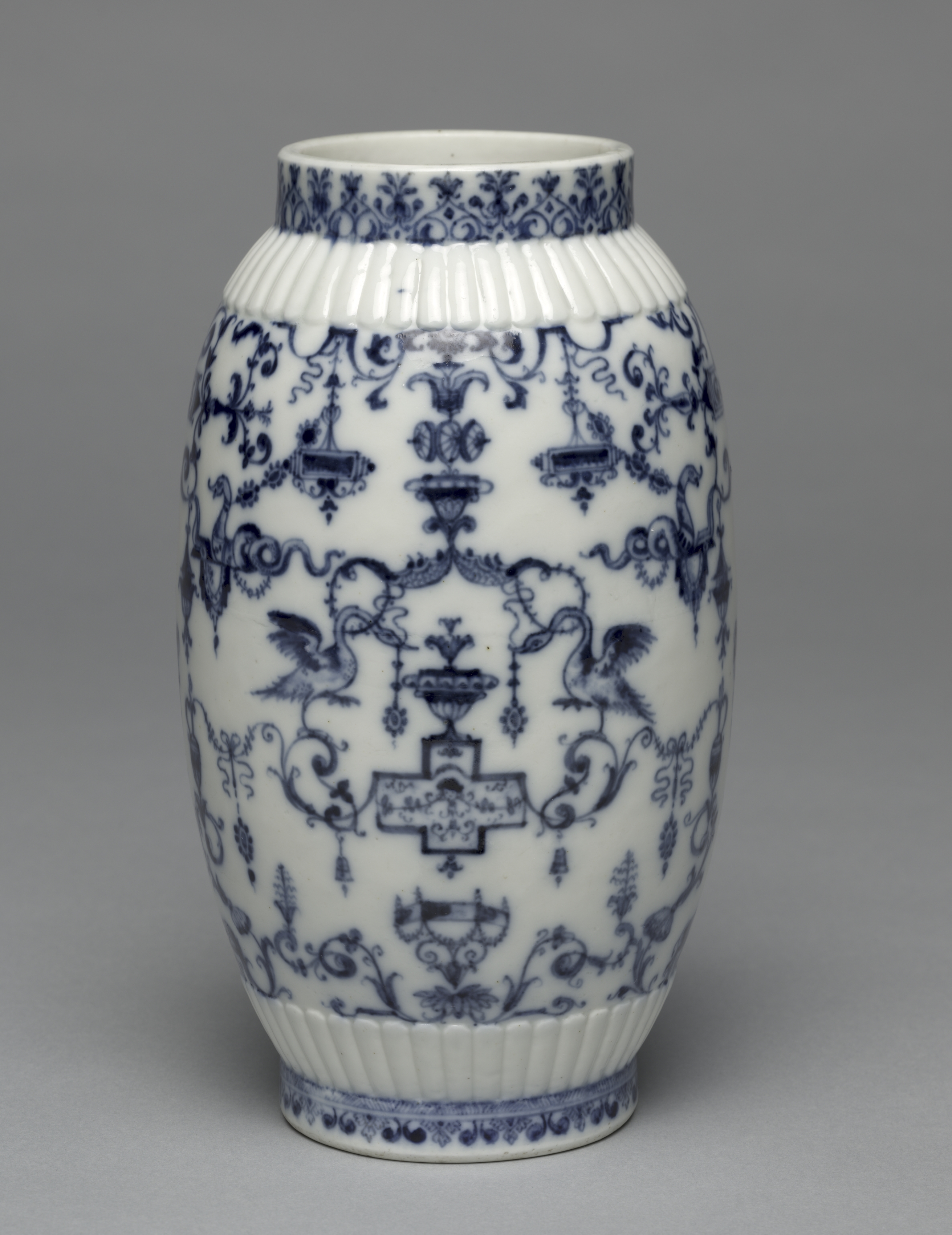
Vase
Early Saint-Cloud porcelain answered Chinese blue-and-white directly, and here Chinese and Italian influences meet in a French soft-paste body that could not yet be made hard.
2622 × 3400 px · Unmodified source file
Open in StudioSource & licensing
- Creator / date
- Saint Cloud Porcelain Factory (French) · c. 1695–1700
- Source credit
- The Cleveland Museum of Art, 1947.63. Open Access.
- Usage notes
- Released by the Cleveland Museum of Art under CC0 1.0. Credit to the museum is encouraged; CC0 does not imply endorsement.
- Original file
- 2622 × 3400 px · JPG · 0.0 MB
- Source checked
- 2026-11-04 · editorial approval separate
CC0 · Public domain · 1700–1720
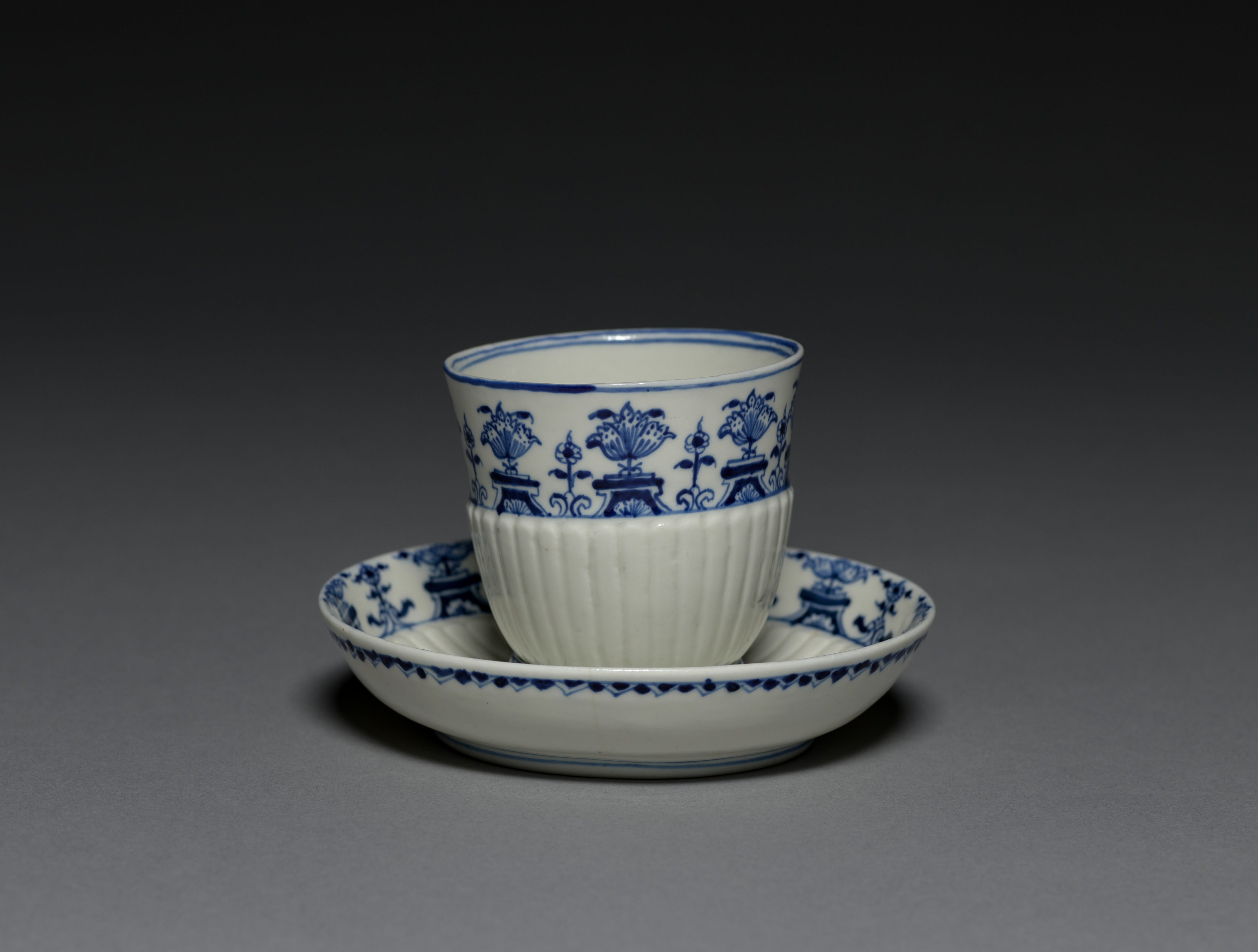
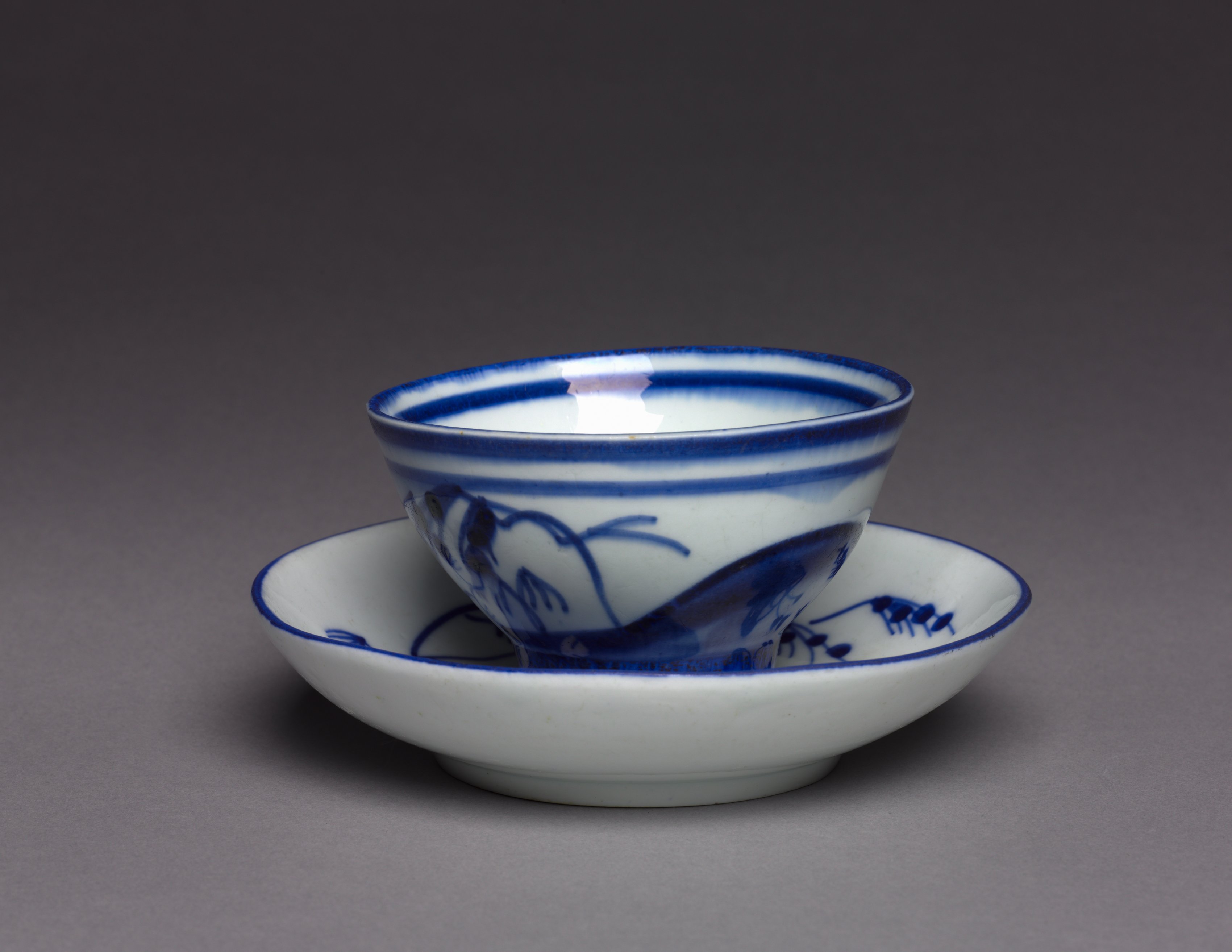
Cup and Saucer (tasse et soucoupe)
Cobalt and white borders of this kind were among the first decorations used at Saint-Cloud, a factory working in soft-paste porcelain before kaolin was available in France.
3400 × 2573 px · Unmodified source file
Open in StudioSource & licensing
- Creator / date
- Saint Cloud Porcelain Factory (French) · 1700–1720
- Source credit
- The Cleveland Museum of Art, 1972.189. Open Access.
- Usage notes
- Released by the Cleveland Museum of Art under CC0 1.0. Credit to the museum is encouraged; CC0 does not imply endorsement.
- Original file
- 3400 × 2573 px · JPG · 0.0 MB
- Source checked
- 2026-11-04 · editorial approval separate
CC0 · Public domain · c. 1775–95
Cup and Saucer (Tasse et soucoupe)
Chantilly worked in soft paste until the 1770s, then turned to hard paste; this underglaze blue belongs to the later period, when French factories finally matched the Chinese body.
3400 × 2627 px · Unmodified source file
Open in StudioSource & licensing
- Creator / date
- Chantilly Porcelain Factory (French) · c. 1775–95
- Source credit
- The Cleveland Museum of Art, 1964.505. Open Access.
- Usage notes
- Released by the Cleveland Museum of Art under CC0 1.0. Credit to the museum is encouraged; CC0 does not imply endorsement.
- Original file
- 3400 × 2627 px · JPG · 0.0 MB
- Source checked
- 2026-11-04 · editorial approval separate
CC0 · Public domain · c. 1775–90
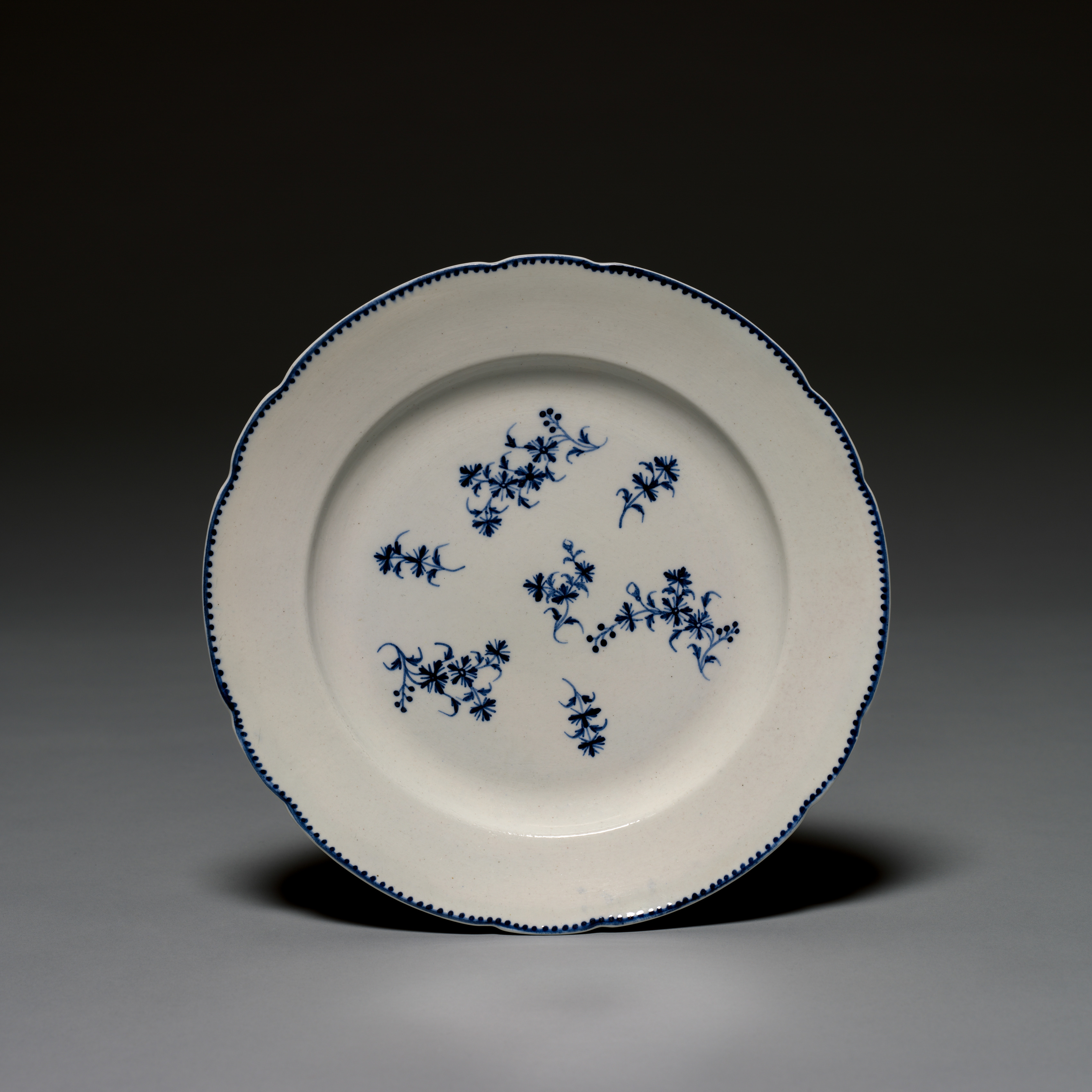
Plate (Assiette)
The Arras factory, founded in 1770 with the backing of the County of Artois, made cobalt decoration on a milky ground for barely two decades before it closed.
3400 × 3400 px · Unmodified source file
Open in StudioSource & licensing
- Creator / date
- Arras Porcelain Factory (French) · c. 1775–90
- Source credit
- The Cleveland Museum of Art, 1962.357. Open Access.
- Usage notes
- Released by the Cleveland Museum of Art under CC0 1.0. Credit to the museum is encouraged; CC0 does not imply endorsement.
- Original file
- 3400 × 3400 px · JPG · 0.0 MB
- Source checked
- 2026-11-04 · editorial approval separate
CC0 · Public domain · c. 1785
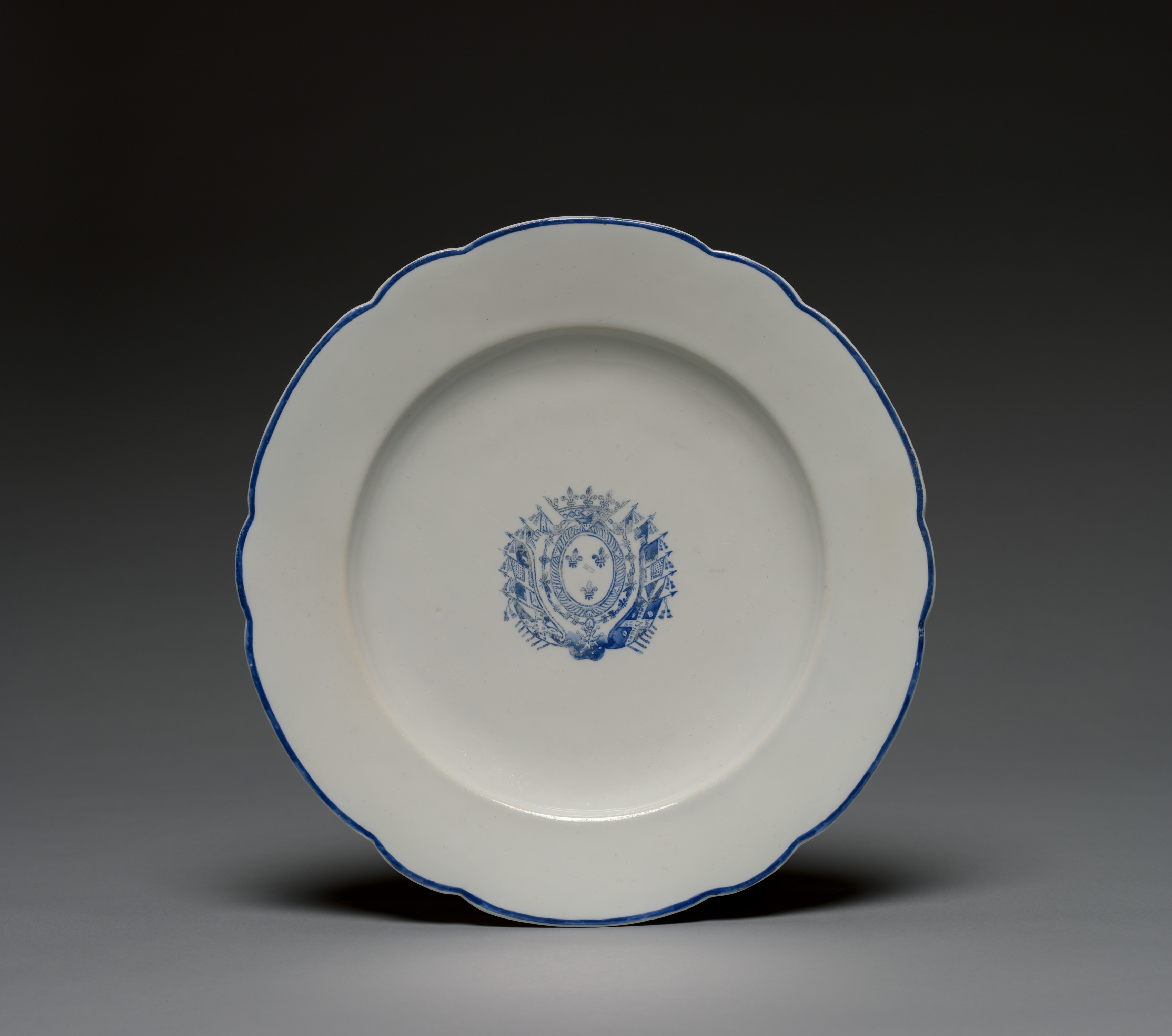
Plate (Assiette)
Part of a dinner service commissioned by Louis Joseph, duke of Bourbon, prince de Condé, painted with his arms: three fleur-de-lys encircled by a cord.
3400 × 3006 px · Unmodified source file
Open in StudioSource & licensing
- Creator / date
- Chantilly Porcelain Factory (French) · c. 1785
- Source credit
- The Cleveland Museum of Art, 1964.504. Open Access.
- Usage notes
- Released by the Cleveland Museum of Art under CC0 1.0. Credit to the museum is encouraged; CC0 does not imply endorsement.
- Original file
- 3400 × 3006 px · JPG · 0.0 MB
- Source checked
- 2026-11-04 · editorial approval separate
CC0 · Public domain · c. 1710–1730
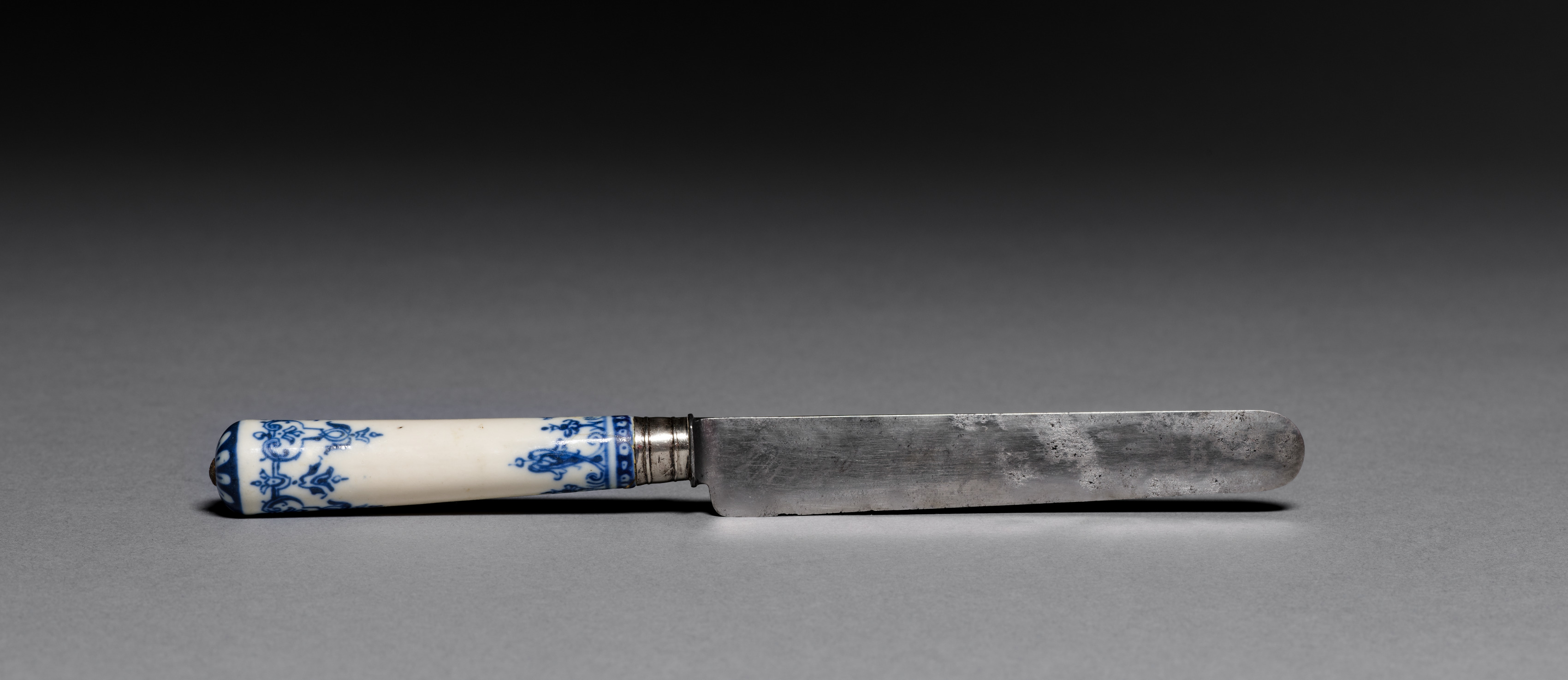
Knife Handle (manche de couteau)
Porcelain handles were a novelty at the start of the eighteenth century, when personal flatware in costly materials signalled status. Saint-Cloud adapted its blue-and-white decoration to the length of a knife handle.
3400 × 1474 px · Unmodified source file
Open in StudioSource & licensing
- Creator / date
- Saint Cloud Porcelain Factory (French) · c. 1710–1730
- Source credit
- The Cleveland Museum of Art, 1964.511. Open Access.
- Usage notes
- Released by the Cleveland Museum of Art under CC0 1.0. Credit to the museum is encouraged; CC0 does not imply endorsement.
- Original file
- 3400 × 1474 px · JPG · 0.0 MB
- Source checked
- 2026-11-04 · editorial approval separate
Public-domain status is reported by the linked source and may vary by jurisdiction. Check the source record for your intended use. No exclusive rights or Visual Bounty marketplace license are offered for these images.