← Open CollectionsPublic-domain source library
Block-Printed Cottons
Carved wood, mordant and a hand rocking the block along a length of muslin: this is the technique that gave the world chintz. The earliest pieces here were printed in Mamluk Egypt in the thirteenth century, following an Indian method; the latest are eighteenth-century Coromandel cloths made for the spice and European trades. Gold-leaf printing, layered pigment and painted resist all appear, along with the borders and repeats that show how the blocks were set.
Original means the unmodified digital file supplied by the linked archive, not an upscaled or reconstructed image. Sign in for free downloads. Studio uses a working preview up to 2048 px.
CC0 · Public domain · 1200s–1300s
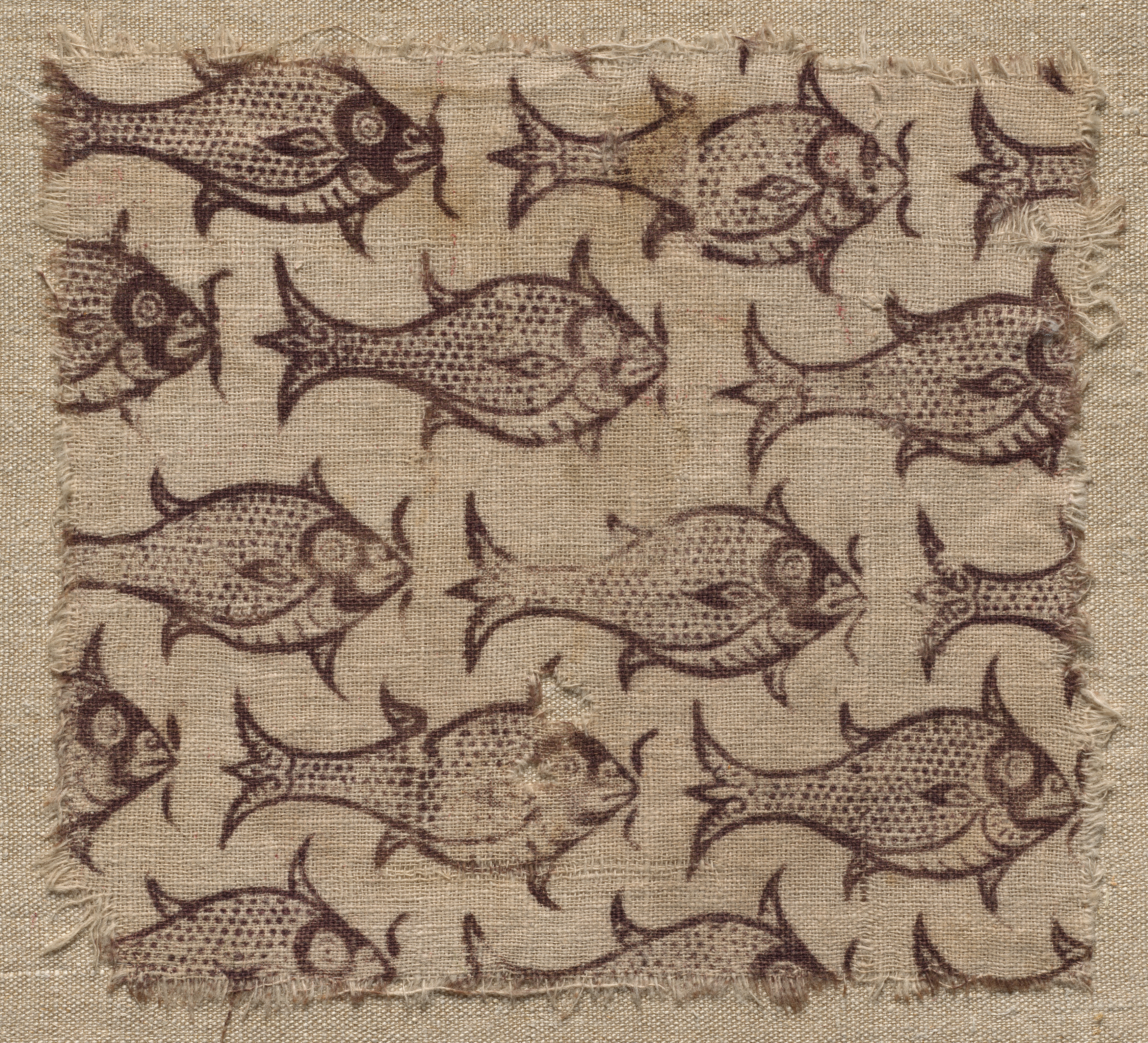
Fragment
A block-printed cotton found in Egypt, made in the Mamluk sultanate. The technique reached Cairo along trade routes from India: carved wood, pigment and a repeated unit, the same toolkit that later carried chintz across the world.
× px · Unmodified source file
Small archival scan: best for reference and screen use, not large prints.
Open in StudioSource & licensing
- Creator / date
- Mamluk Egypt, maker unknown · 1200s–1300s
- Source credit
- Purchase from the J. H. Wade Fund. The Cleveland Museum of Art, Open Access.
- Usage notes
- Released by the Cleveland Museum of Art under CC0 1.0. Credit to the museum is encouraged; CC0 does not imply endorsement.
- Original file
- × px · JPG · 0.0 MB
- Source checked
- 2026-11-04 · editorial approval separate
CC0 · Public domain · 1200s–1300s
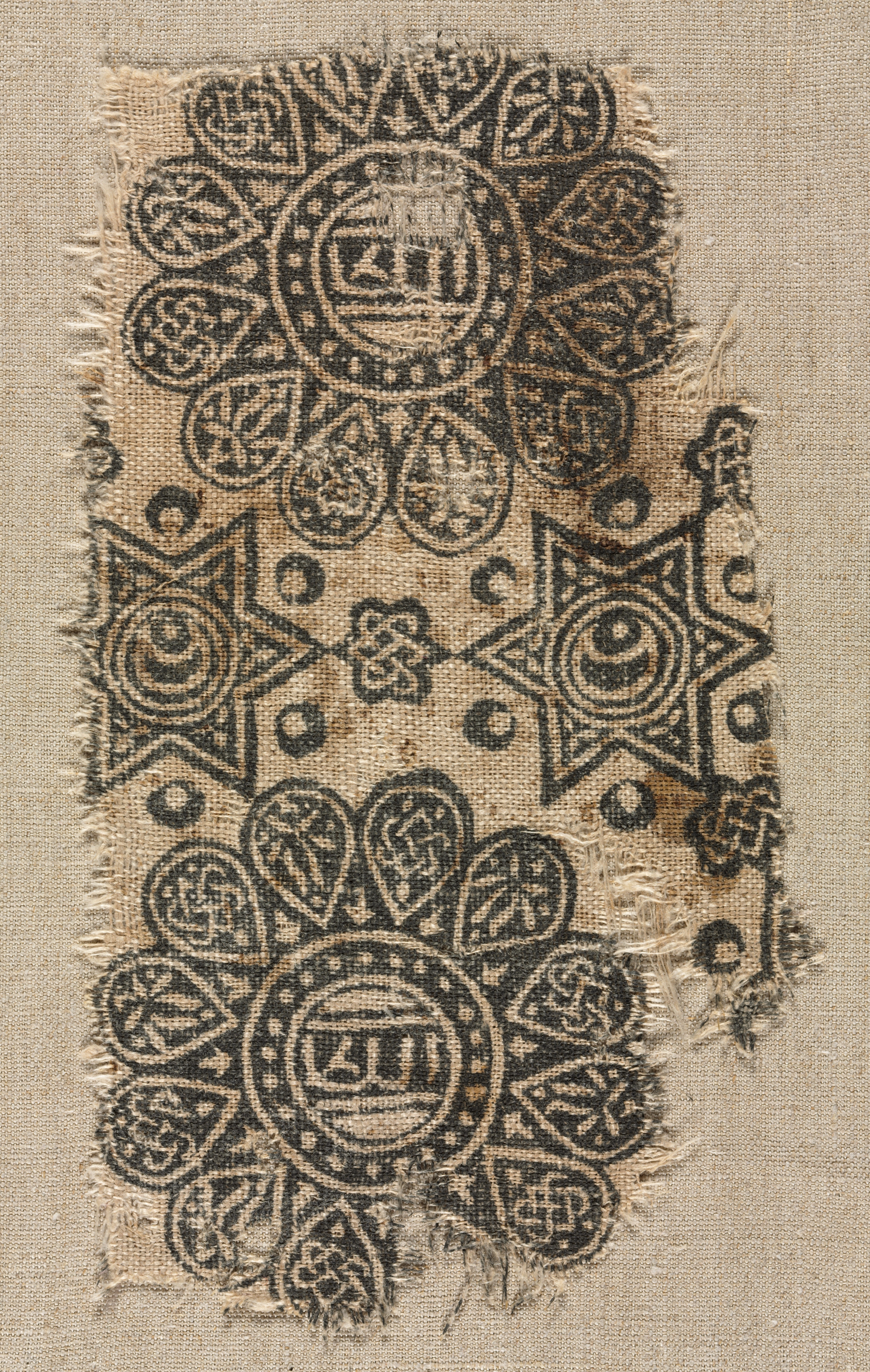
Fragment of a Woodblock Print on Linen
Pigment printed on linen, from the same excavation group as the cotton fragments at Fustat. Linen takes ink differently from cotton, and the print here sits closer to the surface, flatter and more graphic.
× px · Unmodified source file
Small archival scan: best for reference and screen use, not large prints.
Open in StudioSource & licensing
- Creator / date
- Mamluk Egypt, maker unknown · 1200s–1300s
- Source credit
- Gift of George D. Pratt. The Cleveland Museum of Art, Open Access.
- Usage notes
- Released by the Cleveland Museum of Art under CC0 1.0. Credit to the museum is encouraged; CC0 does not imply endorsement.
- Original file
- × px · JPG · 0.0 MB
- Source checked
- 2026-11-04 · editorial approval separate
CC0 · Public domain · 1500s–1600s
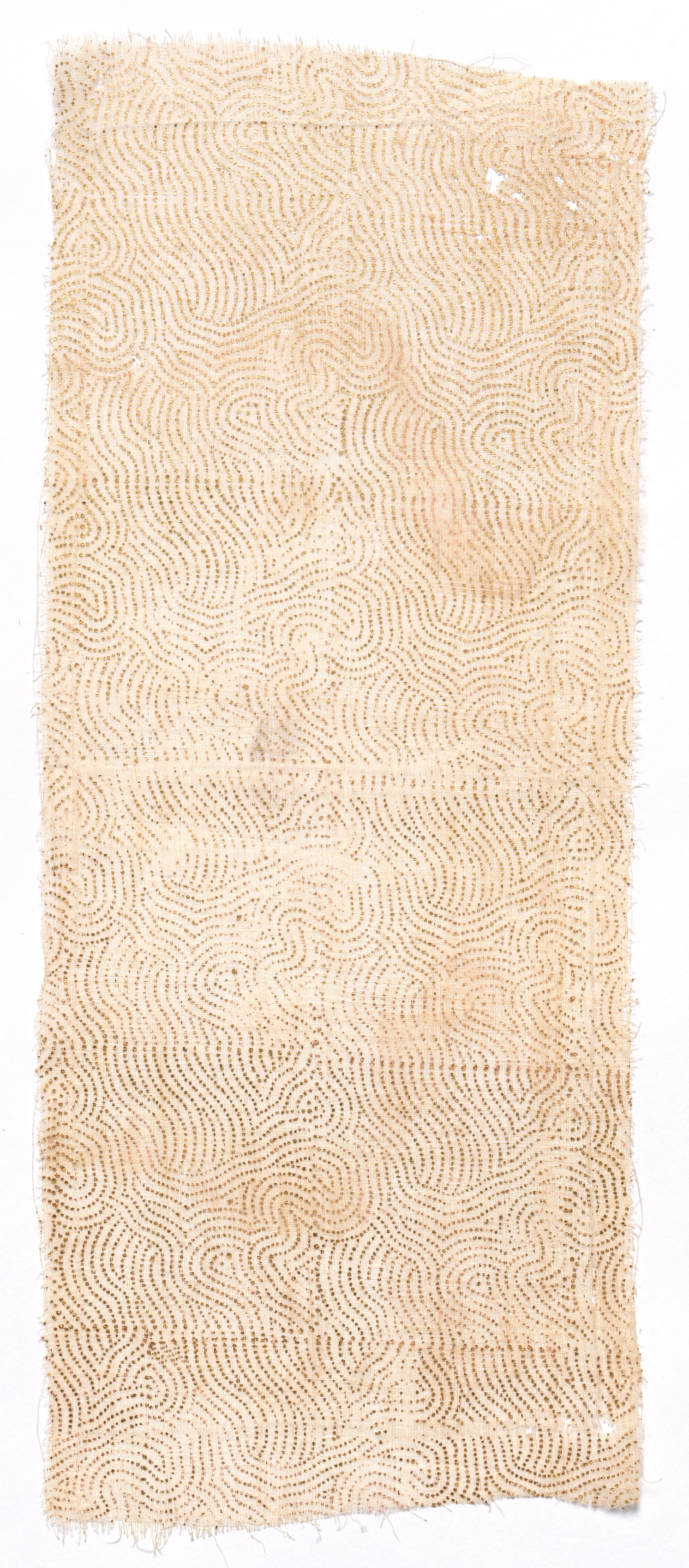
Fragment
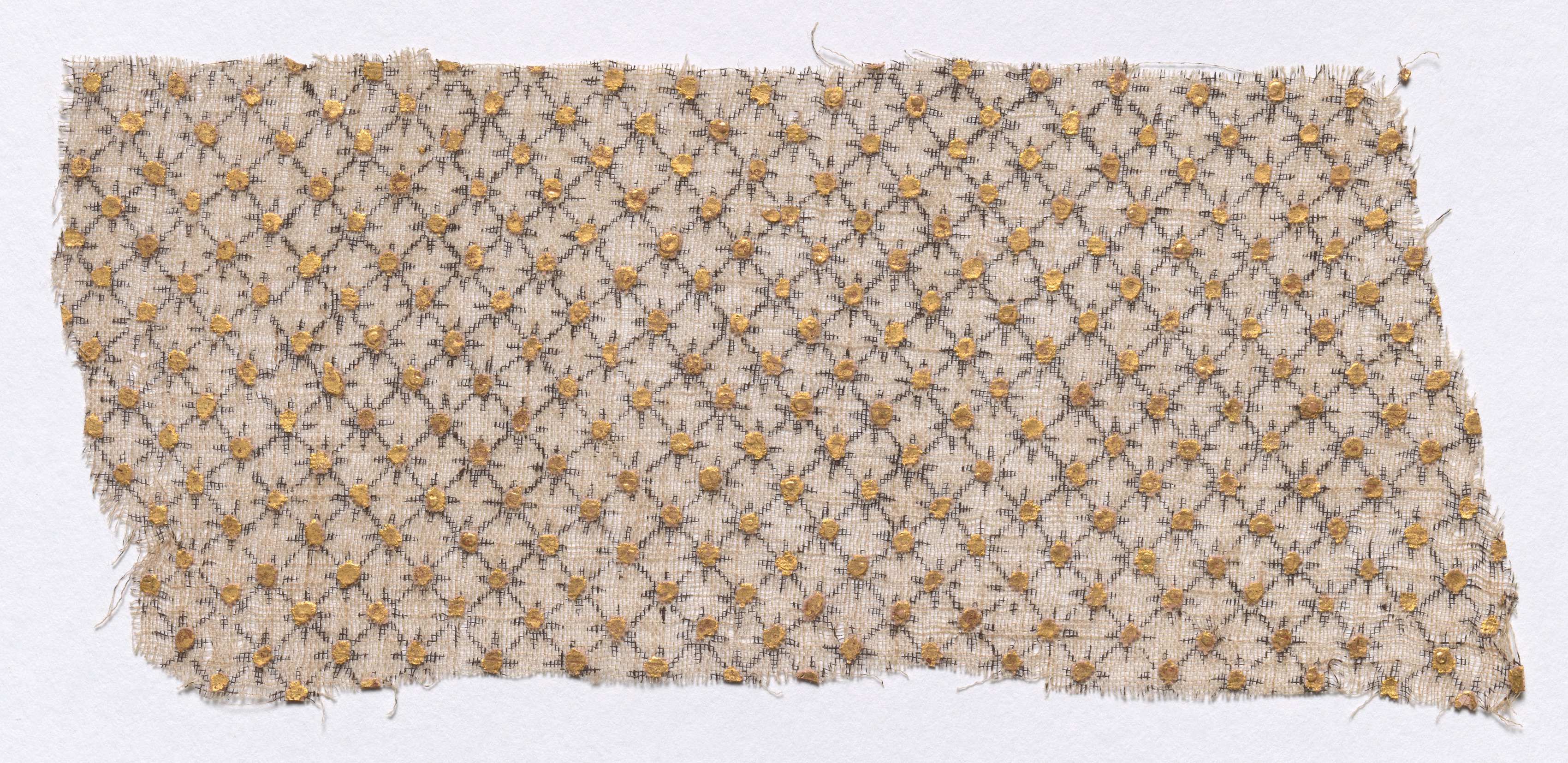
A Mughal-period muslin printed with gold leaf rather than dye. Varak printing laid metal onto a mordant, so the pattern catches light instead of colour, an effect no pigment can reproduce.
× px · Unmodified source file
Small archival scan: best for reference and screen use, not large prints.
Open in StudioSource & licensing
- Creator / date
- Mughal India, maker unknown · 1500s–1600s
- Source credit
- Purchase from the J. H. Wade Fund. The Cleveland Museum of Art, Open Access.
- Usage notes
- Released by the Cleveland Museum of Art under CC0 1.0. Credit to the museum is encouraged; CC0 does not imply endorsement.
- Original file
- × px · JPG · 0.0 MB
- Source checked
- 2026-11-04 · editorial approval separate
CC0 · Public domain · 1700s
Fragment of Draped Court Apparel
A narrow strip from a court garment, printed in gold leaf on undyed muslin. The piece survives as a border: proof that the most expensive part of a dress was often its smallest.
× px · Unmodified source file
Small archival scan: best for reference and screen use, not large prints.
Open in StudioSource & licensing
- Creator / date
- Rajasthan or Northern Deccan, maker unknown · 1700s
- Source credit
- Purchase from the J. H. Wade Fund. The Cleveland Museum of Art, Open Access.
- Usage notes
- Released by the Cleveland Museum of Art under CC0 1.0. Credit to the museum is encouraged; CC0 does not imply endorsement.
- Original file
- × px · JPG · 0.0 MB
- Source checked
- 2026-11-04 · editorial approval separate
CC0 · Public domain · 1700s
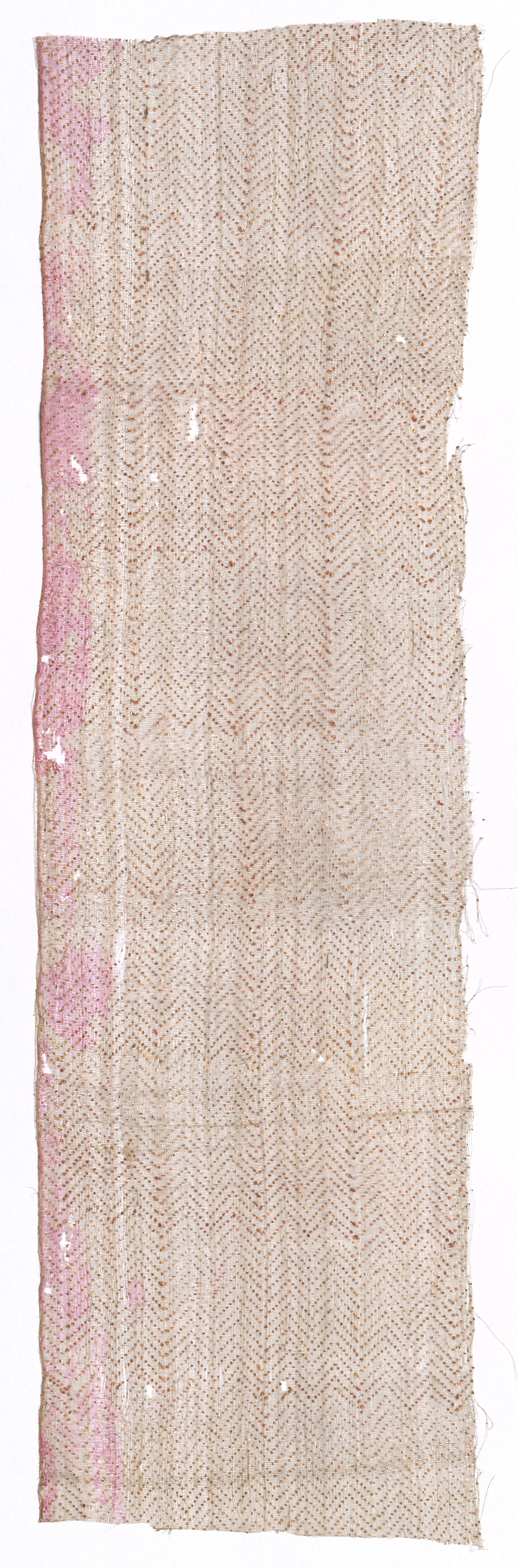
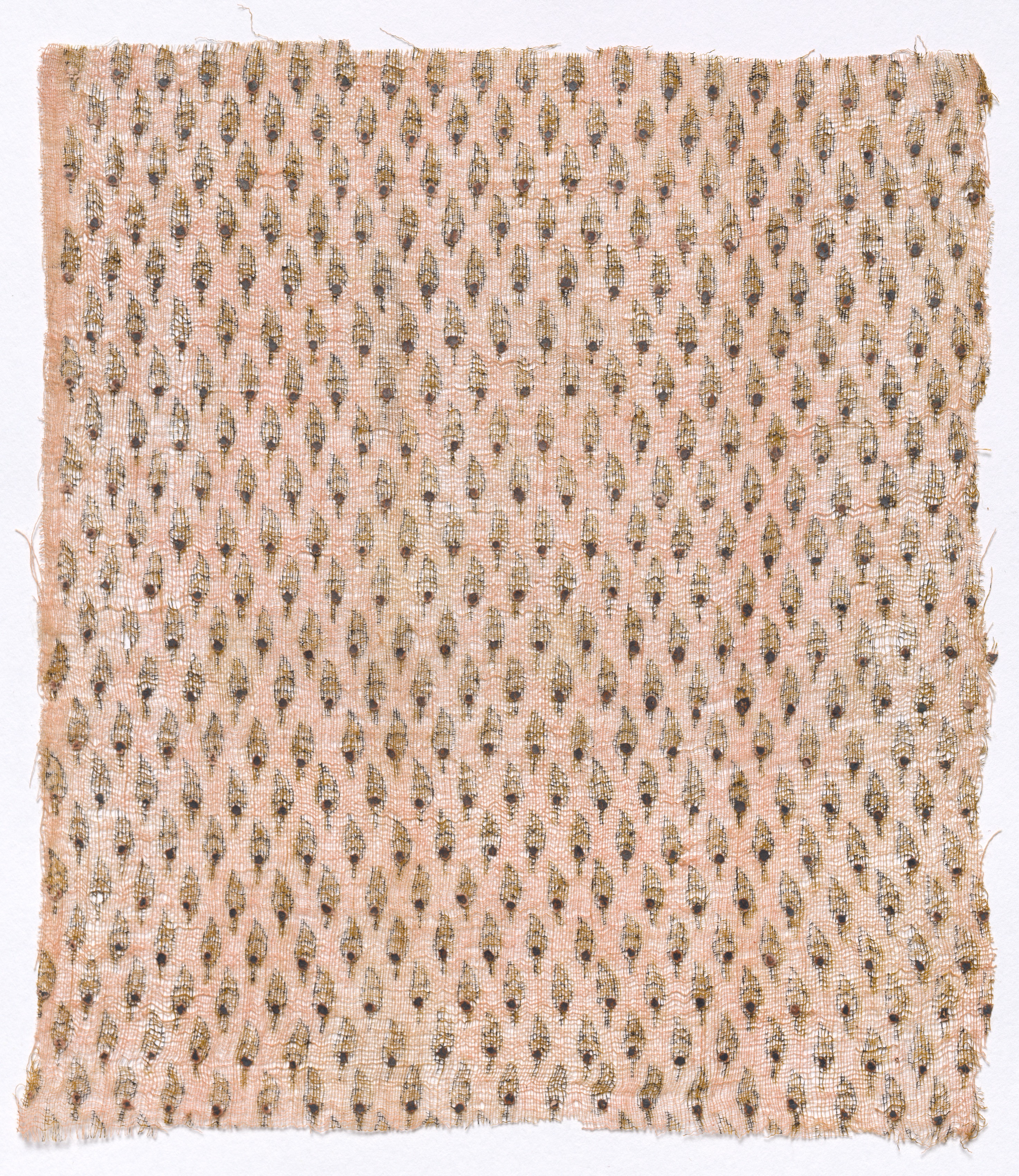
Fragment
Silver leaf over dyed muslin, printed on a ground that has since faded. Silver varak tarnishes to grey, which is why these fragments read as tonal prints today even though they were once metallic.
× px · Unmodified source file
Small archival scan: best for reference and screen use, not large prints.
Open in StudioSource & licensing
- Creator / date
- Rajasthan or Northern Deccan, maker unknown · 1700s
- Source credit
- Purchase from the J. H. Wade Fund. The Cleveland Museum of Art, Open Access.
- Usage notes
- Released by the Cleveland Museum of Art under CC0 1.0. Credit to the museum is encouraged; CC0 does not imply endorsement.
- Original file
- × px · JPG · 0.0 MB
- Source checked
- 2026-11-04 · editorial approval separate
CC0 · Public domain · 1700s–1800s
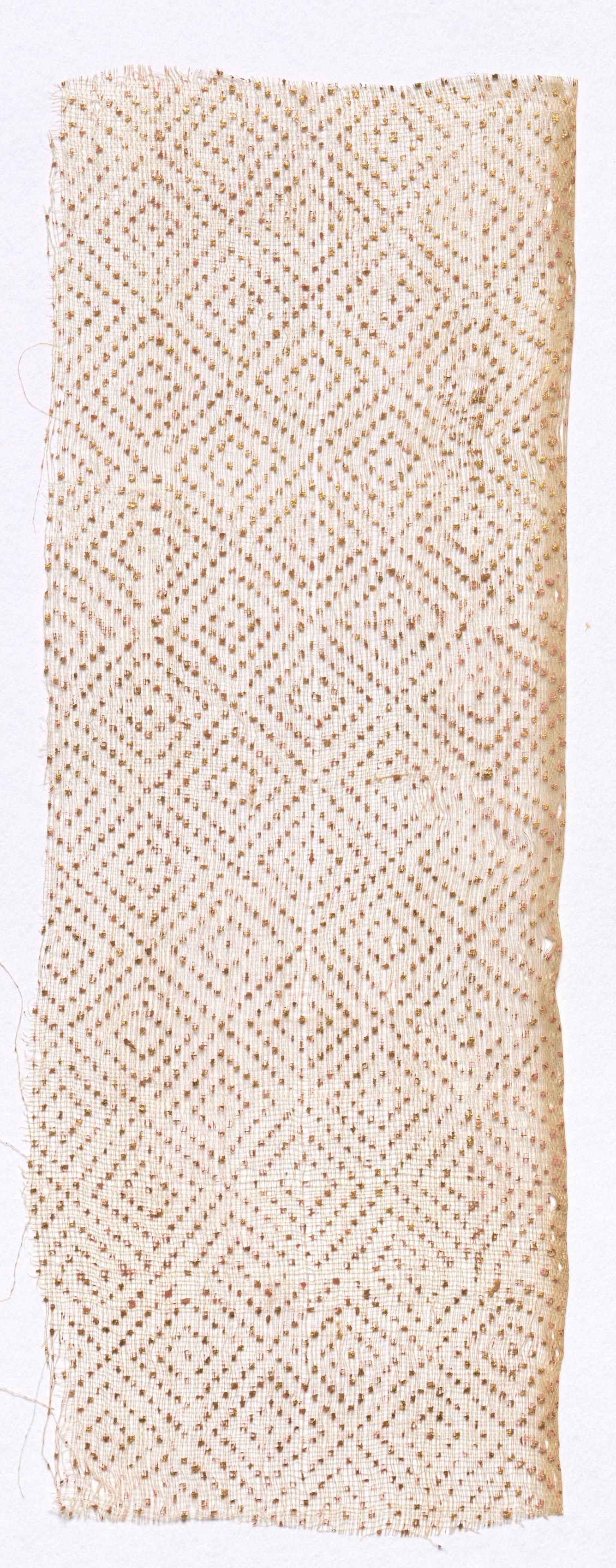
Fragment
A long, thin fragment, probably a border or a sash edge. At twenty-one inches it shows a full repeat of the pattern, enough to reconstruct how the block was set and where it was rocked by hand.
× px · Unmodified source file
Small archival scan: best for reference and screen use, not large prints.
Open in StudioSource & licensing
- Creator / date
- India, maker unknown · 1700s–1800s
- Source credit
- Purchase from the J. H. Wade Fund. The Cleveland Museum of Art, Open Access.
- Usage notes
- Released by the Cleveland Museum of Art under CC0 1.0. Credit to the museum is encouraged; CC0 does not imply endorsement.
- Original file
- × px · JPG · 0.0 MB
- Source checked
- 2026-11-04 · editorial approval separate
CC0 · Public domain · 1800s
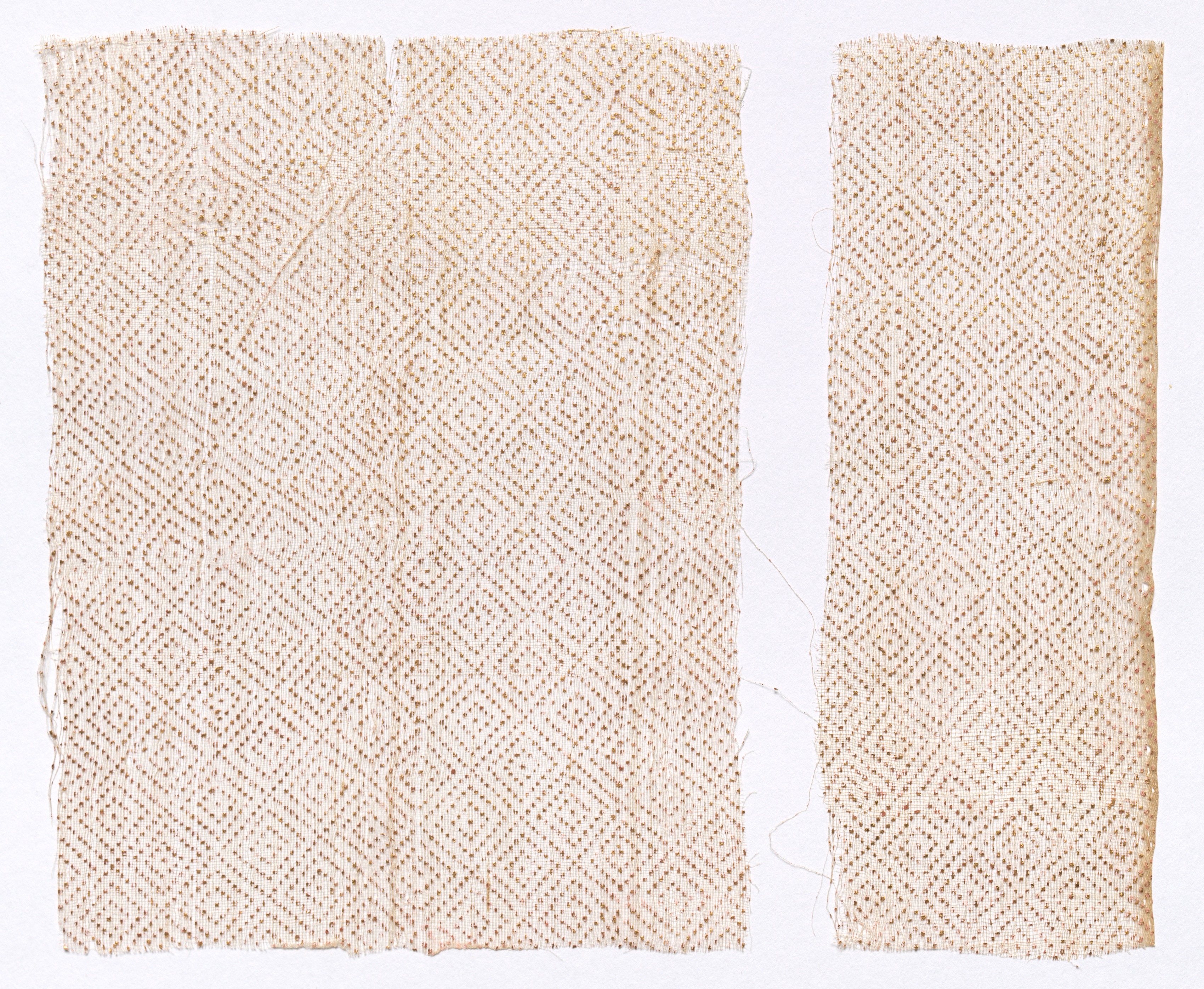
Fragments of Draped Court Apparel
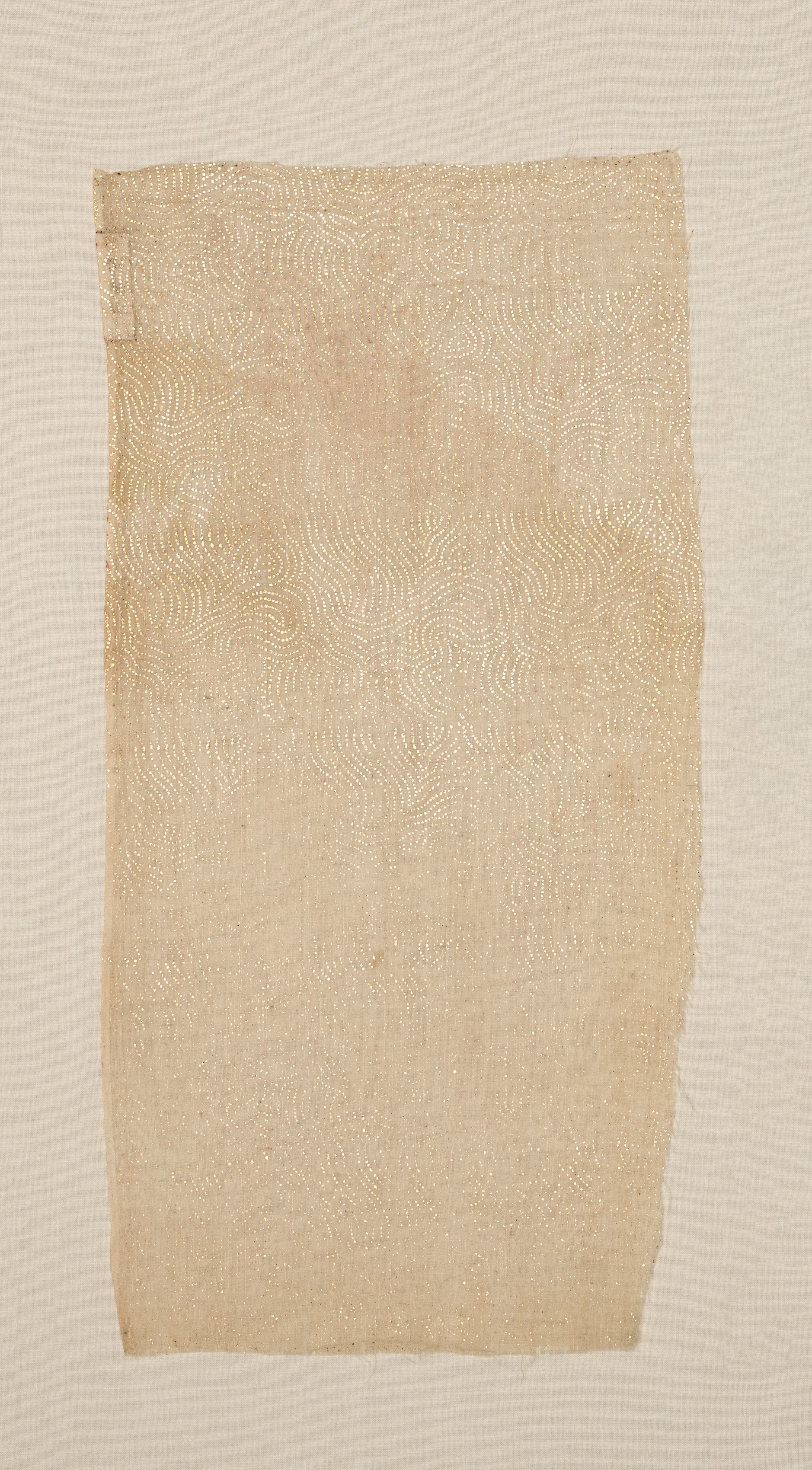
Gold-printed muslin from a nineteenth-century court garment, keeping the fine loom width of the cloth. Muslin this light is printed on a padded table, the block struck and rocked by hand along the length.
× px · Unmodified source file
Small archival scan: best for reference and screen use, not large prints.
Open in StudioSource & licensing
- Creator / date
- Rajasthan, maker unknown · 1800s
- Source credit
- Purchase from the J. H. Wade Fund. The Cleveland Museum of Art, Open Access.
- Usage notes
- Released by the Cleveland Museum of Art under CC0 1.0. Credit to the museum is encouraged; CC0 does not imply endorsement.
- Original file
- × px · JPG · 0.0 MB
- Source checked
- 2026-11-04 · editorial approval separate
CC0 · Public domain · 1800s
Fragment of Draped Court Apparel
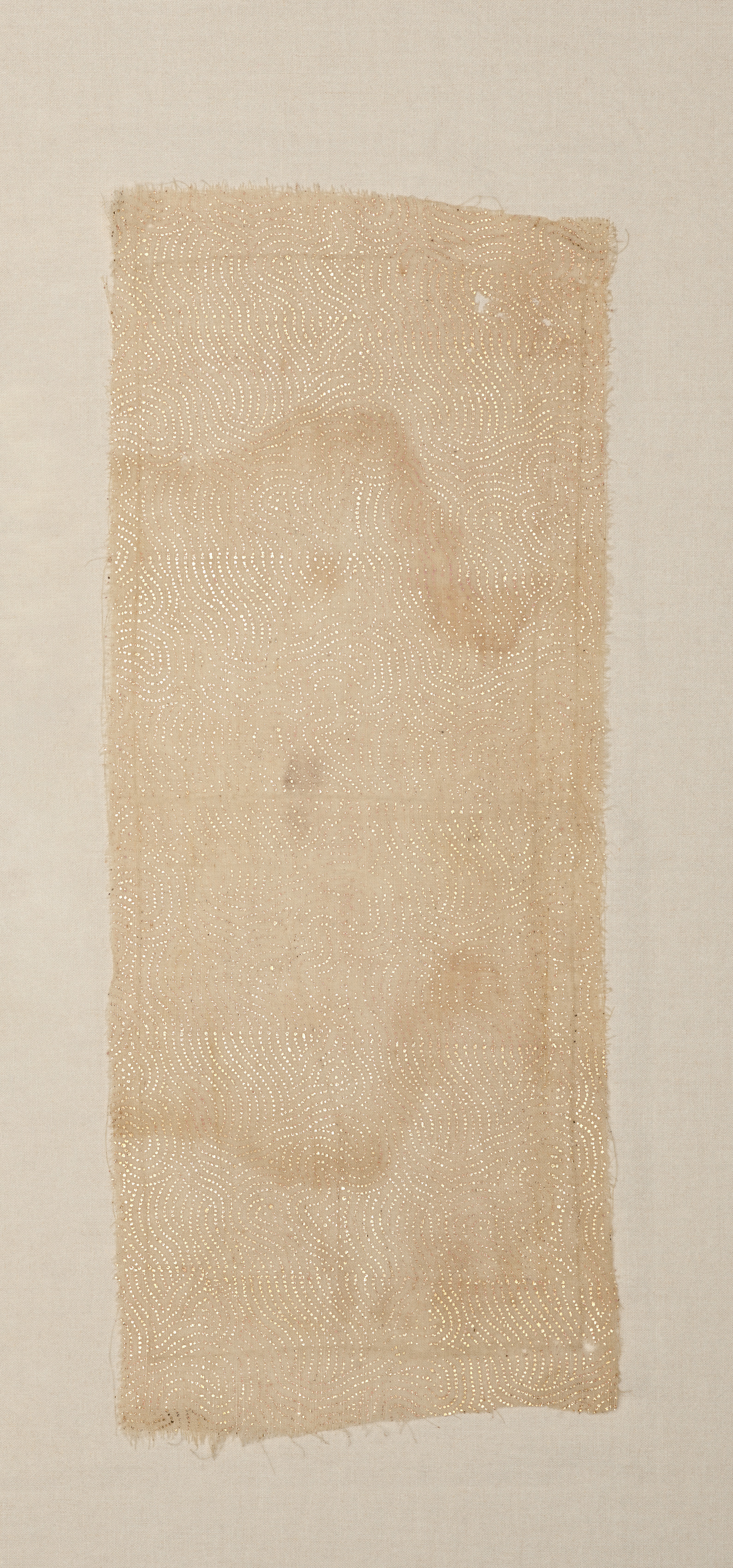
A section of the same garment as the previous fragment, catalogued separately after it was cut for study. Together the two pieces show how a single block repeat carried across a whole length of cloth.
× px · Unmodified source file
Small archival scan: best for reference and screen use, not large prints.
Open in StudioSource & licensing
- Creator / date
- Rajasthan, maker unknown · 1800s
- Source credit
- Purchase from the J. H. Wade Fund. The Cleveland Museum of Art, Open Access.
- Usage notes
- Released by the Cleveland Museum of Art under CC0 1.0. Credit to the museum is encouraged; CC0 does not imply endorsement.
- Original file
- × px · JPG · 0.0 MB
- Source checked
- 2026-11-04 · editorial approval separate
CC0 · Public domain · 1800s
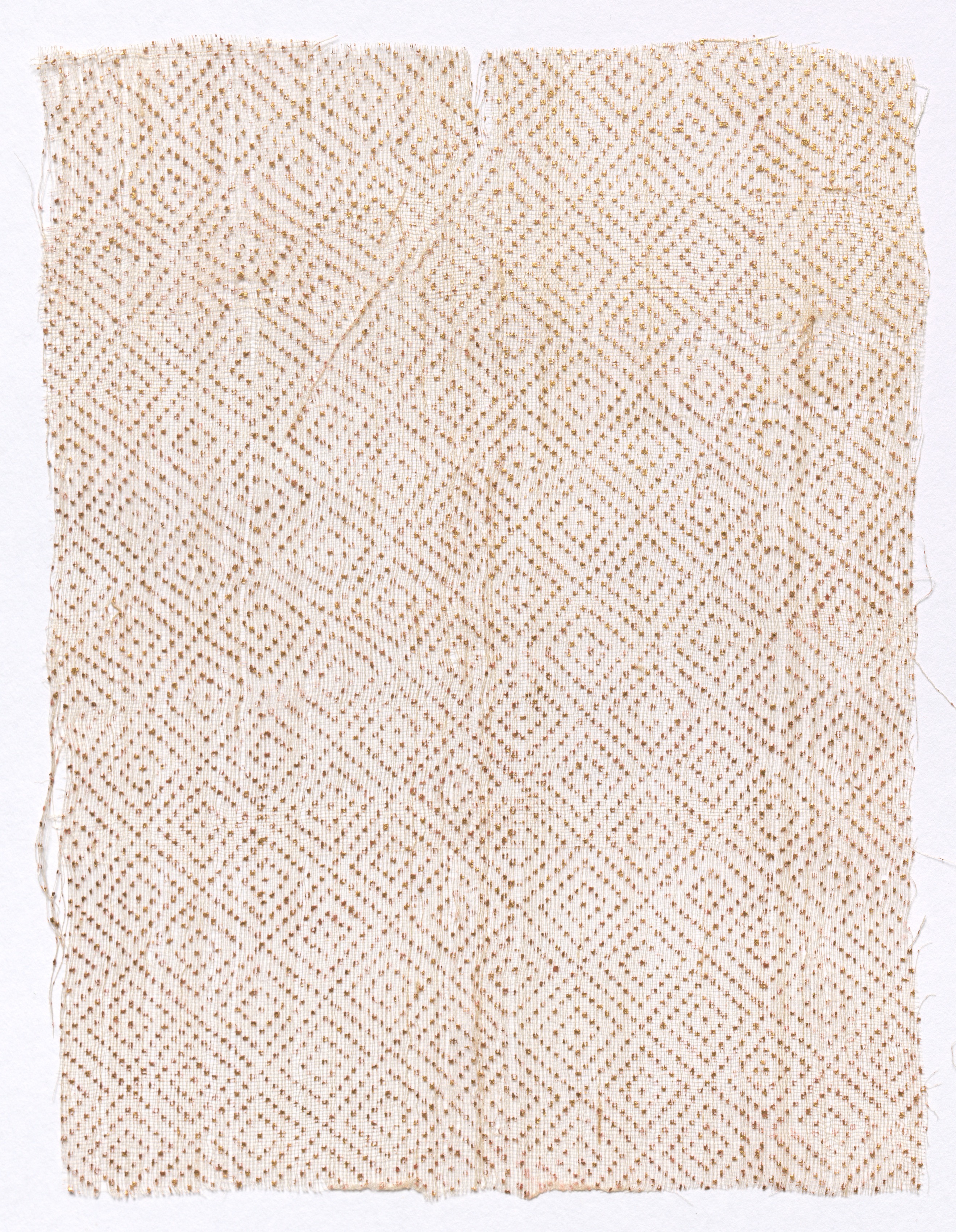
Fragment of Draped Court Apparel
A smaller cut from the same gold-printed muslin, useful at plate scale because the repeat is visible whole. The impression is crisp: the block was cut deep and struck evenly.
× px · Unmodified source file
Small archival scan: best for reference and screen use, not large prints.
Open in StudioSource & licensing
- Creator / date
- Rajasthan, maker unknown · 1800s
- Source credit
- Purchase from the J. H. Wade Fund. The Cleveland Museum of Art, Open Access.
- Usage notes
- Released by the Cleveland Museum of Art under CC0 1.0. Credit to the museum is encouraged; CC0 does not imply endorsement.
- Original file
- × px · JPG · 0.0 MB
- Source checked
- 2026-11-04 · editorial approval separate
CC0 · Public domain · 1800s
Fragment
A small gold-printed fragment, only inches across, kept because the motif is complete. Study pieces like this are how nineteenth-century pattern vocabularies were later reconstructed.
× px · Unmodified source file
Small archival scan: best for reference and screen use, not large prints.
Open in StudioSource & licensing
- Creator / date
- Rajasthan or Northern Deccan, maker unknown · 1800s
- Source credit
- Purchase from the J. H. Wade Fund. The Cleveland Museum of Art, Open Access.
- Usage notes
- Released by the Cleveland Museum of Art under CC0 1.0. Credit to the museum is encouraged; CC0 does not imply endorsement.
- Original file
- × px · JPG · 0.0 MB
- Source checked
- 2026-11-04 · editorial approval separate
CC0 · Public domain · 1700s
Fragment of Draped Apparel
Printed muslin with a fine all-over figure, the kind of cloth worn against the body and rarely preserved. The pattern is small enough to read as tone from a few feet away and as drawing up close.
× px · Unmodified source file
Small archival scan: best for reference and screen use, not large prints.
Open in StudioSource & licensing
- Creator / date
- Rajasthan or Northern Deccan, maker unknown · 1700s
- Source credit
- Purchase from the J. H. Wade Fund. The Cleveland Museum of Art, Open Access.
- Usage notes
- Released by the Cleveland Museum of Art under CC0 1.0. Credit to the museum is encouraged; CC0 does not imply endorsement.
- Original file
- × px · JPG · 0.0 MB
- Source checked
- 2026-11-04 · editorial approval separate
CC0 · Public domain · 1700s
Fragment of Draped Apparel
The companion piece to the fragment above, cut from the same garment. Comparing the two shows the printer’s registration: where the blocks met, and how far the repeat drifted over a long run.
× px · Unmodified source file
Small archival scan: best for reference and screen use, not large prints.
Open in StudioSource & licensing
- Creator / date
- Rajasthan or Northern Deccan, maker unknown · 1700s
- Source credit
- Purchase from the J. H. Wade Fund. The Cleveland Museum of Art, Open Access.
- Usage notes
- Released by the Cleveland Museum of Art under CC0 1.0. Credit to the museum is encouraged; CC0 does not imply endorsement.
- Original file
- × px · JPG · 0.0 MB
- Source checked
- 2026-11-04 · editorial approval separate
CC0 · Public domain · late 1700s or early 1800s
Fragment of Draped Apparel
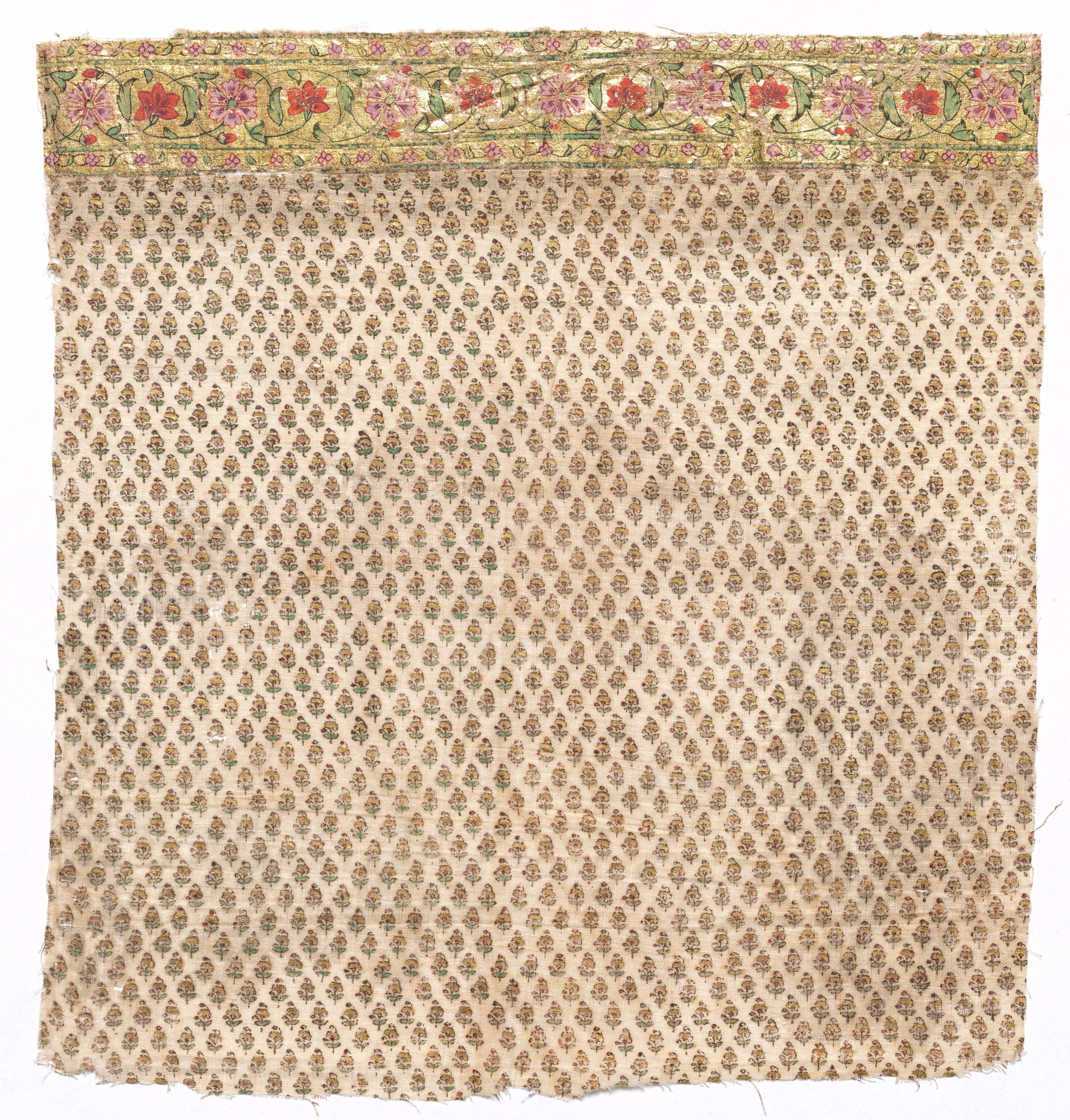
Block printed, overprinted in gold and then painted with pigment: three processes on one piece of muslin. Layering like this is the origin of the dense, jewel-like surfaces later imitated by European roller printers.
× px · Unmodified source file
Small archival scan: best for reference and screen use, not large prints.
Open in StudioSource & licensing
- Creator / date
- India, maker unknown · late 1700s or early 1800s
- Source credit
- Purchase from the J. H. Wade Fund. The Cleveland Museum of Art, Open Access.
- Usage notes
- Released by the Cleveland Museum of Art under CC0 1.0. Credit to the museum is encouraged; CC0 does not imply endorsement.
- Original file
- × px · JPG · 0.0 MB
- Source checked
- 2026-11-04 · editorial approval separate
CC0 · Public domain · 1800s
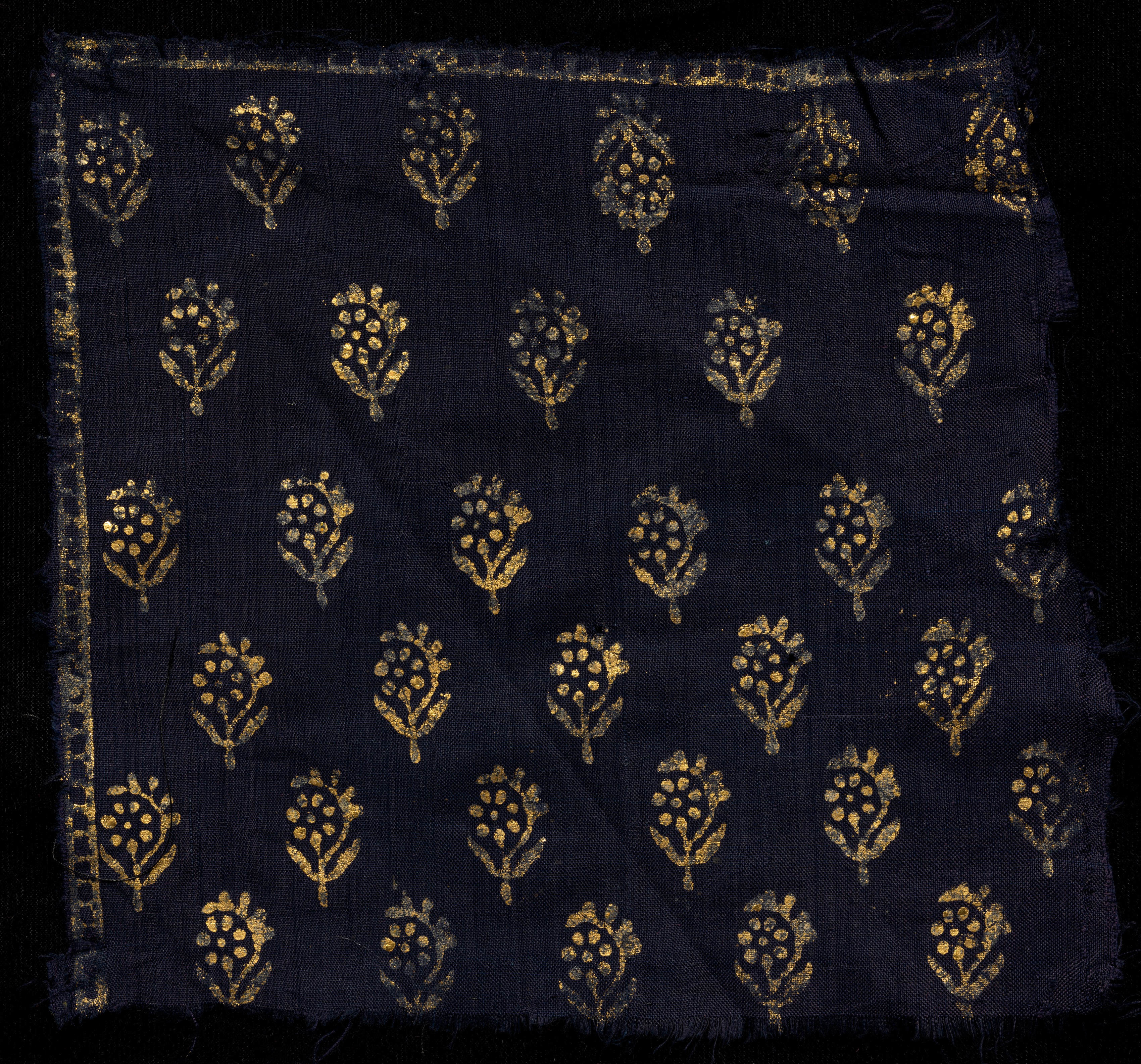
Fragment
Gold leaf printed on a dark indigo ground, a combination that makes the metal read as light rather than as a material. Dark-ground gold printing is the boldest of the Indian block-print registers.
× px · Unmodified source file
Small archival scan: best for reference and screen use, not large prints.
Open in StudioSource & licensing
- Creator / date
- India, maker unknown · 1800s
- Source credit
- Purchase from the J. H. Wade Fund. The Cleveland Museum of Art, Open Access.
- Usage notes
- Released by the Cleveland Museum of Art under CC0 1.0. Credit to the museum is encouraged; CC0 does not imply endorsement.
- Original file
- × px · JPG · 0.0 MB
- Source checked
- 2026-11-04 · editorial approval separate
CC0 · Public domain · 1800
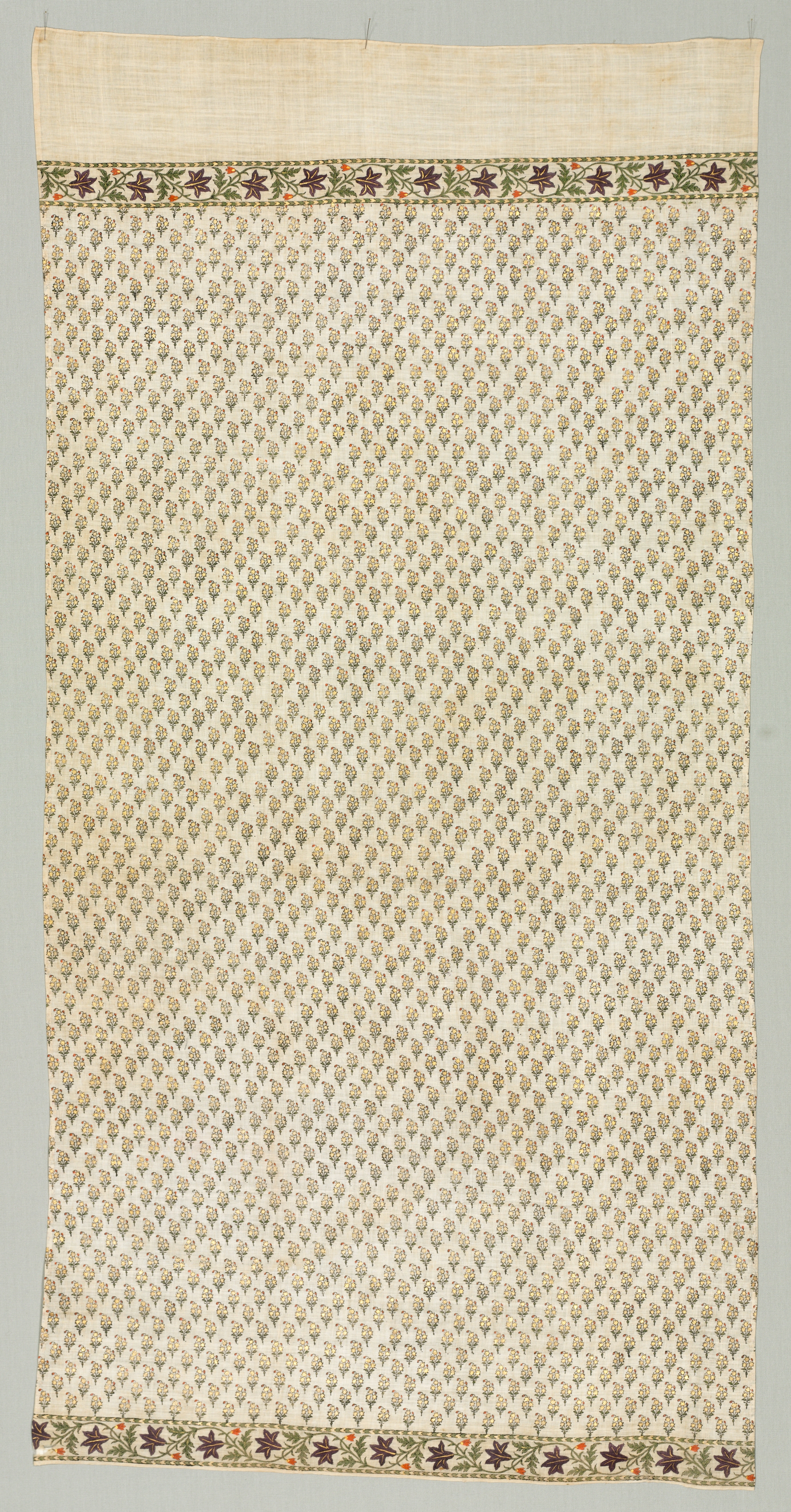
Fragment of a Turban Cloth
A full loom width of turban muslin, printed and then overprinted with gold. Turbans were measured in lengths of fine cloth, so a fragment this size preserves the scale the pattern was designed for.
× px · Unmodified source file
Small archival scan: best for reference and screen use, not large prints.
Open in StudioSource & licensing
- Creator / date
- Rajasthan, Mughal period, maker unknown · 1800
- Source credit
- Purchase from the J. H. Wade Fund. The Cleveland Museum of Art, Open Access.
- Usage notes
- Released by the Cleveland Museum of Art under CC0 1.0. Credit to the museum is encouraged; CC0 does not imply endorsement.
- Original file
- × px · JPG · 0.0 MB
- Source checked
- 2026-11-04 · editorial approval separate
CC0 · Public domain · 1700–1750
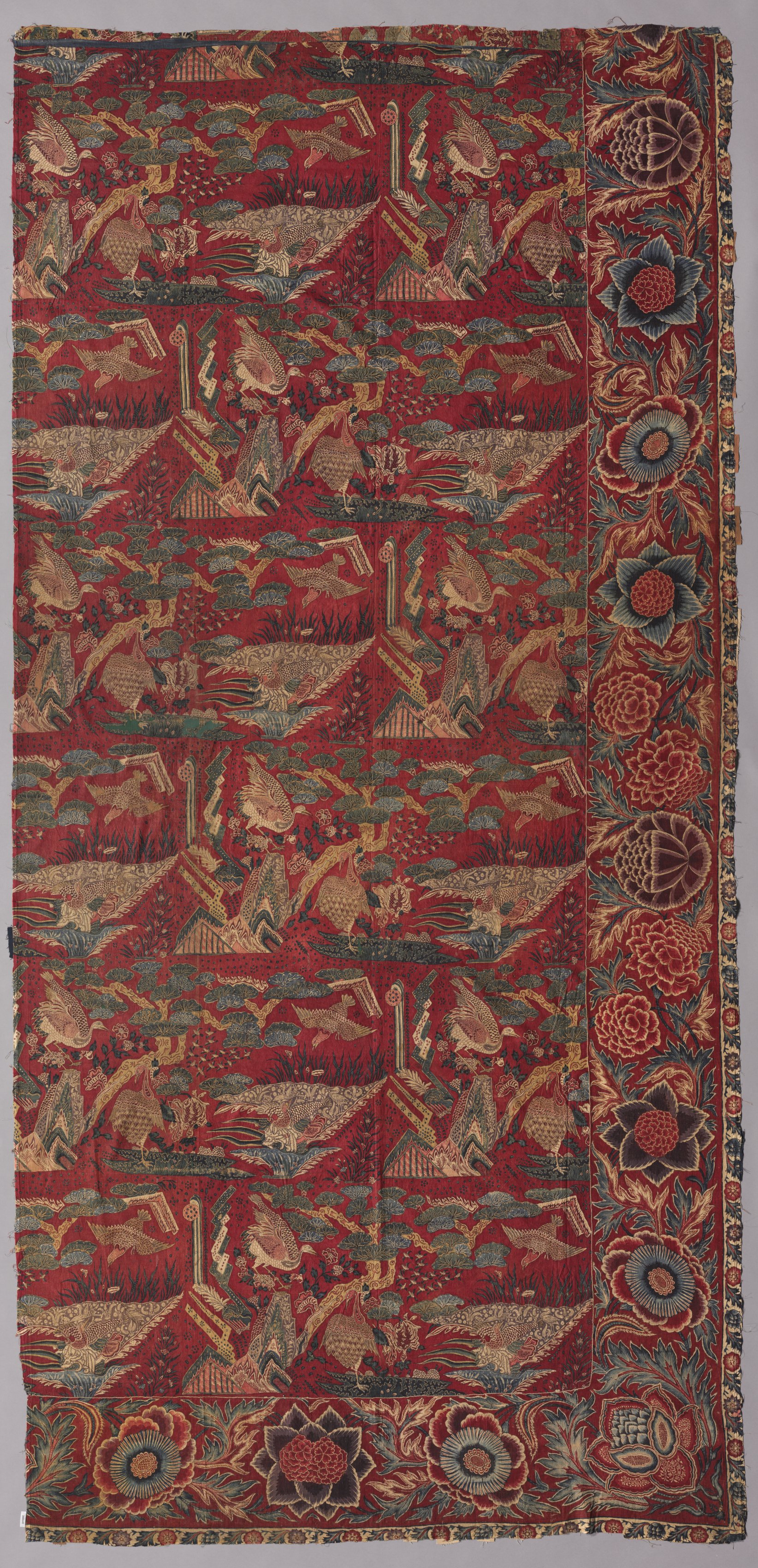
Chintz Bed Cover or Hanging with a Japanese-inspired Pattern, Right Half
A Coromandel chintz painted with mordants and dyed in several reds, blues and greens, its pattern adapted from Japanese export porcelain. Made for the European market, it is a document of how quickly Indian painters absorbed foreign motifs.
× px · Unmodified source file
Small archival scan: best for reference and screen use, not large prints.
Open in StudioSource & licensing
- Creator / date
- Coromandel Coast, India, maker unknown · 1700–1750
- Source credit
- John L. Severance Fund. The Cleveland Museum of Art, Open Access.
- Usage notes
- Released by the Cleveland Museum of Art under CC0 1.0. Credit to the museum is encouraged; CC0 does not imply endorsement.
- Original file
- × px · JPG · 0.0 MB
- Source checked
- 2026-11-04 · editorial approval separate
CC0 · Public domain · mid-1700s
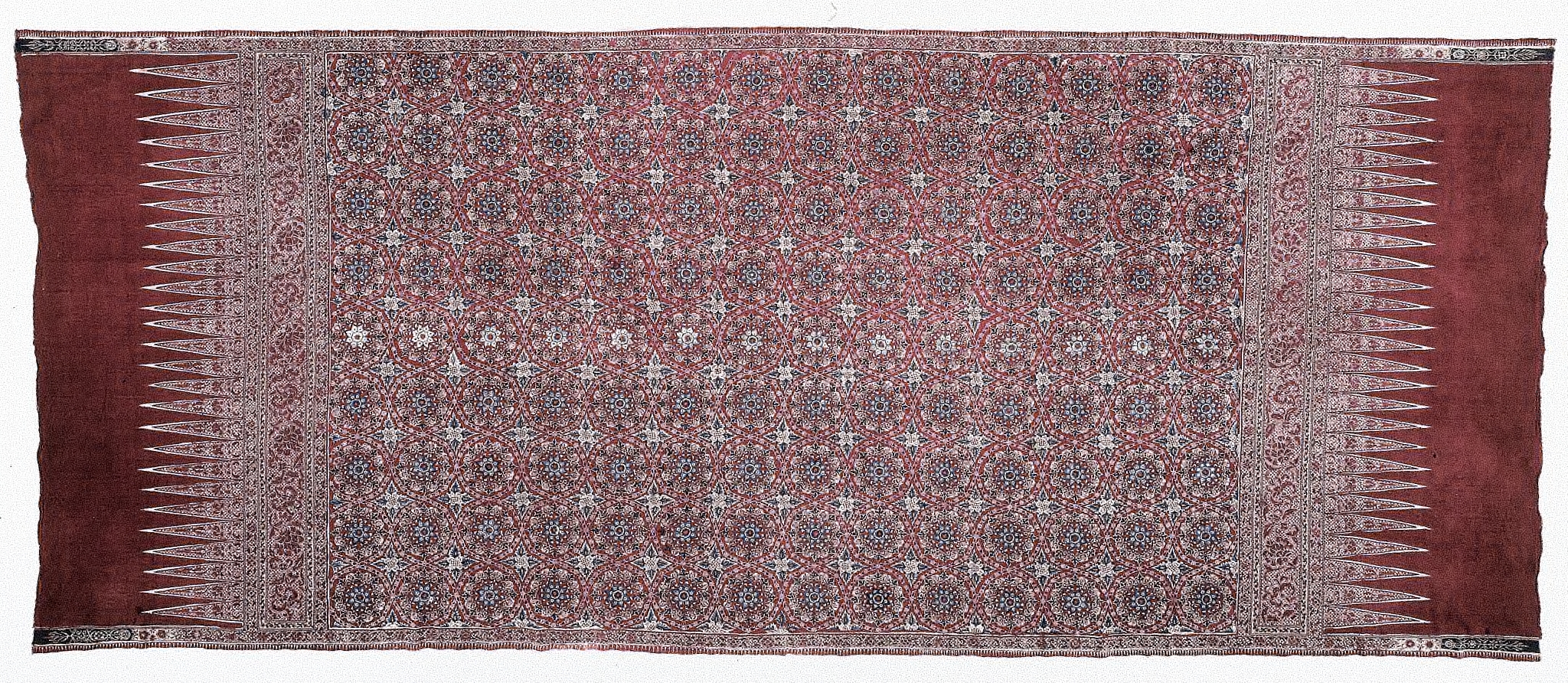
Oversize Hip Wrapper (tapis)
A huge Coromandel cloth made for the spice trade and worn in Sumatra, where it acquired ceremonial status. Its scale is the point: a wrapper cut this large holds a pattern that can be read across a room.
× px · Unmodified source file
Small archival scan: best for reference and screen use, not large prints.
Open in StudioSource & licensing
- Creator / date
- Coromandel Coast, India, maker unknown · mid-1700s
- Source credit
- John L. Severance Fund. The Cleveland Museum of Art, Open Access.
- Usage notes
- Released by the Cleveland Museum of Art under CC0 1.0. Credit to the museum is encouraged; CC0 does not imply endorsement.
- Original file
- × px · JPG · 0.0 MB
- Source checked
- 2026-11-04 · editorial approval separate
Public-domain status is reported by the linked source and may vary by jurisdiction. Check the source record for your intended use. No exclusive rights or Visual Bounty marketplace license are offered for these images.