← Open CollectionsPublic-domain source library
Attic: Painted Greek Pottery
Athenian potters painted in two colours and let the third do the work: the orange of fired clay, the black gloss slipped over it, and the reserved surface left bare for the figures. Red-figure, invented around 530 BCE, reversed the earlier black-figure method by drawing the figure in outline and painting the ground, which allowed relief lines fine enough to model a face. These fourteen vessels and fragments, made between about 520 and 380 BCE, carry the names of the painters who made them: Psiax, the Berlin Painter, the Pig Painter, the Brygos Painter, the Meidias Painter.
Original means the unmodified digital file supplied by the linked archive, not an upscaled or reconstructed image. Sign in for free downloads. Studio uses a working preview up to 2048 px.
CC0 · Public domain · c. 520 BCE
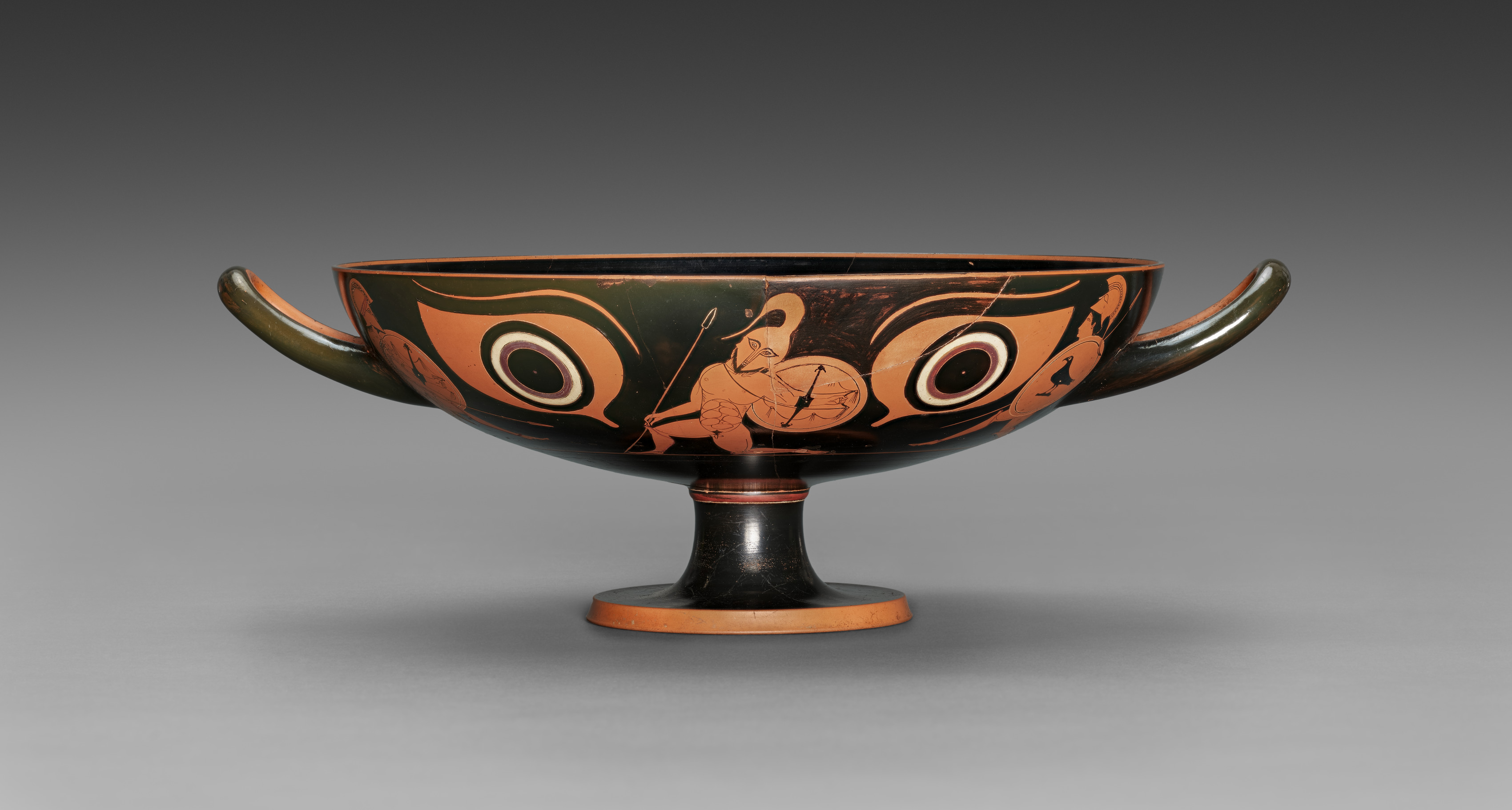
Red-Figure Eye Cup: Warriors (A), Musician and Youths (B)
An eye cup, so called for the pair of eyes painted on each side, which seem to open when the drinker lifts it. Warriors fill one face and a musician with youths the other, painted in the new red-figure technique.
3400 × 1822 px · Unmodified source file
Open in StudioSource & licensing
- Creator / date
- Psiax (Greek, Attic, active c. 525–505 BCE); Group of Leipzig T 3599 · c. 520 BCE
- Source credit
- The Cleveland Museum of Art, 1976.89. Open Access.
- Usage notes
- Released by the Cleveland Museum of Art under CC0 1.0. Credit to the museum is encouraged; CC0 does not imply endorsement.
- Original file
- 3400 × 1822 px · JPG · 0.0 MB
- Source checked
- 2026-11-04 · editorial approval separate
CC0 · Public domain · c. 470–460 BCE
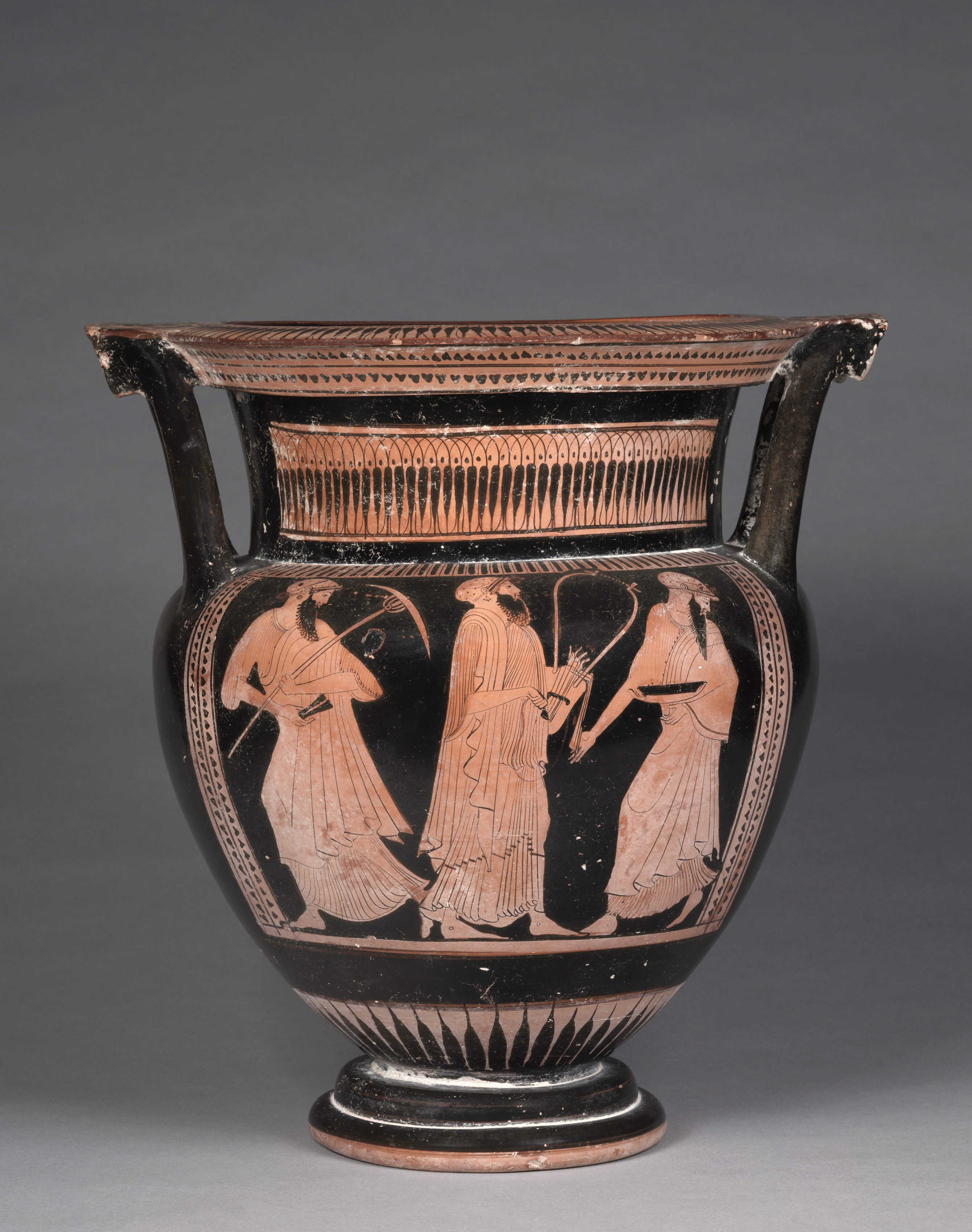
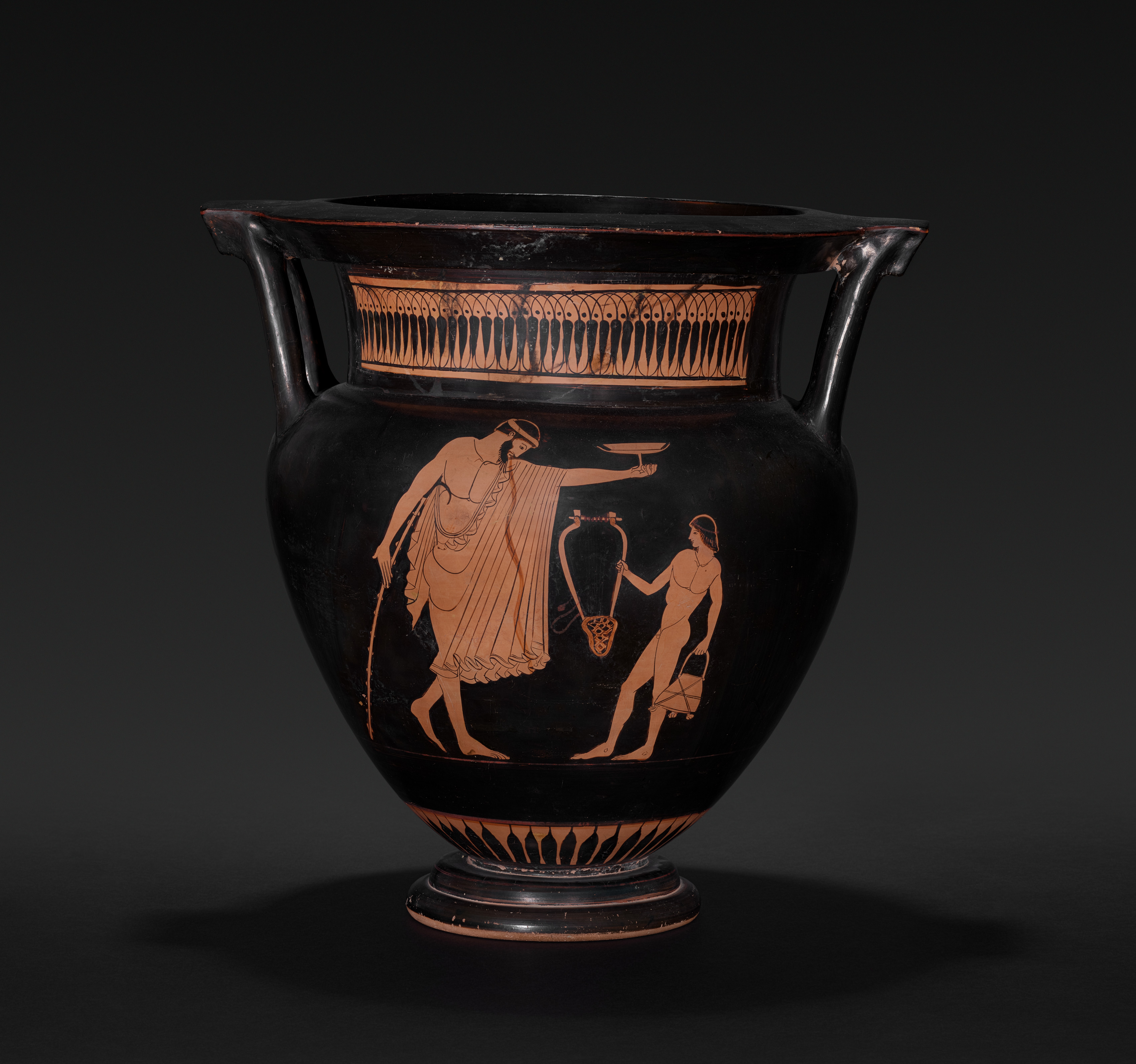
Red-Figure Column Krater (Mixing Vessel): Komos (Revel)
A mixing vessel for wine and water, its neck showing a komos, the revel that followed a symposium. The Pig Painter draws in relief line fine enough to suggest that the brush moved at the speed of drawing.
2682 × 3400 px · Unmodified source file
Open in StudioSource & licensing
- Creator / date
- Pig Painter (Greek, Attic, active c. 480–460 BCE) · c. 470–460 BCE
- Source credit
- The Cleveland Museum of Art, 1926.549. Open Access.
- Usage notes
- Released by the Cleveland Museum of Art under CC0 1.0. Credit to the museum is encouraged; CC0 does not imply endorsement.
- Original file
- 2682 × 3400 px · JPG · 0.0 MB
- Source checked
- 2026-11-04 · editorial approval separate
CC0 · Public domain · c. 480–470 BCE
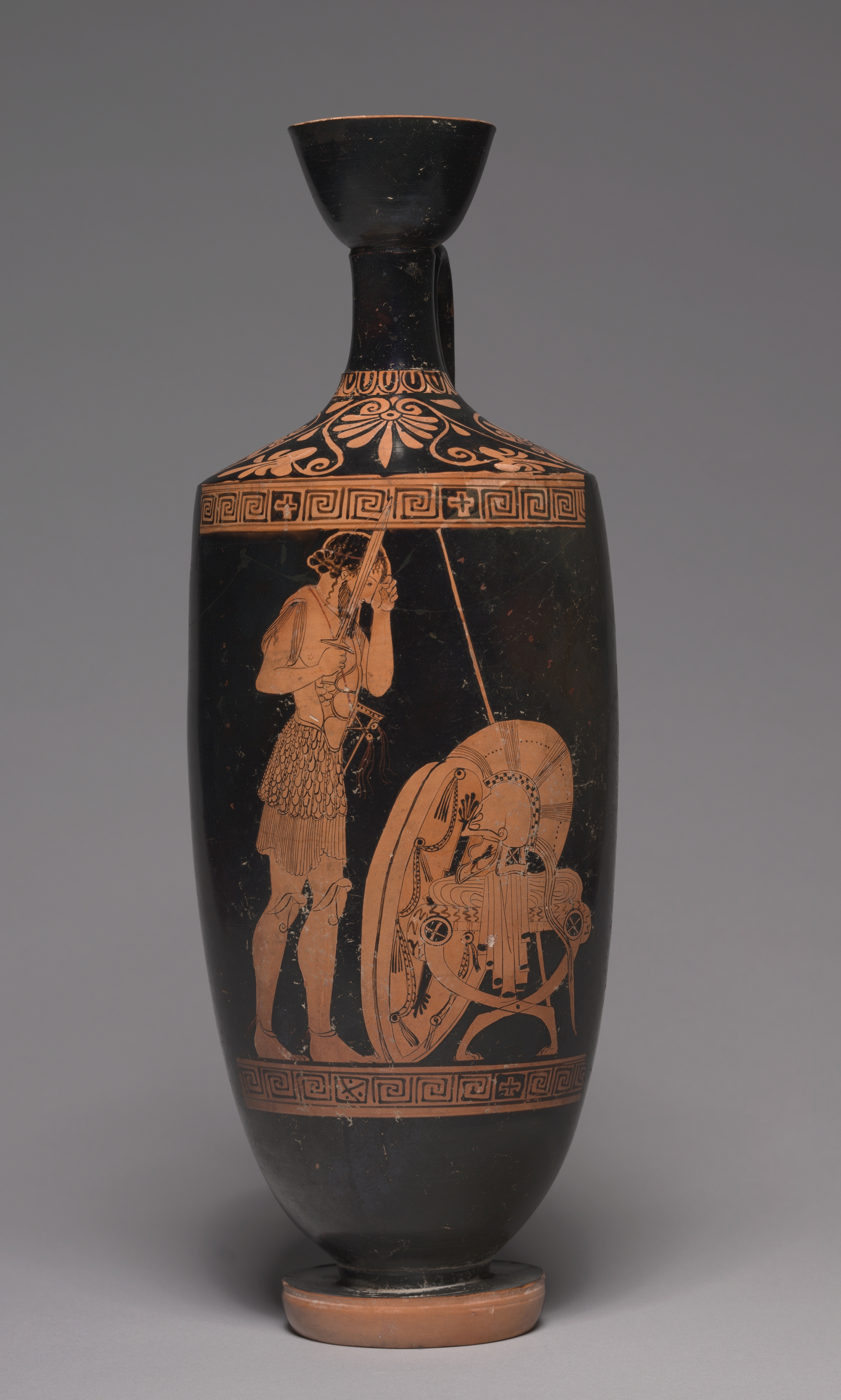
Red-Figure Lekythos (Oil Vessel): Warrior Cutting Hair
An oil flask with a warrior cutting his hair, a gesture of mourning. The lekythos was the shape used for oil at the grave, and its narrow body gave the painter a single figure’s width to work in.
2042 × 3400 px · Unmodified source file
Open in StudioSource & licensing
- Creator / date
- Oionokles Painter (Greek, Attic, active c. 480–460 BCE) · c. 480–470 BCE
- Source credit
- The Cleveland Museum of Art, 1928.660. Open Access.
- Usage notes
- Released by the Cleveland Museum of Art under CC0 1.0. Credit to the museum is encouraged; CC0 does not imply endorsement.
- Original file
- 2042 × 3400 px · JPG · 0.0 MB
- Source checked
- 2026-11-04 · editorial approval separate
CC0 · Public domain · c. 490 BCE
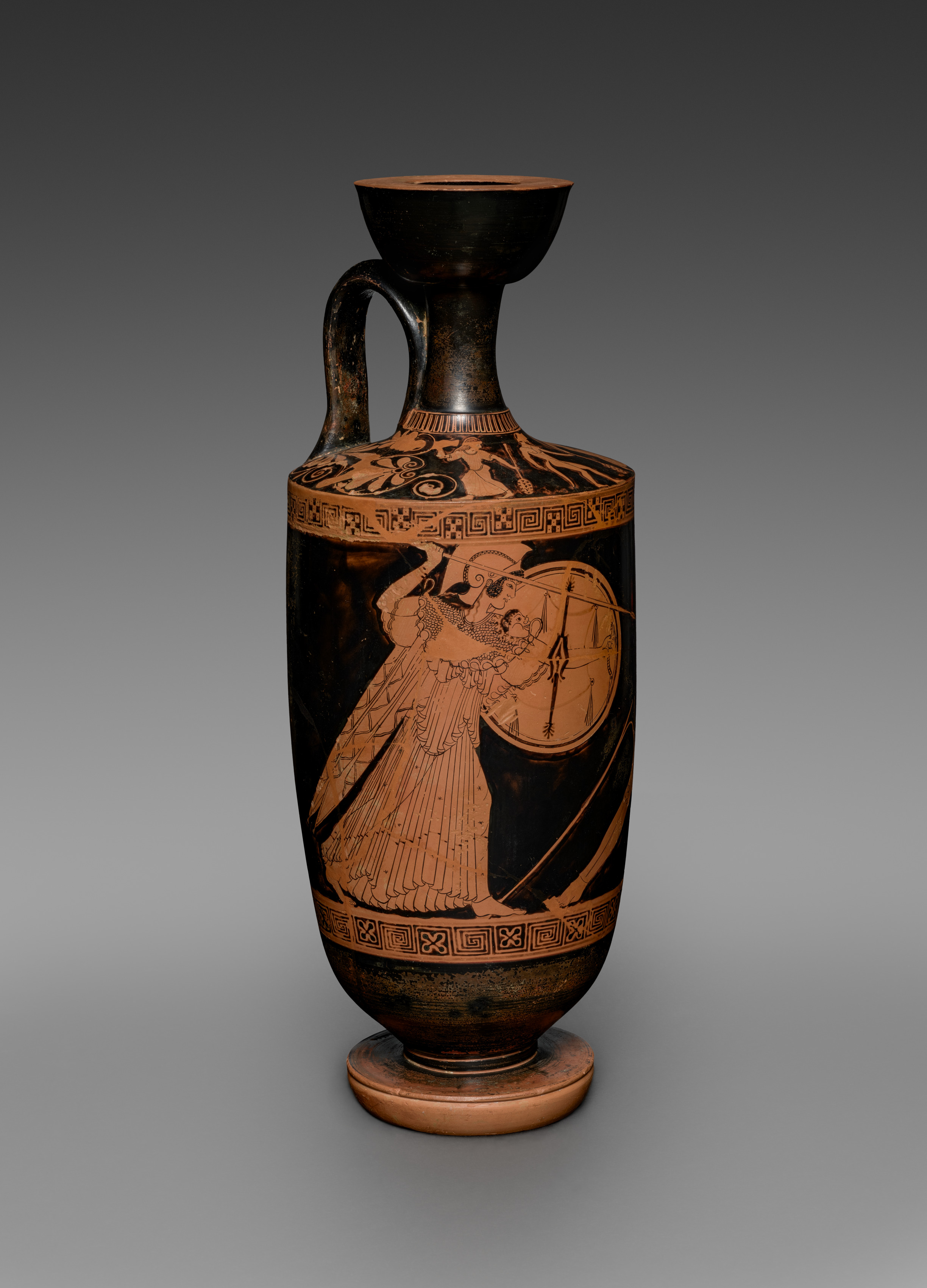
Red-Figure Lekythos (Oil Vessel): Athena Slaying Giant (body); Satyr between Maenads (shoulder)
Athena slays a giant on the body, a satyr chases maenads on the shoulder. The Berlin Painter is known for placing one figure alone on a black ground and letting the shape of the vase do the composing.
2448 × 3400 px · Unmodified source file
Open in StudioSource & licensing
- Creator / date
- Berlin Painter (Greek, Attic, active c. 505–460 BC); Painter of Goluchow 37 (Greek, Attic, active c. 490–460 BC) · c. 490 BCE
- Source credit
- The Cleveland Museum of Art, 1978.59. Open Access.
- Usage notes
- Released by the Cleveland Museum of Art under CC0 1.0. Credit to the museum is encouraged; CC0 does not imply endorsement.
- Original file
- 2448 × 3400 px · JPG · 0.0 MB
- Source checked
- 2026-11-04 · editorial approval separate
CC0 · Public domain · 470–460 BCE
Red-Figure Column Krater (Mixing Vessel): Komos (Revel)
A second column krater by the Pig Painter, with the revel continuing around the body and the same economical line describing drapery and gesture.
3400 × 3185 px · Unmodified source file
Open in StudioSource & licensing
- Creator / date
- Pig Painter (Greek, Attic, active c. 480–460 BCE) · 470–460 BCE
- Source credit
- The Cleveland Museum of Art, 1924.197. Open Access.
- Usage notes
- Released by the Cleveland Museum of Art under CC0 1.0. Credit to the museum is encouraged; CC0 does not imply endorsement.
- Original file
- 3400 × 3185 px · JPG · 0.0 MB
- Source checked
- 2026-11-04 · editorial approval separate
CC0 · Public domain · c. 420–410 BCE
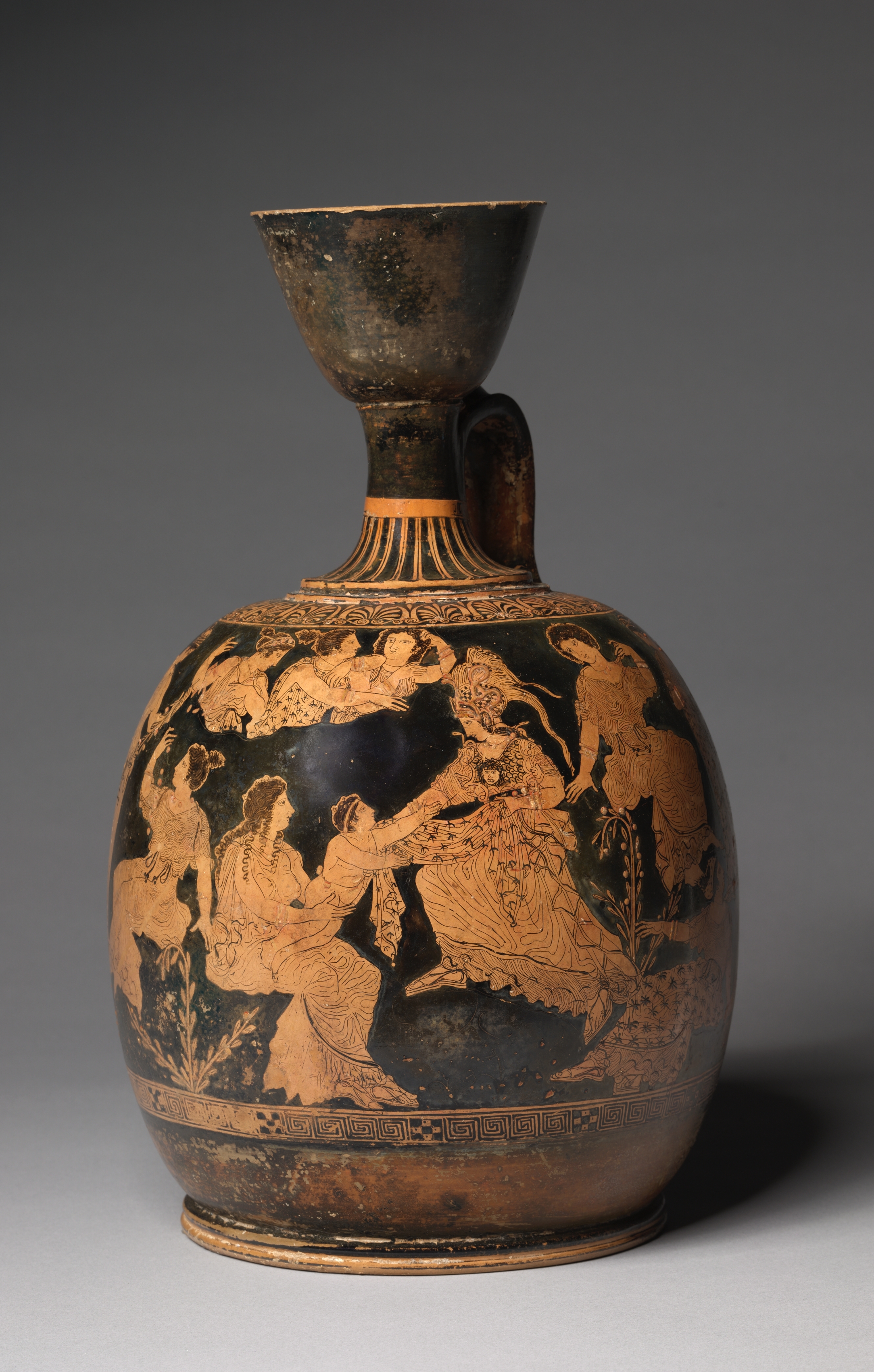
Red-Figure Squat Lekythos (Oil Vessel): Birth of Erichthonios
The birth of Erichthonios, with gilding added over the paint. The Meidias Painter’s late fifth-century style multiplies drapery folds until the figures seem to float.
2167 × 3400 px · Unmodified source file
Open in StudioSource & licensing
- Creator / date
- Meidias Painter (Greek, Attic, active c. 420–400 BCE) · c. 420–410 BCE
- Source credit
- The Cleveland Museum of Art, 1982.142. Open Access.
- Usage notes
- Released by the Cleveland Museum of Art under CC0 1.0. Credit to the museum is encouraged; CC0 does not imply endorsement.
- Original file
- 2167 × 3400 px · JPG · 0.0 MB
- Source checked
- 2026-11-04 · editorial approval separate
CC0 · Public domain · c. 480–470 BCE
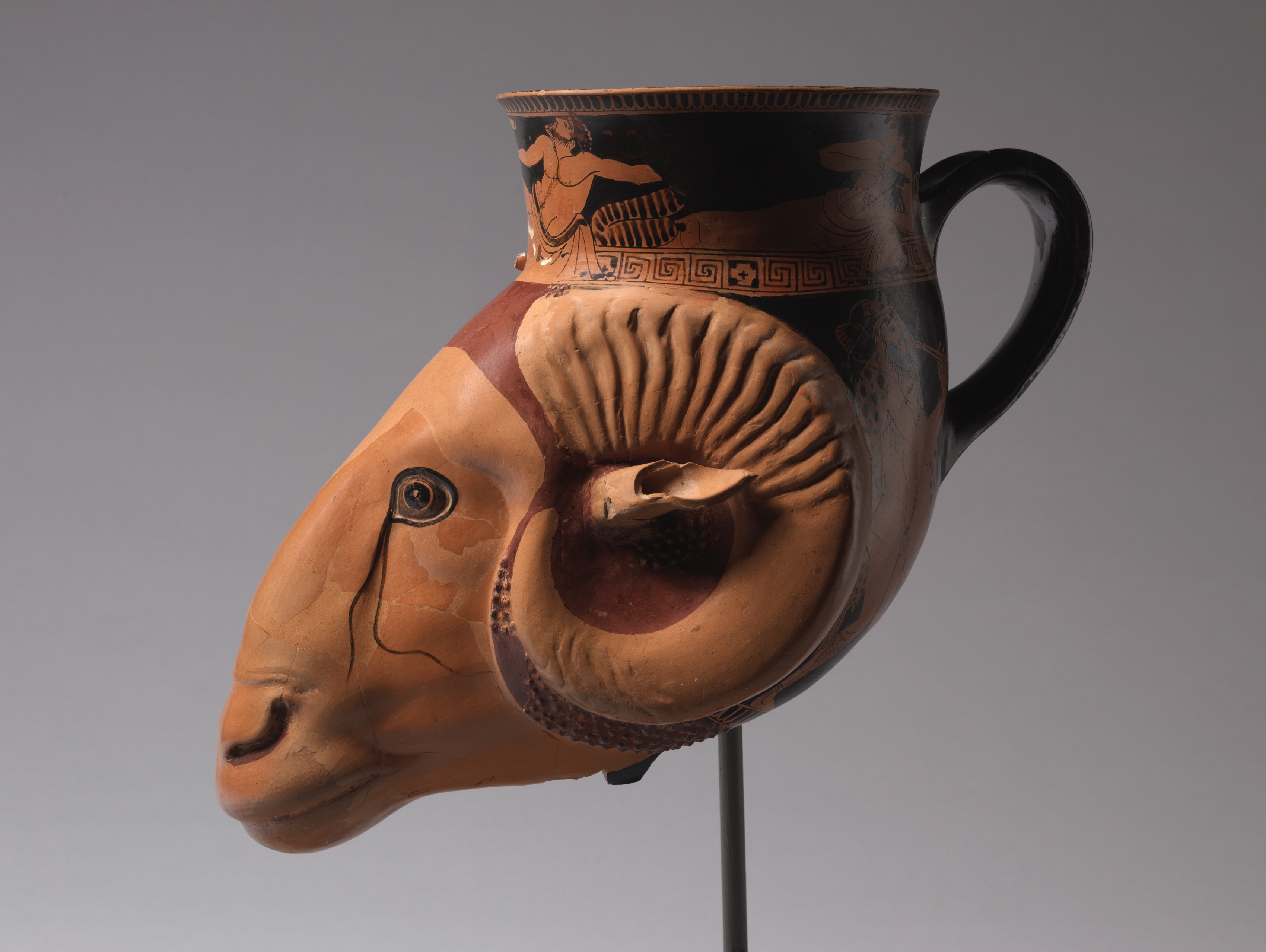
Red-Figure Ram-Head Rhyton (Drinking Vessel): Symposiasts; Satyr and Maenad
A drinking vessel ending in a ram’s head, so that the wine was poured through the animal’s mouth. Symposiasts occupy the body and a satyr and maenad the neck.
3400 × 2897 px · Unmodified source file
Open in StudioSource & licensing
- Creator / date
- Brygos Painter (Greek, Attic, active c. 490–470 BCE) · c. 480–470 BCE
- Source credit
- The Cleveland Museum of Art, 1988.8. Open Access.
- Usage notes
- Released by the Cleveland Museum of Art under CC0 1.0. Credit to the museum is encouraged; CC0 does not imply endorsement.
- Original file
- 3400 × 2897 px · JPG · 0.0 MB
- Source checked
- 2026-11-04 · editorial approval separate
CC0 · Public domain · c. 470–460 BCE
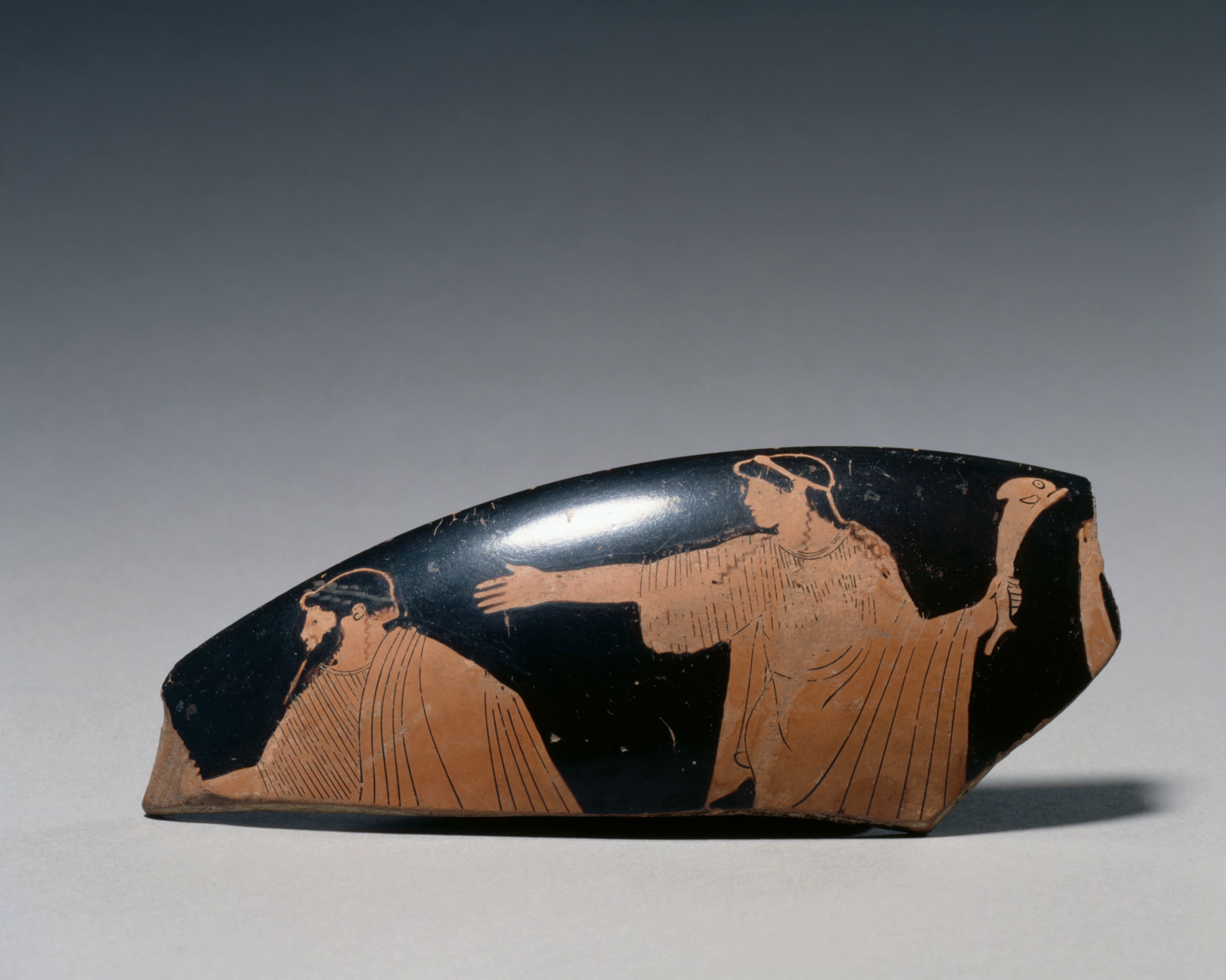
Fragment from Red-Figure Kylix: Nereus(?) and Nereid
A fragment from a drinking cup showing Nereus and a Nereid; the curve of the sherd still preserves the curve of the cup’s interior.
3400 × 2719 px · Unmodified source file
Open in StudioSource & licensing
- Creator / date
- Pistoxenos Painter (Greek, Attic, active c. 470–460 BCE) · c. 470–460 BCE
- Source credit
- The Cleveland Museum of Art, 1924.537. Open Access.
- Usage notes
- Released by the Cleveland Museum of Art under CC0 1.0. Credit to the museum is encouraged; CC0 does not imply endorsement.
- Original file
- 3400 × 2719 px · JPG · 0.0 MB
- Source checked
- 2026-11-04 · editorial approval separate
CC0 · Public domain · 440–430 BCE
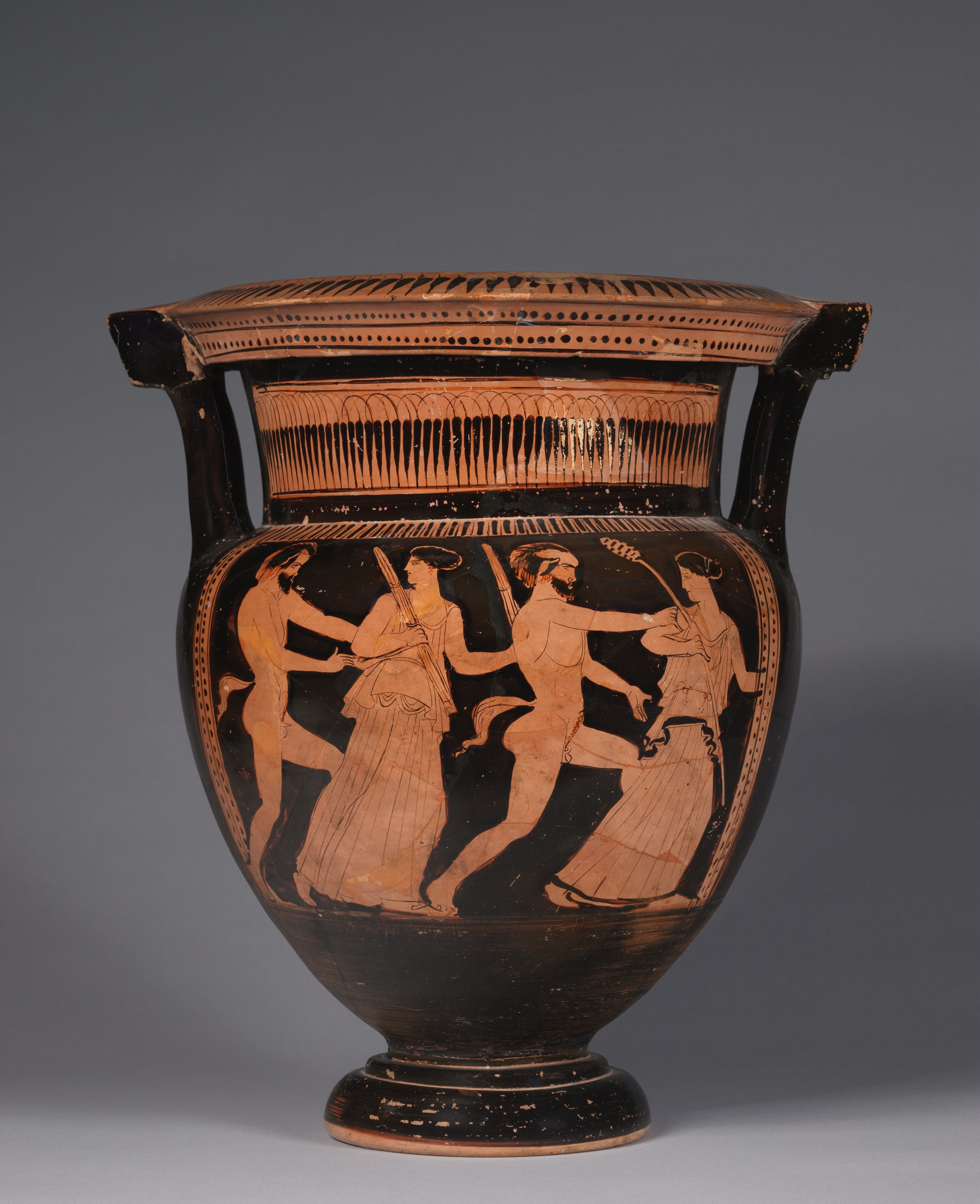
Red-Figure Column Krater (Mixing Vessel): Satyrs Pursuing Maenads
Satyrs pursue maenads around the body, a subject that let the painter use the whole circumference as one continuous chase.
2767 × 3400 px · Unmodified source file
Open in StudioSource & licensing
- Creator / date
- Naples Painter (Greek, Attic, active c. 450–430 BCE) · 440–430 BCE
- Source credit
- The Cleveland Museum of Art, 1924.533. Open Access.
- Usage notes
- Released by the Cleveland Museum of Art under CC0 1.0. Credit to the museum is encouraged; CC0 does not imply endorsement.
- Original file
- 2767 × 3400 px · JPG · 0.0 MB
- Source checked
- 2026-11-04 · editorial approval separate
CC0 · Public domain · c. 400–380 BCE
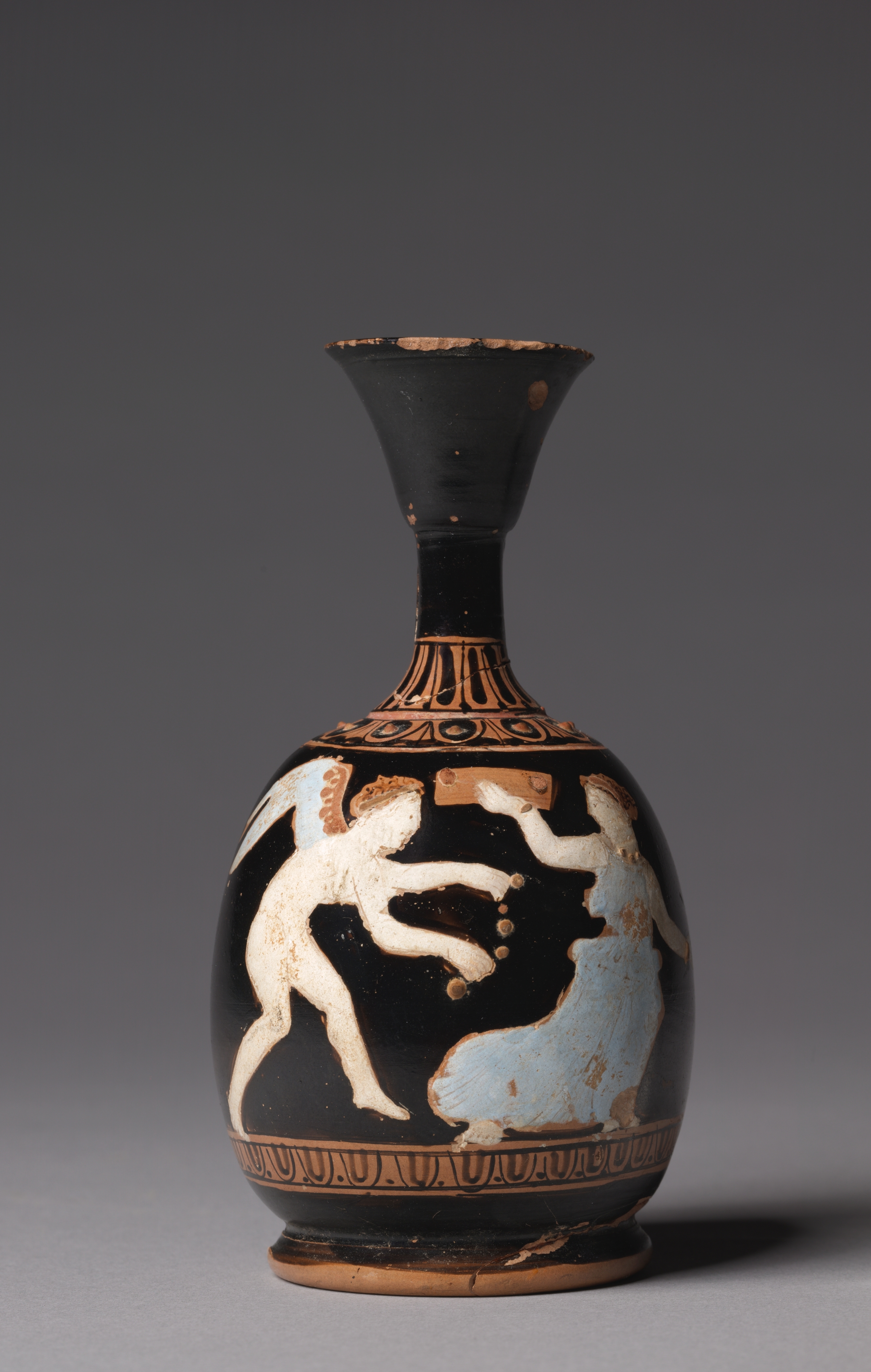
Red-Figure Squat Lekythos (Oil Vessel): Eros and Woman
Eros and a woman on a squat oil flask from the early fourth century, as red-figure moved toward softer and more intimate subjects.
2158 × 3400 px · Unmodified source file
Open in StudioSource & licensing
- Creator / date
- Greek, Attic, maker unknown · c. 400–380 BCE
- Source credit
- The Cleveland Museum of Art, 1926.553. Open Access.
- Usage notes
- Released by the Cleveland Museum of Art under CC0 1.0. Credit to the museum is encouraged; CC0 does not imply endorsement.
- Original file
- 2158 × 3400 px · JPG · 0.0 MB
- Source checked
- 2026-11-04 · editorial approval separate
CC0 · Public domain · c. 490–480 BCE
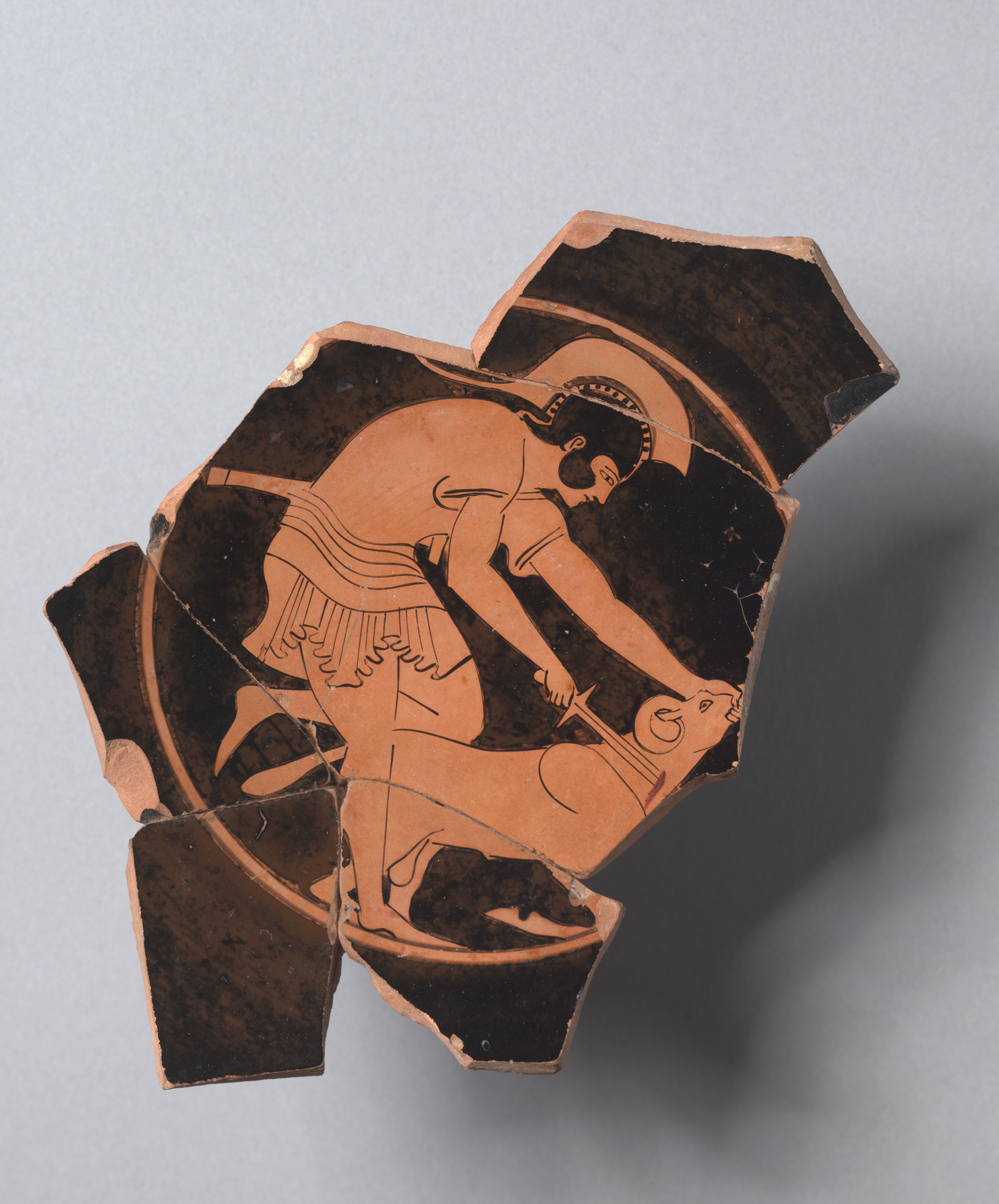
Fragmentary Red-Figure Kylix (Drinking Cup): Warrior Sacrificing Ram
A warrior sacrifices a ram, the scene surviving in fragments that still show the circle of the cup’s tondo.
2821 × 3400 px · Unmodified source file
Open in StudioSource & licensing
- Creator / date
- Greek, Attic, maker unknown · c. 490–480 BCE
- Source credit
- The Cleveland Museum of Art, 1926.242. Open Access.
- Usage notes
- Released by the Cleveland Museum of Art under CC0 1.0. Credit to the museum is encouraged; CC0 does not imply endorsement.
- Original file
- 2821 × 3400 px · JPG · 0.0 MB
- Source checked
- 2026-11-04 · editorial approval separate
CC0 · Public domain · c. 470–460 BCE
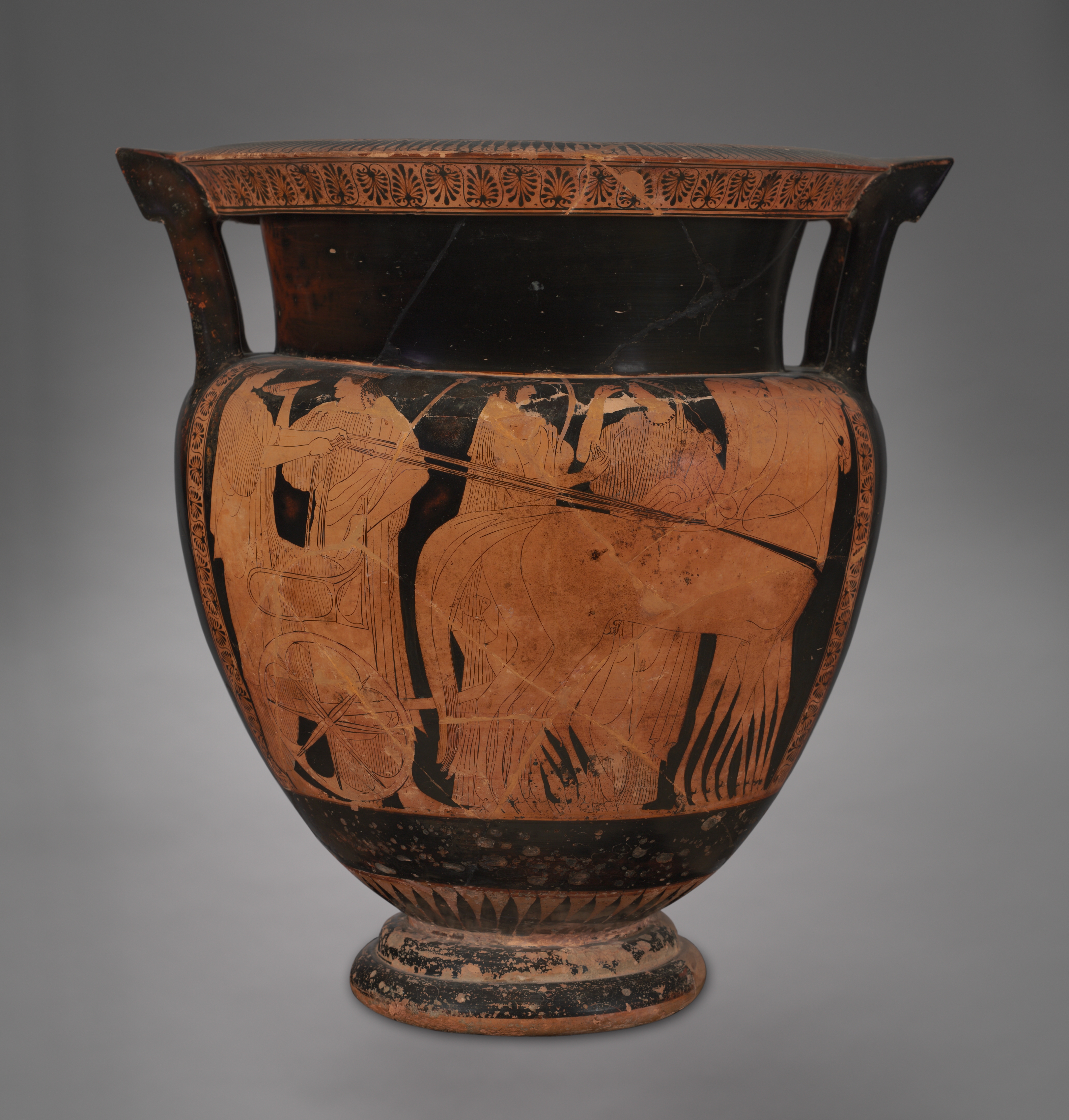
Red-Figure Column Krater (Mixing Vessel): Apollo and Goddesses with Chariot (A); Komos (Revel) (B)
The vase that gives the Cleveland Painter his name: Apollo and goddesses with a chariot on one side, a komos on the other.
3245 × 3400 px · Unmodified source file
Open in StudioSource & licensing
- Creator / date
- Cleveland Painter (name vase; Greek, Attic, active c. 470–460 BCE) · c. 470–460 BCE
- Source credit
- The Cleveland Museum of Art, 1930.104. Open Access.
- Usage notes
- Released by the Cleveland Museum of Art under CC0 1.0. Credit to the museum is encouraged; CC0 does not imply endorsement.
- Original file
- 3245 × 3400 px · JPG · 0.0 MB
- Source checked
- 2026-11-04 · editorial approval separate
CC0 · Public domain · c. 470–460 BCE
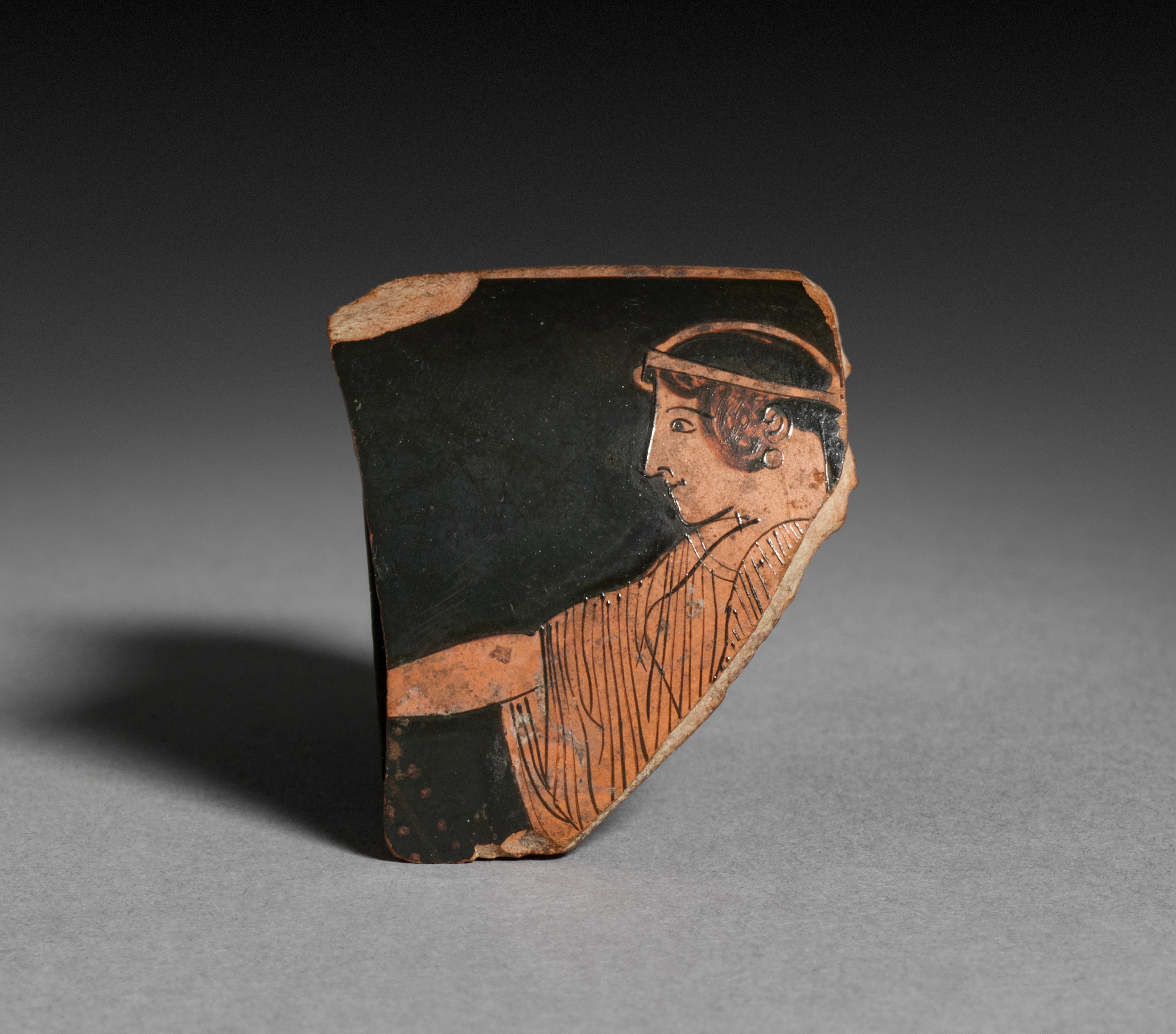
Fragment from Red-Figure Cup: Woman
A woman on a cup fragment by the Telephos Painter; the piece preserves the fine relief line that distinguishes red-figure drawing from the earlier black-figure silhouette.
2637 × 2319 px · Unmodified source file
Open in StudioSource & licensing
- Creator / date
- Telephos Painter (Greek, Attic, active 480–460 BC) · c. 470–460 BCE
- Source credit
- The Cleveland Museum of Art, 1915.533.b. Open Access.
- Usage notes
- Released by the Cleveland Museum of Art under CC0 1.0. Credit to the museum is encouraged; CC0 does not imply endorsement.
- Original file
- 2637 × 2319 px · JPG · 0.0 MB
- Source checked
- 2026-11-04 · editorial approval separate
CC0 · Public domain · c. 425–420 BCE
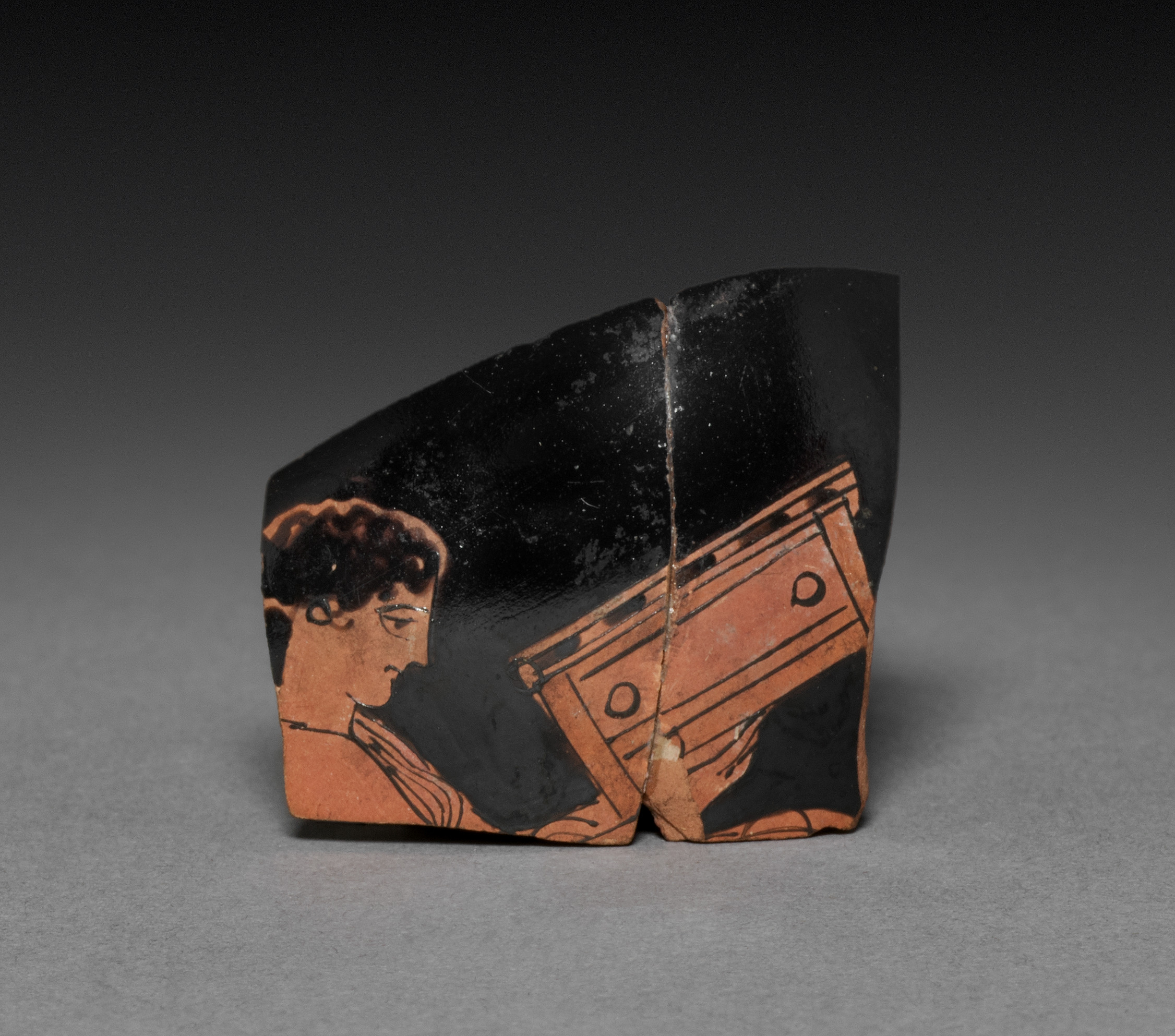
Fragment from Red-Figure Oinochoe (Wine Jug) or Hydria (Water Jar): Woman Holding Box
A woman holding a box, painted late in the fifth century when quiet domestic subjects became common on drinking vessels.
2252 × 1986 px · Unmodified source file
Open in StudioSource & licensing
- Creator / date
- Shuvalov Painter (Greek, Attic, active c. 440–410 BCE) · c. 425–420 BCE
- Source credit
- The Cleveland Museum of Art, 1915.533.d. Open Access.
- Usage notes
- Released by the Cleveland Museum of Art under CC0 1.0. Credit to the museum is encouraged; CC0 does not imply endorsement.
- Original file
- 2252 × 1986 px · JPG · 0.0 MB
- Source checked
- 2026-11-04 · editorial approval separate
Public-domain status is reported by the linked source and may vary by jurisdiction. Check the source record for your intended use. No exclusive rights or Visual Bounty marketplace license are offered for these images.