← Open CollectionsPublic-domain source library
Steel: Armour Etched and Fluted
Armour is a surface before it is a defence. Plates were fluted to imitate pleated linen and to stiffen the steel, etched along every border so that the pattern read across a tournament field, blued, gilded and polished until the wearer threw light. These twelve harnesses and elements, made in Nuremberg, Augsburg, Milan and Graz between about 1475 and 1630, include a boy’s armour and a matched set for knight and horse.
Original means the unmodified digital file supplied by the linked archive, not an upscaled or reconstructed image. Sign in for free downloads. Studio uses a working preview up to 2048 px.
CC0 · Public domain · c. 1475–1500
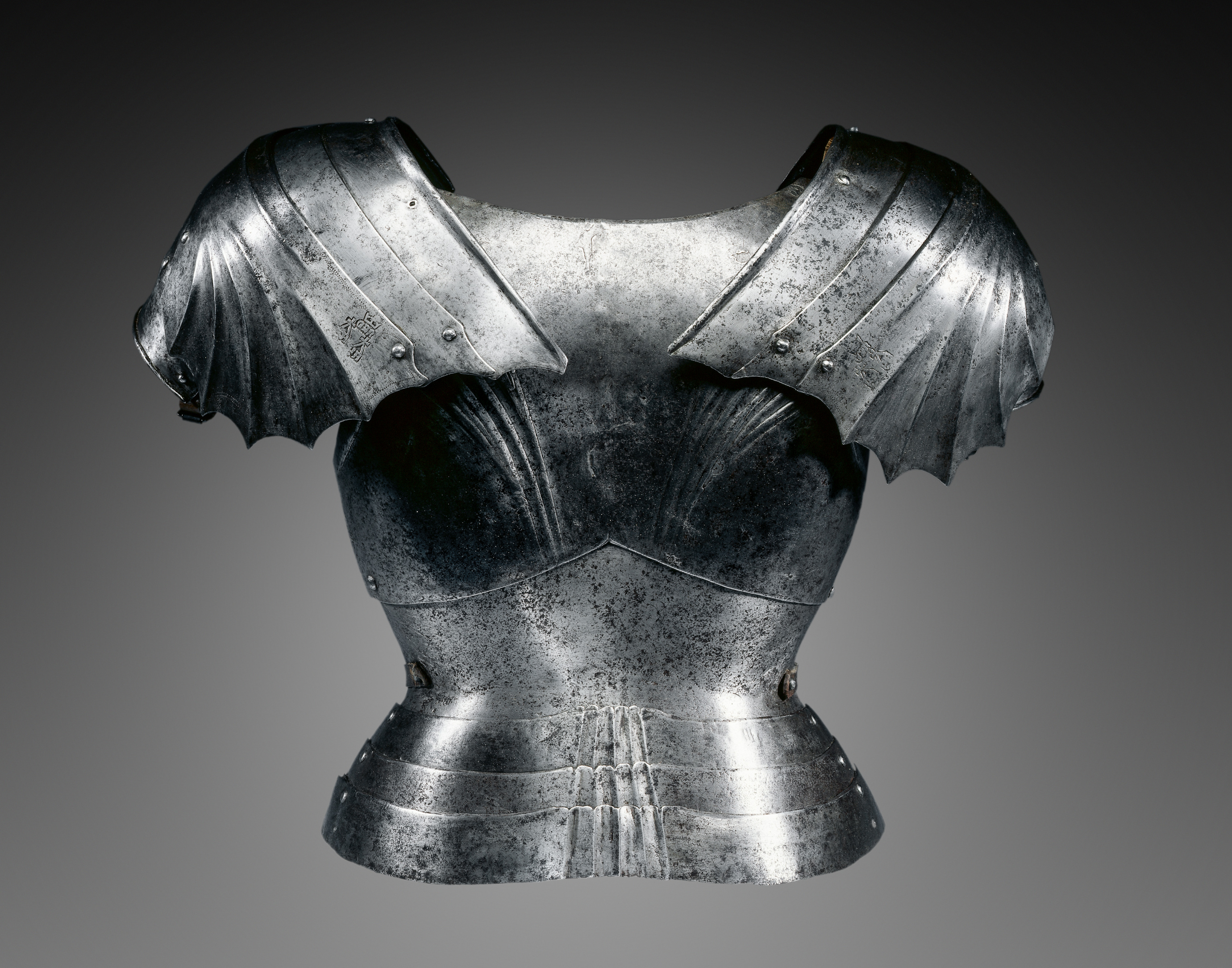
Gothic Backplate
A Gothic backplate from the end of the fifteenth century, when crossbows and longbows had made full plate necessary and the knight was encased from head to foot.
3400 × 2671 px · Unmodified source file
Open in StudioSource & licensing
- Creator / date
- Germany, late 15th Century, maker unknown · c. 1475–1500
- Source credit
- The Cleveland Museum of Art, 1916.1613. Open Access.
- Usage notes
- Released by the Cleveland Museum of Art under CC0 1.0. Credit to the museum is encouraged; CC0 does not imply endorsement.
- Original file
- 3400 × 2671 px · JPG · 0.0 MB
- Source checked
- 2026-11-04 · editorial approval separate
CC0 · Public domain · c. 1540
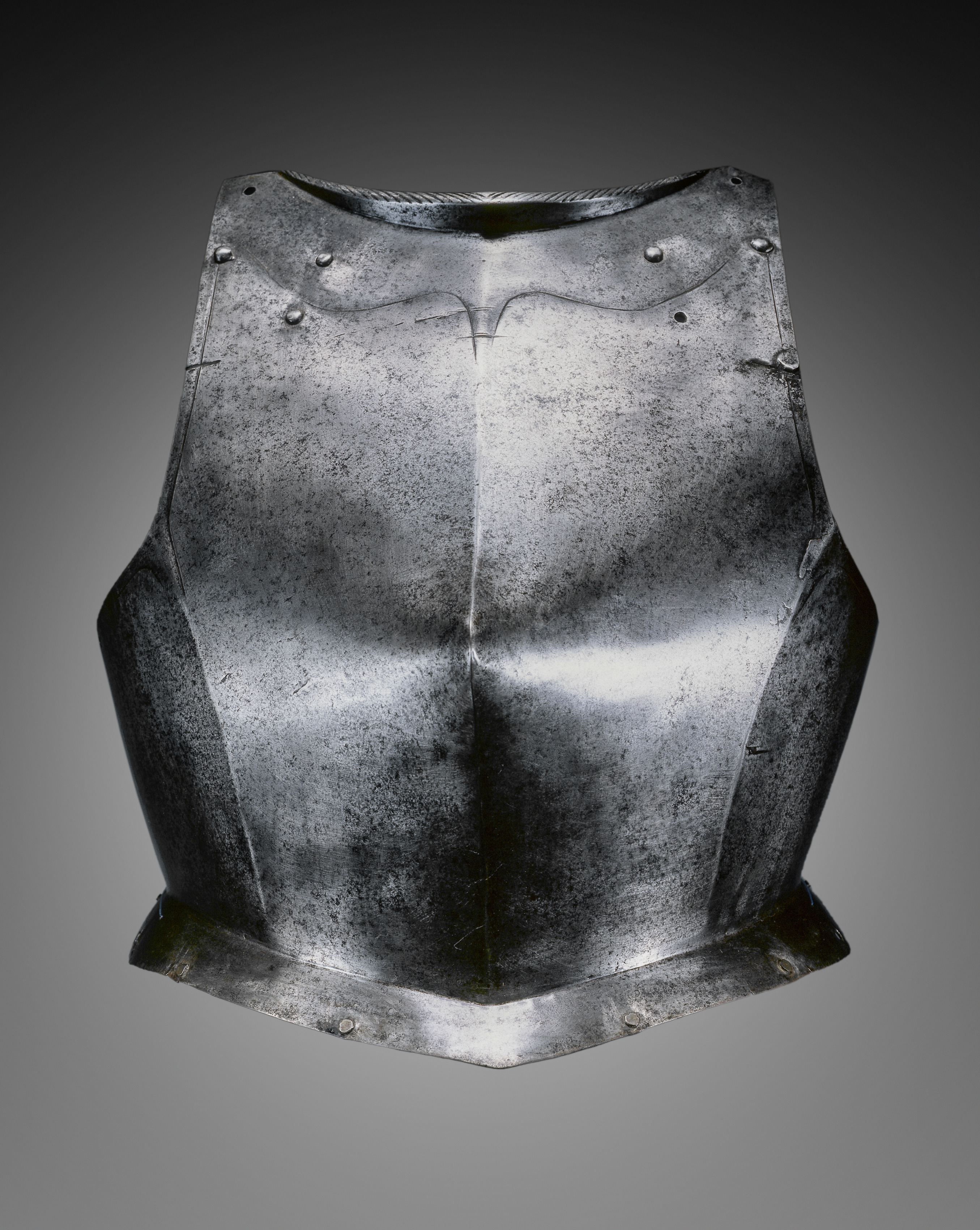
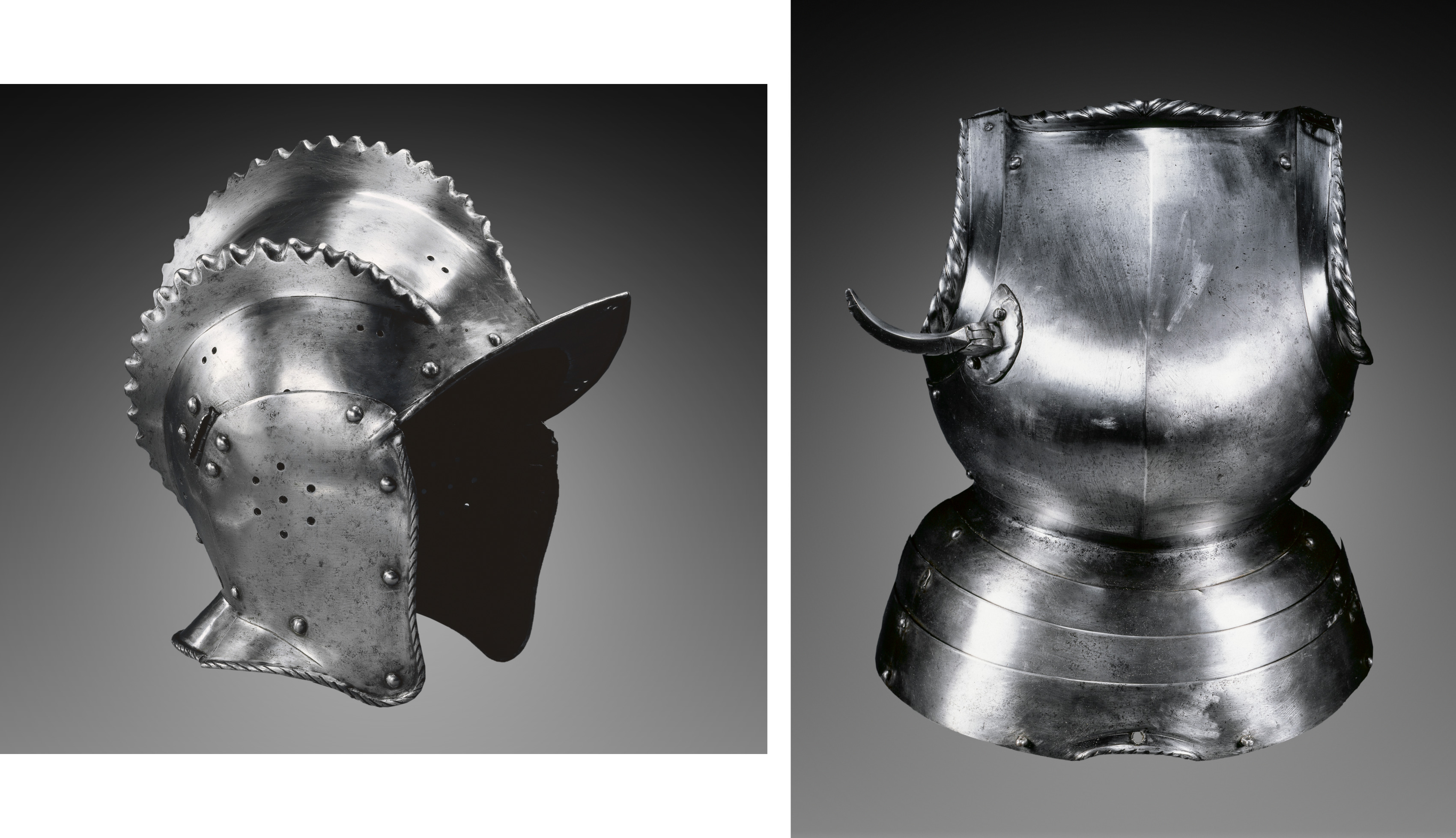
Gothic Breastplate
A breastplate made in Nuremberg, one of the chief armour-producing cities, worn with a backplate that is now lost.
2710 × 3400 px · Unmodified source file
Open in StudioSource & licensing
- Creator / date
- Germany, maker unknown · c. 1540
- Source credit
- The Cleveland Museum of Art, 1916.684. Open Access.
- Usage notes
- Released by the Cleveland Museum of Art under CC0 1.0. Credit to the museum is encouraged; CC0 does not imply endorsement.
- Original file
- 2710 × 3400 px · JPG · 0.0 MB
- Source checked
- 2026-11-04 · editorial approval separate
CC0 · Public domain · c. 1510–15
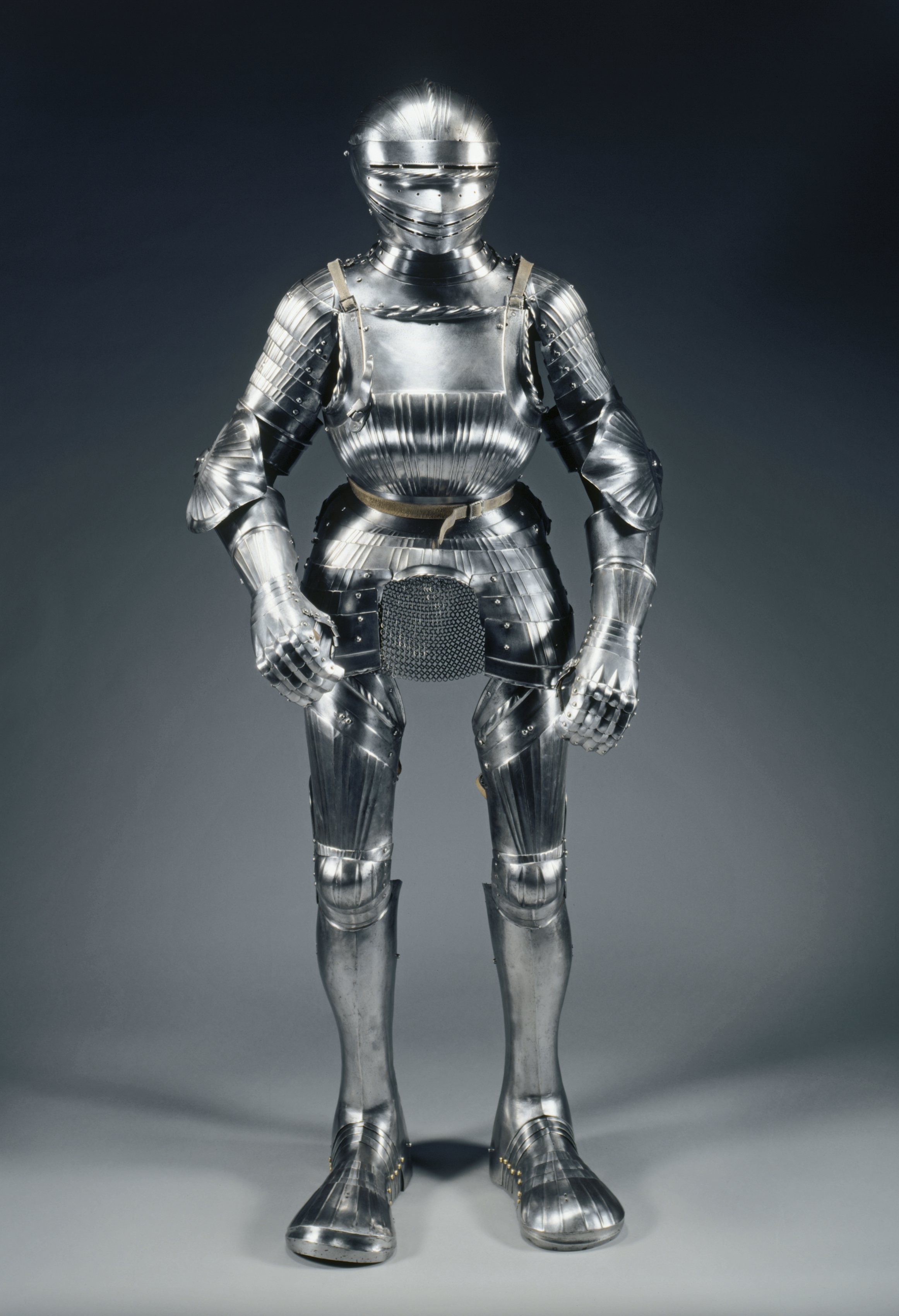
Field Armor in Maximilian Style
German armour of about 1510 in the Maximilian style, its flutes running with the shape of the plate. Most elements were made together; the lower legs include later restoration.
2598 × 3400 px · Unmodified source file
Open in StudioSource & licensing
- Creator / date
- Germany, possibly Augsburg, maker unknown · c. 1510–15
- Source credit
- The Cleveland Museum of Art, 2012.38. Open Access.
- Usage notes
- Released by the Cleveland Museum of Art under CC0 1.0. Credit to the museum is encouraged; CC0 does not imply endorsement.
- Original file
- 2598 × 3400 px · JPG · 0.0 MB
- Source checked
- 2026-11-04 · editorial approval separate
CC0 · Public domain · c. 1525
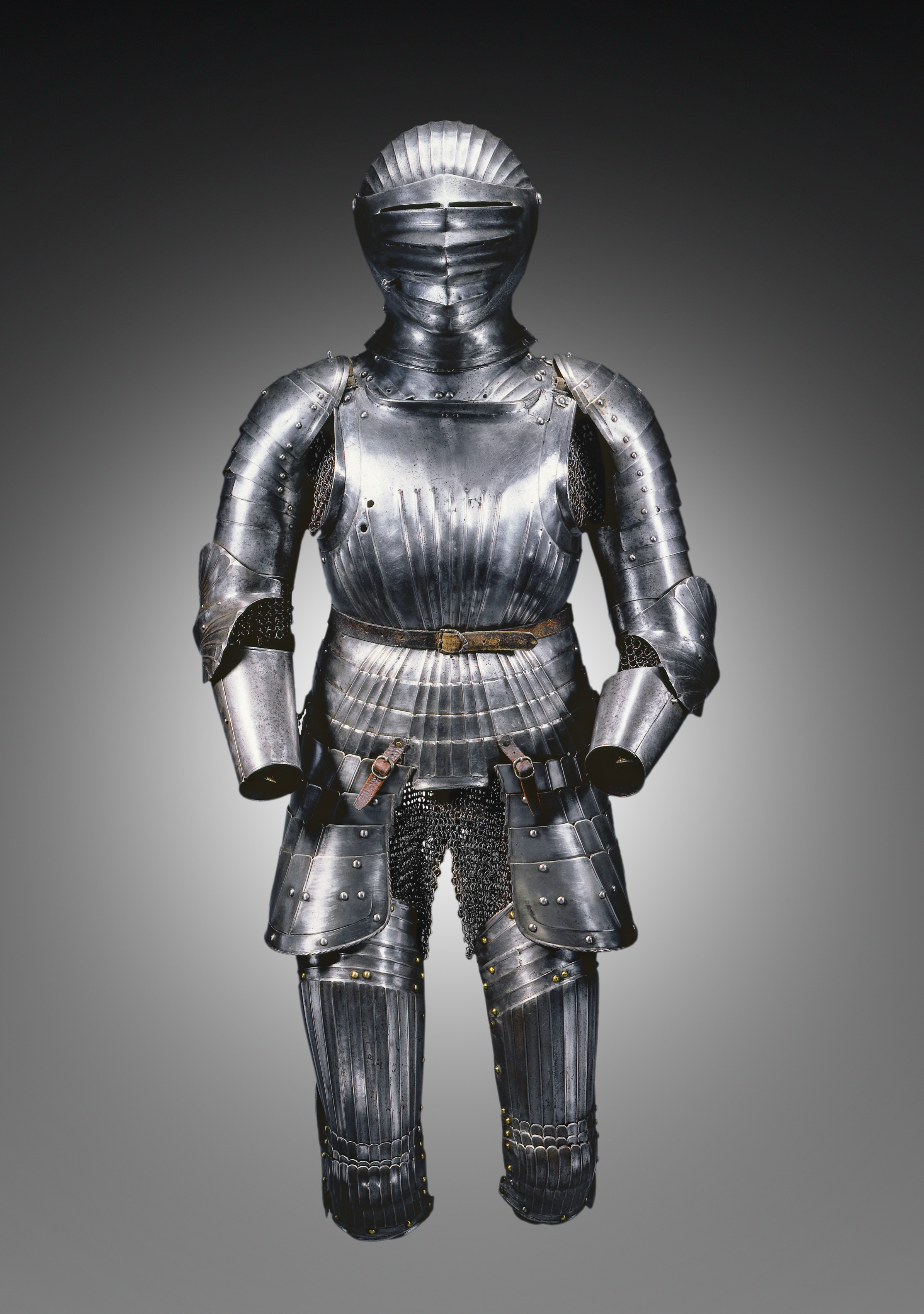
Partial Suit of Armor in Maximilian Style
Fluted armour was striking in sunlight, the polished ripples throwing light as the wearer moved. The fluting may have begun as an imitation of pleated fabric and ended as a way of stiffening steel.
2391 × 3400 px · Unmodified source file
Open in StudioSource & licensing
- Creator / date
- Germany, Nuremberg, maker unknown · c. 1525
- Source credit
- The Cleveland Museum of Art, 1916.1714. Open Access.
- Usage notes
- Released by the Cleveland Museum of Art under CC0 1.0. Credit to the museum is encouraged; CC0 does not imply endorsement.
- Original file
- 2391 × 3400 px · JPG · 0.0 MB
- Source checked
- 2026-11-04 · editorial approval separate
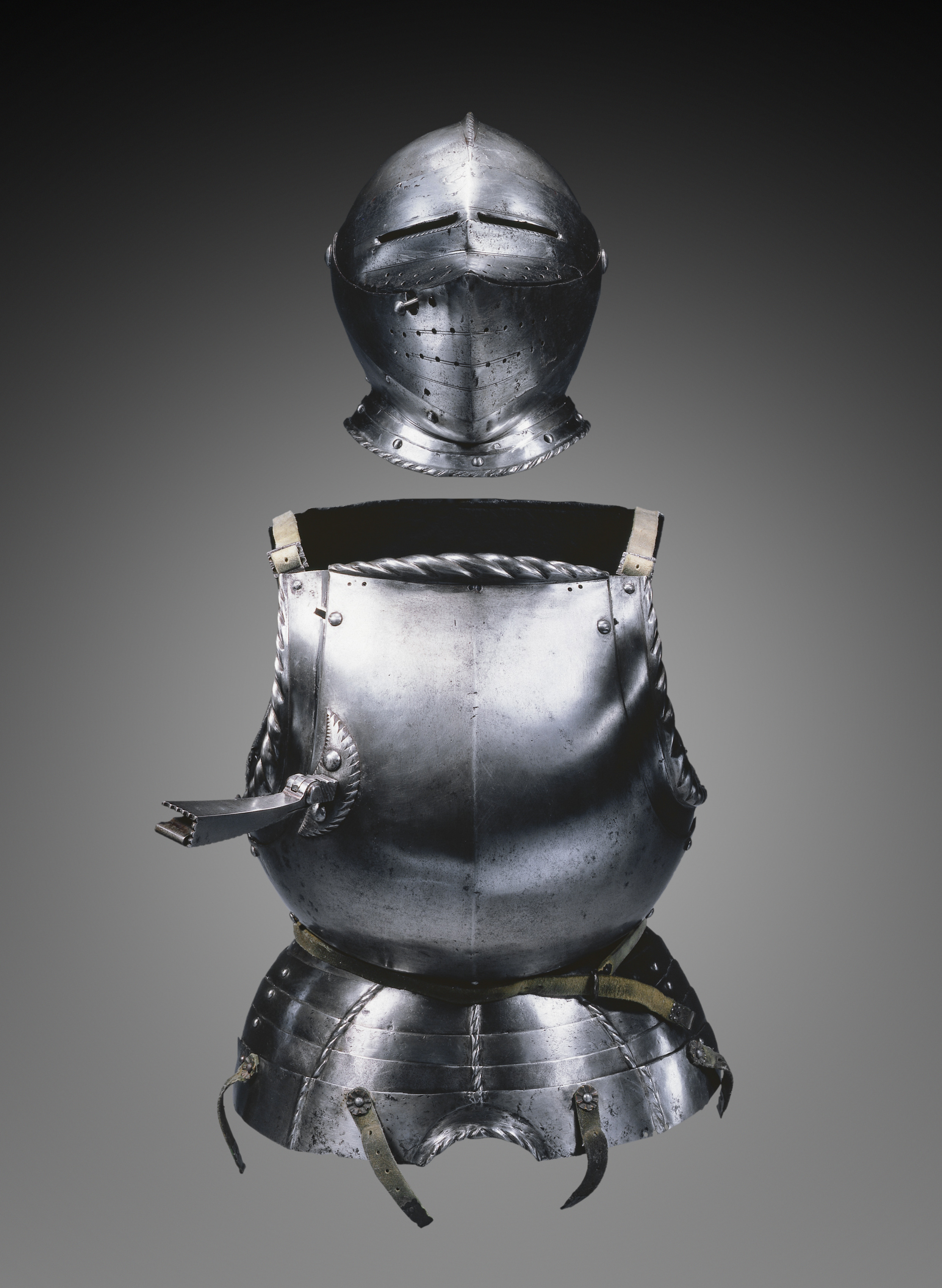
CC0 · Public domain · c. 1510–30
Elements from a Partial Suit of Armor
A close helmet, breastplate and backplate, with a fauld of plates extending below the chest. Partial suits were the practical purchase, assembled rather than made as a set.
2486 × 3400 px · Unmodified source file
Open in StudioSource & licensing
- Creator / date
- Germany, maker unknown · c. 1510–30
- Source credit
- The Cleveland Museum of Art, 1923.1067. Open Access.
- Usage notes
- Released by the Cleveland Museum of Art under CC0 1.0. Credit to the museum is encouraged; CC0 does not imply endorsement.
- Original file
- 2486 × 3400 px · JPG · 0.0 MB
- Source checked
- 2026-11-04 · editorial approval separate
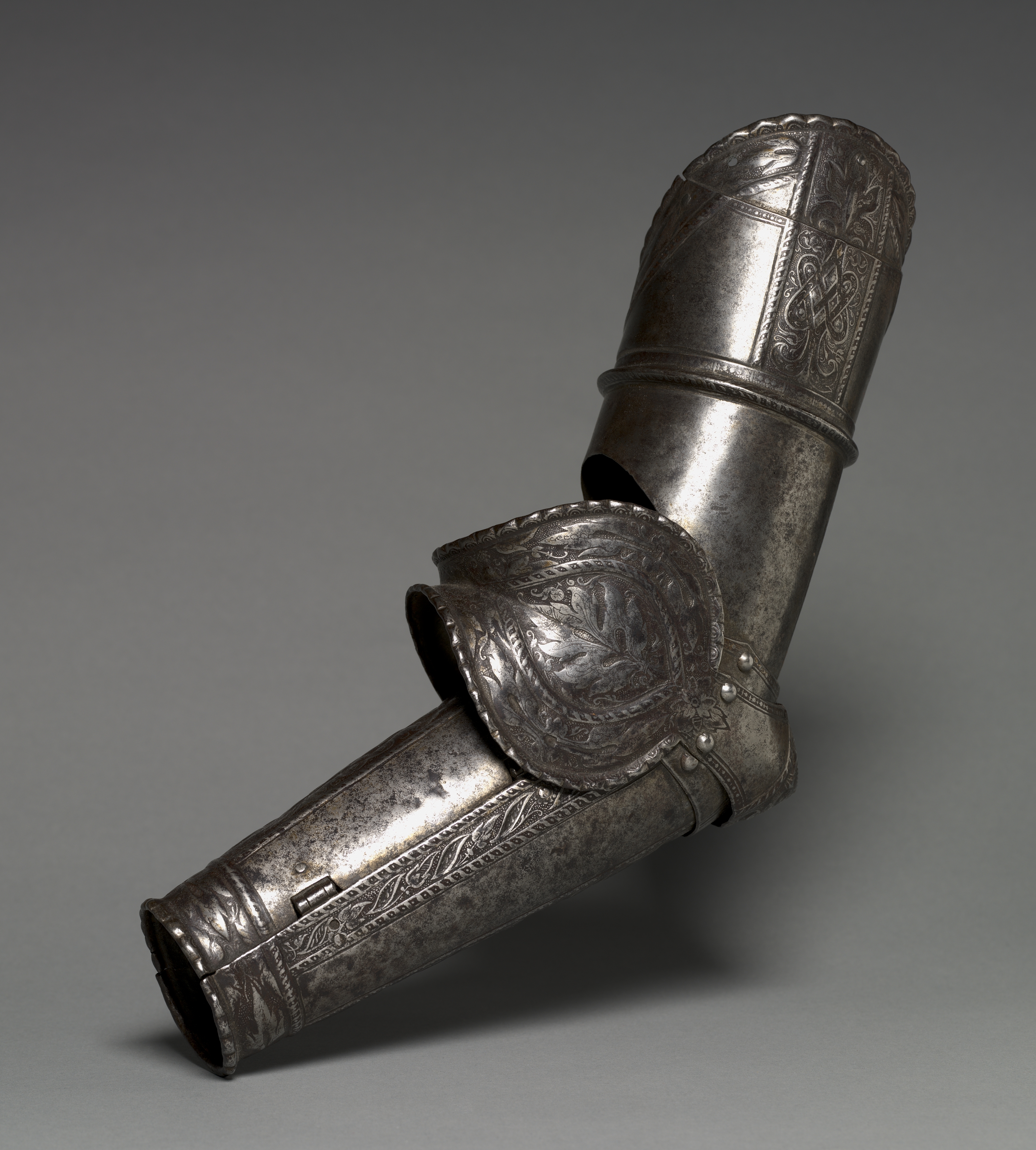
CC0 · Public domain · c. 1560 (some modern)
Left Arm Elements from a Boy's Armor (Lower Cannon, Couter, Rerebrace)
Elements from a suit made for a boy, decorated with etching, embossing and gilding. A child’s armour was commissioned as both protection and portrait.
3062 × 3400 px · Unmodified source file
Open in StudioSource & licensing
- Creator / date
- Germany, Augsburg, maker unknown · c. 1560 (some modern)
- Source credit
- The Cleveland Museum of Art, 1916.708. Open Access.
- Usage notes
- Released by the Cleveland Museum of Art under CC0 1.0. Credit to the museum is encouraged; CC0 does not imply endorsement.
- Original file
- 3062 × 3400 px · JPG · 0.0 MB
- Source checked
- 2026-11-04 · editorial approval separate
CC0 · Public domain · c. 1540–70
Elements from an Armor
A full suit comprises more than a dozen pieces; this group includes a burgonet, gorget, pauldrons and breastplate, showing how a harness was assembled from parts.
3400 × 1956 px · Unmodified source file
Open in StudioSource & licensing
- Creator / date
- Germany, maker unknown · c. 1540–70
- Source credit
- The Cleveland Museum of Art, 1916.1804. Open Access.
- Usage notes
- Released by the Cleveland Museum of Art under CC0 1.0. Credit to the museum is encouraged; CC0 does not imply endorsement.
- Original file
- 3400 × 1956 px · JPG · 0.0 MB
- Source checked
- 2026-11-04 · editorial approval separate
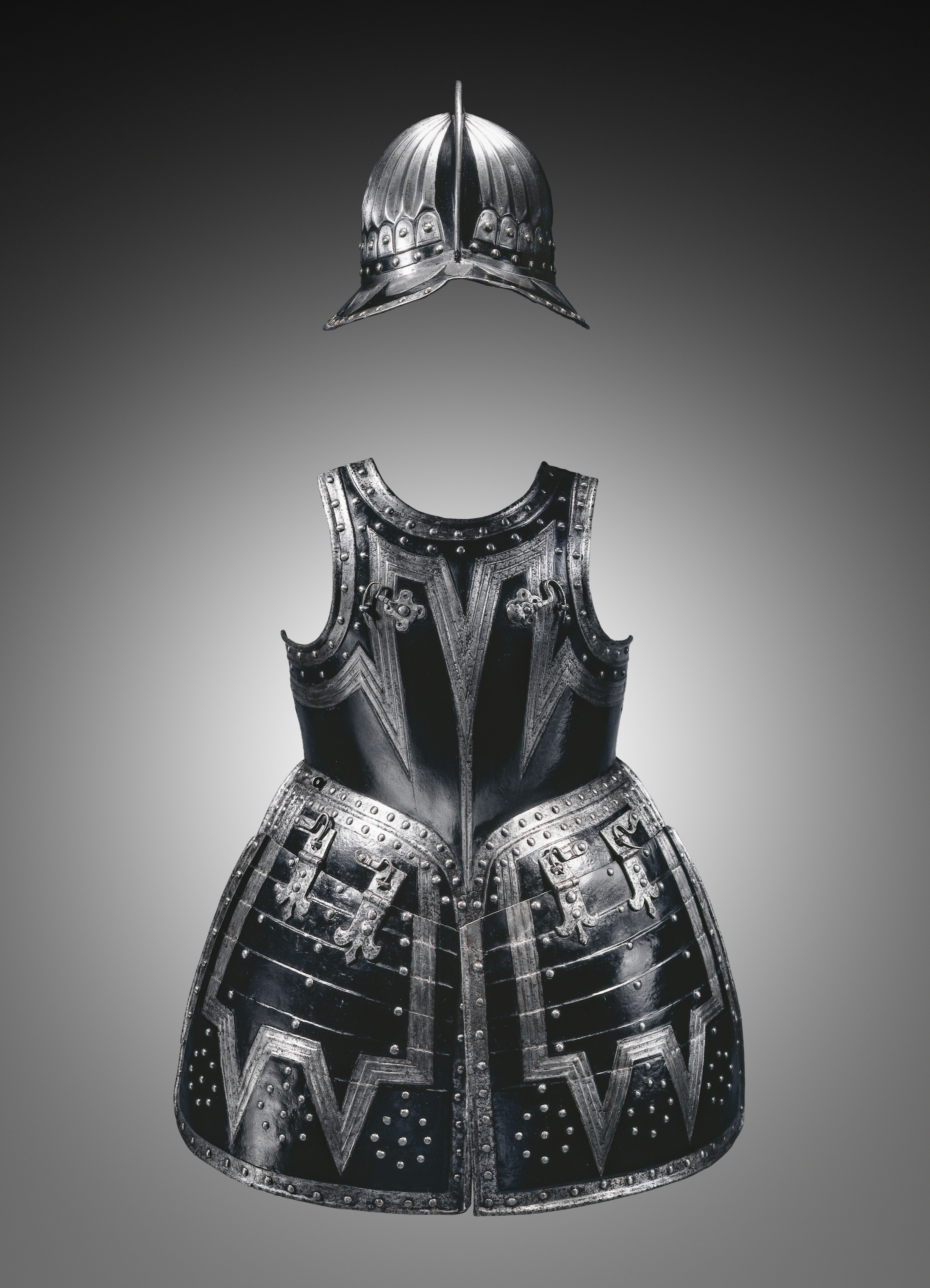
CC0 · Public domain · c. 1620–30
Pikeman’s Armor
Pikemen formed the backbone of infantry into the English Civil Wars. Since muskets alone could not stop cavalry, companies of pikemen carried armour like this into the field.
2455 × 3400 px · Unmodified source file
Open in StudioSource & licensing
- Creator / date
- Netherlands, Dutch or Flemish, 17th century, maker unknown · c. 1620–30
- Source credit
- The Cleveland Museum of Art, 1923.1063. Open Access.
- Usage notes
- Released by the Cleveland Museum of Art under CC0 1.0. Credit to the museum is encouraged; CC0 does not imply endorsement.
- Original file
- 2455 × 3400 px · JPG · 0.0 MB
- Source checked
- 2026-11-04 · editorial approval separate
CC0 · Public domain · c. 1575
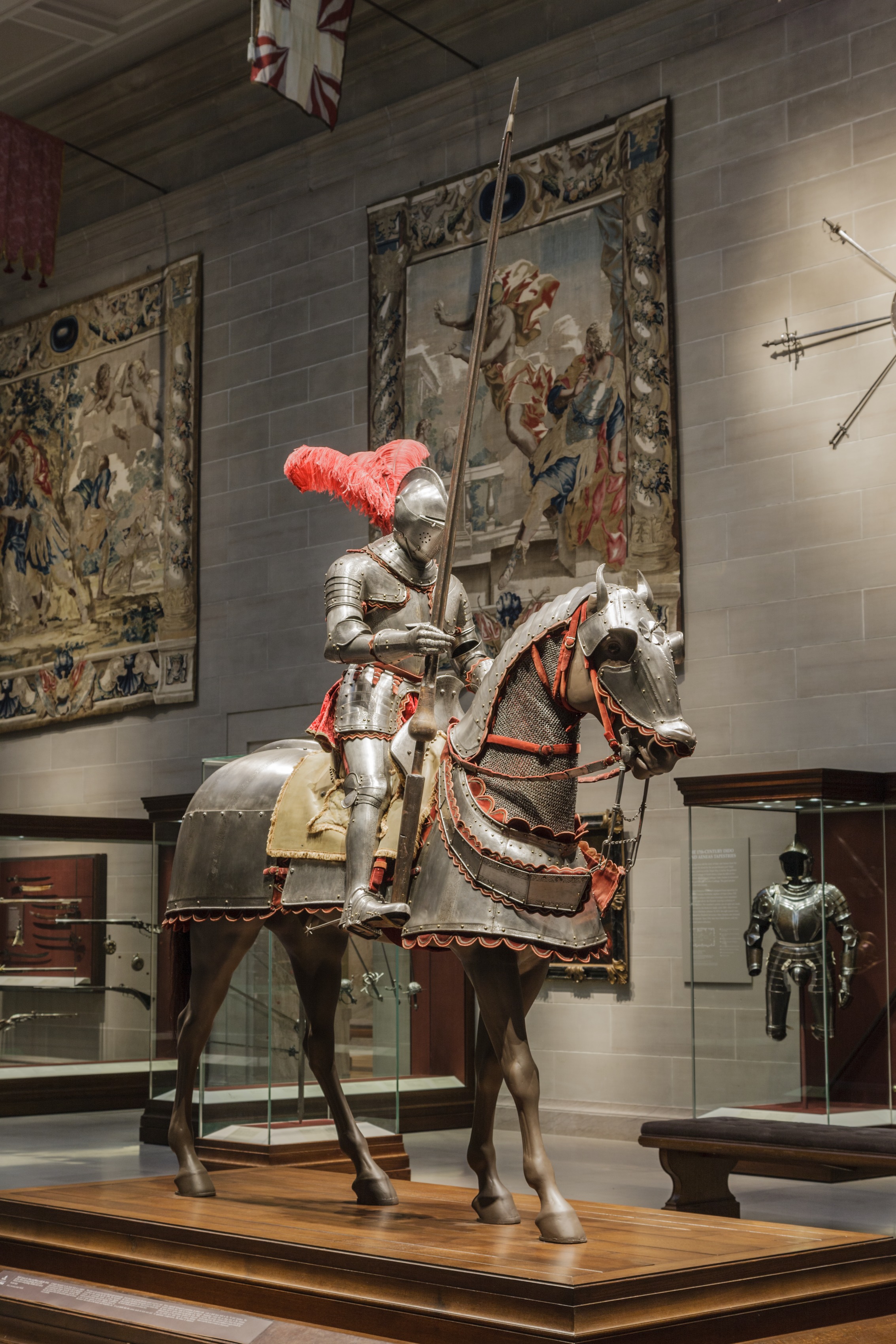
Armor for Man and Horse with Völs-Colonna Arms
A matched armour for knight and horse, carrying the Völs-Colonna arms. From the twelfth century a charger was armoured as carefully as its rider, since the horse was both weapon and defence.
2267 × 3400 px · Unmodified source file
Open in StudioSource & licensing
- Creator / date
- North Italy, 16th century, maker unknown · c. 1575
- Source credit
- The Cleveland Museum of Art, 1964.88. Open Access.
- Usage notes
- Released by the Cleveland Museum of Art under CC0 1.0. Credit to the museum is encouraged; CC0 does not imply endorsement.
- Original file
- 2267 × 3400 px · JPG · 0.0 MB
- Source checked
- 2026-11-04 · editorial approval separate
CC0 · Public domain · c. 1575
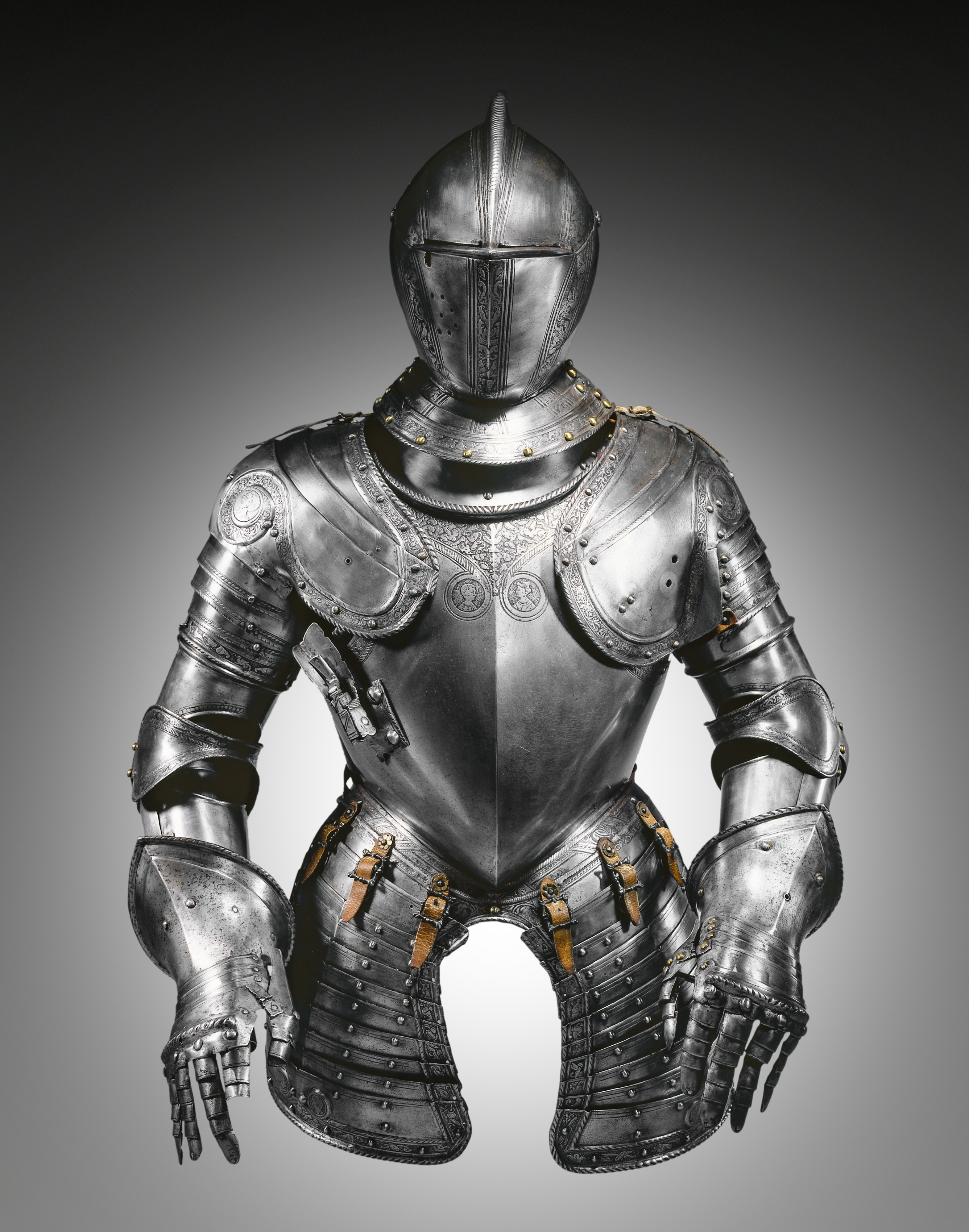
Half-Suit of Armor for the Field
A North Italian half-suit with etched bands along every border. Etching was the commonest way of decorating fine armour, cut through the surface and darkened so the pattern read at a distance.
2673 × 3400 px · Unmodified source file
Open in StudioSource & licensing
- Creator / date
- North Italy, Brescia (?), 16th century, maker unknown · c. 1575
- Source credit
- The Cleveland Museum of Art, 1916.1816. Open Access.
- Usage notes
- Released by the Cleveland Museum of Art under CC0 1.0. Credit to the museum is encouraged; CC0 does not imply endorsement.
- Original file
- 2673 × 3400 px · JPG · 0.0 MB
- Source checked
- 2026-11-04 · editorial approval separate
CC0 · Public domain · c. 1590
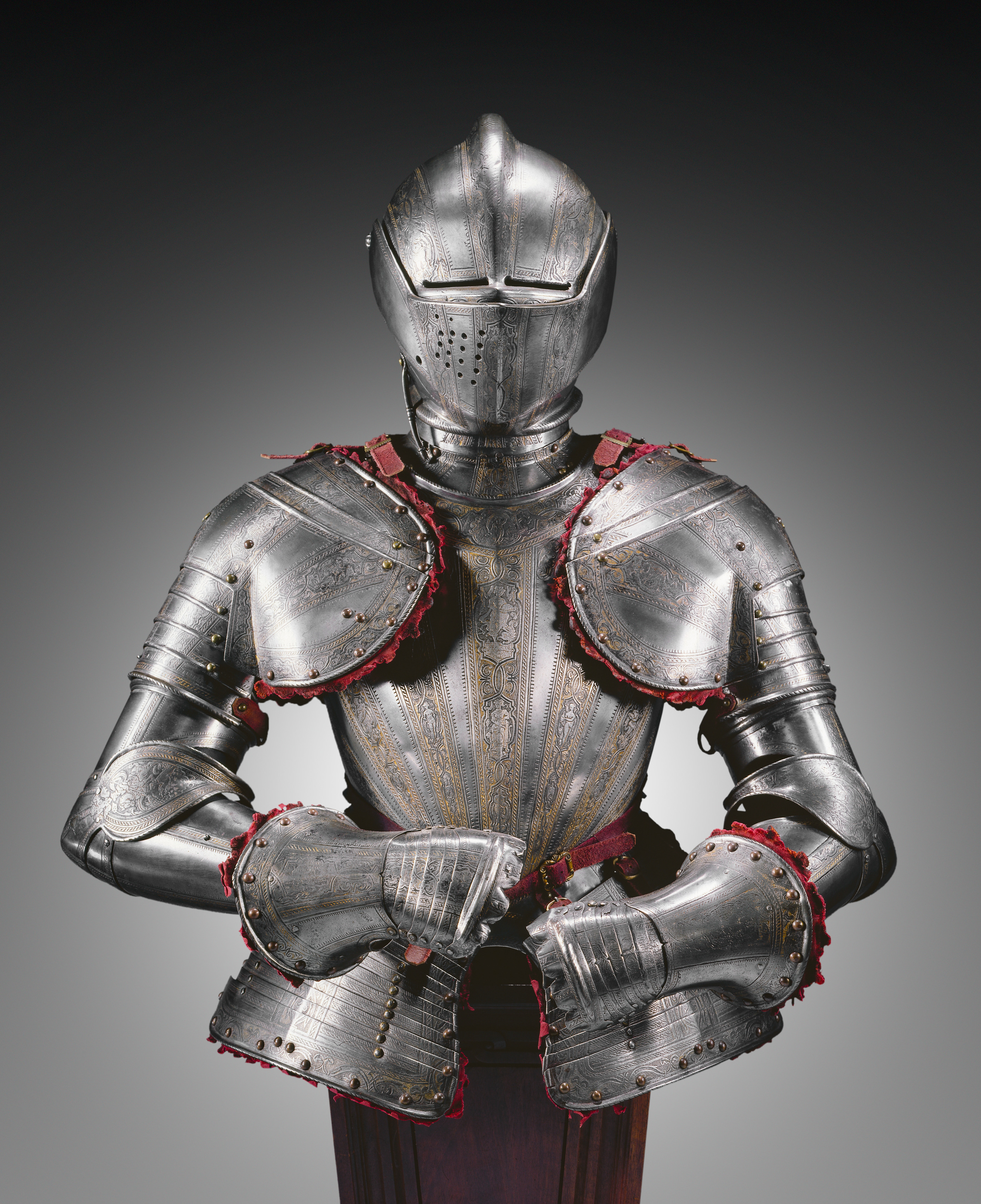
Half Armor for the Foot Tournament
Half armour for the foot tournament, a contest distinct from the equestrian joust, etched and gilded. Tournament armour was decorated far beyond what the field required.
2796 × 3400 px · Unmodified source file
Open in StudioSource & licensing
- Creator / date
- Pompeo della Cesa (Italian, active 1572–93) · c. 1590
- Source credit
- The Cleveland Museum of Art, 1996.299. Open Access.
- Usage notes
- Released by the Cleveland Museum of Art under CC0 1.0. Credit to the museum is encouraged; CC0 does not imply endorsement.
- Original file
- 2796 × 3400 px · JPG · 0.0 MB
- Source checked
- 2026-11-04 · editorial approval separate
CC0 · Public domain · c. 1600–20
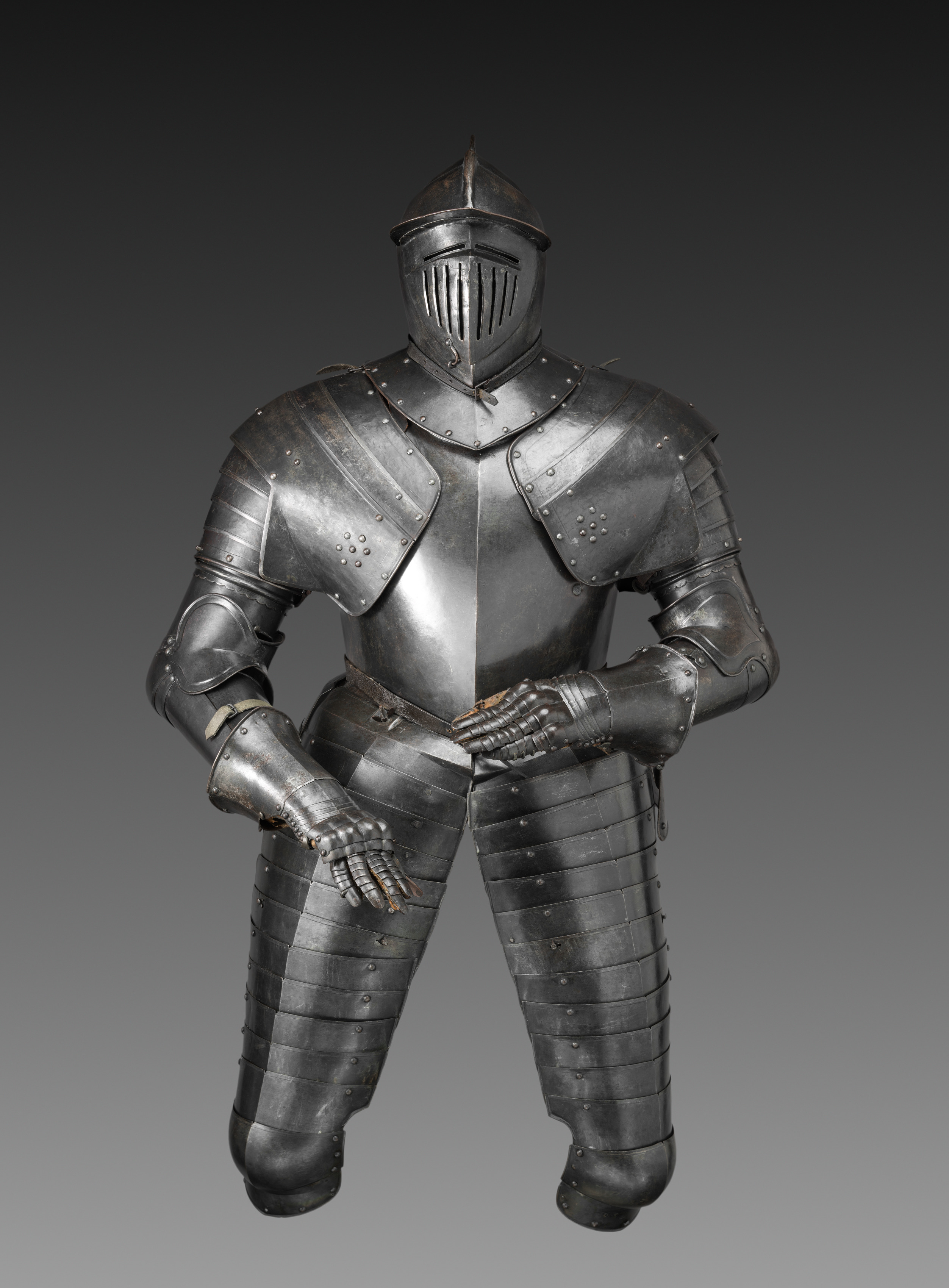
Cuirassier's Armor
The cuirassier was the heavy cavalryman of the late 1500s: pistols and sword, and full armour except for the lower legs. The steel was originally blued and is now black.
2505 × 3400 px · Unmodified source file
Open in StudioSource & licensing
- Creator / date
- Austria, Graz(?), early 17th century, maker unknown · c. 1600–20
- Source credit
- The Cleveland Museum of Art, 2012.37. Open Access.
- Usage notes
- Released by the Cleveland Museum of Art under CC0 1.0. Credit to the museum is encouraged; CC0 does not imply endorsement.
- Original file
- 2505 × 3400 px · JPG · 0.0 MB
- Source checked
- 2026-11-04 · editorial approval separate
Public-domain status is reported by the linked source and may vary by jurisdiction. Check the source record for your intended use. No exclusive rights or Visual Bounty marketplace license are offered for these images.