← Open CollectionsPublic-domain source library
African Woven and Embroidered Cloth
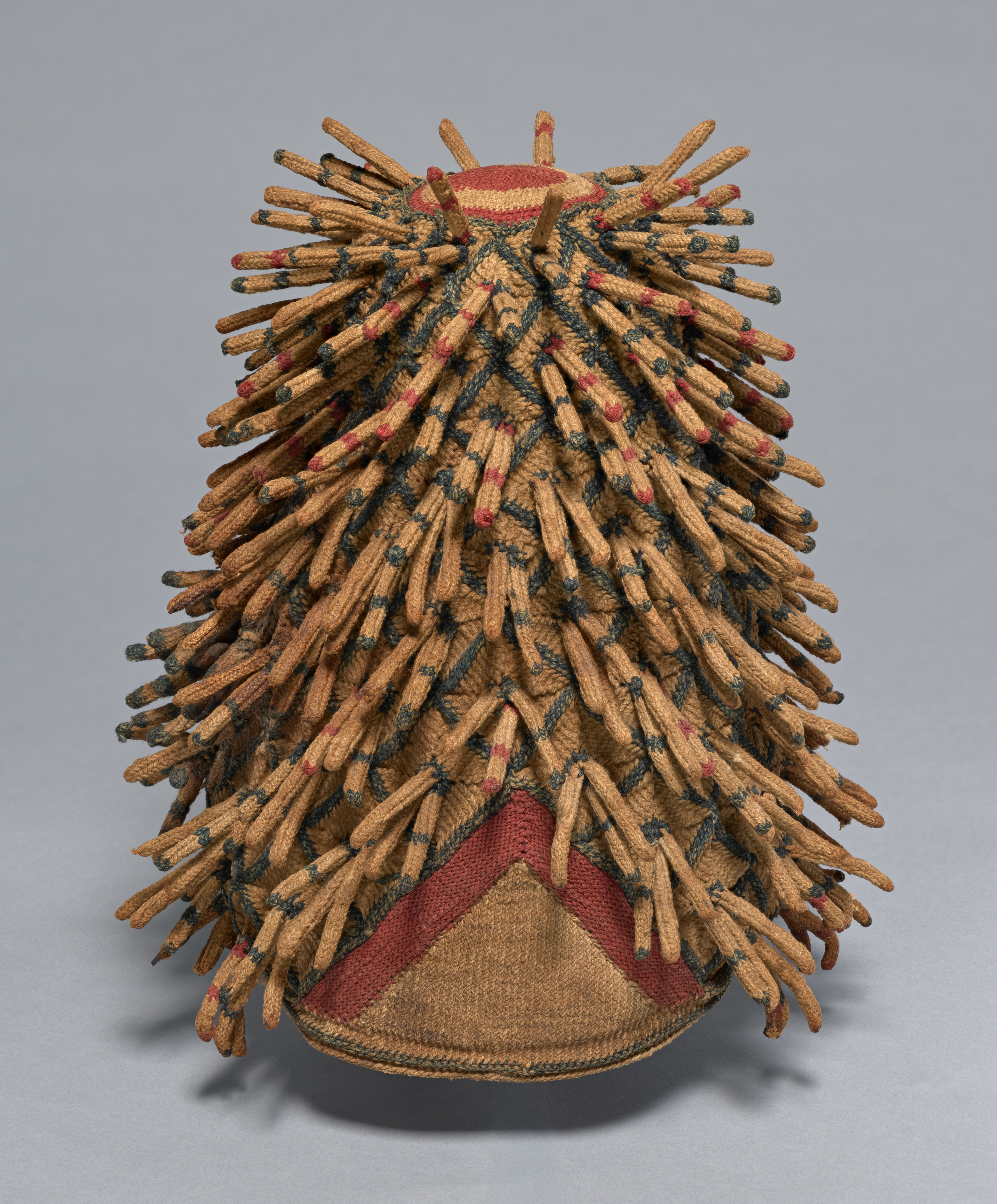
Cloth across Africa is built from narrow strips, cut pile, beadwork and dyed raffia, and each tradition has its own logic. Here are Fulani strip-woven blankets, Merina silk lamba from Madagascar, indigo Hausa embroidery, Kuba raffia in cut pile, Xhosa beadwork, a Moroccan marriage hanging and a Bamum prestige headdress. Several pieces are photographed flat so the pattern can be read whole.
Original means the unmodified digital file supplied by the linked archive, not an upscaled or reconstructed image. Sign in for free downloads. Studio uses a working preview up to 2048 px.
CC0 · Public domain · c. 1930s or earlier
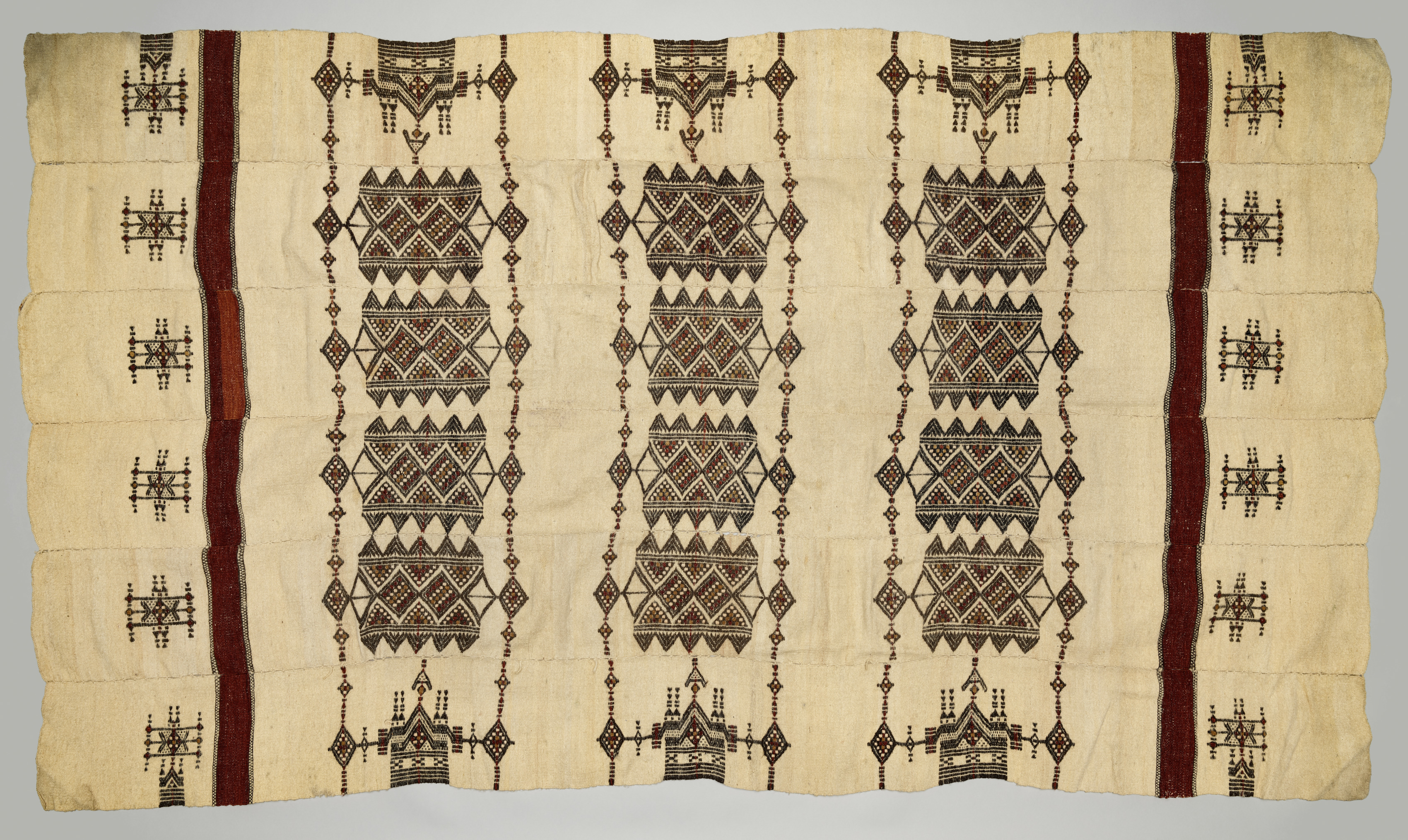
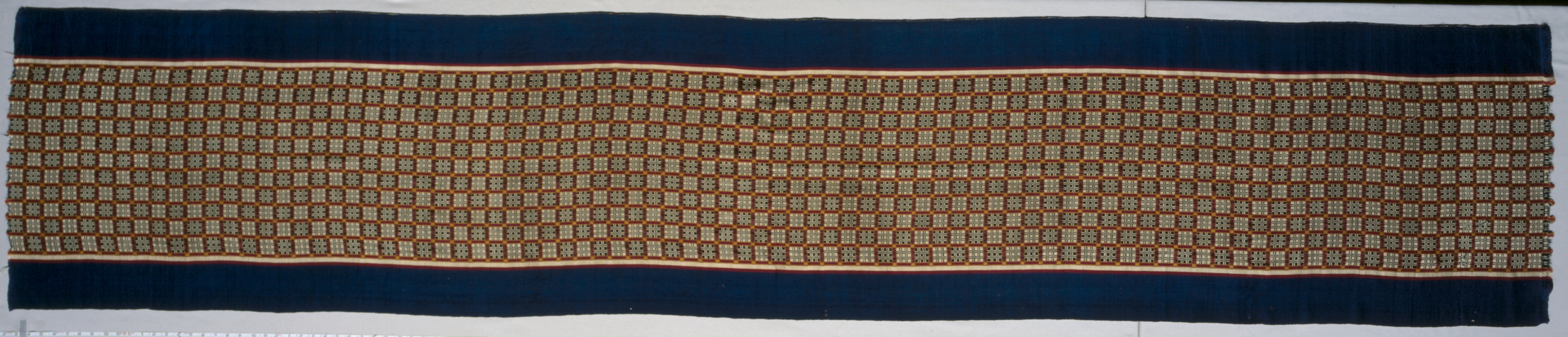
Blanket or Cover (Kaasa)
A Fulani kaasa, hand woven in six narrow strips and sewn selvage to selvage to make the full blanket. The deep browns, blacks and reds are built from named geometric motifs, so the cloth reads as a sentence to those who know it.
× px · Unmodified source file
Small archival scan: best for reference and screen use, not large prints.
Open in StudioSource & licensing
- Creator / date
- Fulani (Peul) weavers, Mali, Niger or Burkina Faso · c. 1930s or earlier
- Source credit
- Alma Kroeger Fund. The Cleveland Museum of Art, Open Access.
- Usage notes
- Released by the Cleveland Museum of Art under CC0 1.0. Credit to the museum is encouraged; CC0 does not imply endorsement.
- Original file
- × px · JPG · 0.0 MB
- Source checked
- 2026-11-04 · editorial approval separate
CC0 · Public domain · 1900–1925
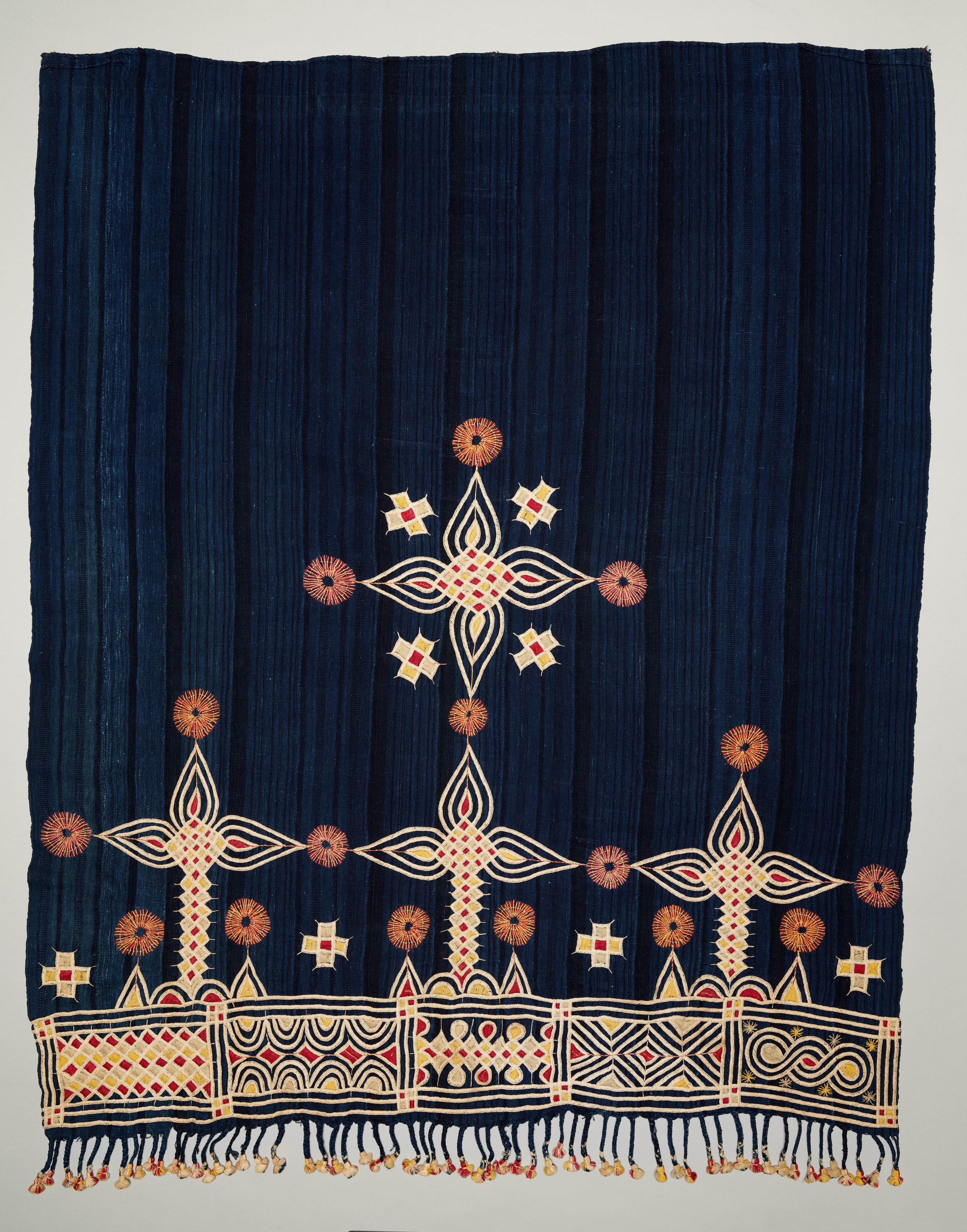
Woman’s Shawl or Head Covering
An indigo cotton and silk shawl, embroidered by itinerant Hausa craftsmen whose training as Koranic scholars shaped the geometry of their stitching. Worn on the head or shoulders with the motifs at the back.
× px · Unmodified source file
Small archival scan: best for reference and screen use, not large prints.
Open in StudioSource & licensing
- Creator / date
- Hausa or Dyula makers, Côte d’Ivoire · 1900–1925
- Source credit
- Alma Kroeger Fund. The Cleveland Museum of Art, Open Access.
- Usage notes
- Released by the Cleveland Museum of Art under CC0 1.0. Credit to the museum is encouraged; CC0 does not imply endorsement.
- Original file
- × px · JPG · 0.0 MB
- Source checked
- 2026-11-04 · editorial approval separate
CC0 · Public domain · 1860–90
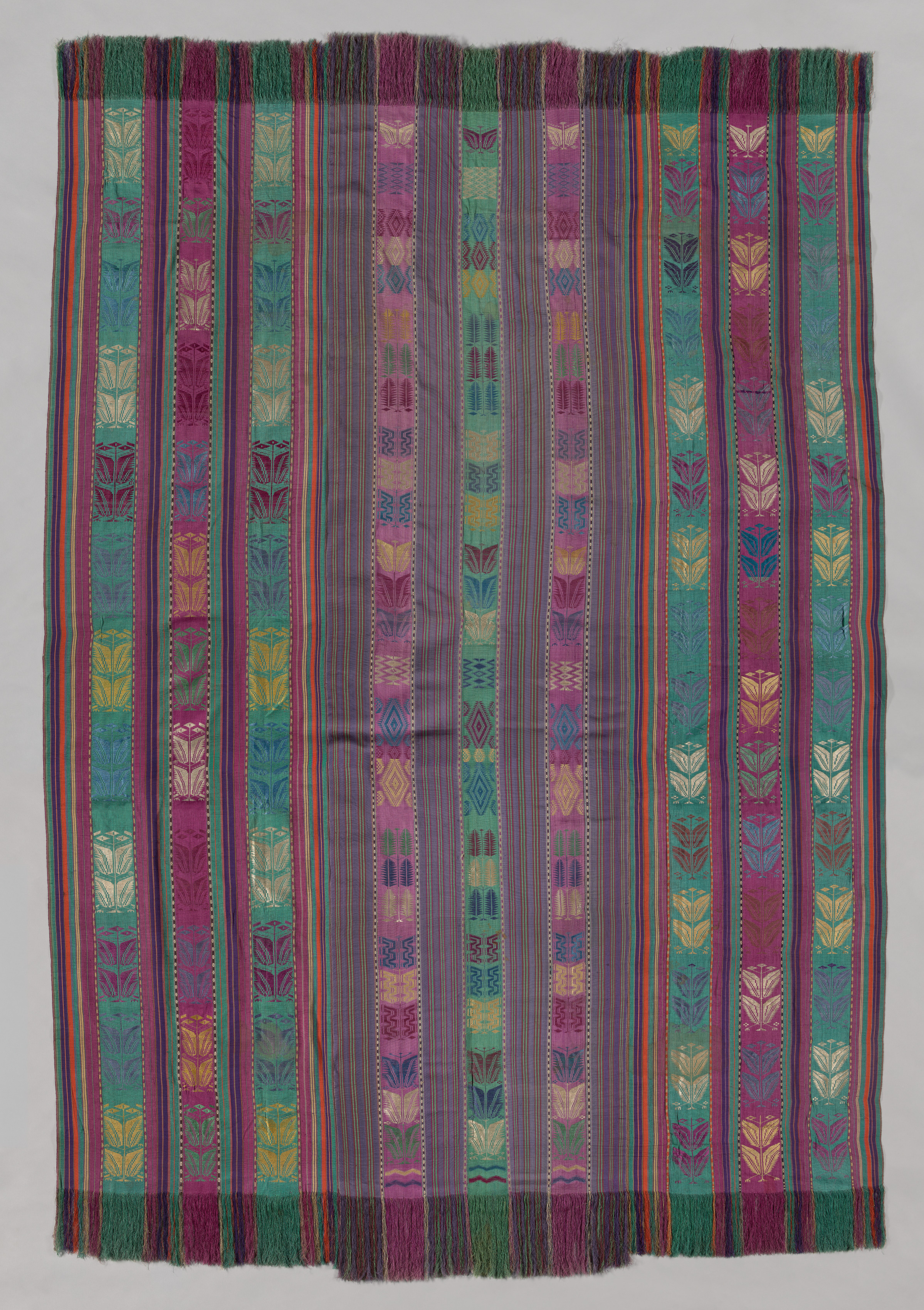
Wrapper (Lamba Akotifahana)
A Merina lamba akotifahana in Bombyx mori silk, named for the weft-float motifs that cover it. Untailored cloth worn by every age and class in Madagascar, with the finest silk versions reserved for the court.
× px · Unmodified source file
Small archival scan: best for reference and screen use, not large prints.
Open in StudioSource & licensing
- Creator / date
- Merina weaver, Madagascar, unknown · 1860–90
- Source credit
- Sundry Art - African Art Fund and Textile Fund. The Cleveland Museum of Art, Open Access.
- Usage notes
- Released by the Cleveland Museum of Art under CC0 1.0. Credit to the museum is encouraged; CC0 does not imply endorsement.
- Original file
- × px · JPG · 0.0 MB
- Source checked
- 2026-11-04 · editorial approval separate
CC0 · Public domain · 1800s
Wrapper (Lamba Akotifahana)
A second Merina wrapper from the nineteenth century, its pattern worked in supplementary weft so the design sits proud of the silk. Weavers composed the motifs as they went, band by band, across the loom.
× px · Unmodified source file
Small archival scan: best for reference and screen use, not large prints.
Open in StudioSource & licensing
- Creator / date
- Merina weaver, Madagascar, unknown · 1800s
- Source credit
- Sundry Art - African Art Fund and Textile Fund. The Cleveland Museum of Art, Open Access.
- Usage notes
- Released by the Cleveland Museum of Art under CC0 1.0. Credit to the museum is encouraged; CC0 does not imply endorsement.
- Original file
- × px · JPG · 0.0 MB
- Source checked
- 2026-11-04 · editorial approval separate
CC0 · Public domain · 1900s
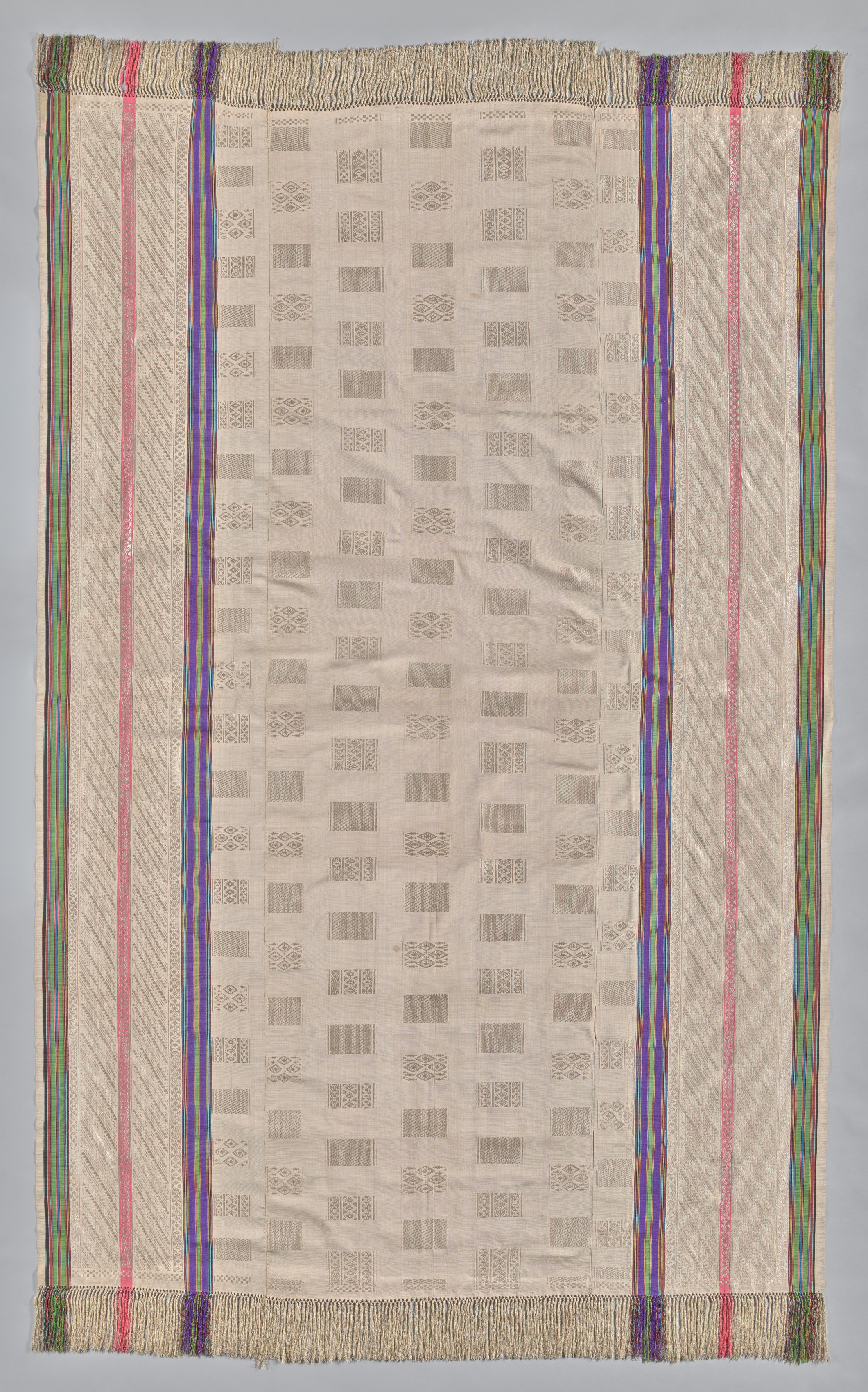
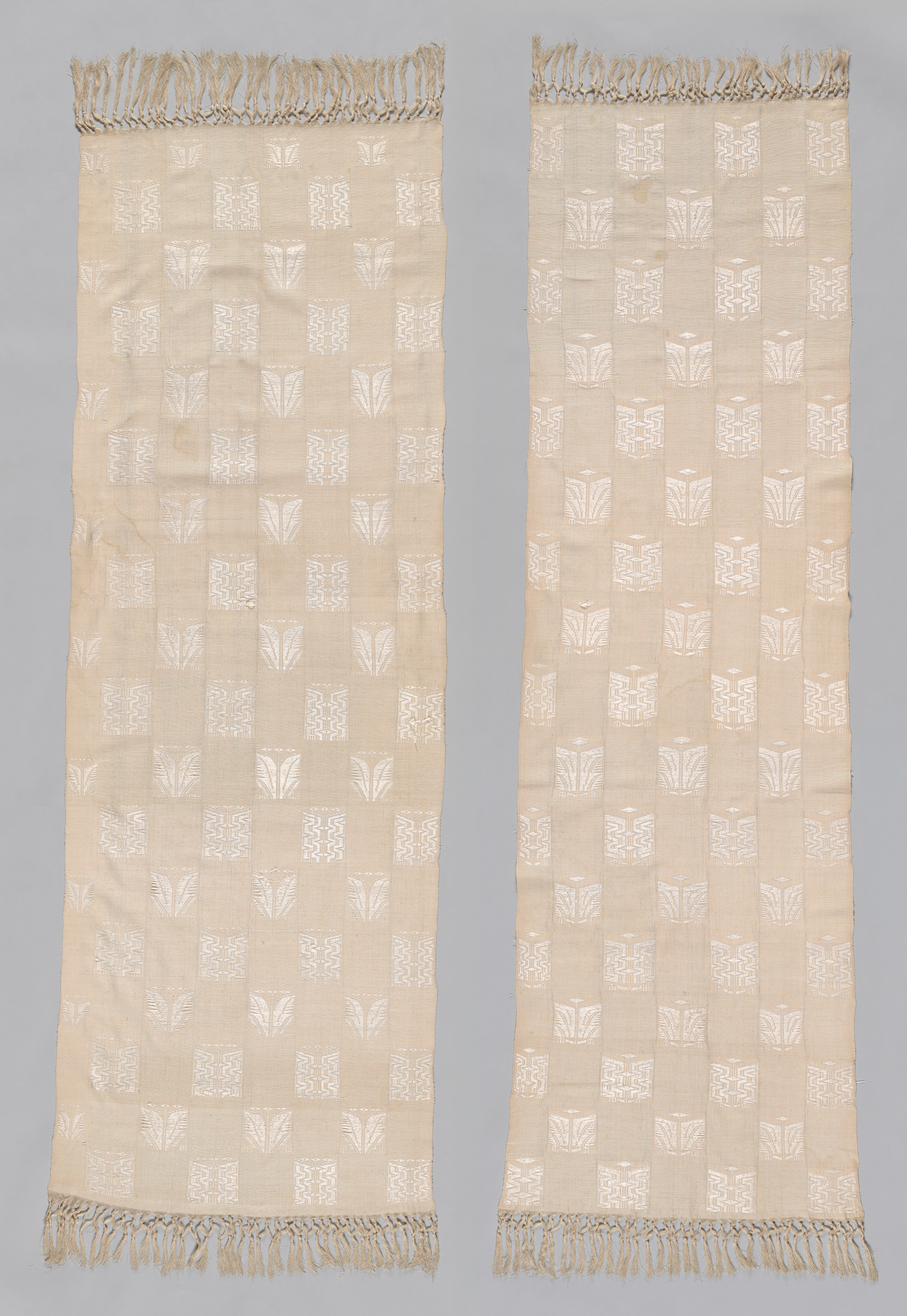
Pair of shawls (Lamba Landy Fotsy)
White silk shawls of the kind worn after Christianity became the state religion of the Merina kingdom, when undyed cloth replaced the older patterned wrapper for church. The name means white silk lamba.
× px · Unmodified source file
Small archival scan: best for reference and screen use, not large prints.
Open in StudioSource & licensing
- Creator / date
- Merina weaver, Madagascar, unknown · 1900s
- Source credit
- Sundry Art - African Art Fund and Textile Fund. The Cleveland Museum of Art, Open Access.
- Usage notes
- Released by the Cleveland Museum of Art under CC0 1.0. Credit to the museum is encouraged; CC0 does not imply endorsement.
- Original file
- × px · JPG · 0.0 MB
- Source checked
- 2026-11-04 · editorial approval separate
CC0 · Public domain · 1900s
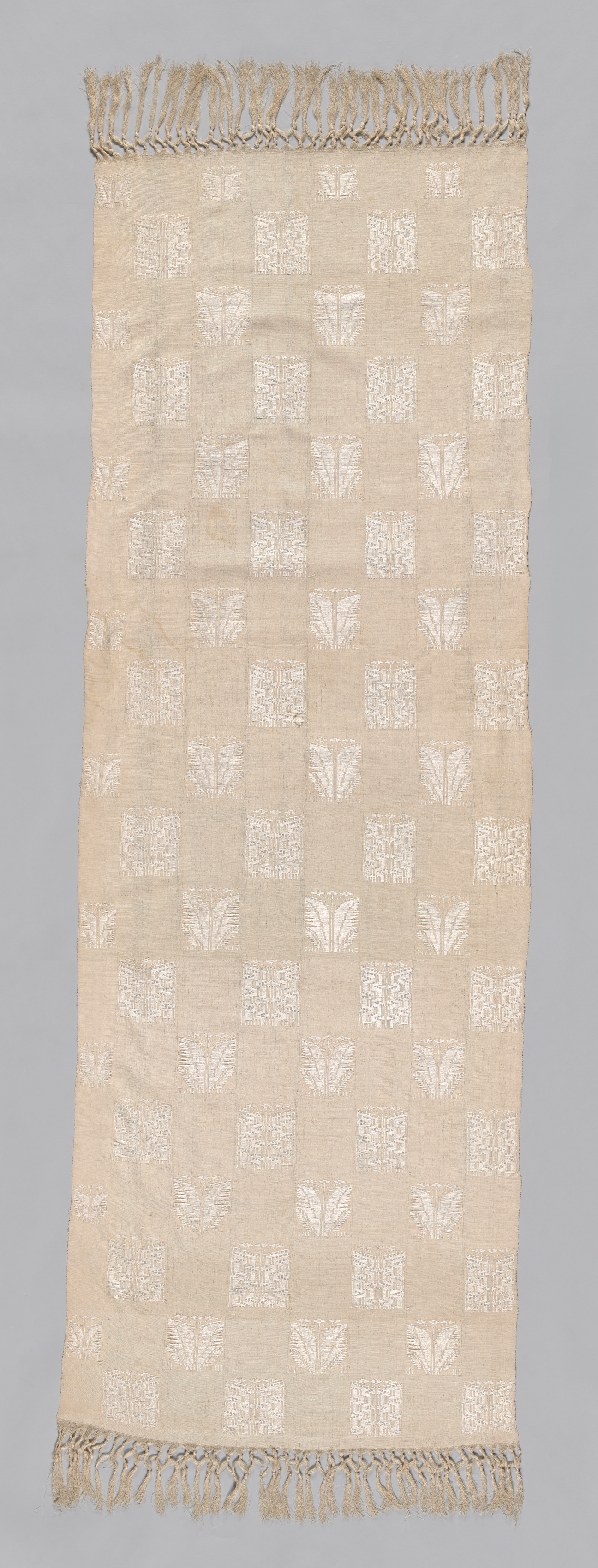
One of a pair of shawls (Lamba Landy Fotsy)
A single shawl from the pair, catalogued separately. At this scale the woven edge bands are visible: the only ornament left once the colour was removed.
× px · Unmodified source file
Small archival scan: best for reference and screen use, not large prints.
Open in StudioSource & licensing
- Creator / date
- Merina weaver, Madagascar, unknown · 1900s
- Source credit
- Sundry Art - African Art Fund and Textile Fund. The Cleveland Museum of Art, Open Access.
- Usage notes
- Released by the Cleveland Museum of Art under CC0 1.0. Credit to the museum is encouraged; CC0 does not imply endorsement.
- Original file
- × px · JPG · 0.0 MB
- Source checked
- 2026-11-04 · editorial approval separate
CC0 · Public domain · 1900s
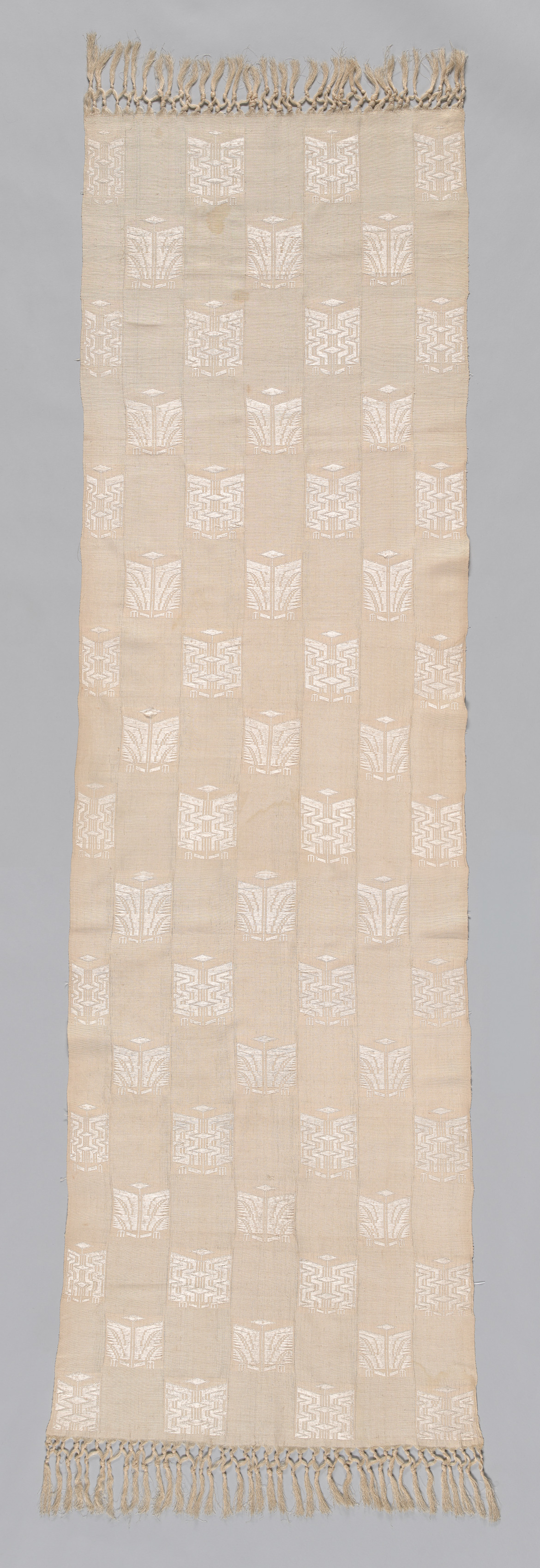
One of a pair of shawls (Lamba Landy Fotsy)
The companion shawl, with its own slight variations in the end bands. Two pieces woven to match will never match exactly, and that difference is the record of a hand at the loom.
× px · Unmodified source file
Small archival scan: best for reference and screen use, not large prints.
Open in StudioSource & licensing
- Creator / date
- Merina weaver, Madagascar, unknown · 1900s
- Source credit
- Sundry Art - African Art Fund and Textile Fund. The Cleveland Museum of Art, Open Access.
- Usage notes
- Released by the Cleveland Museum of Art under CC0 1.0. Credit to the museum is encouraged; CC0 does not imply endorsement.
- Original file
- × px · JPG · 0.0 MB
- Source checked
- 2026-11-04 · editorial approval separate
CC0 · Public domain · 1800s
Wall Hanging (msimsim)
A silk msimsim from Tétouan, one of the three marriage gifts a groom owed a bride, as recorded in contracts from 1794 to 1894. Its striped and geometric bands were meant to be hung, not worn.
× px · Unmodified source file
Small archival scan: best for reference and screen use, not large prints.
Open in StudioSource & licensing
- Creator / date
- Moroccan weavers, Tétouan · 1800s
- Source credit
- Gift of The Textile Art Alliance. The Cleveland Museum of Art, Open Access.
- Usage notes
- Released by the Cleveland Museum of Art under CC0 1.0. Credit to the museum is encouraged; CC0 does not imply endorsement.
- Original file
- × px · JPG · 0.0 MB
- Source checked
- 2026-11-04 · editorial approval separate
CC0 · Public domain · possibly early 1900s
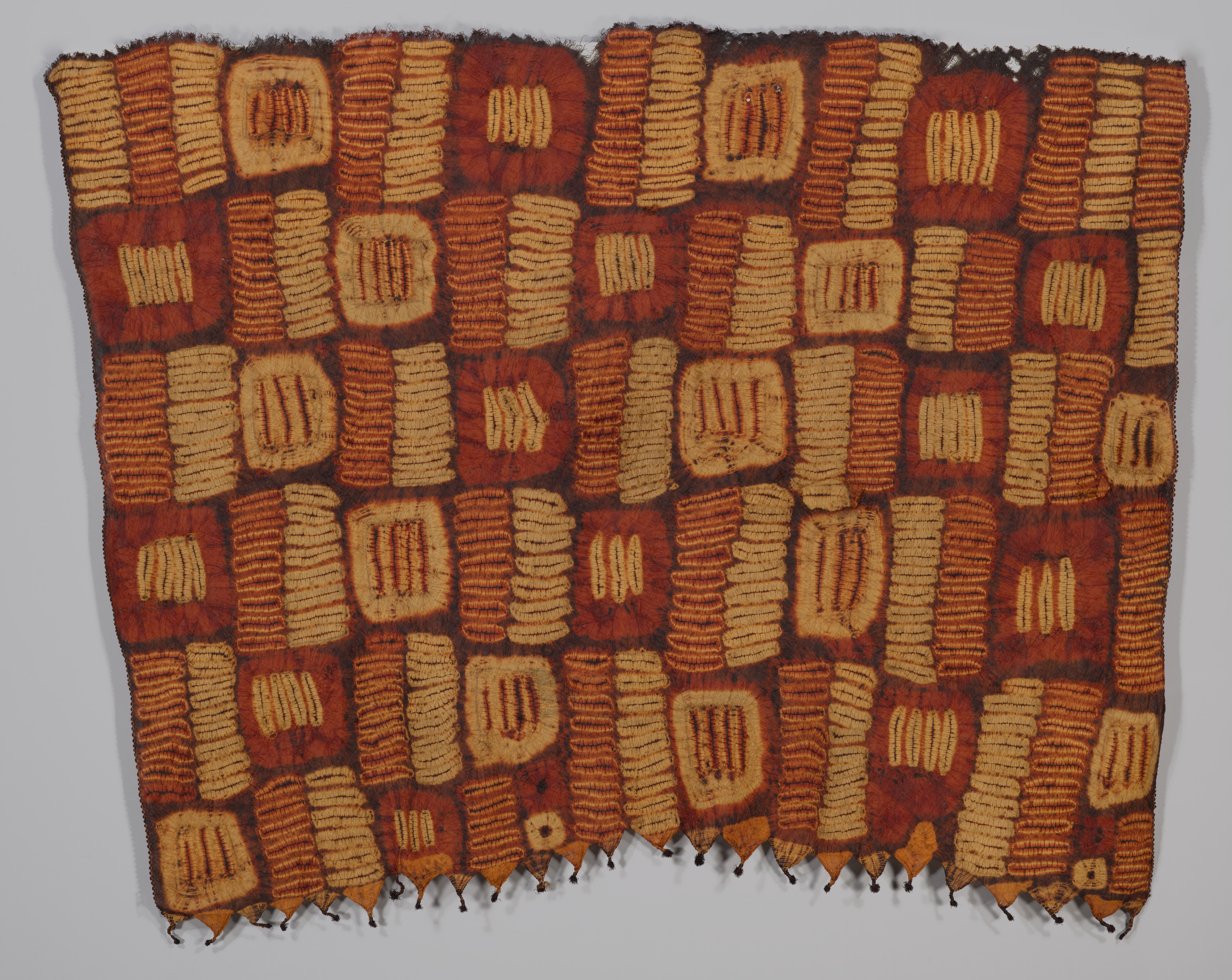
Man’s Garment
A raffia wrapper from the Dida, its design cut and dyed rather than woven in. Shown flat to preserve the fibres, it would have been draped with one corner over the shoulder, the fringe at the ankle.
× px · Unmodified source file
Small archival scan: best for reference and screen use, not large prints.
Open in StudioSource & licensing
- Creator / date
- Dida weavers and dyers, Côte d’Ivoire · possibly early 1900s
- Source credit
- John L. Severance Fund. The Cleveland Museum of Art, Open Access.
- Usage notes
- Released by the Cleveland Museum of Art under CC0 1.0. Credit to the museum is encouraged; CC0 does not imply endorsement.
- Original file
- × px · JPG · 0.0 MB
- Source checked
- 2026-11-04 · editorial approval separate
CC0 · Public domain · late 1800s–about 1906–12
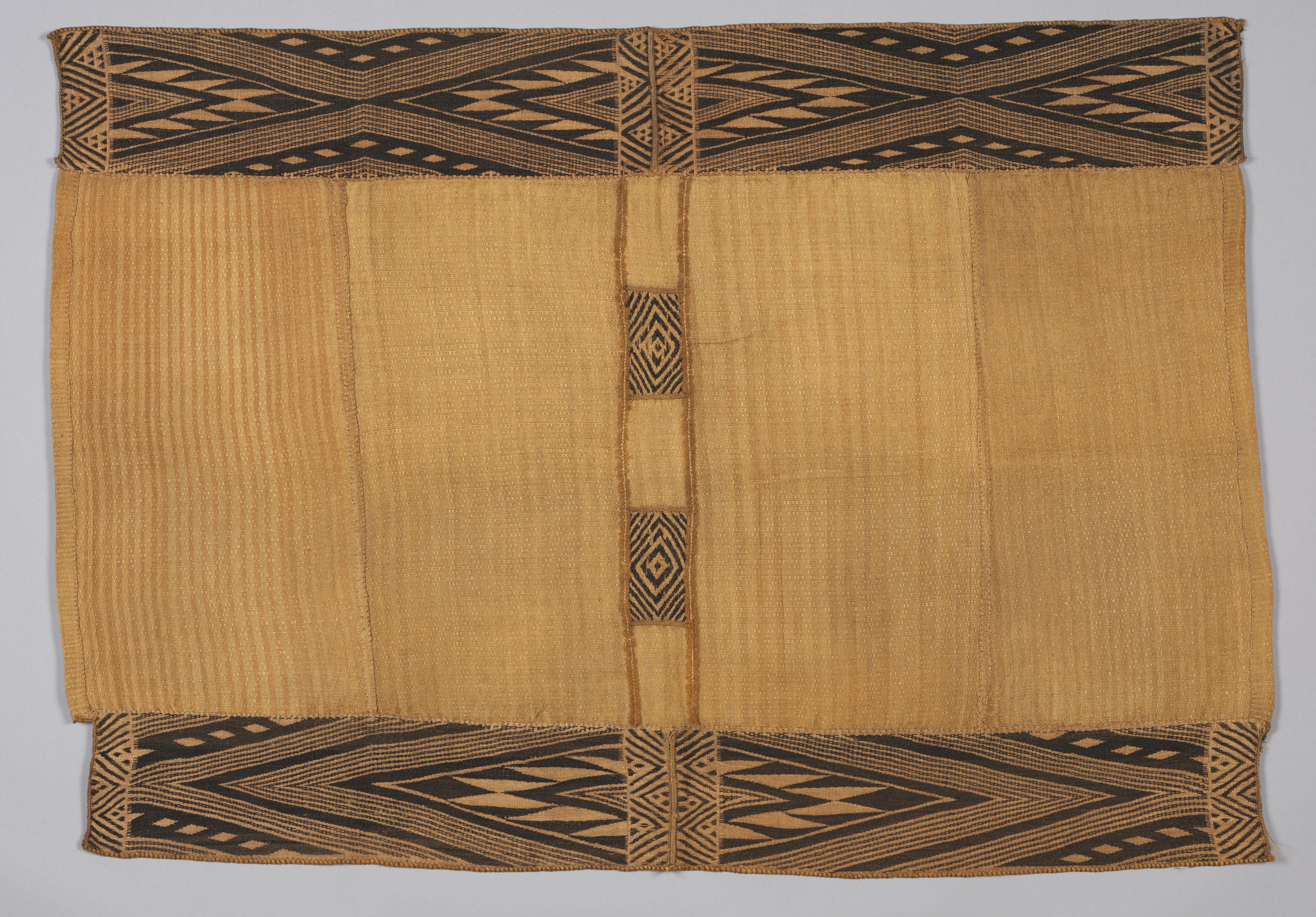
Woman’s Skirt
Mbuun men wove and embroidered this raffia skirt for a woman to wear on ceremonial occasions. The softly shifted colour of the central panels comes from floating the weft, a technique that produces pattern without a second dye bath.
× px · Unmodified source file
Small archival scan: best for reference and screen use, not large prints.
Open in StudioSource & licensing
- Creator / date
- Mbuun weavers and embroiderers, DR Congo · late 1800s–about 1906–12
- Source credit
- Alma Kroeger Fund. The Cleveland Museum of Art, Open Access.
- Usage notes
- Released by the Cleveland Museum of Art under CC0 1.0. Credit to the museum is encouraged; CC0 does not imply endorsement.
- Original file
- × px · JPG · 0.0 MB
- Source checked
- 2026-11-04 · editorial approval separate
CC0 · Public domain · 1800s
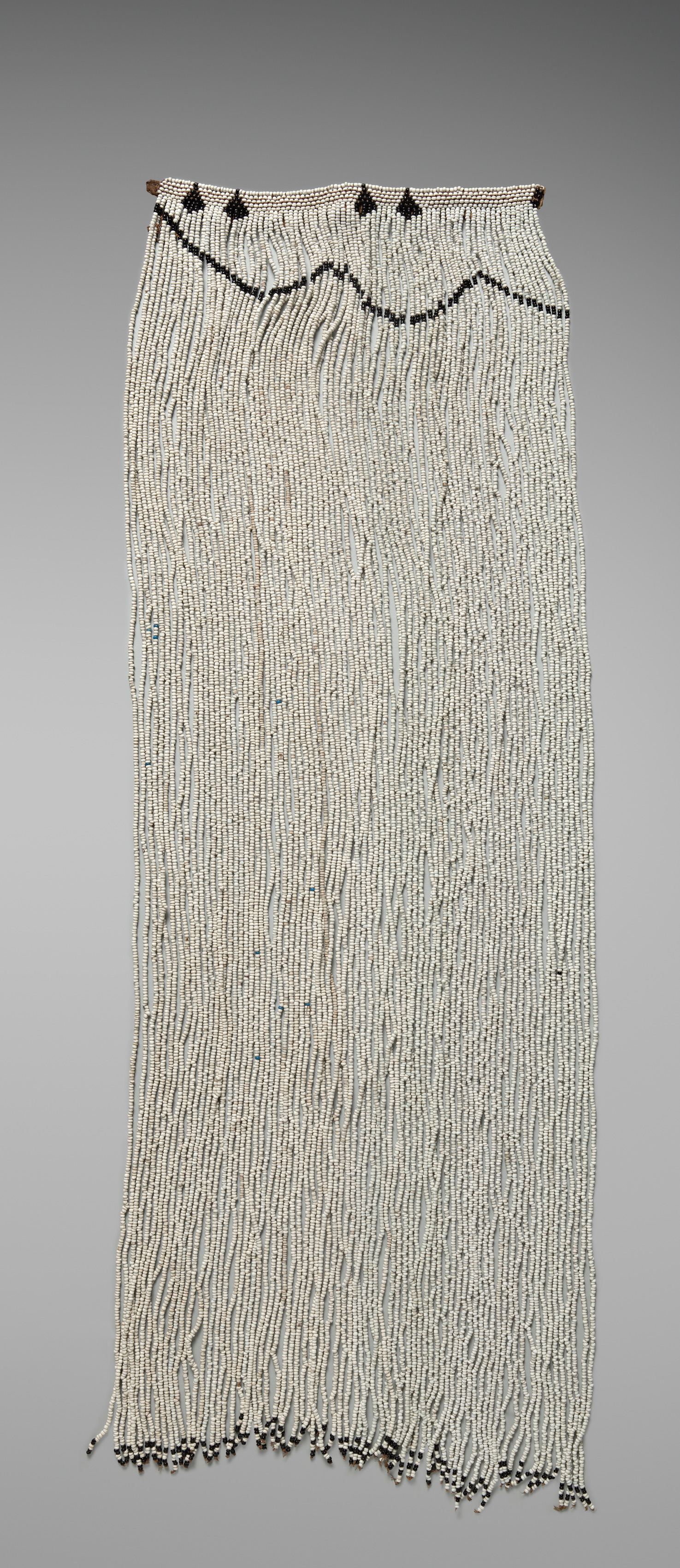
Royal ceremonial headdress (umnqwazi)
A beaded headdress for an elite Xhosa woman, built almost entirely from imported Venetian and Bohemian glass beads. Beads functioned as currency in the region, so a garment like this was wealth worn in public.
× px · Unmodified source file
Small archival scan: best for reference and screen use, not large prints.
Open in StudioSource & licensing
- Creator / date
- Xhosa beader, South Africa · 1800s
- Source credit
- Severance and Greta Millikin Trust. The Cleveland Museum of Art, Open Access.
- Usage notes
- Released by the Cleveland Museum of Art under CC0 1.0. Credit to the museum is encouraged; CC0 does not imply endorsement.
- Original file
- × px · JPG · 0.0 MB
- Source checked
- 2026-11-04 · editorial approval separate
CC0 · Public domain · 1800s
Royal ceremonial beadwork: breast cover (incebetha)
The breast cover that accompanied the headdress, beaded in the same palette and geometry. Xhosa beadwork encodes meaning in colour and form, so the pattern carries a message as well as an ornament.
× px · Unmodified source file
Small archival scan: best for reference and screen use, not large prints.
Open in StudioSource & licensing
- Creator / date
- Xhosa beader, South Africa · 1800s
- Source credit
- Severance and Greta Millikin Trust. The Cleveland Museum of Art, Open Access.
- Usage notes
- Released by the Cleveland Museum of Art under CC0 1.0. Credit to the museum is encouraged; CC0 does not imply endorsement.
- Original file
- × px · JPG · 0.0 MB
- Source checked
- 2026-11-04 · editorial approval separate
CC0 · Public domain · late 1800s–early 1900s
Woman’s overskirt (ncaka)
A Kuba ncaka in raffia, the ceremonial overskirt worn over other cloth. Kuba design works by piling up small units, cut pile and embroidery together, until the surface becomes a field of contrast.
× px · Unmodified source file
Small archival scan: best for reference and screen use, not large prints.
Open in StudioSource & licensing
- Creator / date
- Kuba makers, DR Congo · late 1800s–early 1900s
- Source credit
- John L. Severance Fund. The Cleveland Museum of Art, Open Access.
- Usage notes
- Released by the Cleveland Museum of Art under CC0 1.0. Credit to the museum is encouraged; CC0 does not imply endorsement.
- Original file
- × px · JPG · 0.0 MB
- Source checked
- 2026-11-04 · editorial approval separate
CC0 · Public domain · late 1800s–early 1900s
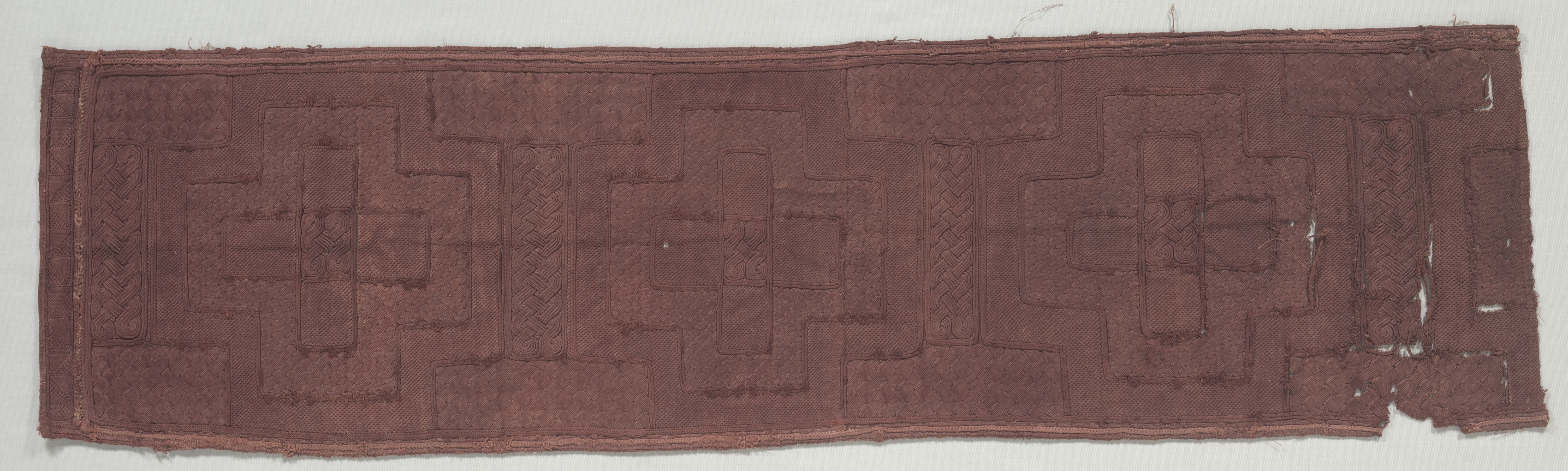
Fragment of Woman’s overskirt (ncaka)
A fragment of Kuba overskirt dyed with tukula, the reddish camwood powder that gives Kuba textiles their warm ground. Small pieces like this show the geometry clearly, at the scale of a single repeat.
× px · Unmodified source file
Small archival scan: best for reference and screen use, not large prints.
Open in StudioSource & licensing
- Creator / date
- Kuba makers, DR Congo · late 1800s–early 1900s
- Source credit
- John L. Severance Fund. The Cleveland Museum of Art, Open Access.
- Usage notes
- Released by the Cleveland Museum of Art under CC0 1.0. Credit to the museum is encouraged; CC0 does not imply endorsement.
- Original file
- × px · JPG · 0.0 MB
- Source checked
- 2026-11-04 · editorial approval separate
CC0 · Public domain · 1900s
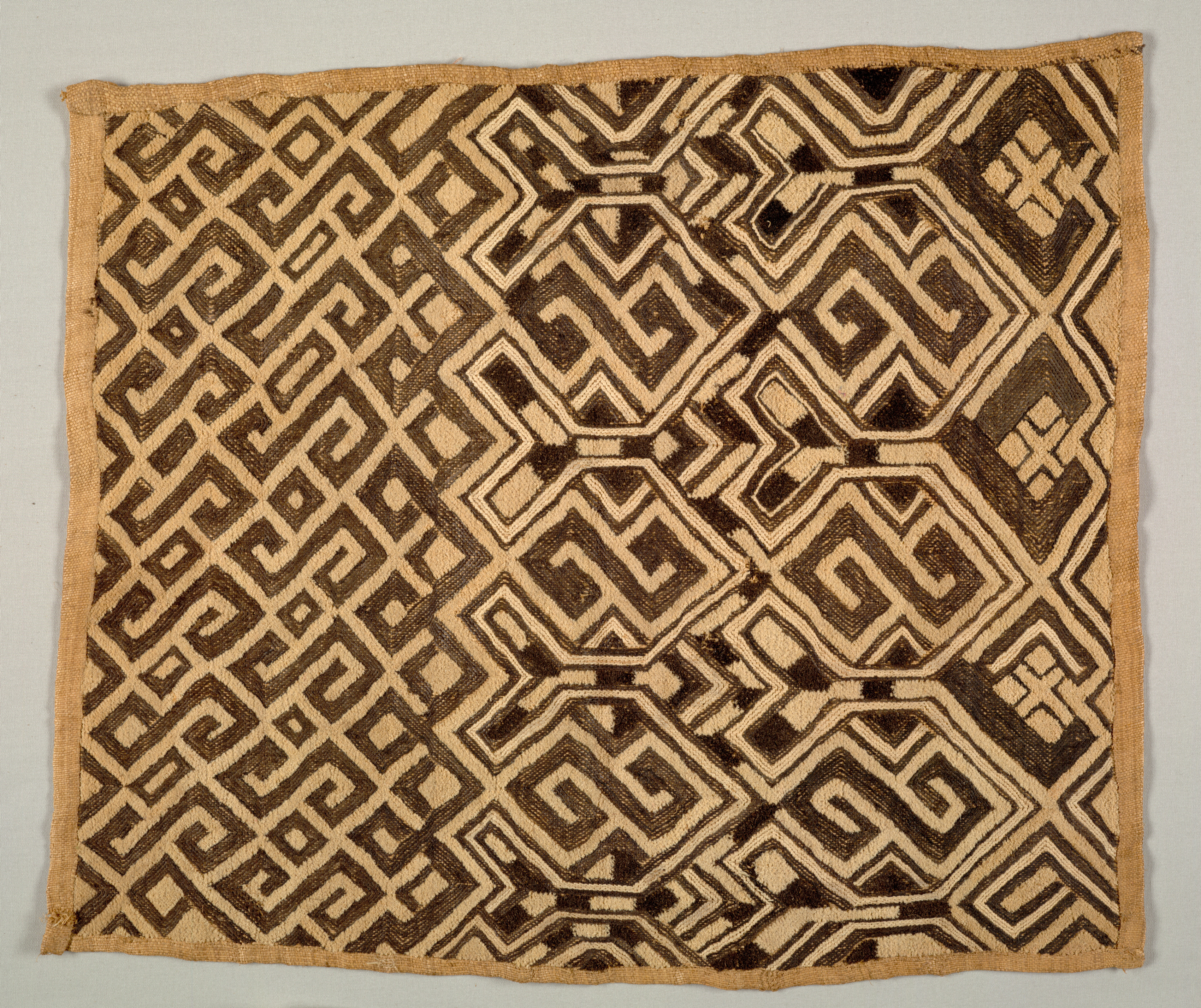
Embroidered Raffia Pile Cloth
A Kuba raffia cloth with cut-pile embroidery, the surface cut short like velvet to make the pattern stand up. It is a textile made entirely of texture: the design is read by the way it catches light.
× px · Unmodified source file
Small archival scan: best for reference and screen use, not large prints.
Open in StudioSource & licensing
- Creator / date
- Kuba peoples, DR Congo · 1900s
- Source credit
- Anonymous gift in honor of the Museum’s seventy-fifth anniversary. The Cleveland Museum of Art, Open Access.
- Usage notes
- Released by the Cleveland Museum of Art under CC0 1.0. Credit to the museum is encouraged; CC0 does not imply endorsement.
- Original file
- × px · JPG · 0.0 MB
- Source checked
- 2026-11-04 · editorial approval separate
CC0 · Public domain · 1900s
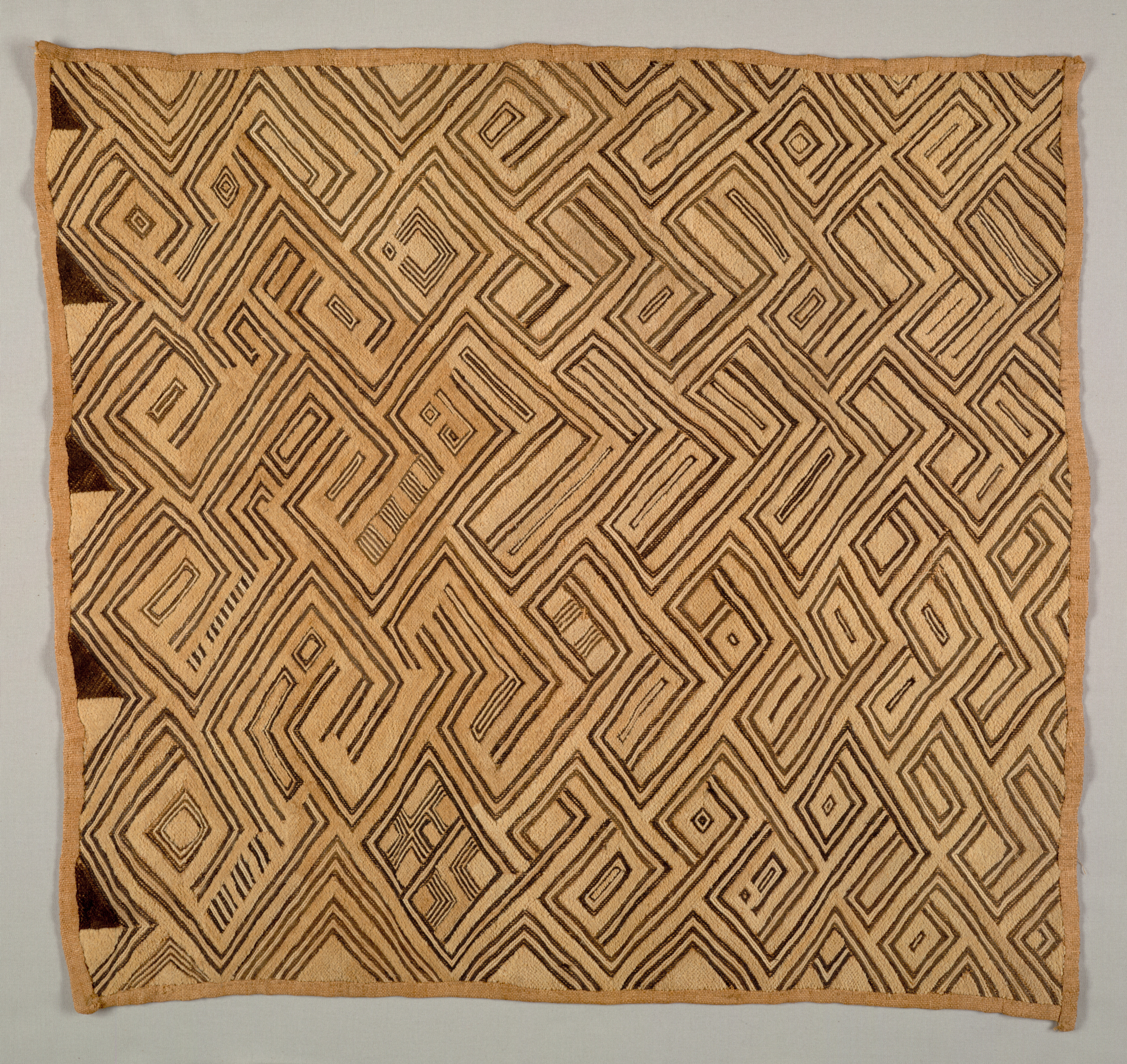
Embroidered Raffia Pile Cloth
A second Kuba pile cloth, with a different rhythm of blocks and borders. Kuba patterns are famously non-symmetrical, built from contrast and interruption rather than mirroring.
× px · Unmodified source file
Small archival scan: best for reference and screen use, not large prints.
Open in StudioSource & licensing
- Creator / date
- Kuba peoples, DR Congo · 1900s
- Source credit
- John L. Severance Fund. The Cleveland Museum of Art, Open Access.
- Usage notes
- Released by the Cleveland Museum of Art under CC0 1.0. Credit to the museum is encouraged; CC0 does not imply endorsement.
- Original file
- × px · JPG · 0.0 MB
- Source checked
- 2026-11-04 · editorial approval separate
CC0 · Public domain · possibly early 1900s
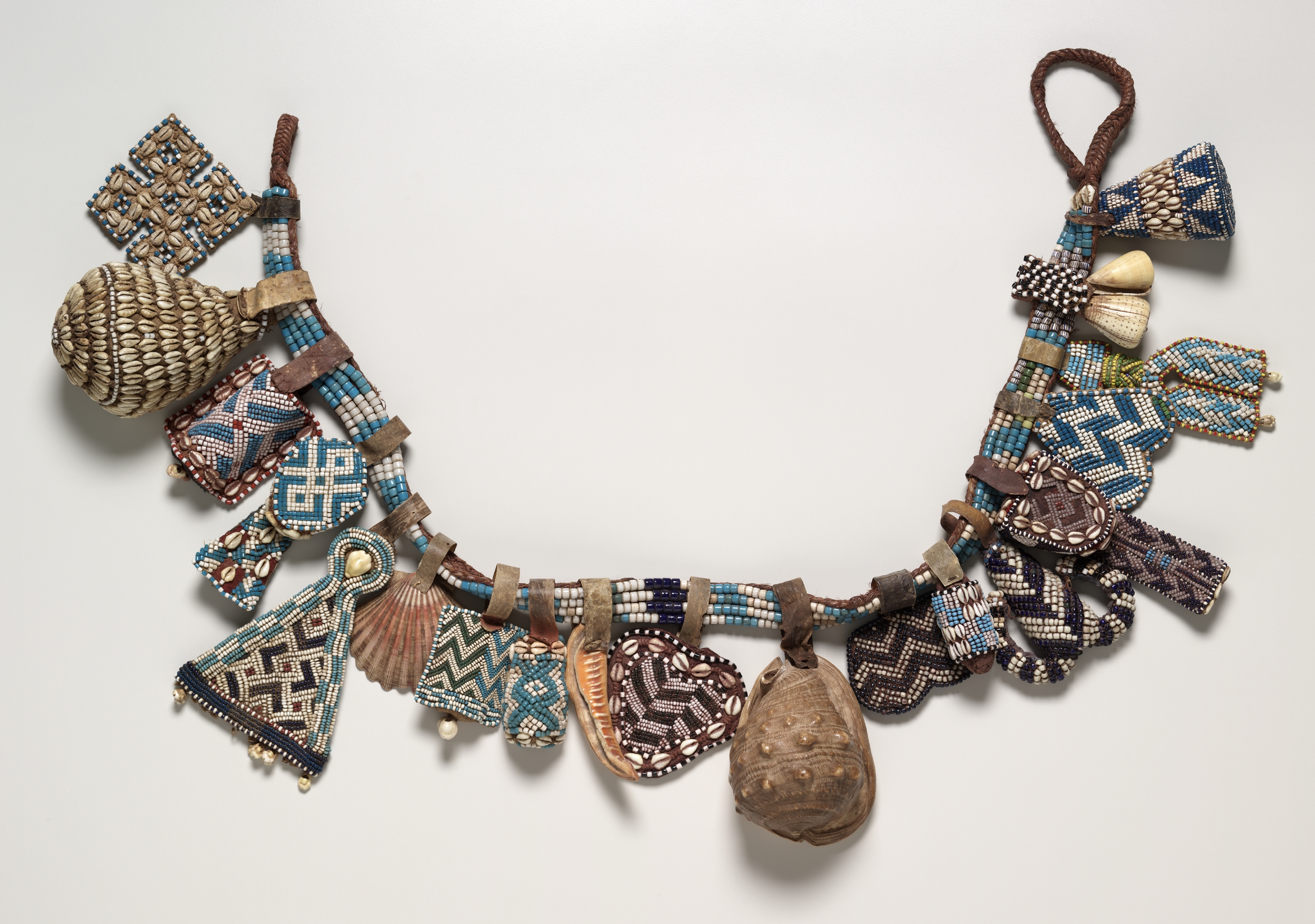
Royal Belt (yet)
A Kuba prestige belt loaded with beads, shells, hide and cloth. The accumulation of materials is the message: each addition signals the standing of the person entitled to wear it.
× px · Unmodified source file
Small archival scan: best for reference and screen use, not large prints.
Open in StudioSource & licensing
- Creator / date
- Kuba Kingdom, DR Congo, maker unknown · possibly early 1900s
- Source credit
- John L. Severance Fund. The Cleveland Museum of Art, Open Access.
- Usage notes
- Released by the Cleveland Museum of Art under CC0 1.0. Credit to the museum is encouraged; CC0 does not imply endorsement.
- Original file
- × px · JPG · 0.0 MB
- Source checked
- 2026-11-04 · editorial approval separate
CC0 · Public domain · 1900s
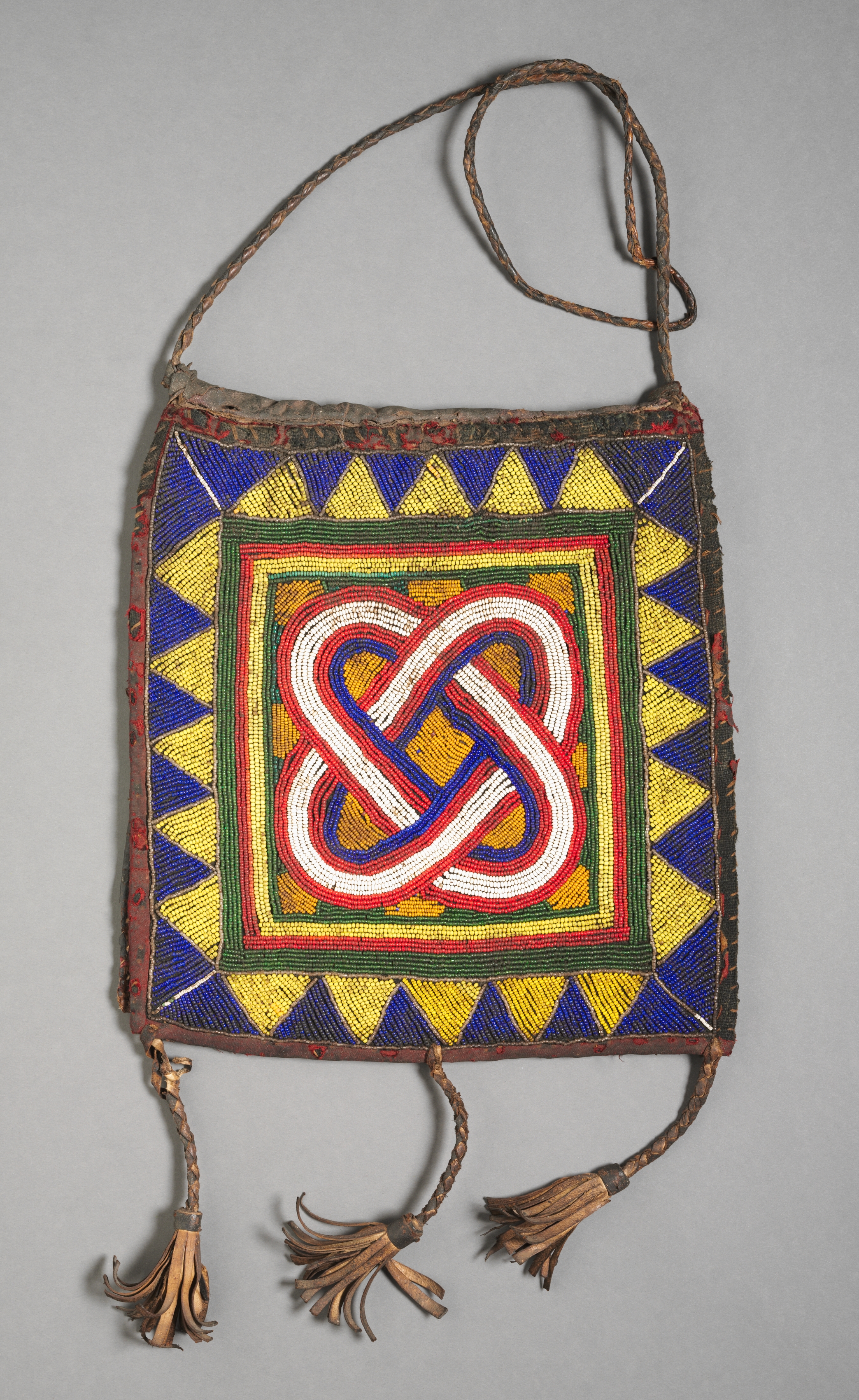
Diviner’s Bag (Apo Ifa)
A beaded leather bag carried by a Yoruba diviner, made to hold the instruments of Ifa. Beadwork in this tradition uses pattern to mark status and function, so the bag announces its purpose before it is opened.
× px · Unmodified source file
Small archival scan: best for reference and screen use, not large prints.
Open in StudioSource & licensing
- Creator / date
- Yorùbá maker, Nigeria · 1900s
- Source credit
- Gift of Drs. James and Gladys Strain. The Cleveland Museum of Art, Open Access.
- Usage notes
- Released by the Cleveland Museum of Art under CC0 1.0. Credit to the museum is encouraged; CC0 does not imply endorsement.
- Original file
- × px · JPG · 0.0 MB
- Source checked
- 2026-11-04 · editorial approval separate
CC0 · Public domain · 1900–1950
Prestige Headdress (Ashetu or shüötu)
A Bamum man’s prestige headdress with a bristling indigo or red-dyed surface. Beneath it, a diamond pattern stands for the leopard, another royal emblem, so the hat is a diagram of authority.
× px · Unmodified source file
Small archival scan: best for reference and screen use, not large prints.
Open in StudioSource & licensing
- Creator / date
- Bamum maker, Grassfields region, Cameroon · 1900–1950
- Source credit
- Alma Kroeger Fund. The Cleveland Museum of Art, Open Access.
- Usage notes
- Released by the Cleveland Museum of Art under CC0 1.0. Credit to the museum is encouraged; CC0 does not imply endorsement.
- Original file
- × px · JPG · 0.0 MB
- Source checked
- 2026-11-04 · editorial approval separate
Public-domain status is reported by the linked source and may vary by jurisdiction. Check the source record for your intended use. No exclusive rights or Visual Bounty marketplace license are offered for these images.