← Open CollectionsPublic-domain source library
Worn and Danced: African Masks
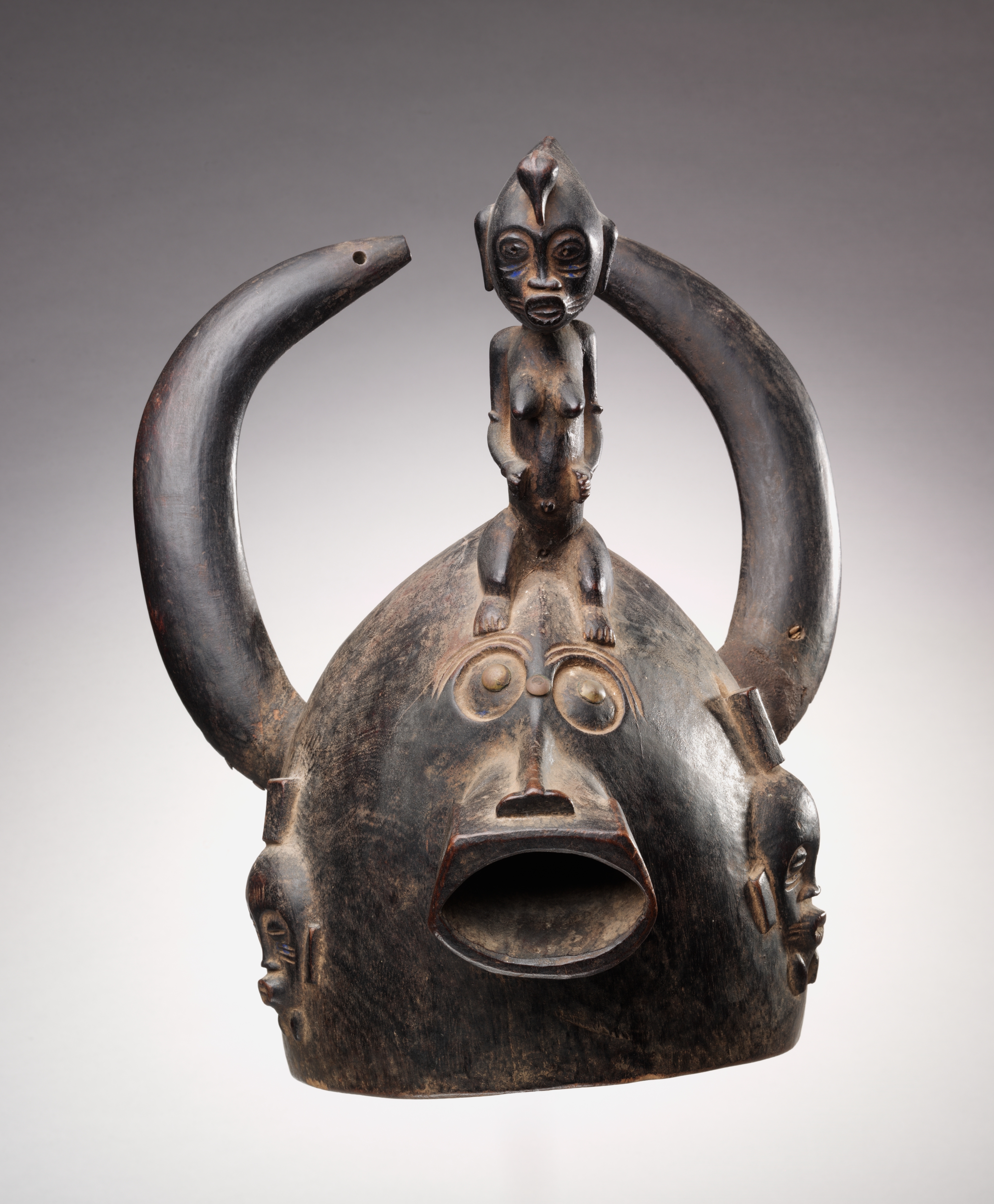
A mask is not a face but a costume in parts: a carved head, a fibre fringe, a cloth body, a pair of tusks, a rattle of seeds — assembled so that a dancer becomes something else for the length of a performance. Carvers work regionally distinct conventions: the polished oval of Dan and Baule carving, the helmet forms of the Kuba court, the ribbed and studded surfaces of Senufo and Bamana workshops, the skin-covered heads of the Ejagham. These twelve masks come from Mali, Burkina Faso, Guinea, Côte d’Ivoire, Liberia, Nigeria and the Democratic Republic of Congo, and between them show how much of the object is the surface treatment rather than the shape.
Original means the unmodified digital file supplied by the linked archive, not an upscaled or reconstructed image. Sign in for free downloads. Studio uses a working preview up to 2048 px.
CC0 · Public domain · early to mid-1900s
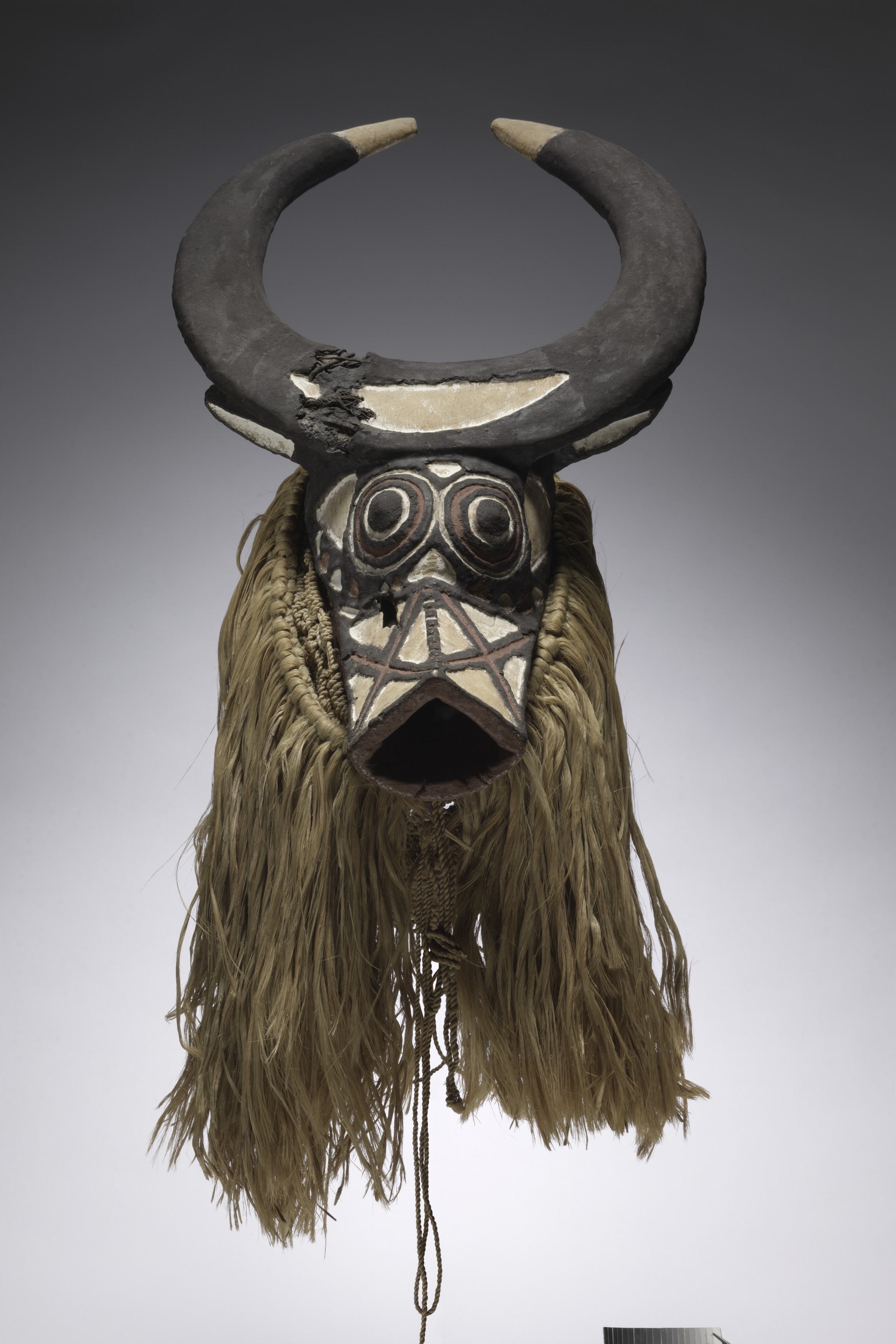
Buffalo Mask
A buffalo mask with plant-fibre fringe, painted patterns and iron fittings. Masks of this kind are danced at funerals and at the opening of the farming season, and their painting is renewed for each performance.
2267 × 3400 px · Unmodified source file
Open in StudioSource & licensing
- Creator / date
- Africa, West Africa, Burkina Faso, possibly Bwa-style maker, maker unknown · early to mid-1900s
- Source credit
- The Cleveland Museum of Art, 1969.2. Open Access.
- Usage notes
- Released by the Cleveland Museum of Art under CC0 1.0. Credit to the museum is encouraged; CC0 does not imply endorsement.
- Original file
- 2267 × 3400 px · JPG · 0.0 MB
- Source checked
- 2026-11-05 · editorial approval separate
CC0 · Public domain · mid- to late 1800s
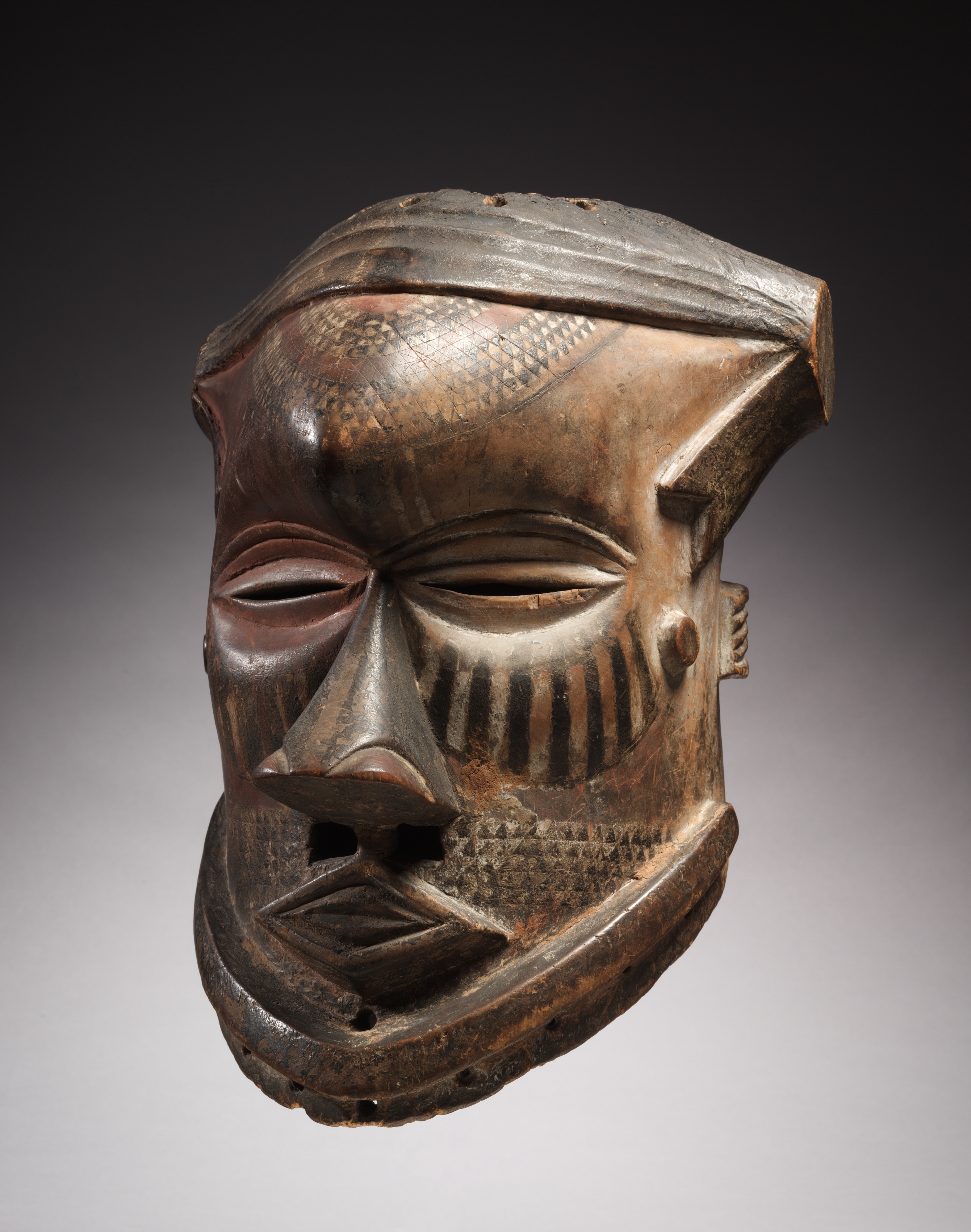
Mask (Bwoom)
Bwoom is one of the three royal masks of the Kuba court, the helmet-shaped character who plays the commoner against the king’s mask. The domed forehead, wide nose and blocked-out planes are carved rather than modelled, and this example is finished in paint rather than beads.
2681 × 3400 px · Unmodified source file
Open in StudioSource & licensing
- Creator / date
- Africa, Central Africa, Democratic Republic of Congo, Kuba-style carver, maker unknown · mid- to late 1800s
- Source credit
- The Cleveland Museum of Art, 1935.304. Open Access.
- Usage notes
- Released by the Cleveland Museum of Art under CC0 1.0. Credit to the museum is encouraged; CC0 does not imply endorsement.
- Original file
- 2681 × 3400 px · JPG · 0.0 MB
- Source checked
- 2026-11-05 · editorial approval separate
CC0 · Public domain · late 1800s–early 1900s
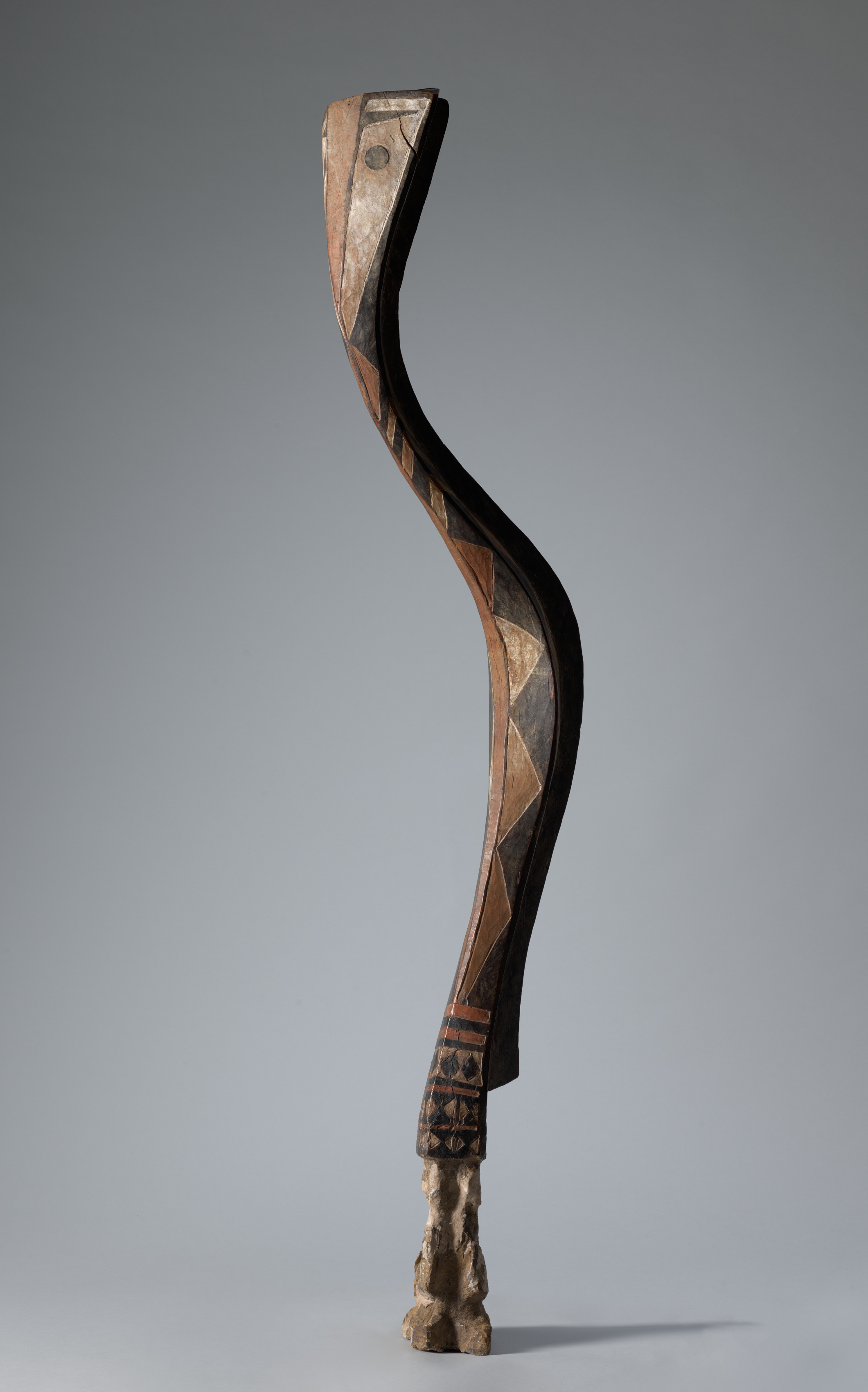
Serpent Headdress
The Baga of coastal Guinea carve serpent headdresses that rise in stacked coils above the dancer’s head. Carried at funerals and at public ceremonies, the snake stands for the spirit of water and for continuity rather than for a particular animal.
2121 × 3400 px · Unmodified source file
Open in StudioSource & licensing
- Creator / date
- Africa, West Africa, Guinea, possibly Baga-style maker, maker unknown · late 1800s–early 1900s
- Source credit
- The Cleveland Museum of Art, 1960.37. Open Access.
- Usage notes
- Released by the Cleveland Museum of Art under CC0 1.0. Credit to the museum is encouraged; CC0 does not imply endorsement.
- Original file
- 2121 × 3400 px · JPG · 0.0 MB
- Source checked
- 2026-11-05 · editorial approval separate
CC0 · Public domain · early 1900s
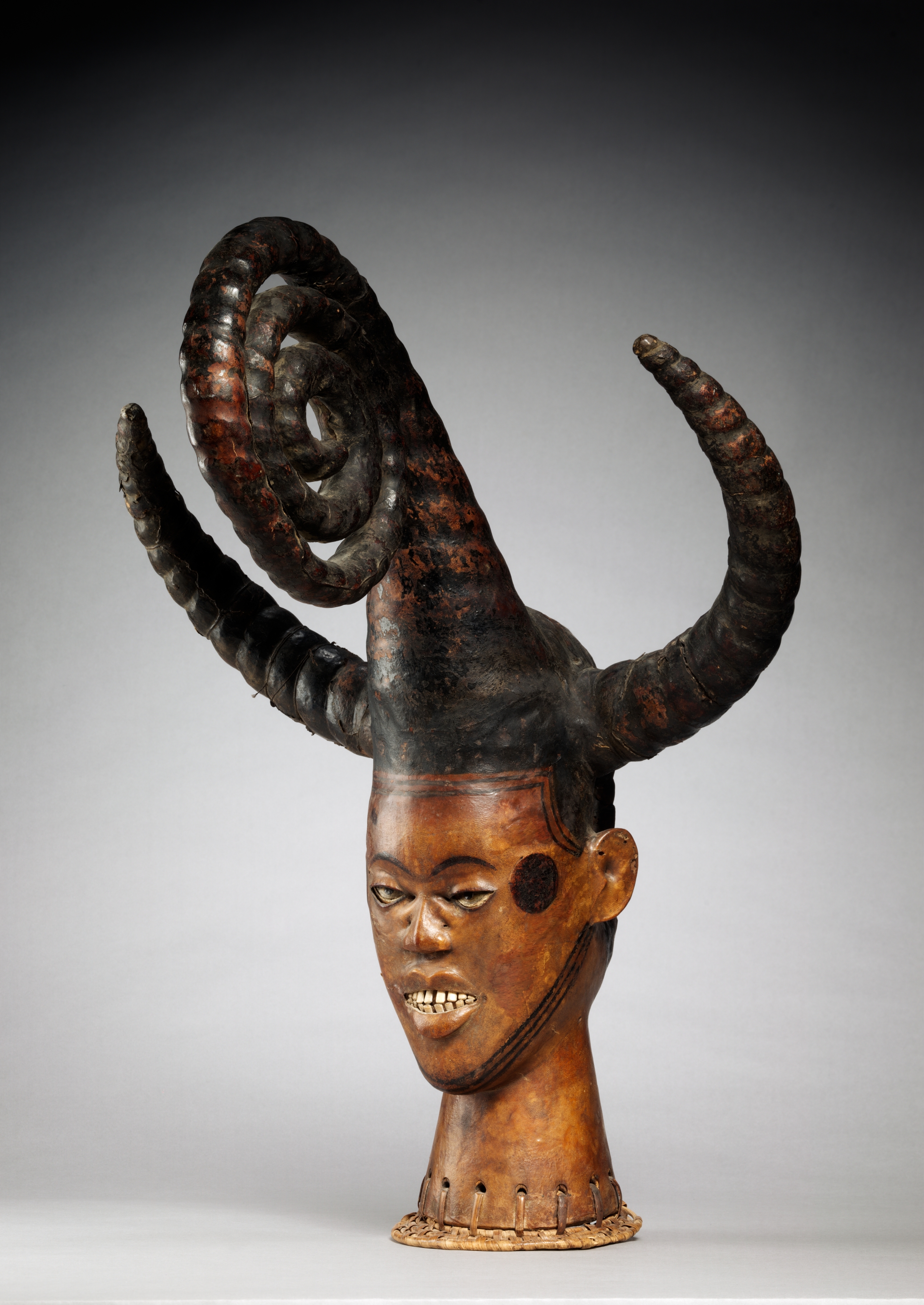
Headdress
Ejagham carvers cover the wooden core of a headdress with rawhide so the features take on skin: the planes soften, the face becomes a person rather than a mask. Cane, bone, fibre and metal are added around the head as structure and ornament together.
2356 × 3400 px · Unmodified source file
Open in StudioSource & licensing
- Creator / date
- Africa, West Africa, Nigeria, Ejagham-style maker, maker unknown · early 1900s
- Source credit
- The Cleveland Museum of Art, 1990.23. Open Access.
- Usage notes
- Released by the Cleveland Museum of Art under CC0 1.0. Credit to the museum is encouraged; CC0 does not imply endorsement.
- Original file
- 2356 × 3400 px · JPG · 0.0 MB
- Source checked
- 2026-11-05 · editorial approval separate
CC0 · Public domain · early to mid-1900s
Helmet Mask
A Senufo helmet mask, carved as an oval face and set with lines of upholstery studs. Brass tacks arrived through trade in the early twentieth century and were absorbed into Senufo carving as ornament and as a way of catching light in the dance.
2697 × 3400 px · Unmodified source file
Open in StudioSource & licensing
- Creator / date
- Africa, West Africa, Côte d’Ivoire, Senufo-style carver, maker unknown · early to mid-1900s
- Source credit
- The Cleveland Museum of Art, 1975.152. Open Access.
- Usage notes
- Released by the Cleveland Museum of Art under CC0 1.0. Credit to the museum is encouraged; CC0 does not imply endorsement.
- Original file
- 2697 × 3400 px · JPG · 0.0 MB
- Source checked
- 2026-11-05 · editorial approval separate
CC0 · Public domain · early to mid-1900s
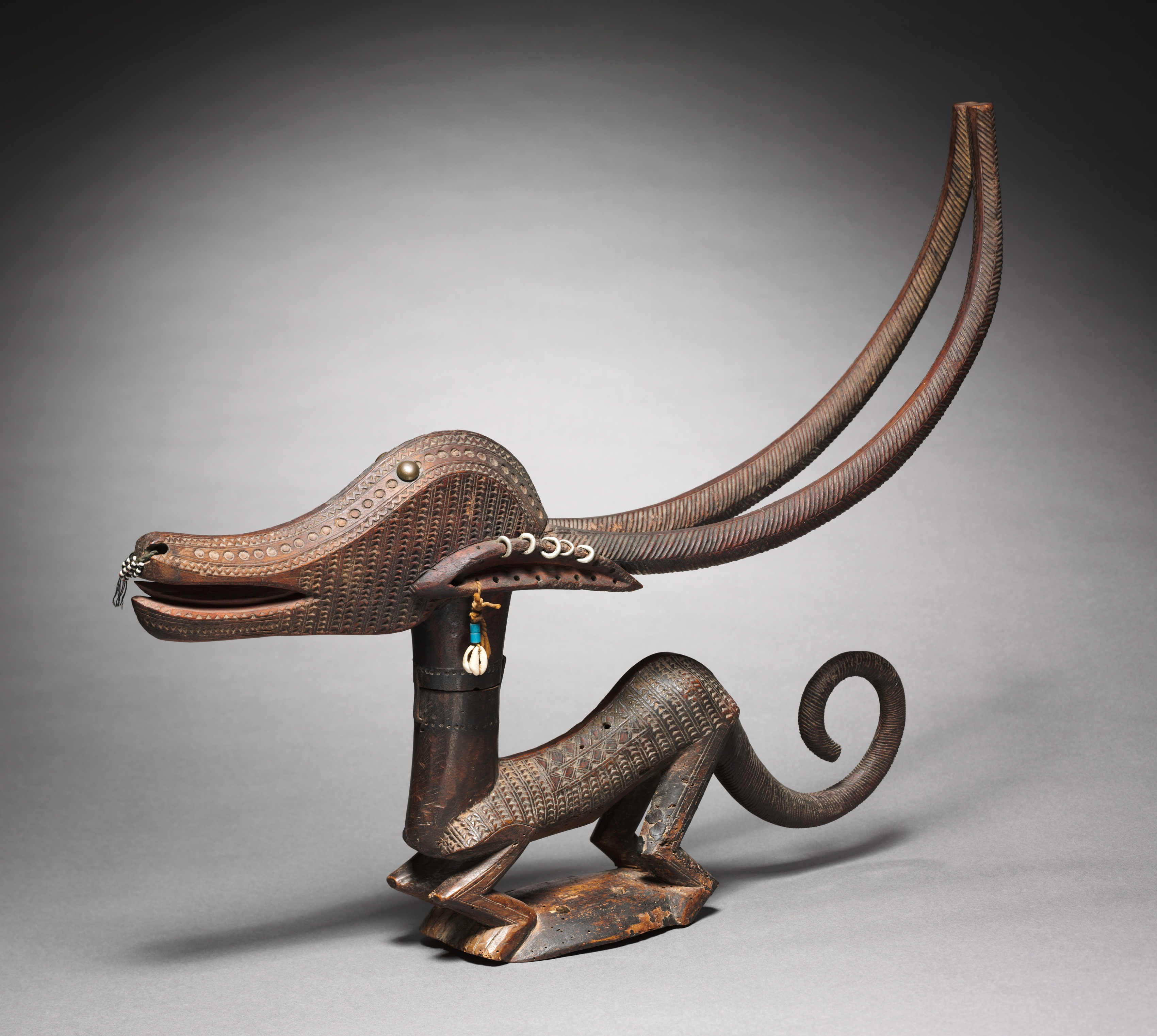
Headdress (chi wara)
Ci wara is the antelope who taught the Bamana to farm. Dancers wear the headdress in pairs, male and female, on woven caps and bend from the waist so the long horns sweep the ground — the carving only completes itself in motion.
3400 × 3044 px · Unmodified source file
Open in StudioSource & licensing
- Creator / date
- Africa, West Africa, Mali, Bamana-style blacksmith-carver, maker unknown · early to mid-1900s
- Source credit
- The Cleveland Museum of Art, 1965.325. Open Access.
- Usage notes
- Released by the Cleveland Museum of Art under CC0 1.0. Credit to the museum is encouraged; CC0 does not imply endorsement.
- Original file
- 3400 × 3044 px · JPG · 0.0 MB
- Source checked
- 2026-11-05 · editorial approval separate
CC0 · Public domain · early 1900s
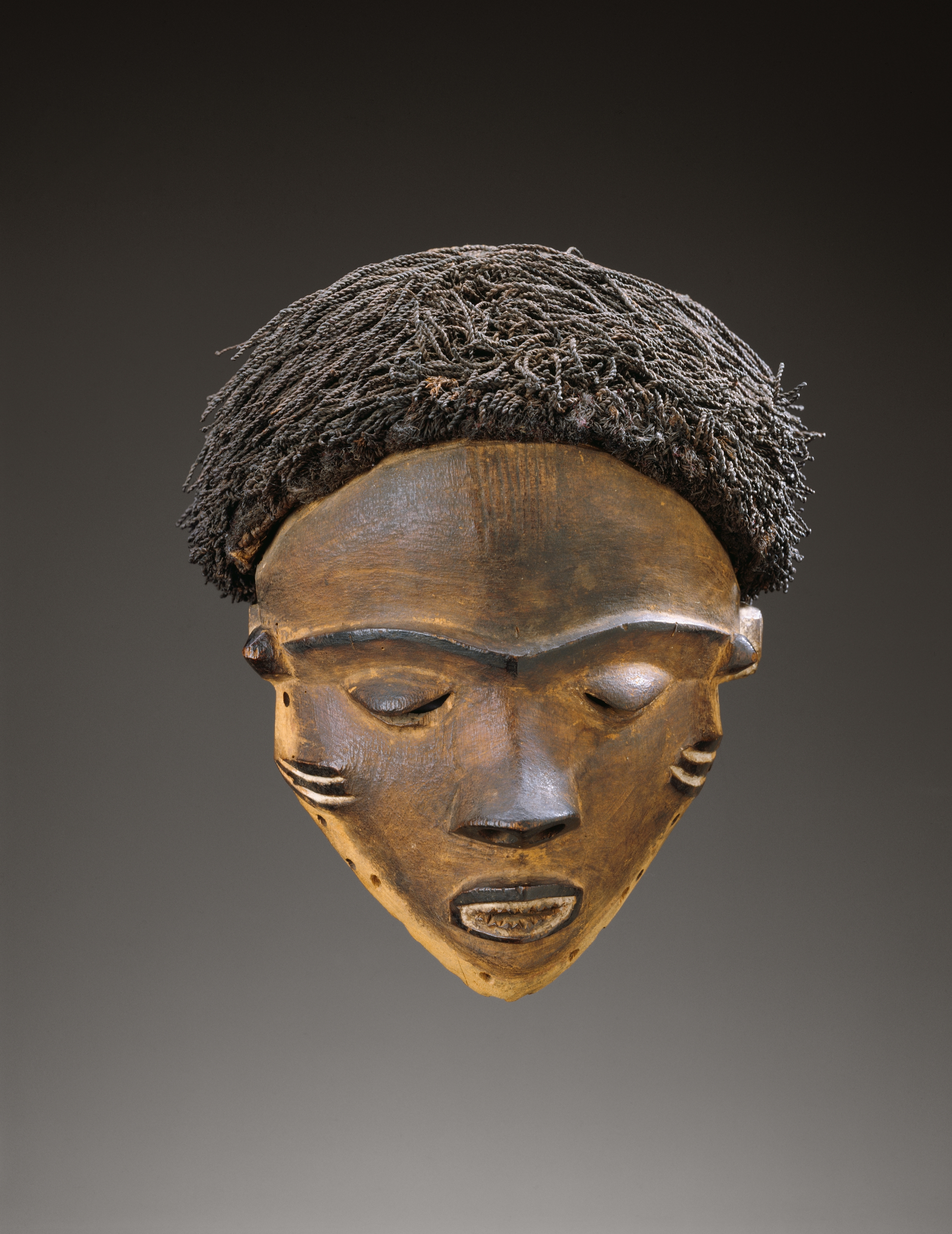
Female Mask (Gambanda or Kambanda)
Gambanda, the chief’s daughter, is a female mask of the Pende carved in soft planes: closed lips, lowered eyes, a hairline of fine incision. In performance the female masks move with contained steps against the wilder male characters.
2675 × 3400 px · Unmodified source file
Open in StudioSource & licensing
- Creator / date
- Africa, Central Africa, Democratic Republic of Congo, Pende-style maker, maker unknown · early 1900s
- Source credit
- The Cleveland Museum of Art, 2008.150. Open Access.
- Usage notes
- Released by the Cleveland Museum of Art under CC0 1.0. Credit to the museum is encouraged; CC0 does not imply endorsement.
- Original file
- 2675 × 3400 px · JPG · 0.0 MB
- Source checked
- 2026-11-05 · editorial approval separate
CC0 · Public domain · possibly early 1900s
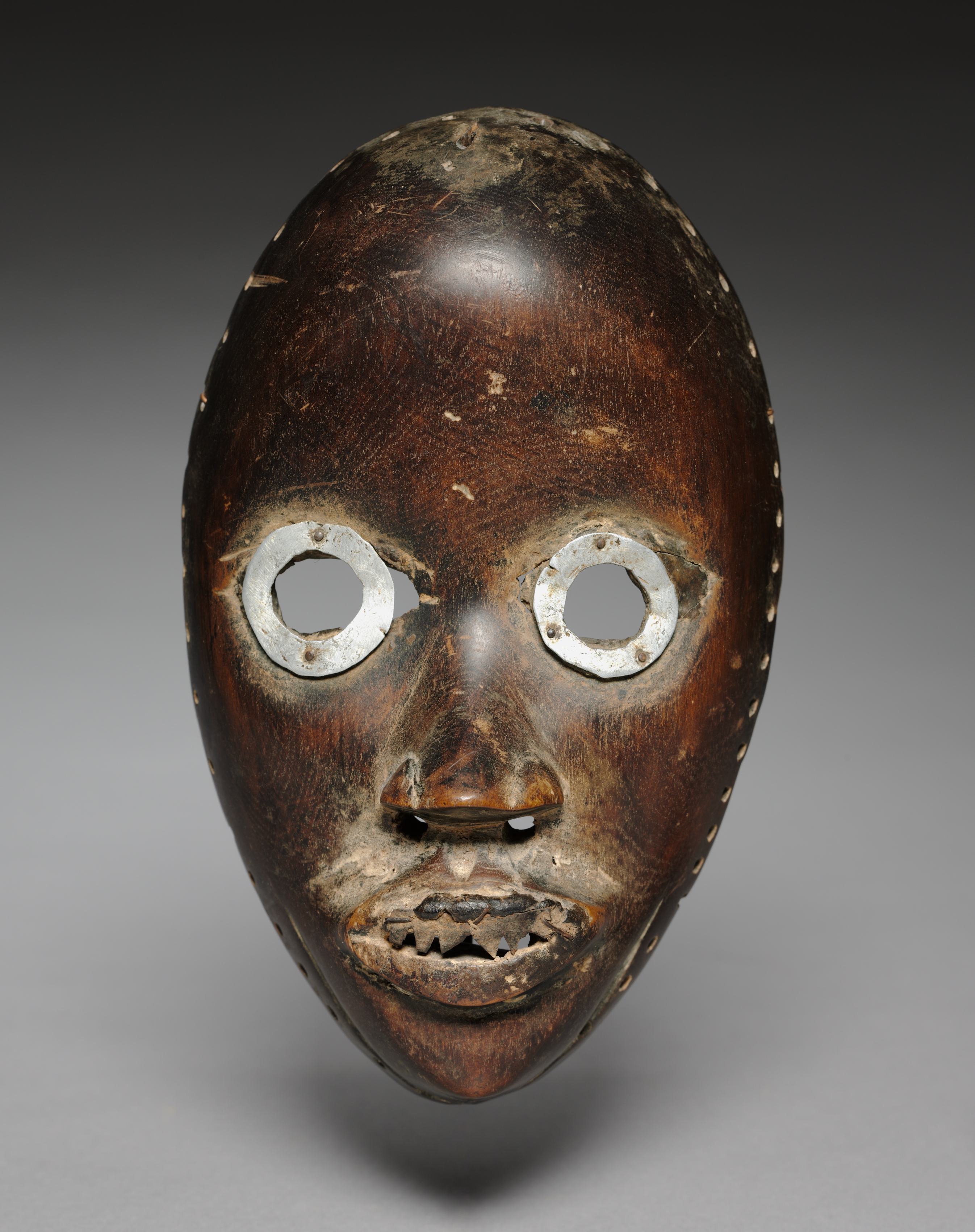
Face Mask
Dan masks aim at an ideal face — domed forehead, slit eyes, full lips — sanded and oiled to a dark gloss. A mask like this belonged to the men’s society and appeared in masquerades that entertained and taught; the polish was the point, not the likeness.
2692 × 3400 px · Unmodified source file
Open in StudioSource & licensing
- Creator / date
- Africa, West Africa, Côte d’Ivoire or Liberia, Dan-style maker, maker unknown · possibly early 1900s
- Source credit
- The Cleveland Museum of Art, 1972.331. Open Access.
- Usage notes
- Released by the Cleveland Museum of Art under CC0 1.0. Credit to the museum is encouraged; CC0 does not imply endorsement.
- Original file
- 2692 × 3400 px · JPG · 0.0 MB
- Source checked
- 2026-11-05 · editorial approval separate
CC0 · Public domain · late 1800s–early 1900s
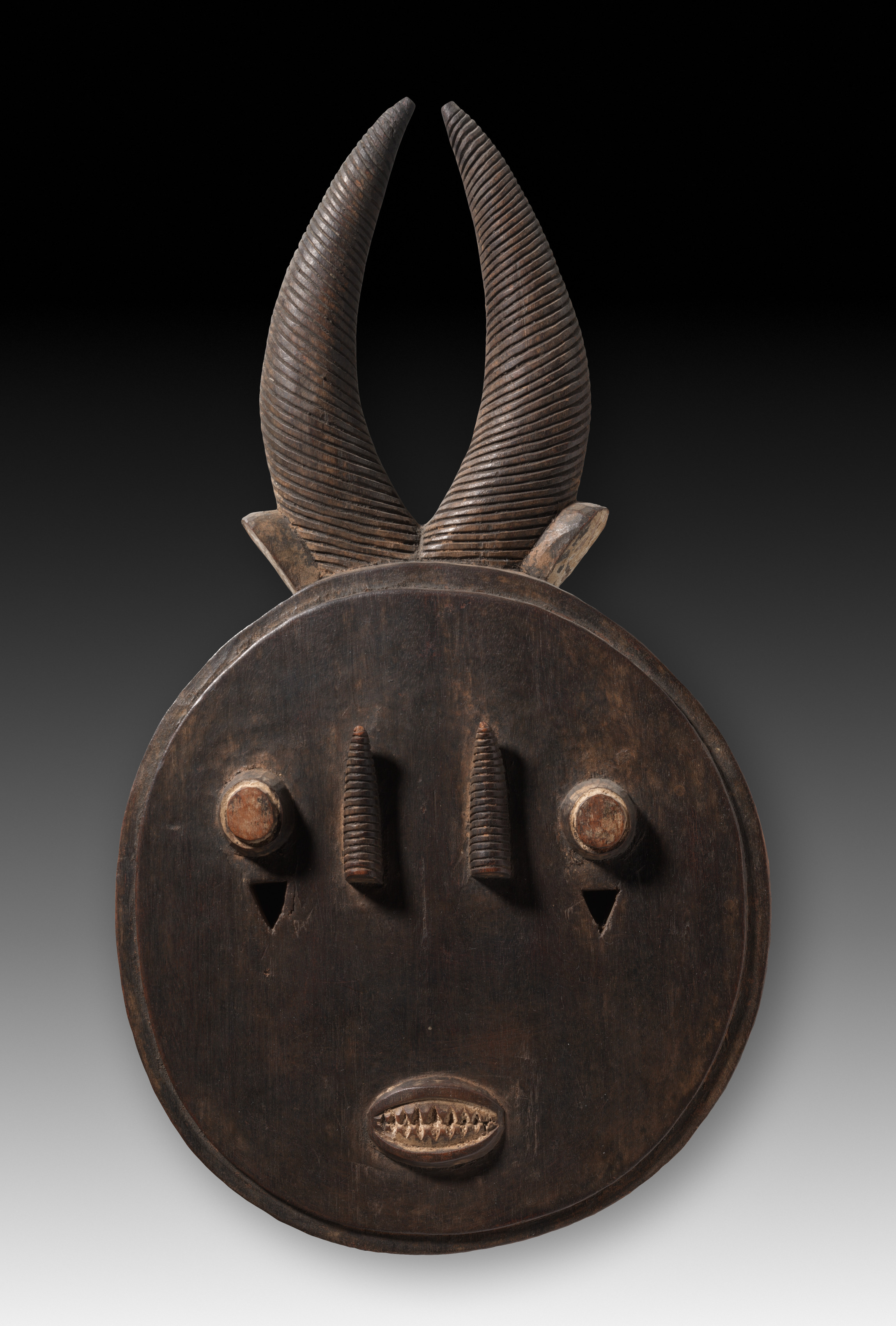
Mask (Kple Kple or Kouassi Gbe)
Kple kple is the round, disc-shaped mask that opens the Baule goli masquerade, with small horns and eyes set at the rim of the face. Young men dance it first and fastest, one black and one red, before the heavier masks come out.
2298 × 3400 px · Unmodified source file
Open in StudioSource & licensing
- Creator / date
- Africa, West Africa, Côte d’Ivoire, Baule-style carver, maker unknown · late 1800s–early 1900s
- Source credit
- The Cleveland Museum of Art, 1975.155. Open Access.
- Usage notes
- Released by the Cleveland Museum of Art under CC0 1.0. Credit to the museum is encouraged; CC0 does not imply endorsement.
- Original file
- 2298 × 3400 px · JPG · 0.0 MB
- Source checked
- 2026-11-05 · editorial approval separate
CC0 · Public domain · early to mid-1900s
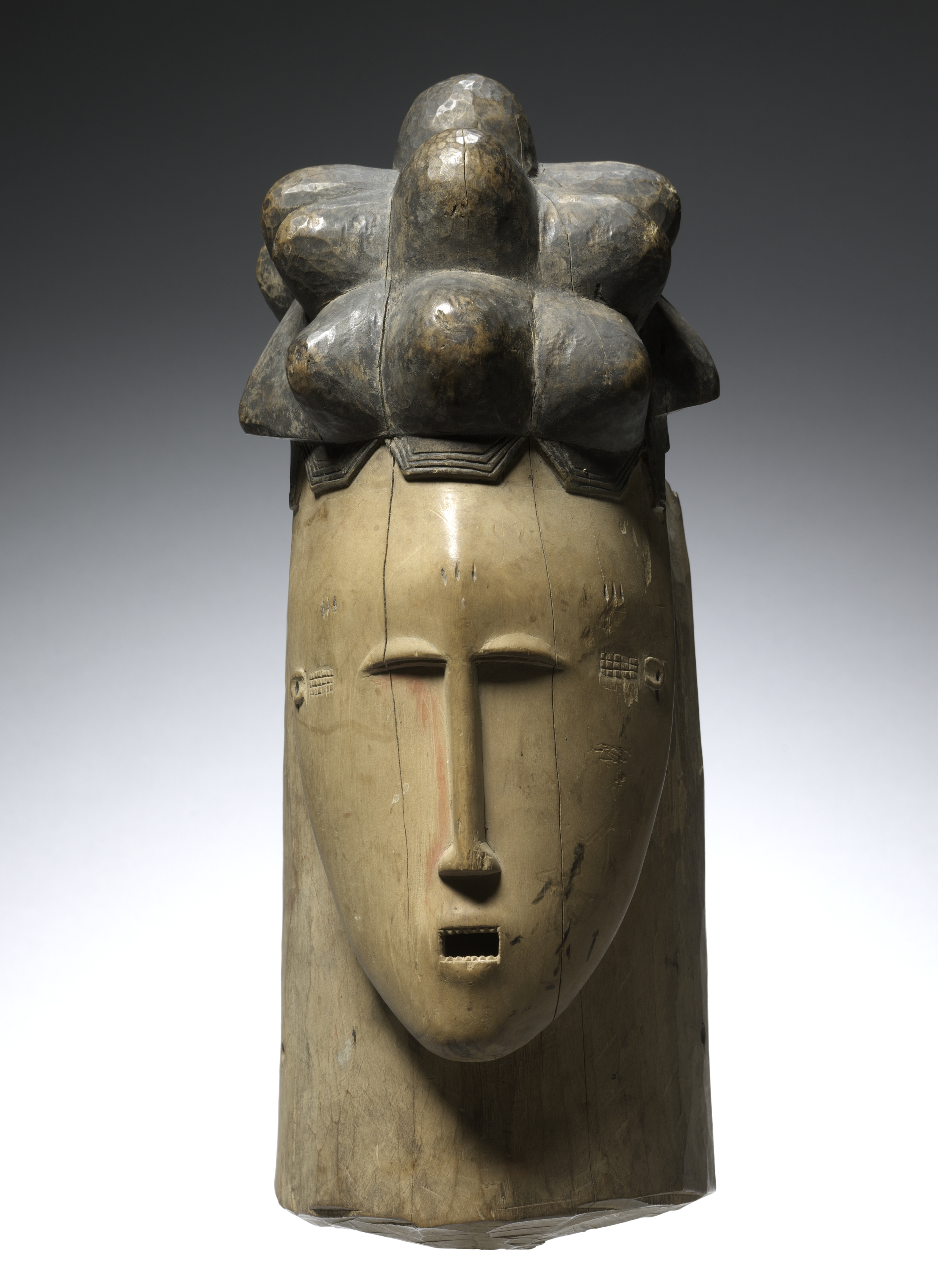
Portrait Mask (mblo)
An mblo mask is a portrait in the Baule sense: not a likeness but an idealised image of a named person, danced in the gbagba sequence while that person’s family watches. The wide forehead and quiet mouth are the mask’s argument about character.
2476 × 3400 px · Unmodified source file
Open in StudioSource & licensing
- Creator / date
- Africa, West Africa, Côte d’Ivoire, Baule-style carver, maker unknown · early to mid-1900s
- Source credit
- The Cleveland Museum of Art, 1974.203. Open Access.
- Usage notes
- Released by the Cleveland Museum of Art under CC0 1.0. Credit to the museum is encouraged; CC0 does not imply endorsement.
- Original file
- 2476 × 3400 px · JPG · 0.0 MB
- Source checked
- 2026-11-05 · editorial approval separate
CC0 · Public domain · early 1900s
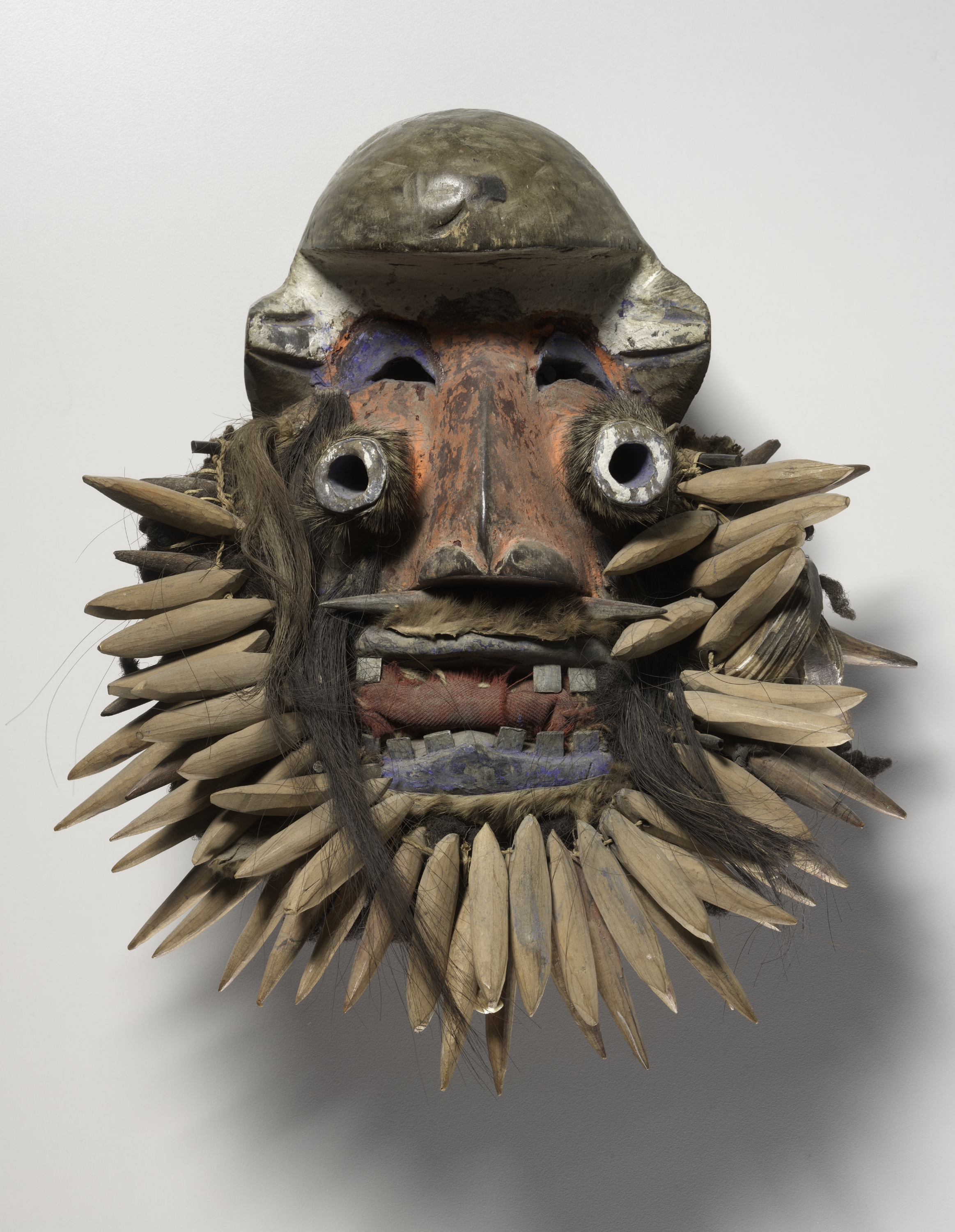
Face Mask (Tehe gla)
A Wè mask built up around the carved face — boar tusks, pelt, cloth, hair, metal — until the outline is no longer human. Accumulation is the method: each material added marks an office or a power the mask holds.
2326 × 3000 px · Unmodified source file
Open in StudioSource & licensing
- Creator / date
- Africa, West Africa, Côte d’Ivoire or Liberia, Wè-style carver, maker unknown · early 1900s
- Source credit
- The Cleveland Museum of Art, 1971.294. Open Access.
- Usage notes
- Released by the Cleveland Museum of Art under CC0 1.0. Credit to the museum is encouraged; CC0 does not imply endorsement.
- Original file
- 2326 × 3000 px · JPG · 0.0 MB
- Source checked
- 2026-11-05 · editorial approval separate
CC0 · Public domain · possibly early 1900s
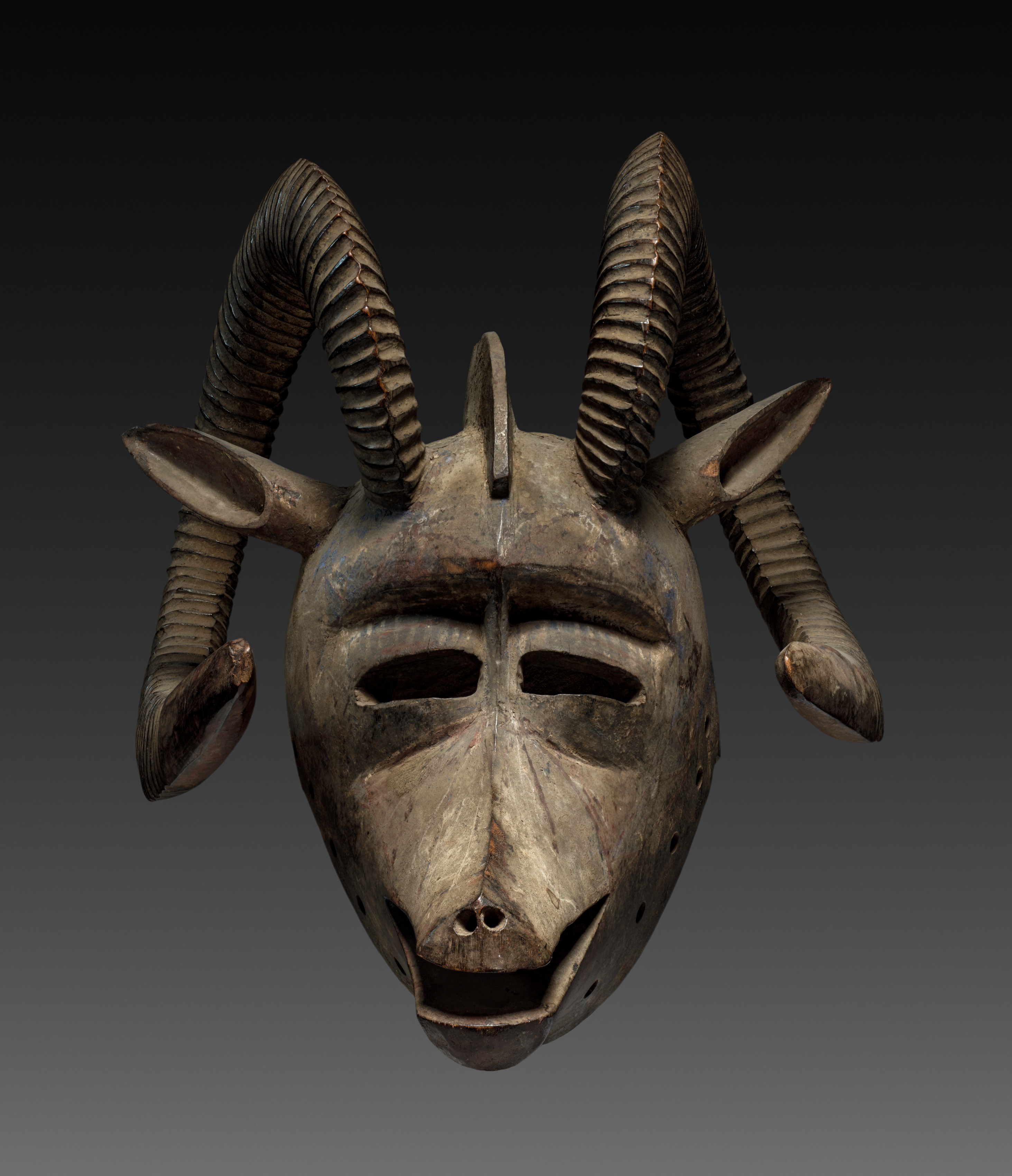
Ram Mask (Bolo)
Bobo carvers make masks as animals, the ram among them, danced in ceremonies that renew the bond between the village and the land. Painted in flat planes of black, white and red, the mask is designed to read at the distance of a crowd.
2927 × 3400 px · Unmodified source file
Open in StudioSource & licensing
- Creator / date
- Africa, West Africa, Burkina Faso, Bobo-style blacksmith-carver, maker unknown · possibly early 1900s
- Source credit
- The Cleveland Museum of Art, 2016.56. Open Access.
- Usage notes
- Released by the Cleveland Museum of Art under CC0 1.0. Credit to the museum is encouraged; CC0 does not imply endorsement.
- Original file
- 2927 × 3400 px · JPG · 0.0 MB
- Source checked
- 2026-11-05 · editorial approval separate
Public-domain status is reported by the linked source and may vary by jurisdiction. Check the source record for your intended use. No exclusive rights or Visual Bounty marketplace license are offered for these images.