← Open CollectionsPublic-domain source library
Carved: African Figures
These figures were made to do something: to house a spirit, to stand in for an ancestor, to guard a shrine, to be fed and dressed and consulted. Carving was only part of the work. A ritual specialist added the charge, the cloth, the beads and the metal, and the figure became active. Almost all of these objects left Africa during the colonial period, which is why the museum can usually record the style and the people but rarely the individual carver. They are shown here as what they are, religious and political objects with a documented life, and not as anonymous sculpture.
Original means the unmodified digital file supplied by the linked archive, not an upscaled or reconstructed image. Sign in for free downloads. Studio uses a working preview up to 2048 px.
CC0 · Public domain · late 1800s-early 1900s
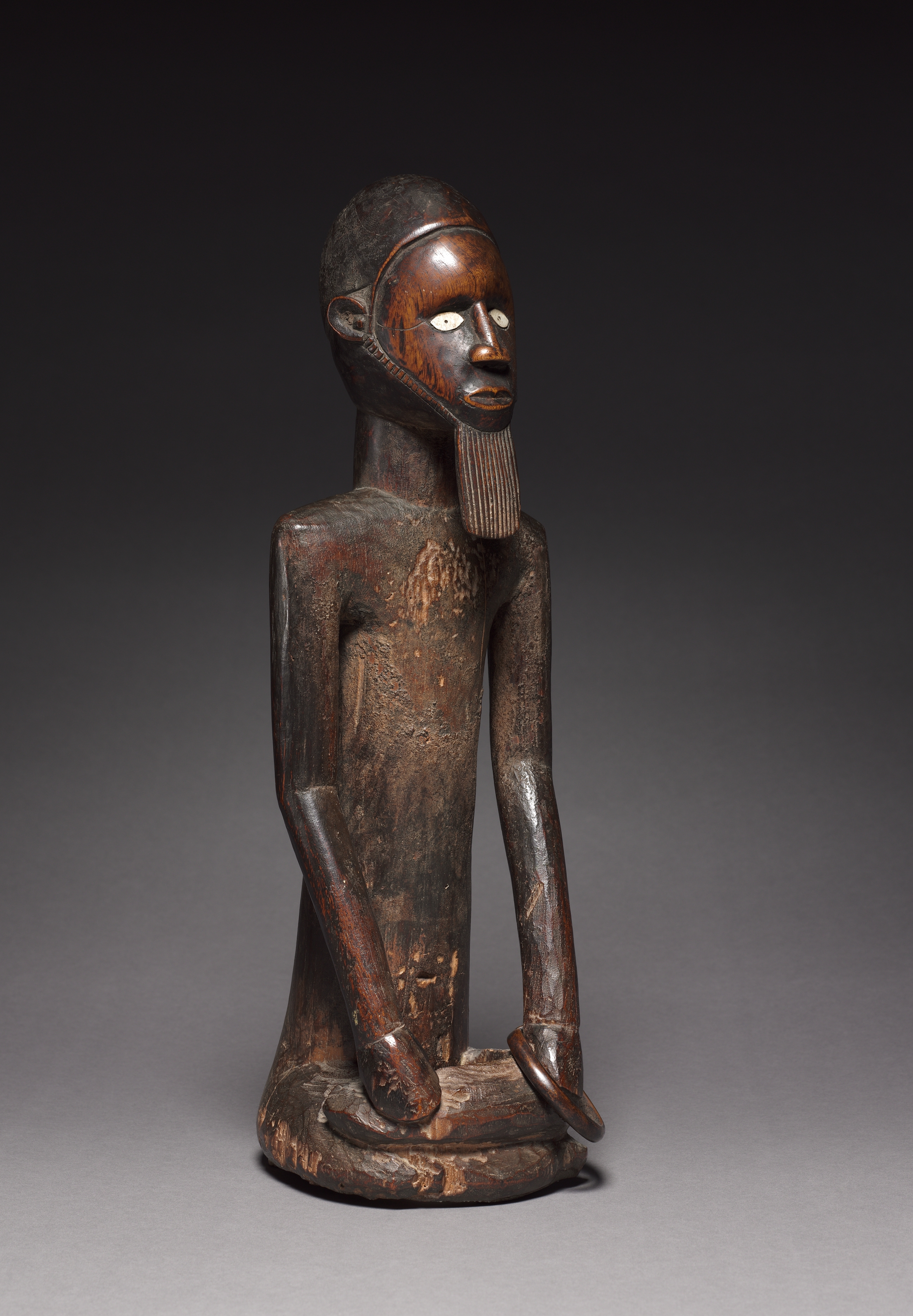
Male Figure
Carved for ancestral worship among the Beembe, where ancestors are held in high regard. The figure is thought to represent a specific named ancestor, and its copper-alloy and ceramic additions were part of how it was dressed and attended.
2360 × 3400 px · Unmodified source file
Open in StudioSource & licensing
- Creator / date
- Africa, Central Africa, Republic of the Congo, Beembe-style maker, maker unknown · late 1800s-early 1900s
- Source credit
- The Cleveland Museum of Art, 2010.428. Open Access.
- Usage notes
- Released by the Cleveland Museum of Art under CC0 1.0. Credit to the museum is encouraged; CC0 does not imply endorsement.
- Original file
- 2360 × 3400 px · JPG · 0.0 MB
- Source checked
- 2026-11-04 · editorial approval separate
CC0 · Public domain · late 1800s–early 1900s
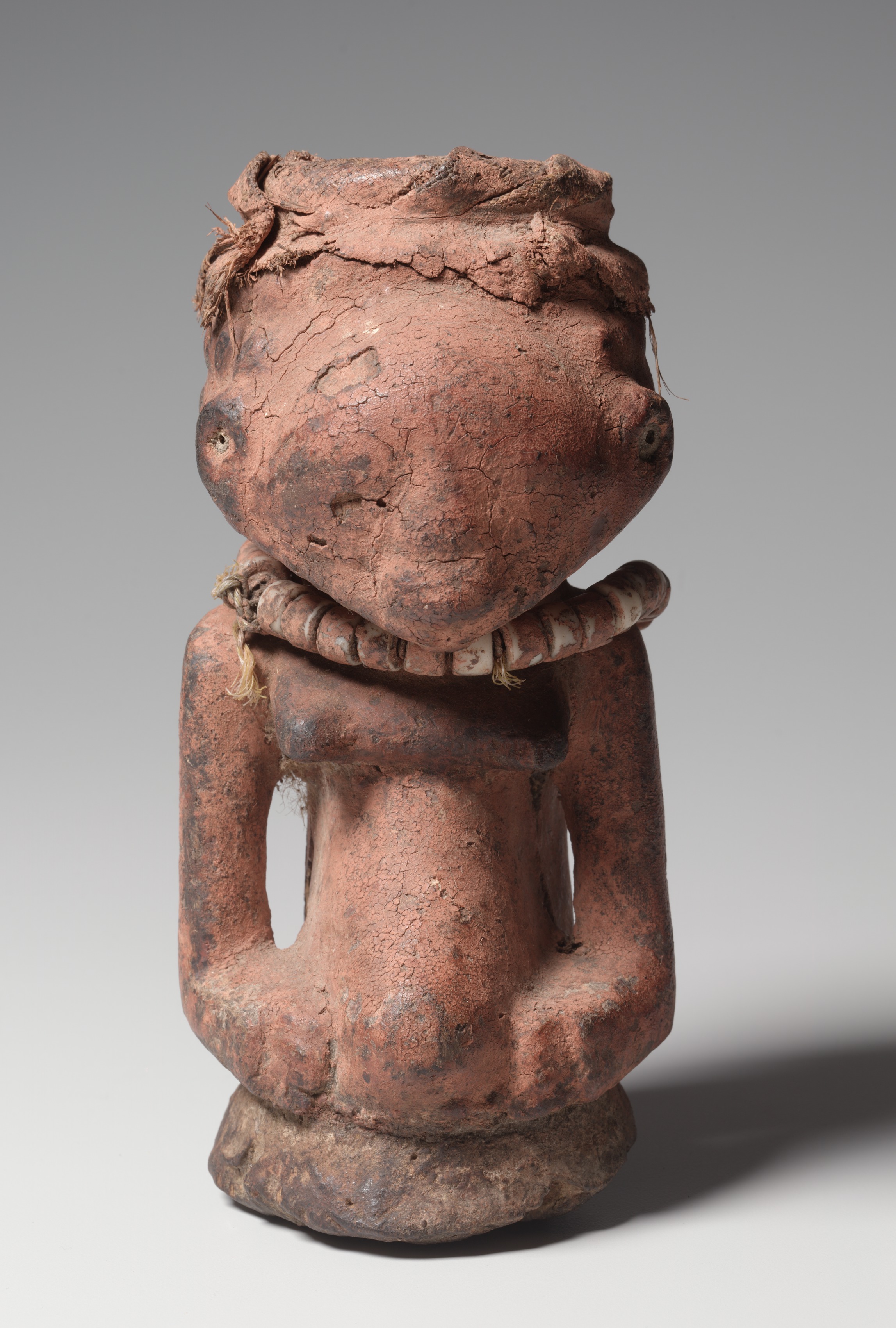
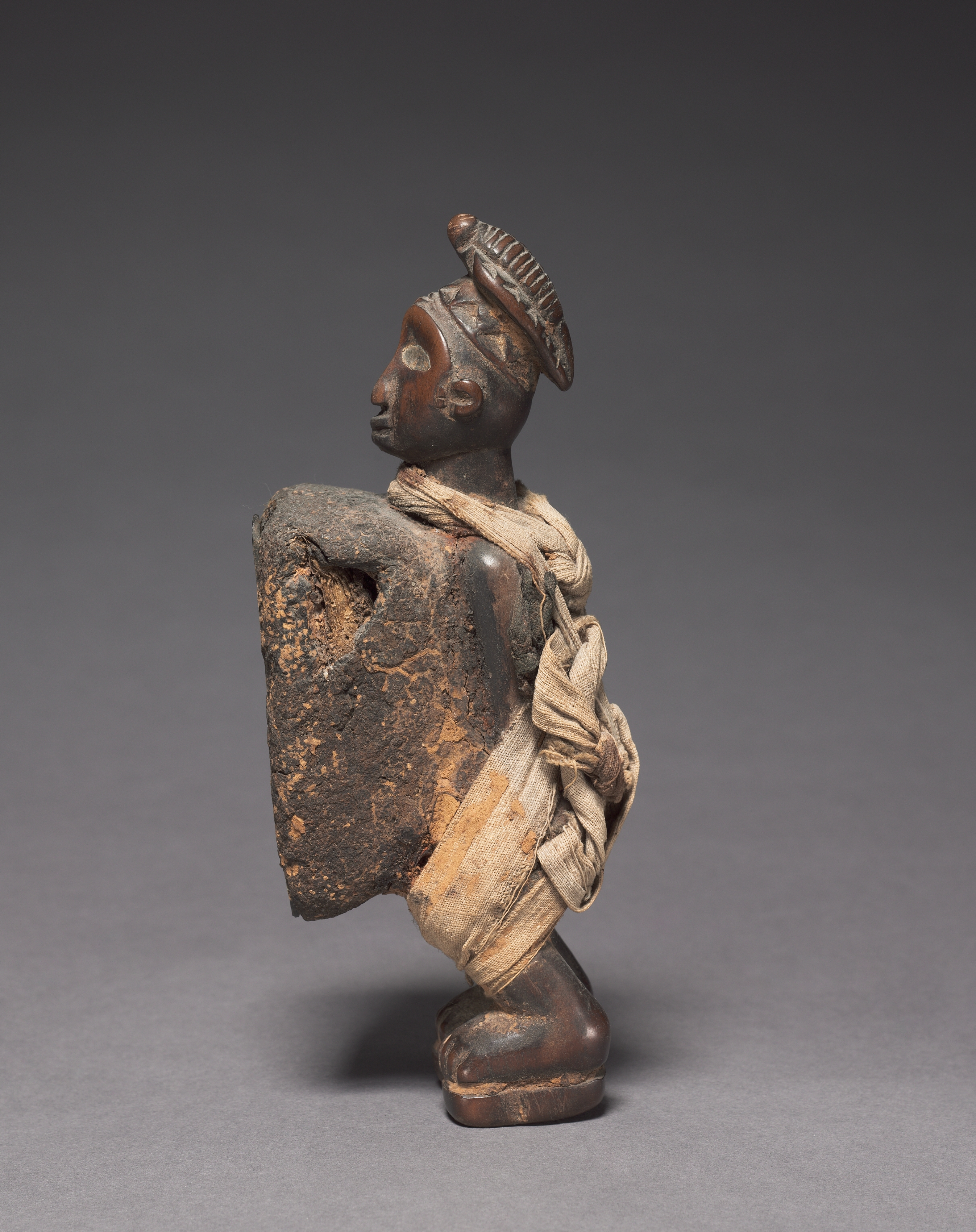
Figure (Nkishi)
The substances packed into the cloth-covered cranial cavity place this half-figure in the broad category of power objects the Luba call nkishi. A carver made the body; a ritual specialist made it work.
2295 × 3400 px · Unmodified source file
Open in StudioSource & licensing
- Creator / date
- Africa, Central Africa, Democratic Republic of Congo, Luba-style maker, maker unknown · late 1800s–early 1900s
- Source credit
- The Cleveland Museum of Art, 1974.212. Open Access.
- Usage notes
- Released by the Cleveland Museum of Art under CC0 1.0. Credit to the museum is encouraged; CC0 does not imply endorsement.
- Original file
- 2295 × 3400 px · JPG · 0.0 MB
- Source checked
- 2026-11-04 · editorial approval separate
CC0 · Public domain · possibly early 1400s
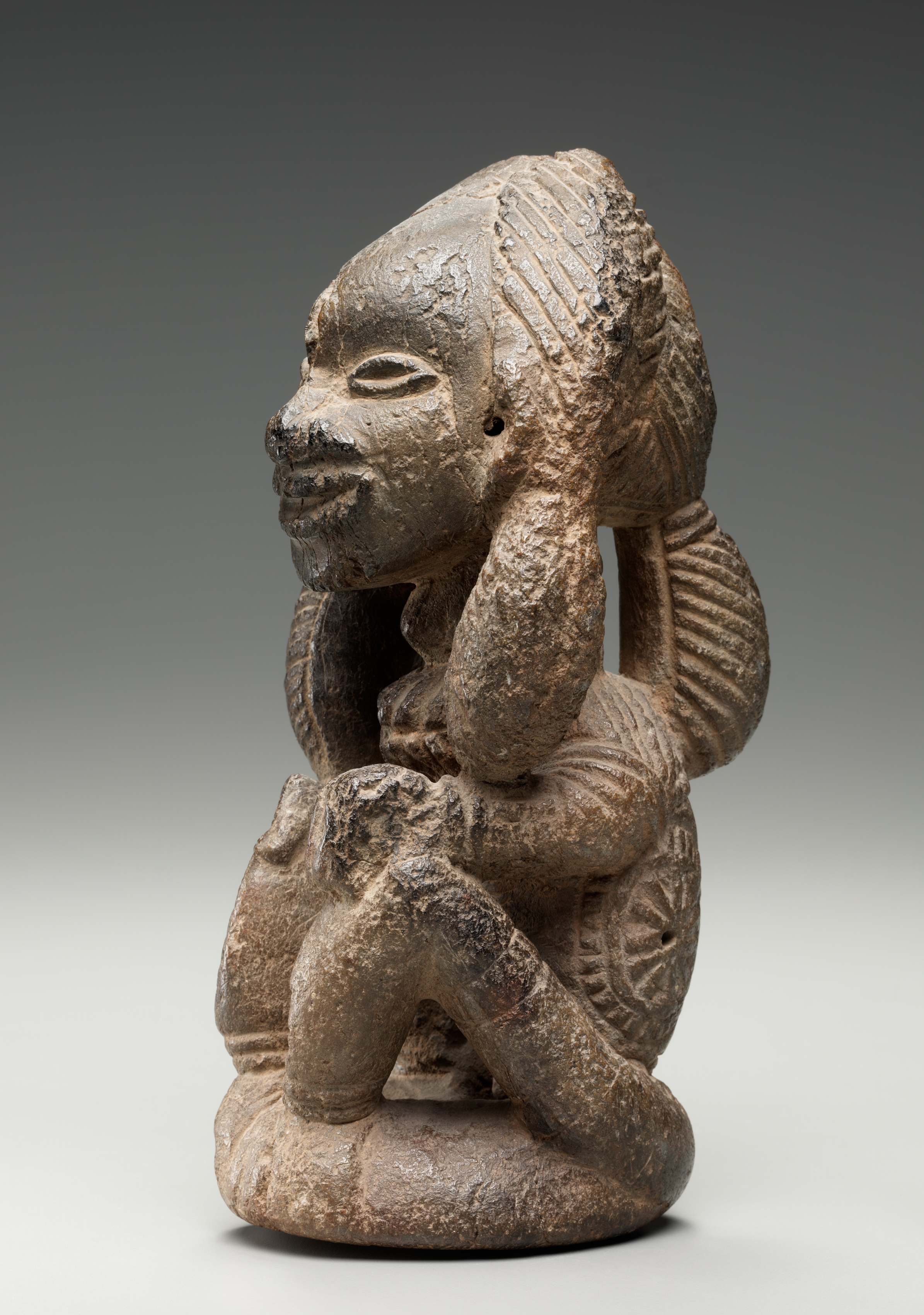
Figure
The most varied group of soapstone figures and heads has been found in the homelands of the Kissi, who call them pomda, images of the dead, and placed them in ancestral shrines.
2390 × 3400 px · Unmodified source file
Open in StudioSource & licensing
- Creator / date
- Africa, West Africa, Sierra Leone, Sapi-style carver, maker unknown · possibly early 1400s
- Source credit
- The Cleveland Museum of Art, 1976.29. Open Access.
- Usage notes
- Released by the Cleveland Museum of Art under CC0 1.0. Credit to the museum is encouraged; CC0 does not imply endorsement.
- Original file
- 2390 × 3400 px · JPG · 0.0 MB
- Source checked
- 2026-11-04 · editorial approval separate
CC0 · Public domain · mid-1800s–1910
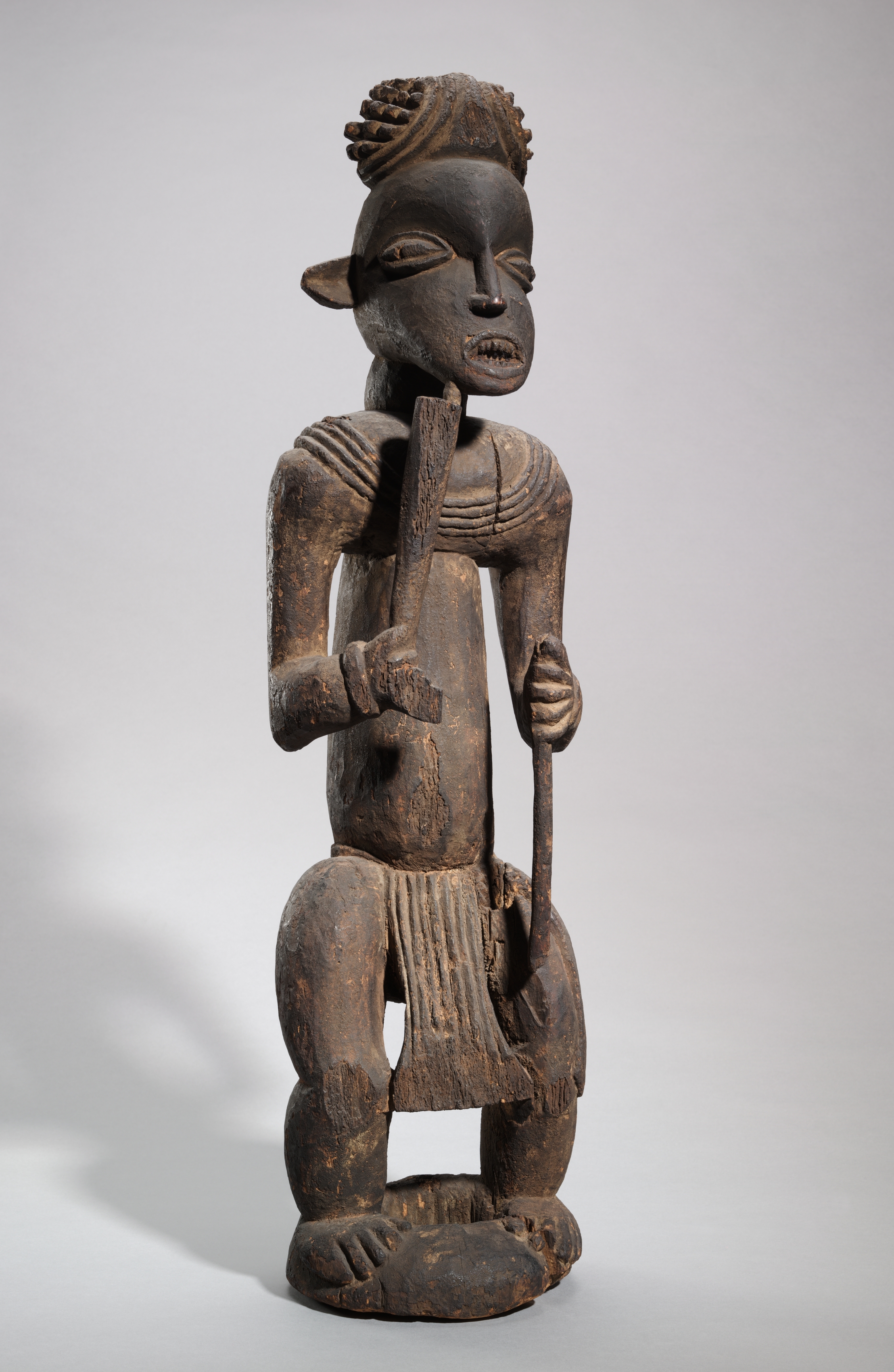
Commemorative figure (lefem)
Carved during the subject’s lifetime, such idealised portraits served as living stand-ins or intermediaries. This one wears royal attire, including a bristled collar.
2348 × 3400 px · Unmodified source file
Open in StudioSource & licensing
- Creator / date
- Ateu Atsa (Bangwa, c. 1840–1910) · mid-1800s–1910
- Source credit
- The Cleveland Museum of Art, 1987.62. Open Access.
- Usage notes
- Released by the Cleveland Museum of Art under CC0 1.0. Credit to the museum is encouraged; CC0 does not imply endorsement.
- Original file
- 2348 × 3400 px · JPG · 0.0 MB
- Source checked
- 2026-11-04 · editorial approval separate
CC0 · Public domain · late 1800s–early 1900s
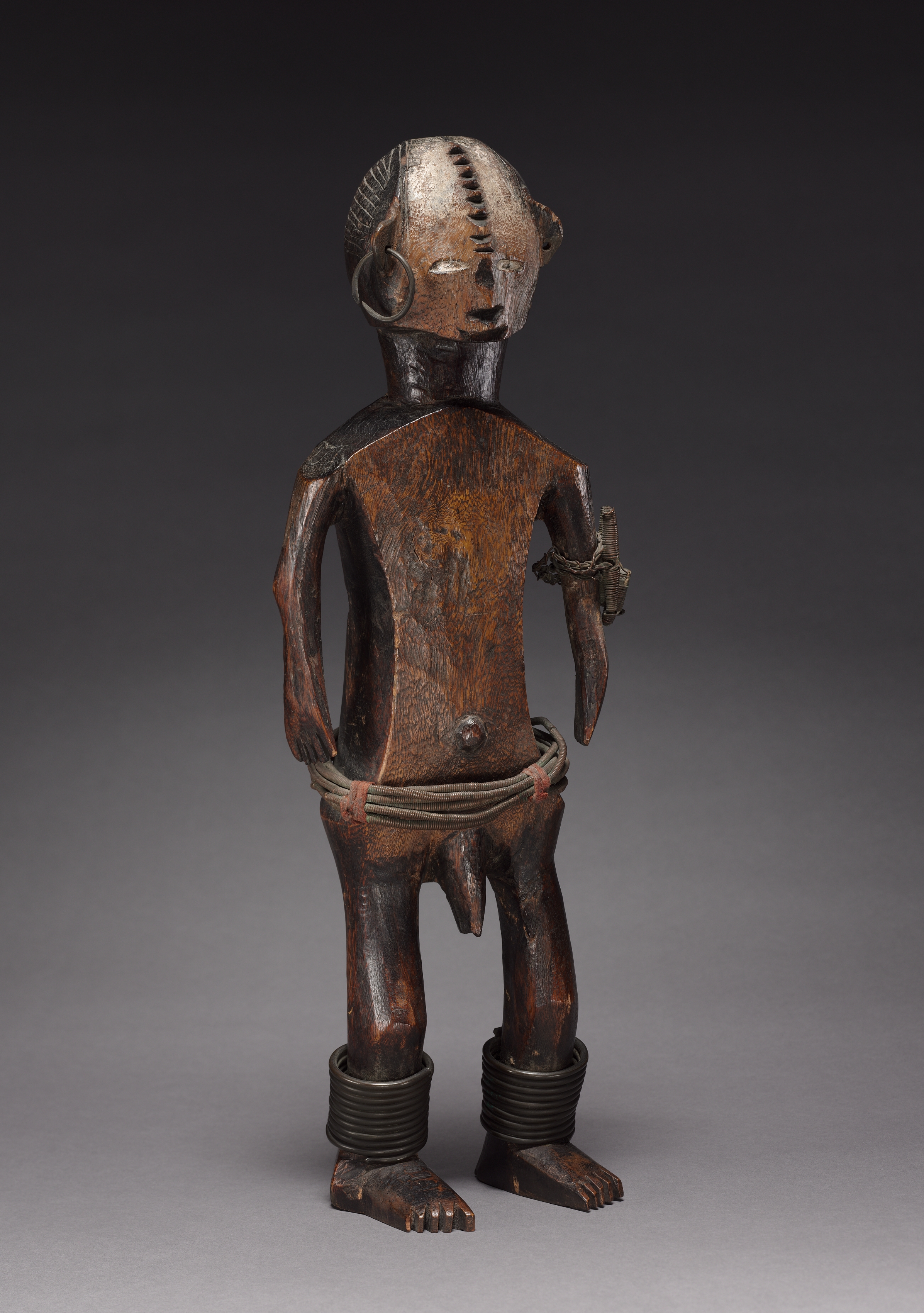
Male Figure of a Pair
One of a pair, ornamented with metal, bead and shell at ears, waist and ankles, with a series of vertically aligned bumps down the torso. An arm ornament may identify him as a warrior.
2474 × 3400 px · Unmodified source file
Open in StudioSource & licensing
- Creator / date
- Africa, Central Africa, Democratic Republic of Congo, probably Ngbandi-style carver, maker unknown · late 1800s–early 1900s
- Source credit
- The Cleveland Museum of Art, 2010.459.1. Open Access.
- Usage notes
- Released by the Cleveland Museum of Art under CC0 1.0. Credit to the museum is encouraged; CC0 does not imply endorsement.
- Original file
- 2474 × 3400 px · JPG · 0.0 MB
- Source checked
- 2026-11-04 · editorial approval separate
CC0 · Public domain · late 1800s–early 1900s
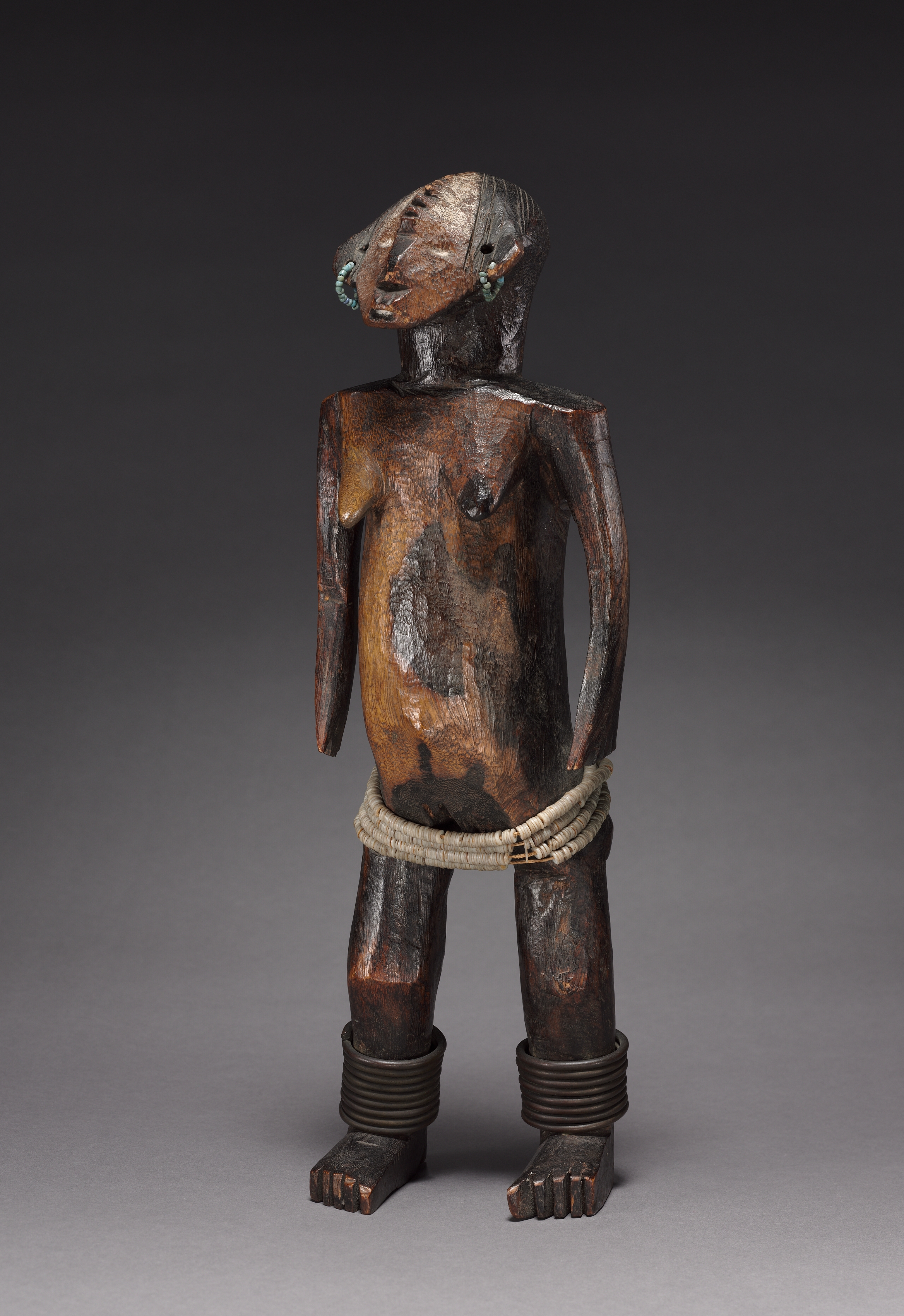
Female Figure of a Pair
The female figure of the pair, dressed and adorned to match. Paired figures of this kind were kept together, which is how their ornaments and proportions were meant to be read.
2722 × 3400 px · Unmodified source file
Open in StudioSource & licensing
- Creator / date
- Africa, Central Africa, Democratic Republic of Congo, probably Ngbandi-style carver, maker unknown · late 1800s–early 1900s
- Source credit
- The Cleveland Museum of Art, 2010.459.2. Open Access.
- Usage notes
- Released by the Cleveland Museum of Art under CC0 1.0. Credit to the museum is encouraged; CC0 does not imply endorsement.
- Original file
- 2722 × 3400 px · JPG · 0.0 MB
- Source checked
- 2026-11-04 · editorial approval separate
CC0 · Public domain · late 1800s–early 1900s
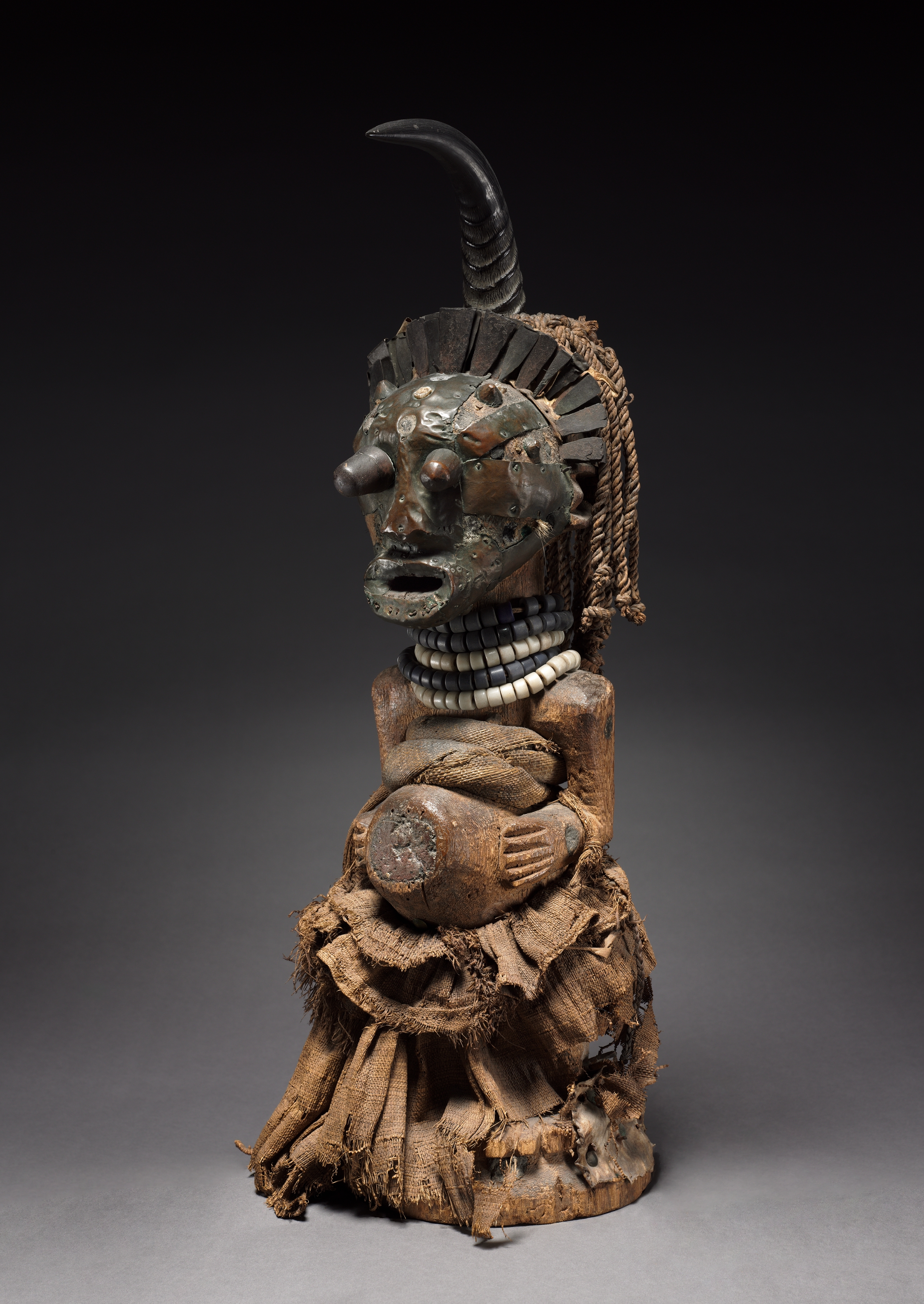
Male Figure (nkishi)
Its visual impact and workmanship suggest that an extended family, rather than an individual, used it. The raffia skirt at the waist and the blue and white beads are part of its charge.
2373 × 3400 px · Unmodified source file
Open in StudioSource & licensing
- Creator / date
- Africa, Central Africa, Democratic Republic of Congo, Songye-style carver and nganga (priest), maker unknown · late 1800s–early 1900s
- Source credit
- The Cleveland Museum of Art, 2010.451. Open Access.
- Usage notes
- Released by the Cleveland Museum of Art under CC0 1.0. Credit to the museum is encouraged; CC0 does not imply endorsement.
- Original file
- 2373 × 3400 px · JPG · 0.0 MB
- Source checked
- 2026-11-04 · editorial approval separate
CC0 · Public domain · mid- to late 1800s
Male Figure
Figures of this size served as guardians of ritual shrines and functioned in rites to promote fertility, well-being and longevity. The wood is darkened with colourant.
2051 × 3400 px · Unmodified source file
Open in StudioSource & licensing
- Creator / date
- Africa, Central Africa, Democratic Republic of Congo, Hungaan-style maker, maker unknown · mid- to late 1800s
- Source credit
- The Cleveland Museum of Art, 2003.36. Open Access.
- Usage notes
- Released by the Cleveland Museum of Art under CC0 1.0. Credit to the museum is encouraged; CC0 does not imply endorsement.
- Original file
- 2051 × 3400 px · JPG · 0.0 MB
- Source checked
- 2026-11-04 · editorial approval separate
CC0 · Public domain · c. 1900
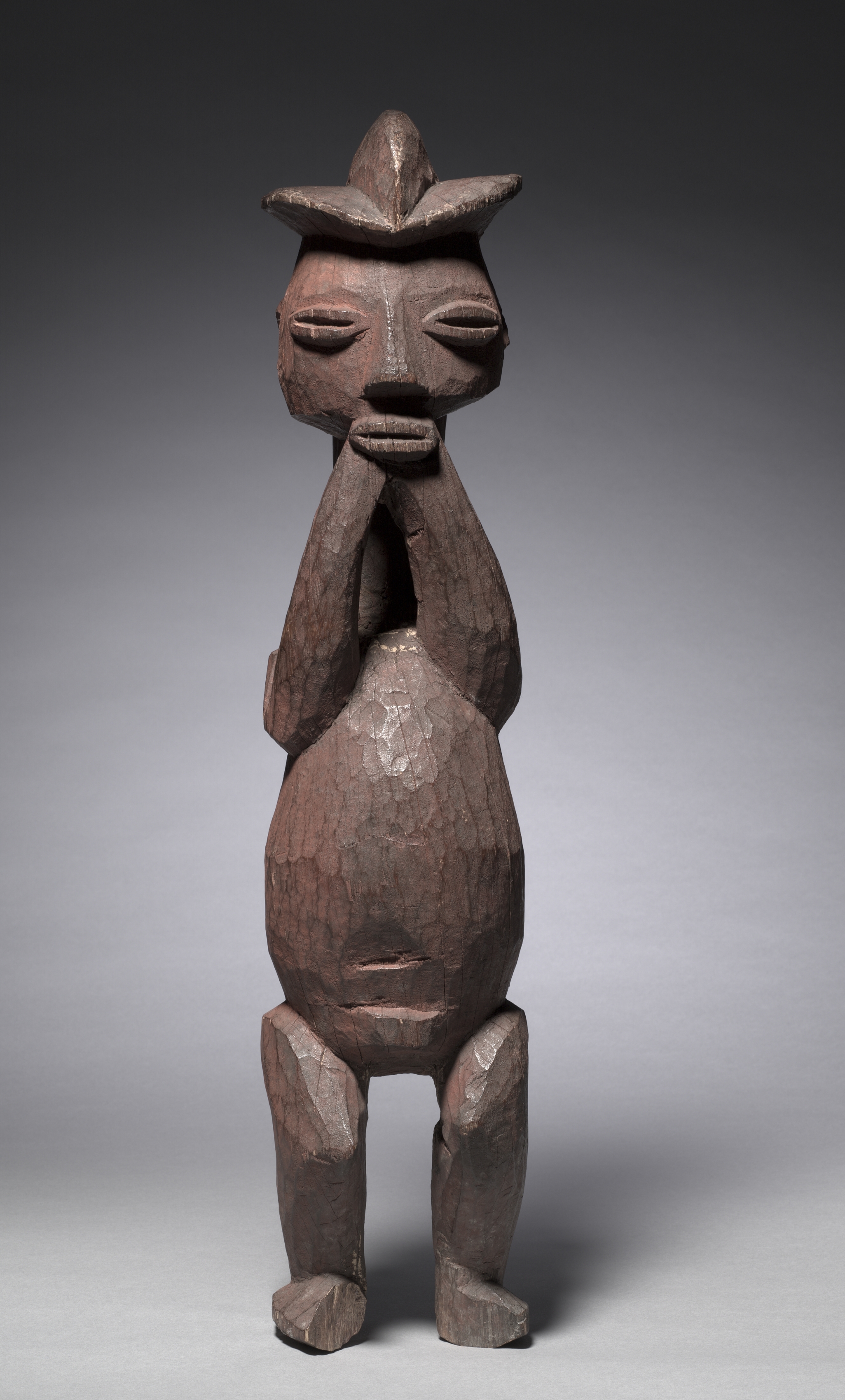
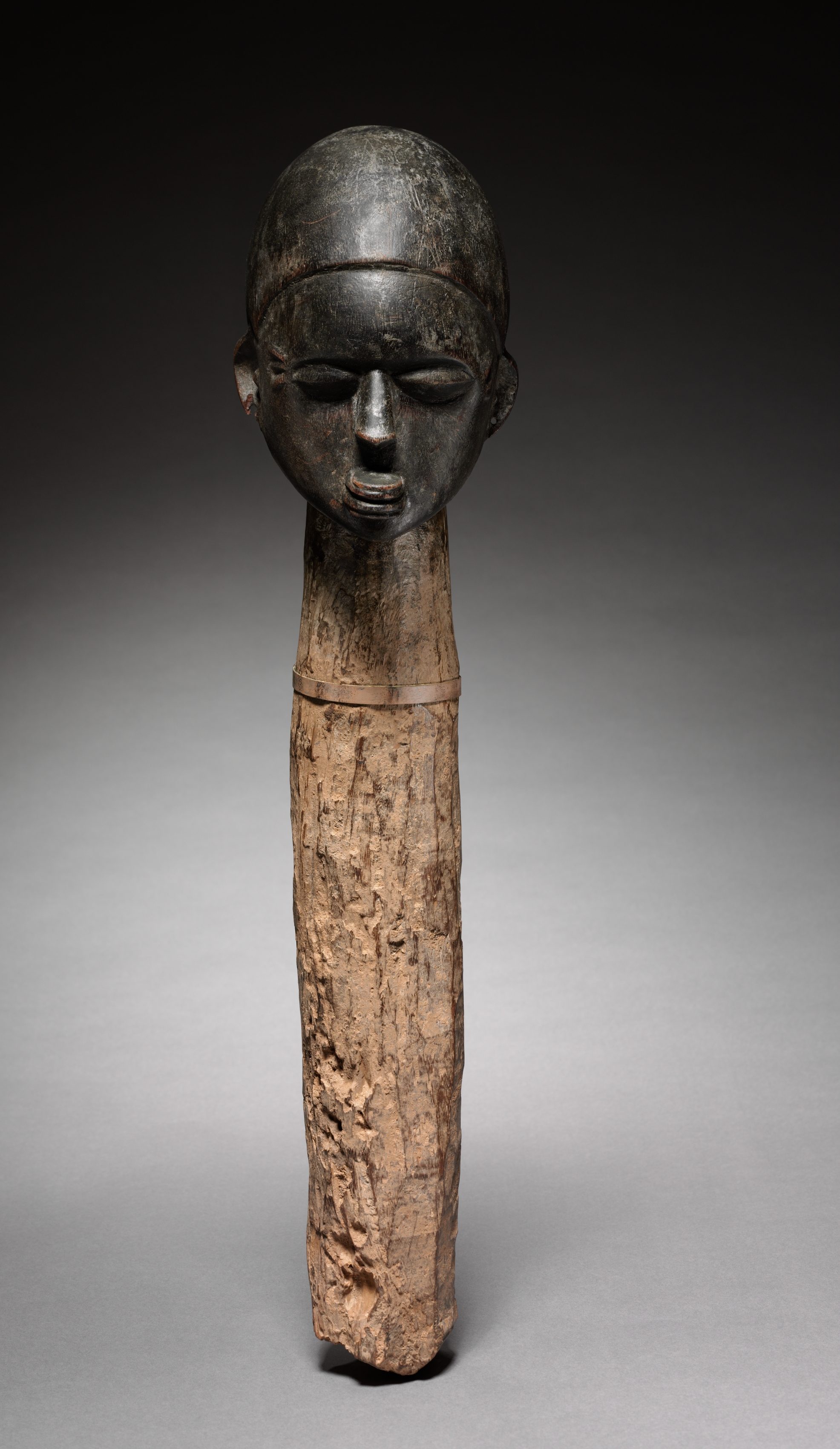
Figure (baàthíl)
A headpost, likely made as a temporary sanctuary for khélé, a harmful spirit released after killing a person or a dangerous animal.
1972 × 3400 px · Unmodified source file
Open in StudioSource & licensing
- Creator / date
- Burkina Faso, Ghana, or Côte d’Ivoire, Lobi–style artist, maker unknown · c. 1900
- Source credit
- The Cleveland Museum of Art, 1967.152. Open Access.
- Usage notes
- Released by the Cleveland Museum of Art under CC0 1.0. Credit to the museum is encouraged; CC0 does not imply endorsement.
- Original file
- 1972 × 3400 px · JPG · 0.0 MB
- Source checked
- 2026-11-04 · editorial approval separate
CC0 · Public domain · late 1800s–early 1900s
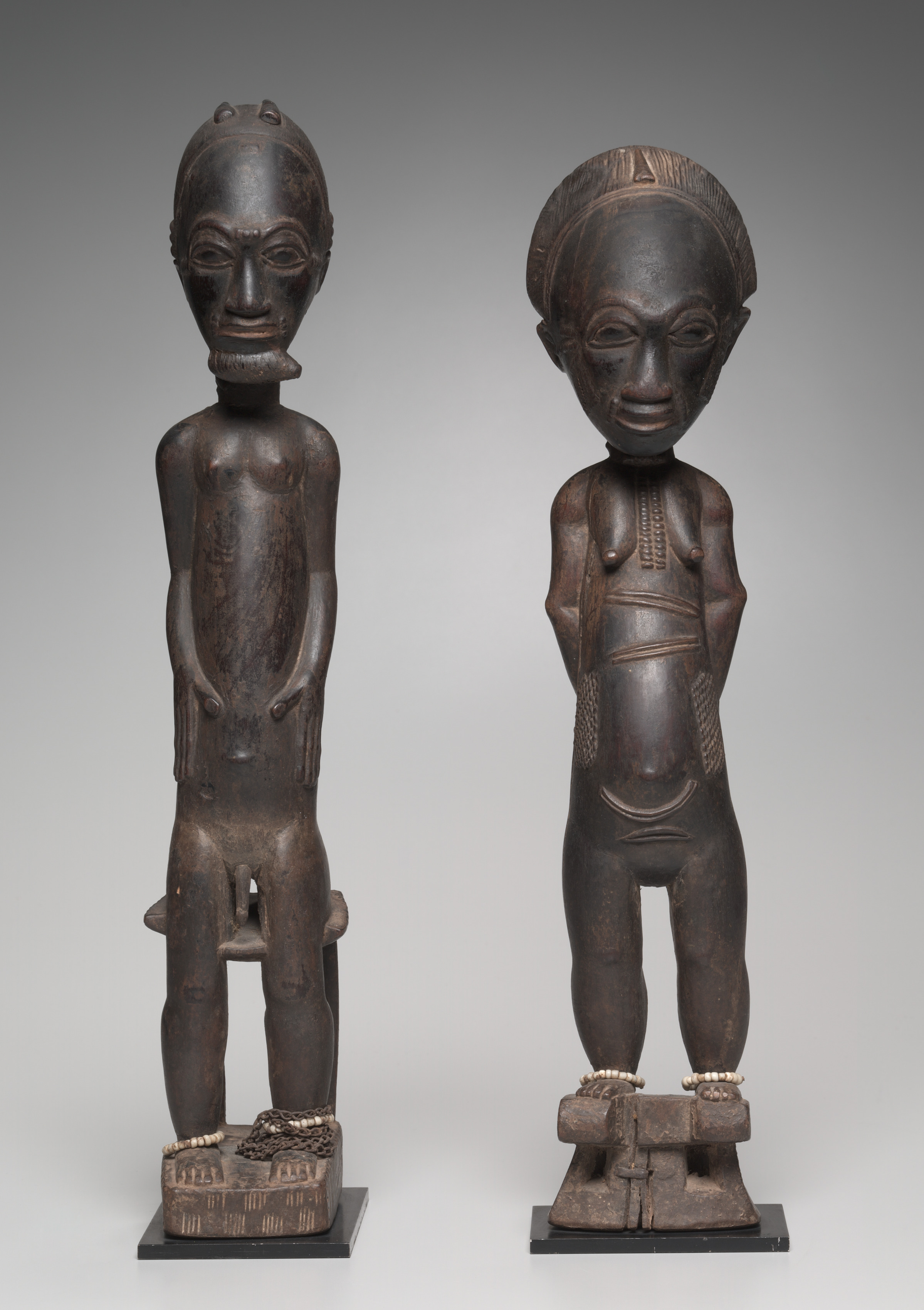
Figure Pair (asye usu)
Baule figures carved as pairs usually represent asye usu, untamed spirits of the wilderness who may take possession of individuals and intervene in their lives.
2398 × 3400 px · Unmodified source file
Open in StudioSource & licensing
- Creator / date
- Africa, West Africa, Côte d’Ivoire, Baule-style carver, maker unknown · late 1800s–early 1900s
- Source credit
- The Cleveland Museum of Art, 1971.297. Open Access.
- Usage notes
- Released by the Cleveland Museum of Art under CC0 1.0. Credit to the museum is encouraged; CC0 does not imply endorsement.
- Original file
- 2398 × 3400 px · JPG · 0.0 MB
- Source checked
- 2026-11-04 · editorial approval separate
CC0 · Public domain · late 1800s-early 1900s
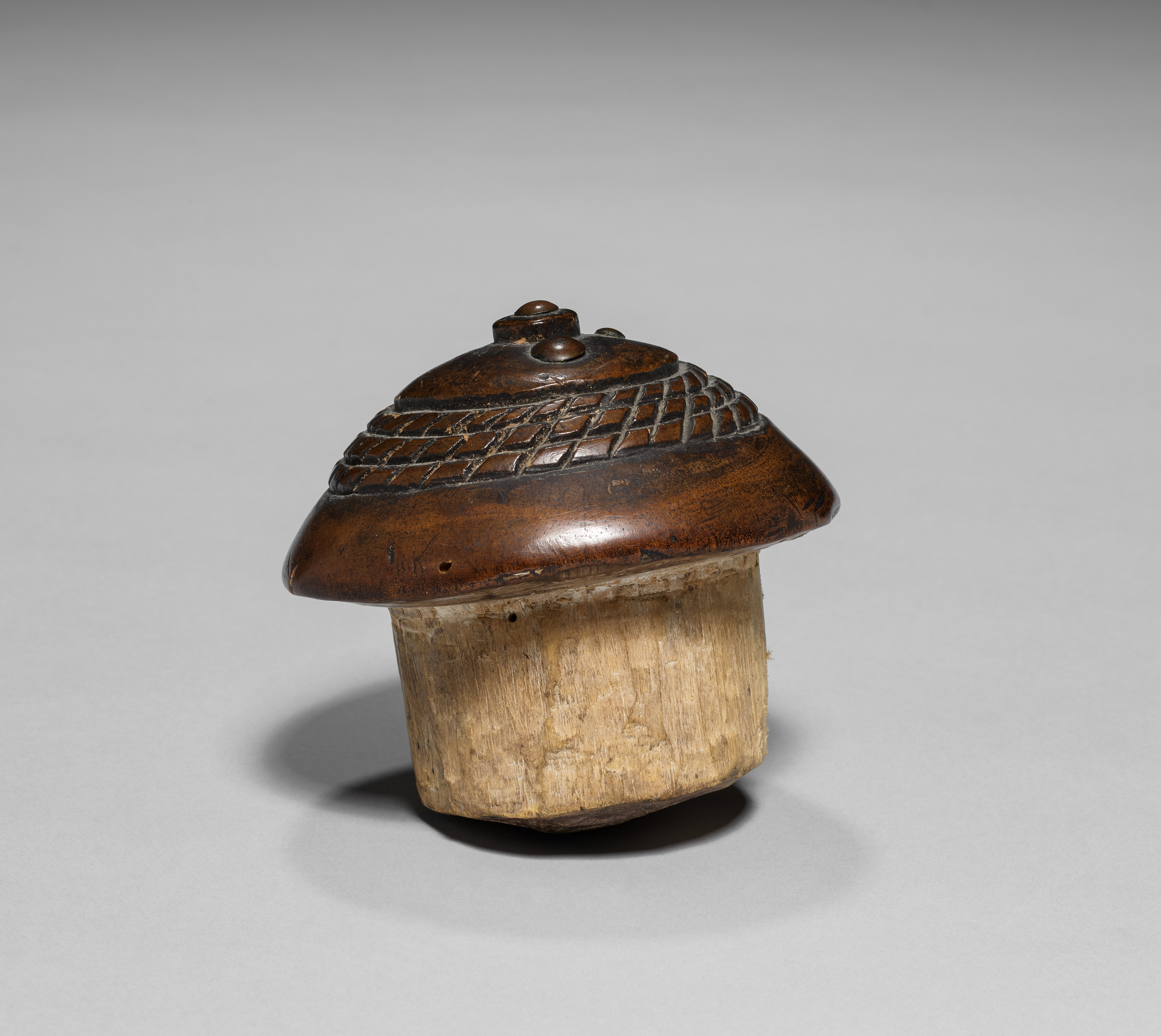
Female Bowl-Bearing Figure (lid)
The lid of a bowl-bearing figure. In Luba art an object’s beauty affects how well it works, so finish and poise are part of function; such figures served royal divination among other uses.
3400 × 3035 px · Unmodified source file
Open in StudioSource & licensing
- Creator / date
- Africa, Central Africa, Democratic Republic of Congo, Luba-style carver, maker unknown · late 1800s-early 1900s
- Source credit
- The Cleveland Museum of Art, 2010.454.b. Open Access.
- Usage notes
- Released by the Cleveland Museum of Art under CC0 1.0. Credit to the museum is encouraged; CC0 does not imply endorsement.
- Original file
- 3400 × 3035 px · JPG · 0.0 MB
- Source checked
- 2026-11-04 · editorial approval separate
CC0 · Public domain · possibly 1300s–1600s
Male Figure
Figures like this were used in ritual by ancestors of the present-day inhabitants of the Inland Niger Delta, representing gods and kings or queens.
2410 × 3400 px · Unmodified source file
Open in StudioSource & licensing
- Creator / date
- Africa, West Africa, Mali, probably Djenné-Djenno, Inland Niger Delta culture-style maker, maker unknown · possibly 1300s–1600s
- Source credit
- The Cleveland Museum of Art, 1985.199. Open Access.
- Usage notes
- Released by the Cleveland Museum of Art under CC0 1.0. Credit to the museum is encouraged; CC0 does not imply endorsement.
- Original file
- 2410 × 3400 px · JPG · 0.0 MB
- Source checked
- 2026-11-04 · editorial approval separate
CC0 · Public domain · late 1800s-early 1900s
Male Figure (Nkisi)
Nkisi is associated with spirit: figures of this kind are believed to host ancestral spirits. This one retains its mirror-covered stomach cavity, the sealed point of contact.
2693 × 3400 px · Unmodified source file
Open in StudioSource & licensing
- Creator / date
- Africa, Central Africa, Democratic Republic of Congo (most likely), Cabinda, or Republic of the Congo, probably Yombe-style maker, maker unknown · late 1800s-early 1900s
- Source credit
- The Cleveland Museum of Art, 2010.434. Open Access.
- Usage notes
- Released by the Cleveland Museum of Art under CC0 1.0. Credit to the museum is encouraged; CC0 does not imply endorsement.
- Original file
- 2693 × 3400 px · JPG · 0.0 MB
- Source checked
- 2026-11-04 · editorial approval separate
Public-domain status is reported by the linked source and may vary by jurisdiction. Check the source record for your intended use. No exclusive rights or Visual Bounty marketplace license are offered for these images.